The Taycan is an electric sedan made by Porsche. It uses electricity instead of gasoline and is designed to drive like a performance car. The podcast is praising it for its engineering and driving feel.
The Suburban is a large SUV made to carry lots of people and cargo. It’s known for being very roomy and physically big. The podcast mentions it because it’s noticeably larger than most vehicles.
The Cayenne is Porsche’s SUV. It’s meant for people who want an SUV but still want a sporty driving feel. The podcast mentions the “Gen 2” version, which is the second generation of that SUV.
A facelift is a mid-cycle refresh where a car gets updated styling and often engineering changes, without becoming a completely new generation. In this segment, the host says the second-gen Cayenne received a facelift with additional motor technology and efficiency updates.
“Efficiency changes” refers to engineering updates intended to reduce fuel/energy use—often through revised engines, transmissions, aerodynamics, or calibration. The host questions whether the updated Cayenne now has “competitive efficiency,” implying it may not match rivals in real-world terms.
Concept
class size comparison (S class vs C class)
“S class” and “C class” are shorthand for Mercedes-Benz vehicle size/market segments, with S class generally representing a larger luxury sedan than C class. The host claims a car “the size of an S class” has less room than a C class, highlighting how packaging can differ from what size labels suggest.
The Tesla Model S is a big electric luxury sedan. In this part of the show, they’re comparing it to another EV—especially how well it’s built and how fast it feels.
“Ludicrous” is Tesla’s extra-fast driving mode. It’s meant to make the car accelerate as hard as possible.
Term
P100D
P100D is a specific Tesla Model S version. It indicates a performance setup and a large battery, which matters because it’s linked to the car’s top acceleration mode.
The Model Y is an electric SUV/crossover made by Tesla. It runs on electricity instead of gasoline. The podcast brings it up to compare pricing with another Tesla model.
Some EVs use a gearbox with two gear ratios instead of just one. That can make the car feel like it “shifts,” and the host doesn’t like that sensation.
One-pedal driving means you can slow down mostly by lifting off the accelerator. The host doesn’t like that the car they’re talking about doesn’t let you do that.
An infotainment system is the car’s main screen and controls for things like music, maps, and phone features. If it’s hard to use, it can take too many steps to get to what you want.
A kilowatt-hour (kWh) is a measure of how much electricity you used. When people say “miles per kWh,” they mean how far the car can go using that amount of battery energy.
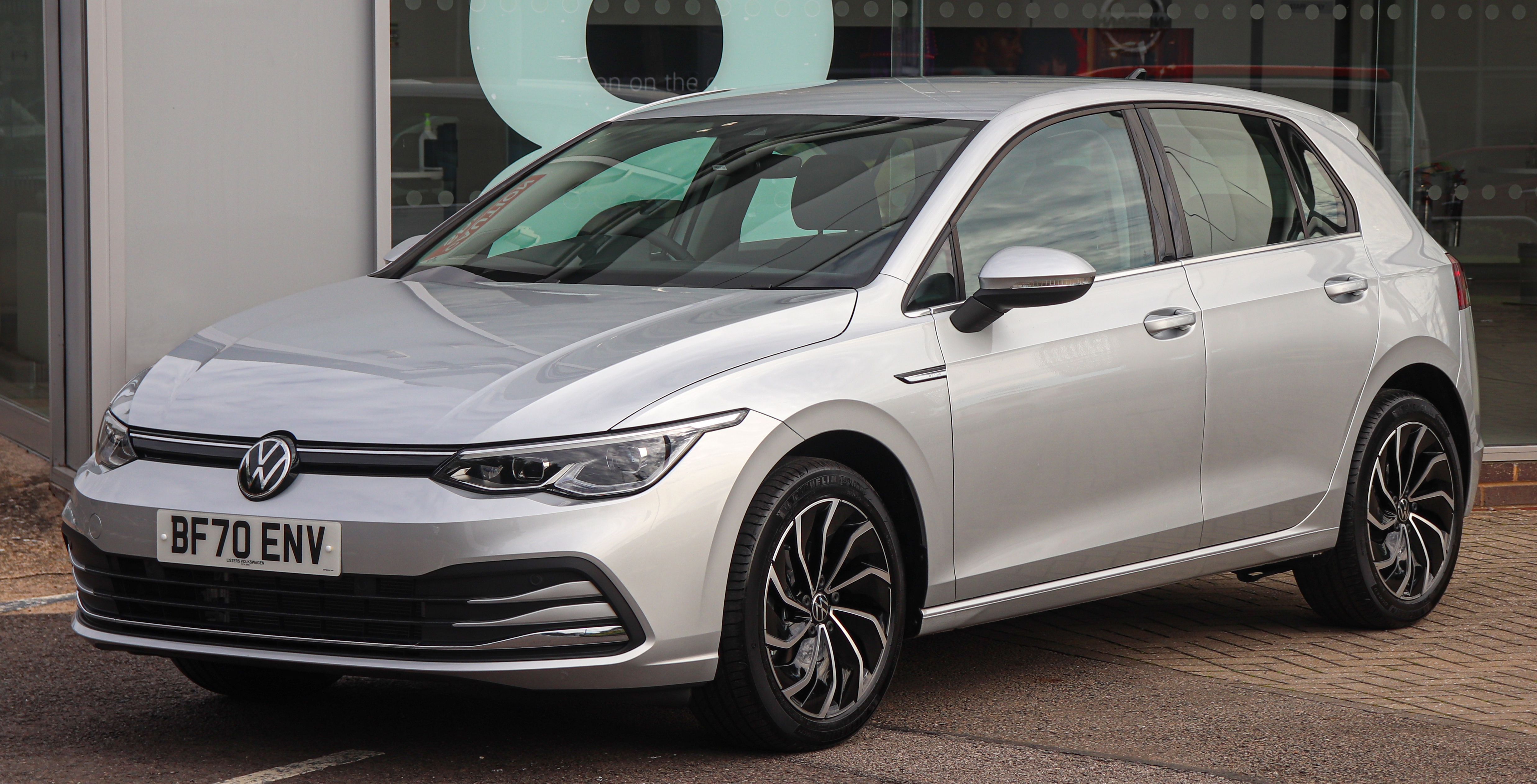
The Volkswagen e-Golf is an electric Golf. The hosts use it as a comparison car to show how weight and size can change how efficiently an EV uses energy.
These are like roll bars, but instead of being fixed, they can be tightened or loosened using hydraulics. That helps the car stay flatter in turns without making it feel stiff all the time.
Decoupling means the car can let the left and right sides move more independently. It helps the car handle bumps without forcing both sides to act the same way.
An “effective spring” is the way the anti-roll bar can act like extra stiffness. When one wheel goes over a bump and the other doesn’t, the bar twists and helps resist that uneven movement.
The BMW E60 (5 Series generation) is mentioned here in the context of early hydraulic sway-bar disconnect designs. The host suggests BMW “did this fairly wrong,” implying the system’s behavior or calibration didn’t deliver the expected ride/handling payoff.
Sway bars help stop the car from leaning too much in turns. If they can be disconnected, the wheels can move more freely, which can make the ride smoother.
Air springs use air pressure to support the car instead of metal springs. They can adjust to keep the car at a steady height and help smooth out the ride.
Electric cars often have two electrical systems: a normal 12-volt one for things like lights and computers, and a much higher-voltage system for actually driving the wheels. The “high-voltage electrical architecture” is how that big power system is set up.
Instead of changing the fluid’s thickness, the system can change how much pressure it uses. Changing pressure can change how strongly the suspension or actuator pushes/pulls.
Most cars use a 12-volt battery to run everyday electronics like screens, lights, and sensors. Even electric cars still keep a 12-volt system for those jobs.
In an electric car, the battery can run at different high-voltage levels. An “800 volt” system means the car uses a very high voltage for driving power, which can help it move power more efficiently.
“Four of them” means there are multiple motors working together instead of just one. Here, the discussion suggests those motors are involved with the suspension system.
Suspension motors are motors that help control how the suspension moves. Instead of the suspension just reacting passively, the car can actively adjust it while you drive.
Static ride height is how high the car sits when you’re not hitting anything. With air suspension, it’s controlled by the air in the suspension’s chambers.
Actively pulling a wheel up means the suspension can lift a corner of the car intentionally. Instead of only reacting to bumps, it can move the wheel to control ride and grip.
Valves are like controlled switches for pressurized fluid. They decide where the fluid goes, which tells the suspension whether to push or pull and how firm it feels.
The limit of adhesion is basically the point where the tires stop gripping the road. When you’re near that point, the car can steer and accelerate well—but if you go past it, the wheels start to slip.
Handling is how controllable the car feels, especially when turning and slowing down. It depends on tire grip and how the suspension keeps the car balanced.
Power consumption just means how much energy a car system uses while it’s running. If a system uses more power, the car may use more energy overall—especially when you’re driving harder.
The EPA rating is a number the government uses to compare how efficient cars are. It comes from a standardized test, so your actual results can be different depending on how and where you drive.
The EPA cycle is the test route pattern used in lab testing. It controls things like speed changes and acceleration, so it may not reflect how your car behaves on real roads.
Kilowatts are a way to measure how much “work” a system is doing per second. More kilowatts usually means the car is using energy faster.
Term
scrub from the tires
“Scrub from the tires” means the tires aren’t rolling perfectly smoothly—they’re being dragged or flexed a bit. That wastes energy, so the car has to use more power to keep moving.
In an EV, braking can “charge” the battery a little. Rather than turning all the car’s speed into heat, the car uses the motor to slow down and send some energy back to the battery.
Regenerative braking is when the car slows down and also recovers some energy. It helps the battery by turning part of your braking energy into electricity instead of wasting it as heat.
They’re referencing Dakar to imagine this idea in a tough, long-distance race setting. It’s a shorthand for “real-world endurance where energy use really adds up.”
Aerodynamic efficiency means the car cuts through the air with less resistance. Less resistance usually means you need less energy to keep going at speed.
A reactive system is one that responds to what’s happening in real time—using sensor inputs like forces and acceleration—rather than predicting conditions ahead of time. In suspension control, this typically means the controller adjusts damping or actuator commands based on current road and vehicle behavior.
The Skyhook principle is an idea for suspension that tries to keep the car feeling “weightless” and steady. It uses sensors and control to reduce the car’s bouncing and leaning instead of just letting springs do all the work.
Wheel travel sensors track how much the suspension moves up and down at each wheel. That lets the car’s control system know what the suspension is doing so it can respond to bumps.
Speed tables are raised parts of the road meant to make you slow down. They’re usually less “jumpy” than speed bumps, so the car’s suspension can handle them more smoothly.
A speed bump is a raised hump in the road to slow cars down. If you hit it too fast, the suspension can run out of room to move, and the ride feels like a hard jolt.
Bump stops are like safety limits for the suspension. If you hit a bump hard enough, the suspension can’t compress further and the car feels a much harsher impact.
Mercedes magic ride control is a suspension feature that tries to make the ride smoother. It looks ahead at the road and adjusts how the suspension responds so you feel less of the bump.
Here, “predictive” means the car tries to anticipate the road ahead. Instead of reacting only after you hit the bump, it adjusts beforehand to soften the ride.
A hybrid system is a car setup that uses both gasoline and electricity. The battery stores electrical energy so the car can run on electric power or help the gas engine.
The Porsche Panamera is Porsche’s big four-door sedan. Here it’s mentioned as the non-electric (gas) counterpart, and the point is that it also uses a hybrid system with a high-voltage battery.
“70 series” is a tire sizing detail that describes how tall the tire’s sidewall is. Taller sidewalls usually ride smoother because they can flex more over bumps.
Term
brakes would be bigger than the wheels
The point is that brake parts have to physically fit inside the wheel. If you go to smaller wheels, the brakes may not fit unless the brake setup is changed.
Term
G
“G” is a way to describe how hard something accelerates or slows down. One “G” is roughly the force you feel from gravity. Saying “more than half a G” means the braking is pretty strong—enough to feel like a noticeable push in your body.
The Ferrari 308 GT4 is an older Ferrari that’s famous for how it feels to drive, not just how fast it is. Here, the hosts say the biggest thing about it is the way it rides—like it feels smooth and floating. They’re using it as a comparison for what makes a car’s driving experience memorable.
Term
205 7014 tires
That number string is the tire size. It tells you how wide the tire is, how tall the rubber sidewall is, and what wheel size it fits. Different tire sizes can change how smooth the ride feels and how the car handles.
Control arms are parts of the suspension that hold the wheels in the right position. They help the car absorb bumps and also affect how accurately the car turns.
“70 series” is a tire size detail that describes how tall the rubber sidewall is. Taller sidewalls tend to make the ride smoother because they flex more over bumps.
“High frequency” here means the quick, small bumps and vibrations from the road surface. The goal is to keep that shaking from getting into the car.
Term
range and efficiency
Range and efficiency are about how far the car can go and how much energy it uses. Tire and wheel changes can make the car harder to roll, which can hurt economy or EV range.
Turn-in response is how promptly the car starts turning when you steer. If the suspension or tires are too soft, the car can feel less immediate and a bit vague.
PSI is a way to measure pressure. If they’re talking about hydraulic fluid, they mean the fluid is being pushed with a certain amount of force, which changes how the system works.
EV means electric vehicle. It’s a car that runs mainly on electricity from a battery, and here it’s being discussed in terms of how it feels and how it’s packaged.
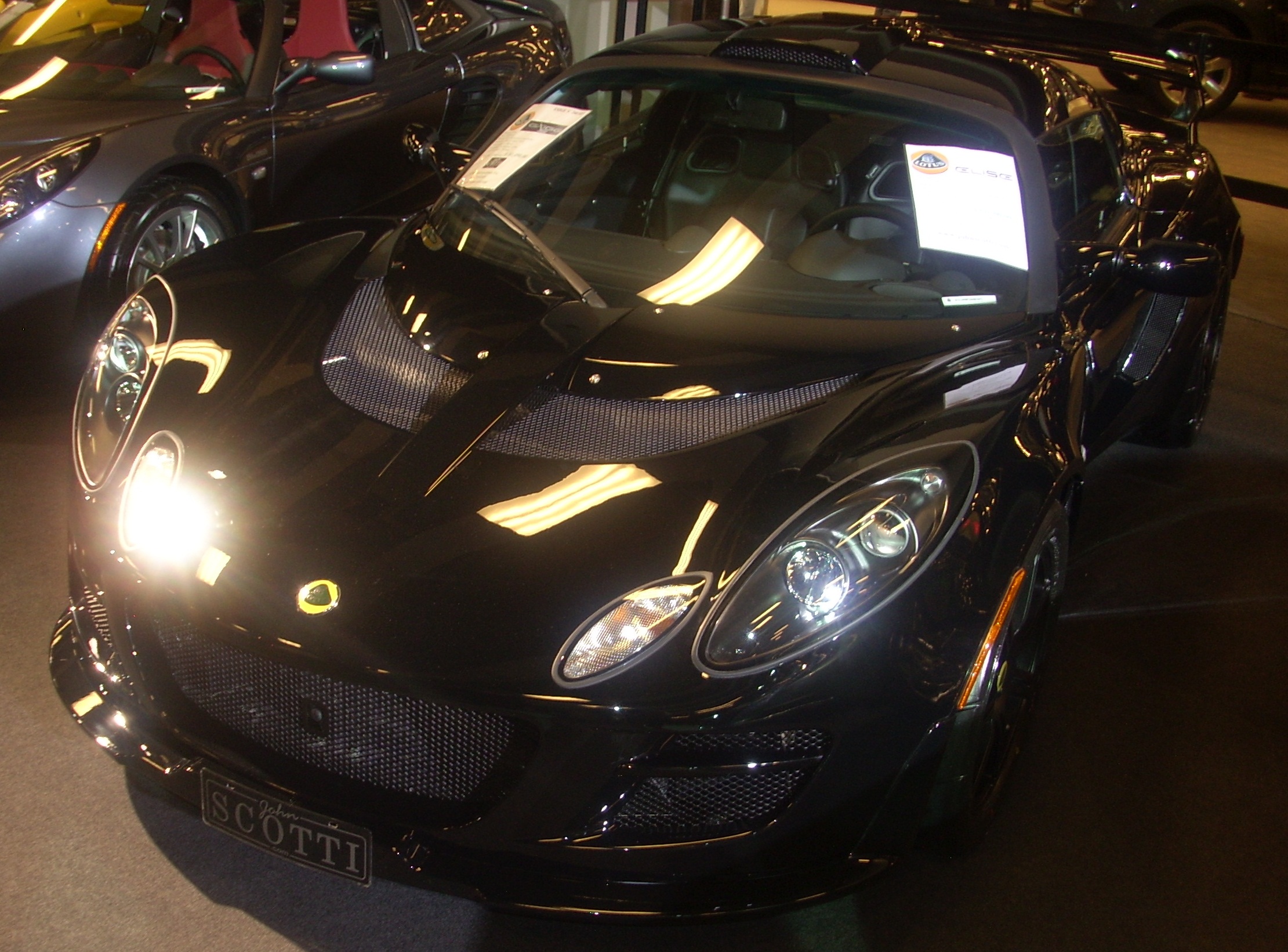
The Lotus Elise is a small, lightweight sports car that’s built to feel nimble and fun to drive. Here, the host brings it up as an example of a simpler, more engaging older car.
The Ford Maverick is a small pickup truck. Here, the point is that the host felt it started making odd noises and didn’t feel as well-built after only a short time.
“Clunks” are loud knocking sounds you can hear when a car hits bumps or shifts load. They usually suggest something in the suspension or mounting isn’t tight or isn’t moving smoothly.
The front suspension is what helps the front wheels move up and down smoothly. If it makes clunking noises, it can mean parts are loose, worn, or not fitting together correctly.
“Trickle down” means new, expensive tech eventually shows up in cheaper cars. The host is saying today’s cutting-edge engineering will later benefit regular drivers.
Xenon headlights are a type of car headlight that uses a special gas to make brighter, whiter light. The host is pointing out that this kind of lighting tech has become common on regular cars.
NVH is a car term for how noisy and bumpy a car feels. If NVH is bad, the engine and road vibrations get into the cabin and make the car feel unpleasant, even if it’s otherwise fine.
The Toyota Corolla is a very common, practical compact car. Here, they’re complaining that the ride and engine feel really noisy and rough (not smooth or refined) in the version they rented.
The Volkswagen Golf is a compact hatchback known for being a “driver’s car” in everyday form, with a reputation for refinement compared to many budget compacts. Here, the hosts contrast it with the Corolla rental by saying the Golf feels better—specifically mentioning a 2.0T powertrain—suggesting improved NVH and overall smoothness.
The Nissan Sentra is a compact sedan positioned as an affordable alternative in its class. In this segment, the hosts praise the Sentra rental’s smoothness and specifically call out that it uses a CVT, framing it as a more pleasant experience than the Corolla rental.
CVT stands for continuously variable transmission. Instead of fixed gear ratios, it uses a belt/chain and pulleys to keep the engine in a favorable operating range, which often makes the car feel smooth and can help fuel economy. Some drivers dislike CVTs for a “rubber-band” feel, but in this clip the host says the CVT Sentra feels especially smooth.
Term
409
“409” is a nickname for a famous 1960s Chevrolet V8 engine. In the episode, it’s used as a pop-culture shorthand for the muscle-car era.
Brand
Maibach
This sounds like “Mercedes-Maybach,” a very luxury version of Mercedes. The point in the conversation is that it’s used in songs to signal wealth and status.
A muscle car is a kind of American performance car, usually with a big engine, built to go fast. Think “fast in a straight line,” especially the classic 1960s vibe.
A hot rod is usually an older car that someone modifies to make it faster and cooler. It’s part of a culture of customizing cars rather than leaving them stock.
The X5 is a luxury SUV from BMW. It’s designed for comfortable driving with a sporty feel. The podcast mentions an X5 diesel because that specific fuel type isn’t as common.
The Range Rover is a luxury SUV made by Land Rover. It’s built to be comfortable on-road and capable off-road. The podcast mentions it as an example of a recognizable, premium SUV.
LIVE
Greetings. Salutations. Welcome to our guest this week, a Porsche.
Yeah, but a, but a station wagon. Porsche station wagon. 5000000000 horsepower.
That is a Taycan GTS in the background. I don't know if you could see it.
Sport Turismo. That's right, Sport Turismo. It was roughly the same color as the walls.
Yes. Millennial gray automobile. This is the Carmagen Show, which is driven by Hagerty,
which is a company that provides insurance for enthusiasts by enthusiasts.
And presented by Jason Camisa and Derek Tam-Scott.
Or similar. Or similar.
Yeah. We're a little off today. We'll see how good we get.
Today, we use the Taycan and its amazing engineering prowess as a
springboard to discuss the possibility that maybe people
that were young aren't interested in cars at all anymore.
Agree? Disagree? Find out after these messages.
The incompetent clap and the jingle.
I wouldn't call that incompetent. Yeah.
Wasn't competent. That's for sure.
So what were you saying that Porsche is actually Austrian?
We were speaking with the Arnold accent.
It's fine. There's no substitute. I don't do a good Arnold.
Half my crew does a really good Arnold. So often when we're on shoots,
there's a whole, there's entire discussions. Arnold will be yelling at Arnold and
there's a lot of... Over the radio.
Well, no, like we're packing stuff. Okay.
So behind us, we have a many, many, many horsepower,
ridiculously fast, absolutely stunningly beautiful from some angles.
Station wagon. What a world. What a time to be alive.
It's selling like hotcakes, right?
More like cold bread. I guess bread sells pretty well.
It's the opposite of a hot cake. That's the temperature at which we sell bread.
A hot cake, cold meat or something.
I don't think that the Taycan Sport Turismo is particularly selling well. I don't know.
I will say, I took notes yesterday on a call with
Porsche PR guy who took me through this and I left them home.
Preparedness. Well, I was prepared. Here we are.
But the total number of Taycan sold around the world is huge.
Really? Yes.
And I don't remember...
Where are they all sold?
I want to say 150,000 of them.
Total ever?
But I don't have the numbers in front of me.
I feel like if I were going to see Taycans someplace,
this would be a place I would expect to see them.
This being the Pagardy studio?
Yes. No, this area, this geographic area.
It's too big of a car for this geographic area.
On the outside?
I do see Taycans a lot, but yeah, on the outside.
I did look it up. Okay, so this thing is enormous.
I mean, it's as class width.
How long is it?
Yes. Okay.
Let's look.
My guess would be, it's got to be right around 200, like 197.
Yes, I was going to guess a shade over 200.
You're guessing a shade under 200?
I wanted to say 202, but I was afraid to.
To 195.4.
The sedan, I'm guessing the wagon is probably about the same.
It's not even just the width, it's the length that's the width, 77.4.
So approaching suburban.
It's fucking, you can't even,
you can't even reach like the passenger seatbelt buckle.
It's very far.
And I was saying something.
They sold a lot of them.
They sold a lot of total worldwide.
In fact, reportedly, apparently the US is really a small market for this car.
Because
Doesn't surprise me based on the number that I see.
And I'm not talking about wagon, I'm talking about Ticon in total, right?
And Panamera, they're selling better in other, like in Asian countries,
for example, than they are in the US.
So we're something along the lines of 20 or 30% of total Ticon, Panamera sales,
which is unusual.
Typically the US is half of Porsche's sales for other models.
And we just, we're just buying McCons and Cayennes.
This is the first time I've gotten in the Gen 2
Ticon, the only other one I've ever driven.
There's a second gen?
This is the second gen.
Yeah, there was a facelift with a bunch of additional motor technology
and a bunch of efficiency, efficiency changes, plus different front end.
Does it have competitive efficiency now?
No.
I mean, the thing that bothered me about the original one I did,
it was a really early test of Ticon Turbo S.
And it was did in Atlanta around Atlanta Motorsports Park.
Dynamically, the car was just brilliant.
Absolutely amazing.
I just was left with this feeling that that is trying to cram a set of
capabilities into a vehicle that it doesn't need it, right?
So the question is, what is Porsche, right?
What do they, what do they do?
What do they stand for?
They should make the most dynamic car in every class.
And they did.
They also made a car the size of an S class that has less room in it than a C class, I would say.
Oopsies.
And that's my guess, right?
I think that is smaller than any current, anything you could buy from Mercedes.
The load space is also disappointing.
There's no space in anything.
I looked it up.
So the, my E30 wagon, which is genuinely tiny.
It has, I'm tiny, I probably should put that in perspective.
There is no sedan that small on sale.
And this is the wagon version of it, but there is nothing even close to that small on sale today.
And this only has 10% more cargo capacity than that car.
And I think the backseat room is probably not much different either.
It is horribly space inefficient, but I guess that's what you get for those looks.
Is it the result of the looks or is it the result of packaging decisions?
I think it's probably the looks, right?
I mean, you look around, you have a big long hood with nothing in it.
To sort of get a small frunk.
My problem when I reviewed Tycon was that Model S, right?
So Model S was, by comparison, a piece of shit in terms of interior quality and build quality.
And though a good looking car, not bad.
This was the early cars before plaids.
I guess the plaid was probably about P100D ludicrous was out at the time.
And the Tycon couldn't match ludicrous levels of acceleration.
It was dynamically much better, but my thought was Model S was,
these are large luxury sedans and which one does a better job as a luxury sedan.
And it just wasn't even close, right?
And what about price?
Oh, and it's, I mean, this is $200,000 sitting right here.
You couldn't spend that on a Tesla Model S if you tried.
Oogly moogly, that's a lot of dollars.
What is the most you could possibly spend on a Tesla?
A plaid.
I don't know what that final edition, signature edition thing was,
but I think otherwise 130.
I don't think you could go over 133.
And this is a GTS.
This is a GTS.
Above this is a Turbo and a Turbo S.
Oh, so there's a more, oh, there's two more expensive ones.
I bet you could spend 300 on a Tycon.
Okay.
As you, as you could, I mean, I've driven a $250,000 Panera.
I couldn't.
Okay.
I bet it's possible to configure a car up to well over a quarter million dollars.
And it is impactful looking.
It's quick.
I really do not care for that two-speed retransmission.
I don't like feeling a shift and an EV.
I think that's stupid.
I really do not like the lack of one-pedal driving.
Although maybe there's an option there.
So I've been driving this car.
How about to get it steering wheel?
It's just fucking.
Fuck you.
I mean, it's just go, you go fucking find it.
So I went through, I'm driving the car for two days.
I got in the car this morning, it was cold and I really wanted a heated steering wheel
and because I'm just, let me have it.
Just let me have it.
You should have a heated steering wheel.
Thank you.
For a quarter million dollars, you just have a fucking heated steering wheel.
And I was, I looked everywhere and it doesn't have one.
And then when we were just at lunch, I was looking through the Minroni sticker
and yes, it has one.
Somebody paid for a heated steering wheel.
It's in there.
I can't find the button.
It won't be a button.
It'll be a soft button.
There's no fucking like, what are they doing?
The dynamically, we'll get into some of this other stuff in a second.
This car's infotainment system is hateful.
And I just don't understand why the traditional car companies
cannot make a screen based system that doesn't have many layers of controls,
many layers of redundancies.
Just trying to adjust the audio controls was probably 12 minutes while driving.
While driving.
So it was like, you know, it stopped signs and red lights and whatever.
I'm like, okay, boop, one thing.
And then, you know, I'm moving again and I was trying.
So maybe part.
I thought the vent adjustments also is absurd.
Yeah.
You can't just move a vent.
You have to go into a hidden menu that you have to know where it is.
And then there's some silly interface where you have to like aim the thing.
Tesla started that shit, which is idiotic.
Yeah.
You have to close or open the vent.
What's wrong with just aiming a little dude?
Like just move the thing.
This is complexity for the sake of complexity.
Too many screens, too many functions in that screen.
Too poorly laid out.
You can have functions.
Well, and the thing is with a vent, like the vents there anyway,
I get it if there's like trying to reduce number of buttons,
but you are not reducing buttons when you do that.
Like the vent is there anyway.
You just can't move it with your fingers.
Because there's no adjusting part.
There's like, you have to go into the screen.
So it's not even about button illumination.
And it's also not about cost elimination either,
because now you're putting a solenoid or some motor to chain or two,
probably to change X and Y axis on the vent, plus three to close and open it.
So you're adding likely three different motors.
I need it here.
Why are we here?
Because we're the car imagination.
Because we are a car imagination station.
That said, it's very fast.
It's far more efficient than the previous one.
I think I'm averaging 400 watt hours per mile.
So 2.5 miles per kilowatt hour, roughly.
They're about not terrible.
Still, isn't the e-golf like 43 and a half?
The e-golf is literally half the weight, a quarter of the size, a tenth of power.
Yes, e-golf with grippy tires, I average 3.4.
And 10 years older.
But look at the frontal area.
Look at the rolling resistance.
I mean, look at the size of the tires.
You can't compare that.
That is likely not as good as a Model S plaid,
but it's not heinous the way the early cars were.
But this has that Porsche active suspension.
So I made you drive it.
So my first time experiencing this, you have previously frost over it, I guess.
You have been very excited about this.
What?
I'm going to throw up saying that word.
Okay.
So how does it work?
No roll bars.
Is this like the system that Audi first pioneered,
where they had hydraulic actuators instead of roll bars?
Or is it a more comprehensive system?
Way more comprehensive.
So hydraulically actuated anti-roll bars allow you to decouple the roll bars.
So when you're going in straight ahead, you do not need the roll bars, obviously.
But what they do is actually add a spring rate effectively
when you have a one-wheel bump.
When they're both doing the same thing, the bar is moving.
Both ends of the bar.
So the bar is twisting, right?
When one wheel moves relative to the other,
so one goes up and the other one doesn't,
now you have an effective spring.
And so what you get is head toss.
So you get a sort of left-right sort of...
I do this to the camera and there I have head toss, right?
You have this moment.
That gets way worse the higher you get.
So SUVs, which need anti-roll bars more than sedans,
the higher the car is, you get a higher effective spring rate.
And getting rid of the roll bar really can increase ride quality.
And so a lot of these hydraulically actuated roll bars are there.
Basically, initially they were to disconnect.
So BMW did this fairly wrong.
I think E60 had hydraulically disconnecting sway bars.
So you can use a...
There was a pretty big motor I think in there
that would just create hydraulic pressure
that would clamp the bar together.
So the bar was either one piece
or the two sides could move independently of each other.
And then some companies have gone further.
I think that they can apply a torque.
They can actually try to mitigate roll.
This is not that.
What this uses is air springs that determine the vehicle height,
this sort of static vehicle height.
And then the shock absorbers themselves
are hydraulically powered by electricity.
So this car is...
It's a high voltage electrical architecture.
How do you adjust viscosity?
You don't need to.
Okay, let me...
I'll explain.
By adjusting the pressure that the fluid is delivered at instead.
By building pressure or relieving pressure.
Yeah.
Okay.
So this car uses conventional 12-volt low voltage system.
And then the high voltage system...
Freer radar detector.
Yes.
I don't know if it has a lighter.
But anyway, it does have a USB-C
and Valentine one now has USB-C power adapter.
This uses an 800 volt bar on it.
That those motors are on the 800.
They are five kilowatt motors.
How many?
Four of them.
So in theory, when all four suspension motors
are running on full song,
you are using 20,000 watts
or 30, roughly 30 horsepower.
Yes.
It's going to be 26.8.
How do you do that math in your head?
0.753, right?
No, it's 1.34.
Or 0.753 on the other way.
But yeah.
Okay.
It...
Yeah, they're very,
they're very, very powerful motors.
And what they're doing,
there are four of them, one for each corner, obviously.
And they are circular pumps
that create pressure and hydraulic system.
The shocks themselves,
are you ride, the car rides,
so the static ride height is given by the air chambers.
And then the damping force is controlled
completely by that hydraulic pressure.
And so it can actively pull a wheel up.
It can actively push a wheel down
depending on how the valves route that pressure.
And so...
How do you do this in real time?
In real time.
So I think the quote from the PR guy
who told me not to quote him was something like 30 or 15...
Well, that's okay.
You're also, you're playing telephone
because you don't have your notes on there.
I don't have a note there.
It's going through two layers of...
But admittedly,
I haven't finished my review of the score
and I haven't done,
but something like on the order of 30 or 50 milliseconds
from detecting an event
to creating pump pressure
to activating some sort of...
Does it have accumulators?
It must.
Can I build pressure that quickly?
Wow.
I don't know.
But this does have this access,
height access system there.
As soon as you open the door, it goes...
And within, I don't know what,
third of a second, four tenths of a second,
it will lift itself up quite a few inches.
We can demonstrate that on video.
It's weird.
I don't know why.
So to aid getting in and out for people
who are old enough to afford to buy one.
And elderly enough to need such a thing.
But it can also fully counter roll.
So you don't need roll bars obviously.
So you can counter it,
but it can also go further than that.
So it's sort of helicopters
where it will lean into...
Or motorcycle.
Or away from motorcycle also.
Lean away from curve.
And it plays constant tricks with weight distribution.
So if it sees you're approaching
the limit of adhesion of one wheel,
it can add weight to that wheel
by just pushing down on that and then...
That's game changing for handling.
So it simultaneously improves
ride quality and handling.
Look at us having our cake and eating it too.
If you told a suspension engineer from...
Choose any year prior to last year
or 10 years ago, whatever the number is.
I mean, remember that was possible.
The Bose system on the...
It's effectively the same way.
The Bose system was very...
There was no 800 volts on board those cars.
So you didn't make sense.
And that was electromagnetic.
I think this is hydraulic.
But the problem with having your cake
and eating it too is what?
It's very expensive cake.
What happens when you eat a lot of cake?
You get ill?
Oh, you never will.
Yes, exactly.
I'm just gonna say, just look at me.
You will never get fat.
I don't have to eat cake and I will get fat.
Yeah.
I mean, it's a heavy system.
There's a lot of complexity involved
in this and a lot of weight.
And plus there's power consumption.
Now I was told that this car's EPA rating
is independent of whether it has this system.
I'm not gonna call bullshit.
I believe that.
What I don't believe is that there's no effect
in the real world.
Now, the EPA cycle is probably done on...
How bumpy is the EPA?
Probably not.
And it's probably not very dynamic.
But you can imagine if you applied 20 kilowatts
or 34 kilowatts.
Do you think that on a back road,
this thing goes...
I guess that would be true.
It's gonna be a normal car.
It's gonna go what?
That you, on a back road,
you use more power because you're using more watt.
Well, yes, you're doing...
Obviously, you're...
On a back road, you have scrub from the tires
every time you're in a corner
and you're breaking, you're turning...
Speed into heat.
Exactly.
Unless you're turning speed back into electrons
because you're driving an EV.
But there's no way.
I mean, if you think about what's 20 kilowatts can do.
20 kilowatt, 30 horsepower-ish,
would get this car probably down the road at 50 miles an hour.
So if you were driving at 50 miles an hour
and had the suspension just doing all weird shit,
you could conceivably double the energy consumption.
This might be more like...
Keep that in mind for a Dakar.
This might be more like 70 or 80 miles an hour, 30 horsepower.
Oh, because it's so...
Because it's aerodynamically efficient.
I don't know what the tires are.
But the point is there, 30 horsepower is a lot.
And so, yeah, it is highly energy intensive.
But the benefits are...
Have you, you should conduct science.
Yes, I should.
That would be a fun experiment to implement.
How would you do it?
I don't know.
Find a very bumpy drag strip.
Oh, I guess you could probably do it
on a really bumpy stretch of road.
Or slalom.
Through why you're never going to be that repeatable.
I guess you could be.
But what you could do is measure...
You could go down a very, very bumpy section of road
with the system activated and then pull a fuse or something.
Can't you disable it?
Isn't it disabled in sport mode or something?
So the helicopter mode is disabled in sport mode.
So it just, it aims to be more flat
rather than to lean into the corner.
But, and you can disable them individually in regular mode.
I don't feel it.
I don't feel like it's doing that sort of,
I guess, motorcycle leaning thing.
It just feels flat.
That's the goal.
Right, that's the goal.
But you drove it and let's talk about ride quality.
Yeah, the ride quality is really exceptional in some respects.
Some pretty important respects.
I would say low frequency, like bumps and heaves.
It's really incredible at the place where it makes less of a
difference is like over high frequency, like brittle stuff.
But if it's anything that's sort of long period,
then it like, I was like aiming for road imperfections.
And I couldn't tell if I was aiming badly
because I couldn't feel them.
And so I like either, I don't know where the wheels are
or it's really impressive.
No, it's...
Both could be true.
Overspeed table.
So remember, this is a reactive system.
So it's looking for, you know...
Forces, acceleration.
The Skyhook principle, right?
Which we've all heard this before and this is the idea
that the car should be suspended from the sky.
And just as it's moving through space,
it should just be moving slightly.
No pitch, no roll, no vertical motion,
just sort of floats above.
But this is looking at all of those sensors
that are built in plus wheel travel sensors
and is reacting to bumps.
So driving through the city of San Francisco this morning
at 25 miles an hour over speed tables
that I would normally slow way down or,
and more importantly, hit with one wheel on my car.
So like one side, because they're like,
there's a table, a brake,
and you can sort of sneak through them.
They were barely...
Like I didn't slow down at 25 miles an hour
over these things.
And it was not even a clump, it was a bloop.
But then when you hit a really severe speed bump,
even at a relatively normal speed,
which is a sudden jerk up and over,
it just slammed into the bump stops
and didn't have time to react.
That is a very big difference between this
and Mercedes magic ride control,
which is predictive.
It uses a laser to scan the surface of the road
and knows what's coming.
So it can pick up a wheel
or it can react and soften everything in the meantime.
So it's reactive.
So it can't react quickly enough
to make up for the chop on broken pavement.
So you get the, and that all comes through
both acoustically and you sort of feel it.
But floating down the highway,
it feels like floating down the highway.
It's unbelievable.
Yeah, it had me questioning my reality a little bit
because you see some imperfection
or something and you brace for it subconsciously.
And then there's never an awareness
that you've driven over it
from your sensors on board at your body.
Did you take any corners really quickly or anything?
Not really, no.
Okay.
So the big benefit to this
when I drove the Panamera with the system was
I drove it first on a track, right?
We were doing drag race episode,
so I just did a lap or something just in between takes.
And I was like, oh my God,
the body control on this car is amazing.
Like it just feels fully buttoned down
like the stiffest race car you'd ever drive.
And then you get it on the road.
And without changing a mode dial, right?
It's not like you have to go into a different mode.
It's just Rolls Royce level of waft.
It's not float, it's waft over everything.
And so the weird thing about this
is you get a car that rides like this
and you fling into a corner
and there's no roll, there's no motion
and it's just beautiful.
It's pretty wild.
Can see why they included it in a Porsche.
It seems made for that.
Yeah.
That's I guess the right way.
The thing though.
But you need to have 800 volt
electrical system.
You need to have a high volt.
So Panamera, which is the gas burning equivalent
of this car, that is the hybrid system.
And so the hybrid system has the high voltage battery
that's enough to activate the system.
But so if you had like a hybrid 911 coming, for example.
GTS has this.
So the new GTS has this.
No, I haven't.
I don't know if I want that on a sports car.
Hold on, let me rephrase that.
I absolutely don't want that on a sports car.
I don't need it.
I don't think I would want my sports car
to ride like this.
But the issue that I have with this car
is a lot of Porsche's problem, if you will.
I don't know if it's a real problem
is that they're stuck between two worlds.
This is a luxury car, but it's a Porsche.
So it has to be the most performant version
of the best driving sort of hardcore focused car
in its class.
This is optional 21 inch wheels.
All I kept thinking is imagine what this system
would look like, would drive like
if this car had 15 inch wheels with 70 series sidewalls, right?
That brakes would be bigger than the wheels.
Yes.
Okay, 19 inch, 18 inch wheels, right?
You don't need, no one's tracking this fucking thing, right?
It's a Porsche, so it needs to be able to do that.
But no one is ever going to take
one of these things on the track.
It's 5,000 plus, plus, plus pounds.
It's a million horsepower.
It's going to kill its battery in three feet.
So it needs to have those big, huge brakes to stop it.
But in the real world, you don't need those brakes, right?
You're using Regen most of the time.
This thing will do 400 kilowatts worth of braking.
So, you know, more than half a G.
And so just if imagine like the, okay.
The Ferrari, the 308 GT4, 205 7014 tires.
The defining characteristic of that car's driving experience,
other than the engine is.
You ride.
Right, because it feels like you are.
Floating, right?
In a Rolls-Royce.
Are we playing Mad Libs?
Well, you just, apparently, yes.
I am also.
On fire.
Yes, okay.
Yeah, it's, to me, it's so interesting to me that the defining characteristic
of the dynamics of the only Ferrari either of us have ever owned.
That's true.
Is it's absolutely unbelievable ride quality.
And there's nothing special there.
It's just control arms, double arms, front and rear.
And 70 series tires, huge, big balloons.
Imagine, because all of the little, the high frequency,
like on the broken pavement is gone in that Ferrari.
I wish this could do that.
Yeah.
I mean, now I think the equivalent is 18s.
18s are small wheels nowadays, the way that cars have grown.
But yeah, that would be nice.
Yeah.
It'd be really interesting to, I'm sure it would kill range and efficiency.
I'm sure it would have all these other horrible.
Because of the deflections and energy that goes into the.
Unless, I mean, these cars all were run 40 to 50 psi of tire pressure.
So, sure you could engineering it out.
And you would never get the turn in response.
Yes, it would be more pushy.
But it seems muddled, which is.
Well, stated differently.
The engineers are using their brains to make a car with 21s ride.
Like a car with 21s has no business riding.
By adding complexity and complexity.
And weight and complexity and cost.
Yeah.
And volts and PSI of hydraulic fluid.
And thus you wind up with a reasonably sized full size car.
With no backseat room, no cargo capacity, moderate efficiency.
As an EV moderate, it's fine.
And a compromised ride.
Anyway, I couldn't put up with that, the high frequency broken pavement stuff.
That would bother me.
So a little bit to jittery, to be sure.
So what's the right answer here?
Old cars.
Lotus Elise, old cars.
Well, that's where I'm getting.
So we live in the era of the best cars ever produced in a lot of senses.
They're as faster than they've ever been.
They are more efficient than they've ever been.
They're certainly safer than they are.
We're talking about like quantifiable objective metrics right now, to be clear.
To be clear.
And I'm not interested in any of them.
I also don't want a car that costs as much as a house.
And I don't think this car should cost as much as a house.
Good though it is.
Um, I don't.
Yeah, I mean, that's an absurd amount of money.
The fact that there's two more above it that costs more is wild to me.
I mean, what did you think that was going to be?
I mean, what did I estimate it?
So the sticker on this car is $196,000.
I estimated 180.
The base price is 150 something.
For GTS.
For GTS.
It's got ceramic brakes, which are eight grand or whatever they are, 10 grand.
Ton of options, including that heated fucking steering wheel.
The secret heated steering wheel.
Well, you didn't pay your subscription.
I don't know if Porsche does that.
I don't.
I hope not.
I don't think so.
Good.
I just don't.
And for $200,000, think of the damage.
Well, yeah, you're not the target customer.
Yes.
That much is clear.
And I don't mean to shit on the car.
Like it's actually quite good, but it really just reminded me that
all of the new car loans that I've had recently are reminding me that I don't want.
Why you stopped doing them some years ago?
Yeah.
Couple, couple highlights in there mostly.
Ford Maverick.
Maverick was fun.
Maverick started to fall apart after a couple of days though.
Like I started to not love it a lot less.
Really?
Yeah.
It was fun initially, but then some of the, there were clunks all over that car.
Like I think the exhaust was hitting the underside of the car.
Front suspension clunks.
I just, it didn't feel quality after, you know, once the initial like, oh,
this is a fun like hot hatch with a mullet on the back.
Yeah.
I don't, I just keep coming back to, at the very top end of the market, these cars,
there's some amazing shit happening.
At the forefront of engineering, there's some really amazing stuff happening.
And by that I mean-
Do you believe in trickle down?
Yeah.
It will, all of this will trickle down, right?
Is why a current Nissan Sentra drives like a million bucks.
It's why Xenon headlights are on Corollos now.
LEDs.
We've got it.
But Corollos are shit boxes now, that I can say.
Are they?
Yeah.
I've had two Corolla rentals and they, the NVH is indescribably bad from that power train.
It is so bad.
I didn't even know how that can happen.
And I got out of that and I got into a 10 year old golf with a 2.0 T and I'm like,
oh, thank God it's not me.
Like I thought, did I, have I just become a rich?
Have I become a stuck up snob about NVH on four cylinders?
No.
It's just a shit box.
And then I got into a Sentra rental and I'm like, smooth as silk.
Sounds okay.
It's a CVT, but it's just a lovely little car.
Well, you heard it here folks first.
The thing you never heard that expected to hear Jason Camisa say.
I mean, look, do I want one?
Do you want one as a listener of the Car Mudgeon show?
No, no.
But as a rental car, it'll get 40 miles per gallon and it'll just,
it'll be a car that goes away.
The joke is that I drove one, I had one of Sentra when I was in Florida
and then we rented another one for a crew member that came up here for shoot.
And I sort of vaguely was like, yeah, I drove one recently, whatever.
And then I get in this car because she wanted me to drive around the city.
And I got in and I'm like, is this the same year as the rental car that I had?
Huh.
And I genuinely had no recollection of the interior.
Like it was just insert general.
Car shapes.
Car, shit box.
And then I'm like, the gauges were the same.
But I remember the center stack.
Yeah, I went through my pictures in America because it was the same car.
It's that sort of like.
Forgettable.
Forgettable.
Yeah.
But I just, so you have the top end of the market is doing really cool stuff
and that's a very cool car.
I love that it's a wagon.
I'm sure no one buys it.
I think they're assholes for buying the sedan, but hey, whatever.
The.
They're just squares.
They're normies.
They're normies.
And then you have amazing things happening at the forefront of engineering.
And that's all of the startup EV car companies and the Chinese EV car companies.
None of which anyone wants to hear about.
Everyone gets really upset when you talk about any of that stuff
because God damn, I'm taking my gas car away.
So I'm not allowed to get excited about that.
I can't get excited about the rich people stuff
because fuck the rich.
I can't get excited about the EV stuff because fuck EVs.
Really though?
Not in my world.
My world, everyone's like, it's another good new 911.
And it's two.
It's another 300, 400, 500, $600,000 car that no one can afford.
Yeah.
Which then leads me to the question we, which we've talked before.
Isn't this a terrible time to be a car enthusiast?
If you're not rich or old or a tech weenie who cares about EVs and lives in China.
Okay.
So car imagination complete or are you counter pointing?
No, because I have, I keep getting into conversations
that other people are bringing up about young people being into cars.
And more importantly, young people not being into cars.
And I'm curious to see what your viewpoint is on this.
Do you think the youths care about cars these days?
Of course they do.
That's an absurd question to ask.
Fuck you.
You have, well, you didn't ask it.
Someone else, and you're telling of it just now.
Someone else asked the question, not you.
People keep bringing this up.
Who are these people?
They're everyone from friends to journalists to engineers to car company executives
are all questioning, are all repeating that same fucking line
that kids aren't interested in cars.
Which I feel my hypothesis is it all dates back to the one study from 15 years ago
where some stupid, I'm going to have to have you bleep every word of this.
Bleep, bleep, bleep and bleep.
Came up with a fucking bleeping, bleeping, bleeping, bleeping question
about if you had to choose between your internet connection and a car, which would it be?
Well, what the fuck do you think the answer to that is going to be?
Let me ask you a question.
If I'm asked, do you want running water or electricity in your house?
Which is it?
You can only have one.
Electricity.
Really?
Which electricity?
What a stupid fucking question, right?
Well, this was asked of youths.
It was almost 15 years ago, possibly even more than 15 years ago.
And that has stuck around because everyone said they'd choose their phone.
Well, kids aren't getting licenses these days.
They'd rather be on their phone.
No, people are not or are that the age at which people get licenses is later though.
It is later.
Yeah, but that was that one stupid,
ill-conceived question on a bad survey was extrapolated to mean that kids, young people,
aren't in two cars.
And honestly, it would be the same thing like asking running water versus water versus whatever.
Internet connection is just a part of today's life.
It's how you function.
It's how you get a job.
It's how you communicate with people.
And it's just not optional, right?
And so, yes, I can say to somebody, would you rather have a car or have an account at Uber
or Waymo or Lyft, right?
Then you'll get a real answer from these kids.
It is my personal observation that, and this, I'm genuinely curious what you think about
this and what the audience thinks about this.
I think kids are more interested in cars than they've ever been.
I don't, okay.
How do you, if you ask the question like the, what is the percentage of the population who
are into cars?
I think it is lower than it has been in the past, but I don't think that it's going away.
If you imagine like pop culture was built around the idea of like automotive freedom
in the 1960s.
If you're asking a baby boomer, it's like, yeah, there's literally like Beach Boy songs
about 409s and like there's songs about cars and there's not songs about cars anymore.
I think it was kind of a universal right of passage that everybody should be.
Someone doesn't listen to rap.
Okay.
Every rap song is a mention of a Bentley or a Maibach or something.
It's like a prop.
It's an accessory.
It's not the song about the car.
Wasn't it a proper or an accessory?
The song is about the 409 though.
It's like the person's love for that car.
It's not like an incidental feature in the music.
So we are straying somewhat far here.
But I was trying to say-
No, I think that's a really good point that you make.
Is that, like during the, it was like a dominant interest that everyone had.
And it was a form of like socializing at high school in some sense in America.
Was your sort of muscle car or hot rod or whatever the thing that like in this sort of era,
let's call it the 1960s when you have songs like 409 for example.
And so it was a sort of universal thing to some extent in the US.
And I don't think that's true anymore.
I think car people are now like a little bit of like niche sidebar.
Like, oh, I'm like a weird person who's into cars as opposed to like the dominant cultural
interest in things that aren't cars.
I still think there's huge interest in cars,
but I don't think it is as high a percentage of the population of young people,
of youths or whatever, who are interested in cars the same way that it was 50 years ago.
Okay, so I wasn't here 50 years ago.
Well, I was.
But hold that thought for a second.
Culturally, one of the most universal freedom devices for young people is their phone.
Do you see people writing songs about their iPhone?
I got the iPhone 17.
I got a pro because of the 5x camera, whatever.
No, by the way, that's not a real song.
So there's no digital, digital rights infringement.
I mean, like 18 hour battery life.
No one gives a fuck.
But everyone gives a fuck.
Everyone has one.
Yeah, but that's having one is different from being enthusiastic about it.
And being enthusiastic about cars was like the thing that I was pointing to,
as opposed to just having one.
So youths delaying their driver's license and getting cars is actually not.
Having one is not actually 100% for enthusiasm or interest in.
That's a really interesting point.
I think you're right.
I think just because they're delaying doesn't mean they're necessarily not interested.
I think the kids who are delaying getting cars and their licenses
are those who aren't into cars.
They previously needed to get their license.
They had a transportation need and they don't anymore.
The car is making some moves.
I can do the objecting.
Yeah, sorry.
Shut the fuck up.
The question of the number.
So I grew up in my school district, had 68 kids in my grade.
There were two of us who were into cars.
So of the 30, probably two boys, whatever it was, two of us were into car magazines.
We're still friends today.
He's a 355.
Spider, you should shit on it and I'll send him this clip.
Like actually no.
Send it over.
Fly across to these coasts and go defecate on his car.
He's got a 9972.
So he's redeemed, right?
And a 968 cab.
I'm trying to find something.
And an X5 diesel.
This is not a normie.
This is not a full normie for sure.
The two of us were like, oh, did you get this month's car and driver yet?
I go to a cars and coffee, which is something that didn't really exist when I was younger.
But that's a key point.
Every town I go, everywhere I go, there are car meets, car get-togethers, car gatherings.
And this may be a function of social media enabling that to happen more easily.
Creating community or facilitating community interactions.
And when you go, they're fetuses walking around.
Have you noticed this?
Definitely.
Oh, okay.
I thought you were going to be like, oh, there are.
Every fetus has a 129 Mercedes because they're cheap and fucking amazing.
Or an E30, or some like mid-90s Honda.
So the other thing that's happening is, I think, like my impression is that the sentiment among
the youths these days is that things are not as good as they used to be.
That they feel like the presence of social media is changing their sort of impressions of
themselves and that it's proven that these have negative impacts on mental health and all that.
And so there's a romanticization of simpler times.
And the vehicles are like a really, not in addition to the reasons you just described,
it's also like a way to forcibly put yourself in that era when things were better.
Because there's nothing that you're looking at that, except for maybe a head unit,
that isn't of that era.
And it's a sort of time machine.
It's the same thing that I like about old cars always have,
which is that it's a way to transport yourself to another place.
Which is why the first time that I ever got in the Ferrari when you had it,
you had Pino Danjo playing, you know, 1970s Italian disco.
Yeah, for sure.
Singer, rapper, song, whatever.
Singer.
Grunter.
Sometimes.
So I think that the cars are a, and you see this with like fashion trends,
everything is sort of cyclical.
This is not, you know, bell bottoms came back in the 90s after having been in the 70s.
They're due back again now, if you think about it.
Sure, yes.
Maybe that's coming after the boxy clothes are done.
So I guess it's a way to, I don't know, remove themselves from a lot of the
sort of pressures and unpleasantness of reality today,
whether that's the cost of education and home ownership and cost of living and inflation
and all that.
And just to have some kind of escape and a form of expression, self-expression.
You know, there's this recurring theme, or I guess it's a meme where people are like,
you know, you didn't buy a Tesla in your 20s.
And then it's some young person who's in their 20s driving around in a Range Rover classic
or an R107 or a 129 or something that is, you know, in an altogether different location than a Tesla.
The, you said something that I had a response to.
Thank you for that.
I'll show myself out.
Good thought.
We ate lunch.
We never should eat lunch before we record.
I feel like this is just one of those things that, remember, okay, please.
Sorry.
No, no, no.
Sure.
If you have it, pray.
I have it.
There's a grab it while we came.
A full movement towards putting the phones away.
So now, you know, a lot of, if you don't have kids,
you probably don't realize that a lot of these schools, school districts are
banning school, banning phones in schools and not just during class.
It's when you, you're on school property, it will be in a bag and it'll be locked up
and you don't get it back until the end of school.
And you see that sort of movement of kids away from, they've never lived without social media.
So to sort of dip into the nostalgia of what their parents explained to them,
they'll put their phones down voluntarily or go so far as getting these fucking digital cameras
or film cameras, which is so wild to see somebody who's like, look at this.
Isn't it?
I was at a car show recently and a fetus that we know.
Fisher price.
Fisher price camera.
And I was like, this is so fucking wild.
And then we were at another, one of the rallies that we did a month or so ago,
and there was another fetus there with a digital camera, like an actual floppy disk digital camera.
I've taken my four photos.
I need another floppy.
I mean, that's fucking wild to me as someone who lived through that and say, okay,
now we have a better, better time, but, but what I keep, what cars like this,
that is, that are fundamentally better in all of these objective ways,
really point out to me is why kids are gravitating towards old cars,
which forces me to see that everywhere I go, the average age at all of,
now I'm, I'm no longer in my twenties surprise.
What?
That was a shock.
Thank you.
Thank you for that.
Thank you for that.
Very good acting there.
Congratulations.
I realized that the kids are young and it didn't matter whether I was at,
you know, that event that I talked about last week at Newcombe's Ranch,
the Good Vibes Breakfast Club.
Well done.
No, was it?
No, that's it.
Oh shit, I got it right.
Yay.
You know, everyone there was in their twenties and then you come to Marin County,
which is where we record.
And this is like one of the oldest counties in the United States population was.
These people are fucking old.
Everyone had cars and coffees in their twenties, not everyone,
but there are, is a huge contingent of people who are really, really young
and really excited about stuff that you would never expect them to be excited about.
Again, like Saco Arabensis, like that shouldn't appeal to you young people.
None of those cars should ever appeal to like, you know,
129 is a sophisticated old person machine.
And yet I keep hearing about 20-somethings.
I bought a 129 because of you.
I bought a 129.
I bought it.
It's our fault.
It's our fault.
It's our fault, partially.
But good for them, right?
But I just keep thinking all of this flies in the face of any assertion
that the kids are not into cars.
Yeah.
And this is a narrative I've been hearing since I was that age.
I remember, you know, this must have been too,
it couldn't have been later than 2005 because I was still in high school.
And I remember the guy that I worked for at a vintage car dealership
was saying that he was worried he wasn't going to have anything to do in 20 years
and that there was like everyone didn't give a shit about cars and blah, blah, blah, blah.
This narrative is not new.
It has been happening continuously and everyone is worried that as times change,
you know, there's also the, you know, for as long as humans have been around,
you know, so kids these days, they've got it wrong, right?
If you could say that in the Depression era, they were saying it about,
you know, in the turn of the century, they were saying it in the 1800s.
I'm sure they've been saying it since the days of Cleopatra and all that.
Like there's just this like sensation that as people watch change occur around them,
their assumption is that things used to be better before or that kids are losing their way
as they express themselves.
And I don't think there's anything that's truly like groundbreaking that's happening here.
I will add, I guess commentary that I think that social media is really,
that cars are extremely well suited to social media because they are very visually aesthetic
and they also like make noises and, you know, there's a way, there's lots of different ways
to interact with them in a way that interest and excite viewers and make the content very
consumable.
And like obviously Jeremy Clarkson was doing this on top gear before this existed,
but this medium really does, cars are extremely well suited to the,
you know, proliferation of social media because there's so many ways to interact with them that
looks good and sounds good on a screen.
So I think that that helps to sort of, you know, increase interest in cars among the
youths as well.
The other thing that I'm noticing is that there is this like insane wild fetishization of GT3RS
is among kids who have, you know, very little knowledge, but like that is just like the
hippest car on social media.
And it's like in Europe, social media, not mine.
I just like in among like just strangers, like if I'm driving a Porsche and they'll be like,
Oh my God, my dream car is a GT3RS or my brother has a GT3RS now.
And he says the amount of like enthusiasm and like just star struck like awe from just
random children near Lamborghini levels.
Yeah, I would say.
So there is, there is this incredible like, you know, proliferation of interest in GT3RS
because of the brand that Porsche has created.
Many years ago on this very podcast, you pointed out that
one of the biggest barriers to getting people enthusiastic about cars was getting them,
getting them experience with those cars.
And if you don't see it and interact with it and smell it and, you know,
know anything about it, you won't care.
And so the people, the sort of collectors who buy stuff and then hoard them away and
no one ever gets to see them are not helping people become enthusiastic about their cars.
Social media has done exactly that, has given everyone access to all of these cars,
the sounds, you know, they're not driving them, but they're seeing everything,
they're seeing them in motion.
They're watching all the GTM3RS crash, like, you know, but they know exactly
where they fit in and what they like based on what they're experiencing.
We're in a, we're working with Ferrari right now trying to get a car for an upcoming episode.
And Ferrari is being Ferrari, which is to say difficult and they're not interested in doing
any coverage with any other brands and Bob, they're very protective of their brands and
there's a lot of validity to what they do.
On the other hand, my point is your brand, I can do, Ferrari, I think I said this once before,
Ferrari invited me to Europe for an 849 Testerosa sort of video.
And in the past where I would have to clamor for five minutes with the car and then not be able
to do the video that I wanted to do.
And so we would typically say no, they called me and said,
hey, we will fly you over and I don't know how our many crew members, you will have the car
and a race track and roads to do with whatever you want for two days or three days, whatever it was.
This is the sort of unheard of access from Ferrari, right?
That this is what other car companies will do, right?
If they've, you know, they want the type of video that I make, they need to,
they understand what that really takes.
And so they're like, we'll just step back, we'll give you the track, if you want it,
we'll give you the roads if you want it, but you do whatever you want with the car and we'll fuck off.
I said no. And that is insane to me to say no to Ferrari.
But the reason I said no is I've looked at everyone else's Ferrari coverage as of late
and they don't get views. No one cares.
If you just go look at Henry Catchball on the Hagerty channel,
got, did an 849 Tesla thing and it did fewer views than a little reel that I would do here.
A perfect example, a reel that I did here with the Lexus LS 400, just about the gauges, right?
Did probably 10x the views that his highly produced, excellent, beautiful piece of work did
because no one cares about Ferrari.
And I think the reason that no one, that's a gross exaggeration,
a large portion of, or that Ferraris underperform relative to other supporting car brands
is because they don't exist in social media, they don't exist in the minds of those enthusiasts
because they've been excluded. Ferrari hasn't let anyone in.
It's also extremely far out of reach.
So where GT3 RS is, right?
But no one seems to mind that because Porsche was smart and put them in everyone's hands,
right? Porsche gave them to all of us and said, you want to drag race it?
You want to lap battle it? What do you want to do?
The car, they have the confidence to say, this is our car. This is what it does.
This is what it maybe doesn't do well. Go and go forth.
And, you know, their job as PR people is to help frame the car in the best light possible,
but they're not going to lie about it. Porsche doesn't do that.
They just know, here it is, like it or not, right?
GT3 has never been about speed, straight line speed.
And yet if I ask Porsche for a 911 GT3 for a drag race show, they're like,
you know, it's not about speed, right? But okay.
And you get it, fair enough. Thanks for the reminder.
You're right. It's a naturally aspirated four liter in a world of
fucking boosted turbocharged everything else.
Fair point. Maybe I'll build that into the narrative, but the car still is fast, right?
Whereas Ferrari is like, nope, nope, nope.
And so the kids lose their mind over McLaren's,
which are in many ways inferior to the Ferrari stuff,
but they don't care about the Ferrari stuff because McLaren did the same thing that Porsche did.
Here it is, have at it, have at it. No, they haven't been exactly.
Meanwhile on the values front.
McLaren's are compared to Ferrari. I mean, the dominant narrative right now
is that 675 LT's are criminally underpriced because they haven't done the same thing that
all the big Ferraris have done in the last six months.
All of those cars have just gone up three X probably in the last 12 months,
maybe more in terms of like 458 specialties and all that stuff.
The 765 and 675, all the LT products haven't done anything yet.
Porsche's are going wild. Go ahead.
Put divide, put a line on the side of the paper and put all the naturally aspirated cars on one
side and all the turbocharged cars on the other and you tell me where the values lie.
Yeah, the piece does even are going.
Bad, I don't understand, but the Ferrari turbocharged stuff is a little bit less
overtly turbocharged than everything else.
They still have a lot of the character McLaren stuff.
I guess the point I was trying to make is that Ferraris in the market for people who are actually
buying cars are still extremely hot, even if they don't do well in the social media sphere.
And so I'm curious to know, you know, neither of us can probably answer this question right
here or now, but why that disconnect exists?
Because there are people, I think maybe just a smaller number of deeper pocketed people.
It's age. It's age, right?
I mean, look at the values of cars that appeared in video games 20 years ago.
If a car was in Grand Theft GTA or any of the car video.
You mean you're talking about Forsa?
Forsa, but Grand Theft, all of them.
Anything, if a car appeared in any video game that people have memory structures attached to
and now they're in a position to buy it, the cars are worth, they buy them and the cars
are worth money. If the cars were absent, they're worthless.
And I think Ferrari is doing just fine now because that brand is so incredibly powerful,
right? We know this, but that brand is incredibly powerful to people who are now 35 and above.
I don't know of anyone under the age of 50 that lost after any Ferrari at all.
And in fact, the only people I do know who buy any modern Ferraris are over the age of 60 or 70.
And you deal with these people. So maybe your experience is completely different
and I'd love to know.
Yeah. I mean, I definitely know young people who are all about Scurrias and Challenge Stradales.
Oh, no, I mean the new stuff.
Oh, the new stuff.
Right. The 360s, 430s, 458s.
That's 100%.
Let's see.
The Roma Cabriolet or Spider is a butt of a lot of jokes for sure.
Yeah. I guess in the really modern Ferraris, there's not a ton of interest.
They'll all have, like if they are money collector types who are young, they'll have a 296 because
it's good, but they're not going to play the, they're not going to, and they'll have to buy a
I guess it's.
Are they buying those or are they buying old stuff?
All of the above.
Okay. I don't know. typically interact with that world.
Yeah. But I mean, like a great spec, 430 will be very interesting to those people and
they're not that interested in the new stuff.
Yeah. And look, that may have always been the case. I don't think so.
I don't think when the 355 came out, everyone was clamoring for 308s.
Yeah. No, that's definitely.
I don't think when 458 came out, anyone gave a shit about 360 for the moment,
even though I prefer 360 or 430 to 458, but there was, I don't, in the moment,
it was just more, more, more, more of the same thing and it got better, better, better. And now
it's not necessarily. And I think, you know, you're 28 years old, you sell your company,
your tech bro company for $4,000,000. I don't think you're going to Ferrari first.
Hmm. Some do. Before they go to, wow, that's a very loud, before you go, they go to Porsche?
Or they just immediately buying a GT3? They do both. Which first?
Porsche, I think it's more accessible. Yeah. Okay. Do you have a flight to catch?
I have a flight to catch. Are you going to tell us where you're going?
Or we're going to find out after the fact? I have to make sure it happens first.
Okay. Not a big suspense tune in next week on the curmudgeon. No, but I tend to not speak.
Right. It's like, I don't consider a deal done until we have money.
I said a couple of weeks ago, I'm going to drive the 911 GT3 SC and I didn't.
Like, so I should have just kept my mouth shut or I should have maybe read the
the itinerary of that trip. But yeah, thank you for your perspective.
So there are young people who are into cars for sure,
are facilitated by any number of things. I think perhaps possibly more so than ever,
but certainly not. It's not dying. No.
That's for sure. So yeah, I'm surprised to hear you say that people are asking you
whether young people are interested in cars because to me that it is absolutely
like there's that's an absurd question to ask.
Literally like the dictionary definition of absurd, like it doesn't make sense.
Right. Yeah. But in my world, it's very much the opposite. I think more kids are into cars.
So that's how out of touch the people who are driving, who are in positions of like
executives or driving interest in cars. They just don't know this.
They don't realize that. And it's because the kids aren't interested in their cars.
Right. We can't get a kid to, of course you can't get a kid interested in a 250,000
dollar Taycan Turbo S. You can't get a kid to be interested in.
But they are interested in GT3s. That's the exception.
That's it. They're not interested in GT4s. I'm sorry, in like any 718s,
they're not interested in any 911 Carreras. They couldn't give a fuck less about a
McCann electric or Cayenne electric or any other transportation device.
They're interested in supercars. And when it comes to supercars, it's Porsche first,
then maybe Lamborghini, then McLaren, then maybe Lamborghini, and then I guess Ferrari.
But then they're like, yeah, but I heard the Scuderia once and
they'll, you know, that's it. That got them. They don't care about,
suddenly they don't care about a 488. And when was the last time you saw anyone interested in SF90?
I mean, those have just absolutely unsalable.
Yeah. Why? That car should be amazing.
It's apparently not. I've not driven one.
It's fine. It's not great.
Everyone always says 296 is better.
296 is better.
But I also don't see people lining up frothing over 296s to use your word.
Sure. Okay. Well, Jason's going to go.
Join us next week for another episode of us bitching about everything.
We hate sunshine. We hate puppies. We hate really, really good cars.
We hate bad cars. We hate everything in everyone.
All right. On that uplifting note, we'll call it here.
Thank you for joining us.
I hate you.
I hate you too.
Thank you.
About this episode
Porsche Taycan GTS and Sport Turismo set the tone as the hosts ask whether younger people still care about cars. They challenge the “kids aren’t interested” narrative as based on an old study, then pivot to what they’re seeing: social-media hype, nostalgia, and car-meet culture. The conversation also ranges through EV driving feel, efficiency, and active suspension tech—before circling back to how access, sound, and in-person experience shape real enthusiasm.
As a society, we’ve been throwing around the phrase “The kids are alright” for decades. But in the automotive landscape, is that really true? On today’s episode, Derek and Jason dissect the theory that young people are getting less interested in cars and whether or not it has any validity in 2026.
Before getting into the thick of it, Jason and Derek discuss the latest Porsche Taycan Sport Turismo GTS joining them in the studio. Carmudgeonation occurs, naturally. Between unintuitive infotainment and UX, lackluster interior volume, and - naturally being a current Porsche - an eye-watering sticker price of over $180K, the newest Taycan certainly leaves some ground to be desired. But not all is lost, as the updated adaptive air suspension, good looks, and the endlessly mind-bending acceleration certainly make up for lost appeal. And of course, the existence of any wagon still on sale in 2026 - let alone, a Porsche wagon, is a win regardless of its flaws.
The bulk of this episode discusses youth interest in cars and how trends have changed in recent years. Most notably, the cultural shift in interest to Porsche products like the 992 GT3 RS over Lamborghini and Ferrari - why do kids fawn over cars that are inherently more commonplace and accessible? Does industry accessibility to press cars affect young tastes? Will broccoli haircuts live on forever?
Some of this, and more - on today’s episode of The Carmudgeon Show with Jason Cammisa and Derek Tam-Scott, driven by Hagerty.
Learn more about your ad choices. Visit megaphone.fm/adchoices