
Is The Ferrari Luce The Most Misunderstood Ferrari Ever? — Carmudgeon w/ Cammisa & DTS — Ep 239
About this episode
The hosts kick off an emergency-style roundup of a big week in car news, then zero in on the Ferrari Luce and why the internet is “so mad.” They argue the backlash isn’t just about styling—it’s about whether the Luce feels like a “real” Ferrari beyond the badge, and whether its EV practicality and proportions fit Ferrari’s traditional “poster” identity. Along the way, they compare it to other misunderstood Ferraris, debate EV strategy, and unpack technical claims like axial-flux motors, battery size, and charging.
contrarian
"I have very often been accused of being a contrarian."
A contrarian is a person who often disagrees with the crowd. The host is saying they might be challenging the popular opinion about these new cars.
A contrarian is someone who deliberately takes the opposite position from what most people believe. The host uses it to explain their approach to discussing the new cars—arguing that the “usual” takes might be missing something.
all electric three motor AMG
"First, the MGT four door, the 2027, [167.7s] all electric three motor AMG dropped."
“All electric” means it runs on electricity only. “Three motor” means the car has three electric motors working together, which can help it accelerate strongly and manage grip.
“All electric” means the vehicle is powered entirely by electric motors rather than a gasoline engine. “Three motor” indicates the car uses three separate electric motors to drive the wheels and/or manage torque distribution for performance and traction.

Porsche Taycan
"First of all, that 2027 MGT four door is basically $150,000 Taycan competitor. It weighs 5,400 pounds. Will be sold in two different strengths, the GT 55."
They compare the new EV to the Porsche Taycan. That’s a well-known fast electric Porsche, so it’s basically the reference point for “how good” this competitor is supposed to be.
The Porsche Taycan is used here as the benchmark for a $150,000 electric-car competitor. It’s notable because it’s one of the best-known performance EVs, so comparing to the Taycan signals the new car is aiming at the same high-performance market.
axial flux motors
"It uses three axial flux motors. Axial flux is a different type of motor. It's a very, very different looking thing."
Axial flux motors are a type of electric motor design. The big idea is that they can be built to fit better and make a lot of power without being as heavy as some other motor designs.
Axial flux motors are an electric-motor design where the magnetic flux travels parallel to the motor’s axis, rather than radially like more common motor layouts. The hosts connect this to packaging and efficiency advantages—specifically power density, meaning more power per unit weight/volume.
power density
"But what you need to know is that the benefits are power density, how many kilowatts, how much power it can make per unit weight in this case and size."
Power density is how much power a system can produce relative to its weight or size. In EV terms, higher power density helps deliver strong acceleration because the car can pack more usable electrical power into a smaller, lighter package.
power per weight
"It's typically about twice the power per weight as, ... These motors are about twice the power per weight"
“Power per weight” is a performance metric that compares how much power a drivetrain can produce relative to its mass. Higher power-per-weight usually means the car can feel more responsive and can potentially deliver stronger acceleration without adding extra weight.
thermal management
"Drop-hacks. Thermal management. So they can't produce that much power for that long because they're smaller thermal mass, is my understanding."
Thermal management is the system of cooling/heating strategies that keeps components within safe operating temperatures. In EVs, it’s crucial because overheating limits how much power the motor/inverter can sustain over time (often called power derating).
thermal mass
"So they can't produce that much power for that long because they're smaller thermal mass, is my understanding."
Thermal mass is how much heat a component can absorb before its temperature rises significantly. Smaller thermal mass can mean less “buffer” against heat buildup, so the system may not sustain peak power for as long.
800 volt architecture
"The AMG GT has an 800 volt architecture,"
An 800 volt architecture is an EV electrical system design that uses a higher-voltage battery/inverter setup. Higher voltage can reduce current for the same power, which can improve charging speed and reduce losses in high-power operation.
kilowatts
"so it can accept up to 600 kilowatts. Let's think about this another way."
Kilowatts measure how much power is being delivered. For EVs, more kilowatts generally means the battery can charge faster, if the charger and the car support it.
Kilowatts (kW) are a unit of power—how quickly energy can be delivered. In EV charging talk, higher kW usually means faster charging capability (assuming the car and charger can both handle it).
kilowatt hour
"into its 106 kilowatt hour battery, thus being able to charge 10 to 80% in about 11 minutes."
A kilowatt-hour (kWh) tells you how much energy is stored in the EV battery. A bigger number usually means more total energy available for driving.
A kilowatt-hour (kWh) measures energy stored in the battery. So when the host says a 106 kWh battery, they’re describing how much total energy the EV can hold, which strongly affects range and charging strategy.
charge 10 to 80%
"thus being able to charge 10 to 80% in about 11 minutes. So 11 minutes."
“Charging 10 to 80%” is a common EV benchmark because charging is typically fastest in the middle of the state-of-charge range and slows near 0% and 100%. It’s a standardized way to compare how quickly different EVs (and charging setups) can add usable energy.
rear spoiler
"It does have a movable arrow, both in terms of a rear spoiler atop of the hatch,"
A rear spoiler is a shape on the back of the car that helps the airflow behave better. That can make the car feel more stable, especially at higher speeds.
A rear spoiler is an aerodynamic device at the back of the car designed to manage airflow and reduce lift. On performance cars, it can be tuned for stability at speed, and some designs are active (moving) rather than fixed.
rear diffuser
"and the first we've ever seen of a rear diffuser that deploys at higher speeds, it physically moves outside."
A rear diffuser is an aero piece under the back of the car. It helps the air leaving the car work more efficiently, and if it deploys at speed, it’s meant to improve stability when you’re going faster.
A rear diffuser is an aerodynamic panel under the rear of the car that helps guide airflow to reduce drag and improve downforce. When the host says it “deploys at higher speeds” and “physically moves,” that indicates an active diffuser that changes aero behavior depending on speed.
fake V8 noises
"Controversial, I think for two reasons. Number one, fake V8 noises,"
“Fake V8 noises” means the car uses speakers to create an engine sound that imitates a V8. Some people like it for familiarity, but others think it sounds fake.
“Fake V8 noises” refers to synthesized engine sound played through speakers to mimic the character of a V8. This is often used on EVs or hybrids to provide familiar auditory feedback, but it can be controversial if it feels artificial or doesn’t match the vehicle’s real behavior.
NVH
"and the ability to vibrate its seat to replicate the NVH of a V8."
NVH is a car term for how much noise and vibration you feel and hear, and how rough it feels. Here, the car uses seat vibrations to imitate what a V8 would feel like.
NVH stands for Noise, Vibration, and Harshness—how much sound and vibration the car transmits to occupants and how “rough” it feels. The host is describing a system that vibrates the seat to imitate the NVH you’d expect from a V8, effectively using haptics to recreate engine feel.
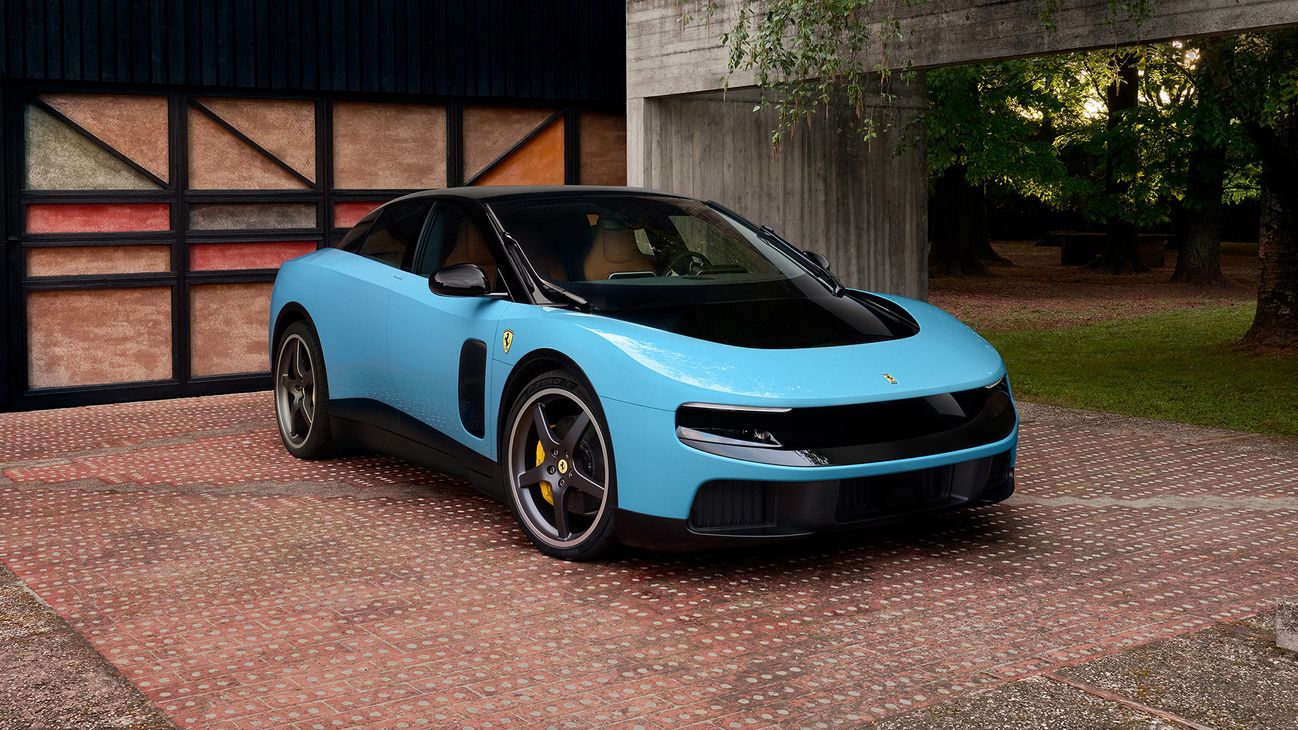
Ferrari Luce
"just as the internet thought it had seen [411.7s] the most controversial car of the year, [413.7s] Ferrari drops the Luce. [415.7s] It is a five-seat, the first ever Ferrari five-seater."
The Ferrari Luce is a new Ferrari concept that’s trying something different: it’s built to carry five people. It’s also described as an electric crossover with unusual “suicide doors,” so it looks and opens in a way most Ferraris don’t.
The Ferrari Luce is notable because it’s described as the first ever Ferrari five-seater, expanding the brand’s usual two-seat supercar formula. The hosts also frame it as an EV crossover with “suicide doors,” which is a distinctive packaging and access choice that’s meant to stand out visually and functionally.
suicide door
"[419.7s] It is a suicide door EV crossover. [423.9s] Same form as the Pura Sangue. [428.7s] Same form?"
A “suicide door” is a door that opens backward from the rear hinge, instead of swinging open from the front hinge like most cars. The idea is usually easier access and a dramatic look, though it requires careful latch and safety design.
A “suicide door” is a door that hinges at the rear (so it opens backward), rather than at the front like conventional doors. On the Ferrari Luce, the hosts also mention recessed/unconventional door latches, which affects how the door is accessed and how the mechanism is packaged.
EV crossover
"[419.7s] It is a suicide door EV crossover. [423.9s] Same form as the Pura Sangue. [428.7s] Same form?"
“EV crossover” means an electric car with an SUV-style shape. The hosts are saying the Ferrari Luce looks like a crossover, but they’re not convinced its proportions are truly in line with what you’d expect from that category.
An “EV crossover” combines two ideas: an electric powertrain (EV) and a crossover body style, which typically blends SUV-like height and practicality with car-like packaging. In this segment, the hosts use it to describe the Ferrari Luce’s intended role and how it’s positioned visually, even while they question whether its proportions truly match a typical crossover.

Purosangue Pura Sangue
"... is a suicide door EV crossover. Same form as the Pura Sangue. Same form?"
The Purosangue is a Ferrari crossover-style vehicle. The podcast mentions its door design and compares its name and shape to another Ferrari reference. The main point here is that it’s a crossover with distinctive styling.
The Purosangue is a Ferrari crossover-style vehicle described in the podcast as a “suicide door EV crossover,” with the conversation focusing on its door design and overall form. It’s being compared to the “Pura Sangue” name, suggesting the episode is discussing naming/identity and styling cues. That makes it relevant to how the car is presented and perceived.

Ford Explorer
".... Halfway between an X5 and an X7 equal to a Ford Explorer. But it is only 60.8 inches high,"
The Ford Explorer is a mid-size SUV meant for everyday driving and family use. It’s popular and easy to find, so it’s a common comparison point for size. In the episode, they’re comparing its height and overall proportions to other SUVs.
The Ford Explorer is a mainstream mid-size SUV that’s widely known for family-friendly practicality and broad availability. In the podcast, it’s used as a familiar size reference when comparing the height and proportions of other SUVs. That makes it relevant to discussions about how “big” different vehicles actually feel.
four motors
"It has four motors. I believe they're also Axial Flux for up to 1,035 horsepower, depending on mode."
Four motors means the car uses multiple electric motors to drive the wheels. That can help the car put power down better and feel more responsive.
A four-motor EV uses multiple electric drive units (often one per wheel or axle) to deliver traction and power more precisely. This can enable stronger performance and more flexible torque distribution between front and rear.
horsepower
"I believe they're also Axial Flux for up to 1,035 horsepower, depending on mode."
Horsepower is a number that tells you how strong the car’s power output is. Higher horsepower generally means the car can accelerate more strongly, especially at peak output.
Horsepower is a measure of how much power an engine or motor can produce. In EVs, it’s commonly used to describe the peak output the system can deliver under certain conditions or modes.
depending on mode
"I believe they're also Axial Flux for up to 1,035 horsepower, depending on mode."
“Mode” means the car has different driving settings. Those settings can change how the electric motors deliver power to the wheels.
“Mode” refers to selectable drive settings that change how the vehicle allocates power and torque. With multi-motor setups, different modes can shift output front vs. rear and affect how the car behaves.
combined power
"There's a... The combined power up front is 282. Combined power at the rear is 831. Those don't necessarily add up to 1035,"
They’re talking about total power, but also how it’s divided between the front and rear motors. The numbers can vary depending on what the car is doing at the time.
“Combined power” here is the total output being discussed as split between the front and rear motor groups. In multi-motor EVs, front and rear can be rated differently, and the total system output depends on how the car is configured and operating.
zero to 62
"Ferrari's claiming zero to 62 in two and a half seconds, [525.0s] which is notably slower than the AMG GT, [527.2s] but 190-something mile an hour top speed,"
“Zero to 62” means how fast a car accelerates from a stop to 62 miles per hour. Faster times generally mean quicker launches.
“Zero to 62” is shorthand for acceleration from a standstill to 62 mph. It’s a common performance metric used to compare how quickly cars build speed.
top speed
"but 190-something mile an hour top speed, [529.7s] which I think is irrelevant. [531.0s] Enormous battery, 122 kilowatt hours,"
Top speed is the maximum speed a car can reach under specified conditions. The hosts call it “irrelevant,” arguing that for many drivers, real-world usability matters more than the absolute maximum number.
EPA range
"but very large battery should give about 280 miles EPA range, [551.4s] compared to Lucid Air, for example, was 112, [554.4s] and that gets about 5,480 or something miles."
EPA range is the official estimate of how many miles an EV can drive on one full charge. It’s based on standardized testing, so it’s useful for comparing different EVs.
EPA range is the estimated driving distance an electric vehicle can travel on a full charge, measured under U.S. Environmental Protection Agency testing procedures. It’s one of the most commonly cited range numbers for EV comparisons.

Lucid Air
"but very large battery should give about 280 miles EPA range, [551.4s] compared to Lucid Air, for example, was 112, [554.4s] and that gets about 5,480 or something miles."
The Lucid Air is an EV sedan that’s famous for going a long distance on a charge. The hosts compare its EPA range to the Ferrari Luce.
The Lucid Air is an electric luxury sedan known for high efficiency and long-range variants. Here, it’s used as a comparison point for the Ferrari Luce’s claimed EPA range.
price conjecture
"Been a lot of conjecture about the price. [573.5s] Everyone's calling it $640,000. [576.0s] I would caution to not jump to that conclusion just yet. [579.8s] That's based on the Euro price that they've announced of $550,000."
They’re talking about guesses people are making about how much the car will cost. The host says you shouldn’t assume the rumor is the final U.S. price yet.
“Price conjecture” here refers to speculation about the Ferrari Luce’s final U.S. pricing before official numbers are confirmed. The hosts contrast rumored figures with the Euro price Ferrari announced.
Euro price
"I would caution to not jump to that conclusion just yet. [579.8s] That's based on the Euro price that they've announced of $550,000. [584.7s] In any case, non-trivial pile of money."
“Euro price” means the price announced for Europe. They’re saying that doesn’t automatically translate to the exact same number in the U.S.
“Euro price” refers to the manufacturer’s announced pricing for the European market. The hosts discuss how currency conversion and market differences can make the U.S. “out-the-door” number differ from what people estimate from the Euro figure.
Rimac
"Matteo Rimac from Rimac made a statement, sort of tongue-in-cheek, saying, a lot of people are asking me about the direction of this industry"
Rimac is a car/tech company known for very advanced performance vehicles. In this clip, Rimac’s founder is basically saying the industry is heading somewhere new.
Rimac is an automotive technology and EV-focused brand associated with high-performance electric drivetrains and ambitious future concepts. Here, Matteo Rimac is referenced as signaling a different direction for the industry, culminating in the mention of the V16 Tobillon.
V16 Tobillon
"Matteo Rimac from Rimac made a statement, sort of tongue-in-cheek, ...and he starts the V16 Tobillon."
“V16” means an engine with 16 cylinders, shaped like a V. “Tobillon” is the name of the project Rimac talked about—basically a hint at what kind of extreme performance direction the industry might be going.
A “V16” is an engine with 16 cylinders arranged in a V shape (two banks of cylinders). The “Tobillon” is the specific project/model name Rimac mentioned, and it signals a move toward a very high-cylinder-count, performance-focused powertrain concept.

Cadillac V16
"...rent direction and we're right. And he starts the V16 Tobillon. Gordon Murray Automotive put out an ad,..."
The Cadillac V16 is an old luxury car famous for having a very large engine. It was built to be impressive and powerful for its time. The podcast brings it up while comparing different kinds of “special” cars.
The Cadillac V16 is a historic luxury car known for its massive V16 engine and top-tier status in its era. In the podcast, it’s mentioned alongside the Gordon Murray Automotive T.50 discussion, likely as part of a comparison of engineering ambition and engine character. That’s why it comes up when talking about standout, special-purpose vehicles.
Gordon Murray Automotive
"Gordon Murray Automotive put out an ad, what looks like effectively an ad that says, some things should never lose their way."
Gordon Murray Automotive is a company that makes performance cars with a strong engineering philosophy. The ad quote in this clip is arguing that some things—like a naturally aspirated V12—should be kept instead of replaced by trends.
Gordon Murray Automotive is a performance-car brand associated with lightweight, driver-focused engineering and a philosophy of refining traditional driving dynamics. In this segment, the brand’s ad message is used to argue for sticking with a naturally aspirated V12 as the “right” direction.
naturally aspirated V12
"While the world reinvents what a car should be, we continue refining what it always has been, meaning a naturally aspirated V12."
“Naturally aspirated” means the engine breathes without a turbo or supercharger. A “V12” is a big 12-cylinder engine, and the point here is that the speaker thinks this kind of traditional setup is what should be preserved.
A naturally aspirated engine doesn’t use a turbocharger or supercharger to force air in; it relies on atmospheric pressure and engine design. A “V12” is a 12-cylinder V-shaped engine, and in this segment it’s used as a shorthand for the classic, traditional Ferrari-style sound and character.
design idiom
"Is that Mercedes sort of created this design idiom to distinguish their new products, …their EV products from their existing cars…"
A “design idiom” is basically a brand’s visual style—like the set of design cues that make one product line look related to another. Here, it’s about whether Mercedes is using a different look for EVs than for its other cars.
“Design idiom” means a recognizable design language—consistent styling cues that make a brand’s products look like they belong together. In this segment, it’s used to suggest Mercedes may be using a distinct visual theme for its EVs.
EV products
"…created this design idiom to distinguish their new products, …their EV products from their existing cars…"
“EV” means electric vehicle—cars that run on electricity instead of gasoline. The point here is that the speaker thinks Mercedes may be treating its electric cars as a separate product identity.
“EV” stands for electric vehicle. The speaker is contrasting Mercedes’ electric-vehicle lineup with its existing (non-EV) cars, implying that the styling and product strategy may be intentionally separated.
lack of continuity
"And I feel like the lack of continuity, and maybe that's part of the objective here, is to create a wedge between the idea about what a Ferrari should be and this car…"
“Lack of continuity” means the car doesn’t seem to follow the same design pattern or identity as earlier cars. In this discussion, it’s framed as possibly being on purpose to change how people see Ferrari.
“Lack of continuity” here refers to a perceived break from a brand’s usual design or engineering themes over time. The host suggests this discontinuity could be intentional—meant to create a “wedge” between what people think Ferrari is and what this new car represents.
wedge between the idea about what a Ferrari should be
"…maybe that's part of the objective here, is to create a wedge between the idea about what a Ferrari should be and this car…"
The host is saying Ferrari might be trying to intentionally change what people think of as a “real Ferrari.” It’s like pushing the brand into a new mindset so fans adjust their expectations.
This phrase describes a deliberate strategy to separate (or “wedge”) the brand’s traditional identity from a new direction. The host interprets it as Ferrari trying to force a redefinition of what a “Ferrari” means to the public.
slow leak out of details on the styling
"I think the slow leak out of details on the styling proves, disproves that sort of conspiracy…"
This means the company is releasing the car’s details little by little, like teaser shots. The host thinks that pattern suggests the car is real and intended for production, not just a publicity stunt.
“Slow leak out of details” refers to a gradual release of information—like teaser images or partial design reveals—rather than a full reveal at once. The host uses it to argue against a conspiracy theory that the company is only trying to provoke outrage without real product intent.
decision tree
"…intending to put it in production. And I think that comes from a decision tree that I think we really need to look at…"
A “decision tree” is a way to think through a problem by asking “if this, then what?” The host is using it as a metaphor for working out the logic behind Ferrari’s choices.
A “decision tree” is a structured way to reason through choices and outcomes by branching on key assumptions. Here, the host uses it metaphorically to frame the logic of why Ferrari would (or wouldn’t) change direction.
Tesla
"And if you had to say, you know, why might someone buy a Taycan instead of a Tesla or even a Lucid, you'd say, well, there, it is very obviously a Porsche."
Tesla is another major electric-car maker. The discussion is basically comparing different EV brands and what makes each one feel different.
Tesla is referenced as a competing EV brand in the “why buy this instead of Tesla” comparison. The host uses it to highlight how EVs can reduce traditional powertrain differentiation, pushing buyers to look for other brand “essences.”
powertrain
"You know, Ferrari has always made their own powertrains in-house. That's true of this vehicle also."
A powertrain is the car’s main “go” system—how it makes power and sends it to the wheels. Here, the host is saying Ferrari is known for designing and building that system themselves.
A powertrain is the vehicle’s main mechanical/energy system that turns energy into motion—typically including the engine (or motor), transmission, and drivetrain components. The host is emphasizing Ferrari’s tradition of designing and building its own powertrains in-house as a key part of the brand’s identity.
high-revving V12
"no one else makes a naturally aspirated high-revving V12 that is sort of built in-house and has that anima, the soul of Ferrari."
A V12 is an engine with 12 cylinders. “High-revving” means it’s made to spin fast, and the host is saying that’s a big part of what makes Ferrari feel like Ferrari.
A V12 is an engine with 12 cylinders arranged in a “V” shape, and “high-revving” means it’s designed to spin at relatively high engine speeds. The host frames Ferrari’s in-house naturally aspirated high-rev V12 as part of the brand’s emotional “soul.”
foundries
"they have their own foundries, you know, that's been something they always prided themselves on is that they literally are casting the power plants in-house."
A foundry is a factory that makes metal parts by pouring molten metal into molds. The host is saying Ferrari has historically done this in-house for key powertrain components.
In this context, “foundries” refers to manufacturing facilities for casting metal parts—specifically, Ferrari’s pride in casting powertrain components themselves. The host is using it to argue Ferrari’s in-house production is part of the brand’s technical identity.
rolling impractical piece of art
"the further a Ferrari gets from a rolling impractical piece of art, the harder of a sell it is, and the less it's worth on the second-hand market."
This phrase means a car people love mostly for how it looks and feels—more like a collectible than a practical daily driver. The hosts are saying that when a Ferrari feels less like that kind of “art,” buyers get less excited and resale value can suffer.
“Rolling impractical piece of art” is an enthusiast shorthand for a sports car that’s valued as much for its styling and emotional appeal as for practicality. In this segment, it’s used to argue that the farther Ferrari strays from that ideal, the harder it becomes to sell and the less it tends to be worth later.
second-hand market
"the harder of a sell it is, and the less it's worth on the second-hand market."
This just means the market for used cars—what people pay when buying them after the original owner. The hosts are saying that if a Ferrari doesn’t match what collectors want, it can be harder to sell later and may cost less.
“Second-hand market” refers to the used-car resale market, where prices are driven by demand, desirability, and how well a model holds its reputation over time. The hosts connect it to how design choices and buyer perception can affect resale values.

Ferrari FF
"Four seat Ferraris are- Have always been like this. The FF was controversial when it came out."
The Ferrari FF is a Ferrari with four seats, meant to be more usable than some other Ferraris. The hosts are saying it was criticized when it first came out, mainly because people didn’t like how parts of it looked compared to classic Ferrari styling.
The Ferrari FF is a four-seat Ferrari (a “2+2”) that arrived with a more practical, grand-touring focus than many traditional Ferrari buyers expected. It’s described as controversial at launch—especially in how its front and rear styling read differently to enthusiasts—showing how design language affects acceptance and desirability.
two plus twos
"the two plus twos have always been sort of, you know, eschewed by or rejected by collectors as being insufficiently sexy."
“Two plus twos” means the car has four seats, but the back seats are usually tighter and less important than the front. The hosts are saying some collectors don’t like that because they want a more hardcore, two-seat sports-car vibe.
“Two plus twos” (2+2) describes a car layout with two primary seats up front and two smaller rear seats. In enthusiast circles, 2+2s can be viewed as less “pure” than strict two-seat sports cars, which is why the hosts say collectors often reject them as insufficiently sexy.
Enzo Ferrari
"These of course were the cars that Enzo Ferrari himself preferred the most."
Enzo Ferrari was the man who started Ferrari. In this segment, they’re saying he personally preferred the four-seat Ferraris, which is meant to counter the criticism those cars get.
Enzo Ferrari was the founder of Ferrari and a central figure in shaping the brand’s identity and priorities. Here, he’s cited as preferring the four-seat (2+2) cars most, which is used to challenge the idea that these models are inherently “wrong” for Ferrari.
FF
"Or did Ferrari require that you buy an FF? No, no, no, I'm talking about the 1960s. ... The guy could have bought either a 250 GTE, which is the FF of its day."
“FF” here is being used as a shorthand for a Ferrari that’s meant to be more practical and family-friendly than a pure race-style car. The host compares other Ferraris to the FF to make the point about back seats and everyday usability.
“FF” is Ferrari’s model designation for the Ferrari FF, which is known for being a more practical grand tourer compared with many two-seat Ferraris. In the transcript, the host uses “FF” as a shorthand for “the usable Ferrari of its day,” specifically when comparing the 250 GTE to a race car.

Ferrari 365 two plus two
"In the 1960s and 70s, I'm talking about like the 365 two plus two, they built 800 something of those cars against, well, okay, I shouldn't use a Ferrari Daytona"
The Ferrari 365 “two plus two” is a Ferrari grand tourer with back seats. The host is using it to make the point that cars with rear seats were often more practical for everyday life, so they could be easier to convince buyers to purchase.
The Ferrari 365 “two plus two” is a grand tourer built in the 1960s that emphasizes usability—two seats up front plus two smaller rear seats. The host uses it as an example of how Ferrari’s four-seat configurations could be easier to sell to families than strict two-seat sports cars.

Ferrari Daytona
"they built 800 something of those cars against, well, okay, I shouldn't use a Ferrari Daytona, but actually if you use a Ferrari Daytona example, they built more Daytonas."
The Ferrari Daytona is one of Ferrari’s best-known classic sports-car names. In this discussion, it’s used as a reference point while comparing which Ferraris were built in larger numbers and which were easier to sell.
The Ferrari Daytona is a famous Ferrari sports car name from the late 1960s/early 1970s era, often used as a shorthand for the brand’s two-seat, performance-focused cars. Here, the host mentions it to compare production counts and market appeal versus other Ferrari models with different seating layouts.

Ferrari 275 GTB
"But they built fewer 275 GTB fours. They built fewer 275 GTBs. They built fewer Lucos."
The Ferrari 275 GTB is a classic Ferrari from the 1960s that’s known for being a two-seat car. The host is using it to explain that cars without back seats were often harder to sell to buyers who wanted practicality.
The Ferrari 275 GTB is a classic two-seat Ferrari grand touring/sports car from the 1960s. The host contrasts its lower production numbers with four-seat “two plus two” cars, arguing that the two-seat layout didn’t sell as well.

Ferrari 250 GTE
"The guy could have bought either a 250 GTE, which is the FF of its day. It's the two plus two car brand new, or he could have bought a used race car 250 GTO."
The Ferrari 250 GTE is described as the more practical choice—basically the “family-friendly” Ferrari option of its time. In the story, the buyer picks it over a race car because it has back seats and is easier to live with.
The Ferrari 250 GTE is presented here as the “FF of its day,” meaning a more usable, four-seat grand touring Ferrari compared with a race-bred option. The host’s anecdote centers on a buyer choosing the 250 GTE because it had back seats, making it easier to sell to his wife.

Ferrari 250 GTO
"or he could have bought a used race car 250 GTO. They were the same price and he chose to buy the GTE instead of the GTO because it had back seats and it was an easier sale for his wife."
The Ferrari 250 GTO is treated here like a race-focused car. In the anecdote, it costs about the same as the 250 GTE, but the buyer chooses the 250 GTE because it’s easier to justify at home thanks to the back seats.
The Ferrari 250 GTO is a used “race car” option in the anecdote—contrasted directly with the more practical 250 GTE. The host uses the story to illustrate how buyers sometimes chose usability (back seats) over pure track pedigree when the price was similar.
power steering
"and this is true of the two plus twos in the late 60s and into the 70s and always since is that they had power steering."
Power steering makes the steering wheel easier to turn, especially at low speeds. The host is using it as evidence that these older Ferraris were built to be driven more often, not just admired. It’s one of the comfort/convenience features that changes daily usability.
Power steering uses a mechanical/hydraulic or electric assist to reduce the effort needed to turn the wheels. The host brings it up to explain why certain late-60s/70s Ferraris (especially 2+2s) are more usable in everyday driving. It’s a “live-with-it” feature rather than a pure performance spec.
automatic transmission
"You could get an automatic transmission starting with the 400 GT, two plus two, 79 or so."
An automatic transmission shifts gears for you, so you don’t have to use a clutch or manually change gears. The host is pointing out that some of these older Ferraris could be had with an automatic, which makes them easier to drive day-to-day. That’s part of why he thinks they’re more practical than people assume.
An automatic transmission changes gears for you using hydraulic/electronic control, rather than requiring the driver to operate a clutch and shift manually. The host notes that an automatic was available starting with the “400 GT” 2+2, emphasizing usability and daily drivability. In other words, the discussion is about how the car fits real-life driving needs.

Lamborghini 400 GT
"...d get an automatic transmission starting with the 400 GT, two plus two, 79 or so. The reality of living wi..."
The Lamborghini 400 GT is an older Lamborghini designed for fast, comfortable driving over longer distances. The podcast mentions that some versions could be ordered with an automatic transmission and a two-plus-two seating setup. It’s being used as an example of how buyers could choose different specs.
The Lamborghini 400 GT is a classic grand tourer from Lamborghini’s earlier era, known for its blend of performance and long-distance comfort. In the podcast, it’s mentioned with details like automatic transmission availability and seating layout, which points to how buyers could specify different configurations. That makes it relevant to discussions about how these cars were actually used and ordered.

Ferrari 308 GT4
"And they all did sell, the 308 GT4 did sell 2700 units, which was an enormous amount for Ferrari, right?"
The Ferrari 308 GT4 is a Ferrari with a mid-engine layout and a 2+2 seating setup, meant to be more practical than some of the brand’s rarer cars. In this segment, the host highlights that Ferrari built about 2,700 of them, which is a lot for Ferrari. That production number is part of why people may not treat it like an ultra-rare “holy grail” car.
The Ferrari 308 GT4 is a mid-engine Ferrari built as a more usable “grand tourer” with a 2+2 layout. It’s notable here because the host cites production of 2,700 units, framing it as an unusually high number for Ferrari and helping explain why it’s often misunderstood versus rarer halo models. The point is about how production volume affects perception and market behavior.
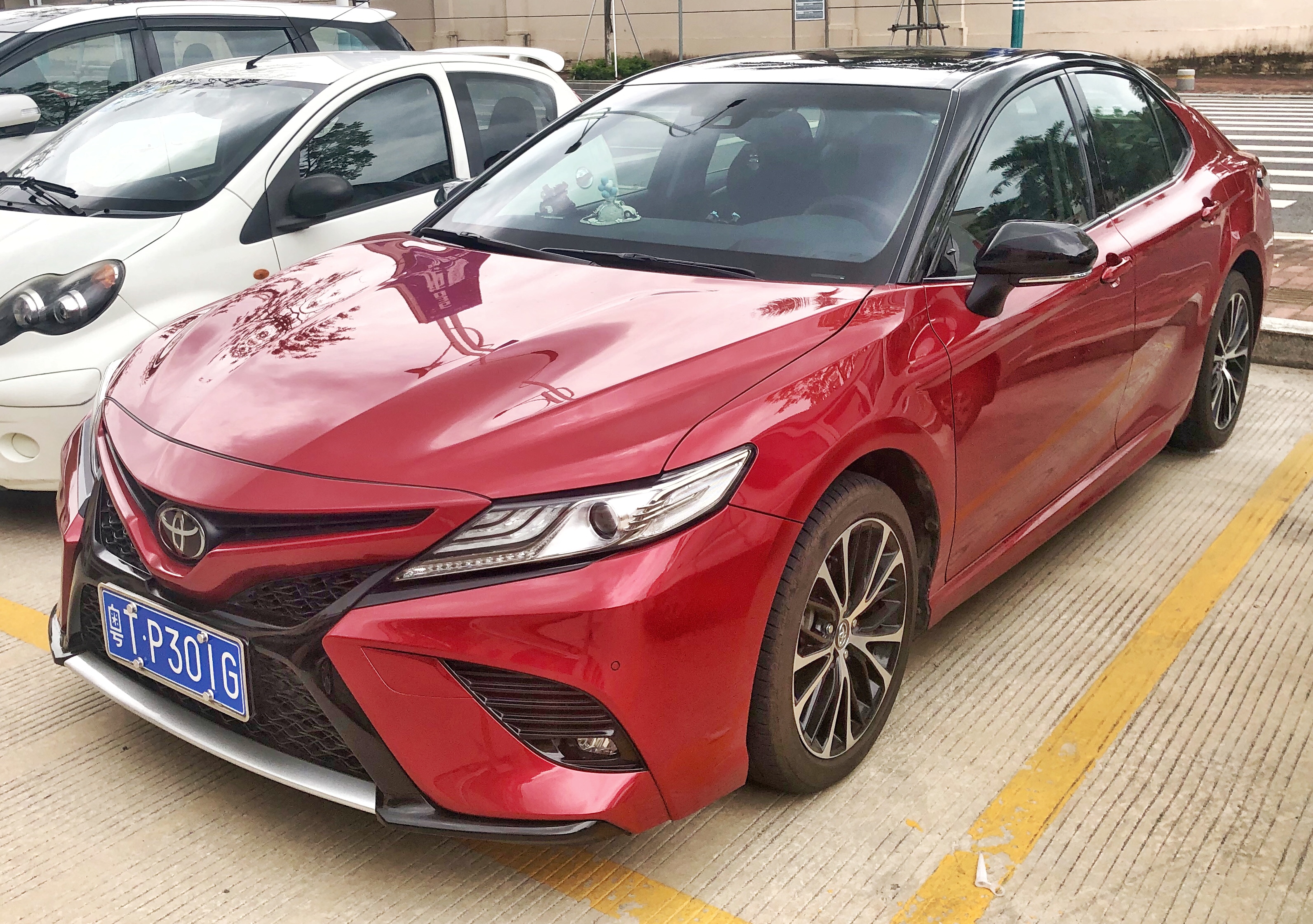
Toyota Camry
"I just want a car to drive around and same as an average person [1508.9s] would use Toyota Camry for."
The Toyota Camry is a common, practical car many people use for everyday driving. The host mentions it to show what “normal” daily needs look like versus luxury Ferraris.
The Toyota Camry is a mainstream midsize sedan used as a stand-in for an “average person’s” practical daily driver. The segment uses it to contrast normal transportation needs with what very wealthy buyers want from a car.

Ferrari 456
"in something that's useful, then they choose the FF. [1517.4s] They choose the 456."
The Ferrari 456 is a Ferrari designed for long-distance driving and everyday comfort. In the conversation, it’s mentioned as another Ferrari people choose because it fits their lifestyle.
The Ferrari 456 is a front-engine grand tourer from Ferrari known for being a more “normal” way to use a Ferrari—comfortable enough for regular driving compared with many more hardcore models. Here it’s grouped with other Ferraris chosen for daily usability rather than for investment value.

Ferrari 612 Scaglietti
"They choose the 456. [1519.3s] They choose the 612 Spaghetti or Scaglietti or whatever it's called."
The Ferrari 612 Scaglietti is a big, comfortable Ferrari with a V12 engine. The hosts are using it as an example of a Ferrari people buy to drive regularly.
The Ferrari 612 Scaglietti is a grand tourer with a V12 engine, built for high-speed comfort and long-distance cruising. In this segment it’s cited as part of a set of Ferraris that wealthy buyers choose to actually drive, not to chase resale value.

Mercedes-Benz S-Class
"It's like an alternative for them to an S-Class almost. [1530.1s] And S-Classes also cost a pile of money that's quite tall, you know,"
The Mercedes-Benz S-Class is a top-tier luxury car that people buy for comfort and convenience. The host is saying some rich buyers treat the Ferrari FF like an alternative to that kind of daily luxury.
The Mercedes-Benz S-Class is the brand’s flagship luxury sedan, often bought by people who want maximum comfort and convenience. The segment compares the Ferrari FF to an S-Class “almost,” framing the Ferrari as a similar kind of daily-use luxury choice for certain buyers.
Facebook Marketplace
"200 grand and then they end up being worth 67 cents on Facebook Marketplace [1537.5s] and then I buy them."
Facebook Marketplace is a website/app where people sell used stuff locally. The host is using it as an example of how cheap some expensive cars can look when you try to resell them.
Facebook Marketplace is an online classifieds platform where used items—including cars—are listed and sold. The host uses it to illustrate how certain luxury cars can end up with low resale prices compared with what they cost new.
depreciation
"But the point of all that is that they're not concerned about depreciation [1543.0s] and they're not buying the car for its value in the future"
Depreciation means a car usually becomes worth less as time goes on. The host is saying some rich buyers don’t care if their car loses value, because they’re buying it to use.
Depreciation is the loss of a car’s value over time. The host’s point is that some very wealthy buyers aren’t worried about depreciation, so they buy for how the car fits their daily needs rather than for future resale value.

Mercedes E-Class
"Sure, but you could also, you know, you could buy a Mercedes E-Class [1566.1s] instead of a Ferrari FF and also not have to walk to get places."
The Mercedes E-Class is a luxury sedan that’s typically less expensive than the top S-Class. The host is saying you could choose an E-Class instead of a Ferrari if your goal is just daily transportation.
The Mercedes E-Class is a mainstream luxury sedan line positioned below the S-Class in Mercedes-Benz’s hierarchy. Here it’s used as a cheaper alternative to a Ferrari FF for buyers who mainly want a comfortable car to get around.

Porsche Cayenne
"It's why Cayenne exists. It's why X5 exists."
The Porsche Cayenne is Porsche’s SUV. It’s important because it brought Porsche into a more everyday, practical type of car, which some fans see as a change from the brand’s traditional sports-car focus.
The Porsche Cayenne is Porsche’s SUV that helped expand the brand beyond traditional sports cars. In this segment, it’s referenced as a key example of a model that “exists” for practical reasons, even if it represents a departure from what some purists expect from Porsche.

BMW X5
"It's why Cayenne exists. It's why X5 exists."
The BMW X5 is BMW’s SUV. The point being made is that SUVs like this exist because they sell well and fit real-world needs, even if some enthusiasts prefer the brand’s more traditional style.
The BMW X5 is a mid-size luxury SUV that became a major part of BMW’s lineup. Here it’s mentioned alongside the Porsche Cayenne as another example of a model that exists for broader market reasons rather than strict adherence to a brand’s “philosophy.”
Mercedes ML
"You know, those were both and Mercedes ML. Those are sort of all aberrations in that."
The Mercedes ML is Mercedes’ SUV from earlier years. The hosts are using it as an example of how luxury brands expanded into SUVs, which some purists don’t love.
The Mercedes-Benz M-Class (often shortened to “ML”) was Mercedes’ early mainstream SUV that helped establish the luxury SUV market. In the discussion, it’s grouped with the Cayenne and X5 as part of the shift toward SUVs that some people view as departures from brand tradition.

Bentley Bentayga
"Same thing with Bentley Bentayga, right? And we have Bentley Continental GT behind us..."
The Bentley Bentayga is Bentley’s SUV. The hosts are saying it makes more sense to many buyers because it’s more practical than some of Bentley’s other, more niche styles.
The Bentley Bentayga is Bentley’s SUV, designed to deliver Bentley’s luxury and grand-touring feel in a more practical package. The segment contrasts it with other Bentley models to argue that the Bentayga sells more because it’s more useful and easier to justify for buyers.

Bentley Continental GT
"And we have Bentley Continental GT behind us, which unfortunately we're not going to mention..."
The Bentley Continental GT is Bentley’s luxury grand tourer—more focused on long-distance driving in a sporty coupe. The hosts are comparing it to the Bentayga to explain why the SUV is the bigger seller.
The Bentley Continental GT is Bentley’s grand tourer (GT) coupe, built for long-distance comfort and high-end performance. In this segment it’s referenced as the car “behind us,” and it’s contrasted with the Bentayga to highlight that the SUV outsells the GT because it’s more broadly useful.
grand tourer
"Bentley as a GT, as a grand tourer meant to travel great distances."
A grand tourer, or GT, is a luxury car made for long trips. It’s usually comfortable for everyday driving but also has enough power and smoothness to travel quickly over distance.
A grand tourer (GT) is a car type designed for comfortable, high-speed long-distance travel—typically combining strong performance with a focus on refinement. The hosts use it to describe Bentley’s identity as a car meant to cover “great distances.”

Volkswagen Touareg
"[1661.0s] And some of it was justified. [1662.6s] Look, it was a Volkswagen Touareg. [1664.9s] It was morbidly obese. [1667.7s] There were some problems with it."
They’re comparing the Porsche Cayenne’s background to the Volkswagen Touareg. The idea is that the Cayenne started from a more mainstream SUV base, which affected how people judged it at first.
The Volkswagen Touareg is referenced as the platform/origin point for the “Cayenne” comparison. The host’s point is that the Porsche Cayenne’s early reception was shaped by its roots in a mainstream, mass-market SUV formula—described here as heavy and problem-prone.

Rolls-Royce Spectre
"[1702.1s] Well, let's look at high-end EVs for a second. [1706.7s] So we have one success story, which is Rolls-Royce Spectre. [1711.3s] Is that I didn't know anything? [1712.6s] 1,000 units last year"
They’re using the Rolls-Royce Spectre as an example of a luxury electric car that sold enough units to be considered a win. The point is that even if an EV isn’t practical for everyone, it can still succeed with the right customers.
The Rolls-Royce Spectre is cited as a “success story” among high-end EVs, with the host pointing to its annual sales volume. The implication is that even a very expensive, practicality-challenged EV can succeed if it reaches the right niche buyers.
high-end EVs
"[1698.9s] for the luce? [1700.1s] You know, what kind of volume do they have to sell? [1702.1s] Well, let's look at high-end EVs for a second. [1706.7s] So we have one success story, which is Rolls-Royce Spectre."
This means expensive, luxury electric cars. The hosts are using them as a benchmark to discuss how many units a premium EV would need to sell to be considered successful.
“High-end EVs” refers to electric vehicles aimed at luxury or premium buyers, typically with higher prices, more advanced features, and smaller sales volumes than mainstream EVs. In the segment, it’s used to frame what “success” might look like for a luxury brand’s EV or EV-adjacent strategy.
combustion first car
"[1748.8s] which is obviously Oremats, which is a combustion first car. [1752.4s] And so we right now don't see a history of success"
It means the car is mainly focused on gas (or other fuel) engines instead of being electric-first. The host uses it to argue that hypercar buyers still respond more to the traditional experience.
“Combustion first car” means the brand’s priority is traditional internal-combustion powertrains rather than going all-in on electric. In this segment, it’s used to contrast with the earlier EV efforts and to support the idea that the hypercar buyer still wants drama from combustion.
hypercar
"And so that category of car, the hypercar, [1766.4s] is driven by drama and a sort of emotional response."
A hypercar is a top-tier, very exclusive supercar—usually expensive and built in small numbers. The host’s point is that people buy them for excitement and emotion, not because they’re the most sensible choice.
A hypercar is an ultra-high-end, low-volume performance car—typically with extreme power, advanced engineering, and a strong “halo” status. In this segment, the host argues hypercars are bought for emotion and drama rather than rational decision-making.

Gordon T50
"what does? And Gordon Murray's cars, the T50, T33, all of those variants seem to have captured..."
The Gordon Murray Automotive T.50 is a high-performance supercar. The podcast mentions it along with other similar cars from the same maker. The point is that it’s been successful at winning attention for how it’s engineered and built.
The Gordon Murray Automotive T.50 is a modern supercar created by Gordon Murray Automotive, known for its focus on driver experience and engineering. In the podcast, it’s grouped with other Murray models (like the T.33) as cars that have “captured” certain attention or appeal. That’s why it’s mentioned as a standout in a set of performance-focused vehicles.
bedroom wall lust factor
"Without the bedroom wall lust factor, [1917.4s] actual paying customers are not going to open their wallets."
The host is talking about how some cars become “dream cars” for kids and teens—like something you’d want just because it looks cool. He’s saying that doesn’t automatically mean people will buy them.
“Bedroom wall lust factor” is the idea that a car becomes a fantasy object for young enthusiasts—something they want to own because it looks and feels iconic. The host contrasts that emotional, aspirational appeal with whether the brand can convert it into actual sales.
absenteeism from the market
"So Ferrari, from my perspective, is battling right now [1932.7s] an absenteeism from the market."
This is a metaphor for a brand not showing up where people are paying attention. The host thinks Ferrari’s limited social media/influencer presence makes it harder to build interest with younger buyers.
“Absenteeism from the market” here is a metaphor for a brand being effectively absent from public attention and consumer-facing exposure. The host argues Ferrari’s limited presence in social media and influencer channels reduces awareness and interest among younger buyers.
press cars
"But what I've seen is for 10 or 15 or 20 years, [1949.7s] doing this 20 years, for 20 years, [1951.6s] Ferrari has been very, it's been difficult to get press cars out of Ferrari"
“Press cars” are cars that manufacturers loan to journalists so they can review them. The host is saying Ferrari is harder than some brands to get those cars from.
“Press cars” are vehicles provided to journalists and media outlets for reviews, photos, and test drives. The host claims Ferrari is difficult to get press cars from, implying the brand tightly controls how its cars are presented.

Honda Prelude
"knowing that the traffic will be smaller than something, I could do something on a Honda Prelude, and it would probably do more views"
The Honda Prelude is a regular, everyday sports car compared to a Ferrari. In this discussion, it’s mentioned as the kind of car that might get more clicks and attention than a Ferrari.
The Honda Prelude is a Japanese sports coupe known for being more mainstream and affordable than exotic Ferraris. Here, it’s used as a comparison point for audience interest—suggesting a “more everyday” car can outperform an iconic Ferrari in online engagement.
more views and get more engagement and more excitement
"I could do something on a Honda Prelude, and it would probably do more views and get more engagement and more excitement and be more interesting of a story, frankly, than Testerosa."
They’re talking about how people on the internet react to car videos. The point is that a “less fancy” car can sometimes get more attention than a famous supercar.
This is a discussion of how audience behavior online affects what car content gets made and promoted. The host is arguing that the internet’s attention can be driven more by perceived relatability and story interest than by the car’s prestige.
stratification that is happening between the everybody else and the 1%
"because- I mean, this is a reflection, I think, of this stratification that is happening between the everybody else and the 1%,"
They’re saying there’s a gap between regular people and the very wealthy. Their idea is that this kind of divide can affect what car brands people feel excited about online.
“Stratification” here refers to a widening divide in interests and attention between the general public and the wealthiest “1%.” The host is using it to explain why Ferrari—an expensive brand—may not be getting the same broad enthusiasm as more accessible cars.

Ferrari 360 CS
"but also it's happening with 360 CSs and 430 Scuderias and Speciales and 812 Competizione"
The Ferrari 360 CS is a more performance-oriented version of the Ferrari 360. It’s the kind of special Ferrari that tends to be more collectible, so its price can jump when demand increases.
The Ferrari 360 CS is a track-focused variant of the Ferrari 360, known for a more aggressive, lighter setup and sharper driving feel than the standard car. In enthusiast circles it’s often treated as a “special” model, which can make it more desirable when values rise.

Ferrari 430 Scuderia
"and 430 Scuderias and Speciales and 812 Competizione,"
The Ferrari 430 Scuderia is a lighter, more track-focused Ferrari 430. Limited, special versions like this can become more valuable when collectors want them.
The Ferrari 430 Scuderia is a lightweight, track-oriented version of the Ferrari 430, built to feel more focused and less “grand touring” than the base model. Because it’s a limited, enthusiast-targeted variant, it often benefits when Ferrari values rise.
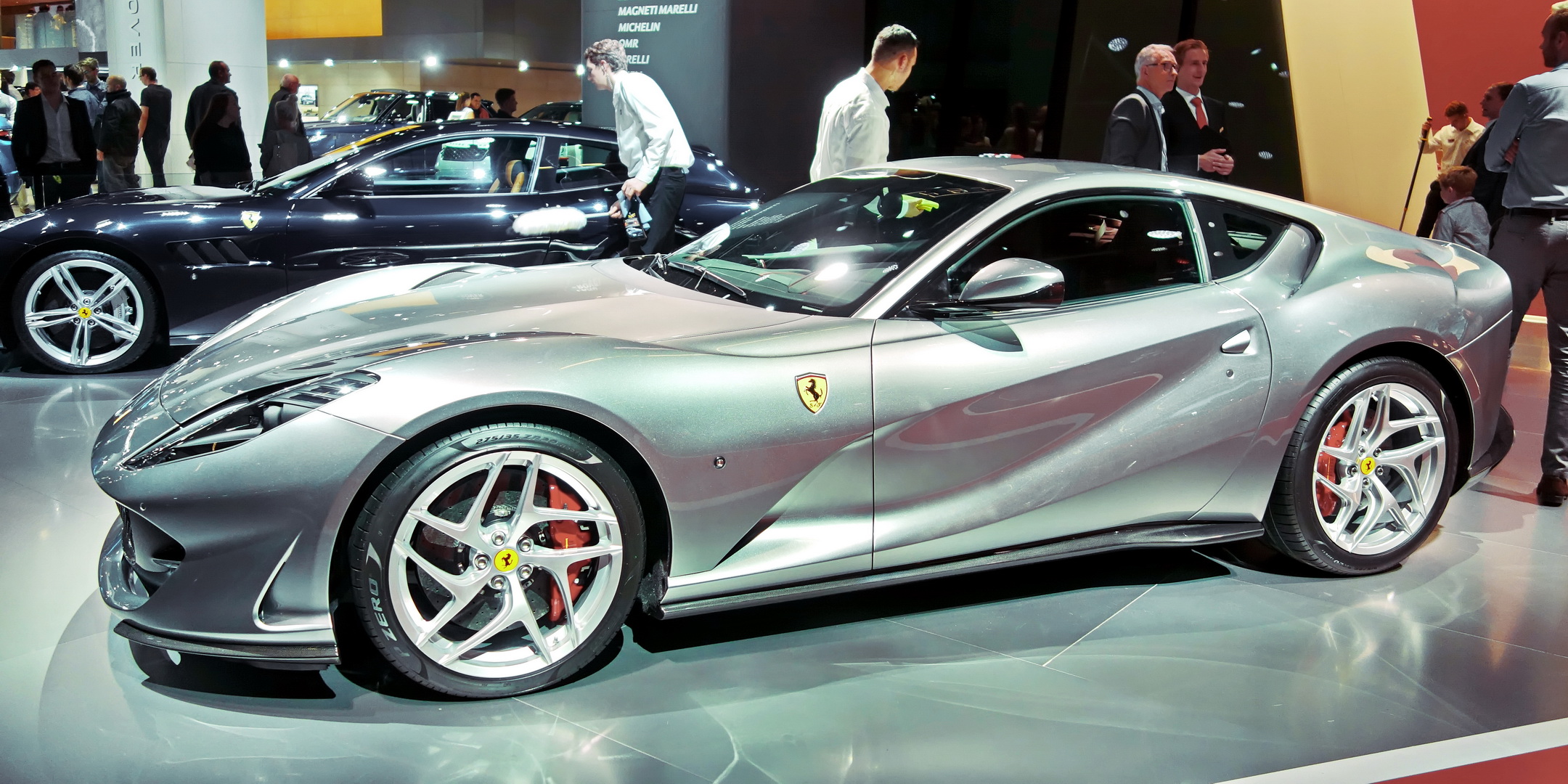
Ferrari 812 Competizione
"and Speciales and 812 Competizione,"
The Ferrari 812 Competizione is a more extreme, performance-focused version of the Ferrari 812. Cars like this are often sought after by collectors, which can push prices up.
The Ferrari 812 Competizione is a high-performance, track-focused evolution of the Ferrari 812 Superfast, emphasizing sharper dynamics and a more extreme driving experience. It’s part of Ferrari’s recent pattern of “special” variants that can command strong collector demand.
exploding in value
"they're all just absolutely flying off the shelves and exploding in value,"
“Exploding in value” just means the car’s price is jumping a lot and quickly. For collector cars, that usually happens when more people want them than there are cars available.
“Exploding in value” is a colloquial way to describe a rapid increase in market price over a short period. In collector-car talk, it usually points to strong demand and limited supply pushing resale prices sharply higher.

Ferrari Roma
"That's where I'm talking. I'm talking Roma, Portofino, 296, all of the current cars."
The Ferrari Roma is a modern Ferrari meant to be driven more like a grand tourer—comfortable for longer trips but still very special. The host brings it up as one of the current Ferraris he’s talking about.
The Ferrari Roma is a modern Ferrari grand tourer built around a more “usable” daily-driver personality than many track-only variants. In the segment, it’s mentioned as part of the current lineup that the host says should be the only focus when discussing new-car pricing.

Ferrari Portofino
"I'm talking Roma, Portofino, 296, all of the current cars."
The Ferrari Portofino is a modern Ferrari that’s designed for cruising, and it’s a convertible. The host mentions it as one of the current Ferraris he wants to focus on.
The Ferrari Portofino is a modern Ferrari convertible grand tourer, positioned as a more relaxed alternative to the brand’s more extreme models. It’s referenced here as part of the “new cars only” set the host uses to discuss how Ferrari pricing and demand are behaving.
Spiccialli versions
"But again, it's always the Spiccialli versions that are doing well."
Ferrari sometimes makes special limited versions of a model. The host is saying those “special” versions are the ones that usually do best in the market.
“Speciali” (as referenced by the host’s pronunciation “Spiccialli”) refers to Ferrari’s special-edition variants—limited, more focused versions of mainstream models. The idea is that these “special” trims tend to attract collectors and therefore hold value better than the base cars.

Subaru 360
"...at are doing well. And I think that those regular 360s are getting dragged up as well, actually now."
The Subaru 360 is a very small older car made in Japan. It was designed to be compact and efficient. The podcast mentions it as a model that’s getting more attention, which can also help similar versions sell better.
The Subaru 360 is a small, early Japanese kei car known for its compact size and historical role in postwar-era motoring. In the podcast, it’s mentioned as something that’s doing well, with regular versions being “dragged up” too. That suggests the conversation is about collector interest and market momentum for these older small cars.

Ferrari Challenge Stradale
"and registering with Ferraris that you own, a Challenge Stradale and an F-50 and whatever else"
The Ferrari Challenge Stradale is a more track-oriented Ferrari than the regular model. Here, the hosts mention it as one of the Ferraris that can help an owner qualify for special treatment when buying other new Ferraris.
The Ferrari Challenge Stradale is a track-focused version of the 599-era Ferrari 599 platform, built to feel more like a race car than a grand tourer. In this segment, it’s used as an example of a Ferrari that owners can register to build “credit” toward buying other new cars.

Ferrari F-50
"a Challenge Stradale and an F-50 and whatever else"
The Ferrari F-50 is a rare, high-performance Ferrari from the 1990s. The hosts bring it up because owning cars like this can help someone qualify for access to buying newer Ferraris.
The Ferrari F-50 is a limited-production, naturally aspirated supercar from Ferrari’s 1990s era, known for its race-bred character and rarity. In this discussion, it’s grouped with other rare Ferraris to illustrate how owning certain models can be part of a Ferrari “credit” or allocation pathway for buying new cars.

Ferrari Enzo
"Since Enzo values exploded in, just call it January or the beginning of the last six months... despite the fact that they allegedly made 400 Enzos, but there's at least 535 known vins for Enzos."
The Ferrari Enzo is one of Ferrari’s most famous rare supercars. The hosts are talking about how much the Enzo is worth compared to other Ferraris, and how the market seems to value it more than you’d expect.
The Ferrari Enzo is Ferrari’s iconic early-2000s halo supercar, famous for its extreme performance and for becoming a benchmark in the collector market. In this segment, the hosts compare Enzo values to the MC-12, noting that Enzo production claims and known VIN counts don’t line up with how the market prices them.

Ferrari MC-12
"Finally, the first MC-12 has publicly sold and it made nine point something, which objectively is a little bit light compared to what Enzo values are doing"
The Ferrari MC-12 is a very rare, race-inspired Ferrari. The hosts are comparing what it sells for versus the Ferrari Enzo and saying the MC-12 doesn’t get valued as highly as it “should,” largely due to how people perceive the Ferrari brand.
The Ferrari MC-12 is a limited-run, track-oriented supercar based on Ferrari’s Enzo-era platform, built to be more race-like than a typical road car. Here, the hosts discuss its public sale price versus the Ferrari Enzo, arguing that the MC-12 “should” be worth more but isn’t—because of Ferrari brand mystique and buyer psychology.

Maserati MC12
"or the beginning of the last six months. Finally, the first MC-12 has publicly sold and it made nine point something,"
The Maserati MC12 is a rare, high-performance supercar. Because it’s made in very limited numbers, it tends to attract collectors. The podcast mentions it in the context of a notable public sale.
The Maserati MC12 is a limited-production supercar built for extreme performance and exclusivity. In the podcast, it’s referenced with a sales milestone (“the first MC-12 has publicly sold”), highlighting its rarity and collector appeal. That makes it relevant to discussions about high-end supercar markets and ownership interest.
VINs
"despite the fact that they allegedly made 400 Enzos, but there's at least 535 known vins for Enzos."
A VIN is a unique ID number for a specific car. The hosts are using VIN counts to talk about how many Enzos are actually out there, which influences how rare and valuable they seem.
VINs are Vehicle Identification Numbers—unique codes used to identify individual cars. Here, the hosts use “known VINs” to argue about how many Enzos exist versus what Ferrari allegedly produced, which affects how collectors and investors think about scarcity.
Request an Explanation
Heard something you'd like explained? We'll add it to this episode.
Sign in to request explanations for terms you heard.
Want to learn more?
Browse our glossary for plain-English explanations of automotive terms, jargon, and concepts.
Help improve this episode
See something that's not quite right? Our annotations are AI-generated and can sometimes miss the mark. Click the flag icon on any annotation to suggest a correction.
5 community members have helped improve this episode.