Is The Ferrari Luce The Most Misunderstood Ferrari Ever? — Carmudgeon w/ Cammisa & DTS — Ep 239
The Carmudgeon Show
Is The Ferrari Luce The Most Misunderstood Ferrari Ever? — Carmudgeon w/ Cammisa & DTS — Ep 239The Carmudgeon Show · Jun 2, 2026
Annotations will appear as you listen
0:00
91:24
Term
contrarian
A contrarian is a person who often disagrees with the crowd. The host is saying they might be challenging the popular opinion about these new cars.
Term
all electric three motor AMG
“All electric” means it runs on electricity only. “Three motor” means the car has three electric motors working together, which can help it accelerate strongly and manage grip.
They compare the new EV to the Porsche Taycan. That’s a well-known fast electric Porsche, so it’s basically the reference point for “how good” this competitor is supposed to be.
Axial flux motors are a type of electric motor design. The big idea is that they can be built to fit better and make a lot of power without being as heavy as some other motor designs.
Power density is how much power a system can produce relative to its weight or size. In EV terms, higher power density helps deliver strong acceleration because the car can pack more usable electrical power into a smaller, lighter package.
“Power per weight” is a performance metric that compares how much power a drivetrain can produce relative to its mass. Higher power-per-weight usually means the car can feel more responsive and can potentially deliver stronger acceleration without adding extra weight.
Thermal management is the system of cooling/heating strategies that keeps components within safe operating temperatures. In EVs, it’s crucial because overheating limits how much power the motor/inverter can sustain over time (often called power derating).
Thermal mass is how much heat a component can absorb before its temperature rises significantly. Smaller thermal mass can mean less “buffer” against heat buildup, so the system may not sustain peak power for as long.
An 800 volt architecture is an EV electrical system design that uses a higher-voltage battery/inverter setup. Higher voltage can reduce current for the same power, which can improve charging speed and reduce losses in high-power operation.
Kilowatts measure how much power is being delivered. For EVs, more kilowatts generally means the battery can charge faster, if the charger and the car support it.
“Charging 10 to 80%” is a common EV benchmark because charging is typically fastest in the middle of the state-of-charge range and slows near 0% and 100%. It’s a standardized way to compare how quickly different EVs (and charging setups) can add usable energy.
A rear spoiler is a shape on the back of the car that helps the airflow behave better. That can make the car feel more stable, especially at higher speeds.
A rear diffuser is an aero piece under the back of the car. It helps the air leaving the car work more efficiently, and if it deploys at speed, it’s meant to improve stability when you’re going faster.
“Fake V8 noises” means the car uses speakers to create an engine sound that imitates a V8. Some people like it for familiarity, but others think it sounds fake.
NVH is a car term for how much noise and vibration you feel and hear, and how rough it feels. Here, the car uses seat vibrations to imitate what a V8 would feel like.
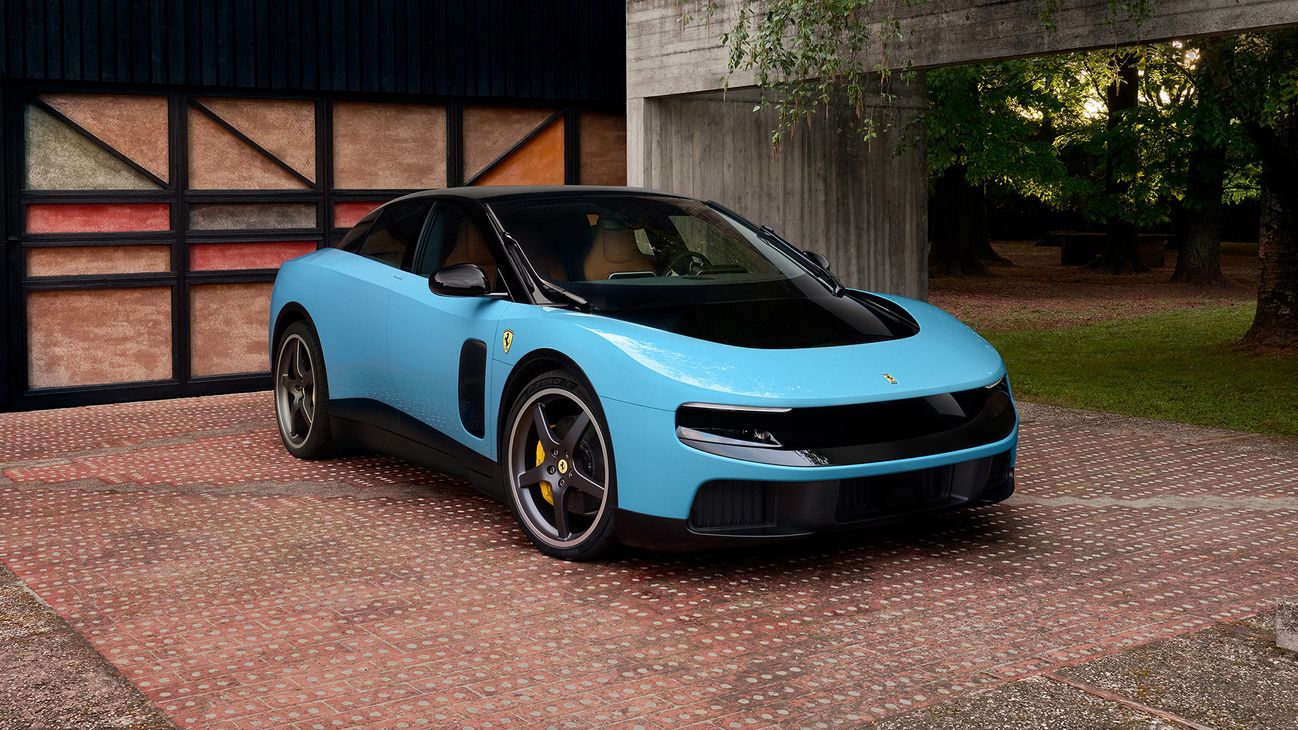
The Ferrari Luce is a new Ferrari concept that’s trying something different: it’s built to carry five people. It’s also described as an electric crossover with unusual “suicide doors,” so it looks and opens in a way most Ferraris don’t.
A “suicide door” is a door that opens backward from the rear hinge, instead of swinging open from the front hinge like most cars. The idea is usually easier access and a dramatic look, though it requires careful latch and safety design.
“EV crossover” means an electric car with an SUV-style shape. The hosts are saying the Ferrari Luce looks like a crossover, but they’re not convinced its proportions are truly in line with what you’d expect from that category.
The Purosangue is a Ferrari crossover-style vehicle. The podcast mentions its door design and compares its name and shape to another Ferrari reference. The main point here is that it’s a crossover with distinctive styling.
The Ford Explorer is a mid-size SUV meant for everyday driving and family use. It’s popular and easy to find, so it’s a common comparison point for size. In the episode, they’re comparing its height and overall proportions to other SUVs.
Horsepower is a number that tells you how strong the car’s power output is. Higher horsepower generally means the car can accelerate more strongly, especially at peak output.
They’re talking about total power, but also how it’s divided between the front and rear motors. The numbers can vary depending on what the car is doing at the time.
Top speed is the maximum speed a car can reach under specified conditions. The hosts call it “irrelevant,” arguing that for many drivers, real-world usability matters more than the absolute maximum number.
EPA range is the official estimate of how many miles an EV can drive on one full charge. It’s based on standardized testing, so it’s useful for comparing different EVs.
They’re talking about guesses people are making about how much the car will cost. The host says you shouldn’t assume the rumor is the final U.S. price yet.
Rimac is a car/tech company known for very advanced performance vehicles. In this clip, Rimac’s founder is basically saying the industry is heading somewhere new.
Term
V16 Tobillon
“V16” means an engine with 16 cylinders, shaped like a V. “Tobillon” is the name of the project Rimac talked about—basically a hint at what kind of extreme performance direction the industry might be going.
The Cadillac V16 is an old luxury car famous for having a very large engine. It was built to be impressive and powerful for its time. The podcast brings it up while comparing different kinds of “special” cars.
Gordon Murray Automotive is a company that makes performance cars with a strong engineering philosophy. The ad quote in this clip is arguing that some things—like a naturally aspirated V12—should be kept instead of replaced by trends.
“Naturally aspirated” means the engine breathes without a turbo or supercharger. A “V12” is a big 12-cylinder engine, and the point here is that the speaker thinks this kind of traditional setup is what should be preserved.
A “design idiom” is basically a brand’s visual style—like the set of design cues that make one product line look related to another. Here, it’s about whether Mercedes is using a different look for EVs than for its other cars.
“EV” means electric vehicle—cars that run on electricity instead of gasoline. The point here is that the speaker thinks Mercedes may be treating its electric cars as a separate product identity.
“Lack of continuity” means the car doesn’t seem to follow the same design pattern or identity as earlier cars. In this discussion, it’s framed as possibly being on purpose to change how people see Ferrari.
The host is saying Ferrari might be trying to intentionally change what people think of as a “real Ferrari.” It’s like pushing the brand into a new mindset so fans adjust their expectations.
This means the company is releasing the car’s details little by little, like teaser shots. The host thinks that pattern suggests the car is real and intended for production, not just a publicity stunt.
A “decision tree” is a way to think through a problem by asking “if this, then what?” The host is using it as a metaphor for working out the logic behind Ferrari’s choices.
A powertrain is the car’s main “go” system—how it makes power and sends it to the wheels. Here, the host is saying Ferrari is known for designing and building that system themselves.
A V12 is an engine with 12 cylinders. “High-revving” means it’s made to spin fast, and the host is saying that’s a big part of what makes Ferrari feel like Ferrari.
A foundry is a factory that makes metal parts by pouring molten metal into molds. The host is saying Ferrari has historically done this in-house for key powertrain components.
This phrase means a car people love mostly for how it looks and feels—more like a collectible than a practical daily driver. The hosts are saying that when a Ferrari feels less like that kind of “art,” buyers get less excited and resale value can suffer.
This just means the market for used cars—what people pay when buying them after the original owner. The hosts are saying that if a Ferrari doesn’t match what collectors want, it can be harder to sell later and may cost less.
The Ferrari FF is a Ferrari with four seats, meant to be more usable than some other Ferraris. The hosts are saying it was criticized when it first came out, mainly because people didn’t like how parts of it looked compared to classic Ferrari styling.
“Two plus twos” means the car has four seats, but the back seats are usually tighter and less important than the front. The hosts are saying some collectors don’t like that because they want a more hardcore, two-seat sports-car vibe.
Enzo Ferrari was the man who started Ferrari. In this segment, they’re saying he personally preferred the four-seat Ferraris, which is meant to counter the criticism those cars get.
Term
FF
“FF” here is being used as a shorthand for a Ferrari that’s meant to be more practical and family-friendly than a pure race-style car. The host compares other Ferraris to the FF to make the point about back seats and everyday usability.
The Ferrari 365 “two plus two” is a Ferrari grand tourer with back seats. The host is using it to make the point that cars with rear seats were often more practical for everyday life, so they could be easier to convince buyers to purchase.
The Ferrari Daytona is one of Ferrari’s best-known classic sports-car names. In this discussion, it’s used as a reference point while comparing which Ferraris were built in larger numbers and which were easier to sell.
The Ferrari 275 GTB is a classic Ferrari from the 1960s that’s known for being a two-seat car. The host is using it to explain that cars without back seats were often harder to sell to buyers who wanted practicality.
The Ferrari 250 GTE is described as the more practical choice—basically the “family-friendly” Ferrari option of its time. In the story, the buyer picks it over a race car because it has back seats and is easier to live with.
The Ferrari 250 GTO is treated here like a race-focused car. In the anecdote, it costs about the same as the 250 GTE, but the buyer chooses the 250 GTE because it’s easier to justify at home thanks to the back seats.
Power steering makes the steering wheel easier to turn, especially at low speeds. The host is using it as evidence that these older Ferraris were built to be driven more often, not just admired. It’s one of the comfort/convenience features that changes daily usability.
An automatic transmission shifts gears for you, so you don’t have to use a clutch or manually change gears. The host is pointing out that some of these older Ferraris could be had with an automatic, which makes them easier to drive day-to-day. That’s part of why he thinks they’re more practical than people assume.
The Lamborghini 400 GT is an older Lamborghini designed for fast, comfortable driving over longer distances. The podcast mentions that some versions could be ordered with an automatic transmission and a two-plus-two seating setup. It’s being used as an example of how buyers could choose different specs.
The Ferrari 308 GT4 is a Ferrari with a mid-engine layout and a 2+2 seating setup, meant to be more practical than some of the brand’s rarer cars. In this segment, the host highlights that Ferrari built about 2,700 of them, which is a lot for Ferrari. That production number is part of why people may not treat it like an ultra-rare “holy grail” car.
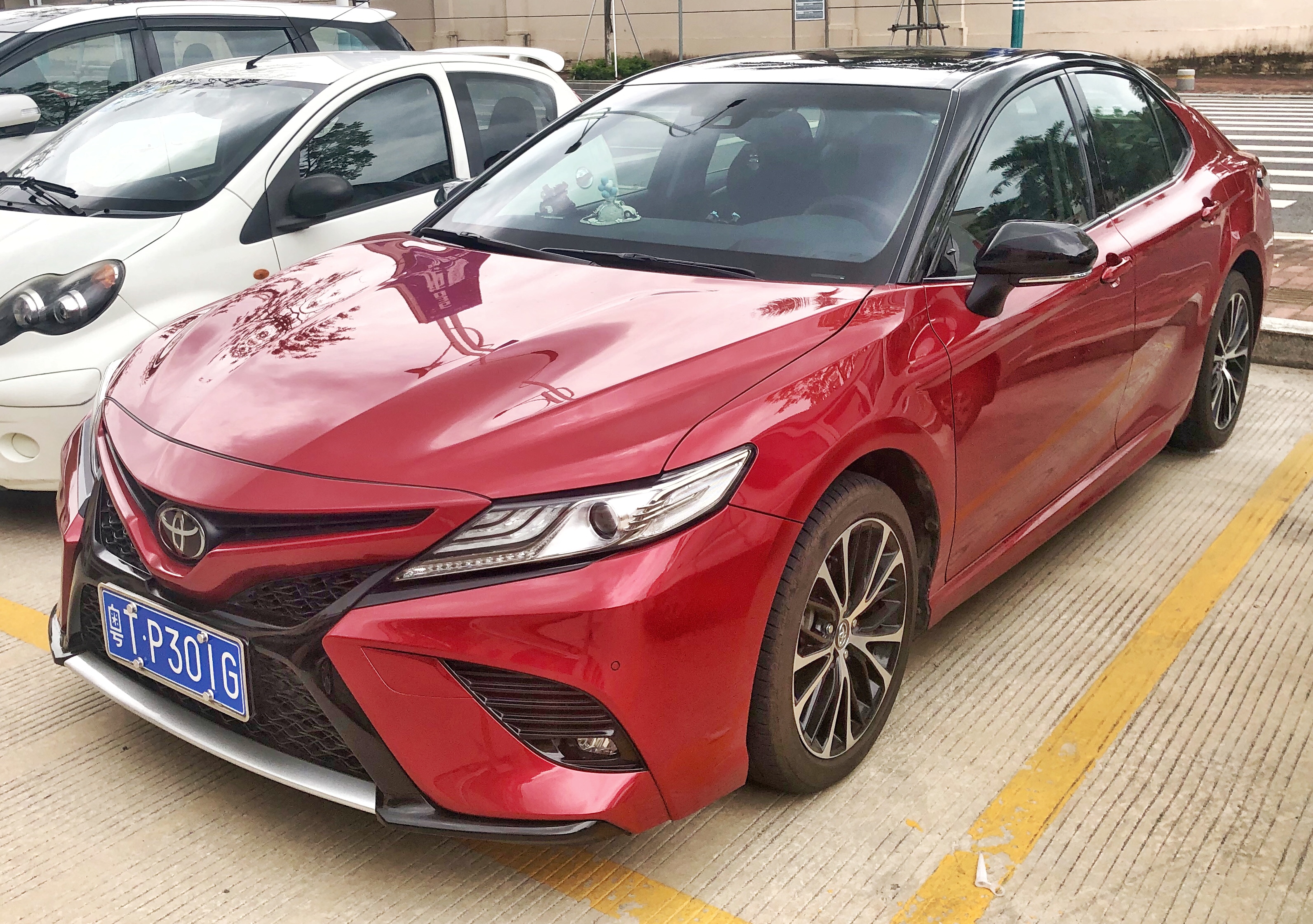
The Toyota Camry is a common, practical car many people use for everyday driving. The host mentions it to show what “normal” daily needs look like versus luxury Ferraris.
The Ferrari 456 is a Ferrari designed for long-distance driving and everyday comfort. In the conversation, it’s mentioned as another Ferrari people choose because it fits their lifestyle.
The Ferrari 612 Scaglietti is a big, comfortable Ferrari with a V12 engine. The hosts are using it as an example of a Ferrari people buy to drive regularly.
The Mercedes-Benz S-Class is a top-tier luxury car that people buy for comfort and convenience. The host is saying some rich buyers treat the Ferrari FF like an alternative to that kind of daily luxury.
Facebook Marketplace is a website/app where people sell used stuff locally. The host is using it as an example of how cheap some expensive cars can look when you try to resell them.
Depreciation means a car usually becomes worth less as time goes on. The host is saying some rich buyers don’t care if their car loses value, because they’re buying it to use.
The Mercedes E-Class is a luxury sedan that’s typically less expensive than the top S-Class. The host is saying you could choose an E-Class instead of a Ferrari if your goal is just daily transportation.
The Porsche Cayenne is Porsche’s SUV. It’s important because it brought Porsche into a more everyday, practical type of car, which some fans see as a change from the brand’s traditional sports-car focus.
The BMW X5 is BMW’s SUV. The point being made is that SUVs like this exist because they sell well and fit real-world needs, even if some enthusiasts prefer the brand’s more traditional style.
Car
Mercedes ML
The Mercedes ML is Mercedes’ SUV from earlier years. The hosts are using it as an example of how luxury brands expanded into SUVs, which some purists don’t love.
The Bentley Bentayga is Bentley’s SUV. The hosts are saying it makes more sense to many buyers because it’s more practical than some of Bentley’s other, more niche styles.
The Bentley Continental GT is Bentley’s luxury grand tourer—more focused on long-distance driving in a sporty coupe. The hosts are comparing it to the Bentayga to explain why the SUV is the bigger seller.
A grand tourer, or GT, is a luxury car made for long trips. It’s usually comfortable for everyday driving but also has enough power and smoothness to travel quickly over distance.
They’re comparing the Porsche Cayenne’s background to the Volkswagen Touareg. The idea is that the Cayenne started from a more mainstream SUV base, which affected how people judged it at first.
They’re using the Rolls-Royce Spectre as an example of a luxury electric car that sold enough units to be considered a win. The point is that even if an EV isn’t practical for everyone, it can still succeed with the right customers.
This means expensive, luxury electric cars. The hosts are using them as a benchmark to discuss how many units a premium EV would need to sell to be considered successful.
It means the car is mainly focused on gas (or other fuel) engines instead of being electric-first. The host uses it to argue that hypercar buyers still respond more to the traditional experience.
A hypercar is a top-tier, very exclusive supercar—usually expensive and built in small numbers. The host’s point is that people buy them for excitement and emotion, not because they’re the most sensible choice.
The Gordon Murray Automotive T.50 is a high-performance supercar. The podcast mentions it along with other similar cars from the same maker. The point is that it’s been successful at winning attention for how it’s engineered and built.
The host is talking about how some cars become “dream cars” for kids and teens—like something you’d want just because it looks cool. He’s saying that doesn’t automatically mean people will buy them.
This is a metaphor for a brand not showing up where people are paying attention. The host thinks Ferrari’s limited social media/influencer presence makes it harder to build interest with younger buyers.
“Press cars” are cars that manufacturers loan to journalists so they can review them. The host is saying Ferrari is harder than some brands to get those cars from.
The Honda Prelude is a regular, everyday sports car compared to a Ferrari. In this discussion, it’s mentioned as the kind of car that might get more clicks and attention than a Ferrari.
They’re talking about how people on the internet react to car videos. The point is that a “less fancy” car can sometimes get more attention than a famous supercar.
They’re saying there’s a gap between regular people and the very wealthy. Their idea is that this kind of divide can affect what car brands people feel excited about online.
The Ferrari 360 CS is a more performance-oriented version of the Ferrari 360. It’s the kind of special Ferrari that tends to be more collectible, so its price can jump when demand increases.
The Ferrari 430 Scuderia is a lighter, more track-focused Ferrari 430. Limited, special versions like this can become more valuable when collectors want them.
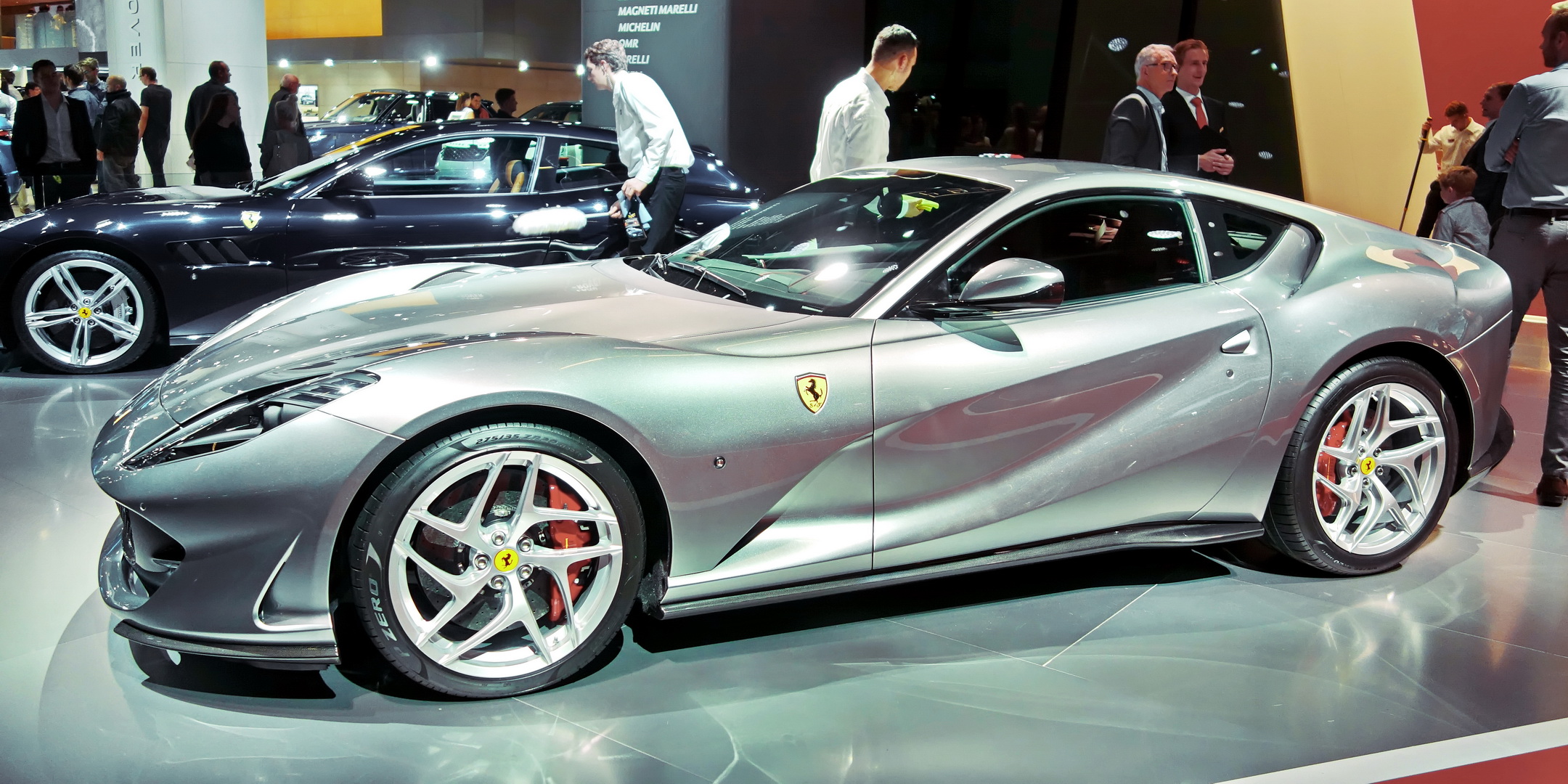
The Ferrari 812 Competizione is a more extreme, performance-focused version of the Ferrari 812. Cars like this are often sought after by collectors, which can push prices up.
“Exploding in value” just means the car’s price is jumping a lot and quickly. For collector cars, that usually happens when more people want them than there are cars available.
The Ferrari Roma is a modern Ferrari meant to be driven more like a grand tourer—comfortable for longer trips but still very special. The host brings it up as one of the current Ferraris he’s talking about.
The Ferrari Portofino is a modern Ferrari that’s designed for cruising, and it’s a convertible. The host mentions it as one of the current Ferraris he wants to focus on.
Term
Spiccialli versions
Ferrari sometimes makes special limited versions of a model. The host is saying those “special” versions are the ones that usually do best in the market.
The Subaru 360 is a very small older car made in Japan. It was designed to be compact and efficient. The podcast mentions it as a model that’s getting more attention, which can also help similar versions sell better.
The Ferrari Challenge Stradale is a more track-oriented Ferrari than the regular model. Here, the hosts mention it as one of the Ferraris that can help an owner qualify for special treatment when buying other new Ferraris.
The Ferrari F-50 is a rare, high-performance Ferrari from the 1990s. The hosts bring it up because owning cars like this can help someone qualify for access to buying newer Ferraris.
The Ferrari Enzo is one of Ferrari’s most famous rare supercars. The hosts are talking about how much the Enzo is worth compared to other Ferraris, and how the market seems to value it more than you’d expect.
Car
Ferrari MC-12
The Ferrari MC-12 is a very rare, race-inspired Ferrari. The hosts are comparing what it sells for versus the Ferrari Enzo and saying the MC-12 doesn’t get valued as highly as it “should,” largely due to how people perceive the Ferrari brand.
The Maserati MC12 is a rare, high-performance supercar. Because it’s made in very limited numbers, it tends to attract collectors. The podcast mentions it in the context of a notable public sale.
A VIN is a unique ID number for a specific car. The hosts are using VIN counts to talk about how many Enzos are actually out there, which influences how rare and valuable they seem.
LIVE
This is an emergency broadcast podcast, something.
Is that why it's happening Monday?
At exactly the same time it always happens?
Yeah, but you were traveling, so we couldn't do this earlier.
Oh, yes.
Yeah, I think we get right to the point here.
This past week was a huge week in the car community.
We had the dropage of two very, very impactful cars.
The AMG GT4 door followed in rapid succession by the Ferrari Luce.
The rest of it.
The rest of it?
The interior was shown quite some time ago.
Okay, fair point.
The internet is on fire about this.
I have very often been accused of being a contrarian.
Emphasis on that first syllable.
And I think we need to do what no one else is doing.
I think we need to do an actual emotionless,
that should come easy for you, examination.
I can't tell if you're kidding or not.
No, I'm not kidding.
I think we need to look at, I want to answer the question,
why is everyone so mad?
Okay.
And I probably, I will try to not insert my opinions.
We'll see how that goes.
Think of this as NPR or a legal deposition.
We're going to approach this with,
I think we need to have a real conversation.
Hey, Clint, this is important stuff.
All right, let's just get right into it.
You can do your clap thing.
Oh, by the way, this is the Karmadji show.
Who are you?
I am not Derek Tam Hyphen Scott.
And I am not Jason Camisa.
But I am going to clap or attempt to to the best of my ability.
We know this is going to be a good episode.
All right.
Right.
Straight into it.
Welcome back.
Thank you from where?
Outer space?
You were, you just walked into fun.
That's sad.
Look, we can't mess around this time.
Okay. The internet is on fire right now.
Among car people, certainly.
Yeah. Among car people.
My entire feed is has was first eaten up by MGT
and second by Ferrari Luce.
Which of course means light.
But not light weight.
No, no, like brightness.
Like light.
Like like illumination.
Illumination.
I want to be a professional here.
I'm a journalist at the end of the day.
So I think, I think let's rewind
in case someone's living under a rock where they've,
they're not actually,
their feeds are not completely consumed with luce.
So two things happened last week
that are really interesting timing wise.
Two cars dropped that really, I would say polarized,
but it's not really the case.
Really got the attention of the industry.
First, the MGT four door, the 2027,
all electric three motor AMG dropped.
And then the Ferrari Luce.
They both created ire on the internet.
I think the overall sentiment
was probably something like 80, 20 negative on the AMG
and 100 zero negative on the Ferrari.
They have something in common, these two cars.
Other than that, the negative sentiment,
which is that they're both not easily identifiable
as the brand is coming from the brand they do.
And so this is a really interesting time
for actual commentary on these cars.
So what happened?
First of all, that 2027 MGT four door
is basically $150,000 Taycan competitor.
It weighs 5,400 pounds.
Will be sold in two different strengths, the GT 55.
55 and 63.
Yep, 55 is 805 horsepower, does zero to 60 in 2.4 seconds.
The GT 63 can produce up to 1153 horsepower
doing zero to 60 in 2 seconds flat,
which knowing Mercedes claims typically being very conservative.
This has a very good shot
of being the fastest accelerating car on the planet.
It uses three axial flux motors.
Axial flux is a different type of motor.
It's a very, very different looking thing.
But what you need to know is that the benefits are power density,
how many kilowatts, how much power it can make per unit weight
in this case and size.
It's typically about twice the power per weight as,
two to four times in fact.
These motors are about twice the power per weight
versus lucids motors,
which are already the standard of the industry.
So we're looking more like four times what anyone else does.
And they're slightly more efficient also.
Drop-hacks.
Thermal management.
So they can't produce that much power for that long
because they're smaller thermal mass, is my understanding.
The...
It has fairly sophisticated cooling system for that car.
Yeah, they're so...
I mean, if you've seen the Lucid powertrain,
it will fit in a carrion.
And I did one as a joke in one of the icons on that car.
And these are just, they're about half the size, which is amazing.
So I haven't really seen the full packaging of these cars.
I don't know if they will actually beat Lucid in packaging size,
but in mass they should be.
Lucid being the benchmark for packaging efficiency,
as opposed to the Taycan,
which is a benchmark of packaging efficiency.
The AMG GT has an 800 volt architecture,
so it can accept up to 600 kilowatts.
Let's think about this another way.
That's what 900 horsepower worth of electricity
into its 106 kilowatt hour battery,
thus being able to charge 10 to 80% in about 11 minutes.
So 11 minutes.
If you can find somewhere to charge that has that kind of juice.
One day you will, possibly.
It does have a movable arrow,
both in terms of a rear spoiler atop of the hatch,
a couple of underbody elements,
and the first we've ever seen of a rear diffuser
that deploys at higher speeds, it physically moves outside.
The controversial elements,
I'm sorry, I'm just going to blast through this.
Yes, please.
Or I should have just written this in a way that you could do this.
Controversial, I think for two reasons.
Number one, fake V8 noises,
and the ability to vibrate its seat
to replicate the NVH of a V8.
And two, it's styling.
The styling I'm...
We can talk about.
Can we?
Yeah, I think no.
Should we?
I think we should now.
I think let's get through what happened first,
just as a recap, and then we can absolutely talk about this.
Styling, it hasn't.
Oh, it does.
Next up, the next day,
just as the internet thought it had seen
the most controversial car of the year,
Ferrari drops the Luce.
It is a five-seat, the first ever Ferrari five-seater.
It is a suicide door EV crossover.
Same form as the Pura Sangue.
Same form?
Rear suicide doors.
Oh, yes.
I'm sorry.
I was already on to the five-seat.
Yeah, suicide doors with unconventional door latches
that are sort of recessed.
But more importantly, first ever five-seater.
It is a crossover in its looks,
although not necessarily in its proportions
when you start to look at it.
So it is huge.
It is 197.9 inches long, which is...
Less than an S-Class.
Less than S-Class.
Halfway between an X5 and an X7 equal to a Ford Explorer.
But it is only 60.8 inches high,
roughly the same height as a Porsche 911.
It's actually quite low.
I think it looks so...
It looks tall.
The styling makes it look taller than that.
Well, there's a lot of proportional elements
that will look different because the wheels are so huge.
There are 23s up front, 24s in the back.
This is...
The interior is highly styled.
We saw that already, but all real materials,
glass, metal, aluminum, blah, leather.
It has four motors.
I believe they're also Axial Flux for up to 1,035 horsepower,
depending on mode.
There's a...
The combined power up front is 282.
Combined power at the rear is 831.
Those don't necessarily add up to 1035,
but that's the way these systems work.
Car weighs about 5,000 pounds.
Ferrari's claiming zero to 62 in two and a half seconds,
which is notably slower than the AMG GT,
but 190-something mile an hour top speed,
which I think is irrelevant.
Enormous battery, 122 kilowatt hours,
which would be second only to probably the Hummer.
I don't know of another car off the top of my head
to for sale in the U.S. market that's over 100 and change,
but very large battery should give about 280 miles EPA range,
compared to Lucid Air, for example, was 112,
and that gets about 5,480 or something miles.
Mercedes was more range.
Mercedes is just more range, yes.
This is Ferrari.
Arrives in spring, U.S. spring of 2027.
Been a lot of conjecture about the price.
Everyone's calling it $640,000.
I would caution to not jump to that conclusion just yet.
That's based on the Euro price that they've announced of $550,000.
In any case, non-trivial pile of money.
Yeah, we tend to see Euro and USD prices pretty close to each other,
so it wouldn't surprise me if this was only $550,000 in either case,
an expensive vehicle.
Considerably more than the Mercedes.
Yes, they're not competitors.
Which is typical for a Ferrari, to be clear.
They're not competitors in any way,
other than the fact that they dropped within a day of each other and-
They are competing for attention.
For attention, exactly.
So let's talk about the internet's reaction on this,
because especially the Ferrari,
I don't know if I've ever seen such a universally one-way direction.
Response to anything.
Yeah, it's not been favorable, that's for sure.
Well, Ferrari's stock price dropped 8% the day the car came out,
costing or eliminating several billion,
I think of 3000000000 Great British Pounds worth of value in that day.
Of market cap for the company.
Yep. It's not been 100% negative.
Marquez Brownlee, who's catching quite a bit of flak,
he got an early preview and drive of the car.
He hasn't published the drive yet as of this taping,
but was pretty positive on the car and is getting a lot of pushback on that.
Not sure that's fair to Marquez.
He was there using Ferrari's camera equipment in their-
They wouldn't even let him use his own equipment in their own facility,
presumably with them watching or listening.
Having been there, it's very difficult to be the first to shit on something.
And so your criticism is typically measured.
You'll find that even a car and driver first,
a preview drive is almost never negative.
It's let's wait and see.
So I would say give Marquez a little bit of grace.
But some of the other sort of never-before-seen responses to a car like this.
Luca de Montesamelo.
Yes. This was the one that I think is perhaps the most illustrative.
Well, he's a significant person.
Let's talk about who Luca de Montesamelo is.
I mean, he ran the F1 program at Ferrari and eventually became its CEO
through a period that is now especially looked back on
as one of the greatest periods, certainly modern times of Ferrari
in terms of product development.
So he's something of an icon and a legend.
Enzo part two.
In fact, I would say Luca de Montesamelo has had more influence
on the Ferrari we know of today than even Enzo did.
Agree.
He is the creator of this brand.
In the modern form.
Yes.
And so it looked like he was just at an airport or somewhere in public
and someone captured him on video with a quick interview.
And he said things.
And these are quotes that I've taken from news because, of course,
I don't speak Italian, so I wasn't going to try to translate it on my own.
Quote, a betrayal of the firm's history.
Quote, if I were to say what I really think I'd be doing Ferrari a disservice,
we risk destroying a legend and I'm truly sorry about that.
I hope they at least remove the prancing horse from that car.
And then finally, Lute is certainly a car that at least the Chinese won't copy.
Italian, Italy's deputy prime minister, Matteo Savini said, quote,
it looks nothing like a Ferrari.
Is this supposed to be innovation?
And now that was the initial response.
It's gotten even crazier if you look up Ferrari on Google.
The video from Angeles Death Highway will show up, which is a parody AI site
as the definition of what Ferrari is, which is significant.
Matteo Rimac from Rimac made a statement, sort of tongue-in-cheek,
saying, a lot of people are asking me about the direction of this industry
and I think we're heading in a different direction and we're right.
And he starts the V16 Tobillon.
Gordon Murray Automotive put out an ad, what looks like effectively an ad that says,
some things should never lose their way.
While the world reinvents what a car should be,
we continue refining what it always has been,
meaning a naturally aspirated V12.
No mention of Ferrari, obviously, but it's very clear what they were doing.
And then even brands like Toblerone, the chocolate producer,
made an ad saying, we're not going to get rid of our angles.
With a blue and black, rounded, pilf-shaped Toblerone.
Did you see this? Oh my God.
I have to show it to you.
We will capture the Derek.
Damn it.
I figured you'd seen it or I would have never,
sorry, guys, you guys get to watch this together with Derek.
Yikes.
So we can put that on screen.
So this is unprecedented?
I hate to use that word, but I've never seen a response to this universally.
Vitriolic.
Vitriolic, yeah, to any car.
So why is the internet so mad?
I think that there is a perception that the luce is discontinuous with,
it's not a Ferrari, fundamentally.
There's nothing, I mean, I would ask, I guess,
my question as I've been thinking about this is,
what is the most Ferrari element of this car?
The badge.
Is there anything about the car that you are very fond of aesthetically?
I don't, I'd rather not get into what I like or what I don't.
I'll be honest with you.
There are no, no, no, it's not for me.
It doesn't need to be, but it's not.
I think the pleating on the door panels is very nice.
Okay.
It reminds me of a 1970s Ferrari.
Look, I like the shape of the steering wheel.
Form of the steering wheel.
Sorry.
Form of the steering wheel.
Right.
There are little elements that I think definitely recall other cars.
The rear sort of looks like a 360 that has been encapsulated in a cube or a box.
It doesn't matter whether I like them or not.
The question is, why is the internet so upset about it?
I think I will, I'm happy to say on record that I despise the styling and design of the AMG GT.
I just don't like it.
And I think we'll get back to that because I have a real question on that for you.
Personally, I don't like it.
I'm less offended by the styling of the Ferrari myself.
My question is, why is everyone else upset?
And I have my theory on this.
Yeah.
I mean, I think it's a lot of his driven by aesthetics.
It seems discontinuous.
To me, there is not a lot of sort of continuity between this car.
This is, it's reminiscent in some sense of what happened with EQ.
Is that Mercedes sort of created this design idiom to distinguish their new products,
their EV products from their existing cars in a way that, you know,
I don't think enhanced them.
And I feel like the lack of continuity, and maybe that's part of the objective here,
is to create a wedge between the idea about what a Ferrari should be and this car
to demonstrate that they're thinking in a different way.
Or perhaps they're hoping that the world will be upset.
And then it leads to some scenario in which they say,
look, everyone is really upset by this thing.
It's not the direction to go.
And so we have to stick to our guns and be the company that we always have been.
You know, is it worth spending billions of dollars to develop a car to make that point?
If that is, you know, in that hypothetical situation,
that that's what they're trying to do seems like inefficient.
I think they would have just shown the car right away.
I think the slow leak out of details on the styling
proves, disproves that sort of conspiracy that they would be putting this out.
They would have just been like,
this is our new car and watch the internet go crazy without having invested billions in it.
I think this is a real thing.
I think they're obviously intending to put it in production.
And I think that comes from a decision tree that I think we really need to look at and say,
why on earth would Ferrari change it?
But I want to back up for a second because what I'm leading you to is, what is a Ferrari?
I think this is, I think when we're just talking about styling, that's not enough.
When one of my coworkers said to me, this is unfortunately, you know,
Ferrari people are asking for a hamburger and they got a slice of pizza.
And I'm going to say, absolutely.
That's actually not, that's not enough to upset you the way you're upset.
You ordered a hamburger and you got a bicycle tire.
And what I mean about that is, is it's not just a different flavor of the same dish.
It is, it's not food.
You've ordered, you've gotten something else because a Ferrari isn't and has never been
transportation transportation.
Ferraris have been objects of art and sex appeal.
And if I'm, if I would say there's one big change here, this is not sex appeal.
This is a consumer product, right?
And it's not a highly emotional object of art that rolls around.
It's a transportation device.
That is a huge fundamental shift in what defines Ferrari.
And I think it doesn't matter what this car looks like.
That's the problem.
Objectively, if I look at the history of Ferrari.
I'm not sure I'm 100% with you on that.
Well, I think that this, there are certainly ways to proportion a transportation device
in a way that feels more continuous.
And I think if it looked closer to what people were expecting that it should look like as a Ferrari,
then there wouldn't be so much of a furor.
Like for example, the Taycan, right?
The Taycan has, it is pretty unambiguously a Porsche.
It has continuity in design language and form factors and proportions that make it obviously
a Porsche.
And if you had to say, you know, why might someone buy a Taycan instead of a Tesla or even a Lucid,
you'd say, well, there, it is very obviously a Porsche.
It is aesthetically certainly.
And so, you know, if you could have, you know, when you have technical differentiation that
is diminishing as is required by EVs, then you say, okay, what are the other core essences?
You know, Ferrari has always made their own powertrains in-house.
That's true of this vehicle also.
If you were to ask me the question, what is the most Ferrari characteristic of it is that,
that they designed and built their own powertrain because Ferrari has always done that.
And that has been, you know, when you're making a naturally, no, no, no one else makes a naturally
aspirated high-revving V12 that is sort of built in-house and has that anima, the soul of Ferrari.
And so that has always been like, they have their own foundries, you know,
that's been something they always prided themselves on is that they literally are casting the power
plants in-house.
And, you know, with this car, that was something that they chose to do.
And so that was one of the things that I noticed about it technically that is like,
oh, that is has continuity with what a Ferrari should be.
So it's not the axial flux motor that's in the 296?
I mean, the point is that it's built in-house.
Built in-house, okay.
And so I guess that's a Ferrari like characteristic that it possesses.
But if it had more continuity aesthetically with other Ferraris,
I think people would be less upset because they would say, well,
at least it looks and feels like a Ferrari in the same way that a Porsche Taycan does.
Okay, so question.
Like a Porsche.
The, I, if I look back in, through the history of Ferrari and in values, ease of sales,
the further a Ferrari gets from a rolling impractical piece of art,
the harder of a sell it is, and the less it's worth on the second-hand market.
Yes, that's all true.
Four seat Ferraris are-
Have always been like this.
The FF was controversial when it came out.
People shout on it roundly when it came out, you know-
That looked like a Ferrari.
The front half.
Sure.
The back half look like nothing else at least, right?
So it was Ferrari inventing a new language.
Yeah, the two plus twos have always been sort of, you know,
eschewed by or rejected by collectors as being insufficiently sexy.
These of course were the cars that Enzo Ferrari himself preferred the most.
Right.
But and also not just ignored by collectors or undervalued or devalued,
but also unsellable, right?
They would sell sort of quietly in kind of large numbers-
Because?
Because they were usable.
Is that why?
I think so.
Or did Ferrari require that you buy an FF?
No, no, no, I'm talking about the 1960s.
Okay.
In the 1960s and 70s, I'm talking about like the 365 two plus two,
they built 800 something of those cars against, well, okay, I shouldn't use a Ferrari Daytona,
but actually if you use a Ferrari Daytona example, they built more Daytonas.
But they built fewer 275 GTB fours.
They built fewer 275 GTBs.
They built fewer Lucos.
Those are all two-seat cars.
All the two-seat cars didn't sell as well as the four-seat cars.
And so my hypothesis is that the sort of actual functional,
and this is represented by an anecdote that was recounted to me by a fellow who actually did this,
but he went into what is now an office depot, but it used to be a Buick dealer,
which also sold Ferraris on the corner of Arguello and Geary in San Francisco.
And there was a Buick dealer that also sold Ferraris called Bev Spencer,
and it's 1963 or something like that.
And the guy could have bought either a 250 GTE, which is the FF of its day.
It's the two plus two car brand new, or he could have bought a used race car 250 GTO.
They were the same price and he chose to buy the GTE instead of the GTO
because it had back seats and it was an easier sale for his wife.
The practicality and usability of a four-seat Ferrari
causes people to actually buy those things who intend to use them.
It's someone who's playing it daily.
Explain what the value of those two cars is.
A GTE today, a great GTE is $400,000, $500,000 and a great GTO is $50 million.
But they were the same price for that guy and he chose to buy the GTE.
This is probably the worst one of those.
I could have bought us stories that I have ever heard.
But the point is that when you are having to make rational considerations
or you need to sell the idea to the wife or you need to drive it on a daily basis,
then the realities of what is actually like to live with these cars
and this is true of the two plus twos in the late 60s and into the 70s
and always since is that they had power steering.
You could get an automatic transmission starting with the 400 GT, two plus two, 79 or so.
The reality of living with the car and actually using it
is that the two plus two makes a lot of sense.
So that sort of transportation divide and this is why Enzo liked those cars too
and was driven around in them in his later years in life is because you could use it.
And they all did sell, the 308 GT4 did sell 2700 units,
which was an enormous amount for Ferrari, right?
Yeah, it was cheap.
Probably the cheap, well, cheap and usable, right?
I mean, yeah.
So, you know, in the secondary market, but that's, you know, people now,
of course, always think about Ferraris in terms of the secondary market,
what the car's value is going to be in the long term.
And then there's this whole other category of really rich people
who are like, I don't give a shit what the value does.
I just want a car to drive around and same as an average person
would use Toyota Camry for.
And for people who are truly rich and just want to drive around
in something that's useful, then they choose the FF.
They choose the 456.
They choose the 612 Spaghetti or Scaglietti or whatever it's called.
Like it's just the reality of using the car.
It's like an alternative for them to an S-Class almost.
And S-Classes also cost a pile of money that's quite tall, you know,
200 grand and then they end up being worth 67 cents on Facebook Marketplace
and then I buy them.
But the point of all that is that they're not concerned about depreciation
and they're not buying the car for its value in the future
or how much money they can make with it.
They are buying it because they want to use it
and it fits their needs the best for daily use.
So do that?
Yes, you know, but could a bunch of other things also do that that cost much less?
Sure, but you could also, you know, you could buy a Mercedes E-Class
instead of a Ferrari FF and also not have to walk to get places.
So, you know, people are buying expensive cars like these
because they can and because it fits their needs and they want to
and nobody else is driving around in XYZ.
You know, that's the point of, in some point.
It's why Cayenne exists.
It's why X5 exists.
You know, those were both and Mercedes ML.
Those are sort of all aberrations in that.
Departures from the philosophy of the company.
Same thing with Bentley Bentayga, right?
And we have Bentley Continental GT behind us,
which unfortunately we're not going to mention
because we have too much other important stuff to talk about.
But that is what we think of when Bentley,
but they sell a whole boat lot more Bentaygas than they do Contis GT.
Because it's more useful.
It's more rationalizable.
Right, but I think the greater internet finds those less offensive, less offensive,
not unoffensive because Bentley has always had
a secondary function of transportation, right?
Bentley as a GT, as a grand tourer meant to travel great distances.
I would love to time travel back to when the Cayenne first appeared
to get a sense of how much fuel or that car created.
I don't specifically remember it.
I don't think I was paying attention.
I remember personally being offended, but I'm an outlier consumer
in the sense that I'm like a purist.
There was no internet hive, look, the meme machine
has proven its incredible muscle in the luce.
People are incredibly creative, and it's fascinating to watch.
That didn't exist when the Cayenne came out.
There was absolutely fewer over this.
And some of it was justified.
Look, it was a Volkswagen Touareg.
It was morbidly obese.
There were some problems with it.
It was also ugly.
But look at what it did for the brand.
Quote, can you blame Ferrari?
Well, the question of course is, are there consumers somewhere
who will react positively to this and buy it?
One of the appeals of the Cayenne was that it was priced
in a democratic enough way that it could sell hundreds of thousands
of units as it continues to do today.
And so I guess the question is, what does a financial success look like
for the luce?
You know, what kind of volume do they have to sell?
Well, let's look at high-end EVs for a second.
So we have one success story, which is Rolls-Royce Spectre.
Is that I didn't know anything?
1,000 units last year, which I think is a very big number
for a practicality-challenged car.
But then when you go to the performance cars,
Lotus has canceled its EV, Lamborghini has canceled its EV,
Pagani has canceled its EV.
Oremats and Pininfarina are interesting because they had that electric car.
The Batista was a rebadged Oremats.
And I don't even know if that's on sale anymore.
I think everything is sort of concentrated on the Bugari Tourbillon,
which is obviously Oremats, which is a combustion first car.
And so we right now don't see a history of success
for performance high-end EVs.
And so that category of car, the hypercar,
is driven by drama and a sort of emotional response.
You cannot rationally elect to buy one of those cars.
And it doesn't matter.
The values as we see in the secondary market
for all of the halo Ferraris of late, for example,
demonstrate that obviously practicality is not what's important.
It's drama.
And no one, even the best supercar, hypercar EV that probably exists,
which is probably the Oremats.
Oremats, which is spectacular.
Is a sort of niche product in terms of how it is received.
It doesn't have the lust factor that is required.
It doesn't capture the whimsy and imaginations of the inner teenage boy
that really is the driver of values of all hypercars.
And so it doesn't make sense for Ferrari
to sort of attempt to do the same thing
because it's clearly been demonstrated already so far
that a really covetable EV hypercar hasn't really changed
or transformed or appeared in a way
that transforms the desirability hierarchy of hypercars.
So what does work?
So if we say that Navara is spectacular, though it is,
hasn't been well received by the audience, what happens?
There are certain people who are really into it,
but it hasn't caused a seismic shift
in what the internet public views as desirable.
Right, there are two points.
One is the sort of bedroom wallposter teenage boy thing,
and that's what you're talking about.
And the other one is sales numbers.
I don't know.
When we were both at ECME, I think at one point
we discussed they had sold one Navara.
That was also quite early.
And it was, yeah, but I still don't know a single collector
who owns one, and I know plenty of people
who have GMAs paid for.
Yes, that's true.
So the reason I asked that is to lead you to GMA, right?
My question is if the Navara is spectacular and really fast
and well-built and fun to drive,
and we both driven it, it's amazing, and it doesn't work,
what does?
And Gordon Murray's cars, the T50, T33, all of those variants
seem to have captured both the teenage boy poster halo car thing
hypercar and also customers actually opening their wallets.
I would argue that those are actually the same thing.
Without the bedroom wall lust factor,
actual paying customers are not going to open their wallets.
I would say that, unfortunately, Ferrari's products,
as of late, their conventional products,
fail the bedroom wall poster thing for young people.
So Ferrari, from my perspective, is battling right now
an absenteeism from the market.
So it's been their policy for so long
to keep their cars out of social media and also media
and influencers and everything else.
And maybe this is colored by my own difficulty
in getting Ferrari press cars.
But what I've seen is for 10 or 15 or 20 years,
doing this 20 years, for 20 years,
Ferrari has been very, it's been difficult to get press cars out of Ferrari
because they're very concerned with making sure their products
are looking a certain way that they look good.
So they don't want to be commingled with other brands.
They don't want to participate in comparison tests.
They just want to be held above everything else
and be presented by themselves in the best possible light.
Understand, it's a marketing driven brand.
But what I've seen as a result of that is now when we do,
as automotive media on social media,
as journalists presenting on social media,
when we do present a Ferrari,
it doesn't matter what we do with it, they don't do traffic.
No one seems to care about these cars.
And when I look at the objective numbers on the back end of this,
when we do publish something on a modern Ferrari,
they skew a lot older.
I think for people under the age of 35, Ferrari is a non-existent brand.
I would say that's not true among consumers.
The performance of those cars in the minds of consumers
is very different than what you were describing.
That's exactly my point,
is I don't think they're necessarily in lockstep.
I think that the people who are buying the cars lag the-
The cars are ending up only on the bedroom walls
of the people who end up as their customers.
Right, and I think right now,
the young people who are not yet able to be their customers
aren't really, Ferrari's just not on the forefront of their minds.
Or they'd be watching that content.
I mean, I think I said before,
I was offered an 849 Testerosa to do something with it.
And I actually turned it down because it wasn't
that I'm not interested in the car, I am.
It's the juice wasn't worth the squeeze
in terms of what it would have cost me
on the back end to produce a video on that car,
knowing that the traffic will be smaller than something,
I could do something on a Honda Prelude,
and it would probably do more views
and get more engagement and more excitement
and be more interesting of a story, frankly, than Testerosa.
So I'd be more inclined if I had to choose
between a Honda and a Ferrari.
For the first time in my career,
I would choose the more pedestrian car
because right now, the internet doesn't seem
to be in love with Ferrari.
Now, the internet has proven very clearly
they are in love with the brand of Ferrari
because-
I mean, this is a reflection, I think,
of this stratification that is happening
between the everybody else and the 1%,
because in the 1%ers here,
there's nothing that matches a hot Ferrari.
I mean, the way that we have seen Enzo values, for example,
but also it's happening with 360 CSs
and 430 Scuderias and Speciales and 812 Competizione,
and GTOs and TDFs, I mean, they're all just absolutely
flying off the shelves and exploding in value,
doubling 512 TRs or even doing this.
But can I put guardrails around you?
I'm talking new cars and new cars only.
That's where I'm talking.
I'm talking Roma, Portofino, 296, all of the current cars.
But again, it's always the Spiccialli versions
that are doing well.
And I think that those regular 360s
are getting dragged up as well, actually now.
Yeah, but no, new cars.
You're only allowed to talk about new cars.
So, Ferraris in business to sell cars, right?
For Ferraris, a publicly traded company and it's-
But there's also a lot of hypothesis
or sort of conjecture about the reason why those cars,
the Ferraris, the older Ferraris are going up
is because they're seeking to have-
He can't not talk about all cars.
Sorry, sorry.
That they are seeking to buy new cars.
Let me finish the damn sentence.
And that the credit that you get for owning these cars
and registering with Ferraris that you own,
a Challenge Stradale and an F-50 and whatever else
is oriented towards buying new cars.
And that the sort of interest,
there's an instrumental value to owning these cars
beyond the car itself.
And this is why, the first-
Since Enzo values exploded in, just call it January
or the beginning of the last six months.
Finally, the first MC-12 has publicly sold
and it made nine point something,
which objectively is a little bit light
compared to what Enzo values are doing,
despite the fact that they allegedly made 400 Enzos,
but there's at least 535 known vins for Enzos.
Against 50 MC-12s and an MC-12 also was quite a functional
and effective race car as well.
And so by all measures, the MC-12 should be worth more,
not less than the Enzo.
But the reality is that there's this Ferrari mystique
that is capturing the minds of billionaires,
literally billionaires who are driving the values changes
on these cars.
And so there's something magical that is functioning
in Ferrari for those customers, which they're seeking.
And so perhaps exactly the strategy you were describing
is functioning for now,
because there's a lot of value in the brand Ferrari.
For sure.
But you're telling me I can't walk into a dealership
and buy an SF-90?
No, you absolutely could buy an SF-90.
Right. That's what I'm talking about.
I'm thinking-
But this is, and then we also have to talk
about the intrinsic characteristics of the prop product.
I think that that product specifically was,
you know, it is a widely held sentiment,
one which I think you share that the 296
is preferable to the SF-90.
But I think I could also walk into a dealership
and buy a 296.
I'm not sure there's a waitlist
and I'm not sure I have to buy a 360 challenge
should I only qualify for one.
Sure.
And so that to me shows, that's a difference.
That was not the case when a 430 was out.
That was not the case when 360 was out.
It was very, very difficult to get into
even an entry level Ferrari.
And I think right now I could walk into a dealership
and buy and order any regular production Ferrari.
There's a general sort of premiumification
that happens in the car world, you know, at large.
This is the same reason why it's so much easier.
Or everybody wants a Porsche GT3
and nobody wants a Carrera.
There's just this sort of push upwards to the hot stuff
and that everybody wants the hot version of the car.
And, you know, it used to be 20 years ago
that you'd buy the regular version
and you had to be kind of a wacko track day guy
to buy the hot version.
And that was part of the product intrinsically also
that the reality of driving a 997 GT3 daily
was unpleasant enough that, you know,
someone would sit in and say,
well, I can't have this.
I'd rather end it.
A hot turbo.
I'll have the turbo or the Carrera S or whatever instead.
And now the, all of the spicy cars are genuinely daily-able.
And this is true for Aris also.
And there's also this sort of, I don't know,
what you want to call hype cycle
or fetishization of the really hot cars.
That the secret is that it's not just this niche thing
for wannabe racers,
that it's like the one that everybody actually wants.
That shift has now come to fruition in the market.
Yeah. I think you're right in that.
It's both factors, right?
I mean, there's the sort of fetishization of the top model,
but also there's been a very big change, right?
I mean, a regular production,
in certain name of any supercar,
they're just not insane anymore.
They've become better at-
True refined.
True refined, better transportation device.
So they're better at transportation
if people are seeking the thrill,
they're going to go for the specialty model,
regardless of price.
Part of it is fetishization,
but part of it is people are just looking for an experience.
And unfortunately,
every car maker has come to the same conclusion,
almost every,
which is that the better the more people,
you can make a car appeal to more people
by making it less special ultimately, right?
So you sort of toyed a camerafication of the entire market
and make it so it doesn't offend anyone
and will sell more units.
What that does do, on the other hand,
is make that car appeal to fewer people,
a fewer of the enthusiasts, right?
And so-
That's why you get a value bifurcation
between the standard cars and the-
Right. It's why Porsche can't sell carers
but can't build GT3s fast enough at this point
is because now the regular consumers
are following where the hardcore people went.
And the hardcore people have nowhere else to go, right?
There's no other manual naturally aspirated
sports car at that price point.
And so we'll see where we wind up next.
But-
Okay, so to return to the luce.
So I think there's-
There are a lot of forces here that companies deal with,
car companies deal with especially.
And you can see, obviously,
if AMG and Ferrari are both doing the same thing
at the same time, so to speak.
Okay.
Yeah, reinventing a design language,
going fully EV, introducing artificial sounds
of one way or another.
Or experiences in the case of the paddles on the-
Exactly.
And they're all just, they're clamoring at reinvention.
Every brand right now is clamoring to reinvent themselves.
I don't know, some brands are like,
we stand by our decision to cancel our EVs.
Some of them.
Right, fair point.
So they're one way or another, they're either reacting-
Taking a stance based on what they decide to do
with regard to EVs.
And there's a reason for it, which is that
combustion engines are effectively being outlawed,
especially in Europe, right?
And so this is, in defense of Ferrari here,
this is a reaction to not what the market wants,
but what the government is telling Ferrari
that they're going to have to do.
You're going to have to have an EV.
I think it's really important to remember that.
And it's also really important to remember that Ferrari is now-
Do you think it's possible that they could have executed
this product in a way that-
What?
Yes.
Yes, I do.
In a way that didn't offend so many people.
Yes and no.
So part of it is, so look, they're at a fork in the road, right?
They have to either make a product that complies with the legislation
or do something else.
And so I will give an alternative solution to this,
to the legislation problem, which is to say,
and it's important for me to point out first,
Ferrari is a publicly traded company.
Publicly traded companies have a fiduciary duty
to their shareholders, and everything revolves
around quarterly, squirrely, squirrely, squirrely.
And whether you care to agree or not,
publicly traded companies fundamentally work in a different way
than privately held companies.
It's just there's differences in reporting,
and ultimately their hands are guided in a different way.
I feel that if Ferrari wasn't publicly traded company,
the idea of right sizing and shrinking the company
becomes a real possibility.
And I think if I were in charge of Ferrari,
and I looked, I were looking at legislations
that effectively required EVs and transportation pods, right?
EVs, at this point in technology,
need to prioritize aerodynamics for range
and for all these other reasons.
I would say the idea of a fully electric car
isn't in, isn't appropriate to a brand like Ferrari,
which has made its mark on impractical rolling objects
of lust with screaming engines, right?
And therefore, I would say my solution could be
right sizing the company down and saying,
we're no longer going to prioritize this ever-increasing unit count,
the 5,000, 6,000, 10,000, wherever they are at this point.
We're going to shrink that down to only the customers
who really want our cars, and we'll shrink it down to a point
where we can skirt under some of those emissions regulations
as a low volume manufacturer.
So I will use Gordon Murray's approach as an example,
which seems to be incredibly successful
at selling a very small number of very, very expensive cars.
And if we're calling a $640,000, again, price asterisk,
Luce, a very expensive car, that pales in comparison
to a $6 million T-50.
And so one of the possible paths for I could have gone down
is say we're going to go back to naturally aspirated V12s
or just combustion engines as a whole, focus on the experience,
shrink our new car development and production
to match what the governments will allow
and the markets will bear at that elevated price point,
and then build out the classic cave business.
Because I just read a stat recently.
Something like 88% or something of all Ferraris ever produced
are still roadworthy.
There's some unbelievable number like that.
Take your business and focus it back on that period of time.
Support those cars, support them with parts and service
and maintenance and auction and ever certification,
all of the things you can do with those cars
right side the business.
And now you have a long-term career path,
a long-term business path so long as the cars
are legal to own and operate.
And you're out effectively of the new car,
the high-volume production new car business,
then you don't have to go down the path
of making an EV transportation pod to comply with the law.
Okay, so Lamborghini cancelling their EV,
how are they dealing with this?
Are they using their whole corporate structure
in order to enable this or?
I mean, they're at the moment,
Temorario and Roberto are both plug-in hybrids as a stop gap.
It's not going to last forever before those are outlawed.
If Lamborghini is in a bit of a different situation
than Ferrari is, Ferrari is an Italian national treasure
to the point, and think about that.
The deputy prime minister made a statement about a Ferrari.
This is ingrained in Italian culture.
It is perhaps the most globally recognized Italian brand.
Yeah, and I think Lamborghini is also recognized
as an Italian brand, but ultimately is a German car company.
So they're in a very different position here.
I think if Ferrari said, we are going,
this is fantasy land, right?
Because this can't happen, they're publicly traded.
If the company was taken private,
and Luca DiMontezemolo was put back in charge,
and he went to the Italian government and said,
you will get me an exemption for 500 cars produced in Europe
for the year, 500 cars a year,
and we're going to sell them at 14 million euro apiece.
And they're going to be manual transmissions with V12s.
They're going to be, well, whatever they were going to be,
incredibly, they will be the poster cars that keep Italy
at the forefront of the enthusiast mind
in the automotive world, and will continue to create jobs.
And we're going to support the old cars with classic K
and continue to feed back in the Italian economy,
go to Brussels and make this work.
And participate in Formula One on a global stage.
Absolutely.
I think you'd have a real business model, right?
As GMA seems to, right?
We don't know for sure.
I'm not looking through their financials.
But I think that would be one path.
I don't think Lamborghini has that path,
because I don't think Lamborghini
can go to the Italian government and ask for anything.
They'd be going to the German government.
And the German car industry seems to be the most confused
and scared of all of them,
because, of course, Germany is incredibly
environmentally focused.
And they too realize that we got a problem here.
EVs don't work at autobahn speeds.
The autobahns don't really work at autobahn speeds anymore.
Change is having to happen.
And so they're pivoting to things like the MGT.
Cool.
Or the MGT four-door 2027, blah, blah, blah.
And that, to me, is offensive also.
OK, so with your fantasy not being a viable path,
then what are the possibilities for the luce?
It sells as a transportation device.
And we realign...
Do you think it will sell?
I don't like to predict this kind of stuff.
I mean, I'm not ordering one.
I wouldn't anyway.
I mean, I'm certainly not financially in a position to do so.
I don't think it's what I want from...
Personally, it's not what I want it for.
I don't want it for our transportation device.
Period.
And but, but...
I'm not going to predict whether it's going to work or not,
but I can say with some degree of certainty,
there are likely a lot of people
who do want, to your point, a transportation device.
That's not a Tesla, a Lucid, this Mercedes.
Insert any name of existence.
They want something really nuts that actually works as a car.
Maybe they'll consider it.
Not for me.
New customers, perhaps.
I don't think the legacy buyers of Ferrari's,
I think, are probably not going to clamor for this thing
on its individual merits.
I think that's been made clear.
If it's required in order to get whatever XYZ car,
then perhaps...
And it's even at this point with the Pura Sangue,
which is so comparatively less controversial
because its design language is more obviously Ferrari
and it has naturally aspirated V12.
There's a whole bunch of guys out there
that I come across on a regular basis
where they sort of begrudgingly admit
that they have a Pura Sangue.
Yes, I had to buy it.
They're always apologetic about it.
They're always like, oh, I had to buy this thing
or I bought one because XYZ
or it's actually quite good or whatever.
But there's always this element of shame and embarrassment
that they either own one or that they like it.
And those are existing legacy customers.
So that's really interesting.
That did not happen with Cayenne.
Anyone who bought a Cayenne loved it
and was unapologetic about it.
Yeah, no, my wife drives a Cayenne.
Back in the day, what I heard more than anything else.
And yeah, no, and it's great.
We love it.
But I think there was no requirement to buy a Cayenne
in order to buy a 911.
And so I wonder if you remove the people who are forced to buy,
forced for this wrong word,
people who are incentivized to buy an FF
or a GTC for Luso or a Pura Sangue or whatever else.
The one, those who chose it probably love it.
I mean, I get that.
I think the reality of interacting with it.
And this is kind of like, again,
that the four seat Ferraris and I guess five seat
are cars you buy in some sense for yourself.
If you're going to buy, if you're buying it
because you want the experience of using it and interacting
with it, you buy it for yourself and not for the image
that it portrays or because you anticipate
that it's going to do well as an investment.
So maybe Ferrari actually did the right thing
by making something so completely comprehensively different.
It wouldn't appeal to their traditional buyers
who would then judge it as a traditional Ferrari.
And it will appeal to a completely new customer
who would never considered one of these cars
but wants something totally different
and knows or cares nothing about the history of Ferrari.
We shall see whether those people exist
and whether they open their wallets.
So the negative reaction that's happening
is from the core group of car enthusiasts
who historically have been passionate about Ferrari.
And this car is, presumably they have conducted focus groups
and sort of did some analysis to figure out
this car was not going to appeal to those people
and it was actually in fact aimed at someone else.
Right. I would hope that's the case.
I mean, you know, from a, I don't know.
Look, you know, I'm trying not to have my own opinions here
and it's not because I'm afraid.
I'm not. I'm trying not to say them.
No, no, I have my own opinions
but I just think everyone is spouting
their own opinions right now.
Sure.
What I, I'm trying to keep us just focused on
like why did this happen
and what could be the outcome
rather than what we think.
I've already said I don't, I wouldn't be ordering one, right?
It's not what I wanted it for.
But on the other hand, I also,
I've only ever owned one Ferrari.
You too.
And it was the ugly duckling four seat
cheap Ferrari that was worthless then and is worthless now.
Yeah.
And so who were we to judge
whether this is an abomination
in the same way the 308 GT4
was an abomination back in the day.
Yeah. At least it had experiential continuity
with something truly great.
And it was the first ever.
No, experiential continuity.
To me, it feels a lot like a 246,
which of course was also not a Ferrari.
It's Ferrari money now.
But if, if I'm trying to play devil's advocate here, right?
The Ferrari had been a V12 company.
Sure.
It's entire existence.
They try, in racing, tried all kinds of different layouts,
but it was all the road cars with V12s.
Then you have 246 Dino, which is a V6
and it's such a different experience
acoustically and, and generally, right?
That Ferrari doesn't even put its own badge on it.
It's not a badge, something else.
It's a Dino.
And then now Ferrari invents the flat plane crank V8
for the modern era and puts it on another Dino badge car.
And the world gets really upset about it because-
And then they drove it and then they're like-
Well, because it lacked visual continuity
with other Ferraris, right?
And it lacked acoustic continuity, right?
No, neither of those Dinos looked and sounded
anything like this, like any other Ferrari.
My question to you is if Luce was an Apple car, right?
So let's go back a second.
Yes, we have not talked about Johnny Ive
and what is it called from love?
Is the name of the design consultancy or firm?
So rather than working with Pininfarina
or any of the Bertone and any of these car companies,
legacy car companies, it's-
Designers.
It's a, once again, an external company
that Ferrari's worked with and it's a tech company, right?
Tech Design Douse.
There is a lot of,
a lot of people are guessing that this car,
the Luce has a lot of the design cues from-
Oh, hypothesizing, sure.
Hypothesizing is the word.
I dev not at coffee.
So it's early in the morning.
The hypothesizing that this is what the Apple car,
a lot of the elements of styling and especially the interior
are likely what the Apple car was,
which is the project these guys were working on beforehand.
If this came out without a Ferrari logo on it
and just an Apple logo on it,
would everyone be so upset about it?
Would you be mad about it?
They would not be so upset about it.
I think they would have commented,
they would not be so upset about it,
but I think they would have,
I think it would be the butt of some jokes.
Okay, fair point.
I think the, there are some styling elements
that I think are, are unusual,
but I think if it didn't say Ferrari on it,
wouldn't have had to have the 360 taillights, for example.
So maybe it would have been a little bit more cohesive
of a design without needing the Ferrari influence,
maybe could have smaller wheels,
wouldn't have had to have the wipers
where they are sort of aligned with the A-pillar.
And so sure, I think most people,
but at the end of the day, it's sort of a,
you know, it's, look, it's a much bigger
and proportions are different,
but if a Nissan Leaf had a baby with a Volkswagen ID.4,
with a little bit of fiat multiply in there,
it's just sort of-
I think there's some Polestar too.
Some Polestar too.
There's some sort of, it's not actually-
That huge of a departure?
Sure.
That unconventional in its, you know, in its pod-ness.
So why is everyone so mad?
Because Ferrari has always been intended
to represent the exact antithesis of this.
I would agree.
I think that's why everyone's mad.
So here's a question about the AMG GT for you.
I'm frothing to hear about your opinion on this.
I will ask you to go back to 1981
and imagine you are your current age
and you're a single-handed brand obsession
with Mercedes-Benz's.
Everything you know and love about Mercedes-Benz,
you're in 1981 and into this very studio
rolls the final sign-off W-201.
And you're seeing this design language
for the very first time.
How violent would you be?
I don't think terribly, honestly.
I know you were looking for the opposite response.
No, I'm not.
I'm genuinely curious.
I don't, I wouldn't have been so.
Okay. So there was, for context,
a lot of violence when the W-201 dropped.
It was not a Mercedes.
Because it was small and cheap?
Because it was small and cheap,
but also because it was wedge-shaped.
It was angular.
It introduced a styling language
that the world had never seen before.
If you put that car in front of someone
and had them look at it,
it was so obviously Mercedes-Benz.
You put that next to a W-226
and you say these are obviously produced
by the same car company.
Okay, so I should have gone back to 1979
because W-226 introduced some of those design language.
Yeah, but the visual leap between a W-216
and W-226 is not huge either.
It's not, but all of the differences
are somewhere between 30 and 70% of the way to 201.
So if I ask, let's say-
So those three cars together, if you establish-
Was a build.
Yes, but they're all related
and they all are more same than different.
I think if you, in 1979, before you saw,
you ever saw a W-226,
if you saw a 201, you would have been shocked.
And I only say this because the world was, right?
There was a lot of like, this is not a Mercedes.
This is too futuristic and it's too much
and it's too bold avant-garde
and it's too, right?
Ultimately, now we look back as that car
as one of the greatest designs
in the history of the automobile.
It's perfect proportions, perfect execution,
all of this stuff, right?
And it begat decades of Mercedes design language, right?
I really wonder if this could be,
wondered, I have my own feeling on this,
if this could be the same situation with AMG GT.
It's just such a radical departure with a new language
that we are mortified by it.
And I'm going to ask you about that.
It depends a little bit on what you define a Mercedes-Benz to be.
It's not a Mercedes-Benz, it's a Mercedes-AMG, key point.
I guess I was actually talking about,
I was going back to 1981.
Okay, let's make it 79.
79, sure, okay, let's make it 1979.
Like I think if you put that car next to W116
and you put it next to choose car from some other company,
whether it's, I don't know, it's a Porsche or a Alfa Romeo
or a Ferrari 308 or something,
you would say that there is continuity between these cars
and that if you had to choose the two
that most closely resembled each other,
you would still choose the Mercedes-Benzes.
And I feel like that there was an element of,
I don't know, restraint of sort of spareness of conservativeness
that, you know, lack of adornment and fussy details
that unified those cars.
I would, playing devil's advocate, of course,
I would say there is that vent in the C-pillar
that was highly unusual.
There were the soccer boards that ultimately did come later.
But there was actually a bit of adornment,
you know, the sort of bizarro, octagonal treatment
of the rear end.
There are a lot of things that really shook the design community.
And more importantly, the car buying public.
I think, you know, the reception of that car was not warm.
And I think it's important for us to look at that
when we're talking, looking at, observe,
discussing the AMG GT four door.
And I think there's one key difference, but I won.
To me, it's functional, sort of like this.
There's a restraint to it.
There's a conservativeness to it.
There is a sort of purity and design-ness of the 201
and not sort of overwrought styling.
I think the tendency of modern cars now
is that because we have the ability to produce
all of these complex forms and manufacture them,
that cars and with all kinds of weird surfacing
and sort of complexity that it defines them now
that makes most cars sort of, their styling appear overwrought.
And I don't find that there is, you know,
I think the back is a significant departure,
but the front of it isn't like that wildly like outrageous
or that different to me.
When I saw the front of the car for the first time,
I was like, I don't know, it's different,
but not that different.
Like it still, to me, looks like a Mercedes Benz.
I think the largeness of the grille
and the prominence of the star
and the sort of headlights above it, you know, outboard of it,
it all fuels fairly Mercedes.
The back end is the big departure for me.
If we removed all emblems from the car, all badges from the car.
I mean, it's just a modern blobby sort of Lausange 0.22
coefficient of drag, modern car, bubble car thing.
So not identifiable as a Mercedes Benz.
No, but I would say that that's not untrue about the CLA either.
You know, that ship of not Mercedes Benz-ness
sailed already, you know, maybe even as much as 10 years ago.
So I don't find it to be that offensive aesthetically.
Like the back end, I think it's quite strange.
And the treatment of the rear lights is, to me,
sort of caricature and comedic and all of that.
But I have felt for a long time, you know,
like I said, maybe it's 10 years at this point
that Mercedes has kind of chosen a direction that is, you know,
and all of it was aimed at an effort to be less socco,
less straight lines, less conservative, less upright,
less stodgy, more modern, more motive, more organic,
more flowing, all of that.
You know, so that has been a process, not an event
that has been underway since probably the 210,
the first four headlight E-class came out in 1996.
Right.
I think I'm with you on the rear end, totally.
I mean,
Reminds me of a skyline.
It's a skyline plus of an FD RX-7.
That just somebody left an air pump in overnight by mistake.
Just, you know, huge vertical growth of what was a really cool tail light element in FD.
I think actually, if you remove the Mercedes logos,
which are, which would mean basically removing the entire car,
and ask me if what brand I thought it was,
not only would I not know it's a Mercedes,
I would say it's could never possibly be a Mercedes.
So it's, it's what goes way further than Mercedes.
What year, you know, you and I both define Mercedes on like the Socco era.
And I'm just judging it based on its, yes.
I don't think it's that big of a departure from the last AMG GT 44 door.
The last AMG GT had the styling of the two door,
had the styling of a 911 grafted onto it.
Sure. The four door.
I mean, it was a 911 with Mercedes design elements.
Right. Exactly.
The front, front and rear facials.
That's right with a,
and you know, previously we had Dodge Viper in there in proportion.
Right. It's always been a mishmash,
but this one I think is such that the rear treatment is that we're not,
you know, not talking proportions or just,
just detailing is has nothing to do with anything,
any Mercedes of late.
And I think the difference between,
there are two key differences between 201 and, and AMG GT.
Just two, just two, from my perspective.
One is that there's that continuity and recognition in that one of them is a,
is a celebration of previous cars.
And in my, you know, it's sort of, it's deferential and referential
to modern cars.
And the other one was the caricature, right?
I think 201 incorporated a lot of Mercedes styling things.
201 clearly came from someone who very clearly
and, and comprehensively studied Mercedes design language,
understood it, digested it,
and then created something new with, with that DNA in it,
where this is someone who's like,
I'm going to take a three-pointed star because it's the easiest,
most literal part of the design language
and literally copy paste it all over everywhere.
And that's a caricature.
It's not, it's not a studied measured, measured response.
The other thing is from a design perspective,
whether you liked the 201 or not, if you liked it styling,
from a design, design and styling are very different things.
One is about, you know, design incorporates function
and incorporates engineering and incorporates all of that styling
is just, you know, how the details, the jewelry on it.
From a design perspective, the 201 was always a triumph.
This car, I don't think is no, there is.
What modern cars are?
Are design triumphs.
That, that Bentley, I think, you know,
everyone says all modern cars have to look the same.
Ta-da, there you have a Bentley with a completely recognizable
Bentley appropriate face.
Unfortunately, this car is so dark.
It's so beautiful in its British racing green,
but it's not lit up at all.
Looks 100% like a Bentley.
Looks like nothing else.
It's unmistakable.
Rolls Royce certainly does that.
Rolls Royce absolutely does that.
That new Jaguar that everyone was so mad about,
I think does that, that is a design triumph in and of itself.
It's meaning, right?
Design, when I say design triumph,
it doesn't mean this will appeal to a lot of people.
What it means is an architect type or a car designer
will look at it and say, that is design, right?
It's kind of a sculptural.
The lines all talk to each other.
There's continuity between the front and the rear.
The lines give a motion, right?
That to me is what's missing from the AMG GT.
It's heavy-handed.
It's too much.
To me, I think if this spells the end of Mercedes-Benz.
Blah-Boy to also.
Yeah.
Which is necessitated by the .22.
Yes, but then look at what Lucid has done, right?
Lucid is a, again.
I think it gets a pretty Blah-Boy to car.
I think the detailing and the styling on it
helps distinguish it, but the fundamental,
like if you squint or you take off your glasses
and you look at it from very far away.
It's a blob car.
It's a blob.
They all have to be, right?
But you can still differentiate it
without being so gaudy, I guess is the word.
Yes.
But, and look, that's the design choice.
I wouldn't be upset if this spells.
I mean, people said the same thing in the 90s also
about the whole aero styling cars and flush headlights
and sort of the organic blobbyness of 90s cars.
But that you could have beautiful aero blob cars
or differentiated aero blob cars, right?
And so we still can today.
It's harder than ever, I think,
because regulations are stricter.
And when you're dealing with EVs again,
to move back to the Ferrari thing for a second, right?
They have not published the coefficient of drag of luce.
It only said that it is the most aerodynamically efficient
Ferrari ever made.
Okay. It's range does not really,
it's not all that impressive in terms of its efficiency,
especially considering the battery size.
Right. I'm not sure that would have mattered, right?
I'm not sure a traditional Ferrari customer
cares that it can go 280 versus 475 miles.
I don't think they're driving those cars that often.
Now, this could be a.
The two plus two cars always kind of got that use
where you're like Monaco to Geneva for lunch.
Sure. How long of a drive is that?
I don't know. It's 67 hours.
So you could do it with one charging break.
It's probably enough. I don't know, right?
I don't know who this car is intended for.
It's definitely not intended for someone
who owns a 360 challenge for all.
And tracks the shit out of it, right?
I mean, does that guy exist?
Not in probably not any more other cars.
Yeah. I don't know. I mean, it's a fascinating thing.
The Mercedes, I find more offensive design wise,
because I just think it's a poorly executed design.
And, but I hope that I'm not here in 20 years going, wow,
I can't believe I hated that.
I should have taken the lesson from W 201.
The other thing I think is proportion.
You know, I had this, this thought is that the Luce,
I think offends people on the basis of its proportion
more than its design language.
Really?
I do think that I saw a rendering proportion.
Because it is long and long, wide and low.
It doesn't read that way.
Fair point.
I will show you afterwards a sort of exercise
where someone took that sort of design language
and put it on a set of proportions that actually make it,
I think infinitely more handsome.
And is this like sketch monkey or one of those types of people?
Yes.
And the design language does not offend that much.
And there's, you know, the fundamental decisions
about the design language to me are very,
the part, their classic representations
of sort of the infreendlement and simplification
of something that's very sophisticated and high tech.
But there's something spare about this.
I think Rivian does a good job of taking this sort,
you know, you put round radius corners on things
and it makes them, it transforms them
into something that's friendly and accessible.
And this is, you know, classic Apple technique for sure.
And you see that language, especially inside
but also out on the luce.
It's present on the Rivian, yet the Rivian also still manages
to be sort of butch and have presence
and sort of appeal to the forerunner aesthetic type people.
And so I don't think that the design language itself
is actually that problematic.
If it had been applied with proportions,
I think it would be a lot less offended
that if the proportions were more sort of exotic
and low slung and consistent with.
Would that be compatible with an electric powertrain?
My question.
Yeah, I don't know.
I mean, people are fantasizing all the time about that.
But I mean, if you put this design language
onto something that was the form factor of Lucid,
I think that people would be less offended
than they are by the luce currently.
And the opposite problem is true exists with the AMG,
which has the proportions of something
quite potentially exciting, like the whatever,
the Audi version of the Tycon.
And the Tycon obviously does it also.
And so that the detailing and sort of styling
is what lets it down rather than the proportions,
which are sort of fundamentally exciting
and filled with potential.
And so they are opposites to each other in that sense.
And I would be quite interested to see.
The other thing that, of course, I saw,
and I can't find it anymore,
but someone did a sort of modernization of the Panine.
The Panine is this 1980 concept for a four-door Ferrari
that is just absolutely spectacular and stunning
and drop dead gorgeous and does not look like a Ferrari.
But it's still, it's this sort of,
it looks like a Maserati Quattroporte kind of,
the third generation Quattroporte.
It's this one off silver sedan concept car
with a brown interior.
I did.
It was at the quail some years ago.
I included that in one of the revelations video
because it was an inspiration for a car
and I don't remember what the fuck it was.
Oh, that's.
Lanciatema.
It kind of resembles Lanciatema.
I think that's what it was.
I think you're right.
But the Panine is stunning
and it doesn't read as a Ferrari.
The design language is very discontinuous with Ferrari,
but I think that it has this sort of elegance to it
that is really powerful and doesn't offend me,
at least not in retrospect.
It was Tipa Quattro.
It was.
That was the inspiration.
So if they had done, taken like a Lagonda tariff,
which I think is a great example of this,
it's not continuous with any other Aston Martin
that was currently being produced,
which was very organic and E.M. Callamy and all of that,
but somehow just worked.
And it was, of course, a reference to the original Lagonda,
which gave it a lot of power.
So if they had taken the Panine sort of and modernized it
in some way and maintained that proportion
and that low slungness,
your question, of course, is this possible in an EV?
I think it is.
I think it's possible.
I think anything is not anything,
but yeah, if you are committed enough,
then you could have made it happen.
If you could certainly, if you could do it with a Taycan,
then it could be done with a Panine.
So I think that that potentially could have been
a less offensive, more positive response from the public
if they had done something like that.
What is it?
So here's my question.
That design language is what it is.
To me, the one thing that's really missing from it
is any sort of emotion or sex appeal.
Would the proportion...
It lacks some dynamism also.
Yeah, it looks, it's an appliance in its detailing, right?
Whereas I don't think we...
But if you overlay that on proportion,
I think it could be very successful and elegant.
I do think so.
No, I don't think it's ugly by any stretch,
but I don't know if it would get...
I don't know if that design language
could be sexy and I don't...
Sure.
Yeah, it is to spare and pare it down and not dynamic.
It doesn't convey motion.
It is by its nature because it's straight lines
with round corners.
It is the opposite of dynamic.
Yeah, I think really that's the people's...
That's the root of people's reaction,
negative reaction to the car's styling.
Is it just at the end of the day, if this were,
if this were, like I said, an Apple car,
if this were a Nissan League, if this were anything else,
same design language, proportions altered
in a way that makes it stunning.
Okay, this is...
Let's be very honest here.
You're not fitting five people in that car.
It is a two-door...
Why does it need to fit five people?
Because someone made the decision
that they are going to make...
Someone...
I bet the interior package would be no worse than a Taycan.
And people are willing to accept that in a Ferrari.
I mean, think about all the four-seat Ferraris
that have come before.
None of them are...
Well, none of them worked all that well in terms of volume.
So...
Exactly, that's what I'm saying.
So people are willing to accept that.
Lagonda Repeat, the Aston Martin Repeat, rather.
Oh, I love that.
Right, that beautiful car.
In the name of...
Of...
Six people bought it.
I'm trying to play devil's advocate.
Six people, and five of them probably returned it
because their fetuses couldn't fit in the backseat.
My question is, why did Ferrari choose to do this?
Why is that the metric by which the public evaluates a Ferrari?
I guess people...
What I'm saying is, in order to have a Ferrari,
people are willing to put up with a fair number
of functional compromises.
Have been.
Yes.
Right.
So should Ferrari...
And if Ferrari has been forced into...
Chris Harris made a great point.
He said, look, they made a decision to go forth
with this EV at a point where it looked like
they would have to do this.
And he hypothesizes that if they were given
the opportunity to kill it right now,
they would kill it right now,
and everyone would be happy about that.
Interesting, he probably has contact with people internally.
So he probably knows this to be true,
and can't say it if I had to guess.
I wouldn't be surprised if that were the case,
but let's go back in time and say,
Ferrari does need to make an EV.
What form should that take?
And I genuinely mean this as a question.
Should it be a five-person people pod?
Or should it be a sports car?
Because remember...
Why are those the only two options?
Well, you just showed me what looks like
an electric sports car.
Yeah, but if you have...
There's a bunch of examples of people making these things
that function, whether that's Panamera or Taycan
or Aston Martin, Rapide or Audi...
Well, Rapide didn't sell well.
Teraf sold 100 units or whatever.
They did that on purpose.
Okay, clear.
I think Taycan is probably...
I'm trying to be double-edged because I don't disagree with you.
But what other examples other than Taycan or Audi e-tron GT
are there of...
Even a Tesla Model S reads as proportionally more rake-ish
or Jaguar XF or the last XJ.
Some of those are EVs.
So I'm concentrating on those that are EVs
because that does fundamentally change...
I think Tesla Model S...
Yeah, but you have more packaging freedom with an EV
than you have with a combustion engine.
You don't have the height.
That's the problem.
Well, you've got to do the remotes thing
where you put the batteries in the middle.
Right.
Which then...
And that's a four-seater, which is fine.
Is it?
Yes.
Why do they make this a five-seater, then?
I'm asking questions.
I don't know.
Look again, I'm trying to just do the opposite
of what everyone else is doing,
which is saying they should, should
and try to understand why they did it.
Again, to me, if there's a tragedy here,
it's that they're publicly traded
and can't just say, we're not going to do it.
We're just not going to build an EV.
It's not consistent with a rent.
There have been so many brands throughout time
that did amazing things and were huge and were loved
and they're now gone.
Sob.
Oh, I'm talking about...
I'm talking about outside the automotive space, right?
I mean, you've Kodak, for example.
Kodak was the first one that came to my mind also.
I mean, put democratized photographs and cameras for everyone
and then we had Polaroid.
Like, oh my God, that was amazing.
And then think about all the chains of...
Blockbuster.
Well, I was going to say of one-hour photo-developing places.
But then coming like Blockbuster changed the world.
It had its time and that time ended.
My question is, would that have been a better solution
for Ferrari to say, we had our time.
We're going to right-size the company to sneak in
below the regulatory limits and or exert pressure
on the governments or should they have caved?
I would argue that as a publicly traded company,
they probably didn't have that option.
I would argue that they should have.
I would also argue that those are not the only two options.
I mean, we should look, for example, at...
If this car is commercially successful enough
that it allows them to do what Porsche has done
and continue to make naturally aspirated cars
and allegedly a manual Ferrari is coming back,
and if everyone sees that a manual V12 Ferrari is coming back,
then I bet Luce sales will be strong.
Because they'll require, even despite the fact
that they've said that's not going to be the case,
they'll probably require you buy a Luce.
If it doesn't...
If...
But if it enables...
If it sells well enough and generates revenue
in a way that the Cayenne did for Porsche
that allows them to continue,
not just to make the cars they're making,
but make things that are even closer
to the spirit of where the company has existed,
then we will all agree that the Luce was worth it.
And that would mean a naturally aspirated,
high-reving manual transmission car
if they had the wherewithal to make something
like a GMA competitor or a GT3 touring type of car
or something that is neither of those things
because they're Ferrari and they can cut the beam
if they wanted to and makes something
that is a spiritual descendant of the 512 Testerosa
or even the 550 Maranello or something like that.
I'm glad you went to GMA,
because when I think about what's the most powerful brand
in the recognizable and powerful brand
in the automotive industry, it's obviously Ferrari, right?
But then if you're talking about...
Raw desirability.
Raw desirability and collector sentiment
and everything else.
Enthusiasm and just like...
I think GMA automotive absolutely crushes Ferrari on that
and everyone else.
And so to me, if I were in charge of Ferrari,
that's the business model I'd be looking at
and saying if they can't produce
6000000 dollar cars...
It depends whether that's a good business or not.
We'll find out in time, right?
And Ferrari has been great at being a good business
for a long time, but I think they were a very good business
under the leadership of DiMontes Emelo.
And so who really pushed down production numbers
and always made sure they sold...
The joke was one fewer than they could...
They produced one fewer than they could sell.
In reality, it was probably 20 or 30 percent
fewer than they could sell, right?
Or 50 or 100 percent, right?
We don't know, but either way,
desirability was the most important thing
and DiMontes Emelo's era at Ferrari
seemed to very clearly understand
that the poster factor was the most important thing
and the theater and the drama and all of that stuff.
Anima.
Anima, which you can't really use
because that's now Lamborghini's term.
But no, you put your manantino on the Anima and...
No, I really think if I'd be looking at GMA
and saying how do we make this a viable business for us?
Because I wouldn't like if I were in the chairman seat of Ferrari
that a startup that came out of nowhere
has comprehensively beaten me in terms of desirability
and positioning in the market.
And they would argue they're completely different types
of companies with different types of aspirations for revenue
and it's not applicable.
Right, but I just...
I get to fantasize?
As the enthusiast, yes, in the fantasy land
where you create the Ferrari that you want to exist.
And if GMA Automotive winds up being
a long-term viable...
Doesn't the A and GMA stand for Automotive?
Sorry.
If GMA...
Sorry.
God, you're mean.
Well, it's like I hate when people say VIN number
or PIN number drives me nuts.
But they do it.
I do it.
I don't.
The number.
Yeah, I get it.
You're better than me.
All right, so...
Semantically.
Question for you as someone who is an expert in the Ferrari world
and you're constantly in touch with real buyers of Ferrari,
both new and old and collectors and enthusiasts
and speculators and whatever else,
what's happening there?
With regard to the luce?
Yeah.
I think that it will only be purchased by them
if it's required to get something else that they want.
So it's not a desirable product?
No, I don't think so.
Do you have any...
Certainly as much of the furor that I'm receiving
is from those types of people as at the general public.
Okay, so it is really kind of unanimous.
Yes, certainly the existing customers that I have...
The day that it dropped,
I happened to be at a Ferrari dealer doing something else.
And I had a discussion with the guy
whose job it is to sell Ferraris for a living
and he was really struggling.
He was looking for the silver lining.
He was really trying to look for the silver lining.
He put it as his phone background.
He said, I'm hoping this will help me develop some enthusiasm for it.
And I argued that maybe it might help him use his phone less.
And that was an enviable goal, right?
I mean, I think we're all trying to use our phones less.
But he seemed concerned about it
and that it would be somewhat of a struggle to sell.
But maybe he'd meet a whole new category of customers.
That's my question and I don't know.
I mean, yeah, in my circles,
the reaction has been absolutely universally negative.
But I also continue to pose the question
just as a thought experiment, right?
If it didn't say Ferrari on it, would you care?
And...
Yeah, that question.
And also if it allows...
If it does what Ferrari, what the Cayenne did for Porsche,
you know, would that be a worthy trade?
And I think that's actually a really great question
in light of the fact that the 296
and the current regular production Ferraris
are also compromised,
downsized turbocharged engines with hybrid systems
to meet...
But executed in a way that somehow delivers a Ferrari experience.
And I shall...
Mostly.
Yeah.
I mean, certainly they...
I would rather have a 296 than a 488 or an F8 personally.
Yes, me too.
But I think I would rather have all of the older stuff.
Yes, but that's always true for me.
And so I have to discount that sentiment.
Perhaps not.
And I...
My argument to them is that they need to experience the old stuff.
A lot of them haven't experienced the old stuff.
I mean, we have one...
A client who is always trading in and out of all the heavy duty stuff,
like pistas and F12 TDFs and all that stuff.
And we put him in a 250 SWB and he was a gog.
He was absolutely just mind blown
by what that car was and represented and what it represented experientially and all of that.
I think a lot of that mentality is driven by not having had enough first hand experience.
It has to be the right car.
You know, it would 308 GTSI wouldn't do it.
I don't think a 308 GT4 or a 246 even would do it.
But not already.
An F40.
An F40 would.
Right.
But now you're talking crazy money.
Yeah, they have it.
Okay.
Fair enough.
An SWB is not exactly cheap either.
You can buy two to three F40s for the price of an SWB.
Anyway, so I think a lot of it is about...
I am of the mind that everyone who likes an exciting experience would be an old car enthusiast
if they got the seat time in the right car.
And a 250 SWB, you know, comp with a spicy motor is a great ambassador.
Every car enthusiast should have a rip in one of those and would have their perspective
alternately altered.
Yeah, I agree with that.
I don't think any EV will ever do that.
And that's I think the fundamental issue with EVs.
And if someone has driven one for nine years, you know, I understand the merits.
And I certainly...
It is a compliment, not a substitute.
It's a substitute for transportation, right?
Yes.
A compliment, not...
It is...
But I've never thought of Ferrari as a transportation brand, right?
I mean, I have no problem with a Volkswagen making a electric car or,
you know, BMW a little bit less so.
I mean, there's a larger question.
How do you make a covetable EV?
Can you make a covetable EV?
Tesla did it.
Absolutely.
I do not covet a Tesla.
You do not, but the market, I absolutely did.
Is there certain category of person who found that?
Yeah, I remember that was a very desirable product.
So far so more than...
Model 3 is a rational decision, right?
I covet the idea of having an efficient transportation device that works really well.
Model S was kind of hot.
Yeah, yes.
My concern or and people...
I think my assessment of people's ire about the luce is that it's not covetable enough.
That sums it up, right?
I was...
I thought sex appeal and but covetable I think is the
is probably a better, a wider reaching term.
It's the lack of covetability that is upsetting people.
Yes, they are upset that a company that they are rely on reliably in the world to produce
things that are covetable has produced something that they do not covet.
Right.
Although they have been just as mad when they saw FF the first time.
I mean, I thought it was hot as shit.
I was so excited about FF because again...
I think when you look at the numbers and experience and it's the dual clutch and it has a 7
trillion RPM V12 and all that crazy all wheel drive system and it look cool.
Yeah, you say it's not exactly the thing that I want, but I could see someone somewhere wanting
and all you have to do to these people is say, do you like station wagons?
Would you imagine enjoying this in the snow with a ski rack on it with your family and
children or dogs or potted plants or whatever in the back of it?
Like, does that idea perversely amuse you?
And you're like, yeah, yeah, okay, fine.
It's kind of a cool idea.
I think it's ugly still, but like that's super cool.
You think it's ugly?
No, no, no, that would be saying.
Oh, no, I didn't think it was ugly.
It's one of my favorite Ferraris of the last two pedal Ferraris period.
If I could afford a manual swapped FF, I would have one in a second.
I don't think that's really possible given the transmission, but I would absolutely.
It'd be a real world drive.
Yeah, that'd be perfect.
All the more to do smoky, terrible things.
Really big week record.
Yeah, it's been colorful.
It's been interesting to see the amount of enthusiasm.
Certainly anyone who claims that cars are not interesting or inspiring to people
could be proven wrong by the amount of, you know, the Pope may as well be, although he's American.
So it's Montezemolo is the next bestest thing.
There's the hot take.
No, I, yeah, to me, I think it also really highlighted that we have at this point,
a lack of journalism going on and a lot of opinions spouting.
I'm guilty of it.
We're all guilty of it.
And we have our platforms and our little megaphones with our,
with our Instagrams and whatever else.
And I think it's really important when you have this kind of a controversial moment
to take a step back and to analyze and think, right.
And so what I don't want is people to walk away from this podcast and say,
Jason likes the luce.
This is not the case and it's not relevant, right?
What I'm trying to do is be a professional for fucking once.
How's that going?
It's really difficult to do, especially on a week after, you know,
I made an appearance on Doug DeMiro's podcast a couple of weeks ago.
And Twitter is all a Twitter about the fact that I said the Cybertruck is the best car ever made.
Okay. Doug said to me, let's, you know, he invented an episode and his producers said,
let's come here and do your two most or two or three most controversial
automotive opinions, right?
And he said, looked at me and said, what's yours.
And I very sarcastically and very jokingly said the Cybertruck,
Tesla Cybertruck is the best car ever made, rolling my eyes.
And somehow the Twitter sphere, you're nice to that.
I was going to use other words, the twats on the Twitter have decided.
Not the other one.
There are different pronunciation, very different world.
Word have thought I meant that in earnest.
And it is all, I mean, probably in the thousands of tweets, I'm slightly exaggerating,
definitely in the hundreds of tweets about how Camisa has said this is the best car ever made.
And did you not see my role, me roll my eyes?
So what I don't want is people to take any of this out of context.
We are not talking about our personal opinions.
I don't think that's important right now because everyone is spouting out their own.
I just, I'm glad we were able to have a conversation about why maybe Ferrari made
those choices, why people are mad, not just repeating the same madness.
Well, we shall see.
And next week, we can be back to our regularly scheduled Carmudgeon Complaining Weirdness.
Okay, splendid.
Thank you for humoring this week of having to be professional because I know that comes,
I know you come with your own opinions also.
We know, I never.
All right, thank you for joining us.
Bye.
About this episode
The hosts kick off an emergency-style roundup of a big week in car news, then zero in on the Ferrari Luce and why the internet is “so mad.” They argue the backlash isn’t just about styling—it’s about whether the Luce feels like a “real” Ferrari beyond the badge, and whether its EV practicality and proportions fit Ferrari’s traditional “poster” identity. Along the way, they compare it to other misunderstood Ferraris, debate EV strategy, and unpack technical claims like axial-flux motors, battery size, and charging.
Last week was a wild one. We witnessed two of the most controversial models from Ferrari and Mercedes ever to be debuted - none other than the Mercedes-AMG GT 4-Door and the Ferrari Luce.
In case you’re not familiar:
- The Mercedes-AMG GT 4-Door is Mercedes’ replacement to the outgoing version, which has now gone full EV and straight to battle with the Porsche Taycan. It debuts many new design elements in a slippery 0.22 drag coefficient package, doing 0-60 in as low as 2.0 seconds with an 186 MPH top speed.
- The Ferrari Luce is Ferrari’s first all-electric vehicle and first true five-seater. It also launches a new and unfamiliar interior and exterior design language from ex-Apple design chief Jony Ive and his collective, LoveFrom.
Given that everyone has an opinion on these new EV modes of rapid transport (including your favorite and least favorite journalists, the Italian government, your grandmother, and the pope, to name a few) - we decided to ask, why? What attributes about the Luce and the AMG-GT really make people feel shaken at their core, and why? Would we feel differently if the Ferrari was rebadged as another make? Is the AMG-GT as controversial as the W201 was when it launched in 1982?
We explore all of the above in depth, all on this episode of The Carmudgeon Show with Jason Cammisa and Derek Tam-Scott.
Learn more about your ad choices. Visit megaphone.fm/adchoices