
Andrew Chapman Explains The Fast Track From School To Stock Cars
About this episode
Andrew Chapman’s path from go-karts to stock-car racing gets unpacked, starting with a lawn-mower-style Briggs and Stratton setup and moving through spec divisions and ARCA. They talk ARCA track details like a half-mile, 14-degree banked oval, plus car power around 700 horsepower, and how teams communicate to tune cars on track. The show also pivots into modern vehicle tech (ECUs, 12- to 24-volt systems, fiber wiring) and a 2027 Kia Telluride review, then broadens to Indy 500 traditions and auto trade/tariffs.
A college class gets interrupted by one of the best calls a young driver can receive: “Can you race this weekend?” We sit down with Andrew Chapman, a newly 21-year-old ARCA driver, and trace the line from a bare-bones go-kart setup to real stock car results. He shares how he got connected with a team owner, what it takes to earn trust quickly, and why being ready matters as much as raw speed when opportunities show up with almost no notice.
We also dig into Chapman’s other lane: electrical engineering. Cars are turning into rolling computer networks, and racing is already obsessed with data, sensors, and communication between driver and crew. We talk about how technical fluency can keep a career moving even when rides change, and why engineering can open doors across motorsports, from setup and diagnostics to inspection and safety roles.
Then Don delivers a full new car review of the redesigned 2027 Kia Telluride, including the trim walk, the Telluride X-Pro SX Prestige AWD experience, interior tech highlights, pricing, competitors, and the big question of whether a 2.5-liter turbo four feels like enough for a large three-row SUV. Jeff rounds things out with the true origin of the Indy 500 milk tradition, followed by a clear-eyed look at automotive tariffs, supply chain complexity, and the USMCA review that could reshape North American production decisions.
Subscribe for more real-world car reviews, racing stories, and smart automotive talk, then share this with a friend and leave a quick rating and review. What part of the show do you want us to go deeper on next?
Be sure to subscribe for more In Wheel Time Car Talk!
The Lupe' Tortilla RestaurantsLupe Tortilla in Katy, Texas
Gulf Coast Auto Shield
Paint protection, tint, and more!
Disclaimer: This post contains affiliate links. If you make a purchase, I may receive a commission at no extra cost to you.
---- -----
Want more In Wheel Time car talk any time?
In Wheel Time is now available on Audacy!
Just go to Audacy.com/InWheelTime where ever you are.
----- -----
Be sure to subscribe on your favorite podcast provider for the next episode of In Wheel Time Podcast and check out our live multiplatform broadcast every Saturday, 10a - 12nCT simulcasting on Audacy, YouTube, Facebook, Twitter, Twitch and InWheelTime.com.
In Wheel Time Podcast can be heard on you mobile device from providers such as:
Apple Podcasts, Amazon Music Podcast, Spotify, SiriusXM Podcast, iHeartRadio podcast, TuneIn + Alexa, Podcast Addict, Castro, Castbox, YouTube Podcast and more on your mobile device.
Follow InWheelTime.com for the latest updates!
Twitter: https://twitter.com/InWheelTime
Instagram: https://www.instagram.com/inwheeltime/
https://www.youtube.com/inwheeltime
https://www.Facebook.com/InWheelTime
For more information about In Wheel Time Podcast, email us at
[email protected]
go-karts
"So I understand that uh you started racing when you were 13 years old in go-karts. Am I correct? Yeah."
Go-karts are small race cars people use to learn driving and racing. They’re popular for getting started because they’re relatively simple and fun to drive fast on a track.
Go-karts are small, lightweight racing cars with a simple chassis and a compact engine, commonly used for beginner and grassroots racing. They’re a common stepping stone because they’re inexpensive to run and teach basic driving skills like throttle control and cornering.
Briggs and Stratton
"It was it was basically a lawn mower engine. It was made by uhthe Briggs and Stratton. It was an LSB cart."
Briggs and Stratton makes small gas engines. If a go-kart had one, it was likely a basic, reliable engine like you’d find in lawn equipment.
Briggs and Stratton is a major engine manufacturer best known for small gasoline engines used in lawn equipment and entry-level karting. When someone says a kart had a Briggs and Stratton engine, it usually means a simple, durable powerplant rather than a purpose-built racing motor.
lawn mower engine
"It was it was basically a lawn mower engine. It was made by uhthe Briggs and Stratton. It was an LSB cart."
A lawn mower engine is the kind of small motor used in lawn mowers. In a go-kart, it usually means the kart is more basic and not built for high-end racing performance.
A “lawn mower engine” refers to the small, air-cooled gasoline engines used in outdoor power equipment. In karting, this usually implies a low-cost, low-performance setup compared with purpose-built kart engines.
LSB cart
"It was made by uhthe Briggs and Stratton. It was an LSB cart. Sally Austin."
“LSB cart” sounds like a nickname or shorthand for a particular kind of basic go-kart. In this conversation, it’s being used to say it was a starter-level kart.
“LSB cart” appears to be a specific local/brand/model shorthand for a basic starter go-kart configuration. Without additional context in the transcript, the exact meaning of LSB can’t be confirmed, but it’s being used to describe a low-end kart setup.
ECUs
"You know, I see where it is with you know all the electronics in cars and ECUs and programming, and I'm like, I that's kinda the way I thought the automotive industry was going."
ECUs are the car’s computers. Each one helps control a different part of the car, and they talk to each other so everything works together.
ECUs (electronic control units) are the computer modules in modern cars that control specific systems like engine management, transmission behavior, and body electronics. They communicate with each other over the car’s internal wiring network so the vehicle can coordinate functions.
12-volt systems
"Uhandthefirstthingis theseuh 12voltsystems, and they want toget to a 24-voltsystem, and it's also gonna n a shutdown alot of weight on the car because of the wiring that's currently in there..."
Most cars use a 12-volt electrical system to run the electronics. The episode is discussing how that setup is being reconsidered as cars add more electrical features.
A 12-volt system is the traditional electrical architecture used in most cars, powering everything from lights and infotainment to many control modules. It’s called out here because the industry is moving toward higher-voltage setups to handle modern electrical loads more efficiently.
24-volt system
"Uhandthefirstthingis theseuh 12voltsystems, and they want toget to a 24-voltsystem, and it's also gonna n a shutdown alot of weight on the car because of the wiring that's currently in there, and uh so it's all gonnagofiber."
A 24-volt system means the car runs on higher electrical voltage than the usual 12 volts. That can let the car use lighter wiring while still powering all the electronics.
A 24-volt system is a higher-voltage electrical architecture that can reduce current for the same power, which can allow smaller wiring and lower overall weight. The tradeoff is that the car’s electrical design must be re-engineered so components and modules can safely operate at the higher voltage.
fiber
"Uhandthefirstthingis theseuh 12voltsystems, and they wanttogettoa24-voltsystem, and it's also gonna...so it's allgonnagofiber."
Here, “fiber” means fiber-optic wiring. It’s a way for the car’s computers to send data quickly and reliably, especially as the car gets more electronic.
In this context, “fiber” refers to fiber-optic cabling used for data communication in cars. Fiber optics can carry high-bandwidth signals with less electromagnetic interference than traditional copper wiring, which helps as vehicles add more sensors and computers.
fuel injection system
"You know, has it got the right uh fuel injection system on it? Is he trying to cheat with something?"
Fuel injection is the way the car delivers gasoline to the engine. It uses sensors and a computer to spray the right amount of fuel at the right time.
A fuel injection system is how a modern engine meters fuel into the cylinders (or intake) using electronic controls instead of a carburetor. It’s designed to deliver the right amount of fuel for different driving conditions like acceleration and idle.
rollbar piping
"Yeah, is there any extra fuel in the in the rollbar piping or anything? Dang, you found me out. That's it. Rollbar piping fuel supply."
They’re talking about fuel lines run near the roll cage/roll bar. Putting fuel plumbing there is unusual and can be risky if the car crashes.
“Rollbar piping” here refers to fuel plumbing routed through or near the roll cage/roll bar area. That’s notable because it’s an unusual placement for fuel lines and raises safety concerns in a crash.
carburetor
"No, I thought it was a NASCAR guy where he had the fuel line from the tank to the carburetor was like an extra 19 feet rope... so that when they put gas in it, they filled up the tube..."
A carburetor is an older-style device that mixes fuel with air for the engine. It doesn’t use the same computer-controlled spraying as fuel injection.
A carburetor is a fuel-mixing device that uses engine vacuum to draw fuel into the air stream, creating a combustible mixture. In the transcript, it’s referenced as the endpoint of a fuel line, which is a key detail in how the car is being modified or “cheated.”
fuel line
"No, I thought it was a NASCAR guy where he had the fuel line from the tank to the carburetor was like an extra 19 feet rope..."
A fuel line is the part that carries gas from the gas tank to the engine. If you change it for racing, it can change how reliably the engine gets fuel.
A fuel line is the hose/pipe that transports fuel from the tank to the engine’s fuel delivery system (like a carburetor or fuel injectors). In racing contexts, changing fuel-line routing or adding extra capacity can affect how long the car can run before fuel starvation.
roll cage
"I think it was a drag race that actually had it inside the roll cage. Oh, that's really safe."
A roll cage is a strong metal safety frame inside the car. It helps protect you if the car flips or takes a hard hit.
A roll cage is a reinforced metal frame inside a race car designed to protect occupants during rollovers and impacts. Because it’s a safety structure, routing non-safety systems (like fuel plumbing) around it is a major concern.
quartermile
"Yeah, that's really safe there. Yeah, quartermile at a time. Interesting stuff."
The quarter-mile is a drag-racing distance—cars race over one quarter of a mile. It’s often used to talk about how fast a car accelerates.
The “quarter-mile” is a common drag-racing distance (one quarter of a mile) used to compare acceleration and top-end performance. The phrase “quartermile at a time” implies the discussion is about drag-race style running and rules.
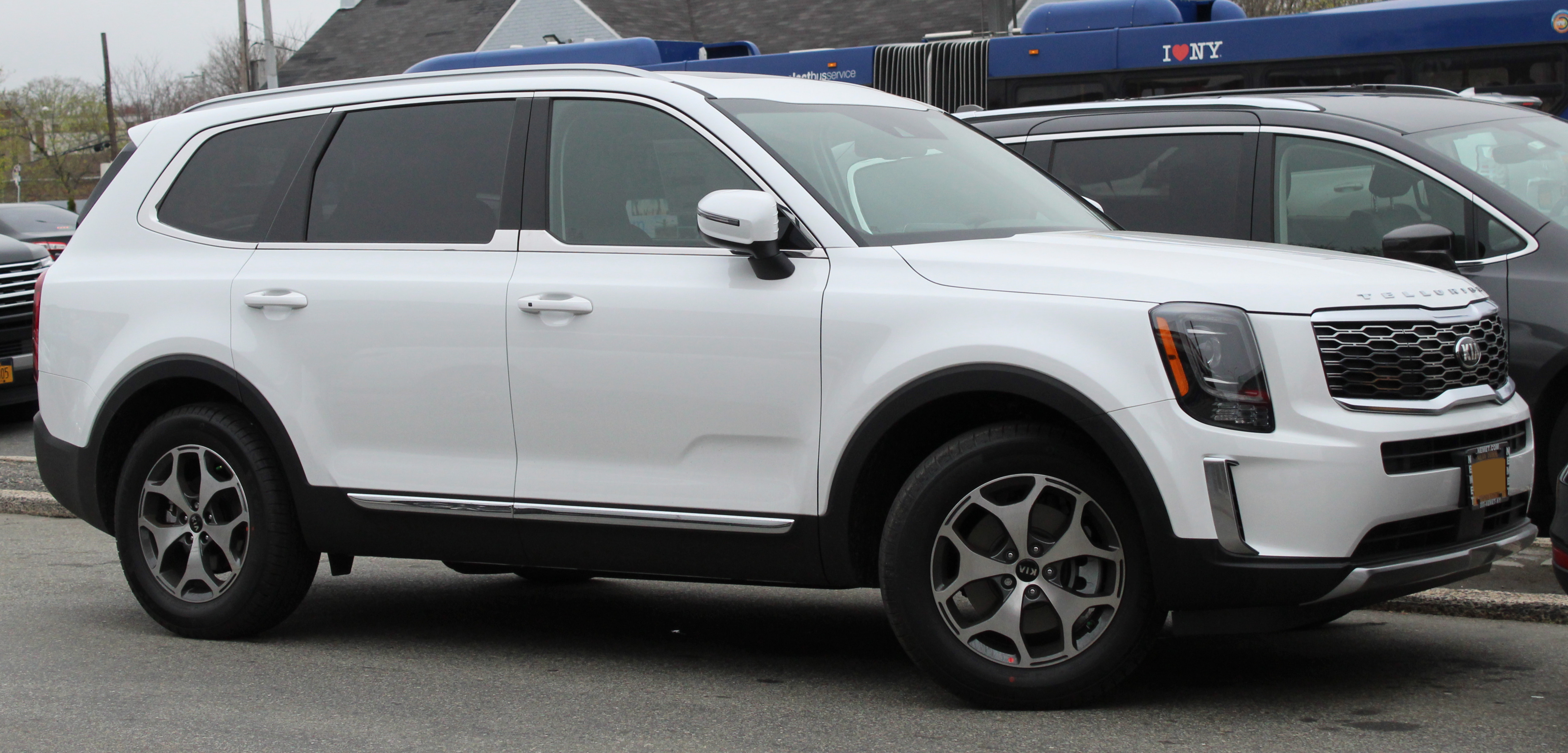
2027 Kia Telluride
"UmIhadanopportunitytodrivethe2027KiaTelluride. ... Thisisacompleteredesignfor2027."
The Kia Telluride is a family SUV with three rows of seats. For 2027, Kia redesigned it from the ground up, and the host talks about the new look and the space inside.
The Kia Telluride is a midsize three-row SUV, and the 2027 model is positioned as a complete redesign. In this segment, the host highlights the new exterior styling and the updated interior packaging for more space.
all-wheel drive
"IgottodrivetheXProSXPrestigeall-wheeldrive. Sothesearebasicallytrimpackages..."
All-wheel drive means the car can send power to all four wheels. That can help it grip better, especially on wet or slippery roads.
All-wheel drive (AWD) sends power to all four wheels, helping the vehicle maintain traction when roads are slippery or uneven. The host specifically drove the Telluride XPro SX Prestige in an all-wheel-drive configuration.
trim packages
"Sothesearebasicallytrimpackages,iswhattheyare. Andtheynamethemdifferentthings,andtheybundleupallthesethingswithinthosetrimpackages..."
A trim package is a set of features grouped together into a specific version of the same car. Higher trims usually add more equipment compared to the base versions.
Trim packages are bundled option levels that group features (like equipment, appearance items, and sometimes drivetrain choices) into named versions. On the Telluride, the host explains that the different trims are essentially these packages that “go up the ladder” to the top trim.
three-row
"Seatsuptosevenpassengers,athree-row."
A three-row SUV has three rows of seats. That usually lets it carry a larger group—this one can seat up to seven people.
A three-row SUV has seating in three separate rows, typically designed to fit up to seven or eight passengers depending on the configuration. The host notes the Telluride seats up to seven passengers with a three-row layout.
wheelbase
"Nowthere'smorelegroominthebackseats,thankstoalongerwheelbasewiththisredesign."
Wheelbase is the distance between the front and rear wheels. A longer wheelbase often means more room inside, like extra legroom for passengers in the back.
Wheelbase is the distance between the front and rear axles. A longer wheelbase can improve interior space—here, the host says the redesign provides more legroom in the back seats.
center console cupholders
"Dualphonechargers... up thereonthecenterconsole,andbigin-consolecupholdersarehandyaswell."
The center console is the storage/control area between the front seats. Cupholders there are just a convenient place to put drinks.
The center console is the area between the front seats that often houses controls and storage. Cupholders in the center console are a practical convenience feature for keeping drinks accessible.
infotainment screen
"[1103.0s] Hugeinstrumentandinfotainmentscreen,oneofthebestthatI'veused. [1108.3s] Cargotrunkroomiskindofsmallwithathirdrowup,asyouwouldexpect."
That big screen in the middle of the dash is the infotainment screen. It’s what you use for things like music, maps, and phone connections.
An infotainment screen is the main display in a car that controls features like navigation, media, phone pairing, and vehicle settings. Its responsiveness, layout, and clarity can make the car feel easier to use day-to-day.
third row
"[1108.3s] Cargotrunkroomiskindofsmallwithathirdrowup,asyouwouldexpect. [1112.6s] WhatIlikedaboutit,uhthedesignismodern,clever,andunique."
The third row is the extra row of seats behind the main back seats. It helps fit more people, but it can take away room for luggage.
A third row is the extra set of seats behind the second row, typically found in larger family-oriented vehicles. It increases passenger capacity but often reduces cargo space when folded down or in use.
literturbo
"[1135.4s] 2.5 [1136.5s] literturbofour,afour-banger,twohundredandseventy-fourhorsepower. [1144.0s] Mightbealittlelowonpowerforasbigasitisandhowmuchweightithauls."
A turbo is a device that helps the engine make more power. It squeezes more air into the engine so it can feel stronger, even if the engine is smaller.
A turbocharger (often shortened to “turbo”) uses exhaust gases to spin a turbine that forces more air into the engine. That lets a smaller engine make more power than it otherwise could, improving acceleration without needing a larger displacement.
four-banger
"[1136.5s] literturbofour,afour-banger,twohundredandseventy-fourhorsepower. [1144.0s] Mightbealittlelowonpowerforasbigasitisandhowmuchweightithauls."
“Four-banger” just means the engine has four cylinders. It’s a common way to describe smaller engines used in many everyday cars.
“Four-banger” is slang for a four-cylinder engine. Fewer cylinders generally means a more compact, lighter engine, but power and smoothness depend heavily on tuning and whether it’s turbocharged.
torque
"[1148.5s] Uhtorque,311poundfeet,eight-speedautomatictransmission,5,000poundtowrating. [1154.7s] Can'timagineit."
Torque is the engine’s pulling power. It’s what helps the car get moving and feel strong when you’re carrying or towing things.
Torque is the twisting force an engine produces, and it strongly affects how easily the vehicle accelerates from low speeds and how well it can pull weight. Two engines with similar horsepower can feel very different if their torque curves differ.
eight-speed automatic transmission
"[1148.5s] Uhtorque,311poundfeet,eight-speedautomatictransmission,5,000poundtowrating. [1154.7s] Can'timagineit. [1155.9s] But17milespergalloninthecity,22onthehighwayforacombinedof19."
This is the car’s automatic gear system with eight different gear ratios. It’s designed to help the engine run efficiently, but how smoothly it shifts can affect how the car feels.
An eight-speed automatic transmission is a gearbox with eight forward gears that automatically selects the best gear ratio for speed and driving conditions. More gears can help keep the engine in its efficient power band, but shift quality and response still vary by design.
tow rating
"[1148.5s] Uhtorque,311poundfeet,eight-speedautomatictransmission,5,000poundtowrating. [1154.7s] Can'timagineit."
Tow rating is the maximum amount of weight the car is rated to tow safely. It’s based on the car’s overall ability to handle towing, not just the engine.
Tow rating is the maximum weight a vehicle is approved to tow under specified conditions. It depends on the engine, transmission, cooling system, and braking capability, and it’s not the same as what the vehicle could physically pull.
miles per gallon
"[1155.9s] But17milespergalloninthecity,22onthehighwayforacombinedof19. [1160.8s] Igot22.5 [1162.2s] milespergallonover467.8"
MPG tells you how efficiently the car uses fuel. City MPG is for stop-and-go driving, highway MPG is for steady speeds, and combined is an average.
Miles per gallon (MPG) is a measure of fuel economy—how far the vehicle can travel on one gallon of fuel. City MPG and highway MPG are measured under different driving conditions, and a combined figure averages them.
downshift
"[1166.3s] Well,canuseimprovement? [1168.6s] Thetransmissiondownshiftisslowuhtomeetourneeds. [1172.8s] Itneedsmorerevsuhtobeabletodothataswell."
A downshift is when the car drops to a lower gear to get more power. If it happens slowly, the car may feel like it’s taking too long to respond.
A downshift is when an automatic transmission changes to a lower gear to increase engine speed and provide more acceleration. If a downshift is “slow,” the car can feel laggy when you need power, like merging or climbing.
revs
"[1172.8s] Itneedsmorerevsuhtobeabletodothataswell. [1175.8s] SoIthinkthattheyneedtodoalittlebitmoretweakingonthetransmission. [1180.6s] Rideandhandling,smoothride,anddespiteitssize,easytomaneuverinthegrocerystoreparkinglot."
“Revs” means how fast the engine is spinning (RPM). Spinning faster can help the car feel more responsive when you need power.
“Revs” is short for engine revolutions per minute (RPM). More revs generally means the engine is spinning faster, which can help it produce more power for acceleration or passing.
ride height
"Uhwedidn'tuhtakeitoff-road,buttheXProdoeshaveoff-roadtypetiresonitanduhthetellyourideheightforoff-roading,ifyou'reintothatsortofthing."
Ride height is how high the car is off the ground. Higher ride height can help you clear bumps and rocks without hitting the bottom of the vehicle.
Ride height is how far the vehicle sits from the ground. For off-roading, a higher ride height can improve ground clearance, helping the tires and underbody avoid scraping over rocks, ruts, and uneven terrain.
off-road type tires
"Uhwedidn'tuhtakeitoff-road,buttheXProdoeshaveoff-roadtypetiresonitanduhthetellyourideheightforoff-roading,ifyou'reintothatsortofthing."
Off-road tires are built to grip better on dirt and gravel. They usually have deeper tread and sturdier sidewalls so they handle rough roads more safely.
Off-road type tires use a more aggressive tread pattern and tougher sidewalls to grip on loose surfaces like dirt, gravel, and mud. They also help resist punctures and damage when you’re driving over rough terrain.

Hyundai Palisade
"Competitors? [1227.7s] HyundaiPalisade,$39,435iswhereitstarts."
The Hyundai Palisade is a big family SUV with three rows. Here it’s being compared as a cheaper starting option versus other large SUVs.
The Hyundai Palisade is a three-row family SUV positioned as a value alternative in the large-SUV market. In this segment, it’s mentioned as a starting-price competitor to other big, standard-SUV options.

Honda Pilot
"[1233.5s] Goahead. [1233.5s] HondaPilot,$42,500."
The Honda Pilot is a family SUV with three rows. In this discussion, it’s used as a benchmark for pricing in the same category.
The Honda Pilot is a three-row midsize SUV that competes directly in the same family-SUV space as other large standard SUVs. The hosts note its pricing as a point of comparison against competitors like the Palisade and Mazda CX-90.

Mazda CX-90
"[1240.5s] AndtheMazdaCX90isalsoacompetitor. [1243.6s] Itstartsat$38,800."
The Mazda CX-90 is a three-row SUV aimed at families. Here it’s mentioned as another option competing on price.
The Mazda CX-90 is a three-row SUV that competes in the large family-SUV segment. In this segment, it’s called out as another direct competitor, with a stated starting price.

Chevrolet Suburban
"AndtheMazdaCX90isalsoacompetitor. [1243.6s] Itstartsat$38,800. [1255.1s] Andyoualsostatedthatit'supagainstcompetitionofthesuburban."
The Chevrolet Suburban is a very large family SUV. In this segment, it’s used as the reference point for what “big” means in this SUV category.
The Chevrolet Suburban is a full-size, three-row SUV known for its large dimensions and truck-based heritage. The hosts use it as a category benchmark, arguing that the vehicle being discussed competes against the Suburban because it’s also a big, standard SUV.

Chevrolet Tahoe
"[1270.6s] ThattooisastandardSUV. [1272.1s] IwouldthinkTahoe,butSuburbanisabig,bigtruck."
The Chevrolet Tahoe is a large SUV, similar to the Suburban but usually a bit smaller. Here it’s mentioned as another example of a big SUV category.
The Chevrolet Tahoe is a full-size SUV that’s closely related to the Suburban but typically shorter in overall length. The host brings it up as an alternative comparison point for what counts as a “big” SUV.
qualifying
"[1428.2s] I'mtapingthequalifyingrightnow. [1430.5s] Theyranfullpracticethismorning. [1432.3s] I'vebeenwatchingitkindofsegmentedthroughouttheweek,andit'sveryimportant."
Qualifying is when drivers try to set their best lap time before the race. Your lap time usually decides where you start on the grid.
Qualifying is the session where drivers set their fastest lap times to determine starting positions for the race. In IndyCar, teams also use qualifying to fine-tune setup for speed and stability over a short run.
practice
"[1430.5s] Theyranfullpracticethismorning. [1432.3s] I'vebeenwatchingitkindofsegmentedthroughouttheweek,andit'sveryimportant. [1434.9s] Youhaven'thadanywrecks?"
Practice is time before the race where teams and drivers experiment. They use it to figure out how the car handles and what adjustments to make.
Practice sessions let teams test car setup and driving approaches before qualifying and the race. Drivers can also learn track conditions and how the car behaves as fuel load and tire conditions change.
Indy 500 pole winner
"[1438.5s] Uhlastyearthepolewinnerwasat234,Ithink. [1442.5s] Andyesterdaytheywereclockingabout232,shuttingitdownbecauseofwindandthingslikethat. [1447.0s] Sovery,verycool."
The pole winner is the driver who qualifies fastest and starts at the very front. Starting first can help because you avoid getting stuck in traffic right away.
The pole winner is the driver who earns the fastest qualifying time and starts first on the grid. At the Indianapolis 500, the pole position is a big deal because it can reduce traffic risk at the start and gives cleaner air.
shutting it down because of wind
"[1442.5s] Andyesterdaytheywereclockingabout232,shuttingitdownbecauseofwindandthingslikethat. [1447.0s] Sovery,verycool. [1448.6s] Yeah."
Wind can mess with how the car stays stable at speed. If it gets too strong, officials may stop the session for safety.
In open-wheel racing like the Indy 500, strong wind can make cars unstable, especially at high speed. That’s why officials may pause or stop sessions when wind conditions become unsafe or affect aerodynamic balance.
short shoot between one and two or three and four
"[1459.3s] Yeah,at240. [1460.5s] Well,you'recomingoutofoneturnandyou'relookingdown,evenifwhenyou'regoingtotheshortshootbetweenoneandtwoorthreeandfour,youcanseetheflags,andthat'swhattheylookupattheflagstoseewhere thewind'sblowing. [1469.3s] Doyoueverbeentotheindierace?"
On an oval track, there are straight sections where cars go fastest. Drivers pay attention to flags there because wind can change how the car feels and handles.
The Indy 500 is run on a rectangular oval, and the “short shoot” refers to a straight section between turns where cars can reach very high speed. Drivers use flags and wind direction cues there because airflow changes how the car pulls and stays planted.
tariffs
"TrumphasrepeatedlypointedtobillionsofdollarsininvestmentannouncementsbyautomakersoverthepastyearasevidencethetariffsarebringingproductionbacktotheUnitedStates. [1623.5s] AutomakerswithNorthAmericaandautoproductionarelookingtoboostoutputofvehiclesandpartsthatcomplywiththeUnitedStates-Mexico-Canadaagreementtoreducetheirtariffbills."
Tariffs are extra taxes on imported products. If parts or cars cost more to bring in, companies often try to build more of them inside the country to avoid those added costs.
Tariffs are taxes placed on imported goods. In the auto industry, tariffs can change where automakers build vehicles and source parts, because the cost of importing components may be higher than producing them domestically.
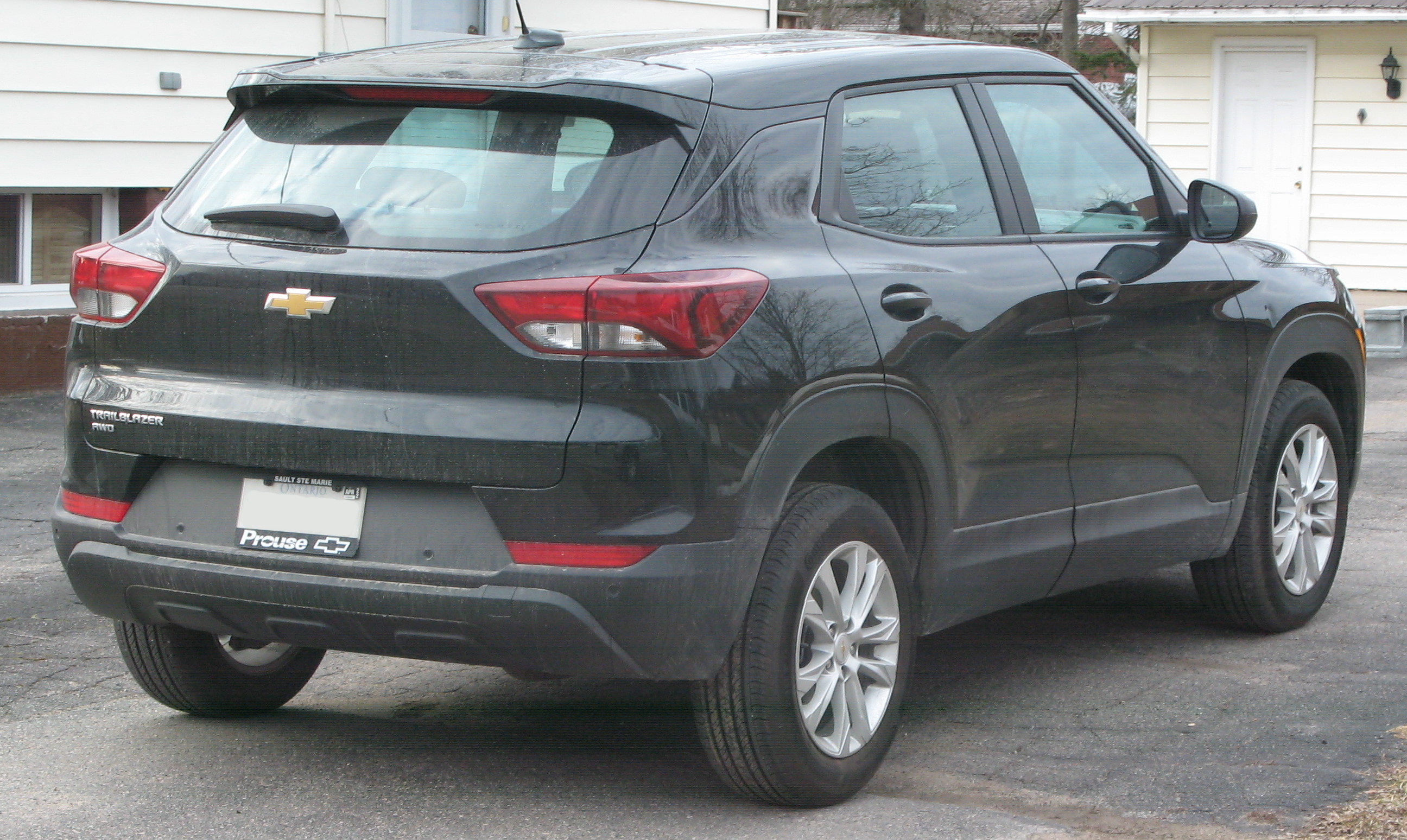
Chevy Trailblazer
"StellantisplanstotransferproductionoftheJeepCompassandCherokeefromMexicotoIllinoisinthecomingyears,whileGMplanstomoveChevyTrailblazerandEquinoxproductionoutofMexicotoplantsinTennesseeandKansas."
The Chevy Trailblazer is a compact SUV. The episode says GM wants to build it in the U.S. instead of Mexico, partly to reduce trade-related costs.
The Chevrolet Trailblazer is a compact SUV in the Chevy lineup. The episode mentions GM plans to move Trailblazer production out of Mexico into U.S. plants, reflecting how tariff/trade rules can drive factory decisions.

Chevy Equinox
"StellantisplanstotransferproductionoftheJeepCompassandCherokeefromMexicotoIllinoisinthecomingyears,whileGMplanstomoveChevyTrailblazerandEquinoxproductionoutofMexicotoplantsinTennesseeandKansas."
The Chevy Equinox is a compact SUV/crossover. The episode is saying GM plans to build it in the U.S. to better handle import taxes and trade rules.
The Chevrolet Equinox is a compact crossover SUV. The episode says GM plans to move Equinox production from Mexico to plants in Tennessee and Kansas, tying the move to trade agreement compliance and tariff impacts.

Jeep Compass
"StellantisplanstotransferproductionoftheJeepCompassandCherokeefromMexicotoIllinoisinthecomingyears,whileGMplanstomoveChevyTrailblazerandEquinoxproductionoutofMexicotoplantsinTennesseeandKansas."
The Jeep Compass is a compact SUV. The hosts are talking about where it’s built—Stellantis plans to move production to the U.S. to help with import costs and trade rules.
The Jeep Compass is a compact SUV built by Stellantis. The episode mentions Stellantis plans to transfer Compass production from Mexico to Illinois, which is a supply-chain move driven by tariff and trade-agreement considerations.

Jeep Cherokee
"StellantisplanstotransferproductionoftheJeepCompassandCherokeefromMexicotoIllinoisinthecomingyears,whileGMplanstomoveChevyTrailblazerandEquinoxproductionoutofMexicotoplantsinTennesseeandKansas."
The Jeep Cherokee is an SUV model. The episode says its production is planned to move to the U.S., which can be tied to reducing taxes on imported vehicles and parts.
The Jeep Cherokee is a midsize SUV from Jeep. The episode notes Stellantis intends to shift Cherokee production from Mexico to Illinois, illustrating how trade policy can influence manufacturing locations.
USMCA
"USMCAcompliantvehiclesandpartshavereceivedsignificantcarve-outsfromautotariffs,inpartbecauseofautomakerlobbying. [1642.2s] CanadianandMexicanvehiclesthatcomplywithUSMCArulesforreducedtariffsaresubjectto25%dutiesonlyonthevalueofavehicle'snon-Americancontentratherthan25%onthefullvehiclevalue."
USMCA is a trade deal between the U.S., Mexico, and Canada. It includes rules about how much of a car (or parts) must be made in North America to get lower import taxes.
USMCA is the United States–Mexico–Canada trade agreement that governs how cars and parts cross borders between the three countries. In practice, it sets rules for what counts as “local” content, which can affect whether vehicles and components qualify for tariff reductions.
carve-outs
"USMCAcompliantvehiclesandpartshavereceivedsignificantcarve-outsfromautotariffs,inpartbecauseofautomakerlobbying."
A carve-out is an exception to a rule. The episode is saying some car and parts imports can get special treatment under USMCA, instead of paying the full tariff.
Carve-outs are exceptions carved out of a broader rule or policy. Here, the speaker says USMCA-compliant vehicles and parts received carve-outs from auto tariffs, meaning they may be treated more favorably than non-compliant goods.
Request an Explanation
Heard something you'd like explained? We'll add it to this episode.
Sign in to request explanations for terms you heard.
Want to learn more?
Browse our glossary for plain-English explanations of automotive terms, jargon, and concepts.
Help improve this episode
See something that's not quite right? Our annotations are AI-generated and can sometimes miss the mark. Click the flag icon on any annotation to suggest a correction.