
Answering common car questions at blazing speed (so I can cover as many as possible in a short period of time)
About this episode
The host, drawing from decades in dealership service and detailing, answers common car questions at blazing speed. He contrasts older air-powered buffing with modern foam pads, then pivots to practical maintenance intervals like oil changes, tire rotations, and filter replacement. He also covers brake squeal causes, battery aging and jump-start safety, coolant/overheating red flags, and quick diagnostics for shifting hesitation and weak AC. The episode wraps with guidance on fuel grade, speedometer accuracy after tire changes, and brief warm-up timing.
Email Lennie at [email protected]
spark plug replacement
"[465.6s] plug replacement is not a bad idea. [468.5s] How often should I flush my coolant every 30,000 miles?"
Spark plugs are small parts that help your gas engine ignite the fuel. If they get worn out, the engine can run rough or not start as well, so replacing them at the right time helps keep things smooth.
Spark plugs are the ignition components that create the spark to start combustion in a gasoline engine. Over time they wear and can cause misfires, rough running, or reduced fuel economy, so replacement intervals matter.
flush my coolant
"[468.5s] How often should I flush my coolant every 30,000 miles? [472.4s] Flush your cooling system out. [474.2s] That's one of the few things that you should flush out don't just drain and refill."
Coolant helps your engine stay cool and protects it from corrosion. A coolant flush means you remove the old coolant and replace it so the system keeps working properly, not just a quick top-off.
A coolant flush replaces the old engine coolant with fresh coolant to maintain corrosion protection and heat-transfer performance. The host emphasizes not just draining and refilling, because trapped old coolant and contaminants can remain in the system.
cooling systems
"[472.4s] Flush your cooling system out. [474.2s] That's one of the few things that you should flush out don't just drain and refill. [479.0s] How often should my brake fluid be changed?"
Your cooling system is what keeps the engine from overheating. Flushing it helps keep the coolant clean so it can do its job effectively.
The cooling system is the network of components that moves coolant through the engine to remove heat. Flushing it helps remove old coolant and contaminants that can reduce cooling efficiency or increase corrosion.
brake fluid
"[479.0s] How often should my brake fluid be changed? [482.4s] Never unless your owner's manual calls for it or if your brakes feel really spongy you [491.1s] put your foot on the brake and it doesn't stop as good as it used to."
Brake fluid is the fluid that makes your brakes work when you press the pedal. If it gets old or contaminated, it can make braking feel weaker or less responsive.
Brake fluid is the hydraulic fluid that transfers force from your brake pedal to the brake calipers or wheel cylinders. It can absorb moisture over time, which can reduce braking performance and contribute to a spongy pedal feel.
330 seconds of an inch
"[515.4s] Okay how do I know when my tires need to be replaced when they're over seven years old [519.6s] or they get down to about 330 seconds of an inch. [525.1s] Bill Mead used to say why do you say thirty seconds of an inch?"
Tread depth is how much rubber is left on the tire. The host is saying that when the tread gets down to about 3/32 of an inch, it’s usually time to replace the tires because they won’t grip as well, especially in rain.
Tread depth is often measured in 32nds of an inch using a gauge or the tire’s built-in wear bars. The host is giving a rule-of-thumb threshold—around 3/32 inch ("thirty seconds")—where tires are considered worn and may need replacement for safety and wet traction.
tire pressure
"[539.2s] Okay how do I know when my tires need to be replaced when they're over seven years old [519.6s] or they get down to about 330 seconds of an inch. [525.1s] Bill Mead used to say why do you say thirty seconds of an inch? [537.5s] That's what he does for a living. [539.2s] Okay what causes uneven tire wear? [541.9s] Tire pressure usually if your tire pressure is too low it's going to wear on the outside [546.8s] edges of the tire."
Tire pressure is how much air is in your tires. If it’s too low, the tire can wear unevenly, especially on the outside edges, and it can also affect handling.
Tire pressure is the amount of air in your tires, measured in PSI. If it’s too low, the tire can flex more than intended, which often leads to uneven wear—like wearing more on the outer edges.
uneven tire wear
"[539.2s] Okay what causes uneven tire wear? [541.9s] Tire pressure usually if your tire pressure is too low it's going to wear on the outside [546.8s] edges of the tire."
Uneven tire wear means one part of the tire is wearing out faster than the rest. That can be caused by things like incorrect tire pressure, and it’s a sign you should check your setup so the tires last longer and handle safely.
Uneven tire wear means different parts of the tire tread wear at different rates, which can point to alignment issues, incorrect tire pressure, or suspension problems. In this segment, the host specifically links low tire pressure to faster wear on the outer edges.
air pressure
"If you have too much air pressure in your tires it's going to wear in the center... That's the thing that you always check first. Air pressure."
Air pressure is how much air is in your tires. If it’s too high or too low, the tire doesn’t sit on the road correctly, leading to uneven wear and steering/pulling problems.
Tire air pressure is the amount of air in the tire, measured in PSI. Too much (or too little) pressure changes how the tire contacts the road, which can cause center wear and can also contribute to handling issues that feel like alignment problems.
four-wheel alignment
"Otherwise this causes an alignment problem where you need to have your front end alignment done or a four wheel alignment every year."
A four wheel alignment is when a shop checks and adjusts the angles of all four wheels. It helps the car drive straight and reduces uneven tire wear.
A four wheel alignment checks and adjusts the angles of both the front and rear wheels. Because the rear wheels also affect how the car tracks, a four wheel alignment is often recommended when tire wear or pulling suggests more than just a front-only issue.
front end alignment
"Otherwise this causes an alignment problem where you need to have your front end alignment done or a four wheel alignment every year."
Alignment is how the shop sets your front wheels so they’re pointing straight. If it’s wrong, your tires wear unevenly and the car can drift or pull to one side.
Front end alignment is the adjustment of the front wheels’ angles so they point in the correct direction relative to the car and road. If the angles are off, the tires can wear unevenly and the car may pull to one side.
circumference
"The circumference of that tire is different because it's brand new it's not worn. That can put extra stresses on your differential."
Tire circumference is basically how far the tire “goes around” in one rotation. A new tire is thicker, so it can rotate differently than an older worn tire.
Tire circumference is the distance around the tire’s outer edge. A brand-new tire has more tread depth, so its circumference is larger than a worn tire, which means it rotates fewer or more times per mile—creating mismatches with the other tires.
differential
"The circumference of that tire is different because it's brand new it's not worn. That can put extra stresses on your differential."
The differential is part of the drivetrain that lets the two driven wheels spin at slightly different speeds. If one tire is newer and effectively “rolls” differently than the others, it can make that system work harder.
A differential is the gear unit that allows the drive wheels to rotate at different speeds, especially when turning. If one tire is much newer with different tread wear (and therefore different rolling circumference), it can force the differential to work harder and can increase stress on the drivetrain.
all season tires
"What's the difference between all season touring and all terrain tires? ... But all season is what most people get when they buy just about any new car today."
All-season tires are made to handle a mix of weather—warm days, rain, and some cold. They’re not as specialized as summer-only or winter-only tires, but they’re a good “one set for most people” option.
All-season tires are designed to work reasonably well across a range of temperatures, typically aiming for acceptable dry grip, wet traction, and light winter performance. They’re a compromise compared with dedicated summer tires or dedicated winter tires.

Ford Mustang
"...d be something like a sports car like a Camaro, a Mustang, a Corvette, a Porsche 911."
The Ford Mustang is a sports car that’s built for fun driving, usually with strong acceleration. When people mention it in tire discussions, it’s because the car can use the tires more aggressively than everyday vehicles. Good tires help it stay stable and grip the road.
The Ford Mustang is a long-running American sports car, typically offered as a coupe or convertible with multiple performance levels. It’s frequently mentioned alongside other sports cars because its acceleration and cornering can make tire selection and tread condition especially important. That’s why it often shows up in conversations about what kinds of tires suit performance driving.

Chevrolet Camaro
"... tire would be something like a sports car like a Camaro, a Mustang, a Corvette, a Porsche 911."
The Chevrolet Camaro is a sports car made for driving fast and handling well. People talk about it when discussing tires because it can put more stress on the tires than a normal car. The right tires help it grip the road better.
The Chevrolet Camaro is a performance-focused American sports coupe/convertible known for its sporty styling and strong engine options. It’s often brought up in discussions about “sports car” tires and handling because its power and weight distribution can put real demands on tread and grip. In a podcast context, it’s used as a familiar example of a car category that benefits from the right tire choice.

Chevrolet Corvette
"...ing like a sports car like a Camaro, a Mustang, a Corvette, a Porsche 911. These are typically designed for ..."
The Chevrolet Corvette is a sports car built to go fast and handle sharply. Because it’s made for performance, it usually needs tires that can grip well and handle higher-speed driving. That’s why it’s often mentioned when talking about tire requirements for sports cars.
The Chevrolet Corvette is a high-performance sports car designed for strong acceleration, confident handling, and driver-focused dynamics. It’s commonly referenced as a benchmark example of a sports car because its performance goals typically require tires that can handle higher speeds and more aggressive cornering. In a podcast, it’s used to illustrate what “sports car” design intent means for things like tire choice.
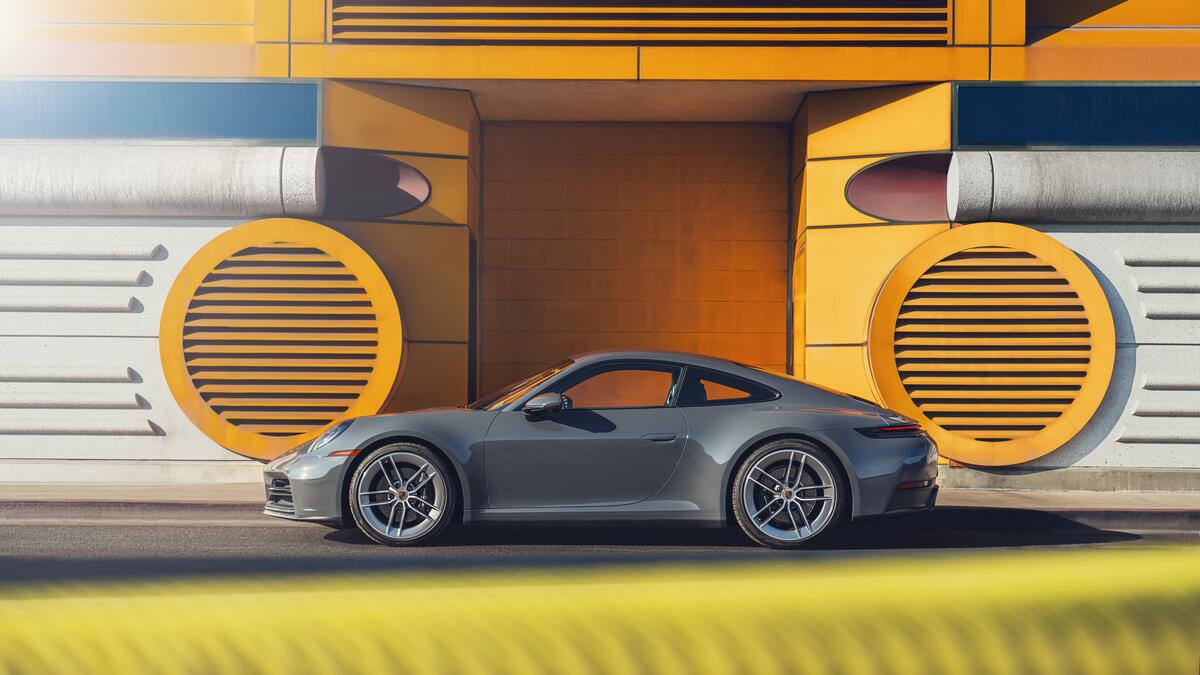
Porsche 911
"I think of a sport tire would be something like a sports car like a Camaro, a Mustang, a Corvette, a Porsche 911. These are typically designed for summer and spring and they're not for winter."
The Porsche 911 is a famous sports car. Here it’s just being used as an example of a car that would more likely use sport-style tires meant for warmer weather, not winter conditions.
The Porsche 911 is a rear-engine sports car known for high-performance driving dynamics and a long history of being used as a benchmark for “sport tire” fitment. In this segment, it’s mentioned as an example of a car that would typically come with summer-oriented performance tires rather than winter-focused ones.
all terrain tires
"All terrain tires are more for four wheel drive vehicles when you go off road and plus people think they look cool."
All-terrain tires are designed for both regular driving and rougher off-road stuff like dirt or gravel. They usually have more aggressive tread so they can grip better when the road isn’t smooth.
All-terrain tires are built with tougher tread patterns and sidewalls for mixed on-road and off-road use, often prioritizing traction on dirt, gravel, and uneven surfaces. They’re commonly associated with trucks and four-wheel-drive vehicles.
four wheel drive vehicles only
"All terrain tires are more for four wheel drive vehicles when you go off road and plus people think they look cool."
Four-wheel drive helps a vehicle get traction by sending power to all four wheels. The host is connecting that to all-terrain tires because those tires are meant for rougher roads and off-road use.
Four-wheel-drive (4WD) vehicles send power to both the front and rear axles, improving traction on low-grip surfaces like dirt, mud, and snow. The segment ties all-terrain tire choice to this kind of vehicle because it’s more likely to see off-road conditions.
wear sensor
"You hear a constant squealing noise every time you put your brake on or just a chirping noise when your brakes aren't on because that's the wear sensor that's touching the brake rotor..."
A wear sensor is a built-in warning that tells you your brake pads are getting too thin. When the pads wear down enough, the sensor starts making a squealing or chirping sound so you know to get the brakes checked.
A brake wear sensor is an indicator (often a small electrical contact or tab) that gets worn down as the brake pads thin out. When it contacts the rotor, it triggers a squeal/chirp to alert you that the pads need service.
brake rotor
"...that's the wear sensor that's touching the brake rotor saying that you need to have your brakes checked and probably that you need to have your new pads maybe have the rotors turned."
The brake rotor is the spinning metal disc behind your wheel. When you press the brake pedal, the pads squeeze onto it to slow the car down.
A brake rotor is the metal disc the brake pads clamp onto to create friction and slow the car down. When the rotor wears or gets damaged, it can cause noise, reduced braking performance, and uneven pad wear.
new pads
"...you need to have your brakes checked and probably that you need to have your brakes checked and probably that you need to have your new pads maybe have the rotors turned."
Brake pads are the parts that press against the brake rotor to stop the car. If they wear down too much, the brakes won’t work as well and they can start squealing.
Brake pads are the friction material that clamps against the rotor to slow the vehicle. When pads wear out, braking performance drops and noise can increase, which is why the segment recommends checking for pad replacement.
rotors turned
"...probably that you need to have your new pads maybe have the rotors turned."
Turning rotors means resurfacing them so the brake pads can contact evenly again. Shops can only do this if the rotor isn’t too worn down.
“Rotors turned” refers to machining the brake rotor surface to restore a smooth, even contact area for the pads. It’s only possible if the rotor has enough remaining thickness and is within wear limits.
O'Reilly's
"Because you bought cheap pads. You went to O'Reilly's or they got from Advanced Auto Parts."
O'Reilly's is a store that sells car parts. The host is saying that buying cheaper brake parts there (instead of the right factory-spec ones) can cause brake squeal.
O'Reilly's is an automotive parts retailer. In this segment, it’s mentioned as a place where someone might buy cheaper brake pads that can lead to squealing.
Advanced Auto Parts
"You went to O'Reilly's or they got from Advanced Auto Parts. You didn't put the OEM pads on there."
Advanced Auto Parts is another store that sells car parts. The point being made is that cheaper brake pads from places like this can squeal if they’re not the right type for the car.
Advanced Auto Parts is an automotive parts retailer. Here it’s used as an example of where someone might source inexpensive brake pads that may not match the vehicle’s intended fit/compound, contributing to squealing.
OEM pads
"You went to O'Reilly's or they got from Advanced Auto Parts. You didn't put the OEM pads on there."
OEM pads are the brake pads that match what the car was originally designed to use. The host is saying that using the correct factory-spec pads helps prevent brake squeal and ensures proper braking feel.
OEM pads are brake pads made to the original equipment manufacturer’s specifications for a particular vehicle. Using OEM-equivalent parts can matter for noise characteristics, pad material, and how the pad wears against the rotor.
cold cranking amp ability
"Beyond that they lose their cold cranking amp ability to start your car when it's really really cold and the voltage starts to drop because they've just had so many charging and discharging cycles"
Cold cranking amps is a measure of how strong your battery is at starting the car when it’s cold outside. If the battery gets old, it may not have enough starting power, so the engine may crank slowly or not start at first.
Cold cranking amps (CCA) is a battery rating for how much current the battery can deliver to start an engine in cold temperatures. As a battery ages and cycles through charging/discharging, its CCA can drop, making hard starts more likely when it’s very cold.
charging and discharging
"Beyond that they lose their cold cranking amp ability to start your car when it's really really cold and the voltage starts to drop because they've just had so many charging and discharging cycles"
A battery cycle is basically: it gets charged up, then you use it to start the car and run electronics, and then it gets charged again. Repeating that over and over wears the battery out.
A battery’s charging and discharging cycles are the repeated process of being recharged (typically by the alternator) and then used to power the car. Each cycle contributes to battery wear, which is why older batteries can lose starting strength over time.
weak battery
"Warning signs of a weak battery because the car won't start. You turn the key it won't start initially and then it does start. You've got a weak battery."
A weak battery can’t supply enough power to start the engine. You might notice the car won’t start right away, or it cranks slowly, and then it may start after a moment.
A weak battery is one that can’t provide enough voltage/current to crank the engine reliably. Symptoms like delayed starting or a no-start condition that then works can indicate the battery is failing or has reduced cranking power.
jump starting
"Let's see can I damage my car by jump starting it incorrectly? Absolutely. Follow the owner's manual in that and make sure you have a good set of jumper cables"
Jump starting is when you use jumper cables to borrow power from another car so yours can start. If you connect the cables wrong, you can damage the car’s electrical system.
Jump starting is using another vehicle’s battery (via jumper cables) to provide enough electrical power to start a dead or weak battery. Doing it incorrectly can cause electrical damage, which is why the correct order and connections matter.
jumper cables
"Follow the owner's manual in that and make sure you have a good set of jumper cables that are really thick wires."
Jumper cables are the thick wires you use to connect two cars’ batteries. Using cables that are too thin can make it harder to transfer enough power to start the car.
Jumper cables are heavy-gauge wires used to connect a donor battery to a dead battery during jump starting. Thicker cables have lower resistance, helping deliver the high current needed for starting.
new engine
"Okay. Is it normal for a new engine to use oil? We talked about this yesterday too."
A “new engine” can sometimes use a little oil at first. That can be normal during break-in, but if it’s excessive it may point to a problem.
When people ask about a “new engine” using oil, they’re usually referring to early-life oil consumption or break-in behavior. Oil consumption can be influenced by engine design, piston ring seating, and how the engine is driven during break-in.
oil in 1000 miles
"You know some manufacturers say that a vehicle can use a quart of oil in 1000 miles and that's normal. [786.2s] That was like Honda and Toyota and Subaru."
Some car makers say it’s okay if an engine uses a little oil over time. The important part is whether the amount is within what the manufacturer allows and whether it’s increasing.
This refers to an oil consumption rate—how much engine oil the car uses over a set distance. Automakers sometimes publish or tolerate a certain amount as “normal,” but the key is whether it’s within spec and whether it’s getting worse.
engine may die
"I'd want them to write it on a repair order that this is normal usage because at 75,000 miles your engine may die."
If an engine is burning or losing too much oil, it can eventually cause major damage. Low oil means less lubrication, and that can lead to the engine failing.
The host is warning that excessive oil consumption can be a sign of serious engine wear or failure risk. If an engine is running low on oil, internal parts can overheat and suffer damage, potentially leading to catastrophic failure.
engine overheating
"Okay. [810.6s] Why is my engine overheating? [812.0s] Well that can be caused by a lot of things."
Engine overheating happens when the cooling system can’t keep the engine temperature under control. It’s dangerous because sustained high temperatures can warp parts and cause major failures.
antifreeze
"Usually coolant related. [816.4s] The antifreeze. [818.0s] The overflow tank is you can look at that and you can see the condition of your coolant."
Antifreeze is mixed into coolant so it doesn’t freeze in cold weather and also helps protect the cooling system. If it’s old or contaminated, it can stop working well.
Antifreeze is the additive mixed into coolant that lowers the freezing point and helps prevent corrosion inside the cooling system. Over time, it can degrade, reducing its ability to protect and cool the engine.
overflow tank
"The antifreeze. [818.0s] The overflow tank is you can look at that and you can see the condition of your coolant. [823.7s] If it's really brown it's not good."
The overflow tank is a small reservoir that holds extra coolant. Looking at it can tell you if the coolant looks healthy or if it’s time to service the cooling system.
The overflow tank (coolant reservoir) is where excess coolant expands into as the engine heats up. Checking it can reveal coolant condition (like discoloration) and sometimes indicates cooling-system problems.
flushed
"If it's really brown it's not good. [826.9s] Time to have it flushed. [828.9s] That can cause it."
A coolant flush means draining out old coolant and putting in new coolant. If the coolant looks dirty or discolored, a flush can help the cooling system work better.
A coolant flush is the process of removing old, contaminated coolant and replacing it with fresh coolant. If coolant looks bad (for example, brown), flushing can help restore proper heat transfer and corrosion protection.
blown head gasket
"That can cause it. [830.0s] You can have a blown head gasket that can cause it. [832.3s] Your timing can be off on the engine."
A head gasket is a seal that keeps coolant and engine gases separated. If it fails, the engine can overheat and the repair can be expensive.
A blown head gasket means the seal between the engine block and cylinder head has failed. This can let coolant and combustion gases mix or escape, often causing overheating and potentially severe engine damage.
timing can be off
"You can have a blown head gasket that can cause it. [832.3s] Your timing can be off on the engine. [834.7s] A lot of potential causes but if it can destroy your engine."
Engine timing is when the spark happens inside the engine. If it’s not set correctly, the engine can burn fuel less efficiently and run hotter.
Ignition timing (when the spark occurs relative to engine position) can affect combustion efficiency and heat. If timing is off, the engine may run hotter than it should and contribute to overheating.
small leak
"What happens if I ignore a small leak like a drip or two on my driveway? [850.7s] It becomes a big leak."
A small drip can be an early warning sign. If you ignore it, the leak can get worse and cause bigger problems later.
A small leak (like a drip) can indicate a failing seal, hose, or gasket and may start as a minor fluid loss. Even small leaks can become larger as components degrade or pressure increases, leading to overheating or other failures depending on the fluid.
transmission hesitation
"Why does my transmission hesitate? Well how do you know it's your transmission?"
It means your car doesn’t respond right away when it should shift or move smoothly. One common reason is low fluid or a leak.
“Transmission hesitation” is when the car feels delayed or sluggish when you expect it to shift or respond. It can be caused by low transmission fluid, leaks, or internal transmission problems.
transmission fluid
"If you eliminate the engine causes then if your transmission is hesitating or not shifting properly you could just be low on fluid. It could have a leak. That's the first thing you check. And then you take it to a dealership that sells that brand and have them test drive your vehicle. They check the fluid."
Transmission fluid is the fluid that keeps the transmission working correctly and helps it shift. If it’s low, shifting can feel delayed or rough.
Transmission fluid is the hydraulic fluid that lubricates the transmission and helps control shifting. If it’s low due to a leak, the transmission can hesitate or shift improperly.
refrigerant
"Okay. Why isn't my air conditioning cold? Because it's low on refrigerant. Why is it low on refrigerant?"
Refrigerant is what your AC uses to move heat out of the car. If there isn’t enough of it, the air won’t get cold.
Refrigerant is the chemical used by an air conditioning system to absorb heat from inside the cabin and release it outside. If the system is low on refrigerant, the AC won’t cool effectively.
AC leak
"Why is it low on refrigerant? Because you have a leak. And this is something you need to get taken care of especially if it's the middle of summer."
An AC leak means the refrigerant is escaping. Without refrigerant, the AC can’t cool, and it often needs both a fix and a refill.
An AC leak is a problem where refrigerant escapes from the air conditioning system. Because refrigerant is required for cooling, a leak typically causes the AC to stop working well until it’s repaired and recharged.
recharge your own AC
"Can you recharge your own AC? Some people do. Some people buy the equipment to charge their own air conditioning. And then it leaks out again a few days later and then they end up going to the dealership"
Recharging your AC means adding refrigerant so it can cool again. But if there’s a leak, it’ll lose refrigerant and the AC won’t stay cold.
“Recharging” an AC means adding refrigerant back into the system. If there’s an underlying leak, the refrigerant will escape again, so the cooling problem returns quickly.
coolant protection
"Make sure that you have adequate coolant protection. They can test your coolant at a car dealership or a service center to see to what temperature your vehicle is protected."
Coolant protection is how cold your car’s antifreeze can handle without freezing. If it’s rated for a very low temperature, your engine is less likely to get damaged in winter.
Coolant protection refers to how well a car’s coolant resists freezing at low temperatures. It’s usually expressed as a minimum safe temperature (for example, down to 0°F, -15°F, or -30°F).
premium fuel
"Premium gasoline should I use it? No. Absolutely not. If your car calls for it like my, let's see, what was I driving? ... It says premium fuel recommended."
Premium gas is a higher-grade fuel that some cars ask for. If your car doesn’t require it, you can usually use regular instead and save money.
Premium gasoline is higher-octane fuel than regular, and it’s used when an engine is designed to tolerate it. In this segment, the host argues that if the vehicle doesn’t require premium, using it isn’t necessary and can cost extra without benefit.

Nissan Armada
"If your car calls for it like my, let's see, what was I driving? Oh yeah. Like my wife's Nissan Armada. It says premium fuel recommended."
The Nissan Armada is a big SUV. The host is talking about what gas it should use and says their Armada runs regular unleaded without knocking sounds.
The Nissan Armada is a full-size SUV that may display a fuel recommendation on the fuel door or owner’s materials. In this segment, the host says the Armada recommends premium fuel, but they run regular unleaded without spark knock or pinging.
regular unleaded
"What do I run in it? Regular unleaded. It doesn't make it, it doesn't spark knock. There's no pinging noise and I get 22, 23 miles again on the highway."
Regular unleaded is the cheaper gas most cars can use. The host is saying their car runs it fine—no knocking sounds and no engine harm.
Regular unleaded is the lower-octane fuel option compared to premium. The host says their Nissan Armada runs regular unleaded without knock or pinging, implying the engine is calibrated to avoid damage on that fuel.
spark knock
"It doesn't make it, it doesn't spark knock. There's no pinging noise and I get 22, 23 miles again on the highway."
Spark knock is when the fuel burns the wrong way inside the engine, often making a pinging or rattling sound. If it happens a lot, it can stress the engine, which is why the right fuel matters.
Spark knock is an abnormal combustion condition where the air-fuel mixture ignites too early or unevenly. It can cause a pinging noise and, if severe or persistent, may lead to engine damage—one reason some engines specify higher-octane fuel.
middle grade gas
"Every other car, don't buy the middle grade, waste in your money, just buy 87."
“Middle grade” is gas that costs more than regular but less than premium. If your car doesn’t need it, you’re often just paying extra for no real gain.
“Middle grade” refers to mid-octane gasoline (between regular and premium). The host’s point is that if the manufacturer specifies regular, paying for mid-grade is usually unnecessary because the engine won’t benefit from the extra octane.
check engine light
"Am I going to take a check engine light problem to my tire store? Heck no."
The check engine light is a warning that something in the engine or emissions system may be wrong. You usually need a scan tool to figure out what the code means.
The check engine light is a dashboard warning triggered when the engine control unit (ECU) detects a fault in emissions or engine systems. It typically requires diagnostic scanning to identify the specific problem before repairs are chosen.
engine diagnostics
"I know it says they do all this other stuff, engine diagnostics and things like that."
Engine diagnostics means using tools to read what the car is complaining about. Instead of guessing, a technician checks the stored codes to find the real cause.
Engine diagnostics are the process of using scan tools and test procedures to find the cause of a fault code or drivability issue. It’s more than guessing—modern cars store trouble codes that technicians interpret to pinpoint the failed component or system.
wiring
"where a rat got in and ate the wiring on an F-150, relatively new F-150."
Vehicle wiring is the bundle of electrical cables that connects the car’s computers and sensors. If it gets damaged, the car can act weird or stop working, and fixing it can be a big job.
Vehicle wiring refers to the electrical harnesses that connect sensors, modules, and actuators throughout the car. When wiring is damaged—like from rodent chewing—multiple systems can fail and repairs may require extensive interior disassembly to access the harness.

Ford F150
"to do what, like one of my technicians is doing back there right now, where a rat got in and ate the wiring on an F-150, relatively new F-150."
The Ford F-150 is a popular full-size pickup truck. Here, the host describes a problem where a rat chewed through the truck’s wiring, which forced the vehicle to be taken apart to fix it.
The Ford F-150 is a full-size pickup known for being widely used and heavily worked, so wiring and electronics issues can become expensive when something damages the harness. In this story, a relatively new F-150 had wiring eaten by a rat, requiring major disassembly to repair.
dash is out
"And this vehicle had to be completely blown apart. The dash is out of it."
“Dash is out” means the dashboard was removed. That usually happens when the problem is hidden behind it, so the repair takes a lot more time.
“Dash is out” means the dashboard has been removed to access components behind it, such as wiring harnesses, HVAC parts, or control modules. It’s a sign the repair is labor-intensive because the interior must be disassembled to reach the damaged area.
Comprehensive insurance
"So I'm going to check with my insurance, make sure I've got coverage against rats eating the wires. It's covered under his comprehensive insurance."
Comprehensive insurance helps pay for damage that isn’t from a crash. That can include things like theft, vandalism, or animals chewing wires.
Comprehensive insurance is coverage for non-collision damage, such as theft, vandalism, or animal damage. In this segment, the host says rat damage to wires is covered under comprehensive.
speedometer
"Can you change the speedometer? No, we cannot. The government made that, took that ability away from us."
The speedometer is the instrument that displays vehicle speed to the driver. Its reading is tied to wheel rotation, so changing tire size can make the speedometer inaccurate unless it’s recalibrated.
aftermarket chips
"You can buy aftermarket chips from these speed shops in different places and they can reprogram your speedometer based on the tires that you have,"
Aftermarket chips are non-factory electronic modules used to alter or reprogram vehicle control behavior. Here, they’re described as being able to reprogram the speedometer to match the new tire size.
OBD port
"but you have to leave that thing plugged into your OBD port all the time for it to register the correct speed."
The OBD port (On-Board Diagnostics port) is the standardized connector used to communicate with a vehicle’s computer for diagnostics and some programming functions. The host says the reprogramming device must stay plugged in for it to register the correct speed.
wheel diameter
"What happens is you change the diameter or the circumference and the diameter of the wheel. And so the car doesn't really know how fast it's going because the bigger tire rotates"
Wheel diameter (and the related circumference) determines how far the vehicle travels per wheel rotation. If you increase tire size, the wheel turns fewer times per mile, so the car’s speed calculation can be off unless the system is recalibrated.
direct fuel injection
"Cars warm up a lot faster than they used to. All these aluminum blocks and direct fuel injection and they warm up pretty quickly."
Direct fuel injection means the car sprays fuel right into the engine’s combustion area, not earlier in the intake. It helps the engine run more efficiently, and it can change how fast the engine warms up.
Direct fuel injection is a fuel system where gasoline is sprayed directly into the engine’s combustion chamber instead of into the intake port. Because it’s tightly controlled, it can improve efficiency and emissions, and it also affects how quickly the engine reaches operating conditions.
oil pan
"It's all drained down into the oil pan and you want it to get to your valve train, which are all the delicate parts in the top of the engine..."
The oil pan is where the engine oil collects at the bottom of the engine. When the car has been sitting, the oil drains there, so a short warm-up helps oil get back up to the moving parts.
The oil pan is the reservoir at the bottom of the engine that holds the engine oil. When the engine sits, oil drains down into the oil pan, so warming up briefly helps oil pressure build and oil reach the upper engine components.
valve train
"you want it to get to your valve train, which are all the delicate parts in the top of the engine, all the valves, the rocker arms."
The valve train is the mechanism that controls when the engine’s valves open and close. It needs oil to lubricate it, so letting oil circulate for a short time helps protect those parts when the engine is cold.
The valve train is the set of components that opens and closes the engine’s intake and exhaust valves. It typically includes parts like the camshaft, rocker arms, and related hardware, and it relies on oil lubrication—especially during cold starts.
rocker arms
"all the delicate parts in the top of the engine, all the valves, the rocker arms."
Rocker arms are parts that help move the valves by transferring motion from the camshaft. They need oil lubrication, so a brief warm-up helps ensure they’re protected before you drive hard.
Rocker arms are components in many valve-train designs that transfer motion from the camshaft to the valves. They move under load and rely on oil lubrication, so cold-start oil circulation matters for reducing wear.
overhead camshaft
"You may have an overhead camshaft, which you probably do if you're having a modern passenger car."
An overhead camshaft is a cam located in the top part of the engine (the cylinder head). Since it’s up high, it needs oil to reach it quickly so the valve parts don’t run dry.
An overhead camshaft (OHC) is a camshaft located in the cylinder head rather than in the engine block. Because it sits higher up, it depends on oil flow to quickly lubricate the cam and valve-actuating components during cold starts.
Request an Explanation
Heard something you'd like explained? We'll add it to this episode.
Sign in to request explanations for terms you heard.
Want to learn more?
Browse our glossary for plain-English explanations of automotive terms, jargon, and concepts.
Help improve this episode
See something that's not quite right? Our annotations are AI-generated and can sometimes miss the mark. Click the flag icon on any annotation to suggest a correction.