
Antenna Woes and accountability!
About this episode
A listener gets practical advice for rescuing photos from a pile of old Android phones, with Trev steering her away from gimmicky photo sticks and toward Google Photos as the best cloud backup and search tool. The episode also checks in with Marilyn, who has launched her accountability coaching website and is now focused on growing through social media and LinkedIn. Other calls cover Pocket AI for meeting notes, fixing flaky Channel 7 reception with an antenna tech, a strong review of the Wolfbox mirror dash cam, and a reality check on Loop earplugs for hearing support.
Geely
"...I am in China right now with Geely, the auto group looking at the Beijing Motor Show and also some of the safety centers. So just I guess prove how much effort they're putting into things like that..."
Geely is a big car company from China. The host is saying he’s in China with Geely to check out the car show and safety work they’re doing.
Geely is a major Chinese automaker and parent company behind several brands. In this segment, Trev along mentions being in China with Geely to look at the Beijing Motor Show and safety-related facilities, which signals Geely’s involvement in both product and safety efforts.
Beijing Motor Show
"...Geely, the auto group looking at the Beijing Motor Show and also some of the safety centers. So just I guess prove how much effort they're putting into things like that..."
The Beijing Motor Show is a big car event in China. Companies use it to show off new cars and new tech they’re working on.
The Beijing Motor Show is a major auto event where automakers display new vehicles, technologies, and concepts. It’s often used to preview upcoming models and highlight manufacturing and safety priorities.
safety centers
"...looking at the Beijing Motor Show and also some of the safety centers. So just I guess prove how much effort they're putting into things like that..."
“Safety centers” typically refer to facilities used for crash testing, safety engineering, and evaluation of vehicle systems. When an automaker highlights these, it usually means they’re investing in validating occupant protection and safety performance before cars reach customers.
photo stick
"Just inquiring about a photo stick. I've seen things along the lines. You can randomly put into any device to get downloaded or your old photos. This is mythical. It doesn't exist."
A photo stick is a small gadget you plug in to move your pictures off your phone or computer. The ads make it sound automatic, but sometimes it misses files or doesn’t work well with certain devices.
A “photo stick” is a consumer USB-style device marketed to make it easy to back up or transfer photos from phones or computers. In practice, performance and compatibility can vary a lot by device type, file structure, and whether the software can correctly index everything.
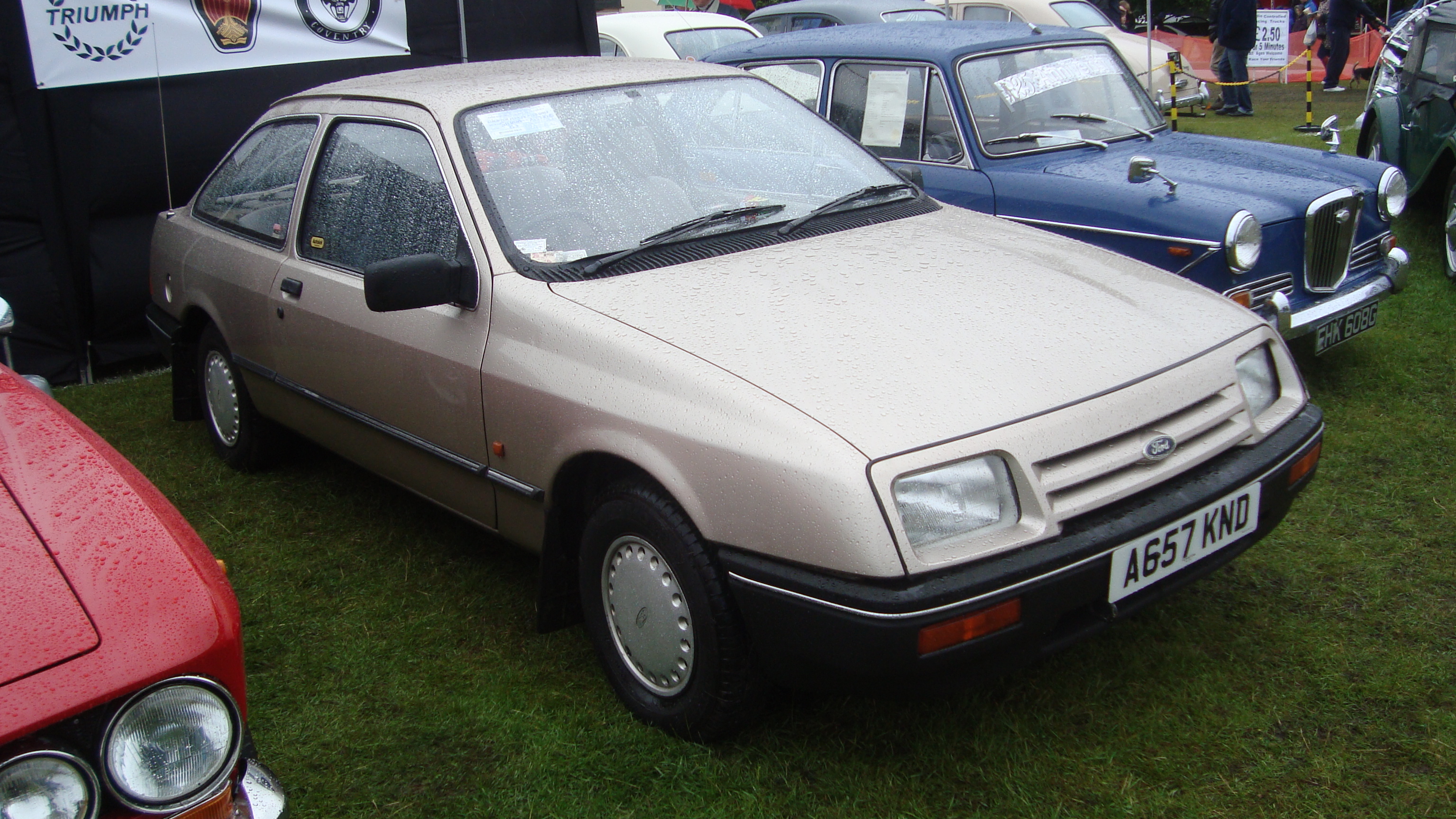
Ford Sierra
"...I took a photo of a Benson and Hedges Ford Sierra from the Australian Turing Car Championship. And it was Tony Longhurst and Thomas Mazira."
A Ford Sierra is a Ford car model. Here it’s being talked about because a version of it was used in Australian touring car racing, so it has a motorsport connection.
The Ford Sierra is a popular Ford model that also became well-known in motorsport. In this segment, it’s referenced as a race car associated with the Australian Touring Car Championship, which helps listeners connect the name to real-world racing history rather than just a road car.
Australian Touring Car Championship
"...I took a photo of a Benson and Hedges Ford Sierra from the Australian Turing Car Championship. And it was Tony Longhurst and Thomas Mazira."
This is a big Australian race series where cars based on normal models compete. When someone mentions it alongside a specific car, it usually means that car was part of that racing scene.
The Australian Touring Car Championship (ATCC) is a major touring-car racing series in Australia, featuring production-based cars. Mentioning it in the context of a Ford Sierra frames why that specific car shows up in a photo—because it’s tied to a real racing event and teams.
cloud
"...you think about your photos being on a device. You're better off thinking of your photos as being in the cloud and your device as a window into the cloud."
Cloud storage means your photos are saved online, not just on your phone. If your phone gets broken or stolen, you can still get your photos back by logging into your account.
“Cloud” storage means your photos are saved on remote servers instead of only on your phone. In automotive-adjacent terms, it’s like having your car’s data or settings backed up so you can recover them even if a device is lost or damaged.
backup and redundancy
"...Someone could come and smash all my phones. And all I gotta go do is go to any computer or get any phone, log on to Google Photos and I can see all my photos. That's, that's the backup and redundancy that you want..."
Backup and redundancy mean you keep your important stuff in more than one place. That way, if one thing fails (like a phone), you still have a copy somewhere else.
Backup and redundancy are about having multiple copies of important data so you don’t lose it. The host is applying this idea to photo storage—having photos in a cloud service provides a safety net similar to how vehicle owners use service records and backups for critical documents.
outsource it
"I've got to say building websites is not my thing, so then I decided to outsource it. Why not? Do you know"
Outsourcing is when you hire someone else to do a job for you. Instead of trying to learn everything yourself, you pay a specialist to handle it.
Outsourcing means paying another person or company to do a task you don’t want to (or can’t) do yourself. In car ownership terms, it’s common for things like diagnostics, wiring, or repairs to be handled by specialists rather than DIY.
geeks to you
"You have people who go, I've got a problem and how do I fix it? And I'm like, you know what? Just call geeks to you. They come to your house and they fix it for you and you pay them."
They’re talking about a service that sends a tech person to your place to fix the issue. It’s like calling someone who can handle the problem on-site instead of trying to solve it yourself.
“Geeks to you” is referenced as a service where tech specialists come to your home to fix problems. While not automotive-specific, the idea maps to how many car owners use mobile mechanics or on-site diagnostics.
meta verified
"Are you thinking about paying for meta verified because of all the dramas that have existed in recent months with meta accounts, Instagram or Facebook being shut off and kicked off for, you know,"
Meta Verified is a paid verification feature for Facebook/Instagram accounts. They’re bringing it up because people have had problems with accounts being shut down, so they’re discussing ways to protect or stabilize access.
“Meta Verified” is a subscription/verification feature tied to Meta platforms like Facebook and Instagram. The hosts mention account shutdowns and access issues, which is relevant to how businesses manage their online presence—similar to how car owners rely on stable access to apps/services for connected features.
antenna reception issue
"Okay. I think I explained my problem because... when I put the TV on on channel seven, the screen is crashing... Then the screen is turning green... Yes. So what you have is a reception issue. The signal is not strong enough for your television."
This sounds like your TV isn’t getting a strong enough signal. When the signal is weak or changes, the picture can glitch, go green, or keep starting and stopping.
The caller describes TV symptoms like the picture cutting out and the screen turning green, which the host attributes to weak or unstable broadcast signal. In practice, this is often an antenna alignment or signal-strength problem rather than a TV hardware failure.
digital TV
"Yes. So what you have is a reception issue... So digital TV does that. It does that flaky kind of pixelated and then it goes green. It comes and goes."
Digital TV can look really weird when the signal isn’t good—like the picture breaks up or turns green. It’s because the TV can’t decode the signal reliably.
Digital TV can show “flaky” behavior when signal quality drops—pixelation, intermittent picture, or color/green-screen artifacts. Unlike older analog broadcasts, digital signals tend to fail more abruptly once they fall below a usable threshold.
Mr. Antenna
"Okay. So Mr. Antenna is a big franchise. They might be in your local area. And what they will do is they will test the antenna..."
“Mr. Antenna” is referenced as a local franchise that can test antenna power and direction. The segment frames it as a practical service for diagnosing reception problems and recommending whether to boost or replace equipment.
antenna booster
"...they will test the antenna and they will tell you whether they can just put a little booster on or whether you need a new antenna."
A booster is like turning up the signal so your TV can get it more clearly. But if the antenna isn’t positioned or working well, a booster won’t fix the root problem.
A booster is an amplifier added to improve signal strength before it reaches the TV. It’s sometimes recommended when the antenna can still receive the signal but the level is too low; if the antenna can’t capture the signal properly, a new antenna may be needed instead.
signal bounce
"...there's a lot of things that can be built in your area which make that signal bounce differently, especially if you're living on the fringes of reception."
Sometimes the TV signal doesn’t go straight—it bounces off things like buildings and trees. If the surroundings change, those bounces can make the signal less reliable.
“Signal bounce” refers to multipath reception, where radio waves reflect off buildings, trees, and other objects. Changes in the environment can alter those reflections, which is why reception can worsen even if the antenna setup hasn’t changed.
new antenna cable
"But it's certainly going to cost money because you'll need either a booster, or a new antenna or new antenna cable."
“Antenna cable” is the coaxial (RF) cable that carries the TV signal from the antenna to the receiver. Replacing it can fix issues caused by damage, poor shielding, or signal loss over older/low-quality cable.
iLoad
"...was the need then? Yeah, all I have are, yeah, an iLoad van, which has barn doors at the back, so no vis..."
The iLoad is a van made by Hyundai. It’s designed to carry people or goods, and it has rear doors that open like panels (often called barn doors). That door style can make loading and unloading easier, especially when you’re working with bulky items.
The iLoad is a van model from Hyundai, typically used for transporting people or cargo in a practical, work-focused layout. It’s mentioned in the podcast in connection with its rear barn doors, which affect how you load items and how much you can see when loading from behind. Vans like this are often discussed because they’re built around usability—easy access, flexible interior space, and day-to-day practicality.
limited rear visibility in vans
"which has barn doors at the back, so no vision through the rear vision mirror... And so I thought, okay, combine the two, get a rear view camera..."
Some vans are hard to see behind because of their shape and doors. When that happens, cameras and better mirrors help you reverse more safely.
This segment highlights a common problem: vans can have limited rear visibility due to cargo doors and body shape. When the rear view is obstructed, drivers often rely on camera systems and mirror replacements to reduce backing incidents.
rear view camera
"And so I thought, okay, combine the two, get a rear view camera, because I needed a rear vision camera so that you don't keep backing into things in a van, you need that vision behind."
It’s a camera on the back of the vehicle that shows a live video feed to help you see what’s behind you. It makes reversing safer when your rear view is blocked.
A rear view camera is an aftermarket or factory camera mounted at the back of the vehicle that displays what’s behind you on a screen. It’s especially helpful for vans or vehicles with limited rear visibility, reducing the chance of backing into obstacles.
dash cam
"So, yeah, looking for a dash cam, I was looking to replace the rear vision mirror."
A dash cam records what’s happening in front of your car. If something happens, it can provide video proof for insurance or disputes.
A dash cam is a camera mounted inside the vehicle that records the road ahead while you drive. Many people use them for insurance claims, evidence after incidents, and general documentation of events.
rear vision mirror
"I was looking to replace the rear vision mirror. Oh, that's right. You wanted the real holest bowl of situation."
That’s the mirror you use to look at what’s behind you while driving or reversing. They wanted to replace it because their van setup made the view through the mirror not very useful.
A rear vision mirror is the vehicle’s rear-view mirror used to monitor what’s behind you. The speaker is specifically trying to replace it because the van’s design (barn doors/cargo area) limits what can be seen through the mirror.
Wolfbox
"looked at the Wolfbox 900 Pro, which when we talked about it, you and I sort of shared the opinion that this sort of looked a bit too good... No, it came direct from Wolfbox's site."
Wolfbox makes aftermarket car cameras and related gear. Here, the speaker bought the unit from Wolfbox directly and got an email check-in after purchase.
Wolfbox is an aftermarket electronics brand known for dash cams and rear-view camera systems, including mirror-style units. In this segment, the host discusses buying directly from Wolfbox’s website and using their follow-up/offer process.
Wolfbox 900 Pro
"So, yeah, looked at the Wolfbox 900 Pro... So, yeah, looking for a dash cam... The main unit, which is like a 12 inch rear vision mirror, came in one box."
The Wolfbox 900 Pro is a camera system that mounts like a rear-view mirror. It helps you see behind you using a screen, and it can be installed by a shop if you don’t have time.
Wolfbox 900 Pro is a mirror-style rear-view camera/dash-cam system that replaces or supplements a rear-view mirror with a built-in display. The speaker describes it as a “12 inch rear vision mirror” unit and discusses packaging, shipping speed, and installation.
Wi-Fi
"Well, it connects through Wi-Fi through that I don't understand. No, I thought it'd be a Bluetooth connection, but it's a Wi-Fi. No, no. So, Wi-Fi allows you to transmit far more data."
Wi‑Fi is a way for devices to talk to each other wirelessly. Here, it lets your phone pull video from the camera faster than Bluetooth would.
Wi‑Fi is a wireless network technology that can move larger amounts of data than Bluetooth. In this setup, the phone connects directly to the camera/unit over Wi‑Fi so video downloads can be faster.
Bluetooth
"Well, it connects through Wi-Fi through that I don't understand. No, I thought it'd be a Bluetooth connection, but it's a Wi-Fi."
Bluetooth is a wireless connection used for short distances. It’s usually slower at sending big files like video compared with Wi‑Fi.
Bluetooth is another short-range wireless connection, but it typically has lower data throughput than Wi‑Fi. That’s why the host expected Bluetooth for the camera/app connection but was surprised it uses Wi‑Fi instead.
night view / number plate readability
"if I was driving at night, the night view was good. You can see, you can read the number plates front and, you know, from the front camera and the back camera."
Night view refers to how well a camera performs in low light, often using sensors and image processing to reduce blur and improve contrast. The host specifically mentions being able to read number plates from the front and rear cameras, which is a key real-world metric for usefulness.
split view
"it alternates, but you can have on the screen, like the rear vision mirror screen, you can show front view, you can show back view, you can show split view."
Split view shows more than one camera picture at the same time. That can help you keep an eye on different directions without changing settings.
Split view is a display mode that shows two camera feeds at once (for example, front and rear) on the same screen. It’s useful for situational awareness because you can monitor multiple angles without switching modes.
pan and tilt
"it does a bit of pan and tilt. Right. So, if you swipe your finger up the screen, which I should have just tried to mean to go when I was driving, it just sort of adjusts the level."
Pan and tilt means the camera can “aim” left/right and up/down. Here, you can adjust what the camera shows by swiping on the screen.
Pan and tilt refers to a camera mount that can move horizontally (pan) and vertically (tilt) to change what it’s pointed at. In this system, the host describes adjusting the camera’s view via touchscreen gestures while driving or reversing.
digital rear-view mirror
"And when you're doing the reverse, it's the same. It's working for you as a digital rear mirror now. So, you've got a constant rear mirror digitally."
A digital rear-view mirror uses a camera feed displayed on a screen instead of (or alongside) a traditional optical mirror. It can improve visibility and add features like switching views or adjusting framing automatically.
rear camera
"From the same camera, there's just one camera down the back? Yeah. Really? That's fascinating."
A rear camera is the camera mounted at the back of the car. It helps you see what’s behind you, especially when reversing.
A rear camera provides the video feed used for reversing and rear visibility features. The host notes that it’s from the same camera and discusses how the system changes view when the vehicle is put into reverse.
cameras
"Yeah, I would think that is exactly right. Well, the other thing you should do is you should definitely leave a review on their website."
They’re talking about cameras and how reflections can happen. If you’re using a camera in the car, glare from the dashboard or windshield can show up on the screen.
They’re discussing camera behavior in general—specifically how reflections can show up when viewing through or on camera screens. This is relevant for dash cams and other in-car cameras because glare and reflections can affect what you see.

Dacia Duster
"..., I'm looking at Naga and I want one of those air dusters. I see these things on TikTok, these high-speed ..."
The Dacia Duster is a small SUV, which means it’s built for everyday driving but with extra space and a higher driving position. People talk about it because it’s usually priced lower than many other SUVs. It’s often chosen by drivers who want something practical without spending a lot.
The Dacia Duster is a compact SUV made by Dacia, designed to offer practical off-road style and everyday usability at a budget-friendly price. It often comes up in discussions because it’s a common “value” SUV and is frequently shown in short-form videos for its rugged look and simple ownership appeal. In a tech-and-lifestyle podcast, it’s the kind of vehicle people mention when talking about affordable ways to get more capability and space.
chamois
"I took it, we were down in Young and it was, it was covered in bugs. So I washed it and, but I don't, I don't carry a chamois with me."
A chamois is a soft absorbent cloth traditionally used to dry cars after washing. The host says they don’t carry one, which is why they’re considering air-blowing water droplets instead.
bugs
"Like I washed the car the other week, on the weekend, I took it, we were down in Young and it was, it was covered in bugs."
They’re talking about bug splatter on the car. Bugs can stick pretty hard, so washing soon helps prevent them from harming the paint.
They mention the car being “covered in bugs,” which is a common real-world contamination from driving. Bug splatter can be harder to remove than dust and often requires washing promptly to avoid damage to paint.
air hose
"And the idea is you can just kind of spray them off with air. Just dust it off. Happy days. Well, I did that with an air hose."
They’re using an air hose to blow water off the car after washing. It’s a quick way to dry without needing a towel or chamois.
An air hose is used here as a cleaning method to blow off water droplets and dust after washing. The idea is to “dust it off” with compressed air instead of using a chamois, which can reduce streaking and speed up drying.
hearing aids
"So proper hearing aids can be very, very expensive. And at some point, even Apple's not claiming that they can bring a hearing back at the worst level."
Hearing aids are small devices you wear to help you hear better. They’re usually made for your specific hearing needs, so they can cost more than cheaper options.
Hearing aids are medical devices worn in or behind the ear to amplify and shape sound for people with hearing loss. They’re typically prescribed and fitted based on an audiology assessment, and they can be expensive compared with consumer alternatives.
Apple hearing test
"And I don't have a hearing loss that I'm aware of, especially having done the Apple hearing test."
Apple’s hearing test is a tool on your phone or device that can give you a rough idea about your hearing. It’s not a doctor’s full hearing exam, but it can be a useful first check.
An “Apple hearing test” refers to a consumer hearing screening feature associated with Apple devices. These tests can help estimate whether you might have mild hearing issues, but they’re not the same as a full clinical audiology exam.
Loop three earplugs
"But as far as the loop three earplugs go, I guess, I wouldn't discourage people from trying them. Because the experience of other people has been quite positive."
Loop three earplugs are meant to make loud or noisy environments more comfortable. They can help reduce background noise, but they won’t “fix” hearing problems the way a hearing aid can.
“Loop three earplugs” are consumer earplugs designed to reduce ambient noise while keeping speech and sound relatively clear. They’re often marketed for concerts, commuting, and everyday noise control, but they’re not intended to treat actual hearing loss.
Request an Explanation
Heard something you'd like explained? We'll add it to this episode.
Sign in to request explanations for terms you heard.
Want to learn more?
Browse our glossary for plain-English explanations of automotive terms, jargon, and concepts.
Help improve this episode
See something that's not quite right? Our annotations are AI-generated and can sometimes miss the mark. Click the flag icon on any annotation to suggest a correction.