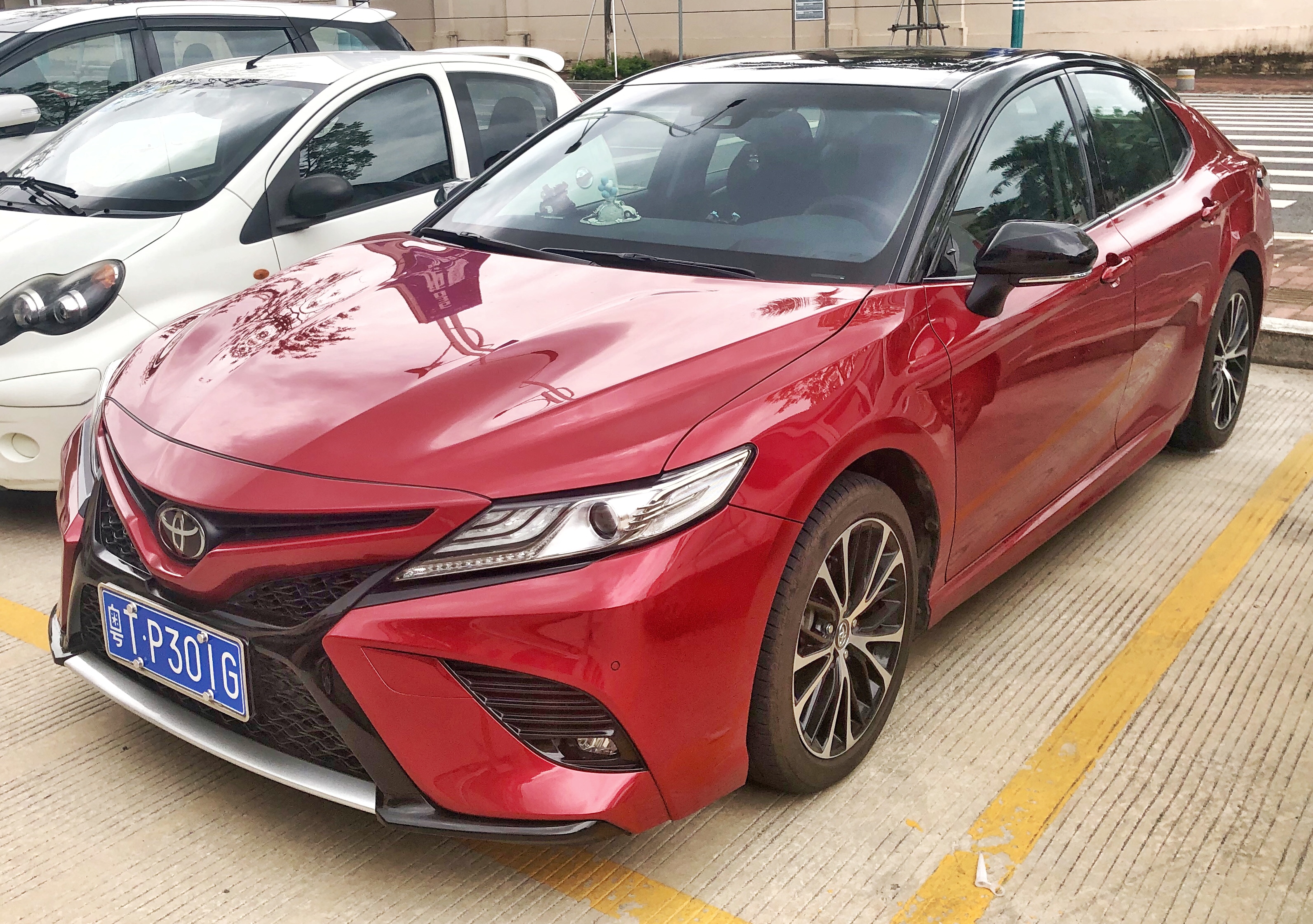
The Toyota Camry is a regular passenger car (a sedan) meant for everyday driving. It’s designed to be comfortable and practical for commuting and errands. People often mention it because it’s a very common choice.
In the podcast, “Force 1” sounds like a name being used in a joke or comparison to “Air Force One.” It’s not described like a normal car model with clear details. The mention is likely about the name itself rather than explaining the vehicle.
Topic
Raleigh race
They’re talking about going to a race in Raleigh and how the day’s schedule worked out for them. The big factor was how often the race got stopped, which changed how long everything took.
A red flag means the race has to stop for safety reasons. So the cars aren’t racing for a while, and that can make the whole event much longer than expected.
“Pole” means the driver starts first at the front of the race. It usually comes from being the fastest in qualifying, and it can help the driver control the race from the start.
A “street course” is a race run on roads that are normally used by regular traffic. Because it’s tighter and less forgiving than a dedicated track, driving errors can lead to bigger problems.
A “caution” is when the race slows down because something happened on the track. Drivers don’t race at full speed, and teams can use that moment to make changes like pitting or swapping drivers.
“Sequential” means the gears go in order—like 1st to 2nd to 3rd—rather than choosing any gear like a normal car. In racing, it’s designed to be quick, but if someone isn’t used to it, they can shift wrong and rev the engine too high.
“Over rev” means the engine revs too high, beyond what it can safely handle. That can damage the engine quickly, especially if it happens during a race or a wrong gear change.
A “yellow” is when the race slows down because of an accident or danger on track. Drivers can sometimes recover laps/positions because everyone is moving more slowly.
A “road course” is a track with lots of turns, like a circuit made from road sections. It’s different from an oval because you’re constantly changing direction.
Sonoma refers to Sonoma Raceway in California, a road course known for elevation changes and technical corners. NASCAR road-course weekends there often highlight setup choices and tire management more than on ovals.
Topic
Cornata race
The transcript sounds like it’s naming a specific NASCAR race, but the name is probably transcribed incorrectly. It’s mentioned as the race right before the two road-course races they’re discussing.
SVG is a driver’s initials—Scott van Gisbergen. The hosts are saying people expected him to do really well on the road-course races they were discussing.
Qualifying is the session where drivers set their fastest lap to determine starting position for the race. The hosts discuss a “sandbagged” qualifying approach—prioritizing race strategy over showing peak speed early.
Term
tactical decision
A tactical decision in racing is a deliberate strategy choice—like how aggressively to run in qualifying or how to manage resources—to improve race outcome. Here, it’s tied to the idea of not maximizing speed in qualifying to gain flexibility later.
“Ovals” are NASCAR tracks shaped primarily as loops with banked turns, where sustained speed is the main challenge. The hosts contrast oval racing with road courses, suggesting the car they’re discussing suits road courses better.
The Subaru 360 is a very small car made by Subaru. It was designed to be compact and efficient, especially for city driving. People bring it up because it’s a classic example of a tiny “microcar” type.
The Ferrari 360 is a Ferrari supercar from the early 2000s. It’s known for having a powerful V8 and being a popular entry point for people who want a real Ferrari experience.
The Ferrari 458 is a high-performance Ferrari with its engine mounted behind the driver. It’s known for feeling very exciting and responsive, especially when you rev it.
DIY means doing the work yourself rather than paying a mechanic. In cars, it usually means you’re comfortable getting your hands dirty and working on the vehicle.
Term
bridge ports
Bridge ports are heavy-duty machine tools used to cut and shape metal accurately. They’re the kind of equipment you’d expect in a serious fabrication workshop.
An English wheel is a tool that helps metalworkers shape thin sheet metal into smooth curves. It’s a traditional method used to make custom body panels.
3D printers make physical parts from a computer design by building them up layer by layer. In car shops, they’re commonly used to prototype parts or make custom pieces.
The Lamborghini LM 002 is a rare SUV made by Lamborghini. It’s designed to be powerful and capable, not just a regular road car. The podcast is mentioning it because it’s a standout, uncommon Lamborghini model.
Car
Jaguar
Jaguar is a well-known British car brand that makes sporty cars. The host mentions it to show the shop has more than just Ferraris—there are other cool cars too.
A slot car track is a small racing track for toy cars. The cars ride in a groove in the track, which helps keep them on the line and power them so you can race them.
A base tune is an initial set of adjustments for an RC car’s electronics and/or setup so it behaves predictably. It’s the starting point before finer changes for a specific track, temperature, or driving conditions.
Drifting is when a car slides sideways on purpose while still steering through the turn. With RC cars, it’s about getting the car to slide in a controlled way on the track.
In RC cars, “packs” usually means the battery packs. You run one battery, then swap to another so you can keep driving.
Car
Dodge Hellcat
The “Hellcat” is Dodge’s performance version of certain cars. It’s known for having a very strong engine, and special editions usually mean extra styling or a unique theme.
The Dodge Challenger is a muscle car, meaning it’s built for strong performance and a sporty feel. It comes in different versions, including special editions. The podcast is mentioning it because of a planned or discussed Hellcat-style special edition.
The Bronco is Ford’s famous off-road SUV. Here they’re talking about a special paint theme that’s meant to match an older racing Bronco from the Baja days.
The F-250 is Ford’s big heavy-duty pickup. It’s the kind of truck people associate with towing and work, so the hosts think it would be an obvious choice for a special edition.
The Corvette is Chevrolet’s famous sports car. The hosts are saying it would be the best fit for a special edition idea because it’s already strongly tied to performance and racing culture.
“Spirit of America” is a special themed look Chevrolet used on certain cars. It mainly meant patriotic colors—red, white, and blue stripes—plus a badge and matching interior styling.
A “bicentennial edition” is a special version of a car made to celebrate America’s 200th birthday. Usually it’s about styling—colors and badges—more than changing how the car works.
The Dodge Spirit is a car model made by Dodge. In the podcast, it’s mentioned in connection with a “Spirit of America” theme from the 1970s. The discussion is using it as a historical example of what Dodge offered back then.
A “quarter panel” is part of the car’s body on the side. A “decal” is a sticker graphic, and here the host says Dodge used a “Spirit of 76” sticker on that panel.
The Ford Mustang is a sports car that’s known for its classic look and performance. Over the years, Ford made different versions and special editions. The podcast is bringing it up because of those recognizable Mustang variations.
“Sprints” sounds like a special Mustang trim or package name. In this segment, it’s mainly about the car’s look—especially the red and blue color scheme.
“Two-tone” is a paint scheme where two different colors are used on the same vehicle, usually separated by a defined stripe or panel boundary. On classic trucks, two-tone packages are often part of factory options, which is why they matter for identifying the correct original configuration.
The Rambler Scrambler was an AMC car with a tough, sporty look. In this discussion, they’re describing a patriotic red/white/blue paint layout AMC offered on it.
The Rebel Machine refers to an AMC performance package/model name associated with the AMC Rebel line. In the segment, the Rebel Machine is described as having a red, white, and blue package—another example of AMC using racing-themed colors and branding on street cars.
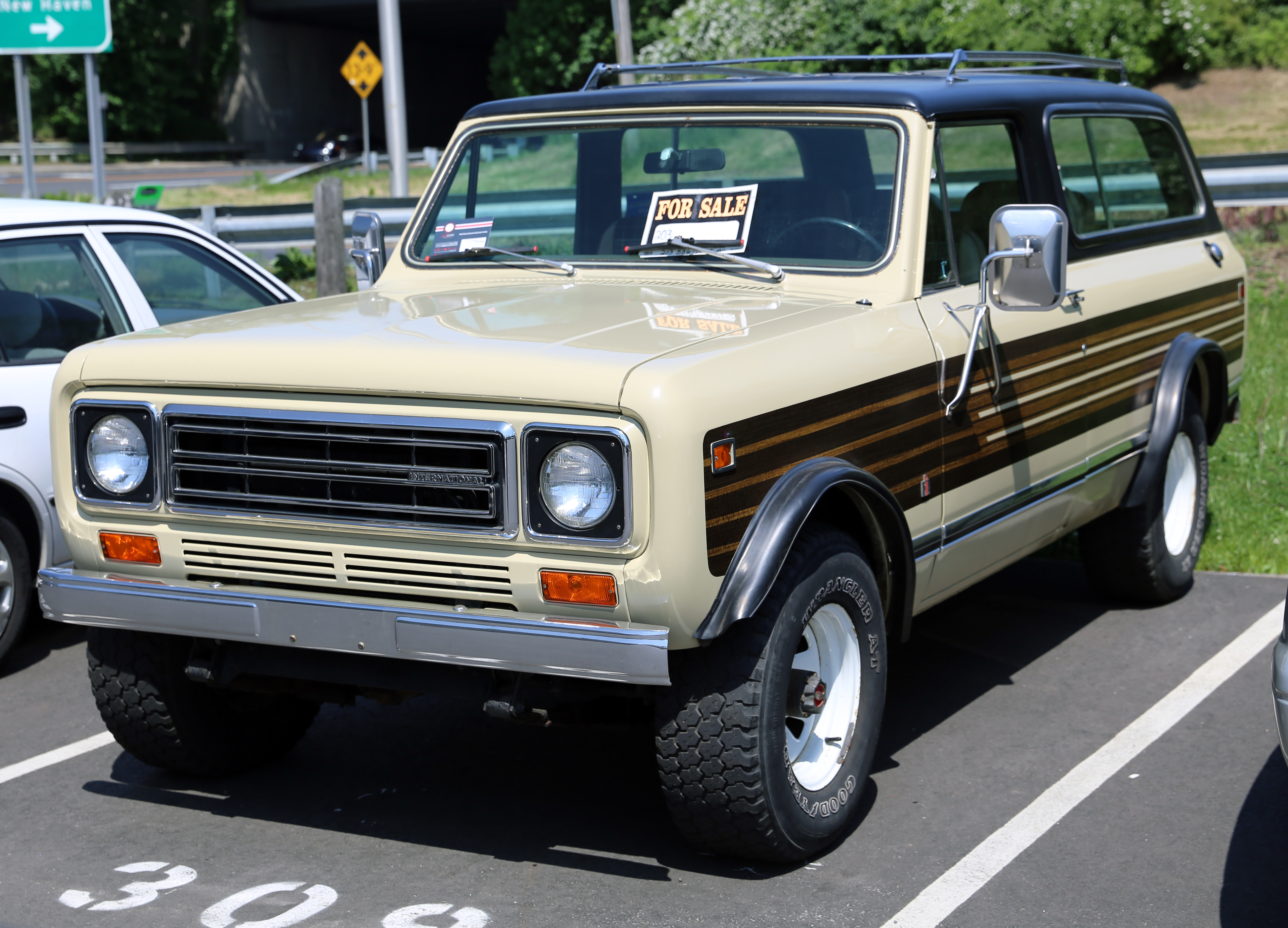
The International Harvester Scout 2 is an older American SUV built to handle rough roads. People like it because it was made for off-roading and it’s part of the classic “early SUV” era.
They’re talking about a Jeep called the Commander, which is a bigger Jeep SUV. The point here is that Jeep model names can change over time, so it’s easy to mix up what was called what in different years.
This is a 1976 Volkswagen Beetle convertible, but in the “Super Beetle” version. It’s also a special limited edition called the Centennial Edition, made for the US market.
Concept
official car of the Sarajevo Olympics
When a car is called the “official car” for the Olympics, it means the event organizers used that brand’s vehicles for important roles during the games. Sometimes that leads to special versions people can collect.
The Chevrolet Vega is a Chevy compact car from the 1970s. The host is basically saying that if they had to pick a car in 1976, they’d probably choose a Vega.
The Dacia Duster is a small SUV-style car meant for everyday use. It’s built to be practical and affordable, with more space than a typical sedan. The podcast is mentioning it because of its “Duster” name and a description of its look.
“Malaise era” is a nickname for a time in the U.S. when cars felt less exciting than before. Rules about emissions and fuel economy made many cars heavier and less powerful.
Here, “converters” means catalytic converters, which are parts that clean up car exhaust. They became common because of emissions rules, and they can change how the engine is tuned.
This is a 1976 Dodge Colt special edition. It’s basically a Mitsubishi Colt that Dodge sold with a specific two-tone look—white paint plus a blue vinyl roof and blue-and-white interior. People call it a “package” because it’s mostly about the styling and trim.
They bring up the Volvo 240 as a possible classic choice. The Volvo 240 is a famous older Volvo sedan known for being tough and long-lasting. In this segment it’s mainly used as a comparison point, not the final pick.
They choose a 1976 Toyota FJ 40, which is a classic off-road 4x4. It’s part of the Land Cruiser family and is known for being tough and simple. The point here is that it’s a classic Japanese-style four-wheel-drive.
The Porsche 912 is an older Porsche model that’s related to the 911. It’s known for using a different engine than the 911, and it came in different versions over the years.
A Type 4 engine is a specific Porsche engine design family. It’s important because it’s not the same engine used in the 911, which changes how the car feels and how it’s built.
Volkswagen Polo is a small car model made by VW. The host is talking about the very first generation of the Polo, which was a European car and not really sold in the U.S. back in the 1970s.
The Pontiac Trans Am is a classic American muscle car. In this part of the conversation, they’re talking about a Trans Am year/configuration that used a big 455-cubic-inch V8 engine.
Term
455
“455” is shorthand for a large V8 engine size measured in cubic inches. Bigger numbers like this usually mean a lot of torque and muscle-car character.
“Manual” means the driver shifts gears themselves using a clutch and a stick. It’s different from an automatic, where the car changes gears for you.
Term
T-Rex dump truck
A “T-Rex dump truck” sounds like a specific named or nicknamed heavy truck someone is talking about. It’s not a normal car trim—it’s more like a particular build or version.
Term
bison tail edition
“Bison tail edition” sounds like a nickname for a certain style or setup on a truck. It probably comes from a specific community or inside joke, not a common factory option.
The Lancia Stratos is a sports car that was built for rally racing. It’s famous because it did very well in competitions. The podcast is referencing it in the context of how rare or hard-to-find it can be.
A gray market import is when someone brings a car into a country through unofficial channels. It can help you get a model that wasn’t sold there normally, but it may come with extra paperwork and compliance headaches.
“Smogged out” means the car was modified to meet pollution rules. Those emissions parts can make the car feel less powerful than it would have without them.
Le Mans is a legendary long-distance race in France. It’s one of the biggest racing events on Earth, and it’s especially tough because cars have to last and keep running for a full day.
“IMSA style” means the kind of race-car look you’d see in IMSA, a big sports-car racing series. It usually points to a more aggressive, track-focused body shape compared to a stock car.
A “model kit” is a set of parts you assemble to make a scale replica of a car. Here they’re talking about a kit that includes extra body pieces to build a specific style.
A “full body kit” is a set of extra exterior parts that change how a car looks. In this conversation, it means the model kit includes all the body pieces needed for that style.
Auto World is a brand that makes car-related scale products, like diecast models. The host is grouping it with other model brands to show how many lines they control.
Revell is a company that makes plastic model kits. In this segment it’s mentioned as another brand in the same model-kit ownership group.
LIVE
I don't think I'd attempt to try this stunt.
Or we owe this horsepower to Uncle Sam.
Too many cars.
Look at how roses would be.
Look, I put my beer belly on it.
Yeah.
You can't immediately tell somebody how many cars you have.
You'll really give those up in a yuffy something to think about.
Stay on the by.
Don't go off the by with your Bronco.
1980 Volvo horns, what's right?
Me, me.
I want a man's coolant.
And he's like, oh, I thought it'd be small.
It's for a small car.
And I'm like, yeah, but it's still an automatic transmission.
They're never going to be light.
It's definitely going to have to crash.
Starting off with Brad buying another car.
That's the West.
Internet.
Is this a Nigerian oil print?
I also wish you drove a tan Camry.
Anyways, that's a very horrible podcast content.
Very inside joke.
They love to be driven hard.
All right.
Welcome to Auto Off Topic.
Hello, Brad.
How are you?
I am wonderful Andrew.
How are you doing in your late night recording session out there?
It's hot.
I'm in a different place.
There's no air conditioning.
So in the middle of the heat wave.
And you guys hit 100 today or at least close, right?
We hit 100 with like 80% humidity.
So you hit 100 plus humidity or you hit 100 because of the humidity?
The real feel was 100.
The real feel was over 100, like 104, 105.
Nice.
Yeah.
I think it was 97 here today.
Cooled way off.
Actually, when you guys left, obviously the jet you were in took the jet stream of warm
air behind it.
And it's been actually like to spoil the beginning of one of the projects, not my projects, but
one of the things I did last week, I went off-roading with Josh and Michael this week.
And we were out in the desert and it was downright reasonable.
It felt like it was fall.
So it was nice, which is actually good because the truck doesn't have AC.
Yeah.
Yeah.
So I had today off and I just floated around to the lake all day.
Yeah.
That's a pretty good day for that kind of a day for sure.
But anyway, yeah, we missed a week because I visited you out in Arizona, but we visited
family and you.
And we met with family and we went to San Diego for the NASCAR race.
And we missed the week before because we recorded an episode and my internet took a dump and
we lost the whole episode.
I forgot.
Yeah.
We talked about where we're going to go to the NASCAR race.
But yeah, we actually went.
And speaking of weather, it was wonderful in San Diego.
Is it always there?
Yeah.
It was like as soon as we left Phoenix, got through Yuma and up and over the mountains
and then dropped down into San Diego.
It was like 25, 30 degrees cooler.
It was like in the 70s.
Yeah.
It was beautiful.
And breezy.
So we went to San Diego and the race was on Coronado, the air base, which was interesting.
It's actually a naval air base.
I guess that makes sense.
It's so funny when you think what you like because people are like, oh, it was on the
air force base.
Sort of.
It's a naval base.
So there's.
I can see the confusion because the air force and the Navy both had airplanes.
Yep.
They give you air force ones are just not based on aircraft carriers.
Yep.
Exactly.
You one second here, see if I can get the dog.
I have the door closed in the room.
He wants to leave.
But what about the race?
Well, what would you first?
We can talk the race real quick.
I mean, it was probably the highlight of your trip.
It was the main reason you came out here.
So might as well discuss the event.
It was pretty well run to talk about the event itself.
The only issue we had was leaving after the cup race.
But I think anytime you have a large event with thousands and thousands of spectators
on a place that does not usually handle spectators or the public, it's going to be difficult
to get them all to leave at the end, right?
That's one road in, one road out.
So yeah.
And I never at the end of the day, it wasn't even that big a deal.
I mean, it was probably what two and a half hours.
Like it went pretty smoothly once I started moving.
It did.
But we so we don't normally do the O'Reilly series races when you go to a race weekend
usually just buy tickets to the cup race.
But the way they sold these tickets, it basically included both races.
So we're like, yeah, might as well check it out both days and at least do some reconnaissance
and figure out how it's going to work for the cup race.
And just familiarize with the race track in air quotes.
So it was a temporary street circuit set up on the Navy base with the same the security
you would expect.
But it was basically like, yeah, I thought it'd be more like TSA.
It wasn't really TSA level security.
It was just some service members checking IDs.
You just had to have a federal ID or a state ID, I should say.
And then it was like normal event security.
But basically you're limited to very small bags.
No can bring in drinks, water, booze, nothing.
Yeah, it's very different from most NASCAR races.
Most NASCAR races you can bring in your own cooler full of anything in a non glass bottle.
But this race was very different because of military base.
Yeah.
And so that was like the mostly the problem was they just if you're going to limit what
people can bring in, you have to have more food and water than you think, especially
for a hot day.
It wasn't super hot, but it was hot enough and there's enough people there.
And I appreciated that they did like food trucks and the food was really, really good.
But it took way too long to get it because it's food trucks and I used to dealing with
thousands of people trying to get food at once.
It would have been nice to have the food trucks plus also like a typical hot dog carts everywhere
or something.
So you could choose one or the other.
Like the chicken shawarma was delicious, but was it worth an hour and 15 minute wait in
two lines to get it?
You needed somebody with a hot dog cart and a fry or just dunking fries and chicken fingers
and just tossing those out quick.
Turn and burn.
But anyway, and that turns some people off, but we were there for the weekend because
we traveled there.
So we got in a little bit earlier the next day for the cup race.
I mean, I shouldn't skip ahead because the Raleigh series race was really good though.
It was.
Except for the red flag issues.
It was a very long race, which so a couple of things happened on that Saturday race, the
Raleigh race, we were able to do our reconnaissance for the next day, right?
Like the next day we knew not to wait until like actual lunchtime to get food, like get
a little early so you can meet the line.
And we also learned how to like get in and out and navigate around.
So on the day of the cup race, we were able to spend most of our time, have the whole
race, not worry about it.
Whereas during the Raleigh race, the combo of waiting a little later to get food and
then also having all those red flag laps or red flag time, more people were getting
food.
So I think it's kind of what screwed it all up.
But then even leaving after the rally race was easy because there was so many red flag
laps that people left early.
I shouldn't say red flag laps.
That's the way to say it.
So much red flag time that people left early because it went from like a three hour event
to like what, six or seven hours?
Yeah.
I mean, you and Naomi stayed, but the rest was actually left because Marco was getting
tired.
It was late.
There was like a middle of red flag.
I don't even remember what the last red flag was for.
Did they had a big wreck that moved the wall?
But that was during the truck race.
No, they did it also during that race.
It was one point they had to fix the wall.
Okay.
Because the first red flag was a manual cover that came up and it stuck in a free-dose car
that was.
Yeah.
I don't remember the names either.
Especially of the series that I don't normally watch.
No.
But a non-regular, well, a regular guy won who doesn't normally win on road courses was
Austin Hill.
Who's filling in for Cowbush.
He fills it in the Cubs series.
Cowbush, yeah.
Yeah.
So that was cool, but it was a cool race.
They just didn't let any other, for whatever reason they didn't let any other Cubs series
drivers run it just because they think they wanted everybody to go cold into the next
day.
I think it was a combination of wanting everybody to go cold the next day, but I also think
that they wanted to give as many or rally series drivers as possible the chance to drive
on that course.
Yeah, exactly.
So we were over by turn nine, which I don't know for some reason when I bought the tickets,
I thought the race was going in the other direction, but it still worked out pretty
good.
There were decent seats.
I wouldn't want to be up.
Yeah, there were decent seats.
Maybe a little higher or more over to the right to look down the straight that we're,
so we'd see the corner coming up and the corner going away, but it worked out.
It was good.
There was a good TV right in front of us so we could see what was going on.
Any road course you go to or street course especially, you're going to have limited
sight lines because it's not a big oval out in front of you.
It's not a permanent course either, so there's not huge stands built up somewhere.
It's all portable grandstands.
So your view is always going to be compromised.
It's like going to a rally, right?
You can only see when the actions are in front of you.
And you did an excellent job picking a spot because a lot of action happened right in
front of us.
It was definitely a good passing zone and there was a couple of spins, good passes
and on the Cup Series day a tire was lost right in front of us.
So it turned out to be a pretty good spot.
Yes.
Yeah.
So, O'Riott's race ended up being really good and then Cup Race was cool.
We got there early enough that we were able to walk around and see much stuff.
They had a lot of cool things like they had aircraft on display.
It was a really interesting setup and the way they did a street circuit.
And I think they did Chicago and they did this and I think they were trying to figure
out ways to do races where there aren't normal NASCAR tracks and get more people in because
I think you had the facts.
We should have pulled them up beforehand, but this track had the most, this event had
the most, like the first time NASCAR goers like in a long time at a race.
And the percentage was pretty high.
I'll see if I can pull it up real quick because I was talking about it before.
There was a huge percentage of people had never seen NASCAR race, the percentage of
women that went, percentage of minorities that went, percentage of like, it was just
a whole interesting thing of how they got different people to the best spectator race,
basically.
Yeah.
I guess it kind of turned into the hot ticket that weekend in San Diego.
So there's a lot of people showing up for it.
And I still think it's...
So it was a hundred and 25000 people came through the gates.
Yep.
And it was...
I just saw the number.
67% of the people were attending their first NASCAR event.
Nice.
So that's a huge number, 67%.
That was 11% higher female attendance than normal.
Just it was interesting to see that all those...
And you could tell that a lot of people didn't know a lot of what was going on.
Of course, we're there in our NASCAR hats and gear.
And a couple people asked questions.
I guess we just looked experienced.
Like I was wearing my 23 hat and the lady was like, Oh, is that a hat for one of the
drivers?
And I was like, Yeah, it's for Bo Wallace.
And she's like, Oh, okay.
She's like the only 23 I know is Michael Jackson.
Michael Jordan.
And I was like, Well, funny enough, the reason number 23 is he owns a team and she was like,
What?
No way.
All right.
Well, there you go.
Yeah.
So it was a first time fan and a female attendee and she was way into it.
So she's definitely part of the stats.
Yeah.
I would say the visuals are really cool too.
With the aircraft carrier park there and just the way they set up the track and it's
funny online, the forehead, you always have people that were just like, This is dumb.
It's not going to work.
It's going to look bad.
It looked pretty cool.
It did a pretty good job with it actually.
I'm glad we went.
I don't know if they're going to do it again.
Maybe it's like a question.
Confirmed they are.
Yeah.
So I'm not sure if I'd go again, but like back to back, but it was a pretty good race.
It wasn't like four to five times the cost of going to any other NASCAR races.
Yeah, exactly.
I'd go back, but the cost was a bit prohibitive to go back every year.
Exactly.
And in hindsight, I kind of didn't realize that they were doing Sonoma the next weekend.
I was like, Oh, we should have just done like a West Coast swing while we're just in it.
It just says that YOLO did it.
I was tempted to go back to Sonoma the following weekend and Naomi and I actually had a serious
conversation about it to the point where I was looking up flights, but rather than driving
because Sonoma is about a nine or 10 hour drive from here.
So I was looking up flights and thinking about driving and going back and forth and just
at the other day I was like, you know what?
No, not going to do it.
Unfortunately, it's too much right now.
It's too much going on.
Nope.
I was like 400 to 500 round trip, which was not an affordable price for that weekend.
So yeah, it was overall, Cup Race was good and we were there for qualifying on Saturday.
SVG qualified on the pole, right?
Am I thinking right?
Yes, maybe.
Okay.
He did.
He did get the pole at Sonoma.
Right.
And I think there's reasons for that, but he did get the pole on the street course.
And you know, he was out there pretty quickly.
You know, there was a couple of challenges, but he pretty quickly got out the lead.
And then it was interesting.
I think the turning point of the race was they switched.
Chris Rebelle has a broken wrist and they switched him for, I can't remember the kid's
name now, but during a caution or some other thing, maybe it was the caution when Bubba
lost the wheel early on.
It goes too low.
So regardless, it was a caution and they switched out.
It's like, these things happen.
I'm like, commit them to memory, Andrew.
Remember this person's name because you want to talk about it on the podcast and then I
completely forget because I'm really bad at sports names and remembering the people and
this kid does not normally run.
He was just filling in, but regardless, he's filling in in the 20 car, goes out, he's doing
some laps.
Something happened in the 20 car and it blew up.
They were like, oh, maybe he's not used to shifting a sequential and he over rev it.
It's like, how did you do that?
It's up, up, up and down, down, down, but there's no H pattern.
I don't, you can't really miss a shift.
So anyway, the 20 blows up mid track.
So that causes a caution.
We rewrecks and I think at that point, Austin Hill had gotten out to the lead, which was
pretty cool because that was the one of the day before, but he had Zilch right behind
him and SVG right behind him, Zilch.
And then, yeah, you can go watch the replay of them just, I don't know.
It was weird like Austin Hill.
Those three drivers were probably the top three predictions to win the race.
And they were running 123 when this happened.
Yes.
And maybe, and maybe it was just Austin Hill not having enough experience on a road course
as much as even, I mean, Zilch was pretty young, but he's really good on road courses.
He seemingly like didn't get a good or lost some speed going to the, I think it was like
turn three or four.
I forget that big turn, are they all?
I think it's four.
It was the one that heads to the downhill where the jump was, which was pretty insane.
And they just caught, like he slowed up, Zilch gave him room and SVG was like, I'm full bore
here because I thought everybody else was going full bore and he just ran the two of
them over.
And it was like a huge wreck.
So you had two track house cars out, two best track house cars.
The day before when it was out and that really changed the whole outcome of the race right
there.
That was it.
That was what changed it.
Christopher Billsfield and driver's Brent Cruz.
Yeah.
So Brent Cruz, whatever happened to the car, but that 20 car blowing up caused that caution
and that's what changed the race.
Like that not happened.
They said he missed the shift, but then in the replay it turns out it may have been that
he broke the trans axle.
And then the car over revved because it wasn't in any gears.
Ah, fistful of neutrals.
Yeah, but that's weird how that stuff happens.
Like if you think of like, it's like the Domino's meme there where the guy's setting it up
and Brent Cruz blowing up and then the two track house cars are getting wrecked.
It made for an interesting finish and it made for a first time cup series winner.
So it blew the race wide open, right?
And then all of a sudden put your conspiracy hat on.
The two were suddenly very fast.
And you had Corey Heim, who's won a lot in the trucks.
Who's very good in the trucks.
He's won at Lyme Rockland trucks and other road courses I think of the trucks.
He ended up out front leading.
Fowler was chasing him.
Somehow Bobo Wallace made up the two lap penalty.
I was telling you during the race, I was like, man, he's the only guy I lap down.
Get the penalty from the wheel falling off from his crew, not pulling
on right.
And the whole worries I kept saving you.
I was like, man, he's the only guy I lap down.
He gets one lap back each yellow and his car is so fast.
He might have a chance to like get back up there.
I don't know if he took me seriously or not, but I was like, I think he has a chance.
Yeah.
I mean, it was a three and a half long road course, three and a half mile road course.
And I know that's what gave me the advantage to get me back.
But also having a fast car like that helps too.
Yeah.
And honestly, towards the end there, there was a battle between Heim and Bredick.
No, these are all 2311 cars, all three of them.
And Bredick kind of messed up and gave Heim some space instead of wrecking him because
they probably sort of saw what happened to Trackhouse earlier in the race.
It's a bad look to take out all the team cars in one corner.
Yeah.
So he backed off and then lost the tire and Wallace passed him.
And had that not happened, they went at 2311, first, second, third, which would have been
pretty crazy.
But you know, ended up the fastest Chevy was Carl Larson, which is pretty wild.
Yeah.
Yeah.
But you talk about the tinfoil hat and your Toyota theories that are all out over the
place.
But if you look at the finish of the race, Toyota may have finished 12 but in
the top 15, there's only four cars in a Toyota's.
So it's not like there was a dominating performance out there of all just Toyotas.
So there's more Chevy's and Ford's than there are Toyotas in the top 15.
Even Hamlin finished pretty well.
He got himself some points.
Yeah.
I think he's one of the four in the top 15, but not that much.
Yeah.
But no, it was a heck of a finish.
And Bob has never been good on road courses.
And he finished second after being two laps down.
So I was super stoked.
I thought for a while there was going to be him, Heim, and Reddick123.
And I would be inconsolably annoying.
I'm inconsolably annoying, as there aren't words to say it.
I would be incredibly annoying talking about how great that the 123, 2311 finish was if
it happened, because that's my team.
So Bob drove the 43 car when we got back into NASCAR.
And I was always a fan of Richard Petty growing up in the 43 car.
So I naturally became a Bubba fan just because of that.
So I followed him to 2311.
And here we are.
Yeah.
And then it's cool because we got to see a first time winner in Cup Series.
He's not even does any regular series ride yet.
Yeah.
He needs to get no points because he doesn't mean points because he's not in the regular
series.
Yeah.
Both of the welds were in first career.
So that's good.
For sure.
And then what was funny too is they were giving out free trading cards to the first 10,000
people through the gate or whatever.
And we were there early enough that we all got some.
And Marco opened up his pack.
And there was a Corey Heim card right in there.
So we're like, I ain't saving that.
Which is cool because each one only had one driver card.
Yeah.
So I was like, yeah.
I'm saving that because that's like a cool thing.
There probably aren't many of them.
Nope.
Yeah.
I should look out for eBay after the podcast.
Now.
But anyway, that was, yeah.
It was worth going.
Like I said, I don't know if I'd go again right away.
But if you have a chance to go next year, I would definitely check it out.
I'd like to go to another course.
I'd really like to go to Sonoma.
Sonoma was this past weekend.
That was interesting because Annoying Ty Gibbs was on the pole.
I was like, wow, that was unexpected.
And I think sort of purposely, because going into the Cornata race and this two-race series
of road courses, it was very much after Denny Hamlin won three in a row, it was very much
all about SVG.
Everybody's like, SVG's going to win these two races.
This whole thing, there's a lot of pressure on them, right?
And it felt like when they went into Sonoma, they kind of sandbagged it a bit, maybe,
and qualifying.
Just to kind of probably give them some breathing room and said, we don't really need to really
show off what we've got for speed in qualifying.
That felt like a tactical decision or something, maybe.
But in the end, he ended up winning Sonoma too.
So both days, actually, the rallies and the Cup Series, which, you know, so of course,
people would be like, go back to Oval's now, tired of these road courses, which I know
that the car runs good on a road course, I think.
The lower arrow and the higher horsepower and the tire that wears out, I think makes
the road course racing pretty interesting.
And I mean, some guys are adapting.
I mean, just the beginning of the Sonoma race, like Carl Lachlan was doing pretty good.
The end of the race, Chase Briscoe was doing pretty good too.
Like, Chase Briscoe finished second, Sonoma last year too.
Yeah.
So these guys are figuring it out.
Sure.
They're figuring out how to manage those tires.
So this coming week is Chicago Lane Speedway, which is a mile and a half.
That should be a good race.
A mile and a half on the best Oval's right now.
Yep.
So looking forward to that.
But that's that part of our trip.
The rest of the time was spent in Arizona.
I was hanging out with you all the time.
Sort of.
I mean, we spent, what, four days in California and four days in Arizona?
Yeah.
Yeah, we didn't do much other car stuff in California.
I wanted to talk about you were able to take me over to your friends over at Italian Racing
Design.
That shop is super, super cool.
They're super nice over there.
I mean, if you've got a Ferrari that's like right from like the 60s through the 80s, those
are your guys.
Even up to early 2000s, he does up through 575s and 360s and 430s.
Not exactly our listeners.
Sorry.
Sorry listeners.
Whatever.
I mean, listen, there's, we talk about this.
Actually, we do have one.
We have one listener.
That is a 458, 466.
468.
Yeah.
So, yeah.
And we have Michael from IDR who also listens and has a plethora of Ferrari's.
So it's fine.
So the difference with, we're not a super car podcast, right?
There's a million super car podcasts you can listen to.
What are you talking about?
I was about to tell you about my new Rolex I just got.
Right.
Exactly.
But what drew me to Michael's shop in the first place was knowing Michael.
He's not a super car person.
You know, he's very much a get in there and get your hands dirty DIY kind of guy.
And he's mostly self-talk on this stuff and he's really good with all of it.
But he has a super cool shop.
It's like, you think of a Ferrari shop and you think of like, I don't know what you see
on Instagram, right?
Like the pristine, clean place that doesn't do a lot of actual work in-house and just
has a coffee shop on premises and just has a bunch of mucky mucks walking around.
But this is like a legit workshop.
Like it reminds me of looking at footage from like old school, old school shops back like
pictures from the 60s, 70s and 80s.
I'm not trying to do a disservice by saying it's dirty, but it's like got a gritty shop
feel to it, right?
And it's got, you know, all the bridge ports and English wheels and stuff that they all
use along with the new 3D printers and everything to make cars in the modern age.
And there's some wild stuff going on that shop.
Like you walk out back and there's two LM002s and three 08 race cars and three 08 or 328
honig, like just hanging out.
And a couple other non-Fraris back there, too.
You know, you look at the Elan and the Jaguar.
There's neat stuff around.
It's a cool shop.
And if you're in the Arizona Phoenix area and you want to see a cool shop, I'm sure
Michael will love to show you around if you're a listener of the podcast, especially.
So it's a really cool shop to see.
Just it's a very old school like craftsman style shop.
That's what I want to say.
Like, think of like old coach builders from back in the day and they do that stuff there.
They build cars from nothing.
So neat stuff.
Sure was.
And I appreciate being able to see it.
For sure.
Yeah, that was one of the things we did.
We didn't really do much else just because it was so hot.
There's not a lot of car stuff going on at the time.
I do get to your garage finally finished.
I mean, would you call it finished?
Seems finished to me.
You've got to be able to finish me there now.
It goes around.
It's yeah, it's not like it's final stage.
It's going to get lifts and it's going to get more decorated, but it's a functional space that is.
The last time you're here, I think we had walls up, but no doors or maybe not even drywall yet.
Yeah, but now it's drywall garage doors, air conditioning, power.
Like I do projects in there.
So I'd say it's finished.
It's just not fully personalized.
And you can tell probably by the way the left rear corner of the left back corner of the garage is that's I'm filling it with stuff on the walls, the whole place like that.
So it's going to be slightly overwhelming when you walk in there.
But that's okay.
Yeah, it's pretty cool though.
I like the space.
Much closer to your slot car track and
they put the slot car track out for Marco.
You had a great time with that.
Worked on your RC car with that setup.
That was pretty much the only other thing we did kind of correlated because it's unfortunately didn't have like you said, you have the AC working in the
stereo and so it's really too hot to use it.
But yeah, we went out.
We think there's several drift tracks now near you, but we only went to the one that was closest.
I was able to do like a base tune on your car, which is good.
And got you out there drifting.
So now you get a summertime project or a summertime hobby you can do inside air conditioning.
I haven't used it again since that night, but I'll be back probably this weekend.
I'll go back at some point and run on a couple packs through it.
So I enjoyed it immensely.
But yeah, we have three drift tracks down the area.
So it's good.
That one's less than 10 minutes for my house.
So it's probably the one I'll go to the most.
Yeah.
And I had brought mine.
So that was super fun to bring it and use it.
Yeah.
And then.
Yeah.
Unfortunately, you only had like two days in Phoenix proper.
So it was a little bit whirlwind while you were here.
So you didn't get to, we didn't get to work on stuff or I was hoping you're gonna be here long enough.
You could help me get the AC working in the stereo.
But that's all right.
Yeah.
Project for after recording to that actually.
I did get to we're up north in the Prescott area and visiting my nieces and nephews and my brother along.
And they're all into RSC crawlers.
So that was cool.
I got to go out to do actually proper RC crawling remark.
When we went out, they took us to this area called the Dells, which saw rocks, but it's just public land.
You can just drive a little RC trucks all over these rocks.
And you're like, Oh, I get why this is so popular out here because it's just stuff to do it everywhere.
Outside.
Just do it.
It's funny.
The only place I've ever randomly seen somebody out running RC rock crawlers like in the public was up in the Dells.
Yep.
I was trying to go, Oh, that guy's running in our car.
It's cool.
Yep.
As we were walking out or walking in, some guys were walking out carrying their stuff.
So they just finished up.
Yeah.
It's a neat like outdoor hobby for sure.
Mm hmm.
So yeah, that was, that was pretty much that trip.
You did.
We did get stick Mark Oates at the Penske Museum because his three drivers cars there.
So I was good.
Yeah, who did terrible over the weekend or both weekends, I think it or maybe he did all right at Coronado, but he's having a bad year.
We got, oh, in general, he's not having a good year at all.
So he finished.
18th and Coronado.
Yeah.
But his 2013, I think, Cup Championship car is on display at the Penske Museum.
Marco is six now, right?
That's right.
He was his face lit up immediately when he saw the car.
So it was cool.
Yeah.
It was cool.
Um, all right.
We do have a bit of a topic this week since it is fourth July week and this podcast comes out on the third of July.
I want to talk about bicentennial edition cars because I don't think for some reason there's no, I haven't seen any 250th anniversary edition cars.
Have you?
I think I've seen a couple like dealer add-on packages, but I've not seen anything like officially for
a manufacturer.
Yeah.
I haven't seen anything either.
The only thing that I've noticed like Massachusetts did the plate.
I have the plate, the 250 plate, but they actually came out that last year that was for Massachusetts 250th anniversary.
But it works because they threw the 776 on there.
And it, I've seen some other states do some, but that's pretty much it.
Corvette is doing something, I think.
I'd have to look it up.
I remember hearing something about a run of red, white and blue cars.
I think that they've done up like the Grand Sports again.
Remember like 96 Grand Sport?
I think they're doing a 2026 of that.
I'd have to look it up.
But I haven't seen anything else yet.
So like I post this to the Discord and a question that I got back was what modern model should have had a 250th anniversary?
Special Edition?
And my answer was for some reason, I mean, the F250 was right there.
I don't know why they didn't do it, right?
Right.
That makes perfect sense.
Yeah.
It's like one of the best selling trucks and you could have just done it right there.
Yeah.
Yeah.
No question.
Yeah.
The manufacturers went hard in 76.
No question.
Yeah.
And then somebody else said, I missed the opportunity for the Dodge to do a special edition Hellcat.
Yeah.
There's no Bronco either, someone said.
It's already a red, white and blue Bronco though.
Which is kind of weird.
I didn't realize.
Well, I mean, it's not weird if you know the history of Bronco racing when they were new.
Like it's the painted like the original bill.
It's a bill stroke, somebody's stroke.
It's called the Stroke Edition because that was the Baja Bronco back in the day.
But it's not marketed very well and it's also not very good looking.
So it doesn't really work that well.
Yeah, there was there was a special edition of that car back in the day too.
So yeah, the F-250 is definitely one that would be a no brainer like an F-250, 250.
Or a 250, F-250.
But the Corvette probably makes the most sense.
Yeah.
And the Cadillac F1 team is going to do a livery, but all the race cars have been doing that
there's so many American flying race cars for this past race.
So sure.
Yeah, it's just it's just strange because like right in.
76 there was like the four did it.
You could get Chevy trucks.
Apparently you get Chevy cars.
I mean, every all Chevy's had a 200 tenor grocery package.
Well, supposedly the Chevy started in 74 which was interesting, but the cars.
They did.
And they're called Spirit of America.
That was the name of their their package.
And they're all they all these red, white and blue.
They're all white based cars with red and blue stripes with a badge and white interiors.
I didn't realize the 76 Colorado convertible.
They did a bicentennial edition of just the convertible
because it was going to be the last American convertible built.
And they did 200 of them.
And 199 were sold to the public and GM kept the last one.
And they're basically don't look that much different than a regular white Colorado convertible.
They'd like some red, white and blue pinstriping, but that's about it.
And a badge.
All of these things were just stripes and badges.
Yeah, dodges.
So Chevy was the spirit of America cars from 74 to 76 or maybe just 74
I don't remember.
But Dodge did.
Dodge did one that they actually the quarter panel little decal.
It said Spirit of 76 and I had red, blue, like grady stripes on the side.
And then Mustang and Ford in general had the Sprints, which were the same color combo.
But I don't know if they were actually officially a.
A.
200 anniversary package.
So I think it all just kind of came out at the same time and it was like a maybe not.
Noteworthy, a spirit of 76 package, but it was the 76 package.
So the Chevy trucks are the coolest ones because they have the most ridiculous
right package.
Yeah, they're like light blue with like red, white, blue in the center part of the.
That's great.
The two tone, where the two tone would be.
Yeah.
Yeah.
Yeah, those are very, very cool.
I guess they're super rare.
And it's not like it seemingly like when I was looking it up, there's a lot of posts
about people trying to determine if this truck was that because it's been like repainted
since the 70s.
And that's usually seems to be what happens.
And in fact, one of the articles was like, I couldn't find a picture of a real one.
So here's a picture of the auto world.
I cast the one.
Yeah, which I have.
Yeah, somewhere.
But yeah, I guess Ford also did a bicentennial option that was gold and white.
Yeah, because the gold was an eagle that had like a streak behind it.
And the eagle was carrying like the stars, the bars kind of motif and its talents.
So now.
Was AMC already out by 76
Because Oh, no, no, AMC lasted till 86
Oh, right.
But they didn't seem to have any special editions, which is interesting.
I mean, they made the most patriotic cars ever.
I know.
Before that.
I would have done a.
Yeah, they would have done a special one, but.
I mean, you could have bought an AMX that was the livery of the TransAm car.
So it's like the first two thirds of the car were red.
And then like a small like white stripe and the back, I don't know, quarter is blue.
And then they had the the.
The rambler scrambler was all red, white and blue as a white car with the
red side panels and the blue stripe over the top.
And they even had what was the rebel called that had the special package?
The AMC of the machine, the rebel machine.
Yes, that was the red, white and blue package as well.
So they were definitely.
Full on the red, white, blue, American race cars before the actual 200th anniversary.
Now you guys, why they didn't do it?
They were just like, we did this before we're all done.
Yeah, I guess so.
I like the International Harvester Scout 2 that they did.
They had a Spirit of 76 and a Patriot edition.
So.
Okay.
I think there was a Jeep.
What's the name of the Jeep?
Not the CJ at the time, but the one that was like a.
The passenger version of the Jeep, there was a red, white, blue version of that too.
I don't know if it was for the anniversary or not, though.
A Jeep, was it commander?
That's the newer one.
Was it called a commander back then?
My Jeep knowledges.
Normally good.
They like a veritable, so they have a ruble heart top.
No, this is horrible radio.
Well, I had it.
Did you.
Did you know that there was a beetle?
By Centennial Edition?
I did not know that.
No.
Yep.
1976 Volkswagen Super Beetle convertible by Centennial Edition, officially designated
as the limited edition Volkswagen convertible for the US market.
This is VW time the release perfectly with June 1976 celebrations.
Maybe that should be July, but.
And so many Joe ships have fixed local by Centennial dash plaques to them upon
delivery.
So you can actually get a beetle.
I've seen pictures of this one.
It's kind of plenty.
It's neat.
It looks like the International was actually for the US ski team.
Oh, and only 17 of them were ever made.
Kind of like the Subaru's, the wagons they had.
Sure.
Yeah, the 84.
They saw a ski team, maybe.
Or the end for our camp, not in my favorite Olympic edition is the 1984
Mitsubishi's because they were the official car of the Sarajevo Olympics.
So I do talk about that before, but.
Yeah, I can't remember the name of that stupid Jeep, the one that.
They did a red, white, blue, red, white, blue version of it was a Jeepster.
They called it still.
Maybe.
I don't know.
I'm Googling live now because now I don't know.
I don't usually like to do that, but.
All right.
So the other question I had was in 1976, you're all amped up.
You want to buy a by Centennial edition car.
Which one are you going to buy?
So I just, I just found it finally, the red, white, blue Jeepster.
Was actually 1970.
It was a Hearst edition.
So never mind.
Jeepster commando.
That's they call the thing.
Jeep commando.
All right.
What would I buy in 76 that came in a red, white, blue package?
Yeah.
Does it have to be an officially red, white, and blue, and a by Centennial car?
So there's two parts of this question.
So yes, you need to pick a by Centennial car and then we'll pick.
We'll talk about 1976 because it's a really interesting year for cars.
So can we go to 74 because that's when the GM cars came out?
So you want a spirit of America?
I want a Vega.
Okay.
All right.
I want a Vega.
That's probably what I'd buy.
If I had to go 76, I'd probably go with the dirt.
Dodge Dart, because it was like the sport.
Don't judge sport.
So I had like the fastback roof, like a duster.
It was a, the dark duster basically.
So that's if I had to go 76, that's what I'd go.
But me and my love of weird little small cars, I would probably take a spirit of America.
Vega.
What about yourself?
I'd go with one of these square bodies of the spirit of 76 and that's kind of cool.
Okay.
Yeah.
That's a good choice because if I need you to tow my Vega around because I think it's not going to run very well.
Yeah.
That's where I'd end up.
Now, 1976, what a crazy year for cars, right?
So you're in the middle, your post, kind of the converters are really getting to the Malaise era, but there was, I had to like look it up.
There was so much more available in the US market for cars that is not available today.
So like, you know, you could get Pujo still, Fiat's, Triumph's, MG's, AMC's, right?
So like out of 1976, is there a particular car you would have put on your car?
Is there a particular car you would have bought?
Because even that's when, right when the, that's when the Chrysler Mitsus came in too.
Yeah.
I was, well, that's six years after they came in, 1970, the first ones, but.
But they were available.
That's, they were available.
Yeah.
There's so much crossover in 1976 of all these different cars.
So, and that brings up a point too, because in 76, it's not a red, white and blue special edition, but you could have got a Dodge Colt carousel.
And the carousel was a white base car with a blue vinyl roof and a blue and white two-tone interior.
That feels so Mopar.
Doesn't feel very Japanese.
Well, that's, it's the, it's the Mopar package that they put on the, on the Colt, right?
I mean, the car was a Mitsubishi Colotte in 1976 and they came over here and Dodge was like, we need to make it a Dodge.
So they made it a Dodge by putting on all the packages.
But I, I liked that car and I would drive it in that form.
You know, the 70, 76 is arguably the worst of the Galant Colts because they have the rubber bumper ends on them instead of the full chrome bumper.
But I mean, it is what it is.
It's fine.
But it's a cool package.
I think it might have also been available in a blue that tied into the blue vinyl top.
But the Dodge Colt carousel would be my ultimate if I had to.
That's what I would drive.
All right.
I'm a Dodge Colt.
Now you might, you might think, well, Andrew will probably pick a 76 Volvo 240, but which is interesting because my parents didn't have one.
But I think I'd go with a 76 FJ 40.
Just something that's not, that's not a good idea.
Just something, just a classic four by four, but a Japanese version.
If you can hear me or not, Andrew, I'm going to interrupt you.
My, my headphones just died, which is interesting because they're not a battery headphone.
They're plugged into my computer.
And it's the second set of headphones that has died and I cannot hear you right now.
So my guess is my headphone jack is the problem because this is a brand new set that I opened two weeks ago when the other ones died.
So if you can just hold on a half a second and maybe even pause this, I'm going to grab my Bluetooth ones.
So be right back.
All right.
Wouldn't be a lot of topic.
Yeah.
Crisis averted.
Bluetooth headphones in.
It's very strange.
This is not that old of a computer.
And I tossed away headphones last week because they stopped working.
So my assumption is that's really a perfect pair of headphones because this is a brand new pair of headphones that I took out of a box, like a wrapped box.
And they're like, Schinehauser, like they're not cheap.
So I don't think that they died.
Well, so yes, my choice was a 76 FJ, um, FJ 40.
Any thoughts on that?
No, that's a good choice.
Um, it wasn't probably a super common choice back in the time because Japanese cars were still like just getting their foothold.
But I like to think that based on our automotive taste, we may have been ahead of the curve if we were around in the 70s.
And we would have been buying Japanese cars, maybe because that's maybe we wouldn't have been.
Who knows?
But I, uh, I like to think we would be.
Your family was a big Volvo so I could family anyway, right?
So yeah.
You would have been right in there on that.
My dad had triumphs.
Uh, he didn't have any Japanese, but he had triumphs.
So there might have been a little bit of an opportunity for us to have learned earlier on about that stuff.
Maybe knowing that a V8 Camaro was 120 horsepower and a four cylinder anything else was about 90 to 100 horsepower.
Yeah, exactly.
We'd have been like, why do I need the big V8 car?
Exactly.
So.
Exactly.
So one of the things I did.
FJ is a good choice for sure.
Mm-hmm.
So one of the things I did was I, this is the reason why I should come hang out on the Discord.
I asked what other people would have bought in 1976.
So we had a couple people, uh, so they were bought a 92912E because there was a special, uh, it was the last,
it was a single year only 912.
I think the last year of the 912.
But a 912.
Yeah, 912 had gone away.
Yeah.
Then at the end of that run, they were like, oh, wait, we have all these bodies and we have all these type four engines.
We should make a 912E, which a fuel injection type four engine.
Um, did the people who say they wanted that is one of the people who currently owns that car?
Yes.
That checks out.
Yeah.
But, um, so that, yeah, that's kind of a cool one.
And then we have one British listener.
So I'll let him give a pass because he said a Mark one Volkswagen Polo.
Sure.
That's that wasn't available here in 76, but you know, I'll let it slide.
Oh, you weren't celebrating much in 76 anyway over there.
No.
And then, um, actually there was a couple of people and one person on Instagram, uh, set a
Trans-Am because, uh, it was the last year of the 455 and you can get the 455 all came manual.
So that's kind of cool.
Now, even though that's probably made, uh, maybe two or a horsepower.
They made the most horsepower at any of the V8 American cars.
So that's the right choice.
That's, uh, uh, Buddy John.
I, he actually ran the rally I was, I ran in with the DWA rally last, but may I met him
out there?
He, he drives, he drives a Camaro currently.
So that makes sense.
The other thing that the Instagram that's got to bring up was, uh, I have the person
who said, uh, the best bison tail edition was the GM and it was the T-Rex dump truck.
I don't know if you saw that.
No, I missed that.
Yeah.
It's pretty wild.
It's one of those huge like Corey dump trucks and GM owned T-Rex at the time.
And it's all painted up like an American flag.
No.
So that is probably the most American thing you could make an American flag out of.
Uh, we would, one person say Alancia Stratos, which I guess you could gray market import
in 76.
So any car anywhere in the world, you could own in 76 cause there were no rules.
Yeah.
That's why it was in, that's why I said when I started looking into it, I was like,
this is a really interesting year for cars with like, even though the performance wasn't
good, but there's a ton of crossover of what you can get.
I've had to defend my position a lot because the majority of the cars that I've owned over
the years have been seventies into eighties and I have loved them despite their, their
general public hate, uh, like all of my cults are from the seventies and they're all great
cars.
You know, most of my Toyota's are seventies or at least one's an 80, but they're all
seventies based cars.
Like they're, they're good cars despite the time period.
You know, they're, they're fairly efficient because that's what got them the foothold
here during that time period.
Right.
Like I've driven my Cressida from here to LA and back and averaged almost 30 miles
a gallon on the highway and that's better than you could say about any 1976 smogged out
V8 car.
So, and the Colts do the same thing.
The Colts are all, you know, high twenties, a low 30 miles per gallon driving them around
and, and they're still fun, just in a different way of a big old V8 muscle car.
I think it's just like anything else.
If you talk to somebody in period, they lament the thing that's now gone and don't like the
new thing, which is just going to be people looking back at cars from 2026 to be like
Brad and Andrea were lame because they didn't like these cars, which are not cool.
So whatever.
I think that's the March of Time in general.
Yep.
There's also the, uh, for race cars, the Spirit of 76 Corvette that ran at Le Mans.
That was pretty cool.
That is the best one.
Yep.
Greenwood, Greenwood kitted super wide IMSA style, like very cool car.
I think you have a die cast of that.
Do you not?
Or do I?
One of us does.
Oh.
I think we both bought one because they were on sale at the Martin Museum.
Right?
Yeah.
Mine's not the Spirit of 76 from the Martin Museum.
Mine's a blue Lake 72, but it's pretty hip stuff.
Stock body car.
I think yours might be the American flag one.
Well, not in my normal recording space.
I can't go look, but yeah, I think I do have that on the shelf.
I'm sorry about it.
Yep.
Yeah.
I don't want to do one of the same casting.
Someone else said they had a Monset Le Mans in 76 too.
They did a big like silhouette race car style of Monset, which is super rad.
And I'm way into that.
Yep.
In fact, AMT just re or round two models just re-release the AMT Monsa model kit
that includes that full body kit in it.
And I haven't on purpose bought an AMT model kit in a very long time,
but I might pick that one up.
So is that why it's called round two because they re-release stuff?
I don't know.
Maybe.
That's a good theory, but they own all of AMT monogram, Revell, Auto World,
slot cars, diecasts, plastic kits, 1 1 8.
Like pretty much anything from the American market of scale cars produced by them now.
So cool.
Yeah.
I also bring out a few things like they're responsible for the new Eclipse Talon diecast
and the Starian diecast.
So yeah.
So we like them.
We do.
Well, that's my that's my patriotic topic for this week was the bicentennial cars
because it feels like we really didn't do or manufacturers didn't do anything for the 250 at all.
No, I did some furious Googling and all I could find was the Corvette.
And I did find a picture of it after we were talking about it and it's it's blue
with the white grand sport striped out the middle, but the red hashbacks are on the quarter panels instead of the fenders,
which I guess makes sense because the engines back there now.
Okay.
So maybe that's why they did that.
But neat looking.
This has they're making 250 of them.
So they'll all be parked in garages for the next 50 years and forever.
We'll see him rolled out at a car show in 2076.
So supposedly the lore, the other lore I read with the Cadillacs was because they only made 200 and they were supposed to be the last convertible.
When they came out with the 84 LRL convertible, the owners of the 76 cars apparently tried to sue GM over it.
Because they got their cars less valuable because they were not the last Cadillac convertible.
Which is funny.
Jokes, jokes on them.
They were worthless anyway.
Yeah.
But anyway.
Any other project car updates?
Anything?
I got a couple quick things.
Yeah.
Mercore is gone.
That's right.
I did get to see.
I wave goodbye to it.
Yeah.
You were here with the Mercore left.
So Mercore is gone.
I still haven't received my money.
So I'm a little annoyed, but it's in that like escrow account.
And every time I log in, it's like, we need more information from you.
It's like, but you said you had all the information last time I logged in.
And I just had to resubmit the odometer pictures, which I definitely had already submitted
because that box was already filled last time I checked.
So I don't know what's happening there, but I'm a little annoyed.
And they only have a couple more days before I start making angry phone calls
because I have plans for that money.
Cars gone.
I don't know if we even talked about it selling.
It sold, obviously on cars.
We did in that episode that's lost.
Hell.
Okay.
So in the last episode, we discussed it.
I did not get what I hoped for.
I wasn't looking to make a profit on the car, but it would have been nice to break
even and I did not.
I still don't know why it went for the price it went for.
And my main argument is the last one that sold in that site was not presented
as well had no undercarriage pictures, no driving videos and was from Ohio.
It's whole life.
So no undercarriage pictures.
I don't know.
Ohio car is sketchy and it sold for $1400 more than mine with double the mileage on it.
And it had seat covers hiding the seats with no pictures of the condition of the
seats under the covers.
There was a lot of red flags about that car.
And I thought mine would have the least that it's not a little better.
But if it had, I would have probably come pretty close to breaking even and been
a little happier.
But I'm glad it's gone.
I'm not going to say I didn't like the car, but I didn't love the car.
And it was always a problem.
So I'm glad it was finally sorted and we made it work.
And there was no lingering issues.
So I'm confident in the new owner having a good time with it.
Unless it's just a record thing that they always die and break.
Who knows?
But it goes, it runs well now.
So hopefully he'll have a good time.
And hopefully I'll get paid, but it's gone.
So watch this space.
That particular money is not going to a car.
It's going to pay for that air conditioning in the garage and some other bills I've
incurred from building the garage.
So it's going towards car stuff, but not a new car, but there is a new car in the works.
So stay tuned for that.
And I have been working on the steering and air conditioning.
I had everything all set up last night.
You have all the right stuff to switch over from R 12 to R 134 because that massive leak
did dump all of the R 12 out of the system.
So I want to do all last night and I plugged in my vacuum pump and the motor seized on the vacuum pump.
So going to go borrow a vacuum pump this evening.
Yeah.
Then we got you a little sniffer for it.
So yeah, which works.
I played with a little Breon's differ today, but there's no pressure in the system right now.
So it's not finding any leaks.
So I just a little, a little quick, you know, millisecond burst of relieving pressure on one of the
valves and the sniffer went crazy.
So it definitely is able to detect the leak when there's a leak.
So that should help.
Plus I bought dye to make sure that I can see where it's leaking out of.
And I got a whole big variety pack of the, was it video on the Reno rings.
Yeah.
I don't know how to process it.
Hopefully it'll work out.
Hopefully it'll work out.
But that's a, we had a long weekend here and hopefully I can get that up and running.
So that's it project our stuff.
I haven't done a ton.
I haven't touched any because I haven't been around.
So.
Yeah.
I may have inadvertently figured out the emissions issue with the eclipse too.
I figured it out, but figured out a major cause because when we got back to the house after using it,
when you were here, walking around the back of the car, it smells heavily of fuel fumes.
So there's probably an evap issue somewhere.
So I have that handy any smoke machine and I'll see what I can find.
Thanks.
My guess is something's clogged, plugged or clogged because when you pull off the fuel gap,
the pressure release is still there.
So it's not a bad fuel gap or something.
I gotta do a little more digging into that, but I think that's probably what's going on because not leaking fuel actively.
It's just fuel like vapor smell.
That's where we're at.
All right.
That sounds like a podcast to me because it is hot for me and I'm getting tired.
So as always, follow some auto topic podcast.
Well, it's the auto topic on Instagram.
I am race thing right in scram.
We've got skill out of cast on Instagram.
I've been posted up some stuff of RC cars I'm working on the RC boat and working on.
I'll get back to the bowl though this coming week.
Brown, where can they find you?
If I'm here on Instagram at TSI SS 350, I have done a few posts on skill out of cast as well,
especially with the drift car.
So definitely can find us there and find us ultimately in the discord, right?
That's right.
So keep cars analog and the of the roses.
About this episode
Brad and Andrew swap summer-weather updates and then dive into their trip to San Diego for a NASCAR weekend on a temporary street circuit at a naval air base. They compare the Xfinity-style race and the Cup race, praising the event’s organization and food trucks while complaining about long lines and the one-in/one-out exit bottleneck. They also discuss the track’s limited sightlines, red-flag delays, and why this venue drew a surprisingly high share of first-time fans—especially women and minorities.
We had a little summer vacation with a lost episode the other week. But we also went to NASCAR at Coronado Navel base. Then we've got a Patriotic topic for this week since it's 4th of July and talk about a few things that we covered on the lost episode.
Which Bicentennial car would you have purchased in 1976?