
About this episode
Brad and Andrew swap summer-weather updates and then dive into their trip to San Diego for a NASCAR weekend on a temporary street circuit at a naval air base. They compare the Xfinity-style race and the Cup race, praising the event’s organization and food trucks while complaining about long lines and the one-in/one-out exit bottleneck. They also discuss the track’s limited sightlines, red-flag delays, and why this venue drew a surprisingly high share of first-time fans—especially women and minorities.
We had a little summer vacation with a lost episode the other week. But we also went to NASCAR at Coronado Navel base. Then we've got a Patriotic topic for this week since it's 4th of July and talk about a few things that we covered on the lost episode.
Which Bicentennial car would you have purchased in 1976?
coolant
"I want a man's coolant. And he's like, oh, I thought it'd be small. It's for a small car."
Coolant is the fluid that helps keep the engine from getting too hot. It also helps protect the engine in cold weather.
Coolant is the liquid used in a car’s cooling system to carry heat away from the engine. It helps prevent overheating and also protects against freezing in cold weather.
automatic transmission
"It's for a small car. And I'm like, yeah, but it's still an automatic transmission. They're never going to be light."
An automatic transmission shifts gears for you, so you don’t have to use a clutch pedal. The host is joking that it makes the car heavier.
An automatic transmission is a gearbox that changes gears without the driver using a clutch pedal. It’s typically heavier and more complex than a manual, which is why the host jokes it “still” won’t be light.
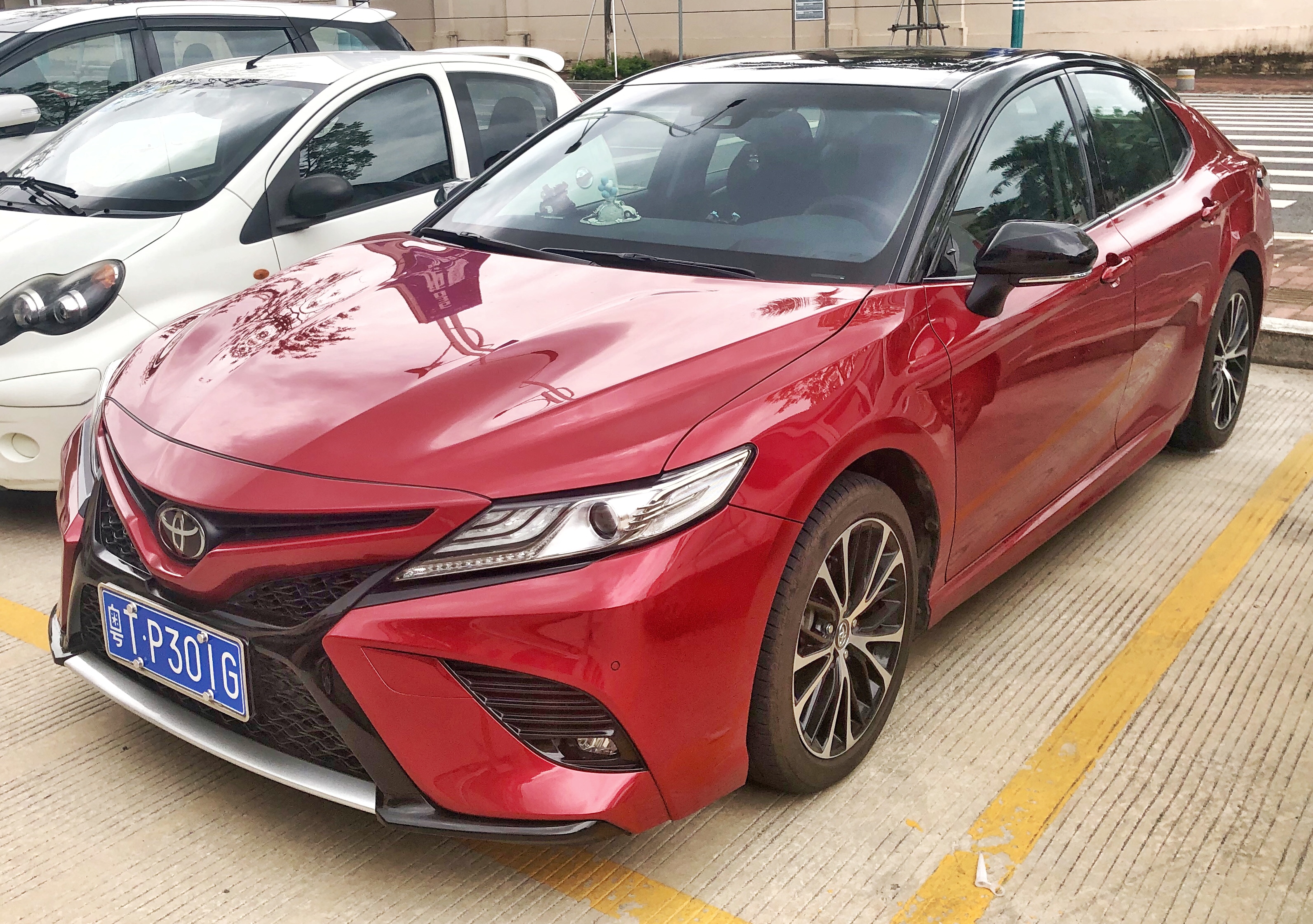
Toyota Camry
"...a Nigerian oil print? I also wish you drove a tan Camry. Anyways, that's a very horrible podcast content."
The Toyota Camry is a regular passenger car (a sedan) meant for everyday driving. It’s designed to be comfortable and practical for commuting and errands. People often mention it because it’s a very common choice.
The Toyota Camry is a mainstream midsize sedan known for comfort and everyday practicality. It’s frequently discussed because it’s common on roads and tends to be a go-to choice for reliable transportation. In the podcast context, it’s mentioned as a specific car example tied to the conversation’s tone and content.
Force Ones
"Yep. They give you air force ones are just not based on aircraft carriers. Yep."
In the podcast, “Force 1” sounds like a name being used in a joke or comparison to “Air Force One.” It’s not described like a normal car model with clear details. The mention is likely about the name itself rather than explaining the vehicle.
“Force 1” in the podcast context appears to refer to a vehicle name that’s being compared to “Air Force One,” but it’s not clearly tied to a specific, widely recognized production car in the way the other models are. Because the transcript is joking about aircraft carriers and “Air Force ones,” the mention likely functions as a humorous reference rather than a detailed car discussion. Without more context, it’s best treated as a named vehicle being referenced for wordplay.
Raleigh race
"Raleigh race, we were able to do our reconnaissance for the next day, right? Like the next day we knew not to wait until like actual lunchtime to get food..."
They’re talking about going to a race in Raleigh and how the day’s schedule worked out for them. The big factor was how often the race got stopped, which changed how long everything took.
This segment discusses attending a “Raleigh race” and how event logistics (food timing, getting in/out, and navigating) were affected by race interruptions. It’s less about the cars themselves and more about how race-day operations change the spectator experience.
red flag laps
"Whereas during the Raleigh race, the combo of waiting a little later to get food and then also having all those red flag laps or red flag time, more people were getting food."
A red flag means the race has to stop for safety reasons. So the cars aren’t racing for a while, and that can make the whole event much longer than expected.
A red flag is a race stoppage caused by a serious safety issue (like a crash or debris). When the hosts say “red flag laps” or “red flag time,” they mean the race is paused and the clock/lap progression is affected, which changes how long the event feels and how people plan around it.
pole
"He did get the pole at Sonoma. Right. And I think there's reasons for that, but he did get the pole on the street course."
“Pole” means the driver starts first at the front of the race. It usually comes from being the fastest in qualifying, and it can help the driver control the race from the start.
“Pole” is the starting position at the front of the grid, awarded to the fastest qualifier. Starting from pole often gives cleaner air and track position, which can help a driver build an early lead.
street course
"He did get the pole at Sonoma. Right. And I think there's reasons for that, but he did get the pole on the street course."
A “street course” is a race run on roads that are normally used by regular traffic. Because it’s tighter and less forgiving than a dedicated track, driving errors can lead to bigger problems.
A “street course” is a race track laid out using public roads, typically with temporary barriers and modified intersections. These tracks often have less runoff and tighter corners than purpose-built circuits, so mistakes can be more costly.
caution
"So regardless, it was a caution and they switched out. It's like, these things happen. I'm like, commit them to memory, Andrew."
A “caution” is when the race slows down because something happened on the track. Drivers don’t race at full speed, and teams can use that moment to make changes like pitting or swapping drivers.
A “caution” is when race officials slow the field due to an incident on track, usually using yellow flags or a safety car procedure. During cautions, pit stops and driver swaps become more strategic because the field is moving slower and gaps can change quickly.
sequential
"They were like, oh, maybe he's not used to shifting a sequential and he over rev it."
“Sequential” means the gears go in order—like 1st to 2nd to 3rd—rather than choosing any gear like a normal car. In racing, it’s designed to be quick, but if someone isn’t used to it, they can shift wrong and rev the engine too high.
A “sequential” transmission (often discussed as a sequential gearbox) lets the driver shift only forward or backward through gears in order—typically with paddle shifters or a shift lever. It’s common in racing because it can be faster and more consistent than an H-pattern manual, but unfamiliar drivers can make mistakes like over-revving.
over rev
"They were like, oh, maybe he's not used to shifting a sequential and he over rev it."
“Over rev” means the engine revs too high, beyond what it can safely handle. That can damage the engine quickly, especially if it happens during a race or a wrong gear change.
“Over rev” means the engine is spun faster than its safe operating limit, usually due to an incorrect downshift or missed shift. In racing, over-revving can cause severe stress and sometimes immediate mechanical failure, which matches the “blew up” outcome mentioned earlier.
lap back
"I was telling you during the race, I was like, man, he's the only guy I lap down. 1283.1s Get the penalty from the wheel falling off from his crew, not pulling"
“Lap down” means you’re behind the leaders by a full lap. It’s a big deal in racing because you usually need cautions or speed to catch up.
“Lap down” (and “lap back” in this context) means a driver has been lapped by the leader and is one or more laps behind. In race strategy, being lap down affects how you can gain time—often through cautions, faster pace, or avoiding incidents.
wheel falling off
"Get the penalty from the wheel falling off from his crew, not pulling 1286.5s on right."
It means the car’s wheel comes loose and detaches while driving. That’s a big safety problem and usually leads to race interruptions or penalties.
In racing, a “wheel falling off” means the wheel detaches from the car—usually due to a failed hub/axle connection or a loose/failed wheel attachment. It’s both dangerous and often triggers caution/penalties because it creates debris and can endanger other drivers.
yellow
"He gets one lap back each yellow and his car is so fast. 1294.9s He might have a chance to like get back up there."
A “yellow” is when the race slows down because of an accident or danger on track. Drivers can sometimes recover laps/positions because everyone is moving more slowly.
A “yellow” refers to a caution period in motorsport when the track is slowed due to an incident. During cautions, cars may gain time or positions differently than under green-flag racing, which is why a driver can “get one lap back each yellow.”
road course
"I mean, it was a three and a half long road course, three and a half mile road course. 1305.6s And I know that's what gave me the advantage to get me back."
A “road course” is a track with lots of turns, like a circuit made from road sections. It’s different from an oval because you’re constantly changing direction.
A “road course” is a circuit built from roads (or road-like sections) with frequent turns and varying corner types, rather than an oval. Lap length and layout matter a lot because they change braking zones, tire wear, and how easy it is to pass.
tire
"So he backed off and then lost the tire and Wallace passed him. 1348.1s And had that not happened, they went at 2311, first, second, third, which would have been"
A “tire” problem can make the car lose traction or even force it to slow down. If a tire goes bad, other drivers can often pass quickly.
In racing, a “lost tire” or tire failure can abruptly reduce grip and stability, forcing a driver to slow or spin. It can also create a passing opportunity because the affected car suddenly can’t maintain racing speed.
Chevy's
"So there's more Chevy's and Ford's than there are Toyotas in the top 15. [1387.9s] Even Hamlin finished pretty well."
“Chevy’s” means Chevrolet cars. They’re saying there were more Chevrolets near the front than Toyotas.
“Chevy’s” refers to Chevrolet entries in the race. The point being made is that Chevrolet had more cars in the top 15 than Toyota did.
Ford's
"So there's more Chevy's and Ford's than there are Toyotas in the top 15. [1387.9s] Even Hamlin finished pretty well."
“Ford's” means Ford cars. They’re saying Ford had more cars near the front than Toyota did.
“Ford's” refers to Ford entries in the race. The hosts use it to argue that multiple manufacturers were competitive, not just Toyota.
Hamlin
"[1387.9s] Even Hamlin finished pretty well. [1389.1s] He got himself some points."
Hamlin is a NASCAR driver. They’re saying he did pretty well in the race and earned points.
Hamlin refers to Denny Hamlin, a well-known NASCAR driver. The hosts are noting his finishing position and points as part of the race recap.
two laps down
"And Bob has never been good on road courses. [1401.4s] And he finished second after being two laps down. [1404.0s] So I was super stoked."
“Two laps down” means the car was two full laps behind the leaders. Coming back from that to finish near the front is a big deal.
“Two laps down” means the car is two full track laps behind the race leader. In NASCAR, being multiple laps down usually indicates a major setback, so finishing near the front afterward is notable.
NASCAR
"So Bob drove the 43 car when we got back into NASCAR. [1432.5s] And I was always a fan of Richard Petty growing up in the 43 car."
NASCAR is a popular American racing league for stock cars. This is where car numbers and driver results like “finished second” matter a lot.
NASCAR is the major American stock-car racing series where cars race on ovals and road courses. The hosts use it to frame the context of car numbers, drivers, and race results.
Richard Petty
"And I was always a fan of Richard Petty growing up in the 43 car. [1438.2s] So I naturally became a Bubba fan just because of that."
Richard Petty is one of NASCAR’s most famous drivers. He’s especially known for racing the No. 43 car, which is why the host connected to that number.
Richard Petty is a legendary NASCAR driver, strongly associated with the No. 43 car. The hosts mention him to explain why they became a fan of the driver they’re talking about.
Sonoma
"I'd really like to go to Sonoma. Sonoma was this past weekend."
Sonoma refers to Sonoma Raceway in California, a road course known for elevation changes and technical corners. NASCAR road-course weekends there often highlight setup choices and tire management more than on ovals.
Cornata race
"because going into the Cornata race and this two-race series of road courses"
The transcript sounds like it’s naming a specific NASCAR race, but the name is probably transcribed incorrectly. It’s mentioned as the race right before the two road-course races they’re discussing.
This appears to be a mishearing of a NASCAR event name in the transcript. The hosts are describing a lead-in to a two-race road-course stretch, so the exact event name matters for listeners trying to follow the schedule.
SVG
"it was very much all about SVG. Everybody's like, SVG's going to win these two races."
SVG is a driver’s initials—Scott van Gisbergen. The hosts are saying people expected him to do really well on the road-course races they were discussing.
SVG refers to Scott van Gisbergen, a driver who competes in NASCAR’s road-course-heavy events. In this segment, the hosts are talking about expectations that he’d perform well in the two-race road-course stretch.
qualifying
"they kind of sandbagged it a bit, maybe, and qualifying."
Qualifying is the session where drivers set their fastest lap to determine starting position for the race. The hosts discuss a “sandbagged” qualifying approach—prioritizing race strategy over showing peak speed early.
tactical decision
"That felt like a tactical decision or something, maybe."
A tactical decision in racing is a deliberate strategy choice—like how aggressively to run in qualifying or how to manage resources—to improve race outcome. Here, it’s tied to the idea of not maximizing speed in qualifying to gain flexibility later.
Oval's
"people would be like, go back to Oval's now, tired of these road courses"
“Ovals” are NASCAR tracks shaped primarily as loops with banked turns, where sustained speed is the main challenge. The hosts contrast oval racing with road courses, suggesting the car they’re discussing suits road courses better.

Subaru 360
"...en up to early 2000s, he does up through 575s and 360s and 430s. Not exactly our listeners."
The Subaru 360 is a very small car made by Subaru. It was designed to be compact and efficient, especially for city driving. People bring it up because it’s a classic example of a tiny “microcar” type.
The Subaru 360 is a small, early kei-class car from Subaru, known for its compact size and simple design. It’s often discussed by enthusiasts because it represents a specific era of Japanese microcar engineering. In the podcast, it’s mentioned alongside other small-displacement models, suggesting a focus on niche or historical cars.

Ferrari 360
"Even up to early 2000s, he does up through 575s and 360s and 430s."
The Ferrari 360 is a Ferrari supercar from the early 2000s. It’s known for having a powerful V8 and being a popular entry point for people who want a real Ferrari experience.
The Ferrari 360 is an early-2000s mid-engine Ferrari known for its V8 layout and for being one of the more accessible “modern classic” Ferraris. It’s frequently referenced when people talk about Ferrari’s transition into more driver-focused, everyday-usable supercars.

Ferrari 430
"Even up to early 2000s, he does up through 575s and 360s and 430s."
The Ferrari 430 is a Ferrari supercar from the 2000s. It’s known for a strong naturally aspirated V8 and a very engaging driving feel.
The Ferrari 430 is a mid-engine Ferrari from the mid-2000s era, best known for its naturally aspirated V8 and sharp throttle response. It’s a common reference point for enthusiasts comparing older Ferrari V8 behavior to later generations.

Ferrari 575
"Even up to early 2000s, he does up through 575s and 360s and 430s."
The Ferrari 575 is a Ferrari with a V12 engine. It’s known for a more classic, smooth feel compared with some mid-engine Ferraris.
The Ferrari 575 is a front-engine V12 Ferrari from the 2000s, known for its smooth power delivery and classic Ferrari grand-touring character. When someone lists it alongside other Ferraris, it usually signals a focus on different Ferrari eras and engine types.

Ferrari 458
"That is a 458, 466. 468. Yeah."
The Ferrari 458 is a high-performance Ferrari with its engine mounted behind the driver. It’s known for feeling very exciting and responsive, especially when you rev it.
The Ferrari 458 is a mid-engine supercar from Ferrari that became famous for its naturally aspirated V8 and sharp, high-revving character. In enthusiast circles, it’s often discussed as a modern “analog-feeling” Ferrari compared with later turbocharged models.
DIY
"He's not a super car person. You know, he's very much a get in there and get your hands dirty DIY kind of guy."
DIY means doing the work yourself rather than paying a mechanic. In cars, it usually means you’re comfortable getting your hands dirty and working on the vehicle.
DIY (do-it-yourself) in car culture means the owner or enthusiast performs maintenance or repairs themselves instead of relying on a shop. It often implies hands-on mechanical knowledge, tools, and willingness to troubleshoot.
bridge ports
"And it's got, you know, all the bridge ports and English wheels and stuff that they all use along with the new 3D printers and everything to make cars in the modern age."
Bridge ports are heavy-duty machine tools used to cut and shape metal accurately. They’re the kind of equipment you’d expect in a serious fabrication workshop.
“Bridge ports” refers to a type of industrial milling machine setup where the workpiece is machined with a rigid bridge-style frame. These machines are common in metalworking shops for precise shaping of parts.
English wheels
"And it's got, you know, all the bridge ports and English wheels and stuff that they all use along with the new 3D printers and everything to make cars in the modern age."
An English wheel is a tool that helps metalworkers shape thin sheet metal into smooth curves. It’s a traditional method used to make custom body panels.
An English wheel is a metal-forming tool used to shape sheet metal panels by gradually stretching and smoothing them. It’s a classic coachbuilding technique for creating curved bodywork before modern composite or CNC workflows.
3D printers
"And it's got, you know, all the bridge ports and English wheels and stuff that they all use along with the new 3D printers and everything to make cars in the modern age."
3D printers make physical parts from a computer design by building them up layer by layer. In car shops, they’re commonly used to prototype parts or make custom pieces.
3D printers are additive manufacturing devices that build parts layer-by-layer from digital models. In a modern car workshop, they’re often used for prototypes, tooling, and custom components.

Lamborghini Lm002S
"...that shop. Like you walk out back and there's two LM002s and three 08 race cars and three 08 or 328 honig,..."
The Lamborghini LM 002 is a rare SUV made by Lamborghini. It’s designed to be powerful and capable, not just a regular road car. The podcast is mentioning it because it’s a standout, uncommon Lamborghini model.
The Lamborghini LM 002 is a rare, high-performance off-road SUV built by Lamborghini. It’s significant because it’s an unusual Lamborghini: a big, powerful vehicle designed to go beyond normal road use. The podcast mention suggests a collection or garage scene featuring multiple rare cars, with the LM 002 called out specifically.

Jaguar
"You know, you look at the Elan and the Jaguar. There's neat stuff around."
Jaguar is a well-known British car brand that makes sporty cars. The host mentions it to show the shop has more than just Ferraris—there are other cool cars too.
Jaguar is a British automaker known for performance and luxury sports cars. Here, the host pairs “Elan and the Jaguar” to highlight that the shop has interesting non-Ferrari cars as well.
slot car track
"Much closer to your slot car track and [1903.6s] they put the slot car track out for Marco."
A slot car track is a small racing track for toy cars. The cars ride in a groove in the track, which helps keep them on the line and power them so you can race them.
A slot car track is a miniature racing track where small electric cars run along a groove (“slot”) in the track. The slot guides the car and also helps power delivery, so the cars can be driven like a scaled-down race experience.
RC car
"Worked on your RC car with that setup. [1910.4s] That was pretty much the only other thing we did kind of correlated"
An RC car is a toy car you control with a remote. Hobbyists can adjust how it drives so it handles better on a specific track.
An RC car (radio-controlled car) is a small vehicle you steer remotely using a handheld transmitter. In hobby setups, people often tune handling and driving behavior to match the track surface and driving style.
air conditioning
"because it's unfortunately didn't have like you said, you have the AC working in the [1919.3s] stereo and so it's really too hot to use it."
Air conditioning is what keeps a room cool. It can make it more comfortable to work on and run RC cars, especially in hot weather.
Air conditioning (AC) is the cooling system that lowers indoor temperature. For RC hobby sessions, AC matters because electronics and batteries can perform differently in heat, and it also makes it comfortable to work on and drive the car.
drift tracks
"We think there's several drift tracks now near you, but we only went to the one that was closest. [1933.0s] I was able to do like a base tune on your car, which is good."
Drift tracks are tracks set up so you can practice sliding turns. The surface and layout are chosen to make it easier to do controlled drifts.
Drift tracks are purpose-built RC or motorsport tracks designed with surfaces and layouts that encourage controlled sliding. They often have features that help tires maintain the friction characteristics needed for repeatable drift practice.
base tune
"I was able to do like a base tune on your car, which is good. [1936.4s] And got you out there drifting."
A base tune is an initial set of adjustments for an RC car’s electronics and/or setup so it behaves predictably. It’s the starting point before finer changes for a specific track, temperature, or driving conditions.
drifting
"And got you out there drifting. [1938.0s] So now you get a summertime project or a summertime hobby you can do inside air conditioning."
Drifting is when a car slides sideways on purpose while still steering through the turn. With RC cars, it’s about getting the car to slide in a controlled way on the track.
Drifting is a driving technique where the car intentionally over-rotates so the tires slide while the driver maintains control and direction. In RC contexts, it usually means setting up the car and throttle/brake behavior to sustain controlled slides on a track.
packs
"I'll go back at some point and run on a couple packs through it. [1953.2s] So I enjoyed it immensely."
In RC cars, “packs” usually means the battery packs. You run one battery, then swap to another so you can keep driving.
In RC racing, “packs” usually refers to battery packs used to power the car. Running “a couple packs” means doing multiple battery runs, then swapping to keep sessions going without waiting for recharge.

Dodge Hellcat
"Yeah. And then somebody else said, I missed the opportunity for the Dodge to do a special edition Hellcat."
The “Hellcat” is Dodge’s performance version of certain cars. It’s known for having a very strong engine, and special editions usually mean extra styling or a unique theme.
“Hellcat” is Dodge’s high-performance nameplate, best known for extremely powerful supercharged V8 models. In this segment, they’re talking about a potential special edition Hellcat, which matters because Hellcat editions are usually tied to performance and branding rather than just cosmetic changes.

Challenger Hellcat
"...opportunity for the Dodge to do a special edition Hellcat. Yeah."
The Dodge Challenger is a muscle car, meaning it’s built for strong performance and a sporty feel. It comes in different versions, including special editions. The podcast is mentioning it because of a planned or discussed Hellcat-style special edition.
The Dodge Challenger is a muscle car known for its bold styling and performance-focused lineup. It’s often discussed because it has had many special editions and powertrain variations over the years. In the podcast, it’s referenced in connection with a special edition Hellcat, indicating a conversation about trims and limited releases.

Bronco
"There's no Bronco either, someone said. It's already a red, white and blue Bronco though."
The Bronco is Ford’s famous off-road SUV. Here they’re talking about a special paint theme that’s meant to match an older racing Bronco from the Baja days.
The Ford Bronco is a classic American off-road SUV nameplate, and the hosts are referencing its racing heritage. They specifically connect the “red, white and blue” Bronco paint scheme to the original Baja Bronco era, where the look and branding were tied to competition history.
Stroke Edition
"It's a bill stroke, somebody's stroke. It's called the Stroke Edition because that was the Baja Bronco back in the day."
“Stroke Edition” sounds like a special version name for a Bronco. The hosts are saying it’s connected to the older Baja Bronco racing story.
“Stroke Edition” is presented here as a named special edition tied to the Baja Bronco’s history. The key point is that it’s a branded edition name with a specific origin story, not just a generic marketing label.

F-250
"So yeah, the F-250 is definitely one that would be a no brainer like an F-250, 250."
The F-250 is Ford’s big heavy-duty pickup. It’s the kind of truck people associate with towing and work, so the hosts think it would be an obvious choice for a special edition.
The Ford F-250 is a heavy-duty pickup truck in Ford’s Super Duty lineup, commonly used for towing and work. The hosts call it a “no brainer” for a special edition because it’s a popular American truck platform with broad appeal.

Corvette
"But the Corvette probably makes the most sense. Yeah."
The Corvette is Chevrolet’s famous sports car. The hosts are saying it would be the best fit for a special edition idea because it’s already strongly tied to performance and racing culture.
The Chevrolet Corvette is a long-running American sports car known for its performance-focused engineering and strong enthusiast following. Here, the hosts say the Corvette “probably makes the most sense,” implying it fits the theme of special editions and racing-inspired branding.
livery
"And the Cadillac F1 team is going to do a livery, but all the race cars have been doing that"
A “livery” is the car’s paint and graphics design—basically the team’s look for a race. It’s how fans recognize which team the car belongs to.
A “livery” is the specific paint scheme, graphics, and branding applied to a race car (or other vehicle) for a team or event. The hosts mention a Cadillac F1 team doing a livery, and they connect it to how race cars often use themed visuals for marketing and identity.
Spirit of America
"And they're called Spirit of America. That was the name of their their package."
“Spirit of America” is a special themed look Chevrolet used on certain cars. It mainly meant patriotic colors—red, white, and blue stripes—plus a badge and matching interior styling.
“Spirit of America” refers to a themed Chevrolet package/edition that used patriotic styling cues. In this segment, it’s described as red/white/blue stripes, a badge, and white interior styling on otherwise standard cars.
bicentennial edition
"They did a bicentennial edition of just the convertible because it was going to be the last American convertible built."
A “bicentennial edition” is a special version of a car made to celebrate America’s 200th birthday. Usually it’s about styling—colors and badges—more than changing how the car works.
A “bicentennial edition” is a limited-run vehicle package created to celebrate the 200th anniversary of the United States. Automakers often used these editions to sell special paint/trim themes (like patriotic stripes) rather than major mechanical changes.

Dodge Spirit
"Yeah, dodges. So Chevy was the spirit of America cars from 74 to 76 or maybe just 74 I ..."
The Dodge Spirit is a car model made by Dodge. In the podcast, it’s mentioned in connection with a “Spirit of America” theme from the 1970s. The discussion is using it as a historical example of what Dodge offered back then.
The Dodge Spirit is a passenger car model that the podcast associates with the “Spirit of America” theme in the mid-1970s. It’s being mentioned as part of a historical lineup discussion rather than a modern performance comparison. That makes it relevant to the conversation as a specific era Dodge model name.
quarter panel little decal
"Dodge did one that they actually the quarter panel little decal. It said Spirit of 76"
A “quarter panel” is part of the car’s body on the side. A “decal” is a sticker graphic, and here the host says Dodge used a “Spirit of 76” sticker on that panel.
A “quarter panel” is the body panel behind the front wheel (and ahead of the rear wheel on many cars), and a “decal” is a sticker/graphic applied to it. The host is pointing out that Dodge’s Spirit-themed version used a specific quarter-panel graphic: “Spirit of 76.”

Ford Mustang
"...d, blue, like grady stripes on the side. And then Mustang and Ford in general had the Sprints, which were t..."
The Ford Mustang is a sports car that’s known for its classic look and performance. Over the years, Ford made different versions and special editions. The podcast is bringing it up because of those recognizable Mustang variations.
The Ford Mustang is a long-running American muscle car and pony car known for its distinctive styling and performance options. It’s often discussed because it has many special editions and a huge enthusiast following. In the podcast, it’s referenced in connection with specific visual details and the “Sprints” mentioned as part of Mustang history.
Sprints
"And then Mustang and Ford in general had the Sprints, which were the same color combo."
“Sprints” sounds like a special Mustang trim or package name. In this segment, it’s mainly about the car’s look—especially the red and blue color scheme.
“Sprints” here appears to be a named styling/trim package associated with Ford Mustangs. In this context, it’s being used to describe a specific red/blue color combination similar to the other “Spirit” themed editions.
two-tone
"The two tone, where the two tone would be. Yeah. Yeah, those are very, very cool."
“Two-tone” is a paint scheme where two different colors are used on the same vehicle, usually separated by a defined stripe or panel boundary. On classic trucks, two-tone packages are often part of factory options, which is why they matter for identifying the correct original configuration.

AMC AMX
"I mean, you could have bought an AMX that was the livery of the TransAm car. So it's like the first two thirds of the car were red."
The AMC AMX was a sporty AMC coupe. The hosts are talking about how you could get one with a racing-style red, white, and blue paint scheme.
The AMC AMX was a performance-focused coupe from American Motors Corporation (AMC). In the segment, it’s referenced as a car that could be ordered with a patriotic Trans-Am-style livery, showing how AMC used racing-inspired paint/trim packages to sell street cars.
TransAm car
"I mean, you could have bought an AMX that was the livery of the TransAm car. So it's like the first two thirds of the car were red."
Trans-Am is a U.S. racing series. A “livery” is the car’s paint and graphics, so they’re saying the street AMX could look like the race car.
“TransAm” refers to the Trans-Am racing series, a long-running American road-racing championship. When the hosts say an AMX had the “livery of the TransAm car,” they mean the street car’s paint/graphics matched the look of the race car.

Rambler Scrambler
"The rambler scrambler was all red, white and blue as a white car with the red side panels and the blue stripe over the top."
The Rambler Scrambler was an AMC car with a tough, sporty look. In this discussion, they’re describing a patriotic red/white/blue paint layout AMC offered on it.
The Rambler Scrambler was an AMC model known for its rugged, off-road-inspired styling and sporty street presence. Here it’s specifically tied to a red, white, and blue paint scheme with red side panels and a blue stripe, illustrating AMC’s patriotic special-edition approach.

Rebel Machine
"And they even had what was the rebel called that had the special package? The AMC of the machine, the rebel machine. Yes, that was the red, white and blue package as well."
The Rebel Machine refers to an AMC performance package/model name associated with the AMC Rebel line. In the segment, the Rebel Machine is described as having a red, white, and blue package—another example of AMC using racing-themed colors and branding on street cars.
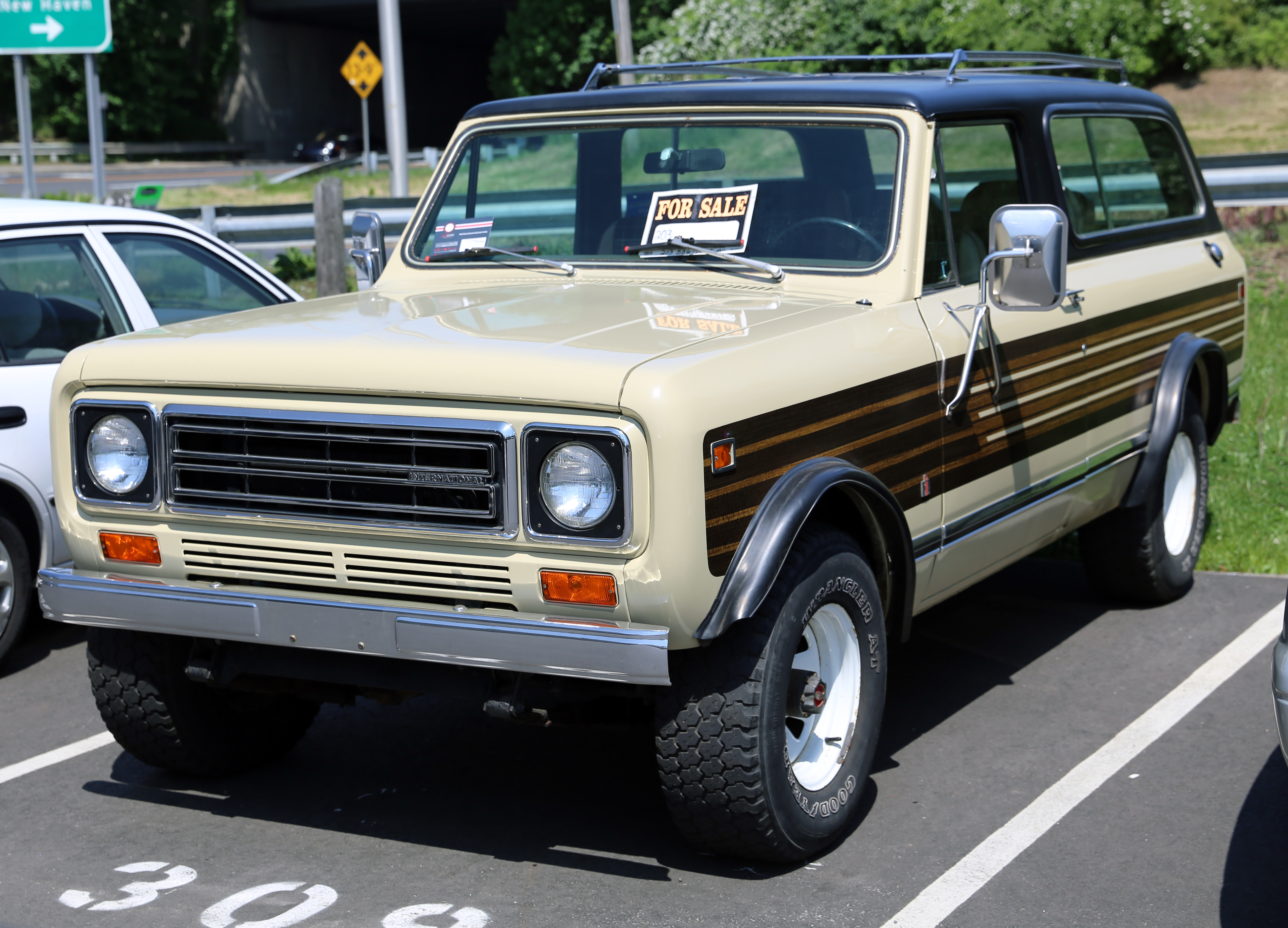
International Harvester Scout 2
"I like the International Harvester Scout 2 that they did. They had a Spirit of 76 and a Patriot edition."
The International Harvester Scout 2 is an older American SUV built to handle rough roads. People like it because it was made for off-roading and it’s part of the classic “early SUV” era.
The International Harvester Scout 2 is a classic American SUV/pickup-style off-roader from International Harvester (IH). It’s known for its rugged, truck-based design and for being a popular alternative to early Jeep models in the 1960s–70s.

Jeep Commander
"A Jeep, was it commander? That's the newer one. Was it called a commander back then?"
They’re talking about a Jeep called the Commander, which is a bigger Jeep SUV. The point here is that Jeep model names can change over time, so it’s easy to mix up what was called what in different years.
The speaker is referring to the Jeep Commander, which is a larger Jeep SUV nameplate. They’re discussing whether “Commander” was used for that model name back then, which matters because Jeep has reused or shifted model names across generations.

Volkswagen Beetle
"Yep. 1976 Volkswagen Super Beetle convertible by Centennial Edition, officially designated as the limited edition Volkswagen convertible for the US market."
This is a 1976 Volkswagen Beetle convertible, but in the “Super Beetle” version. It’s also a special limited edition called the Centennial Edition, made for the US market.
This is a 1976 Volkswagen Super Beetle convertible, specifically the Centennial Edition. The Super Beetle was the later, more refined Beetle generation, and the Centennial Edition was a limited US-market special tied to Volkswagen’s 100-year/centennial celebration branding.
official car of the Sarajevo Olympics
"not in my favorite Olympic edition is the 1984 Mitsubishi's because they were the official car of the Sarajevo Olympics."
When a car is called the “official car” for the Olympics, it means the event organizers used that brand’s vehicles for important roles during the games. Sometimes that leads to special versions people can collect.
Being the “official car” for an Olympics typically means a manufacturer supplied vehicles for the event—often for ceremonies, VIP transport, and media use. These arrangements can lead to special editions or distinctive liveries that collectors recognize later.

Chevrolet Vega
"So you want a spirit of America? [2751.9s] I want a Vega. [2753.5s] Okay. [2754.6s] All right. [2755.3s] I want a Vega."
The Chevrolet Vega is a Chevy compact car from the 1970s. The host is basically saying that if they had to pick a car in 1976, they’d probably choose a Vega.
The Chevrolet Vega is a compact car from Chevrolet that the host mentions as a likely choice for 1976. It’s being used as an example of what they’d buy in that era, contrasting with the “GM cars came out” comment and the earlier Jeepster idea.

Dacia Duster
"...ge sport. So I had like the fastback roof, like a duster. It was a, the dark duster basically."
The Dacia Duster is a small SUV-style car meant for everyday use. It’s built to be practical and affordable, with more space than a typical sedan. The podcast is mentioning it because of its “Duster” name and a description of its look.
The Dacia Duster is a compact crossover/SUV designed for practical, budget-friendly ownership. It’s often discussed because it offers SUV-like capability and space without being positioned as a luxury vehicle. In the podcast, it’s referenced through a “duster” nickname and a description of roof styling.
square bodies
"I'd go with one of these square bodies of the spirit of 76 and that's kind of cool. Okay."
“Square bodies” is a nickname for a 1970s truck style that looks boxy and upright. It’s basically describing the shape of the body.
“Square bodies” is a nickname for certain 1970s GM truck styling—especially Chevrolet and GMC pickups—characterized by boxy, upright sheet metal. Enthusiasts use it as shorthand for that era’s truck look and proportions.
Malaise era
"So you're in the middle, your post, kind of the converters are really getting to the Malaise era, but there was, I had to like look it up. There was so much more available in the US market for cars that is not available today."
“Malaise era” is a nickname for a time in the U.S. when cars felt less exciting than before. Rules about emissions and fuel economy made many cars heavier and less powerful.
“Malaise era” is an enthusiast term for the late-1960s to mid-1970s period in the U.S., when cars were often heavier, less powerful, and more regulated. The term points to factors like emissions rules, fuel economy pressure, and a general drop in performance/enthusiasm compared with earlier muscle-car years.
converters
"So you're in the middle, your post, kind of the converters are really getting to the Malaise era, but there was, I had to like look it up. There was so much more available in the US market for cars that is not available today."
Here, “converters” means catalytic converters, which are parts that clean up car exhaust. They became common because of emissions rules, and they can change how the engine is tuned.
In this context, “converters” refers to catalytic converters—emissions-control devices required on many U.S. cars starting in the 1970s. They helped reduce harmful exhaust gases, but they also affected engine tuning and sometimes reduced performance compared with earlier setups.
Dodge Colt carousel
"So, and that brings up a point too, because in 76, it's not a red, white and blue special edition, but you could have got a Dodge Colt carousel. And the carousel was a white base car with a blue vinyl roof and a blue and white two-tone interior."
This is a 1976 Dodge Colt special edition. It’s basically a Mitsubishi Colt that Dodge sold with a specific two-tone look—white paint plus a blue vinyl roof and blue-and-white interior. People call it a “package” because it’s mostly about the styling and trim.
The Dodge Colt carousel is a 1976 Dodge-branded special package based on the Mitsubishi Colt. The key visual idea is the two-tone scheme—white body with a blue vinyl roof and matching blue-and-white interior—meant to look like a themed “carousel” edition. It’s an example of how Mopar-era dealers could dress up a base model with distinctive trim and colors.

Volvo 240
"Now you might, you might think, well, Andrew will probably pick a 76 Volvo 240, but which is interesting because my parents didn't have one. But I think I'd go with a 76 FJ 40."
They bring up the Volvo 240 as a possible classic choice. The Volvo 240 is a famous older Volvo sedan known for being tough and long-lasting. In this segment it’s mainly used as a comparison point, not the final pick.
The Volvo 240 is mentioned as a hypothetical pick for the “Andrew” choice, but the speaker says their parents didn’t have one. The Volvo 240 is a well-known late-1970s to 1980s Swedish sedan platform, famous for durability and a simple, robust design. Even as a throwaway comparison, it signals a preference for classic, long-lasting cars.

FJ 40
"But I think I'd go with a 76 FJ 40. Just something that's not, that's not a good idea. Just a classic four by four, but a Japanese version."
They choose a 1976 Toyota FJ 40, which is a classic off-road 4x4. It’s part of the Land Cruiser family and is known for being tough and simple. The point here is that it’s a classic Japanese-style four-wheel-drive.
The 1976 Toyota FJ 40 is being picked as a classic “four by four” choice. The FJ 40 is the iconic early Land Cruiser with a simple, rugged body-on-frame layout and a reputation for off-road capability. In this segment, it’s framed as a straightforward, classic Japanese alternative to the other options.
76 FJ 40
"So yes, my choice was a 76 FJ, um, FJ 40. Any thoughts on that?"
This is a Toyota Land Cruiser from the 1970s. The FJ40 is famous for being tough and simple, and people still love it for off-road adventures.
The Toyota FJ40 is a classic, boxy Land Cruiser from the 1970s known for its simple, rugged off-road design. A “76 FJ 40” specifically points to a 1976-era FJ40, which is part of the original Land Cruiser’s long-running heritage.
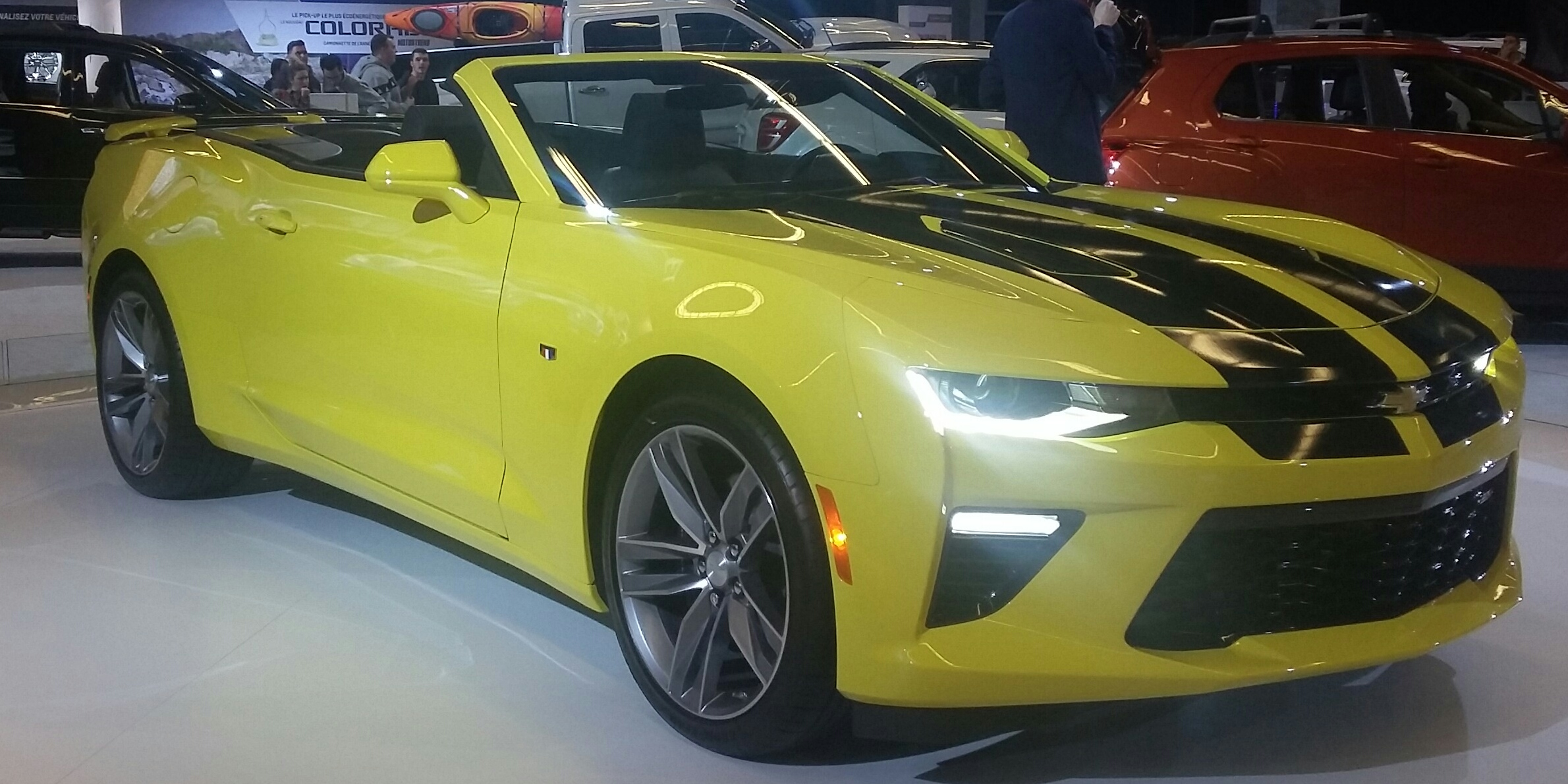
Chevrolet Camaro
"Maybe knowing that a V8 Camaro was 120 horsepower and a four cylinder anything else was about 90 to 100 horsepower."
A Camaro is a famous American car model. A V8 means it has a larger engine with eight cylinders, which usually makes more power than smaller engines.
The Chevrolet Camaro is a classic American muscle car, and the V8 version is known for its big-displacement engine character. In this segment, they’re using the Camaro as an example of how a V8 was often marketed as the “big power” choice versus smaller engines.

Porsche 912
"it was a single year only 912. [3126.4s] I think the last year of the 912."
The Porsche 912 is an older Porsche model that’s related to the 911. It’s known for using a different engine than the 911, and it came in different versions over the years.
The Porsche 912 is the classic, more affordable sibling to the 911, built around a different engine family than the 911. In this segment, they’re discussing how the 912 nameplate was affected by Porsche’s engine and body inventory decisions.
Type four engine
"We should make a 912E, which a fuel injection type four engine."
A Type 4 engine is a specific Porsche engine design family. It’s important because it’s not the same engine used in the 911, which changes how the car feels and how it’s built.
A “Type 4 engine” refers to Porsche’s air-cooled flat engine family used in models like the 914 and 912 (and later variants). It’s different from the 911’s engine family, so swapping to a Type 4 is a major part of why the 912E is historically interesting.
fuel injection
"We should make a 912E, which a fuel injection type four engine."
Fuel injection is how the engine gets its gas. Instead of a carburetor, it uses valves/injectors to spray the right amount of fuel at the right time.
Fuel injection is a system that delivers gasoline to the engine using electronically controlled injectors instead of a carburetor. In older Porsche context, “fuel injection” often signals improved throttle response and more precise fuel metering for emissions and drivability.

Volkswagen Polo
"So I'll let him give a pass because he said a Mark one Volkswagen Polo. Sure. That's that wasn't available here in 76, but you know, I'll let it slide."
Volkswagen Polo is a small car model made by VW. The host is talking about the very first generation of the Polo, which was a European car and not really sold in the U.S. back in the 1970s.
The Volkswagen Polo is a compact car line from Volkswagen, with multiple generations and body styles. In the transcript, the host mentions a “Mark one Volkswagen Polo,” which refers to the earliest Polo generation, a small European hatchback that was not widely available in the U.S. in 1976.
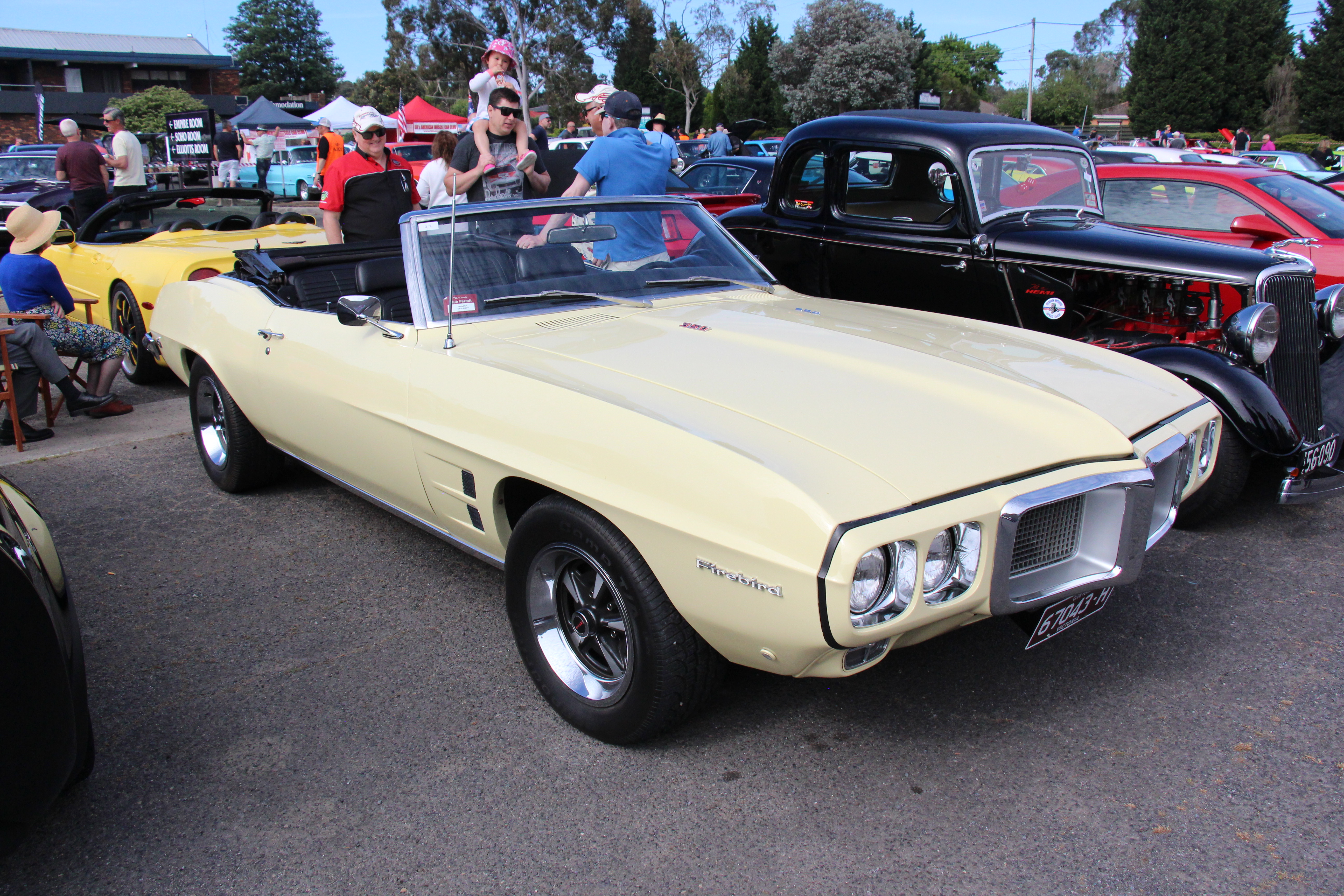
Pontiac Trans Am
"actually there was a couple of people and one person on Instagram, uh, set a Trans-Am because, uh, it was the last year of the 455 and you can get the 455 all came manual."
The Pontiac Trans Am is a classic American muscle car. In this part of the conversation, they’re talking about a Trans Am year/configuration that used a big 455-cubic-inch V8 engine.
The Pontiac Trans Am is a performance muscle-car model known for its V8 power and racing heritage, especially in the late 1960s through the 1970s. Here, the host ties it to the “last year of the 455,” implying a specific late-’70s Trans Am configuration that used the 455 V8.
455
"set a Trans-Am because, uh, it was the last year of the 455 and you can get the 455 all came manual."
“455” is shorthand for a large V8 engine size measured in cubic inches. Bigger numbers like this usually mean a lot of torque and muscle-car character.
“455” refers to the 455 cubic-inch V8 engine displacement used in certain American performance cars. It’s a big-displacement V8 associated with the muscle-car era, and the transcript notes it could be paired with a manual transmission in that Trans Am context.
manual
"it was the last year of the 455 and you can get the 455 all came manual. So that's kind of cool."
“Manual” means the driver shifts gears themselves using a clutch and a stick. It’s different from an automatic, where the car changes gears for you.
A “manual” transmission is a gearbox where the driver selects gears using a clutch pedal and a gear lever. In muscle-car buying, the availability of a manual can be a big deal because it changes how the car drives and how it’s used.
T-Rex dump truck
"the best bison tail edition was the GM and it was the T-Rex dump truck. I don't know if you saw that."
A “T-Rex dump truck” sounds like a specific named or nicknamed heavy truck someone is talking about. It’s not a normal car trim—it’s more like a particular build or version.
A “T-Rex dump truck” is a specific, nickname-style reference to a heavy-duty dump truck build or model that someone on Instagram claimed was the best “bison tail edition.” The phrase is likely referencing a particular custom or branded truck rather than a standard factory trim.
bison tail edition
"the best bison tail edition was the GM and it was the T-Rex dump truck. I don't know if you saw that."
“Bison tail edition” sounds like a nickname for a certain style or setup on a truck. It probably comes from a specific community or inside joke, not a common factory option.
“Bison tail edition” appears to be a fan-made or niche nickname for a particular truck configuration or styling package. Because it’s not a widely standardized automotive trim name, it likely refers to a specific community reference rather than a universally recognized option.

Lancia Stratos
"...flag out of. Uh, we would, one person say Alancia Stratos, which I guess you could gray market import in 76..."
The Lancia Stratos is a sports car that was built for rally racing. It’s famous because it did very well in competitions. The podcast is referencing it in the context of how rare or hard-to-find it can be.
The Lancia Stratos is a legendary rally-focused sports car, best known for its success in rally racing. It’s significant because it’s become an icon of motorsport history and is strongly associated with the 1970s rally scene. The podcast mention also points to the idea of importing or finding one through unusual channels.
gray market import
"Uh, we would, one person say Alancia Stratos, which I guess you could gray market import [3249.3s] in 76."
A gray market import is when someone brings a car into a country through unofficial channels. It can help you get a model that wasn’t sold there normally, but it may come with extra paperwork and compliance headaches.
A gray market import is a vehicle brought into a country through unofficial or non-authorized channels, rather than through the manufacturer’s official distribution. Enthusiasts sometimes use it to obtain models that weren’t sold there officially, but it can complicate compliance with local regulations and parts/service support.
smogged out
"Like I've driven my Cressida from here to LA and back and averaged almost 30 miles [3311.8s] a gallon on the highway and that's better than you could say about any 1976 smogged out"
“Smogged out” means the car was modified to meet pollution rules. Those emissions parts can make the car feel less powerful than it would have without them.
“Smogged out” refers to older cars being detuned and fitted with emissions controls to meet smog regulations. Those changes often reduced power and throttle response compared with earlier, less-restricted versions of the same model.
Le Mans
"There's also the, uh, for race cars, the Spirit of 76 Corvette that ran at Le Mans. That was pretty cool."
Le Mans is a legendary long-distance race in France. It’s one of the biggest racing events on Earth, and it’s especially tough because cars have to last and keep running for a full day.
Le Mans is the famous French endurance race (the 24 Hours of Le Mans) held at the Circuit de la Sarthe. It’s one of the most prestigious motorsport events in the world, and winning or even competing there is a major credibility marker for race cars and manufacturers.
IMSA style
"Greenwood, Greenwood kitted super wide IMSA style, like very cool car."
“IMSA style” means the kind of race-car look you’d see in IMSA, a big sports-car racing series. It usually points to a more aggressive, track-focused body shape compared to a stock car.
IMSA style refers to the look and setup associated with IMSA (the International Motor Sports Association), a major North American sports-car racing series. “IMSA style” often implies wider, race-oriented bodywork and proportions tuned for endurance racing and competition classes.
silhouette race car
"They did a big like silhouette race car style of Monset, which is super rad."
A “silhouette race car” is a race car that looks like a real car from the outside. But underneath, it’s built for racing instead of everyday driving.
A “silhouette race car” is a racing car that keeps the outward body shape of a production car, while using purpose-built racing engineering underneath. The idea is to look like a recognizable street car, but be optimized for track use.
AMT
"In fact, AMT just re or round two models just re-release the AMT Monsa model kit"
AMT is a company that makes plastic model kits of cars. Here, they’re talking about AMT re-releasing a kit that comes with extra body parts.
AMT is a model-kit brand known for plastic scale kits, including car and racing subjects. In this segment, the hosts mention AMT re-releasing a model kit that includes a full body kit.
model kit
"In fact, AMT just re or round two models just re-release the AMT Monsa model kit [3420.5s] that includes that full body kit in it."
A “model kit” is a set of parts you assemble to make a scale replica of a car. Here they’re talking about a kit that includes extra body pieces to build a specific style.
A “model kit” is a set of plastic parts and instructions used to build a scale replica, often of cars, trucks, or race cars. The segment specifically discusses a kit that includes a “full body kit,” meaning extra body components for a particular look.
Round Two
"In fact, AMT just re or round two models just re-release the AMT Monsa model kit"
Round Two is a model-kit brand that re-releases older car kits. The host is joking that the name might be about doing “round two” reissues.
Round Two is a model-kit publisher/brand that reissues older kits and tooling. The host suggests the “Round Two” name may relate to re-releases of existing AMT/Monogram-style kits.
full body kit
"that includes that full body kit in it."
A “full body kit” is a set of extra exterior parts that change how a car looks. In this conversation, it means the model kit includes all the body pieces needed for that style.
A “full body kit” is a set of exterior add-on panels (like bumpers, side skirts, and sometimes spoilers) that changes a car’s appearance. In model-kit context, it means the kit includes the complete set of body parts to build that specific look.
Monogram
"That's a good theory, but they own all of AMT monogram, Revell, Auto World,"
Monogram is a well-known brand for plastic model kits. The host is listing it as one of the brands owned by the same company behind AMT-style kits.
Monogram is a classic American model-kit brand historically known for plastic car and aircraft kits. The host mentions it as part of the portfolio owned by the same parent company that also controls AMT and other toy/scale brands.
Auto World
"but they own all of AMT monogram, Revell, Auto World,"
Auto World is a brand that makes car-related scale products, like diecast models. The host is grouping it with other model brands to show how many lines they control.
Auto World is a brand associated with diecast and scale automotive products. The host lists it alongside AMT/Monogram and Revell to describe the breadth of the company’s American-scale car offerings.
Revell
"but they own all of AMT monogram, Revell, Auto World,"
Revell is a company that makes plastic model kits. In this segment it’s mentioned as another brand in the same model-kit ownership group.
Revell is a major model-kit brand that produces plastic kits across cars, planes, and more. Here it’s mentioned as one of the brands owned by the company that also controls AMT and other scale-car product lines.
Request an Explanation
Heard something you'd like explained? We'll add it to this episode.
Sign in to request explanations for terms you heard.
Want to learn more?
Browse our glossary for plain-English explanations of automotive terms, jargon, and concepts.
Help improve this episode
See something that's not quite right? Our annotations are AI-generated and can sometimes miss the mark. Click the flag icon on any annotation to suggest a correction.
2 community members have helped improve this episode.