
About this episode
Racing talk kicks things off with “Indie 500” praised for “so much passing” and a wreck where a driver avoided a T-bone by hitting the wall. The hosts then bounce through NASCAR strategy—stage breaks, rain red flags, and two-tire vs four-tire calls that shuffle the restart order. Between race recaps, they get hands-on with Volvos: diagnosing dead gauges via a bimetal voltage regulator, swapping an NOS washer pump, and sorting sensor-thread adapters. The episode ends with more garage troubleshooting, from Weber air-filter fitment to brake conversion headaches.
We're back for another week with some casual race coverage and then some project car updates. The Starion got colder and the Volvo moved a few steps closer to being on the road.
Please Rate, review and subscribe to the podcast on your favorite listening platform. Comments, Questions, complaints; email us at [email protected]
Join the Discord, message us on the socials for a link.
Keep your cars analog and Aim for the Roses!

Ford Bronco
"don't go off the bar with your Bronco 1980 Volvo horns what's right man's"
The Ford Bronco is a rugged SUV built for off-roading. A 1980 Bronco is an older version from the early years of the model.
The Ford Bronco is a classic American SUV known for its off-road roots and rugged body-on-frame design. A 1980 Bronco is from the first-generation era, when the model leaned heavily into simple, durable mechanicals and a utilitarian look.
automatic transmission
"but it's still an automatic transmission they're never gonna be light"
An automatic transmission is a car gearbox that shifts gears by itself. You don’t have to use a clutch or manually change gears.
An automatic transmission is a gearbox that changes gears for you using hydraulic/electronic control, rather than requiring the driver to operate a clutch and shift lever. The speaker’s point is that automatics tend to add weight and complexity compared with manual setups, affecting how “light” a car can feel.
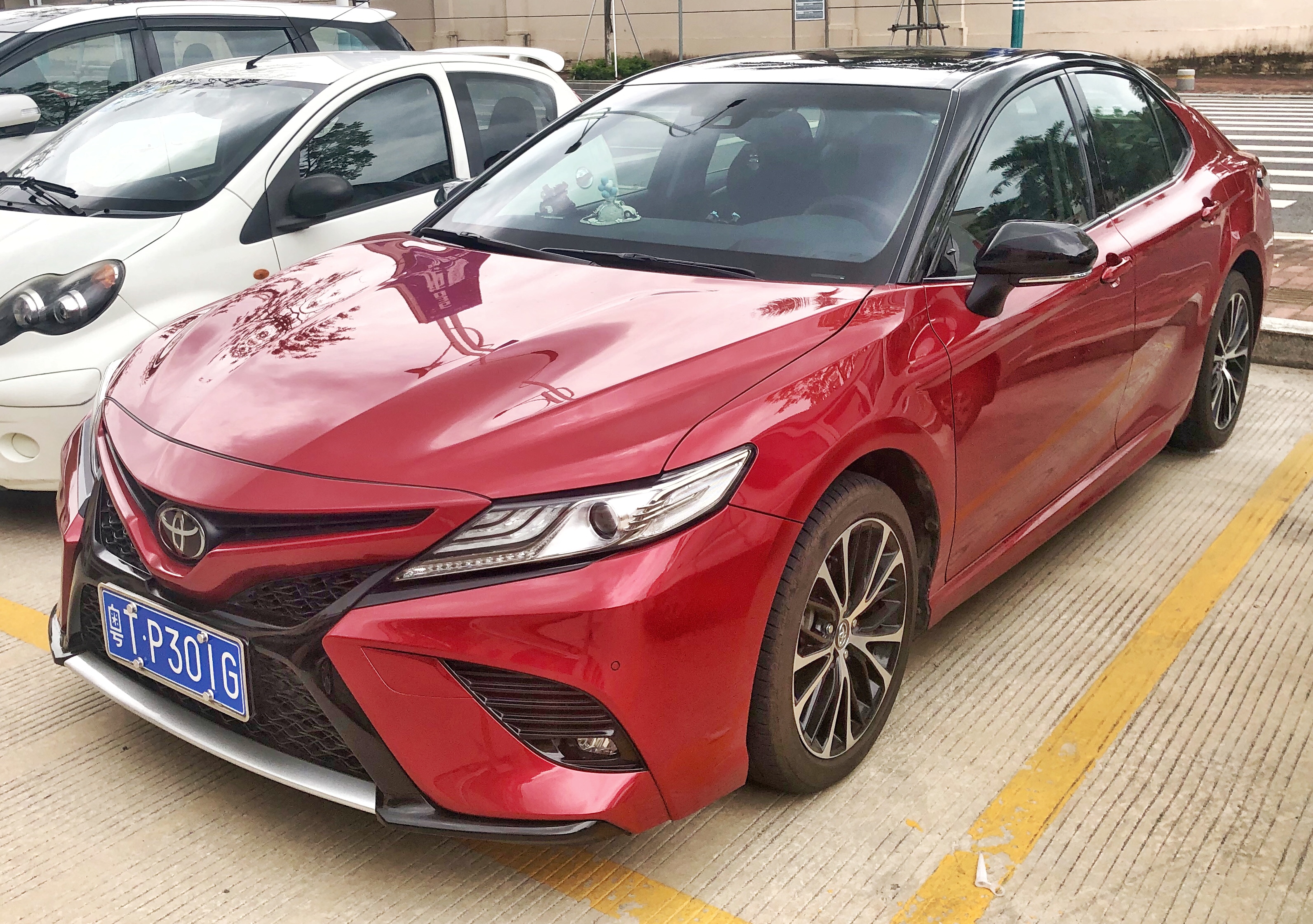
Toyota Camry
"also wish you drove a tan Camry anyways that's a very horrible podcast content very inside"
The Toyota Camry is a very common, practical sedan. Here it’s just mentioned as an example of a car someone might drive.
The Toyota Camry is a mainstream midsize sedan known for comfort, efficiency, and broad availability. In this segment, “tan Camry” is used as a visual/ownership reference rather than a technical discussion, and no generation or year is specified.
Grand Prix
"it was something else instead I don't know why but you mean this past weekend is normally a Monte Carlo weekend it's normally Monte Carlo any 500 Coke 600 but it was some other Grand Prix I don't aware as I wasn't following it"
A Grand Prix is a big, high-profile auto race weekend. In this segment, they’re discussing which one happened recently.
A Grand Prix is a major motorsport race event, typically associated with Formula 1 or other top-tier racing series. The hosts are talking about which Grand Prix was on that weekend and whether it was as interesting as usual.
Indie 500
"[161.1s] Indie 500 was pretty darn good yes it was one of the best I've ever watched ... [264.1s] incredible so close and just watching the car like just watching them all battle"
“Indie 500” is the name of the race they’re talking about. They’re saying it was exciting because cars were passing a lot and the finish was super close.
“Indie 500” is the race being discussed in this segment, and the hosts focus on how entertaining the on-track action was. They mention rain not arriving, lots of passing, and a very close finish, which are all typical ways fans evaluate a race’s quality.
t-boning
"[296.8s] quick break to take a shower and I missed what happened to Catherine leg but I guess she wrecked but she was trying to avoid another wreck yeah somebody spun in front of her yeah instead of t-boning them she put it in the wall"
A “T-bone” crash is when one car hits the side of another car. It’s usually the kind of impact that’s hard to avoid once the cars are in the wrong positions.
“T-boning” is a crash where one vehicle hits the side of another, forming a “T” shape. In racing context, it’s used to describe the worst-case scenario when a driver can’t avoid contact and instead gets struck broadside.
Coke 600
"complete the coke 600 which is cool so she did was like 12 laps down or something but she did it yeah ... would you say about the coke 600 I was also a very good race ... it was rain shortened"
The “Coke 600” is a big NASCAR race that’s 600 miles long. Sometimes it gets shortened if it rains, and there are often caution periods. The hosts are talking about how this particular Coke 600 went and what made it exciting.
The Coca-Cola 600 (often shortened to “Coke 600”) is a major NASCAR race run over 600 miles. It’s known for long green-flag stretches, frequent cautions, and the possibility of rain shortening the event. In this segment, they’re discussing how the race played out and why the track setup matters.
rain shortened
"it was it was rain shortened which is unfortunate but it was still a good race it was only rain shortened by like 10 laps"
“Rain shortened” means the race got cut short because of rain. Instead of running the full distance, they ended it early for safety. The hosts say it was only cut by about 10 laps, but it still changed how the race felt.
“Rain shortened” means the race distance was reduced because of rain, so the event ends earlier than scheduled. In NASCAR, officials may shorten the race to fit within safety and timing constraints. The hosts note it was only shortened by about 10 laps, but it still affected the flow of the race.
mile and a half track
"the that car just runs so good on a mile and a half track it seems to be its best track set up is the mile and a half track for sure"
A “mile and a half track” is a NASCAR oval where one lap is about 1.5 miles. Cars often need a specific balance to do well there because the corners are long and fast. The hosts are saying this car is especially strong on that kind of track.
A “mile and a half track” refers to NASCAR oval circuits with a 1.5-mile lap length (e.g., Charlotte Motor Speedway). These tracks tend to reward cars that are stable at speed and well-balanced through long corners. The hosts say the car “runs so good” on a mile-and-a-half track and that its best setup is for that track type.
Kyle Bush tributes
"watching it the beginning opening stuff with all the tributes for Kyle Bush that was that was pretty incredible"
They’re talking about special race-day moments honoring Kyle Bush. These are usually emotional ceremonies shown during the broadcast. The hosts say it was done thoughtfully given what happened.
The hosts discuss on-track “tributes” to Kyle Bush, which are ceremonial acknowledgements during the race broadcast. These moments are typically tied to a significant real-world event involving the driver or team. They also comment on how thoughtful and well-executed the tributes felt “considering the circumstances.”
current gen car
"like just a complete like jerk would win a lot pre current gen car so you know certainly had the skills to back it up but you know in recent years"
This means the newest type of NASCAR race car that’s being used under the current rules. When the rules change, the cars change too.
“Current gen car” refers to the latest generation of NASCAR race car rules and chassis package. Each generation changes things like aerodynamics, safety, and how the cars are built and set up.
RCR
"yeah wow that's crazy yep and RCR has retired the number eight for the time being saving it for brexton"
RCR is a NASCAR racing team. Teams sometimes retire a car number to honor someone, and here they’re saying they’ll save the No. 8 for a future driver.
RCR is Richard Childress Racing, a major NASCAR team. The team can retire car numbers as a tribute, and the transcript says they’re holding the No. 8 for a specific driver.
retired the number eight
"yep and RCR has retired the number eight for the time being saving it for brexton yep"
Retiring a number means the team won’t use that specific car number for a while. It’s usually done to honor a driver or moment in the team’s history.
In NASCAR, retiring a number means a team won’t use that car number for a period (often as a tribute). It’s a symbolic gesture tied to a driver’s legacy or team history.
stage
"I think it was the end of the second stage I think it was car caught fire that was a little awkward"
A stage is a section of the race. NASCAR splits the event into parts and awards points at the end of each part.
NASCAR “stages” split a race into segments (typically Stage 1, Stage 2, and a final stage). Points are awarded at the end of each stage, and the race can have breaks like pit windows between stages.
cautions
"so the race was pretty interesting it had a couple cautions red flags for rain I think it was the end of the second stage"
A caution is when the race slows down because something happened on the track. Everyone drives more slowly until officials say it’s safe to race hard again.
In NASCAR, a caution is when the race is slowed because of an incident on track (like debris or a crash). Drivers typically maintain reduced speed and follow the pace car until the track is cleared.
red flags
"it had a couple cautions red flags for rain I think it was the end of the second stage"
A red flag means the race is paused and everyone stops. It’s usually for serious problems or bad weather, and then they restart when it’s safe.
A red flag in NASCAR means the race is stopped completely due to conditions or an incident (here, rain). Cars remain in a controlled state while officials address the situation before restarting.
car caught fire
"I think it was car caught fire that was a little awkward like he was just an also ran he's a dude who doesn't run very often"
That means the race car started burning during the event. When that happens, officials may slow or stop the race so everyone stays safe.
A “car caught fire” refers to an on-track fire event, which can be triggered by fuel, electrical, or mechanical failures. In NASCAR, fires often lead to cautions or red flags depending on severity and how quickly crews can respond.
pits
"he came in right before the stage when the pits are open and the car caught fire and the state you know they close the pits"
The pits are where race teams work on the car during the race. When the pits are “open,” teams can pull in to do things like tire changes.
The pits are the service area where NASCAR teams change tires, refuel (when applicable), and make adjustments during scheduled stops. “Pits are open” means teams are allowed to enter for service at that point in the race.
pit box
"so that like sort of delayed the race a bit so he also was not in his own pit box yeah so they had to make sure they really cleaned up the pit box that his car burned to the ground"
In a race, the pit lane has marked spots for each team. Your car pulls into its own spot (pit box) so the crew can work on it quickly.
A pit box is the designated space in the pit lane where a specific car’s team stops for service during a race. It’s where the crew works and where the team’s equipment and procedures are set up for quick tire and fuel changes.
regroup
"no I'm totally fine with it because I like the like the regroup I like the rewreck"
A regroup is when the race order gets reshuffled—cars end up closer together again. That can help drivers who were stuck farther back catch up.
In staged racing, a regroup is the reorganization of the field after a caution or during a stage-related reset, which can bunch cars together and change track position. That can make it easier for drivers who fell back to work their way forward.
Joey Logano
"yeah and speaking of like my son's favorite driver Joey Logano who's having a terrible year was like started like a bad remarko"
Joey Logano is a NASCAR race driver. The hosts are talking about how he started near the back but still worked his way toward the front.
Joey Logano is a NASCAR driver known for winning major stock-car races and championships. In this segment, he’s used as an example of how a driver can recover positions even after starting deep in the field.
Chevy
"Larson had a fast Chevy and then surprisingly you've got I mean is it really surprising the guy's been working on his racing like definitely spending time on it SVG was up there running top 10 all day yeah so it was like them and then sort of some of the spire cars were starting to sneak up"
Chevy (Chevrolet) is a car brand that races in NASCAR. The hosts are talking about how Chevys were running up front alongside Toyotas, especially around restarts.
“Chevy” refers to Chevrolet, a NASCAR manufacturer brand. The segment contrasts Chevrolet and Toyota at the front, emphasizing how different manufacturer teams were positioned during the race and restarts.
late race strategy call
"and then sort of some of the spire cars were starting to sneak up and that's where we get into late race strategy call there was I forget why the cost came out"
Near the end of a NASCAR race, teams have to make a big decision that can change who wins. They might decide when to pit and what tires to use based on what the weather is about to do and how the race is unfolding.
In NASCAR, a late-race strategy call is a decision made near the end of the race that can swing track position and race outcome. It often involves choosing when to pit and what tires to take based on expected conditions like rain and how many cautions are likely.
put two tires on
"everybody else puts four tires on his team is looking at the radar they make a call to put two tires on gets out of pit lane first"
During a pit stop, teams can swap tires. “Two tires on” means they only change one side (two tires) to save time, which can help them get back on the track ahead of others.
“Putting two tires on” refers to a pit stop where the team changes only the left or right side tires (instead of all four). NASCAR teams sometimes do this to gain time and track position, especially when they expect a short window before the next restart or when tire wear and grip are changing quickly.
restart
"and then ends up with Larson behind him on the restart of course it's two Chevy's and you've got Toyota's"
A restart is when the race goes back to full speed after a caution. The order cars line up in matters a lot because it affects who can accelerate and pass first.
A restart is when NASCAR resumes racing after a caution period, with cars accelerating back to racing speed in an organized order. Restarts are high-impact moments because drafting and positioning can determine who gets clean air and momentum into the next laps.
reset
"yeah is his points spread he's over a hundred points over second place and then the rest of like second through 20th is separated by less than a hundred points so then they'll reset that I think it goes from like 2100 to 2000 points when they'll reset it"
At certain points in the season, the standings get “reset” so the race for the next phase stays close. It gives more drivers a chance instead of one person running away with it early.
A points reset is when the series reduces everyone’s accumulated points to a new baseline before the next playoff/qualification phase. The goal is to tighten the standings so more drivers still have a realistic shot.
road course
"we'll be in San Diego we've got another road course so that road course coming up I think there's one or two more that's like three weeks away"
A road course is a race track with lots of turns, not just left turns like an oval. Cars have to handle braking and cornering well to do well there.
A road course is a track layout that includes frequent turns and braking zones, often resembling real roads more than an oval. It typically rewards car balance, braking stability, and driver skill through corners.
New Hampshire
"I would lose my mind if it happens when I'm at New Hampshire so yeah that'd be cool"
They’re talking about a race at New Hampshire. It’s typically an oval track, so it’s a different kind of challenge than a road course.
New Hampshire is referenced as a venue for a race, where the speaker expects a potential win. In NASCAR-style schedules, New Hampshire is known for a traditional oval layout that differs from road courses.
Phoenix
"for my sake I hope it happens in Phoenix"
Phoenix is mentioned as another race stop where the speaker hopes a driver wins. Phoenix races are typically held on an oval track, which changes tire wear and driving strategy compared with road courses.
gauge cluster
"all the grounds are good I took the cluster out my dad and I were were fiddling with it testing it and got the gauges to sweep and I thought maybe you know it's got that the voltage regulator in the back of the cluster"
The gauge cluster is the dashboard unit with the needles and warning lights. They took it out and tested it, and some gauges work while others don’t, which helps narrow down what’s broken.
The gauge cluster is the instrument panel assembly that houses the speedometer/tachometer and warning lights plus the fuel and temperature gauges. The host removes it, tests it, and observes that some gauges sweep while others (notably fuel and temperature) stay dead, pointing to either the cluster electronics or the sensors feeding it.
voltage regulator
"I thought maybe you know it's got that the voltage regulator in the back of the cluster to prevent the gauges from jumping around from the alternator charging and like the voltage moving around it's like this little it's actually a bimetal spring that heats up with 12 volts"
A voltage regulator is a device that makes sure the gauges get the right amount of electricity consistently. If the alternator’s voltage changes, the regulator smooths it out so the needles don’t bounce around.
A voltage regulator keeps the electrical supply to the instrument gauges stable. In this Volvo cluster, the host describes a mechanical regulator that uses a bimetal spring heated by 12 volts to open/close and effectively provide an averaged ~5 volts so the gauges don’t “jump” with alternator charging changes.
bimetal spring
"it's actually a bimetal spring that heats up with 12 volts and then puts out it heats up like opens and closes and basically gives out an average of five volts to feed the gauges"
A bimetal spring is a strip made from two different metals that bend when heated. In this case, the heat makes it switch on and off to keep the gauge power steady.
A bimetal spring is a mechanical element made from two metals bonded together that expand at different rates when heated. In the host’s description, heating it with 12 volts makes it open and close to average out the gauge supply voltage (about five volts), which is why the gauge needles stay steadier.
alternator charging
"to prevent the gauges from jumping around from the alternator charging and like the voltage moving around it's like this little it's actually a bimetal spring"
The alternator is what charges the battery and powers the car’s electrical system. As it changes how much voltage it outputs, the gauges can act weird unless something smooths that voltage out.
Alternator charging refers to how the alternator generates electrical power and varies system voltage depending on engine speed and electrical load. The host is saying the regulator is meant to prevent the gauges from reacting to those voltage changes, which otherwise can cause erratic needle movement.
spare cluster
"I bought a spare cluster off ebay for a decent price supposedly it was tested and it works so I can at least plug that in and see what happens"
A spare cluster is a replacement instrument cluster used for diagnosis or as a temporary fix. The host buys one “supposedly tested and it works” so they can quickly swap it in and determine whether the original cluster/voltage regulation is the root cause.
true mileage unknown
"and the car is already a true mileage unknown car anyway so it doesn't matter it's gonna solve its title"
“True mileage unknown” means nobody can confirm the car’s real mileage. Because of that, changing the dashboard cluster won’t be as big of a concern for showing an accurate odometer reading.
“True mileage unknown” is a title/odometer disclosure status meaning the actual vehicle mileage can’t be verified. The host says it “doesn’t matter” for their situation because swapping clusters won’t create a misleading odometer reading if the car’s mileage is already unverified.
oil pressure
"I ordered another moon eyes gauge which was made by classic industries or classic instruments to match my oil pressure and volt meter..."
Oil pressure tells you whether the engine is getting enough oil flow. Many cars use a sensor to measure it and then display it on a gauge.
Oil pressure is the measured pressure of engine oil circulating through the lubrication system. The speaker orders a gauge set that includes an oil pressure gauge, which typically uses a dedicated oil-pressure sending unit.
Moon Eyes
"I ordered another moon eyes gauge which was made by classic industries or classic instruments to match my oil pressure and volt meter..."
Moon Eyes is a brand that makes aftermarket car accessories like gauges. The speaker is using it to get matching instrument readings.
Moon Eyes is a consumer-facing brand known for aftermarket gauges and related automotive accessories. Here it’s referenced as the specific gauge line the speaker ordered to match other instruments.
Classic Industries
"I ordered another moon eyes gauge which was made by classic industries or classic instruments to match my oil pressure and volt meter..."
Classic Industries is a company that sells aftermarket parts for car projects. The speaker is saying it’s the source behind the gauge components they’re installing.
Classic Industries is an aftermarket parts company that supplies restoration- and upgrade-oriented components. In this segment, it’s mentioned as the maker behind the gauge hardware/sending units used to match the speaker’s existing instrument setup.
single din
"I got a it's pretty neat this single din three gauge holder it actually fits perfectly in the hole that was cut in the dash for the single single din radio that was in there..."
“Single DIN” just means a common size for car radios and their mounting brackets. If a gauge holder is “single DIN,” it’s built to fit in the same space where a single radio would go.
“Single DIN” is a standardized dashboard radio size used across many car brands. A DIN unit is a mounting frame dimension, so a “single DIN three-gauge holder” is a bracket that fits that radio opening while holding multiple gauges.
temp sensor
"yeah I saw the pictures it looks pretty good it does look really good actually so the only tricky thing I had to order an adapter because the temp sensor in the head Volvo used..."
A temperature sensor is the part that measures how hot the engine is and tells the gauge what to display. If the thread type doesn’t match, you may need an adapter so it can screw in correctly.
A temperature sensor (temp sensor) measures engine or coolant temperature and sends that data to the gauge/cluster. In this segment, the key issue is that the sensor’s thread standard doesn’t match what the gauge adapter expects.
adapter
"so the only tricky thing I had to order an adapter because the temp sensor in the head Volvo used a 5 8-18 thread..."
An adapter is a connector that lets two parts that don’t directly fit each other work together. In this case, it’s needed so the temperature sensor screws in correctly.
An adapter is a hardware piece that changes one interface to another—here, converting the sensor thread pattern so a compatible sending unit can screw into the Volvo head. This is a common fix when mixing gauges/senders from different manufacturers.
5 8-18 thread
"because the temp sensor in the head Volvo used a 5 8-18 thread so not pipe thread completely non-standard thread for a temp sensor..."
That “5/8-18” is the exact screw thread size on the sensor port. If your new sensor uses a different thread, it won’t screw in unless you use the right adapter.
“5/8-18 thread” refers to a specific screw thread size and pitch (diameter and threads per inch). Here it matters because the Volvo head uses a non-standard thread for the temperature sensor, so the sender/gauge parts must be adapted to match.
12 millimeter GM thread
"somebody makes a custom adapter for Volvo red blocks that adapts that 5 8-18 thread to the 12 millimeter GM thread so that you know classic industries..."
This is the thread type used on many GM temperature sensors. The adapter changes the Volvo head’s thread to match, so you can screw in a compatible sensor and make the gauge work.
“12 millimeter GM thread” describes the thread pattern used by many GM temperature sending units. The adapter converts the Volvo head’s 5/8-18 thread to this GM-style thread so the correct aftermarket sending unit can be installed.
Volvo red blocks
"on eBay somebody makes a custom adapter for Volvo red blocks that adapts that 5 8-18 thread to the 12 millimeter GM thread..."
“Red blocks” is a nickname for a Volvo engine family. Here it’s used to say the adapter is made for that specific Volvo engine/head so the temperature sensor can fit.
“Red blocks” is an enthusiast nickname for Volvo’s inline engine family (often associated with the older B-series engines). In this context, it identifies the engine/head design whose temperature-sensor port uses the unusual 5/8-18 thread.
sending unit
"classic instruments makes a sending unit in that GM thread pattern so I can bolt the sending unit into that and then bolt that into the head so that'll work out really well..."
A sending unit is the sensor that “sends” information to the dashboard gauge. If it doesn’t fit the engine port correctly, the gauge won’t work.
A sending unit is the sensor component that converts a measured value (like temperature or oil pressure) into an electrical signal for the gauge. In this segment, the sending unit’s thread pattern must match the head so the gauge reads correctly.
fuel gauge
"we'll say that a working fuel gauge is not as necessary as long as you have a working odometer"
It’s the dashboard needle/light that tells you how much gas is left. If it’s not working, you can still figure out fuel range using other clues.
A fuel gauge is the dashboard instrument that indicates how much fuel is in the tank. If it’s broken, you may still drive using other references like the odometer and your own mileage estimates.
odometer
"we'll say that a working fuel gauge is not as necessary as long as you have a working odometer"
The odometer is the car’s mileage counter. It helps you estimate how far you’ve driven so you know when to refuel.
An odometer measures total distance traveled, usually shown as miles or kilometers on the dashboard. If the fuel gauge is unreliable, an odometer helps you track how far you’ve gone since the last fill-up.
washer pump
"oh the washer pump right so the washer pumps uh it was it's got this weird setup where it's got a bottle and the cap of the bottle actually huts the motor for the washer pump"
The washer pump is what squirts windshield washer fluid onto the glass. If it’s broken, the sprayers won’t work, even if the fluid tank is full.
The washer pump is the electric pump that pressurizes washer fluid and sends it to the windshield nozzles. In this case, the speaker describes a washer system that’s an integrated unit with a bottle/tank and an impeller-driven pump.
impeller
"it drives this shaft that to this little impeller that is in the bottom of the tank so it's all this integrated unit"
An impeller is the spinning part inside a pump. It’s what helps move the fluid so the washer system can spray.
An impeller is a rotating component inside a pump that moves fluid by spinning it. Here, the washer pump uses an impeller at the bottom of the tank to circulate washer fluid when the motor turns.
WD-40
"it doesn't work I tried to get it to move I put some WD-40 in it some contact cleaner and hit with power probe"
WD-40 is a spray lubricant that can help loosen stuck parts. The host used it to try to get the washer pump moving again.
WD-40 is a penetrating lubricant/water-displacing spray often used to free up stuck mechanical parts. In this context, it was used in an attempt to unjam a rusty washer pump assembly.
power probe
"some contact cleaner and hit with power probe and it kind of wanted to move but was jammed up"
A power probe is a tool that lets you quickly send power to a wire or component to see if it works. Here it was used to try to get the washer pump to run.
A power probe is a handheld automotive electrical test tool that can apply power and test circuits quickly. The host used it to try to move the washer pump by supplying power directly.
contact cleaner
"I tried to get it to move I put some WD-40 in it some contact cleaner and hit with power probe"
Contact cleaner is a spray that cleans electrical connections. It can help if corrosion is causing poor contact or sticking.
Contact cleaner is a solvent designed to remove oxidation and grime from electrical contacts. It’s commonly used when a component may be electrically intermittent or mechanically stuck due to corrosion.
nos brand new inbox
"sure enough it is an nos brand new inbox Volvo OEM windshield washer pump like perfect score like mint"
NOS means the part is old inventory that was never used. It’s like finding a brand-new replacement that matches the original equipment.
NOS (New Old Stock) refers to parts that were manufactured earlier but never sold/used and are still in original packaging. The host found an NOS Volvo OEM windshield washer pump, which is why it worked perfectly.
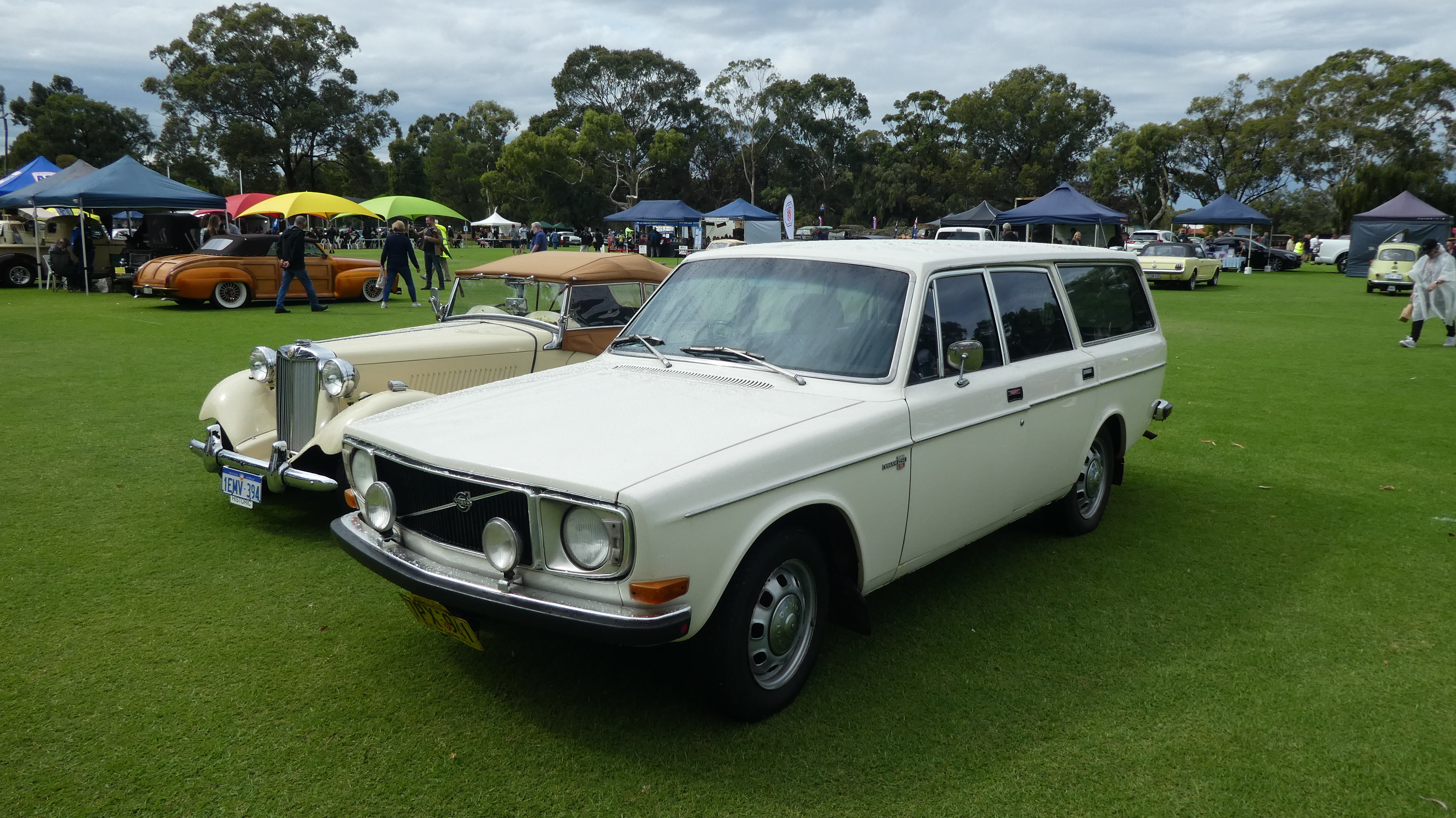
Volvo 140s
"like perfect score like mint yeah I was shocked because they use these in the 140s and then later in early 240 wagons"
The Volvo 140 is an older Volvo model line. The host is saying the same windshield washer pump design was used on those cars too.
The Volvo 140 series is a classic Swedish sedan platform that used the same washer pump hardware the host replaced. That matters because it shows the part’s compatibility across specific Volvo models/years.

Volvo 240 wagons
"yeah I was shocked because they use these in the 140s and then later in early 240 wagons as the rear washer motor"
The Volvo 240 wagon is an older Volvo station wagon. The host is saying the same washer pump type was used on early 240 wagons as well.
The Volvo 240 wagon (early years, as mentioned) is another classic Volvo platform that used the same rear washer motor/washer pump setup. This is useful when sourcing discontinued parts because it expands the donor-car pool.
rear washer motor
"they use these in the 140s and then later in early 240 wagons as the rear washer motor so um yeah pretty cool"
On some cars, the rear window has its own washer pump. If that motor fails, the rear sprayer won’t work even if the front works.
A rear washer motor is the pump that supplies washer fluid to the rear window sprayer, common on wagons. It’s separate from the front washer system in many designs, so a failure can affect only rear wiping.
DCOE 40s
"it's itg which is a good filter company it's a base plate made for dcoe 40s like standard dcoe 40s ... that's why it's called dcoe 40"
Weber “DCOE 40” is a type of carburetor. The “40” means the throttle opening is about 40 mm, so parts like gaskets and base plates have to be the right size to fit and seal properly.
“DCOE 40” refers to a specific Weber carburetor family and size: DCOE is the model series, and “40” is the nominal throttle bore diameter in millimeters. The speaker is matching a base plate and gasket to the throttle bores so the carburetor’s intake trumpets fit correctly.
base plate
"it's itg which is a good filter company it's a base plate made for dcoe 40s ... matches that Weber base plate the gasket that it came with"
A base plate is the adapter/mounting piece that sits between the air filter and the carburetor. If its holes aren’t the right size, the filter won’t line up cleanly with the carburetor openings.
A base plate is the mounting interface between an air filter element and the carburetor intake. In this case, the base plate has openings sized for the carburetor’s throttle bores and the intake trumpets, so incorrect hole diameters force awkward “modifying” workarounds.
gasket
"matches that Weber base plate the gasket that it came with the openings for the like um ... the gasket that was wrong ... I just used the luckily the gasket on there was not damaged"
A gasket is a thin sealing piece that helps keep air from leaking. If the gasket holes are the wrong size, the carburetor and air filter parts won’t line up right.
A gasket is a sealing sheet (often rubber or composite) that prevents air leaks between parts. Here, the gasket’s hole diameter determines whether the throttle bores and intake trumpets align correctly with the base plate, affecting fitment and clearance.
throttle bores
"for the uh bores so the throttle bores so whatever you want to call it ... openings ... should be 40 millimeter"
Throttle bores are the openings inside the carburetor that the throttle controls. If their size doesn’t match the parts you’re installing, the air filter adapter won’t fit correctly.
Throttle bores are the internal passages in a carburetor where the throttle plate moves, controlling how much air/fuel mixture flows. The speaker is concerned with bore diameter (38 mm vs 40 mm) because it dictates the correct size of the air filter base plate and gasket openings.
trumpets
"blanking now where you put the trumpets are ... the trumpets fit perfectly perfectly in the base plate"
On some carburetors, “trumpets” are the intake tubes that help feed air into the carb. They need the right clearance and opening size in the air filter/base plate so everything lines up.
In Weber carb setups, “trumpets” are intake tubes that sit at the carb throat to improve airflow and tuning. The speaker is describing how the trumpets fit through the base plate openings and how gasket/base plate mismatch can prevent clean installation.
aftermarket parts
"that's like I'm gonna email them this is this is the world of aftermarket parts right like every time you buy an aftermarket part that's supposed to be correct there's always that chance"
Aftermarket parts are parts made by companies other than the original manufacturer. Even if they’re supposed to fit your car, sometimes the measurements are slightly off and you have to adjust or reuse a different gasket.
Aftermarket parts are non-OEM components sold by third parties, often intended to be “correct fit” replacements. The speaker highlights a common issue: even when a part is marketed for a specific carb/carb size, small dimensional mismatches can require modification or swapping included gaskets.
air filters
"for the uh much cheaper like $30 air filters I had on there uh I just used those gaskets ... how can they not get this right"
The speaker is discussing aftermarket air filters and their compatibility with Weber carburetors. They note that cheaper filters can come with gaskets that have the wrong diameter, leading to fitment issues that may require reusing the correct gasket or modifying parts.
wing nut
"instead of having to spin off one wing nut it's like a quick uh it's like a speed fastener"
A wing nut is a nut you can tighten by hand because it has two “wings” you can grab. The speaker prefers a faster clip-style fastener for easier filter changes.
A wing nut is a hand-tightened fastener with protruding “wings” for grip. The speaker contrasts it with a quicker fastener/clip style used on other setups, emphasizing how hardware choice affects how easily the air filter can be removed or serviced.
itg sausage filters
"filter yeah so these two little itg sausage filters which they don't look as vintage but [2031.2s] they look they're like they're functional yeah I had an itg filter on my old yamaha yeah so"
These are aftermarket air filters. They’re shaped like little “sausages” and are meant to let the engine breathe better while still filtering dirt out of the air.
“ITG sausage filters” refers to a specific style of aftermarket air filter element used on some engines. They’re typically designed to improve airflow and filtration compared with stock setups, and the “sausage” shape is a recognizable form factor.

Mitsubishi Starion
"...a to uh our friend josh's place um to work on the starion he actually had requested to borrow my smoke mach..."
The Mitsubishi Starion is an older sports car from Japan, and many versions are turbocharged for extra power. Because it’s not a brand-new car, it can require hands-on repairs and maintenance. The podcast mention suggests someone is bringing it to a shop or a knowledgeable person to fix or work on it.
The Mitsubishi Starion is a classic Japanese sports car, best known for its turbocharged performance and driver-focused design. It’s the kind of car that often gets discussed in the context of repairs and mechanical work because owners may need to troubleshoot older systems or keep vintage components running. In the podcast, it’s specifically tied to taking the car to a friend’s place to work on it.
smoke machine
"[2091.2s] josh's place um to work on the starion he actually had requested to borrow my [2100.1s] smoke machine to try to figure out why his turboed 2.4 swapped second gen muddy max wasn't [2108.5s] running correctly so I brought my smoke machine down to him"
A smoke machine is a tool that pumps in harmless smoke to help find leaks. If something isn’t sealed, you’ll see smoke coming out and you can track down the problem.
A “smoke machine” is a diagnostic tool used to find air leaks in intake/vacuum systems or other sealed pathways. It fills the system with visible smoke so leaks show up quickly as smoke escaping.

Master Tech
"...own to him and also he is like a air conditioning master tech so we decided I would take the starion down there..."
In this podcast, “Master” seems to mean a highly skilled air-conditioning technician, not a car. The point is that the person working on the car has special training for the car’s A/C system. That helps when diagnosing or repairing cooling problems.
“Master” in the podcast context appears to refer to an air conditioning master technician, not a specific car model. The mention is about expertise—someone with specialized HVAC knowledge—being involved in work related to the Starion. That’s why it’s discussed: it connects the car’s service needs to the right kind of technician.
compression
"opened up a channel in between the two center [2139.2s] cylinders so that's why it was misfiring because there was 60 pounds of compression in each one of [2145.8s] them and 180 pounds in the front of the rear"
Here, compression means how much pressure each cylinder builds when the engine turns over. If one cylinder is much different from the others, it can point to an internal sealing problem like a head gasket.
In this context, “compression” refers to cylinder pressure measured during a compression test, typically reported in psi. Healthy cylinders should show relatively consistent pressure; a failed head gasket can create abnormal readings between cylinders.
r12
"[2179.6s] accomplished that uh I have a bunch of cans uh r12 and the car is an old r12 system so the first [2188.6s] thing we did was pressurize the system and see if it would hold pressure"
R-12 is the refrigerant fluid used in older car air conditioners. It’s harder to get today, so fixing an old system often means careful leak testing and sometimes converting to a newer refrigerant.
R-12 (often written “R12”) is an older refrigerant used in many vintage air-conditioning systems. Because it’s regulated and no longer commonly produced, modern repairs often require special handling or conversion to newer refrigerants.
pressurize the system
"the car is an old r12 system so the first [2188.6s] thing we did was pressurize the system and see if it would hold pressure and when we went to test [2195.1s] it right away it already held about three pounds of pressure from before we had even done anything"
They filled the A/C system to a test pressure to see if it leaks. If the pressure falls, that usually means there’s a hole or bad seal in the system.
“Pressurize the system” in A/C service means filling the refrigerant circuit to a test pressure so you can verify it holds. If pressure drops quickly, it indicates a leak somewhere in the lines, fittings, or components.
free on
"so instead of trying to figure it out we're like well we figured it we filled it with free on [2230.6s] we did test the we jumped the compressor to see if it would work initially make sure that it pulled"
Freon is the special fluid that makes a car’s air conditioner work. It’s put into the AC system, and if there’s a leak you may notice the AC stops working or the refrigerant smell shows up.
“Freon” (often said as “free on”) is a refrigerant used in many older automotive air-conditioning systems to move heat from inside the cabin to the outside. The host is pressurizing the AC system with refrigerant and then checking whether the compressor and cooling cycle behave normally.
compressor
"we did test the we jumped the compressor to see if it would work initially make sure that it pulled [2237.7s] in and everything was functioning everything was free spinning"
The compressor is the part that “moves” the refrigerant through the air conditioner. If it won’t run, the AC can’t cool even if other parts are okay.
The AC compressor is the pump that pressurizes the refrigerant so it can circulate through the system and absorb/release heat. In the segment, they “jump” the compressor to verify it can run and that the system can make cold air when powered.
keyed power
"and just ran it to keyed power and put the ac in the car on and the car made ice cold air [2253.6s] the on the temp gauge the little ir temp gun it was 29 degrees Fahrenheit"
Keyed power is electricity that turns on when you turn the key to ON. It’s a way to test a component using the same power it would normally get while driving.
“Keyed power” means electrical power that’s available only when the ignition switch is in the ON position (not constant battery power). The host powers the AC system by running a jumper to keyed power to see if the compressor will run and cool the cabin.
high pressure switch
"most ac systems or all ac systems have a high pressure switch so that if the pressure the pressure is [2282.2s] wrong it says it won't turn on right traced all the lines could not find the high pressure switch"
This is a sensor that protects the AC. If the refrigerant pressure isn’t in a safe range, it can stop the AC from turning on.
A high pressure switch is a safety/control sensor in an AC system that prevents operation if refrigerant pressure is too high (or sometimes too low, depending on design). The host can’t find this switch and suspects it may be why the AC won’t turn on with the in-car switch, even though the system can cool when forced.
evaporator
"where the pressure switch is [2322.4s] is it on the valve on the evaporator it's core on the dash yeah [2329.3s] which is an incredibly odd place to find it normally it's way up front near the the dryer"
The evaporator is the part inside the car where the refrigerant gets cold and absorbs heat from the cabin air. That’s what helps the AC blow cold air.
The evaporator is the AC heat-exchanger inside the cabin area where refrigerant expands and absorbs heat, producing the cold air you feel. The host says the pressure switch is on the valve on the evaporator core, which is unusual compared with the more typical placement near the dryer or accumulator.
dryer
"normally it's way up front near the the dryer [2334.8s] or the accumulator or somewhere up there"
The dryer is a small AC component that helps keep the refrigerant clean and dry. It’s usually part of the front-end of the AC system.
In automotive AC systems, the dryer (often called an accumulator/drier depending on layout) is a component that helps manage refrigerant by filtering contaminants and removing moisture. The host contrasts the unusual location of the pressure switch with the more typical placement “near the dryer.”
accumulator
"or the accumulator or somewhere up there [2334.8s] um uh anyway it's not it's not impossible to get to"
The accumulator is a tank-like part in the AC system that helps control refrigerant flow so the compressor isn’t harmed. It’s often located near the front of the system.
An accumulator (in many AC designs) is a reservoir that helps regulate refrigerant flow to the evaporator and can prevent liquid refrigerant from reaching the compressor. The host mentions the pressure switch is normally found near the dryer or accumulator, implying common sensor placement in that region.
ac system
"the important thing is is that the ac system works essentially it makes ice cold air um below ice cold air 29 degrees to be factual so it was a very pleasant to drive home"
AC system just means the car’s air conditioning. It’s what cools the air inside the cabin so you’re not roasting in the heat.
The AC system (air conditioning) is the car’s climate system that cools cabin air. When it’s working correctly, it can maintain very low temperatures even in hot weather, which is why the host notes it made “ice cold air.”
head out
"josh's truck is 100 fixed and runs so he sent the head out had a plane and put the gasket in"
“Sending the head out” means taking the engine’s top part off and having a shop inspect and fix it. This helps the engine seal correctly after a gasket replacement.
“Sending the head out” usually means removing the engine cylinder head and having it serviced by a machine shop. Common work includes resurfacing or checking for warping so the gasket can seal properly again.
title
"they came back and they're like hey your mileage is wrong either or your title or your dashboard"
The title is the official document that proves who owns the vehicle. If the title info doesn’t match the car’s details, it can slow down or complicate selling.
A vehicle title is the legal ownership document for a car or truck. The host notes the auction platform flagged an issue with the title, implying the vehicle’s recorded details (like mileage) may not match the listing or the dashboard.
mvd
"the local dmv or here it's called the mvd must have either fat fingered"
MVD is the local government office that deals with car registration and title paperwork. The host thinks it may have been entered incorrectly.
“MVD” is the local name for the government motor-vehicle agency that handles registration and title records (the host contrasts it with “DMV”). The host suspects the agency entered the wrong digits during registration.
local dmv
"so i looked into it and it looks like when i registered the car here the local dmv or here it's called the mvd must have either fat fingered"
DMV is the government office that handles car registration paperwork. If they enter the wrong numbers, the title and records can end up incorrect.
DMV (Department of Motor Vehicles) is the government office that handles vehicle registration and licensing. The host says the local DMV (or their local equivalent, “mvd”) may have entered the wrong numbers when registering the car.
DMV car
"so unlike your Volvo this car is not a dmv car it's a true 84 000 mile car which i think is important"
“DMV car” here appears to mean a car whose mileage history is tied to administrative records rather than a consistent, verifiable odometer reading. The host contrasts it with a “true” mileage car, implying the dashboard reading is expected to align with the documented mileage.
speedometer cable
"so i had the idea that i could pull the speedometer cable from the transmission and chuck it up in a drill and do the opposite of what a shi used car salesman would do and add miles to the car"
On some older cars, the speedometer doesn’t get its speed electronically. Instead, a cable connects the transmission to the dashboard gauge to show how fast you’re going.
A speedometer cable is a mechanical link that carries the rotation of the transmission’s output to the speedometer head on the dashboard. Some older cars use this cable instead of an electronic speed sensor, so it can be physically manipulated to change what the gauge reads.
gear reduction
"i mean there's no gear reduction either at that point because you're running right off the drill but still it was a bit surprising that it was like 57 or 58 miles an hour"
Gear reduction is when gears make something spin slower but with more pulling power. If there’s no gear reduction, the output speed tends to track the input speed more directly.
Gear reduction is when a drivetrain uses gearing to trade speed for torque—spinning the wheels slower while multiplying force. The host notes there’s no gear reduction at that point because the system is effectively running directly off the drill, which affects how fast the output should be.
disc brake conversion kit
"yeah oh yeah so i alluded to it earlier um the aftermarket parts scenario uh she bought a disc brake conversion kit for the car and first of all the instructions are horrible"
It’s a set of parts you buy to change a car from using drum brakes to using disc brakes. The goal is usually better stopping power and more consistent braking.
A disc brake conversion kit is an aftermarket package that replaces (or upgrades) a car’s original braking setup—often drum brakes—with disc brakes. It typically includes brackets, mounting plates, rotors, calipers, and hardware so the new system can bolt on and work with the existing parts.
mounting plates
"but it's okay we got through it first mistake we realized was that the mounting plates are stamped l and r but they're backwards oh yeah so that took entirely too long to figure out"
Mounting plates are the parts that hold the brake hardware in the right spot. If they’re put on the wrong way, the brakes can end up misaligned even if the bolts go in.
Mounting plates are the metal brackets/plates that position brake components (like calipers or rotor hardware) at the correct location relative to the wheel hub. If they’re labeled incorrectly or installed flipped, the bolt pattern may still “fit,” but the brake geometry and alignment can be wrong.
bolt pattern
"but and the bolt pattern that's on them the four bolt bolt pattern is perfectly square so they'll go on either side"
A bolt pattern is how the bolt holes are laid out on a part. Two parts might share the same hole spacing, so the bolts go in, but the part can still be installed the wrong way.
A bolt pattern is the specific arrangement of bolt holes (their spacing and geometry) used to attach a component. In brake conversions, a “square” bolt pattern can make parts physically interchangeable, even when the left/right orientation matters for correct flange direction and alignment.
rotor
"usually the rotor [2900.1s] or sorry an older car the rotor has the bearings in it"
A rotor is the metal disc that spins with the wheel. When you press the brake pedal, the pads squeeze the rotor to slow the car.
In disc brakes, the rotor is the spinning metal disc the brake pads clamp onto to slow the car. The speaker also describes an older design where the rotor and bearings are part of the same assembly, which affects how you service or fit components.
rear wheel drive
"obviously you've done a rear wheel drive car as front brakes before usually the rotor [2900.1s] or sorry an older car the rotor has the bearings in it"
Rear wheel drive means the car’s power goes to the back wheels. Because of that, some parts around the rear wheels—like brake and wheel hardware—can be different than on front-wheel-drive cars.
“Rear wheel drive” means the engine’s power is sent to the rear wheels. That layout changes how suspension and brake hardware are packaged, so parts like the rotor/bearing setup can differ from front-wheel-drive cars.
bearings
"yeah it's all part of one assembly yeah it's an older style yeah yeah it's the older style [2905.1s] rear wheel drive car yeah so the bearing for the inside doesn't sit tight on the spindle"
Bearings are the parts that help the wheel spin smoothly. If the bearing doesn’t fit correctly on the spindle, the wheel can’t sit right and the brake/rotor setup won’t work as intended.
Bearings are the components that let the wheel/axle rotate smoothly while supporting loads. Here, the key issue is that the bearing’s fit on the spindle (and whether it’s integrated with the rotor on older cars) determines whether the assembly sits correctly.
spindle
"so the bearing for the inside doesn't sit tight on the spindle [2916.1s] like the spindle was how many are you gonna say numbers"
The spindle is the part the wheel bearings mount onto. It’s what positions the wheel assembly correctly, so if the bearing doesn’t fit the spindle properly, things won’t line up.
A spindle is the shaft/hub surface that the wheel bearings mount onto, and it locates the wheel assembly in the correct position. The discussion centers on whether the bearing is supposed to “ride” on the spindle tightly—if it doesn’t, the wheel/brake geometry and fitment can be wrong.
Kelsey Hayes disc brakes
"this kit [3009.4s] is specifically designed to fit a 14 inch wheel I don't know if you've heard the term like Kelsey [3015.4s] Hayes disc brakes that's what they are"
Kelsey-Hayes disc brakes are a brand/style of disc brake hardware. The important part here is that the caliper and brake lines are shaped and placed in a way that can affect whether certain wheel sizes fit.
Kelsey-Hayes disc brakes refer to a specific brake hardware style associated with the Kelsey-Hayes supplier. In this setup, the speaker describes a four-piston caliper and the brake line routing that can interfere with wheel clearance.
four piston caliper
"that's what they are that's the style of brake it is so it's a four piston caliper [3015.4s] it has a hose or a brake line a metal line that goes from side to side"
A four-piston caliper is the brake clamp that squeezes the brake pads. With more pistons, it can apply braking force more evenly, but it can also take up more space near the wheel.
A four-piston caliper uses four hydraulic pistons to clamp the brake pads against the rotor. More pistons can provide stronger, more even pad pressure, but it also increases packaging complexity—especially around wheel clearance and brake line routing.
brake line
"it has a hose or a brake line a metal line that goes from side to side to make the pistons and [3022.8s] both sides go out but that hose is not very tight sorry that metal line is not very tight to the [3031.9s] caliper it sticks up a little bit and it fouls the 14 inch wheels"
A brake line carries brake fluid to the brake caliper. If the line is routed in a way that sits too close to the wheel, it can physically interfere when you install the wheels.
A brake line is the fluid-carrying line that sends hydraulic pressure from the master cylinder to the caliper pistons. The speaker notes that the metal line’s position can “stick up” and foul (hit) the wheel, which is a fitment/clearance problem rather than a braking-performance problem.
fouls
"it sticks up a little bit and it fouls the 14 inch wheels now is that frustrating 100% [3041.7s] and I 100% blaming that in the company"
To “foul” means something hits or rubs against something else. In this case, the brake hardware is close enough to the wheel that it can interfere and cause fitment problems.
To “foul” in this context means a component physically interferes with another part during installation or operation. Here, the brake line/calliper area interferes with the inside barrel of the wheel, preventing proper clearance for the 14-inch wheels.
aftermarket wheels
"aftermarket wheels they're the the western vectors so they might have a different style inner barrel than an OEM wheel does so maybe I won't blame that 100% on them but it does mean that"
Aftermarket wheels are wheels you buy from a company other than the car maker. They can be shaped a little differently than the factory wheels, so they sometimes need extra fitting work to clear brakes or suspension parts.
Aftermarket wheels are wheel sets made by companies other than the vehicle’s original equipment manufacturer (OEM). They can differ in dimensions and shape—like the inner barrel—so they may not fit exactly like stock wheels without clearancing or other adjustments.
western vectors
"aftermarket wheels they're the the western vectors so they might have a different style inner barrel than an OEM wheel does so maybe I won't blame that 100% on them but it does mean that"
Western Vectors is the name of the wheel brand. The speaker thinks this brand’s wheel shape might not match the factory wheel’s fitment exactly.
Western Vectors is the wheel brand being referenced. The host is implying that this specific wheel design may have a different inner barrel shape than OEM wheels, affecting brake clearance.
OEM wheel
"inner barrel than an OEM wheel does so maybe I won't blame that 100% on them but it does mean that I'm going to have to figure out a way to either bend them down or take them out completely"
OEM just means the factory-made part. The speaker is comparing the aftermarket wheel to the factory wheel to figure out why it might not fit the brakes the same way.
OEM means “original equipment manufacturer,” i.e., the parts the car came with from the factory. OEM wheels have known fitment dimensions, so comparing an aftermarket wheel’s inner barrel to an OEM wheel helps explain why brake clearance issues can happen.
Request an Explanation
Heard something you'd like explained? We'll add it to this episode.
Sign in to request explanations for terms you heard.
Want to learn more?
Browse our glossary for plain-English explanations of automotive terms, jargon, and concepts.
Help improve this episode
See something that's not quite right? Our annotations are AI-generated and can sometimes miss the mark. Click the flag icon on any annotation to suggest a correction.