
About this episode
Project-car progress takes center stage as the hosts swap wheels and wait on filters, then dig into Weber carb intake fitment and Volvo temperature-sensor thread adapters. The conversation widens into classic-car and listing sleuthing—AI-written ads, pre-war definitions, and guessing models from engine clues—before landing on hands-on suspension and exhaust leak troubleshooting. Between wrenching stories, they also talk ADHD-fueled hyperfocus, decluttering a Porsche 944, and even an RC build, plus NASCAR heat-management and drafting strategy.
We're back for another week. Andrew is painfully close on driving the Volvo, Brad did way more project car projects than he realized. We also simp again this week for the Prime NASCAR broadcast and we played a nice game of Craig Craig don't tell me. With what we think is the first AI description we've seen on Craiglist.
Please Rate, review and subscribe to the podcast on your favorite listening platform. Comments, Questions, complaints; email us at [email protected]
Join the Discord, message us on the socials for a link.
Keep your cars analog and Aim for the Roses!

Ford Bronco
"don't go off the bar with your Bronco 1980 Volvo horns what's right man's coolant he's like"
They mention a 1980 Bronco, which is a classic Ford SUV. They’re using it as a funny example of a big, old-school vehicle.
The host name-drops a 1980 Ford Bronco, an early-generation SUV known for its boxy styling and off-road roots. In the context of the joke, it’s being used as an example of a “big” vehicle.
coolant
"Bronco 1980 Volvo horns what's right man's coolant he's like oh I thought I'd be small it's for a small car"
Coolant is the fluid that helps keep the engine from overheating. It circulates through the engine and radiator to manage temperature.
Coolant is the liquid used to carry heat away from the engine and keep operating temperatures under control. If coolant is wrong or low, engines can overheat and suffer damage.
automatic transmission
"but it's still an automatic transmission they're never gonna be light"
An automatic transmission is the type of gearbox where the car shifts gears for you. You don’t have to use a clutch pedal to change gears.
An automatic transmission is a gearbox that changes gears without the driver using a clutch pedal. The host is implying it won’t be “light,” which is a common enthusiast observation when comparing drivetrain weight and feel.
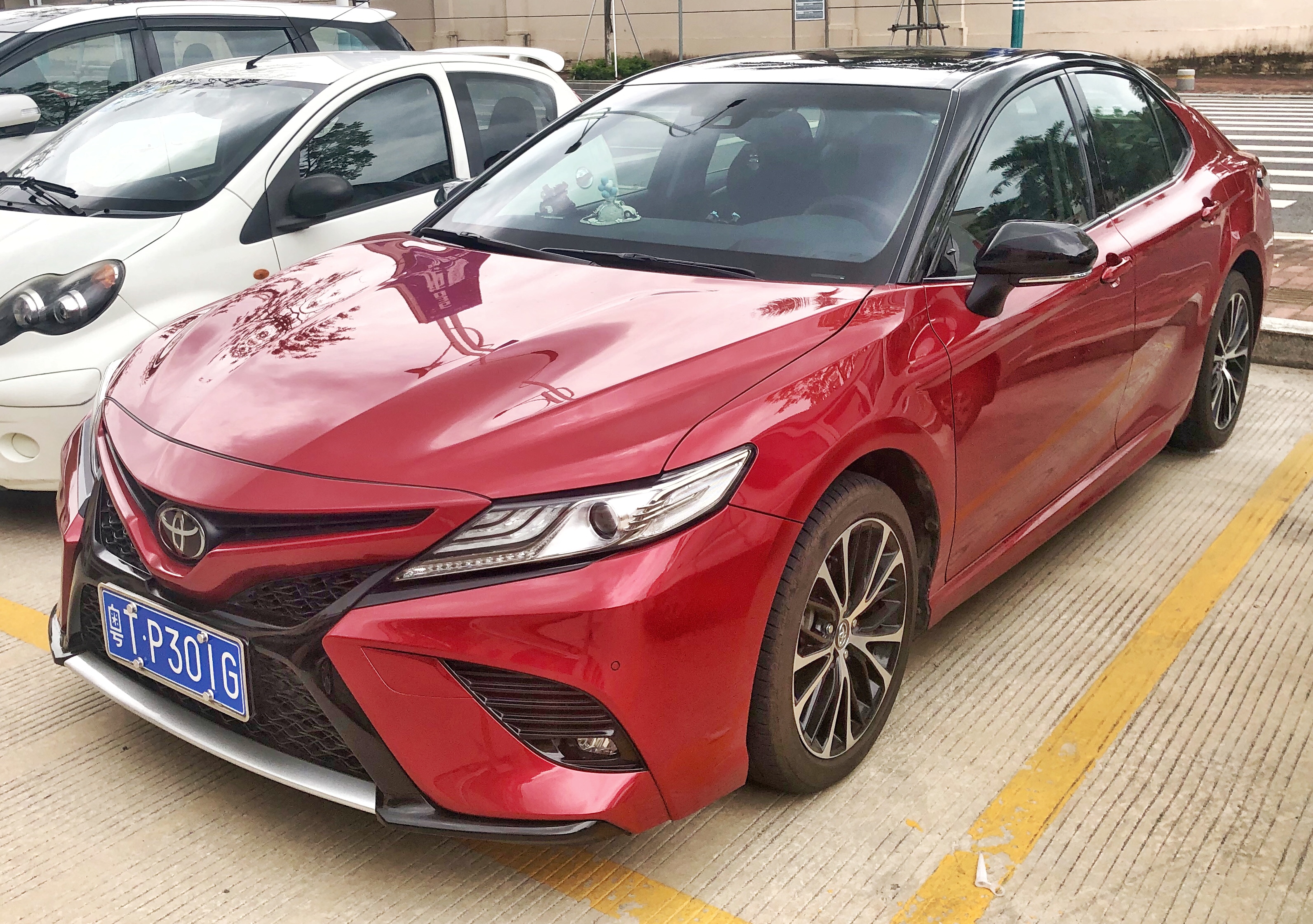
Toyota Camry
"... a Nigerian oil print I also wish you drove a tan Camry anyways that's a very horrible podcast content ve..."
The Toyota Camry is a regular everyday car (a sedan) made for comfort and easy driving. People talk about it a lot because it’s common and generally dependable. In the episode, it’s just referenced as a specific Camry someone wished they had.
The Toyota Camry is a mid-size sedan known for being practical and comfortable for everyday driving. It often comes up in conversations because it’s a common, reliable family car and a frequent choice for long-term ownership. In the podcast context, it’s mentioned as a “tan Camry,” likely as a specific example of a car someone wished they drove.
oil changed
"I the oil changed in the Volkswagen because I've just been busy"
An oil change means replacing the engine’s oil. It keeps the engine lubricated and helps prevent wear.
An oil change is the scheduled replacement of engine oil and (usually) the oil filter. It’s one of the most important maintenance tasks because oil lubricates moving parts and helps carry away heat and debris.
tires and wheels
"I threw the tires and wheels for the Volvo in the back of the car and had them mount them for me so that's all set I just gotta put them on the car"
They’re talking about changing the tires and wheels. Tires affect traction and ride, and wheels affect the car’s fit and stance.
“Tires and wheels” refers to the rubber contact patch (tires) and the rim/hub assembly (wheels). Swapping them can change grip, ride comfort, steering feel, and even the look of the car.
filters
"I got the shorter filters still waiting for the other filter which is annoying that's coming I asked them this is the 24th it's kind of annoying but I was a little worried the trumpets in there were a little too tall for the height of the filter because I"
They’re waiting for some filters and checking whether the parts inside will fit. With car filters, the shape and height can affect whether everything clears and mounts correctly.
The host is waiting on “filters,” and then worries about whether the “trumpets” inside are too tall for the filter height. That suggests they’re dealing with an intake/air-filter setup where physical clearances matter for fitment and airflow.
trumpets
"technically supposed to have like some distance between the trumpet and and the filter and they're like basically right up against the inside of the filter at [176.0s] like one and a half inches so I got one inch trumpets just to give a little extra space there"
On a carburetor intake, “trumpets” are like tuned intake tubes. Changing their size can change how the engine pulls air, and it can also help fit everything under the hood.
In carbureted setups, “trumpets” are the intake trumpets that shape airflow into the carburetor. Their length and diameter affect how the engine breathes at different RPMs, which is why changing trumpet size can help clearance and tuning.
chokes
"the trumpets that they send just like the chokes that I changed out are in [191.7s] much like much nicer than what comes in the original carbs"
A “choke” in a carburetor is a part that controls how air flows into the engine. Changing it can change the fuel/air mix so the car runs better.
In carburetors, “chokes” are the restriction/venturi elements that control airflow and fuel metering. Swapping chokes changes the mixture behavior, especially across throttle openings and engine speeds.
Weber
"if you need Weber parts definitely look up it's carparts.eu and they'll just ship"
Weber is a company that makes performance carburetors. People often upgrade or replace parts on Weber carbs to improve how the engine runs.
Weber is a well-known carburetor brand, famous in enthusiast circles for performance tuning. The speaker is talking about sourcing Weber-specific parts (and “clones”) to keep a carb setup running and tuned.
carparts.eu
"if you need Weber parts definitely look up it's carparts.eu and they'll just ship"
carparts.eu is an online shop the host uses to buy specific carb parts. The point is that it’s a source for parts that are otherwise difficult to track down.
carparts.eu is the retailer the host recommends for Weber carburetor parts. The key point is that they’re sourcing specific carb components (including trumpet/choke-related parts) that are hard to find elsewhere.
Pegasus auto racing
"because I think really the only other place to get Weber parts is like Pegasus auto racing which is where I'm getting the filters for them."
Pegasus Auto Racing is a racing/enthusiast parts store. The host mentions it because they can get the filters they need for their carb setup there.
Pegasus Auto Racing is an enthusiast parts retailer the host mentions as another source for Weber-related components. In this segment, it’s specifically brought up as a place to get filters for the carb setup.
ITG
"the ones I found on Pegasus were made by ITG the same as the filter"
ITG is a brand that makes air filters. The host is saying the filter-related parts they found were made by ITG, which matters for fit and quality.
ITG is a filter brand. Here, the host says the shorter trumpets they found on Pegasus were made by ITG, implying the filter/trumpet components are from the same manufacturer line.
NPT
"a it's not NPT thread it's 5 eighths dash 18 so it's just a standard thread"
NPT is a common screw-thread standard used for pipes and some fittings. The host is saying the sensor connection on this engine isn’t the usual NPT type, so they need an adapter so a different sensor can screw in.
NPT (National Pipe Thread) is a standardized tapered pipe-thread type used for many plumbing and some automotive sensor fittings. In this segment, the host is saying the sensor port isn’t NPT, but a different thread size/standard, so adapters are needed to fit common sensors.
5 eighths dash 18
"a it's not NPT thread it's 5 eighths dash 18 so it's just a standard thread"
That “dash” number is part of how screw threads are sized. The host is pointing out the sensor fitting uses a specific thread size, and that mismatch is what makes normal sensors not fit without an adapter.
“5 eighths dash 18” is a thread-size notation describing the diameter and pitch of the fitting. The key point here is that the sensor port uses a specific thread spec that doesn’t match the more common NPT sensor fittings, which is why an adapter is required.
Volvo
"which is extremely unusual sensor thread like only for red blocks only for [319.4s] Volvo so a guy on eBay sells an adapter that lets you thread into the head"
Volvo is the car brand the host is working on. They’re saying Volvo’s engine uses a special sensor-thread type, so normal aftermarket sensors may not screw in without the right adapter.
Volvo is mentioned here because the host says the sensor thread spec is unusual and appears to be specific to certain Volvo engines (the “red blocks”). That matters because it drives the need for a thread adapter so aftermarket sensors and gauges can physically fit and read correctly.
red blocks
"which is extremely unusual sensor thread like only for red blocks only for [319.4s] Volvo so a guy on eBay sells an adapter"
“Red blocks” is a nickname for a Volvo engine family. The host is using it to say that only certain Volvo engines use the special sensor-thread type they’re trying to adapt.
“Red blocks” is an enthusiast nickname for Volvo’s inline-cylinder engine family (named for the engine’s common red-painted appearance in many applications). In this context, it’s used to indicate which Volvo engines share the unusual sensor-thread standard the host is dealing with.
gauge cluster
"so don't have to worry about the gauge cluster in [368.6s] the in the dash anymore and then I ordered a couple extra gauge clusters"
A gauge cluster is the dashboard unit with the fuel and temperature meters. The host is saying their gauges aren’t reading correctly, so they’re trying replacement clusters to get the readings back.
A gauge cluster is the instrument panel assembly that houses the driver-facing meters (like fuel and temperature) and the electronics that drive them. The host is troubleshooting non-working fuel/temp readings and is considering swapping used gauge clusters to restore correct indications.
resistance
"because the gauges in the car don't [382.6s] seem to have any resistance and not really working"
Here, “resistance” means how electricity flows through the sensor. If the sensor isn’t giving the gauge the right electrical signal, the needles won’t move properly (or will sit at the wrong spot).
In this context, “resistance” refers to the electrical resistance values used by sensors and senders (often variable resistors) to communicate fuel level and temperature to the gauge. If the gauge circuit doesn’t see the expected resistance change, the needles can stay at rest or read incorrectly.
overheated and blew up
"I'm like this [420.7s] these just not work and that's why the car was overheated and blew up"
The host is saying the car overheated and the engine failed. Their theory is that the temperature gauge wasn’t reading correctly, so they didn’t catch the overheating in time.
The host is linking incorrect fuel/temperature gauge behavior to an overheating event that led to catastrophic engine failure (“blew up”). The underlying idea is that if the temperature indication is wrong or the sensor/gauge isn’t working, the driver may not realize the engine is overheating until damage occurs.
Momo
"so you'll kind of change the steering wheel probably do something a little more period cool [559.4s] even I thought of what you're doing for a steering wheel probably some Momo some [565.7s] wood with aluminum oh wooden wheel okay yeah I think they look cool"
Momo is a company that makes racing-style steering wheels. People like them because they look cool and feel good to drive, especially on older or modified cars.
Momo is an Italian motorsport and aftermarket brand best known for steering wheels and other driver-focused parts. Enthusiasts often choose Momo wheels for their look and grip, especially when swapping from a factory wheel in a project car.
three spoke
"there the Indy's the one with the three holes in the in the spokes yeah yeah [593.8s] three spoke three holes in the spokes aluminum I think that one has a little [599.0s] dish to it too which would help"
A three-spoke steering wheel has three main spokes connecting the rim to the center hub. This is often chosen for a cleaner, more classic look, and the spoke layout can also change how you see the instrument cluster and how your hands sit while driving.
Monte Carlo
"it looks [603.9s] very much like the Monte Carlo yep but then the Monte Carlo is flat I think [611.3s] that's the difference yeah maybe I know I know the money I have is flat no the"
Monte Carlo is the name of another steering-wheel style they’re comparing. They’re saying one is flatter, and the other has a slight curve that can change how it feels to sit behind the wheel.
“Monte Carlo” here refers to another steering-wheel design/variant being compared against the Momo Indy. The key point in the discussion is the shape difference: the Monte Carlo is described as “flat,” while the Indy has a slight dish.
dish
"very slight dish are the flat [677.4s] dish 37 350 millimeter yeah I have a pro tipo sitting around to put in the"
“Dish” is how the wheel’s face is shaped—whether it sits in a little or sticks out. They’re saying this wheel has a small amount of that shape.
Wheel “dish” describes how far the wheel’s face is recessed relative to the hub mounting surface. A “slight dish” means the wheel sits with a subtle inward/outward profile, affecting stance and how the wheel clears suspension and brakes.
adapter
"I have a pro tipo sitting around to put in the [690.1s] staring on eventually so I just keep forgetting to buy the adapter for it yeah [738.1s] right adapter to I think I had it save somewhere on my tabs"
A wheel adapter is a spacer-like mounting piece that changes how a wheel fits—typically to match bolt pattern, center bore, or offset. In this segment, they mention needing the “right adapter” to mount the wheel properly.
buffing
"I changed the oil in the starry from [766.0s] the road trip I finished buffing it and then I waxed [772.8s] it and it's actually hard to look at in the sun"
Buffing is polishing the paint to make it look smoother and shinier. They’re saying the car came out really bright after they did it.
Buffing is polishing the paint surface to remove light scratches, oxidation, and swirl marks. In this segment, they buff and wax a white car, noting it looks extremely bright in the sun.
exhaust leak
"I am incredibly stoked so I have a couple more things to [786.0s] do I found the exhaust leak or at least the main exhaust leak and it is 100%"
An exhaust leak means some of the car’s exhaust gases are escaping where they shouldn’t. It can make the car louder and may cause fumes or warning lights.
An exhaust leak is escaping gas from a crack, loose connection, or failed gasket in the exhaust system. It can cause louder noise, smell, and sometimes check-engine lights, and it’s often found at joints like flanges or near the manifold.
exhaust manifold
"I forgot to put the last nut on the exhaust manifold so the lower lower exhaust manifold by the firewall the lower nut by the firewall I started the car was cold..."
The exhaust manifold is the engine’s “collection box” for exhaust gases. If something isn’t tightened correctly there, hot exhaust can leak out before it reaches the rest of the exhaust system.
The exhaust manifold is the part bolted to the engine that collects exhaust gases from the cylinders and routes them toward the rest of the exhaust system. If a fastener is missing or loose, exhaust can leak at the manifold and create a noticeable problem, especially on a cold start.
turbo back
"The car still does need an exhaust but I'm really trying to hold off until I replace the turbo eventually so that I could just do a full new turbo back all at once..."
“Turbo-back” means replacing the exhaust parts starting at the turbo and continuing to the back of the car. It’s done so the whole system works together, especially when you’re changing the turbo.
“Turbo-back” refers to replacing the exhaust system from the turbocharger outlet all the way to the rear of the car. It’s a common upgrade/repair strategy because it ensures all the sections match and you don’t have to redo work later when you change the turbo.
muffler
"because it is a giant wrought hole in the side of the muffler but it doesn't sound bad so I haven't concerned myself with it..."
The muffler is the part that makes the car quieter. If it has a big hole, it can let exhaust noise escape more easily.
A muffler is the exhaust component designed to reduce noise by using internal chambers and baffles to slow and redirect exhaust flow. A damaged muffler (like a hole) can change sound levels and may also affect exhaust flow and backpressure.
leaf springs
"…we do have new possibly have new leaf springs for the rear and go through the rear brakes and make sure everything's as fresh as the front…"
Leaf springs are the spring system in the suspension that uses curved metal strips stacked together. They help the car ride smoothly and keep the wheels in contact with the road. Here, they’re talking about replacing them to fix or refresh the rear suspension.
Leaf springs are a type of suspension spring made from stacked, curved metal strips. They’re commonly used on the rear of older trucks and some classic cars because they’re durable and can handle heavy loads. In this project, the host is considering new leaf springs to refresh the rear suspension.
upper and lower control arm
"…all the cars have the same spring setup it's a upper and lower control arm with a spring that sits on the top of the upper control arm…"
Control arms are the metal links that hold the wheel in the right position. Having an upper and a lower one helps the wheel move up and down in a controlled way. In this car, the spring is mounted in relation to the upper control arm.
Control arms are suspension links that locate the wheel and control its movement. An upper and lower control arm pair helps define the wheel’s angle and travel as the suspension moves. The host describes an early-60s front setup where the spring sits on the upper control arm and interfaces with the fender structure.
strut
"…goes up to the top of like this I can't call a strut tower because there's no strut but what would be a strut tower…"
A strut is a suspension part that combines a shock absorber and a spring into one assembly. The host is saying this car doesn’t use that style, so the top mounting area isn’t a typical “strut tower.” That affects how the spring gets installed.
A strut is a suspension design where the shock absorber and spring are integrated into one unit that also helps support the vehicle’s structure. The host says they can’t call the area a “strut tower” because there’s no strut in this setup, implying a different front suspension architecture. This distinction matters because it changes how the spring is mounted and what tools/procedures you use.
shock bolts
"…you bolt it to the top of the shock hat and you use the shock bolts to hold the top of it and then this giant rod is threaded…"
Shock bolts are the bolts that hold the shock absorber’s top mounting parts together. When you’re compressing the spring, those bolts help secure the tool so the spring can be installed correctly. The host is describing that exact step.
Shock bolts are the fasteners that secure the shock absorber’s top mounting hardware. In spring-install procedures, they’re used to clamp the tool’s upper bar in place so the spring can be compressed safely. The host specifically mentions using the shock bolts to hold the top of the spring-compression tool assembly.
shock hat
"…you put another straight bar you bolt it to the top of the shock hat and you use the shock bolts to hold the top of it…"
The shock hat is the top mount area for the shock absorber. When you install or remove the spring, you often need to attach the tool to the top of the shock assembly. That’s what the host is describing here.
A shock hat is the top mounting component for a shock absorber assembly. It’s the part the spring tool references when you’re compressing the spring and aligning the shock/spring package. The host uses it to explain how the special tool bolts to the top of the shock assembly during spring installation.
upper control arm
"it high enough so that you can slip the upper control arm between it and the frame rail to get it in the pocket and then you also have two bolts on the back of the control arm"
An upper control arm is a metal link that helps hold the wheel in the right position. It also guides how the wheel moves when you hit bumps so the car stays aligned.
The upper control arm is a suspension link that locates the wheel and controls its movement relative to the car’s body. In many front suspensions, it works with other arms and joints to keep alignment stable while the suspension travels.
frame rail
"it high enough so that you can slip the upper control arm between it and the frame rail to get it in the pocket"
The frame rail is a strong metal part of the car’s body that other parts bolt to. Suspension pieces attach to it, so lining everything up correctly helps the suspension work as designed.
A frame rail is a structural beam (part of the vehicle’s chassis) that suspension components mount to. When installing suspension parts, getting the arm into the correct pocket and alignment relative to the frame rail matters for proper fitment and geometry.
ball joint
"those up plus the ball joint it is I don't know if we did it wrong I don't think so it's way harder than it feels like it needs to be"
A ball joint is a pivot that lets the suspension move while keeping the wheel attached. If it’s not seated or aligned right, the suspension can feel wrong or bind.
A ball joint is a pivot that allows the suspension to move through its range while still supporting the wheel. It’s typically part of the steering/suspension linkage, so incorrect seating or alignment can cause binding or uneven movement.
tension the spring
"but she was struggling because every time she would tension the spring or compress the spring it wouldn't go straight it would get up to a certain point and the spring would start curving"
When they say “tension the spring,” they mean compressing it with the tool so it can be installed. If it compresses unevenly, it can tilt and not line up with the mounting points.
Tensioning a coil spring during installation means compressing it with a tool so the spring can be positioned onto its seats. The goal is to compress it evenly so it stays aligned and doesn’t “walk” sideways while you tighten everything down.
spring compressor
"so I was like well we can use this spring compressor and I can get out the McPherson compressors and put it on one side of the spring and put it on that front leading edge of the spring and carefully we can tension them like"
A spring compressor is a tool that squeezes the coil spring so you can fit it into place. If it’s positioned wrong, the spring can tilt or bend, making the job harder and less safe.
A spring compressor is a tool used to safely compress a coil spring so you can remove or install the spring and related suspension components. Using it incorrectly can cock the spring, causing it to bend or sit crooked, which can make installation much harder and potentially unsafe.
McPherson compressors
"so I was like well we can use this spring compressor and I can get out the McPherson compressors and put it on one side of the spring"
These are spring-compressor tools used for a McPherson strut setup. They’re meant to squeeze the spring in a controlled way so it goes in straight.
“McPherson compressors” refers to spring-compressor tools commonly used for McPherson strut suspensions, where the spring sits around/near the strut. The tool design helps compress the spring evenly so it can be installed without cocking it.
clearance issues
"so the only thing we're waiting for now as far as the front goes is I think I talked about the clearance issues with the brake lines"
Clearance issues are when two parts are too close together. With brake lines, that can be a problem because the suspension moves and the line could rub or get damaged. They’re addressing that by getting the correct brake line routed properly.
Clearance issues mean parts are too close to each other for safe operation—especially under suspension travel, steering movement, or heat expansion. Brake lines are particularly sensitive because they must avoid rubbing on tires, wheels, or suspension components. In this segment, the host says they previously discussed clearance problems with the brake lines.
crossover brake line
"to see if they can send us a replacement line for the crossover brake line on the caliper because that one was clearly bent in the wrong way"
A crossover brake line is a metal brake hose/pipe that carries brake fluid between parts of the brake system. If it’s bent wrong, it may not sit correctly or could rub against something. They’re trying to get the correct replacement so the brakes are routed safely.
A crossover brake line is a brake hydraulic line that routes fluid between sides of the brake system, often to connect components like calipers or to balance/route the plumbing. If it’s bent the wrong way, it can interfere with fitment, clearance, or routing, and that can create leaks or unsafe contact with other parts. Here, they’re waiting for a replacement because the installed line was clearly bent incorrectly.

1968 Mustang
"tanks gonna come out of it we're not fixing that tank because it's a 1968 Mustang it costs pretty much the same to have a tank boiled and cleaned as it does to buy a brand new one"
The 1968 Mustang (by Ford) is a classic American muscle car, and it’s the project car they’re working on in this segment. They’re planning to remove the tank area in the back and replace the tank rather than refurbish it. The host’s decision is based on cost and practicality for a 1968 Mustang-specific restoration workflow.
fuel injection
"them all preset up now for the fuel injection so it'll already have everything it needs for pumps and return lines and everything all set up so that'll be nice"
Fuel injection is how a car delivers fuel to the engine. It uses pumps and valves to spray the right amount of fuel at the right time, instead of a carburetor.
Fuel injection is a system that delivers gasoline (or other fuel) into the engine in a controlled way, typically using electronic control and pressurized fuel. Instead of relying on a carburetor, it meters fuel more precisely for starting, throttle response, and efficiency.
return lines
"them all preset up now for the fuel injection so it'll already have everything it needs for pumps and return lines and everything all set up so that'll be nice"
Return lines are fuel hoses that send extra fuel back instead of letting the pressure get too high. They help the fuel system stay stable and work correctly.
In a fuel-injection setup, return lines are plumbing routes that send excess fuel back to the tank or regulator. They help maintain correct fuel pressure and prevent the system from overheating or over-pressurizing.
rear suspension
"and work on the rear suspension and then once that's all done Carl be back down all four wheels again"
The rear suspension is what helps the back wheels move smoothly over bumps. It affects how the car rides and how well the tires stay planted.
The rear suspension is the set of components that connects the rear wheels to the car’s body and controls how the wheels move over bumps. It strongly affects ride quality, traction, and how the car handles when accelerating, braking, or cornering.

Royal Enfield Himalayan
"so and finally I kind of soft listed the motorcycle for sale today so if you want a Royal Enfield I have one here for a pretty good deal I looked online to see what they're selling for and I priced mine a little lower than all of them just to entice somebody to buy it so 2022 Royal Enfield Himalayan maybe it's a 23 I double-check anyway Royal Enfield Himalayan 22 or 23 with 3,000"
The Royal Enfield Himalayan is a motorcycle built for both city riding and rougher roads. Here, the host is basically saying it’s for sale and giving the year, mileage, and price.
The Royal Enfield Himalayan is a dual-sport motorcycle known for being an affordable, long-distance capable bike with a simple, rugged design. In this segment, it’s being discussed as a specific used listing with mileage and price, which matters for buyers comparing similar adventure bikes.

Z Car
"...ould have had that it must be it's not gonna be a Z car turbo for convertible yeah it's convertible so im..."
“Z” here is being used to talk about a specific sports-car model family. The conversation is focused on whether it’s a convertible or not. The speaker is trying to make sure the right type of Z car is being discussed.
In this podcast context, “Z” refers to a Z-car convertible discussion, where the speaker is clarifying that it’s not the same as the other “Z” idea being compared. The key point is the body style—convertible versus non-convertible—rather than a specific engine detail. It’s mentioned as part of sorting out which car model someone meant.

Mazda Rx7
"yeah it's convertible so immediately not a Z car and not I mean there is a turbo for Z car but not a convertible Z car no and not an RX-7 comparable the second-gen it is not an RX-7 convertible yeah"
The Mazda RX-7 is a sports car made by Mazda. It’s known for having a special engine design (rotary) and it’s usually discussed as a performance car. In the episode, the speaker is clarifying that the RX-7 they mean is not a convertible.
The Mazda RX-7 is a sports car famous for its rotary engine design, which gives it a distinctive character compared with typical piston engines. It’s a popular enthusiast car because it’s lightweight and has strong performance potential, especially in turbocharged versions. The podcast specifically contrasts it with other convertible “Z” ideas, emphasizing that the RX-7 being discussed is not a convertible.

Honda S2000
"...a did it he named a Honda convertible prior to an S2000 and no 600 no I can't I really want I really it's..."
The Honda S2000 is a small two-seat convertible (a roadster). It’s known for feeling sporty and responsive when you drive it. The podcast mentions it while talking about which convertible model someone meant.
The Honda S2000 is a two-seat roadster known for its high-revving engine and driver-focused feel. It’s often discussed because it’s a relatively pure “sports car” experience compared with more comfort-oriented convertibles. In the podcast, it’s brought up in a conversation about naming a convertible before the S2000, suggesting it’s part of a list of specific roadsters.

Toyota Celica
"...ark cross edition okay are we on this is a Toyota Celica convertible you are incorrect and there were no 8..."
The Toyota Celica is a sporty Toyota model. Some versions are coupes and some are convertibles depending on the year. In the episode, someone is correcting the model name and saying it was a Celica convertible.
The Toyota Celica is a compact sports coupe/convertible line that’s known for sporty styling and a long production history. It’s often discussed because different generations came with different engines and body styles. In the podcast, the speaker corrects someone about a “Toyota Celica convertible,” indicating there’s confusion about which model was meant.

Toyota 80S Toyota
"...a convertible you are incorrect and there were no 80s Toyota Celica turbos in this country yeah not ones oh we..."

Dodge Omni
"...ertible it is really though oh is it like a Dodge Omni I don't know they do an omni convertible so this ..."
The Dodge Omni is a small, practical car. In the episode, someone wonders if there was ever an Omni in a convertible form. They’re basically trying to confirm whether that version exists.
The Dodge Omni is a compact car line that was produced in the 1970s and 1980s, typically known for being practical and economical. The podcast mentions the idea of an “Omni convertible,” which suggests they’re discussing whether such a body style exists or was offered. That’s why it comes up: it’s an unusual configuration to verify.

1984 Chrysler LeBaron mark cross edition convertible
"they do an omni convertible so this is a 1984 Chrysler LeBaron mark cross edition convertible"
This is a Chrysler LeBaron convertible from 1984, with a special “Mark Cross” trim level. The interesting part is that it’s from the early 1980s, when some cars got unusual engine setups—especially around turbocharged options.
The Chrysler LeBaron is a late-1970s/1980s personal-luxury convertible from Chrysler, and this specific one is a 1984 LeBaron with the Mark Cross edition trim. The host highlights it as a very unusual early-1980s turbo-convertible idea, tying it to the era’s small-displacement engines and oddball configurations.
2.2 liter four cylinder
"borrowed it from it to be she with a 2.2 liter four cylinder you are correct"
That means the engine is 2.2 liters total, and it has four cylinders. Smaller engines like this were common in the early 1980s, especially when people wanted better fuel economy.
A “2.2 liter four cylinder” describes an engine with 2.2 liters of total displacement and four cylinders. In the early 1980s, smaller four-cylinder engines were common for efficiency, but pairing them with turbocharging (as the host speculates) was less typical in convertibles.

Nissan 200 SX
"...t you could not get a four-cylinder turbo charged 200 sx convertible at the time so I don't think so I won..."
The Nissan 200 SX is a small sports car. The episode is talking about whether a specific version existed—one with a turbo and a convertible body. They’re basically checking if that exact combination was available when the car was sold.
The Nissan 200 SX is a compact sports car model that was offered in different markets and configurations. The podcast specifically mentions whether a four-cylinder turbocharged 200 SX convertible was available at the time, which points to how rare certain combinations can be. That rarity is why it comes up—someone is trying to confirm if that exact setup existed.
turbocharged
"as far as a four-cylinder turbo convertible in the early 80s this was pretty pretty weird combo"
Turbocharged engines use a device that squeezes extra air into the engine. That can make a smaller engine feel stronger, which is why turbo cars were a big deal in that era.
“Turbocharged” means the engine uses a turbocharger to force more air into the cylinders, allowing more power from a smaller engine. In the early 1980s, turbocharging was spreading, but a turbocharged four-cylinder convertible was still a pretty rare and “weird” combination.
aluminum 727 torque flight
"unrestored blank blank bike 361 cid engine first year is the aluminum 727 torque flight"
TorqueFlite 727 is a classic Chrysler automatic transmission. The “aluminum” part is about how that transmission was built, and it can help confirm what version you have.
“727 TorqueFlite” is Chrysler’s well-known automatic transmission family (the TorqueFlite 727). The host also mentions an “aluminum” version, which points to a specific transmission construction detail that can matter for period-correctness and identification.
AM golden tone radio
"all interiors control work properly along the original AM golden tone radio over 200 miles"
That’s the name of a specific style of AM radio that would have come in the car. The host is basically saying it’s the original radio, which helps the car stay “correct” for its era.
“AM Golden Tone” refers to a specific factory radio brand/trim used in some Chrysler-era interiors. It’s mentioned as part of the car’s originality checklist—keeping the correct period radio helps with authenticity.
drain concours
"over 200 miles this completed a highway trip to the our drain concours around this past fall"
A concours is a high-end car show where cars are judged on how original and well-kept they are. The host is saying this car made it to that kind of event and still looked right.
A “concours” is a judged car show focused on originality and condition, often with strict judging standards. The host references a specific event (“drain concours”), using it to emphasize the car’s presentation and correctness after being driven to the show.
American class
"our drain concours around this past fall that issue one first in the 3030 American class let's see"
At concours events, cars are sorted into categories. “American class” means it was judged against other cars in that same general group.
The host mentions the car placing in an “American class,” which indicates the judging category used at the concours event. These classes typically group cars by type, era, or nationality so like cars compete against each other.
period corrected
"period corrected 1962 plug wires I got a year now why I knew it'd be pre I think"
“Period-correct” means the car has been set up to match how it would have looked back in its original time period. Collectors care because it keeps the car authentic.
“Period-corrected” (spoken here as “period corrected”) means the car has been restored or adjusted to match what would have been correct for its original production era. It’s a common concours/collector term: judges often reward cars that look and spec like they did when new.
Stromberg WWC carburetor
"I said it anyways when you said 361 I had the errors late 50s early 60s so 62 is [2041.4s] fine Stromberg WWC carburetor road draft tube removed that is yeah maybe this"
A Stromberg WWC carburetor is an older-style device that mixes fuel and air for the engine. It helps the engine run smoothly by controlling how much fuel gets added as you drive. If it’s worn or set up wrong, the car can run poorly until it’s adjusted or rebuilt.
A Stromberg WWC carburetor is a specific type of fuel-mixing device used on some older engines. It meters and atomizes fuel for the engine based on airflow, and the “WWC” identifies the particular carburetor family/variant. In carbureted cars, swapping or modifying the carburetor can noticeably change drivability and tuning needs.
road draft tube
"fine Stromberg WWC carburetor road draft tube removed that is yeah maybe this [2054.2s] wasn't this had a lot of words in it maybe it wasn't as good as I thought but [2057.4s] any any guesses well a couple of things I torque flight I know we're in the"
A road draft tube is an older way to vent “blow-by” gases from inside the engine. As the car moves, airflow helps pull those gases out so they don’t build up. It’s basically an early version of the modern PCV system that keeps the engine cleaner.
A road draft tube is an early crankcase ventilation setup found on many older engines. It uses engine vacuum and airflow while driving to help pull crankcase vapors out of the engine. The host compares it to a “rudimentary PCV system,” meaning it performs a similar job to modern PCV systems, but with less control.
PCV system
"it's anything and the road draft tube is like a rudimentary PCV system [2116.2s] oh yeah I I I don't know I'd let's say 1962 Chrysler New Yorker you actually had"
PCV stands for a system that vents gases from the engine’s crankcase back into the engine to be burned. That helps reduce sludge and keeps emissions under control. It’s a modern, more regulated version of older venting methods.
PCV system stands for Positive Crankcase Ventilation. It routes crankcase vapors back into the intake so they can be burned instead of vented to the atmosphere. The host’s point is that the road draft tube is a simpler, older cousin of this system.

1962 Chrysler New Yorker
"oh yeah I I I don't know I'd let's say 1962 Chrysler New Yorker you actually had [2127.4s] on your first run yes it's Chrysler Newport it wasn't really nice it's"
The 1962 Chrysler New Yorker is a big, comfortable luxury car from the early 1960s. The discussion uses it as an example of how older engines handled crankcase ventilation. It’s the kind of car people buy today for its classic styling and cruising feel.
The 1962 Chrysler New Yorker is a full-size, early-1960s luxury sedan known for its “jet age” styling and big, comfortable cruiser character. In this segment, it’s used as an example of a period Mopar where the road draft tube/venting setup mattered. The host also ties it to the era’s carburetion and crankcase ventilation differences.

Chrysler Newport
"on your first run yes it's Chrysler Newport it wasn't really nice it's [2132.9s] actually it's a really cool 62 it's a four-door Chrysler Newport I don't know [2141.2s] really cool styling it's white over red if this is truly an original car it's"
The Chrysler Newport is a large classic Chrysler from the early 1960s. In this conversation it’s specifically a four-door “jet age” style car with a distinctive look. The hosts are basically saying a clean one can be a good buy if you want a comfortable classic cruiser.
The Chrysler Newport (discussed here as a 1962 four-door) is a full-size Mopar from the early jet-age era, known for bold styling and a cruiser-friendly layout. The host describes it as a four-door with a post (a specific body-style detail) and comments on its two-tone look and stripe accents. They also connect it to the “big three” classic-car pricing reality—these cars can be expensive to restore but can still be reasonable if they’re clean.
fuselage style body
"like fuselage style body yeah with the cool like the taillights that are very integrated in the room anyway we're off"
It means the car’s shape looks smooth and streamlined, kind of like an airplane body. It’s a styling description you’ll often see in older-car ads.
“Fuselage style body” is a descriptive way to say the car’s body is shaped like an aircraft fuselage—smooth, rounded, and flowing rather than boxy. In classic-car listings, it usually points to an era’s styling cues like a long, continuous profile and integrated surfaces.
AI generated description
"I have one I'll talk about it I think it's our first one that I've seen with an AI generated description on Craigslist oh sweet so I'll read it"
An “AI generated description” means the listing text was likely produced by an automated system rather than the seller writing it themselves. For project cars, that matters because AI can repeat generic phrases or misstate details, so you still need to verify the car’s actual specs.
power steering
"this is a blank blank convertible C code 289 automatic Borgeson power steering power front disc brakes"
Power steering makes the steering wheel easier to turn, especially at low speeds. It helps the car feel less heavy to drive.
Power steering is a system that reduces the effort needed to turn the wheels by using hydraulic or electric assistance. On older cars, it’s a meaningful comfort-and-drivability upgrade compared with manual steering.
front disc brakes
"Borgeson power steering power front disc brakes four Correa new shock springs"
Disc brakes use a spinning rotor and a clamp to slow the car down. If the ad says “front disc brakes,” it usually means the car has better braking than older drum brakes.
Front disc brakes use brake rotors and calipers at the front wheels, which generally provide stronger and more consistent stopping than older drum setups. On classic cars, “front disc brakes” often indicates an upgrade for better braking feel and fade resistance.
Borgeson
"Borgeson power steering power front disc brakes four Correa new shock springs"
Borgeson is a company that makes aftermarket steering parts. If a listing mentions it, it usually means someone upgraded the steering system with their parts.
Borgeson is an aftermarket brand known for steering and driveline components, including steering conversions and upgraded steering shafts. In a classic-car listing, “Borgeson power steering” usually implies a specific aftermarket setup rather than the car’s original equipment.
four-speed manual
"factory 350 v8 four-speed manual too much away engine has been upgraded"
It’s a manual transmission with four gears. That changes how the car drives—more driver involvement and different engine revs than an automatic.
A “four-speed manual” means the car uses a manual gearbox with four forward gears. In classic Mustangs, that’s a key spec because it affects how the engine revs at highway speed and how the car feels to drive compared with automatics.
four-brow intake carb setup
"engine has been upgraded with period style four-brow intake carb setup and 350-4 air cleaner for improved drivability and performance"
This refers to the engine’s air/fuel setup using carburetors. Multi-carb setups can make the car feel more responsive, but they also usually need careful tuning.
A “four-brow intake carb setup” describes an intake system paired with carburetors, where “four-brow” implies a multi-carb arrangement (often four-barrel style language in listings). Carb setups are performance-relevant because they affect throttle response, tuning complexity, and how the engine makes power.
350-4 air cleaner
"four-brow intake carb setup and 350-4 air cleaner for improved drivability and performance"
That’s the filter housing for the engine’s carb/intake setup. It’s meant to match a 4-barrel carb on a 350 V8 so everything fits and breathes correctly.
“350-4 air cleaner” is listing shorthand for an air cleaner intended for a 4-barrel carb setup on a 350 V8. The air cleaner is part of the intake system, and matching it to the carb configuration helps maintain correct airflow and fitment.
350 V8
"[2391.06s] can you say the engine spec again 350 v8 [2398.3s] but anything else about it at the end I missed it four-speed manual"
“350 V8” means the engine is a V8 with about 350 cubic inches of displacement (roughly 5.7 liters). It’s a common engine choice in classic GM cars.
“350 V8” refers to a Chevrolet small-block–family 5.7-liter V8 engine displacement commonly used across GM muscle cars. In this context, it’s the engine spec the hosts are confirming for the project car.
four-barrel intake carb setup
"[2404.3s] that was it that was about a carburetor engine has been upgraded with a period [2409.2s] style four-barrel intake carb setup 350-4 air cleaner for improved"
A “four-barrel” carb is a carburetor with four openings that can deliver more fuel/air when you press the gas. It’s often used to make older engines feel more responsive.
A “four-barrel” carburetor has four throttle bores, allowing more fuel/air flow when you demand power. Paired with a “period-style” intake setup, it’s a common classic upgrade to improve throttle response and high-load performance.

Oldsmobile Cutlass
"[2462.3s] or olds if not Chevy or Pontiac I'm not enough information here I'm gonna say [2471.2s] it's a 70 cutlass convertible nope"
They’re talking about a specific classic car: a 1970 Oldsmobile Cutlass convertible. “Convertible” just means the top goes down, and that usually affects the car’s setup and parts.
The speaker is trying to identify a specific classic GM muscle-era car: a 1970 Cutlass convertible. The Cutlass name is associated with Oldsmobile, and the convertible body style matters because it changes trim, structure, and how the car is typically equipped.

1968 Pontiac Firebird convertible
"[2479.9s] it's not a color it's a similar a body what is it it's an F body 68 Pontiac [2488.2s] fiber convertible okay so I was right on Pontiac by accident"
They correct themselves and say the car is a 1968 Pontiac Firebird convertible. That’s a classic “pony car,” and “convertible” means it has a removable roof/top.
This segment pivots to identifying the car as a 1968 Pontiac Firebird convertible. The Firebird is Pontiac’s pony-car platform, and the convertible version plus a V8/four-speed setup is a key enthusiast configuration for that era.
F body
"[2479.9s] it's not a color it's a similar a body what is it it's an F body 68 Pontiac [2488.2s] fiber convertible okay so I was right on Pontiac by accident"
“F body” is an enthusiast nickname for a specific GM car platform—cars like the Camaro and Firebird. It helps people talk about the same basic car layout.
“F body” is a GM platform nickname used for certain late-60s/early-70s two-door cars, including the Pontiac Firebird and Chevrolet Camaro. It’s a shorthand enthusiasts use to talk about shared underpinnings and body style architecture.
WC code
"[2509.1s] give you the ph s documentation because that would give it away that would have [2513.1s] given away right away and the day I did having the wrong color yeah the WC code [2519.5s] engine maybe would give it away"
“WC code” sounds like a factory code used to identify how the car was built. On classic cars, these codes help confirm the original engine and options.
The “WC code” appears to be a factory-option or build-code reference the host is using to identify the car’s original configuration. These codes are often used on classic GM cars to decode engine/transmission and other factory specs from documentation.
bucket seat
"[2538.9s] like a teal metallic teal parchment bucket seat so white 323 reaxle power steering"
Bucket seats are the individual, shaped seats that hold you in place better than a bench. They’re common in performance-oriented classic cars.
“Bucket seat” refers to a contoured seat shape that holds the driver/passenger more securely than a flat bench. In classic muscle cars, bucket seats are often paired with center consoles and are part of the interior option package.
power convertible top
"[2540.0s] parchment bucket seat so white 323 reaxle power steering [2547.4s] power convertible top factory center console rally two wheels"
A “power convertible top” means the roof opens and closes with a motor. It’s more convenient than a manual top, but it also means there are extra parts that can wear out.
A “power convertible top” is a convertible roof that’s operated by an electric/hydraulic mechanism rather than manually. This affects convenience, weight, and the specific components you’d inspect when buying or restoring a classic convertible.
one owner car
"[2587.0s] sale is my blank a true one owner car with 120,000 miles [2601.3s] transmission with the factory quad carburetor setup true one owner car true"
This means the car was owned by just one person. People like that because it can mean the car’s history is simpler and maintenance may have been more consistent.
A “one owner car” is a used vehicle that has had only a single driver/owner since it was new. Enthusiasts often value this because it can correlate with more consistent maintenance and fewer unknown modifications.
120,000 miles
"[2587.0s] sale is my blank a true one owner car with 120,000 miles [2594.9s] powered by the desirable 140 horsepower six paired to a factory four speed manual"
They’re quoting how many miles are on the car. Mileage alone doesn’t tell the whole story—condition and maintenance matter too.
The host is using “miles” as a mileage figure for a used classic car listing. For enthusiasts, mileage can be a clue about wear, but it’s only meaningful when paired with maintenance history and condition.
quad carburetor setup
"[2594.9s] powered by the desirable 140 horsepower six paired to a factory four speed manual [2601.3s] transmission with the factory quad carburetor setup true one owner car true"
Carburetors are devices that mix fuel and air for the engine. “Quad carburetors” means there are four of them, and that can make the car feel more responsive but also harder to tune.
A “quad carburetor” setup uses four carburetors to mix fuel and air before it enters the engine. More carburetors can improve throttle response and airflow on classic performance engines, but they also tend to be more finicky to tune and keep running smoothly.
140 horsepower six
"[2594.9s] powered by the desirable 140 horsepower six paired to a factory four speed manual [2601.3s] transmission with the factory quad carburetor setup true one owner car true"
They’re saying the car has an inline-six engine and it’s rated at 140 horsepower. That’s the engine’s basic power and layout, which affects how it feels to drive.
“140 horsepower six” describes an inline-six engine rated at 140 horsepower. In classic listings, the engine’s cylinder count and power rating are key specs because they strongly influence how the car drives and how desirable it is to buyers.
turnkey ready
"[2624.9s] stop but that's okay turnkey ready to enjoy clean title hand the kind of [2629.4s] classic you rarely come across anymore starts right up shifts smooth cruise is"
“Turnkey ready” means you can basically buy it and drive it right away. It suggests there isn’t major work needed immediately.
“Turnkey ready” is a sales phrase meaning the car is prepared to drive with no immediate major work required. In enthusiast terms, it usually implies the basics are sorted—fluids, ignition/fuel system, and that it starts and drives reliably.
clean title
"[2624.9s] stop but that's okay turnkey ready to enjoy clean title hand the kind of [2629.4s] classic you rarely come across anymore starts right up shifts smooth cruise is"
A “clean title” means the car’s paperwork is in good standing, not branded as salvage or rebuilt. That usually makes the car easier to buy and insure.
A “clean title” means the vehicle’s ownership paperwork doesn’t show major legal issues like salvage or rebuilt branding. For classic cars, title status is a big part of value and affects how easily the car can be insured and registered.
2.7 liters
"[2702.0s] I feel like it's an obscure British thing like I tell you the engine is 2.7 [2713.1s] liters yeah or 164 cubic inches oh man so bad at this game"
“2.7 liters” is how big the engine is inside—its displacement. Bigger displacement often means the engine can move more air and fuel, which can change how it performs.
“2.7 liters” is the engine displacement, meaning the total volume of all cylinders combined. Displacement is a core spec for comparing engines because it relates to how much air/fuel the engine can move, which affects power and torque characteristics.
164 cubic inches
"[2713.1s] liters yeah or 164 cubic inches oh man so bad at this game they just like [2724.9s] blank out on vehicle names"
That’s another way to say engine size. It’s the same number as the 2.7-liter figure, just using older “cubic inches” units.
“164 cubic inches” is the same displacement as 2.7 liters, expressed in cubic inches instead of liters. Classic American car discussions often use cubic inches, so this conversion helps listeners map old-school specs to modern ones.
dual exhaust
"[2724.9s] blank out on vehicle names I can tell you that this car would have come with a [2730.5s] dual exhaust with the setup yikes"
Dual exhaust means the car has two exhaust routes instead of one. It can change the sound and how freely exhaust gases can leave the engine.
“Dual exhaust” means there are two exhaust paths (typically one on each side) rather than a single system. On classic cars, dual exhaust is often associated with better flow and a more aggressive exhaust note, though the exact benefit depends on the rest of the exhaust design.
flat six
"I didn't want I didn't say flat six because yeah that would give it away immediately but"
A “flat six” is an engine with six cylinders arranged in a sideways layout. It often runs smoothly and helps the engine sit lower in the car.
A “flat six” is an engine with six cylinders arranged in two banks lying flat on opposite sides of a crankshaft. This layout is known for smoothness and a low center of gravity, and it’s a big part of why cars like the Corvair feel distinctive.

66 Chevrolet Corvair Corsa
"it's a 66 Chevrolet Corvair Corsa the Corsa was the quad-carb hundred and forty horsepower this is a super rad car yeah it's very clean decent interior"
This is a 1966 Chevrolet Corvair Corsa, a special version of the Corvair. The Corvair is famous because it has a flat-six engine mounted in the back, so it drives and feels unusual compared to most cars.
The Chevrolet Corvair is notable for its rear-mounted flat-six engine layout, which makes it feel very different from most American cars. This specific car is a 1966 Corvair Corsa, a performance-focused trim known for a carbureted setup and a more aggressive character than the standard Corvair.

Chevrolet Camaro
"...ly pretty the wheels are garbage they're like 70s Camaro base model wheels but car is rad otherwise I woul..."
The Chevrolet Camaro is a sports car from Chevrolet. People usually bring it up because it’s designed to be exciting to drive and it has lots of parts available. In the episode, the speaker mentions an older Camaro and comments on the wheels.
The Chevrolet Camaro is a performance-focused sports car from Chevrolet, built in multiple generations with different engines and styling. It’s often discussed for its balance of looks, power, and aftermarket support. The podcast calls out “70s Camaro base model wheels,” implying a specific older Camaro setup that the speaker thought looked “rad” despite the wheel choice.
carburetors in sync
"I don't know that I want to tune and keep four carburetors in sync but no also I kind of do so"
Keeping carburetors “in sync” means adjusting them so each one meters fuel and air the same way across the engine’s operating range. If they’re out of balance, the engine can run unevenly, feel sluggish, or be harder to tune.
shock cartridges
"I've replaced the rear shocks the set of sacks and rebuilt the front struts with new replacement sacks shock cartridges as well as one ball joint"
A shock cartridge is the replaceable “inside part” of a strut or shock that controls how the car soaks up bumps. Instead of replacing the whole strut, you can swap the cartridge to get the damping back to how it should feel.
Shock cartridges are replaceable internal units inside a strut/shock assembly that contain the damping hardware. Replacing cartridges is a way to refresh ride control without replacing the entire strut housing. Enthusiasts often do this when rebuilding front struts to restore proper damping.
Firestone Indy 500 tires
"the front rear wheels have been replaced with 16 inch max light AG aftermarket rims and firestone Indy 500 tires that's pretty much it"
Firestone Indy 500 is a specific type of tire from Firestone. Different tires grip and feel different, especially when turning or braking. Here it’s mentioned because it’s part of the car’s wheel-and-tire combination.
Firestone Indy 500 is a tire model line from Firestone, positioned as a performance-oriented street tire. Tire choice matters because tread design and rubber compound affect grip, steering response, and how quickly the car heats up in use. The hosts mention it alongside wheel size to describe the car’s current setup.
max light AG
"the front rear wheels have been replaced with 16 inch max light AG aftermarket rims and firestone Indy 500 tires"
Max Light AG is a brand of aftermarket wheels. Wheels can change how the car feels because they affect the weight and balance of the rotating parts. Here, it’s mentioned because it helps identify the car’s setup.
Max Light AG appears to be an aftermarket wheel brand/model referenced by the host when describing the car’s 16-inch rims. Wheel brand and design can affect unsprung weight, which influences ride quality and steering response. In this segment, it’s mainly used to describe the visual “look” of the car’s wheels.
Request an Explanation
Heard something you'd like explained? We'll add it to this episode.
Sign in to request explanations for terms you heard.
Want to learn more?
Browse our glossary for plain-English explanations of automotive terms, jargon, and concepts.
Help improve this episode
See something that's not quite right? Our annotations are AI-generated and can sometimes miss the mark. Click the flag icon on any annotation to suggest a correction.