Stellantis is a big car company that makes lots of different brands. They’re looking at teaming up with another company to change where cars get built and sold.
Nissan is a car company that sells models in the U.S. In this story, they want to change where some cars are built, but the numbers don’t work out for the price customers can afford.
A “Hemi” engine is a type of V8 engine design known for good breathing and performance. The podcast says bringing these engines back helped sales for Ram trucks.
The Sentra is Nissan’s smaller, more affordable sedan. Nissan looked at building it in the U.S. instead of Mexico, but the price would likely rise too much.
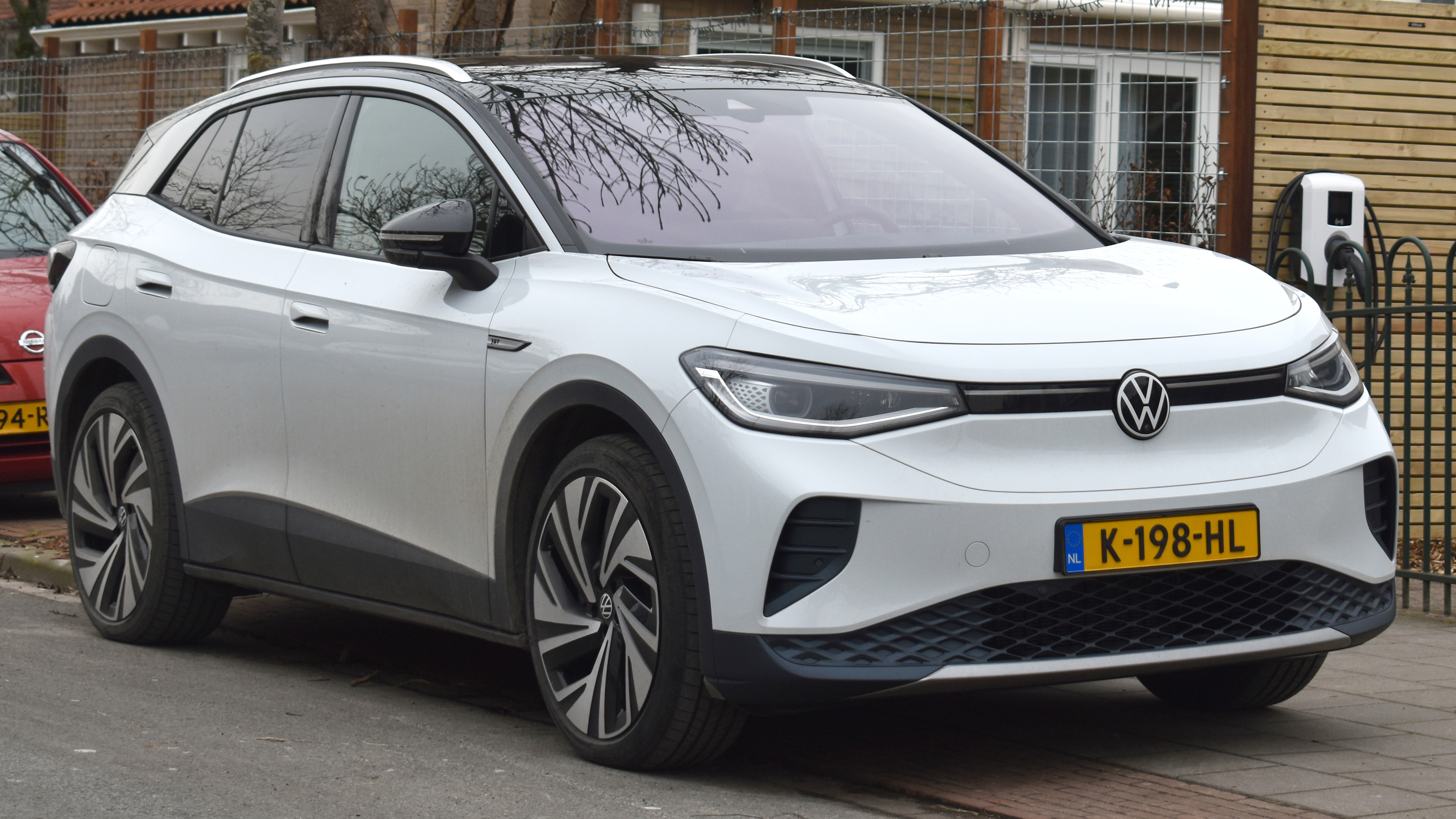
The Volkswagen ID.4 is an electric compact SUV built on VW’s electric vehicle platform. The segment says Volkswagen stopped ID.4 production at its Tennessee plant, which is a major operational and financial decision for an EV model.
Bernstein is a financial firm that studies companies and predicts what their numbers might look like. In this case, they’re estimating how much money Volkswagen will take as a hit.
A financial charge is a one-time accounting cost that shows up in a company’s results. It can happen when plans change and earlier spending doesn’t pay off.
A brownfield factory is an older existing factory site that gets updated to build something new. Renovating it can still be expensive, but it’s often less than starting from scratch.
BYD is a big Chinese company known for electric cars. The episode mentions it to show that other Chinese automakers are already trying to grow in Europe.
PSA (Peugeot Société Anonyme) is the French automaker that later became part of Stellantis through the FCA-PSA merger. The segment references PSA’s China operations to explain why Stellantis previously had strong market presence and why it might want to return via partnerships.
DPCA refers to the joint venture between PSA (the predecessor of Stellantis) and Dongfeng, which produced vehicles in China. The speaker uses it to illustrate that PSA/Stellantis historically had deep manufacturing and sales involvement in China through a structured partnership.
A “tie-up” here means a partnership. Instead of entering a new country from scratch, a company teams up with an existing automaker that already knows the market.
An investor day is an event where a company’s leadership presents strategy, financial outlook, and major initiatives to investors. It’s often used to explain how the company plans to respond to market pressures and execute long-term plans.
A “use case” is how people actually use the vehicle day to day. The point here is that the best technology choice depends on what customers really do with the truck.
The Ford F-150 Lightning is Ford’s electric pickup. They’re talking about what customers expected it to do, and how that matched up with real-world towing and hauling.
Adoption rate is how quickly consumers and the market move from early interest to widespread purchasing. Here, the speaker attributes slower-than-expected demand to the industry’s overall adoption pace rather than a single product flaw.
A price premium is the extra money you pay compared to what you expected to pay. They’re saying forecasts assumed EVs would cost a lot more, but sales/adoption didn’t follow that script.
Concept
$30,000 midsize electric truck
They’re talking about an electric truck aimed to cost around $30,000 and fit the “midsize” category. The big idea is making EV trucks affordable enough for more people.
“Proactive” here means they’re trying to fix issues early instead of waiting for customers to complain. It’s meant to prevent problems and improve car quality over time.
LIVE
Welcome to Daily Drive for Wednesday, April 15th, 2026.
I'm Kellan Walker in Las Vegas.
Today on the show, Stellantis explores a tie-up with China's Dong Feng.
Nissan says the math isn't mathing to move production from Mexico to the U.S.
And VW takes a big hit on its shuttered Tennessee plant.
Plus, Ford's Andrew Frick talks about the automaker's evolving truck strategy, including
extended-range electric pickups.
We learn and we adapt and we pivot quickly to what the customer is looking for.
Let's run through all the news you need to know to keep up in the auto industry.
Stellantis is reportedly looking to team up with Chinese automaker Dong Feng Motor.
And it could mean big changes for both companies.
The idea is to give Dong Feng access to underused Stellantis factories in Europe in exchange
Dong Feng would build some Stellantis brands in China.
Dong Feng reps have already toured plants in Germany and Italy.
Bloomberg reports Stellantis has also been talking with Xiaomi and X-Pung.
All this comes as Stellantis reports that first-quarter shipments jumped 12% to over 1.3 million vehicles,
led by a 17% surge in North America.
That was thanks, in part, to bringing back V8 Hemi engines in ram trucks.
We'll have more on all of this in a minute with automotive news Europe's Peter Siegel.
Nissan's facing a math problem it can't solve.
The automaker has looked at moving its Sentra and Kix from Mexico to the US.
But CEO Yvonne Espinoza says it just doesn't pencil out.
Here's the thing.
These are entry-level vehicles built in Mexico precisely to keep them affordable.
Shift production North and the price jumps beyond what budget-conscious buyers can pay.
Nissan America's Chairman Christian Mounier calls the 25% tariff on Mexican imports unfair,
especially when European and South Korean vehicles only face a 15% rate.
Together, the Kix and Sentra made up nearly 30% of Nissan's US sales last year.
And Volkswagen is taking a big financial hit this quarter after pulling the plug on ID4 production at its Tennessee plant.
According to Bernstein analysts, the automaker will book a charge of 60-75% of the $800 million
it originally invested to retool the Chattanooga facility.
A VW spokesperson confirmed those calculations.
Here's the silver lining.
Bernstein says VW will actually benefit from no longer selling a model that isn't profitable.
And those are today's headlines.
You can find more details on all those stories at AutoNews.com.
Stellantis's possible tie-up with China's Dongfeng would have big implications for both automakers and their home markets.
And it could signal a potential path for Chinese automakers into the US.
Our own Jake Neer talked about that with Peter Siegel, news editor for our sibling publication Automotive News Europe.
Jake reached Peter this morning at his home office in Paris.
Peter Siegel, welcome back to Daily Drive.
Thanks for having me.
I'm here in Paris.
It's a lovely day, and I think we're going to talk about Stellantis of it.
Yeah, that's right.
I'm really interested in this reported interest in a possible tie-up with Dongfeng.
What would Dongfeng get out of building cars in underused Stellantis factories in Europe?
And why is that attractive to them right now?
Well, for Dongfeng, it's very attractive because they wouldn't have to build a greenfield factory
or even renovate what's known as a brownfield factory.
They can just use some of the space that Stellantis has.
And Stellantis has a lot of extra capacity, especially in Italy.
And they would also be able to avoid some EU tariffs on electric cars, sort of extended range hybrids,
and also EU tariffs in general.
It's 10% general tariffs and up to 35% for EVs built in China.
So if Dongfeng wanted to expand its presence in Europe, which they would follow companies like BYD, SAIC, and doing so,
it could be very attractive.
For Stellantis in China, it's also a good proposition because, if you remember,
Stellantis has largely withdrawn from the Chinese market.
They had produced Jeeps there when it was PSA.
The PSA side of the operation had produced Citroën, Peugeot, and DS models.
And in fact, they had a huge tie-up with Dongfeng.
It was called DPCA.
They had four factories.
And at one point, China was actually PSA Group's biggest market.
They had sales of, I think, around 700,000 as recently as, I want to say, 2016 or 2015.
That kind of fell apart through a combination of missteps and also the growth of Chinese domestic producers.
But I'm sure Stellantis would love to be able to figure out a way to get back into that market,
even on a limited scale, and also using what you might call an asset light model.
So they wouldn't have to go and build factories, and maybe they could use Dongfeng's dealer network.
So there are benefits to both.
From an American perspective, I have to ask this question, which is, we've heard predictions that Chinese automakers could find a way into the U.S. market somehow, even within 2026,
and that one possible route is tie-ups with existing American manufacturers.
Of course, Stellantis is a European company.
But, of course, they have a huge presence here, and they're still considered part of the Detroit 3.
So could this be a route for an automaker like Dongfeng to get into the U.S.?
I mean, theoretically, yes.
There are lots of hurdles, high tariffs, concerns about cybersecurity, national security, technology transfer, things like that.
But one thing that could make a Chinese brand more palatable to American regulators, and also American consumers, would be to say, look, these cars are built in the U.S.
They're built in American factories with American workers, possibly American Union workers, even.
They're sold at a dealer you all know.
You can go down to your corner Ram dealer or Jeep dealer, and maybe you could buy one.
So theoretically, yes, it might be a little premature, but it could be, as they say, the narrow end of the wedge.
So that remains to be seen.
So Stellantis just reported a big jump in North American sales.
I'm curious why the company is scrambling now to find Chinese partners for its European operations, given that result.
Yeah, that's actually quite a good question.
But I think what it points to is Antonio Filosa, the CEO, is taking a look at the whole operation and asking himself, where can we shore up things like production?
We have all this unused capacity.
What can we do about it?
We don't want to lay people off that's socially not very palatable.
How can we fight off competition from China, especially in Europe?
Do we join them if we can't beat them?
So that's one of the questions.
And these reports are coming ahead of a very important investor day on May 21st in Detroit, where Filosa will lay out his vision for Stellantis.
It's his first strategic plan since taking over.
And we can already get an idea of where he's heading with collaborations.
And as you look at the sales figures, a lot of that was achieved through incentives, discounting, things like that, especially in Europe.
So we can get sort of broad outlines of where his at least near term vision for Stellantis is.
Peter Siegel is news editor with Automotive News Europe.
Peter, thank you so much for joining us.
Really appreciate it.
Thanks.
It's a pleasure.
See you next time.
Coming up, Ford's Andrew Frick discusses the automakers truck strategy and extended range EVs.
That's next on Daily Drive.
Are you a dealer creating a workplace culture your employees are proud to be part of?
Applications are now open for the 2026 Automotive News best dealerships to work for program.
This isn't just an award.
It's a chance to get real insight into what's working at your dealership and where you can improve.
And we've expanded the categories this year, recognizing everything from technician experience and leadership development to AI enablement and employee retention.
The registration deadline is April 17th.
Find out more and apply at AutoNews.com.
Welcome back to Daily Drive.
I'm Kellen Walker.
Like most automakers, Ford is in the middle of a major reset when it comes to its electrification strategy.
And that also means rethinking its overall pickup strategy along with it.
Andrew Frick is president of Ford Blue and Ford Model E.
He spoke with our own Molly Boygon at the JD Power Automotive Forum in New York City this month.
Andrew Frick, thanks so much for joining us.
Thank you.
It's good to be here with you, Molly.
So you had some really interesting things to say on stage at the Auto Forum here in New York City, one of which was talking about sort of retooling Ford's strategy around its pickup truck offerings, including an extended range EV truck.
So I'm wondering how you're thinking about that.
Are you viewing extended range EVs as a hedge, as a sort of transition technology or as a really entrenched future direction?
Yeah, I wouldn't call it a hedge.
I actually think it's a good bet based on the customer use case.
So as we had our first generation F-150 Lightning, we learned a lot from our customers, from the product capability, from the customer.
And one of the things they were telling us is they want the ability to drive on electric range.
But when they need it and have to do more durable work with extended ranges, they would like to shift to a gas technology so they don't lose any performance around payload and towing any of that capability.
So EREV is actually, we believe, going to be a really good solution for our next generation Lightning.
So we think it's just based on customer use case.
And when you talk about some of the issues with the first generation Lightning, you mentioned the sort of compromises that consumers had to make on payload.
I'm wondering if that was sort of the primary driver of some of the issues or what do you think really went wrong with the Lightning?
It's not that it went wrong.
It was performing as it was designed.
Some customers that thought, you know, an electric truck would be able to do some of the same capability as their gas truck, learned that it was not in the best situation.
So that's where we got the feedback from.
Got it.
And just in terms of the, you were also talking about consumer expectations around affordability.
And I basically, I'm wondering if in your view, the Lightning's release was, what was sort of the main factor in not having that demand not materialized as expected?
Was it the payload issue?
Was it affordability?
Was it something else?
I think it was just the overall adoption rate of the industry.
A lot of people were forecasting, you know, mass adoption.
They were also forecasting very high price premiums.
And we didn't see the adoption rates at the same rate.
And the customer told us otherwise, meaning us, the industry.
So we learn and we adapt and we pivot, you know, quickly to what the customer is looking for.
That makes sense.
And, you know, Ford and many other automakers were relying on a reservation and deposit system during those early years of the EV transition, that sort of artificially inflated demand or, you know, cast projections for demand that didn't materialize.
I'm wondering if, if you, what you think about that, I mean, do you agree with that contention?
And if so, is there any, how are you thinking about reservations and deposits differently now based on that experience?
Well, you know, we've run deposits, not just on lightning.
We've done it on other vehicles like Maverick and Bronco and Maki as well.
You know, and it makes sense for a lot of reasons.
One, you know, not every customer that raises their hand is going to necessarily transact on it.
That's true across the whole industry.
You can pick a lot of companies that have done this.
But what it does is give us a different sense for what they are looking for, allows us to engage with them ahead of time and see if we can curate a different type of exchange leading up to a
production launch.
So I think we'll do it again, moving forward, how we structure it may change depending on the product and, you know, different customers react differently in different segments.
So a lot of that is really dependent on the product and the customer that we're, that we're going to be targeting.
And, you know, given these long development timelines and it's so interesting how the climate has been changing so much over the last six years.
And obviously, even before that, you know, a lot of the talk of the show today has been about the Iran war and the impact on gas prices.
And, you know, Ford appears well positioned with that given the $30,000 midsize electric truck you all are planning.
But how are you ensuring that you're not sort of mistiming this next release with with these sort of ebbs and flows and in EV interest and in these cycles?
Because we're not just betting on ebbs and flows.
We're betting this goes back to betting on the customer and what their use cases are.
And whether it's right now or a year from now or three years from now, there's going to be a different environment that we know.
When we get the product right, the offering right in the price, you know, range that the customer is looking for, then that can withstand any sort of macroeconomic environment.
And, you know, that's what we're excited about with our new first vehicle off of our electric vehicle platform.
But it's also true across the rest of our portfolio right now from Broncos to F series to Mavericks.
It's just, you know, build the right product, what the customer is looking for and put it in their range and we'll be successful.
I really like the position we're in.
And on some of those other macro factors, you know, trade, tariffs, supply chain have all been really important.
I wonder if you can say a little bit more about how Ford is recovering from the novellas fire.
I know that you're sourcing aluminum overseas, but the Iran war is raising the price of aluminum.
So how is managing that supply chain in the wake of that event?
We continue to manage it, you know, we're on track with what we've stated and, you know, previously stated, a lot of our recovery is going to be in the second half of the year, which is consistent with what we said.
And we launched a third crew at our Dearborn truck plant that went seamlessly.
So I feel like we're in a good place right now and on plan with what we thought we would see with the recovery.
And on tariffs, you also mentioned this a little bit on stage, continuing to invest in American manufacturing and American labor.
I'm wondering if you all are basically anticipating that the tariff burden is going to remain functionally the same as it is now.
Like, do you anticipate a significant change in the tariff burden for Ford, or are you basically moving ahead, assuming that the 25 percent parts and vehicles tariffs are going to remain in effect?
Well, the tariff environment has changed with some of the rulings that we've seen.
At the same time, you know, we're ready and flexible to move with whatever the administration states.
And, you know, this is where Ford, as the most American automaker, where we, you know, employ the most employees and also build over 80 percent of our production that we sell here is produced here in America.
So we never really left, you know, a lot of our manufacturing base here.
So it puts us in a position to adapt a lot quicker and be a lot more nimble than maybe some of our competitors.
Ford has encountered some some recall issues over the last couple of years and the company has framed the high recall count as a proactive quality strategy.
And I'm wondering how that's resonating with customers and and dealers.
Like, are they receptive to that message and how are they responding?
Well, I hope the customers are receptive to it because even in times where we haven't seen any customer instances of issues, we are being proactive with some of the recalls we're issuing a lot in the software space.
So we're doing that on behalf of our customer and we're obviously doing on behalf of the dealers as well.
So I think they're being very receptive to it and that, you know, we've seen a really big improvement in our initial quality metrics coming out and validated by several third parties.
So we feel like we're going in the right direction.
But this is all about taking care of the customer and doing it the right way.
Andrew Frick, thank you so much for your time.
Thank you very much.
For its Andrew Frick spoke with our own Molly Boygon at the JD Power Automotive Forum in New York.
That's Daily Drive for today.
I'm Kellen Walker.
Thanks to our own Ervash Krakaria for his reporting for today's podcast.
We also had reporting from Peter Siegel of our sibling publication, Automotive News Europe.
You can get the latest news on electrification strategies, partnerships with Chinese brands and everything happening in the auto industry at AutoNews.com.
Come back tomorrow for an exclusive conversation with Nissan CEO Yvonne Espinoza about his vision for the company, including plans to deploy AI driven autonomous technology across 90% of its lineup.
It's a strategy that is founded on a clear vision of bringing mobility intelligence to everyday's life.
We'd love to hear from you.
Let us know what you think of the show and the topics we cover today.
Send us an email at dailydrive at autonews.com or leave us a voicemail at 313-444-2774.
And if you enjoy the podcast, remember to like, leave a review and subscribe so you never miss an episode.
About this episode
Stellantis is reportedly exploring a tie-up with China’s Dongfeng, aiming to use underused European capacity while Dongfeng builds Stellantis brands in China—an idea tied to tariff avoidance and a possible “wedge” into the U.S. market. Nissan’s CEO says moving Mexico-built Sentra/Kicks to the U.S. “doesn’t pencil out” under current tariffs. VW faces a major financial hit after shutting its Tennessee ID4 production. Ford’s Andrew Frick argues extended-range EV pickups fit real customer use cases, and emphasizes adapting quickly based on demand signals, supply chain recovery, and proactive recalls.