
April 15, 2026 | Ford's Andrew Frick on electric pickup strategy; Stellantis, Dongfeng eye tie-up
About this episode
Stellantis is reportedly exploring a tie-up with China’s Dongfeng, aiming to use underused European capacity while Dongfeng builds Stellantis brands in China—an idea tied to tariff avoidance and a possible “wedge” into the U.S. market. Nissan’s CEO says moving Mexico-built Sentra/Kicks to the U.S. “doesn’t pencil out” under current tariffs. VW faces a major financial hit after shutting its Tennessee ID4 production. Ford’s Andrew Frick argues extended-range EV pickups fit real customer use cases, and emphasizes adapting quickly based on demand signals, supply chain recovery, and proactive recalls.
Andrew Frick, president of Ford Blue and Ford Model e, discusses the automaker’s evolving pickup strategy, including extended-range EVs. Stellantis is in talks with Chinese automaker Dongfeng about sharing factories in Europe and China. Plus, Nissan faces a math problem on shifting production from Mexico.
Stellantis
"Today on the show, Stellantis explores a tie-up with China's Dong Feng... Stellantis is reportedly looking to team up with Chinese automaker Dong Feng Motor."
Stellantis is a big car company that makes lots of different brands. They’re looking at teaming up with another company to change where cars get built and sold.
Stellantis is a major global automaker formed from the merger of Fiat Chrysler Automobiles and PSA Group. In this segment, it’s exploring partnerships to expand manufacturing and brand presence, including potential production in Europe and China.
Nissan
"Nissan says the math isn't mathing to move production from Mexico to the U.S... Shift production North and the price jumps beyond what budget-conscious buyers can pay."
Nissan is a car company that sells models in the U.S. In this story, they want to change where some cars are built, but the numbers don’t work out for the price customers can afford.
Nissan is a major Japanese automaker. Here, it’s described as facing a cost/price problem that prevents it from shifting production of entry-level models from Mexico to the U.S.
Ford
"Plus, Ford's Andrew Frick talks about the automaker's evolving truck strategy, including extended-range electric pickups."
Ford is a well-known car company in the U.S. The podcast says Ford is changing its truck plans, including new types of electric trucks.
Ford is a major American automaker. In this segment, Ford’s strategy is discussed through Andrew Frick’s comments about how the company is evolving its truck lineup, including extended-range electric pickups.
Bloomberg
"Bloomberg reports Stellantis has also been talking with Xiaomi and X-Pung... All this comes as Stellantis reports that first-quarter shipments jumped 12%..."
Bloomberg is a news outlet that covers business deals. Here it’s being used as the source for reporting on Stellantis’ other potential partners.
Bloomberg is a major business and financial news organization that often reports on corporate deals and industry strategy. In this segment, it’s cited as the source for additional partnership talks involving Stellantis.
V8 Hemi engines
"That was thanks, in part, to bringing back V8 Hemi engines in ram trucks."
A “Hemi” engine is a type of V8 engine design known for good breathing and performance. The podcast says bringing these engines back helped sales for Ram trucks.
“Hemi” refers to Chrysler’s hemispherical combustion-chamber design, associated with efficient airflow and strong performance. The segment links the return of V8 Hemi engines in Ram trucks to improved shipment results in North America.

Nissan Sentra
"The automaker has looked at moving its Sentra and Kix from Mexico to the US."
The Sentra is Nissan’s smaller, more affordable sedan. Nissan looked at building it in the U.S. instead of Mexico, but the price would likely rise too much.
The Nissan Sentra is a compact sedan positioned as an entry-level model in many markets. The segment says Nissan considered moving Sentra production from Mexico to the U.S., but the economics didn’t work for keeping the car affordable.
tariff
"Nissan America's Chairman Christian Mounier calls the 25% tariff on Mexican imports unfair, [130.3s] especially when European and South Korean vehicles only face a 15% rate."
A tariff is a tax on imported products. If the tariff is higher, imported cars cost more, which can hurt sales or squeeze profits.
A tariff is a tax the government charges on imported goods. In this segment, the discussion is about how tariff rates affect the cost competitiveness of vehicles imported from Mexico versus Europe and South Korea.
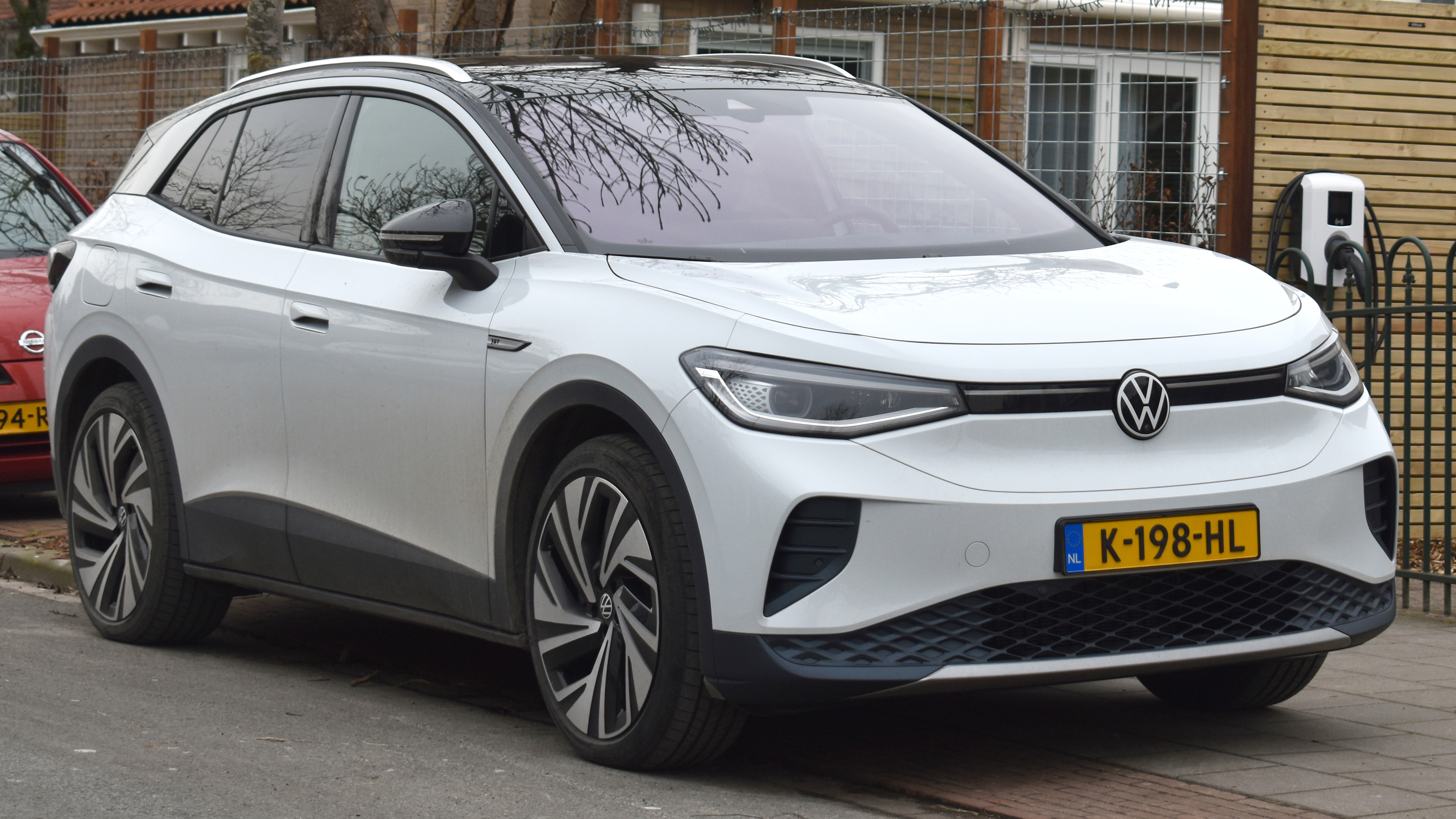
Volkswagen ID4
"And Volkswagen is taking a big financial hit this quarter after pulling the plug on ID4 production at its Tennessee plant. [151.0s] According to Bernstein analysts, the automaker will book a charge of 60-75% of the $800 million"
The Volkswagen ID.4 is an electric compact SUV built on VW’s electric vehicle platform. The segment says Volkswagen stopped ID.4 production at its Tennessee plant, which is a major operational and financial decision for an EV model.
Bernstein analysts
"According to Bernstein analysts, the automaker will book a charge of 60-75% of the $800 million [158.8s] it originally invested to retool the Chattanooga facility."
Bernstein is a financial firm that studies companies and predicts what their numbers might look like. In this case, they’re estimating how much money Volkswagen will take as a hit.
Bernstein is an investment bank whose analysts publish forecasts and financial models for automakers and other industries. Here, they’re estimating the size of Volkswagen’s financial charge tied to EV production changes.
financial charge
"According to Bernstein analysts, the automaker will book a charge of 60-75% of the $800 million [158.8s] it originally invested to retool the Chattanooga facility. [163.6s] A VW spokesperson confirmed those calculations."
A financial charge is a one-time accounting cost that shows up in a company’s results. It can happen when plans change and earlier spending doesn’t pay off.
A financial charge is an accounting expense recorded in a given quarter, often reflecting costs like asset write-downs, restructuring, or program shutdowns. The segment describes Volkswagen booking a charge as a result of stopping ID.4 production.
greenfield factory
"Well, for Dongfeng, it's very attractive because they wouldn't have to build a greenfield factory [236.9s] or even renovate what's known as a brownfield factory."
A greenfield factory is a totally new factory built in a new location. It usually takes longer and costs more than using an existing plant.
A greenfield factory is a brand-new manufacturing site built from the ground up. The segment contrasts this with using existing facilities, arguing that Dongfeng would prefer avoiding the time and cost of building a new plant.
brownfield factory
"Well, for Dongfeng, it's very attractive because they wouldn't have to build a greenfield factory [236.9s] or even renovate what's known as a brownfield factory."
A brownfield factory is an older existing factory site that gets updated to build something new. Renovating it can still be expensive, but it’s often less than starting from scratch.
A brownfield factory is an existing industrial site that’s repurposed or renovated for new production. The segment suggests Dongfeng could avoid both building new capacity (greenfield) and upgrading older facilities (brownfield), making the partnership more attractive.
BYD
"So if Dongfeng wanted to expand its presence in Europe, which they would follow companies like BYD, SAIC, and doing so, ..."
BYD is a big Chinese company known for electric cars. The episode mentions it to show that other Chinese automakers are already trying to grow in Europe.
BYD is a major Chinese EV and battery manufacturer. The speaker references BYD alongside SAIC as examples of companies that have been pursuing expansion into Europe, framing Dongfeng’s potential move as part of a broader trend.
SAIC
"So if Dongfeng wanted to expand its presence in Europe, which they would follow companies like BYD, SAIC, and doing so, ..."
SAIC is a major Chinese auto company. It’s mentioned because other Chinese brands are looking at Europe too, not just Dongfeng.
SAIC is a large Chinese automaker group that has joint ventures and manufacturing relationships globally. In this segment, it’s cited as another example of a Chinese company pursuing European expansion, supporting the idea that trade and partnership strategies are evolving.
Citroën
"The PSA side of the operation had produced Citroën, Peugeot, and DS models."
Citroën is a French car brand. In this context, it’s mentioned to show which brands PSA was selling in China through its partnership.
Citroën is a French automaker brand within the PSA group (now part of Stellantis). Mentioning Citroën helps listeners understand the breadth of PSA’s historical product lineup in China through its joint venture structure.
PSA
"The PSA side of the operation had produced Citroën, Peugeot, and DS models. And in fact, they had a huge tie-up with Dongfeng."
PSA (Peugeot Société Anonyme) is the French automaker that later became part of Stellantis through the FCA-PSA merger. The segment references PSA’s China operations to explain why Stellantis previously had strong market presence and why it might want to return via partnerships.
Peugeot
"The PSA side of the operation had produced Citroën, Peugeot, and DS models."
Peugeot is a well-known French car brand. The episode mentions it as part of PSA’s lineup that was sold in China.
Peugeot is a French automaker brand that was part of PSA’s China operations. The speaker lists Peugeot among PSA’s brands to show how extensive the company’s historical footprint was before Stellantis withdrew.
DPCA
"And in fact, they had a huge tie-up with Dongfeng. It was called DPCA. They had four factories."
DPCA refers to the joint venture between PSA (the predecessor of Stellantis) and Dongfeng, which produced vehicles in China. The speaker uses it to illustrate that PSA/Stellantis historically had deep manufacturing and sales involvement in China through a structured partnership.
tie-ups with existing American manufacturers
"We've heard predictions that Chinese automakers could find a way into the U.S. market somehow, even within 2026, and that one possible route is tie-ups with existing American manufacturers."
A “tie-up” here means a partnership. Instead of entering a new country from scratch, a company teams up with an existing automaker that already knows the market.
The speaker is describing a common market-entry tactic: partnering with established automakers that already have local manufacturing, regulatory experience, and dealer/distribution relationships. For Chinese brands, alliances can reduce risk and help navigate trade barriers and consumer trust.
Ram
"You can go down to your corner Ram dealer or Jeep dealer, and maybe you could buy one."
Ram is a truck brand. The speaker is saying that if cars are sold through regular Ram dealers, they may feel more familiar and acceptable to buyers.
Ram is a Stellantis brand known primarily for trucks. The transcript uses Ram’s dealer network as an example of how a new brand could be sold through familiar U.S. channels.
Jeep
"You can go down to your corner Ram dealer or Jeep dealer, and maybe you could buy one."
Jeep is a well-known SUV brand. The idea is that if a new car brand is sold through Jeep dealers, it might be easier for people to buy and trust.
Jeep is a Stellantis brand best known for SUVs and off-road vehicles. Mentioning Jeep dealers highlights how an unfamiliar Chinese brand could potentially piggyback on established dealer relationships in the U.S.
unused capacity
"We have all this unused capacity. What can we do about it?"
Unused capacity is when a factory isn’t running at full output. Companies want to keep people working and spread fixed costs over more cars.
Unused capacity means factories are not producing as many vehicles as they could. Automakers often try to use that capacity more efficiently—through new models, partnerships, or production shifts—to reduce per-unit costs and avoid layoffs.
investor day
"And these reports are coming ahead of a very important investor day on May 21st in Detroit, where Filosa will lay out his vision for Stellantis."
An investor day is an event where a company’s leadership presents strategy, financial outlook, and major initiatives to investors. It’s often used to explain how the company plans to respond to market pressures and execute long-term plans.
strategic plan
"It's his first strategic plan since taking over. And we can already get an idea of where he's heading with collaborations."
A strategic plan is the company’s big roadmap for the future. It explains what changes they’ll make and where they’ll focus to improve results.
A strategic plan is a company’s roadmap for how it will compete—covering production, product lineup, partnerships, and investment priorities. The segment frames this as Filosa’s first plan since taking over.
customer use case
"Yeah, I wouldn't call it a hedge. I actually think it's a good bet based on the customer use case. So as we had our first generation F-150 Lightning, we learned a lot from our customers..."
A “use case” is how people actually use the vehicle day to day. The point here is that the best technology choice depends on what customers really do with the truck.
“Customer use case” refers to the real-world patterns of how buyers actually drive and use the vehicle—commuting, hauling, towing, job-site duty cycles, and how often they need long range. The speaker argues that the right powertrain strategy depends on these usage realities rather than ideology.
F-150 Lightning
"So as we had our first generation F-150 Lightning, we learned a lot from our customers, from the product capability, from the customer. And one of the things they were telling us is they want the ability to drive on electric range."
The Ford F-150 Lightning is Ford’s electric pickup. They’re talking about what customers expected it to do, and how that matched up with real-world towing and hauling.
The Ford F-150 Lightning is Ford’s electric version of the F-150 pickup. In this discussion, it’s used as the example of what Ford learned from real customer use—especially around how payload, towing, and “electric range” expectations play out.
adoption rate
"I think it was just the overall adoption rate of the industry. A lot of people were forecasting, you know, mass adoption..."
Adoption rate is how quickly consumers and the market move from early interest to widespread purchasing. Here, the speaker attributes slower-than-expected demand to the industry’s overall adoption pace rather than a single product flaw.
price premiums
"A lot of people were forecasting, you know, mass adoption. They were also forecasting very high price premiums. And we didn't see the adoption rates at the same rate..."
A price premium is the extra money you pay compared to what you expected to pay. They’re saying forecasts assumed EVs would cost a lot more, but sales/adoption didn’t follow that script.
“Price premiums” are the extra amount buyers pay above a baseline expectation (often above gas equivalents or earlier pricing assumptions). The speaker says forecasts predicted high premiums, but actual adoption didn’t match those expectations.
$30,000 midsize electric truck
"And, you know, Ford appears well positioned with that given the $30,000 midsize electric truck you all are planning."
They’re talking about an electric truck aimed to cost around $30,000 and fit the “midsize” category. The big idea is making EV trucks affordable enough for more people.
The “$30,000” figure is a target price point, and “midsize electric truck” describes the vehicle class and intended affordability. In EV strategy, hitting a lower price threshold is often crucial for expanding the buyer pool beyond early adopters.
proactive quality strategy
"Ford has encountered some some recall issues over the last couple of years and the company has framed the high recall count as a proactive quality strategy... even in times where we haven't seen any customer instances of issues, we are being proactive with some of the recalls we're issuing a lot in the software space."
“Proactive” here means they’re trying to fix issues early instead of waiting for customers to complain. It’s meant to prevent problems and improve car quality over time.
A proactive quality strategy means addressing potential issues early—often through recalls, software updates, or process changes—before they become widespread customer problems. The goal is to reduce risk and improve long-term reliability.
Request an Explanation
Heard something you'd like explained? We'll add it to this episode.
Sign in to request explanations for terms you heard.
Want to learn more?
Browse our glossary for plain-English explanations of automotive terms, jargon, and concepts.
Help improve this episode
See something that's not quite right? Our annotations are AI-generated and can sometimes miss the mark. Click the flag icon on any annotation to suggest a correction.