
July 20, 2026 | UAW President Shawn Fain faces federal investigation; Honda eyes expansion
About this episode
A federal probe into UAW President Shawn Fain is put in context with what it could mean for union leadership and the next Detroit Three contract in 2028. GM’s brand strategy comes up via how the Sierra and Silverado can feel distinct despite shared underpinnings. Honda signals possible North American growth with an additional assembly plan. The rest of the show digs into EV adoption: survey intent vs registration reality, the role of tax credits and gasoline prices, and why charging access still matters—especially for apartments.
The Department of Justice is investigating UAW President Shawn Fain for alleged favoritism toward his fiancée, Honda CEO Toshihiro Mibe is considering an eighth North American plant, and General Motors is trying to differentiate their new Chevrolet and GMC designs. Plus, McKinsey analysts discuss the firm’s 2026 mobility survey and the steady rise of electric vehicle adoption.

Dodge Challenger
"...and accused the vice president, who is one of his challengers, of trying to steal the election. While no charge..."
The Dodge Challenger is a performance car made by Dodge. It’s designed to be fast and exciting to drive, and it’s known for big engines and a sporty look. In the podcast, the word “challenger” is used in a general sense, but it also matches the car’s name.
The Dodge Challenger is a full-size American muscle car known for its powerful V8 options and long hood, with a strong focus on straight-line performance and classic styling. It often comes up in news and podcasts because it represents a major, recognizable segment of performance cars and is frequently discussed in relation to politics, branding, and product updates. In this episode, it’s mentioned in a broader “challenger” context, but the vehicle name is still tied to that performance-car identity.
market share
"In the U.S., American Honda is targeting more than 2 percent market share this year and expects to outperform the industry."
Market share is how much of all car sales in the U.S. a brand gets. If a company targets 2% market share, it’s aiming to be responsible for about 2% of all vehicles sold.
Market share is the percentage of total sales in a market that a specific company or brand captures. When American Honda targets “more than 2 percent market share,” it means it expects to sell enough vehicles to represent over 2% of U.S. industry sales.
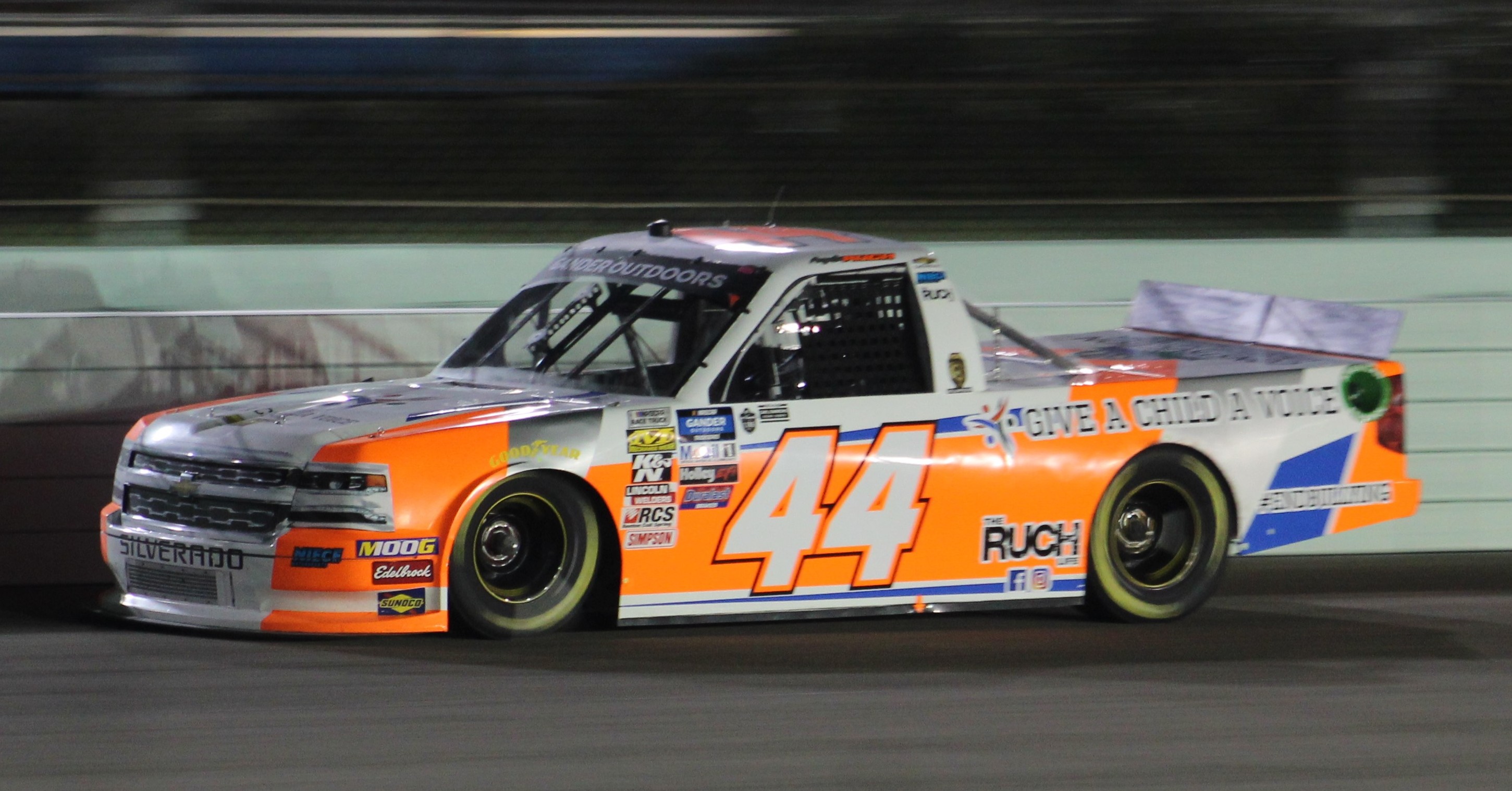
Chevrolet Silverado 1500
"For example, look at the upcoming redesigns of the GMC Sierra 1500 and Chevrolet Silverado 1500, which are the automakers' top sellers."
The Chevrolet Silverado 1500 is another big pickup truck. The point of mentioning it alongside the Sierra is that GM wants the two brands to feel different, even if they’re related under the skin.
The Chevrolet Silverado 1500 is a full-size pickup truck from Chevrolet, also under General Motors. Here it’s paired with the GMC Sierra 1500 to show how GM plans to differentiate the brands’ look and positioning while keeping shared architecture and technologies.

GMC Sierra 1500
"For example, look at the upcoming redesigns of the GMC Sierra 1500 and Chevrolet Silverado 1500, which are the automakers' top sellers."
The GMC Sierra 1500 is a big pickup truck. The hosts are saying GM is trying to make GMC feel more distinct from Chevrolet, even if the trucks are built on similar basics.
The GMC Sierra 1500 is a full-size pickup truck from General Motors’ GMC brand. In this segment, it’s used as an example of how GM is differentiating GMC from Chevrolet with redesigns, even when the trucks share core underpinnings.

Gmc Sierra
"...or example, look at the upcoming redesigns of the GMC Sierra 1500 and Chevrolet Silverado 1500, which are the ..."
The GMC Sierra EV is a future electric pickup truck from GMC. Instead of using gasoline, it runs on electricity stored in a battery. The podcast brings it up because it’s part of the next wave of truck updates.
The GMC Sierra EV is an upcoming electric version of the Sierra lineup, aimed at bringing battery-electric power to the full-size pickup market. It’s significant because it represents how major truck makers are shifting toward electric drivetrains while still targeting towing, hauling, and everyday usability. In this episode, it’s mentioned as part of the broader conversation about upcoming truck redesigns and what’s coming next.
architecture
"While they share the same architecture and underlying technologies, brand executives said the Sierra offers an exterior design for pickup users who want the feel of a luxury SUV."
Here, “architecture” means the basic design underneath the car—how it’s laid out and built. Two trucks can share the same architecture but still look and feel different on the outside.
In automotive design, “architecture” refers to the vehicle’s fundamental layout—things like the platform structure, mounting points, and how major systems are packaged. The segment notes the Sierra and Silverado share the same architecture, meaning they’re built on similar core design foundations.
underlying technologies
"While they share the same architecture and underlying technologies, brand executives said the Sierra offers an exterior design for pickup users who want the feel of a luxury SUV."
“Underlying technologies” means the shared engineering stuff inside the vehicle. Even if two trucks look different, they can still use similar technology under the skin.
“Underlying technologies” is a broad term for the shared engineering systems that power and control the vehicle. In this context, it supports the idea that GMC and Chevrolet can differentiate branding and exterior styling while using common technical components or design solutions.
federal oversight
"The UAW's push to move beyond years of federal oversight could face a major setback. The Justice Department is investigating President Sean Fain after federal grand jury subpoenaed the union's court appointed monitor..."
Federal oversight means the government is watching and supervising an organization to make sure it follows the rules. The union is trying to stop that extra supervision, but the investigation could keep it going longer.
Federal oversight is government supervision imposed on an organization, typically to ensure compliance with legal or regulatory requirements. In the segment, the UAW is trying to move beyond years of federal oversight, but the investigation could extend it past the planned end date.
federal grand jury subpoena
"The Justice Department is investigating President Sean Fain after federal grand jury subpoenaed the union's court appointed monitor as part of a probe into allegations involving benefits for Fain's fiance and her sister."
A subpoena is a legal request that someone must comply with. In this case, it’s tied to a federal investigation and was used to obtain information related to the union’s monitor.
A federal grand jury subpoena is a legal order requiring documents or testimony for a criminal investigation. The segment says the Justice Department investigated the UAW President after a grand jury subpoenaed the union’s court-appointed monitor.
court appointed monitor
"The Justice Department is investigating President Sean Fain after federal grand jury subpoenaed the union's court appointed monitor as part of a probe into allegations involving benefits for Fain's fiance and her sister."
A court-appointed monitor is like an independent watchdog appointed by the court. The monitor checks whether the organization is following the rules, and the union wants that oversight to end.
A court-appointed monitor is an independent oversight person or organization assigned by a court to supervise compliance with specific requirements. Here, the UAW’s “court appointed monitor” is central to the federal oversight the union is trying to end.
pre-qualification
"pre-qualification, appointment scheduling, and protection product presentations into one connected experience."
Pre-qualification is an early check to see if you likely qualify for financing. It helps the dealership move faster later because you’re not starting from scratch when you choose a car.
Pre-qualification is an early step in the car-buying process where a customer is screened for financing eligibility before they pick a specific vehicle. It’s meant to speed up later steps like appointment scheduling and paperwork by estimating what terms they may qualify for.
appointment scheduling
"pre-qualification, appointment scheduling, and protection product presentations into one connected experience."
Appointment scheduling just means booking a time to come in or finish a step in the buying process. The point is to make it easier to plan and reduce back-and-forth.
Appointment scheduling refers to booking a specific time for a customer to visit a dealership or complete a sales step. In digital retail workflows, it’s often integrated so customers can choose times that match their availability.
EV range
"But despite rising fuel costs and lingering concerns over EV range, American consumers are more likely to switch to an EV or hybrid if they already own one."
EV range is how far an electric vehicle can drive on a full charge under typical conditions. It’s a key consumer concern because real-world range varies with speed, temperature, driving style, and charging habits.
battery electric vehicles
"where already more than half of the vehicles that are being purchased are either battery electric vehicles or plug-in hybrids for that matter."
Battery electric vehicles are cars that run only on electricity stored in a battery. You charge them, and they don’t use gasoline.
Battery electric vehicles (BEVs) are fully electric cars powered only by a battery and electric motor, with no gasoline engine. Their adoption depends heavily on charging access and battery range expectations.
plug-in hybrid
"where already more than half of the vehicles that are being purchased are either battery electric vehicles or plug-in hybrids for that matter."
Plug-in hybrids can be driven using electricity when you charge them. They also have a gas engine, so you’re not limited if you don’t have a charger available.
Plug-in hybrids (PHEVs) are vehicles that can run on an electric motor using electricity from a plug, but they also have a gasoline engine for longer trips. They typically have a larger battery than a standard hybrid, which is why charging can meaningfully reduce fuel use.
$7,500 tax credit
"and probably even more so ever since we've seen sort of the $7,500 tax credit go away"
The $7,500 tax credit is a government discount that can lower the price of certain EVs. If it goes away, some people may be less likely to buy an EV because it costs more upfront.
The $7,500 tax credit refers to a U.S. federal incentive that can reduce the effective cost of qualifying EVs. When such credits change or expire, it can affect consumer demand—especially for buyers who were counting on the incentive to make an EV affordable.
EV adoption
"last year towards the end of last year. Obviously, there was a spike in EV adoption [594.7s] in summer of last year, and we would say that was largely a pull ahead"
EV adoption just means how many people are switching to electric cars. The hosts are saying that the switch happened faster at one point, then slowed down later.
EV adoption is how quickly people start buying and using electric vehicles. In this segment, the hosts connect adoption to incentives and changing consumer attitudes over time.
total cost of ownership
"So that makes a big difference when you think about the total cost of ownership, [666.5s] that when gasoline prices are high, that goes in favor of battery electric vehicles."
Total cost of ownership means what a car really costs over time, not just the sticker price. If gas is expensive, electric cars can look cheaper overall.
Total cost of ownership (TCO) is the overall cost to run a vehicle over time, including fuel/energy, maintenance, and other expenses. The hosts argue that when gasoline is expensive, BEVs look better on TCO.
down trade
"some of the other [676.8s] things that we saw in the survey were 35 percent of the respondents in the U.S. of the vehicle [683.7s] purchasers said they will down trade their vehicle. 43 percent said they will delay the next vehicle [691.2s] purchase."
Down trade means you switch to a cheaper car than the one you had before. The hosts are saying many buyers are doing that because they’re worried about affordability.
Down trade means replacing a vehicle with a cheaper one, usually to reduce monthly payments or overall spending. The segment uses it as a sign that affordability concerns are pushing buyers to spend less.
delay the next vehicle purchase
"35 percent of the respondents in the U.S. of the vehicle [683.7s] purchasers said they will down trade their vehicle. 43 percent said they will delay the next vehicle [691.2s] purchase."
Delaying the next vehicle purchase means waiting longer before buying your next car. The hosts are using it to show that many people aren’t ready to spend right now.
Delaying the next vehicle purchase means postponing a replacement or upgrade. In the context of EV demand, the hosts treat it as evidence that affordability pressures are affecting when people buy cars at all.
ICE owners
"Your survey, Nick, despite headwinds in the U.S., EV demand has been resilient [725.4s] on low levels, right? Existing EV owners are staying with EVs, while ICE owners remain more [733.3s] skeptical."
ICE means the traditional gas (or diesel) engine. “ICE owners” are people who currently drive gas cars, and the hosts say they’re less ready to switch than EV owners.
ICE stands for internal combustion engine, meaning gasoline- or diesel-powered vehicles. “ICE owners” refers to people currently driving non-electric cars, and the segment contrasts their skepticism with existing EV owners’ willingness to stay with EVs.
repurchase rate
"Once you're an EV buyer, it seems to be that the repurchase rate, particularly in the U.S., is extremely high. When we survey battery electric vehicle owners and ask them, what are you going to buy next as you're replacing your car?"
Repurchase rate means how many people plan to buy again in the same category. In this case, it’s about whether EV owners will choose another electric car when they replace their current one.
Repurchase rate is the share of customers who plan to buy again from the same category after their current purchase. Here, it’s used to describe how likely EV owners are to choose another EV (or a plug-in hybrid) when replacing their car.
ICE vehicle
"we surveyed households that have two vehicles, an ICE vehicle and a battery electric vehicle. And we asked them, what if you want to replace your ICE vehicle with another car, with a new car?"
ICE vehicle just means a gas (or diesel) car that uses an engine that burns fuel. It’s being compared here to electric cars and plug-in hybrids.
ICE vehicle means an internal combustion engine vehicle—cars powered primarily by burning gasoline or diesel. In this discussion, it’s contrasted with BEVs and plug-in hybrids as households decide what to buy next.
EV purchase demand
"Now those come to market, I would say you could see probably an up spring. The question of EV purchase demand in your survey and I've seen this in other surveys whereas it seems like a lot of US consumers say they're going to buy an EV or they're interested in the EV."
EV purchase demand is how much people say they want to buy an electric car. It’s usually based on surveys, and those answers don’t always match what people end up buying.
EV purchase demand refers to how many consumers intend to buy an electric vehicle (or are actively considering buying one). It’s often measured through surveys and can differ from actual sales because intentions don’t always translate into purchases.
stated intent
"there's obviously always a big difference between what we [938.1s] call stated intent and derived intent. Stated intent is I'm saying I'm going to do something [944.4s] and derived intent is kind of what I'm actually going to do."
“Stated intent” means what someone says they want to do. For example, they might say they want an EV, even if they don’t end up buying one.
“Stated intent” is what people say they plan to do, like claiming they want to buy an EV. It’s different from what they actually end up purchasing.
derived intent
"Stated intent is I'm saying I'm going to do something [944.4s] and derived intent is kind of what I'm actually going to do. Especially when it came to EV adoption [950.1s] and battery electric vehicles, we have always seen a big discrepancy between stated intent"
“Derived intent” means what you can tell from what people actually do. So even if they say they want an EV, the real signal is what they end up buying.
“Derived intent” is inferred from behavior—what people actually do—rather than what they say they’ll do. In this context, it’s reflected in EV registrations and purchases.
range extended vehicles
"battery electric vehicles and plug-in hybrids or range extended vehicles [984.8s] are not dead. Actually, when we survey customers, there's still a pretty big interest out there."
Range extended vehicles are mostly electric, but they include a backup system that helps keep the car going longer when the battery is low. It’s meant to make the car feel less limited by battery range.
Range extended vehicles are electrified cars that rely primarily on an electric drive system, but use an onboard generator (often a small engine) to extend driving range when the battery runs low. They’re designed to reduce “range anxiety” compared with pure battery-electric cars.
postponement
"Think of this as the next two to three year horizon. We're asking people [1029.7s] for their part-time choice at the next vehicle purchase. We do see this trend of postponement [1034.9s] the next vehicle purchase."
Postponement means people are putting off buying their next car. So even if they like EVs, they may not buy one right away.
Postponement here means delaying the next vehicle purchase rather than buying immediately. That timing shift can slow EV sales growth even when interest remains high.
EV demand
"where it says the composition of EV demand is changing in the US from an early adopter to a more tech driven consumer into the mainstream."
EV demand just means how many people are interested in buying electric cars. The discussion is about that interest moving from early buyers to more regular shoppers.
EV demand refers to how many consumers want to buy electric vehicles, and how that interest changes over time. The segment describes a shift from early adopters toward broader mainstream buyers.
early adopters
"where it says the composition of EV demand is changing in the US from an early adopter to a more tech driven consumer into the mainstream."
Early adopters are the first group of consumers to buy a new technology, before it becomes mainstream. In EVs, they often have higher willingness to try new charging and ownership routines.
range anxiety
"we didn't make yet, which is around what are reasons not to buy an EV. We haven't specifically spoken about range anxiety, which used to be our top one, top two reason for for the longest time in the US."
Range anxiety means worrying your EV battery won’t last long enough to get where you’re going. People worry about running out before they can find a charger.
Range anxiety is the fear that an electric vehicle (EV) won’t have enough battery range to reach a destination or charging station. It’s a major adoption barrier because EVs depend on charging infrastructure and battery capacity.
battery sizes
"I think two trends to quickly find out 11 is just average battery sizes in the US going up significantly to the tune of 30% plus, which alleviates some of that."
Battery size is how much energy the EV can store. Bigger batteries usually mean you can drive farther before needing to charge.
Battery size (usually measured in kilowatt-hours, kWh) is how much energy an EV can store. Larger battery packs generally improve real-world range and can reduce range anxiety.
organic growth
"To describe this whole effect, I would talk more about like an organic growth within the US consumer base. And that leads to your second question, right, who's buying these EVs, where regulation, we would say in China and in Europe have been clear accelerants"
Organic growth means EVs are spreading because more regular buyers want them. It’s contrasted with growth that happens mainly because of government rules.
Organic growth here means EV adoption driven by consumer preferences and market momentum rather than policy or external incentives. The segment contrasts this with regulation-driven acceleration in other regions.
charging at home
"The reason why this is important was because charging at home was less of an issue. What we saw being one of the adoption barriers was multi residential households, limited access to charging,"
Charging at home means you can plug your EV in where you live. That makes EV ownership easier because you don’t have to find chargers as often.
Charging at home is the ability to plug an EV into a home charger (or outlet) to replenish the battery overnight. It’s often a key factor in EV adoption because it reduces reliance on public charging.
multi residential households
"What we saw being one of the adoption barriers was multi residential households, limited access to charging,"
Multi residential households means apartment-style living. If you can’t easily get a charger where you live, it’s harder to own an EV.
Multi residential households are people living in apartments or shared buildings rather than single-family homes. They can face limited access to dedicated EV charging, which can slow adoption.
Request an Explanation
Heard something you'd like explained? We'll add it to this episode.
Sign in to request explanations for terms you heard.
Want to learn more?
Browse our glossary for plain-English explanations of automotive terms, jargon, and concepts.
Help improve this episode
See something that's not quite right? Our annotations are AI-generated and can sometimes miss the mark. Click the flag icon on any annotation to suggest a correction.