
July 21, 2026 | GM raises guidance as Q2 profits soar; negative equity worries F&I managers
About this episode
General Motors raised its guidance for the second time this year as Q2 profits surged, even as the company absorbed EV-related pressure including “the company took a $2.3 billion charge tied to its electric vehicle realignment.” The show then zooms in on consumer financing stress: “Consumers trading in upside-down vehicles are now financing record numbers of monthly payments and interest costs,” creating “negative equity” headaches for F&I managers. The hosts connect that backdrop to tariff uncertainty and highlight how dealers are using Fusion and TikTok—plus FTC compliance—to sell cars and recruit technicians.
General Motors raised its guidance for the second time this year as North American profits jumped 43 percent from a year ago, even though net income has fallen in the second quarter with more electric vehicle write-downs. Finance and insurance managers are concerned about the number of customers with negative equity, and Canada’s counter tariffs are costing the U.S. $5 billion in vehicle exports. Plus, Automotive News Reporter Mark Hollmer discusses how dealers are adding TikTok to their arsenal of social media marketing.
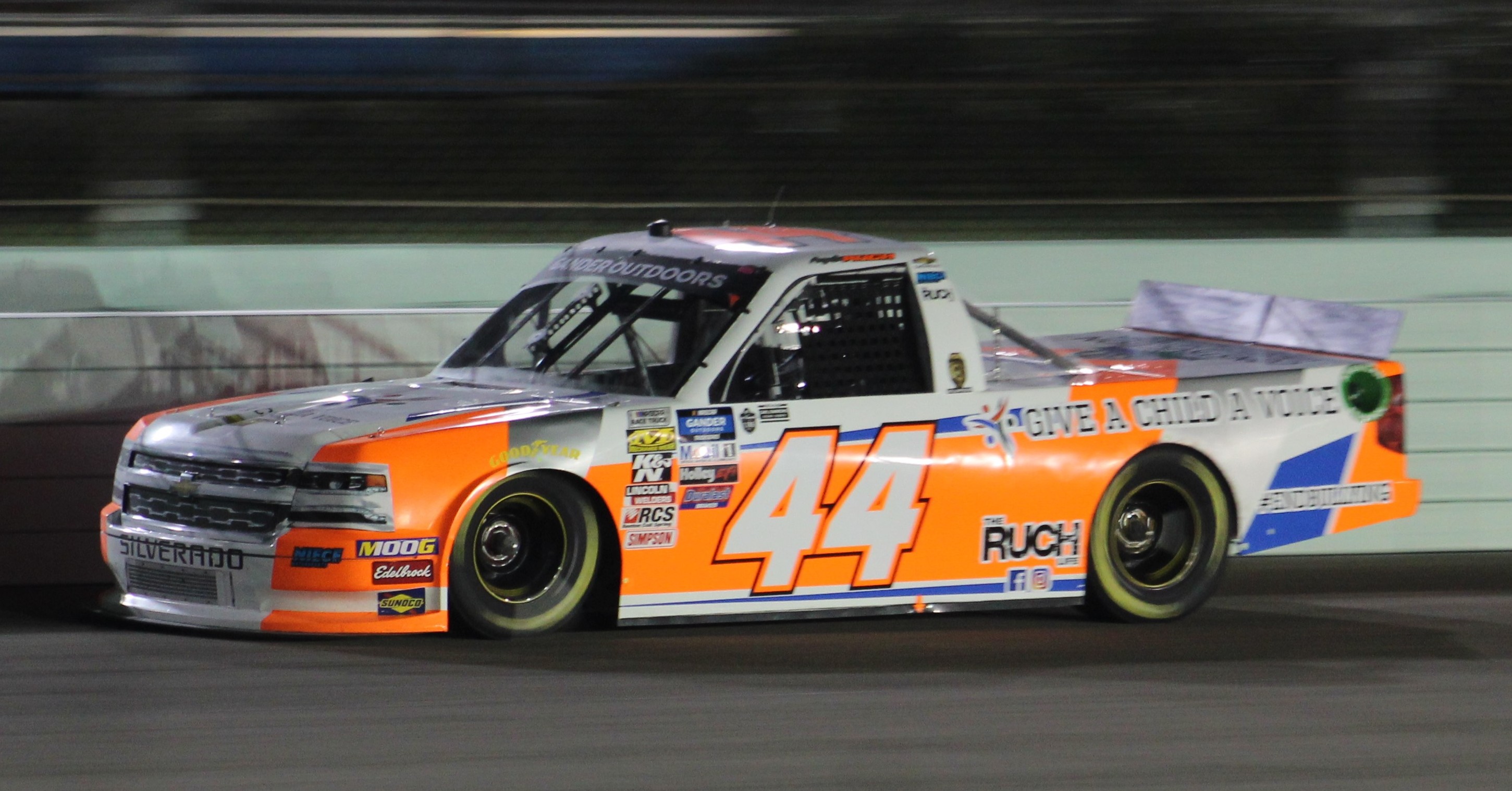
Chevrolet Silverado
"...lling and most profitable vehicles, the Chevrolet Silverado and GMC Sierra, should further boost profits, sai..."
The Chevrolet Silverado is a large pickup truck. People use it for hauling, towing, and everyday tasks, and it’s also important to the company that makes it because it sells in high numbers. That’s why it often shows up in discussions about profits and sales.
The Chevrolet Silverado is a full-size pickup truck built for heavy-duty work and everyday driving. It’s a major volume and profit driver for its manufacturer, which is why it often comes up in business-focused automotive news. In a podcast, it may be discussed in terms of sales momentum, pricing, and how the truck lineup supports overall company earnings.

Gmc Sierra
"... profitable vehicles, the Chevrolet Silverado and GMC Sierra, should further boost profits, said CEO Mary Bara..."
The GMC Sierra EV is a full-size pickup truck that runs on electricity instead of gasoline. It’s designed for the same kind of truck use—like carrying and towing—but with an electric power system. It comes up in news because it represents the shift toward electric trucks.
The GMC Sierra EV is an all-electric version of the Sierra full-size pickup line. It matters in automotive news because electric trucks can influence how manufacturers plan future product lineups and profitability. It may be mentioned alongside the Silverado/Sierra family when discussing broader sales strategy and financial performance.
import tariffs
"She also noted that the company plans to bring significant production into the U.S. to reduce its exposure to President Donald Trump's import tariffs. Consumers trading in upside-down vehicles are now financing record numbers of monthly payments and interest costs, according to Edmund's Q2 Negative Equity Data Report."
Import tariffs are taxes on products that come into a country from other countries. For cars, that can make parts and vehicles more expensive, which can ripple into pricing and production decisions.
Import tariffs are taxes the government places on goods brought into the country from abroad. In auto supply chains, tariffs can raise the cost of parts and finished vehicles, which can affect pricing, production planning, and where companies choose to build vehicles.
negative equity
"Consumers trading in upside-down vehicles are now financing record numbers of monthly payments and interest costs, according to Edmund's Q2 Negative Equity Data Report. Such financial challenges when buyers owe more than their vehicles are worth, forcing increasingly difficult conversations between clients and dealership finance and insurance managers."
Negative equity means your car is worth less than what you still owe on the loan. When you trade it in, that leftover debt often gets added to your next loan, making the new payments bigger.
Negative equity is when you owe more on your current auto loan than the vehicle is worth at the time you trade it in. That gap gets rolled into the next loan, which increases the amount you finance and can raise monthly payments and total interest costs.
upside-down vehicles
"Consumers trading in upside-down vehicles are now financing record numbers of monthly payments and interest costs, according to Edmund's Q2 Negative Equity Data Report. Such financial challenges when buyers owe more than their vehicles are worth, forcing increasingly difficult conversations between clients and dealership finance and insurance managers."
An “upside-down” car is one where you owe more money than the car is worth. That can make trading it in harder because you may still owe money even after the trade.
“Upside-down” is a common way to describe negative equity: the loan balance exceeds the car’s market value. It usually happens when prices fall faster than the loan is paid down, or when the purchase was financed with a large amount due to high transaction prices or low down payments.
trade-in
"Four years later, many of those buyers are returning to dealerships still carrying thousands of dollars in debt from their previous purchase. The average underwater trade-in is now four years old, another second-quarter record."
A trade-in is when you give your current car to the dealer to help pay for the next one. If you still owe too much on the old car, that debt can carry over into the new loan.
A trade-in is the vehicle you turn in at a dealership to reduce the price of the next purchase. If your trade-in has negative equity, the remaining loan balance can be added to the new financing, increasing what you owe overall.
counter-tariffs
"U.S. President Donald Trump called Canada's counter-tariffs on U.S.-made vehicles discriminatory and ordered 50% tariffs on an array of Canadian imports. The executive order claims Canadian tariffs on U.S.-built vehicles have cost the American auto sector billions of dollars in lost exports."
Counter-tariffs are tariffs a country adds back after another country starts charging tariffs. It’s basically retaliation, and it can make trading cars and parts across the border more expensive.
Counter-tariffs are retaliatory tariffs a country imposes in response to another country’s tariffs. In the U.S.-Canada context, they can directly affect cross-border vehicle and parts trade, potentially changing costs for automakers and suppliers that rely on both sides of the border.
Section 338 of the U.S. Tariff Act of 1930
"The latest set of U.S. tariffs are set to take effect August 19 to justify new tariffs Trump cited discrimination under Section 338 of the U.S. Tariff Act of 1930. It remains to be seen whether the rarely used provision will stand."
Section 338 is a specific rule in an older U.S. tariff law that the government can use to justify new tariffs. The question is whether that legal basis will survive challenges, which affects whether the tariffs actually stick.
Section 338 is a specific legal authority within the U.S. Tariff Act of 1930 that can be used to impose tariffs under certain conditions. The transcript notes it’s rarely used, and whether it holds up legally could determine if the tariff changes remain in place.
de-escalation
"Now, with both countries continuing to exchange tariffs, is there a realistic path toward de-escalation? Or should the auto industry prepare for even more trade-related uncertainty?"
De-escalation means things cool down and become less tense. In this case, it’s about trade measures like tariffs being reduced so businesses can plan more confidently.
De-escalation is the process of reducing tensions and easing restrictions—here, reducing trade friction created by tariffs. The host frames it as a realistic path that could help the auto industry by stabilizing cross-border supply chains.
USMCA
"Working together to get the USMCA back on track and free trade and auto is back on track is really what everybody in the auto industry across North America wants."
USMCA is a trade agreement between the U.S., Mexico, and Canada. It’s meant to make trading cars and parts across borders easier and more predictable.
USMCA is the United States–Mexico–Canada Agreement, a trade deal that sets rules for how goods move and how tariffs are handled across North America. When the host says “get the USMCA back on track,” they mean restoring smoother trade conditions that benefit automakers and parts suppliers.
dealerships are using TikTok to triple their sales
"Thank you so much for joining me. No problem. Coming up, automotive news reporter Mark Homer discusses how dealerships are using TikTok to triple their sales. That's next on Daily Drive."
This upcoming story is about how car dealers use TikTok to sell more cars. It’s about marketing and customer outreach rather than vehicle technology.
This is a forward-looking segment topic about how dealerships use TikTok as a marketing channel to increase sales. It’s less about a specific car or part and more about modern retail tactics.
digital retail solution
"Rout 1 Fusion is a digital retail solution designed to help dealerships engage customers earlier in the process and help you capture more opportunities from your online traffic."
A digital retail solution is a set of online tools that helps a car dealer sell cars through websites and apps. The goal is to reach shoppers earlier and turn more online interest into sales.
A digital retail solution is software that helps dealerships sell cars online or earlier in the shopping journey. In this segment, it’s described as a tool to engage customers sooner and convert more of the traffic coming from the internet.
Rout 1 Fusion
"Coming up, automotive news reporter Mark Homer discusses how dealerships are using TikTok to triple their sales. That's next on Daily Drive. Rout 1 Fusion is a digital retail solution designed to help dealerships engage customers earlier in the process..."
Rout 1 Fusion is a computer program used by car dealerships. It’s meant to help them interact with shoppers online and improve lead capture.
Rout 1 Fusion is a named software product positioned as a digital retail solution for dealerships. The segment frames it as helping dealers engage customers earlier and capture more leads from online traffic.
Request an Explanation
Heard something you'd like explained? We'll add it to this episode.
Sign in to request explanations for terms you heard.
Want to learn more?
Browse our glossary for plain-English explanations of automotive terms, jargon, and concepts.
Help improve this episode
See something that's not quite right? Our annotations are AI-generated and can sometimes miss the mark. Click the flag icon on any annotation to suggest a correction.