The Dodge Challenger is a performance car made by Dodge. It’s designed to be fast and exciting to drive, and it’s known for big engines and a sporty look. In the podcast, the word “challenger” is used in a general sense, but it also matches the car’s name.
Market share is how much of all car sales in the U.S. a brand gets. If a company targets 2% market share, it’s aiming to be responsible for about 2% of all vehicles sold.
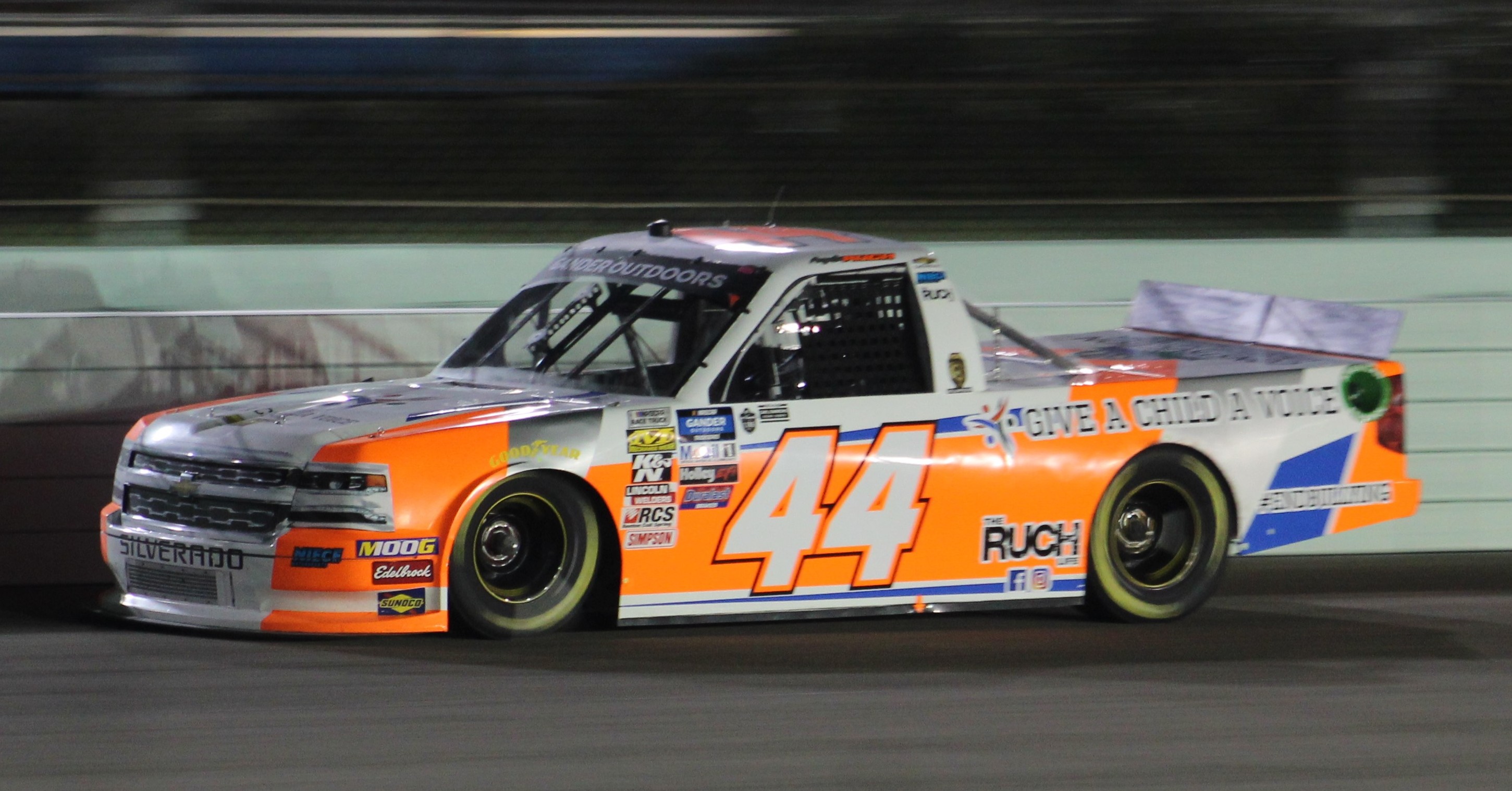
The Chevrolet Silverado 1500 is another big pickup truck. The point of mentioning it alongside the Sierra is that GM wants the two brands to feel different, even if they’re related under the skin.
The GMC Sierra 1500 is a big pickup truck. The hosts are saying GM is trying to make GMC feel more distinct from Chevrolet, even if the trucks are built on similar basics.
The GMC Sierra EV is a future electric pickup truck from GMC. Instead of using gasoline, it runs on electricity stored in a battery. The podcast brings it up because it’s part of the next wave of truck updates.
Here, “architecture” means the basic design underneath the car—how it’s laid out and built. Two trucks can share the same architecture but still look and feel different on the outside.
“Underlying technologies” means the shared engineering stuff inside the vehicle. Even if two trucks look different, they can still use similar technology under the skin.
Federal oversight means the government is watching and supervising an organization to make sure it follows the rules. The union is trying to stop that extra supervision, but the investigation could keep it going longer.
A subpoena is a legal request that someone must comply with. In this case, it’s tied to a federal investigation and was used to obtain information related to the union’s monitor.
A court-appointed monitor is like an independent watchdog appointed by the court. The monitor checks whether the organization is following the rules, and the union wants that oversight to end.
Pre-qualification is an early check to see if you likely qualify for financing. It helps the dealership move faster later because you’re not starting from scratch when you choose a car.
Appointment scheduling just means booking a time to come in or finish a step in the buying process. The point is to make it easier to plan and reduce back-and-forth.
EV range is how far an electric vehicle can drive on a full charge under typical conditions. It’s a key consumer concern because real-world range varies with speed, temperature, driving style, and charging habits.
Plug-in hybrids can be driven using electricity when you charge them. They also have a gas engine, so you’re not limited if you don’t have a charger available.
Term
$7,500 tax credit
The $7,500 tax credit is a government discount that can lower the price of certain EVs. If it goes away, some people may be less likely to buy an EV because it costs more upfront.
EV adoption just means how many people are switching to electric cars. The hosts are saying that the switch happened faster at one point, then slowed down later.
Total cost of ownership means what a car really costs over time, not just the sticker price. If gas is expensive, electric cars can look cheaper overall.
Down trade means you switch to a cheaper car than the one you had before. The hosts are saying many buyers are doing that because they’re worried about affordability.
Delaying the next vehicle purchase means waiting longer before buying your next car. The hosts are using it to show that many people aren’t ready to spend right now.
ICE means the traditional gas (or diesel) engine. “ICE owners” are people who currently drive gas cars, and the hosts say they’re less ready to switch than EV owners.
Repurchase rate means how many people plan to buy again in the same category. In this case, it’s about whether EV owners will choose another electric car when they replace their current one.
EV purchase demand is how much people say they want to buy an electric car. It’s usually based on surveys, and those answers don’t always match what people end up buying.
“Derived intent” means what you can tell from what people actually do. So even if they say they want an EV, the real signal is what they end up buying.
Range extended vehicles are mostly electric, but they include a backup system that helps keep the car going longer when the battery is low. It’s meant to make the car feel less limited by battery range.
EV demand just means how many people are interested in buying electric cars. The discussion is about that interest moving from early buyers to more regular shoppers.
Early adopters are the first group of consumers to buy a new technology, before it becomes mainstream. In EVs, they often have higher willingness to try new charging and ownership routines.
Range anxiety means worrying your EV battery won’t last long enough to get where you’re going. People worry about running out before they can find a charger.
Organic growth means EVs are spreading because more regular buyers want them. It’s contrasted with growth that happens mainly because of government rules.
Multi residential households means apartment-style living. If you can’t easily get a charger where you live, it’s harder to own an EV.
LIVE
Route 1 Fusion connects trade evaluation, pre-qualification, scheduling, and protection
products into one seamless experience. Create a more connected buying journey.
Visit route1.com slash fusion to schedule your demo.
Welcome to Daily Drive for Monday, July 20th, 2026. I'm Kellan Walker in Las Vegas today on the show.
UAW President Sean Fane is under federal investigation.
Honda is eyeing a new factory in North America, and GMC is trying to differentiate their new
models from Chevrolet. Plus, analysts discuss McKenzie's 2026 mobility survey and the future
of EV adoption. Some of the other things that we saw in the survey were 35 percent of the
respondents in the US of the vehicle purchasers said they will down trade their vehicle.
Let's run through all the news you need to know to keep up in the auto industry.
The Department of Justice is investigating UAW President Sean Fane, which could hurt the
union's efforts to get away from federal oversight. A grand jury has subpoenaed the
union's monitor who the court appointed to keep tabs on the union's activities. The jury is
investigating claims that Fane tried to seek benefits for his fiance and her sister. That
discovery came in a report from the monitor, Neil Borofsky, who decided that Fane had demoted
two top officials for refusing to follow his orders. Now, the UAW's upcoming presidential
election is headed into chaos. Fane has denied wrongdoing and accused the vice president,
who is one of his challengers, of trying to steal the election. While no charges have been filed,
experts say the Justice Department could use the situation to extend its oversight
of the union beyond January, when Borofsky's appointment is set to expire.
Honda CEO Toshihiro Mibe told a Japanese newspaper that he is considering adding an
eighth assembly plan in North America. North America is Honda's largest and most profitable
market. It accounted for about 40 percent of the company's global sales last year.
Factories in the U.S., Mexico and Canada are running nearly at maximum capacity.
Mibe said an additional plan would deliver breathing room critical for supply chain resilience
and sales growth. In the U.S., American Honda is targeting more than 2 percent market share this
year and expects to outperform the industry. General Motors has placed an emphasis in recent
years on making the differences between GMC and Chevy clearer. New designs from GM
are more strongly differentiating GMC pickups, SUVs and crossovers from their Chevrolet counterparts
analysts said. For example, look at the upcoming redesigns of the GMC Sierra 1500 and Chevrolet
Silverado 1500, which are the automakers' top sellers. While they share the same architecture
and underlying technologies, brand executives said the Sierra offers an exterior design for
pickup users who want the feel of a luxury SUV. And those are today's headlines,
you can find more details on all those stories at AutoNews.com. The UAW's push to move beyond
years of federal oversight could face a major setback. The Justice Department is investigating
President Sean Fain after federal grand jury subpoenaed the union's court appointed monitor
as part of a probe into allegations involving benefits for Fain's fiance and her sister.
Fain denies any wrongdoing, but the investigation comes just as the union heads towards a closely
watched presidential election and could keep federal oversight in place beyond its planned end date.
Joining me now to talk more about it is our own Michael Martinez, who covers the UAW and Ford
and is the co-host of the Weekend Drive podcast. Mike, welcome back to Daily Drive.
Thanks, Cole.
All right, Mike. So how could this Justice Department investigation affect the UAW's
effort to end federal oversight? And what would an extension of that oversight mean for the union?
Well, from the experts I've talked to, the union's at really an inflection point right now in its
path for self-governance. And just a quick plug, Cal, I did speak about this on the most recent
Weekend Drive. So for all you listeners who don't subscribe to the Saturday show, tune in because
you got a little sneak peek. But basically what I heard from the experts, including the former
federal prosecutor who led the case against the UAW, they think it's more than likely that the feds
basically extend the term of the monitor ship, that monitor's term is supposed to end in January.
And now this sort of cloud of corruption, this even perception that something may have gone
wrong to be clear, Sean Fain has not been charged. But that cloud over the union could be enough
justification to say, hey, things haven't really gone as well as we've wanted them to go. We're
going to extend this monitor ship. It would be devastating for the UAW. These leaders, these
members want to govern themselves. And they haven't been able to since this corruption scandal broke.
And now we're hearing it maybe even longer.
Now with the UAW preparing for a presidential election, how could this investigation influence
the race and the union's ability to maintain momentum in future negotiations and organizing
efforts? I think it's safe to say the election has been thrown into chaos already. You've seen
every one of Fain's challengers, including some folks who are running for lower offices on the
vice president or regional director level, use this against him. They've jumped on it. They've
said, hey, listen, this is a reason to vote against this guy, because we don't want any more of this
drama. So the elections in chaos, I'd say, Fain's hit back pretty hard. So that's any, they're going
to hold basically candidate forums over the next few weeks. You know, this topic's going to dominate
that coverage at the expense probably of other issues that the members care about.
When it comes to negotiations could also be a big issue, because whether or not
Sean Fain gets back in his policies continue, there's just more uncertainty there. And we
don't know what's going to happen, for example, with the Detroit three and their next contract
coming up in 2028. All right, always insightful. Michael Martinez, thank you so much for joining
me. Thanks, Kel. Coming up, McKinsey analysts talk about the future of EVs and what global
consumers are worried about. That's next on Daily Drive.
Rout 1 Fusion is a digital retail solution designed to help dealerships engage customers
earlier in the process and help you capture more opportunities from your online traffic.
Today's consumers expect a fast, connected experience with clarity from the start,
especially when it comes to payments, trade ins, and financing options. With Fusion, dealerships
can bring key parts of the buying process together, combining trade and valuation,
pre-qualification, appointment scheduling, and protection product presentations into one
connected experience. This allows customers to explore their options earlier, arrive better
prepared, and move through the process with a clearer understanding of what to expect.
That leads to more realistic expectations, more productive conversations, and a smoother
transition from online to in-store. With Fusion, you can customize your digital retail experience
and create a more connected buying journey for your customers. It's designed to support your team,
reduce friction, and create a more consistent experience from first click to final steps
in the process. The result? Higher quality leads, stronger interactions, and a more efficient path
to purchase. Ready to see it in action? Schedule your personalized demo at route1.com slash Fusion.
Welcome back to Daily Drive. I'm Kellan Walker. The U.S. is behind China and some European markets
in consumer interest in switching to EVs. But despite rising fuel costs and lingering concerns
over EV range, American consumers are more likely to switch to an EV or hybrid if they already own
one. McKinsey analysts predict that EV adoption in the U.S. will continue to rise slowly because of
a gap in the market for affordable models. Automotive news reporter Lawrence Eiliff spoke
with analysts Philip Campshoff and Moritz Racheek about the results of McKinsey's annual consumer
mobility survey on the latest episode of the Automotive News Shift podcast. Here's a piece
of that conversation. So far, when we compare global markets, when it comes to EV adoption,
we see clear differences. Obviously, we see the biggest adoption, let's say at massive scale
in China, where already more than half of the vehicles that are being purchased are either
battery electric vehicles or plug-in hybrids for that matter. I would say some countries in Europe
are also adopting really, really fast. Norway is a great example with an adoption rate of,
I think, north of 90%, but that obviously is also driven by subsidies and regulation.
When you compare the U.S. to these markets, so far we are clearly lacking behind,
and probably even more so ever since we've seen sort of the $7,500 tax credit go away
last year towards the end of last year. Obviously, there was a spike in EV adoption
in summer of last year, and we would say that was largely a pull ahead, where people were pulling
ahead their purchase to still take advantage of the tax credit. But since then, obviously, both in
terms of battery electric vehicle, as well as in EV sales overall, the numbers have come down
quite significantly. I wonder if some of the other funds in your survey show why U.S.
consumers may be more reluctant on EVs. For example, sustainability and fuel cost
seem to be less of concerns in the U.S., and then you also noted that people are buying on
buying cheaper cars, a significant number of buyers, and that people are really worth
affordability. Do some of those factors work again to SEV adoption?
Yeah, I think you're absolutely right. We are seeing this very clearly in the survey in multiple
ways. You're right, gasoline in general is more expensive in Europe than it is in the U.S.
So that makes a big difference when you think about the total cost of ownership,
that when gasoline prices are high, that goes in favor of battery electric vehicles.
We don't see that as pronounced in the U.S. as we see that in Europe. Now, some of the other
things that we saw in the survey were 35 percent of the respondents in the U.S. of the vehicle
purchasers said they will down trade their vehicle. 43 percent said they will delay the next vehicle
purchase. So all of this is a very good indication that affordability right now in the customer
sentiment is absolutely front and center. And as we all have seen, EVs, particularly battery
electric vehicles in the U.S. market, still tend to be higher priced. By the way, that is a very
big difference in comparison to other geographies where you already see very cheap EVs, particularly
coming out of China. Your survey, Nick, despite headwinds in the U.S., EV demand has been resilient
on low levels, right? Existing EV owners are staying with EVs, while ICE owners remain more
skeptical. Does that suggest that in the U.S., we're going to see kind of a low stair step of
EV adoption? Because people like their EVs, they're going to buy another one, and then some more people
come into the market and they're going to buy another one, right? As opposed to China, we've seen
very rapid growth. And in Europe, we've seen, let's say, moderate to rapid growth, right? Especially
with the spike in gasoline prices. Just in the last 12 months, we've seen some notable increases in
Europe. Yeah, you're absolutely right about this. Once you're an EV buyer, it seems to be that the
repurchase rate, particularly in the U.S., is extremely high. When we survey battery electric
vehicle owners and ask them, what are you going to buy next as you're replacing your car? A number
as high as 90% of the people would say, we're going to either do it with a battery electric vehicle
or a plug-in hybrid. By the way, the people that have a plug-in hybrid today also say similar
things. They will either stay with a plug-in hybrid or even upgrade to a battery electric vehicle.
Now, the very interesting thing that we've seen in our survey was we surveyed households that have
two vehicles, an ICE vehicle and a battery electric vehicle. And we asked them, what if you
want to replace your ICE vehicle with another car, with a new car? What are you going to choose?
Are you going to go with another ICE vehicle again? Or are you going to migrate over to electric?
To be honest, I thought for the longest time, the answer will be they're going to buy another ICE
vehicle because they want to keep it for longer range and when they go long distances and so forth.
But that's not what the data shows. The data actually suggests that people that have both
an BEV and the household as well as an ICE car and they're replacing the ICE car, most likely
they will replace it with a plug-in hybrid or a battery electric vehicle. So the entire household
is going to go electric. So coming back to your question, what does that mean? I do think for
the US we're going to see sort of a gradual increase in adoption. I don't think it's going to be a
radical increase in adoption like we've seen maybe in other markets, particularly in the absence of
really affordable, really cheap economic battery electric vehicles. Now those come to market,
I would say you could see probably an up spring. The question of EV purchase
demand in your survey and I've seen this in other surveys whereas it seems like a lot of US consumers
say they're going to buy an EV or they're interested in the EV. In this case, your 26 numbers say
my next cold battery electric is 17%. But then you look at the actual numbers and we see that in the
US, the EV adoption, if you look at registration data, which could be the best data for EVs,
right? 6%, 7%, 8%, not 17%, not 25%, not 30%. Why do you think there's a disconnect there? Do you
think it's just people want to buy an EV and maybe they start looking at prices and leasing
and bailout? So what I would say is there's obviously always a big difference between what we
call stated intent and derived intent. Stated intent is I'm saying I'm going to do something
and derived intent is kind of what I'm actually going to do. Especially when it came to EV adoption
and battery electric vehicles, we have always seen a big discrepancy between stated intent
and derived intent. Oftentimes, people say sustainability is really important to me.
That's why I want to go electric. But then when you look at what they're actually buying,
they're still buying the ICE vehicle when it comes down to the price tag and they're not
willing to pay the premium for it. So that's why we are still seeing sort of big number
differences between those when we survey people. But nevertheless, I think what I'm taking away
from this survey is battery electric vehicles and plug-in hybrids or range extended vehicles
are not dead. Actually, when we survey customers, there's still a pretty big interest out there.
People talk about it. People signal that they're interested in buying it. I think the moment we
are getting the right offer to the market that is affordable, you will see some of these customers
that say they want to buy it actually convert and buy it. So just because sales numbers are now in
sort of the 7-8% of electric vehicles in the market, I would say over time, we will see that
number increase and there's still a larger population that would be interested in buying some.
One thing to add to this. Think of this as the next two to three year horizon. We're asking people
for their part-time choice at the next vehicle purchase. We do see this trend of postponement
the next vehicle purchase. And we've asked people also for when do you consider buying
your next car. That's around the end of 27 beginning of middle of 28 time point. And
just for calibration again, if you look to the number in Germany, 31% say the next car is
fully electric. Today, we're at about 18%. So you look at about factor two underestimation of
current BEF share of new car sales with the stated intent of customers in the survey.
So it's really more like a two to three year time horizon. And then we're looking at this
gradual transition into electric vehicles also in the US with a similar magnitude of
current underestimation of 2X. Okay, great. And then I'm looking at another part of the survey
where it says the composition of EV demand is changing in the US from an early adopter
to a more tech driven consumer into the mainstream. Can you just tell us a little bit
about like who maybe some of the new EV buyers in the US are? Yeah, maybe I'll take this one.
Can I just quickly also point out something regard point that I think we should make that
we didn't make yet, which is around what are reasons not to buy an EV. We haven't specifically
spoken about range anxiety, which used to be our top one, top two reason for for the longest time
in the US. I think two trends to quickly find out 11 is just average battery sizes in the US
going up significantly to the tune of 30% plus, which alleviates some of that. But we're also
seeing in the consumer perception that range anxiety actually effectively went down from
number two spot to number seven spot. And that I think is a big driver of the continued interest
and also perception of EVs as being increasingly viable. To describe this whole effect, I would
talk more about like an organic growth within the US consumer base. And that leads to your
second question, right, who's buying these EVs, where regulation, we would say in China and in
Europe have been clear accelerants in markets like Norway and other ones that would actually,
like if you will turbocharge the adoption beyond the organic level. So that just as an addition
to the previous discussion, on your question around who's doing that, we would say initially,
and we saw that in many services that we did separately from the consumer pulse to
early adopters, oftentimes above average income households with multi car barrages,
where the EV was not the first vehicle, but often the second and third vehicle. The reason why this
is important was because charging at home was less of an issue. What we saw being one of the
adoption barriers was multi residential households, limited access to charging,
and then obviously also price point and price sensitivity, which is what we're seeing more
attraction now to your question. When we asked the survey, what still continues to be the key,
if you will, consumer archetype that is interested in these is what we call the eco-conscious car
complement that remains the case where we see more and more consideration is around what we
call affluent innovator, but also middle class families. So we would say from early adopters,
more to mass adoption, following, if you will, the organic growth pattern that we discussed before.
You can hear the full episode of the automotive news shift podcast now, wherever you get your
podcasts. That's Daily Drive for today. I'm Kellan Walker. Thanks to automotive news reporters
Michael Martinez, Ervash Kakaria, John Irwin, and Lawrence Eiliff for their reporting for
today's podcast. You can get the latest news on the UAW, Honda's plans for North America,
and everything happening in the auto industry at AutoNews.com. We'd love to hear from you.
Let us know what you think of the show and the topics we covered today. Send us an email at
DailyDrive at AutoNews.com or leave us a voicemail at 313-444-2774. And if you enjoy the podcast,
remember to like, leave a review, and subscribe so you never miss an episode.
About this episode
A federal probe into UAW President Shawn Fain is put in context with what it could mean for union leadership and the next Detroit Three contract in 2028. GM’s brand strategy comes up via how the Sierra and Silverado can feel distinct despite shared underpinnings. Honda signals possible North American growth with an additional assembly plan. The rest of the show digs into EV adoption: survey intent vs registration reality, the role of tax credits and gasoline prices, and why charging access still matters—especially for apartments.