This means managing car inventory from start to finish. Instead of making separate decisions, you try to coordinate sourcing and pricing so sales are smoother.
USMCA is a trade agreement that covers the U.S., Mexico, and Canada. It matters to cars because it affects how parts and vehicles move between those countries.
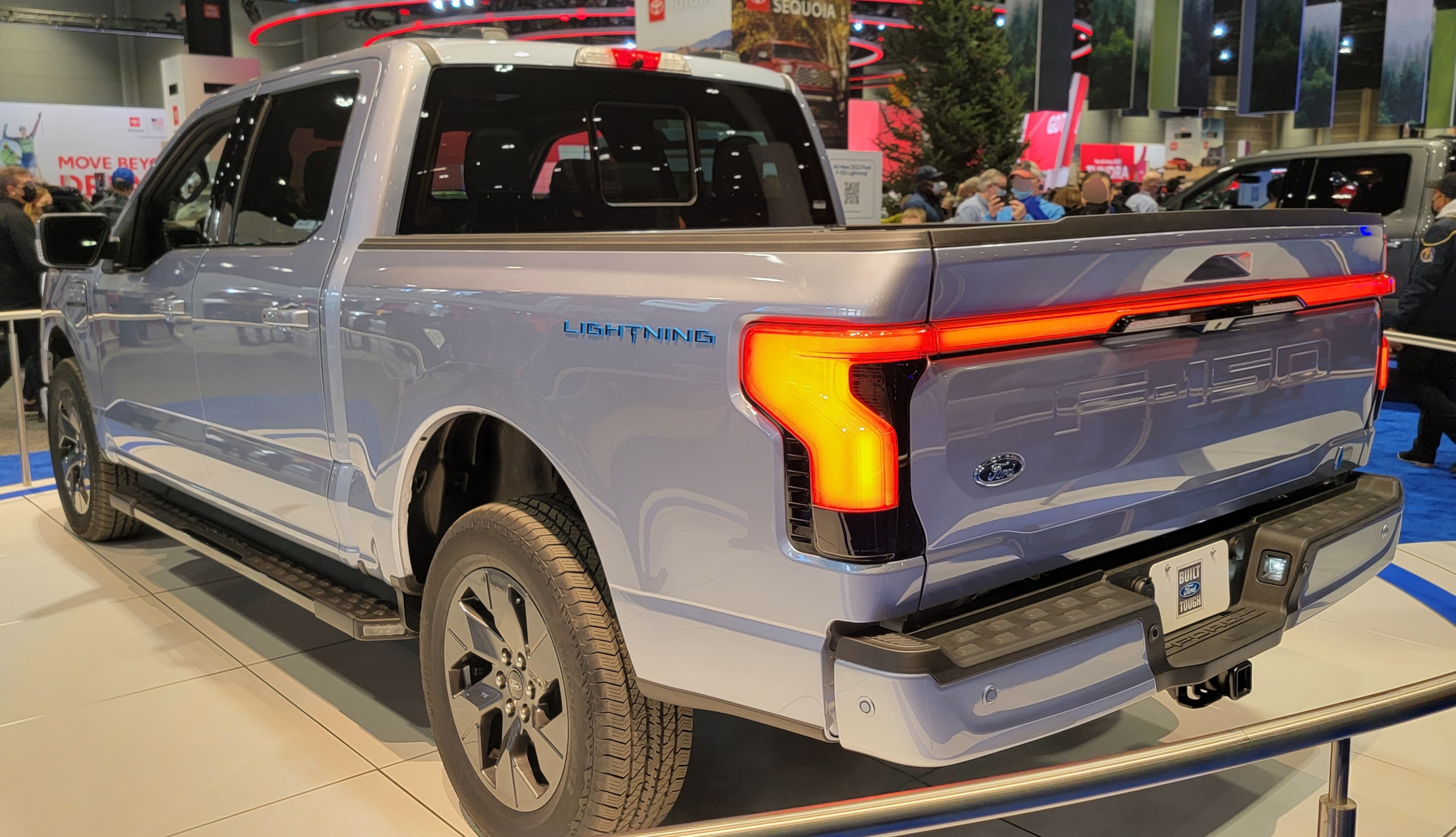
The EU is considering rules that would limit how many U.S. pickup trucks can be sold there. That can make those trucks harder to find and potentially more expensive.
The U.S. Trade Representative is a government role that handles trade negotiations. Their statements here are about how close the U.S. is to finalizing USMCA-related decisions.
A “sedan comeback” means car companies are starting to sell more regular cars (sedans) again, not just SUVs and crossovers. They do it when they think enough people still want sedans and the pricing makes sense.
A “platform” is like the shared base that a car is built on. If the same platform can make multiple models, it’s usually cheaper and easier for the company to build new cars.
GM is General Motors, a major U.S. car company. The episode focuses on GM’s decisions about what to build at a specific factory and how their EV plans have changed.
Electric vehicles are cars that run on electricity from a battery instead of gasoline. The episode says GM originally planned EV production at this plant, but later changed course.
Stellantis is a big car company that makes brands like Chrysler and Jeep. They’re mentioned because their leaders are also talking about demand for sedans.
Aging inventory means cars that have been sitting on the lot too long without selling. The longer they sit, the harder it usually is to sell them at a good price.
A data-driven approach means using numbers and trends to make better decisions. In car sales, that can help with pricing and knowing which cars to stock.
Operating profit is a measure of how much money the company makes from its main business activities. It shows whether the core operations are working, even before taxes and financing costs.
Tariffs are extra taxes on imported products. If a car is built in Mexico and sold in the U.S., tariffs can make it cost more, so Nissan has to adjust its strategy.
They’re saying Nissan wants to put money into the features people actually want, not just add expensive tech that doesn’t matter to buyers. It’s about matching the car’s equipment to real customer demand.
Fuel economy means how far the car can go on a given amount of fuel. They’re saying their hybrid system is designed to help you spend less at the pump.
Nissan’s e-Power is a hybrid setup where the car mainly uses an electric motor to move. The gas engine mostly works like a generator to keep the battery charged, so you don’t have to plug it in.
Selling more cars helps the company make money because it spreads out the big costs of designing and building vehicles. It also helps the brand keep improving over time.
EV means electric vehicle—cars that run on electricity instead of gas. When people talk about EVs in the industry, they usually mean the big shift automakers are making to build and sell more of these cars.
KPIs are numbers or targets a company uses to track how well it’s doing. The point here is that adding more metrics doesn’t always help—sometimes you should focus on the few that really matter.
Genesis is a luxury car brand. The host is saying they’ll talk about how Genesis builds its cars—strong design and comfortable interiors, plus performance.
LIVE
Experience more profitable end-to-end inventory management, pricing precision with real shopper data,
efficient sourcing aligned to your strategy, AI-powered vehicle descriptions that save time
and drive engagement. Experience more with V-Auto by Cox Automotive.
Welcome to Daily Drive. For Wednesday, April 8th, 2026, I'm Kellan Walker in Las Vegas. Today on
the show, automakers accuse Europe of blocking US pickup imports. It looks like USMCA talks will
miss the July 1st deadline. And is a sedan come back on the horizon? Buick is planning one for
North America. Plus, Nissan America's chairman, Christian Munier, talks about efforts to turn
things around. Sometimes your plan is not perfect, you adjust. That's what this industry is about,
is getting clear direction, execute the plan, and then adjust when needed.
Let's run through all the news you need to know to keep up in the auto industry.
US automakers are accusing the European Union of trying to block imports of large pickups
from Ford, GM, and Stellantis. That's according to the Financial Times. A move like that could
violate a trade deal the EU struck with the Trump administration last year. Here's the issue,
the EU is planning to tighten approval rules that allow a limited number of US pickups to
be sold there. We're talking about 7,000 large pickups, like the Ford F-150 and Ram 1500,
sold in Europe in 2024. The clash could overshadow a broader trade deal that still hasn't been
ratified by the EU. Trade tensions aren't just brewing in Europe. There's a big USMCA deadline
looming in North America. And US Trade Representative Jameson Greer says they're probably not going
to make it. Speaking at the Hudson Institute, Greer said they'll resolve many issues,
just not all of them by the July 1st deadline. The Trump administration has already started
talks with Mexico but hasn't even begun formal negotiations with Canada yet. And General Motors
is bringing a sedan back to Buick's North American lineup for the first time since 2020.
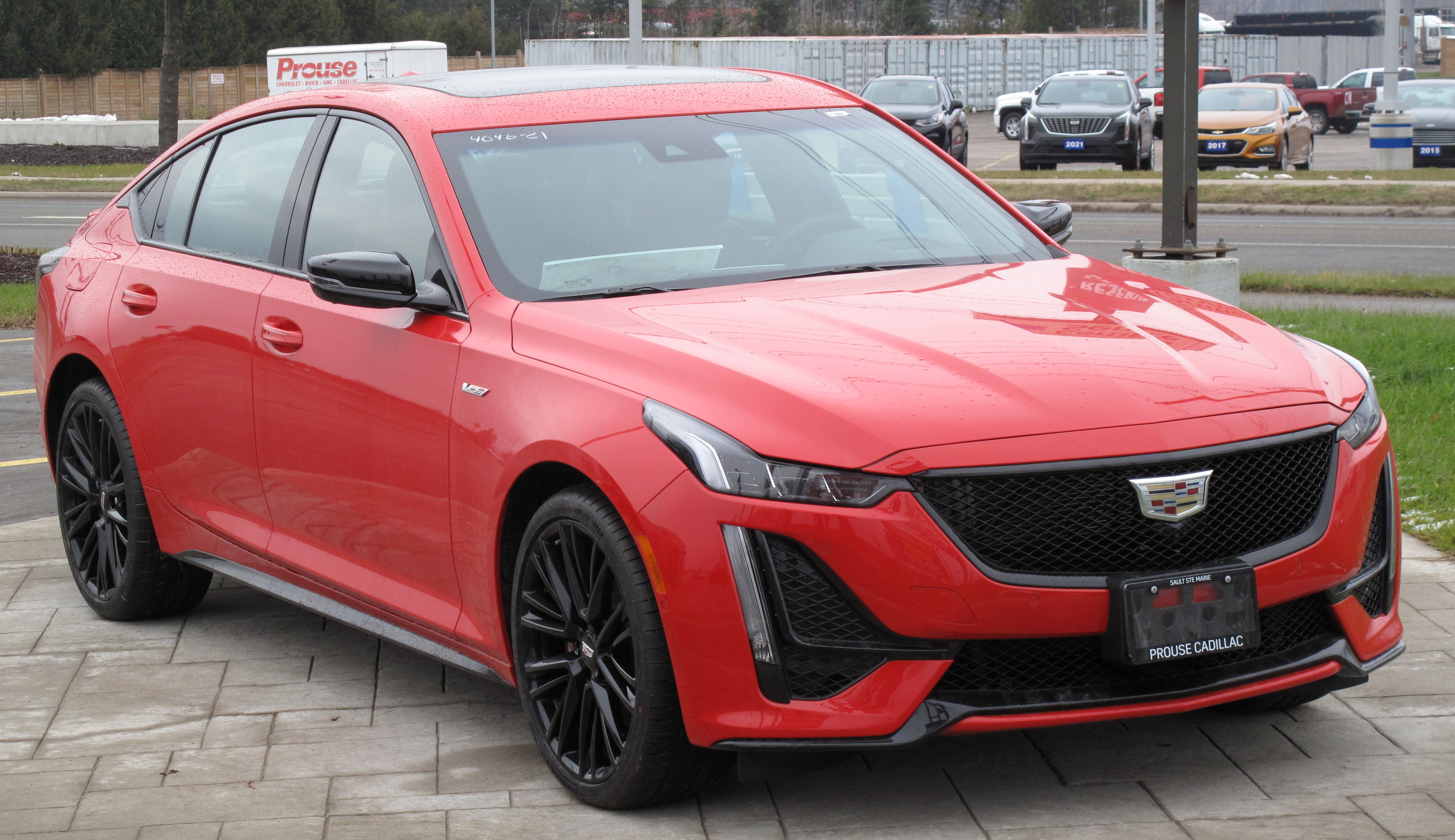
A source at a major GM supplier says the car will share a platform with the next generation
Cadillac CT-5 and Chevrolet Camaro. And it'll be built at GM's Lansing Grand River Plant in
Michigan. Here to talk more about it is our own John Irwin, who covers GM and its brands for us
at Automotive News. John, welcome back to Daily Drive. Thanks for having me.
All right, John. So a sedan, that's an interesting move coming from an automaker that has mostly
abandoned that segment. Why jump back into it? Yeah, it's interesting timing. Obviously,
like you said, GM, for the most part, with a couple exceptions, has largely moved away from
cars opting more for crossovers and obviously the big trucks that are big profit drivers for them.
Buick in particular, it's been since 2020 since we've seen a sedan in the Buick lineup
with the Regal ending in 2020. Since then, it's been all crossovers. For Buick, that was a big
change. Historically, you think of Buick, you think of these coupes and sedans throughout its history.
But yeah, it's been several years since we've seen that. And there are a couple factors at play,
I think, as GM's considering bringing back a sedan for the Buick brand. First of all,
you just look at the plant where it'll be built in Lansing. I already built sedans there at CT5.
It'll eventually build a Camaro as well on the same platform. You already have that platform
there. It kind of makes sense maybe to slap on a Buick badge on a vehicle built on that same
platform. Obviously, the market, the reason automakers, including GM, have sort of moved away
at least to a degree from sedans is because just demand for crossovers is so high.
That's going to continue, obviously. I don't think anyone expects the market for this new
Buick sedan to be massive. But it's large enough where GM feels like it's worth pursuing it appears
just because we've seen kind of a good amount of persistent demand for sedans. There are some
customers that kind of prefer that. And especially that's the case now as affordability has become
a bigger concern. Typically, average sedan on the market will be a little less expensive
on average than maybe a crossover SUV. That might be a factor at play as well. It's another offering.
That's something GM's kind of keeping an eye on is affordability. That's something that they like
to keep touting is there. The number of vehicles of theirs that are sold below $50,000. And while
this one might not be below $50,000, it might end up being one of the more affordable vehicles in
Buick's lineup. And we'll see what ends up happening. There are a lot of details that we
still don't know. But it's kind of an interesting play. And GM clearly thinks that there's enough
of a market for a sedan, even in a crossover heavy market, that makes this worth it.
And what would this mean for the Lansing Grand River plant, especially after CT4 production ends
in June? Yeah, that's kind of been a big question is kind of what's going to happen with the Lansing
Grand River plant. Back in 2023, the UAW negotiations, GM committed to spending more than a billion
dollars to retool the plant. The idea back then was that Lansing Grand River would end up building
electric vehicles. Obviously GM, as with the rest of the industry since then, has kind of pulled back
in a lot of their short to medium term EV targets, just given the lower than expected growth in sales
and the pullback in incentives and that sort of thing. So it's kind of been an open question of
what's going to happen with Lansing Grand River? What are they going to build there? The CT5 is
basically the only thing still slated for it after the CT4 ends in June. And so while they're still,
I asked GM as part of this story, are you still committed to spending that one billion plus on
the plant? I got no comment there, but they have said in the past that they're still committed to
investing in that plant. As part of that might be instead of retooling, instead of for EVs,
might instead be a retooling for this next generation platform that they'll build the CT5
next generation Camaro and this new Buick Sedan on. We don't know exactly yet when the Buick will
start to be built, but our source says that the Camaro and the CT5 next generation will start
being built in 2027. So the Buick will probably come some time around then or maybe afterward,
but it kind of provides a little bit of clarity at least as far as what's going to happen with
Lansing Grand River. It's still maybe underutilized to a degree. None of these vehicles are going
to be super high volume or anything along those lines, but it does provide at least a little
bit of stability and a little bit of an idea of what's next for that plant.
Quick prediction, John. Could this signal a broader sedan come back?
It could. I mean, you're seeing a little bit from Stellantis as well, where their executives
are saying, oh, you know, there's kind of a market for sedans. It's still a crossover heavy
market. People still have their crossovers and SUVs, but there is a market for sedans,
and it's proven to be relatively persistent. And I think you're going to see, I wouldn't
be surprised if you see automakers at least step back into that space a little bit. Maybe
not to the degree that they were before, but at least have an offering or two.
Perfect, John. So insightful. Thank you so much for joining me.
Thanks so much.
Coming up, Kristen Mounier, chairman of Nissan Americas, talks about the
automaker's turnaround strategy and where it's heading. That's next on Daily Drive.
Are you a dealer creating a workplace culture your employees are proud to be part of?
Applications are now open for the 2026 Automotive News Best Dealer Ships to Work for program.
This isn't just an award. It's a chance to get real insight into what's working
at your dealership and where you can improve. And we've expanded the categories this year,
recognizing everything from technician experience and leadership development
to AI enablement and employee retention. The registration deadline is April 17th.
Find out more and apply at AutoNews.com.
Running a dealership today isn't just about finding the right cars.
It's about finding the right cars consistently, efficiently, and at the right price,
while the market keeps shifting around you. Inventory management has become more complex.
Vehicles come from more sources, margins are tighter, and every buying decision carries
more risk than it used to. Yet too often, inventory decisions are still made with
fragmented data, disconnected tools, and limited visibility into what's actually working.
The most successful dealerships are approaching inventory differently.
They're managing it as a system, not a series of one-off decisions.
They're looking at market data, demand signals, pricing, and acquisition opportunities together,
so every move is more informed and more intentional. When inventory is managed end-to-end,
teams spend less time reacting and more time acting. They can see what's selling,
what's stalling, and where the next opportunity is coming from. That clarity
helps reduce aging, improve turn, and protect profitability.
The right vehicles are out there. The difference is having a smarter,
more connected way to find them, price them, and move them. Learn how dealerships are rethinking
inventory management with the auto, and what a more confident, data-driven approach can do for
your business. Welcome back to Daily Drive. I'm Kellen Walker. Nissan has faced a turbulent few
years, from leadership upheaval to sales struggles. But the brand is working on a bold turnaround
plan with new leadership and a refocused approach. Our own Molly Boygon spoke with Christian Munye,
chairman of Nissan Americas at the JD Power Auto Forum in New York City. They talked about Nissan's
strategy for regaining momentum, the brand's product pipeline, and how Munye is positioning Nissan
for the future. Christian Munye, thanks so much for joining us.
It's a pleasure to be with you today. So we just heard you on stage at New York Auto Forum here
at the Javits Center, and you were talking about reNison and your plans for the brand.
You were asked about how you're feeling about the turnaround, and you said something along the lines
of expecting to have another year, you being around 50% or 60% of the way through. So I'm
wondering how confident are you that Nissan will return to profitability in fiscal year 2026?
So in fiscal year 25, if you look at the financial results of the company at a global level, we're
already in a positive operating profit. So that means the momentum is back in. But we still have a
lot of work to do on the free cash flow especially, so that we generate free cash flow positive as
soon as possible. And that's our mission. Our mission as a company, obviously my mission as a
chairman of the region, because this region is critical for the success of Nissan going forward.
So we're on it. I said 60% because I really am optimistic by nature, but it's also because
we delivered a lot of good things this year. So I think the sales momentum is there.
Sales are up. In the last six months, we've been the fastest growing brand in the U.S., which I'm
pretty proud of the team to have delivered. The financials are much better than they used to be.
We've reduced a lot of costs. So when your revenues are up, your costs are down, and the team is very
focused and the dealers are starting to make more money than before. I think there's a lot of
good things happening and trend is everything in this world. Is it perfect? No. Are we making a
dent? Yes. And I think the trend is super positive. So let's go. I think Nissan is coming back.
In terms of the path forward, I think the cost-cutting efforts are very visible and very obvious.
And a greater challenge or a more complex challenge would be the revenue growth. So where are you
thinking that that revenue growth is really going to come from? The revenue growth is happening.
As I said, 20% up in the last six months in the U.S. market, we're growing in Mexico as well.
We're growing in Canada. So I think in the region overall, we're growing a lot. And I think it's
really about focus. It's about focus on a few models that are doing well. So in the U.S.,
so Rogue, Pathfinder and Frontier, and they're doing extremely well. We're growing significantly
on those models. And the good news, they are entirely free. So we're making money as well. So
revenue growth at the same time, profit growth, that's what we need to deliver.
And in terms of the tariffs, this also came up on stage. Nissan is dealing with some reliance on
Mexican manufacturing and assembly. You were saying on stage that in order to sort of make up
that tariff cost, you'll be focused on cost reduction. Are you talking specifically about
cost reduction in Mexico, or what did you mean when you said that? Altogether, we need to put
the features and the content that the customers are willing to buy. And I think we've got lost
at one point in time just putting technology for the sake of it, for technology, super complex
technology that really didn't add a lot of value, but added a lot of cost. So what we're looking at
is what do the customers really want and nothing more, right? Nissan used to be a pretty simple
brand, right? It was about durability, quality, reliability, safety. At the same time, you had
that spice. We're not a vanilla brand. We're not an appliance brand. We need to bring some
emotion to the customer. So quality, reliability, but at the same time, emotion, driving dynamics,
and affordability. Affordability should be a core component of what Nissan should be.
So put the right content that the customers are willing to pay for and nothing else. That's
what we're doing. When you talk about some of those tech additions or features that were perhaps
beyond what the customer was really looking for and added cost, what types of things are you
thinking about? Ultimately, it doesn't impact the customer at all. The customers won't see a
difference in the most part. And the good news is we do some cost reduction, but at the same time,
we deliver better quality. The quality of the product we built today is the best it's ever
been in the last 25 years. It's ahead of other Asian brands. We've been number one IQS JD Power
last year, and I hope we're going to get it again this year because the quality of our product is
the best it's ever been. You just need to decide where you put your money, where you put the cost,
and you put the cost where it brings value. Nothing else. It's like power train. Customers,
want an EV, we get them an EV. Some people want a hybrid, we'll get them a hybrid. I think you
need to have a spectrum of products available to please the customers and give them what they
want in terms of mobility. And speaking of quality, I do want to ask you about the February recalls
for Rogue SUVs. Why do you think that Nissan originally argued against the recall? I don't
know about the past. What I know is we take care of the customers. We're very focused on this issue.
It's not a big population of cars, but we take care of the customers and we'll solve it for the
customers. And also, going back to your comment about offering consumers a diversity of power
trains, you seemed really excited about the hybrid offerings from Nissan on stage. How do
you plan to compete with some of the other manufacturers that have established hybrid
dominance already here in the United States? So sometimes it's an issue to be laid to the party,
but sometimes it gives you a little bit more time to get the best technologies at the best price.
And I think that's what we're going to do with what we call e-power hybrid, the hybrid e-power.
It's a new technology that we're going to bring, which is very different from the traditional
hybrid systems, but it delivers great fuel economy, great acceleration, super quiet. So it brings
everything the customers want at an affordable price. So I think we're going to get the best
technology late, maybe, but with the best for sure. Can you say a little bit more about that?
How was Nissan kind of using this extra time? Is it that the technology is entirely new
and sort of proprietary? Is it that it was in development and could only be applied
to products later on? Can you say a bit more about that? So with the hybrid e-power technology
that we're bringing to the US, it's the third generation. So there's been 1.5 million cars
sold across the globe in Asia and in Europe, but the technology was not ready for this market.
At least that's what we thought at the time and it was important for us to get it right.
And it took a little bit too long, but now we're coming in this summer and hopefully the customers
recognize the value in it. I also want to ask you about the Honda merger. So from your perspective,
what happened? Why did that not come to pass as expected? I don't really know all the details
and it doesn't matter. I think the past is the past. I think now we're working potentially on a few
projects with Honda and some others, but it's on a project basis and that's what matters. I think
we're very focused on fixing the company, on getting the re-Nissan back on track and get the
company to shine again like it used to be, shining and we're very focused and we're bringing Nissan
back. So is it fair to say that you are looking at partnerships more on a project to project
level generally rather than mergers on a larger scale? That's what we do. I think the company
had forgotten that scale is important in our business, in automotive. Millions of cars that
you engineer, that you build, give you the scale and the cost base for you to offer a better product
and a better cost for the customer and that's what we need to deliver. So volume is important.
We need to sell cars before we make money and we had forgotten that. We're back focused on
selling cars and taking care of the customers. I think that you have a very hard job. I think
that you've come in at a time of turnaround, tariffs, this failed merger, the recalls issue.
What are you most laser focused on? What area do you think is going to have the largest impact in
terms of this turnaround and making the brand shine as you said? It's pretty exciting by the way
because I think we're in a very, very exciting industry that is always in motion. It's never a
moment. You never get bored. It's been a little hectic in the last few months for sure, for Nissan
but also for the industry altogether, between EV, the tariff and everything else. So it's been
pretty hectic at the same time. It's pretty exciting. That's what makes it exciting to be an executive
and the day when I get bored, I'll do something else but I don't have a minute to get bored.
What is really exciting for me is to work with the team, build a vision, a direction and then
execute. I think simplification is one thing that I've been very focused, laser focused on because
I think when things go wrong, in many cases the number of KPIs goes up instead of going down
and we've eliminated a ton of KPIs, a lot of things that don't really add value. So simplification,
laser focused on the objectives and on the executions and sometimes your plan is not perfect,
you adjust. That's what this industry is about, is getting clear direction, execute the plan and
then adjust when needed. That's what we're focused on. Great. Christian Munia, thank you so much for
joining me. Thank you. That's Daily Drive for today. I'm Kellan Walker. Thanks to Automotive
News executive producer Jake Neer as well as our own John Irwin for his reporting for today's podcast.
We also had reporting from Peter Siegel of our sibling publication Automotive News Europe.
You can get the latest news on Nissan's turnaround efforts, trade policy and everything happening
in the auto industry at AutoNews.com. Come back tomorrow for a conversation with Genesis COO,
Ted Mingusday. The foundations of our brand have always been great designs, great interiors and
then we married up performance with it. We'd love to hear from you. Let us know what you think of
the show and the topics we covered today. Send us an email at dailydrive at autonews.com
or leave us a voicemail at 313-444-2774. And if you enjoyed the podcast, remember to like,
leave a review and subscribe so you never miss an episode.
About this episode
Trade and product strategy dominated the news: U.S. automakers are accusing the EU of tightening rules that could limit large pickup imports, while USMCA talks are likely to miss the July 1 deadline. GM is planning a Buick sedan for North America, built on the same platform as the next CT-5 and Camaro, with Lansing Grand River as the key plant—sparking talk of a broader sedan comeback. Nissan America chairman Christian Munier discusses the turnaround, aiming for profitability momentum and free-cash-flow gains through cost simplification, better value-focused content, and its third-gen e-power hybrid tech.
Christian Meunier, chairman of Nissan Americas, discusses the brand’s turnaround strategy and future direction. U.S. automakers accuse the European Union of blocking large pickup imports, potentially violating last year’s trade deal. Plus, Buick plans a new sedan for North America.