A street track is a race course made from regular city roads. Because it’s tight and has walls close by, drivers have to be more careful than on a normal race track.
A qualifying session in Formula 1 determines the starting grid for the race. When the hosts say it might be the closest and most competitive qualifying session of the season, they’re highlighting how tightly matched the cars and drivers are over one-lap pace.
The “paddock walk-in” refers to a team’s public-facing appearance in the paddock area, often involving drivers and team members arriving or presenting themselves for media and fans. It’s a recognizable F1 social/PR moment rather than a track action.
The Monaco Grand Prix is an F1 race on city streets in Monaco. It’s famous for being very twisty and hard to overtake, so qualifying and strategy matter a lot.
A pit stop is when the car comes into the pit lane during the race to change tires (and sometimes make quick adjustments). When you do it can make a big difference to your race result.
It’s like a race “pause” that’s controlled by the officials, but without a real safety car driving out. Drivers have to slow down in a specific way, and it can change when teams decide to pit.
Term
zebra crossing
A zebra crossing is a painted road marking, but on Monaco it can interact with the car’s tires and suspension because the circuit is built on real streets. Hitting it at the wrong moment can upset traction and contribute to sudden loss of control, as described here.
“Rear tyres” are the tires on the back axle, which heavily influence traction and stability under braking, acceleration, and cornering. If the rear loses grip, the car can rotate or slide into barriers—especially on a street circuit like Monaco.
GP2 was a racing series that helped drivers move up toward Formula 1. It’s like a top-level “training ground” where you learn how to race fast cars under pressure. The guest is saying they did well there at Monaco before reaching F1.
The “feature race” is the main, longer race of the GP2/Formula 2 weekend. It usually involves more strategy—like managing tires and timing pit stops—so it’s not just about raw speed. The host is using it to clarify which race the guest won.
Curbs are the raised edges at the side of the track. Drivers use them to help take corners faster, but on tight street tracks they can also make the car bounce or feel unstable. That’s why they matter a lot at places like Monaco.
Singapore is another Formula 1 race held on a street circuit. It’s known for being tight with walls close to the track, and it’s also raced at night. The host is comparing it to Monaco to see if the strategy and driving style are different.
Baku refers to the Baku City Circuit used for the Azerbaijan Grand Prix, another street-track layout. Like Monaco, it’s characterized by tight sections and close barriers, so drivers often need a similar “street circuit” approach: careful car placement, strong qualifying, and high precision through slow corners. The host brings it up to compare how Monaco’s demands differ from other street races.
Sainte-de-Votte is a specific turn on the Monaco track. It’s in a spot where the road is narrow and the walls are close, so mistakes can be very costly.
On Monaco, drivers often can’t push hard immediately because the circuit is so narrow and unforgiving. The hosts describe a need to build into the lap—finding grip and confidence—rather than going all-out from the first moment.
Mirabeau is a part of the Monaco track where drivers have to be precise. Even if there’s some extra space nearby, it’s still easy to hit the barriers if you get it wrong.
Runoffs are areas beside the racing surface designed to slow a car down if it leaves the track. On Monaco, the hosts stress that even when runoffs exist, they’re not something drivers want to count on because the recovery can be tricky and barriers are still close.
A chicane is a sequence of alternating turns that forces cars to slow down and change direction. The transcript mentions the second half of the lap after the chicane, linking it to where practice yellow flags are common.
Yellow flags are a safety signal used in motorsport to warn drivers that there’s a hazard on track (like an accident or debris). Drivers must slow down and be prepared for reduced visibility or blocked sections, which affects practice pace and strategy.
“Mid-corner” is the middle part of a turn, around the tightest point. That’s where the car needs to stay balanced so it can grip the road and set up a good exit.
“On the power” means pressing the gas pedal to start accelerating. When you do it matters a lot because the car needs grip to avoid sliding or losing control.
The “electrical motor” is the electric part of the hybrid system that adds extra push. In a race like Monaco, that extra torque can help the car accelerate out of corners sooner and more strongly.
Torque is the “twisting force” that makes the car accelerate. More torque usually means the car can pull away faster, like when you’re exiting a slow corner.
Bahrain is where one of the Formula 1 races is held. It’s an early reference point the host uses because that’s where they first noticed the cars behaving differently. It helps set up why they expect Monaco to be similar or even more dramatic.
Rear sliding happens when the back tires don’t grip as well, so the car’s rear starts to move sideways. Drivers often have to correct it to stay in control. The host is saying the new car behavior could make that more noticeable at Monaco.
Canada is another Formula 1 race the host is using as a comparison. They’re saying the driving style and car behavior they saw there could show up again at Monaco. It’s basically a “we’ve seen this before” argument.
“Wet” means the track has rain or is damp. Less grip makes it easier for the car to slide, so drivers have to be more careful and adjust their driving. The host is hoping to see how the new cars handle in those slippery conditions.
Ride quality is how smoothly an F1 car moves over bumps, curbs, and uneven track surfaces. Better ride quality usually means the car stays more stable and predictable, improving traction and driver confidence.
F1 tracks are split into a few sections for timing. By looking at each section’s time, you can tell where a driver/car is fast or struggling.
Concept
worst weekend in Formula One
In F1, a “worst weekend” means things went badly across the whole race weekend, not just one moment. The discussion is about how tough it is to bounce back quickly for the next Grand Prix.
It’s how fast the car is when it’s going mostly straight. Monaco has fewer long straights, so being great in a straight line doesn’t help as much as being good through corners.
Bridgestone and Michelin were different companies making the F1 tires. The hosts are talking about that tire-supplier era and how it changed the weekend schedule and planning.
Fiorano is Ferrari’s own test track near their base in Italy. Schumacher would go there to practice race starts and work on what he learned during the weekend.
“Testing was open” means teams had more opportunities to practice and develop cars outside the official race weekend. The hosts are saying that made it easier for a driver to stay sharp and keep working on skills.
Nouvelle Chicane is a particular set of turns on the Monaco track. It’s a spot where braking and turning have to be really precise, and getting it wrong can ruin your lap or cause a crash.
Term
Q1
During F1 qualifying, Q1 is the first part. If you don’t go fast enough in that first session, you’re knocked out and can’t race for the top starting spots.
“Charles” is Charles Leclerc, Ferrari’s driver. They’re saying he has the best chance at Monaco because the track is so unusual that it can favor the right driver and setup.
McLaren here means the McLaren Formula 1 team. They’re talking about how McLaren’s car might do well at Monaco, especially after a front-wing change that struggled in a previous race.
“Inters” are intermediate tires used when the track is wet but not completely soaked. They’re designed to work in that in-between weather so the car can still grip.
The front wing is the aerodynamic piece at the front of the F1 car. It helps push the car down onto the track so the tires can grip better, and a new version can change how the car feels in corners.
“Compliant” here means the car can handle bumps and uneven track surfaces without losing its grip or balance. It’s about keeping the aero working smoothly rather than becoming twitchy or inconsistent.
Downforce is what the car’s aero creates to press the tires harder onto the road. More downforce usually means better grip in corners, but it can also affect balance and how the car behaves.
Energy deployment is how the team decides when to use the car’s stored hybrid power. Use it well and you can be faster when it matters, without running out too early.
Wheelbase is how long the car is between the front and back wheels. A shorter wheelbase can make the car feel quicker to turn in tight corners, which matters a lot on Monaco’s twisty layout.
Term
differential of entry speeds
Entry speed is the speed when you start turning into a corner. If one car is faster at that moment than another, it can get a better line and usually has the advantage to set up the rest of the corner.
This is about storing energy and then using it at the right time. The car recovers energy when slowing down, then “spends” it to get extra acceleration when it matters most.
Red Bull Powertrains is the part of Red Bull’s F1 operation that handles the engine and energy system. They’re pointing out that it’s had its first podium, which is a big milestone.
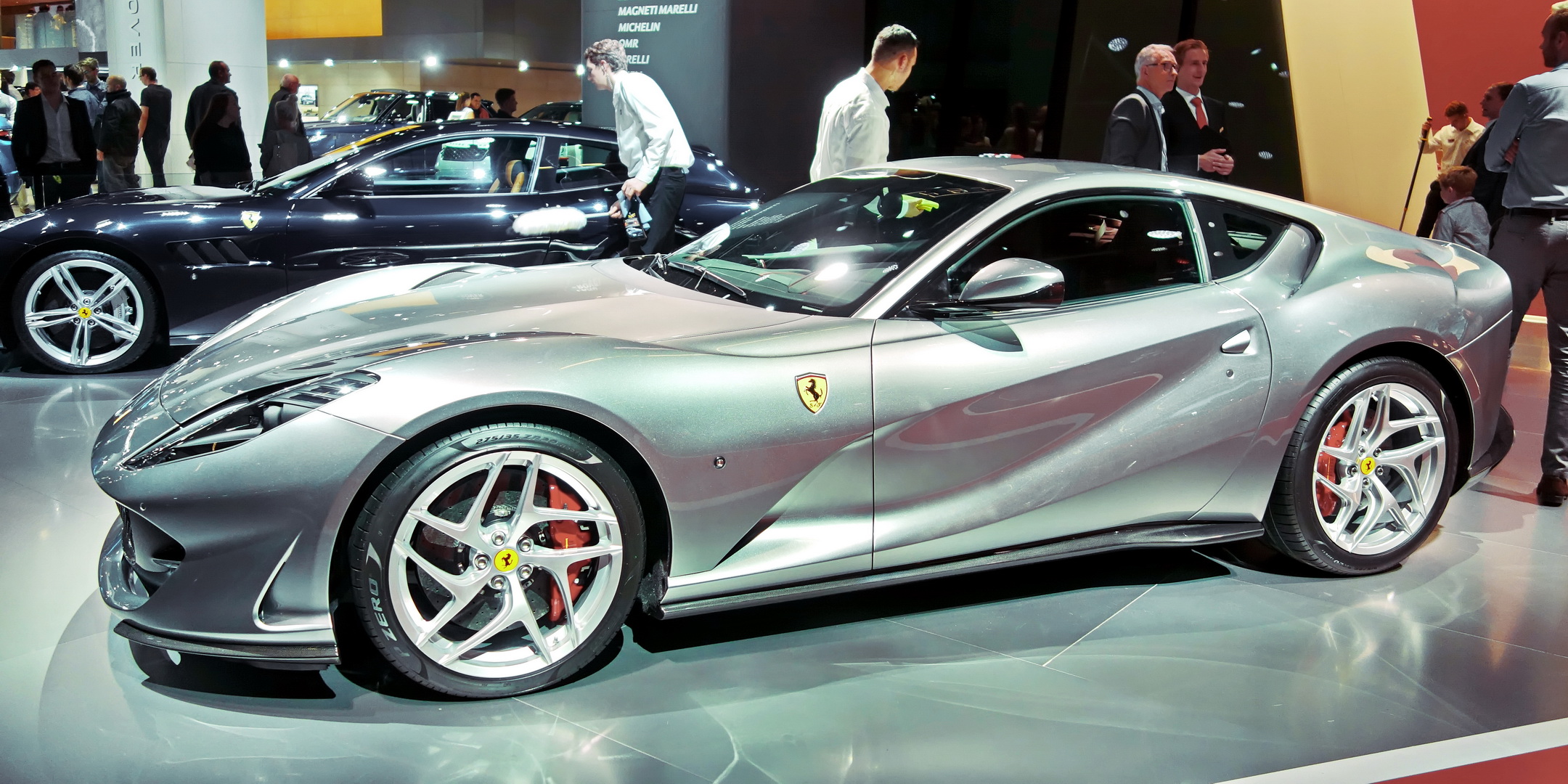
The Ferrari 812 Superfast is a very powerful luxury sports car made for driving quickly on regular roads. It uses a big V12 engine and is designed to feel fast and exciting, especially at higher speeds. It’s mentioned because it represents Ferrari’s top level of performance in road cars.
Nouvelle Chicane is a particular tight section of the Monaco track. It’s easy to hit the wall there if you’re not perfectly on the right line and speed.
Alpine is a Formula 1 team. They’re talking about Alpine getting a major sponsor deal, which suggests the team is becoming more attractive to big global brands.
Luca D'Ameo is a business executive. The hosts say he used his connections—having worked at Alpine and later leading Carang—to help make a big sponsorship deal happen.
Gucci is a luxury fashion brand. Here, they’re talking about Gucci sponsoring an Alpine Formula 1 team, which is a big deal because it brings a very high-end brand into F1.
Person
Flavio
Flavio is mentioned as someone connected to the people behind the deal. The point is that relationships and connections helped make it happen.
“Renault engines” refers to the power units supplied by Renault to an F1 team. In this segment, the host says Alpine is moving away from Renault engines, implying a change in the technical package that can affect performance and development direction.
A “customer team” is an F1 team that gets its engine from another company instead of building and running its own engine program. They still design their own car and race it, but the engine comes from a supplier.
LIVE
Our Ferrari favourites.
Feels too bold to actually say that right now, but it's their best chance by far.
But what about Charles then? He's just had what he called his worst weekend in Formula One.
Do you think he's going to be on the back foot?
I have to say, Canada is not a good preparation for it because he was so despondent.
So I think you're going to see the bounce back from Charles this weekend.
Do you have to treat Monaco differently to other street tracks?
You can't treat it any other way. Monaco just treats you differently.
If George is going to beat Kimmy, he's probably going to have to resort to some ways of beating him off the racetrack.
It's operation take pressure and expectation off yourself, isn't it? That's what it is for George.
This might be the closest, most competitive qualifying session that we have all season long.
Alpine and Gucci are getting together from 2027.
There's going to be some excited people on the old paddock walk-in on Thursdays, aren't there?
When the Alpine drivers come in dripping in Gucci.
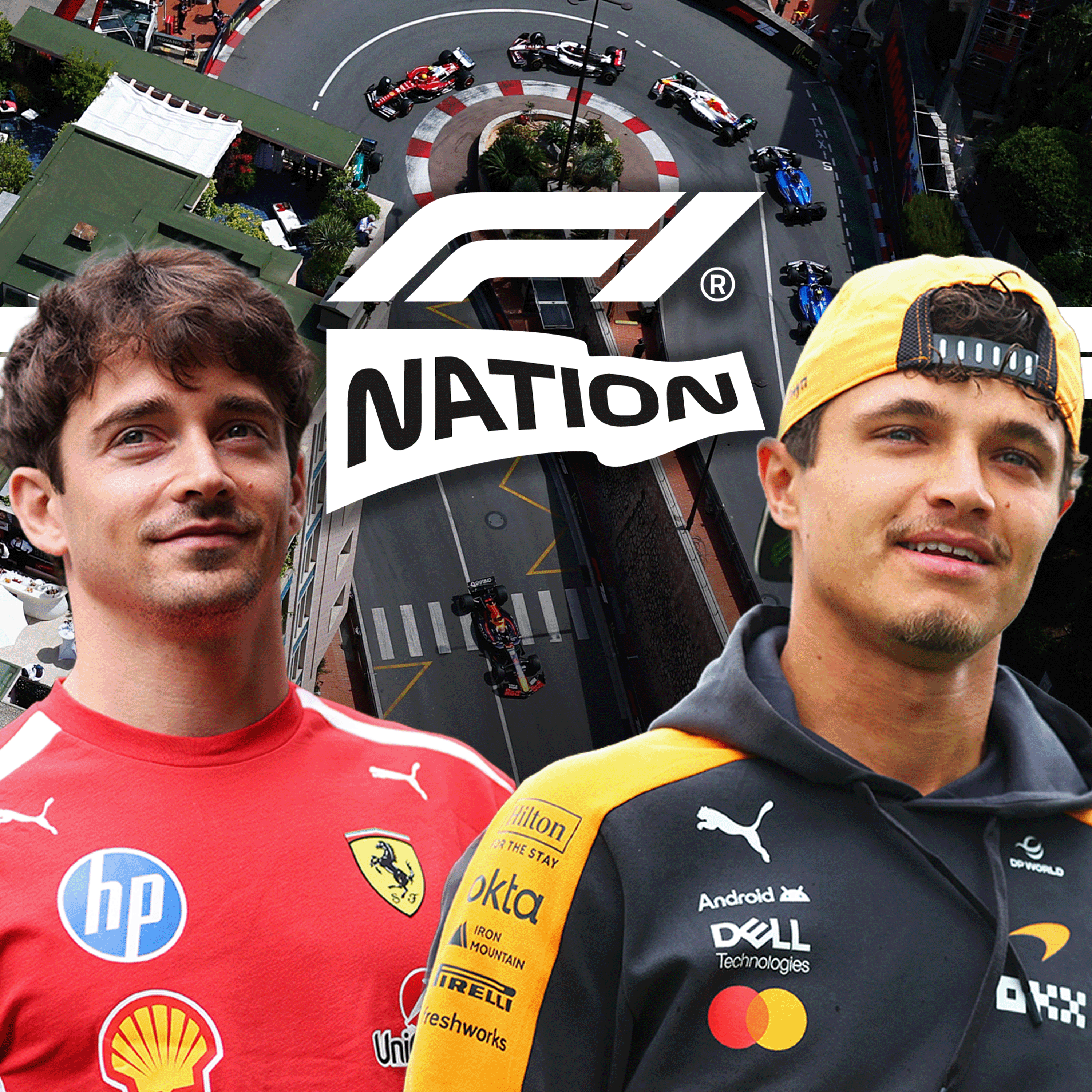
Welcome everybody to F1 Nation's preview of the Monaco Grand Prix.
I'm Tom Clarkson and I'm back with my regular teammates, Jolien Palmer and James Hinchcliffe.
Guys, first up, how are the boys?
Good. Very good, TC. Absolutely scorching in the UK.
Do you remember how cold it was that Sunday of Canada?
It got off the plane and it was like tropical weather.
A bit of a shock.
Mind you, it didn't look much better in Indie Hinch, actually, where you were, right?
It was now a little warmer but the same thread of rain throughout the weekend,
but ultimately rain held off for the most part and managed to get in all 500 miles of what was,
I mean, an absolute legendary race at the Speedway.
Going to go down in history as one of the greatest of all time.
Closest finish in 110 years to be on site for that.
To be in the booth for that was something truly special.
So congrats for your chosen quest on quite an accomplishment.
Yeah, it was mega. That last lap was awesome, wasn't it?
But we haven't spoken to you, Hinch, since the Canadian Grand Prix.
I hope you've had a chance to rewatch it since last Sunday.
What did you make of Kimmy Antonelli's fourth on the bounce?
I mean, look, how much did we talk on this show about how this was going to be a pivotal one?
And look, let's ignore the DNF from George for a second.
Let's look at those first 30 laps.
JP, you said it in the booth.
You said this race has the making of a champion.
It was kind of like whoever came out on top of this battle
because it was an epic battle for those first 30 laps was really sort of planting their flag.
But I got to be honest at a track that we know George runs so well at
for Kimmy to be as close as he was the entire weekend.
And the aggression that we saw from him when it comes to racecraft.
Oh, man, I've been so impressed.
I've been so impressed.
The little sprint race faux pas side.
I think he's the only driver that didn't see that coming, I guess into turn one on the outside.
But he cleaned up his act for the Grand Prix.
Only just my God, it's close for teammates.
But I love that.
I love the fact that he's willing to push it to the absolute nth degree.
That's what you see out of the Max Verstappens of the world.
That's what you see out of champions.
And so it's a record breaking weekend in Montreal as well, right?
First forever to win their first four in a row.
And it's a true statement for sure.
I've got to pick you up on one thing here, Hinch, as well.
Do you remember a few weeks ago?
I don't know if it was after China or Japan and we were talking about the rivalry there.
And I said, yeah, I've seen George get his elbows out.
And you were like, I don't know if Kimmy's got it in him.
To be fair, I didn't disagree.
But what we saw in Canada was, I think Kimmy has got it in him, no?
I completely agree.
He was pushing it.
I mean, borderline irresponsibly at times.
Not even just for a teammate, just for the sake of finishing the Grand Prix,
firing it off a few times, but they never made contact.
Ultimately, George was ahead when his engine failed.
But man, Kimmy was quicker.
I don't think that there's a doubt in my mind that over the distance,
it was going to be very tough for George to keep him back.
That amount of pressure that he was putting on him the entire time.
Both drivers making mistakes when they were out in front.
We saw them both locking up into 10 only when they were leading,
never when they were the trailing car.
So this is a fun little battle we've got.
And it's going to be fascinating to see what happens in Monaco,
which is such a unique racetrack, isn't it?
And it's 10 years since Red Bull infamously cost Daniel Ricardo victory in Monaco
when they weren't ready for his pit stop.
And perhaps more memorably for this show, it's also 10 years
since F1 Nation's very own JP had his first taste of Monaco in an F1 car.
Into the barriers it is, Jolien Palmer.
The virtual safety cart will now bring this race to a halt.
And down at Sandoval, Jolien Palmer crashes out of his first Monaco Grand Prix,
bringing to an end what has been a pretty wretched weekend for the British driver.
On the zebra crossing, it was a zebra crossing.
Lit up the rear tyres, spat him straight into the barrier.
Absolutely nothing he could have done about it.
JP, I'm so sorry to remind you of that.
Are you?
Yeah, cheers, DC.
Cheers.
All the great memories come flooding back on this show.
A scoop from Martin Brundle and maybe a let-off from Crofty there.
Nothing I could have done about it.
Possibly I could have gone a little bit slower over it or something
because I was the only one that got tripped by the zebra crossing.
Haunting days.
But JP, let's put a positive spin on it now
because you actually won at Monaco twice in GP2.
The feature race, the most recent one in your championship year.
Tell us about Monaco and what this legendary racetrack has in store for the drivers.
Yeah, it's honestly, it's my favourite track.
It's unbelievable.
I was actually always quick there when I was racing in GP2.
Won there twice as you said.
And the buzz of driving is just, it's insane.
It's absolutely insane.
The track feels as narrow as it looks on the telly.
Possibly it feels even tighter.
But you just get locked in.
You get locked in, you're in the zone, the bumps, the curbs, the walls.
It all just becomes second nature.
And yeah, up until Formula One, loved it.
Got there in a Formula One car.
And as Krofty mentioned, it wasn't a great weekend
because I already crashed a couple of times then.
So it was a different experience, but it is such a cool race.
And actually even now, it's one of my favourites in the year.
Do you have to treat Monaco differently to other street tracks?
Is it different to Baku?
Is it different to Singapore?
Yeah.
But it's almost so different that you can't treat it any other way.
Monaco just treats you differently.
I mean, you leave the pits, you head up the hill out of Sainte-de-Votte
and you're just staggered at how narrow it is, how easy it is to crash at any given moment.
You've got so much horsepower.
It's dirty and dusty at the start of a race weekend.
There's obviously a temporary track and all of those things play out.
And you just cannot attack from the off.
You have to build into Monaco.
I think the other circuits, you've got a little bit more leeway,
Singapore, Baku, your big braking zones, you've got more margin.
Even if you go off at Sainte-de-Votte or Mirabeau,
you know, there are some runoffs there,
but you don't really want to guarantee that you're going to be using them.
You still have to build up because they're a tricky reverse out.
If you get caught in two mines, you can easily stuff it in the barriers.
And then there's the whole second half of the lap after the chicane,
which is probably the one where you will see loads of yellow flags in practice
because you can bail through there a bit quicker.
But the rest of it is pretty exhilarating to back the swimming pool.
And then the Rascals and Antony Nogues right at the end as well.
How many times have you seen someone just brush the barriers there?
It's just like nothing else.
But that's what makes it so insane and puts a smile on everyone's face.
It's so unforgiving.
I mean, hinge of all the racetracks you haven't yet raced on
is Monaco kind of top of the list of the ones you'd love to do?
It's on the podium for sure.
I always loved street tracks.
I always loved that challenge.
The zero margin for error.
How much are you willing to push through that mid-corner?
How early are you willing to get on the power?
Is it going to stick on the exit?
I always really love that challenge.
And then obviously the history of that place.
That's what makes these hallmark events so special is the history.
You could go put a tight twisty street course somewhere else in the world
but it's not going to be Monaco.
So for sure that's one that I've always wanted to take a crack at in something.
Maybe not straight into an F1 car.
But it'd be nice to go there like...
You're debut with Haas.
Yeah, we're going to take you to Monaco hinge.
We'll take two boxes off with one.
What do you think the 2026 cars are going to be like there?
I mean, I have been excited about Monaco since before the start of the season.
All the added torque that we have with the electrical motor now.
It's kind of like these cars were made for Monaco is my feeling.
What do you guys think?
Yeah, 100%.
I think from the very moment I arrived in Bahrain and saw them moving around a lot more.
They got less downforce.
And I really think the shorter wheelbase is going to be more interesting here.
The cars are just smaller as well, but not by a huge amount that's going to change anything.
But it's the shorter wheelbase where they're livelier.
You could see it in Canada as well.
The way that a lot of the drivers are just hustling with the rear sliding.
Imagine you've got that now in Monaco.
They are just a little bit pointier and they've got less downforce.
You combine those two, plus the fact that they're a little bit smaller.
And it's going to be brilliant, I think.
And the forecast is not great for Friday.
There's going to be a little bit of rain around on Friday.
I think the weekend looks clear.
But first laps for Arvid Lindblad in a Formula One car around Monaco might be wet.
And first laps for these cars for a lot of drivers.
Certainly on a race weekend in the wet to be at Monaco.
We heard all the concerns about Montreal with the walls being close and all the rest of it.
Well, this is a completely different thing there.
So I hope for their sake.
I'm curious to see what these cars are like in the wet.
I really hope for the driver's sake their first wet experience is it in Monaco.
So they were saying in Canada.
They were saying, oh, if it's wet in Canada, it really doesn't get worse than this or harder than this.
It can.
It can.
That'll be Monaco.
Monaco's like, hold my beer.
Can make you give up on the whole thing entirely.
You get stuck trying to remember a password looking for your bank card updating your delivery details.
And what should have taken 30 seconds somehow becomes an unnecessary admin task.
But that all becomes a distant memory when you see that purple shop pay button.
Because with shop pay, your details are already saved.
So check out becomes incredibly quick.
Just a couple of taps and you're done.
And that's all thanks to Shopify, the commerce platform powering millions of businesses around the world from huge brands to people just getting started.
Shopify gives businesses everything they need in one place, ready made website templates, AI tools that help with product descriptions and images,
plus built in email and social media tools to help brands reach customers more easily.
And if you ever get stuck, Shopify is always around to share advice with their award winning 24 seven customer support.
So less carts go abandoned and more sales go with Shopify and their shop pay button.
Sign up for your $1 per month trial today at shopify.com slash nation.
Go to shopify.com slash nation that shopify.com slash nation.
Guys, let's look at the pecking order now because after Canada,
Lewis Hamilton, who just finished second was asked about Ferrari's chances of beating Mercedes in Monaco.
And he said, that's the one track that power is not king.
I think it's definitely a car performance track.
And I think our car can be really strong there.
Our Ferrari favorites is, you know, is Lewis Hamilton favorite?
Is Charlotte Claire favorite?
What do you think?
By far it's their best chance.
Are they favorites?
They is tough to cool.
It's really tough to cool.
I think when you look at the performance in slow speed and medium speed corners over the start of the year,
they've been the standout car.
They've got really good ride quality, good compliance over the bumps and curbs.
They never make bad starts.
It looks like Mercedes have maybe started to figure out how to get better starts as well,
but you can kind of guarantee the Ferrari starts.
So maybe we do have to start thinking this is a Ferrari that seems to be, feels too bold.
Feels too bold to actually say that right now, but it's their best chance by far.
And I've been hanging my hat on this being their race winning moment in 26.
I'm sticking with it.
And Hinch, which one? Which driver do you think?
I mean, on the evidence of Canada, you probably have to say Hamilton,
but which of the two Ferrari drivers do you think will go best?
No, I think on the evidence of historical results at Monaco, you'd go Leclerc for me personally.
I mean, as much as, you know, he was touting Montreal being the worst weekend of his Grand Prix career,
there is something special about that place.
He is something special around that place.
And I agree completely with JP.
I think it's, I think it's impossible to say that far is the favorite.
Just you've got a team that's won every Grand Prix so far.
It's hard to count them out, right?
But if you were to pick a singular driver outside of the Mercedes duo, for me at Shaw,
the Ferrari I think can be competitive and he is just so special around there.
I don't think that, you know, whatever gains, you know, Hamilton may or may not have found
are going to be enough to overcome, you know, that hometown advantage that Charles has there.
So when you look at the sectors from Canada, you get a bit of a tell as to who might have good Monaco performance
from particularly the first sector in Montreal, a little bit the second sector as well.
And Mercedes were really quick in the final sector.
I think Kimmy was a tenth and a half up in qualifying over anyone and George was the second quickest car.
They have the best straight line performance, but like Lewis has said, that's not worth a huge amount in Monaco.
And so that's why I think Ferrari got to be taken seriously.
I think Lewis in sprint qualifying was the fastest of anyone in the first sector.
In actual qualifying, I think he was neck and neck with Kimmy up until sector three where Kimmy made the difference of three tens.
So that's where it comes from. There's evidence.
But what about Charles then? He's just had what he called his worst weekend in Formula One.
He has actually just cancelled a whole load of commitments between Montreal and Monaco as well.
Some of them related to the team themselves, not just media commitments.
I don't know how difficult is it to pick yourself up after what you think is your worst weekend in Formula One?
Do you think he's going to be on the back foot going in or can you just put in a different chip in your brain and just get going from Fp1?
Fp1 will be really important for him, just to have that reset.
And I think before I've been saying Charles Monaco is going to happen, it's on the cards.
I have to say, Canada is not a good preparation for it because he was so despondent.
The whole way through Saturday, this is maybe or probably is the worst weekend he's ever had.
Sunday, he just sounded so glib and on the radio, just don't talk to me until the last lap.
He had that sort of silly spin and I would say for the first time in an awfully long time, almost in his whole career,
was categorically outpaced by a teammate.
Before if Lewis has been ahead or if Carlos Sainz has been ahead, even if you take it back to Vettel being ahead,
it's been like ahead by hundreds and then they're 50-50ish and it lands towards the teammate.
Whereas Charles can then have these weekends where he's just two or three tenths up the road, a little bit like Lewis had in Canada.
So I think that's why you saw a different side of him where he's actually just, it's not even, it's not actually that close.
He is just not feeling the grip.
So then the next race is Monaco. It's his best one.
Is that the perfect tonic? Is that the perfect place for him to come back, just feel his groove?
Or is it a bad time to have his best race when he's arriving without the confidence?
And as you said, cancelling the media commitments as well,
it obviously shows that he's not in a natural headspace.
He's feeling like he needs a reset here, feeling like he needs to have probably just a few days out,
get away from it and then regather himself because it is his biggest race of the year, certainly coming up.
I felt things spiralled in Canada.
It just got worse by the day.
And I mean, Hinch, how difficult is it to pull yourself out of that?
Out of that whirlpool of doom, if you like, when it's happening to you over a Grand Prix weekend?
It's not. It's not that hard.
We, you know, drivers at this level have been through weekends like this going back to go-karting.
If this was the fifth race on the bounce that Charles was being, you know,
handily beaten by Hamilton, that he was chippy on the radio, that he was cancelling commitments,
maybe a cause for concern.
A bad weekend happens.
It did seem like, look, everyone's had bad weekends.
He's had bad weekends before.
This one did seem to affect him a little bit more and to make the claim that it was, you know,
his worst Grand Prix weekend ever is maybe mildly concerning.
Maybe that shows more of kind of where he's just at with the team in general right now.
This is an interesting period for him and for that team and what potential, you know, future relationship they have.
But no, I think to your point, Julian, this is the perfect tonic.
We were talking about this in relation to George coming to Montreal.
This, you know, Miami's a bogey track for George.
Montreal is a strong one.
He went there, Sprint poll, Sprint win, Grand Prix poll was leading when the car failed.
He went to a track that is usually statistically good for him and performed.
It helped kind of bring him back.
This is a very similar scenario.
You heard Leclerc say this is that Montreal is a bogey track for me.
We know that Monaco is a place that he has excelled at his whole career.
It's not like he's had one good race there.
He's had several incredibly strong performances there.
Canceling all the commitments.
It's a bold move, you know, it's an interesting move.
But, I mean, Julian, you can probably agree with me on this one.
If you ever found yourself in a position for whatever reason where you had no commitments building up to a race weekend.
My God, did you show up feeling better?
Like you just feel more rested, more prepared, you know, whether it was an illness or a failure.
Whether they're just for whatever reason, you had to cancel stuff or you had nothing to do before you got to a Grand Prix or back to a race weekend.
It makes a difference.
You feel better, more recharged, more ready to go.
So I think you're going to see the bounce back from Charles this weekend.
I think it's just going to be the most intense weekend for him.
The media scrum, I'm sure he'll be shaking hands with royalty and having just a really busy time of it on the weekend.
And even then the intensity of his weekend is just that little bit more than anyone else's intensity in Monaco, which is already, by the way, really, really high.
So I think if they were heading to Barcelona, I think he'd get over a bad weekend.
I think he'd face the media and just say, you know, the same lines, tough weekend he'll move on.
But I think because he knows it's Monaco next, there is a great chance for Ferrari to be there.
He knows he needs to bounce back and people talk about just the reset after you have a bad weekend.
And sometimes just having a few days away and just blanking it out and coming back just thinking, no, Canada pretty much didn't happen.
You have to just think you're going to be the man again.
You're always good in Monaco.
I think that's what's going on.
How much does he need to be doing back in Maranello?
Because I'm still fascinated by something Mattia Benotto said on last week's F1 Beyond the Grid podcast, which was Michael Schumacher was a better leader than he was racing driver at Ferrari.
He said he set us in a direction and every single person, all 600 people, as was the case back then, wanted to follow Michael.
And I find it interesting that's what Ferrari have been used to with Michael.
I feel that's maybe what they've been craving since Michael left all those years ago because there'll still be a lot of people there who work with Michael.
I think there's a couple of things to throw into the picture here.
Number one, Michael Schumacher never had a teammate like Lewis Hamilton.
So it's very difficult, I think, for Charles to be the de facto leader at Ferrari when the other guy is Lewis, who's achieved so much.
So the team naturally have to balance out both.
And you've got Lewis off the back of a really great weekend.
So it's not easy for Charles to come back and be like, this is how we need to sort it out.
Because they'd just be like, well, hang on.
But Lewis was good.
It was up to you, pal.
You work out how to sort you out.
The other thing is there's so many races now.
So when Schumi was spending more time with the test team back at Maranello, there were probably, I'd say, somewhere like 16, 18 races in the season.
You've now got another four to six to eight more races.
And I do think the mental capacity then is harder for the drivers now than it was in terms of the mental load for them 20 years ago when Schumi was at Ferrari.
Nonetheless, I do agree.
You know, Schumi was obviously an outstanding leader and galvanized them.
But that's just a couple of differences.
I see that.
I get your point about the number of races.
But back then in the Schumacher era, there was a lot more testing.
I remember at the height of the Bridgestone Michelin tire wall, we used to have a day off in Monaco.
So first practice, first and second practice used to be on the Thursday.
Friday was a day off.
And then you'd have final practice and qualifying on Saturday in the race on Sunday.
And Schumi used to go back to Maranello to Fiorano and practice his starts and just get out on the test track on the Friday to just put into practice what he'd learned on the Thursday.
So, you know, that commitment, that level of commitment from him was extraordinary.
I think you bring up a great point, though, that because testing was open and Ferrari had a test track at the factory.
Yeah, Schumi was there all the time, right?
So in all of his days off from racing, you'd be there anyway.
So I do think it was an easier landscape for a driver to successfully kind of fill that role.
I don't disagree that the leadership that Schumi had was revolutionary and I think set the tone for some future champions.
But it is a slightly different situation, I think, in 2026.
Going back to practice starts on the Friday in Monaco as well as commitment.
You only need a half good start in Monaco to hold position.
It could have had a bad start and it'd still be winning the race.
So extra marks for Schumi for that.
This is a paid advertisement for better help.
I love summer, but if I'm being honest, I do think it can sometimes come with this strange pressure to make the most of absolutely everything.
There are plans to organize people to see places to be and you often find that all the things that are meant to feel relaxing can actually start feeling quite overwhelming.
And I think a lot of people end up spending summer trying to keep everyone else happy without really checking in on how they're feeling themselves.
And that's why I think it's important to build in a bit of time for yourself, too.
Set some boundaries that serve you and a great way to do that is with therapy because therapy isn't only there for moments of crisis.
It can also be a space to better understand what you need, feel more comfortable setting boundaries and create a version of summer that actually feels enjoyable for you rather than something you're just trying to survive.
Better Help is one of the world's leading online therapy platforms with over 30,000 qualified therapists worldwide.
They help match you with a therapist based on your needs and preferences.
And all you need to do is focus on what you want to get out of it.
And if it doesn't feel right, you can switch therapists at any time.
You don't have to say yes to everything this summer.
Find support in therapy.
Sign up and get 10% off at betterhelp.com slash F1 Nation.
That's better HELP.com slash F1 Nation.
Let's bring it on to Mercedes then, the team that has won every Grand Prix so far this year.
Antonelli is now 43 points ahead of Russell.
And George said after Montreal didn't he that it feels like it's Antonelli's title to lose now.
I'd love your thoughts on those mind games.
I'm sure he doesn't think that, does he?
But the fact that he still said it, what game is he playing?
It's a fun game to play, isn't it?
I mean, you've got to at this point because he's proving to be an equal at minimum on the racetrack.
So if George is going to beat Kimmy, he's probably going to have to resort to some ways of beating him off the racetrack,
which we've seen before.
We've seen that kind of stuff with Hamilton Rosberg, with Senator Pras.
That type of mind game is, I think, a really important part of what we've got coming up.
Yeah, it's going to be interesting.
Look, the points gap is nothing to worry about at this point in the season.
It's the performance on the track, right?
It's the stopwatch that should be the cause for concern.
It's operation take pressure and expectation off yourself, isn't it?
That's what it is for George.
So I felt in Canada that he had a really good weekend,
but it almost felt like a kind of losing weekend because he was only just beating Kimmy.
And I think we've had this expectation on George that we've spoken about all season long.
I think even after Miami was it, we had the discussion that you'd still put your house on George.
And I do now feel like it's kind of an unfair expectation,
just because Kimmy stepped up a huge amount.
And I think we have to kind of accept that Kimmy is not the same Kimmy from last year.
So George doing a very good job.
He's up against a different rival.
So if he's just beating Kimmy slightly in Canada, which he was doing, that's good.
That's what he has to do.
And you know, we're all thinking this is a George track.
He needs to be two tenths up the road.
And the fact that he was duking it out with Kimmy,
it felt like it was a kind of a loss even before he retired.
Where do you think Antonelli's improved since last year?
You say it's not the same Kimmy.
Is it just consistency?
Pretty much.
I think the speed is clearly better as well.
I think that comes from confidence.
You could see a difference in Kimmy.
I would say from China Saturday afternoon Sunday versus anything before and anything after.
Jake, he made a good point after Montreal that he already had a good few races at the end of last year
and the stats would back that up with some great drives.
Brazil being the obvious example.
But when you look at the start of the year, you look at testing
and it felt like every time George was in the car, he was just a little bit more on it.
You had Melbourne where George, again, would look quicker.
Kimmy crashed the car in FP3 trying to find something that wasn't there.
Did an OK job in the race, but it felt like George had him at arm's length.
China, Ditto, went through sprint qualifying.
George was there.
George was looking good in the start of qualifying and then had his problems.
And it was like, click.
The confidence that then Kimmy had.
He had such a great race in China.
He's barely been toppled for a session since until Canada where it was really, really close.
So he's obviously gotten an incredible amount of talent is why he's there.
But now I think he's got the confidence and with it all, the consistency that makes him,
I would say, championship favourite as of now.
He's going to be hoping for a better European season than last year.
And remember, he scored just those three points in nine races.
And actually he crashed in Q1 in Monaco, didn't he, at the Nouvelle Chacune?
So he started the race 15th in Monaco last year.
Hard to believe it now, but neither Mercedes scored in Monaco last year.
So do you think Antonelli is actually the favourite?
I've just raved about Ferrari and their chances.
We've discussed that, but actually is Antonelli the man to beat?
In Monaco?
Yeah.
There's still something, I still, I don't know if it's an emotional thing or what,
but I still think Charles has the best odds, you know, because Monaco is super unique.
And even with that increased confidence that Kimmy's got and even with the, you know,
the advantage that Mercedes has, you know, we've established that the type of track Monaco is
does not play into that advantage.
I still, again, if I look, this is why we don't bet, Julian,
because you just said you're now putting the house on Kimmy.
So your house is gone, mate.
Sorry, you don't even have that opportunity anymore.
I'm cutting my losses of downsize.
It's exactly why I don't bet.
But if I were to, I think I'd still put my money on Leclerc.
I still just think there's something that clicks there,
even when other years Ferrari hasn't been the best car,
he still goes there and can chuck it on pole.
And, you know, if you're on pole there, it's pretty much game over.
So what about over the season?
Georgia, Georgia, Kimmy, or shall I plead the fifth?
No, let me show you.
I'm running out of reasons to not shift the chips, you know, over to over to Antonelli.
It's the race craft has been so impressive.
He's handling pressure.
I'm not going to say flawlessly, but better than I expected.
You know, the rant on the radio and the sprint race and Toto having to jump in
and be like, focus on the driving, not the moaning.
I feel like that's that's all very teachable.
Like he's a 19 year old, right?
That's that's an easy thing to kind of calm down.
So, yeah, he's he's just done a stellar job.
These last, you know, sort of three weekends.
And but again, you can look at history, you can look at statistics.
I like numbers. I'm a numbers guy.
And as you just said, Tom, he had three points across the European season last year.
But this is a very different season.
This is a very different year.
We've only got one data point and that's not a very good one.
So there's there's nothing to indicate that this is not going to be absolutely tooth and nail
for the rest of the season.
And with what you've seen, bad luck aside, it still looks like Kimmy has the edge right now.
Now you mentioned him doing a stellar job.
What a great segue to talk about McLaren.
Because after such a such a disappointing race in Montreal, right?
When they start on on inters and it just goes from bad to worse from there.
Are they in the picture for Monaco?
Let's not forget that Lando Norris won the Grand Prix from pole position last year.
OK, the front wing, the new front wing didn't work in Montreal.
They've already said they're going to run it again in Monaco.
They still believe in it.
Can Norris do it again or can be Astri win for the first time?
They've had a good car in Monaco for the last few years.
Obviously, Lando won it from pole.
Before that, you've got Oscar running really quickly as well.
And their car again is it's pretty compliant.
So is that's the key thing that you want where you want some downforce,
but then you really do need it to be to be compliant and trying to find the balance
between the two of those things, which are some in some ways mutually exclusive
is tricky, but McLaren seem to have a good handle on it.
So I wouldn't rule them out.
I think again, in the in the realm of trying to predict the order,
I would say McLaren will be way it'll be their most competitive effort
competitor Mercedes.
I think Mercedes have a better understanding still on energy deployment,
energy usage, that side of things.
And it won't count for as much.
I think what tires to put on at the start of a Grand Prix that as well.
They've got a better handle on that.
That's for sure.
It's funny because I feel like if we were having this discussion, you know,
post Miami, you'd say, yeah, absolutely.
Street track, you know, Norris was quick in the sprint
and the team overall performed very well.
But after Montreal, even though a lot of what set them back was strategic
and not necessarily pure pace, it doesn't seem like they're as high on the list
as far as we've been talking about for a long time.
And you almost just sort of forget that McLaren's in his conversation.
But I think they very much are.
Again, they've got the right power unit.
The car has been successful there.
The drivers have been successful there.
This might be the closest, you know, most competitive qualifying session
that we have all season long, certainly that we have had all season long.
And probably one of the most difficult to predict.
But for sure, a great team, great car, two great drivers, they're going to be in the mix.
Absolutely.
How do you think the new generation of car is going to perform?
Do you think we could see Lando's pole position of was it 19 point nine from last year?
Do you think we could see that being beaten?
Be surprised overall.
I just think that if it's going to be close, it's going to be close on this sort of circuit
where it's the shorter wheelbase, the front end will help.
But also this is the sort of one where you want to crank on as much downforce as you can get.
And they are short on downforce right now.
I don't know.
It's really difficult to know if it will get close to the outright pace.
What I do know is that they're going to be pushing as they were last year.
So the biggest thing in the driving is having your differential of entry speeds
and some harvesting and deployment.
Whereas in Monaco, it's flat out.
So we will see the best version of these cars in Monaco.
And there's one team and driver we haven't spoken about.
He's a two time winner in Monaco.
Max Verstappen, first podium of the year last time out in Montreal.
Red Bull Powertrains' first podium in its history.
Could you see them turning it on in Monaco or do you think it's too big an ask?
Too big.
I think, you know, to Julian's point, compliance is so important in Monaco.
And that was one of the biggest complaints that Max had in Montreal.
And yes, first podium, great drive, great result.
Happy for them.
It took a Mercedes DNF and a double McLaren strategy blunder to even be in the conversation.
He was tracked down by, I mean, what was the gap that Hamilton closed up?
678 seconds, something like that.
Yeah, that podium comes with an asterisk beside it for sure.
And I just don't see what that car struggles with,
meaning it's going to be as competitive as the first three teams in Monaco.
The only saving grace for Red Bull that I saw was the change they made from the sprint to qualifying,
where they found a good chunk of that compliance.
And actually looking through the sector times again, Max and Isaac Hadger as well were really quick in the first sector.
So that's the only little bit of hope that I could see for them is actually maybe they did find something there
and it brought them closer towards the picture at the front.
Well, we'll only know when the car hits the ground and I feel like they need to start better off than they have done recently.
So podium predictions, guys, where are we going?
I'm all in, but I'm going to go last. I'm all in on what we've discussed, but go on the Hinch podium for Monaco.
So I've been saying it, I got to back it up, Leclerc for the win.
And then let's go, let's go.
Who's going to be better? George or Kimmy?
It's going to be three different teams.
It's going to be three different manufacturers on the podium.
It's going to be a Ferrari, a Mercedes, and a McLaren.
I'll go Lando third. Which Mercedes comes second?
No, you know what? I'm going to go Lando second, George third.
OK, but Leclerc for the win, JP?
Yeah, I'm going to go quite punchy here.
I'm going to say Leclerc wins, but I think Hamilton is second.
It's a Ferrari 1-2, and I'm going to say third is Lando.
We've got no Mercedes on the podium.
They haven't all, they haven't often gone well in Monaco.
They've had dominant years where Red Bulls have beaten them,
Ferraris have beaten them, you've got Seb and Kimmy back in the day.
They haven't been great in recent years either.
I don't think they get on the podium.
So that's my top three.
Headlines, headlines. I'm with you. I'm all in with Ferrari.
I'm going for a Ferrari 1-2.
Their first 1-2 at Monaco since 2017.
Shell, ahead of Lewis, with Kimmy Antonelli P3.
I have more faith in Mercedes at Monaco.
I think the car is too good.
I think his confidence is too strong,
and it's such a confidence-tracked Monaco, isn't it?
If he can just keep building as the weekend goes on,
and not clip the inside wall at the Nouvelle Chocaine,
like he did in Q1 last year.
I think Kimmy will be really, really strong.
But a Ferrari 1-2 at Monaco.
Well, that's got to be good for Formula 1.
Now, guys, before you go,
can we finally just discuss a huge deal that was announced last week?
Just after Montreal, Alpine and Gucci are getting together from 2027.
Gucci becoming the title partner.
It's going to be called Gucci Racing Alpine Formula 1 Team.
And they're going to race in Gucci colours.
I mean, it's a huge story for Formula 1.
What does a deal like that...
What does it tell us about?
First of all, Alpine.
Let's not forget that they were last in the Constructors' Championship last year,
and they've now gone and attracted one of the biggest global brands
and a very glamorous brand at that as their title sponsor.
They've got a good team of partnerships.
That's what it tells us, number one.
And it also means, JP, that Luca D'Ameo, who was the boss of Alpine,
is now the CEO of Carang, who is the parent company of Gucci.
I'm sure that helped put the deal together,
the friendship between Flavio and Luca.
But still, they've got it across the line.
They've committed the money.
It's not what you know, TC, it's who you know.
That deal doesn't get done, I don't think,
if Luca D'Ameo is not in charge of that program.
But no, it's obviously huge.
A massive, globally recognized brand, very high-end.
This is what Formula 1 is.
It's a little bit bizarre.
Gucci racing Alpine F1 team is a funny name to have to say.
It's going to take us a minute to get used to saying that.
But I think it's, again, another huge win for F1.
We know Pierre's a big fashion guy,
so this is probably something he's excited about.
Yeah, it's going to be an interesting one.
There's going to be some, I imagine,
some very expensive merchandise coming.
There's going to be some excited people
on the old paddock walking on Thursdays, aren't there?
Yeah.
When the Alpine drivers come in dripping in Gucci.
Imagine JP, Team Endstone, when you were there.
Would you have fancyed a nice Gucci suit
to come into the track wearing and just looking super cool?
Hey, you'd not say no to that, would you?
You'd not say no.
As a driver, you want decent partnerships.
It's the side thing where you're like,
oh, we've signed that.
Oh, that's quite cool.
Maybe that'll come my way.
So it does speak volumes of where Alpine are at, I would say.
I think they've done a really good job
dropping the Renault engines for Mercedes.
It just was a good move for them.
I felt like they were really stuck with that
for the last few years.
And just becoming a customer team.
I know there was a big, big picture view on this.
And shutting down all the expertise
and the history that they had there
was a big sort of controversial question for them.
But look at the results.
They're moving up in the world.
They're signing big brand sponsors, partners.
And they're going to look really fashionable.
It'll be interesting to see, does it now become a desirable team?
Are we suddenly going to see people
scrapping over that second seat?
I mean, Pierre's on a long-term deal,
but who is going to be alongside him next year now
with the performance we're seeing,
with the partners we're seeing?
What colours are they going?
Well, I guess it's black and gold, I don't know.
Throwback to my Lotus here.
The Lotus, yeah.
There's a good-looking car.
Yeah, it was.
Well, that will all come out in the wash, as they say.
Guys, thank you both.
Very much.
Great to catch up with you.
Please remember that in selected countries,
you can watch all the action in Monaco on F1 TV
and in the United States on Apple TV.
And in the meantime,
do check out F1's other official podcasts.
My guest on this week's episode of F1 Beyond the Grid
is former Ferrari driver,
Giorna Lacy,
talking about his one and only win in Formula One,
the Montreal Grand Prix of 1995.
That's out on Wednesday,
and you can also watch our chat on the F1 YouTube channel.
And the latest episode of F1 Explains
is all about the mental side of Formula One.
That's just below this show on the F1 Nation feed.
Thank you very much for listening.
We will, of course, be back next Monday
to discuss all the big talking points from Monaco,
so we'll speak to you then.
F1 Nation is produced by Formula One and Audiaboon Studios.
You
About this episode
Monaco’s quirks take center stage as F1 Nation weighs whether Ferrari can be the favourite. The hosts and guest compare Monaco to other street tracks—narrow, crash-prone, and impossible to “attack from the off”—and explain how shorter wheelbases, compliance, and even hybrid torque could shape grip and rotation, especially if Friday is wet. They debate Ferrari’s edge via ride quality and race-start consistency, then lean toward Leclerc and even a Ferrari 1-2, while also previewing Monaco’s competitive qualifying and broader team news like Alpine’s Gucci branding deal.
Tom Clarkson is joined by former F1 driver Jolyon Palmer and IndyCar race winner James Hinchcliffe to look ahead to this weekend’s Monaco Grand Prix.
After Canada, Lewis Hamilton said he thinks Ferrari will be strong in Monaco. So, could this be the first Grand Prix of 2026 that Mercedes don’t win? Are Ferrari the favourites in Monte Carlo?
Jolyon, Hinch and Tom discuss the Scuderia’s chances and what mindset Charles Leclerc is in before his home race, after describing Canada as the ‘most difficult weekend of my Formula 1 career’.
With Kimi Antonelli looking for a fifth win in a row to extend his 43-point championship lead, where has he made a step forward in 2026? And do we need to rethink how we view George Russell’s performances against his Mercedes teammate?
The guys also react to the announcement that Gucci will become Alpine’s title sponsor in 2027. And we look back in the archive to commemorate Jolyon’s first F1 race in Monaco 10 years ago.
THIS EPISODE IS SPONSORED BY...
Shopify: Sign up for your $1 per month trial today at shopify.com/nation