They’re talking about whether older cars break down less than newer cars. Sometimes older cars seem simpler, but they can also be less reliable if they haven’t been maintained.
They mention car repair shop workers pushing people to keep older cars. That can happen for a few reasons, like repairs being cheaper than buying a new car.
A pre-owned auto store sells used cars instead of new ones. They usually find cars from different places, check them over, and then offer them for sale.
Concept
car connection business network
They’re mentioning a networking group for automotive businesses. The point is helping local shops and related companies connect and get visibility, not discussing car mechanics.
Topic
car connection 2.0
They’re saying the show/network has moved into a newer, more digital version. It’s about how they operate and communicate, not about car parts or repairs.
Concept
real-world fuel economy vs expectations
They’re basically saying, “Don’t just guess—look at what the car actually does.” Gas mileage can change a lot depending on weather and how you drive.
This segment is framed around the broader discussion in the episode title: whether older cars are truly more reliable. Even though the excerpt is mostly community/fundraiser talk, the hosts pivot back to the reliability claim near the end. That makes the reliability debate the structural theme listeners should keep in mind.
Concept
older vehicles better and reliable
People often say older cars are more reliable. The idea is that they’re simpler and any early problems are already known. The show is basically asking: is that actually true, or just a myth?
The cylinder head is the engine component that seals the combustion chambers and houses parts like valves and passages for coolant and oil. If coolant is found in the cylinders, it can point to a cylinder-head sealing problem (often discussed as gasket-related failures).
The transmission transfers power from the engine to the wheels and manages gear ratios. When hosts say transmissions “should not be breaking,” they’re emphasizing that driveline failures are major, expensive issues—especially on relatively new vehicles.
A coolant issue means the engine’s liquid cooling system isn’t working correctly—often due to leaks, failed components, or contamination. When coolant ends up where it shouldn’t be (like inside cylinders), it can cause misfires, corrosion, and major engine damage.
Cooling system issues refer to problems with how the engine removes heat, including leaks, failed pumps/thermostats, or internal sealing failures. The host’s example connects cooling-system malfunction to severe outcomes like coolant entering the engine’s cylinders.
A class action lawsuit is a legal case where many affected owners group together to pursue claims, usually over a shared defect or pattern of failures. In automotive contexts, it often signals a widespread issue that manufacturers or suppliers didn’t address quickly enough.
They’re talking about a 2024 Chevrolet Trax that has a serious cooling problem. If the problem lets coolant get into the engine, it can cause major engine damage and the car may not be safe to drive.
The head gasket is like a seal between parts of the engine. If it breaks, fluids like coolant can mix where they shouldn’t, which can lead to expensive engine problems.
Out of warranty means the car is no longer covered for free repairs by the manufacturer. After that point, expensive problems usually become the owner’s responsibility.
The speaker is basically saying GM won’t really help once the warranty is over. They’re using it as a complaint about how customers get treated when repairs are expensive.
Coolant is supposed to stay in the cooling system. If it gets into the engine’s cylinders, it can ruin the engine quickly, so the car can’t be driven safely.
Term
detonate itself
They’re saying the engine can fail in a really destructive way if coolant gets into the cylinders. The exact word choice is dramatic, but the point is that it’s not safe to drive.
Car
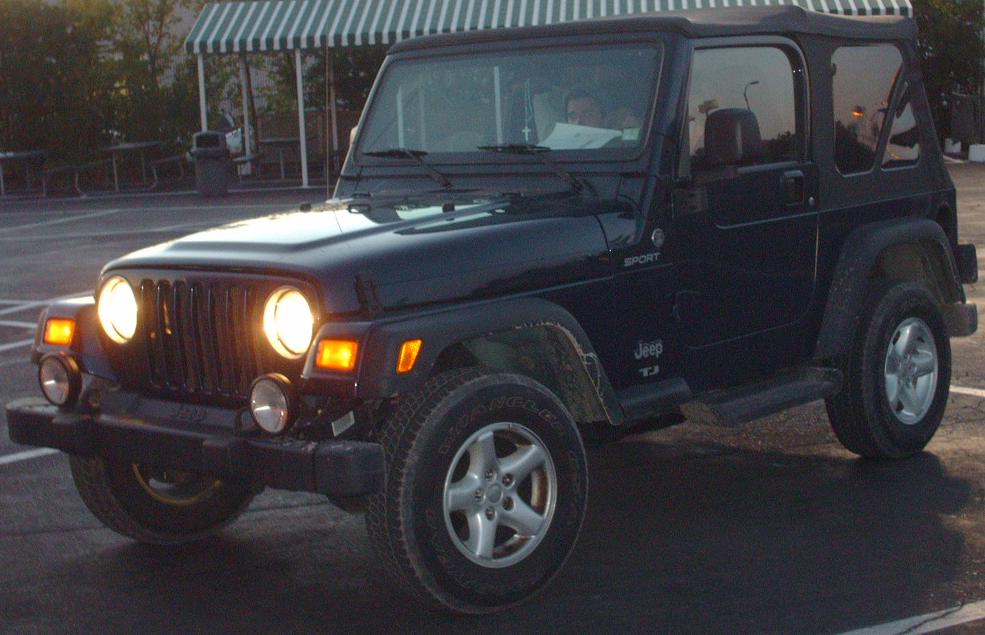
1997 Jeep TJ Wrangler
They’re referencing a 1997 Jeep Wrangler (TJ) to show a past case where a cooling problem led to the engine getting destroyed. It’s an example of why coolant-in-cylinders is so dangerous.
The Jeep Wrangler is an SUV built for off-road driving, like dirt roads and rough trails. The podcast is talking about a 1997 Wrangler TJ and how the engine can develop problems as the car ages. This matters because many Wranglers are driven for years and sometimes in tough conditions.
They’re talking about their own 2007 Toyota FJ Cruiser that’s being checked in the shop. The point is that older cars can still be kept running well, but you may need to inspect and fix problems before they get worse. It’s an example of real maintenance, not just theory.
“Engine down” basically means the engine has a serious problem and the car can’t operate normally. The host uses it to show how stressful it is when you still owe money and the car needs expensive repairs. It’s a reliability example, not a technical diagnosis.
A cylinder head is the top part of the engine that helps control combustion. If it cracks, the engine can leak coolant or lose proper compression, and the repair can be expensive. They’re saying the investigation might find something this serious.
Goodwill warranty is when a manufacturer helps pay for repairs even if the vehicle is outside the normal warranty terms. It’s typically granted based on customer history, reputation, or the circumstances of the failure. In the segment, the host uses it to explain how some companies may still step in when standard coverage wouldn’t apply.
A maintenance program is just a checklist of services you do at the right times. Doing it regularly helps small issues get fixed early, so the car lasts longer.
A proper maintenance plan means you follow a schedule for the car’s common wear items. It’s how you avoid surprises and keep the car running reliably for years.
A fleet maintenance system is a repeatable process used to keep multiple vehicles running—typically involving standardized checklists, tracking, and consistent service intervals. Here it’s described as “reusable” and tailored for keeping older cars on the road.
They talk about an 2008 Nissan Rogue they saved and got running again. Their point is that you can’t ignore maintenance—older cars need regular attention to stay dependable.
Concept
you pull it recon yard
A “you pull it” yard is a place where cars are taken apart for parts. The host is saying they saved the car before it was fully dismantled.
“Pattern failures” means the same kind of problem tends to happen again and again on certain cars. If you know what usually goes wrong, you can check it early and prevent bigger issues.
Depreciation means the car’s value goes down over time. A lot of cars lose a big chunk of their value soon after you buy them.
Term
curbside
“Curbside” is basically how much the car is worth if you sold it. They’re saying you shouldn’t obsess over that number if you’re keeping the car in good shape.
Concept
make a car payment folks
Car payments are the monthly money you owe for the vehicle. They’re talking about how financing can make ownership feel more stressful even if the car is reliable.
Concept
older car or newer ones
They’re comparing older cars to newer cars. The point is that no car is “problem-free,” but the timing and cost of repairs can differ.
They mean that after you buy a car, the excitement fades and real-life costs show up. Even if the car is fine, you’ll still deal with small issues and maintenance.
The hosts are criticizing a “keep buying the next car” payment cycle, where the owner is always financing the next vehicle instead of building ownership value. This mindset can lead to neglecting upkeep because the car is treated as temporary.
A core theme here is that reliability isn’t just about the car—it’s about the owner’s approach to upkeep and repair decisions. The hosts frame it as a mindset: do you invest time/money to keep the car running, or do you go into debt to replace it?
Some people believe older cars are more reliable because they’re simpler and have been around long enough that problems are known and fixed. Newer cars can be more complicated, so they may have more things that can go wrong.
Plastic valve covers are engine covers that protect the top end and help seal oil. When they’re made of plastic, they can be more sensitive to heat cycling, which may contribute to cracking or gasket-related leaks.
Timing covers help protect the timing components (like belts/chains and gears) and keep contaminants out. Plastic timing covers can degrade with heat, and if they warp or crack, they may contribute to oil leaks or timing-area contamination.
Some engines use plastic parts to save weight and money. The host is saying those plastic parts can wear out or deform from heat, leading to repeated repairs.
Planned obsolescence is when something is designed so it won’t last forever, so you end up paying for repairs again and again. The host is saying the design choices make failures more likely over time.
The host is warning that if an EV catches fire, it can spread very fast. They’re urging EV owners to learn what to do and how quickly they may need to get out.
Concept
"three seconds" escape window during a vehicle fire
They’re warning that once a fire really starts, it can get dangerous very quickly. The exact seconds can vary, but the message is: don’t wait—get out fast.
An EV charging center is where lots of electric cars are plugged in to charge. If something goes wrong with one car, the nearby cars can be affected too because they’re close.
EV battery fires can sometimes “snowball.” Once parts of the battery overheat, it can trigger other parts to overheat too, and the whole thing can catch fire very fast.
Company
insurance companies
They’re saying insurance companies are paying closer attention to EV fire risk. That can change how much you pay for insurance and how claims are handled.
The host describes a scenario where multiple electric vehicles in a stacked parking/storage setup catch fire and the fire department can’t quickly put them out. This is important because EV battery fires can be difficult to extinguish and can spread in dense parking environments. It also highlights how building design and emergency response planning affect real-world risk.
BYD is a big electric-car company from China. The host is talking about reports that BYD EVs have been catching fire, and that those stories may not get much attention. It’s basically about who makes the cars and how incidents are reported.
Underwriting is how an insurance company decides how risky something is and what it will charge you. The host is saying insurers may change EV coverage because of fire concerns. That can mean higher costs or stricter rules about where you park.
The host is saying EVs may make homeowners insurance harder to deal with. Insurance companies may change what they cover or what rules they expect you to follow. It’s a good idea to check your policy details before you assume everything is covered.
The host says some insurance companies want EVs kept a certain distance from your house. The idea is to reduce risk if there’s a fire. If you park closer and something happens, the host warns it could cause insurance problems.
LIVE
Good morning Niagara, you're tuned in to Car Connection where the coffee is hot, the
tools are ready and the talk is always tuned up.
I'm your host Niall Motormouth Jenkins coming to you straight from the Car Connection workshop,
where we mix a little humor, a little know-how and a whole lot of horsepower.
Here it's not just about fixing cars, it's about keeping you rolling, saving you money,
giving you the confidence to understand what's under that hood.
From the classics to the commuters, the weird noises and to the what the heck moments,
we've got you covered. So grab your coffee, sit back, join the crew because this is Car Connection,
your Monday through Saturday 8 a.m. Motormouth morning pit stop for story, smarts, a few good
laughs and I'm Niall Motormouth Jenkins and we're shifting in a drive right here.
So let's get started this morning. Grab that 16 pack of Crayola crayons in a nicely ironed
leaf bag or Car Connection laptop. Yeah, premium. That's a premium laptop, I might say.
Hand that over to your co-passenger or co-pilot. If you're driving alone, that's okay. That means
you can play whatever music you want and sing along with it and there's no one there to tell.
Perfect. So if you're just slipping through the drive through, grab your favorite morning
beverage and whatever your road snack is. Check your order, it is hump day, it's the middle of the
week and just a quick reminder. Q&A is coming up real fast and Fun Friday, Q&A Saturday is from
8-9 a whole hour of three questions. That's about all I have time for unless I, you know,
just give you a quick cheesy answer but that's not really answering the question. So get your
questions in by noon on Friday and that's the day that I make the selection for the three questions
that I will cover in detail Saturday morning with motormouth morning drive Q&A questions and answers.
So get your questions in, it's, there's two emails for you if you go into any description box
whether it's through our YouTube channel or through the podcast and all podcasts now are
exporting over to our YouTube channel instantly which is cool and I noticed yesterday doing a
little research on our website, the same thing's happening there so the guys, the fellers that
look after the website are getting things done over there so yesterday morning's morning drive was
already there when I went looking so it's you got three opportunities now with more and more
ways to watch listen and engage so let's jump in this morning this morning's title and topic what
are we going to cover well there's been a lot of natter with regards to the reliability of older
vehicles so I thought we might unpack that a little bit older vehicles better reliable well
from what I've been reading around North America there's a number of automotive service techs that
are really pushing their customers to hang on to the older vehicles and we're going to unpack that
why is that the happening why is that a happening we're going to figure that one out
let's jump in this morning and enjoy our morning swing if you're joining us for the very first
time welcome aboard we're glad to have you and you're on donut duty for the next 30 days yeah
you know the chocolate donuts with the little sprinkles on they have to be in the box for sure
that's a that's a thing it's just a thing so grab your favorite morning beverage I think we'll
kick off with our morning swiggy we are getting looking at the the daily weather in just a few
moments but I've been looking at the weather report and things are looking like looking up
we're going to get back to the 60s not music wise or time wise but we're going to get back
to the 60s and hopefully we can taper off and average out about 62 65 then we can kick off our
30 day fuel savings challenge that will minimally minimally yeah we use that put $100 in savings
in your pocket so you can set that off to the side for a rainy day or help yourself to pay down some
debt and a lot of Canadians out there carrying a lot of debt self included I'm still paying down
some debt from you that's stupid COVID thing don't even get me started on that you know beauty
fades dumb as forever you know that's not what Judge Judy would always say beauty fades but dumb
is forever anyhow let's move on is that the time yeah definitely so let's say thank you to uh Earl
Louise Granite City Auto Sales and Leasing for bringing the podcast to you this morning and helping
us out with our morning swiggy providing low mileage quality vehicles at fair prices buy with
confidence be treated with nothing less than honesty integrity they sell no junk there Earl Louise
Granite have been around for over 25 years and they have the resources to find amazing vehicles
I don't know where Earl grabs them from but I'll tell you what he can pick one out for me
anytime he likes so Greater Toronto Areas Premier Pre-owned Auto Store City Auto Sales
and Leasing connect with Earl Louise Grant if you're looking for a vehicle specific and you
don't see it in their inventory let them do the legwork for you save you a thousand steps and a
headache because Earl won't just drag something back to the dealership just because if it doesn't
meet his criteria it will not be for sale at City Auto Sales and Leasing so grab hold of them
let them know that we sent you our everything we talk about if you're joining us for the very
first time everything we talk about lives at our website it's the biggest drawer in our toolbox
all our platforms are in the top right hand corner you can just click
and find yourself right there for YouTube Instagram Facebook Stevensvilleontheweb.ca
we're a professional on that site and we contribute to the text and thank you to the Skippy our very
own Skippy videographer has put that site together to create a communal communal website where the
local businesses and the community connect and that's so cool because I know a lot of people
over there and that's where my pops lives my mom and pops live there for almost 42 years I believe
if I've done the math correctly almost 42 years my mom passed away in 2022 pops is still living
and carrying on it's all good it's a great place to visit we also have our iHeart radio icon is
there for you as well you can find our podcasts on all platforms Spotify Apple Amazon Podbean
and everywhere just search car connection workshop and wherever you're pulling your podcast from
we're there so I just bought you a couple seconds to get your beverage ready are you ready
then I hear somebody say I'm ready okay you're ready me too I'm ready on three two one that's
how we do it so whatever your breakfast beverages we're good with it we we can argue like cats and
dogs but we always agree to disagree and then have a cup of joe all right three two one
it's actually hot this morning at time that just right almost not too hot
not too cool all right here we go next up weekend weather well it's not the weekend
but we're getting there right we're getting there we're at the halfway point so remember
to get your questions in by noon on Friday it's motormouth.jankins at gmail.com motormouth.jankins
that's nile at ccbusnet.com that's just short for car connection business network be sure to check
out our business network where you can connect with fantastic and amazing family owned and operated
local businesses we are rebuilding after 26 years we had 26 and a half years in before the dumb
thing happened and it blew it all the pieces like in four years 26 and a half years of hard work
gone just like that that's why I say don't get me started because you can't fix stupid
it's that simple yeah I think all those who are responsible for that should definitely
pony up but anyways that's for another time another place but we're rebuilding the car
connection business network.com so if you're a small to medium business um anywhere let us
know who you are send me an email let me know who you are we always have a slot in the categories
we don't double up too much but um if you know we can't have one automotive repair shop for the
all of north america that's just not going to work you don't have a calendar that big
and there's not that many hours in a in a week apparently there's only 168 do you think we can
get it to 171 well we'll have to work on it well thank you to our certified financial planners
tony mealy larry tea troll 50 years experience with ig wealth management these guys are two of the best
in all of canada and very humble they don't need any more clients but they wanted to be a part of
car connection back in july of 2007 and we created the planners segment well they've stayed with us
and we're appreciative of that because we're now with car connection 2.0 we're no on no radio
networks anymore it's all digitals baby all digitals and we don't look back we move forward
so thank you to tony mealy and larry tea troll our certified financial planner professionals
are there for you to grab a discovery meeting we've nicknamed the hour and a coffee so leave
your wallet leave your purse at home ladies they're not going to sell you anything they're
going to listen to what your questions are and your needs and have that discovery meeting
what where are you and where would you like to be and trust me a certified financial planning
professional you're not going to tell them anything they haven't heard before no condemnation we all
make stupid mistakes all we all have and i'll make a mistake while you wait so connect with
either tony mealy mealy or larry tea troll they're my personal financial planners and i call them
my brothers from other mothers you're in good hands with them whether you need some advice on
investment portfolio and anyone listening in earshot if you have investments in the bank and
those geek things you need a meeting because you're making pittance the bank is crushing it
you got to change that so your money is working hard for you not you working hard for your money
so if you have debt that needs taken care of an estate plan you have children 18 years or older
are you their health proxy you need to find out what that is they arrange mortgages and life
insurance critical illness insurance and that's just a tip of the iceberg of all the services
available to you that was me so don't worry about it yeah just knock the boom the boom crane that
holds the horn if you know what i'm saying so connect don't be shy don't be afraid and leave
your wallet and your purse at home and get that discovery meeting done get that let's get that
pressure that's been pushing down on you off your shoulders okay let's get that done not don't waste
another minute and i'll say ladies if he won't make the call you make the call
if she won't make the call fellas step up to the plate you make the call and set up that
discovery meeting and be totally honest and open and lay all the cards on the table and watch what
happens you're gonna get the answers from those who had the fruit on the tree i don't know why we
always have to ask a neighbor hey my service lights on what do you think it is
they don't know and they might think they know but they want to be the hero that's going to cost
you money don't go there you got to go to those who have the credentials and get it taken care of
so for today here's what we got it's looking better than yesterday in the day before 46 degrees right
now partly cloudy wind is making it feel cooler about 43 degrees sunny conditions expected around
8 a.m. and today's temperature range from 45 degrees to 61 yippee and it feels like 40 to 63 we are
getting there and prepare yourself for the 30 day fuel savings challenge and if you if you have the
guts to go into the second phase of the 30 day fuel savings challenge you can double your savings
how do i know that's what i do i've been doing it for a long time a long time and i dare there's
any other 2007 toy on fj cruisers that are getting nearly 30 miles the gallon i doubt it
i'll triple dog dare you to uh out fueling me so today uh overnight low is going to be 45 that's
nice and overnight load yesterday was 31 everything was covered in white frost yesterday morning when
i got up at 4 61 degrees is the high today and yesterday was 58 uh precipitation you're going
to like this one zero do you know that zero is still zero in any language any country how did
they pull that off i don't know i don't know let's jump into uh everything we got going on remember
visit us at our car connection business network dot com website we have an online merch store
purchase a merch proceeds go to total freedom addiction campuses where a new life awaits those
who have made the decision to finally break free of their addiction so we're we're doing what we
need to do and that is to help people you buy the merch we help another person get through
the addiction campus total freedom canada and usa and let's get them out the other side
with a new life a new start and without carrying that monkey on their back that addiction it's a
horrible thing to watch somebody go through it and you and you know that's not the person
yet you know that even when they're screaming at you and blaming you for everything you're the
problem and this and that and the other they're saying horrible things to you it's the addiction
and they have to get to that point where they make that decision it's me i did it i own it
and i got to get some help and get this fixed and that's when total freedom steps in
and gets them there so for those who are making that decision just make that decision
to get that taken care of because there's a new life waiting for you a total freedom addiction
campuses in canada and us and we're all working to help you so grab some merch be part of the
car connection motor mouth crew and know that you're stepping into the ring with skippy and i to
help those who are struggling with addiction so that's a pretty good promo for that and they
deserve it because they they've been at it well over 20 plus years and new campuses are opening
there's another one and they've opened another one in tennessee i'm gonna head down there this summer
to check it out so make sure you visit them on our website all our program partners are there
and other recommended businesses that aren't part of the programs the podcasts or the youtube
channel but we like to promote them anyway because they do what they do is fantastic
like crystal ridge dream centers serving men women and children meals love and hope changing lives
one at a time in the niger region that's what they do 24 7 they would after school kids program
they feed them they love on them they mentor them help them with their homework and they play chocolate
bingo and stuff like that yeah i can't you can't get in i've tried gotta be a kid it's that simple
but the the challenge they're having is being able to provide enough meals tuesday hot meals out the
door tuesday and friday uh they have a fundraiser coming up for a roast beef dinner grab your ticket
it'll sell out quick and it is gonna be yummy i can tell you the um the lions club is putting
that on for them as a fundraiser and then coming up in that's this month and then coming up in may
i don't have the date so you'll have to go looking yourself um vintage record sale barbecue
silent auction giveaways all kinds of stuff going on at that at that function that is another
fundraiser they don't they do not same with total freedom they do not get any outside funding
government funding they don't want that they want the locals local business owners and us people
like you and me to support them anyway you possibly can so search your heart check them out on our
website at carconnectionbusinessnetwork.com i'll just click on a logo and it will open their
profile page and all their contact info is there and readily available for you so in times when
community sport is absolutely crucial friends crystal ridge dream center shines as a beacon of
compassion and transformation located right in the heart of crystal beach where the uh crystal
theme park used to be up until i believe it was 1988 that closed and uh it's just
it's all residential now yep it's all over but the crying so older vehicles better and reliable
that's what i've been hearing on the resources that and technicians that i watch on youtube as well
and connect with um i gotta agree 100 that what we're seeing in vehicles that are just a few years
old not not all manufacturers but you know which ones the domestics really gotta pull their socks
up man they really really do you know the price on the windshield does not reflect the quality
of the goods that's all i'm gonna say about that the the things that are breaking should not be
breaking engines cylinder heads transmissions man if you're out of warning that is going to suck
beyond and i used an example before i just i saw a commercial last night on youtube's
yeah i don't have tv but there's a couple of programs i do enjoy watching and um
yeah they're older and i don't care it's all good the writers can't write anything today anyway
unless it's all cussing out i mean good grief get over it get a language it's not all about
colorful colorful metaphors but anyhow i saw this commercial and i'm going liars that's all i could
say yeah be careful of that chevy tracks they got a coolant issue uh 2024 that's a two-year-old
jobby that's only two years old man come on why should that be happening that should not be happening
and that's why the technicians out there are going this stuff is junk it's absolute junk
and that's not me just saying that it's all over north america wide technicians are
looking at these things and seeing the destruction and going this shouldn't be happening on a vehicle
two three four five years old my goodness but that be very careful and do your research on
that chevy tracks it's got cooling system issues coolant in the engine in the cylinders yeah that's
not supposed to be there just so you know that no that no it's a yeah no no and so the example
that caught my eye and i've been keeping an eye on it there's a there's a big class action suit
going on in the us so you might on the chevy tracks so you might want to jump on that but i'll tell you
you know they got to get their poop together but i would say the same as the technicians that
i've been listening to and they're working on it every day that these things are not holding
together folks so hang on hang on to your waistband so two two thousand twenty four chevy tracks
with about uh seventy two thousand miles it's american and older couple now imagine this and
this is just one example that's why i'm saying i'm siding with these guys older vehicles better
and reliable you better hang on to it just like my my friend spencer work on uh you know all the
small appliance stuff washers dryers fridges freezers and he said don't ever get rid of your older
washer or dryer don't just get the parts if i have to i'll come and fix it for you but don't
junk it the new stuff is horrible there you go better technology today or 10 years ago
you decide it's personal choice but if the structure is solid on your older car
love on that baby tuck it in at night yeah give it a bath in a nice snack evening snack take
really good care of it because you got yourself a goody because this new stuff's gonna once you're
out of warranty oh baby you know so anyways seventy two thousand miles two thousand twenty four
chevy tracks cooling issues uh the tech checked it knows exactly what's going on the except
can't determine whether the cylinder head's cracking or the head gasket's gone but it's out of warranty
by like 10 000 miles so what it was probably already showing signs at uh 59 999.99 miles
it was probably already showing signs and symptoms but it didn't get caught up until
10 000 miles later so now their car down uh there's no customer service on that
here you get the uh what i call the gm kiss off we'd really like to help you but pause
we can't but will you buy our junk next time oh what you know will you buy our product next time
please thank you no this stuff's got to change where there people are getting hung out
seriously so here you go 2024 chevy tracks seven now picture this is you 72 000 miles
you got an engine down like you cannot drive this thing or it's gonna completely detonate itself
because when the coolant goes into the cylinder watch the uh the early edition of our 1997
Jeep TJ Wrangler rescue and you'll see what happens to an engine when that happens while
you're driving it that's what put that little Jeep in the junkyard that was the that was the
coup de gras the coolant entered the cylinders and blew the blew itself to smithereenies and you
can see that on our youtube channel great learning videos for you if you know nothing about automobiles
whatsoever you need to subscribe like subscribe share follow leave a comment and ring the notification
bell so you know when the new videos come up we just put two up last night two have populated
and pay attention to the description boxes for the videos because i put a lot of nuggets there
i do that work myself the titles the description boxes for the podcast as well and i put nuggets
there that i don't always get an opportunity to share with you so i highly recommend if you're a
skimmer don't skim on the description boxes because you'll miss a lot of information so i teach five
things in every video what it is where it is how it works how it breaks how you could have learned
just some basic automotive ownership fundamentals that will save you a ton of money and if you're
interested in saving money and keeping your car longer and your engine running forever
because our 2007 toyed fj cruiser uh we just uh we just put up a first episode in a miniseries on
that it's in the shop right now it's getting a spring evaluation found some stuff going on
and getting deep into it and deeper into it to make sure that we get everything that could
potentially be an issue heading into the summer get it corrected so i'm sharing all that with you
and showing you and teaching you the same things five things where it is what it is where it is
how it works how it breaks and how you could learn a few things that would save you a lot of bucks
put a lot of money back in your pocket so imagine a 2024 Chevy Trax in your driveway you're paying
insurance on it you're still paying the car off and now you got an engine down and they're not coming
to the table with any help whatsoever oh i'm sorry you're out of warranty big kiss off nice but they
sure tap and sing a new song every time they put a vehicle out there so the domestics really need
to pull their socks off they got some really bad stuff going on really bad stuff and so now
what do you do you don't have the money to fix it but you're paying for it you got a loan on it
you can't drop the insurance you got to keep paying and it's car down so you can pay to have
this problem fixed and it may go deeper than just a head gasket it may be a cracked cylinder head
why we don't know yet but somebody's going to somebody's going to do some investigation and
find out what exactly is going on but you know they know they have a problem you know it's one
it's one thing something goes awry if but it's another thing when you say we're going to take
care of that now i can tell you when i when i work for Volkswagen man i i never thought a car
manufacturer would do that much w5 w5 warranty meant it was goodwill warranty that means you're
outside the warranty but they're going to fix it for you if you're a loyal customer and you're
doing your maintenance is and you're going back to the dealer and you got a good file on your car
there they would take care of it i don't wait outside warranty they say tell me w5 that we'll
take care of that yeah that is really cool isn't it i thought it was i'm like holy smokes i've never
seen this happening before and that was my first time working for a car manufacturer ever in my
entire career i went in as a mole to learn stuff and i'll tell you four and a half years at 80 plus
hours a week i learned a lot and there's some stuff i can't tell you because somebody will come and
visit me during the night break me out of my bed so we can't go there we got to leave that
class alone so if you're if you're in a position like i am with older vehicles
you want to get on the maintenance program and hang on to that thing as long as you possibly
can so how long would your vehicle last if you were actually following a maintenance system
i follow my own maintenance system that's how it works out and we've revamped it and turned it
into something that i can share with you so that you can do the same thing that i am and it'd be
like having me as your coach as you're following your maintenance your car connection maintenance
maintenance fleet maintenance system on your own and it's really simple folks the page isn't up
yet i just checked yesterday i'm going to check in with our webmaster tomorrow um i'm on the road
today on the road again but it's all good you got to do what you got to do so how how long would
your car last if you actually followed a proper maintenance plan so we've built and laminated
a reusable fleet maintenance system that makes it super simple for you to do the same thing i've
been doing in keeping older vehicles a long time the oldest one that's on the road is the rocket
that's 1999 next one up from that would be the 2007 toyot fj cruiser and aside from that next
is the 08 nissan rogue we rescued that back from almost having almost going to the you pull it
recon yard we've resurrected that rescue and uh you know what that little thing is pretty decent
but you got to stay on top the maintenance on that thing uh there's a you know there's a number
areas that are pattern failures but as long as you're ahead of the game you're good to go
but if all you do is gas and go sooner or later you're going to pay the piper there's going to
be a list of stuff but there'll be one thing that gets that vehicle into the shop and that'll either
be it's not running right or it's stalling out or service lights on and or it's a car will not start
car down and then once it gets in the shop let me tell you we will find a whole there's no
free driving that's what you got to get into your head vehicles are not maintenance free
i don't care who you're talking to that's a load of balona and they're a piece of machinery
and you're working it every day day in day out it needs maintenance even though it starts up
and it rolls and it turns and it stops i guarantee you give me 10 vehicles nine out of those 10
have a list of things that need to be maintained things that are getting ready getting ready to
do the big nasty to you and often more times than not $200 part repair turns into $5,000 in repairs
because you let it go you just let it ride and i'm telling you these older vehicles
they're worth gold that's what i'm saying how do i drive this older stuff and it's still holding
together well first you got to do rust proofing prevent the thing from rotting out so that as
you're putting money into it and maintaining it it holds itself together this is like a house somebody
says i can't tell you how many times people are why are you why are you driving older cars motor
mouth like you're a tech i know no no wrong question you should be saying to yourself
well he's a technician why is he driving those older cars all the time why see that's the question
you ought to be asking yourself why is he doing that and how can he do that
that's the other question how can he do that simple it's maintenance make sure it's not
rotted out in the structure solid now you got a goodie that's gold trust me you got something in
your hands that will save you money and it's paid off who cares what it's worth curbside
i don't i could care less somebody says well you know why would you put a $300 starter in that
can you buy a car and pay $300 a month one time and own it well no you understand what i'm saying
is any of that makes sense to you i hope so because it doesn't make any sense to me i go okay i got to
put a starter in well if i buy somebody else's thing is it not going to need some maintenance
of course it is if it's three years old and it's some of this newer stuff look out
there's going to be challenges and they depreciate so stinkin fast it's pathetic
in a week after you own it's worth $1.99 an attempts card that's about it
they just tank so i don't care what our 07 08 09 99 is worth curbside if you tell me it's worth
a dollar 99 i go well she's paid for or i'll say something like yep one more payment she's all mine
man yeah i'm not in i'm not in uh in business with the bank yeah no partnership required
when i turn the key it's all mine so i wanted to spend some time on that today and hopefully
shed some light on it you can have some fun with it too i mean you mess with your you mess with
your neighbors my neighbors have no idea what i do do you know that isn't that funny they see me
moving vehicles around vehicles coming in and out of the shop i drive them nuts apparently this is
the word on the street with the car connection workshop why is he moving move why does he move
cars around so much they want to know but they don't want to ask they're trying to figure it out
and i just love it because i'm just doing my thing i'm doing my thing that's what i'm doing
every single day move something out fix it move it out take the videos set it down the road
that's what we do here and then use that to teach you that you know what you can do exactly what i do
and it doesn't matter what that vehicle's worth curbside it just doesn't matter don't get stuck in
the uh home to work home to work home to work home to work home to work and make to make a car
payment folks that's not playing the car game right what i'm talking about is knowing the rules
playing the car game and winning every single time does that mean you're not gonna have to
put some work into an older car or you're not gonna have to put some work into one of these
newer ones holy smokes if the transmission goes down which it might and it's out of warranty who's
paying for that who who's paying for that well go to the bathroom close the door look in the
mirror and go this one's on me and then scream when you know how much that's going to cost
so folks who cares who cares what it's worth curbside and how old it is keep it in good shape
look after it do the little things because it here's the thing
if you won't fix the little things you'll never look after the big stuff you won't
and then when you buy the next car guess what you do exactly the same thing
once the honeymoon's over first dent ding or scratch that's it now you're just paying for it
to get to the next one then you'll do the same thing work work work pay for it till you get to
the next one and continue the cycle of the never never plan you never own it but you work your butt
off to make payments to get to the next one to me that's the definition of insanity you go well
here's another question again well you know uh i need i need a vehicle that's reliable oh
are you saying i don't have one that's reliable well no well a five-year-old car if you go and
buy a five-year-old car and by the time you make the last payment on the one you have
are you not going to need to put some money into it to keep it going
yeah blank stare dead airspace well the answer has to be well you have to
to keep it going right okay then let's move on now you answer your old question
is no matter what you want whether it's a house we could talk about houses and relate it to cars
oh why why are you keeping that old house for you know you gotta constantly put money into it
yeah so you just go well that's it that's old enough gotta get out of here see what i'm saying
it all comes down to one thing this morning what's your mindset on that stuff you might say well
you know you're a service tech okay what has that got to do with the car needs maintenance
well you can fix it yeah but i don't get parts thrown at me for free i still okay i can do it
with my hands and my skills and everything but i still gotta tear it apart forget the parts
and build it back up okay you're not paying a tech to do that but it's the whole idea of the
concept it's gonna need stuff it's gonna need some work and you can do this it's not difficult
it's a mindset it's do you really have to buy go into debt to buy something to impress people
you may not even know and you may not even like do you think they really care no they don't they
could care less they really could i'll tell you a lot of times i get a note left on my windshield
or someone will ask me is that for sale uh no i'm still making payments really yep one more
she's all mine and then i laugh i usually laugh i go no no i said i'm not in i'm not in partnership
with any bank or any financial institution it's owned outright and i i take care of it
he goes yeah you know i can see that i go yeah you gotta take care of it to keep it like this
yeah it's worth it there you go there's your answer yeah it's worth it but are you willing to do it
that's the thing all right what are you willing to do to prevent making car payments for the rest
of your life getting up early getting home late to make a stupid car payment to drive something you
really can't afford to impress people that you don't even know and you may not even like
yeah you know which people i'm talking about the ones you don't invite to your barbecue
yeah exactly so be nice out there no matter what and i just like messing with people and
they asked me is that for sale no oh it's not no i said it's priceless
i said but if you if you hit the price tag the number that i'm thinking in my head
it may just be yours you could buy it everything everything is purchasable for a price
but i said to me it's price less but if you hit that number it could be yours make me an offer
and then we usually laugh i get this all the time all the time people trying to buy something older
that i'm driving out from under me because why they've come to know that older is better technology
and more reliable and the body metals thicker too it's not made with Reynolds aluminum foil
and the plastic that's the biggest thing i can't tell you how much research i've done
on all the plastic components on engines that are failing because of heat who here's the thing
who in their right mind as a stinking engineer knowing that the under hood temperatures are
super hot hot enough to bake a dozen raisin brand muffins thank you drop one off
goes great with butter and coffee but you put plastic in the engine bay plastic valve covers
plastic intake manifolds plastic timing covers and now i i just watched engineers they're putting
aluminum foil yep i knew it would be in there eventually uh they're they're attaching it to the
edges of the valve cover gaskets where the valve covers are to try and deflect the heat from the
exhaust coming in the heat coming off the exhaust manifolds around the engine because the the heat
is melting the valve covers so we're putting aluminum foil on the edges of the plastic valve
covers to try and here's what they're doing trying to buy enough time for the vehicle to be out of
warranty so that you get to pay for that job because every time the valve covers leak oil
you need to get it fixed so you don't have an engine fire but secondly the covers you throw them
in the in the recycle box you can't reuse them they're melted you got to buy new ones so you're
not only getting having to replace the gasket but you're buying a kit now oh that's interesting isn't
it yeah i need a valve cover kit yeah because they know the the covers got to be replaced
because it's warped and it's melted so guess what happens after that job is completed the process
starts again so all this stuff is happening all the way up to the big diesel engines in the big
rigors the big not the highway trucks but i call them big rigors they make these pickup trucks look
really tough and mean but they're really not it's all it's all smoke no meat that's what i say but
they're doing the same thing on the commons engine the 6.2s the power strokes plastic engine parts
come on i look at that and i go all of that you're gonna the whole time you own this thing you the
vehicle owner is going to pay to replace all that plastic all those plastic parts not once but again
and again and again because it's a planned obsolescence that's what it is they're making
stuff out of plastic and if it catches fire you know what plastic is i'll leave you with this one
plastic is gasoline that's what it is it's made all plastic is petroleum based product
so when it catches fire it takes no time to to burn a car out anymore and that comes from a
i watch a channel on youtube he's really good the the fireman's really good
stashed i'll give him a plug he has a great big handlebar mustache so it's stash with a d at the
end stashed and he's got some really good videos up right now if you if you own an electric vehicle
you need to go to that channel and you need to watch what's really going on out there three seconds
three seconds to get out of an ev once it starts on fire that's what you have
folks you got to educate yourself on this go to that youtube channel and watch the live video
of an ev catching fire and how fast that whole vehicle is engulfed in fire
three seconds that's from the fireman he said that person has three seconds to exit the vehicle
once it starts on fire it'll take your life just like that i'm not trying to scare you
you got to look at that scary enough i don't want any of that stuff near my home and that's what's
going to happen folks so you know take a minute and go to that channel i plug it i'll plug it because
he's doing the research and showing you here's what happens so if you're in a charging center
in the car and you know how close the the charging units are if the dude's car starts on fire because
of electrical what do they call it it's called thermal thermal takeoff so the battery gets super
hot because the molecules are moving so fast it'll instant it'll it'll go into combustion
thermal takeoff is what that was the term he mentioned so they show a video where
you're so close to the next ev three seconds that thing was totally engulfed in the guy just
barely got out of the car because he's sitting in the car while it's charging bad idea three seconds
to being burned up in your own car but it it will catch the next one on fire next to it in
literally seconds so if you're at an ev charging center you might not want to be sitting in your
car because if the one next to you starts on fire yours is going to be next it'll catch it
because the intensity said i share this with you because this is a safety thing the the fire
intensity is so hot it will light a vehicle on fire on both sides of it so if it's in the middle
it'll take out both vehicles that are parked next to it so you either better better be really
fast at getting an unplugged and getting your car out of the way because you only have seconds
to do it so check that out i leave you with that go and watch that youtube channel watch
those videos it will scare the pants off you but i can tell you what's coming and he kind of
mentioned it the firefighter he said uh insurance companies are taking a really close look at this
they can start on fire anytime so beware i've been doing research for the last three years but
i'm not even studying the car i'm just studying everything that's behind the curtain that none
of you have been told because it's not on the media yeah it's not in the media whatsoever that's
disgusting but we'll uncover that right here in the motor mouth morning drive podcast yeah
there's stuff you got to know what's going on behind the scenes folks you got to do your homework
but i don't mind doing it for you but you know fact check me go to stashed st a c h d
and check out those ev videos of when one starts on fire and and there's i'll i'll tell you right
now in china google sometime today b y d china it's a company in china and they're keeping it
out of the media thousands of evs are on fire and they the fire department can't put it out
thousands in a parking facility where robots stack these evs like six layers high and
chock a block right next to each other and one of them caught on fire they're all on fire they
can't put them out apparently apparently some contractor caught some insulation on fires with
china saying but i don't believe that no one of the evs caught fire and that's all it takes and
they got thousands of them in this parking facility it's like a storage it's like shelving
get to give you a better view it's like shelving and on every shelf is an ev six layers high
and as far as the eye can see and it's on fire been on fire for days for days so check that out b y d
it's not in the media you got to go looking like Australia news because that's where you
can find some stuff so till tomorrow hey it's hump day make it a great day that was a little
extra for you so for all of you who have evs um i would prepare to hear from your insurance
company because i can tell you they're going to be underwriting this that if you have one your
insurance is your home insurance is going to have a challenge don't be surprised it's already
happening in california insurance companies are saying if you have an ev it's not to be parked
within 50 feet of your home so that means in the garage nope up to the walkway nope
and if fire breaks out and it's discovered that your your ev was pulled up close to the house and
that caused the fire you got an insurance problem so that's already happening in california nothing
plug in within 50 feet of your dwelling space so it's coming get ready see this is the homework
that they don't they don't tell you about just buy one it's great you're saving the planet really
wait till i unleash that one saving the planet huh okay till tomorrow drive safe keep it under 100
happy healthy motoring you got questions ship them over to me i'd love to answer those for you
join us on uh friday for fun friday and question and answer uh program on saturday morning so get
your questions and before noon on friday make it a great day peace patience and kindness always
and we'll see you tomorrow morning for another motor mouth morning drive car connection brought
to you this morning by niger block 5000 montrose road niger falls building canada since 1931
providing building supplies all the blocks and steel and rebar that you can muster up to put
your project together they have it hardscape landscape materials to help create that beautiful
outdoor backyard space you've always wanted check in with kathy and david and dan grimo
kathy has a list of contractors so if you're looking for someone to estimate the job start
the job finish the job and you'll be happy with the results ask for a referral kathy grimo can
help you with that so we'll see you tomorrow and bye for now
About this episode
The host argues that “older cars are more reliable” because newer vehicles often fail sooner, especially once warranties end. He cites technician chatter and a specific example: alleged cooling-system and engine issues on 2024 Chevy Trax models, including a class-action angle. The episode also pushes a maintenance-first mindset—rustproofing, staying ahead of wear, and following a structured upkeep plan—to keep paid-off vehicles running. It broadens into safety concerns about EV fires and insurance tightening, plus community and sponsor updates.
Are older vehicles actually better - or is that just shop talk?
In today's episode, we dig into what technicians are really seeing out in the field. More and more, the advice is simple: if your older vehicle is structurally sound, keep it. Why? Because newer doesn't always mean better.
We break down the growing concerns with modern vehicles - overcomplicated electronics, excessive plastic components that fail repeatedly, and rising repair costs that don't match the price tag. Meanwhile, many older vehicles continue to prove themselves with durability, simplicity, and long - term reliability.
We also tackle the mindset shift:
1) Does it matter what your vehicle is "worth" to others?
2) Or is reliability and freedom from car payments the real value?
Plus, we touch on :
1) The risks of jumping into brand-new models too early
2) Why pre-owned still requires smart expectations
3) The reality of depreciation-old or new
4) And a brief but serious look at EV fire safety concerns that aren't getting enough attention
At the end of the day, it comes down to one thing: you decide what makes the most sense for your life, your budget, and your peace of mind.
#CarReliability #AutoRepair #UsedCars
Motormouth Merch available at ccbusnet.com in our online store, Grab some gear join the crew, proceeds to Total Freedom Addiction Campuses Canada & USA where a New Life awaits those ready to say good bye to their addiction for good! Appreciate Your Support for this Cause Friends, You're Amazing People, Skippy & Motormouth.
More Episodes and...project Details & Links are available at Car Connection Business Network.com (ccbusnet.com) you'll find everything on our home page if you'd like to follow the build & Repair work we do, connect with our program partners, click their logo to meet them, we Thank You so much for doing business with them. We value your support! Nile Motormouth Jenkins
Help us to grow our platforms:
Like, Share, Subscribe, Follow, Leave a Comment, Ring the Bell for new video notifications, Join our online community too, Thank You Friends Means A great Deal to us😘 Skippy & Motormouth.