Are Older Cars Really More Reliable? The Truth Mechanics Won't Sugarcoat
About this episode
The host argues that “older cars are more reliable” because newer vehicles often fail sooner, especially once warranties end. He cites technician chatter and a specific example: alleged cooling-system and engine issues on 2024 Chevy Trax models, including a class-action angle. The episode also pushes a maintenance-first mindset—rustproofing, staying ahead of wear, and following a structured upkeep plan—to keep paid-off vehicles running. It broadens into safety concerns about EV fires and insurance tightening, plus community and sponsor updates.
Are older vehicles actually better - or is that just shop talk?
In today's episode, we dig into what technicians are really seeing out in the field. More and more, the advice is simple: if your older vehicle is structurally sound, keep it. Why? Because newer doesn't always mean better.
We break down the growing concerns with modern vehicles - overcomplicated electronics, excessive plastic components that fail repeatedly, and rising repair costs that don't match the price tag. Meanwhile, many older vehicles continue to prove themselves with durability, simplicity, and long - term reliability.
We also tackle the mindset shift:
1) Does it matter what your vehicle is "worth" to others?
2) Or is reliability and freedom from car payments the real value?
Plus, we touch on :
1) The risks of jumping into brand-new models too early
2) Why pre-owned still requires smart expectations
3) The reality of depreciation-old or new
4) And a brief but serious look at EV fire safety concerns that aren't getting enough attention
At the end of the day, it comes down to one thing: you decide what makes the most sense for your life, your budget, and your peace of mind.
#CarReliability #AutoRepair #UsedCars
Motormouth Merch available at ccbusnet.com in our online store, Grab some gear join the crew, proceeds to Total Freedom Addiction Campuses Canada & USA where a New Life awaits those ready to say good bye to their addiction for good! Appreciate Your Support for this Cause Friends, You're Amazing People, Skippy & Motormouth.
More Episodes and...project Details & Links are available at Car Connection Business Network.com (ccbusnet.com) you'll find everything on our home page if you'd like to follow the build & Repair work we do, connect with our program partners, click their logo to meet them, we Thank You so much for doing business with them. We value your support! Nile Motormouth Jenkins
Help us to grow our platforms:
Like, Share, Subscribe, Follow, Leave a Comment, Ring the Bell for new video notifications, Join our online community too, Thank You Friends Means A great Deal to us😘 Skippy & Motormouth.
Happy Healthy Motoring Friends, Peace Patience Kindness Always. NMJ
We'll see you in the next one!
Car Connection workshop intro
"Good morning Niagara, you're tuned in to Car Connection where the coffee is hot... coming to you straight from the Car Connection workshop..."
This is basically the podcast intro—who’s hosting and when the Q&A shows up. They’re not really getting into car tech yet.
This segment is the show’s opening and setup, explaining the vibe and what listeners can expect from the Car Connection workshop. It’s more about format and scheduling than technical automotive content.
reliability of older vehicles
"there's been a lot of natter with regards to the reliability of older vehicles so I thought we might unpack that a little bit older vehicles better reliable"
They’re talking about whether older cars break down less than newer cars. Sometimes older cars seem simpler, but they can also be less reliable if they haven’t been maintained.
The hosts are discussing whether older cars are actually more reliable than newer ones. This is a common debate because older vehicles may have fewer complex systems, but they can also suffer from wear, deferred maintenance, and aging components.
automotive service techs
"there's a number of automotive service techs that are really pushing their customers to hang on to the older vehicles and we're going to unpack that why is that a happening"
They mention car repair shop workers pushing people to keep older cars. That can happen for a few reasons, like repairs being cheaper than buying a new car.
The segment references automotive service technicians encouraging customers to keep older vehicles. This can be influenced by economics (repair vs. replacement), customer behavior, and what technicians see in real-world maintenance outcomes.
fuel savings challenge
"we can kick off our 30 day fuel savings challenge that will minimally minimally yeah we use that put $100 in savings in your pocket"
They’re talking about a challenge to save money on gas. The idea is to change driving or spending habits to use less fuel.
The hosts mention a “fuel savings challenge” tied to driving habits and budgeting. It’s a segment about reducing fuel costs rather than a technical reliability discussion.
Earl Louise Granite City Auto Sales and Leasing
"let's say thank you to uh Earl Louise Granite City Auto Sales and Leasing for bringing the podcast to you this morning and helping us out with our morning swiggy"
This part is a sponsor shout-out. They’re saying the dealership provides good-condition, lower-mileage cars and that you should buy with confidence.
This is a sponsor mention for “Earl Louise Granite City Auto Sales and Leasing.” The hosts describe it as providing low-mileage vehicles at fair prices, which is typical sponsor language rather than a technical automotive point.
pre-owned auto store
"I don't know where Earl grabs them from but I'll tell you what he can pick one out for me anytime he likes so Greater Toronto Areas Premier Pre-owned Auto Store City Auto Sales and Leasing connect with Earl Louise Grant if you're looking for a vehicle specific and you don't see it in their inventory let them do the legwork for you"
A pre-owned auto store sells used cars instead of new ones. They usually find cars from different places, check them over, and then offer them for sale.
A “pre-owned auto store” is a dealership or lot that focuses on used vehicles rather than brand-new inventory. These businesses often source cars from auctions, trade-ins, and other dealers, then sell them after inspection and reconditioning.
car connection business network
"that's nile at ccbusnet.com that's just short for car connection business network be sure to check out our business network where you can connect with fantastic and amazing family owned and operated local businesses we are rebuilding after 26 years"
They’re mentioning a networking group for automotive businesses. The point is helping local shops and related companies connect and get visibility, not discussing car mechanics.
The hosts are talking about a business networking platform for the automotive industry, specifically a “Car Connection Business Network.” It’s less about vehicle tech and more about how shops, suppliers, and related services connect with customers and each other.
car connection 2.0
"because we're now with car connection 2.0 we're no on no radio networks anymore it's all digitals baby all digitals and we don't look back we move forward"
They’re saying the show/network has moved into a newer, more digital version. It’s about how they operate and communicate, not about car parts or repairs.
“Car Connection 2.0” is described as a shift to digital platforms (“all digitals baby”). This is a structural/format change for the show or network rather than an automotive technology concept.
real-world fuel economy vs expectations
"i've been doing it for a long time a long time and i dare there's any other 2007 toy on fj cruisers that are getting nearly 30 miles the gallon i doubt it ... overnight load yesterday was 31 everything was covered in white frost"
They’re basically saying, “Don’t just guess—look at what the car actually does.” Gas mileage can change a lot depending on weather and how you drive.
The hosts are contrasting expected fuel economy with what they’re actually seeing in their own test conditions. This matters because “older car reliability” debates often ignore how much mpg depends on temperature, precipitation, and driving patterns.
miles the gallon
"any other 2007 toy on fj cruisers that are getting nearly 30 miles the gallon i doubt it"
Miles per gallon (mpg) tells you how efficiently a car uses gas. Higher mpg generally means you go farther on the same amount of fuel.
“Miles per gallon” (mpg) is a measure of how far a vehicle can travel using one gallon of fuel. It’s commonly used to compare fuel economy, but real-world mpg can vary a lot with driving style, weather, and vehicle condition.
Are Older Cars Really More Reliable?
"[1220.7s] it's all residential now yep it's all over but the crying so older vehicles better and reliable [1229.1s] that's what i've been hearing on the resources that and technicians that i watch on youtube as well [1236.7s] and connect with um i gotta agree 100 that what we're seeing in vehicles that are just a few years"
This segment is framed around the broader discussion in the episode title: whether older cars are truly more reliable. Even though the excerpt is mostly community/fundraiser talk, the hosts pivot back to the reliability claim near the end. That makes the reliability debate the structural theme listeners should keep in mind.
older vehicles better and reliable
"[1213.7s] ...the uh crystal theme park used to be up until i believe it was 1988 that closed and uh it's just [1220.7s] it's all residential now yep it's all over but the crying so older vehicles better and reliable [1229.1s] that's what i've been hearing on the resources that and technicians that i watch on youtube as well"
People often say older cars are more reliable. The idea is that they’re simpler and any early problems are already known. The show is basically asking: is that actually true, or just a myth?
The hosts are referencing a common claim that older cars are “better” and more reliable than newer ones. This is usually tied to the idea that older vehicles have fewer complex electronics and have already “worked out” early design issues. The episode title suggests they’re evaluating whether that belief holds up in real-world ownership.
cylinder heads
"the things that are breaking should not be breaking engines cylinder heads transmissions man if you're out of warning that is going to suck"
The cylinder head is the engine component that seals the combustion chambers and houses parts like valves and passages for coolant and oil. If coolant is found in the cylinders, it can point to a cylinder-head sealing problem (often discussed as gasket-related failures).
transmissions
"the things that are breaking should not be breaking engines cylinder heads transmissions man if you're out of warning that is going to suck"
The transmission transfers power from the engine to the wheels and manages gear ratios. When hosts say transmissions “should not be breaking,” they’re emphasizing that driveline failures are major, expensive issues—especially on relatively new vehicles.
coolant issue
"be careful of that chevy tracks they got a coolant issue uh 2024... coolant in the engine in the cylinders yeah that's not supposed to be there"
A coolant issue means the engine’s liquid cooling system isn’t working correctly—often due to leaks, failed components, or contamination. When coolant ends up where it shouldn’t be (like inside cylinders), it can cause misfires, corrosion, and major engine damage.
cooling system issues
"they got a coolant issue... coolant in the engine in the cylinders... technicians are going this stuff is junk"
Cooling system issues refer to problems with how the engine removes heat, including leaks, failed pumps/thermostats, or internal sealing failures. The host’s example connects cooling-system malfunction to severe outcomes like coolant entering the engine’s cylinders.
class action suit
"there's a big class action suit going on in the us so you might on the chevy tracks so you might want to jump on that"
A class action lawsuit is a legal case where many affected owners group together to pursue claims, usually over a shared defect or pattern of failures. In automotive contexts, it often signals a widespread issue that manufacturers or suppliers didn’t address quickly enough.

2024 Chevy Trax
"“seventy two thousand miles two thousand twenty four chevy tracks cooling issues uh the tech checked it knows exactly what's going on… but it's out of warranty…”"
They’re talking about a 2024 Chevrolet Trax that has a serious cooling problem. If the problem lets coolant get into the engine, it can cause major engine damage and the car may not be safe to drive.
The speaker is discussing a 2024 Chevrolet Trax with cooling-related issues at around 72,000 miles. They describe it as being effectively undrivable because the engine can catastrophically fail if coolant enters the cylinders.
head gasket
"“…except can't determine whether the cylinder head's cracking or the head gasket's gone but it's out of warranty…”"
The head gasket is like a seal between parts of the engine. If it breaks, fluids like coolant can mix where they shouldn’t, which can lead to expensive engine problems.
A head gasket seals the engine’s cylinder head to the engine block. If it fails, coolant can leak into places it shouldn’t, and the engine can overheat or suffer internal damage.
cylinder head cracking
"“…except can't determine whether the cylinder head's cracking or the head gasket's gone…”"
The cylinder head is a key part of the engine. If it cracks, coolant can leak into the wrong areas and the engine can fail badly.
Cylinder head cracking means the metal head develops fractures, often related to overheating or thermal stress. Cracks can allow coolant to leak into the combustion chamber, leading to major engine damage.
out of warranty
"“…but it's out of warranty by like 10 000 miles so what it was probably already showing signs…”"
Out of warranty means the car is no longer covered for free repairs by the manufacturer. After that point, expensive problems usually become the owner’s responsibility.
“Out of warranty” means the vehicle is past the period where the manufacturer typically covers repairs. The speaker argues this timing affects whether the customer can get help for major failures like cooling-related engine damage.
GM kiss off
"“so now their car down uh there's no customer service on that here you get the uh what i call the gm kiss off we'd really like to help you but pause we can't…”"
The speaker is basically saying GM won’t really help once the warranty is over. They’re using it as a complaint about how customers get treated when repairs are expensive.
“GM kiss off” is the speaker’s phrase for what they perceive as General Motors’ refusal to help once a vehicle is out of warranty. It’s used to criticize customer service and the company’s incentives around warranty coverage.
coolant enters the cylinder
"“you got an engine down like you cannot drive this thing or it's gonna completely detonate itself because when the coolant goes into the cylinder…”"
Coolant is supposed to stay in the cooling system. If it gets into the engine’s cylinders, it can ruin the engine quickly, so the car can’t be driven safely.
This refers to coolant getting into the combustion chambers, which can cause severe engine damage. The speaker links it to catastrophic failure (they say the engine can “detonate itself”) and uses it as the core explanation for why the car becomes undrivable.
detonate itself
"“…or it's gonna completely detonate itself because when the coolant goes into the cylinder…”"
They’re saying the engine can fail in a really destructive way if coolant gets into the cylinders. The exact word choice is dramatic, but the point is that it’s not safe to drive.
The speaker uses “detonate” to describe catastrophic internal engine failure risk when coolant enters the cylinders. While “detonation” is a specific combustion phenomenon, here it’s clearly being used as a dramatic shorthand for severe damage.
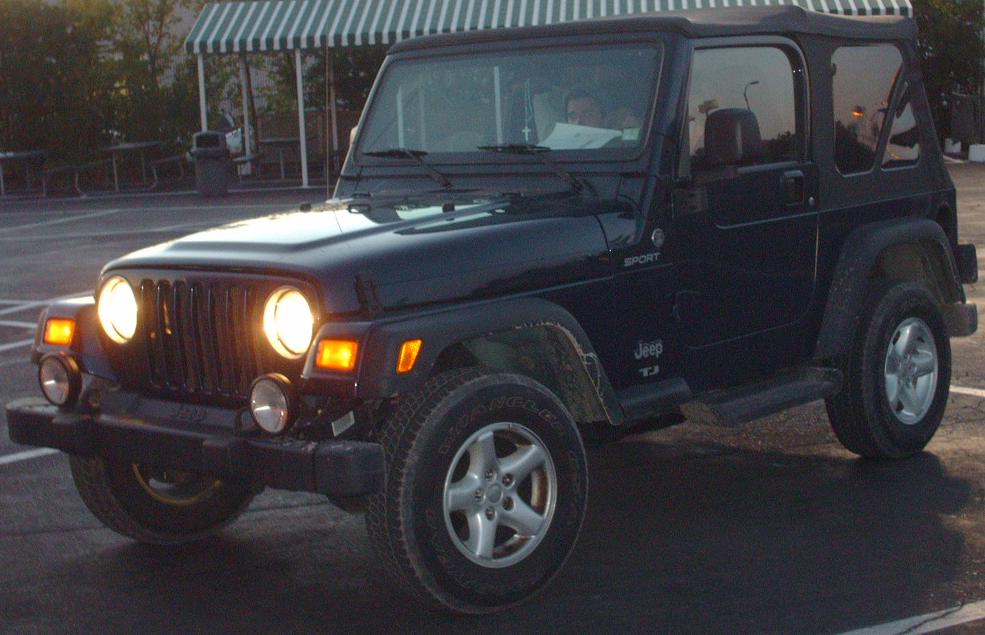
1997 Jeep TJ Wrangler
"“you'll see what happens to an engine when that happens while you're driving it that's what put that little Jeep in the junkyard that was the that was the coup de gras…”"
They’re referencing a 1997 Jeep Wrangler (TJ) to show a past case where a cooling problem led to the engine getting destroyed. It’s an example of why coolant-in-cylinders is so dangerous.
The speaker uses a 1997 Jeep TJ Wrangler as a real-world example of what happens when coolant gets into the cylinders. They describe it as the “rescue” that ended up in the junkyard after catastrophic engine failure.

Jeep Wrangler
"...tch the uh the early edition of our 1997 Jeep TJ Wrangler rescue and you'll see what happens to an engine w..."
The Jeep Wrangler is an SUV built for off-road driving, like dirt roads and rough trails. The podcast is talking about a 1997 Wrangler TJ and how the engine can develop problems as the car ages. This matters because many Wranglers are driven for years and sometimes in tough conditions.
The Jeep Wrangler is a rugged, off-road-focused SUV known for its simple, durable design and strong aftermarket support. In the podcast context, the discussion centers on a 1997 Wrangler TJ and how engine issues can show up over time, especially when a vehicle has been used hard or neglected. It’s a common topic because Wranglers are often kept for long periods and used in demanding conditions.

2007 Toyota FJ Cruiser
"because our 2007 toyed fj cruiser uh we just uh we just put up a first episode in a miniseries on that it's in the shop right now it's getting a spring evaluation found some stuff going on"
They’re talking about their own 2007 Toyota FJ Cruiser that’s being checked in the shop. The point is that older cars can still be kept running well, but you may need to inspect and fix problems before they get worse. It’s an example of real maintenance, not just theory.
The Toyota FJ Cruiser is a rugged, body-on-frame SUV built for durability and off-road use. In this segment, the hosts mention their 2007 FJ Cruiser is in the shop for a spring evaluation, implying they’re diagnosing issues before summer driving. It’s used as a real-world example of ongoing maintenance and troubleshooting on an older vehicle.
engine down
"imagine a 2024 Chevy Trax in your driveway you're paying insurance on it you're still paying the car off and now you got an engine down"
“Engine down” basically means the engine has a serious problem and the car can’t operate normally. The host uses it to show how stressful it is when you still owe money and the car needs expensive repairs. It’s a reliability example, not a technical diagnosis.
“Engine down” is a colloquial way of saying the engine has failed or is not running properly enough to drive. The host uses it to illustrate the financial impact of a major powertrain failure on a newer car still being financed and insured. It sets up the discussion about warranty coverage and repair costs.
cracked cylinder head
"it may go deeper than just a head gasket it may be a cracked cylinder head why we don't know yet but somebody's going to somebody's going to do some investigation"
A cylinder head is the top part of the engine that helps control combustion. If it cracks, the engine can leak coolant or lose proper compression, and the repair can be expensive. They’re saying the investigation might find something this serious.
A cracked cylinder head means the metal part above the cylinders has developed a fracture, often due to overheating or severe thermal stress. This can lead to coolant leaks, compression loss, and persistent engine trouble that may require repair or replacement. The host lists it as a possibility beyond a simpler gasket issue.
goodwill warranty
"when i when i work for Volkswagen man i i never thought a car manufacturer would do that much w5 w5 warranty meant it was goodwill warranty that means you're"
Goodwill warranty is when a manufacturer helps pay for repairs even if the vehicle is outside the normal warranty terms. It’s typically granted based on customer history, reputation, or the circumstances of the failure. In the segment, the host uses it to explain how some companies may still step in when standard coverage wouldn’t apply.
maintenance program
"so if you're if you're in a position like i am with older vehicles you want to get on the maintenance program and hang on to that thing as long as you possibly can so how long would your vehicle last if you were actually following a maintenance system"
A maintenance program is just a checklist of services you do at the right times. Doing it regularly helps small issues get fixed early, so the car lasts longer.
A maintenance program is a planned schedule of inspections and service meant to prevent problems before they become expensive repairs. The idea is that consistent upkeep can extend the usable life of an older vehicle even after the factory warranty ends.
proper maintenance plan
"how long would your vehicle last if you were actually following a maintenance system i follow my own maintenance system that's how it works out and we've revamped it and turned it into something that i can share with you"
A proper maintenance plan means you follow a schedule for the car’s common wear items. It’s how you avoid surprises and keep the car running reliably for years.
A proper maintenance plan is more than “change the oil when you remember”—it’s a structured approach that accounts for wear items, inspection intervals, and driving conditions. In this segment, the host argues that following such a plan is what determines how long a vehicle can last.
fleet maintenance system
"so we've built and laminated reusable fleet maintenance system that makes it super simple for you to do the same thing i've been doing in keeping older vehicles a long time"
A fleet maintenance system is a repeatable process used to keep multiple vehicles running—typically involving standardized checklists, tracking, and consistent service intervals. Here it’s described as “reusable” and tailored for keeping older cars on the road.

Nissan Rogue
"aside from that next is the 08 nissan rogue we rescued that back from almost having almost going to the you pull it recon yard we've resurrected that rescue"
They talk about an 2008 Nissan Rogue they saved and got running again. Their point is that you can’t ignore maintenance—older cars need regular attention to stay dependable.
The host mentions an “08 Nissan Rogue” they rescued from a salvage-style situation and brought back. They emphasize that even if a car is “resurrected,” reliability depends on staying on top of maintenance.
you pull it recon yard
"is the 08 nissan rogue we rescued that back from almost having almost going to the you pull it recon yard we've resurrected that rescue"
A “you pull it” yard is a place where cars are taken apart for parts. The host is saying they saved the car before it was fully dismantled.
A “you pull it” yard (often called a salvage yard where you remove parts yourself) is typically where vehicles are dismantled for parts. The host’s story implies the car was close to being scrapped, and that maintenance and repair can sometimes bring it back.
pattern failures
"but you got to stay on top the maintenance on that thing uh there's a you know there's a number of areas that are pattern failures but as long as you're ahead of the game you're good to go"
“Pattern failures” means the same kind of problem tends to happen again and again on certain cars. If you know what usually goes wrong, you can check it early and prevent bigger issues.
“Pattern failures” refers to recurring problems that show up repeatedly in a particular model or system. The host suggests the Rogue has known areas that tend to fail, and that staying ahead of them is key to keeping the car reliable.
vehicles are not maintenance free
"let me tell you we will find a whole there's no free driving that's what you got to get into your head vehicles are not maintenance free"
Older cars don’t magically avoid repairs. If you want them to keep running, you still have to do regular upkeep.
The host is pushing back on the idea that older cars “just run” without upkeep. In reality, every vehicle is a machine that accumulates wear and needs scheduled maintenance to prevent breakdowns.
deferred maintenance
"have a list of things that need to be maintained things that are getting ready getting ready to do the big nasty to you and often more times than not $200 part repair turns into $5,000 in repairs because you let it go you just let it ride"
If you ignore a small problem, it usually turns into a bigger, more expensive one later.
“Letting it go” is a classic case of deferred maintenance, where small issues are postponed until they become bigger failures. The host’s example shows how a relatively minor part repair can escalate into much more expensive work.
rust proofing
"how do i drive this older stuff and it's still holding together well first you got to do rust proofing prevent the thing from rotting out so that as you're putting money into it and maintaining it it holds itself together"
Rust proofing helps stop the car from rotting from the bottom up, especially in salty or wet climates.
Rust proofing is the process of protecting a vehicle’s body and undercarriage from corrosion. The host frames it as a key step for keeping older cars structurally sound so they “hold together.”
prevents the thing from rotting out / structure solid
"simple it's maintenance make sure it's not rotted out in the structure solid now you got a goodie that's gold trust me you got something in your hands that will save you money"
If the car’s body starts rusting badly, other parts can get damaged too. Keeping the structure solid helps the whole car last longer.
The host connects reliability to structural integrity—keeping the car’s body and mounting points from corroding. When the structure stays solid, other systems are less likely to fail due to corrosion-related damage.
paid off vs total cost of ownership
"it's paid off who cares what it's worth curbside i don't i could care less somebody says well you know why would you put a $300 starter in that"
Just because a car is paid off doesn’t mean it’s free to own. You still have to pay for repairs and maintenance.
The host contrasts “paid off” ownership with the reality of ongoing repair costs. This is essentially a total cost of ownership argument: the car’s purchase price isn’t the whole story.
starter
"somebody says well you know why would you put a $300 starter in that can you buy a car and pay $300 a month one time and own it well no you understand what i'm saying"
The starter is what gets the engine turning when you turn the key or press the button. Even a paid-off car can still need parts like this.
A starter is the component that cranks the engine to get it running. The host uses a “$300 starter” example to argue that repairs are part of ownership, even when the car is paid off.
depreciate so stinkin fast
"there's going to be challenges and they depreciate so stinkin fast it's pathetic in a week after you own it's worth $1.99 an attempts card that's about it"
Depreciation means the car’s value goes down over time. A lot of cars lose a big chunk of their value soon after you buy them.
Depreciation is how quickly a car loses value after you buy it. Newer cars often drop sharply early on, which is why the same vehicle can feel “worth nothing” soon after purchase.
curbside
"they just tank so i don't care what our 07 08 09 99 is worth curbside if you tell me it's worth a dollar 99 i go well she's paid for or i'll say something like yep one more payment she's all mine"
“Curbside” is basically how much the car is worth if you sold it. They’re saying you shouldn’t obsess over that number if you’re keeping the car in good shape.
“Curbside” is shorthand for a car’s market value—what it’s worth in the real world, often tied to listings and resale pricing. The hosts use it to argue that value matters less than ownership costs and maintenance.
make a car payment folks
"don't get stuck in the uh home to work home to work home to work home to work home to work and make to make a car payment folks that's not playing the car game right"
Car payments are the monthly money you owe for the vehicle. They’re talking about how financing can make ownership feel more stressful even if the car is reliable.
The phrase “make a car payment” highlights the financial side of ownership—monthly payments can lock you into a long-term cost regardless of how reliable the car is. The hosts frame this as part of “playing the car game” versus owning outright.
older car or newer ones
"does that mean you're not gonna have to put some work into an older car or you're not gonna have to put some work into one of these newer ones holy smokes"
They’re comparing older cars to newer cars. The point is that no car is “problem-free,” but the timing and cost of repairs can differ.
The hosts are contrasting older vehicles with newer vehicles in the context of reliability and ownership risk. The key idea is that both can require repairs, but newer cars may have different failure modes and warranty/coverage timing.
honeymoon's over
"[2351.9s] once the honeymoon's over first dent ding or scratch that's it now you're just paying for it [2359.1s] to get to the next one then you'll do the same thing work work work pay for it till you get to"
They mean that after you buy a car, the excitement fades and real-life costs show up. Even if the car is fine, you’ll still deal with small issues and maintenance.
“Honeymoon’s over” is used to describe the period after purchase when minor issues appear and the owner realizes the car still costs money to maintain. It’s a behavioral/ownership concept: early dents, scratches, and wear are part of real ownership.
paying for it / never plan you never own it
"[2359.1s] to get to the next one then you'll do the same thing work work work pay for it till you get to [2366.3s] the next one and continue the cycle of the never never plan you never own it but you work your butt [2374.4s] off to make payments to get to the next one"
The hosts are criticizing a “keep buying the next car” payment cycle, where the owner is always financing the next vehicle instead of building ownership value. This mindset can lead to neglecting upkeep because the car is treated as temporary.
mindset on maintenance and ownership
"[2455.3s] it all comes down to one thing this morning what's your mindset on that stuff you might say well [2464.0s] you know you're a service tech okay what has that got to do with the car needs maintenance [2471.7s] well you can fix it yeah but i don't get parts thrown at me for free"
A core theme here is that reliability isn’t just about the car—it’s about the owner’s approach to upkeep and repair decisions. The hosts frame it as a mindset: do you invest time/money to keep the car running, or do you go into debt to replace it?
older is better technology and more reliable
"...people trying to buy something older... because why they've come to know that older is better technology and more reliable..."
Some people believe older cars are more reliable because they’re simpler and have been around long enough that problems are known and fixed. Newer cars can be more complicated, so they may have more things that can go wrong.
The host is arguing that older cars tend to be more reliable, framing it as “proven” technology rather than cutting-edge designs. This is a common debate in the classic-car world: older vehicles often have simpler systems and more time to shake out design flaws.
plastic components on engines that are failing because of heat
"...all the plastic components on engines that are failing because of heat who here's the thing..."
Heat can slowly cook plastic parts under the hood. Over time, that can make them brittle or warped, which can cause leaks or other failures.
This points to heat-related failure of plastic engine components. Under-hood temperatures can degrade plastics over time, leading to cracking, warping, or gasket/seal issues—especially for parts like covers and manifolds.
under hood temperatures are super hot
"...knowing that the under hood temperatures are super hot hot enough to bake a dozen raisin brand muffins..."
The area under the hood gets extremely hot. That heat can wear out materials faster, especially plastic parts and the seals around them.
The host emphasizes that under-hood heat is extreme enough to damage materials over time. This is the core reliability issue: heat accelerates aging of polymers and can also affect gaskets and seals around the engine.
plastic valve covers
"...plastic valve covers plastic intake manifolds plastic timing covers..."
Plastic valve covers are engine covers that protect the top end and help seal oil. When they’re made of plastic, they can be more sensitive to heat cycling, which may contribute to cracking or gasket-related leaks.
plastic timing covers
"...plastic valve covers plastic intake manifolds plastic timing covers..."
Timing covers help protect the timing components (like belts/chains and gears) and keep contaminants out. Plastic timing covers can degrade with heat, and if they warp or crack, they may contribute to oil leaks or timing-area contamination.
plastic intake manifolds
"...plastic valve covers plastic intake manifolds plastic timing covers..."
The intake manifold is the part that feeds air into the engine. If it’s plastic, heat can cause it to change shape and potentially leak.
The intake manifold routes air (and sometimes fuel) to the engine cylinders. Plastic intake manifolds can be affected by heat and thermal expansion, which can lead to warping, vacuum leaks, or sealing problems.
engine bay plastic... to try and deflect the heat
"...they're attaching it to the edges of the valve cover gaskets where the valve covers are to try and deflect the heat..."
They’re trying to keep the hottest exhaust heat from reaching plastic parts. The idea is to block or redirect heat so it doesn’t cook the components.
The transcript describes attempts to manage heat flow using design changes around plastic parts and gaskets. Heat deflection strategies aim to reduce the temperature reaching sensitive components near exhaust manifolds.
aluminum foil... deflect the heat
"...they're putting aluminum foil yep i knew it would be in there eventually uh they're attaching it to the edges..."
The foil is being used as a simple example of a heat shield. Reflective barriers can help reduce how much heat reaches parts nearby.
The host uses aluminum foil as an example of heat-shielding behavior—essentially a DIY-style thermal barrier concept. In engineering terms, it reflects the broader idea that reflective/insulating materials can reduce heat transfer to nearby components.
engine fire
"because every time the valve covers leak oil you need to get it fixed so you don't get an engine fire but secondly the covers you throw them in the in the recycle box"
An engine fire means flames start under the hood. Leaking fluids like oil can sometimes reach hot parts and ignite, so leaks shouldn’t be ignored.
An engine fire is a serious event where flames start in or near the engine bay, often triggered by leaking oil or fuel contacting hot surfaces. The speaker links valve-cover leaks to the risk of an engine fire, emphasizing why repairs are urgent.
plastic engine parts
"the power strokes plastic engine parts come on i look at that and i go all of that you're gonna the whole time you own this thing"
Some engines use plastic parts to save weight and money. The host is saying those plastic parts can wear out or deform from heat, leading to repeated repairs.
Plastic engine components can be used for weight savings and cost, but they can also be vulnerable to heat, warping, and degradation depending on design and operating conditions. The speaker argues that plastic failures can become a recurring ownership expense.
planned obsolescence
"and again and again because it's a planned obsolescence that's what it is they're making stuff out of plastic"
Planned obsolescence is when something is designed so it won’t last forever, so you end up paying for repairs again and again. The host is saying the design choices make failures more likely over time.
Planned obsolescence is the idea that products are designed to wear out or fail after a certain period, pushing owners toward repeat repairs or replacements. In this segment, the host argues that using plastic components leads to recurring failures that keep generating paid work.
electric vehicle fire risk timing
"if you own an electric vehicle you need to go to that channel and you need to watch what's really going on out there three seconds to get out of an ev once it starts on fire"
The host is warning that if an EV catches fire, it can spread very fast. They’re urging EV owners to learn what to do and how quickly they may need to get out.
The host emphasizes how quickly an electric vehicle can become fully engulfed once a fire starts, and frames it as an education point for EV owners. The key idea is that EV fire response and escape planning may differ from what people expect, so knowing the timeline matters.
"three seconds" escape window during a vehicle fire
"three seconds that's from the fireman he said that person has three seconds to exit the vehicle... you either better better be really fast at getting an unplugged and getting your car out of the way because you only have seconds"
They’re warning that once a fire really starts, it can get dangerous very quickly. The exact seconds can vary, but the message is: don’t wait—get out fast.
The segment emphasizes an extremely short escape timeframe (“three seconds”) once a fire starts, framing it as a safety warning. While exact timing varies by vehicle and fire conditions, the underlying point is that rapid escalation can leave little time to react.
EV charging center
"if you're in a charging center in the car and you know how close the the charging units are"
An EV charging center is where lots of electric cars are plugged in to charge. If something goes wrong with one car, the nearby cars can be affected too because they’re close.
An EV charging center is a location where multiple electric vehicles are charged in close proximity, often with several chargers lined up. The layout matters for safety because a battery fire can expose multiple cars at once.
thermal runaway (thermal takeoff) in EV batteries
"if the dude's car starts on fire because of electrical what do they call it it's called thermal thermal takeoff so the battery gets super hot... it'll instant it'll it'll go into combustion thermal takeoff is what that was the term he mentioned"
EV battery fires can sometimes “snowball.” Once parts of the battery overheat, it can trigger other parts to overheat too, and the whole thing can catch fire very fast.
The term “thermal takeoff” here refers to thermal runaway in an EV battery: when cells overheat, they can rapidly trigger neighboring cells. That heat can escalate to combustion, producing intense flames and making fires spread quickly—especially in tight spaces like EV charging rows.
insurance companies
"insurance companies are taking a really close look at this they can start on fire anytime"
They’re saying insurance companies are paying closer attention to EV fire risk. That can change how much you pay for insurance and how claims are handled.
The hosts claim insurance companies are closely evaluating EV fire risks and how quickly fires can develop. This kind of underwriting scrutiny can affect premiums, coverage terms, and how insurers respond to claims.
EV fires in parking facilities
"thousands of evs are on fire and they the fire department can't put it out thousands in a parking facility where robots stack these evs like six layers high... and it's on fire been on fire for days"
The host describes a scenario where multiple electric vehicles in a stacked parking/storage setup catch fire and the fire department can’t quickly put them out. This is important because EV battery fires can be difficult to extinguish and can spread in dense parking environments. It also highlights how building design and emergency response planning affect real-world risk.
BYD
"now in china google sometime today b y d china it's a company in china and they're keeping it out of the media thousands of evs are on fire... so check that out b y d"
BYD is a big electric-car company from China. The host is talking about reports that BYD EVs have been catching fire, and that those stories may not get much attention. It’s basically about who makes the cars and how incidents are reported.
BYD is a major Chinese electric-vehicle manufacturer. In this segment, the host references BYD-related reports about EV fires and how those incidents may be underreported. For listeners, it’s a reminder that EV risk discussions often involve specific manufacturers and supply-chain factors.
underwriting
"so for all of you who have evs um i would prepare to hear from your insurance company because i can tell you they're going to be underwriting this"
Underwriting is how an insurance company decides how risky something is and what it will charge you. The host is saying insurers may change EV coverage because of fire concerns. That can mean higher costs or stricter rules about where you park.
Underwriting is the insurance process of evaluating risk and deciding what terms and coverage to offer. The host suggests insurers are adjusting policies for EV owners due to fire-risk concerns. For listeners, this affects premiums, deductibles, and whether certain parking/spacing rules are required.
home insurance challenge
"for all of you who have evs um i would prepare to hear from your insurance company because i can tell you they're going to be underwriting this that if you have one your insurance is your home insurance is going to have a challenge"
The host is saying EVs may make homeowners insurance harder to deal with. Insurance companies may change what they cover or what rules they expect you to follow. It’s a good idea to check your policy details before you assume everything is covered.
The host frames EV ownership as creating a “challenge” for homeowners insurance. That typically means insurers may reassess EV-related fire risk and adjust coverage terms. For listeners, it’s a reminder to review policy language before buying an EV, especially around exclusions and required parking practices.
not to be parked within 50 feet of your home
"insurance companies are saying if you have an ev it's not to be parked within 50 feet of your home so that means in the garage nope up to the walkway nope"
The host says some insurance companies want EVs kept a certain distance from your house. The idea is to reduce risk if there’s a fire. If you park closer and something happens, the host warns it could cause insurance problems.
The host claims some California insurers are requiring EVs not be parked within a specified distance (50 feet) of a dwelling. This is a practical ownership issue because it can change where you’re allowed to park (garage vs driveway/walkway) and can affect coverage if a fire occurs. It’s essentially an insurance risk-management rule tied to EV fire concerns.
Request an Explanation
Heard something you'd like explained? We'll add it to this episode.
Sign in to request explanations for terms you heard.
Want to learn more?
Browse our glossary for plain-English explanations of automotive terms, jargon, and concepts.
Help improve this episode
See something that's not quite right? Our annotations are AI-generated and can sometimes miss the mark. Click the flag icon on any annotation to suggest a correction.