You have data everywhere, but is it working together?
Meet Curator, the automotive industry's first unified intelligence engine.
Curator unifies data from all corners of your dealership to transform marketing, sales, and
customer interactions.
See you today at gubagu.com.
Welcome to this weekend drive edition of Daily Drive for the fifth week of August 2025.
I'm Kellan Walker in Las Vegas, we're breaking down some of the biggest stories in the
auto industry from the past week and looking forward to what's in store in the days ahead.
Today, I'm joined by two of my automotive news colleagues, Michael Martinez covers Ford
and the UAW, Mike, welcome back to weekend drive.
Thanks for having me.
And Molly Boygon covers tech and innovation for automotive news, Molly, welcome back.
Thanks, Kell.
All right, so let's get started.
So our own Richard Truett reported earlier this week about a possible bombshell in
the EU's trade framework with the US, one sentence in the document seems to say that
the US and EU would accept each other's vehicle safety and emissions standards under a deal.
Now Mike, what are some of the potential issues and could this result in lower safety
and environmental protections?
Well, Kell, there's about a million and one potential issues here.
There's a lot we don't really know, although I still think this is absolutely fascinating
and a potential massive development, right?
Because for so long, people groups have been trying to harmonize the standards between the
US and Europe costs automakers hundreds of millions of dollars to retrofit to modify
their vehicles if they want to export them to sell them in the different markets.
The safety standards, the emissions standards are so different.
I think here in the US, we care more about the drivers, the people actually in the
vehicles.
The US sort of cares more about the pedestrians in case of a crash.
So if a Ford or a GM wants to export big trucks, say they need to add things like external
airbags or collapsible hoods, if Europeans are trying to import vehicles here, they need
to add beefier bumpers and more sensors, especially for rear end collisions, because we seem
to care more about that.
The emissions are different.
So if the automakers don't have to spend all that money modifying their vehicles and the
same standards are accepted, I think the jargony term is a non-tariff barrier to trade.
This is a non-tariff barrier to trade.
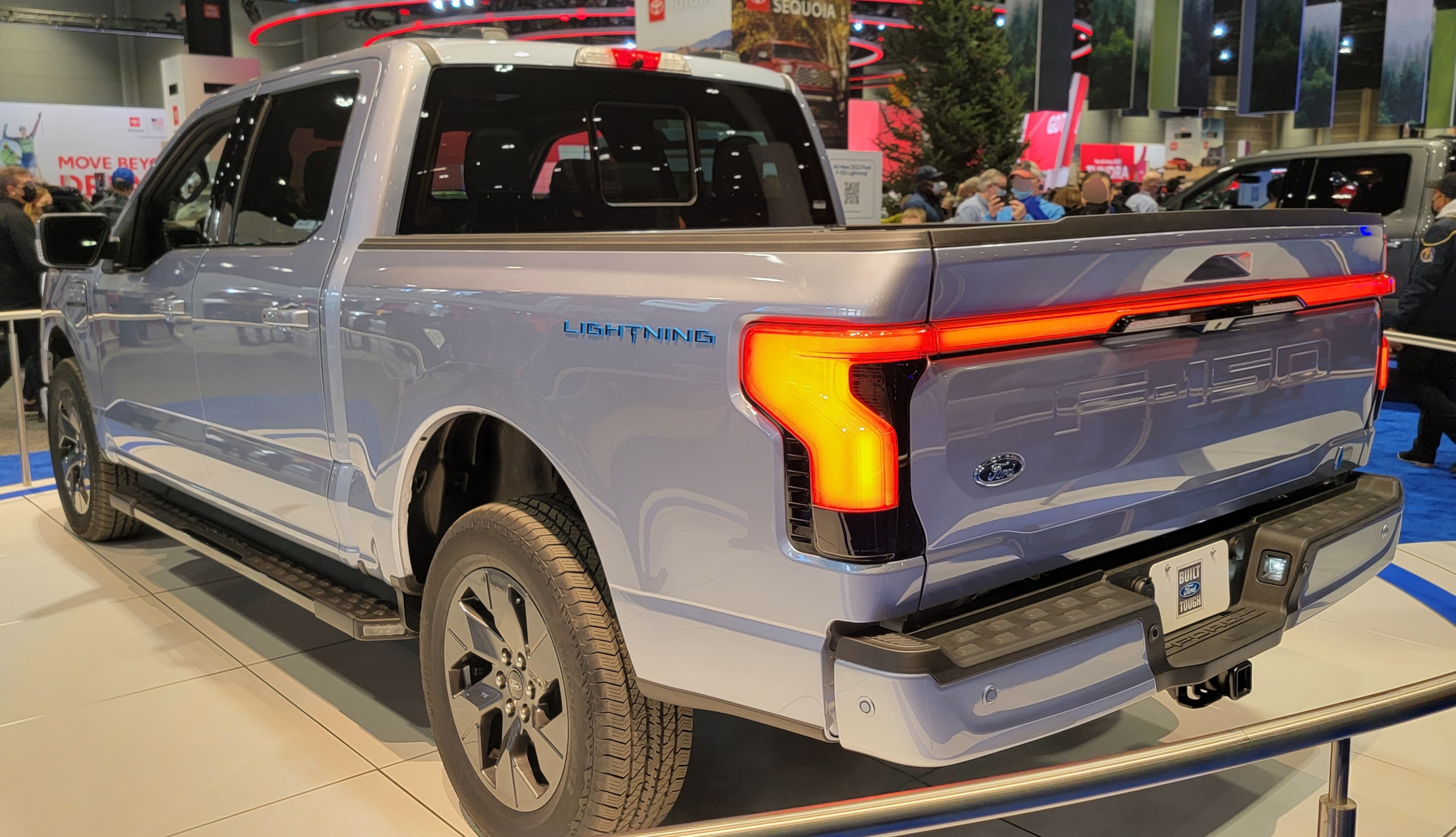
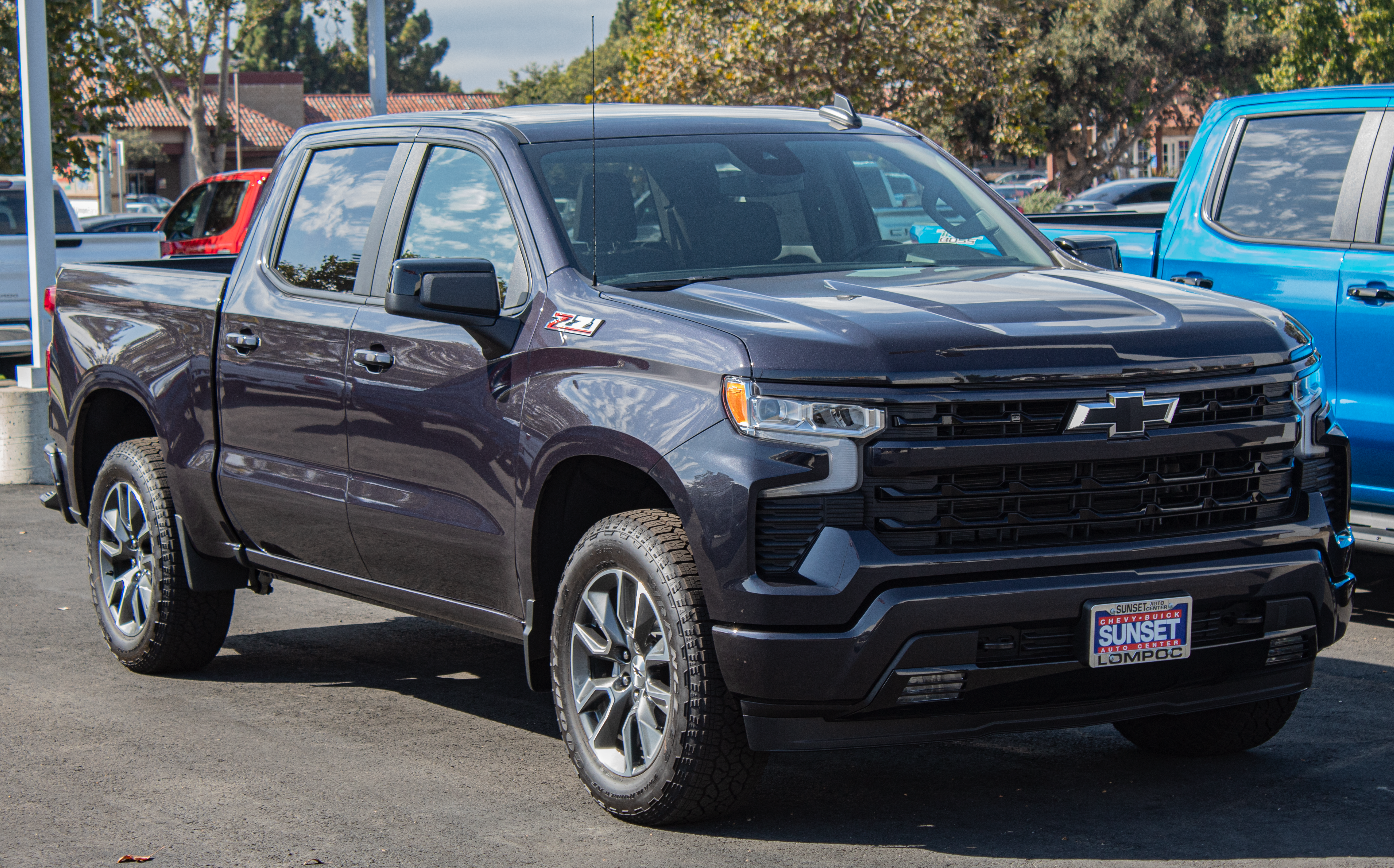
If you take that away, there could be more incentive to see more F-150s or Silverados
on the Autobahn.
But the question is, do people actually want that?
I don't know.
You saw a decade ago when Sergio Marchioni tried to bring Fiat to the US.
They did not sell well at all, those smaller European cars.
Obviously, there was a lot of issues there in terms of the emissions regulations that
were losing money on every car they sold.
So different situation today.
But the question remains, do Americans want European cars?
Do Europeans want American cars?
Who knows?
Who knows how exactly these regulations will play out?
If it all works out, it sort of levels that playing field.
It reduces some cost and time for the car companies.
And in theory, it would make customers happier because they'll have more choice.
And that's always a good thing.
Well, Mike, how might automakers redesign cars to meet both the US and EU markets?
Well, that's the thing.
They wouldn't have to redesign their cars and they wouldn't have to spend all
that money, modify those these sort of third party modifiers wouldn't have
to become involved, customers wouldn't have to pay all that extra money.
So that would be the game changer, Cal, is that you could in theory,
if this all works out how we think it might, you could sell an F-150,
a Ram 1500 without much change.
You could bring in for the American market.
This could be important.
You could bring in smaller European cars in an age where affordabilities
and issue range even for gas vehicles is important.
People want to go further on a tank of gas because it can cost a lot of money to fill up.
They may be more likely to buy those smaller vehicles.
And again, you wouldn't need to change too much.
Well, we usually don't think of Ford as a major exporter to Europe.
But how could this affect Ford also?
Well, it depends on what model you're talking about, right?
The Mustang sells well anywhere in the world where it's sold.
But, you know, again, it could give Ford more incentive
to shop its larger products in more markets.
They obviously have plenty of plants in Europe and elsewhere overseas
that serve those markets, but, you know, you could see in theory.
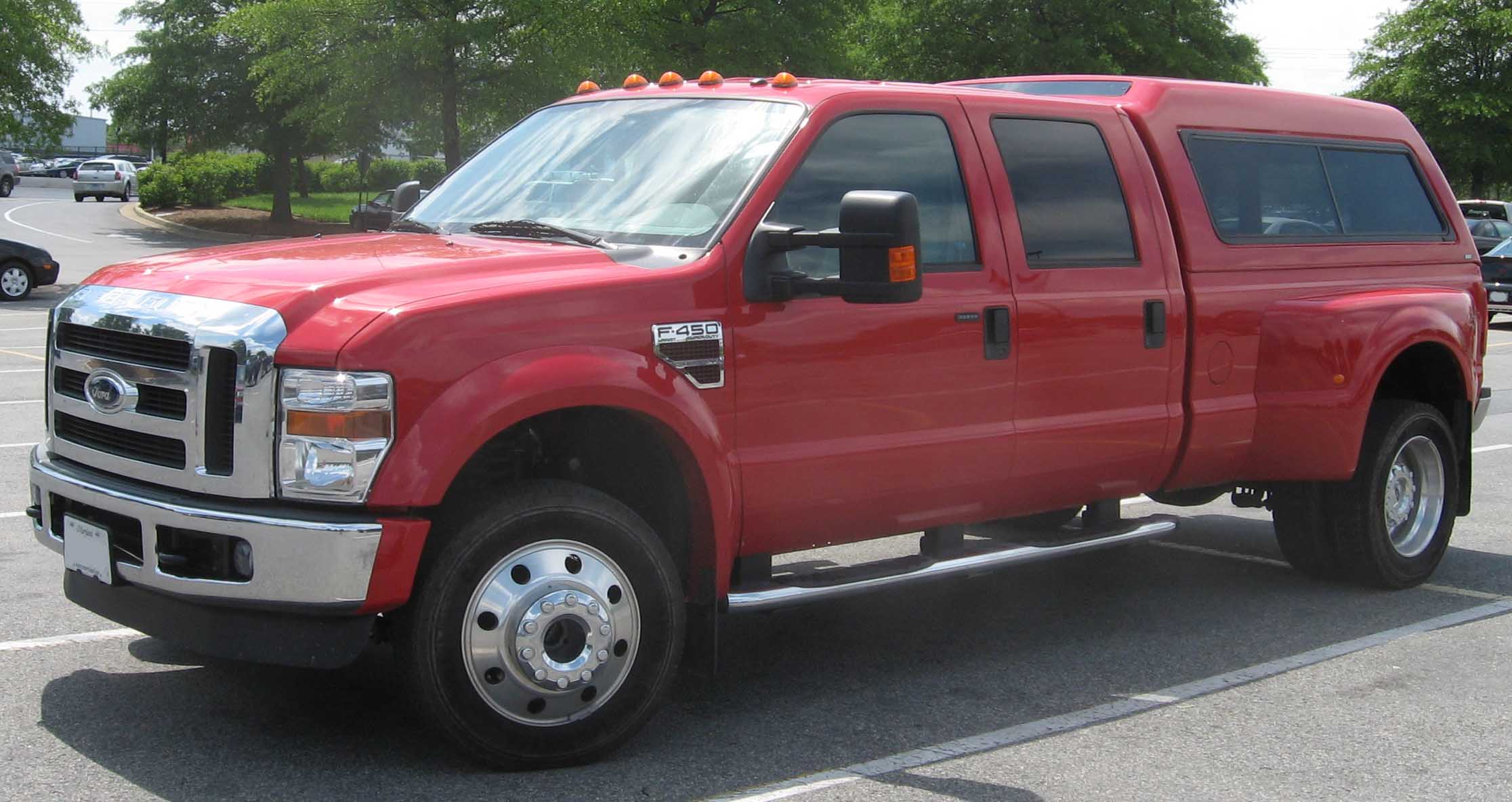
I don't know if you'll see too many F-350s, F-450s rolling down
these sort of very old and small roads in Germany or France or wherever.
Yeah, that doesn't make much sense.
But in theory, they could.
They could have an easier time selling them.
And if that's what people want, so be it.
Interesting. Now, Molly, if listeners think they finally got a handle
on which auto parts are affected by tariffs, you wrote a story this week
that will probably completely burst their bubble.
You write that more auto parts may soon be added to the list.
Now, why will parts manufacturers be able to request components
to be added to the tariff list and how will they do this?
That's right. I hate to burst people's bubbles, but there was a provision
of the original auto parts tariff proclamation that the government
would release a procedure for auto parts manufacturers to be able
to add tariffs to the list and specifically to add parts to the list
of components or goods receiving tariffs.
So the reason why the government did this is because it's creating
an avenue for manufacturers who feel like maybe an important product
for which the US has a competitive disadvantage has been left off the list.
It's an opportunity for those manufacturers to try and sort of seek
extra protection for their own operations.
Now, what impact will this have on the auto industry?
So the procedure was published.
The government still has to publish it in the federal register
and there will be periodic two week windows whereby manufacturers can submit
ideas to the government for new parts to be added to the tariff schedule.
However, the government's been delayed in posting that to the federal register.
So we haven't seen any of this yet.
For me, I think the thing that this will really highlight
is the different ways that parts manufacturers versus vehicles manufacturers
are thinking about the tariffs.
You know, the vehicle manufacturers are eating a lot of the tariff cost
and thinking about basically how to keep costs down and manage manage those extra expenses.
And then you have this procedure highlighting the ways in which auto parts
manufacturers may be actually seeking to add additional parts to the list
and sort of protect their own operations and manufacturing from foreign competition.
So that's I think it may if parts manufacturers take the government up
on this offer sort of highlight the tension around that dynamic.
Kel, I would just have one thing to add that I cannot wait to see the ramifications
of this because the pettiness is going to be off the charts.
And you see that you see that with the automakers, right?
And you talk about Ford and GM, these two Detroit rivals.
There were some strong insinuations that it was GM
who was sort of lobbying against what Ford was doing with this Marshall battery
plant using sort of Chinese technology and they were running into some roadblocks.
There were some some rumblings that GM was the one
alerting the government and cautioning the government against what Ford was doing.
So I can only imagine what automakers, what rival suppliers will do
to try to get that leg up on each other when these rules
when they're allowed to, you know, submit this stuff to the government.
That's a really good point.
And interestingly, the original tariff proclamation said
the government would create a process for auto parts manufacturers,
vehicle manufacturers and industry groups to submit these goods
for consideration to be added to the tariff schedule.
The procedure only is for auto parts manufacturers at this point.
So I think that I mean, I don't know for sure this is purely conjecture,
but I think Mike raises a really good point that perhaps the government
is still working out ways to prevent intercompany competition
from sort of bleeding into this process.
So they're holding off on the procedure for the auto parts manufacturers.
This is so interesting.
I just I feel like this whole auto parts tariffs thing,
this could turn into a really, really good Netflix documentary.
Geez, Louise.
Thanks, guys.
So coming up as part of our centennial celebration this week
at Automotive News, Mike took a look at our coverage of labor
and the UAW over the past 100 years.
We'll talk about that next on Weekend Drive.
Daily drive listeners like you have access to the lowest price
for Automotive News Congress 2025 on September 11th.
The event is where the industry's biggest players tackle its toughest challenges.
Congress attendees don't just follow the industry, they lead it.
This year's featured speakers include Hyundai Motor Group Executive Chair
Yusung Chung, Asbury Automotive CEO David Holt
and General Motors CEO Mary Bara.
We are investing in America.
We're creating jobs that's creating IP in this country.
And I think, you know, the United States needs to lead in key technologies.
Join us to gain the insights and connections needed to steer your business
through massive change to get the lowest price for the event.
Go to autonews.com slash events, select Auto News Congress
and type in the discount code daily drive.
That's one word all caps daily drive.
And we'll see you on September 11th in Detroit.
Your dealership has no shortage of customer information.
But when that data is conflicting, messy and spread across a multitude of platforms,
it's impossible to activate properly as the automotive industry's first
unified intelligence engine.
Curator enriches and unifies your customer data across platforms
like your CRN, your DMS, your website and even your marketing efforts.
It then injects that information back into your most vital systems
to provide a single view of each customer and equip your sales team
with the information they need to close a deal.
When one of the largest volume Subaru dealers in the country wanted to
tap into its data goldmine, they turned to Curator.
In just four months,
Huberger Subaru experienced a 55 percent higher closing ratio
and a return of 15 times their investment.
Want to see it for yourself?
Check out the case study at Goobigoo.com slash Curator.
That's G-U-B-A-G-O-O dot com slash Curator.
Welcome back to Weekend Drive.
I'm Kellen Walker with Automotive News staff reporters
Molly Boygon and Mike Martinez.
Mike, you wrote a piece this week about our coverage
of the UAW and labor movements over the past century
as part of Automotive News's 100th birthday,
which we celebrated this week.
When you went back through our issues from decades ago,
what were some of the things that stood out to you
about our coverage of the early days of the UAW?
Yeah, Kell, it was honestly pretty wild
to see how automotive daily news at the time covered the UAW.
The first mention of it was two days after its founding.
It was a Wednesday, August 28, 1935.
There was a two sentence brief
in the bottom right hand corner of the paper.
It did make the front page, but barely thought that was interesting.
And it quoted somebody as saying this union was meant
to help employees share in the wealth of the industry.
But, you know, I'll be honest with you,
it seemed in those early days we were a little slanted in our coverage.
And I hate to say it, you know, I'm a proud, proud employee here.
But it was really geared more towards the companies
in those early days, the famous Battle of the Overpass,
where future president of the UAW, Walter Ruther,
and some union members were attempting to pass out flyers
near Ford's Rouge plant.
They were beaten up pretty severely by company goons,
security guards, Harry Bennett and others
within an inch of their life, basically,
in some instances for some of these people.
The only mention of the Battle of the Overpass in automotive news
was a few days later, a small story on page two.
The headline was Ford production normal, despite UAW disturbance.
We quoted we quoted Henry Ford blaming the issue
on newspaper sensationalism.
So fake news was a thing.
There was there were some a whole lot of communist fear.
Montgrain, I think, is the best way to put it during the Flint
sit down strike.
There was a photo we ran one day of one of the strikers
and one had their fist in the air.
So the caption in all caps was, is this Moscow?
So there are some interesting findings.
But, you know, it did go to show you our coverage has evolved.
But the union has played a major role in the industry,
you know, for its 90 years.
You also touched on how the industries played a role
even outside the auto industry.
What were some of the highlights that you were able to find there?
Yeah, Molly, you know, it's really interesting because basically
a lot of the things we even enjoy as journalists
or most workers enjoy no matter what sector you're in,
you can trace it back to the UAW or a union
that had to fight sometimes literally to win that benefit for you.
And I'm talking pensions, health care, paid time off.
Weekends free, a certain set number of hours, annual raises.
Those are all things the UAW one in its early contracts
with the Detroit three after the fights to become recognized there.
And even beyond the auto industry,
it played an important role shaping American politics.
Early civil rights issues.
Walter Ruther spoke at the March on Washington
where MLK gave his I have a dream speech.
The UAW was prominent in its support of Nelson Mandela
in the fight against apartheid in South Africa.
Nelson Mandela came to Detroit in 1990.
He got a UAW card.
He had one of those fancy satin jackets with the UAW wheel on it.
And he thanked the union.
So its impact has really extended beyond the industry
in terms of benefits, but also just in terms of social impact issues.
Yeah. And some of those issues came into stark relief
during the Great Recession of 2009.
How did that impact the union?
And did it ever fully recover from some of those challenges?
The short answer is no, because the union had to give up a lot
to help the companies remain financially solvent.
Obviously, Chrysler and GM still went bankrupt.
Despite what the UAW did, there were a lot of givebacks
from what had gained over the years.
And you can argue whether or not some of that stuff was fair
or good for a business whose job it is to make money to have.
There was one of the most controversial elements is the Jobs Bank.
There was a benefit the UAW, I think it was 84 when they won that.
Essentially, if you were laid off, an auto worker who was laid off,
you could still make almost your entire paycheck.
You get thrown into this Jobs Bank
and you basically sat around and twiddled your thumbs
and got your full paycheck almost for being laid off.
Probably not the best thing to have if you're a business.
The union had to get rid of it.
They're still trying to win it back today.
The chances aren't that great, honestly.
But then you look at things like different tiers of workers,
new hires getting paid significantly less than legacy workers.
Those new hires no longer receiving pensions.
The older workers still got them.
The elimination of cost of living adjustments.
So we just saw in 2023, the union wins some of that back,
not all of it, but some of it.
So to this day, they are still fighting to recover from what they lost.
But you could argue, did they need everything back then?
If you're a Ford or a GM, you're probably way better off
to not have those sort of burdensome costs on your books.
Well, Mike, you know, this question right here was coming
because we cannot talk about the UAW
without mentioning the corruption scandal.
The 2017 federal investigation exposed numerous union officials.
Now, has its members regained the trust
of new union leadership under Sean Fane?
You know, I'm not sure that they have largely
because of some controversy under Sean Fane.
The result of that corruption scandal was that the UAW was placed
under a six year consent decree with oversight from a federal monitor.
And that monitor is looking into some choices.
Sean Fane personnel choices Sean Fane made and stripping some
some secretary treasurer and VP of some key assignments.
And the perception, I think, is still there that, hey,
maybe this union isn't necessarily clean.
Now, obviously, there's been no criminal allegations
against Sean Fane.
A lot of what the monitor is looking at is still under investigation.
But just the perception that everything isn't on the up and up
still hurts some members that there was a lot of trust lost
in that corruption scandal to presidents went to jail.
Wow. It was the worst thing you can think of because
what was found to have happened was that these criminals were stealing money
from the members, dues, money, sacred dues, money
to fund this lavish lifestyle, thousands of dollars in cigars
and fancy golf trips in Palm Springs and this really expensive liquor
and fancy, I remember Mont Blanc pens were part of this at some point.
So the union is all about solidarity.
It's all about being there for your brothers and sisters
and to have that betrayal of trust was really, really tough on the membership.
And it's going to take a long time to gain back that trust.
Wow. Well, good stuff.
Molly, Mike, thank you so much for joining me.
Thanks, Cal. Thanks.
That's all for this weekend drive edition of Daily Drive.
I'm Kellen Walker.
Thanks to Automotive News executive producer Jake Neer
for his help on today's podcast.
You can get the latest news on the UAW tariffs
and everything happening in the auto industry at autonews.com.
We'll be off for the Labor Day holiday on Monday,
but join us Tuesday for a conversation with Anshuman Saxena,
who leads development of ADAS and autonomous driving products for Qualcomm.
It has been a pretty nice journey in Qualcomm,
building up step by step the brakes that we have put for the foundation
for driver assistance systems and automated driving.
We'd love to hear from you.
Let us know what you think of the show and the topics we cover today.
Send us an email at dailydrive at autonews.com
or leave us a voicemail at 313-444-2774.
If you enjoy the podcast, remember to like, leave a review
and subscribe so you never miss an episode.
About this episode
A potential trade bombshell between the US and EU could harmonize vehicle safety and emissions standards, sparking a debate on its implications for automakers and consumer choice. Hosts Kellan Walker, Mike Martinez, and Molly Boygon explore the complexities of this development, including the impact on vehicle design and tariffs on auto parts. They also reflect on the UAW's 90-year history, discussing its evolution, labor struggles, and the lingering effects of a corruption scandal that has shaken member trust. The episode offers a deep dive into crucial industry dynamics and historical context.
Automotive News staff reporters Michael Martinez and Molly Boigon talk about the biggest news stories from the past week, including a portion of the U.S.-EU trade framework that could reshape safety and emissions standards. Plus, a look at how the UAW and Automotive News’ coverage of labor issues have evolved over the past century.