00:00
You know, usually when we look at a brilliant piece of engineering on paper, there's this
00:16
expectation of just pure flawless precision.
00:23
You look at a blueprint, everything aligns perfectly, the math checks out, and you think, you
00:27
know, this is the future.
00:28
It feels logical and totally under control.
00:31
Well, yeah, it creates this illusion of predictability.
00:34
You program the software, you input all the variables, and you just expect the machine
00:39
to output the exact lap time the simulator promised.
00:42
But then, and this is where it gets messy, you take that flawless sterile blueprint,
00:47
you actually build the machine, and you hand it over to 20 highly competitive human
00:53
That's where the math falls apart.
00:55
You have to drive it at 300 kilometers an hour, wheel-to-wheel, with their adrenaline completely
01:01
Suddenly, all that clean predictability just shatters.
01:03
The real world is, while it's incredibly messy.
01:06
Which is exactly what happens when you try to, like, force human instinct to conform
01:11
to a mathematical algorithm.
01:14
Which brings us to today.
01:16
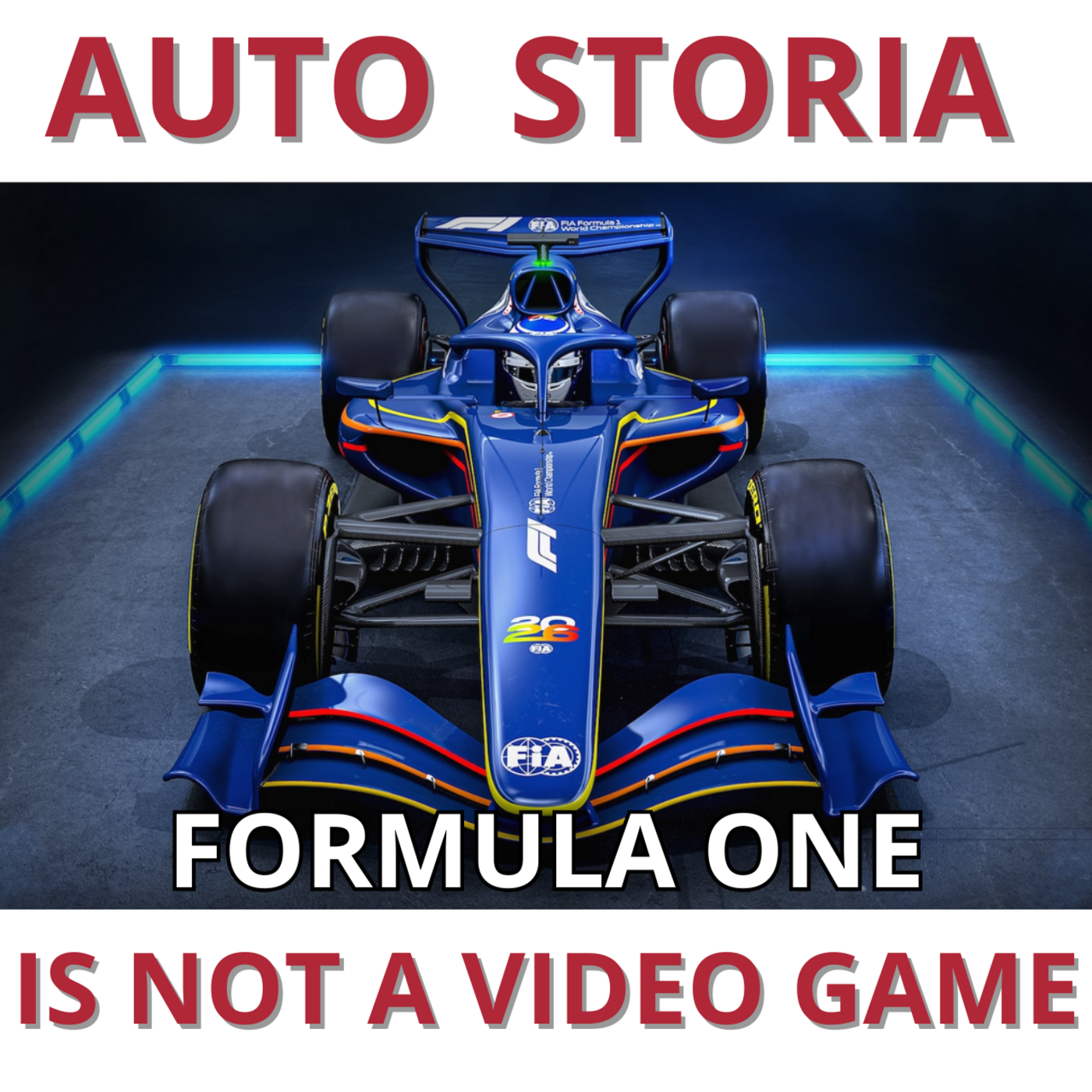
This is Autostoria, episode 35.
01:18
And today, we are taking you right into the heart of a massive, unprecedented
01:22
crisis that's currently engulfing the entire motorsport world.
01:25
We are unpacking the highly anticipated and now highly controversial 2026 FIA Formula
01:33
And more importantly, we are looking at the full-scale driver revolt that has
01:37
erupted just three races into this 2026 season.
01:42
It's getting intense out there.
01:44
Our mission today is to figure out how F1 designed this brand new nimble car
01:48
A set of rules meant to make racing, you know, more sustainable and more spectacular
01:52
for you, the fans at home, and somehow ended up with a grid full of drivers who
01:56
were just absolutely furious.
01:58
FURIOUS is almost an understatement.
02:00
They're calling the new rules not just artificial, but incredibly dangerous.
02:03
It is the absolute definition of an engineering triumph turning into a real
02:07
world sporting disaster.
02:09
So before we can really understand why the drivers are quite literally on the
02:13
verge of a strike right now, we first have to establish the physical reality
02:18
of what the FIA actually changed in this historic regulatory reset.
02:23
Looking through the 2026 technical regulations, the governing body pushed
02:27
this nimble car concept.
02:30
They want to reverse the trend of cars getting bigger and heavier.
02:34
Because that's been a major complaint for years.
02:37
The fans hated the boat-like cars.
02:40
So they reduced the wheelbase by 200 millimeters, bringing it down to
02:45
They dropped the overall width by 100 millimeters.
02:48
And they reduced the minimum mass by 30 kilograms, targeting 724 kilograms
02:55
Those are the raw numbers.
02:56
But what does that actually mean for the human being wrestling the steering
03:00
Well, think about the physics of inertia.
03:02
When you shave off 30 kilograms and shorten that wheelbase, you are
03:05
fundamentally changing how the car behaves when a driver throws it into
03:09
a high-speed corner.
03:10
Because it's lighter and shorter.
03:13
The car becomes vastly more twitchy.
03:15
It has less mass to stabilize it, meaning it rotates faster.
03:19
But it also snaps out of control a lot faster.
03:22
It demands entirely new reflexes from the drivers.
03:25
So the physical footprint of the car requires much faster hands.
03:29
But they also completely overhaul the aerodynamics, moving away from extreme
03:33
ground-effect dependency.
03:35
Which was the whole defining feature of the previous era.
03:39
So now, downforce is cut by an estimated 15 to 30 percent.
03:42
And drag is reduced by up to 40 percent.
03:45
And for anyone listening who isn't an aerodynamicist, ground-effect is
03:50
consensually shaping the floor of the car to create a massive vacuum.
03:55
It literally sucks the car down onto the tarmac.
03:57
And it provides immense stability.
03:59
By removing a huge chunk of that suction, you are taking away the
04:01
invisible safety net that keeps the car glued to the track.
04:04
So they're just sliding around out there.
04:07
Cutting downforce by 30 percent means these 2026 cars are
04:10
physically harder to keep in a straight line.
04:13
But the aerodynamic changes are really only half the story here.
04:17
The power unit revolution is what truly broke the system.
04:20
Let's talk about the engine.
04:21
The 1.6-liter V6 turbo internal combustion engine is still there.
04:26
But the balance of output is radically different.
04:30
We're looking at a 50-50 split between internal combustion and
04:36
Because it used to be roughly, what, 20 percent electrical?
04:41
So they moved the MGUH, the motor generator unit heat, which
04:46
harvested energy from the exhaust because it was simply too
04:49
expensive and complex for new manufacturers to build.
04:52
So they lose that constant energy harvesting.
04:55
To compensate for losing that steady stream of energy, they
04:58
had to rely heavily on the MGUK, the kinetic unit on the
05:03
So the electrical output from that single unit jumped from
05:05
120 kilowatts to a staggering 350 kilowatts.
05:09
Let's give that a real-world translation for you
05:11
350 kilowatts is roughly 470 horsepower.
05:16
That is like taking the entire engine output of a brand new
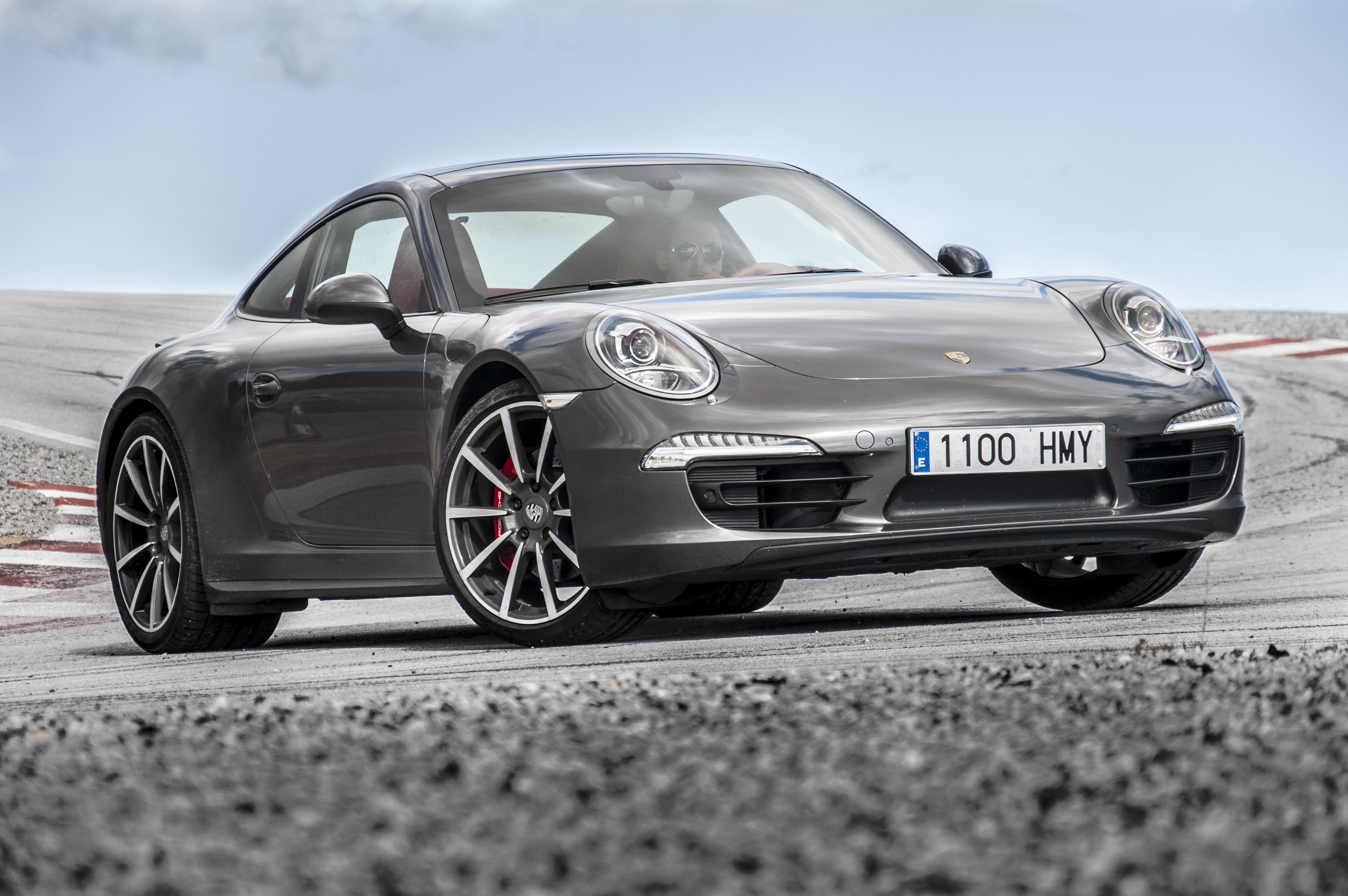
05:18
Porsche 911 Carrera and just handing it to an F1 driver as
05:21
a tactical push-to-pass button.
05:23
It's absurd when you put it like that.
05:24
It's a violent amount of instant torque being dumped into
05:27
the rear wheels of a car that, as we just established, has
05:31
less downforce and less weight keeping it on the ground.
05:34
And because of that, energy deployment is no longer just
05:36
a marginal boost to help you complete a pass at the end
05:40
It entirely dictates your lap time now.
05:43
And to go along with this, the FIA completely rebranded the
05:47
They wanted you, the fans at home, to understand exactly what
05:50
the driver is doing inside the cockpit.
05:53
The broadcast appeal.
05:57
Instead we have active arrow, which means the front and
06:00
rear wings toggle between a low drag straight mode and a
06:03
high downforce corner mode.
06:06
Reading through these sources, I couldn't help it feel
06:07
like I was reading a manual for an incredibly complex
06:11
That's exactly what it sounds like.
06:13
You've got overtake mode, which gives you tactical electrical
06:16
burst when you're within one second of a car.
06:19
You've got boost mode, which is full energy recovery
06:21
system deployment that you can use literally anywhere
06:26
And then you have recharge phases.
06:27
It's honestly like playing Mario Kart, but if you hit the
06:29
wrong button for your mushroom boost, the penalty isn't
06:32
just losing a position.
06:33
You get rear-ended by a missile.
06:36
You get a driver to manually juggle boost bars, shield
06:39
modes, and recharge states, all while simultaneously trying
06:42
to steer a sliding open-wheel car at break-mech speeds.
06:45
Well, the deeper philosophy here was about the
06:47
broadcast and about enticing new entrants like
06:52
F1 deliberately shifted the complexity away from
06:55
invisible passive aerodynamics things the viewer at home
06:59
can't see on television into visible high-stakes
07:02
driver decision-making.
07:03
They want the drama to be obvious.
07:06
If a driver burns their boost mode early, the TV graphics
07:09
light up and you see it.
07:10
If they are in a recharge phase, you see their
07:12
battery bar flashing red.
07:14
They wanted the driver's tactical compromises to be the
07:17
absolute center of the spectacle.
07:19
But that exact video game multitasking is what has
07:22
taken a theoretical engineering concept and turned it
07:25
into a terrifying real-world safety crisis on the
07:29
Yeah, because in a video game, you can pause.
07:32
In a 2026 Formula One car, mismanaging your energy
07:36
modes creates closing speeds that are genuinely lethal.
07:40
We saw the tipping point of this at the recent Japanese
07:42
Grand Prix at Suzuka.
07:43
That was scary to watch.
07:45
Oliver Bearman suffered a huge crash into Franco
07:48
Colopinto heading to the hairpin.
07:50
Now Bearman thankfully only suffered a mild leg
07:52
injury, but the circumstances of the crash were
07:55
incredibly alarming.
07:58
Because of these new energy modes, the speed
07:59
differential between the two cars exceeded 50 kilometers
08:04
To put that 50 kPa in perspective, visualize yourself
08:08
driving on the highway at the speed limit and suddenly
08:10
coming up on a car that is practically parked in the
08:14
The closing speed is deceptive and just incredibly
08:18
Colopinto actually had a chilling quote after the
08:21
He warned that the system is artificial and dangerous.
08:24
He said it feels like one car is on a slow
08:26
out lap while the other is on an absolute limit
08:30
He specifically mentioned the steering wheel delta
08:33
A driver might look at their digital dash and see the
08:35
visual gap to the car behind is say six tenths of a
08:41
Which they're used to.
08:43
Normally an elite driver has an innate physical sense
08:44
of how that gap closes based on traditional
08:48
But with the massive 350 kW boost from the MGUK,
08:52
that gap closes in meters, not tenths.
08:56
And furthermore, when a car enters a recharge phase,
08:59
it isn't just a digital status update on a screen.
09:02
The hybrid motor literally reverses its function.
09:06
Instead of deploying power, it turns into a massive
09:08
generator to harvest kinetic energy from the
09:13
The physical resistance required to generate that
09:14
much electricity acts like dropping a massive anchor
09:17
on the straightaway.
09:19
I have to push back on the FIA's entire logic here.
09:21
If I'm an engineer looking at this blueprint,
09:23
I know that introducing manual driver inputs increases
09:27
I know that an anchor dropping recharge phase combined
09:30
with a Porsche 911 boost phase creates terrifying
09:35
So how on earth did their incredibly sophisticated
09:37
multi-million dollar simulations miss a 50
09:44
I mean, did they just assume these drivers were
09:45
emotionless robots, or did they intentionally ignore
09:48
the safety data because they wanted massive speed
09:51
differentials for Netflix?
09:53
You are touching on a fundamental flaw in how
09:55
simulations are built, specifically regarding game
10:00
The simulations actually did account for the speeds.
10:02
The raw math wasn't wrong.
10:04
What the simulations failed to account for was the
10:06
survival instinct of human racing.
10:08
Break that down for me.
10:10
A computer simulation generally assumes optimal
10:12
deployment for optimal lap times.
10:15
The algorithm races the track.
10:17
But humans don't race the track.
10:18
They race each other.
10:20
Track position is a zero sum game.
10:23
As boost mode can be used anywhere, anytime, it can
10:26
be used offensively to attack.
10:27
But crucially, human panic dictates it will be used
10:32
If you have a driver frantically deploying boost
10:34
mode to defend a position out of a slow corner,
10:37
while the car right behind them happens to be forced
10:40
into a mandatory recharge phase to harvest energy,
10:43
the algorithm shatters.
10:45
You essentially have two cars operating in
10:47
completely different performance categories on the
10:49
exact same piece of tarmac.
10:51
The system creates the synthetic speed deltas based
10:54
entirely on driver panic, aggression, or strategy
10:58
So the human element completely broke the perfect
11:03
And the terrifying reality of those closing speeds
11:05
has caused the drivers to completely abandon their
11:08
usual PR friendly silence.
11:11
We are seeing a full public revolt and the anger
11:13
is palpable right now.
11:14
It is entirely unprecedented in the modern era to
11:17
see this level of coordinated vocal pushback
11:20
Alex Wurz, the president of the Grand Prix Drivers
11:22
Association, revealed that the GPS WhatsApp group is
11:25
absolutely exploding.
11:27
I can only imagine the sheer volume of notifications
11:29
in that chat right now.
11:31
Wurz stated it's overflowing with raw emotion, highly
11:34
detailed technical proposals, and just deep systemic
11:37
anger over not being listened to.
11:39
The drivers feel entirely exposed by the governing
11:43
And Landon Norris did not hold back after
11:46
He was waiting for a TV interview, adrenaline
11:48
still pumping, and he used this biting heavy sarcasm.
11:52
He called it the best racing I've ever seen.
11:54
Yeah, that was brutal.
11:56
When a reporter pointed out that surely the driver's
11:58
feelings and feedback should count in the sports
12:00
direction, Norris bluntly replied clearly not.
12:04
And he added, if only the fans enjoy it, that's
12:07
And Max Verstappen went even further, strongly
12:09
hinting he might actually consider quitting the
12:12
sport entirely in the coming weeks over this
12:15
Which is wild to hear.
12:16
When you're reigning champions and top tier global
12:19
stars or talking about walking away mid-season,
12:22
you have a crisis that goes far beyond a poorly
12:25
designed front wing.
12:26
Let me deduce what's really happening here.
12:28
Because, you know, F1 drivers complain every time
12:31
the regulations change.
12:32
We see this cycle every few years.
12:35
They grumble about understeer, they complain
12:37
the cars are too stiff, and by race six,
12:41
But this feels completely different.
12:44
This feels like the drivers realize they have
12:47
They aren't gladiators fighting the physics of the road
12:50
They've been turned into IT managers fighting
12:53
a battery percentage.
12:54
Parameter managers is the exact phrase the source
12:59
They are managing digital algorithms at 300 kPa
13:02
instead of looking at the apex of the corner.
13:05
The core issue, the real reason that WhatsApp
13:08
group is exploding, is that the drivers were
13:10
structurally excluded from the rule making process.
13:13
They weren't even consulted.
13:15
They warned the FIA about this exact scenario
13:18
months ago, right after their winter simulator sessions.
13:21
They saw the speed deltas.
13:22
They felt the erratic power delivery.
13:24
So they flagged the danger before the season even started.
13:27
They absolutely did.
13:28
But the stakeholders, the FIA and Formula One management,
13:31
prioritized their industrial and commercial interests
13:34
over the pure sporting dimension.
13:35
They wanted the show.
13:37
They wanted the spectacle of massive overtakes.
13:39
And they wanted the automotive industry
13:42
to see how advanced their hybrid technology was.
13:45
They ignored the pilots who actually
13:46
have to strap into these machines.
13:48
Which brings a terrifying hypothetical into sharp focus.
13:51
If a traditional purpose-built circuit like Suzuki, a track,
13:55
famous for its wide runoff areas and massive gravel traps
13:59
resulted in a crash with a 50 kPa delta,
14:02
the drivers are absolutely dreading
14:03
what happens when the calendar moves to environments built
14:06
explicitly for commercial spectacle.
14:08
Yeah, I'm genuinely worried about that.
14:10
I'm talking about the street circuits.
14:11
Places where the margin for error
14:13
is measured in millimeters, not meters.
14:16
Carlos Sainz, acting as a GPDA director,
14:19
delivered an incredibly stark warning this week.
14:22
He explicitly pointed to upcoming street
14:24
circuits on the calendar.
14:26
Baku, Singapore, and Las Vegas.
14:28
Tracks characterized by incredibly long,
14:31
high-speed straits, blind 90-degree corners,
14:34
and concrete walls positioned right
14:35
on the white line of the track.
14:37
Just trying to picture driving down
14:39
the Las Vegas trip at night.
14:40
The optical illusion of speed is already overwhelming.
14:44
Sainz warned that having 30, 40, or 50 kPa speed differences
14:48
at those specific tracks will not just result
14:51
in a broken front wing.
14:52
It will result in massive, high-G crashes
14:55
directly into concrete barriers.
14:57
It's a recipe for disaster.
14:59
He was adamant in his press conference.
15:01
He said, I don't care if we slow down
15:02
a second per lap, we have to find a solution.
15:04
The deep, dark irony of the 2026 regulations
15:08
is totally laid bare here.
15:10
These rules were heavily shaped to create
15:12
a commercial spectacle.
15:14
The governing bodies wanted visible, dramatic,
15:18
They wanted the boost mode versus active aero battles
15:21
to look fantastic on television broadcasts,
15:24
to attract big money sponsorships
15:25
and new manufacturers like Cadillac.
15:28
But by artificially manufacturing that spectacle,
15:31
they've made the highest revenue,
15:32
high-spectacle street circuits
15:34
lethally dangerous for the people actually
15:36
providing the entertainment.
15:37
You cannot have artificial 50QP8 speed deltas
15:41
on a track where dodging a slower car
15:44
means driving straight into a concrete wall.
15:47
The governing bodies prioritize the product
15:49
over the authenticity and the physical safety
15:52
of the sport itself.
15:54
So now we are watching a massive scramble.
15:57
With the drivers essentially threatening and uprising
16:00
and generational talents like forstappen
16:02
floating the idea of early retirement,
16:04
the governing bodies are suddenly trying
16:06
to patch a multi-billion dollar rule book on the fly.
16:10
Urgent crisis talks have already been confirmed.
16:12
A key meeting is scheduled for April 9
16:14
between the team technical directors and the FIA
16:17
to try and fix the physics of this mess.
16:19
And the ideas coming out of the paddock
16:21
to solve this are incredibly revealing
16:23
about just how desperate the situation is.
16:26
Peter Bayer from the Racing Bulls
16:27
mentioned that they are working on band-aid solutions.
16:30
He suggested implementing light signals
16:32
on the back of the car so the trailing driver
16:34
can understand what energy mode the car in front
16:36
is currently using.
16:39
You've got to be kidding me.
16:41
Kimi Antonelli noted that the FIA is already
16:43
looking to implement improvements for both qualifying
16:46
and the race by the time they get to Miami.
16:48
But honestly, a flashing light on the rear wing
16:51
does not change the laws of physics.
16:53
If I'm doing 320 kilometers an hour down the Vegas
16:56
Strip, a blinking LED light does not
16:59
stop my car from rear-ending the guy who just
17:02
dropped an electrical anchor and is doing 270.
17:05
It just means I get to see the light right before the impact.
17:08
It is a desperate band-aid, and it really
17:11
drives home the ultimate lesson of this entire regulatory
17:15
This frantic scramble to patch the rules mid-season
17:18
proves the GPDA's entire point.
17:21
You simply cannot design the future of a sport
17:23
in an isolated engineering laboratory
17:26
without consulting the people who actually risk their lives
17:29
inside the cockpit.
17:30
Integrating drivers into the rulemaking process
17:32
before the rules are finalized is essential.
17:35
If you rely solely on telemetry data and commercial revenue
17:38
goals, you completely lose the human reality of the sport.
17:42
Former driver, Christian Albers, summarized it perfectly.
17:45
He called it a growing fight between the drivers and FOM
17:50
It is no longer just a disagreement
17:51
about steering weight or tire degradation.
17:54
It is a fight for the soul of the racing.
17:57
It's the human element fighting back against the algorithm.
18:00
And that leaves us with a really deep, provocative thought
18:03
for you to ponder as we wrap up.
18:05
As modern sports, not just Formula One, but all sports
18:08
globally, rely more and more heavily
18:10
on engineered entertainment, artificial rule
18:12
tweaks, and broadcast analytics.
18:15
At what point does optimizing for the fan spectacle
18:18
actually destroy the authenticity and the safety
18:21
of the competition itself?
18:22
That's the million dollar question.
18:24
Where exactly is the line between a pure sport
18:27
and a lethal reality show?
18:28
It's a line the FIA is currently walking like a tightrope.
18:31
A tightrope with concrete walls on either side.
18:34
Thank you so much for joining us
18:35
as we explore this massive moment in motorsport history.
18:38
We really appreciate you taking the time
18:40
to dive into the physics and the politics driving
18:44
It's a story that is far from over,
18:46
especially with those street circuits
18:48
looming on the calendar.
18:50
And be sure to tune in next time,
18:52
because the very next auto story
18:54
will be a special edition dedicated entirely
18:57
to the Monaco Grand Prix Historic 2026.
19:00
That's going to be a good one.
19:01
We'll be looking back at the beautiful,
19:02
incredibly dangerous, but wonderfully purely
19:05
mechanical cars of the past.
19:07
You won't want to miss it.