Auto Trader CEO joins us to discuss to Deal Builder roll-out controversy; EV pay-per-mile could hit PHEVs, and Tom Hartley Jnr's profits revealed – with Nathan Coe, episode 231
Car Dealer Podcast
Auto Trader CEO joins us to discuss to Deal Builder roll-out controversy; EV pay-per-mile could hit PHEVs, and Tom Hartley Jnr's profits revealed – with Nathan Coe, episode 231Car Dealer Podcast · Nov 14, 2025
Deal builder is a tool that helps car dealers list their cars for sale online. It's supposed to make selling easier, but some dealers are unhappy about having to use it.
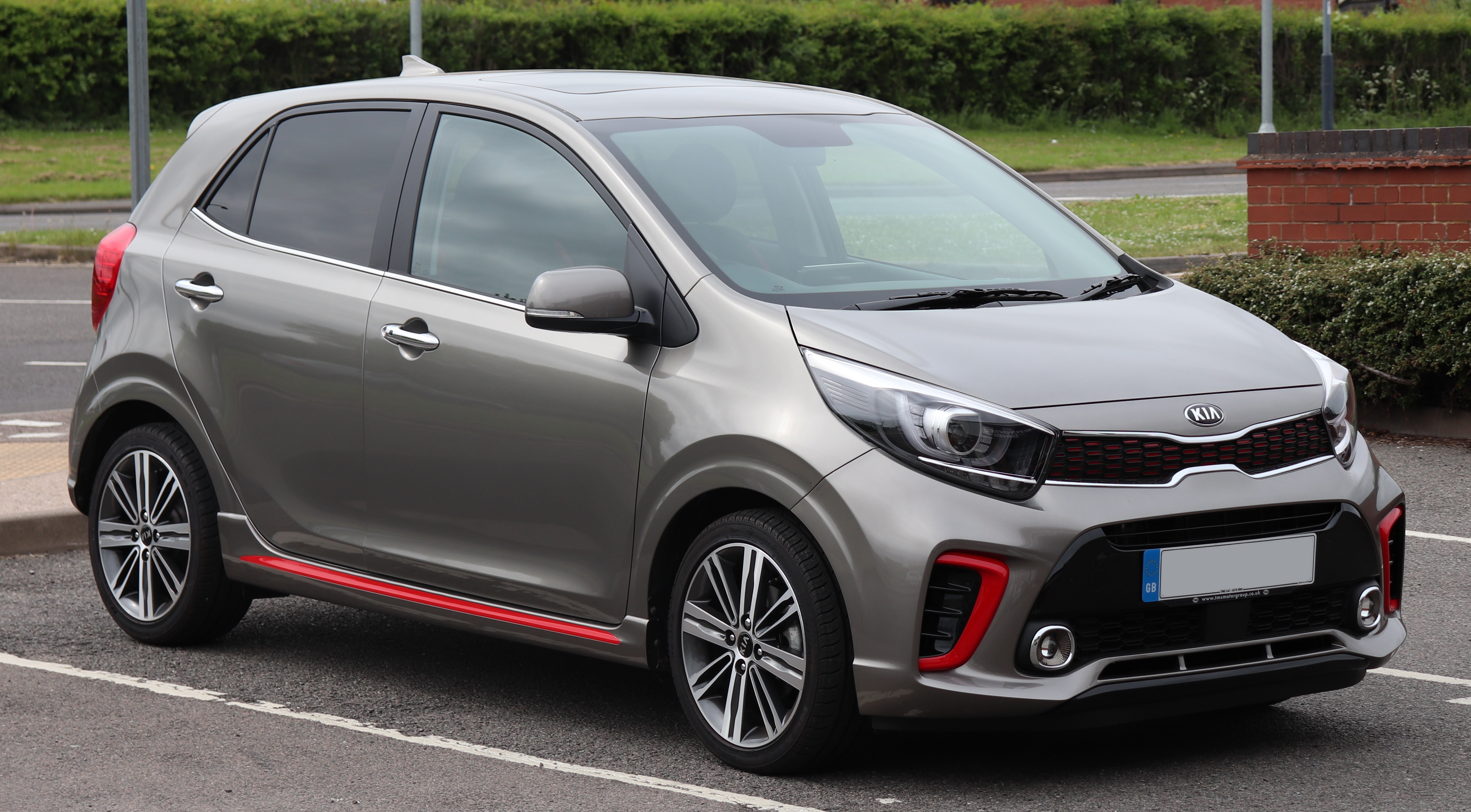
The Kia Picanto is a small car that's great for driving around town. It's easy to park and doesn't cost a lot of money, making it a good choice for people who want a simple and reliable vehicle. Many people talk about it because it's a smart option for city driving.
EVs stands for electric vehicles, which are cars that run on electricity instead of gasoline. They are better for the environment because they produce fewer emissions.
Charging at home means you can plug your electric car into a charger at your house to recharge its battery. This is usually easier than finding a charging station elsewhere.
LIVE
Welcome back to the Cardiola podcast where we pick our favorite stories of the week and ask an industry guest to choose which were the best.
I'm John Ray and joining me this week back from his upper middle class Butlins holiday. It's James Bagot.
James, how was your stay in the green belt?
I mean, that's, that was quite slanderous towards centre parks, John. What you just, what you just said.
Is it, is it though? I mean, it was entirely accurate, entirely accurate. It was a lovely, lovely break, John.
But I'm glad to be back and I've been thrown into the deep end with with many stories from Monday.
So it's been a reasonably busy week, isn't it on the on the Cardiola front?
Yes. And of course, at the same time, we're running up to use car awards.
So we've been frantically organizing all sorts of things to do with that.
We have got a very interesting guest though today, haven't we?
So we should probably just get to the point rather than me just waffle on about selling very cheap sub 10,000 pounds used cars.
Because I'm sure many people want to hear from our guests rather than from us, John.
You realise that this is the case. It's the case every week, James, but I'm thrilled that you've come to that conclusion today.
So anyway, our guest this week is Nathan Co CEO of AutoTrader. Nathan, thanks so much for joining us.
Nathan, lovely to see you. I think what I'm going to do is I'm just going to kick off this podcast.
We do cover a summary of the week story. So I'm just going to do for those people listening from afar or catching up at another time who might have missed the headlines this week.
I'm just going to do a bit of a summary of what's been going on and then we'll come to you with some questions.
AutoTrader has been dominating the headlines this week.
We picked up on a story over the weekend of some growing discontent in the motor trade about AutoTrader's rollout of deal builder as a new product that AutoTrader has launched.
Car dealers were angry at this mandatory rollout of the product. All dealers are going to have to sign up for it.
This is a very new way of selling cars. Tweaks have also been made to the platform, which includes contact buttons that have changed.
Some dealers have told us there's been a drop off in leads as a result of that.
And another problem that dealers have been telling us is that consumers now need to sign up for an AutoTrader account before they can submit a lead.
And some dealers are concerned that this has caused a drop off in those leads.
There's also a number of dealers out there who annoyed at price rises over the years and the chance of another one to come in April.
We're going to go into detail about what those dealers are annoyed about during this podcast and we're going to put those questions to Nathan.
But just a little bit of a timeline of events this week.
It started on Monday when we published our first story that reported on the mass cancellations being planned of AutoTrader contracts into Facebook groups.
One of those was run by Ibrahim Mohammed. His group has now gained more than three and a half thousand members.
It's doubled in size this week alone.
And he was calling on dealers to join a mass cancellation of AutoTrader contracts at 11.59 on November the 12th on Wednesday.
He shared emails to send to the company, including our guests today.
And AutoTrader has told us off the back of that that they have been listening to this feedback from dealers.
So then Wednesday came along and we saw evidence in these groups and a number of dealers called us to say that they had taken action.
They were canceling their accounts or downgrading them.
Umesh Somani, he's the chairman of the Independent Motor Dealer's Association.
He told us in a quote in one of the stories this week that feedback from IMDA dealers suggested that many had voted with their checkbooks.
Canceling or downgrading their packages or reducing the number of cars they advertise on the platform.
They said many are also saying that it's not just deal builder that's the issue, but a significant decline in both leads and sales generated through AutoTrader.
Now a large number of dealers on Wednesday posted screenshots of their emails to AutoTrader in these private protest groups and showed their request to cancel their contracts or downgrade.
One had claimed to have reduced their package, saving them £20,000 a month in advertising fees.
Well, another one had said they'd cut their 70 car advertising package down to seven cars.
Now, despite these claims, AutoTrader has told us that they'd seen less than 100 dealers cancel their packages.
We did ask about how many had downgraded, but we didn't get an answer on that.
But I'm sure we can come into that one now that we're chatting to Nathan.
So that just a little bit sets the stall of what's happened this week.
Nathan, it's been a difficult week for AutoTrader, I'm sure.
Let's go into the detail and you can give your side of the story.
Firstly, are you surprised at the backlash that's happened over the rollout of deal builder?
I think yes and no is probably the answer to the question.
The reason for surprise, I guess, if we start there,
is that this is a product that we've been working on with retailers for just over three years now.
And we've been taking on board feedback, retailers have been opting into it,
and by and large the feedback that we've had from both car buyers and retailers was actually like,
I want more deals because these deals really convert quite well.
So that's partly the reason for the surprise.
I think when you look back with hindsight, we kind of had confidence that,
okay, this is good for retailers now, so rather than trying to charge for it as a standalone product,
we announced in June, we said we're not going to do that anymore,
we're just going to allow access to this for all retailers and for all car buyers
because we can see that there's a real efficiency gain to be made for retailers.
So we obviously kind of put our foot down and said,
okay, well, let's get this out there as quickly as we can.
Now, I guess when we look back, it turns out that perhaps we went a little bit too quickly
and that's caused some retailers to be confused,
combined with some of the stories last week.
There's a bit of misinformation out there and it's left to retailers.
It's not just necessarily the group of retailers within those groups or that have posted cancellations.
I think we're just as concerned for all retailers because a whole bunch of them that are on the product
or looking to go on the product or interested in the product are kind of saying,
well, hang on, what's this? This isn't what I thought was the case.
So we've had to get around.
I mean, and for that, I am sorry, actually.
I really, you know, I think you know me well enough, James,
is we are here to do a good job by retailers.
That's what we pride ourselves on.
It was one of my biggest priorities when I was the CEO.
So to, of course, that confusion and retailers angst.
Now, I am really sorry about that and I think it is that, you know, probably moving too fast.
And then some of the communications, it is a kind of complicated product.
And when you combine those two things together, you know, a product that's quite a big change
and it rolls out to a lot of retailers, you know, perhaps it's definitely understandable
why some retailers have said, well, hang on, what is this all about?
I think a lot of dealers out there listening to this and watching this on YouTube
will certainly appreciate that apology.
They're also going to want to see some action, Nathan.
I mean, what are you going to do?
Are you going to roll back this?
Are you going to change the rollout?
So, no, we're not going to, I mean, like I said, if you kind of take where I started there
is rolling back deal builders isn't something that we're going to do.
We're very convinced that it's the right thing for retailers.
It's the right thing for car buyers.
And I think we've talked a lot about why it's right for car buyers,
gives them choice, different ways to interact with retailers,
get clarity on part exchange values.
But that's a bit less relevant for your audience, obviously.
I think when it comes down to retailers, we have had so many retailers over the years
and this is even more so the case with the NI increases and cost pressures that they've got
saying, listen, I've got a lot of labor costs at the moment it takes me,
depending on, you know, probably on an auto trader lead,
I've got to get four to get one sale.
It's kind of one in four conversion.
For other competitors, it's sometimes as high as one in 10.
They've said, if I can just get that conversion down,
but hold my sales at the same level I'd otherwise achieve,
then that's a real saving for my business.
And when you think about what we're doing, it's not just,
it's kind of deal builder on top of leads combined with buying signals.
I think there has been a bit of a misunderstanding that we're moving to this deals thing
and moving completely away from leads.
You kind of hinted at it in your introduction there around contact points.
This is very much leads plus deals plus buying signals.
And the goal of all three of those things is better conversion for retailers,
better understanding what they should be prioritising.
So we do believe, you know, that it is the right thing to continue to roll out deal builder.
I think, but as you said, clearly we need to think about doing that differently
because I think that what we're doing is right.
And we've worked with retailers for years on deal builder
and they really like the product.
But rolling out quickly what's really happened,
and this has become really clear over this week as we've spoken to retailers,
is actually if you give them the right support,
if they have a really clear explanation,
if they have a chance to ask all their questions,
then actually they understand what we're doing.
They see the benefit that they can get for their own business.
And you don't have this kind of, you know, there is a lot of misinformation,
a lot of bits flowing around, all of them that I understand.
But that really throws them off.
So if they get a chance to be supported through it,
then actually on the other side they're generally, you know,
pleased to understand and ready to get on and see what we might be able to do together.
And it's that, if there's one biggest learning that I have,
is that we need to provide much more support to those customers that have come on
and those customers that are going to go on.
I would say there is, oh, sorry.
Just in terms of change, I think the other thing too is
we're pretty well connected to a lot of our customers.
We do have 14,000 of them,
so you can't be connected all the time to all of them.
But I'd say that's one of the things that we've really put a lot of effort into
in the last five years.
But recognising that there's certainly a group of customers
that feel like they're not being listened to,
we're also going to establish an advisory group for both independent
and franchise retailers to make sure that, you know,
that we're getting their input from a broad range of customers,
including those that don't feel heard
because their only interaction with us might be over webinars.
Certainly a positive step forward that, Nathan.
I mean, I'd like to get into a little bit of detail here, though,
but why do you think Deal Builder is the future?
What is it that you think about this new way of buying cars,
reserving a car for £99 that is the positive way of selling cars?
Do consumers want it, firstly?
And secondly, we've seen that a large element of dealers don't want it.
So why is AutoTrader so adamant this is the future?
I think, I mean, Adam, it's not necessarily the right word.
I'd say working with retailers,
we have become convinced over three years of working with it
that actually when retailers take it, when they're using it,
they see it as a really positive thing.
I think it's really hard when a lot of retailers are not...
Yeah, about half our retailers are on the product,
and we see very little opt-out rates
when in the early phases where you were able to opt-out
of the product, very, very low opt-out rates.
So I think it is a little bit tricky
when people are kind of thinking about something in theory,
especially with all the misinformation,
like some of the facts flying around that aren't actually true.
That just makes it difficult.
From a consumer perspective, it gives them...
I don't think we need to labour,
and I think a more important point for dealers
is why is it a better way to sell cars.
So I'll come on to that.
From a consumer perspective,
we want to be able to provide a consistent experience
where they've got multiple ways of interacting with retailers,
where they can do a bit more of the work online,
in a way that works for the retailer, their finance,
a guide around part exchange
that doesn't at all commit the dealer to it.
And that way, when they come into the retailer,
they're more ready to buy it.
The reservation part of it is really about one of those signals,
along with our buying signals,
as to this person is really ready to go.
If you flip that round to,
well, why is that better for a seller?
I think it comes back to exactly what I said.
For me, it is a really simple thing.
It's that when these deals come through,
and hopefully now when leads come through with buying signals,
retailers will be able to make much better use of their time
and convert more of those more quickly into sales,
with less labour involved,
less time as some car retailers would say,
with tire kickers or people that are low quality,
not necessarily, not really interested,
not really in the buying funnel.
We want to make sure that the very best sales prospects
are put in front of our retailers.
We really want to improve the quality of what...
I think what AutoTrader sends dealers already
is pretty good quality,
but we can make it even better and make their lives easier
and give them less work to do.
That's pretty much the strategy for AutoTrader
and DealBuilder's part of that.
Dealers have said to me,
I don't want reservations.
I want leads because my team and myself are salespeople.
We will sell to those customers when they arrive in the dealership.
Let me give you an example.
We had a customer come in this week
who wanted to look at our Audi S3 that we had in stock.
It wasn't the right car for them.
We upgraded them to an Audi Q3 that we had in stock
and sold it to them.
They didn't know anything about it.
We hadn't advertised it, but it was because they were there,
and we had them on the site.
We managed to convert them.
That would be the same in many dealerships up and down the country.
Those people want leads.
Is this not a stumbling block
to providing those sorts of leads?
No, not at all, actually.
One of the other actions that we've put on ourselves
is we have a new product page
that's been through testing now
that will give retailers more of those leads
that they care about equalizing the contact options
that I think you've mentioned previously.
We've heard that message and we've got a new product page
that we're going to go out there with.
Just flipping back to your point,
leads aren't going anywhere.
If anything, we're making those leads even more powerful.
For the right consumer, actually,
when that consumer comes into your dealership,
what you'll know about them now on a lead or on a deal
is exactly how ready they are to buy,
whether they're a local buyer or not,
and actually will give you the information
that tells you the other vehicles
that they may well be interested in.
I'd say we're actually facilitating our goal.
We only work because it works for retailers,
so all the feedback that we take on board,
both today, historically,
and we'll still do this moving forward,
is all about making this work for retailers.
But I think when it comes to Deal Builder,
leads aren't going anywhere.
What we're doing is adding deals on top of it
and buying signals across the whole lot.
If a consumer reserves a car and comes in,
it's very easy for a retailer
to work out something that suits them better,
if anything, we just want to get them into the dealership
and we want you to know this one's a really serious buyer.
That's kind of as simple as it is.
I think when it comes to reservations,
look, we will listen to the feedback,
we'll get those advisory groups in place.
If there's tweaks and changes that we need to make,
we've made loads of changes over the past three years.
I think retailers...
Well, I hope that we've earned the reputation
that we will listen and we will evolve our products,
but it's a big customer base
and we accept that we can't get around everyone
and maybe not everyone will like the same thing.
That's part of the balance that we've got to get.
Some retailers want this,
some retailers want something totally different,
whereas we've got to try and find the best common ground,
which there will always be some people that that doesn't suit.
I wish that wasn't the case,
because you know what I'm about,
but it's just a hard one and it comes with the job.
Yeah, you certainly can't please everyone
when you've got 14,000 customers.
I do appreciate that.
But I would like to just touch on the consumer side,
because you are a two-sided marketplace.
Without one, you haven't got the other.
From the consumer experience,
what is it that gives you the confidence
that the majority of car buyers want to interact in this way?
Because just from my very limited experience in the most trade,
our reservations, although we push them, are very low.
Most people are not happy to put £99 down,
which we do too, because they want to come and see the car first.
What makes you confident?
Have you got evidence or research to show
that the majority of customers want to do this?
Yeah, we do, but to be honest,
James, having been in a digital business for a long time,
you need to always take surveys
and that sort of research with a bit of a pinch of salt.
The ultimate measure, I think, is we've had deal-builders
on a relatively small number of cars,
maybe a quarter of cars over the past,
well, and an even smaller number of cars over the past few years.
And what we've seen pretty consistently,
even as we've added more and more retailers,
is about, at the moment, about one in ten consumers
do want to place that reservation.
And over time, and with certain retailers,
that can be as high as 80% and it's increasing over time.
So I think we've got to...
And it's not just about actually the reservation.
I know that that is the piece that some retailers
have kind of been upset about it in the last week.
It is as much about, I think, perhaps a more powerful bit,
is that we can put a retailer's finance options
in front of a consumer who might otherwise go out
and get a personal loan or think about a mortgage drawdown
or maybe using their credit card.
And that just is a missed opportunity for retailers,
especially when they've got...
Some of them have got very, very good, accessible deals
for those consumers, and we don't need to lock them in.
They don't have to do a whole application.
They might just be able to get an idea,
but it's giving a chance for the retailer
to put that in front of them.
Coming back to the consumer,
they just want to be able to do a bit more in an environment
when it suits them, not necessarily during...
45% of those deals come through out of hours,
and retailers don't want to be open 24-7.
They can't do that, whereas this lets some of that activity happen
and hands it to the retailer on their terms
with their products into their dealership.
It's not like we're pushing any of our own products through it.
From what I understand, part of the misinformation
that you've referenced a couple of times,
one of those is confusion about cars being taken off sale.
A lot of dealers are unhappy
that when a reservation goes in,
that car is marked as reserved,
and they may lose out on leads.
Why is there a need to even mark these cars as reserved at all?
Well, I think most retailers that operate reservations
on their own sites will have some version of doing this,
and I think it is just a bit more of a statement
of fact that there is a reservation on this vehicle,
but you can still message the dealer about that car,
so we're not kind of chopping it off.
We did hear this.
We had this feedback actually earlier in the Deal Builder journey,
and so we changed actually the treatment of that flag,
because it did look like it was off sale.
Now it's just got a flag that says reservation in progress,
and you can still submit messages.
We still see consumers and car buyers putting those messages through
because it is a reservation that's in progress,
but from their mindset, the car is still there,
all the details are still there as well.
The only other thing that I would add is
we do see these as high quality leads.
I'm sure you do this in your own business, James,
but the minute these reservations come through,
retailers can jump on that,
and they can speak to the consumer
and confirm the reservation, get them to a book and appointment,
or if they can't get in touch with the consumer
and they feel like, well, hang on, my car says reservation in progress,
I don't want that and I can't get in touch with the consumer,
then with one click they can cancel that reservation
and if the consumer wants, they can get back in touch.
So we are putting, we deliberately did this
because we had exactly this feedback from retailers,
all the power in their hands.
And I know some retailers have said,
well, the car could be off sale for 21 days, 30 days.
Clearly that would not be a product that we would design,
but if no one gets in touch with anyone,
then yeah, the reservation can stay on to a very maximum of 30 days
in which case we actually kind of stop the reservation
and just return the money.
And dealers are not going to be penalised
for canceling one of these reservations,
even if they did so immediately in any way?
No, well, I mean, we don't penalise.
I'd like to think that we don't penalise retailers.
We think, I would say, I mean, it depends why it's happening.
I mean, if some retailers, you know, really,
really don't like reservations
and just want to cancel them immediately,
that's not going to be a good experience for car buyers.
I'd argue that's probably not good for their business.
It's also not good for auto traders.
So that's the sort of thing that, you know,
we will hear that feedback.
Of course we will because I don't want, you know,
car buyers on auto trader and actually dealers don't want that.
Either dealers don't want to be putting consumers' noses out.
So we're not going to, you know, push on mindlessly
without listening to feedback,
without paying attention to the consumer experience.
We've got to marry those two and that's just not a great experience.
One of the things that worries me, Nathan, about this is
we put a lot of store-buyer reviews.
We work very hard to keep our customers happy.
If someone has reserved a car on my website
and perhaps I'm talking to a different customer in the dealership
at exactly the same time and selling them that car,
then I have to go on to auto trader,
cancel that reservation and end up with a bad review.
So what was the point in reserving this car?
He's just sold it to someone else, probably got more money.
What are auto trader going to do about those sorts of reviews?
I have seen evidence.
I have seen in some of these groups,
evidence of that actually taking place,
those bad reviews being placed.
Yeah. So the one thing I would say on this, James,
is it's going to happen.
I imagine it will happen,
provided that the way that you run your dealership,
the moment that a car is sold, you take it off,
you mark it as sold and get another vehicle on,
then this should happen in a relatively small number of cases.
Having been working with dealers now for 17 years
in kind of an auto trader capacity,
I would say to you that this has always happened
and it has also always been a source of negative reviews for retailers.
I mean, at the moment, for reservations that go through,
the number one reason why the reservation isn't completed
is because the car's already been sold
and consumers do seem to accept that.
I wouldn't say that we've had, I would say in the whole three years,
I've not typically retailers, they have my email address
and many of them have my phone number as well.
I've not really had that feedback that strongly
and to the extent it does exist,
he's been something that's really consistent person,
you'll have experienced it, person comes down to the dealership,
I want to look at this car, this particularly happens with auto trader
because two-thirds of people just walk in
and you say, sorry, that car has been sold
and it is exactly the same thing that happens today,
whether it's reservations or you booking an appointment over the phone
or them trying to get in touch with you.
Nathan, there's been wild speculation about pricing on this.
I've seen comments and I'm sure you have about the 0.25% charge
when it was a product, people think that's going to be brought back in
or is in place as it stands now.
Are you ever going to charge for DealBuilder?
So the 0.25%, I can tell you that is done with, we're done with that.
In June, when we announced that we were going to all retailers,
we were super clear and if not, I am now being super clear
that we are not introducing any percentage commission
for 0.25% or anything else in April.
DealBuilder buying signals, the leads the dealers get today
will all become a standard part of every retailer package.
Sorry, I think my internet is playing up.
No, I did notice that, I hope it's not mine.
No, we'll carry on nonetheless.
So just on that front, is the cost of DealBuilder
simply just going to be factored into those price rises
that dealers are going to get in April?
Yeah, we haven't decided on, we review the packages every year
but in short, the answer is yes.
It's not like the packages in April will be wholly dependent on DealBuilder.
We tend to take in a whole bunch of different factors
because we're not going to say for example,
work out what would it be if it was 0.25%
and let's just include that in April
because that's the value of the product.
It's far more nuanced than that.
So I think DealBuilder buying signals,
that's definitely the product that we're going to include
in packages from April and at the same time
we do review our package prices every year
and I know that for some retailers, maybe for all retailers,
they do find that hard to take
but we do take into account quite a lot.
We think about the product and the value of the product to the retailer.
The reason why we do that is actually because our philosophy
is that we want a retailer every year to be doing better off
for them than in the year before.
So the products that we try and put into those packages,
these are all aimed to put tools in the hands of retailers
that we can then talk to them about
to help them do better next year than they did in the previous year.
But we also take into account how our deal is feeling
and what other pressures have they got in their business,
is trading good or less good.
So we want to be here forever
and we want to work with UK car dealers
for as far as we can see into the future.
So doing unsustainable things
or not taking those things into account isn't the right thing to do.
But the product is part of that.
If it's a product that DealBuilder has had a lot of engineering,
I wouldn't even know how many millions have been spent on it.
But it's just one factor in that.
But yeah, there's no percentage charge as part of the packages
to the extent that it's paid for.
It will be about just the general pricing review,
which does depend on a lot of things,
of which DealBuilder and buying signals is just one.
I mean, DealBuilder and the rollout of that
has been a catalyst for this movement from these dealers
who are upset in the way that they say,
the way they've been treated.
I mean, a lot of them are upset at the annual price rises,
which have been significant.
They've been above inflation, haven't they, last year?
What would you say to those customers
and those people who are, frankly,
a little bit cheesed off with the annual price rises?
Yeah, so I get it.
I mean, it's worth saying that the way that...
Like, I get it. Let me just start with that.
I do get it.
But what we're trying to do
and what I would urge any retailer that is feeling that way,
we have 300 people in partnerships
and they're sold, no commissions paid.
They're not kind of forced to sell or any of that.
What we ask them to do is work out what the retailer's goals are,
whether that's a stock turn, a sales target,
a gross profit target, or all three of those things.
Find out what that goal is
and do what you need to do to help them get there
because we're not retailers
and we don't pretend to know all the things that retailers know,
but we do know digital things.
We do know about data and we've got a view on the market
that is you just can't get anywhere else.
And every year, as we kind of look at those products that we put in,
we're looking for more opportunities
so that dealers can get more such that any increase in price
that they might get in any given year
is something that we can more than offset through partnership.
That's really, if people want to understand how do I think about it,
that is the answer there.
Make sure that we're delivering value that we're able to grow
because that's part of partnership.
We don't want our dealers to grow by inflation.
We'd like to grow together and the way that we can do that
and indeed, really, outside of prominence packages,
the only major way to grow is to make those core packages better
rather than just slicing and dicing and doing standalone products.
The dealers will find even harder to understand
and if products are just standalone,
all our people can't speak to all our retailers
about the same tools that they've got in their bag
to try and improve their profitability.
There's an increasing number of alternatives to AutoTrader these days,
and there's lots of places that dealers can spend their money.
A lot of your rivals have jumped on the stories this week
and the feeling of discontent.
Do your rivals worry you at all?
I don't know. Let me start by saying,
I don't think having rivals in business is any bad thing at all.
AutoTrader's been really fortunate to be in a really great position.
I think it is with ingrained in us that we don't take advantage of that at all.
I would say, actually, very often we don't even really recognise it.
So having rivals that are trying to make dealers' lives easier,
grow advertising, that's absolutely fine.
But today, there have been all sorts of people
that have approached in all sorts of different ways.
I think for us, we just put our head down and say,
do you know what our reason to be is to provide a great car buying experience
for the UK public, to provide a brand that they can trust,
and to help retailers use that, along with our tech and data,
to make more money than they'd be able to make with any other partner,
whether that's because of a cost affecting advertising
or whether that's because the data tools that we provide.
So I think in business, you've always got to think about competitors,
but I don't think they're a bad thing at all.
Actually, I just think, you know, we are working hard,
we're turning 1,000 people with 400 engineers every single day
to try and apply tech and data to make retailers' lives better,
because otherwise they wouldn't be able to do that for themselves.
And if someone can do that better or if someone's trying to do that,
indeed, we see lots of people helping with data, pricing tools,
and very often we actually support them with our data.
So no, I wouldn't say, I would never say that I don't worry about competitors,
but I'm focused on actually just doing a better job for retailers,
and that's what will make us happy at the end of the day.
Let me move on to some questions that we've had sent in by our readers,
your customers.
We've been mentioning all week in our stories that dealers can do it,
and we've had lots of them.
I mean, the first one, I won't mention their names,
but I'll go on to their questions.
The first one is, why is the £99 fee refundable?
They say that it would be a much more clear signal of intent to buy
if that £99 wasn't refundable, and also stop customers,
which I know you say they don't do,
but reserve in lots of cars on a Saturday, for example, to go and see.
So their question, why is the £99 non-refundable?
It is a good question, and because we've been on this journey for some time,
it actually came up very early in Deal Border.
So initially, we had the reservation fee.
It's always been refundable, but the difference with it is that it went directly to the retailer.
What we found is that the processes that retailers had to go through,
if you think about invoicing a car,
and I know this is getting into a little bit of detail,
if you've got a factory in Auto Traders, £99 into that,
it was just becoming a complete faff.
So the first decision that we made was,
well, let us collect the £99.
Now, as soon as we made the decision to do that,
that meant dealers didn't need to set up escrow accounts,
we didn't need to set up stripe accounts for all the retailers.
It made it easier to onboard retailers and made it easier for them to invoice.
But as soon as we're taking the money,
then it almost follows on from that.
Well, then if we're not going to give the money to the retailer,
we need to give the money back to the consumer
so the retailer can just deal with them as they want to.
I also think generally when it comes to these things,
it does allow the retailer some flexibility.
I think some of the problems that you've talked about today, actually,
would be compounded by the fact of if the deposit wasn't refundable part of me.
So that was something that we iterated with retailers.
At first we thought it really made a lot of sense for us to take the money,
park it in retailers, and then they can kind of factor it in.
But it turned out to be one of those things that retailers just said,
no, this is just like a total pain.
And to get around it, what they were doing is actually cancelling the reservation,
but they didn't really want to do that for some of the reasons that were spoken about.
So a bit of a long story, but that was one that came straight from dealers, actually.
But I do take the person's point, actually.
What we have seen now, I would say,
two in one of those reservations convert into a sale,
and when you look at the reasons they don't, very often there's as many reasons.
I'd say the two biggest reasons is one, the retailer's already sold the car
or the consumer doesn't like the car that they've got.
We don't really see people chancing their arm so much.
We're just flinging around these days with costs of living and stuff.
I'm not sure we're seeing people flinging £99 around, even if it is refundable.
I had DealBuilder turned on my account on Monday because I thought I can't...
I saw that.
I can't interview you, Nathan, without having on my own account.
But I haven't had a reservation yet this week, so I can't actually comment.
But I'll go back to some of these questions.
Hopefully you've had lots of customers into your store, though, James.
No comment.
In terms of the questions, we've got another one here that says,
why can't dealers set their own reservation fee?
Now, that you sell cars on a huge array of prices on your platform
from the £5,000 10-year-old ones I sell right up to these multimillion-pound ones,
why is the £99 fee work across the board?
Why can't dealers set their own reservation fee?
So the first thing I'd say about reservations and everything that we do,
because I don't want to come across saying,
well, these are the reasons why we've got to where we've got to,
but if the reasons change, we will change.
I think we've shown that.
We evolve products all the time.
So on this one, we started actually with the £199 reservation fee.
Then we changed it down.
This was working with retailers.
Then we changed it down to 99.
The truth is we haven't actually seen if the question,
I think what that question is getting at, if I'm guessing, is it may be one of administration,
but because we're returning the reservation, I'm not sure it really matters.
What I think really matters is how much intent is this person really serious or not?
And what we've found is whether it's 99 or another number,
actually, the £99 in the optimal level in terms of getting a consumer to signal and tend
and getting a retailer as many of those deals that convert two in one as possible.
Now, I have had retailers, one of which I'm going to speak to this afternoon,
that have said a particular retailer that has a lot of Porsches
and a lot of other very high-level brands that said,
well, I'm not sure I want a reservation in progress.
Well, their kind of view was, well, the car gets taken off sale for £99.
This car is worth £100,000.
I'm not sure I really want to do that, Nathan, and I do kind of get that.
So, number one, we've treated the reservation,
so it just says reservation in progress, people can still get in touch.
I think having a look at different reservation fees,
that's something that we can definitely dig into.
I think the one downside of it, just thinking of the consumer experience
and getting retailers as good a conversion as possible,
is there is something in simplicity, clarity and sameness across the board
when it comes to running a site like AutoTrader.
The more familiar things look, the more likely a retailer is to get that click through.
So, that's kind of the thing that we've got to balance.
At the end of the day, what's in retailers' interest is in our interest as well.
But it might be that £99 reservation fee on a Porsche
converts exactly the same as it does on a £10,000 car.
So, we've just got to work through that together,
and at the very least, if a retailer has concerns,
test the data.
I think this is where it's helpful for people to be on DealBuilder first
and just understand, as you have, that not everything's going to come through as deals.
Your leads keep coming through like they used to.
It's just leads plus deals, and then next week, buyer insights.
Now, the way your account managers have been explaining to dealers like me
the way this works, and I've heard this from a number of people,
and I've heard it from my own account manager this week,
is that you need to treat these reservations as leads.
So, if one comes through, you ring them up and say,
thank you for reserving your car with me,
but we now need to take you through our process.
And my account manager said you should probably take another reservation fee,
your own deposit.
I just can't see that working.
Surely that just adds more complexity to the whole process of selling the car.
Well, I think the start with the process of selling a car is complex anyway.
I think the point there really is that we're trying to provide some flexibility for people.
So, we don't want people to feel beholden to, you know, when someone comes in.
At the end of the day, that 99 pounds is going back to the consumer, remember,
so it's not going into the retailer for the reasons that I spoke about earlier.
So, I think our point really there is, and actually,
I mean, I've not necessarily heard it explained like that,
but I don't think it's unhelpful.
These hard leads are just very, very good leads.
So, once that person comes in, they've got a big signal of intent
that they've deposited 99 pounds with Autotrader.
I've seen some comments, you know, Autotrader wants to get into my sales process.
You know, you're changing the way I operate.
Your question is exactly right because we don't want to do that.
Once you've got that reservation, we want you to be able to do exactly what you want to do
and run your sales process your way and deal with the customer the way that you ordinarily would.
What we want you to know is a minute that they come in, this is a good customer
and we should be able to convert them on this car, another car,
and I don't need to worry about, you know, scribbling Autotrader's 99-pound deposit
onto the sales invoice, which could hopefully you appreciate.
That could just be a huge pain for retailers.
You just follow your process as you want to.
And the thing that keeps coming up time and time again when I speak to dealers this week
is why isn't this optional?
Why can't we choose as car dealers the way that we sell cars?
And I'm interested in this one actually, James.
Is that about reservations or DealBuilder more...?
I think that's about the reservations, you know, from the fact that the reservation process
or part of the sales process has been taken out of the hands of dealers.
That's what people keep saying to me.
I want to choose whether it works or not.
A lot of dealers have said to me that if DealBuilder is this new product that is going to sell me more cars
I will naturally progress onto it.
I want that to be my choice, not yours.
Yeah, I do understand this point.
When we're rolling it out standalone, the biggest problem that we had is you had two different...
if we just step into the consumer mindset.
They'd look at some cars and some cars have got this deal and reservation.
Then they'd look at some other cars and it's got a message seller.
What happens in the world of the internet and people that basically have very short attention spans
make decisions really, really quickly.
When you don't present them with common patterns, what happens is that they can stall.
That stall, whether it's a message or whether it's a reservation or whether it's a deal, is bad for retailers.
What we want them to do is it's not about not thinking, but we don't want them to have to think about the pattern.
In order to do that, one way or the other, zero DealBuilder or everything DealBuilder,
we need to provide that consistent experience.
It is super, super important and it is the most important thing when it comes to getting any sort of inquiry,
whether it's a deal, whether it's an email, whether it's a lead, whether it's a phone call.
If you start providing those funny user experiences and it might sound strange,
but users just need a pattern that they can kind of flow through without thinking too much.
That would be the, you know, that is the holy grail of user experiences, don't make me think.
So we need to get to a common pattern one way or the other.
Now, for the reasons that I said right at the very start, I really believe that, you know,
for the retailers I've spoken to that are on DealBuilder, they don't come off, they like it.
I'm sure there's some that don't like it, of course. You can't keep everyone happy, but by and large,
I'd say this product has had, in general, from the people using it, really, really good feedback
because they just like only having to speak to two people to sell a car.
So we've chosen that user experience to be the common pattern for AutoTrader.
That's really what's behind this.
The only thing I'd say is what we changed, DealBuilder was a standalone product.
Now it's not. We're just making it the experience that is AutoTrader,
but that's not casting to one side leads in the way that we used to operate.
I think this has been really misunderstood and understandably,
but it is leads plus deals plus buying insight. It's just more.
That's kind of what we're shooting for.
Nathan, but part of that has come about because you've changed the way that dealers get contacted.
I mean, if you scroll on a mobile view on my cars on the Clever Car Collection,
what it now says is reserve for £99 or call, whereas before it said call or message.
Now, the majority of the leads that came into my business were via message.
They weren't via call. I mean, there are not many people who like ringing anybody these days.
Millennials are scared of the phone.
And actually a lot of the time, when you're outside of working hours,
we're closed more than we're open. Those people can't call us.
So you have removed a very simple way of consumers contacting dealers, haven't you?
Are you thinking about putting those buttons back?
I wouldn't say putting those. Let me start. We haven't removed any contact methods.
We have changed designs. You're talking about the sticky bar at the bottom of the mobile site.
So I get that you are right. That is what we've changed.
I did mention it before, but it might have been missed.
Yes, we have got a product page change that is ready to go next week.
We'll tell retailers about that shortly. It'll start rolling out probably progressively.
And what it does is address that concern.
Reserve is still there because we want to give dealers leads or reservations that convert two in one.
The other button that was there will open up all the contact options to you rather than prioritising one over the other.
So we've heard that. We've absolutely heard that.
And when we've tested it to go through the product development process,
that does result in an uplift in emails and in deals.
Which is what retailers are telling us that they want.
I will state for the record, retailers used to always say to me, calls are best.
But we're here to work for retailers and we've heard that messaging pretty loud and clear.
It's a change that will affect both deal-builder customers and non-deal-builder customers.
And from what we see on average, a lot more deals and a lot more emails.
Yeah, that's sensible. They'll certainly please me because I was very disappointed to see that disappear.
I mean, I would say on that, James, if you don't mind.
A few people have said that just two things to give people some comfort.
When you move to deal-builder and any customer that does this individually should be able to see this.
Some leads will go down, but deals will go up.
But on average, it's not really changed. It's just the mix that changes.
The other thing I would say is when we look at a global level in auto trade,
I know some customers have said emails are down or when we look at leads overall, they're pretty flat overall.
And if anything, when we look at our sales data, we're seeing it kind of flat to happy.
So anyone that has those concerns, they should feel free to get in touch with us.
What we're seeing at a global level, we're also seeing when we speak to customers.
But if people do have concerns, particularly if they're seeing their sales dip at the end of the day,
that's what really matters to our customers, not necessarily the mix of how those leads come in.
They should get in touch.
Yeah, I've got a couple of questions on the wider market at the moment.
Just finish up with the questions from our readers.
The last one, and this has come up a lot, is why is auto trade now forcing consumers to sign in
and create an account to submit a lead?
A lot of people say that that's just put another barrier in place for consumers to contact us.
Yeah, so I think it's a totally fair question.
I would go back to the start.
We don't do things that aren't good for retailers, especially when it comes to contacting them,
which begs the question, well, why do you do this?
Because surely that will mean some consumers don't inquire.
So there are a couple of things there.
The first is that the majority of consumers, especially the consumers that submit leads,
are already signed into the platform.
Most of our audiences on apps, most of those people are signed in.
So it's perhaps much less of a barrier than people think.
However, when we first put the change in, there was a bit of a dip and it normalised over time.
This is back to those patterns that I spoke to you about.
So people got used to that over time.
We also saw a bit of an increase in calls as well.
So consumers would just choose their method of contact.
That has largely normalised.
The question is, well, yeah, OK, so why do you do it though?
The answer to that is two reasons.
One is we want that consumer to be linked to that retailer's vehicle
so that they can come back and re-engage with the retailer if they haven't already
or if they don't hear back from the inquiry.
So by doing that, think of it as creating an account
and a permanent connection between the retailer's vehicle and the consumer.
We can't do that without a login.
The second reason, and to be fair, retailers need to have a chance to see this,
but we're really hoping the retailers like buying signals
and I think it is a really good product,
but at the end of the day, it's got to be good in the hands of dealers.
We can't do that without the login journey.
So there are a couple of reasons.
It wasn't that we're like, we want to do anything with the email addresses.
It's actually retain that, like create a basket between a retailer and a consumer
and enables the buying signals, as I mentioned.
I think part of the problem with the way...
What we've experienced this week with this groundswell of discontent
is down to timing, I think, a little bit.
I mean, dealers are a lot quieter.
They're telling me the normal...
I mean, we're getting towards the Christmas period, aren't we?
What is the market actually like out there?
What are you seeing on a wider scale?
Yeah, so this does tend to happen,
but when I...
So when we look at our...
Let me start with our metrics
and then we can talk more about the conversations that I've had with retailers
and they do kind of marry up.
I think on a macro level,
if you look at the high level metrics,
either economically or on auto-trader,
they all look pretty stable.
If we look at unique people that are submitting leads,
that looks pretty stable.
If we look at sales, it looks slightly up year on...
Slightly up year on year.
Speed of sales actually got a little bit quicker
in the last probably six weeks.
So we are...
Well, sorry, it's reasonably flat,
but it's still a day quicker than it was last year.
So that suggests that the balance between supply and demand is good
and used car prices are kind of creeping up.
So I'd say overall, the market still feels pretty good.
Some retailers will say,
well, hang on, it doesn't feel like that to me, Nathan.
So I think there are two butts, if you like.
The first one is the market always slows down.
October, November, December, it steps down.
And sometimes as retailers, that can be a bit scary
because it does happen like week to week to week.
We see it on our site.
If you focus on the year on years, but not all retailers do that,
they'll tend to focus on, well, hang on,
two weeks ago it was this, it's 5% down.
A week ago it was this, and it's 5% down on that again.
So you have got to...
I think that is just the cycle of car buying and selling
and retailing gets a little bit trickier.
I think the real key and thing that we would urge
and the thing I see that good retailers do
is think about your buying strategy to set you up for January
because that is when it rushes back
and that's your best opportunity to...
You might not make the same profits in December.
I'd be really surprised if anyone did.
And for many retailers, they might dip into, you know,
close to flat or a loss.
But if you hit January really, really well in COVID,
almost every year, that is the year when we see good retailers
of all sizes really, really capitalising up.
But you've got to take a bit of...
You've got to hold your breath a bit and buy cars in December,
make sure they're advertised, ready to go,
which is always, I don't have to do this.
And if I was a retailer, I probably would hold my breath
a little bit doing that.
The other thing I'd say that people are saying to me
is the NOA increases have been hard, like really hard.
And if you've got a big retailer, many of which who I talk to,
including small retailers,
but if you've got a big retailer with lots of staff,
that has been a lot to swallow in a business
that has one to one and a half percent margins.
And I think people are a bit nervous about what's going to come
with the budget coming up as well.
So these are things that could impact the costs of your business
or they could impact consumer demand.
So whilst everything looks pretty good,
and I think retailers would say that margins good, volumes good,
wouldn't mind a bit more,
there are still hopefully a good opportunity in January.
It's not all good, there are a few things in there
that people are kind of just thinking about
how they're going to navigate.
Yeah, we've obviously got that budget coming up in a couple of weeks time,
which will really change things, won't it?
What do you think next year is going to look like
for the used car market in Nathan?
What's auto trader predicting?
So, I mean, we'll go out there with more detail on the prediction.
So you get the Nathan version based on the numbers that I've seen.
I think the honest truth is, first of all,
I would say used cars is really important.
I think actually a bit to your previous point,
if you don't mind me saying,
new cars is hard for our franchise retailers.
New cars is really hard.
And I'm not sure how much easier that gets
as these ZEV targets keep nudging up.
I'm sure you can get Robert Forrester on the show
to talk in more detail about that.
When it comes to used cars, listen,
you've got a lack of supply that is still rippling through the market.
You know, it was really, really tight
in three- and four-year-old cars this year.
You know, that had a bit bigger impact on franchise retailers,
combined with a bit of part exchange,
because a lot of cars have gone to fleets
and then off to independent retailers.
That's going to move through,
and you'll probably have a little bit more supply
in three- to five-year-old cars,
but we've got a lot more demand there
because people aren't, can't necessarily afford new cars,
especially, you know, especially for some people,
they can't afford these electric vehicles.
So I think we see demand in the young end of the segment
still being pretty strong,
but there will be a bit more supply.
I think as you get into the five- to ten-year-old cars,
which is super important for lots of our independent retailers,
you're going to start to see that shortage of stock leaking through there.
So I think, you know, get as much of it as you can,
because it will be in demand,
and it is a good age stock.
Well, not as easy as a young car to prep,
but not as hard as a 15-year-old car.
Just make sure that you watch pricing around those cars,
because some of the underpricing that we've seen these ripples go through
and this is a perfect example of where we can help and help retailers
make sure they're making as much profit as they possibly can.
You don't want to be underpricing into that market
because you'll just see speed of sale speed up,
which means you've got to replace the cars quicker
when you could have taken a bit more margin and soldered
in an amount of time that works for you.
So pretty good, actually.
All the basics look like they're in place for a pretty robust market.
Supply coming back, demand still pretty strong.
You know, there is the budget that you mentioned
and how that plays out,
but I don't think anyone's got any incentive to make it harder
for the ordinary person in the UK.
I just want to wrap up our chat, Nathan,
with just a little bit of a recap
on what dealers can expect.
I mean, we've seen a week of discontent.
You've clearly had cancellations.
The Australian has omitted that.
You've had a number of dealers downgrade their accounts.
Speaking directly to those people
or people who are thinking about doing that,
what would you say?
Well, I think it's relevant for everyone.
I mean, if you look at the cancellations,
the cancellations that were received are about 59,
it's 59 above what a normal level would be.
So I think I would be happy to personally speak to those customers,
to be honest, but I think it's broader than that
and we've got to think much more broadly than that.
And I'd say we've always listened.
I think we showed in COVID, that was me,
that was literally the first 23 days of my tenure
and we forewent £120 million of revenue,
not the greatest decision to make as a newbie CEO.
The reason why we did that is one of my goals
was I wanted to reset that expectation
or the way that people perceived Auto Trader.
We've always been here to help
and we wanted to absolutely double down on that.
And that's what we've been trying to do for five years
with forums and webinars and sharing data that you used to have to pay for.
It was just inaccessible.
So I would say we are here to work with retailers.
I guess you'd expect me to say that,
but I think we've shown that that's what we want to do.
I'm gutted, gutted that we've got any part of retailers
that feels like they're not listened to.
And some of that is down to us talking, using words like mandated
and perhaps some of our comms has been a bit hard to understand.
Perhaps retailers were turned on too quickly.
I take that, totally take that,
but we can only kind of move forward together
and I think that's what we're doing.
We'll listen to retailers.
We always do, but some of those retailers clearly don't feel listened to.
So we'll set up these advisory groups to listen to them.
We'll take on board the feedback around reservations.
We've got a product page that's going to address those contact options
that people have talked about.
So we've heard, we've listened,
but we've listened to all our retailers.
I think that's really, really important to understand
because there are retailers that love some things,
there are retailers that don't like some things.
We're trying to, maybe it's hit the bull's eye
or just find the right line through the middle
and hopefully people appreciate that.
That is hard and sometimes we don't get it right,
but we're working here for, retailers are kind of our life,
but connecting car buyers to retailers.
That's kind of all we've got
and we're desperately trying to do it well
and personally it hurts a bit
when you feel like you've let customers down
and I do feel that, but I think we can move forward
and I've got real confidence actually
that the stuff that we're doing is good for retailers
and we can make it work
and maybe it's not perfect today, but that's all right.
We can change this stuff.
That's kind of what we've done for three years now
with DealBuilder.
This is a paid partnership in association with Dealerway.
John, guess what?
Oh, God, you've bought more ducks, haven't you?
No ducks, John, wrong there.
I've actually got a new habit.
I've signed up for Dealerway alongside more than 2,500
other rated and vetted car dealers
to sell my trade party exchanges.
The site is designed for dealers to sell their pie exchanges
for more money quickly and easily.
There's no sellers fees and buying a car costs just £99,
one of the cheapest around.
And when I haven't got the time to list the car myself,
I can even watch out them the details
and they do it all for me.
That sounds awfully familiar.
So are you selling all your stock there now?
Not exactly, John, but if I do have a sudden influx
of Kia Picantos, I know where to send them.
Dealers can find out more at dealerway.co.uk.
Now, back to the podcast.
Nathan, I'm going to let you off the hook now.
Thank you very much for joining us today.
I mean, we're coming towards the end of our podcast,
but in the spirit of our normal podcast,
we do normally talk about the week's stories, don't we, John?
So I think probably we should just do a kind of quick head-to-head, shall we?
Shall we pick our best story of the week each,
and then Nathan can choose which of us,
you know, pick the best one, but that's your line, isn't it?
Yeah, it is. You've said my line, James.
I was doing your fun just around.
Yes, so, well, I will...
I'm going to go with something about tax,
which is always inevitable in the world that tax exists.
But there's been some ahead of the budget,
which hopefully is two days after I used car awards,
just as we're getting over our hangovers.
There's been some musings about what will happen around
replacing fuel duty in the budget.
And there's been suggestions about this paper mile levy on EVs,
which, as I stated a couple of weeks ago,
I potentially could be very difficult to implement
if Rachel Reeves decides to do that,
and I'm not entirely sure how it would work.
But the news on it this week is more sort of speculation,
but there's a suggestion that electric vans would be exempt
from the new paper mile charge,
but plug-in hybrids wouldn't,
which would be extremely complicated,
and also a massive problem for...
So, you know, as a plug-in hybrid driver,
you would pay your fuel duty on your fuel,
and then your levy on your electricity,
or your paper mile on your electricity as well.
I don't know how on earth that would work.
So that's one of the complicated things floating around at the minute.
And the other element is, alongside this,
conveniently or inconveniently timed,
is the changes to the congestion charge.
So at the minute, electric cars are exempt from the congestion charge
as long as you go onto the portal and register
and pay £10 a year, I think, is the charge
to have it removed from your car.
But that's going away in January.
That has always been the case.
Anyone who's got an electric car and drives into London will know that
because it's been set in stone for quite a while,
but it's unfortunate timing
that it happens to have coincided with all this stuff.
And what's come out since then is
what will happen to EVs after that.
And effectively, if you drive an electric car into London
as of January, there will be a discount.
So there will be a 25% discount for electric cars
or a 50% discount for electric vans and lorries.
But at the same time, congestion charging is going up.
So basically, as an EV driver going into London,
van or car or lorry, you will be paying congestion charge
at some point in the new year.
And I do understand that because congestion charge
is about congestion, not about necessarily air quality,
although there is an element of the two.
The problem with all this stuff is, as we keep saying,
this sort of stuff will need to come in eventually
because everyone will be driving electric cars
and you need to replace the tax revenue.
And also, if congestion charge was free for everyone,
everyone would be driving into London, probably.
But is this the right time to do it?
Have we hit the critical mass of EVs now?
Have we hit the point at which EVs are cheap enough
that you can put a levy on top of their mileage
or entrance into London or whatever?
Or is it just a tax at a time when EVs are not that well adopted
and it's going to put people off?
And also, EVs are not that cheap to run at the moment
if you cannot charge at home overnight.
Very nicely summarised, John.
Very nicely summarised.
I mean, I jokingly say to all of my friends
who have got electric cars,
it's about time they paid for causing all the potholes
that their heavy electric cars make.
But I purely do that in jest, as you know, John.
If anything, I was baffled that they were even considering this.
It sounds like, from everything I've read about it,
it sounds like the most complicated thing to put in place.
I don't know how on earth they're going to do this.
You've got to kind of predict how many miles you're going to drive
and then pay a top-up.
I mean, that's not going to work, is it?
I mean, they struggle to keep the DVLA running.
Let alone something like that.
It is not going to work.
And my other point on this is,
we don't need any other negative news stories
about electric cars at the moment
when the market is desperately trying to shift towards it.
And we talked recently about Robert Forrester
and his concerns for next year with this
a third of all new cars being electric.
I mean, something like this, it's the wrong time.
It is absolutely the wrong time.
So, yeah, that's my take on it.
Nathan, what's your take on this?
I mean, and the wider EV market?
I thought you had to put your proposal forward.
First, James, but I agree with John.
So this came out, interestingly,
on the day that we have to announce results,
publish results, and I jumped on to Radio 4
and the only thing they wanted to speak about
was it because it broke on the same day.
And I just find it, like I totally agree with you,
I just find it, or both of you,
I just find it baffling.
And I feel for new car manufacturers
because I think the used car EVs are all right
and they compound these things in,
but it can have an effect on the pricing of a used car
if effectively it's going to become more expensive.
But we've got these targets,
like held against manufacturers of 28, 33, you know,
and they don't stop there.
They keep going up towards 100,
set by the government.
So then to have a pencil and a mile tax put in place
that makes, whether you like EVs or not, actually,
if you think about it from a manufacturer's perspective,
a tax that makes those cars even more expensive
because they already cost more.
Like, what, the targets?
And I don't know.
I think that's a fair response.
Yeah, that is a very fair response.
Let me move us on to my story of the week
and then you can choose which one is your favourite.
I've picked a result story
and it's because it's one that I've been waiting for.
It's an account, a set of accounts I've been waiting for for some time.
It's Tom Hartley Jr.'s accounts for 2024.
And I mean, if I'm honest, they're absolutely incredible.
This is a dealer that sold 105 cars in 2024.
Okay, many of them were incredibly expensive vehicles.
He clocked up revenues in the year of 173.2 million,
but his profit before tax was a staggering
three and a half times higher than the year before a whopping 32.3 million pounds.
Now, this is the guy who ended up selling Bernie Eccleston's 69 car collection.
It was sold to the Red Bull Air for what was believed to be more than 500 million pounds.
It doesn't say in his accounts, John, quite how much money he got for that deal,
but you can probably guess it was three and a half times the year before.
So that's probably a very good indication how much money he got.
He is an incredible operator.
We did a video with him, didn't we, a year or so ago,
which is on our YouTube channel, which you can find,
shows how passionate he is, how knowledgeable he is about those cars.
But I just think he has to be celebrated.
That is an amazing achievement for one man and a very small business.
He's got actually in terms of team size to clock up those sorts of results
that are bigger than most franchise dealer groups.
Well, I was just going to put that in perspective.
I mean, motor points results out this week as well, aren't they?
They had a rise last year, an 80% rise on profits,
but theirs was 3.6 million.
So it's basically nearly 10 times the profits of motor point,
which sold 32,900 cars.
It puts it into perspective, doesn't it?
It's not really selling cars in a way, is it?
It's almost like when you watch Selling Sunset or something,
rather than, you know...
It's average profit per car, John,
£307,000.
I mean, that's not bad.
I mean, I'll be happy with £307, let alone £307,000.
Incredible results.
So, yeah, fair play to Mr Hartley Jr. there.
But that's my story of the week.
Nathan, any comments on that one?
Yeah, I mean, I remember a few years ago,
I was up at Tom's property.
The best...probably the best place to photograph a car
in the whole of the UK.
And Tom was there, actually, in the office.
But it was before...
I'm not sure if...
I think he was running his business,
but he certainly wasn't making headlines like he is today.
So I think it's brilliant.
And I'd have to choose that story if you're asking me,
because I'm sorry, John.
I'm bored of talking about taxes and incoherent government policy
that I can't really work out.
And you know what?
Retailer doing well like that.
You know, starting off with his own business,
admittedly a dad that's also a very, very good retailer
of luxury vehicles.
But, you know, to be given the privilege of selling, you know,
super celebrities' cars and such large collections,
I mean, that is a nice way to end the week, I think.
Lovely.
I'll take that.
I'll take that win, especially after those awkward questions.
Thank you very much, Nathan, for much appreciated.
Pleasure.
Well deserved, James.
Very well deserved.
Thank you.
Well, we're very much over our time.
So all that's left for me to say is thank you so much,
Nathan, for coming on today and for putting up with
55 minutes of James's very intense questions.
Yeah, sorry about that.
But thank you for coming on.
It's much appreciated.
And I'm sure our customers will really appreciate it too.
Thanks for the opportunity.
I really appreciate it.
Any time, any time.
Thank you as well to James for remembering to come back
from his holiday.
And thank you for listening.
We will be back next week with another episode.
So make sure you're subscribed so you can be notified
when that goes live.
If you want to check out the stories you mentioned today,
take a look in the show notes below or head to
CardinaMagzine.co.uk.
Thanks for listening and goodbye.
About this episode
Nathan Coe, CEO of AutoTrader, joins the podcast to address the controversy surrounding the rollout of their new Deal Builder product, which has faced backlash from car dealers. The discussion highlights concerns over mandatory sign-ups, lead drop-offs, and rising costs. Nathan explains the rationale behind the changes, emphasizing the benefits for both dealers and consumers. The episode also touches on the current state of the used car market, EV taxation, and the importance of adapting to dealer feedback. Insights into the future of the automotive landscape are shared, making for a compelling listen for industry insiders.