Auto Trader CEO joins us to discuss to Deal Builder roll-out controversy; EV pay-per-mile could hit PHEVs, and Tom Hartley Jnr's profits revealed – with Nathan Coe, episode 231
Nathan Coe, CEO of AutoTrader, joins the podcast to address the controversy surrounding the rollout of their new Deal Builder product, which has faced backlash from car dealers. The discussion highlights concerns over mandatory sign-ups, lead drop-offs, and rising costs. Nathan explains the rationale behind the changes, emphasizing the benefits for both dealers and consumers. The episode also touches on the current state of the used car market, EV taxation, and the importance of adapting to dealer feedback. Insights into the future of the automotive landscape are shared, making for a compelling listen for industry insiders.
"So anyway, our guest this week is Nathan Co CEO of AutoTrader. Nathan, thanks so much for joining us."
AutoTrader is a website where people can buy and sell cars. It helps connect buyers with sellers, making it easier to find a car.
AutoTrader is a well-known online marketplace for buying and selling new and used cars. It connects car buyers with dealers and private sellers, providing a platform for listings, pricing, and vehicle information.
"We picked up on a story over the weekend of some growing discontent in the motor trade about AutoTrader's rollout of deal builder as a new product that AutoTrader has launched."
Deal builder is a tool that helps car dealers list their cars for sale online. It's supposed to make selling easier, but some dealers are unhappy about having to use it.
Deal builder is a product launched by AutoTrader aimed at streamlining the car selling process for dealers. It allows dealers to create and manage their listings more effectively, but its mandatory rollout has caused some controversy among car dealers.
"...who wanted to look at our Audi S3 that we had in stock. It wasn't the right car for them."
The Audi S3 is a small, sporty car made by Audi. It's designed for people who want a fun driving experience with a touch of luxury.
The Audi S3 is a high-performance compact car that offers a sporty driving experience and luxurious features. It's part of Audi's A3 lineup and is known for its powerful engine and all-wheel-drive system.
"...we upgraded them to an Audi Q3 that we had in stock and sold it to them."
The Audi Q3 is a small SUV made by Audi. It's a good choice for people who want more room than a regular car but still want a nice, comfortable ride.
The Audi Q3 is a compact luxury SUV that combines practicality with upscale features. It's designed for those who need more space than a sedan but still want a premium driving experience.
"...the car gets taken off sale for £99. This car is worth £100,000."
A reservation is when someone pays a small amount of money to hold a car they want to buy. It shows they're serious about getting that car.
In the automotive context, a reservation typically refers to a customer's commitment to purchase a vehicle, often requiring a deposit. This process helps dealerships gauge interest and manage inventory.
"But it might be that £99 reservation fee on a Porsche converts exactly the same as it does on a £10,000 car."
Porsche is a famous car brand from Germany that makes fast and luxury cars, like the 911 sports car. They're known for their quality and performance.
Porsche is a German automotive manufacturer known for its high-performance sports cars, SUVs, and sedans. Models like the 911 and Cayenne are iconic in the automotive world.
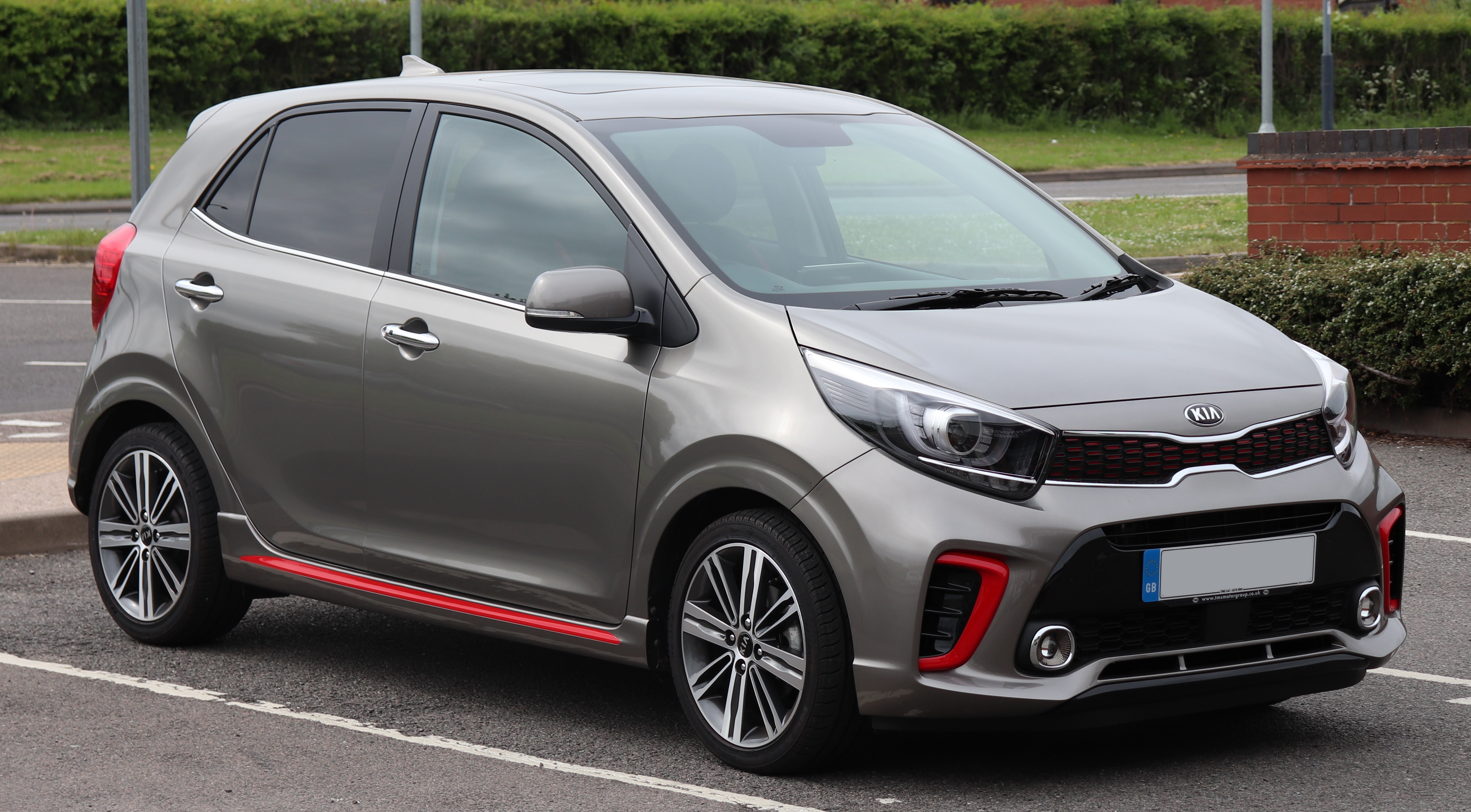
"...y, John, but if I do have a sudden influx of Kia Picantos, I know where to send them. Dealers can find out..."
The Kia Picanto is a small car that's great for driving around town. It's easy to park and doesn't cost a lot of money, making it a good choice for people who want a simple and reliable vehicle. Many people talk about it because it's a smart option for city driving.
The Kia Picanto is a compact city car known for its affordability, practicality, and efficient use of space. It has gained popularity in urban environments due to its small size, making it easy to maneuver and park. Discussions around the Picanto often highlight its value as a budget-friendly option for first-time car buyers or those looking for a reliable daily driver.
"And what's come out since then is what will happen to EVs after that. And effectively, if you drive an electric car into London..."
EVs stands for electric vehicles, which are cars that run on electricity instead of gasoline. They are better for the environment because they produce fewer emissions.
EVs, or electric vehicles, are cars that are powered entirely or partially by electricity instead of traditional gasoline or diesel fuel. They are increasingly popular due to their lower emissions and potential cost savings on fuel.
"But at the same time, congestion charging is going up. So basically, as an EV driver going into London,..."
Congestion charging is a fee you pay to drive in busy areas of a city, especially during rush hours. It's meant to reduce traffic and pollution.
Congestion charging is a fee charged to vehicles for driving in certain areas during peak traffic times, aimed at reducing traffic congestion and encouraging the use of public transport. Cities like London have implemented this to manage traffic flow.
Charging at home means you can plug your electric car into a charger at your house to recharge its battery. This is usually easier than finding a charging station elsewhere.
Charging at home refers to the ability to recharge an electric vehicle's battery using a home charging station or a standard electrical outlet. This is often more convenient and cost-effective than relying on public charging stations.
Select text to request an explanation
Welcome back to the Cardiola podcast where we pick our favorite stories of the week and ask an industry guest to choose which were the best.
I'm John Ray and joining me this week back from his upper middle class Butlins holiday. It's James Bagot.
James, how was your stay in the green belt?
I mean, that's, that was quite slanderous towards centre parks, John. What you just, what you just said.
Is it, is it though? I mean, it was entirely accurate, entirely accurate. It was a lovely, lovely break, John.
But I'm glad to be back and I've been thrown into the deep end with with many stories from Monday.
So it's been a reasonably busy week, isn't it on the on the Cardiola front?
Yes. And of course, at the same time, we're running up to use car awards.
So we've been frantically organizing all sorts of things to do with that.
We have got a very interesting guest though today, haven't we?
So we should probably just get to the point rather than me just waffle on about selling very cheap sub 10,000 pounds used cars.
Because I'm sure many people want to hear from our guests rather than from us, John.
You realise that this is the case. It's the case every week, James, but I'm thrilled that you've come to that conclusion today.
So anyway, our guest this week is Nathan Co CEO of AutoTrader. Nathan, thanks so much for joining us.
Nathan, lovely to see you. I think what I'm going to do is I'm just going to kick off this podcast.
We do cover a summary of the week story. So I'm just going to do for those people listening from afar or catching up at another time who might have missed the headlines this week.
I'm just going to do a bit of a summary of what's been going on and then we'll come to you with some questions.
AutoTrader has been dominating the headlines this week.
We picked up on a story over the weekend of some growing discontent in the motor trade about AutoTrader's rollout of deal builder as a new product that AutoTrader has launched.
Car dealers were angry at this mandatory rollout of the product. All dealers are going to have to sign up for it.
This is a very new way of selling cars. Tweaks have also been made to the platform, which includes contact buttons that have changed.
Some dealers have told us there's been a drop off in leads as a result of that.
And another problem that dealers have been telling us is that consumers now need to sign up for an AutoTrader account before they can submit a lead.
And some dealers are concerned that this has caused a drop off in those leads.
There's also a number of dealers out there who annoyed at price rises over the years and the chance of another one to come in April.
We're going to go into detail about what those dealers are annoyed about during this podcast and we're going to put those questions to Nathan.
But just a little bit of a timeline of events this week.
It started on Monday when we published our first story that reported on the mass cancellations being planned of AutoTrader contracts into Facebook groups.
One of those was run by Ibrahim Mohammed. His group has now gained more than three and a half thousand members.
It's doubled in size this week alone.
And he was calling on dealers to join a mass cancellation of AutoTrader contracts at 11.59 on November the 12th on Wednesday.
He shared emails to send to the company, including our guests today.
And AutoTrader has told us off the back of that that they have been listening to this feedback from dealers.
So then Wednesday came along and we saw evidence in these groups and a number of dealers called us to say that they had taken action.
They were canceling their accounts or downgrading them.
Umesh Somani, he's the chairman of the Independent Motor Dealer's Association.
He told us in a quote in one of the stories this week that feedback from IMDA dealers suggested that many had voted with their checkbooks.
Canceling or downgrading their packages or reducing the number of cars they advertise on the platform.
They said many are also saying that it's not just deal builder that's the issue, but a significant decline in both leads and sales generated through AutoTrader.
Now a large number of dealers on Wednesday posted screenshots of their emails to AutoTrader in these private protest groups and showed their request to cancel their contracts or downgrade.
One had claimed to have reduced their package, saving them £20,000 a month in advertising fees.
Well, another one had said they'd cut their 70 car advertising package down to seven cars.
Now, despite these claims, AutoTrader has told us that they'd seen less than 100 dealers cancel their packages.
We did ask about how many had downgraded, but we didn't get an answer on that.
But I'm sure we can come into that one now that we're chatting to Nathan.
So that just a little bit sets the stall of what's happened this week.
Nathan, it's been a difficult week for AutoTrader, I'm sure.
Let's go into the detail and you can give your side of the story.
Firstly, are you surprised at the backlash that's happened over the rollout of deal builder?
I think yes and no is probably the answer to the question.
The reason for surprise, I guess, if we start there,
is that this is a product that we've been working on with retailers for just over three years now.
And we've been taking on board feedback, retailers have been opting into it,
and by and large the feedback that we've had from both car buyers and retailers was actually like,
I want more deals because these deals really convert quite well.
So that's partly the reason for the surprise.
I think when you look back with hindsight, we kind of had confidence that,
okay, this is good for retailers now, so rather than trying to charge for it as a standalone product,
we announced in June, we said we're not going to do that anymore,
we're just going to allow access to this for all retailers and for all car buyers
because we can see that there's a real efficiency gain to be made for retailers.
So we obviously kind of put our foot down and said,
okay, well, let's get this out there as quickly as we can.
Now, I guess when we look back, it turns out that perhaps we went a little bit too quickly
and that's caused some retailers to be confused,
combined with some of the stories last week.
There's a bit of misinformation out there and it's left to retailers.
It's not just necessarily the group of retailers within those groups or that have posted cancellations.
I think we're just as concerned for all retailers because a whole bunch of them that are on the product
or looking to go on the product or interested in the product are kind of saying,
well, hang on, what's this? This isn't what I thought was the case.
So we've had to get around.
I mean, and for that, I am sorry, actually.
I really, you know, I think you know me well enough, James,
is we are here to do a good job by retailers.
That's what we pride ourselves on.
It was one of my biggest priorities when I was the CEO.
So to, of course, that confusion and retailers angst.
Now, I am really sorry about that and I think it is that, you know, probably moving too fast.
And then some of the communications, it is a kind of complicated product.
And when you combine those two things together, you know, a product that's quite a big change
and it rolls out to a lot of retailers, you know, perhaps it's definitely understandable
why some retailers have said, well, hang on, what is this all about?
I think a lot of dealers out there listening to this and watching this on YouTube
will certainly appreciate that apology.
They're also going to want to see some action, Nathan.
I mean, what are you going to do?
Are you going to roll back this?
Are you going to change the rollout?
So, no, we're not going to, I mean, like I said, if you kind of take where I started there
is rolling back deal builders isn't something that we're going to do.
We're very convinced that it's the right thing for retailers.
It's the right thing for car buyers.
And I think we've talked a lot about why it's right for car buyers,
gives them choice, different ways to interact with retailers,
get clarity on part exchange values.
But that's a bit less relevant for your audience, obviously.
I think when it comes down to retailers, we have had so many retailers over the years
and this is even more so the case with the NI increases and cost pressures that they've got
saying, listen, I've got a lot of labor costs at the moment it takes me,
depending on, you know, probably on an auto trader lead,
I've got to get four to get one sale.
It's kind of one in four conversion.
For other competitors, it's sometimes as high as one in 10.
They've said, if I can just get that conversion down,
but hold my sales at the same level I'd otherwise achieve,
then that's a real saving for my business.
And when you think about what we're doing, it's not just,
it's kind of deal builder on top of leads combined with buying signals.
I think there has been a bit of a misunderstanding that we're moving to this deals thing
and moving completely away from leads.
You kind of hinted at it in your introduction there around contact points.
This is very much leads plus deals plus buying signals.
And the goal of all three of those things is better conversion for retailers,
better understanding what they should be prioritising.
So we do believe, you know, that it is the right thing to continue to roll out deal builder.
I think, but as you said, clearly we need to think about doing that differently
because I think that what we're doing is right.
And we've worked with retailers for years on deal builder
and they really like the product.
But rolling out quickly what's really happened,
and this has become really clear over this week as we've spoken to retailers,
is actually if you give them the right support,
if they have a really clear explanation,
if they have a chance to ask all their questions,
then actually they understand what we're doing.
They see the benefit that they can get for their own business.
And you don't have this kind of, you know, there is a lot of misinformation,
a lot of bits flowing around, all of them that I understand.
But that really throws them off.
So if they get a chance to be supported through it,
then actually on the other side they're generally, you know,
pleased to understand and ready to get on and see what we might be able to do together.
And it's that, if there's one biggest learning that I have,
is that we need to provide much more support to those customers that have come on
and those customers that are going to go on.
I would say there is, oh, sorry.
Just in terms of change, I think the other thing too is
we're pretty well connected to a lot of our customers.
We do have 14,000 of them,
so you can't be connected all the time to all of them.
But I'd say that's one of the things that we've really put a lot of effort into
in the last five years.
But recognising that there's certainly a group of customers
that feel like they're not being listened to,
we're also going to establish an advisory group for both independent
and franchise retailers to make sure that, you know,
that we're getting their input from a broad range of customers,
including those that don't feel heard
because their only interaction with us might be over webinars.
Certainly a positive step forward that, Nathan.
I mean, I'd like to get into a little bit of detail here, though,
but why do you think Deal Builder is the future?
What is it that you think about this new way of buying cars,
reserving a car for £99 that is the positive way of selling cars?
Do consumers want it, firstly?
And secondly, we've seen that a large element of dealers don't want it.
So why is AutoTrader so adamant this is the future?
I think, I mean, Adam, it's not necessarily the right word.
I'd say working with retailers,
we have become convinced over three years of working with it
that actually when retailers take it, when they're using it,
they see it as a really positive thing.
I think it's really hard when a lot of retailers are not...
Yeah, about half our retailers are on the product,
and we see very little opt-out rates
when in the early phases where you were able to opt-out
of the product, very, very low opt-out rates.
So I think it is a little bit tricky
when people are kind of thinking about something in theory,
especially with all the misinformation,
like some of the facts flying around that aren't actually true.
That just makes it difficult.
From a consumer perspective, it gives them...
I don't think we need to labour,
and I think a more important point for dealers
is why is it a better way to sell cars.
So I'll come on to that.
From a consumer perspective,
we want to be able to provide a consistent experience
where they've got multiple ways of interacting with retailers,
where they can do a bit more of the work online,
in a way that works for the retailer, their finance,
a guide around part exchange
that doesn't at all commit the dealer to it.
And that way, when they come into the retailer,
they're more ready to buy it.
The reservation part of it is really about one of those signals,
along with our buying signals,
as to this person is really ready to go.
If you flip that round to,
well, why is that better for a seller?
I think it comes back to exactly what I said.
For me, it is a really simple thing.
It's that when these deals come through,
and hopefully now when leads come through with buying signals,
retailers will be able to make much better use of their time
and convert more of those more quickly into sales,
with less labour involved,
less time as some car retailers would say,
with tire kickers or people that are low quality,
not necessarily, not really interested,
not really in the buying funnel.
We want to make sure that the very best sales prospects
are put in front of our retailers.
We really want to improve the quality of what...
I think what AutoTrader sends dealers already
is pretty good quality,
but we can make it even better and make their lives easier
and give them less work to do.
That's pretty much the strategy for AutoTrader
and DealBuilder's part of that.
Dealers have said to me,
I don't want reservations.
I want leads because my team and myself are salespeople.
We will sell to those customers when they arrive in the dealership.
Let me give you an example.
We had a customer come in this week
who wanted to look at our Audi S3 that we had in stock.
It wasn't the right car for them.
We upgraded them to an Audi Q3 that we had in stock
and sold it to them.
They didn't know anything about it.
We hadn't advertised it, but it was because they were there,
and we had them on the site.
We managed to convert them.
That would be the same in many dealerships up and down the country.
Those people want leads.
Is this not a stumbling block
to providing those sorts of leads?
No, not at all, actually.
One of the other actions that we've put on ourselves
is we have a new product page
that's been through testing now
that will give retailers more of those leads
that they care about equalizing the contact options
that I think you've mentioned previously.
We've heard that message and we've got a new product page
that we're going to go out there with.
Just flipping back to your point,
leads aren't going anywhere.
If anything, we're making those leads even more powerful.
For the right consumer, actually,
when that consumer comes into your dealership,
what you'll know about them now on a lead or on a deal
is exactly how ready they are to buy,
whether they're a local buyer or not,
and actually will give you the information
that tells you the other vehicles
that they may well be interested in.
I'd say we're actually facilitating our goal.
We only work because it works for retailers,
so all the feedback that we take on board,
both today, historically,
and we'll still do this moving forward,
is all about making this work for retailers.
But I think when it comes to Deal Builder,
leads aren't going anywhere.
What we're doing is adding deals on top of it
and buying signals across the whole lot.
If a consumer reserves a car and comes in,
it's very easy for a retailer
to work out something that suits them better,
if anything, we just want to get them into the dealership
and we want you to know this one's a really serious buyer.
That's kind of as simple as it is.
I think when it comes to reservations,
look, we will listen to the feedback,
we'll get those advisory groups in place.
If there's tweaks and changes that we need to make,
we've made loads of changes over the past three years.
I think retailers...
Well, I hope that we've earned the reputation
that we will listen and we will evolve our products,
but it's a big customer base
and we accept that we can't get around everyone
and maybe not everyone will like the same thing.
That's part of the balance that we've got to get.
Some retailers want this,
some retailers want something totally different,
whereas we've got to try and find the best common ground,
which there will always be some people that that doesn't suit.
I wish that wasn't the case,
because you know what I'm about,
but it's just a hard one and it comes with the job.
Yeah, you certainly can't please everyone
when you've got 14,000 customers.
I do appreciate that.
But I would like to just touch on the consumer side,
because you are a two-sided marketplace.
Without one, you haven't got the other.
From the consumer experience,
what is it that gives you the confidence
that the majority of car buyers want to interact in this way?
Because just from my very limited experience in the most trade,
our reservations, although we push them, are very low.
Most people are not happy to put £99 down,
which we do too, because they want to come and see the car first.
What makes you confident?
Have you got evidence or research to show
that the majority of customers want to do this?
Yeah, we do, but to be honest,
James, having been in a digital business for a long time,
you need to always take surveys
and that sort of research with a bit of a pinch of salt.
The ultimate measure, I think, is we've had deal-builders
on a relatively small number of cars,
maybe a quarter of cars over the past,
well, and an even smaller number of cars over the past few years.
And what we've seen pretty consistently,
even as we've added more and more retailers,
is about, at the moment, about one in ten consumers
do want to place that reservation.
And over time, and with certain retailers,
that can be as high as 80% and it's increasing over time.
So I think we've got to...
And it's not just about actually the reservation.
I know that that is the piece that some retailers
have kind of been upset about it in the last week.
It is as much about, I think, perhaps a more powerful bit,
is that we can put a retailer's finance options
in front of a consumer who might otherwise go out
and get a personal loan or think about a mortgage drawdown
or maybe using their credit card.
And that just is a missed opportunity for retailers,
especially when they've got...
Some of them have got very, very good, accessible deals
for those consumers, and we don't need to lock them in.
They don't have to do a whole application.
They might just be able to get an idea,
but it's giving a chance for the retailer
to put that in front of them.
Coming back to the consumer,
they just want to be able to do a bit more in an environment
when it suits them, not necessarily during...
45% of those deals come through out of hours,
and retailers don't want to be open 24-7.
They can't do that, whereas this lets some of that activity happen
and hands it to the retailer on their terms
with their products into their dealership.
It's not like we're pushing any of our own products through it.
From what I understand, part of the misinformation
that you've referenced a couple of times,
one of those is confusion about cars being taken off sale.
A lot of dealers are unhappy
that when a reservation goes in,
that car is marked as reserved,
and they may lose out on leads.
Why is there a need to even mark these cars as reserved at all?
Well, I think most retailers that operate reservations
on their own sites will have some version of doing this,
and I think it is just a bit more of a statement
of fact that there is a reservation on this vehicle,
but you can still message the dealer about that car,
so we're not kind of chopping it off.
We did hear this.
We had this feedback actually earlier in the Deal Builder journey,
and so we changed actually the treatment of that flag,
because it did look like it was off sale.
Now it's just got a flag that says reservation in progress,
and you can still submit messages.
We still see consumers and car buyers putting those messages through
because it is a reservation that's in progress,
but from their mindset, the car is still there,
all the details are still there as well.
The only other thing that I would add is
we do see these as high quality leads.
I'm sure you do this in your own business, James,
but the minute these reservations come through,
retailers can jump on that,
and they can speak to the consumer
and confirm the reservation, get them to a book and appointment,
or if they can't get in touch with the consumer
and they feel like, well, hang on, my car says reservation in progress,
I don't want that and I can't get in touch with the consumer,
then with one click they can cancel that reservation
and if the consumer wants, they can get back in touch.
So we are putting, we deliberately did this
because we had exactly this feedback from retailers,
all the power in their hands.
And I know some retailers have said,
well, the car could be off sale for 21 days, 30 days.
Clearly that would not be a product that we would design,
but if no one gets in touch with anyone,
then yeah, the reservation can stay on to a very maximum of 30 days
in which case we actually kind of stop the reservation
and just return the money.
And dealers are not going to be penalised
for canceling one of these reservations,
even if they did so immediately in any way?
No, well, I mean, we don't penalise.
I'd like to think that we don't penalise retailers.
We think, I would say, I mean, it depends why it's happening.
I mean, if some retailers, you know, really,
really don't like reservations
and just want to cancel them immediately,
that's not going to be a good experience for car buyers.
I'd argue that's probably not good for their business.
It's also not good for auto traders.
So that's the sort of thing that, you know,
we will hear that feedback.
Of course we will because I don't want, you know,
car buyers on auto trader and actually dealers don't want that.
Either dealers don't want to be putting consumers' noses out.
So we're not going to, you know, push on mindlessly
without listening to feedback,
without paying attention to the consumer experience.
We've got to marry those two and that's just not a great experience.
One of the things that worries me, Nathan, about this is
we put a lot of store-buyer reviews.
We work very hard to keep our customers happy.
If someone has reserved a car on my website
and perhaps I'm talking to a different customer in the dealership
at exactly the same time and selling them that car,
then I have to go on to auto trader,
cancel that reservation and end up with a bad review.
So what was the point in reserving this car?
He's just sold it to someone else, probably got more money.
What are auto trader going to do about those sorts of reviews?
I have seen evidence.
I have seen in some of these groups,
evidence of that actually taking place,
those bad reviews being placed.
Yeah. So the one thing I would say on this, James,
is it's going to happen.
I imagine it will happen,
provided that the way that you run your dealership,
the moment that a car is sold, you take it off,
you mark it as sold and get another vehicle on,
then this should happen in a relatively small number of cases.
Having been working with dealers now for 17 years
in kind of an auto trader capacity,
I would say to you that this has always happened
and it has also always been a source of negative reviews for retailers.
I mean, at the moment, for reservations that go through,
the number one reason why the reservation isn't completed
is because the car's already been sold
and consumers do seem to accept that.
I wouldn't say that we've had, I would say in the whole three years,
I've not typically retailers, they have my email address
and many of them have my phone number as well.
I've not really had that feedback that strongly
and to the extent it does exist,
he's been something that's really consistent person,
you'll have experienced it, person comes down to the dealership,
I want to look at this car, this particularly happens with auto trader
because two-thirds of people just walk in
and you say, sorry, that car has been sold
and it is exactly the same thing that happens today,
whether it's reservations or you booking an appointment over the phone
or them trying to get in touch with you.
Nathan, there's been wild speculation about pricing on this.
I've seen comments and I'm sure you have about the 0.25% charge
when it was a product, people think that's going to be brought back in
or is in place as it stands now.
Are you ever going to charge for DealBuilder?
So the 0.25%, I can tell you that is done with, we're done with that.
In June, when we announced that we were going to all retailers,
we were super clear and if not, I am now being super clear
that we are not introducing any percentage commission
for 0.25% or anything else in April.
DealBuilder buying signals, the leads the dealers get today
will all become a standard part of every retailer package.
Sorry, I think my internet is playing up.
No, I did notice that, I hope it's not mine.
No, we'll carry on nonetheless.
So just on that front, is the cost of DealBuilder
simply just going to be factored into those price rises
that dealers are going to get in April?
Yeah, we haven't decided on, we review the packages every year
but in short, the answer is yes.
It's not like the packages in April will be wholly dependent on DealBuilder.
We tend to take in a whole bunch of different factors
because we're not going to say for example,
work out what would it be if it was 0.25%
and let's just include that in April
because that's the value of the product.
It's far more nuanced than that.
So I think DealBuilder buying signals,
that's definitely the product that we're going to include
in packages from April and at the same time
we do review our package prices every year
and I know that for some retailers, maybe for all retailers,
they do find that hard to take
but we do take into account quite a lot.
We think about the product and the value of the product to the retailer.
The reason why we do that is actually because our philosophy
is that we want a retailer every year to be doing better off
for them than in the year before.
So the products that we try and put into those packages,
See something that's not quite right? Our annotations are AI-generated and can sometimes miss the mark.
Click the flag icon on any annotation to suggest a correction.