
Arnold Clark profits hit £112.5m, 3p per mile EV tax confirmed, and Car Dealer Power results – with John Veichmanis, episode 267
About this episode
AutoTrader is spotlighted first, with hosts discussing how it connects retailers to consumer demand and adds “buying intent” insights to online inquiries. The conversation then shifts to Carwow’s auction mechanics with CEO John Vic Manis: removing reserve prices, anchoring bids to retail valuations, and using retail back pricing plus algorithms to shape both dealer and consumer expectations. The episode also covers UK EV mileage-based road tax plans (3p per mile) and dealer survey results, including Car Dealer Power “Cars of the Year” winners.
Dealers perplexed as Carwow radically shakes up its daily auctions removing reserve prices
Government confirms pay-per-mile charges on EVs as plans get mixed response
Arnold Clark profit hits £112.5m as Chinese brands help drive new car growth
Car Dealer Power Cars of the Year – dealers pick their winners of 2026
Car Dealer Power 2026: Who won what at this year’s awards?
Ford criticises ZEV mandate as boss calls for ‘urgent review’ of eco targets

Hyundai i20
"We did negotiate a price, and I drove his lovely Hyundai i20 away."
The Hyundai i20 is a compact hatchback (a small car with a rear hatch). Here, it’s just the specific car they bought and drove away after negotiating the price.
The Hyundai i20 is a small hatchback from Hyundai, typically aimed at urban driving and affordability. In this segment, it’s the specific car the dealer negotiated for and then drove away, so it’s a concrete example of the kind of used import stock they’re moving.
Auto trader
"all cars show a retail valuation via AutoTrader or Brago."
AutoTrader is a website where used cars are listed for sale. In this discussion, it’s used to provide a price estimate for auction listings.
AutoTrader is a UK online marketplace where dealers list used cars and buyers can browse prices and availability. In the segment, it’s referenced as a source for the retail valuation shown during auctions.
Brago
"all cars show a retail valuation via AutoTrader or Brago."
Brago is mentioned as a pricing/valuation source. The takeaway is that auctions show an estimated retail price to help dealers bid.
Brago is referenced as another source for retail valuations used to display a car’s estimated selling price during auctions. The key point is that bidders can see a valuation without knowing any reserve price.
margins
"Dealers are now left to bid with their own margins in mind, not knowing what the reserve price is."
Here, “margins” means the profit dealers want to make. Since they can’t see the reserve price, they have to decide their bid based on what profit they need.
In dealer auction bidding, “margins” refers to the profit dealers expect to make after buying the car and selling it. With reserve prices removed, dealers must bid based on their own margin targets rather than a known minimum.
reserve price
"We made the change on Wednesday, so that was the first auction where we added the retail price and removed the reserve price."
A reserve price is the lowest price the seller will accept. If the bidding doesn’t hit that number, the seller can choose not to sell.
In auctions, a reserve price is the minimum amount the seller is willing to accept. If bidding doesn’t reach that level, the item may not be sold.
retail price
"We made the change on Wednesday, so that was the first auction where we added the retail price and removed the reserve price."
Retail price is what a car is expected to sell for to a customer. Here, the auction uses that number to help dealers decide what to bid.
Retail price is the expected selling price to end customers, as opposed to a wholesale or auction bid. In this context, the auction is being anchored to a retail figure to guide dealer bidding.
location of their site
"if a dealer logs into their own auto trader account, they get a price related to the location of their site."
Car prices can change depending on where you are. Here, the speaker says Auto Trader can estimate a price based on the dealer’s location.
This refers to pricing that varies based on where a dealer is located, since car values and demand can differ by region. The speaker says dealers can see a location-based figure in their own Auto Trader account.
nationwide price
"they get a price related to the location of their site. So, we can't provide that. So, we provide an effective nationwide price."
Nationwide price means one general estimate used everywhere, not tailored to a particular town or region. They can’t share the location-specific number, so they use a country-wide one.
A nationwide price is a single pricing estimate applied across the whole country rather than adjusted for a specific local area. The speaker contrasts it with the location-specific price a dealer could see on their own Auto Trader account.
cap valuations
"I think there's a little bit of confusion, which was definitely in our part that we moved the cap valuations to the bottom of the auction listing."
“Cap valuations” are maximum value limits used to stop someone from bidding too high. It helps buyers keep their auction bids within a safe budget.
“Cap valuations” here refers to capped valuation figures used to limit how high a buyer is willing to go. It’s part of an auction decision tool that constrains bidding based on a maximum acceptable value.
retail valuation
"So, you can now see the retail valuation and cap in the pill at the top of the page close to where customers' dealers rather place the bid."
Retail valuation is an estimate of the car’s selling price in a dealer showroom. Dealers use it to figure out what they can afford to bid at auction.
Retail valuation is an estimate of what a vehicle is worth at retail (i.e., what a dealer might sell it for). In dealer bidding workflows, it’s used as a starting point to decide how much they can pay at auction.
retail back pricing
"So I think the other thing that we've done, which is perhaps less obvious, is that we now have the retail back pricing in the auction, but we're also using it for valuations on the consumer side."
It’s a way to estimate what a car should sell for by using auction results. Instead of treating auction prices and retail prices as totally separate, they “convert” auction outcomes into a customer-facing value.
Retail back pricing is a method where auction results are translated back into an estimated retail (customer-facing) price. The idea is to use what the market is paying at auction to inform what the car should be worth when shown to consumers.
algorithmic calculation
"So we basically have an algorithmic calculation that looks at the bids. So it's using the retail price and then the bids to calculate."
It means the valuation isn’t just a human guess—it’s computed by a set of rules using data. Here, they’re using auction bids and retail pricing to generate the estimate.
An algorithmic calculation is a rules-and-data-driven method for producing a number (here, a valuation) automatically. In this context, it uses auction bids plus retail pricing inputs to estimate what a car is worth.
bids
"So we basically have an algorithmic calculation that looks at the bids. So it's using the retail price and then the bids to calculate."
Bids are the offers made by buyers during an auction. The speaker is saying their valuation model uses the bids as a key input, alongside retail pricing, to estimate value.
prep costs
"It isn't calculating margins, obviously, because there are prep costs as margin on top, but it's using the differential between the two"
Prep costs are what it takes to get a car ready to sell—like fixing small issues and doing reconditioning. The point here is that those extra costs affect the economics beyond just the auction and retail numbers.
Prep costs are the expenses required to ready a car for sale after it’s acquired—such as reconditioning, cleaning, and minor repairs. The speaker notes that these costs sit on top of margin, which is why the model isn’t directly “calculating margins.”
differential between the two
"It isn't calculating margins, obviously, because there are prep costs as margin on top, but it's using the differential between the two"
It means the difference between two prices. Here, they compare the customer-facing retail price with what the car is bidding for at auction, and use that gap to estimate value.
“Differential between the two” refers to the gap between two price points—in this case, retail pricing and auction bids. Using that spread helps the system estimate a valuation or expected value rather than relying on a single number.
MPS survey
"And when we run an MPS survey, [1052.0s] so a customer satisfaction survey, [1054.0s] and most of the customers that were going through that process"
An MPS survey is a customer feedback survey. Here, it’s used to see whether customers were happy with the dealer’s process.
An “MPS survey” refers to a customer satisfaction survey process used to measure how customers rate their experience. In this context, it’s being used to evaluate dealer performance during the car-buying journey.
buy-now section
"there are definitely some dealers that really put quite a few cars in the buy-now section. But again, I think they found it really quite frustrating"
A “buy-now” option lets someone purchase the car immediately for a fixed price. Instead of waiting for bids to finish, the deal can happen right away.
A “buy-now” section is an auction listing mode where a buyer can purchase immediately at a set price instead of waiting for bidding to end. It’s often used to speed up sales for cars that aren’t moving quickly through standard bidding.
traditional auction method
"Did you think of any other ways, JV, of doing this? [1117.6s] I mean, there's obviously like the traditional auction method, [1120.5s] like the kind of eBay style."
A traditional auction means people bid against each other over time. The car goes to the highest bidder when the auction ends.
The “traditional auction method” is the standard format where buyers place bids over time and the final price is determined by bidding. It contrasts with instant-purchase formats like “buy-now.”
auction mechanics
"So we have tested, over the course of the last six months, we have tested lots of different auction mechanics."
“Auction mechanics” just means the rules of how the auction works. If the rules change, it can change how many people bid and whether the car actually sells.
“Auction mechanics” are the rules and process details that govern how bids are placed and how cars are sold. In car auctions, changing mechanics can affect bidder behavior—like how many bids a listing attracts—and ultimately whether cars sell.
probability of cars being sold
"And the changes that we saw drove better outcomes for customers in terms of increased the probability of cars being sold."
They’re talking about how likely it is that cars will actually sell in the auction. It’s a way to judge whether the auction setup is working.
This refers to a measurable auction outcome: how likely a listed car is to sell under a given auction setup. It’s essentially an efficiency metric for the auction process, tied to bidder engagement and bidding intensity.
CarWow
"I mean, the one thing we're seeing across Carwow as a whole is new car has been extremely, [1456.5s] extremely positive."
Carwow is a website/app involved in buying and selling cars. In this segment, they’re saying what’s happening on Carwow’s new-car side.
Carwow is an online platform that helps shoppers and dealers transact around new and used cars. Here, it’s used as the umbrella for what’s happening across its new-car marketplace.
configurations on the platform
"Our new car business is growing, the configurations on the platform are up 40% [1464.4s] year of year, just to put it into perspective."
“Configurations” means the different versions of a car you can choose—like trim level and options. If there are more configurations available, it can make it easier for buyers to find something that fits their budget.
“Configurations” here means the specific ways a car can be specified—trim, options, and variants—available through the platform. When they say configurations are up 40% year over year, they’re implying more choice and/or more listings, which can increase conversion to sales.
Mercedes A-Class
"customers that may be pre-pandemic would buy a brand new Mercedes-A class for £250, [1483.8s] post-pandemic that was £500."
The Mercedes A-Class is a smaller Mercedes model that’s often one of the more affordable ways to buy into the Mercedes brand. They’re using it to show how people’s buying choices changed with prices and budgets.
The Mercedes-Benz A-Class is a compact premium hatchback/sedan line, positioned as an entry point into the Mercedes range. The host uses it as an example of how buyers’ budgets shifted from new to used and then back again.
economic uncertainty
"So I think that is, I think there's a little bit of economic uncertainty"
Economic uncertainty means people aren’t sure about money and the future. When that happens, they may delay buying a new car or switch to cheaper options like used cars.
Economic uncertainty refers to a period when consumers and businesses are unsure about the economy, often leading to more cautious spending. In car retail, that can shift demand between new and used vehicles and affect how aggressively dealers discount.
used car classified products
"Yeah, so the really the bigger area of opportunity for us, I think, particularly when we look at the sell my car businesses to try and connect that to our emerging used car classified products."
This means the website features where used cars are listed for sale. The point being made is that they want those listings to work together more smoothly with their other auction/selling tools.
“Used car classified products” refers to listing and advertising offerings for pre-owned vehicles, typically where dealers or sellers post cars and buyers browse them. The speaker is describing a strategy to connect these listings with other parts of the business so sellers and buyers get a more seamless experience.
connected car ecosystem
"So we want to try and build a connected ecosystem so that if you're selling cars on our platform... So there's a big focus on how do we connect the products together more effectively because at the moment they live something from a technology perspective, they're on a completely different stack and that there is limited integration between them."
They’re talking about making different parts of the website work together. Instead of each feature being separate, they want your selling activity to influence what you see when you come back to buy.
A “connected ecosystem” in this context means multiple car-selling/buying products that share data and user journeys instead of operating as separate silos. The speaker contrasts this with their current setup, where systems are on different technology “stacks” with limited integration.

Kia Picantos
"So we want to try and build a connected ecosystem so that if you're selling cars on our platform, if you've sold two Kia Picantos and when you log back into the auction, well here are here are 20 more you could buy."
A Kia Picanto is a small, easy-to-drive car that many people buy and sell. Here it’s just an example of the kind of car a seller might list, and then the auction site could show you similar cars to buy next.
The Kia Picanto is a small city car (a supermini) that’s common in the UK used-car market. In this segment, it’s used as an example of how a platform could personalize what other cars you can buy after selling one.
technology stack
"because at the moment they live something from a technology perspective, they're on a completely different stack and that there is limited integration between them."
A technology stack is the behind-the-scenes set of software systems that make an app or website work. They’re saying their different car-selling tools are built on different systems, so they don’t connect as well as they could.
A “technology stack” is the set of software systems and tools that power a product—like databases, services, and application components. Here, the speaker says their different car products run on separate stacks, which limits how easily they can integrate features and data.

Ford Puma
"...if you come to car wow and we've only got 50 Ford Pumas available, then we need more breadth of choice to..."
The Ford Puma is a small crossover, meaning it’s built to be easy to drive while still feeling a bit more rugged than a regular hatchback. Dealers may talk about it when they don’t have many available, because fewer cars means fewer customers can get the exact model they want. It’s often part of the “how many choices do we have” conversation.
The Ford Puma is a compact crossover designed for everyday driving, combining a practical size with a more SUV-like stance. It’s mentioned in the context of dealer inventory and customer choice—having a limited number of units can restrict how many buyers you can satisfy. That makes it relevant to discussions about stocking strategy and broadening the range of options on a platform.
Car Gurus
"Last week on the podcast we had Sam Zales from CarGurus. That second position in the used car advertising platform is one that lots of people jostled for."
CarGurus is a car-shopping website that helps people find used cars and connects them with sellers. Here it’s mentioned as a competitor in the UK used-car advertising space.
CarGurus is an online used-car advertising and lead-generation platform. The speaker references it as one of the major UK players in used-car advertising, positioning Carwow relative to it by traffic and demand.
demand led
"I think what you're going to see at car wow is I talk about this in strategic terms in that car wow has ultimately always been demand led. We have huge amounts of demand given the investments we've made in content and performance marketing."
“Demand led” means they focus on what shoppers are actively looking for. In this segment, it’s used to explain why Carwow believes it attracts more buyers than competitors.
“Demand led” describes a marketplace strategy where the business prioritizes what buyers want (traffic and interest) to shape inventory and listings. The speaker ties this to Carwow’s marketing investments and the idea that their ranking is based on traffic/demand rather than just supply.
traffic basis
"So without being an egotistical ass, I think if you look on a demand basis, on a traffic basis, then we are the clear number two in the UK."
“Traffic basis” just means they’re comparing how many people visit each website. The speaker is using visitor numbers as a way to judge which used-car sites are most popular.
A “traffic basis” is using website visitor numbers (how much attention a site gets) as a proxy for demand and marketplace strength. The speaker uses it to argue Carwow is the clear number two in the UK by visitor/demand metrics.
pay-per-mile charges on EVs
"So this is going to work exactly as we, I'm going to say feared or anticipated, depending on your perspective. It's going to be 3pm on EVs and 1.5pm on plug-in hybrids."
It means the government wants to charge electric-car drivers based on how much they drive. So instead of paying through fuel costs, you pay through a mileage-based road tax.
“Pay-per-mile charges on EVs” is a road-tax style policy where you’re charged based on how many miles you drive, rather than (or in addition to) fuel-based taxes. In this episode, it’s described as applying a different rate for EVs versus plug-in hybrids.
plug-in hybrid
"It's going to be 3pm on EVs and 1.5pm on plug-in hybrids."
A plug-in hybrid can drive using electricity, but it also has a regular engine. You can charge it like an EV, but it can also use gas when needed.
Plug-in hybrids (PHEVs) are cars that can run on both an electric motor and a conventional engine, and they can be charged from an external power source. They’re treated differently from pure EVs in mileage-based charging schemes because they still use fuel.
road tax
"It's going to work in the way that you pay your road tax. So when you come to pay your car tax, you will say, I think I'm going to drive X number of miles this year."
Road tax is the government fee you pay to legally drive your car on public roads. In this plan, the mileage-based charge is meant to be calculated in a similar way to how road tax is worked out.
“Road tax” here refers to the UK-style vehicle taxation process that’s paid when you renew or pay for your car’s tax. The host explains the mileage charge will be handled similarly to how road tax is calculated, using an estimate of miles driven.
MOT
"if you have a new enough car that doesn't need an MOT and therefore hasn't had its mileage recorded, you have to accurately say, I've actually done this many and pay the difference."
MOT is the UK safety check your car has to pass to stay legal on the road. The host says it also matters because it can record mileage, which then affects how the new mileage-based charge is calculated.
MOT is the UK’s mandatory vehicle inspection that checks roadworthiness and safety for cars above a certain age. The episode links MOT to how mileage is recorded, which affects whether the government can verify your actual miles or has to rely on your declaration.
trust pro rata system
"So it's this sort of strange trust pro rata system going on."
A “trust pro rata system” describes a mileage-charge approach where you declare expected/actual miles and pay proportionally over time, rather than being fully verified immediately. “Pro rata” means the charge is scaled based on the portion of the period or usage being covered.
VED
"June with her Nissan Micra or whatever driving 3,000 miles a year is not going to pay as much in VED or EVED they're calling it as you, James, driving around in your Tesla."
VED is the UK road tax you pay to legally keep a car registered. It’s usually calculated using things like how the car is powered and how much it emits.
VED stands for Vehicle Excise Duty, the UK tax you pay to register and keep a vehicle on the road. It’s typically based on factors like the vehicle’s emissions and/or fuel type, so EVs and petrol/diesel cars can be treated differently.

Nissan Micra
"So I suppose the idea here is that June with her Nissan Micra or whatever driving 3,000 miles a year is not going to pay as much in VED or EVED they're calling it as you, James, driving around in your Tesla."
The Nissan Micra is a small everyday car. Here it’s mentioned as an example of someone driving relatively few miles, to show how a mileage-based tax could affect costs.
The Nissan Micra is a small, mainstream hatchback that’s often used as an example of a low-mileage commuter car. In this segment, the Micra is used to illustrate how a pay-per-mile or mileage-linked tax could change what a lightly driven car owner pays.
DVLA
"They're going to have to put some sort of like I mean who the DVLA is handling all of this not HMRC necessarily. So if someone misrepresents their mileage and sells the car and then somebody else goes to tax it and finds that the mileage discrepancy is such that somebody owes some tax on it."
DVLA is the UK agency that keeps the official records for vehicle registration and licensing. The segment is saying they’d likely be the ones dealing with problems if someone reports the wrong mileage for tax.
DVLA is the UK Driver and Vehicle Licensing Agency, the government body that manages vehicle registration and licensing records. The hosts are discussing how DVLA would have to handle mileage/tax discrepancies and enforcement if the system becomes more mileage-based.
HMRC
"They're going to have to put some sort of like I mean who the DVLA is handling all of this not HMRC necessarily. So if someone misrepresents their mileage and sells the car and then somebody else goes to tax it and finds that the mileage discrepancy is such that somebody owes some tax on it."
HMRC is the UK tax authority. The hosts are basically saying that the vehicle-related paperwork and enforcement might be handled by DVLA instead of HMRC.
HMRC is Her Majesty’s Revenue and Customs, the UK government department responsible for collecting taxes. In this segment, the hosts contrast HMRC with DVLA, implying that vehicle-millage/tax administration might fall more on DVLA than HMRC.
mileage discrepancy
"So if someone misrepresents their mileage and sells the car and then somebody else goes to tax it and finds that the mileage discrepancy is such that somebody owes some tax on it."
A mileage discrepancy just means the car’s mileage figures don’t match—like if the odometer reading or records are different. In a mileage-based tax system, that could lead to extra tax being owed.
A mileage discrepancy is a mismatch between reported vehicle mileage and what’s found in records or inspections. The hosts are using it to describe how a mileage-linked tax system could trigger back taxes or charges if the numbers don’t line up.
penalties
"it does sort of work for fleets because fleets naturally or leases you know you know that you are going to do a maximum of 10,000 miles a year otherwise you're going to be paying penalties anyway on your lease or your whatever."
Here “penalties” means extra fees if you drive more than the mileage limit your lease or fleet contract allows. The idea is that fleets already plan around those limits.
In this context, “penalties” refers to the extra charges applied when a lease or fleet contract exceeds an agreed mileage allowance. The hosts argue that pay-per-mile style charging can work for fleets because mileage limits are already built into leasing terms.
EV tax
"“...the government has haven't done a very good PR job because what they're saying is this this tax is effectively making it fairer to use the roads...”"
They’re talking about a tax or charge aimed at electric cars. Since EVs don’t buy petrol or diesel, the government wants a different way to collect money from EV drivers.
In this context, “EV tax” means the government’s proposed charge scheme for electric cars to account for road costs that are normally funded by fuel duty. Because EVs don’t buy petrol or diesel, the policy shifts the funding mechanism away from fuel consumption.
fuel duty
"“...petrol and diesel drivers every time they fill up are paying this tax already... electric car drivers have basically been avoiding it...”"
Fuel duty is the tax the UK collects on petrol and diesel at the pump. The speaker argues that petrol/diesel drivers already pay this through fuel purchases, while EV drivers avoid it because they don’t use those fuels.
trust system
"“...this scheme though is absolutely ridiculous I mean why on earth would you come up with this this kind of trust system where you have to guess how many miles you're going to do...”"
They’re describing a setup where drivers effectively have to report or estimate how much they’ll drive. The concern is that some people will lie or guess low to pay less.
A “trust system” here means a scheme that relies on drivers estimating or reporting their expected mileage rather than using automatic measurement. The speaker criticizes it as easy to game because people can understate usage to reduce charges.
3p per mile
"“...we did a calculation didn't we the three pence per marv you do 10000 miles at 300 quid I mean...”"
It’s a rule that charges EV drivers based on how many miles they drive. So instead of paying fuel taxes at the pump, you pay a small amount per mile.
This refers to a pay-per-mile charge for electric vehicles, priced at 3 pence for every mile driven. The idea is to replace lost fuel duty revenue with a distance-based road charge tied to usage.
EV Grant
"we take the the government EV grant phenomenal in terms of helping drive the adoption of EVs but again it's still really complicated"
An EV grant is a government discount to help you buy an electric car. It lowers the upfront price, but you still have to think about what it costs to charge it and how much you’ll drive.
An EV grant is government money that helps reduce the purchase cost of an electric vehicle. In practice, it’s usually applied as a discount or subsidy, and the buyer then has to consider the ongoing costs of charging and usage to understand the total cost of ownership.
EV schemes
"compared to the we have um on carware Germany where the German government have implemented an EV scheme it price comes off the RRP it's quite straightforward to work out"
An EV scheme is a government program that makes electric cars cheaper or easier to use. Different countries do it differently—sometimes it’s a straight discount, other times it’s based on how much you drive.
An EV scheme is a structured government program that changes the economics of buying and running an electric vehicle—often through incentives or tax/fee rules. Here, the speaker contrasts a simpler “price comes off the RRP” approach with a more complex pay-per-mile style approach.
RRP
"where the German government have implemented an EV scheme it price comes off the RRP it's quite straightforward to work out"
RRP is the car’s official list price. If an EV discount comes off the RRP, it’s taken straight out of that listed price, so it’s simpler to calculate what you’ll pay.
RRP means “recommended retail price,” the manufacturer’s list price for a car. When an EV incentive “comes off the RRP,” it means the discount is applied directly against that list price, making the deal easier to understand.
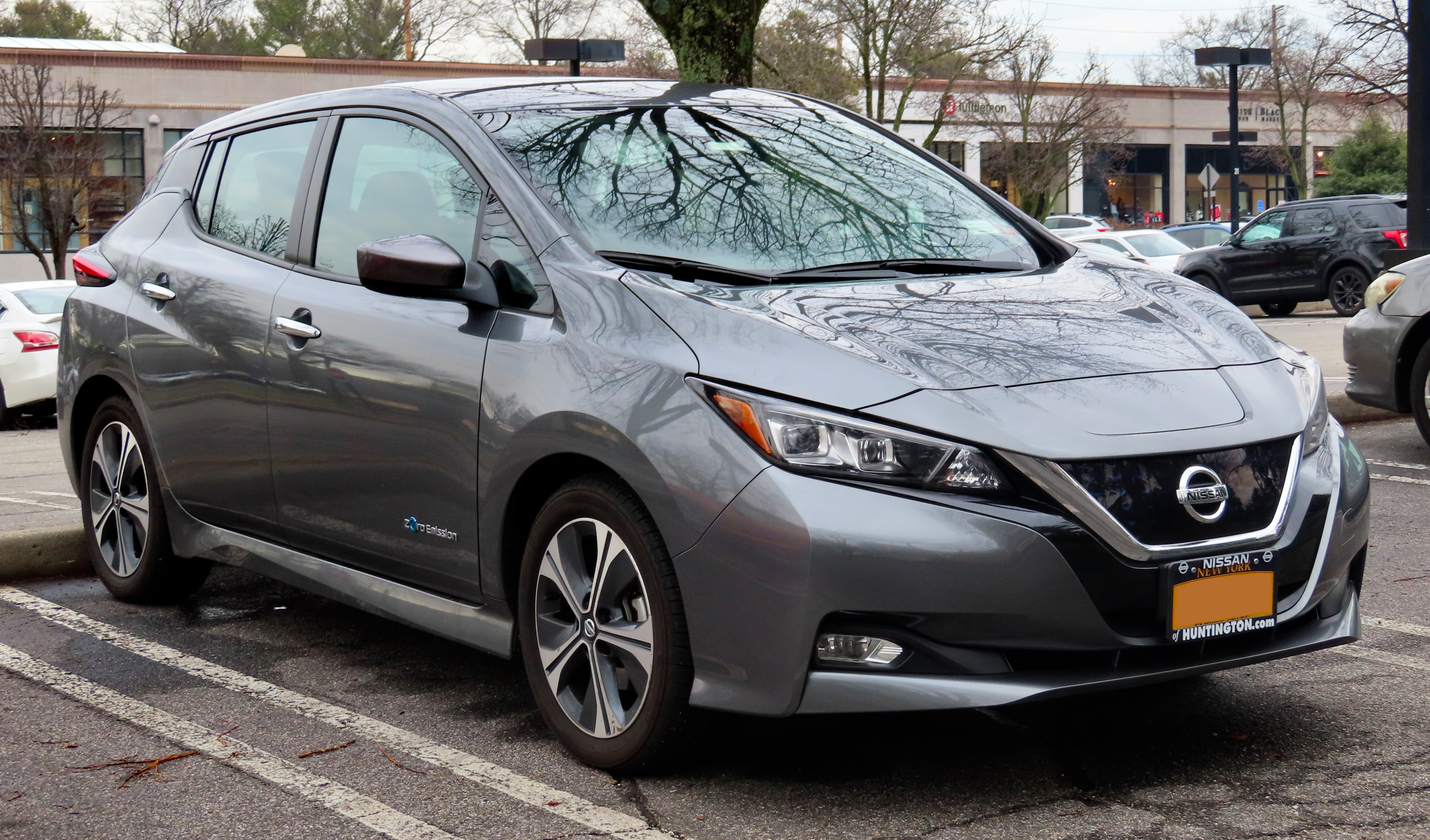
Nissan Leaf
"explain this to somebody's buying a three and a half thousand pound Nissan Leaf you know you've got to explain to them that all of a sudden they're going to have to go and estimate their annual mileage"
The Nissan Leaf is a popular electric car. The host is using it as an example to show that if the government charges or rules depend on how many miles you drive, it can be confusing for everyday buyers.
The Nissan Leaf is a mainstream electric hatchback known for being one of the most widely sold EVs, making it a common reference point for EV incentive and charging-cost discussions. In this segment, the speaker uses it as an example of how complicated pay-per-mile style rules can be for a typical buyer.
PHEVs
"very quickly is PHEVs as well so the PHEV argument I really struggle with because he you know I understand they've had to put"
PHEVs are plug-in hybrid cars. They can drive on electricity like an EV, but they also have a gasoline engine, so the costs and rules can be more complicated than with a fully electric car.
PHEVs are plug-in hybrid electric vehicles—cars that can run on electricity from a battery, but also have an internal-combustion engine for longer trips or when the battery is depleted. Incentive and fee rules can get tricky because PHEVs don’t behave like pure EVs in terms of charging and fuel use.
BYD
"representing BYD a motor JQGWM unfortunately um Cherry Geely and Leap Motor um they saw their new [2694.1s] car sales last year rise by 11 percent"
BYD is a big Chinese car company that makes lots of electric cars. Here, the hosts are pointing out that BYD is selling more cars and has strong money in the bank.
BYD is a Chinese automaker best known for battery-electric vehicles and large-scale EV manufacturing. In this segment, the hosts cite BYD’s sales growth and financial strength as part of why it’s performing well in the UK market.
Cherry Geely
"representing BYD a motor JQGWM unfortunately um Cherry Geely and Leap Motor um they saw their new [2694.1s] car sales last year rise by 11 percent"
This is a mention of Chinese car brands. The point being made is that their sales went up compared to the previous year.
“Cherry Geely” appears to refer to Chinese automaker brands discussed alongside BYD and Leap Motor. The segment uses them as examples of brands whose new-car sales rose year over year.
cash sat in its bank account
"there's a very very big number that's interesting 450 million pounds [2715.8s] nearly half a billion of cash sat in its bank account waiting to be deployed for for new opportunities"
They’re talking about how much money a company has saved in the bank. Having cash like this can help a car business grow or buy other businesses when chances come up.
The hosts are describing a company’s cash reserves—money held in bank accounts—available to fund future growth. In an automotive retail context, that cash can support expansion, inventory, and acquisitions when opportunities arise.
CEO
"or eddie hawthorne stopped stepped down last year didn't he this is [2796.1s] the first uh full year of russell bray uh his uh year year is um ceo first annual report"
CEO means the top boss of a company. It’s the person in charge of making the big decisions, and the hosts are noting how the new CEO’s first year went.
CEO stands for Chief Executive Officer, the top executive responsible for running a company. Here, the hosts discuss a leadership change and reference the first annual report under the new CEO.
Corvette
"which has been crucial to their success which was corvette oh of course yes i forgot yeah [2813.9s] big big big part of their numbers bumped up the uh the numbers"
The Corvette is a well-known sports car model. The hosts are saying it helped boost the numbers they were discussing.
The Corvette is a performance sports car model associated with Chevrolet. In this segment, the hosts say it was a crucial part of the company’s numbers, implying that Corvette sales contributed meaningfully to results.

Chevrolet Corvette
"...which has been crucial to their success which was corvette oh of course yes i forgot yeah big big big part o..."
The Chevrolet Corvette is a sports car made for fast driving and sporty handling. It’s a well-known model, so people often look for it when they want a performance car. That’s why it can be important in sales discussions.
The Chevrolet Corvette is a long-running American sports car known for its performance-focused design and strong presence in the enthusiast market. In a dealer or sales discussion, it often comes up because it’s a recognizable model with a loyal customer base, which can make it a “crucial” part of a brand’s overall success. It’s also frequently referenced when talking about how certain models drive attention and repeat interest.

Volkswagen Id3
"...e binning off old names in favor of new ones like id3 or whatever and it's interesting that actually cu..."
The Volkswagen ID.3 is an electric car in a hatchback body style. The “ID” name is part of Volkswagen’s newer way of labeling its electric models. It’s mentioned because the brand is using these new names instead of older ones.
The Volkswagen ID.3 is an electric hatchback, part of Volkswagen’s move toward naming and branding its electric vehicles with the “ID” label. It’s brought up in the context of “binning off” older names in favor of newer ones like ID.3, which highlights how brands reorganize model identities as they shift toward electrification. That’s why it can be discussed in a dealer or market conversation about product lines and customer recognition.
infotainment system
"things like i don't love the infotainment system i don't know why it's got a campfire on the screen rather than a map but apart from that um and a couple of little usability things i just i was"
The infotainment system is the car’s main screen and controls for things like music and navigation. The host didn’t like how it looked/behaved in this case.
An infotainment system is the car’s integrated touchscreen/audio/navigation interface. The host is criticizing the UI/UX choice—specifically that the screen shows a “campfire” instead of a map.
usability things
"rather than a map but apart from that um and a couple of little usability things i just i was really impressed with them yeah i was"
They’re talking about how easy the car’s features are to use. In this case, they felt a couple of things weren’t very convenient or intuitive.
“Usability” here refers to how easy and intuitive the car’s controls and screen features are to use while driving. The host groups these complaints with the infotainment screen issue.
BMW
"so that's sort of part one this is a bit of a long story sorry but i'll just touch on the manufacturers as well so bmw number one again this year i don't actually have the figures in front of me but number two was omoda slash jku"
BMW is mentioned as the top brand in the survey the host is talking about. They bring it up to compare BMW’s position with newer Chinese brands.
BMW is referenced as being number one in the host’s survey results for the year. The host uses BMW’s ranking as a benchmark while discussing how Chinese brands are performing in dealer feedback.
omoda / jku
"but number two was omoda slash jku because they're sort of the same franchise and i thought that was incredible as well because they've come they weren't in the survey last year"
Omoda and JKU are mentioned as the runner-up in the survey results. The host says they’re grouped together as one franchise for this ranking.
Omoda and JKU are mentioned together as the number-two result in the host’s dealer survey. The host treats them as effectively the same franchise for ranking purposes.
MG
"these are this is like the honeymoon period isn't it for a lot of these chinese brands mg interestingly traditionally don't do too fantastically in this survey which i think is quite interesting and one of the criticisms we tend to get about mg"
MG is mentioned as a brand that usually doesn’t score as well in this kind of dealer survey. The host says they often hear criticism about MG’s results.
MG is referenced as a brand that “traditionally don’t do too fantastically” in this dealer survey. The host calls out that this is a recurring criticism they receive about MG.
Toyota
"it'll be interesting to [3280.6s] see whether they maintain that position if you compare them to someone like toyota you know [3287.0s] incredible company really and incredibly well set up in the uk and very very focused on customer"
The host brings up Toyota as an example of a company that’s set up well for customer service and support. They’re comparing that to worries that some newer brands may struggle with service and parts later on.
Toyota is used here as a benchmark for after-sales support and customer service. The host contrasts Toyota’s UK setup with concerns about whether some Chinese brands can match that level of support over time.
Stillantis
"you've [3304.0s] got perso citron and voxel in last place respectively i mean they are all stillantis brands all [3311.9s] ones that have been incredibly under pressure by those chinese brands"
The host is talking about Stellantis (the big group behind several car brands). They’re saying those brands are feeling pressure from Chinese brands, and some dealers are switching away from them.
“Stillantis” appears to be a reference to Stellantis, the automaker formed from a merger of Fiat Chrysler Automobiles and PSA. In this segment, the host says Stellantis brands are under pressure from Chinese brands, with dealers reportedly exiting and replacing them.
VW's
"i've been in some vw [3363.3s] groups stuff this week that i've just wanted to drive through a wall and you know it's we're not in [3369.1s] a great position i don't think with european car makers"
The host mentions VW as an example of a European brand where the technology can be frustrating. Their point is that both European and Chinese brands can have issues, just in different ways.
VW (Volkswagen) is referenced as a European brand whose tech the host says has been frustrating. The host contrasts that with the idea that Chinese brands may not drive like European cars, while European cars can have their own tech problems.
driver power
"we also run driver power so we've been asking consumers what they think about the cars that they're actually driving and live with every day"
“Driver Power” is basically a survey where people rate the cars they’re driving every day. The goal is to learn what owners really think, not what the ads say.
“Driver Power” is a consumer survey concept where drivers rate the cars they actually live with day to day. It’s used to compare how different brands perform in real ownership experience, not just marketing claims.
rental fives
"you know i think the rental fives are a great example of that yeah it's a phenomenal car but there is a lot of heritage behind it"
This sounds like a misheard car model name. The point is that some cars have a reputation and history that people really connect with.
“Rental fives” appears to be a mis-transcription of a specific car model name. The speaker is using it as an example of how a model can have strong heritage and affection even when it’s not the newest thing on the market.
lisa brankin
"wanted to talk about lisa brankin who is the managing director of ford uh in the uk who's [3540.1s] called for an urgent review of the zv mandate"
Lisa Brankin is the top Ford executive in the UK. Here, she’s saying the government’s rules pushing zero-emission vehicles need to be reviewed because many buyers still aren’t ready to switch.
Lisa Brankin is described as the managing director of Ford in the UK. In this segment, she calls for an urgent review of the UK’s ZEV mandate, arguing that the gap between eco targets and real-world EV demand is widening.
ZV mandate
"called for an urgent review of the zv mandate um in a post on linkedin she said that the gap [3547.0s] between the eco targets and the reality of the new car market is getting wider"
A “ZEV mandate” is a government rule that pushes car companies to sell more zero-emission cars. The speaker is saying the targets may be too aggressive compared with what drivers are willing to buy right now.
The “ZEV mandate” refers to government policy requiring automakers to sell a growing share of zero-emission vehicles (typically EVs) over time. In this segment, Ford’s UK managing director argues the mandate’s eco targets don’t match what customers are actually buying, so the plan may need adjustment.
eco targets
"she said that the gap [3547.0s] between the eco targets and the reality of the new car market is getting wider"
“Eco targets” are government goals for cutting pollution and emissions. The point being made is that the goals for cleaner cars aren’t lining up with what people are buying today.
“Eco targets” are environmental goals set by the government (or regulators) that automakers must meet, often tied to emissions reductions. Here, the speaker contrasts those targets with the current EV sales reality, saying the mismatch is growing.
fully electric vehicles
"the [3553.2s] switch to fully electric vehicles still doesn't make sense for a lot of customers"
Fully electric vehicles are cars that don’t use petrol or diesel— they run on a battery and electricity. The speaker is arguing that for some buyers, the switch still isn’t practical or appealing.
“Fully electric vehicles” are cars that run only on electricity stored in a battery, rather than using a gasoline or diesel engine. The segment claims that switching to fully electric vehicles still “doesn’t make sense” for many customers, which is used to support the argument for changing policy targets.
EV discounting
"suggested [3557.7s] that their current level of EV discounting is not sustainable"
“EV discounting” is when electric cars are being sold with discounts or incentives to make them cheaper. The speaker’s point is that relying on discounts may not be a long-term solution.
“EV discounting” means reducing the effective price of electric vehicles through incentives, promotions, or price cuts. The segment argues that the current level of EV discounting isn’t sustainable, implying automakers may struggle to keep pushing EV sales without policy or market changes.
EV
"suggested [3557.7s] that their current level of EV discounting is not sustainable so i just thought was [3563.7s] interested in that"
“EV” means electric vehicle. It’s a car that runs on electricity from a battery, and the discussion here is about how EVs are being pushed and priced.
“EV” stands for electric vehicle, meaning a car powered by an electric motor and a battery. In this segment, EV is used in the context of pricing pressure (“EV discounting”) and the broader policy debate about switching customers to electric cars.
Request an Explanation
Heard something you'd like explained? We'll add it to this episode.
Sign in to request explanations for terms you heard.
Want to learn more?
Browse our glossary for plain-English explanations of automotive terms, jargon, and concepts.
Help improve this episode
See something that's not quite right? Our annotations are AI-generated and can sometimes miss the mark. Click the flag icon on any annotation to suggest a correction.