ZEV mandate could be chopped, Yeomans revenue up after Chinese brand expansion, and JLR targets cost-cutting – with Simon Shield, episode 263
About this episode
Simon Shield of Simon Shield Cars joins Car Dealer Podcast to talk used-car dealership life: on-site MOT and repairs, sourcing changes since COVID, and why margins depend on avoiding auction “old junk.” The hosts then pivot to wider industry themes—Auto Trader’s AI buying signals and EV lead stats—before debating the UK ZEV mandate and whether it’s “falsely controlling the market.” Yeomans’ revenue jump is linked to Chinese brand expansion, while JLR targets a “1.7 billion pound cost cutting agenda.”
‘Dramatic cut coming to ZEV Mandate targets’ after PM’s intervention
Weekly Briefing: Why is the government meddling in electric car targets again?
Car buyers still prefer dealerships as online-only purchases decline
Car dealer Caffyns slumps to significant pre-tax loss amid fall in new vehicle sales
Yeomans revenue hits record £609m after Mazda and Omoda & Jaecoo expansion
Jaguar Land Rover targets £1.7bn cost cuts as luxury car buyers fuel growth plans
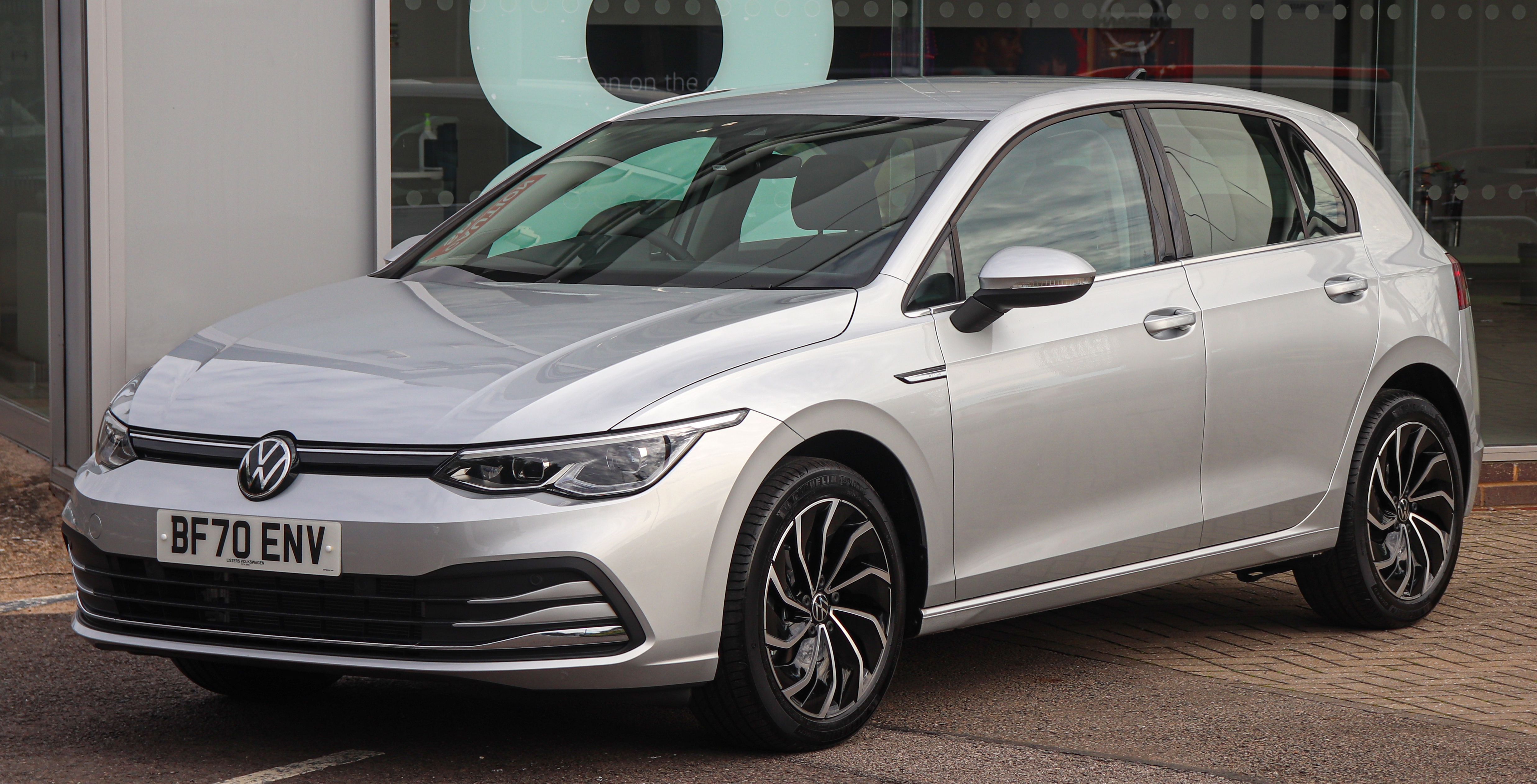
Volkswagen Golf
"...ion. There's like this kind of arch of Volkswagen Golfs, wasn't there, like on the roof."
The Volkswagen Golf is a small car, usually a hatchback, made for everyday driving. It’s popular enough that you’ll often notice lots of them on the road. People may mention it by its look—like the roof shape—because it’s easy to recognize.
The Volkswagen Golf is a compact hatchback that’s known for being practical and widely used, which is why you’ll often see many of them in a variety of years and trims. In a discussion like the one you quoted, it’s being referenced as a recognizable model—something people can easily picture, even from small details like roof shape. That makes it a common topic when dealers talk about what’s popular, how they’re used, and what buyers typically look for.
electric car
"[1612.1s] Does that extend to electric cars? [1614.7s] Oh, no, there's another story."
An electric car is powered by a battery and an electric motor instead of gasoline. It usually means buyers need more help understanding charging and how far it can go.
An electric car (EV) runs primarily on electricity stored in a battery, rather than using a gasoline engine. That changes how the car is powered, serviced, and marketed—especially for dealers who need to explain charging and range to buyers.
leads
"[1675.9s] One of the statistics that auto traders said to us yesterday that really sort of [1680.7s] pricked my ears up was the fact that 22% of all leads now that auto traders sends to dealers [1687.4s] go to electric cars."
In car sales, “leads” are people who show interest in buying a car. The dealer then tries to contact them and turn that interest into a sale.
In car retail, “leads” are potential customers generated through marketing or online listings who are then routed to dealers to follow up. Here, the key point is that a growing share of those routed leads are for electric cars, affecting dealer inventory strategy.
forecourt
"[1687.4s] go to electric cars. [1689.2s] So, so that's, if you haven't got any electric cars on your, on your forecourt, [1693.4s] you're effectively losing one fifth of the opportunity."
A forecourt is the car lot area outside a dealership where cars are parked for customers to see. If you don’t have EVs there, you may miss out on people who are looking for them.
A dealer forecourt is the customer-facing area outside a dealership where cars are displayed and where sales activity is directed. In this context, it’s a practical measure of whether a dealer has EVs physically available to attract leads.

e-Niro Eniro
"We do, we do sell a few electric cars. [1712.3s] I bought a Kia E-Niro yesterday, very good retail rating with, I've sadly sold my Tesla"
The Kia E-Niro is Kia’s electric version of the Niro. It’s a popular everyday EV, so dealers often stock it and talk about how quickly it sells.
The Kia E-Niro is Kia’s electric version of the Niro crossover. It’s a common choice for buyers who want an EV that’s practical and easy to live with, which is why it shows up in dealer stock discussions.
main dealer
"You know, are you going to take a chance and buy, you know, a Tesla [1755.9s] put in by a main dealer out of Mannheim auctions?"
A “main dealer” is an official, brand-approved dealership. The point here is that some dealers buy cars through official channels, but used EVs can still come with costly surprises.
A “main dealer” is an authorized dealership in a manufacturer’s network, typically selling new cars and handling warranty and servicing under the brand’s standards. In the transcript, it’s used to describe where a used Tesla might have come from and why that matters for dealer risk.
Mannheim auctions
"are you going to take a chance and buy, you know, a Tesla [1760.9s] put in by a main dealer out of Mannheim auctions? [1764.5s] Well, are you going to take that chance?"
Mannheim auctions refers to car auctions connected with Mannheim in Germany. Dealers may buy cars there to get inventory, but the host is warning that those cars can still need costly work.
Mannheim is a city in Germany, and “Mannheim auctions” refers to vehicle auction activity associated with that region. Dealers sometimes buy cars there to source stock, but the transcript suggests that auction-sourced EVs can still require expensive reconditioning.
£3,000 spending
"And they're in, they end up with a, which a car, which needs £3,000 spending on it. [1775.7s] Yeah, we know now."
They’re talking about how a car might need about £3,000 worth of work after it’s bought. That kind of surprise cost can wipe out the deal if you didn’t plan for it.
The speaker is describing a reconditioning or repair budget needed after purchase—here, “£3,000 spending.” In dealer terms, this is a key part of the total cost of ownership for inventory, because it affects profit and pricing.
Tesla dealer
"It's got to go specifically to a, you know, a Tesla dealer, [1792.4s] or it's got to go specifically to an electric car dealer,"
This is talking about Tesla’s own sales/service network. The point is that electric cars often need the right people and tools to fix them safely.
A Tesla dealer is a retail sales and service point associated with Tesla. In the UK/Europe context, the discussion is about routing repairs or support through the right kind of electric-vehicle-focused channel rather than a generic workshop.
ZEV mandate
"Some changes to this ZEV mandate. And if you talk to the unions, I mean, Union General, Unite General Secretary Sharon Graham said the mandate was already significantly contributing to the loss of automotive jobs in Britain."
A ZEV mandate is a government rule that pressures car companies to sell more electric (zero-emission) cars. The goal is to reduce pollution from cars over time.
A ZEV mandate is a government rule that requires automakers and/or sellers to meet a minimum share of “zero-emission vehicles” in their sales or production. In practice, it’s used to push the market toward battery-electric and other zero-tailpipe-emission technologies.
electric vehicle
"I think we should probably let the consumer decide whether they want to buy an electric vehicle. And up until now, forcing it down their necks hasn't worked."
An electric vehicle is a car that runs on electricity from a battery. It doesn’t have a gasoline tailpipe, so it’s cleaner where you drive.
An electric vehicle (EV) is a car that’s powered primarily by electricity stored in a battery, rather than by a gasoline or diesel engine. When discussed alongside a ZEV mandate, it usually refers to battery-electric cars that produce no tailpipe emissions.
EV
"trying to buy a petrol car are being told, no, you cannot have a petrol car, but you can have an EV instead."
EV stands for electric vehicle. It’s a car or van that runs on electricity from a battery, instead of petrol.
EV means electric vehicle—cars or vans powered primarily by an electric motor and rechargeable battery. In this context, the speaker is contrasting EVs with petrol cars and discussing how policy affects what dealers and manufacturers can sell.
ZV mandate
"Most people aren't aware of the ZV mandate outside of our little world, I think, because it's such a complicated bit of staggered targets and legislation..."
A ZEV mandate is a rule from the government that pushes car companies to sell more electric (zero-emission) vehicles over time. Because the targets come in steps, companies have to plan ahead so they can build and sell enough EVs.
A ZEV mandate is a government policy that requires automakers to sell a certain share of zero-emission vehicles (ZEVs), typically EVs, over time. The “staggered targets” part means the required percentages ramp up in phases, which can force manufacturers to plan production and inventory years ahead.
retooling their factory for electric
"But everyone is retooling their factory for electric. Nissan is retooling their factory for electric. They all think electricity and EVs is what's here to stay."
Retooling a factory means updating the factory so it can build a different product. Here, it means preparing the plant to make electric vehicles instead of petrol ones.
“Retooling” a factory means changing the production setup—equipment, tooling, and processes—to build a different kind of vehicle. When factories are retooled for electric, it usually reflects shifting from internal-combustion production to EV-specific components and assembly steps.
Nissan
"But everyone is retooling their factory for electric. Nissan is retooling their factory for electric. They all think electricity and EVs is what's here to stay."
Nissan is a car brand/company. In this discussion, it’s mentioned as one of the companies preparing to build electric vehicles, so sudden policy changes could disrupt those plans.
Nissan is a major Japanese automaker. The speaker uses Nissan as an example of a manufacturer retooling its UK factory for electric vehicle production, implying that policy uncertainty can affect long-term manufacturing investment.
EV future
"…manufacturers who've said that they're going to not do an all EV future already… [2429.0s] You've got other of the big brands that have decided that actually they're going to row back on some of their electric planners too."
“EV future” just means a plan where most cars become electric. In this segment, they’re talking about companies that are changing how quickly they want to make that shift.
“EV future” is shorthand for a plan to transition away from internal-combustion vehicles toward electric vehicles as the dominant product. The hosts use it to contrast manufacturers that have already changed course versus those “rowing back” on electric plans.
Rolls-Royce
"…manufacturers who've said that they're going to not do an all EV future already, you know, likes a Bentley, Rolls-Royce."
Rolls-Royce is a luxury car brand. Here it’s mentioned as an example of a company that’s not rushing into an all-electric-only future.
Rolls-Royce is a luxury car brand, and it’s referenced alongside Bentley as an example of a manufacturer that has signaled it won’t go “all-EV” immediately. The point in the conversation is that some premium brands are adjusting their electrification plans based on demand and feasibility.
Bentley
"…manufacturers who've said that they're going to not do an all EV future already, you know, likes a Bentley, Rolls-Royce."
Bentley is a luxury car maker. In this segment, it’s used as an example of a company that isn’t committing to switching everything to electric right away.
Bentley is a luxury car brand known for high-end grand tourers and SUVs, and it’s mentioned here as one of the manufacturers publicly backing away from an “all-EV future” timeline. That matters because luxury brands can influence how quickly the market expects electrification to happen.
carrot and stick analogy
"…some people are saying it's a slightly moot point at this stage anyway, because, you know, we've been doing the carrot and stick analogy, this is the stick, isn't it, the Zeb mandate?"
“Carrot and stick” is a way to describe rules that use rewards and threats. In this discussion, they’re saying the government is using the “stick” (a mandate) instead of letting people choose.
The “carrot and stick” analogy describes policy approaches that combine incentives (“carrots”) with penalties or mandates (“sticks”). Here, the hosts frame the ZEV mandate as the “stick” that pressures consumers and automakers rather than relying on voluntary choice.
charging stations
"There'll be commercial aspects to charging stations and chargers on houses and all that sort of thing, but it will happen. But it doesn't need forcing by politicians."
Charging stations are public or semi-public locations where EVs can be plugged in to recharge their batteries. The segment argues that charging availability—especially at homes—needs to keep up with EV adoption so drivers don’t feel “stuck” without convenient charging. That’s why the host says the transition should happen together rather than being driven by policy alone.

Tesla
"Like I said earlier in this podcast, I've really enjoyed running a Tesla. I've really enjoyed that. Actually, it's sort of turned my head a little bit to the possibilities."
Tesla is a company that makes electric cars. The host is saying they tried one and actually liked it, even though they used to be skeptical about EVs.
Tesla is an electric-vehicle brand known for making battery-electric cars that helped popularize EVs for everyday drivers. In this segment, the host says they’ve enjoyed running a Tesla, which is used as a personal counterpoint to their earlier skepticism about EVs.
EV skeptic
"And I have been, and listeners of this podcast will well know, I have been an EV skeptic. And that's because a lot of the electric cars I've driven up to that point"
An EV skeptic is someone who isn’t convinced electric cars are a good idea. Here, the host says they had bad experiences with other EVs, but a Tesla changed their mind.
An EV skeptic is someone who doubts that electric vehicles are practical or good enough for everyday life. In the segment, the host explains their skepticism came from earlier EV drives that felt “terrible” or “very, very difficult to live with,” before trying a Tesla and changing their view.
AI chatbot
"But I don't think anyone's really ready to switch over to an AI chatbot to do every inquiry at this point."
An AI chatbot is a computer program that can talk to people like a chat message. Dealerships use it to answer common questions or collect info before a real person takes over.
An AI chatbot is software that uses natural-language processing to hold a conversation with a person. In car-dealership contexts, it’s often used to answer questions, route inquiries, or collect basic details before a human replies.
Chat GPT
"Only if the customer has inquired via using chat GPT or AI in the first place."
ChatGPT is an AI tool that can chat and write responses. The point being made is that if a customer starts using AI first, the dealership may also use AI to handle the conversation.
ChatGPT is a widely used AI language model that can generate text and hold conversations. Here, the host is describing a workflow where a customer starts with ChatGPT, and then dealership systems use AI to respond and potentially reach a decision.
tire
"Like, you know, can you tell me whether the tire has ever been anywhere near a puddle?"
A tire is the rubber part that touches the road. The host is saying the AI is asking weird, unrealistic questions about things like puddles and tire exposure.
In this context, “tire” refers to the car’s rubber contact patch with the road, which can be relevant to condition questions during sales or service inquiries. The host is mocking an AI-generated question about whether a tire has been near a puddle, implying the inquiry is nonsensical.
brand loyalty
"And I just sort of wanted to wrap that up with some of the stats that we were told by AutoTrader yesterday about brand loyalty when it comes to these Chinese cars. Because what we've absolutely seen is that customers are very happy to ditch their Volkswagen's and Audi's and Ford's and Nissan's to go to these Chinese brands"
Brand loyalty means sticking with the same car brand you’ve trusted before. The host says fewer people care about a brand’s long history than they used to.
Brand loyalty is the tendency for buyers to prefer a familiar automaker because of its reputation or history. The host uses AutoTrader data to argue that brand loyalty is weakening—fewer people care about long brand history when shopping for cars.
AutoTrader
"And I just sort of wanted to wrap that up with some of the stats that we were told by AutoTrader yesterday about brand loyalty when it comes to these Chinese cars."
AutoTrader is a UK website/app where people buy and sell cars. In this segment, they’re the source of the survey-style stats about how brand loyalty is changing.
AutoTrader is a UK car marketplace and media brand that publishes automotive research and listings. The host cites AutoTrader’s statistics about brand loyalty—specifically how fewer buyers say long brand history matters.
Volkswagen's
"Because what we've absolutely seen is that customers are very happy to ditch their Volkswagen's and Audi's and Ford's and Nissan's to go to these Chinese brands with badges they've never heard of"
Volkswagen is a big car company from Germany. Here, it’s mentioned as a “usual” brand some people are replacing with newer Chinese brands.
Volkswagen (often shortened to VW) is a major German automaker known for mainstream cars like the Golf and Passat. In this segment, it’s used as an example of a traditional brand that some buyers are switching away from to newer Chinese brands.
Audi's
"Because what we've absolutely seen is that customers are very happy to ditch their Volkswagen's and Audi's and Ford's and Nissan's to go to these Chinese brands with badges they've never heard of"
Audi is a well-known car brand from Germany, and it’s often considered more “premium” than basic models. In this discussion, it’s one of the brands people are switching away from.
Audi is a German luxury automaker within the Volkswagen Group, known for models like the A4 and Q5. The host mentions Audi as one of the established brands some customers are moving away from when choosing Chinese brands instead.
Ford's
"Because what we've absolutely seen is that customers are very happy to ditch their Volkswagen's and Audi's and Ford's and Nissan's to go to these Chinese brands with badges they've never heard of"
Ford is a big car company from the United States. The point in this segment is that some buyers are leaving brands like Ford for newer Chinese options.
Ford is a major American automaker with a wide lineup, including popular mainstream models. Here, it’s referenced as another traditional brand that some buyers are willing to replace with Chinese brands based on price and perceived technology.
Skoda
"I think you could say Skoda, for example, is not a cheap, really cheap brand anymore. It's cheaper than Audi and cheaper than VW, but I wouldn't really say a Skoda is a budget car anymore."
Škoda is a car brand from the Volkswagen Group. The host is saying it used to feel cheaper, but it’s moved upmarket enough that some people may no longer see it as a bargain.
Škoda is a Czech automaker in the Volkswagen Group, positioned as a value-focused alternative to Audi and Volkswagen. The host argues that Škoda isn’t as “budget” as it used to be, which could shift its customer base over time.
Dacia
"And they all go to Dacia or when all the Omodas and I don't know, Cherries or whatever get a bit posher and get a bit higher in price."
Dacia makes relatively affordable cars. The host is using it as an example of where price-sensitive buyers might go if other brands stop feeling “cheap.”
Dacia is a Romanian automaker known for low-cost vehicles, often marketed as budget-friendly alternatives within the Renault ecosystem. The host mentions Dacia as the kind of brand some buyers might move to if newer brands become more expensive.
Cherry
"What franchise would you open tomorrow in Gosport for a Chinese brand? Probably a Chinese brand anyway. And you reckon, you quite fancy Cherry, don't you? [3299.4s] I did say Cherry."
Chery is a car brand from China. The hosts are talking about which Chinese brand might be a good dealership to open in the UK.
Cherry (often written as Chery) is a Chinese automaker that’s expanding its presence in the UK. In this segment, it’s mentioned as a possible franchise choice for a dealership in Gosport.
GV
"I would go with GV, I think. Would you? Yeah, because I just think they're a little bit further down. They're a bit newer, aren't they? And they've got an enormous infrastructure in the UK already with factories here and there to make lotuses and taxis and so on and Volvo."
The speaker is talking about a Chinese car brand they think would be a good dealership franchise. The transcript only says “GV,” so the exact brand name isn’t fully clear here.
“GV” is referenced as a Chinese brand option, and the speaker links it to existing UK manufacturing and an “enormous infrastructure.” The transcript doesn’t clearly spell the full brand name, so this is likely shorthand for a specific Chinese marque.
Volvo
"And they've got an enormous infrastructure in the UK already with factories here and there to make lotuses and taxis and so on and Volvo. [3320.6s] They've got Volvo and Lope, whoever else, hundreds of brands, Polestar."
Volvo is a well-known car brand from Sweden. In this discussion, it’s used as an example of an established company with UK operations.
Volvo is a Swedish automaker known for safety-focused engineering and, in the UK context, for having an established manufacturing footprint. Here it’s mentioned as part of the “infrastructure” argument for why a Chinese franchise could work.
Polestar
"They've got Volvo and Lope, whoever else, hundreds of brands, Polestar. [3326.2s] I'd be tempted to go for them."
Polestar is an electric car brand. The hosts mention it as one of the many brands that already have a presence in the UK.
Polestar is a performance-leaning electric vehicle brand (with a strong EV identity) that has been building dealer and distribution presence in multiple markets. The speaker lists it among brands tied to the UK manufacturing/distribution ecosystem.
BMW
"So I think the most important part of that is this brand loyalty thing, because that's what's kept the likes of BMW and Audi and Volkswagen as kind of premium brands. [3350.8s] We all know that the Chinese product is extremely good now."
BMW is a well-known premium car brand from Germany. In this segment it’s used to explain how brand loyalty and recognizable styling help keep customers choosing a marque.
BMW is a German premium automaker used here as an example of a brand that benefited from “brand loyalty.” The speaker argues that Chinese brands are improving quickly, but that European brands risk losing distinct styling cues.
Ferrari
"It's the likes of Porsche and Bentley and Rolls Royce and Ferrari. And I think what used to happen further down the price range is just not happening anymore."
Ferrari is an Italian supercar brand. In this segment it’s used to represent brands that still have a strong reputation and recognizable identity.
Ferrari is an Italian performance and luxury brand mentioned as one of the marques with enduring “kudos” for quality. The speaker’s point is that brand identity and reputation remain strongest at the top end of the market.
Porsche
"If you look at the brands which actually still maintain a kudos for being a quality brand, they're all right at the top end of the spectrum now. It's the likes of Porsche and Bentley and Rolls Royce and Ferrari."
Porsche is a famous sports-car brand. The hosts are saying some brands still have a strong reputation for quality and recognizable identity.
Porsche is a German sports-car brand cited as one of the marques that still carries “kudos” (reputation/credibility) for quality. The speaker contrasts it with brands they feel have become less visually distinctive as competition increases.
Mini
"Some of that may be down to the huge quantity of product that they actually build. I think one of them that does maintain identity is Mini. I think Mini's identity remains,"
Mini is a small car brand with a very recognizable look. The host is saying Mini still feels like itself, unlike some other brands that have started to look too similar.
Mini is a UK-based (and now BMW-owned) small-car brand known for a distinctive design language. The speaker says Mini is one of the few brands that still maintains identity, even as other brands converge visually.
J-Cous
"But I think the overall picture is that the Chinese [3459.8s] the Chinese brand most of, well, I'm not over familiar. I see a lot of J-Cous around here. [3466.9s] And they, I may not like the look of them, but the quality is incredible for the money."
“J-Cous” sounds like a Chinese car brand name. The speaker is talking about how people are excited about these cars right now, but what happens later—especially when reselling—might be less favorable.
“J-Cous” appears to be a mishearing of a Chinese car brand name, referenced alongside “Chinese brand” and “J-Cous garage.” The host is discussing how these brands are gaining attention and how their cars hold value (or don’t) after the initial hype.
honeymoon period
"We're in a honeymoon period, definitely with the Chinese at the moment. Yes, the brand, [3508.0s] the cars are fantastic. We're in a honeymoon period. And I think there's a lot more to come from this [3513.3s] in sort of three years time when they're coming back on the market again."
A “honeymoon period” means the early stage where people are really excited about something. The speaker thinks the excitement around these Chinese brands won’t last forever, especially once more cars are resold.
A “honeymoon period” here means the early phase when Chinese brands are benefiting from strong consumer excitement and favorable perceptions. The host argues that this enthusiasm may fade after a few years when more cars come back onto the used market.
market again
"And I think there's a lot more to come from this [3513.3s] in sort of three years time when they're coming back on the market again. But at the moment, [3517.9s] the manufacturers are all jumping in and they're all doing well out of it"
“Coming back on the market again” means these cars will eventually be resold. The speaker is suggesting that when lots of them show up used, prices could be lower.
“Coming back on the market again” refers to when today’s new Chinese-brand buyers eventually sell their cars, increasing supply in the used-car market. The host connects this to how resale values could drop if dealers expect to buy back at lower prices.
JLR
"Right, John, you've probably [3531.6s] got time of wedge one, small one in. Okay, we're very small one in which is JLR and how they have [3539.5s] talked about their future growth plans."
JLR is short for Jaguar Land Rover, a car company. They’re talking about JLR’s plans to grow and also cut costs.
JLR stands for Jaguar Land Rover, the UK-based automaker group. In this segment, the host frames JLR’s plans around growth and a major cost-cutting agenda.
cost cutting agenda
"But they're also targeting this is my headline for it a 1.7 [3545.8s] billion pound cost cutting agenda, which to me is slightly doesn't quite go against the expansion [3554.7s] plans."
A “cost cutting agenda” means a company is trying to spend less money to improve results. The host says JLR is aiming for big cost reductions while still trying to grow.
A “cost cutting agenda” is a structured plan to reduce operating expenses across a company. Here it’s used to describe JLR’s target of £1.7 billion in cost reductions while also pursuing growth plans.
tariffs
"that at the moment with potential tariffs. And like, is that tariffs still a thing, James?"
Tariffs are taxes a government charges on imported goods. In car manufacturing, tariffs can make it more expensive to ship vehicles or parts across borders, which is why companies may build factories locally to “get around it.”
warranty claims
"Warranty, the concerning one. [3626.7s] Yeah, exactly. Well, like, do they mean, they mean warranty costs and everything's suddenly going to get much more reliable and there won't be any warranty claims, or they're just going to deny every warranty claim that comes to them."
A warranty claim is when you ask the company to pay for repairs because the car is covered by its warranty. The host is wondering if cost cuts will mean fewer repairs get paid for.
A warranty claim is a request for the manufacturer/dealer to cover repairs under the car’s warranty terms. The host is questioning whether cost-cutting will come from reducing warranty payouts (by improving reliability) or from denying claims.
fixed costs
"And fixed costs. So good luck to them. [3642.1s] Good luck to them."
Fixed costs are bills a business has to pay regardless of how many cars it sells. The host is basically saying cost-cutting won’t magically remove those expenses.
Fixed costs are expenses that don’t change much with how many cars are sold (for example, certain overheads). The host uses it to suggest that even with cuts, some costs remain and may still be hard to manage.

Range Rover
"But of course, they are also going to less electrify, if I can put it in a very clunky way, brands like Range Rover Defender and, sorry, not brands, sub brands, they're sub"
Range Rover is a luxury SUV brand. They’re talking about which versions may be electrified sooner or later.
Range Rover is a luxury SUV line from Land Rover (Jaguar Land Rover). The segment mentions it in the context of electrification plans—implying some sub-brands may move more slowly toward fully electric offerings.

Defender
"But of course, they are also going to less electrify, if I can put it in a very clunky way, brands like Range Rover Defender and, sorry, not brands, sub brands, they're sub"
Defender is Land Rover’s tough, off-road SUV. The discussion is about how quickly different Land Rover lines are moving toward electric versions.
Defender is Land Rover’s rugged SUV model line, known for off-road capability and a strong enthusiast following. Here it’s mentioned as one of the sub-brands that may be electrified less aggressively than expected.

Discovery
"brands like Range Rover Defender and, sorry, not brands, sub brands, they're sub brands like Range Rover Defender and Discovery."
Discovery is a Land Rover SUV that’s aimed more at families. They’re saying some of these models may not go electric as quickly as planned.
Discovery is Land Rover’s family-oriented SUV line, positioned above smaller utility models. The host groups it with other sub-brands as part of a “less electrify” strategy.
Zed mandate
"Well, I think I think because of the the size of the story to call in the phrase, it's got to be the Zed mandate. It's got to be because that's that's so crucial to the future, you know, the future of the motor trade in general."
“Zed mandate” is a government push to make car sales move toward zero-emission vehicles, like electric cars. It matters to dealerships because it changes what cars they’re expected to sell and have available.
“Zed mandate” is a shorthand for government rules that require automakers and/or the market to hit targets for zero-emission vehicles (typically battery-electric) by certain dates. In the UK context, it’s tied to the policy direction that affects what cars dealers can stock and how quickly the lineup shifts away from internal-combustion vehicles.
Request an Explanation
Heard something you'd like explained? We'll add it to this episode.
Sign in to request explanations for terms you heard.
Want to learn more?
Browse our glossary for plain-English explanations of automotive terms, jargon, and concepts.
Help improve this episode
See something that's not quite right? Our annotations are AI-generated and can sometimes miss the mark. Click the flag icon on any annotation to suggest a correction.
1 community members have helped improve this episode.