ZEV mandate could be chopped, Yeomans revenue up after Chinese brand expansion, and JLR targets cost-cutting – with Simon Shield, episode 263
Car Dealer Podcast
ZEV mandate could be chopped, Yeomans revenue up after Chinese brand expansion, and JLR targets cost-cutting – with Simon Shield, episode 263Car Dealer Podcast · Jun 19, 2026
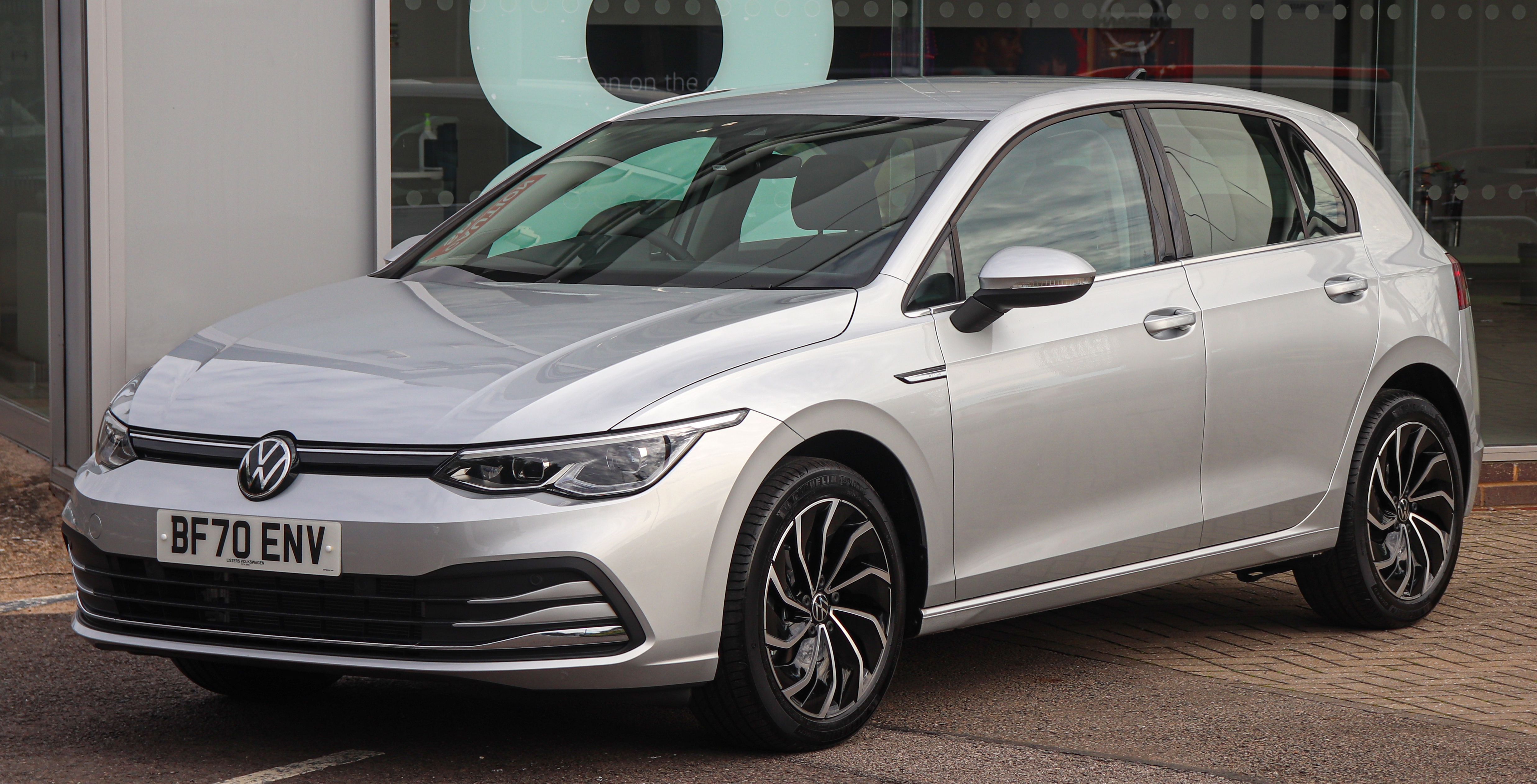
The Volkswagen Golf is a small car, usually a hatchback, made for everyday driving. It’s popular enough that you’ll often notice lots of them on the road. People may mention it by its look—like the roof shape—because it’s easy to recognize.
An electric car is powered by a battery and an electric motor instead of gasoline. It usually means buyers need more help understanding charging and how far it can go.
A forecourt is the car lot area outside a dealership where cars are parked for customers to see. If you don’t have EVs there, you may miss out on people who are looking for them.
A “main dealer” is an official, brand-approved dealership. The point here is that some dealers buy cars through official channels, but used EVs can still come with costly surprises.
Mannheim auctions refers to car auctions connected with Mannheim in Germany. Dealers may buy cars there to get inventory, but the host is warning that those cars can still need costly work.
They’re talking about how a car might need about £3,000 worth of work after it’s bought. That kind of surprise cost can wipe out the deal if you didn’t plan for it.
A ZEV mandate is a government rule that pressures car companies to sell more electric (zero-emission) cars. The goal is to reduce pollution from cars over time.
A ZEV mandate is a rule from the government that pushes car companies to sell more electric (zero-emission) vehicles over time. Because the targets come in steps, companies have to plan ahead so they can build and sell enough EVs.
Retooling a factory means updating the factory so it can build a different product. Here, it means preparing the plant to make electric vehicles instead of petrol ones.
Nissan is a car brand/company. In this discussion, it’s mentioned as one of the companies preparing to build electric vehicles, so sudden policy changes could disrupt those plans.
“EV future” just means a plan where most cars become electric. In this segment, they’re talking about companies that are changing how quickly they want to make that shift.
Bentley is a luxury car maker. In this segment, it’s used as an example of a company that isn’t committing to switching everything to electric right away.
“Carrot and stick” is a way to describe rules that use rewards and threats. In this discussion, they’re saying the government is using the “stick” (a mandate) instead of letting people choose.
Charging stations are public or semi-public locations where EVs can be plugged in to recharge their batteries. The segment argues that charging availability—especially at homes—needs to keep up with EV adoption so drivers don’t feel “stuck” without convenient charging. That’s why the host says the transition should happen together rather than being driven by policy alone.
An EV skeptic is someone who isn’t convinced electric cars are a good idea. Here, the host says they had bad experiences with other EVs, but a Tesla changed their mind.
An AI chatbot is a computer program that can talk to people like a chat message. Dealerships use it to answer common questions or collect info before a real person takes over.
ChatGPT is an AI tool that can chat and write responses. The point being made is that if a customer starts using AI first, the dealership may also use AI to handle the conversation.
A tire is the rubber part that touches the road. The host is saying the AI is asking weird, unrealistic questions about things like puddles and tire exposure.
Brand loyalty means sticking with the same car brand you’ve trusted before. The host says fewer people care about a brand’s long history than they used to.
AutoTrader is a UK website/app where people buy and sell cars. In this segment, they’re the source of the survey-style stats about how brand loyalty is changing.
Audi is a well-known car brand from Germany, and it’s often considered more “premium” than basic models. In this discussion, it’s one of the brands people are switching away from.
Ford is a big car company from the United States. The point in this segment is that some buyers are leaving brands like Ford for newer Chinese options.
Škoda is a car brand from the Volkswagen Group. The host is saying it used to feel cheaper, but it’s moved upmarket enough that some people may no longer see it as a bargain.
Dacia makes relatively affordable cars. The host is using it as an example of where price-sensitive buyers might go if other brands stop feeling “cheap.”
Chery is a car brand from China. The hosts are talking about which Chinese brand might be a good dealership to open in the UK.
Brand
GV
The speaker is talking about a Chinese car brand they think would be a good dealership franchise. The transcript only says “GV,” so the exact brand name isn’t fully clear here.
BMW is a well-known premium car brand from Germany. In this segment it’s used to explain how brand loyalty and recognizable styling help keep customers choosing a marque.
Mini is a small car brand with a very recognizable look. The host is saying Mini still feels like itself, unlike some other brands that have started to look too similar.
Brand
J-Cous
“J-Cous” sounds like a Chinese car brand name. The speaker is talking about how people are excited about these cars right now, but what happens later—especially when reselling—might be less favorable.
A “honeymoon period” means the early stage where people are really excited about something. The speaker thinks the excitement around these Chinese brands won’t last forever, especially once more cars are resold.
Concept
market again
“Coming back on the market again” means these cars will eventually be resold. The speaker is suggesting that when lots of them show up used, prices could be lower.
A “cost cutting agenda” means a company is trying to spend less money to improve results. The host says JLR is aiming for big cost reductions while still trying to grow.
Tariffs are taxes a government charges on imported goods. In car manufacturing, tariffs can make it more expensive to ship vehicles or parts across borders, which is why companies may build factories locally to “get around it.”
A warranty claim is when you ask the company to pay for repairs because the car is covered by its warranty. The host is wondering if cost cuts will mean fewer repairs get paid for.
Fixed costs are bills a business has to pay regardless of how many cars it sells. The host is basically saying cost-cutting won’t magically remove those expenses.
“Zed mandate” is a government push to make car sales move toward zero-emission vehicles, like electric cars. It matters to dealerships because it changes what cars they’re expected to sell and have available.
LIVE
The Cardiola podcast is sponsored by AutoTrader.
John, have I mentioned that we sell more cars from adverts on AutoTrader than anywhere else?
Yes, I think I read that somewhere.
Well, with over 84 million consumer visits per month, they connect retailers like us
with more potential buyers than any other platform.
But it's not just about the numbers, is it?
Is that what you say to your accountant?
Because the support and the value we get from AutoTrader is, well, invaluable.
We now get AI-powered insight on every online inquiry about the level of buying intent from
each customer, incredible amounts of data about the cars that we'll sell in our local area,
and around-the-clock service support from our account manager.
It sounds like AutoTrader is basically doing all the work for you, James.
No, John, I still do some things, like take out the bins.
Anyway, to find out more about how AutoTrader can help you, visit autotrader.co.uk
slash partners slash retailer.
Welcome back to the Cardiola podcast, where we pick our favourite stories of the week
and ask an industry guest to choose which were the best.
I'm John Ray, and joining me this week, as ever, is, of course, James Bagger to James.
How are you?
I'm very well, John.
Thank you. How are you?
I'm very well, James.
Thank you.
How are you?
No, this will go on for a while.
We can't do it.
Nice to see you.
Yeah, where are you today?
I am about 30 feet away from you.
In my house again.
In my house again, yeah.
Happens all too often, this John, doesn't it?
I know, to the point where we were AutoTrader this week, weren't we,
and somebody remarked, when are you moving out of James's house?
That's when you know it's a problem, isn't it?
Yeah, and the answer, by the way, is never.
Never.
I like the free hot water and electricity.
Anyway, what have you been up to this week?
What have I been up to?
I've had a very busy week, John.
I've been all over the place.
I spent most of the week in hotels, which is such a dream, isn't it?
I did a conference on Tuesday for a company called SBS.
They do finance software for the finance industry.
And for some reason, they wanted to hear from me about the AI god dealership project.
So I told them all about that.
And what I'd learned about building the god dealership using AI or trying to,
which was fun.
I enjoyed that.
And then from there, I went up to Manchester.
And on Wednesday, I did rip off Britain with Julius Somerville.
No, they weren't investigating the clever car collection, John.
I'm preempting your jokes already.
I can't tell you who they were investigating, but it was a car dealer.
And yeah, it was the first time in the studio in the BBC in Manchester,
which was quite an experience.
You know, I have one of those little earpieces in, people saying,
James, stop looking at the cameras and other stuff like that.
And then, yeah, I had someone do my makeup, which was quite an experience.
How long did that take them?
Well, quite a while, John.
Less shiny than normal.
Yeah, then it was absolutely terrifying, if I'm honest.
It wasn't live, but I think they recorded it as live.
But then at the end of it, they said, well, I've just got to do some pickups,
which in the trade is like, you know, things that they didn't quite get on camera.
And part of that was just me looking at people.
I had to sort of look at the presenter.
And then they said, right now, and turn to the other presenter.
I had to do like that weird turn.
So yeah, that was quite an experience, John.
Yeah, I enjoyed it.
And then, yes, obviously, yesterday, we were up with Autotrader.
I mean, they're swanky new offices.
I'm going to ask you, what did you think of their new offices, John?
Sparely one of their sponsors of our podcast.
Absolutely. I was blown away.
It's a very, very nice place to work, I would say.
And that I'm sorry, I'm parroting the PR line here,
but it's a great way to attract the best talent in Manchester.
Oh, you've done well there.
I was living there, really.
I thought it was great.
But you can see they've got 800 staff in Manchester.
Have they?
Wow.
It's phenomenal, isn't it?
I can't, that was the size of my secondary school.
So yeah, you do need a big office when that's the case.
And they'd spent a lot of money on cars, hadn't they?
They would put, what was it, an original mini,
well, it wasn't an S-Redge Mini Cooper on one level,
BMW IA in the main reception.
There's like this kind of arch of Volkswagen Golfs,
wasn't there, like on the roof.
And then what could only be described in the main reception
as a Jumbotron.
It was the biggest screen I've ever seen in my life.
It would put an American stadium to shame,
displaying lots of different data.
Yeah, it was interesting, John, wasn't it?
Yeah, I'm glad I saw it.
Very, yeah, very nice place to work, as you've said.
Indeed. And always good to catch up with them.
Yes. Anyway, shall we move on?
And introduce our guest.
Let's do that.
Lovely.
So joining us this week from used car dealership Simon Shield Cars.
It is, of course, Simon Shield.
Simon, thanks for joining us.
Morning. Thank you for asking me on.
Nice to see you, Simon.
Yeah, nice to see you.
Thank you very much for joining us.
I mean, we've invited you on because it's a special occasion,
isn't it?
Well, I mean, special anniversary this year.
I mean, tell the people listening a little bit about that.
Yeah, so we are 30 years in business working for ourselves,
myself and Caroline, my wife.
And yeah, it seems like it's like only 10 years.
It's just flown by.
And yeah, it just suddenly turned up one day, all 30 years, you know.
And yeah, it's been quite a journey.
We've seen a massive amount of changes, as you can imagine.
And yeah, it's been, it's certainly interesting.
It's very interesting at the moment.
Yeah, we're, yeah, ticking along, still doing the same thing.
Congratulations, amazing milestone.
I mean, you know, having dipped my toe in the water
of trying to sell some cars myself, I've got even more respect
for people like you who have been doing this for a long period of time
and making a living out of it.
You know, I'm doing this on the side.
And you know, it must be incredibly, incredibly difficult
and incredibly stressful.
Tell people about your business then.
I mean, give me an idea of where you're based
and the sort of stuff that you sell.
Okay, so we are, we're in a little village called Great Brice,
which is in sort of deep as darker Suffolk.
We've got a full court that can hold tops, probably 25 cars, small office.
We've got an associated workshop.
We don't run the workshops, but we share the site with a workshop.
So we've got on-site facility for doing MOT work, repair work, that sort of thing.
Weirdly, well, not weirdly, we're right outside a military
airfield actually.
We're about 100 meters from the main gate of a military airfield.
So we've got, it's an army airfield actually.
So we've got a lot of army traffic going through, but not much else.
We kind of, as we all do now, we can rely very heavily on the internet
for what we do and passing traffic is really neither here nor there.
So that's where we are.
We've been there.
We've been on, in fact, when I first started, when we first started,
for about six months, I was on a little site with a friend of mine
who runs a workshop as well.
The planners came along and didn't like the idea of that.
So we got turfed off there and went to where I am now.
And I've been there ever since.
So I've actually been on the same site as well for 30 years.
We rent it.
We don't own it, love to buy it, but the landlord's not interested.
And yeah, we kind of started off, when we started, I had no money.
And I just thought, how am I going to make this work?
So I went along to my father-in-law and said to him,
look, do you fancy lending me some money?
And he sort of laughed at me because if you say,
I'm never going to get this back, then am I?
Anyway, he did.
And we got going and I managed to pay that back fairly swiftly.
And then one of the things which we have done,
we've stayed out of borrowing the whole journey through.
And that has, it's a bit of an aside, but it's quite an important thing really
because it does mean the peaks and troughs,
which we all know the motor trade brings us,
allows you to cruise through that.
You might worry, but actually you're still stable.
So anyway, we got started on that.
And basically we stock, I will stock anything from 2000 pounds to 52,000 pounds.
If the car's nice, I am ultra fussy.
I'm terribly fussy.
And that's the biggest issue that I have.
It's a really good thing, but it's actually a weight around your neck
because I find it incredibly difficult to buy good cars now.
And but that's what's given us the reputation that we've got.
Where do you get your stuff from then?
Where do you buy your cars?
Yeah, that's a really good question actually.
There's been a big change since COVID for me.
I used to regularly attend Mannheim Cultures to,
I'm used to buy quite a few cars out of there.
One, a few out of main dealers.
We had some good contacts with main dealers, our local main dealer network,
who I got on really well with, I get on really well with.
But two things changed around about the COVID period.
Number one was that the main dealers, as we all know now,
they have their own used car operations.
They stock and retail all their older stock
and their high mileage stock of their own brand.
So we haven't got access to those cars anymore.
All they're trading out of now is pretty much junk.
Stuff which needs too much money spending on it.
So following COVID, it wasn't a conscious decision.
I just sort of, we just sort of drifted into it.
Because we've been going long enough,
we've actually been surviving on old customers,
repeat business from old customers, part exchanges,
friends, family, people who know us.
And we've been buying cars privately
through those channels really since COVID.
I haven't bought a car out of auction since COVID.
Really? You've managed to qualify that?
Yeah, but what we're doing is, the numbers are a lot lower than ever we used to do.
But what we're doing is we're getting decent margins
because we're not spending fortunes on repairing old junk that comes out of an auction.
And that has made a difference.
I mean, I'm selling now half the number of cars
which I used to sell pre-COVID, for instance.
Or yeah, say 10 years ago, we're selling half as many cars,
which feels really bad because you think,
oh, the four corks empty, we're not getting anywhere here.
But actually you get to the end of the year
and you've made the same amount of money.
So I can't really question that.
And we can get away with it because there's only myself and Caroline.
And we're not, we don't have what I call a machine to feed.
We don't have huge numbers of people working for us and all these people.
And you just have to go out and buy 20 cars on a Monday
because you sold 20 on Saturday.
We're not in that market at all.
In the 30 years you've been operating,
have you not ever thought, well, actually I want to make this bigger?
Have you never thought you wanted to scale up?
Or have you always kept that consistent level
where it's just the both of you doing it?
Yeah, we've always kept exactly the same.
I've had no desire to get bigger.
All I wanted to do right from the start, I used to work from,
just turn the clock back a little bit.
I started selling cars in 1983.
And it was Peugeots and Tolbutts in those days.
If you remember that those days.
John remembers them well, yeah.
Yeah, that's it, yeah.
So, you know, I had a lot of years in main dealers.
And, you know, when I started on my own,
it was only because I couldn't get a job that I wanted.
And it was kind of like I fell into it.
I've never had, I wasn't then one of these people
had a big desire to work for myself.
It just sort of happened really.
And for that reason, I just,
all we've ever wanted to do is make a living out of the job.
I don't, you know, I haven't been out to create anything.
I haven't been out.
I'm not big, we're not big ego people.
All we want to do is do the job properly
and actually make a living.
And, you know, I'm not touching wood when I say this.
We've managed to do that.
And I see, you know, I see businesses which have scaled up,
have scaled up from what I've done in the time scale
that I've done.
And some of them, it's been a real challenge
and it's been really difficult for them.
The ones which seem to be successful
are the ones who had, who perhaps their fathers
have gone back to started selling cars in the 1950s or something.
And they've got this sort of big operation already
and then they scale that up.
But to go from a one man band to say, you know,
to go from stocking, say 20 cars to stocking 100 cars,
that step doesn't earn you any more money.
That's my thoughts on it.
I've heard that many times.
I'm glad you're hearing it here as well, James,
just before you get any grand idea.
Yeah, exactly. Yeah, yeah, that's true.
Yeah, this is good. It's a bit of therapy this.
I like it.
So over those 30 years,
you must have seen some amazing times in the industry.
When you look back, is there a time that you just think,
well, I'd love to be able to rewind the clock
and start doing it again then?
Yeah, I think probably when I was probably
about two or three years in, when it was easy,
well, it didn't feel easy at the time, but it does now.
Because of the way it is now.
It was easy to buy cars.
We didn't have the demands which customers put on us now.
You know, a used car is still a used car
and those demands are very difficult to deal with these days
in terms of how much preparation you do on a car.
You'll know that, James.
But yeah, I think probably about sort of the late 1990s,
perhaps into very early 2000s,
it just now looking back, it was definitely easier.
We were able to stock a four-court, stock 25 cars.
And somehow, you know, I don't know how I did it
because I couldn't do it now because of my age,
but you know, I managed to do all that on my own
and I don't really know how I did that now
because I'm knackered most of the time now.
I'm 63 years old and it's just like most of the time,
I'm just like, I'm just worn out.
But so yeah, I think the answer to your question
is probably late 90s, maybe at very early 2000s,
perhaps up to sort of 2002.
I think, you know, the changes have been immense.
I think the two major changes are really the main thing
is the advertising.
You know, we used to advertise in the East Anglin,
our local newspaper, the East Anglin Daily Times.
The rep used to come around once a week.
Your advertising took half an hour to do all your advertising.
Right, it was take these three out, put those three in,
drop the price on those two, have a cup of tea,
bit of a chat, knock they went.
Your advert came out on a Friday
and the phone rang on a Saturday.
You know, and that was, but now it's taking me now,
and you'll know this, it's taking me now
to advertise one car properly.
And I don't know whether you've had a look at our website
and our videos and everything else,
but to advertise one car properly,
if you take everything into account,
it probably takes two hours to take the photographs,
do the video, present it properly,
put it on auto trader.
You know, it's an immense amount of time
and you kind of wonder what you did
with all your time previously.
Had a nice cup of tea and enjoyed everything.
Yeah, actually enjoyed it.
Yeah, yes, you're probably right.
What about the cars?
You know, well, I mean, what time in those 30 years
did you enjoy, which cars did you enjoy selling the most?
You know, people say that the stuff we're selling now
is more complicated than ever.
It goes wrong more often than not.
Was it better 30 years ago or 20 years ago?
I think it's very difficult.
It's very easy to look back in time
with rose-tinted spectacles.
I think cars have always gone wrong.
And probably the reality is they went wrong
a lot more years ago than they do now.
What's changed though is that years ago,
you opened the bonnet,
there was a lead which had a crack in it
and you put a new lead on it.
It cost you five quid and you were done.
The problem now is and the difficulty now
is that they probably do last longer.
People don't maintain their cars as well as they should do.
And a lot of unreliability comes around
from poorly maintained cars.
And then the issue which should be simple to fix,
of course, isn't.
You know, because I'm not a technical person
and when you put it into the workshop
and they plug it in and it could be this,
it could be that, you know,
everything seems to start at 500 pounds to repair it now.
That's the big difference.
They are, cars are definitely more reliable,
no doubt about that.
But it's the costs of repairing them.
But I think, you know, my preference for cars
in terms of what I like and selling
probably finishes at about 2017, 2018.
After that, I can't deal with the screens.
I can't, do you know what?
I've just bought a Lexus for myself
and I can hardly turn the radio on, honestly.
I just don't get them.
I don't need it.
And for that reason, I sort of turn the clock back
and I go, right, actually, it was,
I love the simplicity of the cars then,
but actually the reality is,
if somebody rolls in with a, you know, a 1995 Cavalier,
you know, and you get in it
and you just realize how much cars have moved on.
That's, but yeah, my overall picture is probably
somewhere in the 2000s is where I really liked cars.
When I love having my BMWs and all that sort of thing,
you know, they were easy, they were lovely cars.
I think John and I would probably agree.
Exactly that period you said is probably
when we think sort of peak car probably is,
around 2015, 2016, 2017, they sort of,
there was some amazing cars made then,
good technology that worked,
none of these ridiculous driver aids that just annoyed you.
What about customer expectations?
What about customer expectations?
Have they changed over the years?
I mean, I sort of, I look back at when my brother
used to run a car dealership and people used to turn up
and buy a two grand, three grand car
and they sort of knew what they were getting these days.
And I think everyone would agree in exactly the same way.
Customer expectations have changed beyond all recognition
and a lot of that is down to,
I would say a lot of that is down to the way
that things are marketed on the internet now.
Firstly, people's expectation
that they can just bring something back or return it
for no apparent reason.
That is driven by the likes of Tescos
and Mark Suspensas and all these other companies
just putting stuff out.
And yeah, bring it back.
Yeah, it's not a problem at all.
Well, we're selling a used product
and that doesn't really tie up.
And I think people, again, because of the way
they can access information on the internet,
I think people know that they're absolute rights.
And if they want to get into an argument
that they know their rights
before they even come back to us.
Fortunately, we don't, and again,
I'm touching wood when I say this,
we don't have a lot of trouble because,
yeah, we have the odd warranty fault and we fix it.
But the fact that people know their rights
means that they can stand there confidently
and stand their ground.
It may also be to do with the fact
that cars do look expensive now.
I mean, used cars look dear.
And I think when somebody spends,
if somebody spent £15,000 on a car years ago,
you know, they bought something like two years old.
Now you spend £15,000 on a car,
you're buying something 10 years old.
And that's the, perhaps that expectation
is related to price as well.
But we're, I mean, I will openly tell you,
and I will choose my customers.
They'll choose me, but I think we have
to choose customers now as well.
And I think if you, if somebody comes in
looking at something, you know, a £5,000 car
and they're absolutely picking holes in it,
all they want to know is how long the warranty is.
Quite honestly, you don't want to be dealing with them.
You just don't because you know they're going to haunt you.
What about the way dealers are regarded?
Do you think that's changed over the years?
I mean, I still find a lot of my battles
are convincing people that we're good people
and we're not out to get them.
Do you think dealers of reputation
has got better over the years or worse?
No, I think it's got better.
I think generally there's been a huge improvement in that.
And I think we're all capable of creating that image ourselves.
And that relies on some very good work on social media.
It relies on things that you weren't able to do years ago.
Reviews, you know, your Google reviews,
your auto trader reviews, which we're really, really hot on.
And then creating yourself a really good internet presence.
So basically a social media presence.
And that's where Caroline comes in.
She is brilliant. I am absolutely rubbish at that.
Caroline is fantastic.
I mean, if you look at, you know, if you search us and people do,
they want to know, they don't know who I am
with the buying a car from Birmingham or somewhere.
And the first thing they do is the videos are crucial,
absolutely crucial.
The walk around videos are crucial with a commentary.
And the internet presence.
And because of that, I think dealers have up their game.
But, and there is a but with this, and we're all aware of them,
there are still people who are somehow trading and selling
poor cars, not doing any work on them before they go out,
taking a chance on it.
And they're putting up with a grief that comes back from it.
And, you know, my opinion is that the regulation which is,
which would help all car dealers would actually be to have to be licensed to be a car dealer.
I think there should be some sort of formal licensing system whereby
you have to achieve a certain level of capability.
And you have to work from a licensed premises.
And I think if you did that, you would get rid of a lot of the people
who frankly shouldn't be selling cars, let alone, you know, wheelbarrows,
you know, they just shouldn't be out there.
But the answer to your question is overall, I think it's a better,
it's much better.
I mean, I can remember that in the 1980s, I remember working for main dealers.
And some of the guys that came in and bought our part exchanges,
honestly, you just, they were, I mean, they were a lot of fun.
We had a lot of good nights out, believe me.
But you just looked at them and thought, what are you doing?
How does this work?
Yeah, it's definitely got more professional over the years.
Oh, it has.
Yes, no doubt about that.
I just don't know whether that has percolated down enough to the customers
when they, when they turn up at the site, I still find a lot of them are
thinking you're out to out to get them.
And I find that frustrating myself.
Yeah, I think that, yes, there's certainly still an element of that,
which is odd really, because, you know, anybody who who's probably sub,
you know, sub 40 years old that comes to look at a car.
I mean, they, they've been brought up in a world where they've had
access to all the information.
I can understand, you know, an old boy comes around and, you know,
he's had his leg lifted before by a car dealer and he comes around,
he looks sideways and what are you going to do to me sort of thing.
But I suppose, but, you know, a lot of that is down to this lack of,
lack of professionalism.
You can't, you know, an industry where there is no requirement to be
qualified to do, to do a sales job of any sort at all.
I mean, how can that be in this day and age?
You know, why is it regulated that not forget about all the FCA and the
finance regulation.
You need to regulate the dealers.
Yeah, the FCA regulation, the stuff that we had to go through for that is
pretty much that step, isn't it?
I mean, the, the sort of steps that you have to take, the test that you have to
to get your FCA regulation is sort of there.
So if you want to sell finance as a dealer, you kind of,
you do have to jump through some hoops.
But if you don't want to sell finance, like you say,
you can pretty much set up and do what you want.
So why is it like that?
Why, why isn't there a system?
But I suppose there's no, there's no political motivation to sort it out.
What about, what about when it comes to buying the, buying these cars?
Do you, has that changed over the years?
Do you, I obviously understand that the way you get them,
but I mean, when it comes to choosing them, is it on gut feel over 30 years experience?
Do you, do you look at data?
I mean, how do you choose what to start?
Yeah, I do.
I mean, I use, we do use auto trader.
And I think it's almost impossible not to use auto trader.
And yes, I do look at the retail ratings.
But that, that, that is not something to be taken as, as read, believe me.
And I do go on gut feeling.
And I probably in the back of my head, I'm, you know,
somewhere back in the dim and distant, we sold one and we thought we did all right out.
We always sold one and we didn't do all right out of it.
So yeah, a lot of it is just gut feeling.
It's just, and also I believe that, that if a car, you know,
if you've got a car which is, is well maintained and in good order,
and you can, you've met the person who's been driving the thing,
you're in a lot better position to, to retail pretty much anything.
You know, everything's got a home somewhere.
You know, there's obvious things which we avoid.
Most of it's got Land Rover badge on it.
You know, I suppose one of the things is too much knowledge is actually quite a bad thing.
I mean, you know, if you applied it to all the engines and gearboxes,
you probably shouldn't have and the, some of the brands you shouldn't have,
it does narrow it down a lot.
But the overall picture is that no, I'll, I'll,
if someone rings me up with a, you know, with a car they want to sell,
I'll go and have a look at it.
If it's, if it's good, the history's good, the background's good,
it's been well maintained, you know, it's in good order.
I'll pretty much have a go at it.
Does that extend to electric cars?
Oh, no, there's another story.
Yeah. Now, I, I have not dipped my, dipped my toe in the, in the electric car market yet.
And I suspect, just being totally honest with you, you know, I'm probably,
I'm probably only a few years from not doing this anymore.
And I'm not really planning to get involved.
I don't really understand them.
I mean, you might tell me different, but I think the people that will come to
look at an electric car are going to expect a lot more information about that car,
which I probably won't have.
And the other thing is I'm just actually not really interested in them.
I'm sure commercially they get, they get, you know, and I, everything I read says,
you know, EVs are good, they're selling well, so on and so on.
But it's, it hasn't been my thing.
And I don't think it will be.
I think I'm going to get out of the business before I have to get
totally involved.
One of the statistics that auto traders said to us yesterday that really sort of
pricked my ears up was the fact that 22% of all leads now that auto traders sends to dealers
go to electric cars.
So, so that's, if you haven't got any electric cars on your, on your forecourt,
you're effectively losing one fifth of the opportunity.
So, and that was kind of that.
So I said to them, so what does that mean that the audience should really have a fifth
of their stock as electric cars?
And they went, yeah, if you want to get in the same amount of leads, then yes.
So, you know, that one, I've been thinking about that one a lot since coming back.
We do, we do sell a few electric cars.
I bought a Kia E-Niro yesterday, very good retail rating with, I've sadly sold my Tesla
that I bought into stock and loved so much I ended up driving it around.
But that, that sold and all the electric cars we've had have sold very quickly.
So I think that the date is there.
What I would say to you is you're probably, I think you're doing yourself a little bit
of a disservice because if you're given that much information out on the cars you're selling,
you know more than those customers probably do.
And it wouldn't take you long to find out the information to be able to sell it.
So I do think there is an opportunity there for you.
Yeah, you may well, you may well be right.
And, and it, you know, we may well get to that point.
I mean, one of the other concerns with, with electrics is not,
is not so much selling them, it's, it's buying them.
You know, are you going to take a chance and buy, you know, a Tesla
put in by a main dealer out of Mannheim auctions?
Well, are you going to take that chance?
Because I know some dealers who have bought, I've done that.
And they're in, they end up with a, which a car, which needs £3,000 spending on it.
Yeah, we know now.
Okay, these are, I know you shouldn't take that as red, but it's when,
yeah, I think, and then, and then the other, the other problem associated with that is
you can't fix it.
It's got to go specifically to a, you know, a Tesla dealer,
or it's got to go specifically to an electric car dealer,
you know, the manufacturer probably to be fixed.
And of course that is going to cost a fortune.
So there is that as well, I think.
It's sort of betting on them being more reliable to begin with, aren't you?
I think, yeah, I think you're probably right about that.
I mean, overall, you know, when you look at, look at how an electric car works,
you know, there's a hell of a lot less to go wrong, isn't there?
Yeah, and if I'm honest, you know, we've, yeah, we have had problems with the ones
that we've had, but no more so than, than petrol or diesel.
And also we, we were a little bit concerned as well about, about fixing them,
but we have found specialists to do it.
There are a lot more popping up here and there in many different places that can,
that can sort them now.
So yeah, I'd, I'd implore you to, to give one a go.
I think it's probably worth giving it a try.
Yeah, yeah.
Thank you very much for joining us today.
Congratulations on 30 years in business, a huge, huge achievement,
but we should probably do some stories very shortly.
And if you can stick around to help us with those, it will be much appreciated.
Of course.
Now, a quick word from one of our sponsors.
John, have you ever wondered why I, along with 14,000 other dealers,
choose to partner with Auto Trader?
Well, actually, I didn't think so.
I'll tell you anyway, with more than 84 million consumer visits every month,
it connects us with more engaged car buyers and delivers more deals than anyone else in the UK.
And now with the launch of buying signals, we'll have brand new insights on every deal
showing how likely a customer is to buy the car they're interested in.
Plus, as someone who set out to use AI and data as much as possible in my business,
I've found their technology, data and tools genuinely invaluable.
But when I do get stuck, which is, let's face it, most of the time,
Auto Trader is always on hand and committed to supporting us to get the very best from our
package to find out how they can help you visit trade.autotrader.co.uk
Now, back to the podcast.
So, James and I are going to run through our favorite stories of the week.
And at the end, Simon gets to decide which one of us chose the best ones and who is the winner.
James won last week.
I don't know what weird little series we're on now, James,
but you're keeping track of who's won.
That was the first game in the Cardi the podcast World Cup, John.
Yes, so I won the first round.
This is the second leg.
Right.
There will be some people in this podcast, John, who like football more than we do.
So it's important to have some form of connection to the World Cup.
Is that okay?
So basically you're saying you beat on my Croatia and you beat in Australia.
Wow. I mean, that is some current affairs you've got going there.
Thank you.
Well, current from two days ago.
But yes, that's as up to date as we get on the Cardi the podcast.
Right, you go first, off you go.
So I would like to start with a story that came out on Sunday,
which was news that broke on the front page of the Sunday Times
that the government and by the government, I mean the prime minister
had decided that he was going to overall his net zero minister,
Ed Miliband and cut the 2030 target,
which mandates that all car manufacturers has to sell 80% electric vehicles by 2030.
He was going to decided to cut that to 50%.
Now, this story was pretty firm with its what it what it believes is the fact
clearly something has been leaked to the Sunday Times
because there was no kind of this might happen.
This might not happen.
It was that this is going to happen in the next few weeks.
That one of the quotes was that the that this will be reduced to 50% the piece said.
These are pretty firm.
You know what it's like, John, when you're writing these sorts of stories.
If you're not 100% sure, you sometimes put some caveats in there,
you know, alleged might happen could etc.
But there was none of that in this story.
So when you read into it, they've clearly the Sunday Times
have been clearly briefed by someone very high in the government,
wanting someone who knows knows what's coming.
Now, if you're a bit cynical, like I am,
Keir Starmer's, you know, obviously had a troubled week.
You know, so apparently so.
I mean, there was quite a quite a big by-election yesterday
and not wanting to go too much into the politics.
But it seems like Sir Keir Starmer has done more this week
than he has done his entire premiership.
There is the the TikTok social media kind of ban for for under 16s.
There was the the storming of the Russian ship in the channel
that they seem to have taken a full video and photography crew along for as well.
I'm sure that was military importance.
And then plus this ZEV mandate.
So it feels to me like, you know,
they are trying to win some headlines, some positive headlines.
But what does this actually mean, John?
I mean, it's like, what does it mean for the for the...
Well, I'll tell you that, James.
What it means is the target of 80% is being cut to 50%.
Thank you, John.
Thank you for that insight.
That is very, very helpful.
Yes, possibly is what it means.
I mean, the industry has sort of met this in sort of two different camps.
You've got people like Robert Forrester, the Virtue CEO,
who said that the rules up until now have been too harsh.
He says that if the rumor was positive, new, if it was true,
he's clearly very happy and he's been campaigning for it for quite some time.
Some changes to this ZEV mandate.
And if you talk to the unions, I mean, Union General,
Unite General Secretary Sharon Graham said the mandate
was already significantly contributing to the loss of automotive jobs in Britain.
A quote was, this is clear fact.
The targets must be radically reduced.
So you've got the unions there who are fighting for this as well.
Perhaps that might be why Labour is paying some attention to it.
But then on the other side, you've got the sort of green lobbying side.
People like Octopus Energy Founder, CEO Greg Jackson.
He was really concerned that the government was a chosen short termist incumbent lobbying
instead of a long term future of the industry, he said.
So you've got these two sides of clearly, clearly at war over this.
Is it going to be changed in my opinion?
Yes, I think it probably will.
If I was to make a prediction, I do think it's going to change.
Does it need to happen?
In my opinion, yes, I think it does.
I think we should probably let the consumer decide whether they want to buy an electric vehicle.
And up until now, forcing it down their necks hasn't worked.
Last year, target was 28% of all sales.
All we managed to achieve was 23.4% of all sales last year.
So it's not working.
And that last year was not as hard as it going to be this year.
And it's only going to get harder.
So I think we should just let consumers make a choice about what they drive.
Funny that because they're spending a lot of their own money and they should really
be able to choose whether it's driven by petrol, diesel or electric.
I rest my case, your honor.
Thank you, James.
Objection, is that in America?
Overruled.
Yeah.
So I feel like I sit on the fence about this sort of thing a lot.
I think it's hard not to see this in the context of the week that we're having,
definitely.
I don't think Keir Starmer has suddenly woken up completely irrelevant to the situation he
finds himself in with by-elections and possible leadership changes and whatever.
And has thought, do you know what that thing that everyone's been prattling on about for
about three years?
Now.
Now I think is the time to make some changes.
One thing I don't understand about this is who is this?
This is only really appealing to the business lobby, I would think, in some ways, isn't it?
Because personally, I don't think, you know, you talk about consumer choice and this limits
consumer choice because, as Robert Forrester says, there are people wandering into dealerships
trying to buy a petrol car are being told, no, you cannot have a petrol car, but you can have
an EV instead.
I don't really think the public is aware of that.
Most people aren't aware of the ZV mandate outside of our little world, I think, because
it's such a complicated bit of staggered targets and legislation that I don't think
most people even know it's a thing.
I think everyone knows that we're trying to get people into EVs and that maybe there's
some incentives, which there are, but I don't know if this is a vote winner, if you can put
it like that.
So I think it quietens down some of the businesses in the UK, but on the flip side,
the thing to use this quote that keeps coming up whenever you talk about the ZV mandate is
you need consistency and you need future planning and all this sort of stuff.
And if, you know, like, let's take a car manufacturer in the UK, for example, well,
Stellantis, for example, or they make in the UK at the minute, our electric vans aren't what I
think, isn't that right?
Up in Ellesmere Port, they make vans up there.
I don't think they meant the petrol ones currently.
I could be completely wrong.
But everyone is retooling their factory for electric.
Nissan is retooling their factory for electric.
They all think electricity and EVs is what's here to stay.
And if you then do a U-turn on this, well, it upsets all that stuff.
On the other hand, we're out of step, aren't we, with lots of the rest of Europe in terms
of the targets.
So I just, I would really like to have like a sort of straw poll of every manufacturer
and see who likes this and who doesn't.
You've got a lot of manufacturers like John, who have changed their direction already.
You know, there's a lot of manufacturers who've said that they're going to not do an
all EV future already, you know, likes a Bentley, Rolls-Royce.
You've got other of the big brands that have decided that actually they're going to row
back on some of their electric planners too.
So they've already seen the writings on the wall, I think.
And they're going where the consumer demand is.
So I think that we just need to need to follow it.
And the other thing I would say on this is it's, some people are saying it's a slightly
moot point at this stage anyway, because, you know, we've been doing the carrot and
if you use the carrot and stick analogy, this is the stick, isn't it, the Zeb mandate?
Whereas now I think consumers are going, oh, petrol is really expensive right now.
Yeah. And we've seen that.
I mean, that would be my point.
People have moved to electric when it's affordable and actually it makes sense financially.
So let them make their own decisions, let them make their own choices.
It's the mandating that gets up my nose a little bit.
Much rather we let customers just make the choice to what fits their life the best,
because it's their money at the end of the day they're spending.
I don't know, Simon, what do you think?
I think I actually totally agree with you on that, James.
I think it should be down to consumers to make a choice.
And I think what's going on with the Zeb mandate is that it's actually,
it's falsely controlling the market.
I mean, we know that some of the manufacturers have decided to achieve those percentages,
to actually restrict the number of petrol and diesel cars that they're actually going to put
into the UK market.
So that actually falsely, it falsely changes the market and actually makes,
it forces people into electric vehicles when they don't want to go.
I think you're dead right with that.
And I think, I mean, it will naturally happen.
It's just got to be left alone.
I think people have just got to be allowed to make their choice.
And it will happen.
And it will happen also because the manufacturers have spent billions of pounds developing fantastic
electric cars.
They're not going to suddenly switch those off and go back to building all petrol fiestas.
You know, it's not going to happen.
So it will happen automatically, but it's just got to be let go and let it happen on its own merits,
rather than being forced by politicians.
I also just think you've got to set the conditions for,
by which I mean the conditions in the UK that make EVs achievable.
You know, you've got to put in place easy things to make sure there's lots of chargers
everywhere and maybe reduce the cost of putting a charger on your house or,
and there's been some of that, but I don't...
That's coming, isn't it?
You know, that's improving every day.
And that's got to improve at the same speed that the cars are available.
And what we seem to be trying to do is to increase the number of people
dramatically buying an electric car, but actually the infrastructure is not quite keeping up.
So those two things need to run together and that will naturally happen.
There'll be commercial aspects to charging stations and chargers on houses and all that sort of
thing, but it will happen.
But it doesn't need forcing by politicians.
No, I agree with you.
Like I said earlier in this podcast, I've really enjoyed running a Tesla.
I've really enjoyed that.
Actually, it's sort of turned my head a little bit to the possibilities.
And I have been, and listeners of this podcast will well know,
I have been an EV skeptic.
And that's because a lot of the electric cars I've driven up to that point
were frankly terrible or very, very difficult to live with.
And I think the thing is, I'm in the very...
No, it's a large piece.
...what they are.
That is the point.
I mean, I'm in the fortunate position that I get lent cars,
or we buy them for the car dealerships, so I'm not effectively owning them myself.
But if it was my choice, I would have found it very difficult.
Up until the point I tried that Tesla to opt for electric.
And I think that choice should be mine.
That's my point.
Yeah, totally agree.
Right, John, move us on from the rant.
Okay, from one hot topic that never goes away to one hot topic that did go away,
which is buying cars online only.
Oh, yes, of course.
Which was a very big thing about 5, 10...
Well, no, five years ago, pandemic time, you know, there was all this,
oh yeah, everyone wants to buy and transact online.
Look at Amazon.
No one buys a Kettle in Curries.
They all go on Amazon.
It will be the same with cars.
Well, I mean, that hasn't really panned out, has it?
But I mean, there's been some new research from, ironically here,
Kazoo, about this.
Well, it's ironic because, of course,
Kazoo is not the Kazoo that we knew before.
Kazoo is...
Oh, yes, of course.
Motors, yeah, exactly.
But their research shows that dealerships remain in pole position for purchases.
So they quizzed 2008 people.
Not sure why that's a specific number, but anyway.
And they found that three-quarters of them still want to see test drive and buy at the dealership.
I mean, I just, I love the irony of this, that Kazoo, the startup, came on to the scene,
old Kazoo, going, no one wants to go to a dealership.
Everyone wants to buy online.
Car dealerships are outdated and archaic and whatever.
And now they've been replaced by...
Well, the brand name has been sold to a company that does like dealerships.
And the research that they've taken out suggests that people like dealerships too.
So I just thought that was quite funny.
But apart from that delicious irony, there's also a little bit in here about AI.
Do you use AI, James?
I've tried it once or twice.
I was used to LGBT.
In this, they're talking more about AI assistance though.
And do people actually like speaking to them?
And over half of respondents said they would prefer to speak to a real person.
So I think there's a question basically, you know,
because it was sort of saying in this, don't go too crazy with the AI assistance right now.
I know it's a hot topic and, you know, it seems like the best thing to plug into your business.
And I think it can fill some gaps in your staffing hours and all that sort of stuff.
But I don't think anyone's really ready to switch over to an AI chatbot to do every inquiry at this point.
Only, there is a caveat to that, this John.
Only if the customer has inquired via using chat GPT or AI in the first place.
Because if they've done that, what that means is an AI bot to
to converse with the other AI bot and come up with a decision.
I don't know about Simon, but I am absolutely fed up of getting inquiries from customers.
They're clearly written by an AI chatbot, detailing loads of questions that are absolutely ridiculous.
Like, you know, can you tell me whether the tire has ever been anywhere near a puddle?
Yes, or no, you know, like ridiculous questions that nobody would ever ask them that you just,
they are okay, you know, I'm being facetious, but some ridiculous questions that just put me off
responding to the customer in the first place. That's where our AI would come in handy.
Simon, have you had any of those? Have you had any?
Not really, no, I don't think we have. I think we've probably been quite lucky.
I mean, the majority of my my inquiries come via come via our auto trader.
If they're not local people who know us and obviously a lot of them do.
I haven't really noticed the, you know, inquiries structured by AI.
I think you're going back to the point of what's happening with with fully online purchases of
cars. I think from a used perspective, I don't think it'll,
it'll get any stronger than it is now. I don't think it'll go backwards. And a lot of that is
based on the age of the people buying cars, because, you know, the younger
person, the more, the more orientated they are around buying everything online.
But I think also, you know, if they're buying a used car, I suppose if you've got no interest in
cars whatsoever, you go to cinch or, you know, whoever you go to, the car looks fine, you have
it delivered, it's fine, you know, and off you go. But, you know, some people still want to actually,
as we were talking earlier on, some people actually want to trust and speak to who they're
dealing with. And the majority of people, I can't imagine any of my customers actually having
buying a car from me without talking to me. I don't imagine that ever happening, because I
can't see that they, they wouldn't trust, you know, Simon Shield cars in the middle of nowhere
in Suffolk. They're not going to trust me. They're going to need to know a lot more. And also,
from our perspective, you know, we can add a lot of value by having interactions with people.
You know, our car might look dearer than the one in Birmingham. And there'll be questions about
why it is or why it isn't. Or when you can actually get them on the phone and have a conversation
with them about it, they understand that, you know, and that's, that's a very relevant point
from our point of view. But I think overall, I think the picture is they'll always be online
purchases. And I think that that information that's come through is probably fairly accurate.
Yeah, I think especially with used cars, I mean, we do like you, we do videos and lots of pictures
of vehicles, but still more often than not, the customer wants to come and see the car.
That's highly likely, or at least speak to us, at least speak to us on the phone.
I'd buy a new car online, no hesitation whatsoever. Because if it was, if it was 500
quid cheaper and it came from Edinburgh, I wouldn't worry about it because it's brand
new. It turns up if it's got a scratch on it, it goes back, you know. But, you know, managing
expectations is, which is what we're doing a lot of the time, is an incredibly difficult thing to
do at distance, you know, because somebody will put up with a scratch on the wing and somebody else
won't. And, you know, the only way you can deal with that is physically, isn't it?
Yes. Yeah, absolutely. Right, shall I move us on, John?
Yes, please. Okay, I'd like to sort of combine two stories here, two results stories.
No. Well, I'm going anyway. And I'll tell you the reason for why as I get through them.
So this is news from 2D groups. The first is Yeomans. They've hit record 609 million pounds
worth of revenue up from 581 million pounds the year before their latest accounts have just come
out. Their pre-tax profit declined slightly, only very marginally to 7.3 million pounds from 7.7
million the year before. So not a horrendous result kept that static. And the reason they've said
that they've had some success is because they have invested in some new franchises from the likes
of China, John, funnily enough. So Yeomans said they launched a motor in Jacob in Littlehampton
in West Sussex, followed by second location in Halston in Cornwall early this year.
And both of those have really started to pay off for them. On the other hand, listed dealer group
Caffins, I often forget they are listed. Yeah, they're listed, listed dealer group Caffins.
They slumped to a significant pre-tax loss in their last financial year, according to this
morning's update. They made a pre-tax loss of 1.72 million pounds after turning a very small profit
the year before in the grand scheme of things of £246,000. So they've struggled in this year.
And one of the things that they have said they're going to try and stem these losses with is by
investing in, you guessed it, John, some Chinese brands. We're spotting a little bit of the theme
here, aren't we? And I just sort of wanted to wrap that up with some of the stats that we were told
by AutoTrader yesterday about brand loyalty when it comes to these Chinese cars. Because what we've
absolutely seen is that customers are very happy to ditch their Volkswagen's and Audi's and
Ford's and Nissan's to go to these Chinese brands with badges they've never heard of
because of the technology and the price point. Their statistics showed that the amount of people
that say brand matters to them has dropped 15% in just over a year. Because people just are not
bothered about long histories that AutoTrader found that that used to be really important.
70% of consumers said that was really important to them was long brand history.
Now just 55% of buyers care about that. So it's changing rapidly, isn't it? These new brands
coming in is changing rapidly. And we're seeing that in the fortunes or misfortunes of some of
those dealer results. So that's the reason I wrapped up those two stories for you there, John.
It's interesting the brand loyalty theme because it goes both ways as well, doesn't it? Because
let's say you're a dealer investing in a mood of franchise or whatever. When it comes five years
time, you're expecting that customer to come both three years time, expecting that customer to come
back to you to have another Omoda, or are they just going to flit off and buy something else?
That's true. That would be interesting when it's to see whether they actually stay loyal to these
new brands that they're with, or whether it's just they're going to go with the cheapest monthly
payment. I think so. And that's the danger that they're going to have a bit like how
some budget brands are not quite so budget. I think you could say Skoda, for example, is not a
cheap, really cheap brand anymore. It's cheaper than Audi and cheaper than VW, but I wouldn't
really say a Skoda is a budget car anymore. You lose that sort of audience, don't you initially?
And they all go to Dacia or when all the Omodas and I don't know, Cherries or whatever get a bit
posher and get a bit higher in price. Yeah, I don't know. It'll be interesting. We were also
having a discussion yesterday. Sorry, I should go to Simon on what his thoughts are, but I was
just going to say we were having a discussion yesterday with James on what franchise, I mean,
I thought this was a lighthearted discussion. It could well have been you trying to prize a
business strategy out of me. What franchise would you open tomorrow in Gosport for a Chinese
brand? Probably a Chinese brand anyway. And you reckon, you quite fancy Cherry, don't you?
I did say Cherry. Yeah, I thought that would be quite an interesting one.
I do agree with, yeah. I would go with GV, I think. Would you? Yeah, because I just think they're
a little bit further down. They're a bit newer, aren't they? And they've got an enormous infrastructure
in the UK already with factories here and there to make lotuses and taxis and so on and Volvo.
They've got Volvo and Lope, whoever else, hundreds of brands, Polestar.
I'd be tempted to go for them. Simon, I've wrapped up a lot of stories there,
dealer results and Chinese cars. I mean, what's your take on all of it?
So I think the most important part of that is this brand loyalty thing, because that's what's
kept the likes of BMW and Audi and Volkswagen as kind of premium brands.
We all know that the Chinese product is extremely good now. I mean, they're amazing cars. They're
beautifully built. The technology is fantastic and they're doing the deals. So people are buying
them. But the big thing about this brand loyalty thing, if you look at all these cars now, they've
lost their own identities, they all look the same. BMW doesn't look like a BMW anymore. If you took
the daft grills off the front that they put on some of these cars, honestly, it could be anything.
And I think the same goes for Volkswagen and the same goes for Audi picking out the German brands.
If you look at the brands which actually still maintain a kudos for being a quality brand,
they're all right at the top end of the spectrum now. It's the likes of Porsche and Bentley and
Rolls Royce and Ferrari. And I think what used to happen further down the price range is just
not happening anymore. Some of that may be down to the huge quantity of product that they actually
build. I think one of them that does maintain identity is Mini. I think Mini's identity remains,
although it's slipping. I mean, some of them you look at now and you don't see Mini in them at all
compared to what's been going on in the last 20 years. But I think some of it maybe is the way
that they're marketing the cars as well. I mean, all these brands are chasing numbers, aren't they?
It's all about numbers. And once you start chasing that market, you are automatically going to lose
identity because the car is not individual. But I think the overall picture is that the Chinese
the Chinese brand most of, well, I'm not over familiar. I see a lot of J-Cous around here.
And they, I may not like the look of them, but the quality is incredible for the money.
But the other point about what you said, John, about when, you know, are people going to flip
from one brand to another in three years time? What will be very interesting is how much those
cars are worth in three years time. Now, that may well be that the the man who's bought the J-Cous
goes to the to the cherry garage and finds out they want they want to give him half what it's
worth because they don't want it. And the only place he can unload it is back into into the J-Cous
garage again. So I think there's a lot coming on that front. I think there's a huge amount coming
there. We're in a honeymoon period, definitely with the Chinese at the moment. Yes, the brand,
the cars are fantastic. We're in a honeymoon period. And I think there's a lot more to come from this
in sort of three years time when they're coming back on the market again. But at the moment,
the manufacturers are all jumping in and they're all doing well out of it and and good on them for
that. Yeah, certainly fueling a bit of sugar rush, gold rush. Right, John, you've probably
got time of wedge one, small one in. Okay, we're very small one in which is JLR and how they have
talked about their future growth plans. But they're also targeting this is my headline for it a 1.7
billion pound cost cutting agenda, which to me is slightly doesn't quite go against the expansion
plans. But anyway, how are they planning on doing? Well, anyway, very briefly on how they're going
to expand, they want to make JLR as big in North America as it is as JLR as a brand is across
the entire world at the moment. So it is their biggest market, but they want to make it really,
really big. So they're doubling down on that. I don't know how they, how they feel about doing
that at the moment with potential tariffs. And like, is that tariffs still a thing, James?
Well, they are, but they're talking about building a factory there to get around it,
which is why they're going to start from building cars there.
I see, well, it works for BMW and Mercedes. So yeah, you can sort of see that.
I think China is sort of slipping down their agenda a little bit, but it's the Middle East,
India, UK, Europe, America really, that are the ones that they're really focusing on.
But as for these 1.7 billion pounds worth of cuts, slightly concerning, they're going to cut areas
like materials. I mean, how many billions of pounds worth of cuts can you make in materials?
I don't know. Do you switch all the leather to plastic? Who knows? Warranty, the concerning one.
Yeah, exactly. Well, like, do they mean, they mean warranty costs and everything's suddenly
going to get much more reliable and there won't be any warranty claims, or they're just going to
deny every warranty claim that comes to them. I don't know. And fixed costs. So good luck to them.
Good luck to them. But of course, they are also going to less electrify, if I can put it in a
very clunky way, brands like Range Rover Defender and, sorry, not brands, sub brands, they're sub
brands like Range Rover Defender and Discovery. Jaguar is going to stay purely electric, they say.
So Jaguar is going to stay on its own little satellite, selling probably a handful of cars
a year in the UK. Yeah, exactly. Yeah, I mean, the other thing I was going to say on this,
so they think Defender has got really strong potential to grow. And what they've said is,
apart from accelerating our existing offerings, we're also exploring new high potential segments
for our Defender brand, which will allow us to offer tailored luxury products and experiences for
more of our US clients. Now, to me, that says they're going to start spinning off Defender into
other realms that aren't cars. There's some different sunglasses coming, John, I can tell you that now.
What's that? Defender sunglasses, cap, badge, badge and blazer set. It's funny you say that,
James, because this brings me onto my next point, which was that, I don't know why I'm
revealing this to the podcast, but I went glasses shopping with my mother the other day.
Because of course, when you are buying glasses, you are or she's buying glasses, you can't look
at yourself in the mirror because all the glasses in boots don't have the lenses in that you need.
So I was the style guru and I picked up a pair and offer them to her and they were Defender
glasses. Were they? Yes, they were. I mean, I said that as a joke. It's a thing. I've just
googled it. They've made them for about three years already. So you can walk around with Defender
specs. They were the cheaper end of the designer range in boots opticians, I'll be honest.
But they'll look nice, but they won't last. Yeah, timing chain keeps going on them.
Yeah, yeah, absolutely. It's a bit rattly this pair of glasses. The arm will fall off.
If you want to look like Jerry McGovern, get yourself down to boots. Other opticians are
available, but they may not stock the Defender range of eyewear. I commend this story to the house.
Yeah, I'm very, very good, John. I've got no further comment.
Shall I shall I ask Simon then? Well, firstly, are there any stories you think we should have
covered this week, but we haven't. So we've not covered the buy election, even though we were
in the Manchester area. No, I think you've done a pretty good job there.
Actually, it's very interesting hearing the differences between Yeomans and Kaffins. I had
read that. I think you're bang on about the about the Chinese brands, although
Yeomans, they're predominantly Honda on, they've got they've got very wide portfolio now. Yeah,
yeah, Honda, Honda Nissan, they bought the health and garages from from in the in the West
countries. They've got quite a bit of Volkswagen Group stuff now, Audi, Skoda, and a few others.
So yeah, they've grown considerably over the last few years. But you do wonder also, I mean,
you know, when you when you read these figures, the headline figures, and you do wonder, you know,
it's not all about the business they've been doing. It's the actual physical, you know,
buying and selling of cars that they've been doing. It's also it can be massaged by, you know,
property movements within a business and sub businesses. You know, I always take those
figures a little bit of a pinch of salt when somebody's making huge fortunes and somebody
else isn't, you know. Another one was quite interesting, actually, was down your way.
What's the big dealer group, Portsmouth? Is it Hendy, who had gone way behind?
Yes, it wasn't this week, but Hendy's. Yeah, there's a few weeks ago, but that was that
was an interesting one. But yeah, I think, yeah, it's that's a yeah, that was that's an
interesting one. But I know I don't think you've missed anything. No, I think pretty
much covered that. Excellent. Well, I'm gonna have to ask you, what was your favorite story or who
chose the best stories? Well, I think I think because of the the size of the story to call in
a phrase, it's got to be the Zed mandate. It's got to be because that's that's so crucial to
to the future, you know, the future of the motor trade in general. And I think that's probably the
biggest story that you've covered there. Probably from a used car point of view, not the most
interesting, you know, but from a from an overall picture. Yeah, I would I would say that and I'm,
you know, I am interested in it. And it's, it's quite funny, actually, you know, we kind of
understand the Zed mandate, you know, and someone will, you know, you'll stand in the pub having
a beer with your mates, and they'll say, well, you know, what's going on in your world at the
moment, and you try and explain that to them. And their eyes glaze over after about, you know,
two minutes, and you're going, well, like, no, you really need to listen to the sort of gone.
So it's very motor trade, isn't it? But you made a good point about that is that people, you know,
they have no concept of what's going on behind the scenes when they walk into a dealership to
buy a car, do they? But yeah, the overall picture is yeah, I think that's probably the most important
story. Well, John, like a, thank you, like a like a Harry Kane penalty, John, back of the net.
There you go, some more football references for you to nail up in the world cup of the Cardinal
Pop. Sorry. Thank you very much, Simon. Well, well done, James. Well, I won't feel too bitter about
that. That's fine. I mean, personally, all I can say is hope it's 2030 soon, and we can stop talking
about the Zev mandate. And, you know, maybe what we didn't manage to talk about car finance this
week. So that's good. Maybe we should produce a Cardinal Podcast bingo card that's got all of
these Chinese cars. The word nuanced on it. There's many others. I'll get, I'll get our designers
to come up with something. Alex Chesterman is just the middle one. Now, what's he doing now?
These just disappeared without, without trace, hasn't he? Well, he's pulling Florida.
I would be 100 million reasons not to be here. Yeah, quite.
Well, well done. Well, on that note, all that's left for me to say is thank you to Simon for
joining us today. Lovely to chat to you and hear about your, your 30 year anniversary
and 30 years in the trade. My pleasure. Thank you for asking me on. Yeah, lovely to see you.
Thank you as well to James for stealing all the best stories and thank you for listening. We'll
be back next week with another episode. So make sure you're subscribed. Take me notified when that
goes live. If you want to check out the stories you mentioned today, take a look in the show notes
below or head to cardinalmagazine.co.uk. Thanks for listening and goodbye.
About this episode
Simon Shield of Simon Shield Cars joins Car Dealer Podcast to talk used-car dealership life: on-site MOT and repairs, sourcing changes since COVID, and why margins depend on avoiding auction “old junk.” The hosts then pivot to wider industry themes—Auto Trader’s AI buying signals and EV lead stats—before debating the UK ZEV mandate and whether it’s “falsely controlling the market.” Yeomans’ revenue jump is linked to Chinese brand expansion, while JLR targets a “1.7 billion pound cost cutting agenda.”