Steven Eagell's 'strong' performance, EVs sell fastest in June, and is the Consumer Rights Act unfair to dealers? – with Paul Willis, episode 264
About this episode
Dealers are feeling “still pretty quiet out there,” but June momentum is starting to show—especially for used EVs, which are “the fastest selling fuel type in June on AutoTrader.” The episode also digs into why EV finance risk matters, with “the biggest hit on their P&L” coming from residual value declines on PCP battery cars. Paul Willis shares a manufacturer-to-retail perspective on agency models and dealer complexity, then a used-car dealer argues the Consumer Rights Act is “unfair” for low-priced vehicles.
Car dealer Steven Eagell delivers ‘strong and resilient performance’ despite dip in profits
Used electric cars sell fastest in June while prices continue to hold firm
Weekly Briefing: Is the Consumer Rights Act too harsh on car dealers?
What can car dealers expect from changes to Autotrader’s Buying Signals?
infotainment
"And it was so hot that the Tesla that I was delivering, well, that was getting ready for handover, just stopped working, like the screen completely failed."
Infotainment is the car’s main screen system for things like music, navigation, and settings. If the screen fails, it’s usually the infotainment system that’s not working. Extreme heat can sometimes cause it to glitch.
Infotainment is the car’s combined information and entertainment system, typically including the touchscreen, navigation, media, and vehicle settings. When the host says the screen failed, they’re describing an infotainment system fault. Heat can cause electronics to behave unpredictably, leading to display issues.
reboot
"So I needed a bit of a reboot, but that has been delivered to a chopping cardiff."
A reboot just means restarting the car’s computer systems. If the screen freezes or stops working, restarting can sometimes fix the glitch. It’s like turning a phone off and back on.
A reboot is restarting the car’s software systems, similar to power-cycling a device. In modern cars, that can clear temporary software hangs so the infotainment screen and related modules start responding again. It’s often the first troubleshooting step when a display freezes or fails.

Volkswagen I
"was I really downstream? I mean, I was the managing director, not the operational head of Volkswagen. I was the managing director of Volkswagen Group UK, which in terms of role is the shareholder representative in the UK. So it's non-operational. So I was the only downstream"
The Volkswagen ID. Buzz is an electric van, so it uses a battery instead of gasoline. It’s designed to carry people comfortably, similar to a family van. It’s mentioned because it’s a distinctive EV option with lots of space.
The Volkswagen ID. Buzz is an all-electric version of the classic Buzz/van concept, built as a modern electric people-mover. It’s significant because it combines EV technology with a larger, family-oriented layout that many buyers want. A podcast mention likely ties to Volkswagen’s broader electric lineup and the kinds of EVs customers are shopping for.
residual values
"Used cars isn't the phenomenon in China. Residual values, they have no clue about. Fleet, they don't really understand."
Residual value is what the car is expected to be worth later, usually at the end of a deal. If the car ends up worth less than expected, the people who set the deal can take a hit.
Residual value is the estimated value a car will have at the end of a financing term (often used in leases and PCP-style deals). It matters because it drives the monthly payment and the risk for the lender/dealer if the car’s real future value is lower than expected.
PCP deals
"I am concerned that there is a huge amount of Chinese cars entering the market on very cheap PCP deals at the moment, and that when they enter the market in three years time, the used car market, there's going to be a very large correction."
PCP is a way to finance a car where you pay for most of the car’s “drop in value,” and then there’s a big final payment option at the end. If the car isn’t worth as much as expected, the used-car market can get messy.
PCP (Personal Contract Purchase) is a UK-style car finance plan where you pay for the car’s depreciation over the term, then usually have a choice at the end: pay a final balloon payment, hand the car back, or refinance. Because the deal assumes a specific residual value, PCP can amplify used-car price corrections if that assumption is wrong.
residual value risk
"I tell you my take on it is, I think anyone who takes the residual value risk on a Chinese car needs to have very deep pockets."
Residual value risk is the chance that a car’s actual future value will be lower than the value assumed when the finance/lease deal was priced. In practice, that can lead to losses for the party holding the risk (often lenders, leasing companies, or dealers structuring the deal).
volume price analysis
"You cannot get away from the equation that we all know well in the auto industry, which is volume price analysis. The more you pump vehicles in, in the end, it will bite you with regard to the used car."
This is basically the idea that if lots of cars flood the market, prices can drop. If prices drop, the future value of those cars can be lower than expected.
Volume price analysis is the idea that selling more units (higher volume) can pressure pricing, especially in the used-car market. If supply rises faster than demand, prices can fall—so the “math” behind residual values and used-car values can break down.
Volkswagen group
"I mean, look at the Volkswagen group in particular. They are suffering as a result of these Chinese brands. What do you think about that?"
Volkswagen Group is a big car company that sells many different car brands. The discussion is using it as an example of how competition from Chinese brands can hurt sales and profits.
The Volkswagen Group is a major multinational automaker that owns multiple brands and competes globally. In the segment, it’s used as an example of a legacy group that is “suffering” as Chinese brands take market share.
Alfa Tame
"Another really great privilege of working in Alfa Tame was, after spending over 20 years in the Volkswagen group, I had the privilege of working with Toyota, Lexus, several Stellantis brands..."
This sounds like a mis-heard company name. The speaker is saying they worked in the auto industry for a long time and saw how big brands respond when new competitors (like Chinese brands) gain market share.
“Alfa Tame” appears to be a transcription error for “Alfa Romeo.” The speaker is describing their career experience across major automakers, and using that background to explain how legacy brands are responding to Chinese competition.
BYD
"I had the privilege of working with Toyota, Lexus, several Stellantis brands, Honda and BYD. I saw playing out in front of me how they were reacting to the impact of Chinese brands."
BYD is a Chinese automaker known for electric vehicles and battery technology. In the segment, it’s mentioned as part of the speaker’s experience with companies that are responding to the competitive shift caused by Chinese brands.
joint ventures
"They're doing joint ventures with software companies in their software joint venture partners in China. They're reacting on bringing different types of models..."
A joint venture is when two companies team up to work on something together. In this case, car companies are partnering with software firms to build and sell new kinds of cars more competitively.
A joint venture is a business partnership where two companies share ownership, risk, and resources to pursue a specific project or market. Here, the speaker says some legacy automakers are partnering with software companies (notably in China) to respond to competitive pressure from Chinese brands.
P&L
"the biggest hit on their P&L is the residual value decline"
P&L means profit and loss, an accounting statement that summarizes revenues, costs, and profit over a period. The speaker is saying residual value declines are a major negative line item for some OEMs.
OEM
"And being an OEM, actually, if you look at the financial results of some of the OEMs"
OEM means the carmaker itself—the company that manufactures the vehicles. The speaker is saying the carmaker’s profits can take a hit when EV deal assumptions don’t hold up.
OEM means Original Equipment Manufacturer—the company that builds the vehicle. The speaker contrasts OEMs’ financial exposure (via residual value on EV finance) with retailers’ profitability and employment impact.
residual value decline
"if you look at the financial results of some of the OEMs, the biggest hit on their P&L is the residual value decline on some of the PCPs on battery cars"
When you buy a car with a contract, there’s an expected value for what the car will be worth later. If that expected value falls, the deal can become less profitable for the company that planned around it.
Residual value is the estimated value a car will have at the end of a contract. A residual value decline means that estimate drops, which can hurt profitability for the party carrying the risk—often the OEM in battery-electric PCP deals.
PCPs
"the biggest hit on their P&L is the residual value decline on some of the PCPs on battery cars"
PCP is a common UK car finance deal where you pay monthly and then decide what to do at the end—often return the car or pay a final amount to keep it. The expected future value of the car matters a lot for how the finance works.
PCP stands for Personal Contract Purchase, a UK-style car finance plan where you pay monthly and then typically choose to return the car, refinance, or pay a final balloon payment to keep it. The residual value assumption at the end of the term is central to how the deal is priced.
battery cars
"the biggest hit on their P&L is the residual value decline on some of the PCPs on battery cars that in good consciousness they were pushing to their customers."
“Battery cars” means fully electric cars that run on a battery. Because electric tech and demand can change quickly, the car’s resale value can swing more than with some older fuel cars.
“Battery cars” here refers to battery-electric vehicles (BEVs), which rely on a large traction battery rather than a fuel tank. Their resale values can be more sensitive to technology changes and market demand, which is why residual value is mentioned alongside PCPs.
Autorola
"because now I'm working as a non-execute with Autorola. An Autorola is a digital marketplace platform with Indicata"
Autorola is a company that runs a digital marketplace for cars. The host is saying tools like this are shaping how car buying and selling may work in the future.
Autorola is described as a digital marketplace platform for car retail. In the segment, it’s paired with Indicata and positioned as part of the “future of retailing” through data-driven tools.
Indicata
"An Autorola is a digital marketplace platform with Indicata, which is a data driven system."
Indicata is a data tool used in car selling. The idea is that it helps estimate prices and values using real market information.
Indicata is referenced as a data-driven system used alongside Autorola. In car retail, such systems typically support pricing and valuation decisions using market data.
market making
"And the future of retailing, in my view, is all about market making. Market making with new vehicles is very complicated"
Here, “market making” means a platform helping cars get bought and sold efficiently by managing pricing and supply/demand. The speaker says it’s harder for new cars because the dealer can’t set the price.
In this retail context, “market making” means using data and platforms to help match buyers and sellers and manage pricing/liquidity in real time. The speaker argues it’s especially complex for new vehicles because dealers don’t control the price.
wholesale pressure
"So if there is heavy pressure, wholesale pressure or volume pressure, your margins get squeezed"
Wholesale pressure means the prices dealers have to pay for cars get pushed down or become less favorable. If that happens, the dealer’s profit per car can shrink.
Wholesale pressure refers to downward pressure on the prices dealers pay for vehicles (or on supply terms), often driven by OEM pricing, volume targets, or market conditions. The speaker says it squeezes dealer margins because dealers can’t control new-vehicle pricing.
margins
"your margins get squeezed and you can do nothing about it."
“Margins” here means how much profit a dealer keeps after paying costs. If prices dealers pay or the deal terms get worse, their profit shrinks.
In retail automotive, “margins” means the profit dealers make per vehicle or per transaction after costs. The speaker links margin compression to price control: OEMs set new-vehicle prices, so dealers can’t offset wholesale pressure easily.
after sales
"And the really, really successful retailers are the ones that make their own market, particularly in used vehicles and after sales. And the core of making your own market in used vehicles is now using technology, using platforms like Autorola, using data in order to improve."
After sales is what happens after you buy the car—like servicing and parts. Dealers often make a lot of money from these ongoing customer relationships, not just the initial sale.
After sales refers to revenue and customer activity that happens after the initial vehicle sale, such as servicing, parts, warranties, and related services. The host treats it as a key part of building a dealer’s own market and improving overall profitability.
B2B platform
"When you look at the USP of Autorola, it is about combining data and information with a B2B platform. So, for example, in Europe, it's a bit different in the UK, but in Europe, when you sell a car in an automotive Autorola platform, cross jurisdiction,"
B2B means “business to business.” It’s software meant for companies (like car dealers) to use in their operations, not something aimed at individual shoppers.
A B2B platform is software or a service designed for businesses to work with other businesses, rather than selling directly to consumers. Here, the host uses it to describe Autorola’s role in connecting dealer-side operations with automotive data and processes.
cross jurisdiction
"but in Europe, when you sell a car in an automotive Autorola platform, cross jurisdiction, you usually make 800 euros more per car, more profit."
Cross jurisdiction just means dealing with more than one legal region—like different countries or rule sets. For car sales, that can change how transactions work and how dealers manage pricing and compliance.
“Cross jurisdiction” refers to operating across different legal or regulatory regions (for example, different countries or rules within Europe). In used-car marketplaces, this matters because pricing, compliance, and transaction processes can vary by region, affecting how dealers structure listings and sales.
stock turn
"And secondly, your increase in stock turn. I've seen increase in stock turn between 10 and 20 percent."
Stock turn is a measure of how fast a dealer sells its cars. If it’s higher, the dealer is moving inventory quicker, which usually helps cash flow.
Stock turn (inventory turnover) measures how quickly a dealer sells through its inventory and replaces it with new stock. Higher stock turn generally means less cash tied up in unsold cars and better inventory efficiency.
AI
"Focus on used cars. Start using AI because one of the last things I was developing in Dubai was utilizing AI to increase conversion rates, propensity to purchase."
AI is computer technology that can learn patterns from data. In this context, it’s used to help dealers figure out who is most likely to buy and improve how well their sales messages convert into actual purchases.
AI (artificial intelligence) here is used for marketing/sales optimization—specifically to improve conversion rates and predict which customers are more likely to buy. The host links it to using data plus customer information to target outreach more effectively.
conversion rates
"was utilizing AI to increase conversion rates, propensity to purchase. So I've got clear statistical evidence that using data with customer information, I was able to, in one brand, increase my conversion rate by 5 percent, increase my propensity to purchase by 10 percent."
Conversion rate means “how many people take the next step.” Here, it’s how many shoppers/lead contacts end up actually buying a car.
Conversion rate is the percentage of leads or prospects that turn into a desired outcome—in this case, buying a car. The host argues that using data-driven AI can raise conversion rates by improving targeting and follow-up.
propensity to purchase
"was utilizing AI to increase conversion rates, propensity to purchase. So I've got clear statistical evidence that using data with customer information, I was able to, in one brand, increase my conversion rate by 5 percent, increase my propensity to purchase by 10 percent."
Propensity to purchase is basically a “buying likelihood” score. It helps dealers focus on the customers who are most likely to buy.
Propensity to purchase is a predictive score estimating how likely a customer is to buy. Dealers use it to prioritize leads and tailor outreach, which can improve sales efficiency and outcomes.
market maker
"So I think my big advice is really focus on used vehicles and after sales and really become a market maker. And that's what I did in Dubai."
A market maker is a company that helps create the buying-and-selling “traffic” in a market. Here, it means using tools and strategy so more buyers find the dealer and cars sell faster.
A “market maker” is a business that actively creates liquidity and demand in a market rather than waiting for customers to come to it. In used cars, the host frames it as building a repeatable sales engine using data, platforms, and after-sales strategy to attract buyers and move inventory.
pre delivery inspection
"And I just want to caveat that with a little bit of, you know, a little bit of due diligence, because in advance of selling cars, we will have them serviced, we will give them a new MOT, we will do a pre delivery inspection."
A pre-delivery inspection is what a dealer does before you get the car. They check it over and make sure any obvious issues are dealt with so you’re not handed a problem car.
A pre-delivery inspection (PDI) is a checklist-based process where a dealer inspects a car before handing it to the customer. It typically includes verifying condition, checking for faults, and ensuring the car meets required standards after any servicing.
MOT
"because in advance of selling cars, we will have them serviced, we will give them a new MOT, we will do a pre delivery inspection."
MOT is the UK test that checks whether a car is roadworthy. Dealers commonly get a new MOT before selling a used car.
In the UK, an MOT is the annual (or periodic) roadworthiness test for cars and light vehicles. Dealers often arrange a fresh MOT before sale to confirm the vehicle meets minimum safety and emissions requirements.
Consumer Rights Act
"I think it's the problem, John, the Consumer Rights Act covers all consumer goods and used cars are not the same as a Macbook or the same as a fridge freezer."
The Consumer Rights Act is a UK consumer-protection law. It says what you can expect when you buy things and what you can do if they don’t meet the standard. Here, the debate is whether the same rules should apply to used cars, which are more complicated than many other products.
The Consumer Rights Act is a UK law that sets rules for what consumers can expect when buying goods, including remedies if something isn’t as expected. In this discussion, the host argues that applying the same framework to used cars as to simpler items (like electronics or appliances) may not fit how cars are actually used and maintained.
warranty allocation
"Well, yeah, but you know what I mean, like you put a big, everyone would have to increase their prices and put a big warranty allocation."
A “warranty allocation” is basically setting aside money for the warranty—so the seller can cover repairs if something goes wrong. The point being made is that if warranties had to be bigger or more expensive, dealers would likely have to adjust prices or how they sell cars.
“Warranty allocation” here refers to how a dealer or seller would budget and price the cost of providing warranty coverage. The speaker suggests that if dealers had to offer more warranty protection (or make it more prominent), it would change pricing and how cars are marketed.
private sales
"Or these cars disappear from dealer full course and just become private sales at which point the values of them plummet. And at that point, the consumer gets no protection whatsoever if they buy it privately."
“Private sales” means buying a used car directly from an individual rather than through a dealer. The speaker argues that if cars were pushed out of dealer sales and into private transactions, consumers might lose some protections that apply when buying from businesses.

Tesla Model
"...e been electric vehicles as well, those being the Tesla Model 3, James. Good news for you there. The Volkswagen..."
The Tesla Model Y is an electric SUV, meaning it runs on electricity instead of gasoline. It’s made by Tesla and is meant for regular driving like commuting and family trips. It’s commonly talked about because many people consider it when shopping for an EV.
The Tesla Model Y is a compact electric SUV built by Tesla, designed for everyday driving with an all-electric powertrain. It’s often discussed because it’s one of the most popular EVs, so it comes up frequently in shopping lists and comparisons. In a podcast context, it’s likely mentioned as part of a broader set of electric options.

Volkswagen ID5
"The Volkswagen ID5 and the Cooper-Born. The list from AutoTrader is MGZS, Nero, MG4, Polestar 2."
The Volkswagen ID.5 is an electric SUV/crossover from Volkswagen. They bring it up because it’s one of the EVs that’s been selling quickly in the used market.
The Volkswagen ID.5 is an all-electric crossover built on Volkswagen’s ID electric platform. It’s mentioned as one of the top fast-selling used EVs in June, alongside other popular EV models.

Polestar 2
"Could that be? Because we're looking at some quite affordable cars here, not necessarily all of them. I suppose even a Polestar 2 at three to five years old is looking quite cheap at this point."
The Polestar 2 is an all-electric car. The host is saying that after a few years, some used EVs like this one can start to look like a bargain.
The Polestar 2 is a battery-electric compact executive car from Polestar. In this segment, it’s used as an example of how certain used EVs can look “cheap” once they’re a few years old, compared with their original pricing.

Tesla Model 3
"We've certainly had success with them. Sold that Tesla Model 3 as much as I tried not to. I love it so much. That went out the door this week."
The Tesla Model 3 is a popular electric car from Tesla. The host is saying they sold one, as evidence that used EVs are getting snapped up.
The Tesla Model 3 is Tesla’s mass-market electric sedan, and it’s one of the most widely traded used EVs. Here, the host mentions selling one, reinforcing the idea that used EV demand is strong when the price is right.

Volkswagen Egolf
"Sold that Tesla Model 3 as much as I tried not to. I love it so much. That went out the door this week. We sold an E-Golf this week."
The E-Golf is Volkswagen’s electric Golf. The point here is that even older used EVs like this one are selling well.
The E-Golf is Volkswagen’s battery-electric version of the Golf. The host cites selling an E-Golf to illustrate that used electric cars—beyond just the newest or most famous models—are popular with buyers.
auction
"We do sometimes talk to dealers and say, no, I'm never going to touch them. When I'm bidding on stuff at the moment, John, electric vehicles in the auction, they're very, very competitive."
An auction is where cars are sold to the highest bidder. The host is saying EVs are getting strong bids, so they’re priced very competitively.
An auction is a structured sale where cars are sold to the highest bidder, often through dealer-to-dealer bidding. The host says EVs in auction are “very, very competitive,” meaning bidding pressure and pricing can be tight compared with other vehicles.
used car platform
"He paid 120,000 bucks for it and he had it on a used car platform, 4,000 miles, 34,000 dollars."
A “used car platform” just means the website or marketplace where used cars are listed for sale. The host is using it to show how the same EV can look very different in price once it’s used.
A “used car platform” is the marketplace or listing system where dealers offer pre-owned vehicles for sale. In this segment, it’s used to describe where the owner’s EV was listed with low mileage and a much lower price than what he paid.
range
"all the old excuses that you hear, oh, I'm not quite sure an electric car suits my lifestyle because of the range. It kind of shows maybe that wasn't the reason at all."
For an electric car, “range” is how far it can go on one full charge. People worry they won’t be able to drive far enough before needing to recharge.
In EV talk, “range” means how far the car can drive on a full charge under stated conditions. When dealers discuss range anxiety, they’re addressing whether buyers think the EV can cover their typical trips.
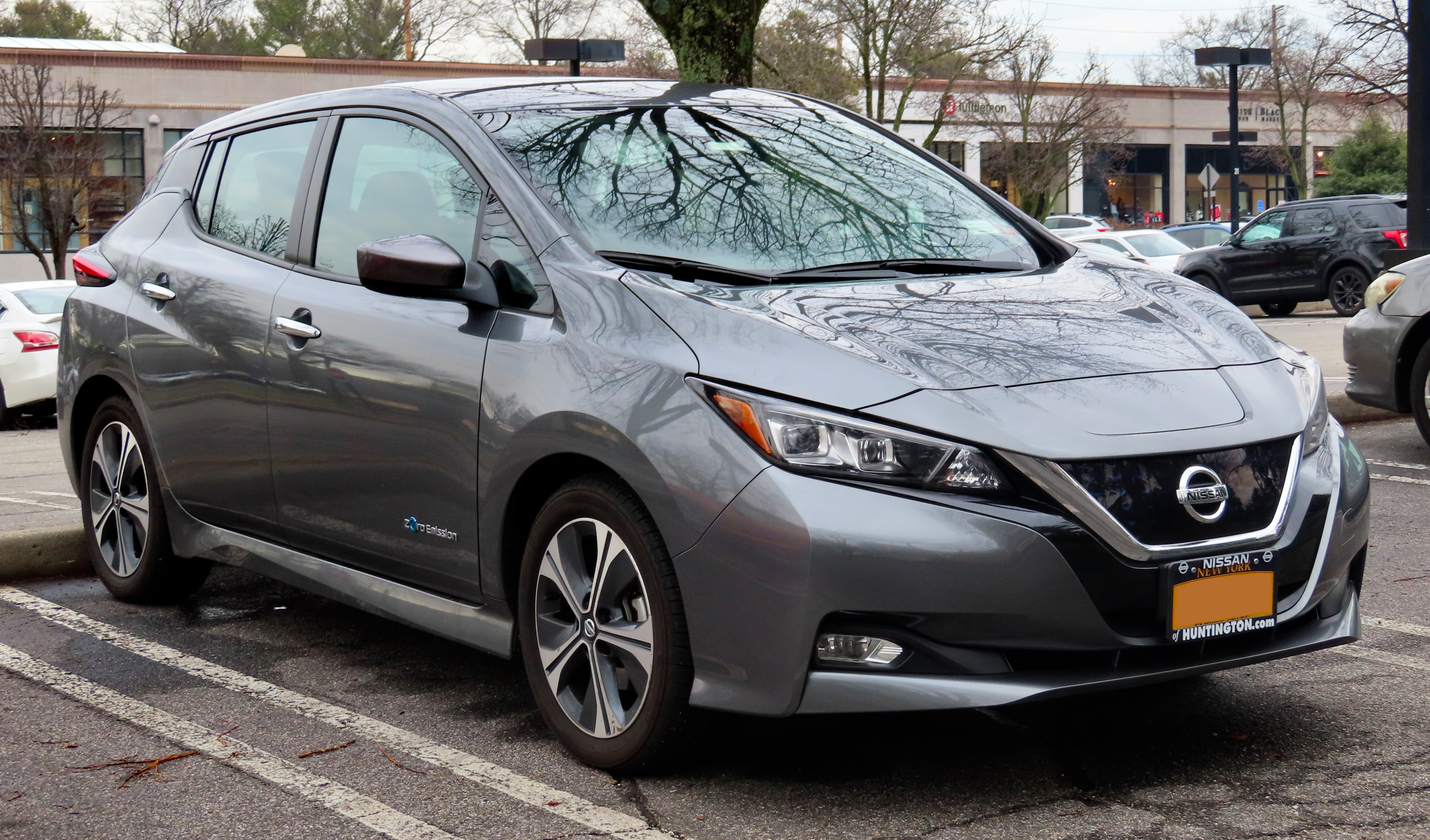
Nissan Leaf
"I'm amazed when we sell on like a first generation Nissan Leaf, which has got sort of, some of them got like 75 mile range, you know, we're selling them for three and a half, four grand."
The Nissan Leaf is an electric car. The first-generation Leaf had a shorter driving range than newer EVs, so it’s a good example when people say they “can’t live with” an EV’s range.
The Nissan Leaf is an early mainstream EV that helped popularize battery-electric cars in everyday markets. The “first generation” Leaf is often discussed because its real-world range was modest compared with newer EVs, which is why it’s used as an example when talking about buyer objections.
Request an Explanation
Heard something you'd like explained? We'll add it to this episode.
Sign in to request explanations for terms you heard.
Want to learn more?
Browse our glossary for plain-English explanations of automotive terms, jargon, and concepts.
Help improve this episode
See something that's not quite right? Our annotations are AI-generated and can sometimes miss the mark. Click the flag icon on any annotation to suggest a correction.