Steven Eagell's 'strong' performance, EVs sell fastest in June, and is the Consumer Rights Act unfair to dealers? – with Paul Willis, episode 264
Car Dealer Podcast
Steven Eagell's 'strong' performance, EVs sell fastest in June, and is the Consumer Rights Act unfair to dealers? – with Paul Willis, episode 264Car Dealer Podcast · Jun 26, 2026
Infotainment is the car’s main screen system for things like music, navigation, and settings. If the screen fails, it’s usually the infotainment system that’s not working. Extreme heat can sometimes cause it to glitch.
A reboot just means restarting the car’s computer systems. If the screen freezes or stops working, restarting can sometimes fix the glitch. It’s like turning a phone off and back on.
The Volkswagen ID. Buzz is an electric van, so it uses a battery instead of gasoline. It’s designed to carry people comfortably, similar to a family van. It’s mentioned because it’s a distinctive EV option with lots of space.
Residual value is what the car is expected to be worth later, usually at the end of a deal. If the car ends up worth less than expected, the people who set the deal can take a hit.
PCP is a way to finance a car where you pay for most of the car’s “drop in value,” and then there’s a big final payment option at the end. If the car isn’t worth as much as expected, the used-car market can get messy.
Residual value risk is the chance that a car’s actual future value will be lower than the value assumed when the finance/lease deal was priced. In practice, that can lead to losses for the party holding the risk (often lenders, leasing companies, or dealers structuring the deal).
This is basically the idea that if lots of cars flood the market, prices can drop. If prices drop, the future value of those cars can be lower than expected.
Volkswagen Group is a big car company that sells many different car brands. The discussion is using it as an example of how competition from Chinese brands can hurt sales and profits.
Brand
Alfa Tame
This sounds like a mis-heard company name. The speaker is saying they worked in the auto industry for a long time and saw how big brands respond when new competitors (like Chinese brands) gain market share.
BYD is a Chinese automaker known for electric vehicles and battery technology. In the segment, it’s mentioned as part of the speaker’s experience with companies that are responding to the competitive shift caused by Chinese brands.
A joint venture is when two companies team up to work on something together. In this case, car companies are partnering with software firms to build and sell new kinds of cars more competitively.
P&L means profit and loss, an accounting statement that summarizes revenues, costs, and profit over a period. The speaker is saying residual value declines are a major negative line item for some OEMs.
OEM means the carmaker itself—the company that manufactures the vehicles. The speaker is saying the carmaker’s profits can take a hit when EV deal assumptions don’t hold up.
When you buy a car with a contract, there’s an expected value for what the car will be worth later. If that expected value falls, the deal can become less profitable for the company that planned around it.
PCP is a common UK car finance deal where you pay monthly and then decide what to do at the end—often return the car or pay a final amount to keep it. The expected future value of the car matters a lot for how the finance works.
“Battery cars” means fully electric cars that run on a battery. Because electric tech and demand can change quickly, the car’s resale value can swing more than with some older fuel cars.
Autorola is a company that runs a digital marketplace for cars. The host is saying tools like this are shaping how car buying and selling may work in the future.
Here, “market making” means a platform helping cars get bought and sold efficiently by managing pricing and supply/demand. The speaker says it’s harder for new cars because the dealer can’t set the price.
Wholesale pressure means the prices dealers have to pay for cars get pushed down or become less favorable. If that happens, the dealer’s profit per car can shrink.
After sales is what happens after you buy the car—like servicing and parts. Dealers often make a lot of money from these ongoing customer relationships, not just the initial sale.
B2B means “business to business.” It’s software meant for companies (like car dealers) to use in their operations, not something aimed at individual shoppers.
Cross jurisdiction just means dealing with more than one legal region—like different countries or rule sets. For car sales, that can change how transactions work and how dealers manage pricing and compliance.
Stock turn is a measure of how fast a dealer sells its cars. If it’s higher, the dealer is moving inventory quicker, which usually helps cash flow.
Term
AI
AI is computer technology that can learn patterns from data. In this context, it’s used to help dealers figure out who is most likely to buy and improve how well their sales messages convert into actual purchases.
A market maker is a company that helps create the buying-and-selling “traffic” in a market. Here, it means using tools and strategy so more buyers find the dealer and cars sell faster.
A pre-delivery inspection is what a dealer does before you get the car. They check it over and make sure any obvious issues are dealt with so you’re not handed a problem car.
The Consumer Rights Act is a UK consumer-protection law. It says what you can expect when you buy things and what you can do if they don’t meet the standard. Here, the debate is whether the same rules should apply to used cars, which are more complicated than many other products.
A “warranty allocation” is basically setting aside money for the warranty—so the seller can cover repairs if something goes wrong. The point being made is that if warranties had to be bigger or more expensive, dealers would likely have to adjust prices or how they sell cars.
“Private sales” means buying a used car directly from an individual rather than through a dealer. The speaker argues that if cars were pushed out of dealer sales and into private transactions, consumers might lose some protections that apply when buying from businesses.
The Tesla Model Y is an electric SUV, meaning it runs on electricity instead of gasoline. It’s made by Tesla and is meant for regular driving like commuting and family trips. It’s commonly talked about because many people consider it when shopping for an EV.
The Volkswagen ID.5 is an electric SUV/crossover from Volkswagen. They bring it up because it’s one of the EVs that’s been selling quickly in the used market.
A “used car platform” just means the website or marketplace where used cars are listed for sale. The host is using it to show how the same EV can look very different in price once it’s used.
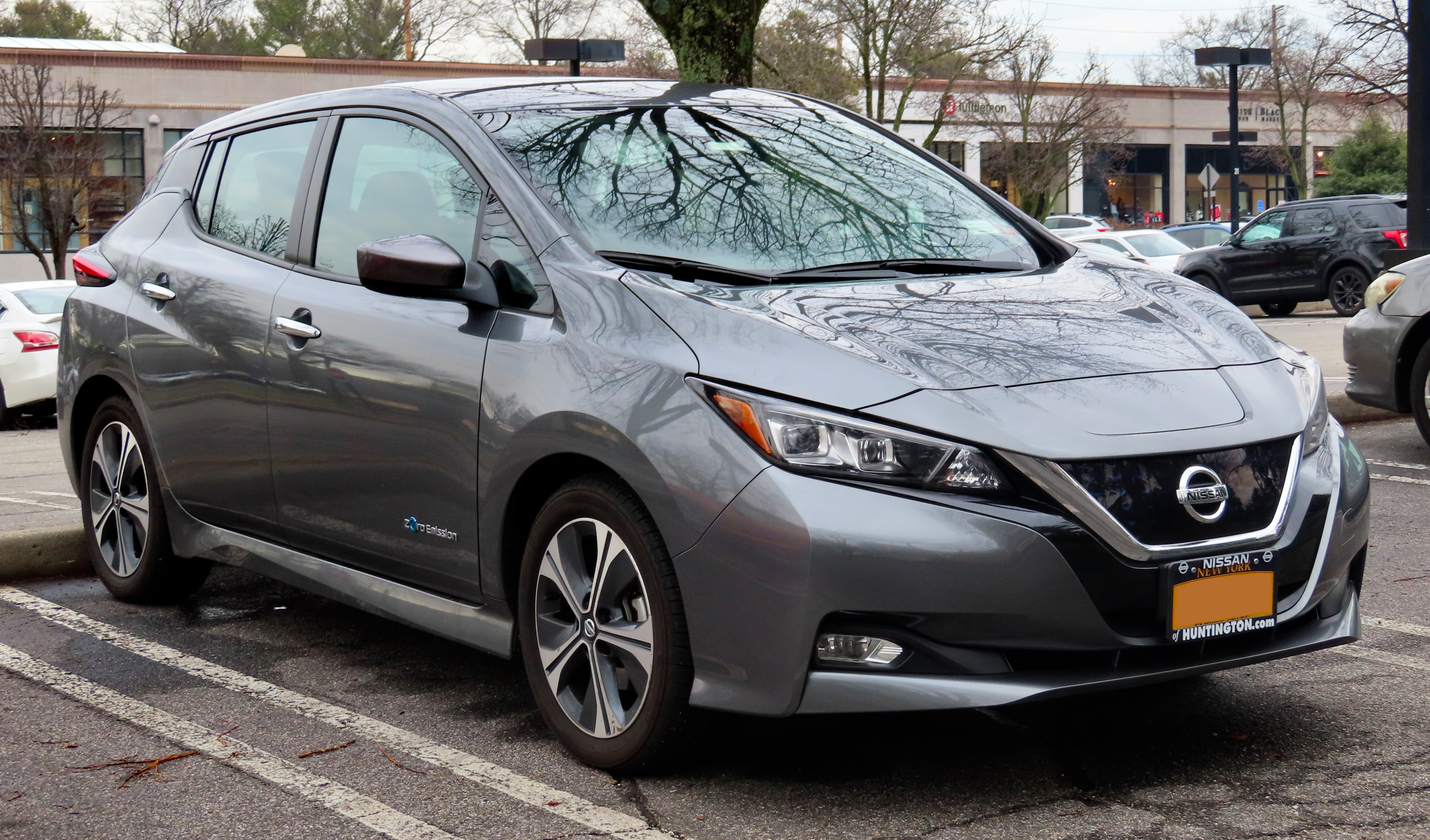
The Nissan Leaf is an electric car. The first-generation Leaf had a shorter driving range than newer EVs, so it’s a good example when people say they “can’t live with” an EV’s range.
LIVE
The Cardila podcast is sponsored by AutoTrader.
John, have I mentioned that we sell more cars from adverts on AutoTrader than anywhere else?
Yes, I think I read that somewhere.
Well, with over 84 million consumer visits per month, they connect retailers like us
with more potential buyers than any other platform.
But it's not just about the numbers, is it?
Is that what you say to your accountant?
Because the support and the value we get from AutoTrader is, well, invaluable.
We now get AI-powered insight on every online inquiry about the level of buying intent from
each customer, incredible amounts of data about the cars that we'll sell in our local area,
and around-the-clock service support from our account manager.
It sounds like AutoTrader is basically doing all the work for you, James.
No, John, I still do some things like take out the bins.
Anyway, to find out more about how AutoTrader can help you, visit autotrader.co.uk slash partners slash retailer.
Welcome back to the Cardila podcast, where we pick our favorite stories of the week
and ask an industry guest to choose which were the best.
I'm John Ray, and joining me this week is James Baggart from his Hotbox boiler cupboard, as usual.
Can we just talk about the weather for a moment, John?
Because it has been absolutely horrendous, hasn't it?
You've been down here this week, and it has been extreme.
So I'm sorry if any of the listeners, well, firstly people on YouTube watching,
I'm sorry for the fan in the background, but it is unavoidable.
And if you can hear any ambient noise, it's the fan, not me droning on.
Well, some of it is that, but yeah, I mean, it's been very exciting,
because Gosport was on the map for all of 24 hours, was it not?
You know, hottest place in the UK for, again, as I say,
all of 24 hours before somewhere in Somerset nicked it.
But the Gosport Aware Facebook group, which I love to bring up in these podcasts,
was awash with excitement that it was all over BBC News for something other than, I don't know...
Childbirth Rates.
The normal things, Gosport's on the map.
Dodgy Cardi is being jailed, that sort of thing, you know.
Less of that, John.
Yeah, it's been horrendous.
And it was so hot that the Tesla that I was delivering,
well, that was getting ready for handover, just stopped working,
like the screen completely failed.
And then I checked the app to see how hot it was inside the cabin.
It was 69 degrees, which was enough to stop the screen from working completely.
So I needed a bit of a reboot, but that has been delivered to a chopping cardiff.
So very, very sorry to see the Tesla I've been enjoying go.
But yeah, it's been a weird week, isn't it, John?
I've been moaning over the last couple of weeks about how quiet it's been at the dealership.
And then this week, it sort of kicked off a little bit, really.
On the hottest day of the year, we did four car sales, which was quite nice.
So very, very pleased about that.
And we seem to be picking up a little bit for June.
Probably go, well, I mean, how many days we've got left?
Not many.
So hopefully we'll end the month on a decent number.
So yeah, it seems to be picking up a little bit.
But you know, dealers I'm talking to at the moment are saying it's still pretty quiet out there.
Don't really know what it is.
World cups.
We blame the World Cup this week.
Is that still happening?
Well, it is, John.
Yeah, as you know, you watched some of the game, didn't you, this week with me?
You really enjoyed it, didn't you?
I introduced you to the football.
Is that what my face said at the time?
Yeah, I think you said which side's England.
I think that was your...
No, I did not.
I can tell we've got the three, you know, the animals on the shirt.
Anyway, I'm going to introduce our guests.
I think that's probably a good idea.
Yeah.
So joining us this week is a titan of the automotive industry.
It's former managing director of Volkswagen UK, now director of Autorola.
It is, of course, Paul Willis.
Paul, thanks for joining us.
Pleasure.
Pleasure.
I've been called many things, but never a titan.
Titan.
I think that is a very apt title for you, Paul.
Lovely to see you.
Our paths have crossed many times over the years.
And then I was looking back at your LinkedIn this morning and then I realised why.
I mean, you have had quite the illustrious career in the motor trade, haven't you?
You've worked for...
Well, let's recap some of them.
Ford Motor Company, Toyota, Mazda, BMW, Volkswagen HG, Kier Motors Europe, Volkswagen Group in China
and Ireland, managing director of Volkswagen Group UK, and then headed over to Dubai to
Alpha Team...
Is it Alpha Team?
Alpha Team.
Alpha Team.
That sounds really terrible, all those lists.
But you have to qualify in sets like over 40 years.
40 years, incredible, incredible career.
So are you taking it a little bit easier now, Paul?
Yeah, well, I kind of semi-retired from full-time work at the end of December and came back from
Dubai just before Christmas and now I'm just doing non-executive jobs and catching up with
old friends who inevitably are all associated with the automotive industry.
Seems to bring you back in very quickly, doesn't it?
The automotive industry.
Looking back at that amazing career, I give those people listening,
just some idea of what it's been like working in the industry for 40 years.
Well, the industry is really, for me, the most exciting industry in the world.
I mean, I started my career in FMCG in Markson Spencer, which by the way is a great company
and I still buy most of my food and my clothes from M&S.
But it's a very, even way back in 1982, M&S was a data-driven company.
They didn't have the systems that we would have today.
But that's where I really learned about data and analysis and mathematics, really.
And I really had a passion for the automotive cars, actually, to put it very basically.
And I thought, I'll try and get a job with a big car company.
And it was very, very difficult then because in the mid-80s,
we were in the depths of a very deep recession.
And I went to a big car.
I used to live in Luton at the time.
And on my day off, which was one day off during the week,
I went into this big car company in Luton, who you know,
and tried to get an interview for a job.
And the HR director said to me, look, my advice is really not to work here
because we are a shrinking company.
So I went through quite a difficult process getting into the automotive business,
but I was lucky I got into Ford, which again is a very structured, well-organized company.
And I learned as I went along, I started off as an area manager.
And actually, I would point at one of the smaller dealers in Wrexham
that I worked with.
What that guy taught me in terms of process and systems stays with me today.
So I've worked from an area manager through production planning,
sales and marketing, finance.
At my heart, I would say I'm a production planner and a statistician really,
which actually stands in you in particularly good stead today,
where everything is really about statistics, data and numerical trends.
Which of those roles did you enjoy the most?
I would say I actually probably enjoyed all of them for different reasons.
I enjoyed Ford Motor Company because of the structure.
And I was a really young guy and I was made head of sales planning and analysis for Ford
of Britain. And I was with the chairman every day, deciding on the production,
deciding on the profits.
So I was at the very heart of that business in my kind of mid 20s,
which is incredible.
So I learned a lot.
I really enjoyed China because it is so different.
You need to understand what's really behind the Chinese thinking
and to immerse yourself in a country.
I lived there for three years was enjoyable, but very tough.
I enjoyed working in the Middle East because again, it's a completely different region.
And then I have to say I loved working for Mazda because in Mazda I was given a lot of autonomy.
And I would say that as a result of being given a lot of autonomy,
we substantially changed the profile of the company and the volumes way back in the early 90s.
So I enjoyed them all, I have to say.
Have you pretty much always been on the manufacturer side?
Well, that's a really interesting point.
Yes, apart from two stints.
My first stint in M&S, which was for five years, two and a half years was in store operations.
And what that taught me is that when you go into head office and you're buying a couple of million
pounds worth of ladies outerwear, you need to be really plugged into what the market wants.
So working in M&S, I was on the shop floor and right close to the business.
And then in Alpha Tame, Alpha Tame is actually a big retailer of about 8000000000 turnover.
And I was very nervous before taking the Alpha Tame job because as you've just pointed out,
over, I think it's something like 32 years in OEMs.
And my experience is that based on what I've seen over the years, people moving from OEM into retailer,
it's not a guarantee of success.
And actually, people moving from retailer into OEM, there's not a guarantee of success.
So I have to say I was quite nervous about that.
But actually, in the end, I absolutely loved it because you really, really can make a difference
when you're making your own market because I think the question is the role of a retailer
is a market maker. And that's in your hands completely.
And you can make a market very strongly, very constructively, and very profitably,
if you use data and you use a good organization and you have good people.
Conversely, if you don't have those things, then making a market is actually very difficult.
What do you think of car dealers then?
Now, I mean, you've obviously worked on the manufacturer side for a long time
and now actually seen what they do first hand, has your opinion changed at all?
I always respected car dealers because when you work with people, there's a guy called Paul Latham
who was the sales manager of Kirby's of Rexham. And I'm going back to the late 80s now.
And I have never seen a more structured, organized, driven person in my life.
You cannot disrespect a person like that. I mean, I used to sit with him as an area manager.
And basically, he used to tell me how stupid and naive I was and how I gave no value to the
business, which was fine. But I learned from him. And the other thing,
during, you know, when you're running a big business like Volkswagen, you often get very
little time to meet with dealers. So you move away a little bit from dealers, which is a mistake.
And I would say the biggest learning I had at Alpha Tame is I absolutely totally respect
the role of dealers. In fact, the role of dealers and the impact that they can have on
performance is beyond most manufacturers understanding. I really saw that in the last
seven years. Why do you think there's that manufacturer-dealer relationship can sometimes
be such a challenge then? I think really most people that work in manufacturers haven't worked
downstream. And so they just look at the bare statistics and they basically
say, I've heard it said so many times, you know, our dealers fall into a group of 30%
are brilliant, 30% are average and 30% are not so good. But that's very simplistic, terribly
simplistic. And you need to get below the detail. I would suggest, and one of the reasons I actually
left to go and work for Alpha Tame is I wanted to test myself to see whether I could be more
entrepreneurial. And I just don't think enough people in upstream, let's say, really understand
the impact of solid entrepreneurism downstream in the retail network. So what would I say?
How do you improve that? I think people within their career development have to go and work in
retailers to understand how complicated it is. I mean, it's intellectually complicated around
how you use a DMS. It's intellectually complicated how you improve your conversion rates. It's
complicated how you use data constructively to grow incremental profit. But too many people
on OEMs are focused and are trained to focus on things like wholesaling, which actually is not
that intellectual. If you based wholesaling on intellectual statistics, you probably wouldn't
be wholesaling the number of cars into dealers that have been happening for the last 40 years.
I think when you're at the cold face in a dealership, it's just the amounts of different things you
have to deal with. It's huge. It's vast, isn't it? And I think from what I can see from the outside,
the manufacturers are very much split into different segments, very much split into
different departments who focus on one area, whereas the dealer does it all.
What's your take on agency then? I mean, it's a strange one, isn't it? Some manufacturers
stuck with it, some have moved away. I mean, your former employers have moved away from it
somewhat. What's your take on it? Well, I was in the room in Ingolstadt when we started putting
together, putting the whole agency thing together. And you have to remember, what was the purpose
of agency? The purpose of agency was actually because of the increase in development costs
in OEMs, number one, and because of the erosion of margins due to intermediaries, how do OEMs
improve their margin? And the way they thought they could improve their margin was through
an agency type model. The problem was that, again, round the table, I think I was the only person
in round the table who was downstream. And I could argue, if I put the mirror up in front of me,
was I really downstream? I mean, I was the managing director, not the operational head of
Volkswagen. I was the managing director of Volkswagen Group UK, which in terms of role
is the shareholder representative in the UK. So it's non-operational. So I was the only downstream
person in the room. In brackets, I wasn't really downstream. And when you started talking to the
people round the table about the modelling, have you modelled the impact of this on dealers?
The answer, they tried to say, well, we kind of have, but when you ask detailed questions,
it was obvious to me that they had not. And the other statistic that I threw in the table was,
at that time, we were selling, I'll just give you round numbers, half a million cars a year,
of which at least 100,000 were either self-registrations from dealers to hit targets
or internal numbers. So actually, the number's not really 500,000. It's probably below 400,000.
And how do you keep that going in an agency environment? And what impact does that have
across Europe on capacity? So I'm afraid to say, say from the very beginning,
I questioned it. I don't think it's a viable way forward at all. And I think it erodes the
entrepreneurism that dealers have. And by the way, manufacturers need to understand the importance
of entrepreneurism that the dealers contribute across their geographical area.
You've certainly seen that from the Chinese brands coming in, haven't you? They've all gone
straight to a dealer network for that very reason. Do you think agency was always doomed to fail then?
Well, I'm afraid I do. But it's very difficult when you're in an OEM.
It's difficult to stand up and say, actually, when the whole room's saying we need to do this,
and you're the only one saying that it's silly. For sure, it's my way to get your P45, isn't it?
Yeah, but in big companies, what you've got to do is you've got to make your point step by step,
which is a more intelligent way. Because maybe there were some elements of agency
that could work. For example, maybe on high-end cars or in niche segments, maybe.
But in volume cars, honestly, I just can't say it. I'm sorry to say. But the main reason I say I
can't say it is because I think I understand the value of retailers, what they bring. And also,
this other thing that often you hear in OEMs is that the customer service that retailers give you
is terrible and it's too inconsistent. Well, I've got news for you. Since I left seven years ago,
I've purchased my own cars. I go to buy my, I've got different cars from different brands.
Okay, maybe I know the people involved, but I have to tell you,
the service I get is absolutely fantastic and nothing is too much trouble. So my personal
experience in Northern Ireland here, where I have two different brands and in Wales,
I salute the retailers because they give me, and more importantly, when I'm not around,
they really look after my wife. So you cannot do that from intergalactic headquarters
in the middle of Europe. No, I completely agree with you. I'd like to touch on your thoughts
for the market when it comes to Chinese vehicles. Now, I mean, they are rapidly changing the
industry. They're still in market share. Firstly, what shall we take on how quickly
they've been adopted? Have you been surprised, having worked in China?
Yeah, well, I worked in China for three years and I actually was the CEO of Skoda and my job
there was to attack one of the big Korean brands. So I know exactly how they work. I know their
psychology. I know their mentality. strengths. weaknesses. Their strengths
are they can manufacture cars at more competitive prices than the incumbents. Their other strength
is that when they decide to do something, all the way from the CEO right down to the area manager,
there is no questioning of what they're doing. That's the strength, but in the end,
it can turn into a weakness, which I can talk about in a minute. And their technology clearly
where they have stolen a head of the Europeans and the Americans is in the technology. However,
they've got some serious weaknesses, very serious weaknesses. Used cars isn't the phenomenon in China.
Residual values, they have no clue about. Fleet, they don't really understand. So all the
distribution elements that actually can make a difference to the development, long term development,
they are 20 years behind. However, they'll probably learn. There's no doubt about that.
But that's going to take time and learning in an environment where the orders come directly from
the top and everything is seen as like China. The internationalization of the Chinese brands
will be challenging. However, notwithstanding that, in the Middle East, in Saudi, for example,
they went from zero to 18% of the market very quickly. In the UK, I think they're at, what is
it, about 15% now? Yeah, aiming probably going to head in towards 20% this year. Yeah. So they are
growing. However, all is not lost. I don't believe all is lost for non-Chinese OEMs. I really think
the sophistication of the Japanese brands, the European brands in particular, they will come
good. So I'm not as worried about the impact of what the Chinese will do in Europe as many people
have been saying. I'll come back to that in a minute, but I just want to touch one of the
points you made there about residual values, because it's something we've talked about a lot.
I am concerned that there is a huge amount of Chinese cars entering the market on very cheap
PCP deals at the moment, and that when they enter the market in three years time, the used car
market, there's going to be a very large correction. What's your take on it? I tell you my take on it
is, I think anyone who takes the residual value risk on a Chinese car needs to have very deep
pockets. You made a point there. You cannot get away from the equation that we all know well
in the auto industry, which is volume price analysis. The more you pump vehicles in,
in the end, it will bite you with regard to the used car. Now, if I was a consumer today,
and I can see why consumers are attracted to some of these products, maybe the price is 20%,
the transaction price is 20% below an equivalent European car, and the quality looks okay.
The problem is that when you go to sell that car, or I would say, but when I go to sell that car in
three years, I'm pretty sure the residual value is going to be more than 20% below the equivalent
European vehicle for a whole series of factors. When it comes to those Chinese brands, you've
mentioned as well that the legacy brands, you think they might be okay. I am a little bit
concerned that there is a risk for these brands, because these Chinese brands are taking this
market share from somewhere. I mean, look at the Volkswagen group in particular. They are suffering
as a result of these Chinese brands. What do you think about that?
Well, I think, of course, some brands are not reacting. Another really great privilege of working
in Alfa Tame was, after spending over 20 years in the Volkswagen group, I had the privilege of
working with Toyota, Lexus, several Stellantis brands, Honda and BYD. I saw playing out in front
of me how they were reacting to the impact of Chinese brands. Some people, I would suggest
because of cost reasons, because of overhead reasons, are simply putting the hands in their
ears and doing nothing. Those people are going to really be in trouble, because you just can't
sit back and say that the cost base of my particular model, I'm not going to react to it,
I'm not going to resource my production, I'm not going to be more flexible. No doubt, James,
there are going to be some companies who are going to have to merge or will fall by the wayside.
But I do believe that other companies, and you've mentioned some of them there, I think that they
will react and they are reacting. They're doing joint ventures with software companies in their
software joint venture partners in China. They're reacting on bringing different types of models
in with lower cost bases, with different sourcing. So again, I'm optimistic. One other point,
why I'm optimistic, the sophistication of the distribution model of a number of these
big European OEMs is way far ahead of any of the Chinese. But the question is, do I think
Chinese can get to 30%? Probably. Do I think it'll be mainly based on price? Probably. I'm not sure
growing based on the core premise of price is that sustainable over the long term.
If you were building the Dela Group now, which of the Chinese brands would you invest in?
Well, I did. I invested in BYD. I've spoken to all of them. I've been interviewed by all of them,
and I've interviewed all of them. So I think BYD is probably the one. However, again, if you look
at the distribution strategy and the behavior of BYD, I would question some of the things that they
have been doing. Yeah. Why BYD? Because if you look in the UK, and MotoJQ and Cherry,
they're really catching up fast. Yeah. Well, my knowledge of JQ and MotoJQ is a little bit limited
because they were not in the Middle East, so I can't really comment on them. They seem to be
doing very well in the UK. But my overarching point would be, to a Dela Group, you need to be very,
very cautious because I can give you an example of Madrid. In Madrid, one of the biggest Dela Group
in Madrid opened a number of BYD outlets. Unfortunately, after two years, BYD's view of the volume
potential and their view of the volume potential was quite a far apart. BYD just opened a number of
partnerships and re-sliced the market areas completely. And within the distribution contract
or the retailer contract, that was in there. And they won't take that out because it gives them
more flexibility. So that makes it very, very difficult for a retailer if the ground underneath
them continues to shift all the time. Now, maybe not all of them do that. I'm sure they don't,
but the distribution agreement and the provisions in there need to be carefully analysed by the
retailers because I think for a number of years, the profitability in some of them, I can't comment
on all of them, will be under pressure. I mean, MG, you've done a great job as well, you have to say.
Yeah, they certainly have. And I agree with you on that point. I mean, you listen back to some other
podcasts we've done with other people like Peter Vardy. I mean, he was incredibly concerned about
those clauses in those contracts. I fear a little bit for some of the dealers that are going head
first into signing up with these Chinese brands. And they might be making the hay while the sign
is shining now, but I worry what might happen in a couple years' time. Well, I was with a retailer
I've known for over 30 years recently. He is a very successful retailer. His profitability is
probably in a region of three to four times ahead of the national average, really professional
organisation. If I ever want to understand anything about retailing or I question anything or I'm not
sure, I would speak to him. And I was having a cup of coffee with him about a month ago and I said to
him, I see that you have not moved on any Chinese brands. And he smiled and said, I will not.
His business is based mainly in European brands. And he's been very successful at
the market he operates in is a very good market. So he's got some strong headwinds to help him.
But his position was very clear. I'm not going to do that, which is brave, by the way, very brave.
It is, especially as the market is changing so much. But I actually thought his contrarian
approach and the logic behind his decision making, I have to say I saluted it because
when you see what's playing out, I think for a retailer, do nothing is a credible option,
actually. What was he concerned about? Well, the clauses in the distribution agreement,
the lack of consistency. I mean, he's been around many years and he talked about the volume pressure,
the residual values and the inconsistent behaviour, actually. So on a separate note,
I'd just like to touch on the fact that we have seen or potentially seen changes coming to the
ZEV mandate. It was obviously we're going to have a change of Prime Minister in the not too
distant future. But the talk is that that's probably going to stay the same, these changes.
What's your take on the ZEV mandate? You know, having been in the industry all this time,
you've probably seen it come in, seen the impact it's had. I mean, what's your take on?
I think if you are an administrator, it's quite a good idea in order to nudge
the market towards more environmentally friendly vehicles. I could see the intellectual thinking
behind it. But again, as many governments, and I won't be political here, it's not just the current
government, it's the previous government and before that and and and.
These politicians who have not really worked in business seem not to be able to really understand
or embrace the notion of consequential impacts downstream. And the impacts downstream of the
ZEV mandate to retailers and OEMs is catastrophic actually in the short term.
Being a retailer in today's environment is extremely difficult. And being an OEM, actually,
if you look at the financial results of some of the OEMs, the biggest hit on their P&L is the
residual value decline on some of the PCPs on battery cars that in good consciousness they were
pushing to their customers. So for me, it's mixed. And if I was asked to vote for it, I would vote for
a change in order to help the people downstream. Why? I mean, let's be honest, the government
really don't care about the profitability of retailers. Anyone associated with the industry
does. But where I really care about the profitability of retailers is employment.
Because once it starts to impact on headcount and cuts, that's where I really put my hand up and say,
I protest against this approach. Do you think it should go from the 80% 2030 target to 50% as they
are? Yeah, anything that gives the retailers relief. Because the whole premise, let's get back
to the premise. Intellectually, you can see what they're trying to do. But also intellectually,
a government that tries to manipulate the market in order to force consumers to choose
electric is never a good thing. Leave it to the free market. Leave it to pricing. products
and leave it to the competitive environment. So that's where I would end on that topic. I think
they're interfering unnecessarily. We're definitely singing from the same hymn sheet there, Paul.
Just finally then, before we get on to our stories, with 40 years in the industry and
worked on both sides of the fence, what advice would you have for our Cardiola listeners?
What advice would you have for Cardiola listeners? There's two things. It really
comes to why I wanted to talk to you today is because now I'm working as a non-execute with
Autorola. An Autorola is a digital marketplace platform with Indicata, which is a data driven
system. And the future of retailing, in my view, is all about market making.
Market making with new vehicles is very complicated because as a dealer, you don't
govern the price. The OEM governs the price and the customer governs the price. So if there is heavy
pressure, wholesale pressure or volume pressure, your margins get squeezed and you can do nothing
about it. Where you can do something about it is in used vehicles and in after sales and in finance.
And I see a very clear trend. The really, really successful retailers are the ones that make their
own market, particularly in used vehicles and after sales. And the core of making your own market
in used vehicles is now using technology, using platforms like Autorola, using data in order
to improve. And it's very, very simple. When you look at the USP of Autorola, it is about combining
data and information with a B2B platform. So, for example, in Europe, it's a bit different in
the UK, but in Europe, when you sell a car in an automotive Autorola platform, cross jurisdiction,
you usually make 800 euros more per car, more profit. And secondly, your increase in stock
turn. I've seen increase in stock turn between 10 and 20 percent. So technology is really,
really important. The problem is that what I see also is the poor dealers are awash with people
trying to sell them stuff on technology, using buzzwords. And my advice on that is keep it simple.
Focus on used cars. Start using AI because one of the last things I was developing in Dubai
was utilizing AI to increase conversion rates, propensity to purchase. So I've got clear statistical
evidence that using data with customer information, I was able to, in one brand, increase my conversion
rate by 5 percent, increase my propensity to purchase by 10 percent. But what you can't do,
James, is you can't just simply tell your sales manager to do that. The old organization structures
that you and I know for the last 20 years, you have to change those. And you have to be more
flexible and bring experts in to support the good people who do really well selling used vehicles
and after sales. So I think my big advice is really focus on used vehicles and after sales
and really become a market maker. And that's what I did in Dubai. I mean, I took the business in
Dubai. If I tell you that the base, when I arrived in 2019, the base return on sales,
wait for it, was 9 percent. Now, most European dealers would kill to make 9 percent of turnover.
And when I read the panel, I thought, oh my God, what have I done? I've taken a job where
the baseline is 9 percent. But here's the thing. Using, I didn't, over the period of
seven years I was there, I sold a few more vehicles. I increased that 9 percent to 18.2 percent,
me and the team. It wasn't just me, it was the team actually, I have to say. And it was all
through using technology, using information, improving used vehicles, improving after sales,
and improving margins. So it is possible, but it all starts from really deep understanding
of data and information. Paul, thank you so much for joining us today. I'm sure your LinkedIn inbox
will blow up off the back of that advice. So I'm sure if people want to get in touch with you,
they can do that. But John, we should probably do some stories.
Now, a quick word from one of our sponsors.
John, have you ever wondered why I, along with 14,000 other dealers, choose to partner with
Well, actually, I didn't think so. I'll tell you anyway, with more than 84 million consumer visits
every month, it connects us with more engaged car buyers and delivers more deals than anyone else in
the UK. And now with the launch of buying signals, we'll have brand new insights on every deal,
showing how likely a customer is to buy the car they're interested in. Plus, as someone who set
out to use AI and data as much as possible in my business, I've found their technology,
data, and tools genuinely invaluable. But when I do get stuck, which is let's face it most of the
time, AutoTrader is always on hand and committed to supporting us to get the very best from our
package to find out how they can help you visit trade.autotrader.co.uk. Now, back to the podcast.
So James and I are going to run through our favorite stories of the week. And at the end, Paul
gets to decide which one of us chose the best ones and who is the winner. James won last week, I
believe, so he gets to go first. Yes, in the group stages of the Cardiola World Cup, John,
I'm now two nil ahead. Can you use language that I understand, please?
Well, I've been trying to teach you this week. Right, let me talk about my first story. I'm
going to pick something that I've written about in my sub-stack here. So it's slightly controversial,
but yeah, my sub-stack newsletter that went out this morning. I'd just like to talk a little
bit, John. You might probably have read it, have you? No, but I've seen there's a story about it.
There's a story. I'd like to talk about the Consumer Rights Act. Now, this is something
that I've probably been boned about quite a lot over the last few years,
running a used car dealership. And I picked it as a topic because I just think it is incredibly
unfair on dealers. I've had a few incidences recently where it's been a bit painful where
we've had to stump up cash for problems where we probably shouldn't have, but we've done so anyway.
I mean, just a little bit of a recap. You know, the Consumer Rights Act does say, I mean,
if there are problem occurs on a used car within the first six months, it's down to the dealer to
sort it out. Now, you can argue if you can prove that that problem wasn't there at the start that
you might not have to pay. However, the chances are a judge will always side with the consumer,
regardless of how much they paid for that vehicle. And I just think this is wholly unfair.
This is not just me just having a moan because I've had to pay out some warranty claims. This is
just me having a moan because the more I think about it, a customer having the same rights
on the £2,500 car compared to one that have paid out for a £50,000 car, I think is unfair.
I think there should be a sliding scale in what consumers can claim. I mean, you know, why not
on a £2,500 car could you not limit the warranty claims to, you know, say 5% of the car's cost?
I think that is a fairer way of doing it. And the reason I say this, John, is because I think of
that absolute bottom end of the market, which we sometimes do fall into, you know, those two and a
half grand, three grand cars that still have a life, some life in them to some consumers. It's
very difficult for a used car dealer to sell those cars and put a warranty on it. So it effectively
makes that car sort of worthless, you know, and I do think that is unfair. I mean, you've been in
the dealership, John, haven't you? You've seen some of these cars that we could sell. And yes,
you can list them with known faults, etc., which we have done. But I just, I think it would be
a lot better if just everybody went into these deals with their eyes open. You know, consumers
should realise if they're buying a two and a half grand car, it's not going to be as good as a 25
grand car. And that is a decision that they need to make. And I just want to caveat that with a
little bit of, you know, a little bit of due diligence, because in advance of selling cars,
we will have them serviced, we will give them a new MOT, we will do a pre delivery inspection.
But I can't tell you that 100 miles down the road, something may fail, you know, these are used cars.
But if the dealer up to that point has done absolutely all they can to make sure that car
was right when it left the dealership, there's got to be a little bit of risk on both parts,
I think. John, look, I mean, check me here, you know, am I being unreasonable here? Am I being
unreasonable? I mean, it feels like a bit of a rant, which it is. But, you know, where am I
standing? I don't want to sit on the fence. But there's not really a great answer to either of
that. Because on the other hand, I think probably 34 years ago, if you were off buying
a car from a local car dealer for, let's say, your son or your daughter or whatever, and there was
four grand to play with, you would probably be as a parent scrutinizing that car in that
car dealer with an inch of its life to make sure that it wasn't going to blow up in the next,
you know, year and a half while on the M25 or something. So I do get it. And I think there is
an issue with, you know, we like to say sometimes that consumers are the most informed that they've
ever been when it comes to cars, we say, or they walk into dealers and they know more about the
car than the dealer does. I don't think that's the case a lot of the time. It's certainly not the
case for used cars. I don't think there's an appreciation of how much a used car costs these
days. And therefore, when they arrived looking at your three grand course or whatever it is,
there's not an appreciation that that is actually at the lower end of the scale
for what they need to be paying. And therefore, probably, yeah, is a little bit leggy. And I mean,
in theory, all, as you say, all this Consumer Rights Act stuff, it's supposed to be a sliding
scale somewhat in that, for example, there's supposedly, if I let's say I go and buy a laptop
in Curries, and for some reason, I don't buy a Mac, I buy a Windows PC for 400 quid because
you're a lunatic. Yeah, exactly. Yes. Perhaps I've lost my mind and gone and bought an Acer,
for example, 400 quid. That might have a year's warranty. And you've got some degree of being
able to say, All right, well, after a year, I expect it to still last a bit longer than that.
I could take Curries and Acer to court and say, you know, you need to repair this a little bit
after and then cover some of the costs. Whereas if I bought a £3,000 top of the range Macbook,
in theory, in court, they are more likely to agree that it should last a bit longer than
the cheaper model. And I think that should sort of carry across the motor trade, but I don't know
that it necessarily does. I think it's the problem, John, the Consumer Rights Act covers
all consumer goods and used cars are not the same as a Macbook or the same as a fridge freezer.
They're very different things. They are much more complicated and they've been lived with
and treated in different ways. I just don't think the rules should be transferable. I don't know,
let's talk. I was just going to say, there's two ways to solve that is you either price your
cheap cars much higher, at which point nobody can afford them. You can't do that because the
platforms say how much you should be advertising. Well, yeah, but you know what I mean, like you
put a big, everyone would have to increase their prices and put a big warranty allocation. Or
these cars disappear from dealer full course and just become private sales at which point
the values of them plummet. And at that point, the consumer gets no protection whatsoever if they
buy it privately. So it's kind of, there's got to be a happy medium somewhere in the middle. I
think the organisations out there that represent the motor trade should be battling this. They
should be fighting for some changes. Paul, what do you think about this? Am I just ranting
unnecessarily? No, actually, you've educated me which is great. I didn't realise that all consumer
goods were treated the same. So I really agree with you there, James. I also agree that it's a
difficult, really difficult discussion because I've been through the same thing buying a used car
for my daughter and everything that was said is totally right. I think there needs to be some
sort of change. But you know, trying to get a change in the Consumer Rights Act for one sub-sector
which would appear or could be interpreted as a deterioration in consumer rights, it would be
very difficult. I think the only argument you can make is that it's more transparent for customers
to know really why maybe a month's warranty is more applicable. And by the way, another point,
just when I was preparing to discuss with you today, one of the numbers that really hit me
in my preparation is that nearly 50% of used vehicle sales in the UK, there's 8000000
used vehicle sales in the UK, nearly 50% are over eight years old. So this must be a massive topic
and I know the story very well, James, about the cost of warranty being applied to older used
vehicles. So I think I don't think it is a rant. I think it's a valid argument and on the basis
that it is more transparent for customers to know what they're getting. However, the one thing I
would say is honestly, how many cases actually go as far as the courts? It's not many, is it?
No. I mean, look, let me caveat this with if someone comes to us with a problem,
we fix it. If someone comes to us and they're really unhappy, we buy the car back. I mean,
I never argue with the customer because I haven't got the time to do it. What I'm saying is that
they really should be a little bit more in advance, some understanding of the fact that they're
buying a used car at a price point, which will mean not everything is going to be perfect on it.
It's not a new car. I can remember having a discussion on a similar topic with Arnold Clark
about this. They know the subject back front sideways and their view is that the type of
warranty you put on the car reflects the age of the car and you make that absolutely clear
at the point of sale. Yes. This is probably where I'm going wrong. Right, move us on, John, for my rent.
Okey-doke. I'm not going to talk about all the results stories because I know you love to do
that, James. I'll very quickly talk about electric cars, used electric cars specifically.
I mean, this is a story from last Friday, but it was after our podcast was recorded, so I'm going
to talk about it anyway. This is electric car sales data from two different places. I've showed
that they're the fastest selling vehicles. They're the fastest selling fuel type in June
on AutoTrader. We're still in June, but June so far, presumably. Data from Indicator also
suggests their top three selling cars were not their top three selling cars, but the top three
fastest selling cars have been electric vehicles as well, those being the Tesla Model 3, James.
Good news for you there. The Volkswagen ID5 and the Cooper-Born. The list from AutoTrader is MGZS,
Nero, MG4, Polestar 2. I'm not going to go through all of them. You can look at the story,
but it's interesting as ever that EVs are sort of this strange no-mans land where we're all
going at the same time. No, don't cast more EVs upon us, but on the other hand, people seem to
be desperate to buy used ones. Could that be? Because we're looking at some quite affordable
cars here, not necessarily all of them. I suppose even a Polestar 2 at three to five years old is
looking quite cheap at this point. But it's a strange balance, isn't it, that new feels like
they're being thrust upon us and used. People cannot get enough of them. I think it's the price
point though. Once it hits the right price point, a way you go. We've certainly had success with them.
Sold that Tesla Model 3 as much as I tried not to. I love it so much. That went out the door
this week. We sold an E-Golf this week. Those used electric vehicles are certainly popular.
John, I have seen what you've done here, picking the story, the play into your audience, but anyway,
I'd just like to add to this because I have spoken to AutoTrader about this. When we went
up to see them, I think I mentioned this on the podcast last week, 20% of all inquiries they said
were going to electric vehicles, used electric vehicles. One in five leads on the AutoTrader
platform now is going to an electric car. They released a bit of data this week that does show
that independent dealers are now holding 56% of all the three to five year old EV stock.
So we're now seeing a time where these independent dealers are picking up these EV cars. They are
selling those used EV models and those times appear to be changing. We do sometimes talk to
dealers and say, no, I'm never going to touch them. When I'm bidding on stuff at the moment,
John, electric vehicles in the auction, they're very, very competitive. So I don't think I'm
alone. Paul, what do you think on John's story? I think it's price. I'll give you one example.
I was in a meeting about six months ago in the Middle East and there was an American guy there
who owned a big dealer group and he was telling me about his Audi Sport car, the electric vehicle.
He paid 120,000 bucks for it and he had it on a used car platform, 4,000 miles, 34,000 dollars.
I mean, I went home, looked at it online and thought, maybe I should buy one of these at this
price. So I think it's price driven, but also it demonstrates that human beings are very short
term, doesn't it? Because when you look at the petrol prices, how they've gone up, people are
thinking, oh, this is going too far now. I can get a much cheaper car, a great value for money,
and actually I've got an insurance policy against these petrol prices. Whether this will be
continuous, let's see. Oh, I think it will be. I think we've just, I think we hit a snowball
momentum now, whereas we've had two of these occasions where fuel prices have rocketed,
you know, with the Ukraine war, with the Iran war. I think people are now thinking, well,
it's just going to happen again. Doesn't it tell us, you know, all the old excuses that you hear,
oh, I'm not quite sure an electric car suits my lifestyle because of the range. It kind of shows
maybe that wasn't the reason at all. Yeah, I mean, I'm amazed when we sell on like a first
generation Nissan Leaf, which has got sort of, some of them got like 75 mile range,
you know, we're selling them for three and a half, four grand. And I say to the people, you know,
like, what's made you make this decision, they won't, we'll just go to the shops, we've got
another car, just need something just to use locally. So there is a use case, isn't it? And
it does show you there's a buyer for every used car. Yeah, for sure. Yeah. Yeah, definitely,
I agree with you. Right, shall I move us on, John? Yeah, I would like to, you're correctly
predicted, one of the stories I wanted to talk about, I do want to talk about a result story.
And it's about one of the people I very much admire, it's Candela Steven Eagle,
who I think is one of the best retailers out there, if you ask me. He is, as you probably know,
Europe's largest Toyota and Lexus dealer, I still find it absolutely fascinating that he is
completely in bed with just those, those brands. In the last year, his latest accounts show
turnover drops from 1.09 billion to 1.04 billion, but his pre tax pre tax profit also dropped slightly,
but still he clocked up 10.8 million pounds for the year. You know, I mean, that is a very
impressive figure for a dealer who just operates only in two brands. Vehicle sales slightly down
55,000 to 52,000. And he says that the main reason profit dropped was down to softer used car
margins, rising national insurance costs, which we've obviously talked about before, and a
competitive labor market, which he said weighed on performance, although he described trading as
strong and resilient against the backdrop of normalizing market conditions. He said there's
some long term prospects are good, citing continued demand for hybrid and electric vehicles
and stabilizing used car markets, as well as strong after sales revenue. So, you know, yes,
those figures are down for Steven Eagle, but I still think they've got to be celebrated because
nearly 11 million pounds from just two brands is incredible, really.
It is amazing. I can't think of a, well, certainly a dealer group of that size that only has,
let's call it one brand fundamentally, one manufacturer partner that you're working with.
You know, you see it with a little dealer group sometimes, you know, just a couple of BMW sites
or whatever. But yeah, there's no one quite like Steven Eagle, is there? It's also amazing that the
brand have actually let him get that big. You know, normally that normally was, as Paul will
probably tell us, you know, normally manufacturers hate a dealer group having such a large proportion
of their representation, but Steven Eagle smashes out the part most years. So I can see why. Paul,
what do you think? I don't know Steven Eagle, but I've followed them. And I'm told,
I'm told that Steven Eagle, their business success is based on one thing primarily.
Their repeat purchases are almost 90%. So nine and 10 cars, people come back to him.
They all have their car services there. I've never heard a statistic as strong as that in
my career. So clearly, Steven is great at recruiting the right people, great at developing the right
culture, because 90% or whatever the number is, I think it was 88 or something, someone told me.
And it was in the context of you never would want to buy Steven Eagle because you could never
improve it. That was the context of the discussion, because you'd be paying for that in the
consideration. Just one comment. Most OEMs don't like, as you say, reliance on one dealer. But
you know, I learned from Toyota, I would say that in terms of the best company in the world
that to work with, to have discussions on an equal basis and logical decision making is Toyota.
They're fantastic, really fantastic. As a retailer, you're never treated as a junior partner,
you're treated as an equal. And therefore, I salute both Steven Eagle and Toyota. The only
number I think that I picked up that I'm not sure we just talked about it. The return on sales was
still about 1.4% or something. Now, what that tells me is that there's a lot of potential to
improve that further. So I agree with you, it's a great result. And the business is great potential.
And it shows a very strong, intelligent approach from Mr. Eagle and Toyota. Good luck to them.
What sort of, just thinking back to your manufacturing days, what was the sort of
maximum number that you'd like to have a dealer for? I never believed in that. I believed in
performance. If I could have one dealer group running the whole country because they were brilliant,
I'd do it. Yeah, I suppose that stops the 30, 30, 30% argument, doesn't it?
Yeah. And you know, it's very simple. I found myself orienting towards the good performers
because as a OEM person, you just want good performance, of course. And there are a lot
of really outstanding dealers out there in all brands. Right, John, over to you.
Thank you very much. I'm going to try and squeeze one more in, which is very difficult,
because literally it was published a minute ago by Jack Williams, but I'm going to talk about it.
This is like live reporting. I know, which is very dangerous for me. So I'm going to get your
opinion more than actually read this story because I haven't, but it's around buying signals on
AutoTrader. So AutoTrader has said that they're going to make some changes to the buying signals
technology with dealers getting advanced notice of likely demand among a few other changes,
but this is going to be rolled out in the coming weeks, which is quite interesting.
So as I say, I haven't read this story, so you need to go to the Guardian of the Magazine
website and read it. But I thought I'd ask you, James, as an AutoTrader customer, what are you
looking for from changes to buying signals, really? Or what are you looking for from buying
signals? Are you getting them at the moment, or is this part of...? Yeah, you do get them alongside
the deal builder request, deals. It gives you some pretty light information on the
customer. It's about their intent. But we know, having talked to AutoTrader, they know so much
information about those customers, especially when they've logged into the platform. If that
customer is logged into the platform before sending their inquiry, they obviously know
all of their journey that they've had on that website. They know how long they've been in
market, what other cars they've been looking at, the competitor cars. So I think probably the
information that they could give us would be far greater than they actually can give away at the
moment. I would like as much information as possible. If they know that customers so far down
the journey that they're going to make that purchase, buying signals is all about identifying
those sorts of people. So you pick up the phone quicker. I mean, we pick up the phone to everybody
as quickly as we possibly can, because a lead is gold and you pay a lot of money for them. But
I think the more information AutoTrader can give us about those consumers, when those leads come
in, the better, the better. I suppose it slightly comes down to, as you say, whether you, perhaps
not in your business, but whether you've got time to sit and analyze this information, how quickly
it's presented, I suppose. But I suppose part of this, which I've now read, is that you'll get this
information before you even get the lead from them necessarily, which is quite interesting. Whereas
at the moment, of course, it's somewhat irrelevant in the way you go into your lead and you treat
them all as 100% desperate to buy your car, don't you? And you don't necessarily need to know how
qualified they are from your point of view, James, to you. I do love the data that AutoTrader provides
us. As you know, we build it throughout the business, but there's lots of stuff that they
don't do that I really wish they would. I mean, the import data, for example, given us pricing
details on our imports would be hugely useful. They could easily cross-reference the cars that
we're putting into the platform against UK models and help give us a prize. And the other thing is
just like, what are people looking for in my area that they can't buy? That is the question that
nobody can really answer for me. What are people searching for in this area in Gosport right now
that they can't buy within a 50 mile radius? They're the cars that I want to be able to buy.
Well, yesterday it was probably air-conditioners, but yeah.
Well, funny enough, I looked for some of those this morning. They're all out of stock.
But yes, that's the information I'd really like to get. And I think once someone cracks that and
can tell us what those vehicles are that people are looking for that are not being served,
then someone's got a very good product on their hands.
Paul, I won't come to you specifically on this, but you're a big fan of data, as you've sort of
said. Well, first of all, I think it's a great discussion. I love the way you discussed it,
because you discussed it in really pragmatic terms. But what you're actually talking about is
artificial intelligence, the use of data and AI to increase the propensity to purchase,
which is what we talked about earlier. So I really strongly believe in using the data. And
that data gives me that, but I need that other data. And you also made the point, well, can
dealers really do this? Because of it's more time, it's more energy, more headcount.
My advice is they have to find a way. If you have to make a saving somewhere else, do it.
But you need someone, maybe a young statistician. They don't need to necessarily have had 30 years
in the car industry. But somebody who can understand the use of data and be agile enough
to react to James's point, which says, well, I like that data, but I need more. It's absolutely
fundamental for the future. Yeah, definitely. It's getting that in small dealerships, I think
is the real challenge, isn't it? So when you get to your Stephen Eagle level, yeah, I can
absolutely see they're already doing that sort of stuff. Well, I haven't got any more, John,
and we've sort of run out of time. So we have. So Paul, before I ask for your verdict, are there
anything? So you covered the main story, which is the weather.
I hope it cools down for everybody. Yes.
You know, just turn my fan up a little bit, actually. So I'm going to have to ask you,
what was your favorite story or who chose the best stories?
Well, well, I like them all. I have to say, I'm really mesmerized by this consumer rights act.
I think that's a really interesting legal discussion. But my favorite story, I'm afraid I
have to return to the core. My favorite story is always the financial performance of dealers.
Even today, I look online and look at the performance. And if it doesn't tell me clearly
what the return on sales is, I calculate the number myself. I find it fascinating that there is such
a large range of performance between the 1% through the 5%, maybe even up to the 18%.
And I always like to analyze in my head, why is that the case? What are the people doing
that get the big numbers and the improved numbers that the other people aren't doing?
And what can we learn from that? So I really love that reporting. And I love the discussion
about the performance and why Stephen Eagle is so strong is a great discussion.
That sounds like I might have won, John, which puts me on a three nil in the group stages and
threw to the knockout. Thank you, Paul. I'll take the win. I'm not sure even James knows what
he's saying, to be honest. Yeah, the halftime oranges are here. Or is it a hydration break
sponsored by? Oh, there you go. So you have been watching, you've been paying attention.
It was on in the background. Anyway, oh, well, congratulations to James there. Very well deserved.
But all that's left me to say because we've run out of time is thank you so much to Paul
for joining us today. It's been fantastic to have you on. Hear a bit about your history and get
your insights on all things automotive. Thank you. Yeah, it's been brilliant. Thank you, Paul,
for joining us. Much appreciated. Thank you. Thank you as well to James, who is now going to go and
lie down in the cold room, I would imagine. And thank you for listening. We'll be back next week
with another episode. So make sure you're subscribed so you can be notified when that goes live.
If you want to check out the stories you mentioned today, take a look in the show notes below
or head to Candela magazine.co.uk. Thanks for listening and goodbye.
About this episode
Dealers are feeling “still pretty quiet out there,” but June momentum is starting to show—especially for used EVs, which are “the fastest selling fuel type in June on AutoTrader.” The episode also digs into why EV finance risk matters, with “the biggest hit on their P&L” coming from residual value declines on PCP battery cars. Paul Willis shares a manufacturer-to-retail perspective on agency models and dealer complexity, then a used-car dealer argues the Consumer Rights Act is “unfair” for low-priced vehicles.