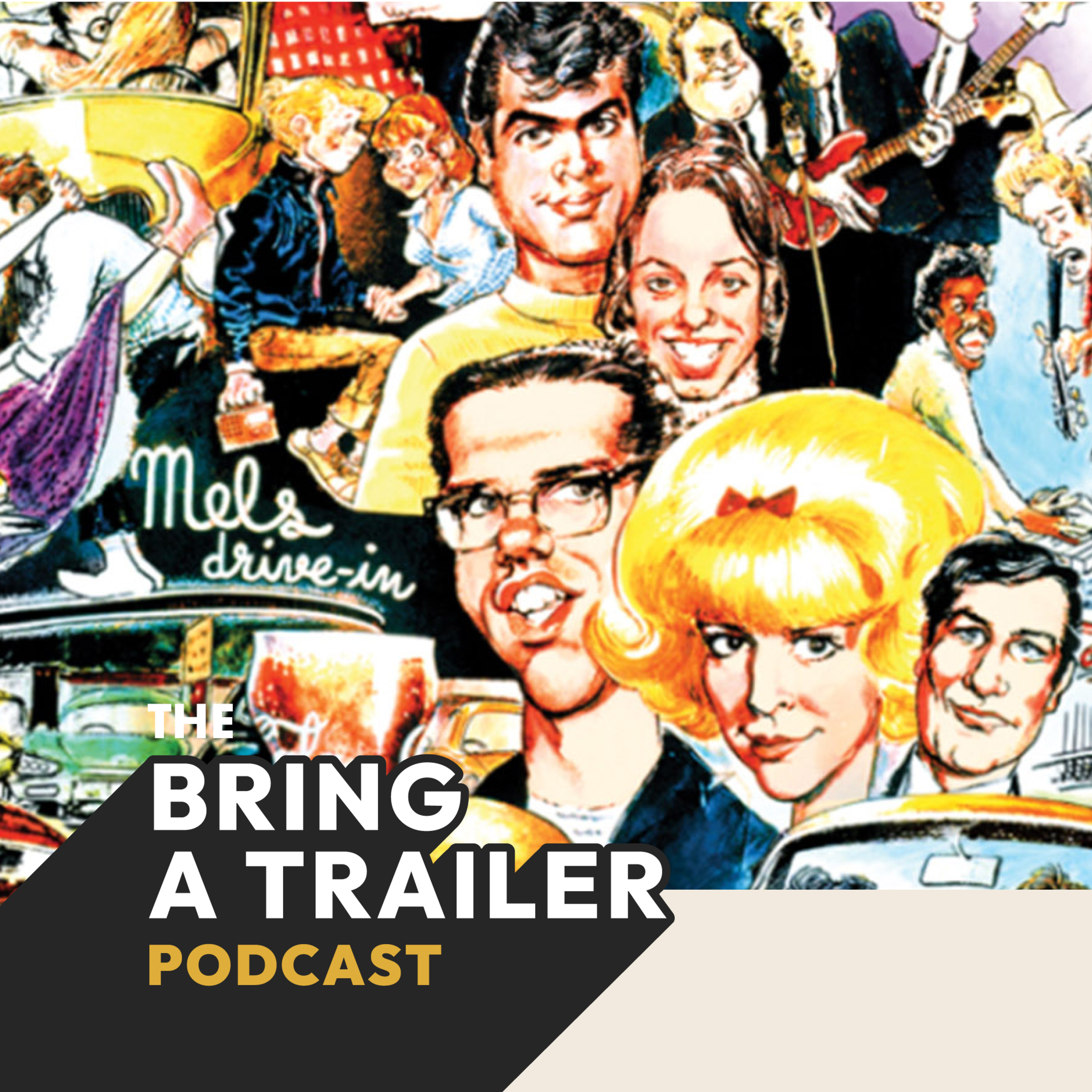
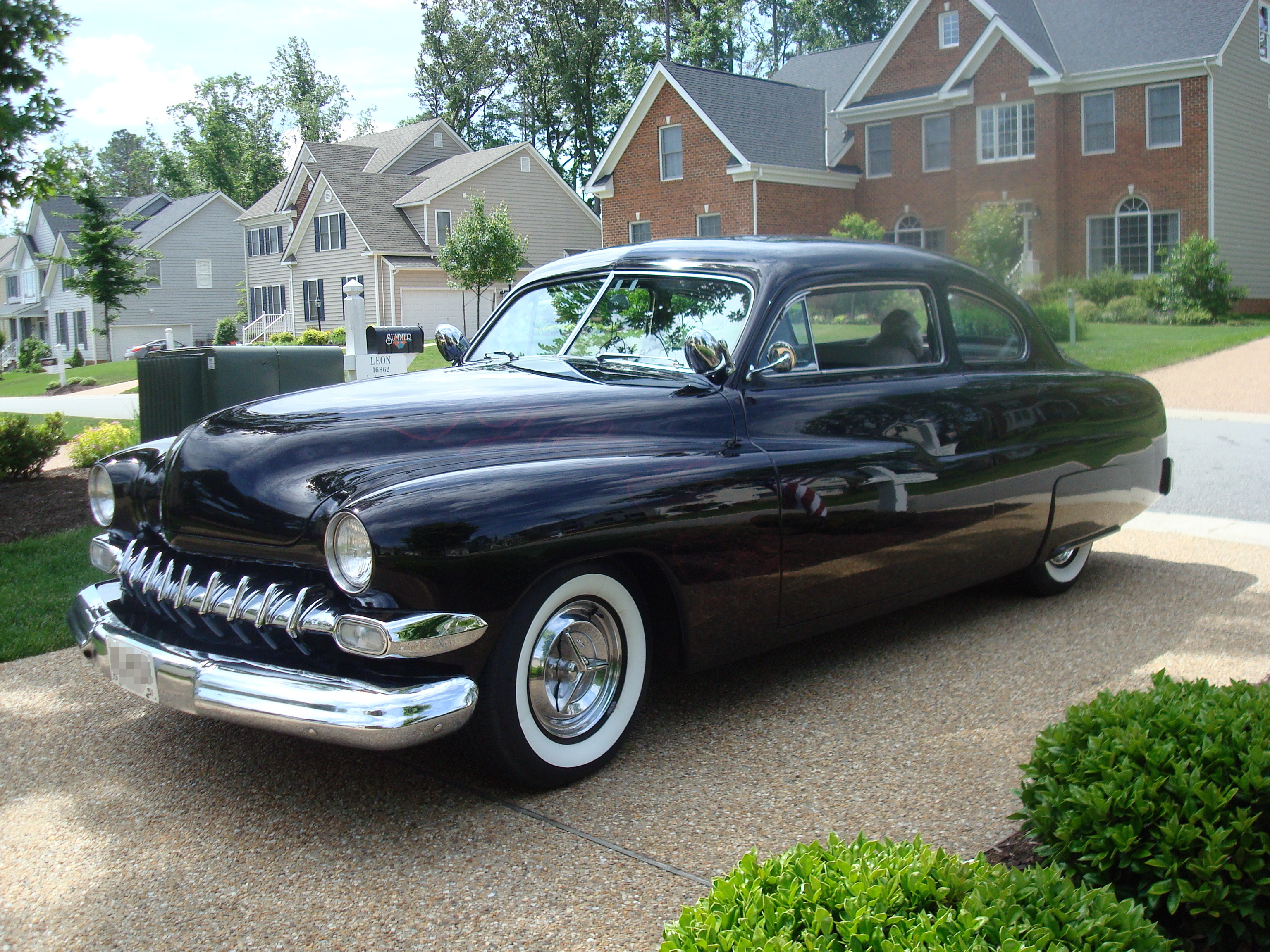
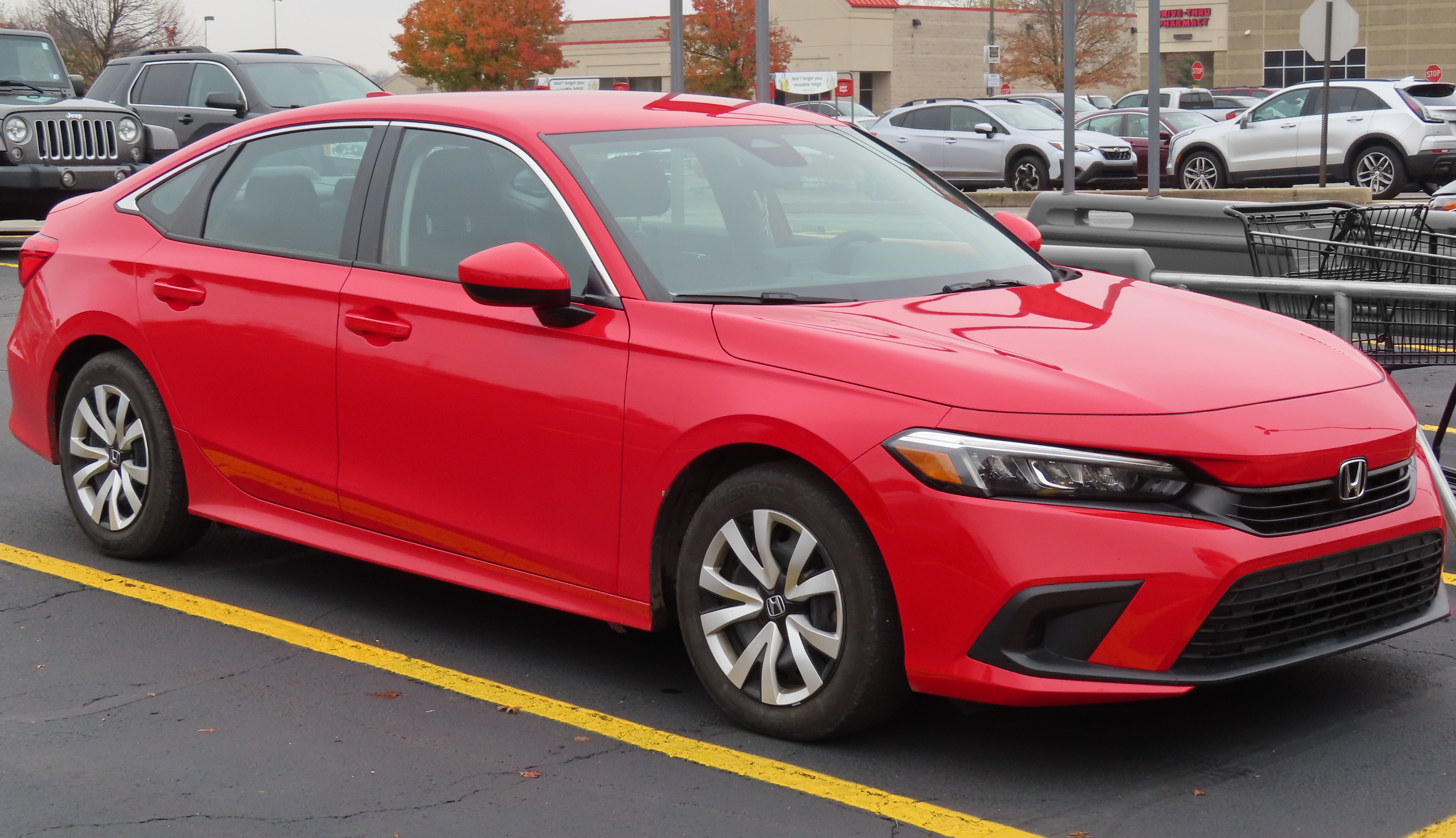
The Chevrolet Impala is a big, popular car that many people liked in the past. In the story, when the character Toad gets this car, it makes him feel more confident and noticed.
The Shelby Cobra is a fast sports car made in the 1960s. It combined a small British car body with a big American engine to go really fast and became very popular.
Car
Ford Deuce Coupe
The Ford Deuce Coupe is a classic car from 1932 that many people like to customize and make faster. It's famous because it looks cool and is part of car culture where people change cars to make them unique.
The Deuce grill is the front part of the 1932 Ford Deuce Coupe that covers the radiator. People like to put this grill on other old cars to make them look nicer.
The Ford Model A coupe is an old car made between 1927 and 1931. People like to change parts on it to make it look cooler or faster, like putting on a special grill.
A hot rod is an old car that people change to make it faster and look cooler, often showing off the engine. It's a popular style for car fans who like customizing cars.
A lap belt is a simple seatbelt that goes across your hips. It was used in older cars but doesn't protect as well as modern seatbelts that also go over your shoulder.
A wheelie bar is a part on some race cars that stops the front wheels from lifting off the ground when the car speeds up really fast. It helps keep the car steady and safe.
K&N makes special filters for car engines that help more air get in, which some people think can make the car a bit more powerful.
LIVE
Hello, everybody, and welcome back to the Bring a Trailer podcast, Alex Porter here.
On today's episode, I am joined by Zach Beck and Cam to discuss George Lucas's classic
film, American Graffiti.
We had a lot of fun rewatching this one, or in the case of a couple of my co-hosts watching
it for the first time.
We also discuss the cars at length, the making of the film, the production behind it.
Hope everyone enjoys it.
Thanks as always to our producer, Chris Baxter.
Bring a trailer podcast.
All right, American Graffiti, here we are.
We're doing it.
I want to start with hearing from all of you about your history with this movie.
We were always going to do this one.
It's an important one, but I want to start with Zach specifically, because the reason
this is only our fourth BAT at the movies is because you requested it.
So what's your history with the movie, Zach?
And why, why this one so early?
And this is also my first movie podcast with you guys, I think.
No, you do fast and furious.
Oh, yeah.
Sorry, that just.
You're losing your mind.
You've been on 50% of them.
No, no, this is only our fourth.
I was getting confused because I'm like a hybrid of Vin Diesel and Paul Walker in my
life, so it's all just kind of blurring to you.
Did you see our new artwork in the studio?
Shout out, Emily, really well done.
And I'm slowly replicating Paul Walker's garage one car at a time.
You are.
I actually think that, isn't that your favorite one came?
The Tyrese, Fast and Furious.
We're, we're pointing to some artwork that was Paul Walker and Tyrese.
Too fast, too fast.
Yeah.
I mean, that's the one I'm most familiar with.
That was like my era of fast and furious.
Did Emily do that?
She like commissioned, she got it for us after listening to you talk about your
love for Tyrese.
That's awesome.
Amazing.
Well, sorry to derail us.
We can take a few decades, step back into the fast and the furious of the 1970s,
which was set in 1962.
I made in 73 set in 62.
I would have always told you this was a 50s movie, but it's actually set in the
early 60s and George Luke's second film, which we'll get into a little more later
on, I think it's kind of a romantic look of his own upbringing and life in the
Central Valley of California, which resonates very closely to me and a bit
with you, Alex, and maybe Beck and Cameron have a little bit of that life
growing up a little bit, but yeah, for me, man, there's so many different angles
on this, but the thing that I think it does the best depiction of is the feeling
of owning a cool car at that time and place and what it does for your own
self-image and self-esteem and what the opposite does.
Toad's character is like the embodiment of that just so through and through
rolling up on the Vespa, but also the two CV in the opening scene when he just kicks
it because he hates it so much.
It's all just really resonates with me.
When was the first time you saw it and how long it had been since you watched it again?
I think I saw it, man, maybe I was like a freshman in high school, maybe even like late
middle school, and then the stuff that stood out mostly was just kind of the
music and the era of it all.
And then I watched it a couple of times in college, which was great.
And then rewatching it just this last week brought up a lot of stuff.
I was like, oh man, that totally slipped by me, but more in the negative
sign of the times type stuff.
I know Cameron had some strong opinions of that before we get on, but no trigger
warnings on this podcast.
No, we need to talk about all of it.
It does age with you, interestingly.
Beck, did you see this when you were young too?
No, my first time ever seeing it was for this podcast.
And I'm actually kind of appreciative of that because I don't think I would have
appreciated this if I saw it as a teenager.
I think I would have probably found it as kind of boring and unrelatable.
I grew up in the city where I had a car and like I went and got lost on Friday and
Saturday nights for sure.
But like cruising, I didn't have friends who are into it.
I definitely didn't have like a group of friends that were in the cars too.
So in that sense, I couldn't really attach to it.
I don't think it's so surprising for me to hear you say that, Beck.
And don't take this the wrong way, but meeting you as an adult today, you just
have the appearance of someone that was raised in the 1950s.
This is probably true.
You also, your background with cars makes it seem like you would have been
somebody who would have been cruising with your buddies.
Plus I was the one guy who owned a car.
Oh, they'd all get in the car and come with me.
I was always like the driver, which was an alpha Milano alpha male Milano,
Ford or, which is great.
Obviously when you're actually having a Ford or car with five belts is like
actually super helpful, would definitely shove more than just five people in
there sometimes.
But I loved cars, but I didn't really have friends who were super into it.
I wanted to might sort of know it, but we didn't really go cruising that much.
I would go out for drives, but I don't think this movie would have resonated in
the same way because I felt kind of different in that sense.
Like I didn't, it wasn't like the group of people that I was hanging around with
throughout cruising, but now as an adult and looking back, I truly enjoyed it.
I thought it was such a great watch.
A while it is kind of compared to modern times, a slower film for sure.
In the context of George Lucas and also his first film, which is beyond slow.
It is actually that context is still very enjoyable.
You've seen THX 1138 a couple times.
Have either of you guys seen it?
No, I haven't.
Okay.
His third movie, it's worth mentioning is Star Wars.
It's pretty impressive.
Did you, had you seen it before, Kim?
No, I sit similar to Beck.
This was my first time seeing it.
And also you've seen Star Wars before.
What's that?
Spaceballs?
Um, no, but also similar to Beck.
I don't think this would have resonated with me.
Had I seen this during high school, I did have two buddies in high school that
were the only kids in school with old, cool cars.
Shout out Stan and Jacob.
But Stan had an old, I think it was a second gen Thunderbird that he had cut
the pipes off of it and he was full greaser guy.
And so I, I had a little bit of that energy in my life, but funny enough,
like the area that I grew up in San Diego, we had a, a classics night on
Elkohon Boulevard every week that all of the heads would come out in their
old 32 Fords and their Bel Airs and stuff.
And we would go walk around that.
So I did have exposure to a lot of these cars early on into some cruising
culture because San Diego is strong on that LA and San Diego.
Yeah, a little bit.
I can't say I was super ingrained in it, but I definitely saw these types
of cars rolling around when I was younger.
And I also am glad that I saw for the first time at this age because I have
much more of an appreciation and nostalgic feel for that time in my life.
And I think it just allowed me to kind of appreciate the cruising culture and
what that would have been like in high school.
Totally.
And then so fun.
Did, was there cruising in sack, sack?
Kind of.
It definitely wasn't the same arm out the window, hollering at girls, but at
least not for me and my friends, but definitely that's kind of like what you
did on Friday and Saturday night, if you had at least partially full tank of
gas and no other money, you just kind of cruise around meet up with people, all
of the stuff where people are leaning out their cars and asking whether
there's something to do that's still so relevant to my upbringing of like just
trying to figure out somewhere to go, whether it's the Safeway parking lot or
deeper into sack and people going off, having their own adventures and antics
and then all meeting up in a different parking lot at a different point.
Fast food places too.
Probably a fast food joint.
That's what I remember doing, right?
Like everyone hanging out at Taco Bell or whatever.
A bit of that.
One of my favorite things that you have to be like a valley kid to really pick up
on is the entire movie.
It's all night.
It's night.
It's night to morning and they're in short sleeves the entire time because it's
so hot in the summer in the valley that it cools off to 80 degrees at night.
And then when they go to the radio station, Wolf Benjax just sucking down popsicles
because it's so hot in there and it probably doesn't even have AC.
So yeah, a little stuff like that makes me laugh and nostalgic of Valley
upbringing in and out.
In and out was huge.
100%.
Similar to you, I'd seen it in high school.
A lot of the movies we've been doing, I had seen them because they were like in
the car movie can and same thing with Bullet.
We haven't done it yet, but like Le Mans, Grand Prix, those movies, which we will
definitely do same thing, right?
Like you're supposed to see them.
And I did.
It's interesting hearing you say it came.
I did have by maybe junior year car buddies, like the guys that I was in
auto shop with and stuff, we all had cars and they were into cars.
So I watched these movies with them, thought they were cool, but obviously
didn't resonate enough that I didn't rewatch them for a long time.
And then maybe 10 years ago or so, I put American graffiti on and it's become
kind of a rewatchable staple for me, like put it on and kind of fall asleep to it.
Like I actually had not seen the end in a long time, like the race.
So I've seen the beginning half, like a bunch of times recently.
It's like a comforting movie to me because I don't need story or plot or
anything.
I love a vibes movie.
And this is an excellent vibes movie.
I can't believe you never saw the race.
I had seen it a long time ago, but hadn't made it to that part in a long time,
which is great.
Harrison Ford is so strong in that movie.
I think it's his first movie ever.
And he's got like 11 lines or something.
Almost none.
And he looks so cool.
And I'd forgotten he doesn't show up to prelate into it.
Right.
Relate into it.
Cowboy had his fantastic.
He's also like in his 30s.
Like he's already one.
He's already not young.
But then I think people have all heard it, like the storyline.
He was like a carpenter ahead of time.
He was like working on sets.
Right.
This is definitely, I think, was his first legit role.
And for this to then, well, funny enough to think about who's in this movie
and who carries on in their careers.
And arguably his is the largest, right?
Afterward.
And yet he's certainly not the protagonist, obviously.
He's the villain and he's not that important until the very end.
Small role, small role, but memorable.
Yeah.
Roll bar in the 55.
I have a whole section for the cars.
Let's talk a little bit about the background of the movie.
And I think that'll launch us into some stuff.
So like you said, second movie for Lucas, made in 1973, encouraged by Francis Ford Coppola.
I don't know if you noticed that.
I didn't notice that till this rewatch, the most recent one.
Francis Ford Coppola producer right up on there.
That actually helped get the movie made.
He encouraged Lucas after THX 1138 to write something about his youth and growing up.
Seven hundred and seventy five thousand dollar budget made two hundred million dollars.
One of the most profitable movies of all time, because it was re-released after Star Wars
in 78 with better sound and a couple scenes put back into it.
Yeah.
And so it made forty million dollars on that run, nominated for five Academy Awards,
including Best Picture and Best Director, which I didn't realize, which is awesome.
I mean, critically acclaimed at the time, four stars from Roger Ebert.
Pauline Cale didn't like it.
She doesn't like anything, but loved by most people.
Ninety five percent on Rotten Tomatoes today.
I mean, it was more of an iconic movie than I realized.
It was a really enjoyable watch for me.
I would go back and watch it again for sure.
Goes down easy, right?
Yeah. Also up against seventy three, some heavy hitters.
Oh, dude, it's crazy.
The Sting cleaned up that year.
The Sting won the Dragon is seventy three also and the Exorcist.
Yeah.
Exorcist actually won some Oscars, which was I think maybe still is rare
while Sinners just won some Oscars, but rare for a horror movie to win.
That movie freaked me out.
Another one I watched in high school because I felt like I had to.
And I've not stomach to rewatch on that one.
What's funny is the Sting feels like such an older film, like a whole way it's shot.
So not to go on like the shot tangent always, but this is I believe it's
Technoscope is what is shot on, which is a normal 35 millimeter film,
but not very tall vertically, which is why he got the wide angle.
It's a cheap way of doing films because you can get more frames per foot of film.
And thus, it also allows for because it's much smaller shutter.
It's a much smaller camera so you can attach it to cars.
You can do a very documentary feel.
And that's kind of how this feels.
It actually kind of feels like bullet in some ways.
It's very naturally lit. It's not naturally lit.
There's tons of lights being used, but it's shot in a way that nothing's
done on a set and it feels very real.
And I think that's actually a lot of the enjoyment of it.
Oh, you feel like you're there and you're a part of it.
Yeah. Super NorCal.
I just read a little bit about he.
Helen NorCal. Helen NorCal.
So kind of make it feel a bit more natural because there's so much
conversation in this movie.
He employed like a lot of two camera.
One camera on each person.
So they didn't have to really focus on hit your mark on the camera.
And it definitely came off that way.
Like it felt like you were very much in the dialogue that was happening.
And it's improvisational, too.
And such good background.
There's just the right cars in the background everywhere.
Well, something like three.
You don't know where that Mel's existed.
Is that San Rafael?
So like, do you know about 140 South FNS?
That was. Oh, this is SF. OK.
And then now it's housing.
Fascinating semi-troubled production started in San Rafael.
Couldn't do it in Modesto, which is where it's supposed to be set, his hometown.
Interestingly, Zach, I hadn't thought about your observation about short sleeves,
but like they actually filmed it on coastal northern California.
So it actually wouldn't have been that warm.
San Rafael gets pretty hot.
Yeah. And then they bumped Petaluma.
Right. Had to move to Petaluma because San Rafael kicked him out, which is hilarious.
Prime because it would have been like 60 to 70 degrees at night.
But if they actually shot Modesto, all the actors would just have sweat.
All over them, which might have been good.
Can we do a little Mel's corner?
Oh, do you know?
So Mel's, if you don't know, a chain of diner style,
very 50 style diner restaurants in California.
I did not realize there's actually two competing companies.
Oh, I didn't know that.
There's Mel's Drive-In, which is what I only know.
There's about eight of them.
There's three of them in San Francisco.
What's the one on Geary?
They're all Mel's Drive-In in San Francisco.
Then there's original Mel's.
And it's because the original creator of it started it in 47 in San Francisco,
went out of business in the 70s.
Then his son rebooted Mel's diner with his father.
They got an argument, split up the company.
And the father made original Mel's, which to this day has 22 locations.
And the son with Mel's diner has eight, but they still exist as two separate companies.
Interesting. No idea.
Yeah, but before this, which is the one in the movie
where they all did Mel's Drive-In.
And that one is in San Francisco, Zach?
Yes, it was once in San Francisco, South of Market, Mission Area.
Have any of you ever seen guests who's coming to dinner, the Sidney Patier?
Like, OK, they go to Mel's Drive-In in that too.
Oh, really? Yeah, it's kind of like a stabile, you know,
Catherine Hepburn, I think she goes there with her daughter in that.
Well, when that opening happens, when they're pulling into Mel's Drive-In
into the parking lot, every time like you see an inside shot,
it hasn't changed one bit.
Like going into any one of them now, it is identical.
Great mid-century design on the one in the movie.
It's so good looking.
Yeah, it's so cool.
And they keep coming back to it, which is cool.
Like, you feel like you know where the people are at all given times.
It's very much acts as a home base of the movie of like,
well, it's all me here and then go off on our adventures and we'll recon.
Reconning multiple times, yes.
Mel's doesn't do Dorset service, though, anymore, OK?
I don't go to a Sonic for that.
Yeah, OK. I've never done that.
Never experienced that before. Have you guys?
We got a Sonic while I was in high school
and the line was always so long that I would never go.
But they would roll around on roller skates and do the whole thing.
I don't know if there's any other.
I grew up in a household that was more militant about not eating in cars.
Kind of kills the whole Sonic idea.
There was no place to do that in the city,
which is ironic, considering that this started in Sam or at least Mel's.
Have you eaten in a Mel's all the time?
OK, they have great for kids.
They have Milner's Coupe all over the one on Geary Street.
Like the inside of it is like all the 32 Ford is just all over the wall.
One picture is production photos.
Whenever you search production on this movie,
the black and white photos you see of George Lucas on set
are plastered on the interior of Mel's drive into the state.
Well, and still the greatest thing about Mel's as a kid is your food comes in a car.
Yes, correct.
Twenty eight years old when he made this.
Cam, you're still young, but man, that really hurts me.
I mean, I'm 28 and I ain't not making a feature film.
What have you done when this door was through a hundred curation listings earlier today?
Apparently, the studio disliked it so much,
they said it was only fit for release on TV originally,
which is fascinating part of it because the cheap way it was shot,
which is actually I think a benefit to how it looks.
But fascinating.
Did you guys read about the drunken antics of Harrison Ford and company?
Oh, yeah. OK, so holiday in some.
Yes, dude.
Well, tell the story then, Zach, because I thought it was great.
I think you'll do a much more flowery description.
OK.
So Harrison Ford and then the guy who's the head of the pharaohs,
the guy who kind of kidnaps Richard Dreyfus and the actor who played
Milner driving the Deuce Coupe, the three of them were drunk all the time
and they got kicked out of their holiday and then they would have nightly
competitions to climb up the holiday in sign.
Harrison Ford got kicked out of his room.
I mean, actually, I'm like, man, I wish I was there.
And then they threw Dreyfus in the pool and he gashed his head open
and they're supposed to do a bunch of close up shots the next day.
Right. So just total fraternal antics
the entire way through.
And fascinating to me that those are the kind of the three people
playing badasses in the movie.
So probably like a lot of productions, you hear this,
they're like kind of getting into character a little bit.
Sure. And with that introduction that the drive-in is where you start
to be like one by one, the whole ensemble, if you will,
when Richard Dreyfus is brought on as Kurt.
Great if I'm wrong. That is Mike Barron.
Oh, my God, I've always thought Mike Barron looks like a young driver and talks
like Mike Barron. And I'm just like, this is him.
He's also the character that I'm the most.
I just like him. I want to hang out with him.
I think Dreyfus is amazing in the movie.
He was my favorite part.
And that's how I feel about Mike.
I just love hanging out with Mike.
It's always fun to be around Mike.
So it's a good analog there.
The way he handles getting kidnapped by the pharaohs is great.
That's fantastic.
Well, you know, who else auditioned for that role and didn't get it,
but then ended up in a George Lucas film, the Mark Hamill.
Mark Hamill auditioned for the Dreyfus role.
Yeah. Really? Wow.
Well, and then and I didn't know this because I wasn't a happy days guy,
but Ron Howard's character in happy days is like apparently very similar
to his character in this.
Well, the happy days is basic.
I probably would imagine they green lit that based off of this
massive success a year later, right?
He's basically playing the same role.
The, you know, 50 years later,
internet legend is that this was a big reason why 50s nostalgia
took off in the 70s.
That is this movie, even though it's set in the 60s,
the guys on the rewatchable is one of my favorite podcasts.
They have this theory that, you know, everything, I mean,
it's a broad theory in society, but after 20 years,
nostalgia always comes back and I remember thinking many years ago,
I probably said this to you, Zach.
Well, 90s baggy pants are never going to come back because they were terrible
and they did.
So now we're at like the 30 year mark for that.
In the internet era, it's a little bit less, whatever,
but there was certainly a huge 50s nostalgia wave in the 70s.
Well, and I feel like it is and Motorola razors are ripe for coming back.
Well, it hits harder and certain.
Like, I feel like the 80s, there wasn't a huge
targeting for the 60s, like, I think the 80s definitely embodied itself
in the culture that came out of it.
And it is interesting to see that in the 70s, there was such a.
And it's also interesting in it's set in 62, like he could have taken
the music, the cars, a completely different direction, but I feel like
he really was leaning into the 50s thing for being set kind of well into the 60s.
School us on the music a little bit, Cam, because it's such a big part of this.
Well, a big part of this is that a ton of the music from the movie is
from the early to mid fifties, kind of getting into the later fifties
with some of the more rock and roll stuff.
But music was a huge part of this movie, you know, just going off
of the budget that we were talking about, 770,000 70 to 100,000 is kind
of the reported estimate that was just put towards licensing music for the movie,
which was exorbitant at the time.
So yeah, nearly 10% of the budget.
And that kind of like changed the movie industry on a whole.
As far as like hiring a dedicated music reference, I don't even know
what that job would be called in a movie.
Someone to select all of the scoring compositions and music for a movie.
The person that did that in this was actually, and I love this, was George
Lucas himself when he was writing the script had 45 players sitting on the desk
and we just kind of throw on songs as he was writing and either let the song
influence the scene or try to take the scene that he's writing and find a
song that really connects with it.
And through that, you start to get this really natural character that
the music plays, both being a bit of a narrator for what is happening
throughout the movie, as well as emphasizing what is happening in each scene.
And I love that it is.
And Alex, you kind of mentioned this, but it is a it's a diagetic score where.
Hang on, I'm Googling diagetics.
I only learned about book.
I only learned about this term recently.
It's fascinating.
It means the people hear it.
There's weight.
It means the people.
It's not just the people watching the movie hear it, but the people in the
movie hear it to play naturally.
Well, and not only that, it also helps contextualize scenes where like the
scene where Kurt is looking for Wolfman Jack.
I forget the exact song that's playing.
I think I have it here.
Crying in the chapel.
That song throughout that scene of him searching for Wolfman Jack, it starts
off basically like you would hear it.
If you were listening to it on headphones, straight off of a recording
press or whatever.
And so it's very clean and crisp.
And then it transitions to Kurt in the car, searching for Wolfman Jack.
And it goes to more static, low-fi, more AM sound.
Cause he's hearing it on the radio, right?
Cause it's coming through the radio.
Transition to him getting out of the car, walking into the radio station.
And it moves into a similar roomy sound where you can tell it's not coming
through direct speakers, but it's much cleaner than the car was.
And it just really creates this whole storyline within a scene.
And it does that in so many, including having like the actual band at the
sock hop.
Oh, dude, wait, I have a question for you on this.
I thought that band kind of rips.
Is that like, like you're a musician, I mean, Flash, Cadillac and my
continental kids, it looks like they're really playing and like they, they're
good and like the harmonizing is good.
What did you think about that scene at the sock hop?
Flash Cadillac and the continental kids were a fantastic band and like, and that
was them, that was them playing on the stage.
Who knows if they were actually playing live and having that recorded.
I think they were named in the opening credits.
I think we all imagine.
We have to acknowledge this movie is a prime example of high school
kids that are all in their thirties.
Oh my God, totally.
Everybody I'm watching, I'm like, they look older than me.
I know, I know.
People also look different in the seventies.
It's a combination.
Yeah, yeah, yeah.
Well, and I'm so curious, have any of you seen more American graffiti?
The scene?
No, I read about it though.
I'm not too.
I'm probably not.
Yikes.
I actually, I actually got, I think I told you this guys, I got offered a car
that was in that movie, a dragster that's in that movie, which I, I'm kind
of curious to see if it's supposed to be terrible.
Yes.
Oh, rotten tomatoes, 20%.
I think I'll stop there.
Okay.
So other amazing music observations, Cameron, I mean, deep on that, a bunch
of stuff I've never picked up on.
And you're totally right that the majority of the music is fifties, but has
green onions ever slapped harder than when they're pulling up to the.
I mean, green onions slaps hard every time.
Do you know what year that came out?
Is that 64?
No, it's 62.
Okay.
Here are the movie sets.
So I would have been the sick track to put on when you're cruising around.
And that's the setup for the drags.
It's so good.
So good.
And I'm not a music file at all.
But however, I noticed while watching this film that there's one very notable
sixties band that's never a part of it.
And I had to sort of look it up and realize, oh, it's because they didn't.
First album isn't until a year later.
Uh-huh.
There's no Beatles.
Oh, yeah, right.
Like a huge, it's almost like important that this takes place in 62.
Otherwise, I would imagine it'd be completely different one year later.
No Elvis either, because they wouldn't let it in.
And like, you'd have to tell me, but apparently Elvis would have definitely
been playing at some point somewhere.
Oh, a hundred percent.
And I don't think it wasn't that they wouldn't let it in.
Yeah.
The studio just refused to pay what the.
Oh, what he would have.
Yeah.
The publishing costs for his music.
Um, but yeah, Beatles landed in the US in 64, I think.
So correct there.
And that if it was 64, 65, for sure, all of the stuff on the radio would have
been Beatles into stones, which is why I'm curious what timeline the sequel
has set in and what kind of music is used in that movie.
Well, here, here's the question.
I think we need to just forget the sequel.
So like, pretend it didn't happen.
It hadn't even been directed by Louie.
Oh, really?
But some of the people came back, the guy who plays Johnny Milner's back.
Guys that most needed work came back.
Totally.
No, Ron Howard's still in it, I think.
The reason I think this feels like the fifties still is like, you know, in
history circles, they'll sometimes talk about a long decade or a short decade.
And the early sixties are part of the long fifties, I think, right?
And the Beatles is actually maybe when the sixties start.
So you'd actually have a different feel in the movie if it was set even just
two or three years later.
Well, I was going to say Beatles aren't really cruising culture.
Right.
It would be a totally different.
The haircut would be different.
Everything would look different, right?
It's also like so many of the hits from back in the day.
They were all just about teenage stuff.
And so it kind of makes sense that you could probably throw down just about
any top 40 hit from, you know, 55 through 60.
And it would probably work in some sort of scene within this movie.
I would love to hear your guys's take on what role do you think Wolfman
Jack played in the movie?
Do you think he was a narrator?
Do you think he was kind of just adding to the storylines of each character?
I love that part of it.
And from what I understand, he had like a four hour cut of this movie.
And it didn't really make sense.
It's vignettes.
Like I grew up on Star Wars.
I love Star Wars.
George Lucas is not my favorite filmmaker.
I know why he's revered.
Iln is so important.
Star Wars, the IP around Indiana Jones.
Like it's some of my favorite stuff.
It was just a movie of vignettes.
And I can't remember where I read this.
It was one of the editors.
I mean, he wanted to edit it himself and he did keep cutting it down.
But the story made less and less sense.
The more of it he took out.
I mean, it's just like Star Wars.
He wrote nine movies worth of stuff and made one movie out of it.
Right. I believe the Wolfman Jack stuff, which I think was encouraged.
I mean, he loved Wolfman Jack, as you probably read, right?
When he was a kid, it ties everything together.
It's the way you tie all the various little vignette stories together.
There's this one constant announcer who everyone's listening to.
Right. Yeah.
And I also loved I've found in some research that all of the calls that happened,
like the Wolfman Jack call in thing were all real calls back in the day
that they just pulled from their archives of various, I think it was like 300 plus
hours of calls that they listened to and just pulled from the best ones
that they thought were the most interesting.
Well, it's cool.
There's a lot of reasons why this movie would never work in a more modern society.
But Wolfman Jack is one of the main reasons because he's the connective tissue.
And now there's not this one media outlet that everybody kind of gravitates towards.
People all have these different niches.
So it looks pretty different.
Plus, I mean, texting and Tinder would totally kill hollering at people out here.
The monoculture is dead. Cam didn't even grow up with that.
You're about the end of monoculture.
Beck and I grew up when it was still everyone saw Titanic or everyone knew whatever.
But that is long gone.
There's too much stuff now.
And it's niche. Everyone can find their people.
Get into the cars.
OK, we do. We do.
But I do want to just say one thing that we didn't acknowledge that George Lucas
modeled the characters of Kurt, Steve and Terry and himself of different points in his life.
And all three of them are super relatable for different reasons,
at least for us, which I think grew up with low self-esteem.
Good thing Howard's not here.
But especially Toad, when he gets the Impala, it's like life changing.
Yes. All of a sudden, he's sitting up straight.
He's making eye contact.
Calling out to girls.
Yes, that's right.
It's unreal. That's all it took.
And that's probably all it would have took for us in high school.
How many girls have been excited about the upholstery in your car ever?
The Honda Freelift.
Is that a real thing that has ever happened?
Beck did a bunch of car research and I want to dive into.
I will just say I did have a lot of those fifties jams in my head,
like for a while, like they got stuck in my head.
Oh, yeah. And I'll do that.
Zach, we should talk first about Lucas's car background,
which I didn't know about till I did the research on this.
Sick. I mean, he's an interesting guy,
whether you love his films or not, he still seems like a good person.
Totally appreciate.
And I think he's quoted.
I'm sure you read this article, too, that he's like, I'm not a car collector.
I'm pretty frugal with my car purchases.
He buys what he likes.
We got to talk about his auto Bianchi because that gets us to,
I think the modern cars he owned or cars in his modern life
or a Ferrari Dino, which he said he loved.
He had a Ferrari 360, which I love, which I was so excited to talk to you about that.
Yeah. And then that was from an 04 article.
So that would have been a brand new mode at the time.
Yes. 67 Camaro and two Tuckers,
which it has to be because of his Francis Ford Coppola friendship.
Well, he sold one in 2024.
I don't know if he still owns the other.
But they're buds.
Coppola made the Tucker movie, which we'll do eventually in the Coppola Winery Clubhouse.
Oh, man, maybe not for much longer after his last.
Megalopolis.
You mentioned that Toad is him when he's a freshman and he's a nerd.
It makes perfect sense.
The Kurt character is him as like a USC film student,
which is like how I always picture young Lucas, you know, with the beard
and the plaid shirt tucked in, you know, in Tunisia, making Star Wars.
That's Dreyfus and Johns Community College ripping around 100 percent.
And I didn't know till I did the research on that, that he was like a hot rodder.
And did you go into the Shelby stuff, Zach?
OK, great. OK, good.
Up on this.
Do you want to talk auto Bianchi first or what?
Because there's so much good stuff.
Cam, back, did you read about all this stuff?
No. OK, I did not know you.
I mean, this is a formative moment in Lucas's life, which is also
funny to me because it coincides at a time where I was a little older,
but I got in that gnarly motorcycle accident. Totally.
He was driving home.
His car growing up in high school was an auto Bianchi.
And you can find photos of it.
It's super modified.
Like he's got a shop windshield.
I want to know what's up with those shields on the side.
Yeah, I was trying to figure out, Zach, it must be a cab with the windshield chopped.
But it could be a sedan.
These are Fiat 500s, as you know, auto Bianchi's are Fiat 500 based.
But his was all hot it up.
And there were definitely a lot of speed parts.
Check that shot.
You can still see the Modesto license plate frame on the front.
Wow, a young stormtrooper.
Ha, good call.
You know, there's a cut down Lola T70 and TX.
There's a pair of them.
Yeah, OK, so 1138.
So that was his car.
And he hopped it up when he put a short ratio of four speed in it
so he could actually compete at the drags with this little thing.
And then as the story goes, his friend in also an Impala, I think.
It was an Impala.
What's coming up behind it?
I think it was a 58 Impala, same as in the movie.
Yeah, I think on like a two lane road or something, trying to catch up to him.
And Lucas didn't see him, flipped on his blinker, hung a left and then Paula slammed into him.
He rolled a bunch of times.
It's a brutal car, brutal photo.
No heartbeat, two collapsed lungs.
Didn't think he was going to make it, but came out of it.
And that's basically how we got the George Lucas we all know,
because he had this near death experience and said, man, life's fleeting.
I'm going to make something of myself.
It's amazing stuff.
Never knew any of this.
Wanted to be a hot rodder, wanted to be a racer, was buddies.
I think around the same time he worked in a shop,
which is where he was hopping up the auto Bianchi, made friends with Alan Grant,
who is up the famous Yellow Shelby.
He was a works Shelby driver when he was 21.
And he had an 18 year old mechanic that he took all the way, I think,
to Sebring, Zach, that was George Lucas pulled up right now.
Chassis numbers and that's allegedly a George Lucas designed livery.
We'll put pictures of all this in the pod thing and painted by George Lucas.
That Shelby, it's this yellow.
You've probably seen this car.
It's a famous, that's the Alan Grant Cobra.
I never knew any of that stuff, Zach.
Wasn't that so cool?
Yeah, that's a brand.
I mean, I always liked Lucas and he loves machinery.
Obviously we have to have airplane corner.
I mean, that flying wing that he invented.
Maybe that was Spielberg.
Spielberg likes airplanes, too, in the first Indiana Jones, where he fights
the big bald guy and punches him into the propeller.
Like he's always got great vehicles and all of this stuff.
Anyway, I thought that background was amazing.
And I believe back segway to you, that's why the Milner Coupe is yellow.
So few special cars in this movie, like honestly, probably the best example.
Let's start with what's the most iconic?
What's the one that you think of?
Is it the Deuce?
I think it's the Deuce Coupe.
It's not a Vans.
It looks, it pops out in night photography so well.
That was, I believe, actually a chopped car they found already and then did
some further customization.
But full fender, a red full fender car.
Full fender, but obviously they did the cycle fenders for the film itself.
Also, crucially, a channeled front grill, which I don't know much about
hot riding culture, but when researching about this, I started looking up like
copies of it and some of them started to look kind of odd.
And it's supposedly because the channeling is like one of the hardest things.
Yes.
And so a lot of people don't do it.
Why is that, Alex?
So the Deuce grill is very famous.
People even put them on Model A's.
We have a Model A coupe that I want very badly right now and has a Deuce grill.
And it looks so much better than the standard old brass radiator because it's
got a, when people talk about the grill, it's actually the grill shell.
The radiator is behind it.
So it's the beautiful Deuce grill is the shell around the actual radiator itself.
Whereas if you go back into the 20s, the radiator is all one piece.
Like the grill is just the radiator, right?
But this is a shell around it.
Model A's and 32s are really easy to chop because they're vertical.
Like if you look at the windows, the roof line is very easy to chop because you
can just take some section out of the middle and drop the top.
The A, B, C copillars are all very vertical.
What's really hard is chopping slopey cars.
So the pharaohs will get to it eventually.
They're 51 Merc, those are called lead sleds.
And the reason that's so hard is because you have to do all kinds of crazy
work to deal with the sloped pillars.
And then you lead, you put lead over everything to smooth it out.
That's where the name of those comes from.
But much easier to chop a Model A or a Deuce because it's vertical.
For the body, yes.
But for the front grill, it's still rather difficult.
That's where people will skip out when I'm making the replicas of these.
And thus, I think you can buy a fiberglass chopped grill now.
So while like my whole fiberglass body to sure, Alex, the profile of what
the car looks like in the film, very aggressive, small front and big rear end.
But when you look online, people who've not done that on the front, it looks kind of goofy.
Well, the other problem is, and this is true of the Model A on the site right now,
you'll notice it doesn't have a hood top, the Milner Coupe, and a lot of them don't.
That you couldn't actually put a hood top across the top.
The grill is too high.
The hood wouldn't match the cowl line.
And it's a thing people complain about.
No, it doesn't look aesthetically correct.
Yeah, I actually like hot rods with a hood and hood sides.
I don't need an exposed engine.
We had that white 32 recently on the side of the thing was.
But built in California meant to be purely for this film.
Still exists to this day, supposedly, from what it sounds like,
it's owned here in San Francisco by a collector, which was kind of wild to see
that that's still sticking around.
But yes, so obviously the Milner Duce Coupe is the primary hero car.
Probably I'd say the number two car would be Bob Thalfa's 150.
That one there were.
Wow, that's number two.
I would put the Impala at number two.
I would kind of put the Impala at number two as well.
Oh, I sort of thought of the 55.
I tried to do a little research on this.
And some people think the T-Bird is like the notable car from the movie.
That's another fantasy girl's T-Bird.
Yeah, but Bob Thalfa's car, there were three of them.
There was a main hero car for most of the shots.
There was the stunt car.
Then there was the car that they burned at the end for the hero car.
Four twenty seven, supposedly an L-88 motor put into it with a four speed
so he could actually shift it while driving four speed in the Duce also.
Interesting. T-10.
Yep. But then the stunt car.
What's the motor in the three twenty seven Corvette small block with four?
It I didn't notice it when watching it with four Rochester's on it.
Apparently it does have like the trumpets like stick outward.
So it must be in a square setup when he goes and takes the plugs out at the end
when he's going to raise such a six.
Well, another interesting thing is I could be wrong on this,
but I'm pretty sure three twenty sevens didn't come out until 1962.
So most of the engines actually weren't available, which is why,
for example, in Bob Falafell's car, there's never a hood open shot.
The four twenty seven motor, those and it wouldn't have been available then.
And then the four fifty four, that's in the actual stunt car.
Again, we don't want to see it, but that stunt car has to be
doing a lot of drags, multiple times, multiple shots.
They need it to be very robust and also be very reliable
in the sense of where it's going to hit its marks every time.
So that was an automatic transmission for that one.
And then for the car that they flip, they were struggling to get it to flip.
And so it's actually if you watch it closely,
it's sort of like in most car flip scenes and movies now,
like all of a sudden, like the front left corner for no reason just starts to lift.
And so they do, yeah, obviously have to destroy that one.
And that car is the one that struggles more in its history.
It's a lot of unknown cars got destroyed.
People say they've got one because it was actually, I believe,
a universal studio's like prop car that was used in previous films beforehand.
They basically that's the fifty five.
Correct. Yes, they pulled it out of their sort of inventory
of already built vehicles that were reliable for it.
And they sort of padded it with the hero shot car and then one they crashed.
But I would agree the 58 Impala stands out so much before we talk about that.
I just want I want to hear from you.
None of you are really hot rod guys after watching this because I love these already.
And I'm like, God, I need to redouble my efforts to get a deuce coop.
And I specifically want to coop not a roadster.
The roadster is arguably more the icon as a hot rod.
Where do you guys land after watching this on hot rods, like pure hot rods,
like thirty twos and also on tri-fives.
Well, Cameron's already got the tats for one.
I've always had a bit of affinity for for hot rods of this era.
If I'm being honest, like a deuce coop has been up there for me as like,
I just love the looks of those cars.
And I also just love the culture behind, you know, modifying your stuff,
running what you got.
I think it's I think it's all really cool.
I have a strong appreciation for them.
I would be down if the opportunity to borrow yours someday and just cruise around for a day.
I think that would be the experience I'd like to have,
but it's not something I can really see myself in.
You can see from the way Milner's sitting in it.
It's like a pretty horrendous experience to be in one of these high boy roadster.
We've had a few that I've really like.
This black car really resonates with me.
Oh, totally.
And that's the clone of the famous Done Spencer V Wincher, which Bruce Meyer owns, right?
That's maybe the most famous hot rod, the black thirty two roadster with the V.
Winchield lot number one, nine, eight, two, four, zero classic.
Well, and and honestly, maybe it's just me wanting to be Harrison Ford.
But I also was a little intrigued by having a little two door one fifty.
No, give me a Millennium Falcon.
Fair enough, man.
I look at my watch list the other day and it's like all tri-fives and hot rods.
That's what I'm interested in right now.
That line, I think it's Harrison Ford who gives it where someone asks what you got
in their kid and he says more than you can handle felt so fast and furious of more
than you can afford, pal.
Like you instantly got that sense for that scene.
Love that there's a roll bar in the fifty five, which seemed kind of crazy.
You know, this is like an era of like people not came in to help at the end.
Totally.
And also Zach, that crash and the auto Bianchi that Lucas had in real life.
He had a seatbelt on and that would have been sixty one or something like that.
So kind of questionable whether you'd even have one and he had a seatbelt on
and he was like Zach said he was thrown out of the car eventually, but it held him
in for some number of rotations.
So you have to have been a lap belt.
When the tri-five flips, I just can't not see the fifty nine Bel Air versus two
thousand nine Impala IHS crash test.
Have you guys all seen that now?
So I mean, the fifty nine Impala just disintegrate.
Is that where the car just there's nothing left of it?
Yeah.
And there's all these conspiracy guys in the comments being like, oh,
they they took metal out of that car.
No, I'm shocked at how well that thing crashed when they rolled it.
The robot's got to be a big part of that.
Oh, maybe a good segue into the fifty eight Impala is I think there's a
misperception amongst particularly younger car people that these big old
American cars are super heavy, but they're actually not like modern cars
are heavier and part of that because they have so much better crumple zones.
So is the design of the structure for sure.
I mean, the fifty eight Impala was not light.
No, it's not light, but it's not.
I've heard people say things like, oh, you know, cars were so big and heavy
and boat like back then and like actually I bet those two cars that you just
showed us crashing, they probably were about the same curb weight.
Probably both like four thousand pounds.
It's in there.
I don't know what the oh nine Malibu is, but not light.
Fifty eight Impala between thirty four fifty and thirty six fifty.
Yeah.
So less than a current M three or two.
Is it like a two series, like a thirty eight hundred pound car?
BMW is not a fair example, though.
Back, I don't know if you saw this in your research, but apparently the Chevy
one fifty and the Deuce Cube both sold to the same person after the movie.
It did.
One guy bought them both.
Steve Fitch and actually the one fifty that was eventually found and saved
the real hero car is currently being restored by level one restoration in Colorado.
They're doing the YouTube videos about the process as well.
So look them up, but that car is essentially survived.
And then also the Deuce Cube is still to this day here in the city.
And then did you in your research, the license plate on the?
Well, hold on.
Should we get into Robert Duvall corner?
Oh, yes.
Every every episode, you got to do a Robert Duvall corner.
We'll have a little jingle.
He was in T.H.X., right?
Chris put in a little jingle for Robert Duvall corner right now.
I love the spell of the morning.
All right, we're back.
And Robert Duvall obviously not only is in T.H.X.
eleven thirty eight, which is the license plate T.H.X.
one thirty eight because he couldn't have a seven digit license plate back then.
That's his character's name.
He's the title character in the science fiction film that was George
Lucas's college film project at first and then was then redone partially
and re-released as a feature film prior to American graffiti.
But Robert Duvall was in that film.
Awesome. We never want to go into an episode without talking.
Maybe we have to have gotten in 60 seconds next, the rebake.
Or I was thinking this is a perfect example of a one degree of separation.
Robert Duvall film and we can do a rating for each movie.
How many degrees of separation it takes to get to Robert Duvall?
And then I also thought it was cool.
The lead sled.
Do you see who purchased it?
No, the Mercury. Yeah, yeah, yeah.
Fifty one Merck and that had already been modified back.
What's the history on that car?
Yeah, this is the Pharaoh's car, the game car.
I believe Van Halen bought it.
Oh, that's right.
That's right. So we got parked.
There's a more music cam.
If you ever did like the Universal Studios Backlot tour, like in the tram
that drags you all around, you would eventually go through the parking lot.
Well, they had a bunch of film cars sitting there.
As a kid, I saw one of the original Time Machine DeLorean's there.
And I was like, shot that it was there.
Eventually that one then got restored.
Now it's in the Peterson, but supposedly that's where the Mercury Coupe was.
And eventually Van Halen bought it and then apparently went to Brian Setzer.
Yeah, which is the perfect musician that should be owning that car.
Do you know, does he have it to this day or not? I don't know.
No, so went to Brian Setzer, Stray Cats, Brian Setzer Orchestra.
But then he sold it to a young car collector in New York.
And then that collector died by suicide.
And then the last known report was he was resting in a junkyard
because the father of that collector would not sell it.
Oh, interesting. Yes.
It has really interesting hubcaps.
I presume that's the real car they're filming in the back seat of where there's all the fuzzy.
Yeah, I love that.
Who do we think here would be the most likely to actually end up joining the Faro's?
Oh, good question. Not me, but.
It's not you. It's probably not me.
Cam, would you be in a car gang?
Yeah, sure. Yeah, I get to wear the cool jacket.
You get the cool jacket.
Well, as long as you do doodiness.
Tabitha is actually the most likely to join the car gang.
She's already hardy to sell cutco knives in between high school and college.
That's your answer.
Tabitha it is.
So the other biggies are the.
All ours would be in the Suzanne summers in the Thunderbird,
which is such a weird.
I had no idea my wife actually pointed that out while we were watching it.
I had no idea it was her.
But the Thunderbird is 56.
T-bird, you guys, that's my favorite year of T-bird.
What about you? That's 56.
First four.
Oh, 57 guy.
57 guy. Interesting.
Continental kit in the back.
Oh, you're pro continental kit.
How could you not?
Oh, my God, this is the breakout moment of the pod.
Oh, no, two thumbs down on Continental kit.
Continental with a F code supercharger in there.
Oh, well, F code is strong.
F code is strong.
But if you go full Thunderbird, there's another movie reference in there
that I can't say exactly for lying.
But that's why the 57 is like the epitome of the T-bird for me.
I will say the final shot of the T-bird rolling on the road
as Kurt's looking out of the airplane window.
Maybe it's some unresolved relationship trauma.
But I was like, damn, that that kind of hit totally.
Totally. We got to find you a payphone after.
But yes, the 56 Thunderbird, the 58 Impala.
And then lastly, the 58 Ed Soul.
Oh, right.
Come on, the two CV in the vest.
Yeah, the two CV.
True. Vest book.
And the police car.
Oh, yeah.
Getting the rear end yanked out.
Yeah.
Supposedly the two CV was actually a much later 60s.
Like this specific one that was in it was a local car.
They had a guy come bring it out.
It was like a 67.
But because of the two CV, it doesn't really matter.
It could have easily been from the late 40s.
Yeah, totally.
You to know European or Japanese cars.
Couple three fifty sixes.
Do you spot the three fifty sixes?
There's a couple.
There's one scene where you see one and there's another scene where you see two.
Oh, yeah.
People hanging out in the back seat of a beetle, which is problematic.
There's a three fifty sixes of some sort in the shot of them at the airport.
You can't really tell what it is.
You just see the back end of it.
But yeah, not a lot of European representation.
Is there a single Japanese car that you guys spotted?
I didn't see a single one.
Even in seventy three when they made it, that would have been rare.
But in sixty two, was there any Japanese car even sold in the U.S.
in sixty two? I don't think there was.
Yeah, on the six hundred is one of the first Japanese cars sold here.
And that's like sixty five, maybe.
When were the Dotson dealers with those early squarish bodied Dotsons?
Mid to late sixties, something.
Sixty two would have been.
I mean, we're all struggling here.
Somebody can just Google first Japanese car sold in the U.S.
But it would have been around this time or even a few years later.
I also love that all of the extra cars in the background,
they basically just sent out like advertisements.
Sure. NorCal car clubs just being like, hey, bring your car out.
If you got paid like twenty to twenty five dollars a night for it.
But I just I would love to be hanging on the set
for those totally with those people, because I'm sure that was quite a scene.
But just the the casting of the background cars,
like it really felt like you were living in that time period.
And part of that monoculture,
I feel like that would be so much more successful then than it would be now
to try and get like three hundred cars and teenagers to show up
and like hang out during the night in the background.
It seems like impossible.
But that's literally what they did in the Fast and Furious for the right.
But now that's still within the window of like that time.
Come on, what are BAT alumni events?
I mean, time is such an interesting thing.
This is set. I'm messing with you, man.
This is set 17 years after the end of World War Two,
and it was only made twenty eight years after the end of World War Two.
And Fast and Furious was made like twenty eight years ago from today.
So time is a crazy thing.
And this movie came out. Time was a flat circle.
Months months before the oil crisis.
Oh, totally now. Right.
So like it's celebrating something that's just about to they said
that killed cruising culture to a large extent.
This movie did come out like months before the oil embargo in 73
that set gas prices off.
So while it may be reinvigorated a bit of car culture,
I can't say financially it was too successful.
When is the peak of American car culture?
I actually think it's when this movie set.
Like when's the time when the average American or even American car
people are the most into cars?
Well, peak implies that it's downhill from there, right?
Yeah, I think there's multiple peaks.
I think there's post World War Two enthusiasm, economy booming.
And that's late fifties up until the early seventies, right?
And then you go into a valley until maybe around the late eighties,
which climbs up into the mid two thousands.
I think that wave gets ridden pretty hard.
And then there's financial crash, which derails everything.
And then again from 2011, 2012 to maybe even today,
I think is kind of another peak resurgence.
I think if we're talking peak American car culture,
meaning not just Americans, but American cars,
then definitely there's an argument for that being around that time early sixties.
Because while all the muscle cars really start to come out
64, 65 all the way through into early seventies,
that is actually American company sort of corporate culture.
Corporate culture leveraging what is prior to that been the boom
of the youth culture in building their own hot rods and street racing
and cruising around.
And then really it's later that the corporation sort of catch up to that,
cash out a bunch of money and then, of course, big giant oil crisis.
And then, yes, that does crush that part of it.
And then all those subsequent booms in car culture are not,
I'd argue, centered around American cars
or even necessarily just American tastes.
It becomes so much more fluid and so much more dynamic of all the options
and then what you do.
And so, yes, there's those heights and valleys and what's obvious,
obviously a malaise era.
There's throwback era is all these things.
But as far as American car culture is literally is that term.
I feel like that might be right.
That's a good one.
Yeah, resurgence in the 90s could also be the only other kind of peak of American car.
I mean, I felt it when I was a kid, but it was very much, again,
like all my friends were at least semi into cars
because everyone wanted the independence that a car gives you, right?
Like a 16-year-old wants to get the hell out of the house.
So all the people portrayed in this movie are to some extent into cars
because they have to be because they want to get out and cruise.
You've got to have a car.
I forgot who it was this weekend, but they're asking me about growing up.
And they're like, oh, well, what would you do before you had a car?
I was like, oh, you just sit at home and do nothing.
That's what your life is till you're 16, 17.
You get license and keys grown up in these areas.
Did you have that game when you were 16?
A desire to get out of the house and buddies who want to get out of the house?
I mean, by the time you got your license,
you couldn't even take other kids in your car, right?
No, you could legally, technically.
Legally, yeah.
How are you going to join the Pharaohs?
Well, exactly.
Well, my my first car was a Honda pilot that I could fit eight people in.
So I was often breaking the law.
Steph, your limitations is over, buddy.
Yeah. And so kind of similar to what Beck was saying earlier,
having multiple seats indoors and all that.
It was honestly a benefit and I was the car that drove everyone around.
But for sure, I was itching the second I turned 16 to get my license
and to be able to just take myself places, mostly just like friends' houses and things.
But yeah, for sure, I had that itch.
Your son that soon to be 16, does he have that as well?
He's not super interested in cars, but he's itching to be independent, I can tell.
And so probably a lot of dads have done this is I'm forcing it down his throat,
but he's got to learn how to drive a stick.
Then he can have my Civic, right?
And so like it almost forces a little bit of car culture on him
and having to learn a little bit of something about how to operate a car
that's a little more complicated than your standard car.
And better than what I'm seeing, which is the dirt bikes that are like taken over.
They're so fast.
It's like gangs of under 16.
Like we're talking like 13 to 15 year olds who they can't either own a car
because they can't afford it or they can't drive it, whatever it is.
The dirt bikes just like roaming around is their opportunity for independence, though, right?
They can fly off and go to wherever they want and go find the neighborhoods
and go find wherever they want to hang out.
And I was desperate to get out.
I just I needed to get in the car and be gone.
And I was gone any night that I could be out of the house.
Zach wanted to be the fastest guy in the valley.
That's like that's my favorite.
You're still the most bitching ride in the valley.
One of the scenes that really got me on the last time I rewatched it
is when they're walking through the junkyard and he's talking about all the people who got killed,
trying to be the fastest guy in the valley.
I think he mentions a vet in there and some other things and really fascinating.
I love that scene.
That scene, the liquor store scene is peak for me.
Fantastic. Awesome.
I also lost my wife.
Her name wasn't Heidi, though.
And what's the booze he's asking for?
It's like old harpers or something.
I love it. Yeah.
Old harpers, I think that's right.
The gunfire that feels like that would happen in the fifties, just leaning out.
That's that's Valley Cultures.
Sure. That whole scene also reinforced a connection to another film, Superbad.
Superbad is a coming image.
Oh, I wonder if that was inspired totally.
There's characters.
I mean, Mick Lovin is totally toad.
Yes, right. Completely is.
And then the two boys, they have different sort of futures ahead of them.
And they're all just trying to go hang out for the night,
just trying to find a party to go to.
And then there's a whole scene where Mick Lovin is trying to buy booze at a liquor store.
And that's what Toad's trying to do.
He also ends up with the hot lady.
Just like the hot lady.
Dude, it must be an inspiration.
I never had thought about that before.
Or teenage boys are always just trying to buy booze.
It's just a common truth.
If they remade the movie set more along the lines of when we grew up,
what would you want to see the hero on Villain Cars be?
Harrison Ford. Boom.
Great question.
The 3240, real car.
We're talking like 90s, late 90s, early 2000s.
Yes, exactly.
I hope everyone has different answers, too.
Man, that's such a good question.
I know my Villain car, 100%, be a Ford Fox body, five liter.
Okay, let's start Villain car.
Okay.
Fox body.
That was just sort of like people in the parking lot,
the dudes who had some money from working at good guys.
I mean, honestly, if it was true to my high school experience,
it would be a dude in a lifted Tahoe with like 38-inch wheels,
a dual-stage Magnaflow mufflers,
huge 15-inch subwoofers and black tint.
That's what people try.
That's great.
It's a little bit earlier than the era, but...
You can go later for your gen if you want.
No, I'm going to go a little earlier.
Like, just a blacked-out Buick Regal.
Okay.
I would put Harrison Ford in an Eclipse GSX.
Oh.
Because people would tune those up to run 10s in period.
They were like unstoppable.
And that's his mission, just to find some other guy
that he heard has a fast car to prove his car is faster.
The guy I know who had the most tuned kind of street racer-y car
in San Luis Obispo had a GST Eclipse that like ran like,
it wasn't even that fast, like 12s, maybe low 12s,
something like that huge turbo and all that.
Definitely would see that 19th Avenue cruising around for sure.
Okay, hero car.
An Alfa Romeo Milano, of course.
Bec does not have a very good car.
So it's helpful that you put some context around it.
Like, what would you have if you were trying to be
the fastest guy in the valley, like in the late 90s, early 2000s?
The fastest cars at my high school,
these wouldn't be my choices,
but the fastest cars at my high school were two guys
had 3,000 GT VR4s with tunes on them.
And then one guy had not the very original,
but the first SVT Mustang Cobra that had the twin cam motor
and independent rear suspension, but not a supercharger.
It was like a 320 horsepower twin cam V8.
That's maybe like an 01 SVT Cobra.
Those were the fastest cars at my high school.
That's what I was going to say.
It would have been perfect.
An SVT Cobra may be a terminator,
but also part of his character is he has an older car
that is built up and makes it aspirational,
which is why a Fox body Cobra would also be pretty proud.
Like the kids who had to save their paper money
and buy their own cars at my high school,
they all had Fox bodies with power pulleys and loud exhausts.
And like, it would have a Cobra bumper cover,
but definitely it's not a...
All those guys had GTs, which now everyone knows,
oh, you got to get an LX notch.
That's the lightest one,
but all of these guys had GTs because they wanted to look cool.
Your answer, Cameron.
Fox body was going to be my hero car answer.
Man, that's boring.
What else could it be?
I'm trying to think of European or Japanese stuff.
None of that is really fast in the straight line though.
Saw a lot of Pontiac Transans,
remember the big intake on the Firebird Hurts?
Oh, yeah.
Yeah, yeah, yeah.
That would have been definitely...
Yes, my senior year, a kid bought an O2 Camaro SS
with a six-speed and I remember being horrified
by how fast that car was in the backseat.
It's probably not that fast now,
but they were what, 350 horsepower?
Well, not that heavy.
The plot of the movie,
the hero car has to be an American car,
in my opinion, even if you remade it.
Otherwise, yeah, you could say Supra,
I mean, boosted GSR Integra's...
FDRX7.
Yeah, FDs.
There's no shortage of pretty fast cars.
I mean, it's passing furious.
Yeah, now we're just getting into Tokyo drift.
So it's like Mustang or Camaro, basically,
is where you gotta go.
Could have been a Corvette.
I'm cluing in on what guys were hot rotting
around our era that were American cars.
The hot rotters of our era were like lowered Civics and stuff.
Like those were the guys modifying their cars the most,
but they were slow, you know,
and a lot of those guys would buy...
DSM guys, insane.
I mean, even now, putting up,
I think you can tune them to run nines and eights
if you really want to go for it.
Yeah, that's crazy.
Actually, I ran into a guy,
a gas station in the skyline.
Everybody wants to be your friend in that car.
And he was chatting with me,
and then he was like,
yeah, I actually have an Integra GSR
that I built into a drag car.
It's running 1,100 horsepower through a...
And I was like, is it a K series?
Cause I know people do crazy K builds,
and he's like, no, it's built on a B series.
And it's front wheel drive still.
Yeah, they trailers it up to Sonoma, Drag Nights.
There were guys who would have...
Maybe, I don't know if this is a thing anymore,
but the wheelie bar and...
Cause like, you don't need a wheelie bar,
but the wheelie bar would lift the back of the car up
so that you got more weight on the front tires.
Yeah, crazy.
I mean, I remember when the EM1 Civic SIs were brand new
and guys were stoked out there on the drag strip,
running like 17-fives in those.
You know what I mean?
It's like how fast those cars could go.
But you know, I had the 912E and that turbo coupe
and all that stuff was slow, right?
And you were probably not unlike,
like, cause Milner's supposed to be the fastest guy
in the valley and the 55 is there to challenge it.
But most people were like, George Lucas,
he had his hot rod at Auto Bianchi.
And that's what I was trying,
I was trying to make the 912 fast dude
with like it's stock injected two liter,
cause even like five extra horsepower
really means something to you when you're 16 years old,
you know?
And you are just pulling up at a stoplight
and trying to race whatever random person comes up next to you.
That's still when you have that kid mentality,
if you change your oil and your filter
and you're like, yeah, it's probably like
another five to 10 horsepower.
K&N, K&N air filter.
Everyone thinking they're getting horsepower
out of their K&N cones.
I'm an AEM generation kid.
That's a great question, Zach.
What else you got?
I wish I had a better answer for that one.
That's the big one.
We'll think on it.
Where do you guys land?
Where is it in the car, Canon movie?
Kind of one of my hot takes was like,
is this better than Star Wars?
I actually, I can't go there,
but I think it's actually at this point in my life
and for nostalgia, I like it about as much
as I like the original Star Wars.
Once upon a time in Hollywood,
it's like a good parallel for this.
Sure.
Back to your vignette comments.
That's what I see.
Hard to compare Star Wars.
Less accurate car choices of that.
What's his name in an MG instead of a Jaguar?
Roman Polanski.
Yeah, that's tough.
I think this movie, while very much a car movie
to folks like us is also a movie
that you could completely enjoy
and not focus on the cars at all.
Because it's a movie about kids, too,
about maturing teenagers.
Yeah.
And so in that sense,
I don't think I would rank it extremely high
in the car, Canon,
but just a great movie in general.
I think there's so many elements
that make it a great movie
that you don't have to be a car fan to enjoy.
In fact, I remember near the end of the film
when Kurt is in the phone booth
and he's talking to Suzanne Summers on the phone
and he says the line that right up until the moment
he's about to say it, I realize, oh my God,
I've seen this clip a hundred times.
It's been in montages about famous lines
that have come from films of,
you're the most beautiful thing I've seen
and I don't know anything about you.
And that just hit me really hard thinking like,
holy cow, this isn't a car movie necessarily,
it is like an American culture film.
And thus it's part of film history.
Yes.
And that really stood out to me.
Up until that point,
I was really thinking mostly just about,
this is a movie about call culture
and it's a coming of age film.
And then realizing, oh no,
this is the start of so many people's careers.
It is George Lucas starting what is going to be
the biggest transcendence of his life at this point,
going pretty much nowhere but up after this,
especially at least for the 70s and the early 80s.
This movie doesn't have to be a car movie.
It can really be a lot of things.
Well, now I want to know, Cameron Beck,
because you guys just saw it for the first time,
what did you think of the ending
with the postscript of the four main characters?
I feel like you could have dropped that entirely.
Interesting.
Oh, I loved it.
Oh no.
The dying, the dying and...
It also does play with the...
It's killed by a drunk driver.
I mean, makes total sense for the guy
that stayed at home just cruising around.
Seeing it for the first time
and taking in the entire movie.
While they're like ups and downs emotionally
throughout the movie,
it's pretty much you're kind of just hanging out
with these kids laughing, having a good time.
And then I thought it was actually
kind of nice to throw in at the end,
like what 1962 was leading into
or what was on the precipice at that point
and a lot of not fun stuff in American history.
And so maybe I put a bit of a sour taste in my mouth,
but I was appreciative that stuff was in there.
Yeah, it was relevant.
And you see Ron Howard never fulfills his dreams.
Yeah, he does.
He stays at home.
Again, excited to meet it to the end.
I'd forgotten about that part.
I love it.
I mean, you guys maybe read this or knew this already,
but Lucas was originally supposed to make Apocalypse Now.
He was the one.
Oh, I didn't realize it.
You know, him and Spielberg and Coppola and John Milius,
all those guys were buds, right?
They all went to USC was one of the very first film schools.
So all those guys met and they all gave each other points
on each other's movies, right?
And like obviously Lucas develops Indiana Jones,
but then Spielberg directs first one
of the best movies of all time.
I don't know if there's enough cars in that for us
to do it on the pod,
but there's the great Mercedes truck scene
where he like bends the Mercedes thing off the front grill.
But they were all buds and originally developing
Joseph Conrad's Heart of Darkness was a Lucas thing.
And you know, they're young liberal guys.
He was going to go to Vietnam and film that movie in Vietnam
using like real soldiers and stuff.
And I read an interview one time where he's like,
yeah, a bunch of kids who dodge the draft
were actually willing to go to Vietnam
if they could make a movie there, but didn't want it.
So fascinating stuff.
And then Coppola obviously takes over the project
and makes one of my favorite movies of all time.
And George Lucas ends up making his Vietnam film
of Star Wars.
A lot of people, of course, have that to be his.
Of course.
Of course.
Almost everything was about it at the time.
But it is fascinating.
Again, the long fifties, the sixties really start
when Beatles come and then we start sending a bunch
of young guys over to Vietnam just a couple of years later.
Fascinating stuff.
What else should we talk about?
Magic carpet airlines.
Oh, the DC7.
DC7.
Love the DC7.
But Chris Jingle for Airplane Talk.
It's my aeroplane.
Not a real airline made up for the film,
but I think it's kind of a perfect ending scene
of the kid who you don't expect is the one.
They flip their storylines
and Kurt is actually going to be the one.
The one who at the beginning of the film
is second guessing their choices they're making
doesn't want to leave town, but by the end of this
he's like, I'm going to be the one who goes,
flies off on his magic carpet.
Yeah.
That's great.
Did you catch what airport that was to?
It's somewhere in the East Bay.
Was it?
Where was it?
And in airfield, which is in Pleasant Hill, concrete.
Yeah, okay.
Love that.
Gone now, right?
I'm sure that.
They're still operating.
Oh, interesting.
You want to fly some private planes around.
I love that they fire up the motors on the DC7
and takes off and everything.
It's cool.
Some radial engine madness.
One movie that obviously popped into mind
when watching this was Grease.
And I had to go look up when the Grease movie came out,
which was 78, but the Grease musical
actually came out in 72.
Or maybe there was already kind of that nostalgia
for that era coming out in other ways,
but I just found that interesting.
Slightly less authentic car culture in Grease than in.
I was in Grease twice.
Once in high school and once in college.
I was a Thunderbird in both of them, where you came.
I was in Grease in high school as well.
Excellent.
Were you Keniki?
I could see you as Keniki.
I was.
It's totally Keniki.
I was Danny.
You were Zucco.
You.
Good for you.
Did you do some pointing dancing?
Oh yeah.
And there are no videos out there of it.
So.
So at some point you would have to have a car
for multiple scenes where there's a car in the musical.
I always thought it was funny.
First time an Edsel came on my radar
was that our prop director,
when she was making this very tiny little box
for the wood and foam and everything,
decided she wanted to make it a joke.
And so she looked up,
like what is the most embarrassing car
to be seen in in the 50s?
And she found an Edsel.
And so she made an Edsel grill for that car,
which at the time I didn't really understand the point of it.
But then it was funny to see it again come up in this film.
Shout out Edsel.
Shout out Ryan Huber, Edsel fans.
I loved rewatching it.
I love doing this with you guys.
To me, I romanticized the era
when cars mattered so much in culture in general.
So I just liked that, right?
If you were a kid, you just had to be, you know,
cars meant freedom.
They meant like, you know, getting away from your parents.
So I just, it's an easy era for me to romanticize.
And it really, it's a good hang, like you said, Cam.
It's good to just hang with people who are doing that stuff.
Yeah.
Zach, this was a great suggestion by you.
Yeah.
All right.
Thought I wasn't totally let down.
What are we going to do next?
I don't know.
Le Mans, Grand Prix.
I have a really long list that I'll show you guys after this.
It would be nice to change eras.
Yeah.
For sure, to jump something a little bit more modern maybe
and then come back.
Beck was so bored watching this.
I was a little sleaze.
Just do Brad Pitt formula one.
Yeah.
Oh, I would actually love to do that.
Oh, Ford versus Ferrari.
We were talking about, if you remember,
there's the scene in Ford versus Ferrari where
John Bernthal playing.
I can't remember.
Whoever Bernthal was playing was like a PR guy for Ford
and he's talking about recapturing the youth.
Like we need to build the Mustang to capture it.
Right.
He's the one.
I think a lot of that is not totally accurate.
Actually, that one would be fun to fact check.
And also that's former podcast guest, A.J.
Bain wrote the book that that's based on.
You know, Iacocca.
Iacocca, that's right.
Yes.
Good call.
But same idea of like, oh, we need to pull the youth back in.
Zach, to your point about like multiple waves of kids
and car culture having primacy in the American popular culture.
Like that's mid-60s him trying to pull everyone back in
with the Mustang.
At least that's the argument in the movie.
That'd be a good one.
I wouldn't mind doing that one.
Rush.
Rush is another one that I really want to do.
That's a fun one.
Both of those require very big fact checking sessions.
And like the one thing that's really nice about this
is it's pretty authentic, right?
Like it's done by a car guy and written by a car guy
and the cars are legit and we're built for the movie.
It's very authentic.
Rush is actually a great one off of this
because it's Ron Howard.
Oh, good tie in.
How many degrees of separation for Duvall?
That's your job to figure that out.
We'll do it.
What a treat, boys.
Thank you so much.
Thanks to all of you for listening as always.
You can send feedback to podcastatbringetrailer.com.
We will catch you next time.
About this episode
Dive into a lively discussion about George Lucas's iconic film American Graffiti, exploring its nostalgic depiction of early 60s cruising culture, memorable cars, and the film's production background. The hosts share personal connections to the movie, dissect the significance of the soundtrack, and reveal fascinating behind-the-scenes stories, including Harrison Ford's antics and Lucas's own car history. They also debate the film's cultural impact, the authenticity of its car scenes, and how it compares to other classics, while imagining modern-day hero and villain cars inspired by the movie's spirit.
This BaT Podcast episode, the fourth in our series about Car Movies, covers the surprise hit American Graffiti—the early, scrappy, low-budget George Lucas effort featuring Ron(nie) Howard, Richard Dreyfuss, Harrison Ford, and many more names who might not be at the tips of our tongues in 2026 but whose roles in the movie have left indelible marks on so many of us. And let us not forget the cast of true A-listers led by Milner's legendary yellow Deuce coupe.
Alex, Cam, Beck, and Zac talk about what the film meant (or didn't mean) to kids who grew up in various parts of California, even ones from a generation after it was made; its vérité-adjacent shooting style; Mel's as a story anchor; the drunken antics of Harrison Ford and company; a revelation that (a thinly disguised) Curt works at BaT; a diegetic score culminating in the hardest-hitting usage of "Green Onions" ever; Wolfman Jack as an omniscient narrator; how texting and Tinder would have rendered the movie impossible; the car history of George Lucas; modern gangs of teens on e-bikes; and what the '90s versions of the hero and villain cars would have been.