Banks sometimes sort borrowers into groups. “Most valuable borrower” means the bank thinks that person is more likely to pay on time, so the loan is safer for the bank.
An interest rate loan is a loan where you pay extra money on top of what you borrowed. The interest rate is the percentage that determines how much extra you pay.
“Subsidize losses” means one set of borrowers’ payments help cover money the bank loses from other borrowers. It’s like one group’s extra cost is used to absorb someone else’s failure to pay.
The Dodge Omni is a small hatchback car made for everyday driving. It was designed to be affordable and easy to live with, especially for people who needed a practical car. It might be mentioned because it was a common choice in its time.
Ally is a company that lends money for things like cars. The host is basically asking why Ally pushes loans with high interest rates and how they convince people to take them.
A “fiduciary responsibility” is a duty to make decisions that protect someone else’s interests. Here, the host is saying banks have a duty to their shareholders to carefully evaluate risky borrowers.
“Credit history” is a record of whether someone has paid past loans on time. In this segment, the host is saying a borrower’s credit history helps predict how often they’ll be late on payments.
“Late payments” are when you pay after the due date. The host is arguing that even if borrowers don’t default, being late can still cost them more money in interest.
“Extra interest” means you end up paying more money to the lender than you would if you paid on time. The host is suggesting that late payments can make the loan more profitable for the bank.
Subprime credit means the borrower’s credit history isn’t great. Lenders see them as more likely to have trouble paying the loan back, so the risk of missing payments is higher.
An auto loan is money a lender gives you to buy a car, and you pay it back over time with monthly payments. If people fall behind, it shows up as delinquency or default.
Default is when a borrower doesn’t make the required payments on time and the loan goes into failure status. It’s the end result of delinquency for many borrowers.
Injunctive terms are legal orders that require a company to change what it does. In this case, it’s about changing how loans are approved.
Term
MVBs
“MVBs” here means “most valuable borrowers,” or the customers lenders see as the safest to lend to. The host uses it to contrast Santander’s approach with a lender that targets better-credit customers.
This is a statistic showing how frequently people with weaker credit miss their auto-loan payments. Higher delinquency rates mean more borrowers are falling behind.
Massachusetts is mentioned as another state where a settlement happened. The host uses it as additional evidence that lenders faced legal scrutiny in more than one place.
Credit Acceptance Corporation is a company that provides car loans. In this discussion, it’s mentioned as an example of lenders that may approve loans for people who later struggle to pay.
This is a measure of how many people are late on their car loan payments. If the number goes up, it usually means more borrowers are having trouble paying their bills.
A loan term is how long you have to pay back the loan. Longer terms can make the monthly payment smaller, but you may pay more overall and be more exposed if things go wrong.
Pre-approved financing means a bank has already checked you and agreed to lend you money before you shop at the dealership. That can help you avoid getting pushed into a bad deal just because you were approved at the dealership.
The host is comparing today’s auto-loan problems to the 2008 mortgage crisis. The idea is that lenders took on too much risk by approving loans that borrowers couldn’t afford.
The Great Recession was a big economic crash around 2008–2009. The host says after that, it became much harder to get approved for loans, even if your credit was good.
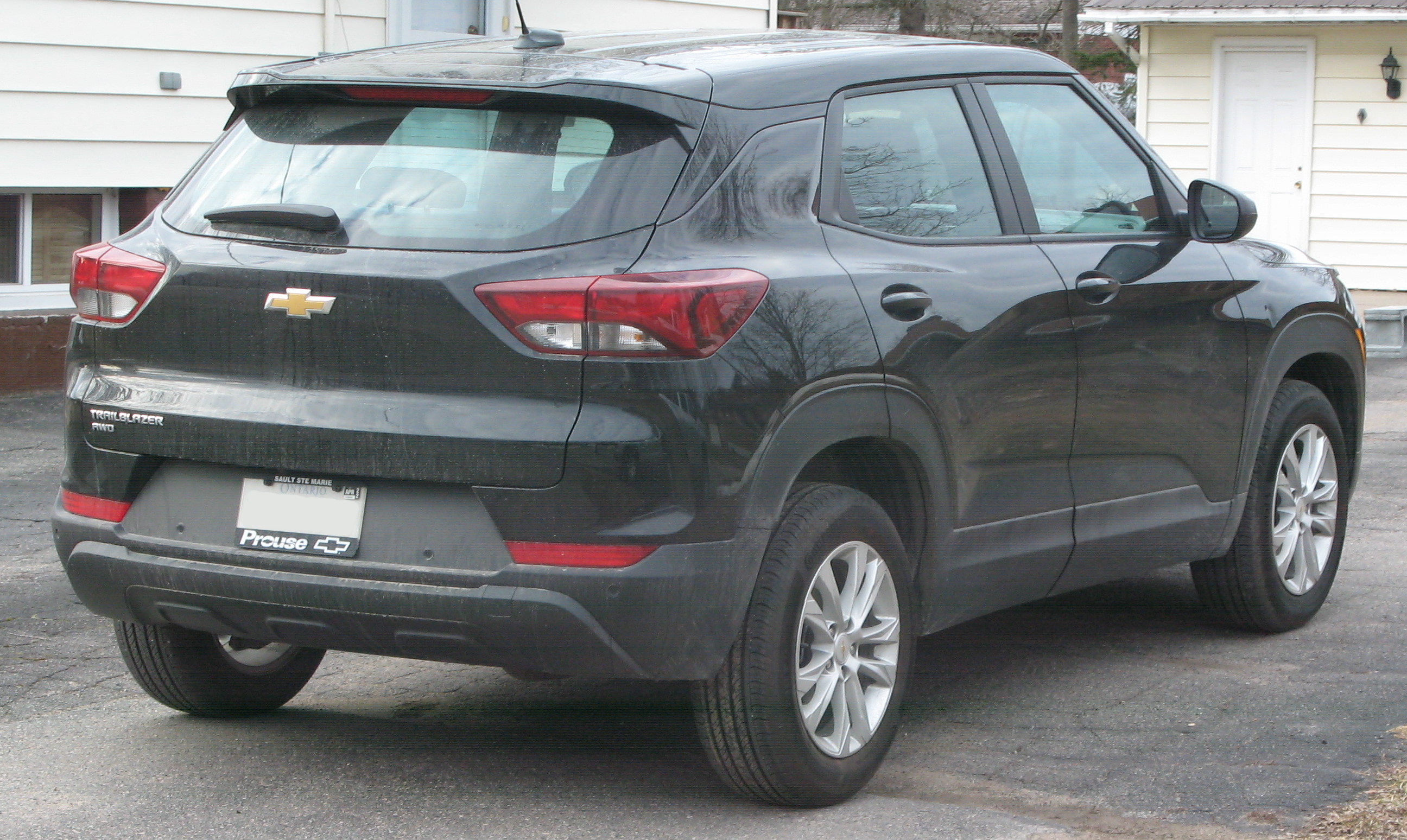
The Chevrolet Trailblazer is an SUV model. The host is using it as an example of a car that might look affordable at the price tag, but could be hard to afford depending on the loan payment and interest rate.
Instead of looking only at the car’s price, this means looking at what you’d pay each month. The host is about to use a calculator to estimate the monthly cost for a borrower.
The Fiat 600 is a small car that was made to be affordable and practical. Because it’s a compact design, it’s known for using space efficiently. It may be mentioned in the podcast when talking about how long people keep cars or how older models remain in use.
Your credit score is a number lenders use to decide how risky you are. Paying your bills on time can help your score, which can make it easier to get better loan terms later.
Your car loan has two parts: the amount you borrowed and the interest. Principal payments go toward paying down the amount you borrowed, which helps you get out of debt faster.
Interest charges are what the lender charges you for borrowing the money. If you pay down the loan balance faster, you usually pay less interest overall.
Pre-approval is when a bank or lender agrees to lend you money for a car before you go shopping. It can help you get a better deal and avoid surprises at the dealership.
“Stelvio” is the name of an Alfa Romeo SUV. They’re mentioning it in the conversation as the car that isn’t going on the Alps trip.
Car
1930 Duesenberg Model J
The 1930 Duesenberg Model J is an old-school American luxury car that’s famous for being extremely high-end and powerful for its time. People still talk about it today because it’s one of the most iconic “collector” cars ever made.
LIVE
It's noon here in Vettner City, New Jersey, and our nation's capital, Washington, D.C.
And this is Car Edge Live for Tuesday, June 9th with your hosts, me, Ray, hanging out
in my living room in Venter and Zach, hanging out in this office in D.C.
Hey, handsome.
How are you doing today?
Doing pretty good.
Happy Tuesday, everyone.
Thanks so much for tuning in for another episode of Car Edge Live with me and my dad.
Today's show is brought to you by CarEdge.com.
For those of you that are unfamiliar, check out CarEdge.com to learn more about all the
resources and services and products we have to help you with the car buying process.
We have our car search.
We have our buying service as well.
And a friendly reminder about our buying service, you can start with a free consultation.
Meet our team.
Give us a call, 402-7446203 for schedule of time to talk to us to learn more and see
if Car Edge can help.
We've got an incredible group of car buying experts that are here to help you navigate
the car buying process.
And you can learn more back at CarEdge.com.
Dad, the big story I want to cover this morning, banks have screwed the car market and we have
some scary new data.
There is an individual, a gentleman over on LinkedIn who posts all sorts of incredible
information about auto finance.
Yeah.
Dad, six days ago, Bill had this post and I want to share it with you because when you
start to connect some of the dots here, you see how the auto industry and banks are corroborating.
Quite frankly, put us in a pretty bad position.
Ready for this?
Okay.
Let's go.
Let's dig in.
MVB, most valuable borrower.
We're not talking about the basketball game last night.
We're talking about banks.
In auto lending, borrowers classified as higher risk by lenders and therefore offered high
interest rate loans, for example, 12% more or more, who then deliver by never becoming
delinquent or a lender's most valuable, excuse me, borrowers.
That makes sense.
Right, Dad?
Yes.
From the lender's perspective, these borrowers effectively subsidize losses from those who
default.
If they perform...
Oh, my.
Perform.
Perform.
Perfectly where they ever truly high risk to begin with.
The chart below shows the percentage of 12% or plus interest rate auto loans with at least
36 months of performance history that never went delinquent at any month end.
The denominator includes all high rate loans with 36 months or more of seasoning regardless
of delinquency status.
Now, Dad, I'm going to show you in a second the banks that have the most MVBs of anyone
out there.
Before I do, do you have any guesses what percentage we're going to see here?
For example, we're going to look at this chart in a second, and it's going to show
Ally as one of the options on the screen.
It's going to show 10%, 20%, 30%, 40%, 50%.
What percent do you think Ally's portfolio are their most valuable borrowers, people
they put in high interest rate loans that never went delinquent?
34%.
We're in the right ballpark here.
What we're going to see here is that over at Ally, half of the people that they put
into these high interest rate loans, 12% or higher, never go delinquent.
There's never a delinquency issue.
Then that jumps down significantly over at Hyundai.
It is close to that 34% that you just mentioned a moment ago.
Carvana around 30%, CarMax around 30%.
Look at Exeter, Dad, almost 20%, World Omni, 20%, General Motors.
More than 80% of the people that get a GM loan of more than 12% go delinquent at some
point in time.
Santander, Dad, alarm bells going off over at Santander.
It looks like 15% of the time they have perfect borrowers.
The other 85% of the time folks are going delinquent.
I promise I'll take a breath in just a second here, but Dad, the reason this is such a big
story is because these financial institutions, for example, in the state of California, back
in 2020, $550 million settlement against, I think this was Santander.
You know what this was a settlement for, Dad?
They put people that they knew couldn't actually pay back auto loans into auto loans.
It's not just California.
This recently happened in Massachusetts against Credit Acceptance Corporation as well.
Drama has shut up for a second here, but these are some of the banks out there that are looking
for NVBs and are ultimately setting these customers up with no chance of actually paying
back these auto loans.
Such interesting data.
So here in my mind, here's the question.
What does Ally do so differently from everyone else that more than 50% of their borrowers
agree to 12% or higher interest rate loans when, in fact, they should qualify for lower
interest rate loans?
So what does Ally do to convince these people, hey, even though you're paying more than you
should, it's really a good deal?
What are they doing that?
That is an interesting angle here, again, because the chart that we're looking at, I'll
pull it back up on the screen.
This is all about high interest rate loans that never go delinquent.
So down at the bottom right, that's where the concern is.
Like Santander, what are you doing?
85% of the people you put into auto loans at a high interest rate shouldn't have been
in that.
They went delinquent at some point or another.
The Carvalho data here, that is super interesting.
It's about 33%.
But what is Ally doing where they can convince people that they should go into high interest
rate loans that they can obviously pay off?
That's another angle to this that's kind of mind-numbing.
Yeah, is there like some form of ether being pumped into the loan office as they're going
through the rates and everything and that people are just kind of a little woozy and
go, yeah, 14% sounds damn good to me.
You know, that is, and I get why they're the most valuable borrowers because they're the
ones that are paying the most interest and they're not going bad on their loans.
You know, one of the things that I would say occasionally to banks when we had somebody
that had somewhat questionable credit history is you have a fiduciary responsibility to
your shareholders to take a much closer look at this particular borrower because, well,
his history or her history suggests that, you know, they're going to fall 30 maybe 45 days
late occasionally, and they're going to be paying you extra interest for those late payments.
They're going to make all their payments just maybe not as timely as they should.
And so all that extra interest adds up to it's in your best interest and your shareholders'
best interest to give them a loan. And to me, those are like most valuable borrowers because
you know, they're going to go bad a little bit, but not a lot of it. And you know,
they're just going to pay back extra interest on top of they're already too high interest.
But I am fascinated as to what the pitch is for Ally to get what they get.
That's one of the stories that, but I want to focus on, if you don't mind,
banks that screwed the car market. That's the title of today's show. Let's spend some time there.
So Santander, yes, 85% of the people Santander put into these high interest rate loans go
delinquent at some point in time, or another Santander is also the exact same company that
was caught up in this half billion dollar settlement in the state of California back in 2020, which
again, I'm going to read it right here. The settlement resolves allegations that Santander
violated consumer protection laws by placing borrowers with subprime credit into auto loans
and new carried in unacceptably high probability of default. Santander has also agreed to injunctive
terms that make important changes to its underwriting practices. Now, Dad, this comes at the exact
same time that auto loan delinquent... Wait, wait, wait, wait, wait. Stop for one second,
if I may. So you just read that, and the last part of that was that they've agreed to
injunctive practices that will change how they approve loans, correct?
Isn't that what that said in 2020? So today, in 2026, after having paid a $550 million settlement
in the state of California, after having agreed to review their lending practices,
they have the highest rate of default of subprime borrowers. It seems to me,
because you talk about connecting dots, it seems to me that the dot of you have to improve your
ratings and how you approve people for car loans to actually doing that, those dots never got connected.
Oh, it sounded good. Yeah, it sounded good in that settlement. It sounded real good. The words
look real good, but the actions of Santander would indicate that they have fallen woefully short
of their obligations based on that settlement, because 85% of their subprime borrowers are still
going bad. Tack on my favorite line, please. In my opinion. Yeah, I think we're drawing a lot
of connections here. That being said, that is the angle for today, Dad, which is, again,
those of you who end up seeing people that go delinquent, well, here's the breakdown of likely
where they ended up getting that auto loan. Probably wasn't that ally. Ally has really good
MVBs, most valuable borrower. Santander is the polar opposite. And then you start to look at, Dad,
the overall picture here of auto loan delinquency. And it's not pretty. When you look at that yellow
line, those are subprime delinquency rates versus blue, which is prime. And so it's these people who,
again, this is what was a 2020 settlement in the state of California, subprime credit borrowers,
or the more recent settlement that we had in the state of Massachusetts. It was $27 million.
And this was for Credit Acceptance Corporation. You could see here, it was the same idea,
subprime is the focus. Well, subprime people are the ones that end up, quite frankly, ending up in
the worst off positions in these circumstances. And that's where the banks have enabled a pretty
scary place for us to be in right now. And it happens at the same exact time we haven't talked
about in a little while, Dad, but auto loan delinquency rates going up also correlates really
well with negative equity. Card debt grows deeper as a loan term stretch wider. So there's this
interesting phenomena going on right now, which is, these banks approve auto loans,
the consumers say, okay, I guess because I got approved, that means I should do it.
And then they end up in a really precarious position. It's a good reminder to everyone in
our community, get pre-approved before you go to a car dealership to rely on them for financing.
I think what this shows, in my mind, is a certain amount of, in my opinion,
a certain amount of collusion between banks and auto dealerships. Because, you know-
Focus through the approval process at the dealership, like help us understand where
that idea comes from for you. Well, you look at Santander, GM,
and you can look at others, Credit Acceptance Corporation, and we know that for years they
have been approving people for car loans that, well, they shouldn't be approved. Their credit
guidelines are so loose that they've approved thousands upon thousands of people for loans
that should not qualify for loans. It is, you know, the mortgage crisis revisited where if
there was a time, if a customer could walk in and they could fog a mirror showing that they
were still breathing, that a bank would approve them for a mortgage or a car loan.
And then we had the great recession, and it became almost impossible, even for people with
really good credit, to get approved for loans, whether it be mortgages,
whether it be car loans. I mean, it really severely impacted the automobile industry.
We have come full circle again. You know, the theory that history repeats itself,
I didn't realize it repeated itself so quickly because we have come full circle again
to where if you can fog a mirror, there is a lender out there that will give you an automobile loan
whether you deserve it or not, whether you should qualify or not. And that basically enslaves
a large percentage of the population to these lenders. And these people are effectively screwed
for life. They will face these type of loan terms as long as they are borrowers.
And that, you know, rather than trying to educate people, these banks are going,
we don't want to educate them, we just want to take their damn money. So we're going to approve
for the loan that they don't qualify for in my opinion.
Now let's do a little bit of a live experiment here. So again, I'm going to pull back up,
the data that we started the show with is this, which is high interest rate auto loans
and the percentage of those borrowers by bank that never go delinquent. So again,
the bank over on the left, Ally, they're fat and happy because that means half the people,
more than half the people that they give these high interest rate loans to never go delinquent,
meaning they made a boatload of money off of them. Santander down at the other end,
they're maybe a little bit more nervous saying, okay, we gave all these auto loans out to people
and a lot of them, the majority overwhelming majority end up going delinquent.
And that's an issue. Well, GM is right down there as well. So I'm very curious. Let's head over to
the car edge car search. And what do you want to look at? Maybe a Chevrolet, that's going to be the
more economical option over at General Motors. So we've got Chevrolets for sale here in my area.
Now this is like super interesting to me because I think there's an affordability aspect to this,
but there you go, Deb. One of the first vehicles here is a trailblazer that's $30,000. That's not
unaffordable, but let's go through a few more options for work. Well, it very well might be
unaffordable to the type of borrower that GM is lending to. Well, that's kind of what I want to
get at here. I mean, let's click on this particular trailblazer. So let's look at it really quickly
here. Yeah, I mean, the dealer is asking $29,425. What does that convert into from a monthly
payment perspective for a borrower? Let me pull that up. Car payment calculator. Because that's
what I'm curious to look at, Deb. Like what types of loans are they getting people into? You know,
the selling price on this thing, what'd we say? It'd be around $30,000. So let's come over here.
Yeah. And GM's going to approve them for a loan. And the loan, you know, we're not going to do $10,000
down. We're going to do zero down because that's what we want to do. The interest rate was what?
14%? Does that sound reasonable? Yeah, that sounds reasonable for...
And how long are we going to get approved for, Deb?
Well, my guess is ultimately we'll get them approved for 72 months because if you leave it
at 60 months, just leave it at 60 months for a second. And we'll see how unaffordable that payment
will be for them at 60 months. Yeah. So that's kind of what I wanted to look at.
Yeah. So this is what's nuts here. This is actually what's nuts about this. We were just
looking at what I would argue, and I think everyone in our community would agree,
is an affordable option in today's car market. This is a $30,125 Chevy product that then
just landed $700 by the dealer they're asking $29,425. That's fantastic. That's a great price.
We know, General Motors, again, we can look at this data, they have a lot of their borrowers that
are getting subprime auto loan rates. They're going to Linquan. What's a subprime borrower
auto loan rate? Probably 14%. Minimum, yeah.
And then what does that price actually become? Monthly, $805. It's no longer affordable.
Oh, absolutely not. So then maybe they do have to stretch out to 72. So let's see.
Drum roll, please. Honestly, still not affordable in my opinion.
But to that customer doesn't a 700 hour a month payment sound better than an 800 hour a month
payment? Exactly.
Yes. And then I don't know if you can get 84 months, but then you're going to be into the 600s.
So no wonder people end up, yeah, there you go, 650 by 650 sounds a heck of a lot better than
800, doesn't it? Of course. And that's the problem for most people because all they're
buying is the payment. And they're not, I mean, pull that car payment back up again.
They are paying back if they do the 84 month loan, okay, because 648 sounds better than 800.
Definitely. They're paying back almost $20,000 in interest on that loan for the privilege of
paying $648 a month for a $30,000 car. If that doesn't sound like my favorite
rapper, Ludacris, I don't know what is. And then we wonder why there is an affordability crisis
and how to adequately address it. And I guess one of the ways to adequately address it
is to educate people so that they don't find themselves in this position. So they're not
being taken advantage of. They see it as an opportunity, okay? Oh, well, 648 is so much
better than 800, but it's not, okay? And they fall into this trap time and time again. And it's
a trap that's going to keep them in high interest rate situations as long as they live. Banks love
it, okay? Car dealers love it. Look, we put together another deal. We probably, you know,
they're probably making $4,000 in the back end of that loan. Everybody loves it. The customer
unfortunately loves it, and they shouldn't. And that's the sad reality of what we're looking at
here. So there is, in my opinion, a certain level of collusion going on to keep these people in
these types of situations so that the banks can make maximum dollars by taking advantage of people.
It's just that simple. And then one of the challenges that comes from those extended
loan terms would be the negative equity situation. Edmunds brings out this data once a quarter,
and here's the share of underwater trade-ins by amount owed. And you can see when we had Q1 data
that came out, the most recent data that we have, 9% of people who traded in a car and had negative
equity owed more than $15,000 on their vehicle than what it was actually worth compared to 7%
back in 2024. 17% owed $10,000 or more compared to 14% just two years earlier. And a third
owed between $5,000 and $10,000 or more compared to 28% just two years earlier. And so we see people
who end up in these 84-month car loans, which again, to your point, everyone sadly, especially the
uninformed consumer, is happy about it because, okay, I can afford $650 a month until you can't.
And then you're SOL, then you're really in a rough situation.
It is like ludicrous as if the top has many hits at the top of the charts, because every one of
those statistics that you just reviewed, it's ludicrous. It is absolutely ludicrous that such
a large percentage of people trying to trade out of their cars have between $5,000 and $10,000
of negative equity. And here's the sad reality. They are going, and the dealership's going to
help them, and the banks are going to help them roll as much of that negative equity
into their next loan, burying them even deeper in debt than they were when they came in to trade
the car. And the people will sign and go, okay, because they think, well, the payment's affordable,
but the amount of damage that's being done that they're doing to themselves, you know, I was
in the business for a long time. And there's certain things I learned pretty quickly.
Okay. And what we're seeing here is a perfect example of it. Those who can afford to pay the most
pay the least, because they're educated, they know what's going on. Those who can afford to
pay the least pay the most, because they're uninformed and they get taken advantage of.
And this is that very example. And then here's the even scarier aspect of that. Those who paid the
least will complain the most, and those who paid the most, well, they're going to complain the
least because they're happy. They got into a car. So let's move to some advice then. So for people
out there who have watched today's show who now understand that the bank is not necessarily
your friend, what is the advice to someone out there who's thinking about buying a car
sometime soon or maybe is in a negative equity position, go on your soapbox for just a minute
or two here and give some really tactical advice for how to handle that situation. Pretty please.
My advice to people who find themselves in that situation is live with the vehicle that you have.
Continue to make all the payments in a timely manner so you can build up your credit score.
Pay ahead a little bit every month. Make minor principal payments to bring the interest charges
down and so that you can pay it off sooner. Resist your urge to have to have something
newer, better, sooner, okay? At a certain point in every one of our lives, we need to
realize that we can get by just with what we need as opposed to what we want. So
save as much money as you can for future down payments. Pay extra on every car payment when you
can and hold on to that vehicle until the loan balance is damn near zero so that you're not
having to roll negative equity into your next loan. If I may, always get a pre-approval
before you purchase any vehicles that you have leveraged when negotiating in the finance office.
Pops, let's switch gears. Let's come here to the chat. Thank you, Chad. Appreciate your kind
of contribution earlier in the show. We also had from Matthew. Thank you, Matthew. We appreciate this.
Pops, that's time of year again. Headed to Europe for a week driving in the Alps.
The Stelvio can't say that. Fern, Gerlose, Julia, I don't know, man. I'm just embarrassing.
Oh, then nerve wring. Then the nerve wring. That's awesome. Matthew will have to share
some photos. We'll all be rooting you on. Can I show you something to Matthew?
Sure. Matthew, I don't want photos. I want videos, David.
You know what we want? Because if you're doing this, I know that you have a video
record function on your cell phone. Please utilize it for us and share some of those
videos with the audience. We would love it. Matthew also shared this, which we appreciate.
Thanks, Matthew. Had to wire 600 years to hold the reservation at Awe Crocodile in Strasburg,
Michelin and 2018 Trip Advisor Best Restaurant in the world. Has a wiki page. Wow. Have a hell
of a trip, man. That sounds really incredible someday. Hope to be a little bit like Matthew.
Sounds like you'll have a lot of fun. Dad, we had from Rich here, which we really appreciate.
Check out the 1930 Duesenberg Model J. This is what pops drove back in his mafia days when he
was known as Ray the Slayer. Were you ever known as Ray the Slayer, Dad? Perhaps. I'm not sure.
It was in my mafia days. I had no idea what they called me. I hope you didn't mean I ever
was funny in my mafia days when I wasn't really in the mafia. I knew a lot of people who were.
They were customers of mine at the dealership outside of Atlantic City.
It's a damn interesting looking car. Wow. Oh my God. Yeah. Yeah. I could do one of those.
You think so? Yeah. Don't you? Look at that. Come on, man.
I think you could get in and out. I think you could get in. Oh, absolutely. You got the running
board to step on to get in and out. It's a cabriolet. You know me. I love my cabriolets.
It's got the spare tire mounted on the side like that. I mean, come on. It's better than
when I first started in the business and I was selling some Subaru's and the spare tires were
mounted on top of the engine. I mean, what can go wrong with that? I mean,
the heat hardly ever dry rods rubber. So the likelihood if you've got a flat
near Subaru back in those days that the spare was going to be any good was pretty remote,
considering all the heated was absorbing. Yeah. That's miserable. Wow. That's crazy.
All right, folks. That's another show in the books. If we can help you out with anything,
again, CarEdge.com. I encourage everyone, click on Buying Service. Learn more about how you can
have an expert car buyer on your side. You can get a free consultation call and you can meet the team
as well and even see some of the recent deals they've helped customers with. So really proud
of what we have to offer back at CarEdge.com and in particular, our car buying service. We're back
with another... And if you happen to talk to Joe, just ask him how he's doing. And my guess is,
just between us, my guess is he's fine. My guess is he's fine too. If you enjoyed today's show,
we appreciate everyone that tunes in every day. So tune back in tomorrow. We'll be back with our
CarEdge live. I'll see you then, pops. Absolutely. Have a great afternoon here. Some love you, buddy.
Love you too, pops. Bye.
About this episode
Banks’ auto-lending “most valuable borrower” charts raise red flags: high-rate borrowers often aren’t “perfect,” and Santander’s split is especially grim, even after a California settlement and promised underwriting changes. The hosts connect rising delinquency with negative equity and walk through a live example where subprime rates and long terms turn a ~$30k deal into ~$805/month and nearly $20k in interest. They then share tactics for underwater borrowers: stay current, pay extra principal, avoid rolling debt, and get pre-approval.
Today on CarEdge Live, Ray and Zach discuss the latest on what is happening in the auto finance world. Tune in to learn more! Hosted by Simplecast, an AdsWizz company. See https://pcm.adswizz.com
for information about our collection and use of personal data for
advertising.