
Banks SCREWED The Car Market (SCARY DATA) | Episode 1086
About this episode
Banks’ auto-lending “most valuable borrower” charts raise red flags: high-rate borrowers often aren’t “perfect,” and Santander’s split is especially grim, even after a California settlement and promised underwriting changes. The hosts connect rising delinquency with negative equity and walk through a live example where subprime rates and long terms turn a ~$30k deal into ~$805/month and nearly $20k in interest. They then share tactics for underwater borrowers: stay current, pay extra principal, avoid rolling debt, and get pre-approval.
MVB, most valuable borrower
"MVB, most valuable borrower. We're not talking about the basketball game last night. We're talking about banks."
Banks sometimes sort borrowers into groups. “Most valuable borrower” means the bank thinks that person is more likely to pay on time, so the loan is safer for the bank.
“Most valuable borrower” (MVB) is a lender’s label for borrowers who are expected to be low-risk and therefore generate more reliable loan performance. In auto lending, the idea is that these borrowers are less likely to miss payments, so they help banks’ portfolios look healthier.
auto lending
"In auto lending, borrowers classified as higher risk by lenders and therefore offered high interest rate loans, for example, 12% more or more, who then deliver by never becoming delinquent or a lender's most valuable, excuse me, borrowers."
Auto lending is how people get money to buy a car. A bank lends the money and the buyer pays it back over time, usually with interest.
Auto lending is the financing process banks use to fund car purchases, typically through installment loans. The transcript focuses on how lenders price risk—charging higher interest rates to borrowers they consider more likely to struggle with payments.
higher risk
"In auto lending, borrowers classified as higher risk by lenders and therefore offered high interest rate loans, for example, 12% more or more, who then deliver by never becoming delinquent or a lender's most valuable, excuse me, borrowers."
“Higher risk” means the bank thinks the borrower is more likely to have trouble paying. To protect itself, the bank may charge a higher interest rate.
“Higher risk” in lending means the borrower is statistically more likely to miss payments or default. Lenders often respond by charging a higher interest rate to compensate for that expected risk.
interest rate loans
"In auto lending, borrowers classified as higher risk by lenders and therefore offered high interest rate loans, for example, 12% more or more, who then deliver by never becoming delinquent or a lender's most valuable, excuse me, borrowers."
An interest rate loan is a loan where you pay extra money on top of what you borrowed. The interest rate is the percentage that determines how much extra you pay.
An “interest rate loan” is a loan where the borrower pays back the principal plus interest, expressed as a percentage rate. In the segment, the key point is that lenders charge higher interest rates to certain borrowers, and the data is used to question whether that pricing matches actual default/delinquency outcomes.
subsidize losses
"From the lender's perspective, these borrowers effectively subsidize losses from those who default."
“Subsidize losses” means one set of borrowers’ payments help cover money the bank loses from other borrowers. It’s like one group’s extra cost is used to absorb someone else’s failure to pay.
“Subsidize losses” describes a situation where one group’s payments help cover losses caused by another group’s defaults. In the segment, the claim is that higher-risk borrowers who never default can still end up paying enough (via higher interest) to offset losses elsewhere.
36 months of performance history
"The chart below shows the percentage of 12% or plus interest rate auto loans with at least 36 months of performance history that never went delinquent at any month end."
“Performance history” means how the loan has gone over time. “36 months” is a long track record showing whether payments stayed on time for years.
“Performance history” in lending refers to how loans behave over time—especially whether borrowers stay current or become delinquent. Using a “36 months” window is meant to show whether borrowers consistently avoided late payments across multiple months.

Dodge Omni
"...round 30%. Look at Exeter, Dad, almost 20%, World Omni, 20%, General Motors. More than 80% of the people..."
The Dodge Omni is a small hatchback car made for everyday driving. It was designed to be affordable and easy to live with, especially for people who needed a practical car. It might be mentioned because it was a common choice in its time.
The Dodge Omni is a compact, front-wheel-drive hatchback that was built to be an affordable, practical daily car. It’s often discussed in automotive history because it represents how manufacturers targeted budget buyers with small, efficient designs. In a podcast, it may come up when talking about market share, ownership demographics, or the kinds of cars that were common among everyday drivers.
Ally
"But what is Ally doing where they can convince people that they should go into high interest rate loans that they can obviously pay off? ... But I am fascinated as to what the pitch is for Ally to get what they get."
Ally is a company that lends money for things like cars. The host is basically asking why Ally pushes loans with high interest rates and how they convince people to take them.
Ally is a consumer-lending company that offers auto loans and other financing. In this segment, the host is questioning how Ally’s underwriting and marketing steer borrowers toward higher interest rate loans that they can still repay.
fiduciary responsibility
"Yeah, is there like some form of ether being pumped into the loan office as they're going through the rates and everything and that people are just kind of a little woozy and go, yeah, 14% sounds damn good to me. ... You know, one of the things that I would say occasionally to banks when we had somebody that had somewhat questionable credit history is you have a fiduciary responsibility to your shareholders"
A “fiduciary responsibility” is a duty to make decisions that protect someone else’s interests. Here, the host is saying banks have a duty to their shareholders to carefully evaluate risky borrowers.
“Fiduciary responsibility” is a legal duty to act in the best interests of another party—in this case, the banks’ shareholders. The host uses it to argue that banks should scrutinize borrowers with questionable credit history more closely because late payments can generate extra interest revenue.
credit history
"You know, one of the things that I would say occasionally to banks when we had somebody that had somewhat questionable credit history is you have a fiduciary responsibility to your shareholders to take a much closer look at this particular borrower because, well, his history or her history suggests that, you know, they're going to fall 30 maybe 45 days late occasionally"
“Credit history” is a record of whether someone has paid past loans on time. In this segment, the host is saying a borrower’s credit history helps predict how often they’ll be late on payments.
“Credit history” is a record of how a borrower has handled past debt—such as whether they paid on time or were late. The host ties credit history to expected delinquency timing (e.g., falling 30–45 days late) and to how much extra interest banks can earn.
late payments
"his history or her history suggests that, you know, they're going to fall 30 maybe 45 days late occasionally, and they're going to be paying you extra interest for those late payments. They're going to make all their payments just maybe not as timely as they should."
“Late payments” are when you pay after the due date. The host is arguing that even if borrowers don’t default, being late can still cost them more money in interest.
“Late payments” are payments made after the due date, which can trigger delinquency status and sometimes additional fees or higher interest costs. The host frames late payments as a mechanism that increases total interest paid to the lender even when borrowers eventually repay.
extra interest
"late occasionally, and they're going to be paying you extra interest for those late payments. They're going to make all their payments just maybe not as timely as they should. And so all that extra interest adds up"
“Extra interest” means you end up paying more money to the lender than you would if you paid on time. The host is suggesting that late payments can make the loan more profitable for the bank.
“Extra interest” refers to additional interest charges beyond what would be expected if payments were perfectly on time. In the host’s framing, late payments can increase the lender’s revenue even when borrowers don’t fully default.
Santander
"So Santander, yes, 85% of the people Santander put into these high interest rate loans go delinquent at some point in time, or another Santander is also the exact same company that"
Santander is a big lending company. Here, the host is saying that many people Santander financed with high-interest loans end up missing payments.
Santander is a large financial services company that, in this discussion, is tied to auto lending. The host cites a high delinquency rate among borrowers Santander placed into high interest rate loans, framing it as part of why banks “screw the car market.”
California
"was caught up in this half billion dollar settlement in the state of California back in 2020... after having paid a $550 million settlement in the state of California..."
California is where the legal settlement happened. The hosts use it to show that the lender was ordered to change practices starting from that time.
California is the U.S. state where Santander’s 2020 settlement is described. The segment uses the state-specific settlement as a timeline anchor for later performance data on subprime auto-loan delinquency.
subprime credit
"The settlement resolves allegations that Santander violated consumer protection laws by placing borrowers with subprime credit into auto loans and new carried in unacceptably high probability of default."
Subprime credit means the borrower’s credit history isn’t great. Lenders see them as more likely to have trouble paying the loan back, so the risk of missing payments is higher.
“Subprime credit” refers to borrowers with weaker credit histories, which lenders view as higher risk. In auto lending, it usually means the borrower is more likely to miss payments, so the loan terms and underwriting standards tend to be stricter or priced differently.
auto loans
"The settlement resolves allegations that Santander violated consumer protection laws by placing borrowers with subprime credit into auto loans and new carried in unacceptably high probability of default."
An auto loan is money a lender gives you to buy a car, and you pay it back over time with monthly payments. If people fall behind, it shows up as delinquency or default.
Auto loans are financing agreements specifically used to purchase a vehicle, typically repaid in monthly installments. In the context of delinquency and default rates, auto loans are the product being evaluated for underwriting quality and borrower risk management.
default
"Santander violated consumer protection laws by placing borrowers with subprime credit into auto loans and new carried in unacceptably high probability of default."
Default is when a borrower doesn’t make the required payments on time and the loan goes into failure status. It’s the end result of delinquency for many borrowers.
In lending, “default” means the borrower fails to meet the loan’s payment obligations—often after missing payments for a certain period. The segment ties default risk to underwriting practices and compares default outcomes between subprime and prime borrowers.
underwriting practices
"Santander has also agreed to injunctive terms that make important changes to its underwriting practices."
Underwriting is how a lender decides whether you qualify for a loan. It includes checking your credit and deciding if the loan is a good risk.
“Underwriting practices” are the lender’s rules and processes for evaluating whether to approve a loan and on what terms. The segment argues that Santander agreed to change underwriting after a settlement, but later data suggests the outcomes for subprime borrowers didn’t improve.
injunctive terms
"Santander has also agreed to injunctive terms that make important changes to its underwriting practices."
Injunctive terms are legal orders that require a company to change what it does. In this case, it’s about changing how loans are approved.
“Injunctive terms” are court-ordered requirements that force a company to change behavior, rather than just paying money. Here, the hosts connect those required changes to how Santander approves auto loans.
MVBs
"Probably wasn't that ally. Ally has really good MVBs, most valuable borrower. Santander is the polar opposite."
“MVBs” here means “most valuable borrowers,” or the customers lenders see as the safest to lend to. The host uses it to contrast Santander’s approach with a lender that targets better-credit customers.
“MVBs” is presented as an acronym for “most valuable borrower,” meaning the lender’s best-credit, lowest-risk customers. In underwriting discussions, it’s used to contrast how different borrower tiers perform.
subprime delinquency rates
"When you look at that yellow line, those are subprime delinquency rates versus blue, which is prime."
This is a statistic showing how frequently people with weaker credit miss their auto-loan payments. Higher delinquency rates mean more borrowers are falling behind.
“Subprime delinquency rates” measure how often subprime borrowers fall behind on auto-loan payments. The segment contrasts these rates with “prime” borrowers to show how credit quality correlates with payment problems.
Massachusetts
"or the more recent settlement that we had in the state of Massachusetts. It was $27 million."
Massachusetts is mentioned as another state where a settlement happened. The host uses it as additional evidence that lenders faced legal scrutiny in more than one place.
Massachusetts is mentioned as the location of a more recent settlement (described as $27 million). It’s used to support the idea that multiple states have taken action related to auto-lending practices.
Credit Acceptance Corporation
"And this was for Credit Acceptance Corporation. You could see here, it was the same idea, subprime is the focus."
Credit Acceptance Corporation is a company that provides car loans. In this discussion, it’s mentioned as an example of lenders that may approve loans for people who later struggle to pay.
Credit Acceptance Corporation is a lender known for auto-loan programs that have been criticized for approving borrowers with weak credit. In this segment, it’s used as an example of how loose underwriting can contribute to higher delinquency and negative equity.
auto loan delinquency rates
"we haven't talked about in a little while, Dad, but auto loan delinquency rates going up also correlates really well with negative equity."
This is a measure of how many people are late on their car loan payments. If the number goes up, it usually means more borrowers are having trouble paying their bills.
Auto loan delinquency rates measure how often borrowers fall behind on their car loan payments. Rising delinquency is a strong early warning sign that more borrowers are struggling financially and may lead to repossessions and losses for lenders.
negative equity
"auto loan delinquency rates going up also correlates really well with negative equity. Card debt grows deeper as a loan term stretch wider."
Negative equity means you still owe more money on the car than it’s worth. So if you try to sell or trade it, the sale price won’t pay off the loan.
Negative equity happens when you owe more on your car loan than the car is worth. It’s common when vehicle values drop faster than loan balances, and it can trap borrowers because selling or trading the car won’t cover the remaining loan amount.
loan term
"Card debt grows deeper as a loan term stretch wider. So there's this interesting phenomena going on right now, which is, these banks approve auto loans,"
A loan term is how long you have to pay back the loan. Longer terms can make the monthly payment smaller, but you may pay more overall and be more exposed if things go wrong.
A loan term is the length of time you have to repay the loan. Longer terms can reduce the monthly payment, but they can increase total interest paid and may worsen outcomes when borrowers fall behind.
pre-approved
"And then they end up in a really precarious position. It's a good reminder to everyone in our community, get pre-approved before you go to a car dealership to rely on them for financing."
Pre-approved financing means a bank has already checked you and agreed to lend you money before you shop at the dealership. That can help you avoid getting pushed into a bad deal just because you were approved at the dealership.
“Pre-approved” financing means a lender has already reviewed your credit and conditionally approved you for a loan amount and rate before you visit a dealership. It helps you avoid being steered into higher-risk or less favorable financing options during the dealership approval process.
GM
"Well, you look at Santander, GM, and you can look at others, Credit Acceptance Corporation, and we know that for years they"
GM is General Motors. In this segment it’s brought up as part of the broader car-buying and financing system the hosts are criticizing.
GM (General Motors) is mentioned in the context of the auto-financing landscape and dealership approval dynamics. Here it functions as a shorthand for the automaker’s involvement in the lending ecosystem rather than a specific vehicle model.
mortgage crisis revisited
"It is, you know, the mortgage crisis revisited where if there was a time, if a customer could walk in and they could fog a mirror showing that they were still breathing, that a bank would approve them for a mortgage or a car loan."
The host is comparing today’s auto-loan problems to the 2008 mortgage crisis. The idea is that lenders took on too much risk by approving loans that borrowers couldn’t afford.
The “mortgage crisis revisited” comparison is a reference to the 2008-era housing/credit collapse, when lenders extended loans to borrowers who couldn’t realistically repay. The host argues the auto-loan market is showing similar risk patterns again.
great recession
"And then we had the great recession, and it became almost impossible, even for people with really good credit, to get approved for loans, whether it be mortgages, whether it be car loans."
The Great Recession was a big economic crash around 2008–2009. The host says after that, it became much harder to get approved for loans, even if your credit was good.
The “Great Recession” is the major economic downturn that followed the 2008 financial crisis. The host uses it to contrast how lending standards tightened afterward, making approvals harder even for people with good credit.
delinquent
"percentage of those borrowers by bank that never go delinquent... Ally... never go delinquent, meaning they made a boatload of money off of them."
Delinquent means you’re behind on your car loan payments. The host is using it to compare which lenders’ borrowers tend to struggle more.
Delinquent means a borrower has missed a required payment or is behind on payments. In auto-lending, delinquency is a key indicator of loan risk and borrower hardship, and the host compares delinquency rates across banks.
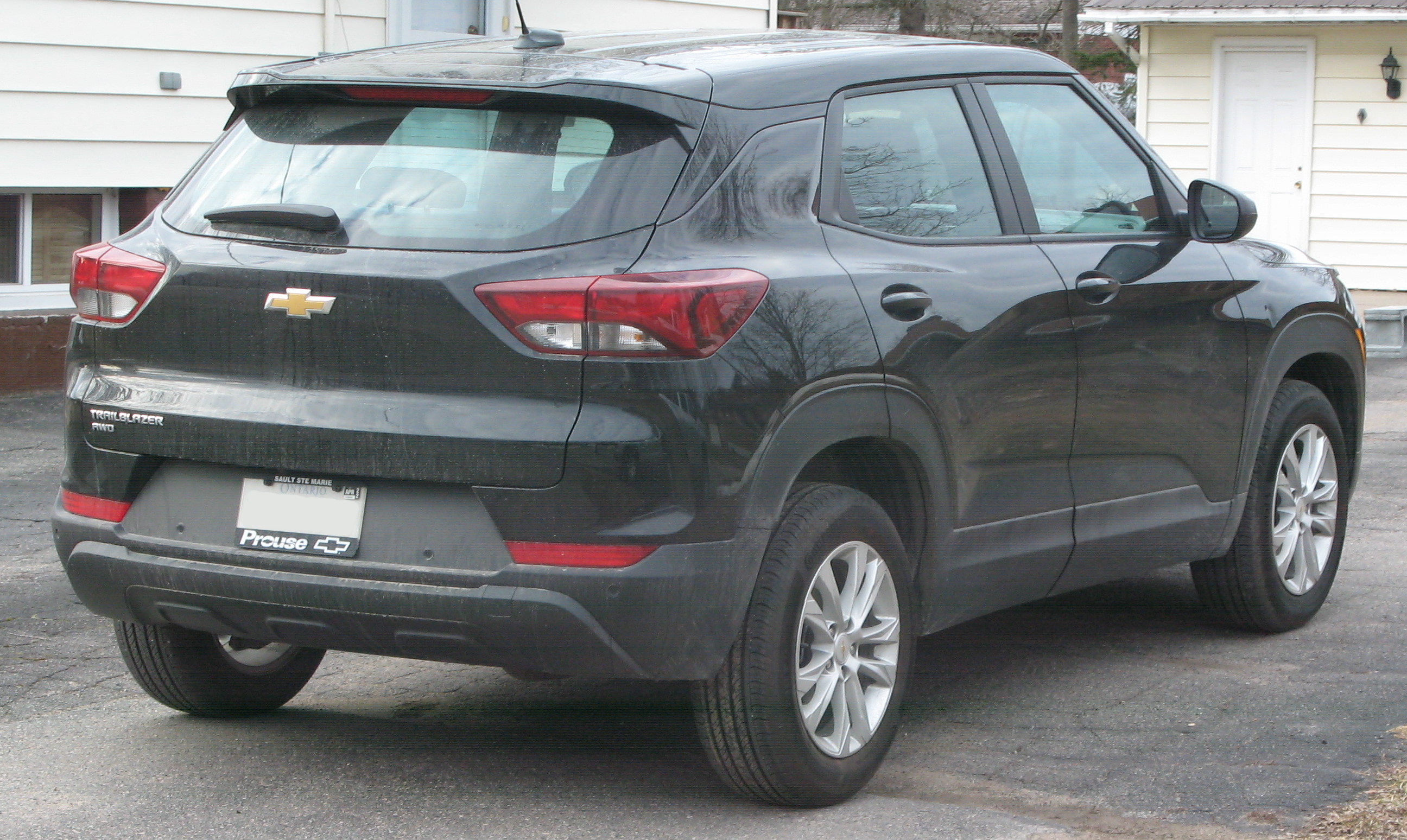
trailblazer
"One of the first vehicles here is a trailblazer that's $30,000. That's not unaffordable, but let's go through a few more options for work... the dealer is asking $29,425."
The Chevrolet Trailblazer is an SUV model. The host is using it as an example of a car that might look affordable at the price tag, but could be hard to afford depending on the loan payment and interest rate.
The Chevrolet Trailblazer is a midsize SUV from Chevrolet (General Motors). In this segment, it’s used as the example vehicle priced around $29,425, to illustrate how the same sticker price can be affordable to some borrowers but not to others once monthly payments and loan terms are considered.
monthly payment perspective
"What does that convert into from a monthly payment perspective for a borrower? Let me pull that up. Car payment calculator."
Instead of looking only at the car’s price, this means looking at what you’d pay each month. The host is about to use a calculator to estimate the monthly cost for a borrower.
Monthly payment perspective is the way shoppers evaluate a car’s affordability based on what they pay each month, not just the purchase price. The host is setting up a calculator to translate the dealer’s $29,425 price into an estimated payment, which depends heavily on loan terms.

Fiat 600
"...t 84 months, but then you're going to be into the 600s. So no wonder people end up, yeah, there you go, ..."
The Fiat 600 is a small car that was made to be affordable and practical. Because it’s a compact design, it’s known for using space efficiently. It may be mentioned in the podcast when talking about how long people keep cars or how older models remain in use.
The Fiat 600 is a small, early compact car known for being economical and space-efficient. It’s frequently referenced when discussing long-term ownership patterns and how many vehicles stay in use for extended periods. In the podcast context, it sounds like it’s being used to illustrate how people end up keeping cars for a long time (or moving into older “600” models after a certain point).
credit score
"Continue to make all the payments in a timely manner so you can build up your credit score. Pay ahead a little bit every month."
Your credit score is a number lenders use to decide how risky you are. Paying your bills on time can help your score, which can make it easier to get better loan terms later.
A credit score is a numeric summary of your credit history that lenders use to judge how risky you are to finance. Making payments on time helps your credit profile, which can affect loan approval and the interest rate you’re offered.
principal payments
"Pay ahead a little bit every month. Make minor principal payments to bring the interest charges down and so that you can pay it off sooner."
Your car loan has two parts: the amount you borrowed and the interest. Principal payments go toward paying down the amount you borrowed, which helps you get out of debt faster.
Principal payments are extra payments that reduce the loan balance itself (the amount borrowed), not just the interest. Paying more toward principal typically shortens the time to pay off the loan and reduces total interest paid over the life of the loan.
interest charges
"Make minor principal payments to bring the interest charges down and so that you can pay it off sooner. Resist your urge to have to have something newer, better, sooner, okay?"
Interest charges are what the lender charges you for borrowing the money. If you pay down the loan balance faster, you usually pay less interest overall.
Interest charges are the cost of borrowing money on the loan, calculated based on the loan balance and the loan’s interest rate. Reducing the balance sooner (for example, with extra principal payments) generally lowers the total interest you’ll pay.
pre-approval
"If I may, always get a pre-approval [1495.9s] before you purchase any vehicles that you have leveraged when negotiating in the finance office."
Pre-approval is when a bank or lender agrees to lend you money for a car before you go shopping. It can help you get a better deal and avoid surprises at the dealership.
Pre-approval is when a lender reviews your finances and offers loan terms before you shop for a car. It helps you negotiate because you’re not starting from scratch in the dealership finance office.
driving in the Alps
"Pops, that's time of year again. Headed to Europe for a week driving in the Alps. [1515.9s] The Stelvio can't say that."
They’re talking about taking a trip to drive in the Alps. Mountain roads are tough on a car, but here it’s mainly about the trip plans and excitement.
This segment is about a planned trip to drive in the Alps, which is a common enthusiast travel theme because mountain roads stress brakes, tires, and cooling systems. It’s more of a lifestyle/travel topic than a technical automotive discussion.

Alfa Romeo Stelvio
"Pops, that's time of year again. Headed to Europe for a week driving in the Alps. [1515.9s] The Stelvio can't say that."
“Stelvio” is the name of an Alfa Romeo SUV. They’re mentioning it in the conversation as the car that isn’t going on the Alps trip.
The Stelvio refers to the Alfa Romeo Stelvio, a compact luxury SUV known for handling that’s unusually sporty for its class. In this context, it’s being mentioned as the vehicle that can’t “say that,” implying it’s not the one doing the Alps trip.

1930 Duesenberg Model J
"Check out the 1930 Duesenberg Model J. This is what pops drove back in his mafia days when he [1575.9s] was known as Ray the Slayer."
The 1930 Duesenberg Model J is an old-school American luxury car that’s famous for being extremely high-end and powerful for its time. People still talk about it today because it’s one of the most iconic “collector” cars ever made.
The Duesenberg Model J is a legendary luxury performance car from the early 1930s, known for its high-end engineering and status as a “dream car” of the era. A 1930 Model J is especially notable because it represents the peak of classic American big-engine touring before the Great Depression reshaped the market.
Request an Explanation
Heard something you'd like explained? We'll add it to this episode.
Sign in to request explanations for terms you heard.
Want to learn more?
Browse our glossary for plain-English explanations of automotive terms, jargon, and concepts.
Help improve this episode
See something that's not quite right? Our annotations are AI-generated and can sometimes miss the mark. Click the flag icon on any annotation to suggest a correction.