
CarMax (And the Used Car Market) Is in Trouble (And the Numbers Prove It) | Episode 1093
About this episode
CarEdge Live digs into CarMax’s trouble using its SEC filing and earnings numbers, highlighting revenue growth alongside shrinking profitability. Hosts argue the used-car market is getting tougher as listing prices rise and inventory sits longer, then test pricing with dealership filters. They connect the mismatch to financing realities—higher interest rates and approval dynamics can make “low payment” offers unrealistic. The episode also pivots to whether automakers can truly hit a ~$30,000 EV pickup target, given past pricing gaps.
CarMax
"approximately 50,000 units per quarter below what CarMax did, but Carvana is showing growth ... CarMax is flat."
CarMax is a big company that sells used cars in lots of different locations. The hosts are talking about why CarMax’s sales are slowing while some competitors are growing.
CarMax is a large U.S. used-car retailer that sells pre-owned vehicles through its own dealership locations. In this segment, the hosts discuss how CarMax’s sales and pricing strategy are under pressure compared with competitors like Carvana.
Carvana
"approximately 50,000 units per quarter below what CarMax did, but Carvana is showing growth ... CarMax is flat."
Carvana is another big used-car seller, but it’s more focused on selling online. In this discussion, it’s growing while CarMax isn’t.
Carvana is a U.S. used-car retailer known for an online-first sales model and large-scale inventory operations. Here, it’s used as the comparison point: Carvana is growing while CarMax is flat, suggesting differences in pricing, marketing, or execution.
used vehicle listing price
"This chart ... shows you the average used vehicle listing price for the past five years broken down by month."
A used vehicle listing price is the price the dealer posts online or on the lot for a used car. It’s a good way to see whether used cars are getting more expensive in general.
Used vehicle listing price is the advertised price a dealer puts on a used car for sale, before any negotiation or final sale price. Tracking listing prices helps show whether the market is getting more expensive over time, even if actual sales volumes change.
scarcity mindset
"they're headed back to where they were during the pandemic. They're becoming unaffordable again because there's the scarcity mindset trying to find good ones, etc."
A scarcity mindset means people think good used cars are hard to find, so they don’t wait for deals. That can drive prices higher.
A scarcity mindset is when buyers assume good used cars are hard to find, so they’re more willing to pay higher prices. In used-car markets, that can push listing prices up and make vehicles feel “unaffordable” even if supply is improving.
CarEdge
"Let's shop for some used cars over on the car edge car search. We're going to use the dealership filter."
CarEdge is the website/app the hosts use to look up used-car listings. They use it to compare prices at different dealers.
CarEdge is referenced as the platform the hosts use to search listings and compare pricing across dealerships. In this segment, it’s part of their “live experiment” to test whether CarMax inventory is overpriced.
live experiment
"So let's put it to the test. Let's shop for some used cars over on the car edge car search."
They’re doing a hands-on test by looking up used cars on a search site. The goal is to see if one dealer’s prices are higher than others.
The hosts describe a hands-on comparison where they shop for used cars using filters and dealership-specific inventory. It’s a structured way to test their hypothesis about whether CarMax’s pricing is the core issue.
Same store sales
"So they're... Same store sales at CarMax were down, yes. But they have increased the..."
Same store sales compares sales from stores that were open in both time periods. It helps show whether existing locations are doing better, rather than just adding new locations.
Same store sales (also called comparable-store sales) measures sales performance at locations that existed in both periods, excluding growth from opening new stores. It’s used to judge whether the business is improving at existing dealerships, not just expanding footprint.
days on market
"These days on market are actually really high for a CarMax dealership. [503.6s] They are indeed. That's the first thing. Before we even go to price here, [508.0s] 98 days on market, 101 60 days on market."
“Days on market” means how many days a used car listing stays available before someone buys it. If it takes a long time, it often means the price is too high or buyers aren’t interested.
“Days on market” is how long a specific used vehicle listing sits unsold before it’s bought. Longer days on market usually signal weaker demand or pricing that’s not competitive with other listings.
used vehicle day supply
"for our community, used vehicle day supply right now for the auto industry is about 45 days. It's [524.2s] paid results for one of their dealerships has actually been sitting longer."
“Used vehicle day supply” is a way to measure how many days’ worth of used cars are available compared to how fast they’re selling. If it’s high, it usually means there are too many cars and they’ll take longer to sell.
“Used vehicle day supply” is an inventory-demand metric: how many days of current used-vehicle supply the market can absorb at the current sales pace. A higher day supply generally means more cars are sitting around than buyers are purchasing.

2020 Toyota Sienna XLE
"Why don't we look at this 2020 Toyota Sienna XLE? [533.8s] What I'm interested in here now, Dad, is let's see the price history."
This is a 2020 Toyota Sienna minivan, in the XLE trim. The hosts are using it as an example of a used car that’s taking a long time to sell and whose price drops still may not be enough.
The Toyota Sienna is a minivan, and the 2020 Sienna XLE is the mid-to-upper trim that’s typically aimed at family buyers who want comfort and practicality. In this segment, the hosts use the 2020 Sienna XLE’s price history and “days on market” to argue that CarMax is struggling to sell inventory at competitive prices.
payment calculator
"By the way, we just added, based on some user feedback, the payment calculator on all vehicle detail pages [707.2s] back at caredge.com. So let's play around with this."
A payment calculator is a tool that estimates what your monthly car payment would be. It uses things like the car price, down payment, and loan interest rate to estimate the payment.
A payment calculator estimates a car’s monthly payment based on inputs like price, down payment, interest rate, and loan term. Hosts use it to compare how different financing assumptions change affordability.
interest rate
"Okay. So let's assume for a minute that the way CarMax does it and the way Carvana does it is that they always charge a higher interest rate than they should."
The interest rate is the extra cost you pay for borrowing money. A higher interest rate usually means a higher monthly payment on a car loan.
An interest rate is the percentage cost of borrowing money on a loan. In car shopping, even small differences in interest rate can noticeably change the monthly payment and total cost over the life of the loan.
60-month loan
"Okay. And that's for a 60-month loan with $2,500 down. The payment's almost $600 a month for that car."
A 60-month loan means you pay the car off over 5 years. The length of the loan affects your monthly payment and how much interest you pay overall.
A 60-month loan is a car loan repaid over five years. The loan term matters because longer terms can lower the monthly payment but often increase total interest paid.
$2,500 down
"Okay. And that's for a 60-month loan with $2,500 down. The payment's almost $600 a month for that car."
A down payment is money you pay upfront to start the car purchase. Putting more money down usually reduces what you have to borrow, which can lower your monthly payment.
A down payment is the upfront amount you pay when financing a car, reducing the loan amount. A larger down payment typically lowers the monthly payment and the total interest cost.
6.99% financing
"This is estimated based on 6.99% financing and look at that for $792 a month. [778.7s] Nobody qualifies for the $699 with them."
6.99% financing is the interest rate used for the car loan. A higher rate generally means a higher monthly payment.
6.99% financing refers to the annual percentage rate (APR) used to compute loan interest. In the segment, the hosts treat this as a key driver of Carvana’s higher monthly payment estimates.

Jeep Renegade
"This Renegade is $16,998. [868.4s] Wow. It's only got 39,000 miles on it."
The Jeep Renegade is a small Jeep SUV. Here it’s mentioned as a real used-car example with a listed price and mileage to illustrate how used-car pricing is changing.
The Jeep Renegade is a compact SUV from Jeep, known for being a smaller, more affordable entry into the Jeep lineup. In the segment, it’s used as an example of a specific used listing price and mileage, which ties into the hosts’ depreciation and used-car value discussion.
depreciation
"Talk about depreciation. Some of these Wagoneers, man, they're not that expensive relative to [880.6s] their original MSRP."
Depreciation means a car gets worth less as time goes on. The hosts are using it to explain why some newer-ish Jeeps cost less than you’d expect compared to their original new-car price.
Depreciation is how much a vehicle’s value drops over time after it’s sold new. The hosts use it to explain why certain Jeep models (like Wagoneers) may not be as expensive on the used market compared to their original MSRP.

Jeep Wagoneer
"...een alive. Talk about depreciation. Some of these Wagoneers, man, they're not that expensive relative to thei..."
The Jeep Wagoneer is a large SUV with three rows of seats, designed for families or anyone who needs more space. People bring it up because its price can drop a lot after it’s been bought new. That can make it more affordable when shopping for a used one.
The Jeep Wagoneer is a full-size, three-row SUV positioned as a more upscale alternative for families who want space and comfort. It’s often discussed in relation to depreciation, since pricing can change significantly after purchase. That makes it a frequent podcast subject when people talk about what used buyers might pay versus the original sticker price.
MSRP
"relative to [880.6s] their original MSRP. They've definitely depreciated."
MSRP is the original “new” price on the window sticker set by the manufacturer. They’re comparing today’s used prices to that sticker price to talk about depreciation.
MSRP (Manufacturer’s Suggested Retail Price) is the sticker price a carmaker sets for a vehicle when it’s sold new. The segment compares used prices to MSRP to show how much those models have depreciated.

Jeep Wrangler
"Why don't we do a Wrangler, Dad? [885.2s] I think Wranglers hold their value pretty well."
The Jeep Wrangler is the classic Jeep SUV that’s known for off-roading. Here it’s mentioned because the hosts think it keeps its value better than some other Jeeps.
The Jeep Wrangler is Jeep’s iconic off-road SUV, and it’s often discussed as having strong resale demand. The hosts bring it up to test whether Wranglers “hold their value” better than other models in the used market.
101 days
"Again, fascinating for a CarMax. They've had one for 101 days. That's not a good sign. Let's go down to the price history."
This means the car has been sitting on the lot/online for 101 days without being sold. When a car takes that long, it usually suggests it’s not moving because of price or demand.
“Days” here refers to how long a specific used car has been listed for sale without selling. In used-car pricing, longer time-on-market often signals weaker demand or that the price (or buyer fit) isn’t right.
price history
"Let's go down to the price history. Very curious. This is another one. They've dropped the price by $1,000 over at CarMax on this one."
Price history is just the timeline of how the asking price changes. If the price keeps dropping, it often means the car isn’t selling as quickly as expected.
“Price history” is the record of how a listing’s price has changed over time—such as whether it gets discounted after sitting. Hosts use it to judge whether a dealer is reacting to slow sales by lowering the price.
payment-wise
"And payment-wise, what are we looking at here? Rebuilding credit again. We're up still over $520."
“Payment-wise” means the monthly cost of financing the car. Even if two cars cost about the same, the monthly payment can differ based on the loan terms.
“Payment-wise” refers to the monthly payment a buyer would make under a specific auto-loan offer. Two cars with similar sticker prices can have different payments depending on loan terms and approval.
rebuilding credit
"Rebuilding credit again. We're up still over $520. Yes."
“Rebuilding credit” means someone’s credit isn’t great yet and they’re trying to improve it. That can make it harder to get approved for a car loan or can lead to higher monthly payments.
“Rebuilding credit” describes borrowers with weaker credit histories who are working to improve their credit score. In auto shopping, it often affects loan approval odds and the interest rate, which then changes monthly payments.

2020 Jeep Grand Cherokee
"Okay. So here's what we're looking at. $21,998 for 60,000 mile 2020 Jeep Grand Cherokee. Limited, obviously, over 101 days. It has not sold."
This is a Jeep SUV (the Grand Cherokee) from the 2020 model year. The hosts are using this exact SUV as an example to compare prices between two used-car sellers.
The Jeep Grand Cherokee is a midsize SUV from Jeep, known for being a mainstream family hauler that can also be optioned for off-road capability. In this segment, the hosts use a specific 2020 example with 60,000 miles to compare how CarMax and Carvana price similar used vehicles.
availability of finance
"Okay. Knowing that it's not priced, comparing like vehicles in the same market. I'm going to guess it's ease of credit. And I'm going to guess it's easier to get approved for that car loan at Carvana than it is at CarMax. That's what I'm going to guess... So if it's not priced, it's got to be the availability of finance."
This means whether you can get approved for a car loan. If one place approves more people, that can change how quickly cars sell and what prices look like.
“Availability of finance” means whether a buyer can actually get approved for an auto loan at the terms being offered. If one seller is easier to approve through, the same car can effectively be “priced differently” because the buyer pool is larger.
loan loss provision
"And if you offer auto loans or any type of financial instrument, you have to now after since Dodd-Frank do a loan loss provision. So we have a little bit of insight here into how things are going at CarMax when it comes to loan loss provisions. You can see here, this quarter's provision for loan losses..."
When a company lends money, it has to plan for some of those loans going bad. A “loan loss provision” is the amount they set aside to cover that risk. If it goes up, it usually means the lender thinks more customers might struggle to pay.
A loan loss provision is an accounting reserve that a lender sets aside to cover expected losses from borrowers who may not repay. For an auto lender, it’s closely tied to how risky the loan portfolio is and how well borrowers are performing. Higher provisions generally mean the lender expects more defaults or worse recoveries.
Dodd-Frank
"And if you offer auto loans or any type of financial instrument, you have to now after since Dodd-Frank do a loan loss provision."
Dodd-Frank is a U.S. law that changed how financial companies are regulated after the 2008 crisis. Here, it’s being mentioned because it affects how lenders account for the risk that some loans won’t be paid back. That can show up in the numbers they report.
Dodd-Frank refers to the U.S. financial reform law passed after the 2008 financial crisis. In this context, the host is saying it affects how lenders must account for credit risk—specifically through requirements like loan loss provisions. It’s a regulatory framework that can influence lender reporting and risk management.
auto finance
"So it seems like the health of CarMax's auto finance is okay. It didn't increase. There used to be times we'd come on the show and the amounts of loan loss provisions they've had went up by like 50%..."
Auto finance is the money side of car buying—how people get loans to pay for the car. The host is using it to explain whether CarMax’s lending is doing okay based on the loan-loss numbers. If lending gets riskier, those numbers can worsen.
Auto finance refers to the lending and credit side of buying cars—often including dealer-arranged loans or loans provided by the retailer itself. In the segment, the host uses it to connect CarMax’s reported loan-loss provisions to the health of its lending book. It’s a key driver of how a used-car retailer performs during tighter credit conditions.
held for sale
"There was a reduction in this quarter's provision due to the release of a $21.1 million, for the allowance of previously recorded for loans that are now classified as held for sale."
“Held for sale” means the company plans to sell something instead of keeping it. In lending, that can change how the company counts risk and reserves. So the reported loan-loss numbers can shift when loans are reclassified for sale.
“Held for sale” is an accounting classification for assets the company intends to sell rather than keep long-term. In auto finance, loans can be reclassified when the lender expects to sell them, which can affect how reserves (like loan loss provisions) are calculated. That’s why the host links it to a reduction in the provision.
arbitrage
"That would be the arbitrage here, [1179.6s] sell your car to Carvana, they're going to pay out buy them CarMax, not Carvana because they're cheaper."
Arbitrage is when a company tries to make money by exploiting price differences. They buy cars in one place for less (or pay less overall) and sell them somewhere else for more, hoping the gap is big enough to profit.
In the used-car business, arbitrage means buying and selling the same (or very similar) cars through different channels to profit from price differences. Here, the host is describing a strategy where Carvana pays more to acquire cars, then sells them at a higher price than CarMax, aiming to capture the spread.
Ford
"Let's switch gears, Dad. I want to talk about Ford. Did you see this? We've got the first like [1325.9s] spy photos ... This is going to be their $30,000 or less EV pickup."
Ford is the car company being discussed. The host is talking about Ford’s upcoming cheaper electric pickup truck and how it looks different from what we’ve seen before.
Ford is the automaker behind the upcoming EV pickup discussed here, positioned as a lower-cost electric truck ("$30,000 or less"). The segment frames it as part of Ford’s strategy to address affordability while introducing a new battery-electric truck design.
EV pickup
"This is going to be their $30,000 or less [1331.3s] EV pickup. Did you see this at all? This is, it's interesting. It looks very different."
An EV pickup is an electric version of a truck. Instead of using gasoline, it runs on electricity stored in a battery.
An EV pickup is a pickup truck powered by an electric motor(s) instead of a gasoline engine. The "pickup" part matters because electric trucks have different packaging needs (battery placement) and typically different driving characteristics than gas trucks.

Ford F-150 Lightning
"... $30,000 vehicle, probably $29,995, much like the lightning was going to be $39,995. Yep."
The Ford F-150 Lightning is an electric pickup truck, meaning it runs on electricity instead of gasoline. It’s often talked about in terms of cost because the price can be competitive depending on the deal and incentives. In the podcast, it’s mentioned alongside other truck pricing to compare what you pay.
The Ford F-150 Lightning is an all-electric version of the F-150 pickup, built to deliver truck capability with an electric powertrain. It’s frequently discussed because pricing and incentives can bring it closer to the cost of other trucks, and the podcast context specifically compares price points. That makes it a relevant topic when evaluating whether an electric truck is financially realistic.
jointly with Nissan
"They're going to bring out a pickup truck that they're going to build jointly with Nissan. They've had pickup trucks for other markets in the past."
“Jointly with Nissan” means Mitsubishi and Nissan are working together on the pickup. That usually helps them share costs and build the car faster.
“Jointly with Nissan” refers to a co-development or co-production arrangement, where two automakers share platforms, engineering work, and/or manufacturing. These partnerships are common when companies want to reduce costs and speed up new vehicle programs.
sub-$30,000
"like Slate, for example, and others who have said they're going to come out with a sub-$30,000 pickup truck. Toyota has some pressure on them to come out with a more compact and more inexpensive excuse notes where I was looking for pickup truck."
“Sub-$30,000” just means the vehicle is supposed to cost less than $30,000. The hosts are talking about whether companies can actually make a pickup that price.
“Sub-$30,000” means a vehicle priced below $30,000, typically before taxes and fees. In the context of pickups, it’s a key affordability target because it determines which buyers can realistically consider the truck.
out-the-door price
"Okay, but it ain't going to be $30,000. None of these vehicles at the price points they're always talking about when they're announcing them ever come out at those price points."
Out-the-door price is the total price you actually pay at the end, not just the sticker price. The host is saying the real total usually ends up higher than the numbers people hear first.
Out-the-door price (OTD) is the total amount you pay to take the car home, including taxes, registration, and dealer fees. The host contrasts OTD-style reality with the lower headline prices automakers and media talk about.

Cyber truck
"I never got my cyber truck because the price was 500% more. Color me a non-believer."
The Tesla Cybertruck is an electric pickup truck with a very distinctive shape. The point here is that the price people expected didn’t match what it ended up costing.
The Tesla Cybertruck is an electric pickup that became famous for its unusual angular design and for the gap between early pricing expectations and later real-world pricing. The host uses it as an example of how announced price targets can miss the mark.
profit margin
"Okay, but there's no profit margin in that for us and we're not really going to build it."
Profit margin is how much money a company keeps after paying its costs. The host is saying that if a car costs too much to make, the company can’t realistically sell it at the low price they announce.
Profit margin is the percentage of revenue a company keeps as profit after covering costs. Here, the host is arguing that a $30,000 target price wouldn’t leave enough profit margin for the automaker to actually build the vehicle at that number.
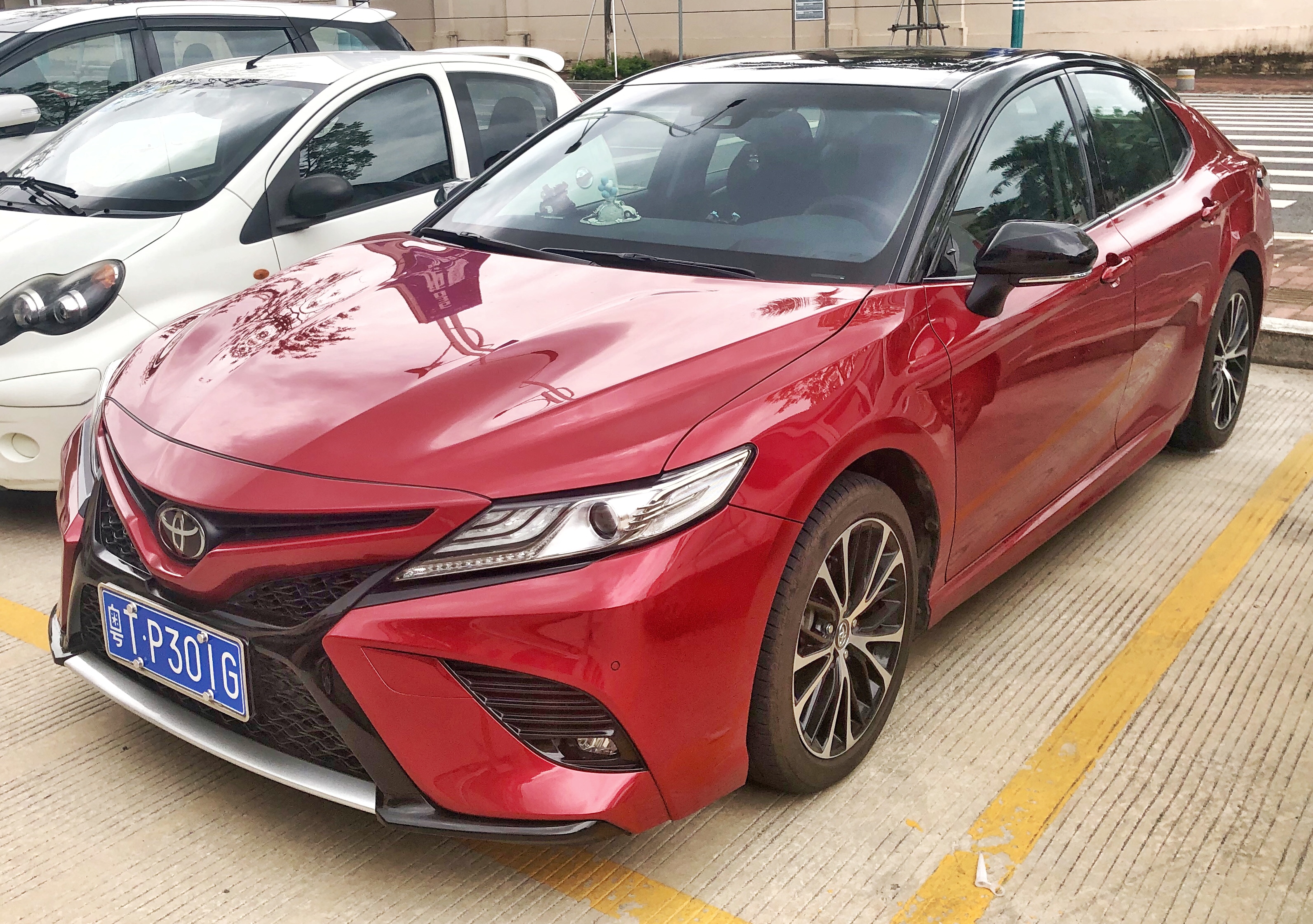
2026 Toyota Camry XLT
"Just bought a $38,000 2026 Toyota Camry XLT. I mean, we saw, Dad, what was it, a $45,000 Camry recently that we helped the customer negotiate."
The Toyota Camry is a very common family sedan. Here, the host mentions a 2026 Camry XLT to show that the price people hear about in announcements often doesn’t match what you can actually buy it for.
The Toyota Camry is a mainstream midsize sedan known for comfort, efficiency, and high-volume sales. In this segment, the host uses a specific trim—Camry XLT—to illustrate how real-world pricing can land well above the “announced” numbers, affecting what buyers actually pay.

Ford Maverick
"...rys are even too expensive. It is just... And the Maverick, yeah, the sub-$20,000 Maverick, I hear you. List..."
The Ford Maverick is a small pickup truck that’s meant to be easier to afford than many other trucks. It’s built for everyday driving but still gives you a truck bed for hauling. It comes up in conversations about budget-friendly vehicles.
The Ford Maverick is a compact pickup truck designed to be affordable and practical, often highlighted for offering truck utility at a lower entry price. It’s frequently discussed in the context of value because it can be found in the sub-$20,000 range depending on configuration and timing. In a podcast, it’s a common topic when comparing what you get for the money in the pickup market.
Gallup
"Americans, honestly, in ethics ratings for professions, this comes from Gallup."
Gallup is a company that does surveys and publishes results. Here, the host uses it as a source for a “who people trust most” ranking.
Gallup is a research and polling organization that publishes survey-based rankings, including trust ratings by profession. The host cites Gallup to support the claim that car salespeople rank low in trustworthiness.
Request an Explanation
Heard something you'd like explained? We'll add it to this episode.
Sign in to request explanations for terms you heard.
Want to learn more?
Browse our glossary for plain-English explanations of automotive terms, jargon, and concepts.
Help improve this episode
See something that's not quite right? Our annotations are AI-generated and can sometimes miss the mark. Click the flag icon on any annotation to suggest a correction.