
Customer's REVOLT From Ram, Dodge, Jeep & Chrysler | Episode 1089
About this episode
Cox Automotive’s latest inventory data sets the stage for a “days supply” breakdown showing Chrysler, Ram, Jeep, and Dodge sitting with too much stock versus demand. The hosts argue that oversupply drives dealer desperation, longer lot times, and deeper discounts—sometimes immediately, including examples like a Challenger at 48% off MSRP and $10,000 off a new vehicle. They explain how allocation fear and aged inventory push incentives, then share how shoppers can use CarEdge/AutoTrader metrics and dealer transparency to find leverage.
days supply of inventory
"days supply of inventory broken down by manufacturer, the higher this number, the more negotiable, [137.2s] the more desperate a dealer is."
It’s a way to measure how many days of cars a dealership has on hand. If that number is high, it means they’re not selling as fast, so they may need to lower prices or offer deals to move cars.
“Days supply of inventory” is a retail/wholesale metric that estimates how long current vehicle stock would last if sales continue at the recent pace. A higher number implies the dealer/manufacturer has more cars sitting than buyers are taking, which often increases pressure to discount or offer incentives.
Dodge
"Chrysler, Ram, Jeep, and Dodge customers are revolting. They're not purchasing those vehicles."
Dodge is a car brand. The hosts are using inventory data to argue that Dodge has too many cars available compared to what people are buying, so pricing pressure follows.
Dodge is a Stellantis brand associated with performance and muscle-car heritage. In this segment, Dodge is named among the brands with the highest “days supply of inventory,” suggesting dealers/manufacturers are carrying more cars than buyers are currently taking.
Jeep
"Chrysler, Ram, Jeep, and Dodge customers are revolting. They're not purchasing those vehicles."
Jeep is a car brand known for SUVs. Here, the hosts are saying Jeep has a lot of inventory relative to sales, which usually leads to more discounts or incentives.
Jeep is a Stellantis brand best known for SUVs and off-road-oriented vehicles. The hosts cite Jeep’s high “days supply of inventory” as evidence that demand is lagging behind supply, increasing dealer pressure to discount.
Ram
"Chrysler, Ram, Jeep, and Dodge customers are revolting. They're not purchasing those vehicles."
Ram is a brand known especially for trucks. In this discussion, Ram is one of the brands with more cars sitting than buyers want, so deals may be needed to move them.
Ram is the pickup-truck-focused brand under Stellantis. The segment uses Ram’s high “days supply of inventory” to argue that dealers have too much stock and are likely to rely more on incentives to sell.
Chrysler
"what are the four brands that are the highest day supply of inventory? It's in the name of today's show. Chrysler, Ram, Jeep, and Dodge customers are revolting."
Chrysler is a car brand. Here, the hosts are saying Chrysler (along with a few related brands) has a lot of cars sitting around instead of selling quickly.
Chrysler is a major American automotive brand within the Stellantis group. In this segment, it’s grouped with Ram, Jeep, and Dodge as having the highest “days supply of inventory,” implying weaker sales demand relative to stock levels.
Stellantis
"The highest day supply in the auto industry is for those four Stellantis products."
Stellantis is the company that owns multiple car brands. The hosts are saying the inventory problem is showing up across several of Stellantis’s brands at once.
Stellantis is the multinational automaker formed from the merger of Fiat Chrysler Automobiles and PSA Group. The hosts attribute the highest “days supply of inventory” to “those four Stellantis products,” linking the inventory issue to the parent company’s brand portfolio.
incentivize
"We'll have to incentivize it. Hopefully, we'll be able to move them in a year or two."
To “incentivize” in car sales means to offer extra deals to get people to buy. If cars aren’t selling, manufacturers or dealers often add discounts or special financing to make them more attractive.
In automotive retail, “incentivize” means using marketing offers—like rebates, special financing, or dealer discounts—to encourage buyers to purchase vehicles that aren’t moving at the expected rate. It’s a common response when inventory sits too long, reflected here by high “days supply of inventory.”
MSRP
"If you're a car shopper out there and you're looking for just getting the biggest discount off of MSRP, is that MSRP fair is a different question?"
MSRP is the price number on the car’s sticker that the manufacturer recommends. Dealers often sell for less than that using discounts or incentives. The whole point here is how far below the sticker price the deal can go.
MSRP (Manufacturer’s Suggested Retail Price) is the sticker price automakers publish as a baseline. Dealers may sell for less than MSRP through discounts, incentives, or special programs. In this segment, the host focuses on how much below MSRP shoppers can realistically get.

Dodge Challenger
"We had a Dodge recently at Jim Glover. Remember that? It sold after final pay, a 2025 new car, and final pay to be clear is the manufacturer throwing in the towel... The manufacturer said, we are giving up on selling this Dodge Challenger."
The Dodge Challenger is a popular American muscle car. Here, the host is talking about a Challenger that was discounted heavily, showing that dealers are trying hard to sell cars. It’s an example of how low prices can get when demand is weak.
The Dodge Challenger is a long-running American muscle car line from Dodge, known for big V8 power and a retro-styled body. In this segment, the host uses a specific Challenger deal to illustrate how aggressively some dealers are discounting off MSRP. The key point is the magnitude of the discount and how it reflects demand pressure.
final pay
"It sold after final pay, a 2025 new car, and final pay to be clear is the manufacturer throwing in the towel, giving up."
“Final pay” is the last push from the car maker to get a dealer to sell a car that isn’t moving. The host is saying it’s like the manufacturer is finally stepping in with incentives because regular sales aren’t working. That’s why the price can drop a lot.
“Final pay” here refers to a manufacturer’s last-chance incentive or buyback-style push to help move inventory when sales aren’t happening. The host frames it as the manufacturer “throwing in the towel,” meaning they’re effectively giving up on selling that specific model through normal channels. It’s used to explain why the discount can be extreme.

Jeep Grand Cherokee
"I mean, that is just so indicative of the customer revolt that has happened from this brand. How many people woke up and said, okay, I want to get a new Jeep Grand Cherokee, but unfortunately, it's $60,000."
The Jeep Grand Cherokee is a popular Jeep SUV. The host is using it as an example of a car people want, but think it costs too much. Their point is that buyers are reacting by expecting lower prices.
The Jeep Grand Cherokee is a mainstream Jeep SUV known for offering a mix of comfort, capability, and available powertrains. In this segment, it’s used as an example of a popular model whose price (as perceived by the host) has pushed buyers to expect much larger discounts. The discussion ties the SUV’s pricing to the broader “customer revolt” theme.
customer revolt
"I mean, that is just so indicative of the customer revolt that has happened from this brand. How many people woke up and said, okay, I want to get a new Jeep Grand Cherokee..."
“Customer revolt” is the idea that buyers are pushing back when car prices feel too high. Instead of paying full sticker price, they wait for big discounts. The host argues this pressure is forcing brands to offer more aggressive deals.
“Customer revolt” is the host’s framing for a buyer backlash against high pricing—where shoppers refuse to pay near MSRP and instead wait for steep discounts or incentives. In this segment, it’s tied to the idea that brands/dealers are getting desperate because inventory isn’t moving. The concept is about market pressure changing how deals are negotiated.
day supply of inventory
"Well, that's what happens when you have twice as much inventory as you need based on your day supply of inventory."
Day supply is basically “how many days of cars we have on the lot” based on how fast people are buying right now. More days usually means the cars aren’t selling as quickly, so discounts may show up.
“Day supply” is a sales-rate metric that estimates how long it would take to sell the current dealership inventory at the current pace of sales. If day supply is high, it implies cars are moving slowly and the dealer may face pricing pressure to clear them.
allocation
"Well, if you turn down too much allocation, then your factory rep will say to your face, oh, when you need some of those hot products, don't look to me because we're not going to be here to help you."
Allocation is the automaker’s way of deciding how many cars a dealer gets to sell. If the dealer refuses some of the cars they’re offered, the automaker may give them fewer of the popular cars later.
In car retail, allocation is how an automaker (or its regional distribution) decides how many units of specific models a dealership will be allowed to order or receive. When a dealer turns down allocation, it can lose priority for the next shipments of the most in-demand “hot” models.
factory rep
"Well, if you turn down too much allocation, then your factory rep will say to your face, oh, when you need some of those hot products, don't look to me because we're not going to be here to help you."
A factory rep is the automaker’s representative who manages dealership relationships and ordering/allocation decisions. In this discussion, the rep’s influence is framed as a leverage point: dealers fear that refusing certain allocations could reduce help or future access to high-demand models.
10% plus discounts
"These vehicles haven't been sitting too terribly long yet, but they also are starting to sit and you see significant 10% plus discounts"
This refers to dealer pricing incentives where the selling price is reduced by roughly 10% or more from a reference point (often MSRP or the typical selling price). The segment ties discounts to inventory sitting on lots longer than expected, which can happen when supply outpaces demand.
add-ons
"Yeah, this dealership's doing add-ons, 86% of the time they're adding add-ons. So that's something to be careful with here."
“Add-ons” are extra stuff the dealer adds to the sale, usually for extra cost. They can make the final price higher than the advertised price.
In car sales, “add-ons” are extra items or services a dealer bundles into the deal—often for an additional fee—such as protection packages, accessories, or service contracts. They can raise the final price above what you expected from the sticker price.
inventory is aged
"33% of their inventories aged. So not only did they need to sell those cars, so they maybe they should stop doing all the add-ons as another suggestion, but 33% of their inventory is aged."
“Aged inventory” is dealer stock that’s been sitting for a long time. Those cars usually need discounts or special deals to sell, because they’re not moving normally.
“Aged inventory” means cars that have been sitting on dealer lots for a long time. The longer vehicles sit, the harder they are to sell at full price, and the dealership may need discounts, incentives, or price cuts—tying up cash and increasing carrying costs.
CDJR
"And again, for Ramdodge, Jeep, and Chrysler, they've found a way to build products at price points that customers will not buy, are not buying."
CDJR is a shorthand for Chrysler, Dodge, Jeep, and Ram. People use it to talk about those related brands together, especially when discussing sales and dealer issues.
CDJR is an industry shorthand for Chrysler, Dodge, Jeep, and Ram—brands under the Stellantis umbrella. The term is used when discussing sales trends and dealer conditions across that combined lineup.
Stalantis
"that you would find that those dealers are no longer happy with what's going on at Stalantis and the amount of product that is being forced down their throats."
That’s likely the automaker Stellantis. When people blame “Stellantis” in dealer talks, they mean company decisions that affect what cars dealers have to stock and how sales are managed.
This appears to be a reference to Stellantis, the automaker formed from the Fiat Chrysler and PSA mergers. In dealer discussions, “Stellantis” is often shorthand for corporate decisions that affect allocations, pricing, and how much product dealers are pressured to carry.
day's supply inventory
"Yeah, let's go back to that chart because that's where everything is rooted. So again, this chart shows you the day's supply inventory broken down by manufacturer."
“Day’s supply” is a way to estimate how long the dealer’s cars would last if sales stay the same. If it’s high, the cars aren’t selling as fast, so prices and deals often get more aggressive.
“Day’s supply inventory” is a sales-and-inventory metric that estimates how many days it would take to sell the current stock at the current sales pace. Higher day’s supply generally signals slower sales and/or too much inventory, which can lead to more discounting and incentives.
wholesale to their dealer body
"wholesale to their dealer body, because that's when they make their money. And then they stick their dealers with..."
Dealers don’t usually buy cars from the automaker at retail prices. The automaker sells cars to the dealer network first (wholesale), and then the dealer has to sell them to customers.
“Wholesale to their dealer body” refers to automakers selling vehicles to their franchised dealer network rather than directly to consumers. The host’s point is that automakers’ profits are tied to these wholesale transactions, so dealers then carry the burden of selling cars to end buyers.
CarEdge concierge deals
"Okay. We provide car buying services back at CarEdge.com. One of our more recent CarEdge concierge deals, Dad, we did it with this dealership, Fred Haas Toyota..."
They’re talking about CarEdge’s concierge service—basically help finding and negotiating around dealer pricing. They show it with a specific dealership and car example.
This segment focuses on CarEdge’s “concierge” service and how it helps customers navigate dealer pricing. The hosts use a real dealership example to illustrate the discount needed to sell an aged car.
Fred Haas Toyota
"One of our more recent CarEdge concierge deals, Dad, we did it with this dealership, Fred Haas Toyota. So again, just pulling up their CarEdge dealer review page here..."
Fred Haas Toyota is just the name of a specific Toyota dealership the hosts used as an example. They’re showing how a car that’s been sitting can end up selling for a lower price than you might expect.
Fred Haas Toyota is a specific Toyota dealership used as an example for how CarEdge’s concierge service can find and compare pricing. The hosts reference the dealership’s review page and a particular Toyota Camry sitting on the lot.
inventory management
"But importantly, it's inventory management. So if I'm a CDJR dealership and a Toyota dealer, when they have an aged unit and has been sitting on it and they need to get rid of it..."
Inventory management is basically how a car dealer handles the cars they have sitting around. If a car has been on the lot too long, the dealer often has to lower the price to sell it and make room for newer cars.
Inventory management is how a dealership controls how many cars it has on the lot and how quickly it sells them. In this segment, the hosts connect it to “aged” cars that sit unsold, which forces dealers to discount to move units and free up space/cash.
aged unit
"So if I'm a CDJR dealership and a Toyota dealer, when they have an aged unit and has been sitting on this and they need to get rid of it..."
An “aged unit” is a vehicle that has been sitting unsold on a dealer’s lot for a long time. Dealers often treat aged units differently—typically with larger discounts—because the longer a car sits, the more it ties up money and space.
dealer incentives
"A lot of people understood that you would never pay anywhere near MSRP for a Jeep or a Ram pickup truck because there was always so much in the way of customer incentives and dealer incentives..."
Dealer incentives are extra support from the automaker to help the dealer sell cars. That support often turns into discounts you can get at the dealership.
Dealer incentives are payments or allowances from the automaker that help dealers sell cars, even when the market is slow. They can show up as bigger discounts, special lease/finance offers, or other price reductions.
customer incentives
"A lot of people understood that you would never pay anywhere near MSRP for a Jeep or a Ram pickup truck because there was always so much in the way of customer incentives and dealer incentives..."
Customer incentives are deals from the automaker that lower what you pay—like rebates or special financing. They can make the final price much less than the sticker price.
Customer incentives are manufacturer-backed offers (like cash rebates or financing deals) that reduce the effective price a buyer pays. They’re often layered with dealer incentives to create large discounts versus MSRP.

Hyundai Genesis
"...ays, Volkswagen at 109 days, Mitsubishi 108 days, Genesis 104, Land Rover 103, Mini 99, Mercedes 98, Acura ..."
Genesis is a luxury car brand made by Hyundai. In the podcast, it’s mentioned with a number of days, which usually means how long cars are taking to sell. The point is to compare that timing across different brands.
Genesis is a luxury brand under Hyundai, and the podcast context mentions it alongside other brands in a list of sales or inventory timing metrics (e.g., days). The mention of “Genesis 104” suggests the discussion is about how long vehicles take to move, which can affect pricing and incentives. That’s why it’s relevant in a dealership-focused conversation.
buyer's market
"I think that pains me to say because car prices are so high, but I think it's a buyer's market for the foreseeable future for new car shoppers..."
A buyer’s market means there are more cars available than buyers want right now. That often leads to lower prices and more room to negotiate.
A buyer’s market is when supply is high and demand is relatively lower, giving shoppers more leverage to negotiate price. The host ties this to high days-supply/inventory figures, implying better deals for new-car buyers.
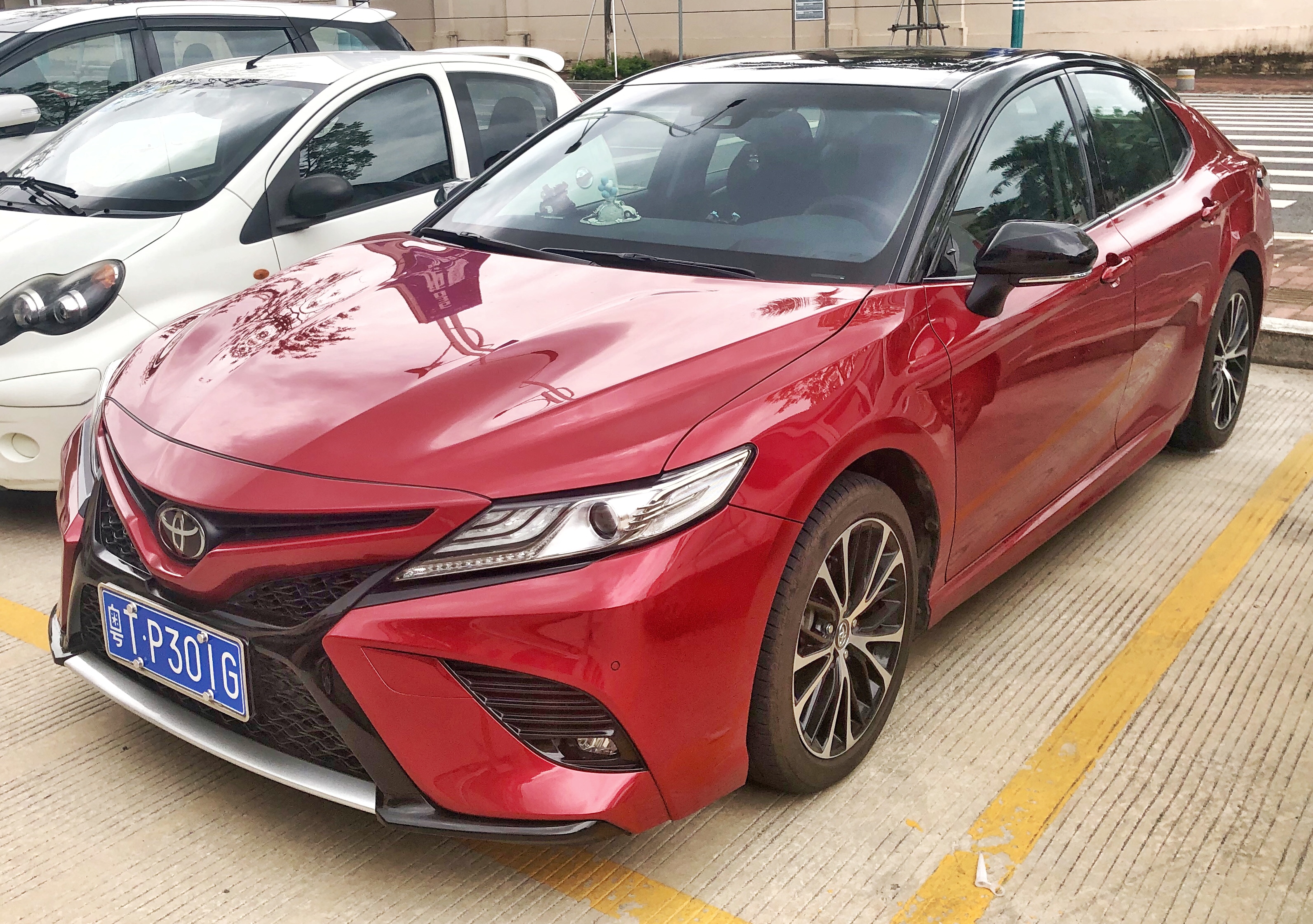
Toyota Camry
"be clear here, that includes some Toyotas. For example, a $45,000 Camry. You're not going to get"
The Toyota Camry is a very common, everyday car. Here it’s mentioned to show that even some popular Toyotas usually don’t get huge discounts.
The Toyota Camry is a mainstream midsize sedan known for being practical and widely sold in the U.S. In this segment, it’s used as an example of a high-demand Toyota where discounts are limited, even if the host says some Toyotas can be part of a buyer’s-market category.

Toyota RAV4
"You're not going to get $7,000 off a Toyota RAV4, 2026 one. You're not. That's just not how the market works today"
The Toyota RAV4 is a popular SUV. The point here is that dealers usually can’t discount it as heavily because lots of people still want it.
The Toyota RAV4 is a compact SUV that’s one of Toyota’s best-known volume models. The host uses it to illustrate that, for a popular model, you typically won’t see extreme discounting (like $7,000 off) because demand stays relatively strong.
market day supply
"it's been sitting on a lot or market day supply. It's a buyer's market. There's a ton of leverage there."
Market day supply is basically “how long it would take to sell what’s sitting on lots.” If it’s high, cars aren’t moving fast, and deals are more likely.
Market day supply is a metric that estimates how many days it would take to sell the current inventory at the current sales pace. Higher day-supply usually signals slower demand, which can translate into more negotiating leverage for buyers.

Volkswagen Id Buzz
"... a Toyota dealership. You're in the market for an ID buzz right now, more power too. You have a ton of leve..."
The Volkswagen ID. Buzz is an electric van, meaning it runs on electricity instead of gasoline. The podcast is mentioning it because someone is shopping for one and discussing what it offers, including that it may have more power than other choices. The focus is on the buying decision.
The Volkswagen ID. Buzz is an all-electric version of the classic “Buzz” van concept, built for families and people who want a practical electric vehicle. In the podcast context, it’s mentioned in a shopping scenario where someone is considering an ID. Buzz and comparing it to other options, including talk of “more power.” That’s why it comes up—buyers are weighing what they get from the electric Buzz.
0% interest
"For years, you heard me say when manufacturers offer 0% interest for certain vehicles, it's because there's zero interest in the vehicle."
“0% interest” means you can finance the car without paying extra interest. The host is saying companies use it when the car isn’t selling as well, to pull buyers in.
“0% interest” refers to a financing promotion where the lender charges no interest on the loan. The host’s point is that manufacturers use these offers when demand is weak, because the promotion effectively reduces the total cost of borrowing.
financing
"But if you can get it and not have to pay any interest when you're financing it, well, that might attract your curiosity"
Financing means borrowing money to buy the car and paying it back over time. The host is saying the interest rate (or lack of it) can make people more willing to shop.
Financing here means taking out a loan to pay for the vehicle over time, typically through dealer or captive-brand financing. The host ties financing cost (interest) to whether a promotion will attract buyers.

Volkswagen Tiguan
"Here's an example from Billy P 2501. I just bought a Volkswagen Tiguan yesterday at Lindsay Volkswagen in Dallas, Virginia. I got $3,000 off of MSRP and 1.9% financing for 60 months."
The Volkswagen Tiguan is a popular compact SUV. Here, it’s mentioned as an example of a car you can buy with a big discount and a low-interest financing deal.
The Volkswagen Tiguan is a compact SUV from Volkswagen, known for being practical and widely available in the U.S. In this segment, it’s used as a real example of how shoppers can find discounts and financing offers at a specific dealership.
leverage
"Everything to the right of the green line. That's where, generally speaking, you have more leverage. Now, it's super nuanced in your neighborhood based on trim level, et cetera, but broad strokes."
“Leverage” here means who has the upper hand in the price negotiation. If the dealer really wants to sell a car, you usually have a better chance of getting a lower price.
In car shopping, “leverage” refers to how much negotiating power you have based on market conditions and dealer motivation. If the dealer is under pressure to sell (or has inventory targets), buyers often have more room to negotiate price.
live experiments
"Ask CarEdge. I want to do something really cool here. Usually, when we do live experiments on this channel, we do them on the CarEdge car search, right?"
They’re talking about trying a real-time test on the show—checking listings and pricing live instead of just discussing it in theory.
The hosts describe doing “live experiments” to test their car-search approach in real time. This is a segment format where they compare listings and market conditions as they happen.
AutoTrader
"We're going to not listen to my dad. We're going to go to AutoTrader. We're going to find a car over on AutoTrader and we'll stick with the Volkswagen right now and we'll do a Tiguan."
AutoTrader is a car listing marketplace where shoppers can browse inventory and pricing. In this segment, the hosts use it as an alternative source to test how they find deals compared with their CarEdge search.
Request an Explanation
Heard something you'd like explained? We'll add it to this episode.
Sign in to request explanations for terms you heard.
Want to learn more?
Browse our glossary for plain-English explanations of automotive terms, jargon, and concepts.
Help improve this episode
See something that's not quite right? Our annotations are AI-generated and can sometimes miss the mark. Click the flag icon on any annotation to suggest a correction.