CarMax is a big company that sells used cars in lots of different locations. The hosts are talking about why CarMax’s sales are slowing while some competitors are growing.
A used vehicle listing price is the price the dealer posts online or on the lot for a used car. It’s a good way to see whether used cars are getting more expensive in general.
Same store sales compares sales from stores that were open in both time periods. It helps show whether existing locations are doing better, rather than just adding new locations.
“Days on market” means how many days a used car listing stays available before someone buys it. If it takes a long time, it often means the price is too high or buyers aren’t interested.
“Used vehicle day supply” is a way to measure how many days’ worth of used cars are available compared to how fast they’re selling. If it’s high, it usually means there are too many cars and they’ll take longer to sell.
This is a 2020 Toyota Sienna minivan, in the XLE trim. The hosts are using it as an example of a used car that’s taking a long time to sell and whose price drops still may not be enough.
A payment calculator is a tool that estimates what your monthly car payment would be. It uses things like the car price, down payment, and loan interest rate to estimate the payment.
A 60-month loan means you pay the car off over 5 years. The length of the loan affects your monthly payment and how much interest you pay overall.
Term
$2,500 down
A down payment is money you pay upfront to start the car purchase. Putting more money down usually reduces what you have to borrow, which can lower your monthly payment.
The Jeep Renegade is a small Jeep SUV. Here it’s mentioned as a real used-car example with a listed price and mileage to illustrate how used-car pricing is changing.
Depreciation means a car gets worth less as time goes on. The hosts are using it to explain why some newer-ish Jeeps cost less than you’d expect compared to their original new-car price.
The Jeep Wagoneer is a large SUV with three rows of seats, designed for families or anyone who needs more space. People bring it up because its price can drop a lot after it’s been bought new. That can make it more affordable when shopping for a used one.
MSRP is the original “new” price on the window sticker set by the manufacturer. They’re comparing today’s used prices to that sticker price to talk about depreciation.
The Jeep Wrangler is the classic Jeep SUV that’s known for off-roading. Here it’s mentioned because the hosts think it keeps its value better than some other Jeeps.
This means the car has been sitting on the lot/online for 101 days without being sold. When a car takes that long, it usually suggests it’s not moving because of price or demand.
Price history is just the timeline of how the asking price changes. If the price keeps dropping, it often means the car isn’t selling as quickly as expected.
“Payment-wise” means the monthly cost of financing the car. Even if two cars cost about the same, the monthly payment can differ based on the loan terms.
“Rebuilding credit” means someone’s credit isn’t great yet and they’re trying to improve it. That can make it harder to get approved for a car loan or can lead to higher monthly payments.
This is a Jeep SUV (the Grand Cherokee) from the 2020 model year. The hosts are using this exact SUV as an example to compare prices between two used-car sellers.
This means whether you can get approved for a car loan. If one place approves more people, that can change how quickly cars sell and what prices look like.
When a company lends money, it has to plan for some of those loans going bad. A “loan loss provision” is the amount they set aside to cover that risk. If it goes up, it usually means the lender thinks more customers might struggle to pay.
Dodd-Frank is a U.S. law that changed how financial companies are regulated after the 2008 crisis. Here, it’s being mentioned because it affects how lenders account for the risk that some loans won’t be paid back. That can show up in the numbers they report.
Auto finance is the money side of car buying—how people get loans to pay for the car. The host is using it to explain whether CarMax’s lending is doing okay based on the loan-loss numbers. If lending gets riskier, those numbers can worsen.
“Held for sale” means the company plans to sell something instead of keeping it. In lending, that can change how the company counts risk and reserves. So the reported loan-loss numbers can shift when loans are reclassified for sale.
Arbitrage is when a company tries to make money by exploiting price differences. They buy cars in one place for less (or pay less overall) and sell them somewhere else for more, hoping the gap is big enough to profit.
Ford is the car company being discussed. The host is talking about Ford’s upcoming cheaper electric pickup truck and how it looks different from what we’ve seen before.
The Ford F-150 Lightning is an electric pickup truck, meaning it runs on electricity instead of gasoline. It’s often talked about in terms of cost because the price can be competitive depending on the deal and incentives. In the podcast, it’s mentioned alongside other truck pricing to compare what you pay.
“Sub-$30,000” just means the vehicle is supposed to cost less than $30,000. The hosts are talking about whether companies can actually make a pickup that price.
Out-the-door price is the total price you actually pay at the end, not just the sticker price. The host is saying the real total usually ends up higher than the numbers people hear first.
The Tesla Cybertruck is an electric pickup truck with a very distinctive shape. The point here is that the price people expected didn’t match what it ended up costing.
Profit margin is how much money a company keeps after paying its costs. The host is saying that if a car costs too much to make, the company can’t realistically sell it at the low price they announce.
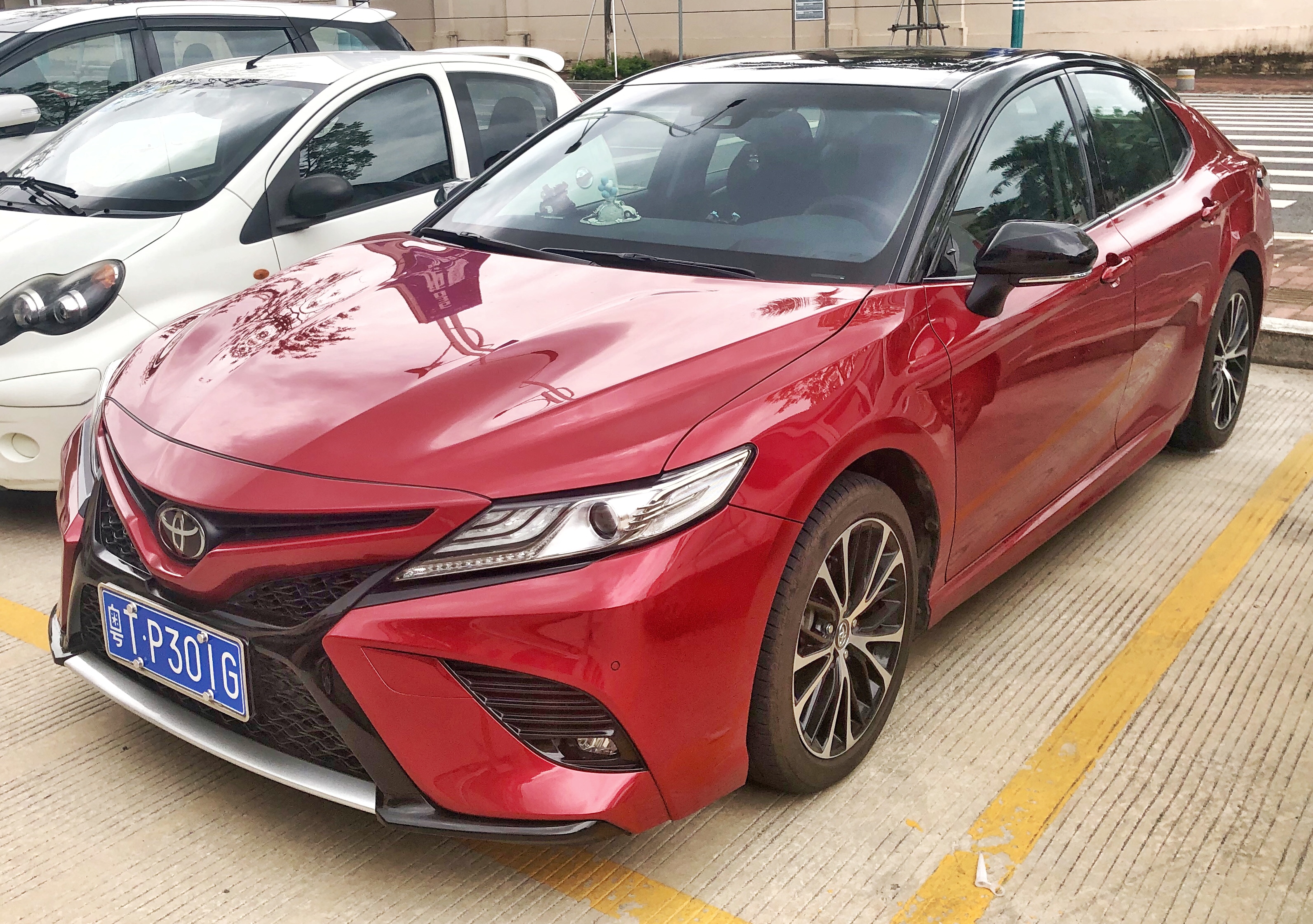
The Toyota Camry is a very common family sedan. Here, the host mentions a 2026 Camry XLT to show that the price people hear about in announcements often doesn’t match what you can actually buy it for.
The Ford Maverick is a small pickup truck that’s meant to be easier to afford than many other trucks. It’s built for everyday driving but still gives you a truck bed for hauling. It comes up in conversations about budget-friendly vehicles.
Gallup is a company that does surveys and publishes results. Here, the host uses it as a source for a “who people trust most” ranking.
LIVE
It's noon here in Venter City, New Jersey, at our nation's capital, Washington, D.C.,
and this is Car Edge Live for Thursday, June 18th with your host, me,
Ray, overcaffeinated or something here in my living room in Venter City, and Zach hanging
out in his office with all his Ironman medals. How are you today, handsome?
You're fantastic. I am so excited to be here with you, Pops, on Thursday, June 18th. You are
caffeinated. You are fun. You are fired up. Today's show, folks, is brought to you by
me, no, my dad and I, and our incredible team. Wow, I really, it's not even for show at this
point. I just struggled with that. Today's show is brought to you by mycaredge.com. My dad and I
and our incredible team have spent the past six years providing car buying solutions to all of
you folks out there back at caredge.com. We have a car search on that car search. You can see
all sorts of cool things, like, for example, dad, how long vehicles have been sitting on dealers
lots. Now, you can also see when we have the data, let's do it here, our dealer certified
dealer partners, those that have an A grade back at caredge.com. We also have our buying service.
This is our concierge or AI-powered buying service. You should check that out. And, dad,
ask caredge where you can ask it any question you ever want, and it's going to find all sorts of
great information for you. Dealer reviews as well, where we rate and grade over 11,000 now car dealerships
nationwide. So much good stuff back at caredge.com. Now, could you ask caredge a question for me?
Okay. This is going to become a thing that we do on the show. And I will, but I'm nervous.
I'm nervous. I'm just saying I'm nervous. Yes. Don't be nervous. Just is Ray's
nice as he seems. Well, there it is. We trained it well. I'm your caredge car buying assistant.
I hope you find vehicles, analyze deals, check dealer reputations, and negotiate prices. I'm
not able to help with questions about people. Is there a vehicle I can help you with today? Ha-ha.
We have foiled my dad's plan. The big story this morning, dad. Yes. Car max. And for all of you
that don't want to go through a schedule 8K or whatever the heck this document is, the SEC 8K
filing that is their Q1 fiscal year 2027 earnings release. Don't worry. We did. Dad, the big numbers
over at car max is they are in trouble. And the fact that they're in trouble is also indicative
of the challenges that are being faced in the used car market more broadly. Can I read off
some stats to you? You ready? I wish you would. Revenue at car max in the first quarter of their
fiscal year 2027, aka the last three months, was $8 billion. That's up 6.2%. That's incredible.
Now, dad, here's what's interesting. Their net earnings, their profit was down 11.8%. And dad,
the vehicles that they sold were 230,293 to retail customers flat from the last data that we have.
Now, at their same stores, they actually sold fewer vehicles. And the big one pops,
their gross profit per unit was cut $230 per vehicle. This is at the exact same time that
Caravana is increasing gross profit and selling more cars. So car max, dad, has actually increased
the prices of the cars that they're selling, but they're making less per vehicle sold,
a non-trivial amount less per vehicle sold, and they're not able to sell more.
What does that say to you about the state of car max? And more importantly, they use car market
broadly. It continues to say to me that there's great difficulty for people when it comes to
buying cars new or used. Now, in comparing it to Caravana, I know what car max is, per
volume, per vehicle retail gross profit was what? $2,200 and some bucks or $2,100 something.
Around there, yep. And that's down $230 per unit after a all-time record high.
The gross profit dropped to some degree. Yeah, they're at about $2,200 in gross
profit at car max per vehicle sold. Caravana is at $6,911 in gross profit per vehicle sold.
I know. I know. You can get into the nuance of finance here, but CarMax also has a finance in
arm. I don't want to get into the nuance of the money. I just want to say that they're counting
for things differently so that I don't know that we have a real comparison.
But the point isn't even necessarily to be Caravana versus CarMax. CarMax makes less
money per car sold and it's declining at the same exact time that they're selling fewer cars,
even though they're eating it. They're making less per car. They're still
not able to sell more. Carvana's sales increased 40% at the same time. Still
approximately 50,000 units per quarter below what CarMax did, but Carvana is showing growth
and CarMax is flat. On one hand, you would say, okay, maybe the entire used car industry is
somewhat flat, but you can't have one of the two largest pre-owned retailers flat and the others
growth go up 40%. So what's the difference? Why is CarMax struggling
where Carvana is not? That to me is the question. Is Carvana's marketing plan
that much better than CarMax? Is CarMax struggling because they've had a new CEO for the last 90 days
and they're trying to change some things from the previous CEO? What do you read into it?
This, it's always about price. I agree with Joseph here. So here's what I want to do, Dad. I want
to do an analysis. I want to see if the cars for sale over at CarMax are just more expensive,
even though they've decreased the profit that they're making per vehicle. So I'm just curious
if they're overpriced. I think that's at its core where the challenge lies within the used car
market right now and I'll pull up before we do our live experiment here. This chart that we like
to look at that shows you the average used vehicle listing price for the past five years broken down
by month. CarMax and the used car market are in trouble and the numbers prove it. This chart is
at the core of all of that and you can see that dark blue line that's going up very aggressively.
That's used car prices in the United States of America and they're headed back to where they were
during the pandemic. They're becoming unaffordable again because there's the scarcity mindset trying
to find good ones, etc. I think that it's a price conversation. So let's put it to the test.
Let's shop for some used cars over on the car edge car search. We're going to use the dealership
filter. Where is it? Dealship. And I want to look at CarMax dealerships.
Wait for it. It's loading. You want to go to CarMax? Why don't we do the one in Phoenix that has a
huge amount of inventory? Okay. And one of the things I was going to say earlier is you mentioned
that sales per location were down. Well, I think part of that is because they increased the number
of locations they have. So they're... Same store sales at CarMax were down, yes.
Yes. But they have increased the... Because I know here in the Atlantic City area,
they not too long ago opened up a brand new facility that didn't exist before.
Exactly. Yeah. They're trying to expand to gain market share, but I don't think that's
working. So let's do the price analysis here. We're starting with CarMax, right?
Okay. Yes. So here we go. We've got the first page of results. And interestingly, the first thing
I'm noticing, Dad, we're looking at just inventory at CarMax, Phoenix, West Valley.
Yeah. These days on market are actually really high for a CarMax dealership.
They are indeed. That's the first thing. Before we even go to price here,
98 days on market, 101 60 days on market. Just for some interesting tidbits here
for our community, used vehicle day supply right now for the auto industry is about 45 days. It's
paid results for one of their dealerships has actually been sitting longer. So that
takes me, Dad, to the next thing I want to look at. Why don't we look at this 2020 Toyota Sienna XLE?
What I'm interested in here now, Dad, is let's see the price history.
Interesting. So they have come down on price. They've come $1,000 down since they first
listed this Toyota Sienna. They've decreased the price by $1,000 since they first listed it.
But obviously, obviously it's not enough. Well, how could it be enough? It's a six-year-old Sienna
with 110,000 miles on it for $25,000. Which has depreciated only 40%
since it was new. So think about that for a second. So again, the question was,
what's going on at CarMax? Why are they unable to sell cars? I think it's just price, Dad.
Now you have to look at Carvana for, say, a 2020 Toyota Sienna and see if they might have a similar
vehicle and do the Phoenix area again. Because I mean, let's compare apples to apples.
Yes, let's do it. All right. So we've got 2020 Toyota Sienna XLE. Let me copy that. I think we have
Carvana inventory here, but let's check really quickly. If we don't, we have their website
open on standby. Drum roll, please. We do. I don't have a lot of inventory for them though. So
actually, I'm not thinking we have enough of their inventory. Let's come over here, pops.
You could do Carvana Talos in again. Let's do 2020 XLE, right?
Yes. And we said we want to be in the Phoenix area. So let me get my zip code.
Good thing you remember our old zip code. Yep. And we want one with about 100,000 miles on it.
One would think to compare prices. So let's see. Let's see if we can even find one. No dice on
any that have over 100,000 miles. Looks like the highest mileage is this one with 92,000.
Okay. And that's $4,000 more. $28,990. Again, the one that we were looking at over at CarMax
was $24,998. Now, we're talking about 17,000 more miles, but still.
Okay. 17,000 miles. I'm not paying $4,000 for 17,000 less miles.
Crazy, by the way. These prices are just crazy. Ridiculous. Let me help you. The prices are
ridiculous. This is why people can't afford cars. I mean, whether you're looking at that CarMax one
with 110,000 or you're looking at this one with 92,000. Okay. The fact that you would, in order to
have a payment that might be affordable. Can I show you something as you do this? By the way,
we just added, based on some user feedback, the payment calculator on all vehicle detail pages
back at caredge.com. So let's play around with this. Apologies for taking me off.
Okay. So let's assume for a minute that the way CarMax does it and the way Carvana does it is that
they always charge a higher interest rate than they should. Okay. Because that's Carvana's big
play. So let's say on a six-year-old car, use the rebuilding interest rate of 13.5%. Okay. And
that's for a 60-month loan with $2,500 down. The payment's almost $600 a month for that car.
Now, the other one is going to be significantly more. It's going to be, what, $650?
Yeah. The one over at Carvana that they're selling for almost $29,000. But they did say it's estimated
$543 a month. Let's see how. We know they charge way more.
This is estimated based on 6.99% financing and look at that for $792 a month.
Nobody qualifies for the $699 with them. Nobody gets $699. Okay.
So what is the problem at CarMax then, Dad? Because it's really hard for me to understand.
They're making less money per vehicle sold. The prices, again, to be very clear, the prices at
CarMax actually went up quarter over quarter. They're more expensive vehicles. But that's
because the cars that they're buying are more expensive, but they're making less per vehicle
sold and they're not selling anymore. At the same exact time where their competitor, Carvana,
charges, we just did one example. We should do another on this.
Yeah. Let's do another. And so perhaps if we do more than one example, we can come up with a reason.
Okay. What's your next example be? Let's see in the chat. Suggest or you suggest, Dad? What's
your next example be? I don't know. Do a... I was going to say do a CDJR product.
Okay. That's the opposite of a Toyota product. That's for $10 a month.
Yeah. Do it like a Jeep.
All right. So we're back to that CarMax in Phoenix, Arizona.
All righty. We've got to have Jeeps.
They've got 37 Jeeps. Okay.
All right. Let's find one that we like.
Let's find one that's affordable. So far, I haven't seen any.
This Renegade is $16,998.
Wow. It's only got 39,000 miles on it. That's some of it. I must have been broken down the
whole time. It's been alive.
Talk about depreciation. Some of these Wagoneers, man, they're not that expensive relative to
their original MSRP. They've definitely depreciated. Why don't we do a Wrangler, Dad?
I think Wranglers hold their value pretty well. Or is that too niche? Do you want to do like...
Do a Wrangler.
Do a Wrangler. Or you know what I'm interested in? A Cherokee.
Okay. Do a Cherokee.
Or a Grand Cherokee. There we go.
Do it like I said. Do a Grand Cherokee.
Well, Grand Cherokee is one of their more high volume sellers. So let's do this one.
Again, fascinating for a CarMax. They've had one for 101 days. That's not a good sign.
Let's go down to the price history. Very curious.
This is another one. They've dropped the price by $1,000 over at CarMax on this one.
And payment-wise, what are we looking at here?
Rebuilding credit again. We're up still over $520.
Yes.
Okay. So here's what we're looking at. $21,998 for 60,000 mile 2020 Jeep Grand Cherokee.
Limited, obviously, over 101 days. It has not sold. But it's now come over.
To Carvana and see what they have.
Something comparable. Yeah.
Yeah. Because that's the only fair way to do this. And we're doing it the same market.
Yep. Yep. 100% doing it in the same market. So again, mileage on that other one was about 60,000.
Yes.
We've got two options here that are priced at the exact same amount. So they're asking $22,900.
So we'll click on this one. This has a little bit more miles on it.
Yes.
But they're asking $22,900.
Which is higher than what CarMax was asking.
CarMax was asking $21,900. So Carvana, again, is asking more money for the same exact car.
Is it really priced then? I don't think it's priced.
Yeah.
I think it's something else. Okay. Knowing that it's not priced, comparing like vehicles in the
same market. I'm going to guess it's ease of credit. And I'm going to guess it's easier to get approved
for that car loan at Carvana than it is at CarMax. That's what I'm going to guess.
So if it's not priced, it's got to be the availability of finance.
Now it is interesting, Dad, because CarMax also does offer auto loans to their customers.
And if you offer auto loans or any type of financial instrument, you have to now after
since Dodd-Frank do a loan loss provision. So we have a little bit of insight here into how things
are going at CarMax when it comes to loan loss provisions. You can see here, this quarter's
provision for loan losses, which incorporates CarMax auto finances, additional growth in the
tier two space, was $95.6 million compared to $101.7 million in the prior year's first quarter.
There was a reduction in this quarter's provision due to the release of a $21.1 million,
for the allowance of previously recorded for loans that are now classified as held for sale.
So it seems like the health of CarMax's auto finance is okay. It didn't increase. There used
to be times we'd come on the show and the amounts of loan loss provisions they've had went up by
like 50%, not just CarMax, all auto lenders. So maybe it is easier to get approved for an
auto loan over at Carvana, and that's why they're able to sell more cars. It doesn't look like at
CarMax, there's a huge amount of issues when it comes to it. So if it's not price and it doesn't
appear as if it's price, what is holding CarMax back at the moment? And if I was part of the
management team at CarMax doing an experiment like this, the first thing that would come
to my mind is that they're doing a much better job of advertising their experience.
Yeah, the customer experience, yeah. Their customer experience than we are at CarMax.
Nothing against Paige Beckers, but maybe that's not really their target market.
Maybe that's not really their spokesperson that they should have for selling pre-owned cars.
Maybe the whole thing should be about ease of doing business and not necessarily having a
celebrity spokesperson. I don't know. Those are the things that I would be looking at because
you know price-wise, you're better than competitive.
So let's actually stay on that for a moment because again, for our community,
while it is fun to get into the nuances of why some car dealers do better than others,
there's a really tangible takeaway here, which is it probably makes sense if you're looking for
ease of doing business. It probably makes sense to sell your car to Carvana because they pay more
and then buy your next car from CarMax. If you do not want to go to a traditional car dealer,
which to be clear here, you pay a premium at Carvana or CarMax relative to a traditional
car dealer, but also the process, totally different. That would be the arbitrage here,
sell your car to Carvana, they're going to pay out buy them CarMax, not Carvana because they're
cheaper. So then answer me this question. If Carvana is paying more for the same cars than CarMax is
and then Carvana is turning around and charging more for the same cars than CarMax is,
how the hell is Carvana selling more cars or seeing sales growth of 40%
while CarMax is stagnant? I mean, you know, there was an old movie with Gene Hackman
and one of the lines is something doesn't smell right in Poughkeepsie or something like that.
I forget the French connection was the movie and he was a cop. So when we do this type of experiment,
something doesn't smell right in Poughkeepsie. I mean, something is just, I'm not good at math,
but something ain't had enough. So it is, what has to be the differentiator?
And just because, you know, when I was like 12 years old, okay, maybe I was really 20 or 21.
You know, I went to the Charles Morris Price School of Advertising and Journalism
sponsored by the Poor Richards Club of Philadelphia, which was the school with the world's longest name.
Okay. And I went there and, you know, I learned about advertising and public relations and maybe
because of that background, things marketing sticks in my head. And so maybe, just maybe,
it is their marketing. It is the advertising and the way they do the advertising.
To me, that's what it would be. And so if I was sitting in that C-suite,
I'd be saying we need to find ourselves a different advertising agency.
Let's switch gears, Dad. I want to talk about Ford. Did you see this? We've got the first like
spy photos that came from a video that they shared. This is going to be their $30,000 or less
EV pickup. Did you see this at all? This is, it's interesting. It looks very different.
We obviously still have the affordability crisis since Ford leaning in here,
showing the first images of what their EV pickup truck is going to be.
Yeah. Next EV pickup truck. Yeah. When's that coming out?
The objective here is for this vehicle to be out in 2027.
And the objective is it's going to be a $30,000 vehicle, probably $29,995,
much like the lightning was going to be $39,995.
Yep.
Yeah. In dreamland. Okay. In dreamland. Hey, you want to talk about future product?
How about Mitsubishi is going to come out with their pickup truck?
Oh, I did see that.
Yeah. Yeah. It was an automotive news yesterday.
They've got a new Eclipse fastback coming out. They're going to bring out a pickup truck
that they're going to build jointly with Nissan.
They've had pickup trucks for other markets in the past.
This is actually, I'm glad we saw this coming. What about Slate's pickup?
This is, I think, in response to the amount of pressure we've seen from these startup companies
like Slate, for example, and others who have said they're going to come out with a sub-$30,000
pickup truck. Toyota has some pressure on them to come out with a more compact and more
inexpensive excuse notes where I was looking for pickup truck.
You know, I hear that and I say this all the time. Their actions never match their words.
Every one of these automakers talks about affordability.
Every one of these automakers has put affordability as something they're going to address in the future.
Not now. They don't seem to be doing a damn thing about it now.
Well, that's why I wanted to show you. We've got the first images of the $30,000 new Ford EV
pickup truck. Come on, let's go. I think it's great. I just don't believe it's going to be
$30,000. Color me as a non-believer. Nobody ever saw a $39,995 light thing and whatever that
thing's going to be called, the mini light thing, I don't know what it's going to be called.
Okay, but it ain't going to be $30,000. None of these vehicles at the price
points they're always talking about when they're announcing them ever come out at those price
points. It's never happened. What's that saying? Fool me once, shame on me. Fool me twice,
shame on you. I mean, my God, this has been going on for like 120 years where they say we're going
to do this and it's going to be that price never been. Here's a good example of that from Justice.
I never got my cyber truck because the price was 500% more. Color me a non-believer. I hear,
I read the words. I could picture Jim Farley speaking the words and I can see a Monroni label
on the side of a truck that's $40,000 but not $30,000 or maybe it's $35,000 but it's not going
to be $30,000. Well, the base truck, which we're never going to build, it would be $30,000 if we
were to build it. Okay, but there's no profit margin in that for us and we're not really going
to build it. We're just going to talk about it. I love it because it's not only just Ford. I mean,
look at this. Just bought a $38,000 2026 Toyota Camry XLT. I mean, we saw, Dad, what was it,
a $45,000 Camry recently that we helped the customer negotiate. What was it? $7,000 all?
$7,000 off. The Camrys are even too expensive. It is just...
And the Maverick, yeah, the sub-$20,000 Maverick, I hear you.
Listen, there are some folks in this country that are perceived to be less truthful than others.
Lawyers sometimes. We've got the trustworthiness of profession, Paul. We have these on there.
Lawyers, politicians, salespeople, auto salespeople, and auto makers. Okay, they are the least
truthful group of the four I just mentioned because every six months or so, they announce
what it is that they're going to build at price points that are going to just shock the market
and they never happen. Oh, the vehicles get built just never at those price points.
Americans, honestly, in ethics ratings for professions, this comes from Gallup.
Car salespeople, number three at the bottom. Members of Congress, telemarketers. Those are
your least trusted, but yes, tilting negative journalists, bankers, lawyers, real estate
agents, business executives, advertising practitioners, stockbrokers. Let's see,
there's the latest data on who not to trust in the car buying process
or in general. You know who you can trust, folks, caredgeandcaredge.com. Again, me, nope,
my dad and I and our incredible team, we are here to help you. For example, you can book a free
consultation with real members of our team. You can schedule a call, have us call you,
or start a live chat. Right now, it looks like we even have some availability this afternoon,
dad, to have conversations with folks in our community. Rusty, Annie, Tina, Mitch, Tony
are there to help support you and Pops, again, back at caredge.com, encourage everyone.
If you're not using the car search, the ask caredge, research, dealer reviews, there's
so much great information back at caredge.com that we are incredibly proud of. So please,
check it out. We're back with another episode of Car Edge Live tomorrow, 12 p.m. Eastern times.
We look forward to seeing everyone then. And then, dad, on Monday, we will have a guest.
We have one of our Toyota dealer friends, Tyler from Ackerman Toyota will be joining us on Monday
for a Toyota show that we're going to talk about all things Toyota. So really excited for that.
Look forward to that as well. But we'll see folks back here tomorrow, Pops. 12 p.m. Eastern time,
three hours before the US spends national team has their next People World Cup game.
Okay. We're playing Australia tomorrow, dad. We got to beat them.
Yeah, but here's the really good news. By the time we're done tomorrow, it'll only be two and a half
hours to US versus Australia. Yeah. Yeah. Is it first kick? What do they call it? I don't know.
First kick at three. And yeah, we got the Knicks celebration parade today. Fun sports time.
We have the US Open at Chinacoc Hills in New York. The men's US golf open.
What a time to be alive. And to be a sports fan. Yes, indeed.
We're back tomorrow, folks. Love you, dad. Enjoy the afternoon.
Love you too, handsome. Have a great day.
If you liked the show, please take a moment to rate, review, and subscribe.
It really does help the show to grow. Thank you for listening.
About this episode
CarEdge Live digs into CarMax’s trouble using its SEC filing and earnings numbers, highlighting revenue growth alongside shrinking profitability. Hosts argue the used-car market is getting tougher as listing prices rise and inventory sits longer, then test pricing with dealership filters. They connect the mismatch to financing realities—higher interest rates and approval dynamics can make “low payment” offers unrealistic. The episode also pivots to whether automakers can truly hit a ~$30,000 EV pickup target, given past pricing gaps.
Today on CarEdge Live, Ray and Zach discuss the latest on CarMax. Tune in to learn more! Hosted by Simplecast, an AdsWizz company. See https://pcm.adswizz.com
for information about our collection and use of personal data for
advertising.