The Mercedes CLA EV is an electric car based on the CLA model, which is a smaller sedan from Mercedes-Benz. It's designed to be more environmentally friendly than regular cars that use gasoline.
The Toyota Corolla Cross Hybrid is a smaller SUV that uses both a gas engine and electric power to save on fuel. It's easy to drive and great for city living.
XLE is a special version of a Toyota car that comes with more features and options than the basic model. It's designed to be more comfortable and stylish.
XSE is a sportier version of a Toyota car that has extra features and a more stylish design. It's made for people who want a more exciting driving experience.
The Toyota GR Corolla is a sporty version of the regular Corolla that is made for people who love to drive fast. It has a powerful engine and handles really well, making it exciting to drive.
The Honda Prelude is a two-door car that Honda made, known for being fun to drive and having a sporty design. It was popular in the 80s and 90s.
Car
Honda That Honda
The Honda That's is a small car that is really practical and great for driving in the city. It has a unique look and is designed to be efficient and easy to park.
The Toyota RAV4 is a small SUV that is great for families and everyday use. It's known for being reliable and having plenty of space for passengers and cargo.
The Toyota 4Runner is another SUV from Toyota that is built for off-roading. It has different versions, or trims, that can change how much it costs and what features it has.
Car payments are the monthly bills you pay when you borrow money to buy a car. Many people are now paying over $1,000 each month because cars are getting more expensive.
A car loan is money you borrow to buy a car, which you pay back over time, usually in monthly installments. Some loans can last a long time, even up to eight years.
Term
$50,000 mark
The '$50,000 mark' is a price level that many people consider when buying cars. It often represents a point where cars are more expensive and might have more features or be considered luxury vehicles.
Used car financing is when you borrow money to buy a car that has been owned by someone else before. These loans usually come with higher interest rates compared to loans for brand new cars.
A captive finance company is a bank that is part of a car company. It helps people get loans to buy cars from that company, usually offering better interest rates than regular banks.
The Mazda MX-5 Miata is a small sports car that is fun to drive and easy to handle. It's a great choice for people who enjoy driving and want something affordable.
The Mazda MX-5 is a small sports car that seats two people. The N.A. is the first version of this car, made in the late 80s and 90s, and it's known for being fun to drive.
A four-cylinder engine is a kind of engine that has four small chambers where fuel and air mix and burn. It's popular because it usually gives good power while using less fuel.
MPG means how far a car can go on one gallon of gas. If a car gets 42 MPG, it can travel 42 miles using just one gallon of fuel, which is pretty good for saving money on gas.
The Chrysler Pacifica is a family minivan that has a lot of space and features. Some versions can save on gas because they use a hybrid engine, which combines gas and electricity.
A minivan is a type of car that is designed to carry a lot of people and their stuff. They usually have sliding doors and a lot of room inside, making them great for families.
Sliding doors are doors that move to the side instead of opening outwards. They make it easier to get in and out of the back seats, especially when parked close to another car.
Car
Mercedes-AMG G 63
The Mercedes-AMG G 63 is a powerful and luxurious SUV that is great for off-roading. It's part of the G-Class lineup, which is known for its boxy shape and strong performance.
The Ford Bronco is a tough SUV that you can take off-road, meaning it can handle rough terrain and adventures. It's a popular choice for people who like outdoor activities and want a vehicle that looks cool and can go anywhere.
The Jeep Recon is a new electric SUV that is made for people who love to go off-road. It combines Jeep's tough design with electric power, making it good for adventures.
The Subaru WRX is a fast car that can handle all kinds of weather because it has all-wheel drive, which means all four wheels get power. It's popular with people who like to drive quickly and enjoy racing or sporty driving.
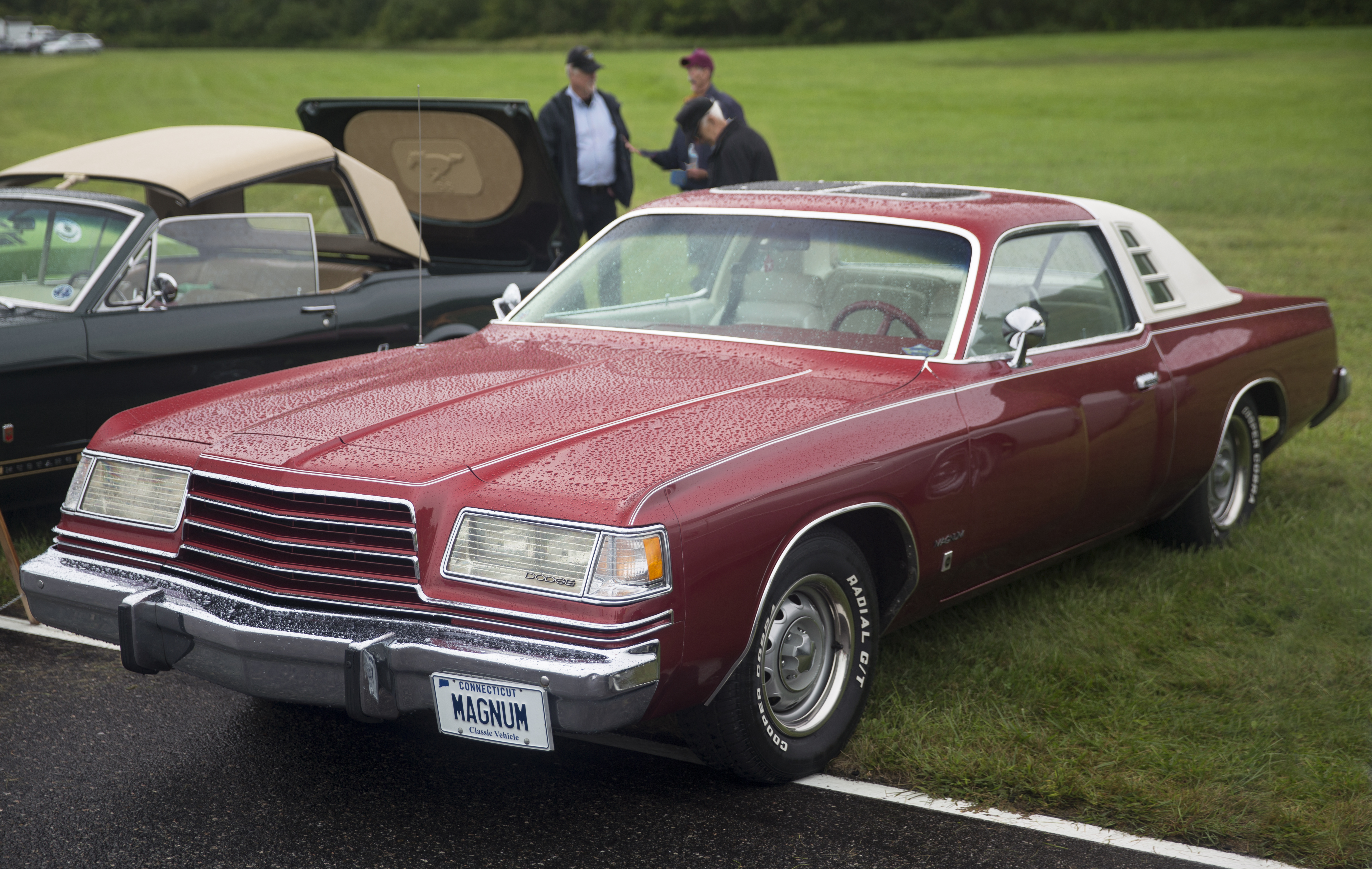
The Dodge Magnum is a cool-looking wagon that has a lot of space and can go fast. It's a fun choice for people who want a car that stands out and is practical at the same time.
The Dodge Charger Daytona is a fast car that looks sporty and is made for people who love speed. It's a modern take on a classic car that has a lot of history.
The Cadillac CTS-V is a fast and fancy car that combines luxury with high performance. It's designed for people who want a comfortable ride that can also go really fast.
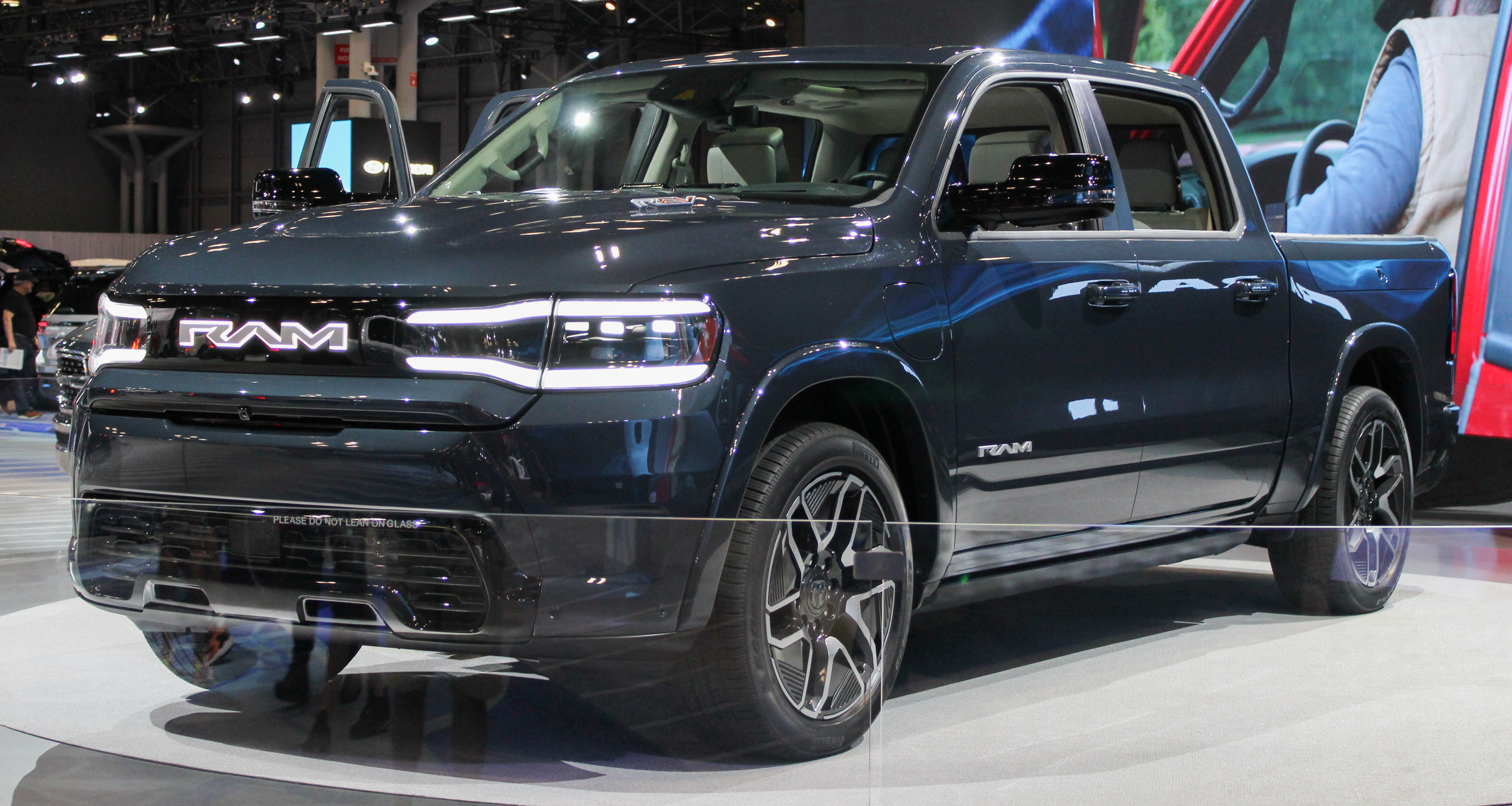
The Dodge Ram is a big truck that people use for work or to haul things. It's known for being strong and having a nice inside, making it good for both jobs and family trips.
The Nissan Frontier is a smaller truck that can carry things and is good for work or play. It's a solid choice for people who want a truck that isn't too big but still gets the job done.
The Nissan Pathfinder is a family SUV that has a lot of space for kids and stuff. It's a good option for families who need a car that can fit everyone comfortably.
The Kia EV6 is a new electric car that looks really cool and drives well. It's a great option for people who want an electric vehicle without spending too much money.
The Nissan Leaf is an electric car, which means it runs on batteries instead of gasoline. It's a good choice for people who want to save money on fuel and help the environment.
The Hyundai Ioniq 5 is a new electric car that looks really modern and has a lot of cool tech inside. It's great for people who want a stylish car that doesn't use gas.
The Kia EV5 is a new electric SUV that is designed to be roomy and full of cool technology. It's perfect for families who want an electric car with lots of space.
The Kia Sportage is a small SUV that has a lot of room inside for people and things. It's a good choice for anyone looking for a comfortable car that can handle daily tasks.
The Kia EV9 is a new electric SUV that's big and has lots of room for people and their stuff. It's designed for families who want an electric car with plenty of space.
The Suzuki Jimny is a small, tough car that can go off-road and handle rough paths. It's loved by people who enjoy outdoor adventures and need a reliable vehicle.
The Lincoln Corsair is a fancy small SUV that is designed for comfort and style. It's a great choice for people who want a luxurious car that feels nice to drive.
The Jaguar I-PACE is a fancy electric SUV that looks great and drives really well. It's perfect for people who want a luxurious car that doesn't use gas.
The Hyundai Ioniq 5 is a new electric car that looks really modern and has a lot of cool tech inside. It's great for people who want a stylish car that doesn't use gas.
LIVE
Ever see an idea so clearly in your head but struggle to make it real?
We've all been there.
With Wix, you can build a website for your business just the way you pictured it.
Get the best of both worlds with AI and drag-and-drop tools all in one place.
Stay in your creative flow and use AI when you want, how you want.
Create a website your way. Try it out at Wix.com.
This is episode 429 of Wheel Bearings. I am
Sam Abul-Samet from Telemetry. I'm Roberto Baldwin from SAE Media, SAE International, man, well
both actually. I'm from SAE Media and SAE International. I'm from all the SAEs.
And I'm Stephanie Brinley from S&P Global Mobility.
And something else, just make up something now.
And Nicole I think is still in Europe, I mean a couple of days ago she sent some photos,
she texted us some photos of Mercedes, CLA, EV, partially camoed somewhere in Germany so.
Somewhere in Germany, you know I'll be somewhere in Germany tomorrow.
Oh yeah?
Oh.
Yeah and I'll probably be driving those cars.
I think that's all I can say.
I don't know.
Tell me when I get there.
Tell me when I get there.
It's on future date.
All right, well Steph, since you're our guest today, why don't you tell us what
you drove?
I drove the Corolla Cross Hybrid this week. And you know when I was driving it,
I, you know, from Michigan people, right, I drove up to Trankin with Thanksgiving.
And I love how small and compact and just easy to live with it is. I found,
I was a little bit surprised that the midrange power on the highway was better
than I expected it to be. I mean, it's, it's, you know, a little hybrid with not
a ton of power. So it's not a super fast vehicle, but it handled pretty well.
And I was enjoying it. I was like, OK, this is kind of neat.
It didn't feel like it was quite as noisy as a lot of Toyota hybrids tend to be.
And then let's double check the price on this thing.
Oh no.
Yeah. I'm like, OK, maybe not.
And then I'm so I'm trying to figure out how upset I am about the price right now.
It's it's 35,999 dollars
before the $1,450 destination fee.
So it's 37,449 dollars.
Now, just for kicks, I compared the non hybrid
to XLE, which is similarly equipped to the one that I have.
And it was thirty four thousand eight hundred and ten dollars
before the destination fee.
So your hybrid was also an XLE.
It was similar.
It's XSE. It was XSE for the hybrid.
But so there's similar content.
A little bit different.
Couldn't quite get it to be exactly the same when you go from hybrid to gas.
And and so there's still a I was looking to find the gap between the two
and there's still a pretty good gap between the hybrid and the non hybrid.
And that's that's where your that's where the extra.
Oh, geez, that was more expensive than I thought came from, I think,
is the gap between the hybrid and the non hybrid.
And overall, it's probably, you know, if you think about an average
price of, you know, forty eight or forty nine thousand dollars,
it's still well low average.
But it's it still felt like a little bit of a surprise.
I was I was thinking closer to thirty three.
You know, which is before there's any options on this one.
The base price is thirty three thousand dollars.
But then you throw a couple of options on to it and the destination fee.
And all of a sudden you're at thirty seven five.
A lot of money for something with that has a Corolla badge, but no GR badge.
Yeah, well.
But you look at the at the Corolla with the good badge on it.
And you're not at that price either.
Let's look at that.
Yeah, the GR is like upwards of forty now.
Yeah, but that's upwards of forty base.
Yeah. So you're going to hit forty seven
before you're easily easily.
So you can get a Corolla GR for, you know,
ten thousand dollars more than this one.
Yeah.
It's not exactly.
Well, it's it's funny, you know, when the prelude pricing came out,
they sent it along with like, oh, based on inflation,
it's actually less than like the 2002 prelude or whatever.
And so when you look at like, you know, we can say, oh, well,
based on inflation, this car is actually cheaper than, you know, a car.
But that's based on inflation.
We pay hasn't increased based on inflation.
There's the there's the big issue is that the amount of money we take home
hasn't kept track with inflation for a very long time.
So it just keeps getting everything gets getting more and more expensive.
Well, we're getting a bigger and bigger percentage of our paycheck.
Yeah, it's if there's a larger and larger gap every year.
So when you say, well, it's only, well, according to inflation,
this car was only like, you know, eighteen thousand dollars.
I'm like, yeah, but I make less than I would have in the 90s.
Well, and I saw that that Honda comparison and it was clever
because they compared to the last year of the prelude.
So yeah, you're randomly comparing to 2001.
Sure. Yeah.
But a lot, a lot has changed.
And I mean, you know, a vehicle for ability is going to be a problem all year
line. It's not going to get any better.
Same with everything else.
But well, and I think they with the the RAV4, when they announced
the RAV4 pricing a week or two ago, you know, I think they did something similar.
You know, they compared the price of the base RAV4.
What S E trim, I think is the base trim, you know, to and compared that
to the cheapest twenty twenty five RAV4 hybrid.
And that trim was slightly cheaper by, I don't know, a couple hundred dollars.
But you know, that doesn't take into account the fact that you can't get a gas
only RAV4 anymore. And there was a cheaper RAV4 gas last year that is now gone.
And if you and the same, you know, the same thing happened with the forerunner.
If you go past the that base trim to any of the other trims,
they're all all the other trims are more expensive than the equivalent
twenty twenty five models.
And it was the same thing with the forerunner and with the Tacoma,
you know, so they have they get a cheap baseline price that for a version
that almost nobody buys. Yeah.
And then everything else is more expensive and in some cases by a lot.
Yeah, it's just like the huge, huge leaps in any trim below.
You get like four wheels and like some vice grips for a steering wheel.
Yeah. Yeah. Well, you know, pricing is still going to be pressured all year.
Yeah. Now that the tariffs have settled down to a degree.
We hope. I know for the moment.
All you can do is know.
Fingers crossed.
It's pretty preoccupied with going to war with a country that hasn't done anything
to us yet. Yeah.
So they're almost settled.
But that does mean that the automakers can get a better grip
on what their pricing needs to be.
For next year.
So, you know, we do expect to see more impact
and and we'll see exactly what that translates into.
But, you know, consumers, of course, are facing, you know, everything else
is more expensive as well.
And and we do didn't double check our forecast for 26,
but we do expect 26 to be lower sales than 25.
But the weird thing about all this pricing conversation that we have,
we talk about pricing a lot, talk about affordability a lot.
Somehow or another, consumers were resilient enough in 2025
that they're going to buy almost as well a little bit more,
a few more cars than they get in 2024.
And in 2024, we kind of thought affordability might be a bit of a problem.
We've been talking about this for years and consumers just keep buying cars.
It is crazy what people are paying for cars
and their loans and how much they're paying per month.
And I'm like, that's insane.
I mean, I feel like the cheapest person on my block.
Yeah. I mean, you know, we've talked about this on several occasions,
you know, where was it 20% of all car payments are now over $1,000 a month?
Oh, yeah. You know.
And, you know, so many people now have seven and eight year car loans.
It's just insane.
So much money.
Like who I it doesn't help that I live in the Bay Area.
So there's that. And then we bought a house in the Bay Area.
So that like, you know, we already have the squeeze of that.
But even here in Michigan, you know, it's it's still very expensive.
Yeah, it's a lot of money.
I'm lucky, you know, we haven't had a car payment in.
Seven years. Yeah.
About seven years now.
That's that last set of car payment.
You know, both of our cars are paid off.
So, you know, and that that's part of the reason why this year,
when we when we did decide to replace our old car,
we bought a used car for the first time in a long time.
I've never been paid.
Mine's paid off, but mine's old.
And that's one of the things I'm not, you know, am I going to buy a new car?
Is here. I don't know. It's crazy.
I might could happen.
But yeah, my my man has been paid off for a while.
And it is nice to go without a car payment.
And historically, when I bought a car, I've gotten it paid off
well before the loan term and and only had car payments for a couple of years.
But I don't know if that's possible
with the way that pricing is right now.
Yeah, that's yeah.
You know, average transaction prices, you know, topped 50,000
and was it September or October?
Yeah. Well, there were there were some other factors.
Yeah, yeah.
And it dipped back down again in October, slightly just below.
But I'm, you know, my guess is that, you know, for at least the next year or two,
you know, it's going to be hovering right around that $50,000 mark for for a while now.
I don't even know.
It's probably it's not, you know, it's probably going to just bounce up
and down just around that that mark, but, you know, not really drop significantly.
So in that context, you know, $36,000 for a Corolla Cross hybrid
is not as crazy as it sounds.
But yeah, it'll it'll feel like
when you think about the economics that we're like, OK, 36,000,
OK, three year loan, right?
How much down or anything in 10%?
Oh, my God, it's a lot of money for a Corolla.
It's the interest rates amount, too.
I mean, that doesn't help.
Yeah, that's that's a big part of what contributes
to those $1,000 a month payments is the the interest rates
on a lot of these loans because you end up, you know,
just paying an exorbitant amount.
Yeah, it's it's been it's been nice lately, you know, looking at my
my mortgage statement and seeing, you know, that we're
we're we're in the approaching the final years of our mortgage.
And so now the vast majority of my monthly mortgage payment
is going to principal and not interest.
That's nice. Yeah, we're only six we're only six years in.
So I'm I'm I just bought us and tried to set things up.
I should be paid off in a couple of years.
But I did that I did a big lump payment the summer.
And so I saw that same thing, Sam.
It was really nice.
Yeah, it's really nice to see that that drive.
If I can pay less interest, that's better.
Yeah, we we pay every two weeks.
So twice a year, we're just paying directly to interest
instead of once a month.
Look at that. Look at all the financial advice we're giving to people.
Right. Yeah. Save up all your money.
Just pay off your house and buy a used car.
That's our that's the wheelbarrow's motto.
Well, no, be careful of buying.
Well, you know, Sam, you were able to buy your used car
without a payment, but used car financing can be higher.
The new car financing.
That's true. Yeah.
Get a little bit there, too.
Yeah, you do end up typically paying more
in interest rates on used car loans
because generally you're not going to get your used car loan
through the captive finance company, the automaker, you know,
and they they usually give the best rates, you know.
So if you have to go through your bank or credit union
or have them forbid through the dealer, you know,
you're going to end up paying a lot more in interest rates.
So that that that's actually another major challenge with used cars.
There's a there's an NC Miata for ten thousand dollars near me.
So I'm just, you know,
if I do decide to sell, there's one of my driveway.
I don't know how to sell it for, but I don't know.
Probably can fly here and drive and drive it home.
Yeah, I only I only fit Nandy's.
You fit in the N.D., but you don't fit in the NC.
Nope, because of the way the the cross member is for the the the.
I'm not retractable. Does it stop the retractable top? Yeah.
I drove my friend in his N.A.
He messed up his his knee.
We were at Taekwondo tournament and he got kicked in the knee.
And so I had to drive him to the hospital in the snow in his N.A.
And I was driving like that at my head all cocked like 45 degree.
It was horrible.
I was like, man, this car sucks.
Well, and you're you're quite a bit taller than I am, Robbie.
You know, and the last time I drove a monster was at the the Mama Spring Rally
last in twenty three and twenty four at Road America.
And I went to take an N.D. out on the track.
And when you go on the track, you have to wear a helmet.
And it was kind of a rainy day.
So had the top up at the top close.
It was an RF, so it was the hard top had the top closed.
And with the helmet on, you know, I was like that, you know, my head cocked over
because that's me and I could not fit with a helmet on.
Like that's me in the Lamborghini in the the Huracan.
I was at Willow Springs and my head was caught at 45 degrees
with with trying to drive on Willow at Willow Springs in the Lamborghini.
It was like not great.
Never being a little shorter than you guys.
Yeah, see that's
everyone's like, oh, you're tall, you can reach things.
I'm like, yeah, but most like fun sports car.
Like I my friend had an S 2000.
I wanted one so bad and I went to get in it and I'm like, well, this will never work.
That is never going to be part of my life.
So I have a small sports cars.
Yeah. So I have the BRZ, BRZ, the the the Miata for tall people.
Yeah.
Anything else on the crawl across?
That that was about it.
I mean, really comfortable and comfortable for it's no segment and in what
and more pleasant to drive than I was sort of expecting.
And knacked around a little bit.
I again, I like things that are small like that
and and ease abilities, ease abuse of that space.
A little quieter than I thought it was going to be from the engine
the the road noise and the tires was pretty high.
Yeah, just radio up.
That's typical Toyota four cylinder.
Yeah, very typical of that.
And again, the pricing was a little bit higher than I was sort of thinking.
But as we've talked about, it's it's it makes a little bit more sense.
And still, 42 MPG is is pretty nice
and and a good viable option for for the entry space.
It just the entry space is not what it used to be.
Yeah, yeah.
All right, Robby, tell us about your adventure this week.
So I drove to Palm Springs and back, which is over 500 miles.
And we took the dogs and we, you know,
usually drive the dogs around in the Onyx five, but that's so much time in a car.
So what we do when we go on long trips with the dogs, we will rent a minivan
and then I have to spend like an entire day when we get back cleaning
the minivan because you're not supposed to put dogs in your rental minivan.
Um, that's it.
So you almost always get a Chrysler Pacifica.
I got to say, you see, in a hybrid once
and I was so excited because I got a great gas mileage.
But not this time.
I got the Chrysler Pacifica S, which is like, ooh, it felt fancy.
There was like, you know, USB ports in the back for the second row,
which didn't matter because all the seats were down
because there's a big dog bed in the back for the dogs.
Um, that's it.
I have never had a car that dropped carplay more than this.
Just non stuff.
They used to be driving.
Is it wired or wireless?
Either wired and wireless.
That's that's why I was like, oh, I'll just unplug it.
Maybe there's something going.
Nope, USB C, USB A.
It had both, by the way, which was nice.
But still either it just kept dropping carplay.
So I'm not a hundred percent sure it was the car or if it was my phone.
But my phone has not dropped carplay in my car at all.
The entire time I've been back because, you know, there was an update
for the iPhone and God knows what they're doing over in Apple anymore.
So that was kind of a pain in the butt.
I got about 22 miles, 22 and a half miles per gallon driving down there.
That's doing like 80, 85 again, speeding the speed limit 70.
So of course, I'm going to go faster than that
because I'm a horrible person on the freeway.
It was comfortable.
It was, yeah, it was a comfortable, it was a comfortable vehicle.
Sto and go still like, you know, double thumbs up for Sto and go
for a second and third row, tons of room for all the random stuff.
Like just, you know, stuff starts sliding because there's so much room.
You don't have anything to like buy.
So you have to very carefully put things in.
The dogs enjoyed it.
They like being able to stand up, walk around, come put their heads
between the two drivers, the two front seats, because they are also
driving as far as they're concerned.
That is the way it works with dogs and cars.
Yeah, yeah, the transmission, man.
It is that's the nine speed.
Yeah, it's not.
It's it's everything happens about three seconds.
Later. But again, it's a it's a minivan driving around town.
Transmissions like that in order to like redo, you know, get you some better fuel economy.
I think for most of your driving, you're going to be fine.
But it is, yeah, I didn't sit in the second or third row.
I did clean those rows, which was nice.
So well, at least you didn't have to actually clean those seats.
No, I didn't have to clean the seats.
So that was good.
Overall, it's, you know, if you're looking for a used minivan, this is probably
about a twenty, twenty three, twenty, twenty four.
It's only like it only had like 60,000 miles.
But those are 60,000 rental car miles.
Those are some hard miles.
Those are a guy throwing his German Shepherd and his tiny German Shepherd
in the back of car and blasting down Interstate five.
That said, yeah, give it give it a look.
You know, if you want to go up a little bit,
you're probably going to, you know, look at the Sienna or the Odyssey.
But you can't beat Sto and go, right?
Especially if you if you haul a lot.
And I when we moved, we had movers because we used to live
on the fourth floor of a walk up in San Francisco.
So after living there for over 10 years and just carrying things up,
we're like, we're not carrying all this down because now we're old.
We had movers move all this stuff, except, you know,
there's always that extra stuff.
And I didn't rent a minivan.
I didn't I'm sorry, I didn't rent the SUV.
I didn't rent a truck.
I rented a minivan to get all that extra stuff into the, you know,
to our new house.
And that's the the the brilliance of a minivan.
You have the little doors slight open as you're walking up as low load height.
There's tons.
There's so much room that you don't think about that you lose
when you have an SUV, you're sitting lower.
You feel, you know, it's just it's kind of a nicer driving experience
on the on the freeway, just cruising.
It's a better, you know, touring vehicle than an SUV.
I cannot say enough nice things about minivans.
And no matter how often I tell people, they're like, you know, man,
but then you see the people who have minivans and you're like, they get it.
They get I have a cousin who has kids and they had a minivan for years.
It wasn't an unfortunately, someone's T-boned it.
But I remember when I saw it, I'm like, you get it.
This is he's a Mercedes dealer.
Yeah, he works at a Mercedes Benz dealership.
And so he could have like gotten anything.
Nope, got the Honda Odyssey.
So, yeah, Chrysler Pacifica S.
The S stands for sure.
Why not pay the extra money?
You probably don't need that if you're if you're hauling kids.
It's a little bit it's it feels like it's a little bit geared towards.
Oh, you know, you're going to pick up some fancy people from the airport.
It's like get shorty.
You know, everyone's yeah.
Yeah, the one thing to remember is if you if you go with the plug-in
hybrid version of the Pacifica, you lose the stolen go for the second row seats
because the seats go is where the battery is.
And you can't take them out.
I when it first came out, I took them out.
It doesn't take too long, but now you got to store these seats somewhere.
And if you're going on a long trip, like, let's say we decided
while we were in Palm Springs, we decided to take a bunch of people
somewhere. If we had the hybrid, it wouldn't have made, you know,
sorry, three people could sit in the very back.
Also, what's really weird is sometimes I don't know why rental places
will buy plug-in hybrids.
There's absolutely no reason in the world to rent
anyone a plug-in hybrid because they're going somewhere.
Yeah, typically, and they don't have anywhere.
You know, they're going to a hotel.
Where are they going to plug in?
So I've had more than a few people who like will call me or text me
or rent to the car and they're like, I got this hybrid
and it's not even giving me any extra.
I'm like, does it have a plug?
You're like, yeah, I'm like, yeah, you got hosed.
It doesn't make any sense why they're passing out plug-in hybrids
for rental cars.
It's like you either get a gas car or an electric car or a hybrid.
Don't get a plug-in hybrid when you rent a car.
There's the unless you have somewhere to plug in at your destination.
Chances are it's not.
You know, a lot, you know, there's, you know, if you're staying in an Airbnb
or something like that, there's actually a reasonable chance
that you might have somewhere to plug it in.
And, you know, if you're going to rent it and then just, you know,
drive around town, you know, use it to get around town every day.
That's that's actually not a bad solution.
But like for what you were doing, you know, which is driving
from the Bay Area to Palm Springs.
Yeah, it would make no sense.
No, it makes no sense. Try to get the hybrid.
You're going to be happier overall.
Or to, you know, yeah.
In the middle of all this conversation, passenger vans this year through September.
They're all 37,000 registered give or take
January through September of 25 January through September of 24.
It was 268,000.
So it's a weird segment that's it's picking up this year.
Yeah, we finally have talked to everybody into the awesome
like every I think almost every automotive journalist is like,
you know, vans are pretty rad.
Yeah, maybe you should get a van or a wagon.
And people are like, if you if you've got young to, you know,
teenageish, you know, preteen kids.
A mini van sliding doors, low load height.
You know, so it's easy to get, you know, especially if you got younger kids,
you have to put them into booster seats and things like that.
You know, the kids can climb into the vehicle themselves
and then you lift them up into the booster and get them buckled in.
It's so much easier than doing the lift up into an SUV and trying to do this.
I try to explain the scenario with, you know, they're holding the child.
They're walking to the car.
You can either try to open the car, you open the door,
you're going to hit the car next to you.
You're trying to squeeze in there or you walk up.
You hit the button, the door slides open.
You have this giant opening to shove your child into the seats
and then just like, you know, if your kids are old enough that, you know,
when you do park the car and it's time to get out, you know,
and they're going to open the back doors themselves because they're crazy.
You know, they're not going to take that care not to ding the car next to it.
You know, so if you got sliders, perfect.
Boom. You're done. You're golden.
If you're a parent, do you like when you're when you're parking?
This is a question for parents with with like young, youngest kids who could open the door.
Do you when you're parking, if you see a car that's very expensive,
do you go and find another parking spot?
Or are you just like so tired all the time because you have children?
That you're just like, well, roll the dice, buddy.
Hey, don't hit that car. Clunk, whatever.
I don't. I mean, thinking back to when our kids were younger,
I don't think I specifically looked for
spaces away from more expensive cars, but just wider spaces.
You know, because a lot of times are, you know,
there's not a whole lot of room when you pull in.
And so finding a space that's got more room on the sides,
regardless of what's parked next to it, is definitely was definitely something we did.
Cool. Oh, I did the bill challenge.
I didn't pee for a really long time.
By the way, when we were talking, we were talking about pricing and stuff as well.
So see, I'm looking at numbers while we're talking here.
Yeah. Because why not?
And really, you know, it looks like from our data, about 49 percent
were in the 40 to $47,000 price range, give or take.
And 15 percent in the 46 to 50.
So 40, yeah, 40 to 46, 499.
And then 46, 500 to 49, 9, 9, 9, 9 is another 15 percent.
So it looks like most of these are really going in that,
in that 40 to 50 thousand dollar price range,
which is not that bad in the context of what we were talking about.
Look, roll across being at 37, including destination.
This would not include destination.
So 36, including destination.
You can you can step up a little bit more if you really need to get a minivan.
I'm looking at a youth price.
Increasingly hard to find, you know, a reasonably equipped three row SUV
for under 50 grand.
Right. And you fit in the back of a minivan.
Yeah. Like most three row SUVs, I get in the back and I'm like, well, I did it.
Can I go now?
It's like when someone gives you food that you know is not going to be great.
And you're like, well, I'll taste it.
That's a third row in most in most SUVs.
Like, well, I did the thing to say that I did it.
I'm never going to do this again.
Yeah. How many times have you wished you could be in two places at once
with Wix? You practically can.
Wix's website builder is packed with powerful AI tools
to make running your business online easier.
Build a full site just by talking with AI.
Get an agent to manage your sales and marketing
or work like a 10 person team, even if it's just you.
So you don't need superpowers to get everything done.
You just need Wix.
Try it now for free at Wix.com.
This isn't just a game.
It's a once in a generation event.
The Harlem Globetrotters 100 year tour celebrate 100 years of high
flying dunks, 100 years of showstopping moves and 100 years
of changing the game.
Bring the whole family and be part of the legacy.
This game is once in a century.
Be there at Motor Center on January 24th.
Go to HarlemGlobetrotters.com for your tickets to the 100 year tour.
If you're the purchasing manager at a manufacturing plant,
you know having a trusted partner makes all the difference.
That's why hands down you count on Granger for auto reordering.
With on time restocks, your team will have the cut resistant gloves
they need at the start of their shift.
And you can end your day knowing they've got safety well in hand.
Call 1-800-GRANGER, click Granger.com or just stop by.
Granger for the ones who get it done.
Did you know you can support wheel bearings directly?
Head to patreon.com slash wheel bearings media
and you can become a patron today.
Your contributions will help fund the platforms and tools
we use to bring the podcast to you and exclusives and improvements
are already on the way thanks to your generosity.
So if you want to be part of an automotive podcast like no other,
head to patreon.com slash wheel bearings media.
We've updated the wheel bearings merch store
and now there's a whole bunch of new choices, new colors, new styles
assistance, a software dependent driver assistance or other driver
automation features or vehicle connected services.
So basically they won't be able to charge you for heated seats.
Everything else is pretty much fair game.
Yeah.
They, they want to charge.
All right.
You know, the trick is, you know, is, is finding enough for the consumer
to find value.
I mean, some of these things that are, that are, you know, being charged
for subscriptions, there, there are over the air updates.
The things do change.
We talk about supercruise and blue cruise and maps change.
The way that it interacts in the, in the HUD changes are in the, the
driver information system changes for you over time.
So if you've, if you've got something that gets better or does
offer something different, a subscription makes sense.
Yeah.
Because there's a cost associated with developing and testing
now and deploying there.
And so, you know, somebody's got to pay for that.
You know, they either build it into the price of the vehicle
up front, but that's problematic because, you know, again, it's
that affordability issue.
And also you don't necessarily know how much you're going to
spend on that, you know, the manufacturer doesn't necessarily
know how much it's going to cost over the vehicle's lifetime.
And, you know, so trying to figure out what is the right price
point, whereas, you know, a subscription actually does make
a lot of sense for a lot of those things.
Yeah.
I mean, and so I would say in some respects, you know,
proposing a bill that bans subscriptions to heated seats,
which the market already killed by itself, but makes everything
that makes sense to have a subscription free still available.
It seems like a real waste of legislative time, doesn't it?
Yeah, but it, you know, gives them something to campaign on.
You know, they can go out, you know, when next election saying,
look, I got this bill through the bans subscriptions in your car,
except for this stuff.
And to be honest, at some point, they're going to try to
slip some, the automakers are going to try to slip something
like those seats into cars.
Yeah.
And they're going to, yeah.
Well, that's the only way you're going to get there.
They're going to wait until there's a lot of bad news and then
slide it on out there.
Well, slide it out there and then people don't pay it.
It keeps, it keeps moving.
I think that there is, because subscriptions are something
that that the people can push back on just by not buying it.
But I think that it'll find something.
But it is also true that automakers about having the
hardest time really trying to find that balance.
There are more and more subscription fees that are
associated with these services and with the capabilities.
And the take rights have not been high quite enough.
And some of the targets of, you know, 25 billion dollars of
revenue in 2030 from subscription services feel really far away.
They feel like it's not going to happen in the same way.
So it's been a complete struggle.
And on the other side, you've got constant discussions
about how we need to move to a software-defined vehicle
and we need to do this.
Well, this is what happens.
You know, if you move to something that you're going
to continue in the update by software, you're going to have to pay for it.
And it's still a big balance.
It's still a big balancing act.
And I don't think, for the most part, the target isn't
necessarily just to find a way to randomly get more money from you.
It's still realizing you have to provide a value for that money.
And again, the BMW heated seat example is one consumers clearly said,
no, that's not acceptable.
We got so angry and it wasn't even here.
It was like in some like test market somewhere else.
We absolutely all lost our minds.
We're like, no.
Yeah.
Well, they did, they did try to briefly charge a subscription fee for carplay.
Oh yeah.
Remember the carplay thing?
They charge $80 a year to get access to carplay.
I remember every, every review I did of a BMW made fun of that.
And then it went away.
Uh-huh.
Because it's really good.
Especially since their connectivity, their connection wasn't that good.
It was one of them that I always dropped.
You're like, there's a cable and then it's like, mm-hmm.
So, you know, it's interesting to have a piece of legislation kind of
looking at that, but it's going to continue to evolve.
And the world that we live in now, this seems like the lowest hanging,
boring, what, what are you doing?
Come on, there's some other things, get to work.
Isn't there something that matters?
I know, there's some stuff that matters.
It can actually be useful.
There's some really important things that we do right now.
And, and if it's just in New York, does it matter anyway?
I mean, it is one of the top five markets in the US, but still.
Well, okay.
So if you don't want to pay subscriptions, um, how about if we charge,
uh, how about if we run ads in your car for you and use that to pay for yourself?
That is even more annoying.
What was going on?
Whose head, whose brain was like, you know what I think?
So, yeah, I mean, you know, for years, there's been discussion about, you know,
having, you know, part of why, you know, why automakers want the connectivity
in the vehicles is so they can run ads in there.
Uh, you know, that's, you know, also one of the reasons that people
talked about, you know, why, why did Google, you know, get into the
business of trying to build self-driving cars?
You know, well, Google's revenue, you know, 80% of Google,
85% of Google's revenue comes from advertising.
What can you do in a self-driving car when you're not driving?
Oh, you could look at ads.
So it can put ads in front of you.
Plus the data of where you're going, what you're doing, who you are.
Oh, this person loves barbecue.
Looking out, serve them ads everywhere on their computer,
their phone, their TV about barbecue.
Well, I haven't seen an ad in a Waymo yet.
But, uh, but Stalantis on the other hand, uh, has, has started
experimenting with ads is this first popped up a few weeks ago.
And we didn't talk about it then.
You know, Stalantis said, oh, no, sorry, that was a bug.
That shouldn't have happened.
Well, it's back again.
It's a bug.
Well, the first one was a bug.
The second one, they're like, now it's good.
Now we got it.
Yeah.
So apparently some, some Stalantis owners have been
seeing, you know, pop-up ads showing up on their
infotainment screen, but they're not even interesting ads.
You know, and there's certainly not ads that you
should be reading while you're driving.
You have this whole space, this giant, and there's like,
here's some text.
Yeah.
Yeah.
That you're going to like, click away from any way,
like when you get in your car and it's like,
lawyer, lawyer, lawyer, yeah, whatever.
Let me drive my car.
This is the same thing.
So it was like, A, it's a bad idea.
B, it was done just.
Execution was bad.
Yeah, the execution was bad.
See, the design was like, well, I don't know.
Well, and this one that Jalot meant posted,
right? This is just announced, $1,500 loyalty retail bonus cash.
So the ad is to buy another car.
Hey, do you own the car that you're driving?
Yeah.
And, you know, if you're driving around in a Stalantis product
and an ad like this shows up saying, hey, buy another
Stalantis product, are you going to think to yourself,
yeah, you know, I should go buy another Jeep or another Chrysler?
You're going to think, no, why?
If you're going to put ads up in there for me,
I'm going to go buy a Honda or a Toyota.
Literally anything that doesn't give me, serve me.
I don't understand that.
This is just indicative of Stalantis to be honest.
Yeah.
This is like their entire like marketing, like,
I'm surprised they didn't write the word Hemi in here, to be honest.
Right.
That sentence up to something.
And then just at the bottom, Hemi.
And the fact you have to call a phone number to opt out.
Yes.
Call this number to opt out.
Yeah.
You've been opted in.
The least they could do is make that, you know, a clickable button,
you know, so you don't have to, because as it is,
it's just a piece of text on the screen.
So you can't even just click on that number.
You actually have to find a phone.
There's a smarter way to do this.
So you're testing a bad idea and you're doing it with a really bad ad
that has multiple problems for somebody driving.
I feel like that's, I feel like somebody is putting this out as a test
who isn't necessarily keen on the idea.
So if you're not keen on the idea.
Maybe trying to sabotage it.
Do it really badly.
I feel it's just bad at their jobs, to be honest.
This isn't like, oh, I gotta, I'm gonna mess this up.
No, you're just, just top to bottom.
This was a bad idea.
No one said no.
There was like an intern in the media who was taking notes.
You're like, this seems like a bad idea,
but no one's gonna listen to that person.
Or you go, oh no, no, everyone's like, this will be great.
People will love this.
They'll be able to buy another Jeep or Ram with $1,500 loyalty,
which they'll almost pay for the, the destination fee.
And you have to call somebody to opt out.
Yay.
You know, see, apparently I keep getting told that I'm the
only person in the world listening to Pandora stuff,
but I do.
And I don't have the subscription.
And ads pop up when I'm listening to Pandora all the time.
I accept that.
If I'm paying for connectivity on a vehicle
and ads are popping up because I'm paying for connected
on a vehicle, that's a little bit different
because I've paid for something.
I mean.
It's like when Amazon started putting ads on Amazon Prime video.
Yeah.
And then they, you know, this is, you know,
a service we've had for years, you know, we're,
okay, got to watch commercial free shows and movies.
And now all of a sudden, oh, we're going to start
running these ads and running a really high ad load
on all these shows.
The same poor annoying ads.
Yes.
That Adobe creator ad.
Yeah.
And if you don't like this, well, you can just pay us
an extra $3 a month on top of your Prime subscription.
It's like, which no, that's a, so that's a weird thing
is that like when Hulu had to me, you could write,
you could subscribe to Hulu with ads and then Hulu with
ad ads and the same thing with Paramount Plus.
And so I just paid the extra money for Paramount Plus
because I was trying to watch all the Star Trek's
in order and I got tired of ads.
But I knew what I was getting into.
Like the, the, the Amazon thing, you were like,
pay us $3 more.
Like, no, no, bad Amazon.
And you like, you like pop them on the nose
with like a newspaper.
You're like, you know, you, you offered something
and then you took it away and then you want $3.
No, no.
I'm happy to pay $5 or whatever more.
I paid a Paramount Plus or the $10, I paid more to Hulu
when I upgraded that.
But for some reason, the idea was like,
now we're just going to put them in there
and it's going to be the same four ads over and over and over.
So clearly the ad sales aren't even growing that well.
You know, because.
No, actually, I think like for the streaming services,
the ones that have ads, and this is part of the reason
why they have like Netflix has continued to raise the price
of their ad free subscriptions because they are actually
making more money even at a lower subscription fee.
They're making more money from the ads than they,
you know, more margin per, per customer than they are
from the ad free versions of it.
Which is why like the cheapest ad free Netflix
subscription is now like, you know, $23 or $24 a month.
Yeah, it's insane.
No wonder I don't have Netflix.
Yeah.
But I mean, those ad sales, I mean, those are super, you know,
they have far more targeted data than you would sell on,
say TV, which is, you know, how we ended up with,
you know, the issues within publishing, you know, on,
you know, websites don't have the, you know, the,
the hover time.
You're not staying on that site as much as Google or Facebook.
And so they have, they get way better data
from Facebook and Google.
So the ads, you know, what they're going to sell
for inventory for, for publications is way low
compared to those other things.
And so now we can't afford journalists.
Yeah.
Crazy that.
Speaking of ads too on Pandora, like the,
I keep getting Nissan ads and, and my Pandora advertising thing.
And I've been really honestly kind of,
kind of impressed by the ads.
They're so product focused.
I don't know if you guys like, there's, there's one about,
it's Nissan Rolf or Frontier depending on, you know,
which date it is, but still the generic, you know,
you don't know the, you don't, you don't know the engineer
that did all of that leather testing.
You didn't, or the engineer that closed the door 13,000
times to make sure that it's good.
And I'm thinking, no, that wasn't an engineer with a
good number, but that's a point.
Look, I think I do know, you know who I am.
This is some bad ads.
That was, that was an intern.
That did that.
Still, like they, so they talk about some of the,
some of the, the testing that gets done.
And then they're like, yeah, we do all this.
So the vehicle that you have is, you know, it can go off
or everything it can do everything you want.
We've got a JV Power Award and blah, blah, blah.
And there's one for, you know, Pathfinder Rock Creek
Edition that really talks about kind of where you
want to go, where you want to take the car.
But they draw through some really great product
connections and it's not about the monthly price
and it's not, it really, I was having a little
bit impressed by the way those ads are.
I'm like, if you're listening to this,
if you're not really paying that much attention,
we're in the middle of this all the time.
If you're just a buyer who's thinking, maybe it's
time to get in your car.
I think it's a ad that actually tells you
something about the car and gives you a reason.
It connects the Rock Creek ads connect with
the lifestyle and they do it all, all
virtually because you're listening to
Pandora and then, you know, watching
something.
So I, the ads have been pretty good.
So you're saying that Stellantis needs to hire
the ad ad you can see that Nissan GC.
Right, yeah, maybe.
Or still, this is not a pop-up on my car.
It's still not good with the pop-ups.
Hey, you like going off-road?
Get a Jeep.
I mean, it seems like, they're just like,
hey, I just wanted some of these brands.
Yeah, you get some extra money.
Yeah, kind of crazy, but we'll see.
All right, well, let's stick with
Stellantis for a minute.
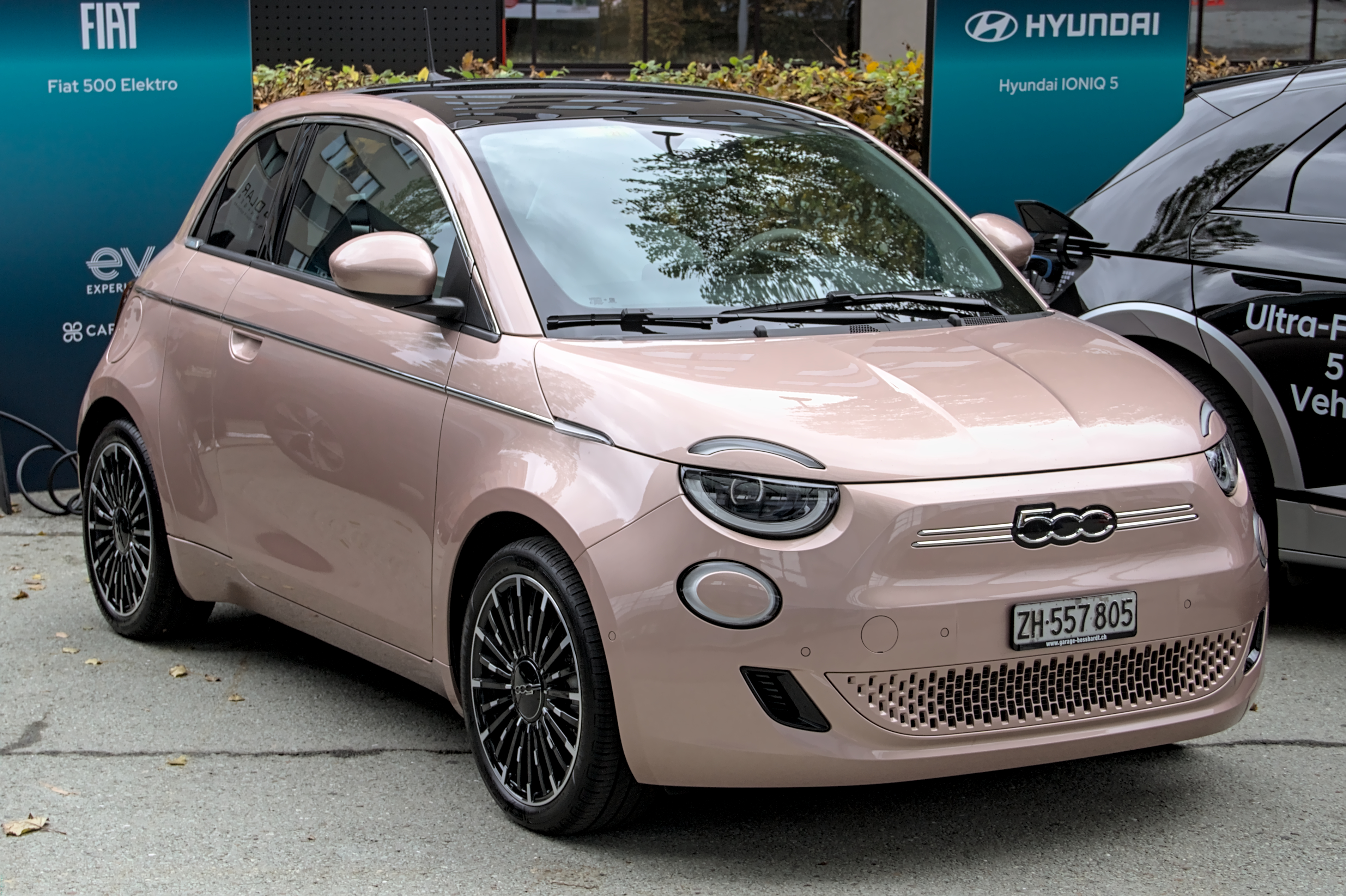
The Fiat 500, when, when they launched the
current generation of the 500, initially
it was only available as an EV, even
though the platform it's on is a, is a
multi-energy platform.
So, you know, they can do gas and
hybrids stuff on it, but they only
launched an EV version.
And here in the US, we still only get
the EV, but in Europe, they have just
launched a new version with a gas engine.
It is a one-liter, three-cylinder engine
with 65 horsepower.
And let's see, it does zero to 60 in 16 seconds.
And Jason Torchinski loves the idea
at the Atopian.
He thinks it's fast enough.
And, you know, generally I would agree
that, you know, most modern cars have
arguably gotten too fast.
You know, we don't need pickup trucks and
SUVs that go from zero to 60 in three
seconds.
But I don't know, do you think 16
seconds, zero to 60 is sufficient?
What was the old Fiat 500 specs?
Nine or ten seconds.
Well, you know, if you're talking
like old school, like not modern.
No, no, no, not the modern, the old modern one.
I'm not talking about something that takes
three days to get to.
I don't think it was quite that slow,
at least not the versions here in the US.
Yeah, because here, you know, they sold it
with, I think a 1.3 or 1.4-liter
turbo four-cylinder.
And yeah, it was probably in that 10-second range.
Well, let's find out.
Because we have a 500.
It was fine.
Yeah, at least for an urban commuter vehicle,
you know, it probably actually is enough.
Yeah, because you're never going to be
going 60 miles an hour at it.
And the reason I said not the US is
because the US doesn't have any very
many city markets that are really just
urban city vehicles.
We just don't have enough.
Manhattan, you know, average speed in
Manhattan is about eight miles an hour, so.
Sure, it is.
But I don't see a lot of Manhattanites
deciding that they want a fiat 500.
Yeah, it's logical there.
My friends in the city just bought a fiat 500,
a used one.
Oh, yeah?
In San Francisco, not in Manhattan, sorry.
So we had a fiat 500.
We leased a fiat 500 when the WRX,
when the motor exploded.
I mean, Jason does give the example here
of a 74 AMC Gremlin, which took 17.7 seconds.
And I remember when I, like back in like 2008 or 2009,
I drove a smart, a European spec,
smart 4-2 diesel.
And I did a 0-60 run in that.
It took 19 seconds.
I mean, you know, that, and I actually did
try driving that thing on the highway.
And it was terrifying.
So what happens, it's like I'm, you know,
getting up to speed is that this is an issue
that I have with the Vespa.
If I, because the Vespa will do 80 miles an hour.
12, small 12, 12 inch tires, you know.
I'm a bad man, according to motorcyclists.
And so yes, it'll get up to that speed.
You can get up to, you know, and it's also a motorcycle.
But at a certain point, there are situations where you have to break
or you have to accelerate to get out of them.
And that reduces one of those,
that reduces one of those options.
Because if you can't accelerate,
if sometimes you have to accelerate out of a situation
and if you really can't, that's where, you know, I'm like,
well, it's going to take this long.
I mean, I get behind people in cars
that are just never good to,
they take like a good 45 seconds to get to speed.
Not because the car can't do it.
That's just how they drive on the freeway.
And I live next to a freeway.
So there's that.
But I think there's, yeah, I think it's around town, cool.
I mean, even in LA, this would be fine, to be honest.
Because most of the time, you're not going that fast
in the freeway because you're stuck in traffic.
But if you're in the middle of like,
you know, a very car-centric, highway-centric,
like mid-size city, like let's say Bakersfield,
then this is going to be a little bit tough to get up.
The speed and, yeah.
I'm sad.
I wish the EV version had been, I don't know, $6,000 cheaper.
I really liked that little car.
I think it was great for around town.
But it was just like, here's the car.
Oh, cool.
It's 34.
Whoa, whoa, whoa.
I can get a proper, like, I'll make it, like, on one hand,
I'm like, oh, this is a fun little car.
It's got a small little battery.
You can charge it really quickly.
It's fun to drive around.
But on the other hand, like the logic of like,
well, that's so much money.
Yeah.
Yeah, I mean, $34,000, $35,000 for the 500E was just,
it was too much given, you know, what you got.
Yeah, so.
On the flip side of this conversation,
I think 0 to 16 seconds to 0 to 60 is too slow for the U.S.,
I think.
That doesn't mean you can't find specific use cases here and there.
Oh, no.
This is like four places in the U.S. it's fine.
Yeah, and the rest of it, it's not really fun.
Not so much.
But here, you know, not talking about EVs and the acceleration
that they have right now, how many people on the U.S.
really understand how fast their EVs can go from 0 to 60
and how many accidents are we going to end up having
from people who just don't quite realize how fast this car is.
To your point, Sam, not everything needs to go
to 60 miles an hour in three or four seconds.
That's not necessary either.
It's going to be interesting and I'm like driving around 75
and I feel like it just gets to be 85 in an EV.
Just you don't even notice.
Like you sneeze.
You're like, oh, I'm doing 90.
Yeah.
And it's going to be interesting kind of watching drivers
figure out really how to work with that
and see how many speeding tickets happen,
see what we really do when we get more and more EVs on the road.
Yeah.
I mean, we talked about this last week, I think.
You guys weren't here, but new regulations in China
that would mandate that the default mode,
whenever you start the vehicle,
the vehicle couldn't accelerate to 60 in less than five seconds.
You could have a performance mode where it would go faster than that.
But by default, every time you start the car,
it has to be limited to no more than five seconds, 0 to 60.
Which I think that's fair.
I think that's reasonable.
Even that is arguably too quick for a lot of people,
especially in conditions like we have today here in Michigan.
I think that's too fast for most people to handle safely.
But I agree.
I think here in the US, for most US driving conditions,
there's exceptions like driving on the 405,
driving in Manhattan where you're not really going anywhere.
But other than that, 16, 17 seconds is probably a bit too slow for most people.
Oh, no, it's incredible.
It took me a couple of minutes to look this up while we were talking,
but the Fiat 500.
Going to make it.
Going to make it.
Going to make it.
All right, we're going to get there.
With the 1.4 liter, it was 10.5 seconds.
Okay.
And then it was 12 seconds.
Yeah, see, that was perfectly reasonable.
That is an absolutely reasonable 0 to 60 time.
The abarth was seven seconds.
So 10 seconds, I think you might be able to work with.
You know, it still feels pretty slow, right?
We drove it on the freeway all the time, no big deal.
It only feels slow because we've gotten used to cars that are so absurdly fast.
It's actually a very reasonable acceleration rate for most people.
It's just those on-ramps that get to be,
short on-ramps get to be uncomfortable when you've got 10 seconds.
Hey, you get a convertible.
Hold on, 17.3.
I think I can live with that.
Where are you going?
I'm going to, it's like whenever you see someone driving a VW,
like a Beetle, like an old Beetle around, you know, like a Super Beetle or before that.
And you're like, okay, everyone expects that guys, you know, or that gal.
It's going to be a while.
They're going to do 60, 45 minutes or so.
But I don't, yeah, when you, when, if you're stuck behind this car, you're, you know,
and there are some big, there are some jerks and some big cars, I can tell you that.
I think this is, it's fine for a very small portion of America and totally not fine for a
very large portion of America.
There we go.
That's my, that's my take.
And Jason does live in Southern California now.
So, you know, he knows what it's like to drive on the 405.
So that's probably why he takes it.
And Jason just likes to poke people.
So, yeah, I mean, Jason's also into very weird cars.
So, yeah.
Did St. Eastern power, didn't he?
No, did he have a pal?
Yeah, I think he did have a pal.
And he had this weird little Chinese EV called a candy.
Oh, they built at home or something?
No, he didn't have to build it at home.
But it was like, I think it was like what, a thousand, maybe $2,000.
You know, it's not really street legal.
They actually sell though, not that particular one that he has, but they
Lowe's sells, you know, candy, electric,
you know, kind of off-road vehicles, utility vehicles for like farms and stuff.
They sell them there.
Side-by-sides?
Yeah, they're kind of like side-by-sides, but not, not as off-road capable as,
you know, like a, you know, the, you know, the Honda.
No one's throwing up the horns in a, in a.
No.
They're like, go ahead and play.
All right.
So one of our.
16, what if you have two friends in there?
That goes down to like 25 seconds.
Yeah.
Everybody put your foot out.
We're going to change the size.
It's not going to make much difference.
Yeah, Jason's, Jason's not, yeah, he's not me.
He's not tall.
Jason's great.
I love Jason.
So, you know, and another thing I'm sure that we all love is U.S. car dealers, right?
The best.
Well, okay.
So I know I talk a lot about U.S. car, but the car dealer that I go to,
they're actually, especially the service center, service center,
outstanding, wonderful, nice people, and the dealership when I,
but I'm going to caveat this is that when we walked in,
my wife's like, he writes about cars.
He's been on car and driver.
He's been on auto.
And then that, like she just walks in like that.
See that guy?
Don't mess with him.
Don't mess with me.
So I think that, I don't think that means that everyone else is Kevin
at a great time like I am.
Yeah.
So one of our favorite topics over the last several years was,
you know, especially when there was a shortage of supply of new vehicles available to buy,
was dealers taking that opportunity to, you know, use the law of supply and demand
to their advantage, to their financial advantage, particularly,
you know, the lack of supply and high demand.
And apparently some dealers are starting to do that now with the New Honda Prelude.
There's at least one dealer somewhere that, you know, I mean, the Prelude is not
inexpensive to begin with.
It's $43,000, including delivery 43 and change, including delivery.
And this dealer is adding almost $20,000 to that.
$62,000, almost just shy of $62,000.
And then people are like, wow, every, every time a dealer gets angry that someone wants,
someone's like, well, why can't we just buy it directly from the automaker,
like Tesla, Ravian, et cetera.
And they're like, no, you can't do that.
I'm like, because our state legislatures are owned and operated by the car dealers.
Yeah, they got a pretty strong lobbying arm.
Yeah, there's other things involved.
So you asked about that, or we talked in the rundown that we were going to talk about this.
I was trying to find, we have what we call a retail advertised index.
And so far, we don't really see them out there.
So I'm trying to figure out if this is, how much of a one-off this is.
When clearly there's photos of the window sticker and all of that.
But are there enough to know that how many dealers are really going to try and push this?
I think $63,000 round of Braille, it is a little bit crazy.
Well, it's like the $13,000 markup for the BRZ when it first came out.
It's a $30,000 car and you're making it $43,000.
And we saw that my friend was at a super dealership in the peninsula in the Bay Area.
And he's like taking pictures and send me that.
I'm like, what are you doing?
Stop.
But someone's going to pay for it.
That's the thing, they're going to find one person who's going to be like,
I got to have this car now.
But I don't mind paying all this money.
This is what drives me crazy about affordability problems.
We keep talking about affordability problems and then people spend $53,000 on a prelude.
That's supposed to be $42,000.
To be fair, given the number of preludes that are expected to be sold,
this is probably not going to have a huge impact on the average.
But still, it sucks to see dealers taking advantage of people like this.
Like this one particular window sticker that somebody posted here
includes $1995 for paint and fabric five-year protection.
Another $1995 for the protection package, which is a set of wheel locks,
splash guards, and a cargo tray.
You can go to AutoZone and buy a set of wheel locks for 20 bucks.
Go to WeatherTech and get a nice real quality leather.
Yeah, for a couple of hundred dollars.
The Cardock Connect, who knows what that even is,
six-year service plan, $1,700.
The clear shield package protects door edges from dings and chips
and protects door handles from scratches, $795.
The little plastic strip they put on the door.
$199 for nitrogen-filled tires.
Do not waste your money on nitrogen in your tires.
It's not a real thing.
Well, it's a real thing if you are running a Formula One race car.
So it's not a real thing.
Or you want to get high for your tires.
The rolling diameter of your tire is crucial
and you don't want it to change as the tire heats up.
For everybody else, don't waste money on nitrogen for your tires.
Because when you put air in your tires,
80% of that is already nitrogen to begin with.
Because the atmosphere that we breathe is 80% nitrogen.
Like crazy pills.
$400 for all-weather floor mats.
Again, you could go buy a set of really nice
weather tech floor mats for about that same amount of money.
And they will actually probably be really good ones,
as opposed to probably the garbage that this dealer is putting in.
They're probably buying some for $20 from the local car parts store.
$400 for a bumper shield, protects rear bumper from scratches.
And $395 for infotainment shield,
protects the infotainment screen from smudges and scratches.
Again, you could go to Best Buy and buy a $5 screen protector
and put it on if you must.
And then a $10,000 just general added markup on top of all that.
I saw a Prelude on a car carrier drive down the Palm Springs.
So that was the first time I've seen one in the wild.
I saw a carrier with three of the new postal delivery vehicles the other day.
Oh, that's way cooler than the Prelude.
Yeah, sorry.
I love the Prelude, but yeah.
I mean, the postal carriers are dope.
Yeah.
Oh, we should have talked about the John Drove one.
Like a production.
John, it's on car and driver.
There's too many people named John.
I can't remember everyone's last name.
Yeah, real quick.
That's a long list of silly add-ons.
Yeah.
And they've already done it.
So it's hard to get out of it.
John Volcker.
It's really easy.
You just don't buy it.
Volcker drove the postal vehicle?
Yeah, I'm so jealous of him.
I will have to contact my friends at Oshkosh and see if I can get a drive.
But gosh.
Sorry, I can't.
I remember seeing at some auto show, I don't remember because our brains are much
because everything just gets slammed together.
But yeah, John got to drive it.
And I'm just like, man.
So the folks at Edmunds have been doing some research on car prices as well.
But this particular report was on used car prices.
And they found that the average transaction price for three-year-old used vehicles
reached $31,067 in Q3 of this year, which is up 5%.
But what was interesting about this was the turn times.
The time it takes to sell the cars.
The average overall was 41 days, which was up from 37 days in 2024 in the same quarter.
But the average turnover rate for EVs, for used EVs, actually went down.
It was only 34 days.
And I think as the tax incentives for EVs have gone away, apart from some state incentives,
I think this is an area where a lot of people that are interested in buying an EV
are increasingly going to start looking.
Because one of the downsides of EVs is they've had very high depreciation,
which depending, if you're selling, that's a downside.
If you're buying, it's an upside.
It's radical.
That's why we bought a used EV6, because you can get it for half the original price
on a two-year-old car with 13,000 miles on it.
This is an interesting trend and it's going to be interesting to watch over the next year or so
how this evolves, whether we continue to see faster sales of used EVs and of course the prices
on those used EVs, as the turnover increases and the demand for the used ones goes up,
we'll probably start to see those prices creeping up.
But I think there's still a really good deal right now.
Yeah, we're seeing more of the less, for years it was a lot of
compliance vehicles that were in the used market, but now you're seeing the dedicated EVs and people
who are like, well, I can't afford a new EV, even with the tax credit or whatever.
But I can't afford a used EV, especially when they're stupid cheap because Tesla keeps
fluctuating the price and there's a bunch of other reasons why EVs are less expensive.
It's pretty great. I mean, you can just look at Sam's buying his EV6 for like a nickel.
When we turn it around like five, when we turn it around like five, I'm like, well,
the payoff on the aesthetic five is higher because we have a lease, then we could just
buy a used one. It's like $10,000 less expensive than what the payoff is on the
Scionic five. So we'll just do that. And maybe we can get a color besides white.
And that higher price, that higher payoff kept your lease price lower. But I think that there's
a couple of things I think that it does fully support that there's, well, EV sales have been
struggling a little bit. There is interest and the more people that are exposed to them,
the more curiosity there is, the more understanding of it is and the more experience
keeps coming up. So we're still in that direction. EVs are expensive because they're expensive to
build, expensive to produce, because all the parts in them are expensive, at least the battery,
because the battery is really expensive. So they're not, I mean, we still have automakers
losing money on them, they're not overpriced from that manufacturing perspective,
but they're more than what consumers are willing to pay. But I think the increase
and the interest in used EVs does reflect that if you can get it to a price that consumers
see value and they're going to try it more rapidly than they are right now, the question is,
how do you do that? And how quickly can we get better? It's lost down, Sam. This has been
a first thing that we're talking about for years. And it has gotten better, but it's not better
enough. Yeah. And, you know, there's going to be a lot more progress on that in the next
two, three years. You know, as we start to get domestic production of LFP batteries ramping up,
also, you know, bringing LMR batteries, the lithium, the manganese rich cells to market,
that's going to help. That's going to be a significant help in allowing manufacturers to
build these vehicles profitably at a lower, a significantly lower price point.
You know, but, you know, there's, you know, even right now, you know, there's still some
great deals out there on used EVs, you know, like I just pulled up AutoTrader.
You know, here's a used 2023 EV6, 15,000 miles on it, 19,500 dollars.
What? I think this one might be the base model with the shorter range, though.
Cheers. Was it a 230, 250? Yeah. But, you know, there's one, there's one pretty much like.
Stephanie's going to buy that car. You guys sent her the link. Hold on.
There's one pretty much like the one that we just bought, you know, an all-wheel drive.
You know, I paid 27 for it with 13,500 miles on it. This one's got 15,000 miles. It's
$29,000. You know, there's a lot, you know, there's a lot of them here for between $20,000
and $30,000. You know, for, you know, one to two-year-old EV6.
And, you know, Ionic Fives are similarly priced. Because they have a two-year,
because Hyundai does two-year, the Hyundai Motor Group does two-year leases.
Like our group car is a two-year lease. The previous was three years.
So, you know, you're getting these, you know, two-year-old cars for like almost half.
With a huge discount. 40-something percent off. And it's still an 800-volt vehicle.
It's still, you know, that means the charge is quicker. Even if it has lower range than
something that's new, you're going to probably charge quicker than most of the new cars.
Interesting. I pulled up Carvama because we're doing this, right? And they're,
I'm just scrolling through quickly. We've got one, two, three, four EV
Nero's and EV6's with price drops. So, a 2022 light, you know, was $22,990. Now it's $22,590.
You know, another one with 93,000 miles was $18,990. And now it's $18,590. So,
it's kind of interesting in this conversation to see that there's a bunch of price drops on these.
By the end of this episode, we're all going to buy new cars.
What'd you guys do? We all bought new EVs or used EVs. Why? Because they were so stupid cheap.
Yeah. And, you know, the thing is, you know, the thing to keep in mind, you know, if you're buying,
you know, two or even a three-year-old EV like this, you know, these things have
10-year, 100,000 mile warranties on the batteries. You know, and one of the key,
one of the people, one of the reasons people give for not wanting to buy used EVs is not
knowing what the battery condition is. Well, if you've got seven, eight years of warranty on the
battery, what are you worried about? Just, just go for it. You know, and, and Hyundai and Kia have
five years and I think 60,000 mile bumper-to-bumper warranty on these things. You know, so,
you know, in our case, you know, we bought a two-year-old car, you know, had three years
and 40,000, over 40,000 miles of bumper-to-bumper warranty, eight years and 80,000 miles of battery
warranty on it. And it's, we're loving it. It's doing great. So, you know, I think now, you know,
if you have any interest in an EV, you know, in buying an EV and you looked at the prices of new
ones, you know, there's certainly more affordable new ones coming to market now, the new Nissan
Leaf, the new Bolt coming first of the year. And, and there's going to be other stuff, you know,
and even some of the others, you know, have had price drops like the Ioniq 5, you know, is down to,
starts at 35,000 now. But, you know, these used, these used ones are, you know, still
some screaming deals on them. And I'm not surprised that, you know, in a lot of cases, I don't
know about what's going on at Carvana, but certainly a lot of other dealers are turning
them around a lot faster. I can get an Ioniq 5 for 35 or 25. That's an SE. Let's see. But here's
an SE with green. That's green. Oh, here's the SEL. That's what we have right now. It's black.
It's 25, which is $10,000 less than the payoff when we turn in our, our, our vehicle. So,
it's just like, so what are you going to do? I'm like, well, what do you got on the lot
that's used that's $10,000 cheaper than what you're trying to sell me this car for?
As long as we're talking about Kia EVs, the EV5 Weekender, last year Kia that's at SEMA showed
the PV5, which is their van, their electric van, in Weekender form, which was, you know,
an off-road, you know, lifted off-road kind of overlanding version of it. And at the Guangzhou
Motor Show in China, Kia showed off a concept version of the EV5, which is their mid-sized
electric crossover. It's, you know, it's about the same size as a Sportage or Hyundai Tucson or RAV4.
And it's, you know, it's an off-road version, you know, kind of like a more, more, you know,
more than what you get with something like the Ioniq 5XRT. You know, this thing is lifted,
it's on big all-terrain tires, it's got all kinds of gear. This thing looks pretty cool for, you know,
for an off-road crossover. But no plans to sell the EV5 in North America.
In the North America, yeah.
It's Asia only right now.
Oh, boo! I guess it's Asia.
It's kind of like a scaled-down version of the EV9.
Yeah.
You know, it's in Canada, and I'll double-tuck that.
It's Canada. We're all moving to Canada.
There you go.
Yeah.
That is Canada.
Do they sell the EV5 in Canada?
Double-tucking, but I thought so.
And it's got recovery hooks on it, too.
So, you know, it's a real off-roader.
Yes. Yes, Kia EV5 is going to be sold in Canada in 2026.
Oh, excellent.
This is from going to the Toronto Motor Show last year.
Ah, okay.
So, just go over the bridge to Windsor and buy one there and bring it back.
As soon as I get over the whole home-allegation stuff, because I still think you have to,
maybe you can.
How hard is it to import a Canadian spec car to the U.S.?
A Canadian spec is usually pretty much the same as U.S. spec, but not always.
Not always.
Most stuff sold in Canada is built to the same spec other than having this
pedometer set in kilometers per hour instead of miles per hour.
Yeah.
But sometimes they sell stuff there that does not meet U.S. spec, so.
There's a, we looked up.
You could just move to Canada.
Yeah, you could just move to Canada.
You know, not the worst idea in the world.
My brother and I looked up cars, like bringing cars over from Mexico,
and when you bring the car over, you essentially have to be the owner of the car,
and you have to have an address in Mexico in order to bring it into the United States,
which isn't that, I mean, it's not difficult for me and my brother,
because we have family in Mexico, we have homes and so on.
I mean, we could just buy a house in Mexico so we can get a Jimny.
There you go.
And then you're like, you know, you just have to make sure that your local police
department doesn't give a, you know, and give it care.
The only problem is, you know, right now, you know, if you did that and brought it over,
you'd be driving it around on Mexican plates, right?
Yes.
And so that would potentially make you a target for certain federal agencies.
Yeah, so, but they can pull me over and I can be like, oh shoot, just a white guy.
I'm like, wait, wait, wait, what about this Roberto?
I'm like, well, what about it?
What do you want from me?
Last name is Baldwin.
That doesn't sound Mexican, does it?
Come on, I'm a habsi.
See, what else?
Oh, Euro NCAP.
So Euro NCAP is the new car assessment program in Europe.
You know, it's kind of similar to the NCAP program here where they, you know, do
safety evaluations of new cars and give it a rating out of five stars.
And like most of these programs, you know, the IHS is top safety pick and NCAP and others.
From time to time, they raise the standards for what it takes to get a five star rating.
Because, you know, once, once everybody starts getting four or five stars,
you know, they, they make it tougher to earn those top ratings, you know,
because they want to keep moving safety forward.
So for 2026, they're updating the end caps, the Euro NCAP standards.
And there's several things that they're, that they're changing.
And among those is that, let's see, to get top scores, they will have to have
driver monitor systems that track eye and head movements of the drivers and use that
information to adjust the sensitivity of driver assist functions.
So, you know, if you are paying less attention and, you know, you want to make it more sensitive,
so it can respond faster if you're starting to get into trouble.
But let's see what else there.
There are also changing the scoring to evaluate the accuracy of speed limit
recognition functions. So, you know, these are, you know, cameras that are looking at speed limit
signs and, you know, adjusting in Europe, they're required to now to have automatically adjusting
cruise control that adjusts to the speed limit, the local speed limit.
And they're also evaluating the real world performance of some of the crash prevention
technologies like automatic emergency braking and lane keep assist. Because, you know, if you've
ever used those systems, you know, they can be a little flaky and oftentimes be more annoying than
helpful. And so they want to make sure that these systems actually work so that drivers will
trust them and leave them turned on instead of turning them off. And then, what else,
post crash safety. Electric door handles must now remain functional after an accident
and EVs must correctly manage the isolation of their batteries to mitigate any fire risk. So,
you know, if it crashes detected, you know, it's got to isolate the battery so it's not
sending power to the rest of the vehicle. But things like the door handles must remain
fully functional to get top safety marks. And then there's also, let's see, there's also something
about physical controls. Oh, yeah, here we go. They will evaluate the placement, clarity and ease
of use of essential controls and a new scoring system will emphasize the importance of physical
buttons for commonly used functions in response to consumer feedback that suggests they can
reduce distraction. Yeah. Yeah. Ribbon is going to be so angry. I know. R.J. is not going to be
happy about that one. What? I have to pay money? There's an interesting one in here, too.
Automated Urged Emergency Response Functions will now need to be able to tell responders
how many occupants are in the car. Oh, yeah. Yeah, that's a good one. Yeah. So if you
get into a crash, there needs to be sensors in there that can let ambulances know how many
people are going to have to deal with. I mean, I think that's a good thing to have because
if they have that, if there's, let's say you've got five passengers in the vehicle,
maybe you have to send out two ambulances or three ambulances instead of just one
to make sure you can take care of everybody. Yep. Yeah, that makes sense.
The speed limit recognition is really not very consistent, at least in my experience here.
Yeah. I remember one time. It was very difficult. A few years ago when we were doing a first drive
for the Lincoln Corsair and there, you know, was driving along and, you know, the speed limit
was 55 or speed limit was 65 and then it passed a sign that where it was dropping down to 55
and all of a sudden the cruise control switched from the speed I had it set at to 85. It had
misread the sign as 85 instead of 55 and adjusted the speed upwards by 20 miles an hour.
Woo, parties. Yeah. It had the Robbie mode.
It's ready to party. And I remember talking with Lincoln at the time and talking,
and Ford on a different vehicle that was having a similar issue and they're interested. It's like,
you could just turn the system off if you don't like the way it works. I'm like,
yeah, but you expected somebody to make it work. Maybe, make it work. How about just
make it work correctly? If you're going to put a feature in the car, make sure it works.
Especially the thing that doesn't work off. Well, why did you release something that doesn't work?
And, you know, some sort of calibration between what it reads and the,
you know, the navigation of being able to tell what GPS being able to tell exactly where you're
at. There's Mercedes had, there was a consistent issue on 696. Just going certain part and it picked
up four lanes on 696 and it would pick up the 40 mile an hour sign for the service drive.
Oh, that's adjacent to the highway. So I've got cruise control 75 and all of a sudden it is
heartbreaking in the middle of the freeway. The first time it freaked me out. The second
time I'm like, okay, I know what's happening, start cruise control really quickly. But only that,
that was dangerous. And I'm sure they've improved it a bit since then. I remember calling and saying,
what's going on here? And they're like this kind of known issue. But it was weird. Like,
I'm in the, you know, three lanes away from where I'd even read the sign at. And I mean,
Volvo's were, you know, but oftentimes I, you know, would come out of the street that's 25
miles an hour and turn left. And the new street is 35 miles an hour. But there's three quarters
of a mile till it's a new sign. I mean, I was control on at that point. But for that,
that three quarters of a mile or a mile, like it was telling me that I was going to
fast for the candidate that I was speeding and I wasn't, you know, those those sign systems
aren't quite ready to be fully reliable yet. I don't think. Yeah, definitely.
All right, a couple of charging related stories. Despite the fact that our federal government
has tried to kill all the funding, all the federal funding for the Navi program for the,
which is $5 billion from the 2021 infrastructure act that we're supposed to help fund
deployment of charging stations, DC fast charging stations across the country.
The courts have said, nope, you cannot block that funding. You have to keep spending it.
So last week, the Georgia DOT, you know, which is, you know, that's a state that is run
by the same party. They awarded $24 million for 26 new EV charging stations across the state of Georgia.
You know, they're also getting a plant. Yeah, a little lot. Multiple plants.
So there's, there's there, and Georgia was one of the states that had,
that had a pretty decent state level and center for a while. And of course,
as I pulled it out, sales and the EV sales on that state dropped like a stone, but
and so the point being Georgia has been a little bit more aggressive on this than some states already.
Yeah, so they're putting these stations in a bunch of different locations around the state
with quite a few different vendors that are operating these stations. So there's,
you know, pilot travel centers, Silver Comet Energy, Power Up America,
what else? Love's Travel Stops and Virus Park. So there's a bunch of different ones. So they're
spreading the money around and, you know, all this, all this is good, you know, helps get more
infrastructure, more high speed charging infrastructure. And, you know, part of the
program is, you know, requirements for reliability and uptime, you know, if they
want to get the money. So hopefully that part is being enforced. So that, you know, when they
put these chargers in there, they don't just get put in and then abandoned. You know, hopefully
they will actually take the make the effort to keep them running properly over time.
Yeah. That was one of the good things about the program to begin with was that it set aside
a bunch of sort of consistent requirements that had to happen in order to get your federal
funding, which was stopped sort of making it mandated that charging stations had to
have plug-and-play and we have the uptime and all that. But by putting it as a requirement
to get funding, it certainly drives incentive to build them that way to make sure that
they're viable. And then, you know, robotexies, all the robotexies that are out on the road
today, particularly the real ones, you know, that actually drive unsupervised, they, they're
all electric vehicles right now, including Waymo's Jaguar I-paces and Zeekers and soon
their Hyundai Ionic Fives. And in Santa Monica, Waymo has two lots where they bring their
vehicles for cleaning and service and charging. Well, the city of Santa Monica recently issued a
new regulation that effectively bans Waymo from overnight charging at those two lots that they
own for their robotexies, which is not very helpful. It was a six to nothing vote.
And they, they have to cease overnight operations at those two facilities because they got a lot of
complaints from the neighbors that, you know, the vehicles were making too much, the vehicles
are making too much noise, these are EVs, but yeah, they had backups, backup beepers,
and the chargers themselves, you know, they're from the, from the transformers,
there's a hum from that. And so people were just, the locals were complaining too much. And so
now they are no longer allowed to operate from those two facilities between 11 p.m. and 6 a.m.,
which is not helpful if you're trying to. I mean, it's not helpful, but if you live next to a
place that before didn't do that, and now, like, if you move next to the airport, I don't
want to hear you complain. Yeah. If you move next to a club, I don't want to hear you
complain. But if you live next to, like, just a place and then suddenly all night,
that's, yeah, that's, and that's to be, to be honest, that's how Silicon Valley works,
is they don't take an into account anything about the community when they, when they, when
they deploy, they don't think about the unintended consequences of their actions,
which has been a problem with them for 15, 20 years at this point. So, yeah, that was,
I mean, there's a lot of space. Also San Monica is so expensive. How do they, where are they paying?
They own a lot, so that's interesting too. It doesn't say how many chargers are in
each lot. Yeah, this article says they own the lots. I'm guessing they are probably
actually leasing. I doubt they actually own the properties.
But yeah, that's, yeah, so they're gonna have to find somewhere else to do their charging that is
not going to be annoying to neighbors. Yeah. Which might be difficult in a place like Santa Monica.
Well, I mean, Santa Monica, yes, but there's a lot of areas around that, you know,
there's a lot of industrial zones that they could be, especially when they're,
you know, close to the airport. Yeah. You just, you get a place close to the
airport and then no one cares because guess what? You're close to the airport.
But, you know, the thing is, I mean, well, they're trying to close Santa Monica airport.
So, you know, you would have to, you know, I guess the next closest airport would be LAX.
The thing is, you know, if you have to go long distances like that, you know,
from Santa Monica to LAX, you know, drive to LAX to recharge or to get the vehicle
cleaned and things like that, that, you know, that's a challenge for the economics of running
the service. It's 11 miles from Santa Monica to LAX. Okay, it only feels like it's 100 miles.
Yeah, it only feels, I mean, if you're already on the west side, I used to be a runner for
a studio. If you're already on the west side, it's fine moving around, especially at night.
It's getting from the east side to the west side where it's a problem.
Santa Monica is a giant cluster no matter what. But if you're in Santa Monica and you go to the
airport, you're never, you know, cruising over to the 10 to the 405. We're just taking surface streets
and it takes like 30 minutes. Okay. It's not the end of the world if they have to move to
an industrial zone. All right. Well, with that, I think let's call it a show. And we'll be back
next week. Thanks for bringing it back. Thanks for joining us, Steph. Appreciate it.
Talk to everybody next time. Bye. Say what you want about AI, but it's here. And it's helping
businesses get more done in a day. Wix's website builder is infused with AI so you can stay ahead.
Create a beautiful, functional website just by describing your idea. Track how your site
appears in AI search results. Create custom images on demand or launch an entire campaign in
a matter of minutes. Wix gives you AI wherever you need it. Try it now for free at wix.com.
Bring the whole family and be part of the legacy. This game is once in a century. Be there at
Moda Center on January 24th. Go to HarlemGlobetrotters.com for your tickets to the 100 year tour.
About this episode
A lively discussion on the current state of automotive pricing, with a focus on the Toyota Corolla Cross Hybrid's surprising price tag and the implications of rising vehicle costs. The hosts debate the affordability of new cars, the impact of tariffs, and the ongoing trend of subscription services in vehicles. They also touch on the unique features of the Mercedes AMG G 63 and the challenges of EV pricing and infrastructure. Insights into consumer behavior and market trends round out the episode, making it a thought-provoking listen for anyone interested in the automotive landscape.
This week Stephanie Brinley is again sitting in for Nicole and she drove the Toyota Corolla Cross Hybrid. Robbie and his wife rented a Chrysler Pacifica and Sam has the Mercedes-AMG G63.
In the news, someone has rendered a Dodge Magnum revival based on the new Charge Daytona, and a New York State Senator wants to sort of ban in-vehicle subscriptions, but not really and Stellantis is still annoying customers with in-dash ads. Dealers are at it again with stupid markups on the new Honda Prelude. Jason Torchinsky has thoughts on how much acceleration is enough. Used EVs are selling faster than gas cars. Kia has an off-road concept of the EV5 in China. EuroNCAP is updating its scoring standards for 5 stars including physical buttons. Despite the best efforts of the Trump administration to kill EVs and infrastructure, Georgia is disbursing $24M for EV charging while Waymo is no longer able charge its robotaxis overnight in Santa Monica.
You can help out the many people that are food insecure this holiday season by donating to Feeding America and Robbie will write and record a song for you or at your local food bank. There are also dogs in need of assistance and Sam will be joining a crew of volunteers helping to transport them to forever homes in December and you can help by donating to Operation Frodo. Links are below.