A lively discussion on the current state of the automotive industry, featuring insights on Nissan's dealer backlash, the ongoing chip shortage, and the resurgence of Carvana. The episode highlights the launch of CDG Circles, a new peer group initiative aimed at fostering collaboration among dealers. Guests Brian Benstock and Todd Szott share their experiences and strategies for navigating challenges in the market, emphasizing the importance of dealer relationships and innovative marketing approaches. The conversation also touches on AI's role in the industry and the need for dealers to adapt to rapidly changing conditions.
Today's show features:
Yossi Levi, Founder of Car Dealership Guy
Brian Benstock, Dealer Principal of Paragon Honda & Acura
Todd Szott, Dealer Partner of Szott Auto Group
This episode is brought to you by:
KPA – Non-compliance isn't an option. OSHA, FTC, and state regulators are actively targeting dealers with escalating fines and enforcement actions across safety, privacy, and F&I compliance. KPA’s Complete Compliance Suite is the only all-in-one solution that protects dealers from every compliance risk. Our integrated software, expert consulting, and award-winning training address every compliance gap, helping you reduce insurance premiums, mitigate liability exposure, and protect your dealership's reputation from business-threatening violations. Stop managing compliance manually with patchwork solutions that leave you vulnerable to audits and lawsuits. Visit https://info.kpa.io/cdg to learn more.
CDG Circles – A modern peer group for auto dealers. Private dealer chats. Real insights — confidential, compliant, no travel required. Visit https://cdgcircles.com/ to learn more.
Car Dealership Guy is back with our second annual NADA Party—happening in Las Vegas on Thursday, February 5th. It’s the hottest ticket at NADA 2026. Spots are limited and unfortunately we can't invite everyone —so RSVP today at https://carguymedia.com/cdglive and we hope to see you in Vegas!
—
Check out Car Dealership Guy’s stuff:
CDG News ➤ https://news.dealershipguy.com/
CDG Jobs ➤ https://jobs.dealershipguy.com/
CDG Recruiting ➤ https://www.cdgrecruiting.com/
My Socials:
X ➤ https://www.twitter.com/GuyDealership
Instagram ➤ https://www.instagram.com/cardealershipguy/
TikTok ➤ https://www.tiktok.com/@guydealership
LinkedIn ➤ https://www.linkedin.com/company/cardealershipguy/
Threads ➤ https://www.threads.net/@cardealershipguy
Facebook ➤ https://www.facebook.com/profile.php?id=100077402857683
Everything else ➤ dealershipguy.com
"...and incentive programs have become so aggressive that many dealerships are barely staying profitable..."
Incentive programs are ways car makers motivate dealerships to sell more cars, often by offering them extra money or discounts for hitting sales targets.
Incentive programs are strategies used by manufacturers to encourage dealerships to sell more vehicles. These can include bonuses, discounts, or other financial perks tied to sales performance.
"...some are resorting to broker deals or fleet style sales just to hit their numbers."
Broker deals are when car dealerships partner with outside brokers to help sell cars, especially when they need to meet certain sales goals.
Broker deals refer to arrangements where dealerships work with third-party brokers to sell vehicles, often to meet sales targets or to manage inventory more effectively.
"...or fleet style sales just to hit their numbers."
Fleet style sales are when dealerships sell a lot of cars at once, usually to companies or organizations, instead of selling them one by one to regular customers.
Fleet style sales involve selling multiple vehicles at once, typically to businesses or government agencies, rather than individual consumers. This approach can help dealerships move inventory quickly.
"The letter also calls out the loss of models like the Maxima and Versa, it questions the future of the Ultima..."
The Nissan Versa is a small, affordable car that is great for people who want to save money on gas and have a reliable way to get around.
The Nissan Versa is a subcompact car that offers affordability and efficiency. It is popular among budget-conscious buyers looking for a reliable vehicle.
"The letter also calls out the loss of models like the Maxima and Versa, it questions the future of the Ultima..."
The Nissan Maxima is a large car that is designed to be both sporty and comfortable. It's known for having a strong engine and a lot of features that make it feel luxurious.
The Nissan Maxima is a full-size sedan known for its sporty performance and upscale features. It has been a staple in Nissan's lineup for decades, often recognized for its powerful engine and comfortable ride.
"...criticizes the company for letting the once pioneering Leaf EV quote wither while competitors expanded their electric and hybrid lineups."
An EV, or electric vehicle, is a car that runs on electricity instead of gas. This means they are usually better for the environment and can save you money on fuel.
EV stands for electric vehicle, which is a type of car that is powered entirely by electricity rather than gasoline or diesel. EVs are known for being environmentally friendly and often have lower operating costs.
"...criticizes the company for letting the once pioneering Leaf EV quote wither while competitors expanded their electric and hybrid lineups."
The Nissan Leaf is a car that runs entirely on electricity, making it a good choice for people who want to reduce their carbon footprint and save on fuel costs.
The Nissan Leaf is an all-electric vehicle that has been one of the first mass-market electric cars. It is known for its practicality and affordability in the EV segment.
"...to stronger hybrid investment and even hints at possible collective legal action if Nissan doesn't respond."
A hybrid car uses both a gas engine and an electric motor. This helps it use less gas and be better for the environment compared to regular cars.
A hybrid vehicle combines a traditional internal combustion engine with an electric motor to improve fuel efficiency and reduce emissions. Hybrids can switch between the two power sources or use them together.
"...the Dutch government sees control of Nexperia, it's a China owned chip maker over national security concerns. Beijing fired back by banning exports of Nexperia's products from China, effectively cutting off a major source of automotive chips."
Nexperia makes small electronic parts called chips that are used in cars and other devices. Their ownership by a Chinese company has raised concerns for some countries about security.
Nexperia is a global semiconductor company that specializes in producing chips used in various applications, including automotive technology. The company's ownership and operations have come under scrutiny due to geopolitical tensions, particularly between China and Western nations.
"...effectively cutting off a major source of automotive chips. The results? Well, automakers are scrambling."
Automotive chips are tiny electronic parts that help cars work properly. They control things like the engine and safety features. Right now, there aren't enough of these parts for car makers to keep up with demand.
Automotive chips are specialized semiconductors used in vehicles for various functions, including engine control, safety systems, and infotainment. The shortage of these chips has significantly impacted car manufacturers' ability to produce vehicles.
"...with the acquisition of two franchised Chrysler Dodge Jeep Ram stores and faint whispers..."
Chrysler is a car brand that makes various types of vehicles, including cars and SUVs. It's one of the well-known American car manufacturers.
Chrysler is an American automobile manufacturer known for producing a range of vehicles, including sedans, SUVs, and minivans. It is part of Stellantis, a multinational automotive company formed from the merger of Fiat Chrysler Automobiles and PSA Group.
"...with the acquisition of two franchised Chrysler Dodge Jeep Ram stores and faint whispers..."
Jeep is a car brand famous for making vehicles that can go off-road. Their cars, like the Wrangler, are built for adventure and tough terrains.
Jeep is an American brand known for its off-road vehicles and SUVs. It has a strong reputation for ruggedness and capability, especially in off-road conditions.
"...Carvana is quietly probing whether a hybrid retail model will provide even more structural advantages."
Carvana is a company that sells used cars online. You can buy a car from them without going to a traditional dealership, and they even have a vending machine for cars.
Carvana is an online used car retailer that allows customers to buy, sell, and trade cars through a digital platform, often featuring a unique car vending machine concept.
"...Asbury Automotive Group has sold its Larry H. Miller Chrysler Dodge Jeep Ram Riverdale store in Ogden, Utah..."
Asbury Automotive Group is a big company that owns many car dealerships. They sell and service cars from different brands.
Asbury Automotive Group is one of the largest automotive retail and service companies in the United States, operating a network of dealerships across various brands.
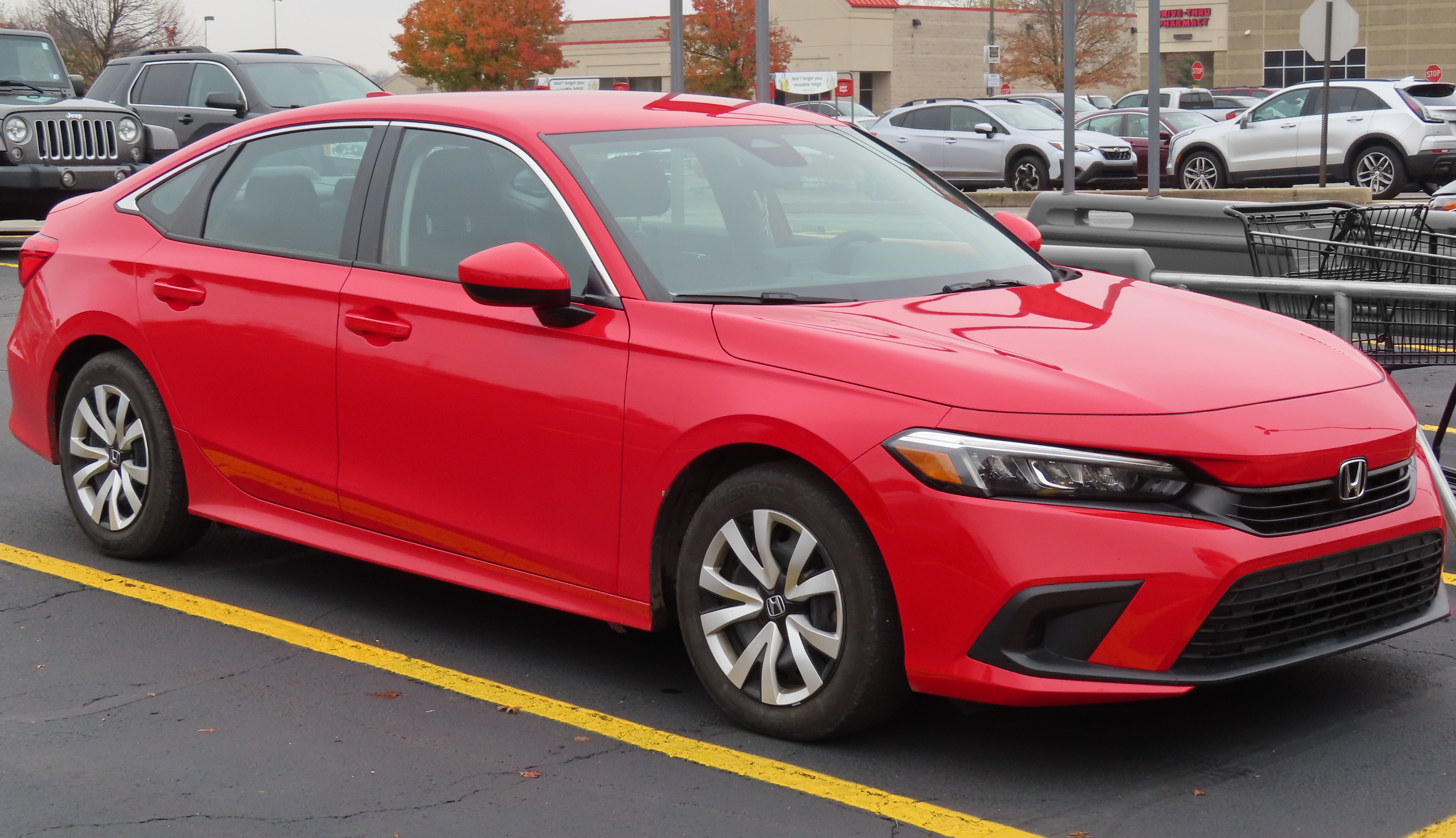
"...call my factory rep and say, hey, Adam Geyer, I need 100 civics. I need 100. The guy thought I was drinking."
The Honda Civic is a small car that many people like because it's dependable and gets good gas mileage. It's been around for a long time and is popular with different types of drivers.
The Honda Civic is a popular compact car known for its reliability and fuel efficiency. It has been a staple in the automotive market for decades, appealing to a wide range of consumers.
"...as the industry turned up and there was a shortage of cars, we were in a really good position."
A car shortage happens when there aren't enough cars available for people who want to buy them. This can be because factories can't make enough cars or more people want to buy cars than usual.
A car shortage occurs when the demand for vehicles exceeds the supply available in the market. This can be caused by various factors, including production delays, supply chain issues, or increased consumer demand.
"So let's go to another challenge. We reported last week about the next period chip shortage issue that arises from a dispute between the Dutch government and China. And many industry analysts are predicting it could impact the supply chain Honda already."
A chip shortage means there aren't enough tiny computer parts that cars need to work properly. This can cause car companies to make fewer cars or delay their production.
The chip shortage refers to a significant disruption in the supply of semiconductor chips, which are crucial for modern automotive electronics. This shortage has led to production delays and reduced vehicle availability across the industry.
"...omorrow we start the mustaches. I think I have a Prism Jones moment where I come in a costume and you gu..."
The Geo Prism is a small car that was made by a company called General Motors in the 1990s. It was known for being affordable and good on gas, which made it a favorite for people looking for a reliable vehicle without spending too much money.
The Geo Prism was a compact car produced by General Motors from 1989 to 1997. It was known for its reliability and fuel efficiency, making it a popular choice for budget-conscious consumers. The Prism is often discussed in automotive circles for its role in the early days of the compact car market and its connection to the Toyota Corolla, as it was essentially a rebadged version of that model.
"cancellations of F-150s from the Novelis aluminum sheet factory fire."
The Ford F-150 is a popular truck that many people use for work and everyday driving. It's known for being strong and reliable.
The Ford F-150 is a full-size pickup truck known for its durability, versatility, and performance. It is one of the best-selling vehicles in the United States and is popular for both work and personal use.
"...a lot of those lease returns get sold here, but a lot of them would get exported..."
Lease returns are cars that people give back to the dealership after using them for a few years. The dealership can then sell these cars to someone else.
Lease returns refer to vehicles that are returned to the dealership at the end of their lease term. These cars can be resold as used vehicles, often at a lower price than new cars.
"...fixed, it's about fixed ops and how do we grow fixed ops in a lease environment..."
Fixed ops is a term used to describe the parts and service departments of a car dealership that help make money even when cars aren't being sold.
Fixed ops refers to the fixed operations of a dealership, which includes parts, service, and body shop operations that generate revenue beyond vehicle sales.
"...addressing the payment affordability challenges with your customers..."
Payment affordability challenges are problems people have when they find it hard to pay for their car each month, especially when prices go up or money is tight.
Payment affordability challenges refer to the difficulties customers face in managing their monthly car payments, especially during economic downturns or when interest rates rise.
"...coming out of COVID, you know, payments just skyrocketed for our lease customers."
Lease payments are the monthly costs you pay to use a car that you don't own. They can change based on how much the car is worth and other factors.
Lease payments are the monthly fees paid by a lessee to use a vehicle for a specified period. These payments can fluctuate based on market conditions, vehicle depreciation, and interest rates.
Select text to request an explanation
We're doing better as a result
of social media presence.
It doesn't do those three things,
then it's on the chopping block.
It's in return on investment discussion.
Hey everybody, welcome back to another edition
of the Daily Dealer Live.
I'm your host Sam Dark and this is the space
where all automotive comes together.
Welcome, thank you for joining us.
Whether you're a dealer, a vendor, or someone
just passionate about where this industry's headed,
you are in the right place on this Friday.
Happy Halloween everyone by the way,
and as Halloween is every October,
it's the last day of the month for auto sales
for most, unless the OEM has a different close off today.
Let's jump in straight to today's auto industry
headlines.
First up today, Nissan is facing fresh backlash
from within its own retailing network
after an anonymous dealer letter,
anonymous dealer letter began circulating this week
accusing the corporate auto, the automaker
of quote corporate greed and quote unrealistic objectives
and a growing disconnect from dealer realities.
The letter sent via email, sure that can't be traced,
claims that factories set sales targets
and incentive programs have become so aggressive
that many dealerships are barely staying profitable
and some are resorting to broker deals
or fleet style sales just to hit their numbers.
The author says the average Nissan store
is earning a return on sales of less than
a tenth of a percent.
Think about that, that is far below
the two to four percent range most of us aim for
and blames the factories product mix
and lack of hybrids for the slide.
The letter also calls out the loss of models
like the Maxima and Versa, it questions
the future of the Ultima,
criticizes the company for letting the once pioneering
Leaf EV quote wither while competitors
expanded their electric and hybrid lineups.
Bottom line here, well the letter ends with a call
for major changes from fairer sales objectives
to stronger hybrid investment and even hints
at possible collective legal action if Nissan doesn't respond.
Nissan told CDG it's reviewing the letter
but the message is clear, dealer trust
and alignment are starting to fray at a critical time
for Nissan's rebuild attempt.
Next up today, let's actually stick with Nissan.
Nissan dealers have more potential trouble
on their horizon as do several OEMs.
The fallout from the Nexperia semi-conductor
chip dispute is getting worse.
The standoff began and we report on this first
last week and the week before when the Dutch
government sees control of Nexperia,
it's a China owned chip maker over national
security concerns. Beijing fired back by banning
exports of Nexperia's products from China,
effectively cutting off a major source of automotive chips.
The results? Well, automakers are scrambling.
Nissan says it only has enough chips to get
through the first week of November.
Honda has already paused production.
They were proactive at one of its Mexico plants
and is scaling back output in the US and Canada.
Meanwhile, Mercedes-Benz is searching for backup suppliers
while GM and Lucid say they're closely monitoring
the situation. What's the big picture here?
Well, if this dispute drags on, the industry
could be staring down another round of chip shortages
just as it's recovering from the last one.
Production slowdowns, thinner inventories,
and higher prices could start showing up again
on dealer lots worldwide.
Fun times ahead. Don't you love what we see
an automotive adversity challenge?
And let's get into it. Next up today,
Carvana has posted one of its strongest quarters
since nearly collapsing back in 2022,
with sales and revenue both soaring as the company cements
one of the biggest comebacks in retail auto.
Retail unit sales jumped 44% year over year
to a record 155,000 vehicles, while revenue
climbed 55% for a $2 billion gain.
The company stock has surged 78% in 2025
and now trades higher than traditional giants
like Carmax and Lithia, and Carvana credits
its proprietary tech platform for much of that growth.
In Phoenix, Carvana's same-day delivery test market,
40% of customers are already getting cars
within 24 hours, and more than a third of all buyers
now complete their purchases fully online
with no staff contact until delivery.
Looking ahead with the acquisition of two franchised
Chrysler Dodge Jeep Ram stores and faint whispers
of a possible third in the works,
Carvana is quietly probing whether a hybrid retail model
will provide even more structural advantages.
Next up today, we turn to the CDG Bicell Tracker.
CDGBicell.com
Asbury Automotive Group has sold its Larry H. Miller
Chrysler Dodge Jeep Ram Riverdale store in Ogden, Utah
to the young Automotive Group, according to Kerrigan
advisors who facilitated the transaction.
That move continues a series of divestitures
tied to Asbury's 2021 Larry H. Miller acquisition
as the company focuses on optimizing its network
and balancing scale with profitability.
Bicell expert Aaron Kerrigan called it an example
of Asbury's discipline portfolio management,
saying the group continues to refine
one of the industry's most valuable networks.
For young Automotive, it's a strategic play
in its own backyard. Utah's economy remains
one of the fastest growing in the country.
Vehicle sales are up nearly 30% since 2020
and average dealership revenue runs about 17%
above the national average.
And don't forget, you can see this deal announcement
and many more throughout the entire year
by visiting CDG Bicell Tracker at CDGBicell.com.
Yuli, welcome back.
That's a wrap on today's news.
What's up, Sam? Happy to be here.
Yuli, I got to tell you, before we get into our guests,
we got a great, an incredible lineup today.
I got to tell you, we are living
in one of the greatest times in all of Automotive.
It is an absolute AI arms race.
I spent the day yesterday in Atlanta with Cox Automotive
and got a preview of what they've got coming up
in Viado and all their different products
and the race to develop really good AI tools
and implement them into existing architecture
to deliver our best to customers.
It is mind-blowing.
What we saw alone in Viado was just pretty, pretty, pretty cool.
And for everybody joining our live stream,
as you know, we're here live across all CDG's
social media platforms.
Post your comments. We'll bring them into today's show.
And what a show we've got for you today,
including Brian Benstock who will be up in just a moment.
But before we go to Brian Benstock,
our first guest of the day comes from our own backyard
and someone we know and love,
the king of car dealership, the founder, the CEO,
Yossi, welcome to the show.
Let's go. Great to be here.
How do you like that wind-up, Yossi?
I love it. It's funny to receive the guest experience.
As they say, eat your own dog food.
Well, I'm eating my own dog food.
So it's definitely come a long way, though.
I noticed some nuances, so great to be here.
Yeah, it's great to have you back as always.
And you ideated this. You created this.
You are always trying to find that new innovation and automotive
that increases, leans into transparency and creates
a better experience for every single dealer watching the show.
You've got a big announcement coming up, Yossi.
What's your announcement?
Well, we actually did make our announcement this morning.
And this is something that we've been working on for months
and months on end.
And in a way, it feels like CDG was built for this moment.
This morning we announced CDG circles,
which is our version of a modern peer group for auto dealers.
The way this actually started, Sam, was as dealer group chats.
I think it was about four to six months ago.
I was chatting with some dealers and they kept telling me,
they said, Yossi, you have this network of dealers.
What if you connected some of us and we did, we spoke, we chatted.
I mean, it was really a rough vision.
There wasn't any real plan, but there was a spark out there, right?
It was obvious that dealers wanted collaboration and to be able
to be in rooms with other incredible dealers like themselves.
And so four months ago, we launched just a private chat group.
I put together a bunch of dealers who I was pretty close with,
some more than others, and I said, let's talk.
Let's see where this goes.
And the unique, the common thread of this initial chat group that we did
four months ago, Sam, was that these were not dealers who were all
within the same brand or it wasn't anything like that.
They didn't really know each other, but it was all dealers who were
in a growth stage, who were all really focused on a specific role
within a dealership, whether it being the dealer principal or the COO,
and really aiming to grow their dealership.
And I would say, and I can go in more into how that evolved,
but that was essentially the spark where we discovered something that was,
hey, people in this industry want to connect with other like-minded individuals
who have similar goals, not necessarily our only group by brand,
and not necessarily in a forum where I meet you quarterly
and do retrospective analysis.
And that was the spark for what is today CDG Circles,
which is our form of a minor peer group, which we believe is actually
the complement dealers need to complement their existing 20 groups
if they're a part of it.
If they're not, it's sort of that first stage to get more collaboration
and to not have to be a dealer who does it all alone.
Yeah.
What do you think it says about the industry, Yossi?
To your point, it used to be 20 group meetings.
You'd meet once a year, twice a year.
You went to NADA once a year.
You got best practices.
You came back, you implemented them.
Then you create the show, the podcast,
and people would listen to something once a week, couple times a month,
implement those ideas, see growth.
Then we do daily deal alive three times a week.
They get that information set, implement it.
And now it's like a level up where there's something about information
getting delivered so laser fast that people can act on it.
What does it say about the speed of technology and evolution
and competitiveness and automotive
that this is being so highly embraced and sought after?
Look at this show, right?
The purpose of this show was it was rooted in a very simple thesis.
News cycles are compressing.
People need things now.
People don't have time to wait.
And the world is simply moving too quick.
And we can either be mad about that or we can embrace that
and lean into it and say, OK, what can we do to help?
So think about the podcast, right?
The podcast was the initial platform to democratize information across dealers.
I won't forget, you know, Brent Morgan's podcast was kind of the first one
that really broke ground where I had dealers like, oh my God,
he shared information that was a taboo to share, right?
That was the first thing.
Along the way, we grew the newsletter, the website, the news site,
I mean, many, many other things along the way.
In April, we launched this show, Daily Deal Alive.
We said we cannot.
I mean, we were booked out on the podcast for months, months out
and people, you know, cover us.
We're like, we don't have space.
This doesn't make sense.
We're a media organization.
And so we said we need somewhere where people can come now
and share information now and then look at the dealers, right?
Look today at being a dealer.
Technology is changing, regulation, AI, mobility.
Being a dealer today is not what it was being a dealer 20 years ago,
even 10 years ago.
Being a dealer today is a whole different type of role.
Think about the conversation you had with, yeah,
and think about the conversation you had with Ryan Rorman on this
podcast about data lakes.
And can you imagine having a conversation on this even a decade
ago, you'd be like, this is someone from Silicon Valley.
It's incredibly sophisticated.
And so the problem dealers have today, Sam, and you know this,
I know this, Yuli, you know this, is that they're trying to do it
all alone.
And 20 groups are an incredible solution for many, but they are
just the reality is they're slower and they focus on retrospective
analysis and they group you by brand typically.
And again, there's many things to say on that end, but people need
now, people need real time.
And this is not a problem that was exclusive to one or two dealers,
which I didn't know.
As I was talking to dealers, I started discovering, I'm like,
oh my God, everyone is having the same issue.
Everyone is trying to figure out what should I do with this vendor?
Should I integrate this DMS?
What should I do?
But no one knows how to do it.
It's all about the speed to the idea and then the speed to the
execution.
And the industry is wanting a faster access to that idea and then
the ability to go execute on it even faster than it is.
So walk us through practically what this looks like.
You see, I hand raise.
And I'm already in the group.
So I know the answer to this, but walk our audience through this.
I hand raise.
I'm the CEO of a large auto group.
I want to join the COO circle.
How do I start?
How do I sign up?
And then what does my experience look like once I'm in the group?
I'm going to walk you through that in just a second.
I think it's important to add a little bit more context of where
we're at and where we're going to be going.
So part of the getting to this point, I had a call with a guy
named Rob Cavender.
Many have heard of the Cavender Auto Group in Texas.
Of course.
And Rob, I have to give Rob a lot of credit because Rob really
saw the vision here and really pushed for it.
He was a very, very loud proponent for this because he
expressed a pain point that he was feeling.
Rob is an incredible operator, really focused on continuous
improvement.
Their group has grown tremendously.
He's involved in other groups and, you know, 20 groups and many
other things, but Rob saw that there's something very unique
about our audience at CDG.
And I mentioned Brett Morgan's podcast earlier and he actually
said something similar on his podcast two years ago, which was
that the people, the dealers that follow this platform tend to be
the more forward-looking, top progressive operators.
They really want to get better and grow.
The reality is not every dealer wants to do that.
And that's okay.
Some dealers are perfectly happy just remaining where they're at,
not growing and knowing that, you know, they go at their pace.
That's fine.
That's not who we're for.
CDG Circles, you asked me the website, cdgcircles.com.
That is for the forward-looking operator, the operator that wants
to grow, that wants to expand, that wants to get better and that
wants to take ownership of this next phase of auto retail.
This next phase is going to be completely different.
You are, as you can see with all the tech, you know, Sam, the
average dealer spends almost $30,000 a month in SaaS.
Think about that for a second.
$30,000, it's like $29,000 of which I think the average is like
$6,500 is on your DMS.
But just think about it.
That's $30,000 that's dispersed across like 20 plus products.
That's a world which, again, is completely new to many of us
and it's difficult to navigate.
And so what we're solving is we're, you know, if I had to
really simplify the value proposition in a sentence, is our
goal is to end dealer isolation that costs you time, money,
and clarity of thought.
That's it.
We are all isolated.
There's more change happening than ever before.
And this is why I'm so excited about this.
You hear me talking because it's like, I just feel like we
uncovered like the moon.
Like I don't know how to explain this.
I know it sounds crazy, but I'm like, wow, like where was this?
Like why did it not exist when I was a dealer?
Sam, I used to go through the lanes.
They used to call me at the dealership the sponge.
I was still a teen and I used to go through the auction lanes
and I used to look for the few really smart dealer principles.
So it's like, you know, befriend them, ask them questions.
Because, you know, at the auctions, you typically don't see
the dealer principles unless it's a very small dealership.
You typically see, you know, the used car director at the buyer
or whoever, but I wanted to learn from the principles or the GMs
or the platform managers.
So I would like cherry pick these people and I would just ask
them questions and ask them questions.
And for me, that was the only way I had to acquire knowledge
as an up and coming dealer.
But guess what?
After I grew, right, we expanded, we opened up multiple stores.
I was like, wait, so now who in my net, who is like in my level?
Right.
I can't call my competitor down the street.
They're not going to want to help me.
Makes no sense.
Who is in my level?
Find me someone from like Wisconsin, from Missouri.
Like I don't even care, but who's in my level?
And so anyways, I'm, I'm, I'm just spilling all my kind of
excitement on you.
Cause it's literally, you know, my, my wife thinks I'm crazy.
I've been like up for the last two weeks.
We, you know, I'm going to kind of jump here to a separate topic,
connected to it, but we, we brought on board a really,
really bright guy named Alex, Alex Walner with,
he was a previously seven years at AutoNation.
After that he had a venture backed startup called simple car,
where he raised capital, you know, he built this marketplace.
And, you know, we've really hit it off and we've been creating,
building out this vision and, you know,
evolving the website onboarding new users.
I mean, it's, it's been, you know, we're really blessed.
It's been bananas in a good way,
but it's just been immensely excited over,
we feel immensely blessed and we're just excited to give back
and continue helping dealers, you know,
build something that simply does not exist today in automotive.
And it is, it is interesting because it is unlike anything else that exists.
I'm in one of the groups that has dealer principles,
CEOs and some others.
And the conversation, the level of conversation back and forth that goes on
in here is astonishing.
Like it's amazing when dealers get really interested in helping each other,
how many ideas they can share back and forth and how quickly you can take
those ideas away.
A couple of comments.
Yoga Cars says the king, Dan C says,
Yoshi's in the house.
And when you just walk us through now, kind of proactively,
what does it really look like?
Like how do you sign up?
What, what's your experience once you're signed up and you're in this group?
And by the way, one of the things I've really enjoyed is you can't just be a
passive bystander in this.
You've got to give and you've got to receive as well.
And a flex last night, you know, the group I'm in has been going for a year or so,
right?
A flex last night is you actually kicked a few people out that just weren't
contributing, that weren't engaging, right?
Which I think that's pretty cool because it's like, let's all enter,
let's engage to the level we can, right?
So it's an important question.
I don't like to call it kicked out.
I like to call it pruning.
And I'll tell you why I say that.
You did use the word prune.
I thought that was interesting.
Well, I think the truth is that's not our goal.
The goal is not for anyone not to be in a group, but there's obviously some
people that are better fits for other groups and with other people,
maybe about different topics.
And so I think part of the evolution here is understanding,
working closely with the dealers and understanding.
And this is, this is a major part of Alex's role.
It's being the personal concierge to every single CDG circles member.
Every single CDG circles member has a personal concierge.
That is someone you can call their cell phone.
You can email them.
Whatever you need, we need your feedback because we are learning
literally every single day.
If you look at the website, if you look at like the way back machine
where you can see the evolution of a website, the website has changed
like a million degrees every single day for like the past month or so.
It's because we've been accumulating feedback, making changes.
So the goal is not for anyone to be pruned out of groups, but pruning
is inevitable.
And as we discovered that you may be better fit for another group,
maybe you're not contributing for some reason, right?
We actually had an instance where someone was not contributing
because they thought that another dealer was tangentially competitive
to them.
And that's a very valid reason not to potentially not want to contribute.
And so we said, no problem, we will move you to another group.
Someone asked, what's the entry point?
So really, one of our core values here is to be dealer first,
that car dealership guy.
I don't think we talk about that enough publicly, but it's rooted
into what we do, which is why you see our content is not paywall.
Others, you know, outlets do paywall, we do many things.
But the beauty here is that a member that joins this group,
which, you know, it starts with a chat and evolves, goes into many,
many other things from structured sessions in real life events,
even on our executive tier.
You could join for as little as one dollar.
And so this was one of my favorite parts about doing this, right?
Because we said, first of all, you're going to pay one dollar
if you want to join.
Why?
Because we want some skin in the game.
It's not about a dollar.
It's about you're pulling out your credit card and you're saying,
I'm joining something where I am going to contribute.
We don't want free riders.
This is not the place for that.
We do not want that.
And of course, if, and there are packages also beyond that,
we have a pro tier, which is $99 a month, paid quarterly.
Again, because we want some level of commitment and we have an
executive tier, which has some incredible people that have already
signed up and many additional ones that joined just today.
And that one is $10,000 a year.
And Sam, even that one, you have to pay $10,000 upfront.
That includes in real life events.
It's a really, really powerhouse group.
But again, it's a similar thing.
We are intentionally filtering for the right people with the right
mindsets.
It's all one big filtering mechanism.
We don't want everyone and not everyone should be part of this.
We want the right dealers.
And we really believe that we're going to continue attracting the
right dealers by doing this.
We had a thousand people joined the initial wait list.
And people are now signing up very quickly since we officially
launched this morning.
So it's just been, it's been an incredible to see the reception.
Jessica online says a personal concierge is elite.
So to the, to the team that's manicuring that experience,
not only is it smart, it is elite.
That is very cool.
Ah, Glenn, Lundy messages in, we are so aligned.
This is similar to what they do in the 800% club.
And just like a hundred X on the scale in terms of the reach and
the community, the lineup.
What's your vision?
You'll see how many people end up being part of this community.
So the vision is 10,000 dealers within three to five years.
That's to start.
And it's going to go beyond that, but we're going to hit that.
And I hope that we even exceed our expectations and do it sooner.
And the key is we really need to focus on quality.
And right now we're accumulating that feedback, right?
Even the signups for today, their cohorts, their cohorts
officially launched like the groups launch in January.
And it's, they're essentially, it's the first group is January
through April.
It's that first quarter.
And again, why did we do that?
Right?
Well, we're bringing as many people right now into the platform where
we want to have the ability to match the best people possible.
I think who's signing up, right?
We've gotten tons of dealer principles, tons of GMs, platform managers,
CFOs, right?
CFOs.
I didn't even expect that this would be like a bustling group.
CFOs are in it.
Fixed ops directors.
I mean, I could go on it.
Service managers.
It's, you know, anyone that touches the dealership and has some
cost of isolation to their day, right?
When they hit something, they get into a moment and say, wait,
what do I do now?
Right?
How is this the right thing?
They need that person.
That's who it's for.
So as a, as a company that is dealer centric, you know, you're putting
dealers first, you're focusing on it.
What do you, what do you hope is the net effect of all these groups having
these conversations?
How does this change the world in automotive and change the face of
automotive?
You see, Sam, you know, this goes back to our mission.
Our mission here is to, you know, you know, some companies say like, oh,
well, our mission statement, and it's like complete BS.
And you're like, come on, like this is like, this is slot.
Like this is nice.
I have no idea what it is.
Yeah.
Our mission is, is, is very literal.
It's, we want to help dealers learn, grow and connect.
Learn by way of our media, grow by way of our value added services that we
offer, such as nomad content, recruiting and many others and connect by
way of this.
And so it's perfectly aligned with our vision.
And if we do this correctly, it's very simple, right?
The dealers will simply get a lot better.
Being a dealer will be a lot easier.
You will make a lot better decisions.
You will have that clarity of thought.
You will save time and money when making decisions.
I saw a dealer actually today post on LinkedIn.
They're like, I'm faced with these like 20 vendor calls per day and I need
some software, but I don't know who to do what to ask.
Is there a review site?
I said, guess what?
There isn't a review site.
There's something better.
There's literally peers who are using this because we all know refuse
sites are BS, right?
And now you have peers.
And so it just feels like the next evolution of what dealers need in
order to become better retailers.
And Sam, it's very simple.
If dealers are the best retailers possible, what's going to happen?
Consumers will increasingly buy more from dealers.
Manufacturers will be happier because the experience is better.
Dealers will be more profitable because more customers are coming to
them.
And so again, it's just like this win, win, win, win.
I don't know if I'm being too utopian, but it just makes too much
sense to me where if dealers are simply better dealers, everyone
wins, including the consumer, including the dealer, including
the manufacturer.
It's kind of like a net win.
And so when you ask what's the vision, what's the end game, that's
the end game.
So I have a friend who texted me and said, hey, will it increase the
likelihood of me getting an invite to the NADA CDG party if I
go into one of those individual circles?
And the answer, I don't know if it's yes or no, but what's going
to be fun is as we all gather in Vegas to share ideas, it'll be
fun to actually put faces to the people that are in those
individual circles.
Because I would tell you, you'll see the other benefit.
We'll get to Brian Benstock and some others in a moment of being
in those groups is you're actually engaging daily with people that
you don't get to see every single day.
You start to hear the way they think.
You get to get their expertise.
You get to find out about products they use that you might want
to utilize in your own business.
It's going to be fun to actually see some of those in person and
live at the NADA party.
So what say you to this question?
Does it help me get a score and invite?
Well, look, our goal here is not to be, we want to be very inclusive
at CDG.
We're not trying to box out any dealers or anything like that.
And so drop your name, join the circle or don't.
But we'll talk to you.
We'll see you at NADA anyway.
We'll get you an invite.
Mr. Dealer there.
So that's rooted in our ethos here.
Go ahead.
All right, you'll see.
Last question for you as we wrap up here.
And this is weird because we're giving you a time limit as the first guest today.
But you're always innovating, always trying to think of what's next.
What's next?
You've done the podcast.
You've done Daily Dealer Live.
You've got the newsletter.
You've got circles now.
You've got CDG recruiting.
What else do you, what's the next thing you're working on beyond the circles?
You know, tactically, I know that it's going to be,
we're going to, we have a lot of work cut out for us on circles.
We have some incredible, incredible guests on the pipeline for the podcast.
That's on the very tactical level though.
I know we're going to be putting a lot of time and effort over time.
You will see incredible stuff involved out of circles, right?
Dealers will have their own dashboards.
We will find ways to anonymously crowdsource insights for circles members, right?
So imagine you have thousands of members and then you can cross-pollinate insights, right?
Where within groups that are open groups, you can share insights with others.
But we're just, if I had to put it simply Sam,
we're just going to be listening to the dealers and iterating accordingly.
Like that is literally the answer.
Even getting to this point, I had a very firm vision,
which was we need to build a way to connect dealers.
But you know, I think it's the Bezos line where it says like, you know,
have a firm vision, but you got to be flexible in the details.
And that's just how we're operating.
We don't know what's the exact next thing we're going to do.
What we do know is that the vision of the platform is to connect dealers as best as possible
to arm the dealer with information so that they have more clarity of thought.
They save that time and money by making better decisions.
And at the end of the day, they're not isolated.
And so if we can do that, this will evolve in millions of different ways
that I can't even imagine at the moment.
But it's truly going to be great.
cdgcircles.com.
We'd love to see you.
We'd love for you to join us.
And you know, just please give us feedback.
I mean, you can DM me on any platform.
You can email me.
You can freaking call me.
I mean, whatever it takes, just let us know, give us feedback.
We listen.
We read everything.
We respond.
We'll call you back.
We want to get better.
And this is going to be something incredible.
I'm really excited about it.
Well, you'll see the car dealership guy.
Thanks for being on the daily dealer live today
and for launching cdgcircles
and bringing this dealership community together.
And again, we're all excited to see an ADA in Vegas,
but we'll talk to you in the circles before then.
Thanks, Yossi for being on.
Thank you guys.
You're crushing it.
All right.
Let's now turn to a little conversation on fines and such.
Escalating fines and enforcement actions are hitting dealers hard.
KPA's complete compliance suite protects you from every compliance risk
while helping to reduce insurance premiums and liability exposure.
Visit kpi, kpa.io, Ford slash automotive to learn more.
You can also click the QR code to my side there.
If you're watching the re-record after the online version,
you can go into the show notes, kpa.io, Ford slash automotive
and a huge props to KPA for supporting today's content,
including Yossi's message here about the launch of this brand new endeavor,
the cdgcircles.
Yuli, that's fun.
It's fun to see how the group car dealership guy continues to innovate and grow over time.
Yeah.
Yeah, absolutely.
And it's not only going to better dealerships,
it's going to better every facet of this.
I mean, you're attracting strong talent.
Think about that entrepreneurial mindset that exists at so many different
stratas within the dealership.
And now all of those people are like moths to a flame being drawn to this medium
where they can become better.
It's so strong.
All right, let's transition to our first guest today
who needs very little introduction.
Let's turn to General Manager, Vice President of Paragon Honda, Paragon Acura,
White Plains Honda, Brian Benstock.
Welcome to the show.
Good afternoon, guys.
Great to see Yossi.
Great to see both of you guys.
Brian, it's always good to have you on the show.
And actually pulling the thread of what Yossi just announced,
I'm in this 20 circle with you.
Yes.
And I get the pleasure of seeing comments and texts and feedback and ideas from you
on a regular basis.
What's your take on the group?
What experience is it delivered to you?
You better contribute to get thrown out of the group.
I know.
And that's how it should be.
I mean, we really don't want to have flies on the wall just not giving.
I think the theme of the conversation,
and really it ties in with a lot of the stuff that we're doing,
is co is with, right?
It's integration beats fragmentation.
And we can talk about that in this group, right?
The integration of ideas and thoughts.
There's no shortage of great ideas.
And you're in no danger of your competitor necessarily taking these ideas from you.
I was a runner for a long time.
And the concept of competition, the root of the words co,
com is with, with, not against, right?
And so each of us can help make all of us better.
And I see dear friends in the group,
Liza Borges and Andy Wright, and these are just really smart people.
And you pick up ideas, you give ideas.
And it's really a nationwide 20 group.
And without the golf, which, you know, I don't need,
you know, I like the ski trips every now and then that you have on your 20.
You can get in, you can get out on any, any day when you need to contribute,
or when you need to get from the group you can.
And I think that's incredibly important.
You know, we had a 20 group like that, that we set up online during the COVID disaster.
And we didn't know what was going to happen.
And we had somebody from the largest accounting firm Automotive DHG,
and we had Alan Hague there and Spiesack and Bank of New York,
and the gentleman, the president of the Canadian Dealers Association,
and somebody from a news reporter from China.
And every day we were talking about what's happening and how can we get out of these things.
And I have to tell you the benefit of getting that information,
because information changes so quickly.
The reporter at that time was telling us in China that sedan sales were going through the roof.
This is at the height of COVID.
And we sat there and said, man, that doesn't make any sense.
But in fact, it did because people were avoiding mass transportation,
and people didn't have a sedan, didn't have a car.
That was the second safest place besides your house.
So, you know, I was able to take that information from that 10 group that we had,
and to go out and call my factory rep and say, hey, Adam Geyer, I need 100 civics.
I need 100.
The guy thought I was drinking.
People were turning down cars.
I said, no, the data says that this is what's going to happen.
And sure enough, it did.
And while a lot of dealers were dumping cars,
Paragon, we were buying cars.
And then, of course, as the industry turned up and there was a shortage of cars,
we were in a really good position.
So I think these groups add incredible value.
And again, I think integration is evolution's new frontier,
whether we're talking about integration of products
or whether we're talking about integration of ideas.
What's interesting to me, Brian, is you point out great leadership isn't just knowing something.
Great leadership is executing on it.
And so being part of these groups and then very quickly,
I mean, you took that piece of information and it would have done no good for you or your organization
unless you had the courage, the confidence, the ability to quickly execute it on it.
And then you realized an increase.
For every person that executes, there's probably another 20 that don't.
And the fascinating thing about these circles is if you're bound together by a group of people
that are executors that are working towards that common goal, even in competition,
so pretty cool things can happen, Brian.
Yeah.
And that's another really great thing about the group is that you've got a group of winners.
And so that just actually people that do things.
And a lot of times people say, Ben, what do you tell people what you're doing?
And I say 90% of the people will think that's a good idea and do nothing about it.
There's another 3% that will lean into it a little bit.
And is that 1, 2% that will actually do something about it?
And I'm not against any other dealer.
I mean, I think the stronger, I think as Yoshi said, the stronger we get as a group, the better our industry is.
And I'm like, oh, Yana, hey, let's make the industry better.
But I think we all need to do our part.
And I love the community that we're in and the people that are in that group that are making contributions to some of the finest dealers and people in the country.
So Brian, I'd like to walk through some news items with you.
But before that, I want to acknowledge you're coming back on the show here in a few weeks to make a big announcement.
Now, we're not going to announce it here.
We're going to tease it just a little bit.
We're excited to have you coming up.
You've got an announcement.
You'll be back.
Anything you want to drop or any breadcrumbs you want to tease us with?
I had the pleasure of a meeting.
And I can actually say I knew Jack Welsh.
And he said the magic is finding a business within a business.
And I've been able to do that at Paragon with certified used cars.
I think it was a franchise within a franchise.
And now we sell 2,500 to 3,000 certified Hondas a year.
And sales and service, I think that was a business within a business.
We didn't invent any of these things.
But I think we did really well with that.
And I think we're through integration.
I think we're going to make it easier for people to talk to more people and get integration.
I think we can sell 150 cars a month out of the service.
I think we can go to 900.
OK, all right.
We're going to have you back to make this special announcement.
It's going to be a special episode of Daily Deal Alive.
Everybody tune in.
My manager nearly fainted when I told him that's the target.
That's a big target.
I want to know.
I made a video, a re-invent video 100 years ago that was talking about going to 180 cars a month out of the service lane.
And at that time we were selling about 30.
And they looked at me like I was crazy.
The same manager gave me the same face when I said it's 900.
And he gave me that face like, let's go.
And I was so excited to see the face.
I remember the face from 11 years or 15 years ago when he said that's impossible.
And it's that impossible.
So that's the fun of winning an automotive is setting a goal that's so far outside of where you think it really is.
But then it's finding that path to it.
All right, let's talk Nissan.
And then I want to talk a little bit about chip shortage in Nissan together.
That's where we're going to go.
I mean, this is a scary day in Halloween.
It is.
Happy Halloween, Brian Benstock.
Happy Halloween.
So in our news, we reported that there's a dealer that wrote an email.
By the way, how you send an anonymous email, that'll be fascinating to learn that, where he made some very critical points of Nissan.
You're not a Nissan dealer.
You're a Honda dealer.
But what's your take on this?
And then we'll go into one other topic.
Would you write a similar letter?
Does it do good?
And can it help pivot a struggling ship?
Well, honestly, I want the letter written, but not by me.
I don't want to do that.
I believe in a strong partnership with your OEM.
We're in this together.
But at what point do you say, hey, I've got to wake up some of the people that may not be paying attention there.
So I understand the spirit of the letter.
I think assuming that that dealer tried everything he or she could diplomatically through the right channels first.
And if not, then sometimes it does take somebody to do something like that to cause a reaction from the OEM.
There's precedent in it.
You brought it up in the green room.
Chrysler went through a similar change and had a top-down change.
And they're shifting and they're pivoting very quickly.
I love about the Chrysler story.
I remember when Chrysler dealers were really struggling.
They had a poor product and the dealers became really great at fixed stops and great at used cars.
And then when the product cycle turned around, those dealers became some of the most resilient and profitable dealers.
Because they really understood what it was like to survive and thrive without having a good product.
And I think the Nissan dealers that survive are going to experience the same thing.
Nissan will be back.
Nissan will turn around.
And I said before when we were in the green room that Carlos Goni's tan rested and ready.
There's no way that that would happen.
But boy, he could probably do something again.
Why say never, never?
I mean, who knows?
Stranger things have happened.
Automotive finds a way to pivot in some of the most challenging times to win.
So let's go to another challenge.
We reported last week about the next period chip shortage issue that arises from a dispute between the Dutch government and China.
And many industry analysts are predicting it could impact the supply chain Honda already.
Your OEM has stopped production in Mexico to figure out next steps on that rather than produce without the chips.
What's your take on this?
How does the U.S. win in this challenging trade environment?
And how many cars did you order?
You know, right now the game is turn, turn baby turn.
And with Honda it's turn and earn.
So, you know, we're leading our particular district in turn rate right now.
That becomes very important because when those cars do come available, we're going to have hopefully more than our fair share of the cars.
We've got the playbook already.
So we got to go back to that playbook.
So I'm really glad to see that our president is taking some action to make alternative plans.
And I think some of the things that he's doing in the Orient right now will help to offset that and give the United States some leverage against the actions that China has taken against the Dutch government.
So hopefully they'll blink and hopefully this won't affect us the way it did before.
But, you know, didn't we learn, didn't we learn when this happened before?
And there was all that talk, we're not going to single source suppliers anymore.
And here we go again, you know.
And I don't mind making mistakes.
I don't like making the same mistakes over and over again.
And this looks like back, you know, back to the past where we made the same mistake.
And I think that's part of the initiative.
And again, I'm being apolitical here, but I think that's part of the initiative is to bring these jobs back to the United States,
bring manufacturing back to the United States because we don't want to be held hostage by any nation.
You know, today's friend is tomorrow's, you know, not friend.
And we want to make sure that we have the ability to be self-sufficient,
especially when it comes to critical rare earths and critical medical supplies that we need.
And unfortunately, some of our adversaries hold the key to our future.
And I think it's a good thing that we're getting back.
Yeah.
So Brian, many industry experts, economic economists and others would say that the SAR in 2026 might be most constrained by supply.
And just the availability of vehicles as some OEM shift or pivot from electric or EVs over to either hybrids or gas.
They kind of retool their production lines and get production back up and running.
And then there could be these chips that impact supply as well.
You've shared turn and earn as part of your strategy.
What else is your strategy in this final quarter of 2025 and then going into next year to win in a potentially supply constrained environment?
You've got to keep the engine going.
The engine on the core business in your fixed operations department that use car business,
which is changing every single day.
You know, you saw the CarMax results and the Carvana results were very, very different.
Yet they're similar or the same business.
You know, what say you?
Where are we going with that?
And then again, new car sales.
I think we're going to keep our foot on the gas.
Lean on that skinny pedal there and sell as many cars as we can and not worry about the supply shortage.
I think the supply shortage could help out some of the dealers that have a large day supply.
Not with Honda, not Toyota, but many of our other brothers and sisters have a pretty good sized day supply.
So this may be a little bit of welcome relief for them to bring some of those supplies down.
So, you know, the industry always finds a way to survive and thrive and I have no doubt that we'll get through this too.
Well, and you tease your announcement in the coming weeks about all those units out of the service department.
That could be an important prong of anybody's strategy coming into next year is being more efficient in service,
not only in retention, but also selling cars, Brian.
It's mirrors, not windows, right?
Everybody's looking out the window for the solution that's out there.
And, you know, I'm a believer that, you know, look in the mirror.
The solution is right underneath your feet.
Those acres of diamonds right underneath your feet, you've got a...
We're blessed at Paragon to have 150, 170 service customers a day.
And, you know, I do believe that you've got the sunk cost there and the opportunity with those customers to serve those customers
and to re-serve them again and again.
We've just scratched the surface and, you know, I think we've made some good strides to make it very easy for anybody in the dealership
to give a proposal to a customer.
It shouldn't be just the grand high exalted mystic manager.
But, you know, what if a porter could say, hey boss, this customer's got $6,000 equity in his car?
What if a receptionist could do that?
Wouldn't that be fantastic?
All right.
So listen, join us for the big announcement, Brian Benstock in the future.
Glenn Lundy says, now Brian Benstock is my guy.
And by the way, you've got a ton of comments on social media in the social comments.
We're excited for that up and coming announcement.
Anything, just last question, because I'd love to hear your perspective on this.
Aside from service department year announcement, is there anything you feel like dealers are missing
as we come into this last quarter of the year that could make them more efficient, more effective and win in 2025 and 2026?
You know, Brian Kramer posted something on LinkedIn.
I thought it was really interesting.
I don't remember the gentleman he was quoting, but he said, the gentleman spoke about AI being the biggest head fake in our industry
and the biggest opportunity.
And the duality of that.
And I read that and I said he's 100% right.
There's so much fool's gold out there.
This is the dot com era all over again.
Put cars dot com, sharpie dot com, everything dot com and you'd sell it.
And it's the same thing now all these companies transitioning to quote unquote AI.
But I do think there's some magic and some answers if you find the right partners and the right products to solve those problems.
And again, back to Jack Welsh, the beauty, the magic of finding a business within a business that you already have and then applying some AI to expand your business.
AI is not about being rid of headcount, but really how do you become much more expansive?
And I think that's what we're focusing on as we go into Q4.
Brian Bensock, what an exciting time to be an automotive, maybe the most exciting time ever.
So much opportunity lies ahead.
It's changing every day.
Brian Bensock, thanks for being on the show and happy Halloween.
Thank you guys.
I thought you were going to be in costume today.
We messed up.
We don't do sticky.
By the way, I'll do a costume if Brian Bensock will be in costume.
You had your 4th of July stuff on.
Re-watch the episode.
Starting tomorrow we start the mustaches.
I think I have a Prism Jones moment where I come in a costume and you guys didn't have a costume.
All right, Brian Bensock, thanks for joining the show.
Thank you guys.
Thanks, Brian.
That's a fun conversation.
I'm excited to learn about those additional units in the service department.
And it's always fun when Brian comes on the show to hear his perspectives.
900 cars a month out of the service drive is wild.
Yeah, and particularly when you think about the chip shortage and Honda's deceleration,
it's like, hey, you know what?
It's there.
It helps protect the US.
It helps protect the economy and ultimately will turn bad to good.
Next up, let's turn to Todd Zott from the Zott Auto Group.
Todd, welcome to the show.
Todd, did I get that right?
I might have just butchered your last name.
No, you did.
You did.
You did a nice job.
You can kind of forget about that ass.
It's just Zott.
Okay, Zott.
It's a silent S. All right.
That's right.
Hey, before we actually, you know what?
Let's let's ask our question.
How's biz and then tell us as part of that a little bit about yourself and what you do
in the world.
Sure.
Sure.
Thank you.
First of all, hi.
Hi, Sam.
And hi, Yuli.
I'm really humbled to be on here, especially following Yossi and such a great operator
is Brian Bensock.
It's truly an honor.
You know, I've been in this business for about 32 years now and business is good.
You know, I think you've got some really, some bright spots with our Toyota brand and,
you know, we've got, you know, we're doing good at our Ford locations and Chrysler Dodge
Jeep Ram.
You know, there's a little bit of recovery there, but I think we now are, you know, headed
in the right direction there.
So we're, we're very optimistic about the business and in 2026, you know, our Zott Auto
Motor Group is five rooftops with those brands I just mentioned, you know, and I've been
lucky enough to have a lot of great mentors and people along the way that have made us
and in our business successful.
It starts with my dad.
My dad is now 83.
You know, he's a risk taker.
He's a very hard worker.
My other partner, my brother, you know, he's the greatest cheerleader.
He's a sales and marketing guy, high energy.
And then, you know, I tend to be a little bit more analytical, process oriented and more
of a student of the business.
That's why I love watching these podcasts.
You know, we've got key managers that have been with us a long time.
You know, my GM, Steve Gavar, has been with me 23 years.
My GM here, Mark Michigian, six years.
We got, P.R.S.
managers have been here for 23 years.
Brian Freed and Joanne Howard, our controller, 22 years.
We concentrate a lot on people and, you know, we really celebrate the people that have been
with us for 10, 15, 20.
Now, this year, we're starting to celebrate a few that have made it to 25 years with our
group.
Longevity and Automotive is awesome.
By the way, I'm noticing you're a Sparty.
Yeah, I mean, I got a Sparty.
You're in our footprint here in Michigan, so it's great to see a fellow dealer.
So you heard about some of the news we've been pulling through.
The chip shortage.
What are your thoughts on that?
Could that add a challenge to your business going into the last quarter of 2025 and 2026
with Chrysler and all the different brands you have, including Toyota and whatnot?
You know, first of mine right now is where, you know, we're being impacted this week with
cancellations of F-150s from the Novelis aluminum sheet factory fire.
We probably had about a half a month's worth of supply already taken out of our pipeline.
You know, we think we're going to be able to get through this quarter, but come, you know,
come January, it's going to be very lean around town and around the country.
You know, here in Michigan, maybe that's the best time to be extra lean in January,
but that's going to be a little bit of a challenge.
We haven't really seen any cuts at this point due to the chip shortage.
Okay.
Okay.
And then as you think about your planning for next year, hey, it's just business.
We get what we get and make the most of it.
Or do you have a strategy when we are confronted with shortages like this or market challenges?
Just add one to it.
Yeah.
I would say that, you know, Detroit is a different market.
You know, we're very on the domestic side.
We're very, very least driven, you know, 70% leasing, you know, so your service opportunities
a little less where your customers are churning those vehicles every, you know, every 25,
every 24, 36 months, you know, a lot of those lease returns get sold here, but a lot of them
would get exported to your side of the state or elsewhere in the country.
You know, so it's a different dynamics.
We're trying to figure out a way to, you know, especially Ford and Chrysler.
We're still reeling a little bit from COVID because, you know, the ramifications of people
buying out leases and breaking that cycle, our lease turn-ins are way down this year
for both those brands, you know, in addition to all the issues we have with affordability
products, especially in the lease market, right?
I mean, people are shopping payment, payment, payment on lease.
So we have those challenges.
So again, like Brian said, you know, you know, fixed, it's about fixed ops and how do we
grow fixed ops in a lease environment, you know, something we're looking to focus on
next year is probably commercial, you know, particularly in our Ford and Ram brands.
That's an opportunity where that's not cyclical.
Those aren't, you know, leased products.
Those are people around those until they die.
So you mentioned customers right now are more payment focused than they've been in the past.
How are you today addressing the payment affordability challenges with your customers
in Ford, Toyota, Chrysler, all the different brands you offer?
It's been a real challenge, especially the last couple of years, you know, coming out of COVID,
you know, payments just skyrocketed for our lease customers.
And it was, you know, it's really shocking.
We're just now getting to the point now where, you know, our lease payments that people coming out
of lease now are pretty comparable.
And in actually some cases, maybe a little bit less.
So, you know, we're seeing the light at the end of the tunnel.
I think Q4, things are starting to accelerate in this market because of that.
So, you know, in this area of the country, it's just all about that lease payment.
Now, Toyota is a little different, you know, and Toyota is different.
The product sells itself, you know, that's not 70% lease.
It's maybe 25% lease.
And, you know, we're selling every piece of merchandise we can get our hands on there.
So we reported in the news, we asked Brian Venstock about it.
You and I talked about it in the green room prior to the Nissan letter from a dealer calling Nissan out
and asking for specific changes.
You said, hey, there's kind of a corollary there to Chrysler.
Tell us what you thought about that.
No, absolutely.
What advice you give to the Nissan dealers today.
Absolutely.
I agree with Brian.
I mean, I want the letter to be written.
I don't want my name on it.
But there was, there were Chrysler dealers not too long ago that did put their name on a letter.
And it really forced change at the automaker, you know, kind of forcing, you know,
we weren't the only group of stakeholders that were upset with the direction of Stellantis.
But that letter signed by dealers really itemizing the issues.
I think really kind of put the decision to move on from Carlos Tavares and over to Antonia Filosa over the edge.
And, you know, Antonia has come in, he's a great listener.
He's making some very quick pivots with the product line and marketing and kind of, you know,
getting back to valuing dealers and, you know, trying to move some volume.
So give us one or two areas where you feel like Stellantis is winning today as they're making that turn
and helping you as a retailer to deliver a better product to the customer.
Well, you know, again, I feel that the change in leadership is the main thing.
You know, we would be in a situation a year ago where we would be talking to our local regional managers.
You know, they were listening to us and they were agreeing with us, but they couldn't make any change.
And I think now that communication is going back upstream, they're making a little bit of local market adjustments.
They're becoming a little bit more competitive.
And, you know, just in general, it's listening and being that partnership between the OEM and the dealers that's so critical in this business.
Yeah.
So transitioning over to your business and sales, marketing, you've talked a lot about digital marketing in the public space
and you've talked about basing your digital marketing spend on sales attribution.
What specific insights or tools have most changed the way that you spend marketing dollars?
How have you best spent those dollars?
You know, that's a great question.
I have found, you know, we have really worked the last year or maybe two years with attributing our actual sales to the digital footprint that led up to that sale.
You know, we're using Clarivoy.
And the information that you see there, you can't, it is what it is.
It's data of that customer's digital journey.
And that really tells everyone what Clarivoy does for you.
What is that?
Clarivoy will take a specific sale.
They have our, you know, our list of our sales for the month and they have a digital footprint for that customer.
And they go back and see, you know, have they been on AutoTrader?
Have they been on our website?
How did they come to us?
Did they submit a lead?
The journey, sometimes you see these spreadsheets with huge amount of columns with the data for each customer.
They're all over the place.
And, you know, they've now got some benchmarking about, you know, given your spend, you know, kind of what should your return on investment on SPEN be?
And, you know, we've seen, we have canceled many vendors and tried others that have been more successful.
We've tweaked our SEM spend.
Who are your top one or two digital lead providers as you've gone through that process?
How has that impacted your spend there?
Have you been able to identify one or two or three?
Or is it OEM dependent?
And if so, what are the top two?
It's not OEM dependent, I think.
You know, we're working really hard to make ourselves the number one lead provider, you know, through our marketing efforts.
But, you know, the third parties that have been there, longtime model trader, is still effective for us.
We are finding now, which is new in our market, I think, our gurus is working for us.
You know, we found out paying for admins in this market wasn't really doing anything than not paying.
We're still getting those customers anyway.
So, yeah, is that kind of information that you get from that data attribution?
So, as you've gone down that road of trying to narrow and make your marketing dollars go farther,
a lot of dealers have done this, creating a CDP.
They've cleansed their data, created a CDP, then a data lake.
Have you done that?
Or if not, what has stopped you from taking that path?
No, we are.
We're working with full path on a CDP.
And, you know, we are one of the earliest dealers in our Ford store and have, you know, real good contacts within that company.
I've tried out a lot of their products.
And, you know, I think we're getting better and better at that as well as their tool is evolving and helping to use AI
and some of our decisions and some of our targeting and our SEM decisions, excuse me.
And, yeah, this, like was said earlier, I think in the green room we're talking about AI.
And, you know, it is AI is it's a new area of focus and it is just mind blowing when you really get your mind into it and start using it personally.
It's like it is like a little bit of an arms race or a gold rush.
And I think about in my history lessons in the early days of the gold rush, people would go buy shovels and just dig anywhere.
They didn't have a plan or strategy.
And it feels a little bit like AI is a little bit like that.
It's like Brian said, you got to find the right partner and you got to lean in with that partner and figure out how to best apply it.
Otherwise, there's a lot of dollars that could be wasted in the pursuit of it.
Are there any tools that's helping you that you're like, hey, this is really had a great return on my investment of time or money?
You know, I don't I can't tell you anything yet.
You know, one thing, you know, I was really leaning hard on what you're talking about and looking at these vendors and how they're implementing AI to make their tools better.
But there's just AI being used by managers and people that work for you and using it instead of Google or the tools we're used to.
And we're just trying to figure out how to start.
You know, I've read some articles, I think even in the newsletter, the car dealership guy newsletter, you know, about setting up these private AI, you know, databases, I guess you would call them.
And we're we're starting to go down that path and starting to try out different things that we do on a day to day basis and try to make ourselves more productive.
Well, Todd, I look forward to learning more about what you're doing in a CDG circle.
Are you going to join one of the groups?
Last question.
I've seen the circles.
Yes.
And I've been involved in 20 groups and peer groups and I, I find a lot of value and, you know, I participate in a Ford 20 group.
But, you know, I'm really thinking on the Toyota side that we're going to give circles ago with me and my general manager.
Very cool.
Awesome.
I'm glad to have you a part of it.
Todd Sot, appreciate you being here.
Appreciate you sharing your perspectives and go go Michigan State.
Go Sparty.
Yeah.
Looking forward to basketball season, right?
Yes.
Yes.
I think it.
Yeah.
There's some good, good basketball coming up.
So Todd, thanks for being a part of the show today.
All right, Sam.
Yuli, thank you.
Thanks for having me.
Well, Yuli, good show.
Are you going to join a group?
Yuli, are you joining a group?
I'm in a group.
You are.
Okay.
Good.
Yeah.
Of course we all.
Yeah.
All right.
Well, hey, to everybody watching today, thanks for watching.
Thanks for being a part of this episode of the Daily Deal Alive.
Where we break down the biggest moves in the car business as they happen.
Don't forget we're here live every Monday, Wednesday and Friday.
I can't get the teleprompter to work 100% of the time.
Next time I'm going to do it, I promise.
So if this is your world, hit like, hit subscribe, turn on those notifications so you never ever miss a beat.
And everybody, we'll see you next week.
Thanks for being here.
Happy Halloween.
Happy Halloween.
Happy Halloween.
Request an explanation for:
6 cars
6 cars featured
Request an Explanation
Heard something you'd like explained? We'll add it to this episode.
Sign in to request explanations for terms you heard.
Want to learn more?
Browse our glossary for plain-English explanations of automotive terms, jargon, and concepts.
See something that's not quite right? Our annotations are AI-generated and can sometimes miss the mark.
Click the flag icon on any annotation to suggest a correction.