The Subaru Forester is a popular compact SUV. Here, they’re talking about how the 2020 Forester feels when it’s accelerating—especially whether it “pretends” to shift gears like a traditional car.
A simulated upshift is when the car pretends it’s shifting into a higher gear. It’s done to make the acceleration feel more like a normal automatic instead of a smooth, constant-speed feel.
Term
Toyota Hybrid system
Toyota’s hybrid system is the way Toyota combines a gas engine and an electric motor, along with how it controls the drivetrain. In this discussion, it’s being blamed for the lack of “shift-like” behavior in the newer Forester Hybrid.
A CVT is a transmission that can smoothly change the gear ratio all the time. Instead of shifting gears, it can make the engine speed rise and stay there, which some people find weird or annoying.
Rubber banding is when the engine speed jumps up and down with your pedal inputs. Instead of smooth, stepped shifts, it can feel like the engine is stretching and snapping back.
Honda is brought up because its hybrid control strategy tries to make the engine RPM come down by using shift-like behavior. The hosts suggest it’s more about how it feels to drive than about making it dramatically more efficient.
RPMs are how fast the car’s rotating system is spinning. The hosts are saying that staying at higher motor speed can make the car sound noisier.
Concept
owner satisfaction vs reliability discrepancy
Sometimes people really like a car even if it breaks down more than you’d want. The podcast says that’s often because the car still delivers the things owners expected to enjoy, even if it isn’t trouble-free.
Rivian makes electric vehicles. The hosts are using Rivian to explain why some EV owners can be very happy with the car’s fun/experience, even if it hasn’t been as reliable as brands like Toyota or Lexus.
Lexus is referenced as a brand that many buyers expect to be reliable. The hosts use it as a contrast to Rivian to explain why satisfaction and reliability don’t always match.
The Rivian R1T is an electric pickup truck. The podcast mentions an owner saying it’s fun and useful, which fits how EVs can feel quick and still work like a truck. It’s brought up because it’s a different kind of pickup than gas models.
Charging at home refers to using a home electrical setup (typically a Level 2 charger) to recharge an EV between trips. The owners quoted in this segment emphasize it as a major convenience because it reduces reliance on public charging. That convenience is part of why they describe the vehicles as easy to live with.
The Rivian R1S is an electric SUV that can carry more than just two people. The podcast mentions that an owner had to plan for things like tires, which are normal maintenance items. It’s brought up because it’s an EV people use like a regular family vehicle.
Owner satisfaction scores are survey-based metrics that reflect how happy owners are with their vehicles after living with them. In this segment, the hosts connect high satisfaction scores to Rivian’s real-world ownership experience, not just marketing claims. It’s used as a proxy for perceived quality and fit-for-purpose.
A gear storage tunnel is a dedicated storage space integrated into the vehicle’s body layout, designed to carry outdoor equipment. In the Rivian R1T discussion, the hosts highlight this feature as distinctive among EVs, implying it’s a practical advantage for adventure use. It’s an example of how packaging and utility can matter as much as powertrain specs.
The Jeep Wrangler is an SUV built for off-road driving. People like it because it can handle rough roads and it’s easy to make it feel like “your” vehicle. In the podcast, it’s mentioned as a kind of vehicle you use for personal time and getting away.
A charging curve is how the car’s charging speed changes as the battery fills up. A good one means you get faster charging for longer, which helps on road trips.
The Honda Prologue is an electric SUV made for everyday driving. The podcast mentions it because Honda currently has only one EV model in this conversation. It’s discussed as a way to understand what Honda’s EV option looks like.
“Architecture” is basically the car’s underlying design and engineering platform. The hosts are saying that because the Prologue uses GM’s EV platform, it can share the same reliability strengths/weaknesses as related GM EVs.
GM is the company behind the EV technology platform the hosts say is used under the Honda Prologue. That platform’s history can affect how reliable the car turns out to be.
The Chevrolet Blazer EV is an electric SUV. The podcast mentions it in the context of reliability concerns and that it shares a lot of its design foundation with another EV. It’s brought up because people want to know what to expect from an electric SUV in everyday ownership.
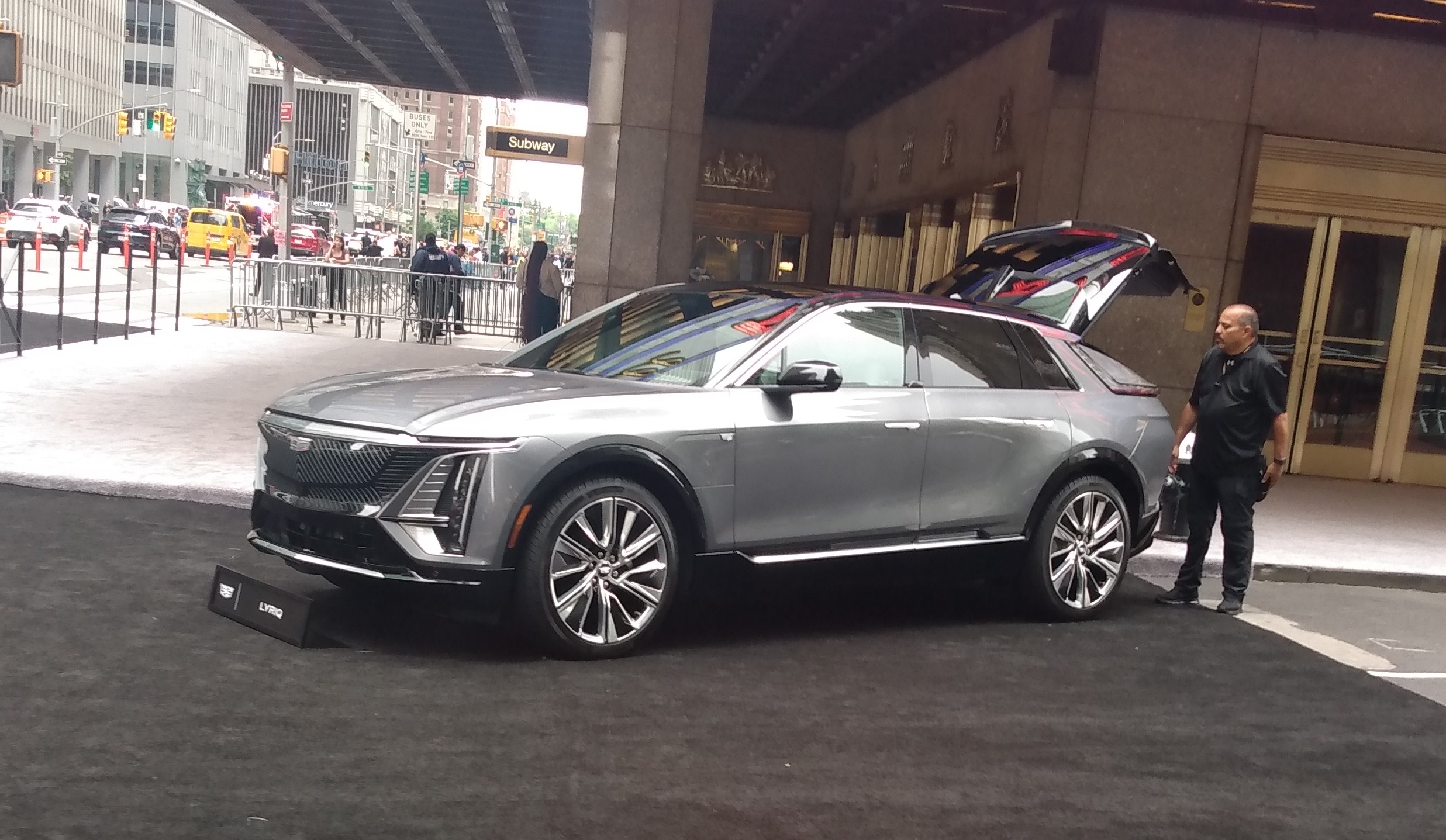
The Cadillac Lyriq is an electric SUV from Cadillac. The podcast says reliability hasn’t been great, which is important if you’re thinking about owning one. It’s mentioned because people want to understand how dependable it is day to day.
EPA range is the official mileage estimate for an EV, based on a standardized test. The hosts are saying Audi’s real-world results usually end up close to that number, sometimes a bit better.
The Audi Q8 e-tron is an electric SUV. The podcast mentions the official estimated range for a 2024 model and that they didn’t measure it themselves. It’s discussed because range and everyday usability matter when buying a used EV.
This is a practical range check where they drive the car on the highway for 70 miles and see how the EV performs. It’s meant to be a more real-world comparison than the EPA estimate alone.
The Audi Q6 e-tron is an electric SUV. The podcast says the speaker preferred a different Audi EV model, mainly because it has a different shape and feel. It’s mentioned because people compare EVs to find the one that fits them best.
“Form factor” just means the car’s overall shape and layout—what kind of body style it is. The hosts are saying the A6 e-tron and Q6 e-tron feel different because they’re built as different vehicle types.
The Ford F-150 Lightning is Ford’s electric pickup truck. They mention it because the next car they recommend has a similar dashboard/screen setup, so it’s easier to switch from the Lightning.
The Ford Mustang Mach-E is an electric SUV. The hosts say it can go about 300 miles on a charge and that owners seem happier with it, with better reliability results than the Audi Q4 e-tron.
The Audi Q4 e-tron is Audi’s electric SUV. Here, the hosts compare it to another EV to see which one people like more and which one seems more reliable.
A “road test score” is a rating based on actually driving the car. In this discussion, it’s just one measure, and the hosts say other results (like owner satisfaction and reliability) were better for the Mach-E.
Term
reliability verdicts
“Reliability verdicts” are basically a judgment about whether a car tends to have fewer problems. Here, they’re comparing reliability between two electric SUVs.
Turn signal lenses are the parts that show the blinking arrows/indicators at the back of the car. The host is talking about how moving them can make them harder to see and easier to damage.
This is a U.S. safety rule that sets standards for things like where lights must be placed on a car. The host uses it to explain why rear turn signals can’t be mounted too low or too high.
Turn signals are the lights that tell other drivers you’re turning or changing lanes. The hosts are saying there are rules that keep those lights visible even when the rear hatch is open.
The Nissan Ariya is an electric crossover SUV. The podcast mentions it because someone appears to be driving one, showing it’s a real, common EV you might see in daily life. It’s brought up as part of the discussion about electric cars people actually use.
The Chevrolet Equinox EV is an electric SUV from GM. The hosts are talking about whether it’s a good used buy because it seems to have strong battery life, decent range, and is easy to live with. They also discuss whether it might get discontinued soon.
Battery longevity means how long the EV battery stays healthy. It’s about whether the battery still holds enough charge after years of use. The hosts say the Equinox EV does well here.
The GM EV1 was an early electric car made by General Motors. It’s mentioned because it didn’t stay available for very long, and people regret that it ended. The podcast uses it as an example of how an EV can be taken away before it really gets a chance.
Rental categories are the broad groups rental companies use to decide what cars you can get. The hosts are saying these categories can be restrictive and you may end up with a smaller or different car than you wanted.
Turo is a peer-to-peer car rental app where individuals rent out their own vehicles to other people. The hosts contrast it with traditional rental companies that rent broad “categories” and can substitute cars you didn’t intend to get.
Sixt is a car rental company that tends to offer nicer, more upscale cars than the usual rental counters. The hosts say they’ve used it before and found the pricing reasonable for the kind of car you get.
The Cadillac CT6 is a large, luxury sedan. The podcast mentions it in the context of renting one and thinking the rental cost made sense for the kind of car it is. It’s a car people consider when they want a comfortable, high-end driving experience.
Consumer Reports is a nonprofit organization known for testing and rating products, including cars. The hosts emphasize its nonprofit funding model and that it buys the vehicles it tests, aiming to reduce bias.
LIVE
Hi, everybody. Welcome to another episode. I'm Mike Monticello. I'm John Williams. And
I'm Aubrey Wischegrod. So today, back by popular demand is another one of our all questions
all the time episodes. And that means instead of talking about a specific vehicle that we
drove recently, we're going to dig deep into the CR mailbag and answer some of the very best
questions we've gotten from me folks recently. And speaking of those questions, the best way to get
them to us is to text the questions, comments, video clips, the talkingcarsaticloud.com. And
remember to kind of like a more incentive to give you an amazing question. If we use the question
on the show, one of our producers will send you some CR branded swag. So that's pretty neat.
So with that, let's dive right into the questions. And the first one comes from Shad from Wichita,
Kansas. And Shad says, my wife and I are currently in the market for compact SUV. We like our current
2020 Subaru Forester. So we are strongly considering a new Forester Hybrid. While listening to your
podcast about it, one complaint was that it doesn't do simulated upshifts since it uses the guts of
the Toyota Hybrid system. Our current Forester does simulate it upshifts, and I cannot figure out
why it is considered a good thing. Since a CVT or ECVT can both can dial in a gear ratio,
shouldn't either be able to be tuned to keep the engine RPMs down while accelerating? Or is this
a case where a lot of drivers are used to the upshifts and feel better when they can sense the
car shifting even if it is just simulated? I mean, it's an excellent question. And actually,
we do get quite a lot of comments with people sort of disagreeing with our opinions that are
feeling that we typically like simulated upshifts. So, John, I'm going to send this to you first.
What's your response here, basically? Yeah, well, it is a really great question, Shad. And like you
said, Monty, we do get a lot of comments saying like, oh, I can't stand simulated upshifts or
I really like them. So it is kind of something that splits people's opinions, right? The reality,
you kind of touched on it in the last part of your question, Shad, is why the manufacturers do
it is really, it's less about efficiency. In fact, it's probably less efficient to do these simulated
upshifts, but it's more about providing a more pleasant experience for the driver. So if you
think about a lot of these hybrid systems, most of them have smaller four cylinder engines that
don't make a ton of power on their own, right without the assistance of the electric motors
in the hybrid system. So as you said, CVTs can dial in a gear ratio, but we can't fight physics,
right? The reality is that a tiny engine has to rev out pretty high to make enough power at
highway speeds to accelerate and things like that. So simulated shifts are really about keeping
the RPMs lower. We're letting them climb a little bit so that we can make that power
to accelerate, but we're not leaving them at 6, 7,000 RPM like the Toyota system does.
Yeah, absolutely. I mean, I couldn't agree more. We call it quite often like a rubber banding
sensation. And if anyone who's ever ridden a snowmobile or has heard of snowmobile, that's
what they do, right? The RPMs are constantly going up and down with even just a small increase in
throttle or decrease in throttle is going to change the revs. And there's a discordancy,
that's probably not a word, but let's say discordancy anyway, between your gas pedal pressure
and how high the revs go up and also then sometimes the lack of acceleration, right?
And I think that's what we find annoying. If you're on a really long, moderately steep climb,
that CVT or ECVT, even though they're kind of different, but us ECVT operates very similar to
a continuously variable transmission, you end up with these sustained high revs that is just
kind of annoying, especially because a lot of these little four cylinders are kind of
don't sound that great. So what they're trying to do, especially like a company like Honda with
their hybrid system, they do these simulated upshifts purely to bring the revs back down,
so it's more palatable, right? Yeah, I think it's all about just breaking up the monotony,
right? Especially you see this a lot in the Toyota hybrid systems where
you give it just a little bit of gas and the RPMs just fly up. And Toyota is as far as I
know, don't do any simulated upshifts. So in some ways, it's nice to see it on the Subaru,
but to John's point, it doesn't really make the car more efficient, probably makes it less
efficient. And it really comes down to preference, right? Yeah. And I think like you said,
Aubrey, it's a preference thing. And it's important to point out that well, a lot of us
here at the track do prefer them. It's not something that directly affects our scoring.
We're not going and looking at does a car do simulated upshifts, we're going to add points,
we're going to take points away, that kind of thing. It's really the results of what those
simulated upshifts do or don't do that impacts the score. So for instance, a car that does not do
them that really lets the RPMs climb and stay really high, that might negatively impact its
noise score. If like you said, Monty, it has that kind of gritty engine character that you're
listening to for a long time. And kind of the opposite is true to a car that does simulated
upshifts. If it does them kind of rough, we might actually take transmission points away.
Which does happen sometimes. It does. Yep. Okay. Cool. All right. Well,
hopefully that answers the question. Let's move on to our next one from Joe. Joe says,
regarding your ratings for Rivian EVs, why is there such a big discrepancy between consumer
satisfaction and overall reliability? That is, it has terrible reliability, but owners seem to
love them. One would think they would go hand in hand. I think it's a super interesting question.
And I would almost call it an interesting phenomenon. And I say that because we see this
sometimes in our auto surveys that we do every year, where there are some vehicles that have
poor reliability, yet they have high owner satisfaction scores. And I was talking to
one of our data analysts, Steve Alec, friend of the podcast. And he said,
it's really owner satisfaction is mostly about whether a vehicle meets expectations, right?
So if you buy a Rivian for the character, the novelty, the driving range or the cool factor,
the vehicle is definitely delivered to what the owners are looking for. Sure. And he thinks right
now, a lot of people, this is just his theory, are buying Rivians, aren't expecting strong
reliability. They know it's a pretty new company with new vehicles. So if there are some problems,
it's not typically going to hurt their owner satisfaction scores that they give versus say
a Toyota or a Lexus, where you expect good reliability. And if you don't, you're going to
be kind of upset, right? Yeah. Yeah. And to your point, like if you buy a Toyota and it's not
reliable, well, that just goes in the face of the reason you bought it in the first place.
Right. You're expecting that. You're expecting it. But if you, I guess if you buy a new car
from a new manufacturer, maybe you do expect it to have some problems. And that's fine,
because you didn't buy it for the reliability. Yeah. And if you, I looked at some of the
quotes of verbatims, as we call them from our survey, from some Rivian owners, and I'm just
going to read a couple, because they're really interesting, like how much they love these vehicles,
all right. So this is from an owner of a 2022 R1T. So that's the pickup.
They say it's fun, versatile, uncomfortable, incredible storage, amazing acceleration,
and it's nice looking. I mostly charge at home and never stop at gas stations except to use
the bathroom. No maintenance except I will need new tires. An owner of a 2024 R1S, the SUV says
it does everything and has limitless power and manners on the road and capabilities and snow
and off road or beyond belief. We love just charging it at home. And the last one is a
2025 R1T. This owner says the 2025 R1T is the absolute best all around vehicle that I've ever
owned even better than my previous 2022 Rivian R1T. The vehicle is a near perfect amalgam of
comfort, utility, performance, efficiency, and environmental responsibility. Wow. What do you
think about that? Yeah. Yeah. I mean, it makes sense, right? Why they're giving them high owners
satisfaction scores. Yeah. Their vehicles really are unique when you think about it too, right?
Like the truck has that gear storage tunnel that I don't know of another EV that has anything like
that. It has kind of all these features geared towards people who love going outside and going
on all these adventures. They do market them as adventure vehicles, right? So it's kind of not
just necessarily an image thing, but also all the features that they offer and yeah, reliability
doesn't tell the whole story. Yeah. They also, I mean, they handle pretty well and they're really
fast trucks. Yeah. Are they the fastest pickup trucks? They might be. Well, especially too,
if you're coming from a regular gas powered car and getting into a Rivian, it's, yeah. Oh, yeah.
You're blown away, right? Comparison. Yeah. Yeah. So it's an interesting phenomenon. It makes sense.
It's a little odd. It's both, it makes sense and it's odd at the same time that you would. Is this
kind of like the Wrangler thing? 100%. That's actually what he called it. He called it,
as Steve called it, the Jeep Wrangler effect is what he called it because the Wrangler has been
notoriously unreliable for a long time. And they haven't changed in a long time.
Haven't changed in a long time. People love them. The owners love them, right? And we know they're
unreliable and they don't care because they love their vehicle. And again, I think there's a little
bit of an image thing there, right? They like and I'm not picking on their owners, but they love,
that they drive Jeeps. That's why they put those little yellow ducks all over the, right?
Or park up on a curb. Or park up on a curb. Yeah. Yeah. All right. So let's move on to
another question. This one is from Robert and Robert says, thanks for doing the show.
I listened to all the episodes. Not quite sure if you guys are true EV folks yet.
Do any of you own one personally? But I would be curious as to your thoughts on a couple of EV
choices. My wife is looking to get an EV. She has a thrice weekly commute of 100 miles round
trip and average is about 20,000 miles per year. We did not intend to, but ended up using our Ford
F-150 SR Lightning as a trip vehicle because it is so smooth and quiet. We are looking for something
with around a 300 mile range and a decent charging curve to use for her commute and also trips.
She's been drawn to Audi and Honda styling, looking used as that seems the best value in
the market, hoping to stay between $30,000 to $40,000. Avery, I'm going to put you on the spot.
All right. What's, what is your answer for Robert?
Well, Robert, good question. Looking used is definitely the right way to go right now.
Especially for EVs.
Yeah. Especially for EVs that the resale value absolutely craters.
I mean, we have sold some EVs for half of what we bought them for just a year later.
Yeah. Sad.
So it's a good value for the used market, but certainly a reason maybe not to buy a new one.
As far as, you know, between Honda and Audi, well, Honda currently only has one EV, the prologue,
and it's not really a Honda. It's a GM, right? It's the GM Altium architecture underneath.
It's very similar to the Blazer EV Cadillac Lyric, and the reliability has not been very good on
these. Certainly the 2024 models were the least reliable. They got a little bit better in 25 and
26, but they still don't do very well in our surveys for reliability.
There's also some rumors that the prologue is going to be discontinued at the end of this year.
I haven't seen any official word on that, but it seems likely given what's going on in the EV market.
So I would be a little bit cautious about buying a car that might be discontinued and has poor
reliability. As far as the Audis go, there's a few used options that might be worth considering.
The 2024 Q8 e-tron has an EPA range of 285 miles. We didn't test the range on this, but generally
with the other Audi EVs that we've tested, they tend to go around their EPA range if not a little
bit longer. So you should be good for your 300-mile commute there. The 24 you can pick up for between
30,000 to 40,000. It also has a fairly good reliability score, 67 out of 100 in our surveys.
Another one to consider, and this surprised me even, the Q6 e-tron, which just came out last year,
you can already pick up a 25 model for around 35 to 55, which is like a 20 to 30,000 savings
over when it was brand new. This one has an EPA range of 295. It achieved 285 miles in our 70
highway range test. But one thing to keep in mind, its reliability score isn't quite as good as the
Q8. But I would say between the Hondas and the Audis, the Audis are going to perform better and be
quieter. So that's something to consider as well. Yeah. And to that end, if you either don't mind
spending a little more money or waiting another year or so, we actually kind of preferred the
A6 e-tron over the Q6 e-tron. Different form factor. But yeah, you'd be hard pressed to
you'd be lucky to get one in the low $40,000 range right now. So it's a little out of the price
range, but we just, it is more of a sleek kind of vehicle than the Q6 is more like an SUV.
But we did prefer generally the driving experience of the A6. That's a good point.
A little better ride, but you're going to have to pay more right now. So yeah, that's kind of why
I left it out just because it came out after the Q6. I couldn't find any for under like $45,000.
But give it a month, give it two months. You might find it under $40,000. Absolutely. Okay.
Let's move on. Go ahead, please. I was going to throw one more option in there. So not an Audi
or Honda, but where you're already coming from the Ford F-150 Lightning, I think another option
potentially worth considering will be a Mustang Mach-E. So that car got a little bit lower of a
road test score compared to the Audi Q4 e-tron, which is kind of the same size SUV, but it got better
owner satisfaction in our surveys and also better reliability verdicts than the Q4. It has the 300
mile range that you're looking for. And because you're coming from the Lightning, a lot of the
controls, especially the screen are going to be really similar. So you're not going to have to go
and learn all of Audi's convoluted controls. Yeah. Glad I didn't completely cut you off there.
That was a good point. All right. Let's move on to Gordon from Atlanta, Georgia.
Gordon says, is or was there a standard for the placement of turn signal lenses on the rear of
vehicles? I have noticed that several manufacturers have moved the amber or red turn signals from the
main rear taillight cluster to the bumper. I find this annoying. It moves your line of sight downward
and if the car gets rear-ended, you lose your working turn signals, which are now cracked and
broken inside the damaged rear bumper. Also, if you are in bumper to bumper traffic, you may not
be able to see the activated turn signal, which you can't cannot see. Change is not always a good
thing. So the answer is there is a regulation for this. And if you go to the Federal Motor Vehicle
Safety Standard 49 CFR 571.108, or as I like to refer to it, Title 49, Subtitle B, Chapter 5,
Part 571, Subcars B. That's how I remember it. Yeah. I mean, that's... I knew it was in there.
Yeah. It's hard to believe we get anything done in this country. Anyway, so what it specifies
for the automakers is that the turn signals have to be mounted not less than 15 inches
from the ground and not more than 83 inches. Did I say that right? They can't be lower than
15 inches from the ground and they can't be higher than 83 inches. 83 inches? Yeah. That's taller
than most cars. I know. I'm thinking maybe that's related to trucks. Yeah. There's some language in
there about semi-trucks as well. Oh, okay. That makes more sense. 15 inches. That's not that high.
No. That's pretty low. But totally get the point of... You do see these... There's a few cars out
there that do have the turn signals and the bumpers. That doesn't make any sense other than from
maybe a styling standpoint, but bumpers get hit. Yeah. Why would you take a chance on that?
Another part of it is that I think part of maybe that standard or similar standard is the turn
signals have to remain visible if the tailgate or trunk is open. So if you have your hazards on
and you're parked on the side of the highway, they still have to be visible. So in some cases,
if the manufacturers choose to style the car with the tail lights on the hatch or tailgate,
they have to move the signals downward or out of the way. Yeah. Okay. So that's another reason.
Yeah. Interesting. Okay. But yeah, I mean, there's a few very common cars that do this.
What do we got? We got the Hyundai Kona and Tucson and the Kia Sportage and Carnival.
And the Hyundai Santa Fe doesn't really have them in the bumper, but its whole
tail light assembly is so low on the rear of the vehicle that they may as well be.
So it kind of seems like there's a common offender here. Yeah. We won't name names.
No. But you were going to say something. Yeah. No, I think that
as long as that freedom is there, manufacturers are always going to prioritize styling. That's
the one thing that is going to lure someone to look at the car in the first place. Yeah. Right.
Yeah. They care less, unfortunately, about your concerns here and our shared concerns and more
about, yeah, let's make it look good. Yeah. All right. Next up, we have a video question. And,
you know, I've said it before, but we do love the video questions because we love to see your
smiling faces, love to see who's talking to us. And we love sometimes people, you know, get a little
creative with the backgrounds. And in this case, we have a video from Daniel in Jackson, Tennessee,
who looks to be sitting in a Nissan Aria. So let's see what Daniel is talking about today.
I was wondering, do you think that the supply chain issues for petrol will encourage GM to
extend the limited run on the Equinox EV? The Equinox EV is getting really high marks for battery,
longevity, range, affordability, ease of use. And it's kind of a surprise.
It's again, like the EV1, a pity if they take it out of the market too soon. What do you think?
All right. So Daniel has some points and some questions about the Equinox EV. John, what are
your answers? Yeah. Well, first off, Daniel, thanks for the question. Can totally understand
your concerns about EVs being discontinued, especially because it does look like you are
coming to us from a discontinued in the US market EV, the Nissan Aria. And also totally
hear you on your concerns as far as how the global economy might be potentially influencing
manufactured decisions. That said, we haven't heard anything definite from any credible source
that the Equinox EV is being discontinued. It seems like it's a pretty high volume seller right now
for GM as far as EVs go. So we would hope that they'll continue it for a little bit longer.
And you're absolutely right that it did do a lot of things well in our testing. Had a comfortable
ride, really smooth powertrain. It's generally easy to live with other than a few usability quirks.
I think that's kind of one of the big things for me is that it's nice. So many EVs, it seems like
they try and put a bunch of newfangled either controls or odd door handles or just too many
weird things that make living with them a little more difficult than they have to be.
But in general, it's pretty easy to drive. And the controls are
the same as any other GM from the last couple of years.
And it is worth mentioning too that right now of those shared GM Honda platform EVs,
it has the best reliability of the bunch, not saying it has good reliability, but it has currently
our data shows it having average reliability, whereas the others are all below average. So
we'll see if that changes as we get more data on it. But for now, it's another positive for it.
So maybe not a bad way for Daniel to go if he's thinking about that and or may not have to jump
on it right now either, because it looks like it might be around for a little while at least.
Yeah, I would think so. Okay. All right. And we have another video question this time from
Andrew from Connecticut. Let's hear what Andrew was asking us today.
Thanks, guys. Great show.
All right. So that background looks eerily similar to something I've walked through recently. Maybe
you guys have as well. Andrew looks a little familiar. He does pull my finger on it. But
I do like his hairdo. Okay. And to be fair, Andrew is one of our video producers and it
really is a legitimate question that he is wondering about. So we need to do our very best
for our coworker to answer this question. So John, do you want to go first?
Sure. Yeah, I mean, he's absolutely right that the where they get you with the rental categories
is the or similar, right? But everybody knows a Buick is nowhere close to a Mustang, but that's
what poor Andrew got stuck with. So with the categories, I mean, I would say, especially
if you're going to go with a sedan, you want to start with at least an intermediate or full size
either of those categories, because otherwise you will be stuck with something small, even
if you just pick like small sedan, they might throw you down to a compact and then you're stuck,
you know, in a Nissan Versa or something like that, that you don't want to be in.
But yeah, I mean, with the categories, you really don't have that much room. That's just
kind of how these mainstream companies operate. So I mean, if he wants to spend the money,
he could jump up to the luxury category. I'm sorry. I'm sorry. So you knocked your iPad over.
But yeah, now these categories don't really allow you as the renter a lot of flexibility.
If Andrew wants to spend the money, he could step up to the luxury category and maybe get
something a little bit nicer. But as far as these larger corporate rental entities, you really don't
have much flexibility. Yeah. And Avery, what about a non-corporate rental entity? What do you,
I feel like you're going to talk about something interesting.
Yeah. So with the rental car agencies, you're renting a category, right? Like you said,
or similar is where they get you. But another option is to use an app like Turo,
where people are renting out their personal vehicles. So you're choosing a specific vehicle
in advance and you're going to coordinate with that person where and when you're going to pick
the vehicle up. And I've used it a few times myself. They have some interesting vehicles on
there. You can get some old Mercedes sports cars or you can rent a Ferrari and anything in between.
And it's a little bit cheaper, actually, usually than renting a car through a rental agency.
Yeah. And the way they're saving money is that they don't have the whole brick-and-mortar store,
and they're not set up in the airports. So sometimes it can be a little bit more work to
actually get the keys and get into the car. But if you want an interesting car for a vacation
or a road trip, it's something to consider. It's like the Airbnb of car rental, right?
And the funny thing about it, though, I mean, I think it's a really neat thing
that you can do. And I actually know a couple of people that have done it and had good experience
with it. I think maybe you guys would agree with me. If I wouldn't rent my nice car out to anyone
in a million years, would I let some stranger in my car? But all credit for these people for
doing it because it's good for the rest of us. I have another option for Andrew,
which is a company called, a rental car company called Sixth, S-I-X-T. And the benefit of them,
I mean, I've actually used this company when I was out in California, like maybe eight years ago,
and they kind of specialize in luxury vehicles. Sorry. This is so unstable. I just touch it.
He's going to re-engineer it, Dave. Don't worry. Next episode, he will have re-engineered it,
and it won't fall over anymore. Dave hates me right now.
Sorry for a few interruptions. Our engineer over there doesn't seem to know how to hold his
keep his iPad from falling over on the table. So it's not a car. No, it's not a car. Yeah.
Anyway, so one thought I have for Andrew is to use a rental car company called Sixth, S-I-X-T.
I have used them when I was out in California, maybe eight years ago or something,
and they kind of specialize in more higher-end cars, luxury vehicles, German manufacturers.
In this case, I rented a Cadillac CT6, and the price was reasonable, considering what I got,
and the car was really nice. I mean, the CT6 back then was a nice car, but it was like,
you didn't feel like you were in a rental car. I think maybe they take better care of their vehicles,
or maybe they're just because they're better vehicles. And so I think that is a way to go as
well. Fiddle around with, don't just do one of the regular rental car companies where you
are going to get stuck with something that maybe you don't want to. And when you go with a company
like Sixth, you're going to get a good car or go with Turro and get the exact vehicle that you want,
right? Yeah, I think those are both great options for Andrew. Yeah. Okay, so that's going to do it
for this episode. If you want to learn more about the topics and the vehicles that we talked about,
you can click on the links in the show notes. Don't forget to send those questions,
comments, videos to TalkingCars at iCloud.com. And one last thing before we go, just want to remind
people that Consumer Reports is a nonprofit organization. You'll notice we don't have any
ads on our website or in our magazine. So one of the ways we make do, keep the lights on,
is through donations. Remember, unlike most automotive media outlets, we buy all of the vehicles
that we test, right? And it costs a lot of money. So we do have a donate button if you're watching
us on YouTube. And so you could help us out, support our cause to test cars, and to tell you
exactly how it is without any biases. So donations are part of how we keep this going. So thanks in
advance. Also, as always, our podcast was produced by Dave Abrams and edited by Andrew
Belize in Anatoly Shumsky. Thanks so much for watching, and we'll see you all next week.
About this episode
The hosts move from hybrid drivetrains to EV shopping and rental-car strategy, with a recurring theme of matching expectations to the right vehicle. They explain why simulated upshifts can make a small hybrid engine feel more natural, then dig into used EV bargains like Audi, Ford, and Honda options. Later, they compare mainstream rental agencies with Turo and Sixt, noting how each approach changes flexibility, price, and the kind of car you might end up driving.
Consumer Reports experts answer audience questions about CVTs and electric vehicles, including why simulated shifting exists, why the experts at Consumer Reports enjoy it, and how it affects performance and efficiency. We also explore the gap between reliability and owner satisfaction, with examples like the Rivian R1T and Rivian R1S, and what that means for car buyers, as well as current owners.
We also discuss alternatives to traditional car rental companies, including peer-to-peer services like Turo and Sixt, and if you can avoid getting a bad car from the vague categories rental places use.
Plus, we share advice on shopping for the best used EV under $40,000, with models like the Ford F-150 Lightning, Ford Mustang Mach-E, Audi Q6 and A6 e-tron, Honda Prologue, and more.
SHOW NOTES:
00:00 - Intro
00:55 - Chad (Wichita, KS): Simulated Upshifts in Hybrids
05:34 - Joe: Rivian Reliability vs Owner Satisfaction
10:04 - Robert: Best Used EV Options (Audi vs Honda + Alternatives)
14:51 - Gordon (Atlanta, GA): Why Are Turn Signals Moving Lower?
18:20 - Daniel (Video Question): Is the Chevy Equinox EV Being Discontinued?
20:54 - Andrew (Video Question): Rental Car Hacks (Turo, Sixt, Categories)