
Best Used EVs, Renting with Turo + Sixt, Rivian Reliability + Owner Satisfaction
About this episode
The hosts move from hybrid drivetrains to EV shopping and rental-car strategy, with a recurring theme of matching expectations to the right vehicle. They explain why simulated upshifts can make a small hybrid engine feel more natural, then dig into used EV bargains like Audi, Ford, and Honda options. Later, they compare mainstream rental agencies with Turo and Sixt, noting how each approach changes flexibility, price, and the kind of car you might end up driving.
Consumer Reports experts answer audience questions about CVTs and electric vehicles, including why simulated shifting exists, why the experts at Consumer Reports enjoy it, and how it affects performance and efficiency. We also explore the gap between reliability and owner satisfaction, with examples like the Rivian R1T and Rivian R1S, and what that means for car buyers, as well as current owners.
We also discuss alternatives to traditional car rental companies, including peer-to-peer services like Turo and Sixt, and if you can avoid getting a bad car from the vague categories rental places use.
Plus, we share advice on shopping for the best used EV under $40,000, with models like the Ford F-150 Lightning, Ford Mustang Mach-E, Audi Q6 and A6 e-tron, Honda Prologue, and more.
SHOW NOTES:
00:00 - Intro
00:55 - Chad (Wichita, KS): Simulated Upshifts in Hybrids
05:34 - Joe: Rivian Reliability vs Owner Satisfaction
10:04 - Robert: Best Used EV Options (Audi vs Honda + Alternatives)
14:51 - Gordon (Atlanta, GA): Why Are Turn Signals Moving Lower?
18:20 - Daniel (Video Question): Is the Chevy Equinox EV Being Discontinued?
20:54 - Andrew (Video Question): Rental Car Hacks (Turo, Sixt, Categories)
26:44 - Outro & How to Submit Questions
LINKS:
Subaru Forester Hybrid Test Results: https://www.consumerreports.org/cars/subaru/forester-hybrid/2026/overview/?EXTKEY=YSOCIAL_YT
2026 Owner Satisfaction Survey Results: https://www.consumerreports.org/cars/car-reliability-owner-satisfaction/most-and-least-liked-car-brands-a1291429338/?EXTKEY=YSOCIAL_YT
Best Used EVs: https://www.consumerreports.org/cars/hybrids-evs/buying-a-used-electric-vehicle-what-to-know-a7139266510/?EXTKEY=YSOCIAL_YT
Chevrolet Equinox EV Test Results: https://www.consumerreports.org/cars/chevrolet/equinox-ev/2026/overview/?EXTKEY=YSOCIAL_YT
Best and Worst Rental Car Companies: https://www.consumerreports.org/money/car-travel/best-and-worst-car-rental-companies-a1417885044/?EXTKEY=YSOCIAL_YT

2020 Subaru Forester
"Shad says, my wife and I are currently in the market for compact SUV. We like our current 2020 Subaru Forester. So we are strongly considering a new Forester Hybrid."
The Subaru Forester is a popular compact SUV. Here, they’re talking about how the 2020 Forester feels when it’s accelerating—especially whether it “pretends” to shift gears like a traditional car.
The Subaru Forester is a compact SUV known for practical all-weather capability and a comfort-focused driving feel. In this segment, the hosts discuss how the 2020 Forester’s hybrid behavior differs from the newer Forester Hybrid, specifically around “simulated upshifts.”
simulated upshifts
"While listening to your podcast about it, one complaint was that it doesn't do simulated upshifts since it uses the guts of the Toyota Hybrid system. Our current Forester does simulate it upshifts, and I cannot figure out why it is considered a good thing."
A simulated upshift is when the car pretends it’s shifting into a higher gear. It’s done to make the acceleration feel more like a normal automatic instead of a smooth, constant-speed feel.
Simulated upshifts are when a continuously variable transmission (or hybrid control system) deliberately changes the engine speed and/or shift feel to mimic the sensation of shifting to a higher gear. Even if it’s not truly changing gears, it can make acceleration feel more familiar and less “rubbery” to some drivers.
Toyota Hybrid system
"While listening to your podcast about it, one complaint was that it doesn't do simulated upshifts since it uses the guts of the Toyota Hybrid system."
Toyota’s hybrid system is the way Toyota combines a gas engine and an electric motor, along with how it controls the drivetrain. In this discussion, it’s being blamed for the lack of “shift-like” behavior in the newer Forester Hybrid.
The Toyota Hybrid system refers to Toyota’s hybrid powertrain architecture and control strategy, which often uses an electronically managed continuously variable transmission behavior. Here, it’s mentioned as the reason the newer Forester Hybrid may not include the same simulated upshift behavior as the 2020 Forester.
CVT
"...CVTs can dial in a gear ratio, but we can't fight physics, right? The reality is that a tiny engine has to rev out pretty high..."
A CVT is a transmission that can smoothly change the gear ratio all the time. Instead of shifting gears, it can make the engine speed rise and stay there, which some people find weird or annoying.
CVT (continuously variable transmission) uses a variable ratio instead of fixed gear steps. In hybrids, it can keep the engine near an efficient operating point, but it may also feel unnatural because the engine RPM can rise and “hold” rather than shift like a traditional automatic.
rubber banding
"...We call it quite often like a rubber banding sensation. And if anyone who's ever ridden a snowmobile..."
Rubber banding is when the engine speed jumps up and down with your pedal inputs. Instead of smooth, stepped shifts, it can feel like the engine is stretching and snapping back.
Rubber banding is the sensation in some CVT/ECVT vehicles where engine RPM rises and falls quickly with small throttle changes. Because the transmission ratio changes continuously, the engine can feel like it’s “hunting,” which many drivers find annoying.
Honda
"...So what they're trying to do, especially like a company like Honda with their hybrid system, they do these simulated upshifts purely to bring the revs back down..."
Honda is brought up because its hybrid control strategy tries to make the engine RPM come down by using shift-like behavior. The hosts suggest it’s more about how it feels to drive than about making it dramatically more efficient.
Honda is cited as using simulated upshifts in its hybrid system to bring engine RPM back down. The discussion frames this as a driver-feel improvement (less monotony) rather than a clear efficiency gain.
RPMs
"“…a car that does not do them that really lets the RPMs climb and stay really high, that might negatively impact its noise score.”"
RPMs are how fast the car’s rotating system is spinning. The hosts are saying that staying at higher motor speed can make the car sound noisier.
RPMs (revolutions per minute) are a measure of how fast the engine or motor is spinning. Even though EVs don’t use a traditional engine, they can still display or behave with motor-speed changes that listeners perceive as “high RPM” behavior, which the hosts tie to noise scoring.
owner satisfaction vs reliability discrepancy
"“regarding your ratings for Rivian EVs, why is there such a big discrepancy between consumer satisfaction and overall reliability? … owners seem to love them… owner satisfaction is mostly about whether a vehicle meets expectations”"
Sometimes people really like a car even if it breaks down more than you’d want. The podcast says that’s often because the car still delivers the things owners expected to enjoy, even if it isn’t trouble-free.
The hosts discuss a mismatch where a vehicle can score poorly on reliability but still earn high owner satisfaction. Their explanation is that satisfaction is heavily influenced by whether the car delivers on what buyers expected—like character, novelty, and range for an EV—while reliability is about how often it has problems.
Rivian
"“regarding your ratings for Rivian EVs, why is there such a big discrepancy between consumer satisfaction and overall reliability? That is, it has terrible reliability, but owners seem to love them.”"
Rivian makes electric vehicles. The hosts are using Rivian to explain why some EV owners can be very happy with the car’s fun/experience, even if it hasn’t been as reliable as brands like Toyota or Lexus.
Rivian is an EV brand known for its distinctive “character” and novelty, along with real-world driving range as key selling points. In this segment, the hosts use Rivian as an example of how owners can report high satisfaction even when reliability ratings are weaker.
Lexus
"“…versus say a Toyota or a Lexus, where you expect good reliability.”"
Lexus is referenced as a brand that many buyers expect to be reliable. The hosts use it as a contrast to Rivian to explain why satisfaction and reliability don’t always match.

Rivian R1T
"...s, all right. So this is from an owner of a 2022 R1T. So that's the pickup. They say it's fun, versat..."
The Rivian R1T is an electric pickup truck. The podcast mentions an owner saying it’s fun and useful, which fits how EVs can feel quick and still work like a truck. It’s brought up because it’s a different kind of pickup than gas models.
The Rivian R1T is an all-electric pickup truck built to combine everyday usability with off-road capability. The podcast quotes a 2022 owner describing it as fun and versatile, which is a common theme with EV trucks that deliver strong acceleration and flexible utility. It’s discussed because it shows how an electric powertrain changes the character of a pickup.
charging it at home
"I mostly charge at home and never stop at gas stations except to use the bathroom... We love just charging it at home. And the last one is a 2025 R1T."
Charging at home refers to using a home electrical setup (typically a Level 2 charger) to recharge an EV between trips. The owners quoted in this segment emphasize it as a major convenience because it reduces reliance on public charging. That convenience is part of why they describe the vehicles as easy to live with.

Rivian R1S
"... except I will need new tires. An owner of a 2024 R1S, the SUV says it does everything and has limitle..."
The Rivian R1S is an electric SUV that can carry more than just two people. The podcast mentions that an owner had to plan for things like tires, which are normal maintenance items. It’s brought up because it’s an EV people use like a regular family vehicle.
The Rivian R1S is an all-electric, three-row SUV designed for both everyday driving and longer trips. The podcast references a 2024 owner discussing features and the need for new tires, which highlights real-world ownership costs beyond the electric range. It’s discussed because it represents Rivian’s family-oriented EV approach and how it holds up in daily use.
owners satisfaction scores
"Yeah. Yeah. I mean, it makes sense, right? Why they're giving them high owners satisfaction scores. Yeah. Their vehicles really are unique when you think about it too, right?"
Owner satisfaction scores are survey-based metrics that reflect how happy owners are with their vehicles after living with them. In this segment, the hosts connect high satisfaction scores to Rivian’s real-world ownership experience, not just marketing claims. It’s used as a proxy for perceived quality and fit-for-purpose.
gear storage tunnel
"Like the truck has that gear storage tunnel that I don't know of another EV that has anything like that. It has kind of all these features geared towards people who love going outside and going on all these adventures."
A gear storage tunnel is a dedicated storage space integrated into the vehicle’s body layout, designed to carry outdoor equipment. In the Rivian R1T discussion, the hosts highlight this feature as distinctive among EVs, implying it’s a practical advantage for adventure use. It’s an example of how packaging and utility can matter as much as powertrain specs.

Jeep Wrangler
"...me time that you would. Is this kind of like the Wrangler thing? 100%. That's actually what he called it. H..."
The Jeep Wrangler is an SUV built for off-road driving. People like it because it can handle rough roads and it’s easy to make it feel like “your” vehicle. In the podcast, it’s mentioned as a kind of vehicle you use for personal time and getting away.
The Jeep Wrangler is a rugged, off-road-focused SUV known for its simple, trail-capable design and strong customization culture. In the podcast, it comes up as a “me time” vehicle—something people associate with getting out and enjoying driving in a more outdoorsy way. That’s why it’s often discussed: it’s less about commuting comfort and more about capability and personal freedom.
charging curve
"...We are looking for something with around a 300 mile range and a decent charging curve to use for her commute and also trips."
A charging curve is how the car’s charging speed changes as the battery fills up. A good one means you get faster charging for longer, which helps on road trips.
A charging curve describes how quickly a battery charges over time at a given charger type and conditions. The hosts want a “decent charging curve” so the EV can add useful range efficiently during commuting and trips, not just peak briefly.
resale value
"...Especially for EVs that the resale value absolutely craters. I mean, we have sold some EVs for half of what we bought them for just a year later."
Resale value is what you can sell the car for later. They’re saying EVs can lose value fast, so buying used helps you avoid that big drop.
Resale value is how much a vehicle is worth when you sell it later. The hosts say EV resale value can “crater,” meaning it drops sharply—so buying used can be financially smarter.

Honda Prologue
"... Audi, well, Honda currently only has one EV, the prologue, and it's not really a Honda. It's a GM, right? ..."
The Honda Prologue is an electric SUV made for everyday driving. The podcast mentions it because Honda currently has only one EV model in this conversation. It’s discussed as a way to understand what Honda’s EV option looks like.
The Honda Prologue is Honda’s electric SUV offering, positioned as a mainstream EV for daily driving. In the podcast, it’s brought up alongside the idea that Honda’s EV lineup is limited, and there’s discussion about who actually builds it. It’s discussed because it represents Honda’s entry into the EV market with a practical, SUV-based format.
GM Altium architecture
"[672.9s] and it's not really a Honda. It's a GM, right? It's the GM Altium architecture underneath. [680.6s] It's very similar to the Blazer EV Cadillac Lyric, and the reliability has not been very good on these."
“Architecture” is basically the car’s underlying design and engineering platform. The hosts are saying that because the Prologue uses GM’s EV platform, it can share the same reliability strengths/weaknesses as related GM EVs.
“Architecture” here means the shared EV platform and engineering foundation used across multiple GM-based EVs. The hosts connect this shared platform to similar reliability outcomes across vehicles like the Prologue and other GM EVs.
GM
"[672.9s] and it's not really a Honda. It's a GM, right? It's the GM Altium architecture underneath. [680.6s] It's very similar to the Blazer EV Cadillac Lyric, and the reliability has not been very good on these."
GM is the company behind the EV technology platform the hosts say is used under the Honda Prologue. That platform’s history can affect how reliable the car turns out to be.
GM (General Motors) is the automaker behind the EV platform the hosts say underpins the Honda Prologue. In this context, it matters because the platform’s track record influences reliability expectations for the resulting EV.

Chevrolet Blazer EV
"...rchitecture underneath. It's very similar to the Blazer EV Cadillac Lyric, and the reliability has not been ..."
The Chevrolet Blazer EV is an electric SUV. The podcast mentions it in the context of reliability concerns and that it shares a lot of its design foundation with another EV. It’s brought up because people want to know what to expect from an electric SUV in everyday ownership.
The Chevrolet Blazer EV is an all-electric SUV intended to bring the Blazer nameplate into the EV market. The podcast notes it’s similar in underlying architecture to another model mentioned in the discussion, and it also ties into concerns about reliability. It’s discussed because buyers compare EVs not just by range and features, but by how dependable they are over time.
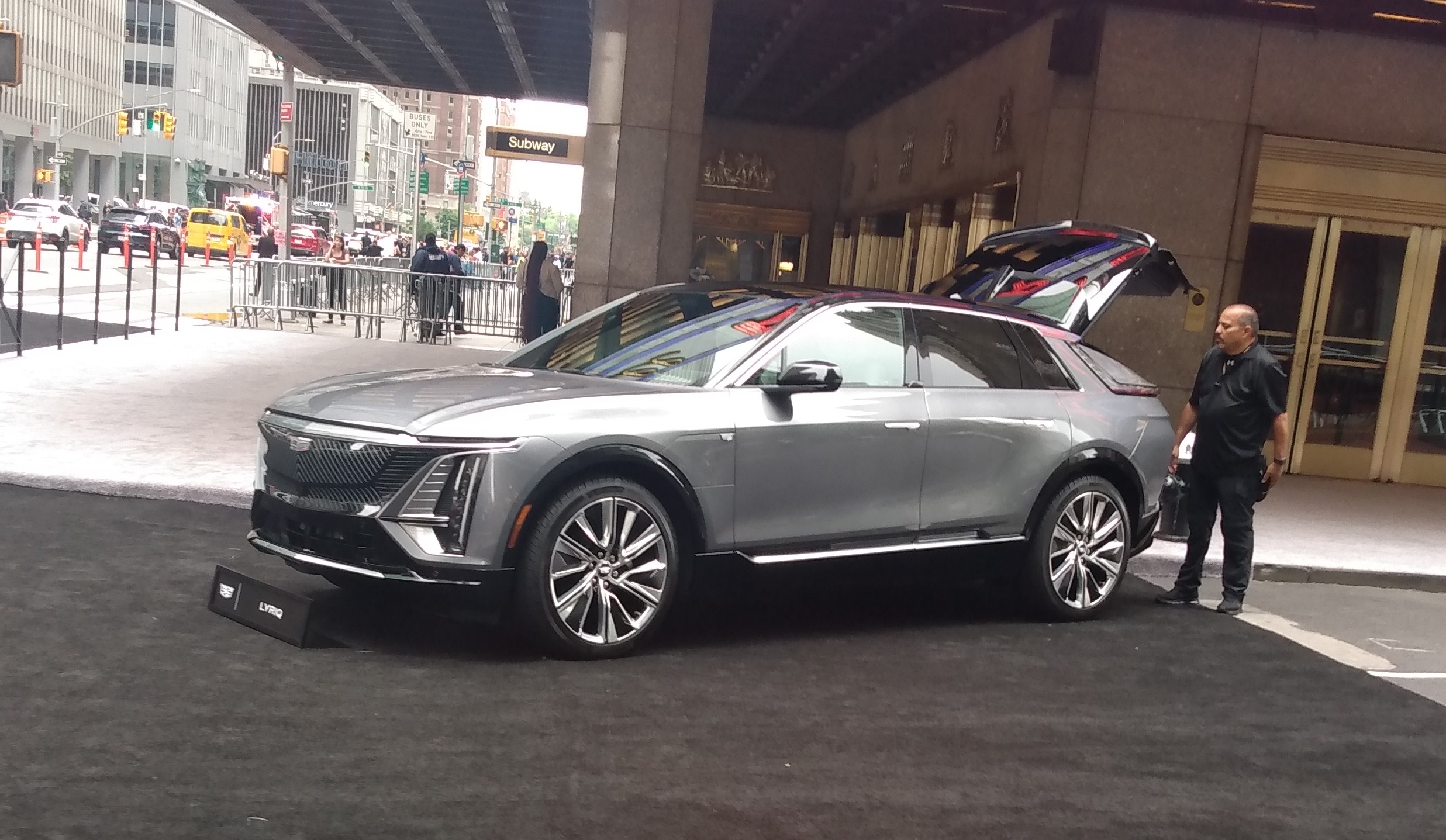
Cadillac Lyric
"...ath. It's very similar to the Blazer EV Cadillac Lyric, and the reliability has not been very good on t..."
The Cadillac Lyriq is an electric SUV from Cadillac. The podcast says reliability hasn’t been great, which is important if you’re thinking about owning one. It’s mentioned because people want to understand how dependable it is day to day.
The Cadillac Lyriq is a fully electric luxury SUV designed to deliver a premium driving experience with modern EV technology. The podcast mentions that reliability “has not been very good” on this model, which is why it comes up—buyers often want to know how dependable a newer EV is in real ownership. It’s discussed as part of the broader conversation about whether certain EVs are worth considering.
EPA range
"[721.4s] The 2024 Q8 e-tron has an EPA range of 285 miles. We didn't test the range on this, but generally [730.7s] with the other Audi EVs that we've tested, they tend to go around their EPA range if not a little bit longer."
EPA range is the official mileage estimate for an EV, based on a standardized test. The hosts are saying Audi’s real-world results usually end up close to that number, sometimes a bit better.
EPA range is the U.S. Environmental Protection Agency’s standardized estimate of how far an EV can travel on a full charge. The hosts use it as a baseline, then compare it to how Audi EVs they’ve tested tend to perform in practice (often near or slightly above the EPA number).

Audi Q8 Etron
"reliability. As far as the Audis go, there's a few used options that might be worth considering. The 2024 Q8 e-tron has an EPA range of 285 miles. We didn't test the range on this, but generally with the other Audi EVs that we've tested, they tend to go around their EPA range if not a little"
The Audi Q8 e-tron is an electric SUV. The podcast mentions the official estimated range for a 2024 model and that they didn’t measure it themselves. It’s discussed because range and everyday usability matter when buying a used EV.
The Audi Q8 e-tron is an all-electric SUV positioned as a premium, comfort-focused option. The podcast cites a 2024 EPA range figure of 285 miles and notes that they didn’t personally test range, which is a common way range claims get discussed. It’s brought up because it’s one of the used options people consider when weighing EV practicality and real-world expectations.
70 highway range test
"[773.7s] It achieved 285 miles in our 70 highway range test. But one thing to keep in mind, its reliability score isn't quite as good as the Q8."
This is a practical range check where they drive the car on the highway for 70 miles and see how the EV performs. It’s meant to be a more real-world comparison than the EPA estimate alone.
A “70 highway range test” is a real-world style measurement where an EV is driven on the highway for a set distance (here, 70 miles) to see how much range it uses and how far it can go. The hosts use this to ground the EPA range claim with an actual driving result.

Audi Q6 Etron
"spending a little more money or waiting another year or so, we actually kind of preferred the A6 e-tron over the Q6 e-tron. Different form factor. But yeah, you'd be hard pressed to you'd be lucky to get one in the low $40,000 range right now. So it's a little out of the price"
The Audi Q6 e-tron is an electric SUV. The podcast says the speaker preferred a different Audi EV model, mainly because it has a different shape and feel. It’s mentioned because people compare EVs to find the one that fits them best.
The Audi Q6 e-tron is an all-electric SUV that’s discussed as part of the lineup of Audi EVs people might consider. In the podcast, the speaker says they preferred the A6 e-tron over the Q6 e-tron, pointing to differences in body style and overall feel. It’s brought up because buyers often compare EV models by size, shape, and how they fit their needs.
form factor
"[799.2s] A6 e-tron over the Q6 e-tron. Different form factor. But yeah, you'd be hard pressed to [808.3s] you'd be lucky to get one in the low $40,000 range right now."
“Form factor” just means the car’s overall shape and layout—what kind of body style it is. The hosts are saying the A6 e-tron and Q6 e-tron feel different because they’re built as different vehicle types.
Form factor is a design/packaging term meaning the vehicle’s overall body style and layout—how it’s shaped and configured. The hosts use it to contrast the A6 e-tron with the Q6 e-tron as different types of EVs, not just different trims.

Ford F-150 Lightning
"...where you're already coming from the Ford F-150 Lightning, I think another option potentially worth considering will be a Mustang Mach-E. So that car got a little bit lower of a road test score..."
The Ford F-150 Lightning is Ford’s electric pickup truck. They mention it because the next car they recommend has a similar dashboard/screen setup, so it’s easier to switch from the Lightning.
The Ford F-150 Lightning is an all-electric version of the F-150 pickup, so it’s a battery-electric truck with EV-specific controls and driving feel. The host uses it as the baseline because the next EV recommendation (Mustang Mach-E) has a similar layout for key controls and the infotainment screen.

Ford Mustang
"...another option potentially worth considering will be a Mustang Mach-E. So that car got a little bit lower of a road test score compared to the Audi Q4 e-tron... but it got better owner satisfaction... and also better reliability verdicts than the Q4. It has the 300 mile range that you're looking for."
The Ford Mustang Mach-E is an electric SUV. The hosts say it can go about 300 miles on a charge and that owners seem happier with it, with better reliability results than the Audi Q4 e-tron.
The Ford Mustang Mach-E is an all-electric crossover that’s positioned as a practical alternative to other EV SUVs. In this segment, it’s highlighted for having around a 300-mile range target, plus stronger owner satisfaction and reliability verdicts compared with the Audi Q4 e-tron, and it’s said to feel familiar if you’re coming from the F-150 Lightning.

Audi Q4 e-tron
"...it got a little bit lower of a road test score compared to the Audi Q4 e-tron, which is kind of the same size SUV, but it got better owner satisfaction in our surveys and also better reliability verdicts than the Q4."
The Audi Q4 e-tron is Audi’s electric SUV. Here, the hosts compare it to another EV to see which one people like more and which one seems more reliable.
The Audi Q4 e-tron is an all-electric compact SUV from Audi, built around a battery-electric powertrain rather than a gasoline engine. In this segment, it’s used as a comparison point for range, owner satisfaction, and reliability verdicts versus the Mustang Mach-E.
road test score
"...it got a little bit lower of a road test score compared to the Audi Q4 e-tron, which is kind of the same size SUV, but it got better owner satisfaction in our surveys..."
A “road test score” is a rating based on actually driving the car. In this discussion, it’s just one measure, and the hosts say other results (like owner satisfaction and reliability) were better for the Mach-E.
A “road test score” is an evaluation result from driving the vehicle in real-world conditions, typically combining factors like ride quality, handling, braking feel, and overall drivability. Here it’s used as one metric, contrasted with owner satisfaction and reliability verdicts.
reliability verdicts
"...and also better reliability verdicts than the Q4."
“Reliability verdicts” are basically a judgment about whether a car tends to have fewer problems. Here, they’re comparing reliability between two electric SUVs.
“Reliability verdicts” are conclusions drawn from data about how often a vehicle has problems, often based on reported issues and/or long-term ownership results. The host contrasts these verdicts between the Mustang Mach-E and the Audi Q4 e-tron.
turn signal lenses
"Gordon says, is or was there a standard for the placement of turn signal lenses on the rear of vehicles? I have noticed that several manufacturers have moved the amber or red turn signals..."
Turn signal lenses are the parts that show the blinking arrows/indicators at the back of the car. The host is talking about how moving them can make them harder to see and easier to damage.
Turn signal lenses are the colored covers/optics for the rear indicators that communicate the driver’s intended direction. The host discusses how some manufacturers relocate the amber/red signal elements from the taillight cluster to the bumper, affecting visibility and crash outcomes.
Federal Motor Vehicle Safety Standard 49 CFR 571.108
"...So the answer is there is a regulation for this. And if you go to the Federal Motor Vehicle Safety Standard 49 CFR 571.108..."
This is a U.S. safety rule that sets standards for things like where lights must be placed on a car. The host uses it to explain why rear turn signals can’t be mounted too low or too high.
Federal Motor Vehicle Safety Standard 49 CFR 571.108 is a U.S. regulation that specifies requirements for vehicle lighting and related visibility features. In this segment, it’s cited as the rule governing how far from the ground turn signals must be mounted on the rear of vehicles.
turn signals
"[1006.8s] signals have to remain visible if the tailgate or trunk is open. So if you have your hazards on [1011.3s] and you're parked on the side of the highway, they still have to be visible."
Turn signals are the lights that tell other drivers you’re turning or changing lanes. The hosts are saying there are rules that keep those lights visible even when the rear hatch is open.
Turn signals are the vehicle’s exterior indicators used to communicate intended direction changes. In this episode, the hosts discuss a specific visibility requirement: turn signals must remain visible even when the tailgate or trunk is open, which can force manufacturers to reposition them.

Nissan Aria
"...Jackson, Tennessee, who looks to be sitting in a Nissan Aria. So let's see what Daniel is talking about today...."
The Nissan Ariya is an electric crossover SUV. The podcast mentions it because someone appears to be driving one, showing it’s a real, common EV you might see in daily life. It’s brought up as part of the discussion about electric cars people actually use.
The Nissan Ariya is an all-electric crossover designed for everyday driving with a focus on comfort and practicality. In the podcast, it’s referenced by someone appearing to be in a Nissan Ariya, which suggests it’s a recognizable EV on the road. It’s discussed as part of the broader EV conversation—what people are driving and how common these models have become.

Chevrolet Equinox EV
"extend the limited run on the Equinox EV? The Equinox EV is getting really high marks for battery, longevity, range, affordability, ease of use... It seems like it's a pretty high volume seller right now for GM as far as EVs go."
The Chevrolet Equinox EV is an electric SUV from GM. The hosts are talking about whether it’s a good used buy because it seems to have strong battery life, decent range, and is easy to live with. They also discuss whether it might get discontinued soon.
The Chevrolet Equinox EV is a mainstream GM electric SUV, and the hosts discuss it as a standout used-EV candidate. They specifically call out battery longevity, range, affordability, and day-to-day usability, plus whether it might be discontinued. They also compare its reliability standing versus other GM EVs on shared architectures.
battery longevity
"The Equinox EV is getting really high marks for battery, longevity, range, affordability, ease of use."
Battery longevity means how long the EV battery stays healthy. It’s about whether the battery still holds enough charge after years of use. The hosts say the Equinox EV does well here.
Battery longevity refers to how well an EV’s battery holds up over time—especially how much capacity it retains after many charge cycles. In used-EV shopping, longevity is a key indicator of whether the car will remain practical years later. The hosts cite it as one of the Equinox EV’s strengths.

General Motors Ev1
"...nd it's kind of a surprise. It's again, like the EV1, a pity if they take it out of the market too soo..."
The GM EV1 was an early electric car made by General Motors. It’s mentioned because it didn’t stay available for very long, and people regret that it ended. The podcast uses it as an example of how an EV can be taken away before it really gets a chance.
The General Motors EV1 was an early, purpose-built electric vehicle from GM that became well known for its short production life and the way it highlighted the challenges of early EV adoption. The podcast frames it as a “pity” if it were taken out of the market too soon, using it as a reference point for how EV programs can disappear. It’s discussed because it’s a historical example of an EV that shaped public awareness even though it didn’t last.
rental categories
"...he's absolutely right that the where they get you with the rental categories... But everybody knows a Buick is nowhere close to a Mustang..."
Rental categories are the broad groups rental companies use to decide what cars you can get. The hosts are saying these categories can be restrictive and you may end up with a smaller or different car than you wanted.
“Rental categories” are the broad size/class groupings rental companies use (like compact, intermediate, full-size, or luxury). The segment explains how these categories can limit flexibility and lead to substitutions that don’t match the renter’s expectations.
Turo
"...another option is to use an app like Turo, where people are renting out their personal vehicles. So you're choosing a specific vehicle"
Turo is a peer-to-peer car rental app where individuals rent out their own vehicles to other people. The hosts contrast it with traditional rental companies that rent broad “categories” and can substitute cars you didn’t intend to get.
Sixt
"I have another option for Andrew, which is a company called, a rental car company called Sixth, S-I-X-T."
Sixt is a car rental company that tends to offer nicer, more upscale cars than the usual rental counters. The hosts say they’ve used it before and found the pricing reasonable for the kind of car you get.
Sixt is a rental company that focuses more on higher-end vehicles, including luxury and German brands. The hosts mention using Sixt in California and highlight that they specialize in luxury car rentals compared with typical airport rental setups.

Cadillac CT6
"...manufacturers. In this case, I rented a Cadillac CT6, and the price was reasonable, considering what I..."
The Cadillac CT6 is a large, luxury sedan. The podcast mentions it in the context of renting one and thinking the rental cost made sense for the kind of car it is. It’s a car people consider when they want a comfortable, high-end driving experience.
The Cadillac CT6 is a full-size luxury sedan that was designed to deliver a comfortable, upscale driving experience. In the podcast, it’s brought up because someone rented one and found the price reasonable for what you get in a large luxury car. It’s discussed as a practical way to experience the CT6’s comfort and features without committing to ownership.
Consumer Reports
"...just want to remind people that Consumer Reports is a nonprofit organization. You'll notice we don't have any ads on our website or in our magazine..."
Consumer Reports is a nonprofit organization known for testing and rating products, including cars. The hosts emphasize its nonprofit funding model and that it buys the vehicles it tests, aiming to reduce bias.
Request an Explanation
Heard something you'd like explained? We'll add it to this episode.
Sign in to request explanations for terms you heard.
Want to learn more?
Browse our glossary for plain-English explanations of automotive terms, jargon, and concepts.
Help improve this episode
See something that's not quite right? Our annotations are AI-generated and can sometimes miss the mark. Click the flag icon on any annotation to suggest a correction.