
Small Trucks Are the Perfect Size for Nobody: 2026 Hyundai Santa Cruz
About this episode
Hyundai’s 2026 Santa Cruz gets a fresh test review after the team buys a new SEL Activity AWD—then Hyundai cancels the model just 10 days later. The big story is the powertrain swap: a 2.5L turbo/DSG (281 hp) is replaced by a 2.5L non-turbo (191 hp) with a more traditional automatic. The hosts debate whether small trucks are “enough truck” for most people, but criticize the new setup as underpowered and noisy, with only modest towing gains. Sales numbers and inventory pressures are cited as the reason for cancellation.
In this episode, we take an in-depth look at the 2026 Hyundai Santa Cruz, which, ironically, was officially discontinued days after we bought one for testing. We talk about the history and future of small trucks, discuss why Hyundai decided to end production of the Santa Cruz, and answer a question from a Santa Cruz owner about why the Santa Cruz returned low scores in our cargo capacity assessment.
SHOW NOTES:
0:00 - Introduction & Why We Bought Another Santa Cruz
1:03 - Why Hyundai discontinued the Santa Cruz
3:03 - Is a small truck enough for most people?
7:05 - What we dislike about the 2026 Hyundai Santa Cruz
13:35 - Best Small Truck Alternatives
19:50 - Audience Question: How Does CR Score the Bed Size of a truck?
27:15 - Audience Question Follow up: Favorite cars purchased by Ernie from North Carolina
LINKS:
2026 Hyundai Santa Cruz: https://www.consumerreports.org/cars/hyundai/santa-cruz/2026/overview/?EXTKEY=YSOCIAL_YT
Test Results: Ford Maverick: https://www.consumerreports.org/cars/ford/maverick/2026/overview/?EXTKEY=YSOCIAL_YT
Model History: Honda Ridgeline: https://www.consumerreports.org/cars/honda/ridgeline/?EXTKEY=YSOCIAL_YT
Test Results: Ford Maverick Hybrid: https://www.consumerreports.org/cars/ford/maverick-hybrid/2026/overview/?EXTKEY=YSOCIAL_YT
Test Results: Ford F-150 Hybrid: https://www.consumerreports.org/cars/ford/f-150-hybrid/2026/overview/?EXTKEY=YSOCIAL_YT
6 Most Reliable Used Pickup Trucks, According to Consumer Reports' Experts: https://www.consumerreports.org/cars/pickup-trucks/most-reliable-used-pickup-trucks-a7737894754/?EXTKEY=YSOCIAL_YT

2026 Hyundai Santa Cruz
"So today we're going to be talking about the 2026 Hyundai Santa Cruz... We purchased this 2026 Santa Cruz SEL Activity all-wheel drive..."
The 2026 Hyundai Santa Cruz is a small pickup-style vehicle from Hyundai. The hosts focus on the new engine/transmission setup and how it compares to other small trucks like the Toyota Tacoma.
The 2026 Hyundai Santa Cruz is a compact “small truck” built on a car-like platform, aimed at people who want pickup utility without full-size dimensions. In this episode, the big story is the 2026 model’s updated powertrain and how it stacks up against other small trucks in sales.

Hyundai Santa
"...So today we're going to be talking about the 2026 Hyundai Santa Cruz. We bought another one and we'll kind of get..."
The Hyundai Santa Fe is an SUV, which means it’s a taller vehicle with more room for passengers and cargo. It’s designed for everyday driving and family use. The podcast is talking about Hyundai’s newer SUV-related models, which is why the Santa Fe comes up in that general area.
The Hyundai Santa Fe is a midsize SUV built for families who want more space and versatility than a sedan. It’s significant in the lineup because it’s designed to handle both daily commuting and longer trips. The podcast context points to the 2026 Santa Cruz, but the Santa Fe name is still part of the Hyundai SUV discussion theme.
CR testing
"it has completed all the CR testing and we thought we would talk about it."
“CR testing” means the kind of vehicle testing done by Consumer Reports. They use consistent tests so you can compare cars more fairly.
“CR testing” refers to Consumer Reports-style testing, where vehicles are evaluated using standardized test procedures and scoring. It’s a shorthand for the kind of repeatable, lab-and-road evaluation that informs reliability and performance conclusions.
all-wheel drive
"We purchased this 2026 Santa Cruz SEL Activity all-wheel drive, quite the name..."
All-wheel drive (AWD) sends power to all four wheels, improving traction in rain, snow, and low-grip conditions. It can also help the vehicle accelerate more confidently off the line compared with front- or rear-wheel drive.
powertrain
"Well the answer is this new powertrain. The previous one was a 2.5-liter turbo..."
A powertrain is the vehicle’s main mechanical system for making and delivering power—typically the engine (or motor), transmission, and drivetrain components. Here, the hosts emphasize that the Santa Cruz changed its powertrain architecture, which affects how it drives.
DSG transmission
"The previous one was a 2.5-liter turbo that made a whopping 281 horsepower and had a DSG transmission."
DSG stands for Direct-Shift Gearbox, a type of dual-clutch automatic transmission. It uses two clutches to pre-select gears, which can make shifts feel quicker and more responsive than a traditional torque-converter automatic.
2.5-liter turbo
"The previous one was a 2.5-liter turbo that made a whopping 281 horsepower..."
A 2.5-liter turbo engine is a gasoline engine with a turbocharger that forces more air into the cylinders, allowing more power from the same displacement. In this episode, the previous Santa Cruz used a 2.5-liter turbo setup producing 281 horsepower.
2.5 non-turbo
"This new one is a 2.5 non-turbo, makes 191 horsepower..."
A 2.5 non-turbo engine is a 2.5-liter engine without a turbocharger, so it relies on naturally aspirated airflow rather than forced induction. The hosts contrast it with the prior turbo engine to explain why the driving feel and power delivery change.
traditional automatic transmission
"This new one is a 2.5 non-turbo, makes 191 horsepower and has pretty much a traditional automatic transmission."
A “traditional automatic transmission” typically refers to a conventional torque-converter automatic rather than a dual-clutch system. These transmissions generally prioritize smoothness and ease of use, though shift feel can be less immediate than dual-clutch setups.

Ford Maverick
"they cited poor sales numbers and high dealer inventory against other smaller trucks like the Ford Maverick."
The Ford Maverick is a compact pickup that’s used here as a benchmark for sales performance in the small-truck segment. The hosts mention Hyundai’s cancellation rationale included competition from models like the Maverick.
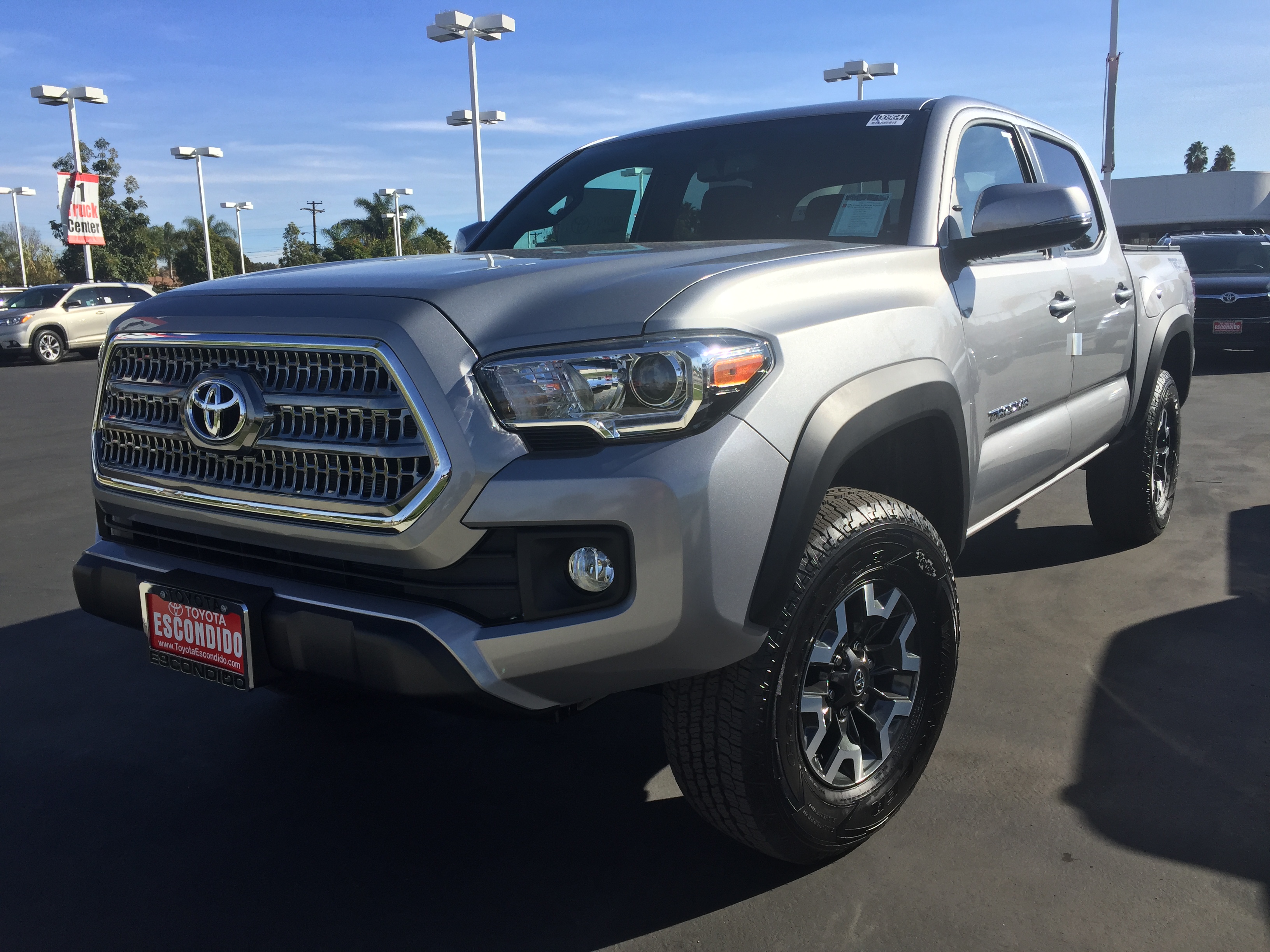
Toyota Tacoma
"when you look at the leader like the Toyota Tacoma, which in a kind of good or normal month will sell about 20,000 units a month..."
The Toyota Tacoma is the sales leader in the small-truck market, and the hosts use it to show how much lower the Santa Cruz’s volume is. They cite typical monthly sales for the Tacoma to contextualize the Santa Cruz’s “fraction of the number” sales.

Subaru Baja
"And you think about it, I think I see more Subaru Baja, remember the Subaru Baja? Yeah, yeah. Every now and again that I see a Santa Cruz. You rarely see Santa Cruises."
The Subaru Baja was a weird, short-run Subaru that mixed SUV/crossover styling with a small truck bed. The hosts use it as an example of a model that seemed uncommon and then got discontinued.
The Subaru Baja is a short-lived, quirky Subaru pickup-like vehicle (often described as a crossover with a truck bed) that didn’t last long in the U.S. market. The hosts mention it as a rare sight and then pivot to the question of why Subaru stopped selling it.

Subaru Outback
"Right. Just different take on the outback, I guess. But I think we'll sort of get into this..."
The Subaru Outback is a car-like vehicle that’s made a bit taller and more versatile. It’s meant for people who want room for passengers and gear, plus easier driving on rougher roads. The podcast mentions it as a different version or approach within the Outback idea.
The Subaru Outback is a wagon-based crossover that’s built for people who want extra ground clearance and versatility while still driving like a car. It’s often discussed as an alternative “take” on the Outback nameplate because it blends comfort with practicality for different road conditions. In the podcast, it’s referenced as part of a comparison or lineup of vehicles.

Colorado
"But the Tacoma, the Colorado and the Ranger are, you know, quote unquote, let's call them real trucks, if you will, versus these other more unibody car based kind of things."
The Chevrolet Colorado is a midsize pickup truck. They’re using it as an example of a truck that feels more like a traditional pickup than smaller, car-like ones.
The Chevrolet Colorado is a midsize pickup that’s positioned here alongside the Tacoma as a more traditional truck size. The discussion contrasts these “real trucks” with more unibody, car-based designs.

Ford Ranger
"But the Tacoma, the Colorado and the Ranger are, you know, quote unquote, let's call them real trucks, if you will, versus these other more unibody car based kind of things."
The Ford Ranger is a midsize pickup truck. The hosts are grouping it with other midsize trucks as the kind you’d choose if you actually need to tow or haul things.
The Ford Ranger is a midsize pickup referenced here as a “real truck” alternative to more unibody, car-based pickups. The point is that Ranger-class trucks tend to be built for towing and hauling more seriously than smaller, car-derived designs.
unibody
"versus these other more unibody car based kind of things."
Unibody means the car’s body and frame are built as one piece. The hosts are saying some trucks are built more like cars, which can change how well they handle heavy hauling and towing.
A unibody is a vehicle construction where the body and frame are integrated into one structure. In pickups, “unibody car-based” designs usually prioritize ride comfort and efficiency, but may be less purpose-built for heavy towing and rough-duty work than traditional body-on-frame trucks.
tow
"Mike, you don't have to tow a boat, but right, you might have a need to tow a boat."
To tow means pulling something behind the truck, like a trailer. It’s one of the main reasons people care about pickup size.
To tow means pulling another vehicle or trailer behind the truck. Towing is a core use case that drives why people choose certain pickup sizes and configurations.
full half ton truck
"Like even a regular full half ton truck with the short bed is like I have to leave the tailgate down."
“Half-ton” is a common way people talk about pickup size and how much they can carry. They’re saying that even a half-ton truck can be too small for certain jobs, depending on bed length and what you’re hauling.
“Half-ton” is a traditional U.S. pickup class label that roughly indicates the truck’s payload/towing capability. The speaker is describing how even a half-ton truck with a short bed may still be limiting for their specific hauling needs, like transporting long sheetrock panels.
short bed
"Like even a regular full half ton truck with the short bed is like I have to leave the tailgate down."
A short bed is a pickup bed length shorter than the standard or long-bed options. Bed length matters for hauling long materials because it affects whether items fit inside the bed or require using the tailgate or straps to secure them.
tailgate
"Like even a regular full half ton truck with the short bed is like I have to leave the tailgate down."
The tailgate is the rear door of a pickup bed. Leaving it down can help you load long materials more easily.
The tailgate is the hinged rear door on a pickup bed that can open downward. Using it (or leaving it down) is a practical way to extend the effective loading surface for long items, though it can also change how you secure the load.
Bluetooth reconnects
"It has kind of typically good Hyundai simple controls. The Bluetooth reconnects when you pair your phone. It's easy to get into."
“Bluetooth reconnects” means your car can automatically link back up to your phone after you’ve paired them before. That helps music and calls work right away when you start the car.
“Bluetooth reconnects” refers to how a vehicle’s infotainment system automatically re-establishes a wireless connection to your phone after pairing. It’s a usability feature that affects how quickly audio and phone functions work each time you get in.

Ford F150
"And it's and it's not it's not huge like an F-150."
The Ford F-150 is a big, full-size pickup. They’re using it as the example of a truck that’s harder to park and live with compared to a smaller pickup.
The Ford F-150 is a full-size pickup truck, and it’s used here as the comparison point for what “big” means. The hosts say the Santa Cruz-style size is easier to live with because it’s not as large as an F-150.
parking lot
"It's easy to drive. It's easy to maneuver in a parking lot, Hyundai controls, everything you just said."
In this context, “parking lot” is used to emphasize low-speed maneuverability—how easy the vehicle is to position in tight spaces. It’s not a technical term, but it’s part of the hosts’ practical usability argument for smaller trucks.

GMC Envoy
"...it was the GMC. The had the rollback, the strange envoy rollback thing. It was like super heavy and awkwa..."
The GMC Envoy is a midsize SUV, meaning it’s a larger family vehicle with more space. The podcast mentions it with a personal experience about how it felt and how it was handled. It’s being discussed as part of a set of SUV ownership stories.
The GMC Envoy is a midsize SUV that was designed for family use with a focus on practicality and space. In the podcast context, it’s brought up with a specific anecdote about a “rollback” and the vehicle feeling heavy and awkward. That kind of story is typical when discussing how an SUV feels in real-world use.
dual clutch issues
"The transmission doesn't have the dual clutch issues that I did the first time. Right."
A dual-clutch transmission is a type of automatic that shifts quickly using two clutches. The host is saying the transmission in this version doesn’t have the same problems they experienced before.
“Dual clutch” refers to a transmission design that uses two clutches to pre-select gears for faster shifts. “Dual clutch issues” means problems or reliability/behavior complaints tied to that specific transmission type, which the host says the current transmission doesn’t have.
horsepower
"So so the non turbo is a hundred and 91 horsepower versus 200 and eighty one on that turbo. Yeah."
Horsepower is a number that describes how strong the engine is. Here, the host uses it to show that the turbo version has more power than the non-turbo.
Horsepower is a measure of engine power—how much work the engine can do over time. In this segment, the host uses horsepower differences between the non-turbo and turbo versions to explain why the driving experience changes.
wind the motor out
"Yeah. And because of that, it's when you, you know, you have to wind the motor out. It gets loud. The engine gets loud in there."
“Wind the motor out” means rev the engine higher. The host is saying you have to do that more with the non-turbo, and it makes the truck feel louder and less comfortable.
“Wind the motor out” means rev the engine higher (run it at higher RPM) to get the power you want. The host says the non-turbo setup requires this more often, which makes the engine louder and less pleasant.
Bed cargo weight
"Bed cargo weight, too. Like, you know, the onboard weight is pretty low as well."
Bed cargo weight is the maximum weight you’re allowed to put in the pickup’s cargo bed. It’s separate from towing capacity, and both limits affect how useful a truck is for hauling.
onboard weight
"Bed cargo weight, too. Like, you know, the onboard weight is pretty low as well."
Onboard weight here is being used to mean the truck’s payload/carrying capacity (how much weight it can carry). In pickup discussions, this is often discussed alongside bed cargo weight and towing capacity.
underpowered
"Absolutely. OK, because it is it is so underpowered. It's almost scary."
Underpowered describes an engine that doesn’t produce enough power for the vehicle’s size and intended use, especially when accelerating, climbing grades, or towing. The hosts connect it to how the truck feels in real driving, not just on paper.
Steph Schrader
"And I was talking to to Steph Schrader about this, you know, frequent guest on on talking cars."
Steph Schrader is a frequent guest on Talking Cars, and in this segment she offers her opinion on the vehicle’s lack of power. Her comments are used to support the hosts’ critique of the truck’s drivability.
no beam
"And she said the car simply has no beam. She said it's the chili of cars."
“No beam” appears to be a metaphorical phrase used by Steph Schrader to describe a lack of power/drive in the vehicle—i.e., it doesn’t feel like it has the “pull” you expect. It’s not a standard automotive term, but it’s a specific quote worth clarifying for listeners.
base engine
"do not if you're thinking about a Santa Cruz, do not get the base engine at all."
“Base engine” is the simplest, lowest-power engine option you can get in that car. The host is saying it may not feel strong enough when you need quick acceleration for safety.
“Base engine” means the lowest-power, lowest-cost powertrain offered in a model’s lineup. In this context, the host claims the base setup doesn’t provide enough “burst” when you need to get out of a sticky situation, so they recommend skipping it.
adaptive cruise control
"but our trim line didn't have adaptive cruise control, which like every Toyota Corolla has, it had added a plain plastic steering wheel,"
Adaptive cruise control is cruise control that can slow down and speed up to keep a safe distance from the car in front of you. The host is saying this Santa Cruz trim didn’t include that helpful feature.
Adaptive cruise control is an advanced driver-assistance feature that automatically adjusts your speed to maintain a set following distance from the car ahead. The host notes the Santa Cruz trim they’re discussing did not have it, contrasting that with the idea that it’s common on mainstream competitors.
plain plastic steering wheel
"which like every Toyota Corolla has, it had added a plain plastic steering wheel, I find so depressing."
This means the steering wheel is made with cheaper-looking materials instead of nicer finishes. The host is saying that some trims save money in obvious places like this.
A “plain plastic steering wheel” refers to a lower-cost steering wheel material and finish, typically without more premium touches like leather wrapping or upgraded controls. The host uses it as an example of cost-cutting on a particular Santa Cruz trim.

Toyota Corolla
"but our trim line didn't have adaptive cruise control, which like every Toyota Corolla has, it had added a plain plastic steering wheel,"
The Toyota Corolla is a very common, everyday car. The host is using it to make a comparison: if a Corolla has adaptive cruise control, it’s disappointing that this Santa Cruz trim doesn’t.
The Toyota Corolla is a mainstream compact car, used here as a benchmark for how common certain driver-assistance features have become. The host’s point is that even a Corolla typically includes adaptive cruise control, while the Santa Cruz trim they’re discussing does not.
on the chopping block
"Do you think maybe they knew that it was on the chopping block when they sort of they had some parts back this and out or they're just like to have a time to just kind of get these out, get these out of here."
“On the chopping block” just means something might be canceled or ended. Here, they’re talking about the possibility that the vehicle program was at risk of being discontinued.
“On the chopping block” is an idiom meaning a product or program is being considered for cancellation. In an automotive context, it usually refers to a model being evaluated for discontinuation, often due to sales, profitability, or strategic changes.
shared parts
"Right. A lot of that stuff is the same. And there's going to be a lot of shared parts, too, with like the Tucson and things like that."
Shared parts are the same pieces used on more than one car model. That usually means it’s easier to get replacement parts and sometimes cheaper to build and repair the vehicles.
Shared parts are components used across multiple vehicle models, often because they come from the same platform or closely related designs. When a manufacturer shares parts between vehicles like the Santa Cruz and Tucson, it can make production easier and help with parts availability for repairs.
city driving
"[773.2s] And it's it's a bit of an aggressive sort of course, if you will, for for city driving. [777.8s] And it did have enough power to do that."
City driving means typical urban traffic—slower speeds, lots of stopping, and frequent starts. They’re saying their test route is more aggressive than what you’d normally see in a city.
City driving refers to stop-and-go, lower-speed driving conditions that typically demand frequent acceleration and braking. The hosts contrast it with the more aggressive track course used for fuel economy testing, which affects how power and efficiency feel.
uphill merge
"[788.3s] It had enough to do that. [789.8s] But it's the right circumstance, maybe an uphill merge. [792.3s] You know, you're at a 40 roll already and you need to get up to 65 or 70."
An uphill merge is when you’re trying to speed up to join traffic while going uphill. It takes more effort from the engine, so it’s a good test of whether the car has enough power.
An uphill merge is a real-world driving scenario where you’re accelerating while climbing a grade, which increases the power demand. The hosts use it to explain whether the vehicle has enough power to reach highway speeds when merging.
40 roll
"[792.3s] You know, you're at a 40 roll already and you need to get up to 65 or 70. [796.1s] You know, to get yourself out of the situations."
A “40 roll” means you’re already rolling along at around 40 mph before you accelerate again. The hosts use it to talk about how quickly the vehicle can build speed for merging or passing.
A “40 roll” is enthusiast shorthand for starting from about 40 mph (or 40 km/h) and then accelerating from that moving speed. It’s used here to describe the kind of real-world acceleration test that reveals whether a vehicle feels responsive enough.
bumper sticker
"[804.7s] But, you know, just don't go for the one they have on the line. [807.4s] If you're buying the base engine, you need to get a bumper sticker [810.2s] that says, I'm pedaling as fast as I can because people are going to be"
Here “bumper sticker” is a joke about how hard you might feel you need to push the vehicle to keep up with traffic. The point is that the base engine may not feel strong enough without more effort.
In this context, “bumper sticker” is a humorous way to describe a driver’s expectation of performance—specifically, that a base-engine truck may feel like it needs to be driven aggressively to keep up. It’s not a technical automotive part, but it’s a specific phrase used to frame the buying advice.

Honda Ridgeline
"[823.0s] Me, I buy a Ridgeline, but the Ridgeline's a little bigger kind of Maverick. [828.3s] These are all weird because they're not like almost apples to apples."
The Honda Ridgeline is a pickup truck from Honda that drives more like a regular car than many traditional trucks. In this conversation, it’s mentioned as a bigger option compared with the smaller trucks they’re discussing.
The Honda Ridgeline is a midsize pickup that’s known for being more car-like than traditional body-on-frame trucks, with a focus on everyday comfort and usability. Here it’s used as a comparison point for what size and capability you should expect versus smaller “small truck” alternatives.

Bristol Bullet
"... to do a lot of that stuff, I would just bite the bullet and buy a full size truck and deal with the negat..."
The Bristol Bullet is a very uncommon car model. The podcast mentions it as part of a comparison or decision-making story, where the speaker talks about choosing a full-size truck instead. It’s not being discussed as a mainstream everyday option.
The Bristol Bullet is a rare, niche performance car associated with the Bristol brand, and it’s often discussed because of its limited presence and distinctive place in automotive history. In the podcast, it’s mentioned in the context of deciding whether to “bite the bullet” and buy a full-size truck instead. That suggests the Bullet is being used as an example within a broader conversation about choices and tradeoffs.
hybrid
"So but as far as a little one goes, Maverick, probably the all will drive hybrid. Yeah, I was going to say, yeah, that's the only way to buy that."
A hybrid uses a gas engine plus an electric motor. The electric help lets the truck use less fuel, which is why they like it for a small pickup.
A hybrid powertrain uses both an internal-combustion engine and an electric motor/battery to improve efficiency. In this segment, the hosts argue that the Maverick hybrid is the best way to buy a small truck because it boosts fuel economy and cruising range.

Ford F
"... But I also will preface this by saying that last Ford F F 150 hybrid truck that we had, phenomenal."
The Ford F-100 is an older full-size pickup truck. It was built to do practical truck jobs like hauling and carrying. The podcast mentions it while talking about Ford trucks they’ve had or considered.
The Ford F-100 is a classic full-size pickup truck from earlier generations, known for being a straightforward work truck. It’s often discussed in enthusiast or personal-ownership stories because it represents a long-running Ford truck heritage. In the podcast, it’s mentioned as part of a Ford truck history and comparison.
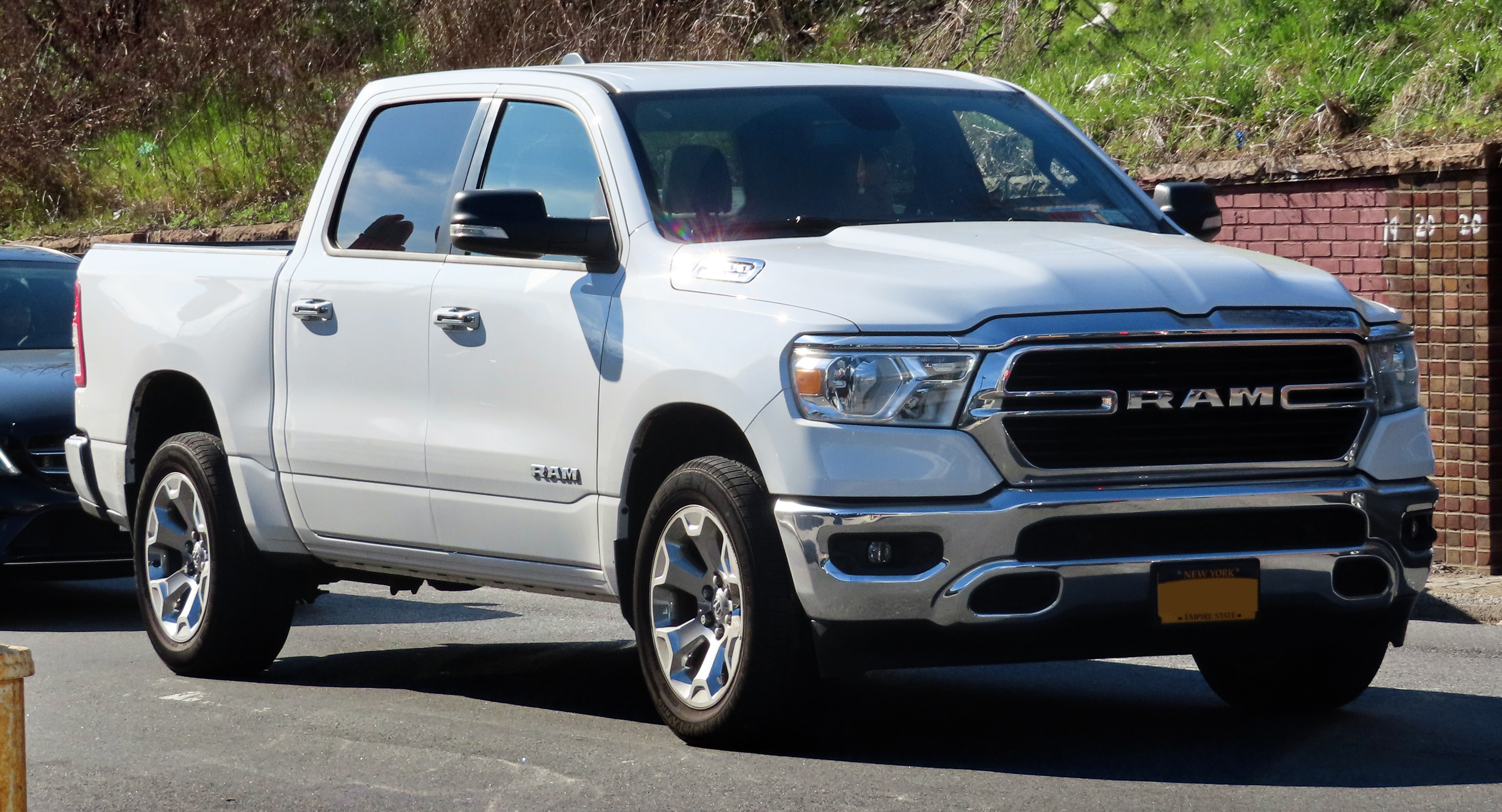
Ram 1500
"I mean, I was also a great ride, just like the Ram 1500. If you want something comfortable to drive in like a truck,"
The Ram 1500 is a full-size pickup truck. They mention it because it’s known for being comfortable to drive, similar to the F-150 hybrid they had.
The Ram 1500 is a full-size pickup from Stellantis’ Ram brand, often praised for ride comfort. In this segment, it’s used as a comparison point for how good the F-150 hybrid felt to drive—“just like the Ram 1500.”

Dodge Ram
"...l. I mean, I was also a great ride, just like the Ram 1500. If you want something comfortable to drive ..."
The Dodge Ram is a large pickup truck. It’s designed to carry things and tow when needed, but some versions are also made to feel comfortable to drive. The podcast mentions it in the context of how it rides.
The Dodge Ram (commonly the Ram 1500 in many discussions) is a full-size pickup truck focused on ride comfort and capability. It’s often brought up when someone wants a truck that feels good to drive, not just one built for hauling. In the podcast, it’s mentioned alongside comfort and driving feel.

Ford Ranchero
"My dad had a ranchero Ford ranchero. And I think back on like that was like a pretty much a body on frame."
The Ford Ranchero is an older Ford that blends a regular car with a pickup truck bed. It’s the kind of vehicle where you get the everyday car feel, but you can still haul things in a bed.
The Ford Ranchero is a classic American “car-based pickup” concept: it uses a passenger-car body style but adds a truck bed. In this segment, the host describes it as a body-on-frame setup with a single-cab layout and a metal tailgate, emphasizing its truck utility while keeping car-like proportions.
body on frame
"And I think back on like that was like a pretty much a body on frame. Yeah. Car with a bed, only one, you know, a single cab."
Body-on-frame means the car’s body is mounted on a separate heavy-duty frame underneath. That design is common on trucks because it can handle work and rough roads better.
Body-on-frame is a construction method where the vehicle’s body sits on a separate ladder-like frame. This usually makes trucks and truck-based cars tougher for hauling and rough use, because the frame carries most of the structural loads.
single cab
"Yeah. Yeah. Car with a bed, only one, you know, a single cab. It wasn't a, you know, had a hearse, tea, like tea handle."
A single cab means there’s only one front seating area (no extra back seats). It’s usually more focused on hauling and simpler interior space.
A single-cab (single cab) layout means the truck has one row of seats and no extended rear seating area. It typically prioritizes cargo space and a simpler, more work-focused interior packaging.
merge it with a truck
"So we're going to take a car and we're going to like get rid of the back seat and forget the truck. We're going to take a car and we're going to merge it with a truck."
This describes the design idea of combining a passenger car’s platform and layout with truck functions like a bed and utility. It’s essentially the “car-to-truck hybrid” philosophy behind vehicles like the Ranchero and other small truck-like offerings.
Chrysler Rampage
"And Chrysler put out their own kind of front wheel drive version called the Rampage. I don't know if you remember that. [1000.1s] I remember that."
The Chrysler Rampage was a small pickup-style car made by Chrysler. Because it drives the front wheels, loading the bed can change how well the front tires grip and how the truck feels to drive.
The Chrysler Rampage was a compact front-wheel-drive “small truck” built by Chrysler. It’s notable because it used a car-like layout (front engine, front-wheel drive) packaged with a pickup-style bed, which affects how traction and handling behave when the bed is loaded.

Dodge Omni
"...ll the other it was like it was like based on the Omni and the GLH and all that on the GLH. But but yeah..."
The Dodge Omni is a small compact car. The podcast mentions it along with other names that refer to different versions of the Omni. It’s included as part of a list of cars the speaker has referenced.
The Dodge Omni is a compact car that was offered in various trims and performance-oriented versions. It’s mentioned in the podcast alongside the Omni and GLH naming, which points to different variants within the same general model family. In that context, it’s being used as part of a list of cars and related performance history.

Volkswagen Rabbit truck
"But but yeah, so a front wheel drive, small truck, Volkswagen had a rabbit truck and what's kind of weird about that, the dynamics of."
Volkswagen made a small pickup-style vehicle based on the Rabbit. Since it’s front-wheel drive, putting weight in the bed can make the front tires grip less and affect how it drives.
The Volkswagen Rabbit truck reference points to Volkswagen’s compact, car-based pickup concept. Like other front-wheel-drive small trucks, the key engineering idea is that the front wheels both steer and drive, so adding weight in the bed can reduce front traction and change handling balance.
front wheel drive
"So it's it's front wheel drive, front engine, obviously. And then you put weight in the bed."
Front-wheel drive means the front tires both steer and push the car forward. If you put heavy stuff in the bed, the front tires can lose some grip, which changes how the vehicle feels.
Front-wheel drive (FWD) means the engine’s power goes to the front wheels, which handle both steering and propulsion. In a small truck with a bed, that matters because loading the bed can shift weight and traction away from the front tires that are doing the work.
traction
"Yeah. So so so you're actually taking traction away from from the front end of the car. So now it's a hot water vehicle."
Traction is how well the tires can grip the road. If the setup causes the front tires to grip less, the truck can feel less stable and less able to accelerate without slipping.
Traction is the grip between the tires and the road that determines how much acceleration, braking, and steering the car can do without slipping. The hosts are pointing out that adding weight to the bed can reduce traction at the front wheels, which are responsible for steering and driving in a front-wheel-drive truck.
turbocharged
"And certainly if it's turbocharged, better. Oh, yeah, like, yeah, I'm a thing."
Turbocharged engines use a device that compresses air before it goes into the engine. That usually helps the car feel quicker and more responsive.
Turbocharged means the engine uses a turbocharger to force more air into the cylinders, which can improve power and acceleration compared with a naturally aspirated setup. The host implies that if the Santa Cruz is turbocharged, it would feel better and be more desirable.
dealer lots
"just a smoking deal on one right now on the on the dealer lots, because they're I mean, I don't think it hurts."
Dealer lots are the inventory areas where new cars are stored and displayed before being sold to customers. The hosts suggest Hyundai may be offering incentives to move these vehicles quickly.
incentives
"They probably want to move these things. They probably have some incentives from Hyundai to get them off the lots as well."
Incentives are discounts or special financing offers that make a car cost less than the sticker price. The host is saying Hyundai may be using incentives to get these trucks sold.
Incentives are manufacturer or dealer-backed financial offers—like rebates, special financing, or lease deals—that reduce the effective price of a vehicle. Here, the host suggests Hyundai incentives help clear inventory.
cross shop
"So you can kind of cross shop that and compare it with any of the other small trucks or SUVs that buyers might want to buy."
Cross-shopping is when you look at a few different cars and compare them before you buy. The host is saying you can use their ratings to compare the Santa Cruz with other similar vehicles.
Cross-shopping means comparing multiple vehicles side-by-side to see which best fits your needs and budget. The hosts recommend using their ratings to compare the Santa Cruz against other small trucks or SUVs.
used cars
"They will be out there as used cars. Yeah, exactly. And we'll be able to track the reliability and all those kinds of things."
Used cars are vehicles sold after their original purchase, typically after the first owner. The hosts are emphasizing that even if a model is discontinued, it can still be evaluated over time through ownership experience and reliability tracking.
reliability
"And we'll be able to track the reliability and all those kinds of things. But second owner, third owner can still use all of our hard work"
Reliability means how likely a car is to avoid annoying breakdowns and big repair problems. The hosts are saying later owners can benefit from what’s learned about the car over time.
Reliability refers to how consistently a vehicle operates without unexpected failures or major problems. In the segment, it’s used to describe what can be learned as the car moves from first owner to later owners.
fuel economy testing
"But second owner, third owner can still use all of our hard work that we put in for this car that was canceled and kind of from a tester's point of view, I was out there sweating, doing fuel economy testing."
Fuel economy testing is how testers measure how much gas a car uses. It helps you estimate what kind of mileage you might realistically get.
Fuel economy testing is the process of measuring how efficiently a vehicle uses fuel under controlled conditions. The point is to generate comparable numbers that can be used to evaluate real-world expectations and compare vehicles.
small bed
"I noticed your score dings them on the small bed. You shouldn't do that because people that buy this car are fully aware of the small bed and like me, purchase the truck because we don't need an average sized bed..."
A “small bed” means the truck bed is shorter and holds less stuff. The point is that some people buy this kind of truck because they don’t need a big bed every day.
A “small bed” refers to the pickup’s cargo-box length and capacity. For vehicles like the Hyundai Santa Cruz, the bed is intentionally compact, so the trade-off is less hauling space in exchange for easier everyday use.

Nissan Maxima
"...Arigo Limited, 1985 Chrysler Minivan, 1995 Nissan Maxima, 2002 Toyota RAV4, 2008 Toyota RAV4, 2006 Toyota ..."
The Nissan Maxima is a midsize sedan, meaning it’s a regular passenger car with room for families. It’s generally positioned to feel more sporty than a basic commuter sedan. The podcast mentions it while listing different cars and years.
The Nissan Maxima is a midsize sedan known for offering a more performance-oriented driving experience than many typical family sedans. It’s often discussed because it has a long model history and has been offered with different powertrains over the years. In the podcast, it appears in a list of vehicles and model years, tying it to the speaker’s ownership or comparison theme.

Toyota RAV4
"Purchases have included 1976 Toyota Celica, 1979 Buick-Arigo Limited, 1985 Chrysler Minivan, 1995 Nissan Maxima, 2002 Toyota RAV4, 2008 Toyota RAV4,"
The Toyota RAV4 is a popular compact SUV that many people use as a regular daily vehicle. Here it’s just one of the cars the listener says they’ve owned before the Santa Cruz.
The Toyota RAV4 is a compact SUV known for being practical and widely used as a daily driver. In this segment, it’s mentioned as part of a long list of vehicles the listener has owned, showing how the Santa Cruz fits into their buying history.
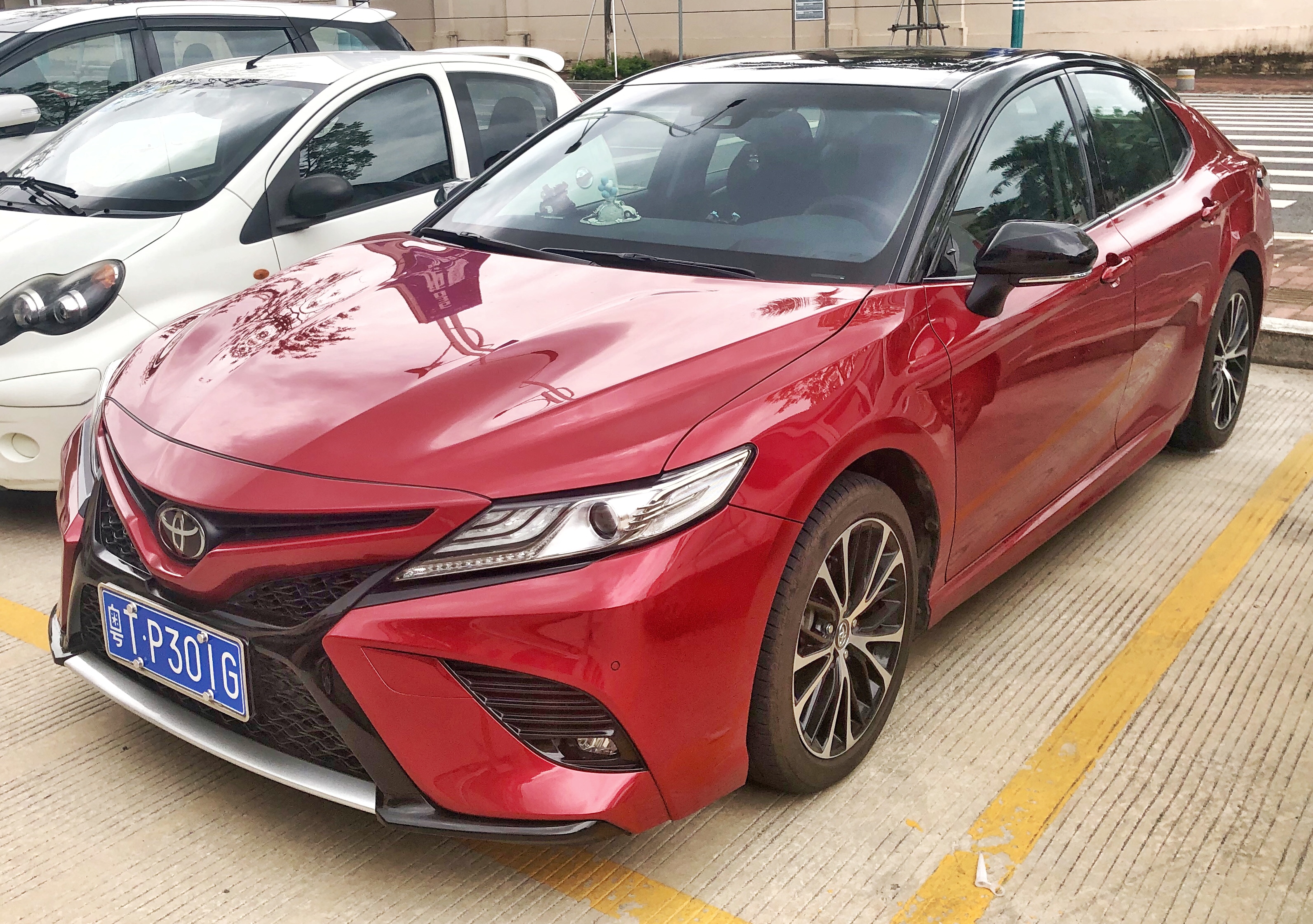
Toyota Camry
"..., 2002 Toyota RAV4, 2008 Toyota RAV4, 2006 Toyota Camry Hybrid, 2021 Mazda CX-5 Turbo and now the 2025 Hy..."
The Toyota Camry is a regular passenger car (a sedan) meant for daily driving. It’s known for being comfortable and practical, and some versions are hybrids. The podcast mentions it while listing different cars and model years.
The Toyota Camry is a midsize sedan known for being practical, comfortable, and widely used as a family car. It’s frequently discussed because it spans many model years and powertrain options, including hybrid versions. In the podcast, multiple Camry-related years are referenced, highlighting its long-running presence.

Mazda Cx5
"1985 Chrysler Minivan, 1995 Nissan Maxima, 2002 Toyota RAV4, 2008 Toyota RAV4, 2006 Toyota Camry Hybrid, 2021 Mazda CX-5 Turbo and now the 2025 Hyundai Santa Cruz Limited."
The Mazda CX-5 is a compact SUV that’s meant for daily driving. It gives you more space than a sedan and sits higher off the ground. The podcast brings it up while talking about different cars they’ve owned or considered.
The Mazda CX-5 is a compact crossover SUV known for a driver-focused feel and practical everyday size. It’s frequently discussed because it offers a good balance of comfort, usability, and available powertrains, including turbo options in some years. In the podcast, it’s referenced as part of a list of vehicles and model years.
bed size
"Mike, I'm going to ask you, Ernie brought up this bed size thing... Well, bed size does have a factor. A larger bed will score better."
Bed size is how big the open cargo box is on the back of a pickup. Bigger beds usually let you carry more, which is why it affects how trucks are rated.
Bed size is the usable cargo area length/volume in a pickup truck’s cargo bed. It matters because it determines how much you can haul—so larger beds typically score better in a truck rating system.

Jeep Wrangler
"But it's kind of like, well, we we we talk about I know I'm I'm I'm I'm going off in a different lane here, but like the Jeep Wrangler is as a vehicle that's ton that has a ton of character... But we would be remiss by saying the ride is pretty bad. It's stiff. It's noisy."
The Jeep Wrangler is a popular off-road SUV with a very distinct personality. They’re using it as an example that some cars feel rougher to ride in—like being stiff and noisy—even if people love them.
The Jeep Wrangler is a rugged off-road SUV known for its distinctive character and strong enthusiast following. The hosts mention it to illustrate a tradeoff: even when a vehicle has “character,” its ride can still be stiff and noisy.
ride
"But we would be remiss by saying the ride is pretty bad. It's stiff. It's noisy."
In car talk, “ride” means how smooth or rough the car feels when you drive over bumps. If it’s “stiff” and “noisy,” it usually feels less comfortable.
In car reviews, “ride” refers to how the suspension and chassis feel over bumps and uneven roads. When the hosts say the ride is “stiff” and “noisy,” they’re describing a less comfortable, more harsh driving experience.
cargo capacity
"when you're talking about all the vehicles we helped you buy, but but not everyone knows everything that in cargo capacity of all vehicles is something that we test, right?"
Cargo capacity just means how much stuff a vehicle can hold. Here they’re talking about measuring it so shoppers know what to expect.
Cargo capacity is the amount of usable space a vehicle provides for carrying items. In this segment, the hosts discuss testing cargo capacity across vehicles so they can report how much room you really get.
expandable pipe frame box
"We went every SUV. We do this expandable pipe frame box where we measured the volume."
An expandable pipe frame box is a measurement fixture used to determine how much volume fits in a vehicle’s cargo area. By using a standardized box shape and expanding it to the available space, they can calculate cargo volume more consistently than eyeballing it.
cubic feet
"So you got some numbers here for me. So the Santa Cruz has fifteen point nine cubic feet of room in it. The next competitor, the close competitor, the Maverick has 26 point one."
Cubic feet is a way to measure volume—how much space something takes up. They’re using it to compare how much room the truck beds have for carrying items.
Cubic feet is a unit of volume used to quantify how much space is in a cargo area. The hosts use it to compare bed/cargo space between the Santa Cruz (15.9 cubic feet) and the Maverick (26.1 cubic feet).
compromises
"I think one of the things that we're always trying to emphasize here at Consumer Reports is that every vehicle has compromises. I mean, everyone, you have to give up something to get something and whatnot."
A “compromise” here means the truck can’t be perfect at everything. If it’s easier to drive and park, it often means you give up something else—like how much space you have in the bed.
In vehicle reviews, “compromises” refers to the tradeoffs designers make so a vehicle can excel at one thing while giving up something else. The hosts frame the Santa Cruz as trading away bed size in exchange for easier maneuverability and parking.
hard tonneau cover
"Santa Cruz has a tonneau cover, like a hard tonneau cover, which is great because you can put stuff in it. It keeps out of the weather. It keeps it secure."
A hard tonneau cover is a solid cover that goes over the bed of a pickup. It helps keep items dry and secure, but when it opens it can take up some space in the bed area.
A hard tonneau cover is a rigid panel system that covers the pickup bed to protect cargo from weather and theft. In this segment, the hosts note it’s retractable and that it still reduces usable bed length when fully retracted.
soft tonneau cover
"like a soft one or a hard tonneau cover that lifts up with a set of hinges and struts and things like that."
A soft tonneau cover is the flexible, fabric-style cover over the truck bed. It’s usually easier to move around than a hard cover, but it may not be as sturdy.
A soft tonneau cover is made from flexible materials (often fabric or vinyl) and typically rolls or folds. Compared with hard covers, it’s usually lighter and easier to open, but it may be less rigid.
cargo tie-down
"It also has a unique system in it for kind of tying down cargo. And it came with like some crossbars."
Cargo tie-downs are the parts you use to strap cargo down in the truck bed. They help keep things from sliding around while you drive.
A cargo tie-down system is the set of hardware used to secure items in a truck bed so they don’t shift during driving. It commonly uses rails, tie-down points, and adjustable fasteners.
crossbars
"And it came with like some crossbars. We took those out for when we do cargo testing."
Crossbars are bars that run across the truck bed system. They can be used as mounting points so you can attach or secure cargo more easily.
Crossbars are the transverse bars mounted across a truck bed system (often as part of a cargo management setup). They provide attachment points for accessories and can help secure items depending on the design.
cargo testing
"We took those out for when we do cargo testing. We don't want them knocking around in the back while Ryan's out there doing track handling and things."
Cargo testing is when the truck bed is loaded up to see how well it holds cargo. The goal is to check for rattling or shifting while driving.
Cargo testing is an evaluation method where reviewers load the truck bed with items and assess how well the bed accessories and tie-down points keep cargo stable. It’s used to reveal rattles, movement, and fitment issues under real driving conditions.
threaded inserts
"But there's a rail back there that has these threaded inserts. You can make all these adjustments and have you heard driving around?"
Threaded inserts are built-in metal threads in the truck’s cargo rail. They let you screw in tie-down pieces or knobs so you can secure cargo and adjust where the hardware sits.
Threaded inserts are metal fittings embedded in a rail or mounting track that accept bolts or knobs. They let you attach cargo tie-down hardware and adjust the position without drilling new holes.

76 Celica
"All right. So Mike, what yours? Oh, it's it's it's the 76 Celica. Absolutely."
They’re talking about a 1976 Toyota Celica. It’s a sporty older Toyota, and in this case it was paired with a manual transmission, which makes it more fun to drive.
The Toyota Celica is a classic Japanese coupe known for being sporty and driver-focused, especially in the 1970s. Mentioning “76 Celica” and a “five speed manual” highlights the era’s emphasis on engaging manual transmissions.
five speed manual
"It was still a real drive. It had a five speed manual back in the 70s. There were a lot of four speeds."
A five-speed manual is a car where you shift gears yourself with a clutch pedal. “Five speed” means there are five forward gear choices to help the engine run well.
A five-speed manual transmission is a gearbox where the driver selects gears using a clutch and shift lever, with five forward ratios. In older cars, having more gears often helps keep the engine in its power band and can improve highway drivability.

1979 Buick Regal
"Well, clearly the 1979 Buick Regal. I could just see him driving it right now. The G bodies are fantastic."
The 1979 Buick Regal is an older American car from the late 1970s. The host is praising it as tough and stylish—basically a big, solid cruiser.
The 1979 Buick Regal is a late-1970s American personal-luxury coupe/sedan that’s part of the “G-body” era. It’s remembered as a durable, comfortable “workhorse” platform with a big, tank-like feel.
G bodies
"I could just see him driving it right now. The G bodies are fantastic. Workhorses, tanks and stylish as well, I think."
“G bodies” is a nickname for a group of older GM cars that share the same basic platform. The host is saying those cars are great because they’re solid and well-built.
“G bodies” refers to a specific GM vehicle platform family used in the 1970s–1980s, including cars like the Buick Regal. Enthusiasts use it as shorthand for the shared chassis/architecture and the era’s styling and proportions.
G body
"Now, the G body, that was also if I get this right, like the Olds and Beals Cutlass, Cutlass, Monte Carlo, and the Cutlass at one time was the biggest selling car."
“G body” is a name for a specific GM car platform used in certain years. Enthusiasts use it to group cars that share the same basic underpinnings, like the Cutlass and Monte Carlo.
“G body” refers to General Motors’ mid-size car platform used in the 1970s and 1980s. It’s a chassis/architecture family that includes models like the Oldsmobile Cutlass, Chevrolet Monte Carlo, and the Buick Regal, and it’s often discussed as a group by enthusiasts.

1977 Cutlass
"So 1977, the Cutlass was the best selling car in America. I actually owned a 77 Cutlass, which is why I know that useless fact."
This is a 1977 Oldsmobile Cutlass, a classic GM car from the late 1970s. The host mentions it because it was extremely popular and they even owned one.
The Oldsmobile Cutlass (here, the 1977 model) is a classic “G body” GM car from the late-1970s era. It’s brought up because the speaker claims it was the best-selling car in America at the time and notes personal ownership.
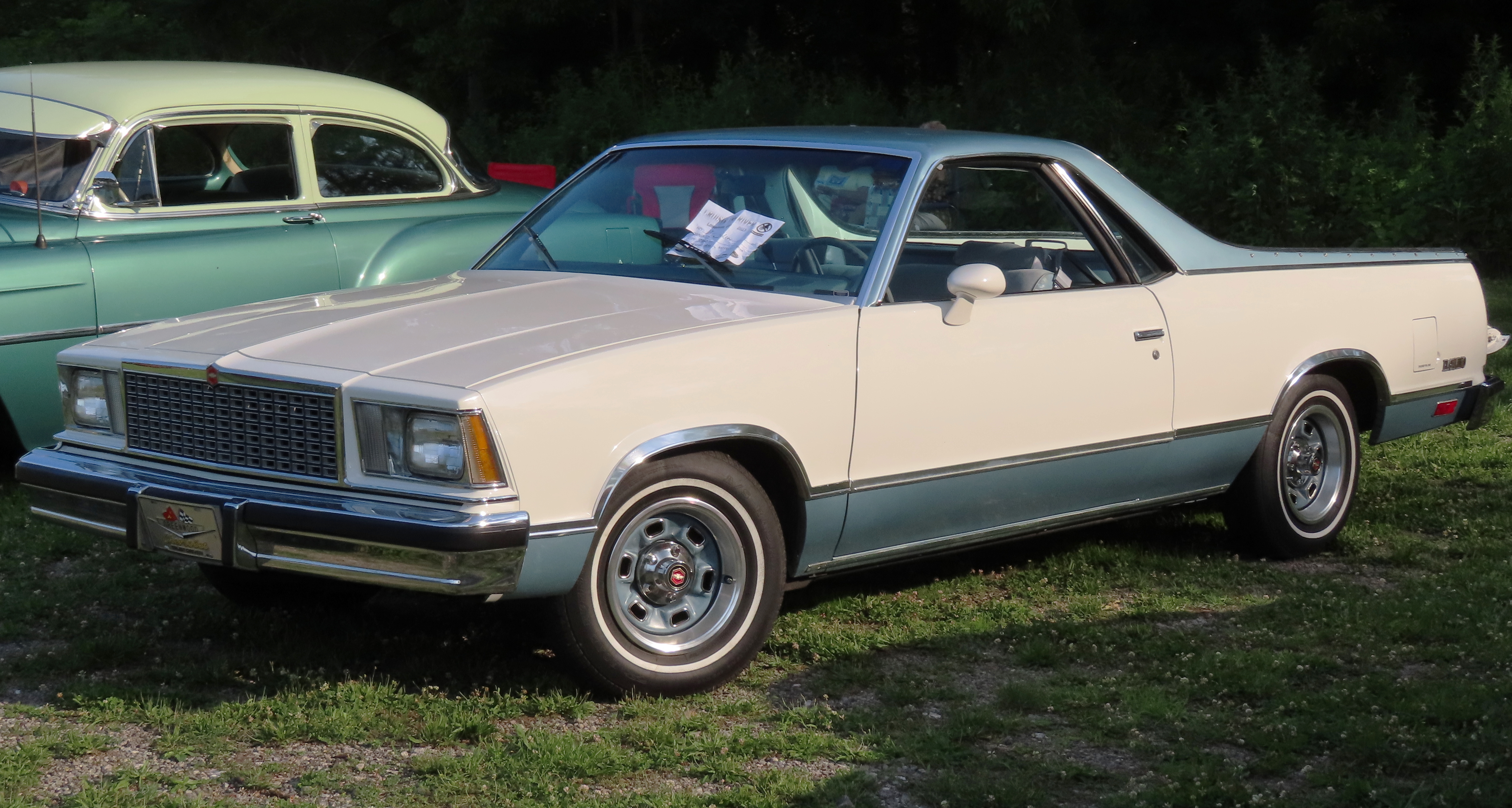
El Camino
"And we're back to El Camino's. I was so happy when Ryan brought up the El Camino earlier. I'm like, I know where I can. I can take this car out."
The El Camino is a classic Chevrolet that’s basically a car with a small pickup bed. They bring it up because it shares the same GM platform group (“G body”) as other popular cars from that era.
The Chevrolet El Camino is a classic GM “car-based pickup” that shares the same “G body” platform family as cars like the Cutlass and Regal. It’s mentioned here because the hosts are comparing which models fall under the G-body umbrella and how similar they are.
fleet
"because it just exited the testing program now, which is kind of in the fleet. So we're going to put our families in them and use them and things like that."
Here, “fleet” just means a set of cars that an organization keeps and uses for testing. They’re not customer cars—they’re vehicles the group runs through its program.
In this context, “fleet” means a group of vehicles used for testing and evaluation rather than personal ownership. The speaker says their test vehicles have exited the testing program and will be used by families.
Consumer Reports Test Track
"And if history is any indication, everyone that works here at Consumer Reports, Test Track, we use trucks all the time."
This is Consumer Reports’ vehicle testing setup. They’re saying that in their testing work, they use trucks a lot, so their experience shapes what they recommend.
This refers to Consumer Reports’ testing facility/program, where they evaluate vehicles under controlled conditions. The hosts mention it to explain how their organization uses trucks and how that influences their vehicle choices.
Request an Explanation
Heard something you'd like explained? We'll add it to this episode.
Sign in to request explanations for terms you heard.
Want to learn more?
Browse our glossary for plain-English explanations of automotive terms, jargon, and concepts.
Help improve this episode
See something that's not quite right? Our annotations are AI-generated and can sometimes miss the mark. Click the flag icon on any annotation to suggest a correction.