
Get a Job As a CR Tester, Rivian vs. Lucid, Unfair Minivan Bias
About this episode
A listener needs cargo space for two big subwoofers, so the hosts use a database metric—MIRP—to find the Toyota Grand Highlander. They debate why minivans (and even SUV-like MPVs) can be the smarter everyday compromise than cargo vans, then pivot to EVs: Rivian vs. Lucid, with reliability and owner satisfaction, plus Lucid’s minivan-like Gravity. The show also covers how to get into vehicle testing, EV charging habits, and why V2X communication faded.
Consumer Reports experts discuss the financial viability of EV startups like Rivian and Lucid, share EV charging best practices, give advice for hauling large audio equipment, the future of the minivan, vehicle-to-vehicle communication. We also discuss what it takes to become a Consumer Reports vehicle tester, and compare the real-world costs of driving EVs vs. hybrids and gas-powered vehicles.
Have a question for a future episode? Send us your questions or a 30-second video to [email protected]
SHOW NOTES:
0:00 - Intro
0:37 - Question #1: What's the best vehicle for hauling DJ equipment (no minivans please)?
5:17 - Question #2: Are we likely to see automakers produce more minivans like the Kia Carnival?
8:13- Question #3: Why does Rivian seem more financially successful than Lucid? What should you study to become a CR Tester?
13:34 - Question #4: What are the best practices for charging an EV?
15:31 - Question #5: Is it possible to calculate the cost-per-mile of an EV vs. a gas-powered vehicle?
18:13 - Question #6: What happened to vehicle-to-vehicle (V2V) and vehicle-to-infrastructure (V2X) technology that was being developed by the federal government?
LINKS:
Will an Electric Car Save You Money?: https://www.consumerreports.org/cars/hybrids-evs/will-an-electric-car-save-you-money-a9436870083/?EXTKEY=YSOCIAL_YT
Test Results: Toyota Grand Highlander: https://www.consumerreports.org/cars/toyota/grand-highlander/?EXTKEY=YSOCIAL_YT
Test Results: Kia Carnival: https://www.consumerreports.org/cars/kia/carnival/?EXTKEY=YSOCIAL_YT
10 SUVs and Minivans With the Most Usable Cargo Space: https://www.consumerreports.org/cars/top-10-suvs-and-minivans-with-the-most-cargo-space-a6572456101/?EXTKEY=YSOCIAL_YT
Owner Satisfaction: Best & Worst Car Brands: https://www.consumerreports.org/cars/car-reliability-owner-satisfaction/most-and-least-liked-car-brands-a1291429338/top-10-suvs-and-minivans-with-the-most-cargo-space-a6572456101/?EXTKEY=YSOCIAL_YT
CR Survey: Hybrids Are Still The Most Reliable Cars: https://www.consumerreports.org/cars/car-reliability-owner-satisfaction/electric-vehicles-are-less-reliable-than-conventional-cars-a1047214174/?EXTKEY=YSOCIAL_YT

Chevrolet Equinox
"We've got a 2012 Equinox. It's not wide enough. We have a 2023 Sportage."
The Chevrolet Equinox is a common everyday SUV. Here, it’s mentioned because its back cargo area isn’t wide enough for the two speakers the caller needs to carry together.
The Chevrolet Equinox is a compact SUV that’s often chosen for everyday practicality. In this segment, the host is using it as a baseline example of an SUV whose cargo width isn’t wide enough to fit two subwoofers side-by-side at the rear.

Kia Sportage
"We have a 2023 Sportage. And for some strange reason, the rear seats don't fold down to become flush with the cargo floor."
The Kia Sportage is a popular compact SUV. In this case, the problem is that the back seats don’t fold down to make a perfectly flat cargo area, which matters for fitting large gear.
The Kia Sportage is a compact SUV known for being easy to live with and relatively flexible for cargo. The caller says the rear seats in a 2023 Sportage don’t fold down to create a flat, flush cargo floor—so bulky items can’t sit as intended.
cargo floor
"And for some strange reason, the rear seats don't fold down to become flush with the cargo floor. I'd be willing to look at a small cargo van."
The cargo floor is the flat platform in the back where you put stuff. If the seats don’t fold down so it’s all level, bulky items can’t sit as easily or may not fit the way you want.
The cargo floor is the flat surface in the rear of a vehicle where luggage or equipment sits. When seats don’t fold down flush with the cargo floor, you can end up with steps or gaps that make it harder to slide in large, flat-bottomed items.
MIRP
"So I wrote a query against the database where we measure MIRP, which is basically the cargo space in a vehicle. That's like how one big box will fit, right?"
MIRP is a measurement the host uses to estimate cargo-space usefulness by focusing on the largest single item that can fit in the vehicle. In other words, it’s a practical “can this big box fit?” metric rather than just total volume.

Ford Expedition
"...it is mostly mini vans and large SUVs such as the Expedition, the Kia Carnival. One interesting one that does ..."
The Ford Expedition is a large SUV designed to carry more people and cargo than smaller cars. It’s often used by families or anyone who needs extra space. The podcast brings it up as an example of a big, practical vehicle.
The Ford Expedition is a full-size, body-on-frame SUV built for families and people who need lots of interior and cargo space. It’s commonly discussed as a large-SUV option when the conversation turns to roomy vehicles like minivans and other large family haulers. In the podcast, it’s mentioned as part of that larger category of vehicles.

Grand Highlander
"One interesting one that does fit the space requirement here is the Grand Highlander. So that's not a bad choice because you know, pretty everyday, good to drive"
The Toyota Grand Highlander is a bigger Toyota SUV with more room in the back. The hosts think it could work because its cargo area dimensions line up with the speaker setup the caller needs.
The Toyota Grand Highlander is a larger three-row SUV built to carry more people and more cargo than a typical compact SUV. It’s singled out here because it matches the caller’s specific cargo dimensions (width and height) for fitting two subwoofers side-by-side at the rear.

Sienna
"they're still nice to drive, like a Sienna or an Odyssey are all great to drive."
The Toyota Sienna is a minivan. The point here is that it drives nicely for a van, not like a work truck.
The Toyota Sienna is a minivan known for being comfortable and easy to drive compared with many cargo-focused vans. Here it’s used as an example of a minivan that still feels pleasant behind the wheel while offering practical family space.

Odyssey
"they're still nice to drive, like a Sienna or an Odyssey are all great to drive."
The Honda Odyssey is a minivan. The hosts are saying it’s still enjoyable to drive, unlike cargo vans that feel more like work vehicles.
The Honda Odyssey is a minivan that’s typically praised for ride comfort and everyday drivability. In this segment, it’s grouped with the Sienna as a minivan that’s “nice to drive,” especially compared with cargo vans.
gas mileage
"Oh, yeah, you're going to lose the driving experience like terrible gas mileage. So actually, I owned a cargo van..."
Gas mileage means how far the vehicle can go on a gallon of gas. The host is saying cargo vans often get much worse gas mileage than minivans, especially when you’re carrying a lot of stuff.
Gas mileage is a measure of how efficiently a vehicle uses fuel, usually expressed as miles per gallon (MPG). The host contrasts minivans/SUVs with cargo vans, saying cargo vans can be much worse in real-world driving, especially when loaded.

Mini Cooler Mini
"...king mini vans, you go back to like, what was the cooler mini vans of our generation or, and I remember there w..."

1999 Dodge caravan
"I was thinking of like just thinking mini vans, you go back to like, what was the cooler mini vans of our generation or, and I remember there was a 1999 Dodge caravan on a T concept that came out has some,"
The 1999 Dodge Caravan is an older minivan model. The host is using it as a memory of what minivans from their time looked like and why they can be more fun and useful than people think.
The 1999 Dodge Caravan is a late-1990s minivan that represents the “cooler minivans” era the host is reminiscing about. It’s mentioned as an example of a minivan from their generation, tying into the discussion about why minivans can be more versatile than people assume.

Kia Carnival
"passed what appeared to be the newest Kia Carnival. I had to convince my fiance that the arguably decent looking car was in fact a minivan."
The Kia Carnival is a minivan, but it’s designed to look more like an SUV. The hosts are basically saying it’s a minivan that doesn’t look “minivan-ish,” which could make more people actually want one.
The Kia Carnival is a modern minivan that’s styled to look more like an SUV, which is why the hosts keep calling out how “good looking” it appears compared with traditional minivans. In this segment, it’s used as an example of automakers trying to make minivans more appealing to people who might otherwise avoid them.
minivan
"My question for you is this, are we likely to see other auto manufacturers follow Kia's lead and finally make a good looking minivan?"
A minivan is a family vehicle designed to carry lots of people comfortably. It’s usually practical, with space for passengers and luggage.
A minivan is a family-focused vehicle built around sliding doors and a roomy, flexible interior for passengers and cargo. The hosts discuss minivans as “versatile” and practical, especially for carrying people and bulky items.
MPV
"she's like, this actually looks good. I was like, oh, you got a minivan. Nice. And she's like, no, actually, it's an MPV. It's closer to an SUV."
MPV stands for “multi-purpose vehicle,” a label often used for vehicles that blend minivan practicality with SUV-like styling. In the segment, the host uses MPV to explain why the Kia Carnival can look like an SUV even though it’s fundamentally a minivan-type vehicle.

Challenger Hellcat
"...ther concepts, renderings, you would see like the Hellcat version of that. That would be awesome. You'd see..."
The Challenger is a two-door car built for performance, with a focus on strong acceleration. People often talk about different high-performance versions of it. The podcast mentions it in the context of what a “Hellcat” style version could look like in concept form.
The Dodge Challenger is a performance-focused muscle car known for its powerful engines and classic two-door styling. It often appears in conversations about concept cars and future variants because enthusiasts like to imagine different performance trims. In the podcast, the Challenger is referenced through the idea of seeing a Hellcat version concept.

Chrysler Pacifica
"Wasn't there that Pacifica? So yeah, Chrysler had a lifted Pacifica. I think they called it the Grizzly, but it was on all terrain tires, and I think it had some racks and maybe like a ladder on the side or the back"
The Chrysler Pacifica is a family minivan. The host is talking about a special lifted version that looks more off-road, with tougher tires and extra gear on the outside. It’s basically a minivan turned into something that looks like an adventure vehicle.
The Chrysler Pacifica is a minivan known for family-focused practicality. In this segment, the host mentions a lifted, off-road-styled Pacifica concept (the “Grizzly”) that’s meant to look rugged with all-terrain tires and added exterior gear. It’s an example of how minivans can be re-skinned for adventure use.
all terrain tires
"So yeah, Chrysler had a lifted Pacifica. I think they called it the Grizzly, but it was on all terrain tires, and I think it had some racks"
All-terrain tires are tires made to work on both regular roads and rougher surfaces. They usually have a tougher tread pattern for better grip when the road isn’t perfect. They’re common on trucks and off-road-style vehicles.
All-terrain tires are designed to handle a mix of pavement and rough surfaces like dirt, gravel, and light trails. They typically have more aggressive tread patterns than highway tires, which can improve traction off-road but may feel louder or less efficient on-road. The host uses them to describe the lifted Pacifica’s off-road look and intent.
Hellcat motor
"All the renderings I see, it's usually larger, cool looking wheels with, you know, some body kit on there, but put a Hellcat motor in it."
“Hellcat” is a nickname for a very powerful Dodge engine. The host is basically saying it would be cool to put that kind of performance into a minivan. It’s a fun way to talk about making a family vehicle feel fast.
“Hellcat” refers to Dodge’s high-output supercharged V8 engine family (commonly associated with the Charger/Challenger Hellcat). The host is joking about putting that kind of big power into a minivan to make it more exciting. It’s a shorthand for “serious performance,” not a literal minivan powertrain suggestion.
Lucid
"Recently, I heard that Lucid is losing a lot of money. What marks the difference between the upstarts of Rivian and Lucid?"
Lucid is an electric car company. The question here is about why Lucid seems to be struggling financially compared to another EV startup. It’s less about the car’s features and more about the business side of making EVs.
Lucid is an electric-vehicle brand known for high-end EVs and long-range efficiency. In this segment, the listener asks why Lucid is “not prospering” compared with Rivian, framing it as a money-losing startup challenge. That sets up a discussion about EV business realities beyond just product specs.
Rivian
"What marks the difference between the upstarts of Rivian and Lucid? They both have cool cars, impressive range and unique features."
Rivian is an electric car company that makes EVs aimed at outdoor/adventure use. The listener is asking why Rivian seems to be doing better than Lucid financially. It’s a business-and-strategy question tied to EV products.
Rivian is an electric-vehicle brand best known for its adventure-oriented EVs like the R1T pickup and R1S SUV. The listener contrasts Rivian’s apparent success with Lucid’s struggles, despite both having “cool cars” and strong range. This primes a comparison of how EV startups execute on product, scale, and finances.
CR vehicle tester
"Also, what career should I pursue if I want to be a CR vehicle tester? So first, let's take the Lucid Rivian thing."
A “vehicle tester” is someone whose job is to evaluate cars. They drive them and check how well everything works—like comfort, safety, and performance. The question is basically: what job path should you follow to get into that kind of testing work?
A “CR vehicle tester” likely refers to a career path in vehicle testing, where people evaluate how cars behave, how systems perform, and how safe/reliable they are under real-world conditions. In automotive contexts, testing roles can include instrumented driving, durability evaluation, and validating features against requirements. The host is setting up career guidance for someone interested in that kind of work.
owner satisfaction
"But back to Rivian, their reliability, not great. Owner satisfaction, very good. Lucid reliability also not great."
Owner satisfaction is basically how pleased owners are with their cars after living with them. The hosts are saying Rivian and Lucid may not be very reliable, but owners still tend to like them.
Owner satisfaction is a measure of how happy drivers are with their vehicle after purchase, often reflecting day-to-day experience beyond raw reliability. In this segment, the hosts contrast “not great” reliability with “very good” owner satisfaction for Rivian (and similarly discuss Lucid).
financials
"But in terms of their financials, neither company is printing money per say. Like Rivian's, I don't know that Rivian has been profitable yet."
“Financials” means how the company is doing financially—whether it’s making money or losing it. The hosts are saying both companies are struggling and that Rivian’s future sales plans matter a lot.
“Financials” here means the companies’ money situation—profitability, cash flow, and whether they’re funding growth. The hosts argue neither company is “printing money,” and frame Rivian’s funding as influenced by Amazon commercial van business and upcoming model demand.
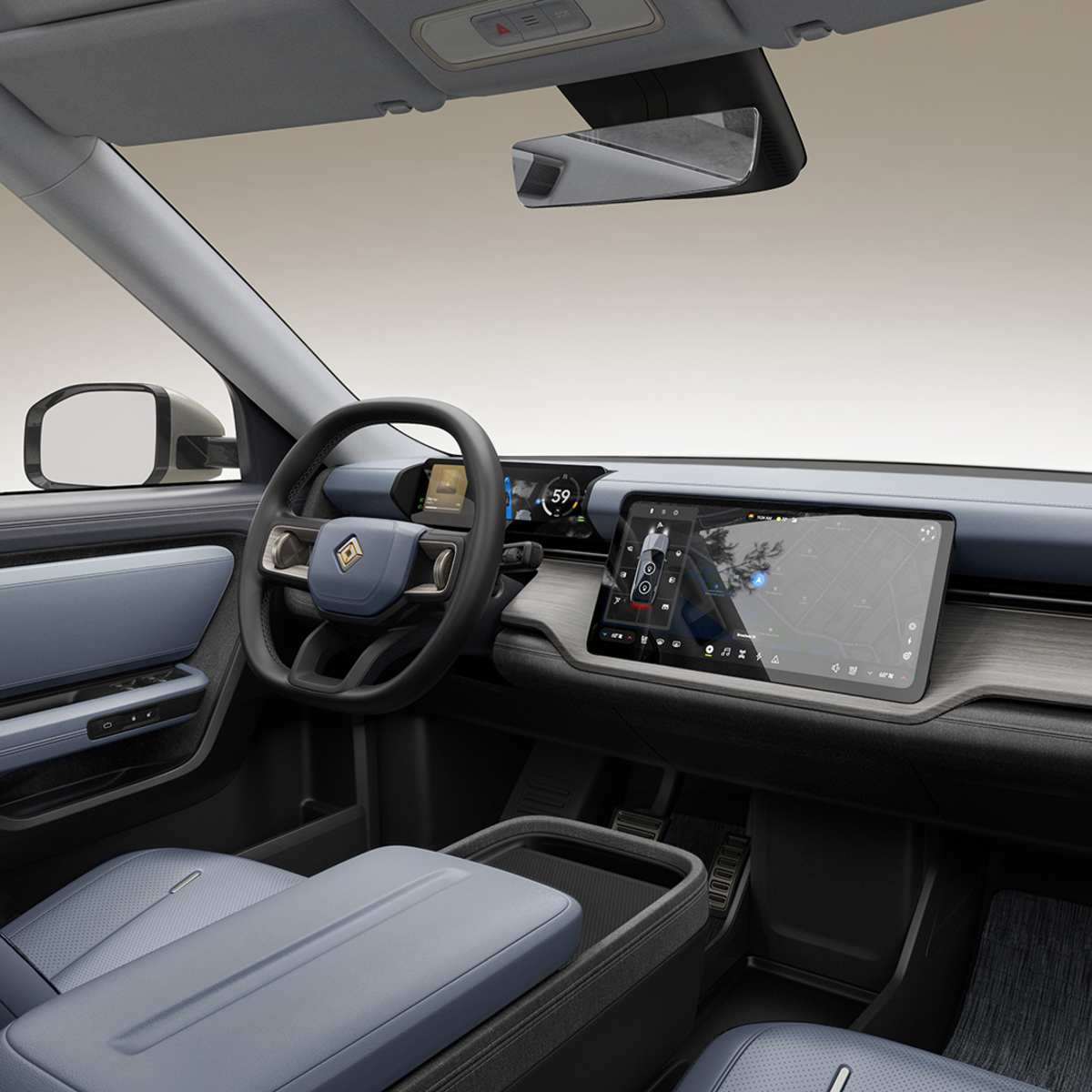
Rivian R2
"...commercial versus just retail. Then they have the R2 coming. And I think, I mean, I don't know persona..."
The Rivian R2 is an upcoming electric vehicle from Rivian. It’s meant to be positioned for everyday buyers, and the podcast also talks about how Rivian is considering different types of customers. The R2 is mentioned as the next model they’re bringing out.
The Rivian R2 is a smaller, more affordable-to-enter electric vehicle that Rivian has planned as part of its lineup expansion. It’s discussed in the context of how Rivian is thinking about different market segments—commercial use versus retail buyers. The podcast specifically references the R2 as the next model coming.
off-road
"But we know they've got the off-road thing going with them, whether people use it or not. But we know people like it, right?"
“Off-road” means the car is designed to handle rough roads or dirt trails better than a typical street car. The hosts are saying Rivian leans into that image and it shows up in the trims they tested.
“Off-road” refers to vehicle capability for unpaved or rough terrain, where traction and suspension travel matter more than on-road comfort. The hosts mention Rivian’s “off-road thing,” and connect it to why people like the look and function of certain trims.
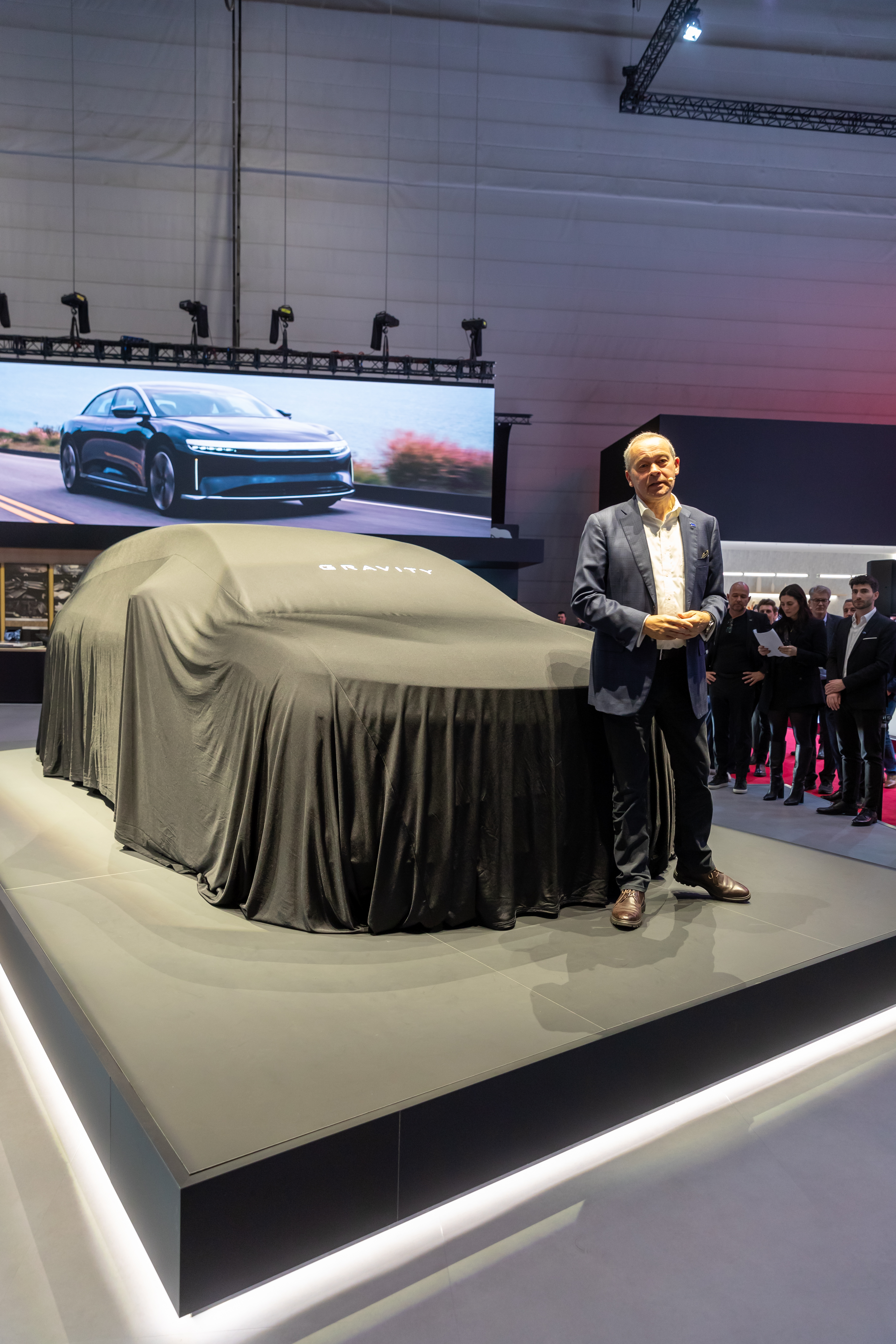
Lucid Gravity
"I hate to bring it back to minivans, but the Lucid Gravity is kind of a minivan. All it needs is a sliding door and it's pretty much a minivan."
Lucid Gravity is Lucid’s electric vehicle positioned with a crossover/minivan-like practicality. The hosts describe it as “kind of a minivan,” emphasizing its shape and usability, and even joke that it just needs a sliding door to be a true minivan.
autocrossing
"So I started autocrossing. And then I was like, wow, you know, then I did track days."
Autocross is a timed driving event on a course made of cones. You’re trying to drive the car quickly and accurately through tight turns, usually on a flat surface like a lot or airfield.
Autocrossing is a motorsport where drivers run timed laps through a course marked with cones, usually on a parking lot or airfield. It emphasizes quick steering response and traction management at relatively low speeds compared with track racing.
modifications
"From there, I start working on my own vehicle, doing these modifications. Now I'm seeing what changes and actually the impact that happens on the vehicle dynamically, everything like that."
In this context, modifications means changing parts or settings on a car (like suspension, tires, or software) to see how it affects behavior. The speaker is emphasizing cause-and-effect: what changes, and how the car responds dynamically.
track days
"And then I was like, wow, you know, then I did track days. And then it just really evolved from there."
Track days are when people bring their cars to a race track to drive them hard in a safe, organized setting. It’s more about practice and learning than formal competition.
Track days are events where everyday drivers take their own cars to a circuit for practice and fun, rather than racing for points. They’re a common way for enthusiasts to learn car dynamics and test modifications in a controlled environment.
human factors
"You go to college for human factors, you know, you get a degree in that and you can just be an expert in usability."
Human factors is about designing things so people can use them easily and correctly. In cars, it means making screens and controls understandable and comfortable to use while driving.
Human factors is the study of how people interact with systems—like controls, screens, and interfaces—so the design matches real human behavior. In cars, it often shows up in usability work: making infotainment, displays, and driver controls intuitive and safe.
usability
"you get a degree in that and you can just be an expert in usability. It's kind of fine."
Usability means how easy something is to use. In a car, it’s about whether the driver can quickly figure out what to do with the screens and controls.
Usability is how effectively and comfortably people can use a product or interface. In automotive testing and tech, it typically refers to how well drivers can understand and operate screens, menus, and controls.
testing here
"Yeah, it's a much larger door that you can walk through to get into this industry or even within testing here. So really, it's, I guess at the end, it's like find something that really drives you"
In this context, testing means running structured checks on cars and collecting results. Then you analyze what you found so the car or its software can be improved.
Here, “testing” refers to structured evaluation work—collecting measurements, running procedures, and then interpreting results to improve or validate a car’s systems. The speaker frames it as a multi-discipline job where different specialists contribute to the final outcome.
data analytics
"So I, computer science or data analytics, programming that track, and you could apply that to cars as well."
Data analytics means taking lots of test numbers and figuring out what they actually mean. In car testing, it helps people understand what the results say about how the car is performing.
Data analytics is the process of turning raw measurements into insights—finding patterns, trends, and what they mean. In car testing, it’s used to interpret test results and determine what story the data is telling about vehicle behavior or system performance.

Tesla Model
"...obin from Parts Unknown. Robin says, when I had a Tesla Model 3, the company recommended always plugging the ca..."
The Tesla Model Y is an electric SUV that runs on a battery instead of gasoline. Because it’s electric, charging habits matter, and Tesla provides instructions on how to plug it in. The podcast mentions those recommendations from someone who previously owned a Model 3.
The Tesla Model Y is a compact electric SUV known for its practicality and widespread popularity. It often comes up in discussions about everyday EV ownership—especially charging habits and how the car manages battery care. In this podcast context, it’s referenced around Tesla’s guidance on keeping the vehicle plugged in.

Tesla Model 3
"Robin says, when I had a Tesla Model 3, the company recommended always plugging the car into charge at the end of the day."
The Tesla Model 3 is an electric car. With electric cars, how you charge the battery can affect how long the battery lasts. The question here is about whether charging right away every night is better than waiting until later.
Tesla Model 3 is an all-electric sedan where battery charging habits matter because the lithium-ion pack’s health depends on how often it’s kept at high state of charge. The host brings it up as an example of a manufacturer-recommended charging routine at the end of the day.

2023 BMW iX
"So in our test program, we had a 2023 BMW IX. So I pulled the owner's manual. And basically what BMW says is 80% is sort of the target value for day to day driving, right?"
The host references a 2023 BMW iX as the specific test vehicle whose owner’s manual they consulted. BMW’s guidance includes setting a daily charge limit (commonly around 80%) to reduce battery stress from staying near full charge.
charge limit
"So you can set your charge limit to that 80%. And that allows just a little bit of a buffer so the battery is not always maxed out."
A charge limit is the maximum percentage your electric car will charge the battery to. Setting it lower (like 80% instead of 100%) can help the battery age more slowly.
A charge limit is a user-set cap on how full an EV’s battery is allowed to charge (for example, stopping at 80% instead of 100%). Keeping the battery below full charge for daily use can reduce wear and help preserve battery capacity over time.
state of charge
"And that allows just a little bit of a buffer so the battery is not always maxed out."
State of charge just means how full the battery is, shown as a percent. Charging to very high levels all the time can wear the battery out faster.
State of charge (SoC) is the battery’s current level, expressed as a percentage of total capacity. EV makers often suggest avoiding very high SoC for everyday driving to reduce battery degradation.
battery degrade
"But they go on to say that over time, the performance of the life of one of these high performance batteries is what they call them does degrade."
Battery degradation means the battery slowly gets worse over time. Charging habits can affect how fast that happens, especially if the battery is kept near full or fast-charged often.
Battery degradation is the gradual loss of battery capacity and/or ability to deliver power as the cells age. EV manufacturers discuss it because charging habits—like spending lots of time at high charge levels or relying heavily on fast charging—can influence how quickly degradation happens.
fast charging
"And the more you use it and the more you charge it specifically fast charging it, the more it can degrade. So you kind of want to manage"
Fast charging is when you charge an EV quickly using a high-power charger. It’s convenient, but doing it a lot can make the battery wear out faster than slower charging.
Fast charging is charging an EV battery at high power (typically using DC fast chargers), which can generate more heat and stress the cells. The host notes that frequent fast charging can accelerate battery degradation compared with gentler charging.
fast charge
"that. You don't want to fast charge on a day to day basis. So you're better off slow charging at home,"
Fast charging is the quickest way to charge an EV. It uses a lot of power, so it’s usually better to save it for road trips instead of charging that way every day.
Fast charging is a high-power way to recharge an EV’s battery quickly, usually using DC fast chargers. It can be harder on the battery than slower charging, so many manufacturers recommend using it mainly when you need speed rather than every day.
slow charging
"You don't want to fast charge on a day to day basis. So you're better off slow charging at home,"
Slow charging is charging your EV with a lower power level, usually at home. It’s gentler on the battery, so it’s commonly recommended for everyday use.
Slow charging refers to charging an EV at lower power, typically from home Level 1 or Level 2 AC chargers. Because the battery is stressed less than with high-power DC fast charging, it’s often recommended for routine daily charging.
10% to 80%
"things like that. But they say ideally, 10% to 80% when possible. Then of course, if you need more,"
That “10% to 80%” range is a rule of thumb for EV batteries. Charging and using the car mostly within that band can help the battery last longer.
“10% to 80%” is a battery state-of-charge guideline: keeping the EV’s battery mostly between about 10% and 80% helps reduce battery wear. The idea is to avoid spending lots of time at very high charge levels (near 100%) or very low levels (near empty).
highway range test
"We know from our highway range test that most of these cars will go past zero. You don't want to"
A highway range test measures how far an EV can go when you drive at highway speeds. It helps predict real-world range, not just the optimistic numbers from marketing tests.
A highway range test is an EV evaluation where the car is driven on faster roads to measure how far it goes before the battery is depleted. It’s used to estimate real-world range under conditions that typically consume more energy than city driving.
lithium ion
"Yeah, limited to 80%. And most of these phones also have lithium ion batteries as well. So similar technology, you know, they don't have the cooling systems and"
Lithium-ion is the type of battery most EVs use. How you charge it (like avoiding constant full charges) can affect how long it lasts.
Lithium-ion is the battery chemistry used in most modern EVs and many consumer electronics. It stores energy through reversible chemical reactions, and its performance and longevity depend strongly on how you charge and discharge it.
cost per mile
"our next question is from John, also from parts unknown. John says, how would the cost per mile of driving be affected if gasoline and electricity costs were normalized,"
Cost per mile means “how much it costs to drive one mile.” For EVs, that cost depends on your electricity price and how efficiently the car charges and uses energy.
Cost per mile is a way to compare operating expense across different vehicles by dividing total energy/fuel cost by distance traveled. For EVs, it often depends on electricity price, charging efficiency, and how the battery is used (e.g., charging habits and state-of-charge targets).
federal and state taxes on gasoline
"John says, how would the cost per mile of driving be affected if gasoline and electricity costs were normalized, given the federal and state taxes on gasoline?"
Gasoline has taxes added to the price, and those taxes can come from both the federal government and your state. If you’re comparing EVs to gas cars, you have to account for those tax differences.
Gasoline taxes are levied at both federal and state levels and are typically included in the retail price per gallon. When comparing EVs to gas cars, those taxes matter because they change the effective cost of driving on gasoline.
apples to oranges
"So that is quite the technical question. But basically, basically, we're trying to compare apples to oranges, but an apples to apples kind of a way in terms of pricing, right?"
They’re saying it’s hard to compare gas and electricity directly because they’re priced and measured differently. The goal is to convert them into a common comparison so the numbers mean the same thing.
“Apples to oranges” is used here to describe the difficulty of comparing gasoline and electricity costs directly because they’re measured and taxed differently. The hosts are discussing how to convert EV electricity pricing into an equivalent per-gallon basis to make the comparison fair.
off peak times
"And in other states, you're better off even buying an EV because the electric rates are low, and then you can fill up during certain times, off peak times."
Off-peak times are when electricity is cheaper. If your EV charging can wait until those hours, you may pay less to charge.
Off-peak times are periods when electricity rates are lower, often because demand on the grid is reduced. EV owners can sometimes save money by scheduling charging during these cheaper windows.
V2X
"But for some reason, it never gained traction. And what happened was that the FCC originally designated the 5.9 gigahertz bandwidth to the V2X. But what happened was there was a 75 megahertz band that was allocated to V2X."
V2X means cars talking wirelessly to things around them. That can include other cars and road infrastructure like signals or sensors. The goal is to make driving safer and smoother by sharing information.
V2X stands for “vehicle-to-everything.” It’s the umbrella term for wireless communication between cars and other road users or systems, like other vehicles (V2V) and roadside infrastructure (V2I). The idea is to share data so vehicles can coordinate for safety and traffic efficiency.
FCC
"But for some reason, it never gained traction. And what happened was that the FCC originally designated the 5.9 gigahertz bandwidth to the V2X."
The FCC is a U.S. government agency that manages radio and wireless frequencies. It decides which parts of the spectrum are reserved for technologies like car-to-car communication. Those rules can make it easier or harder for the tech to work well.
The FCC is the U.S. Federal Communications Commission, the regulator that allocates radio spectrum for different uses. In this segment, the FCC’s spectrum designation for V2X (including the 5.9 GHz band) is described as a key factor in whether the technology could scale. Regulatory decisions can directly affect how much data vehicles can exchange.
5.9 gigahertz
"And what happened was that the FCC originally designated the 5.9 gigahertz bandwidth to the V2X."
5.9 gigahertz is a specific wireless “channel” frequency. Car communication systems use particular frequencies so their radios can talk reliably. The podcast is saying this frequency band was set aside for car-to-car communication.
5.9 gigahertz is a specific radio frequency band used for V2X communications in the U.S. Frequency bands matter because they influence range, signal behavior, and how much data can be carried within the allocated spectrum. The segment ties this band to the FCC’s original V2X designation.
bandwidth
"And what happened was there was a 75 megahertz band that was allocated to V2X. And that has been now dropped to 30 megahertz. So 45 megahertz has been taken out of there... So basically, they narrowed up the window that these cars can communicate in, right?"
Bandwidth here refers to the amount of radio spectrum (data-carrying capacity) available for V2X communications. When regulators reduce the allocated spectrum—like cutting a 75 MHz band down to 30 MHz—it can limit how much data vehicles can exchange and how reliably the system can operate. That can slow real-world deployment and development.
V2V
"But for some reason, it never gained traction. And what happened was that the FCC originally designated the 5.9 gigahertz bandwidth to the V2X. But what happened was there was a 75 megahertz band that was allocated to V2X. And that has been now dropped to 30 megahertz... And what life would be like, you know, mingling with if there's V2V and people out there that are not, you know, communicating V2V."
V2V means one car can talk directly to other cars nearby. It can share things like where it is and what it’s about to do. For it to help, other cars on the road need to be able to communicate too.
V2V means “vehicle-to-vehicle” communication. It allows cars to exchange messages directly with nearby vehicles—like speed, position, and intended maneuvers—so they can react faster than they could with human perception alone. It only works well if a large portion of the traffic is equipped and using the same system.
Request an Explanation
Heard something you'd like explained? We'll add it to this episode.
Sign in to request explanations for terms you heard.
Want to learn more?
Browse our glossary for plain-English explanations of automotive terms, jargon, and concepts.
Help improve this episode
See something that's not quite right? Our annotations are AI-generated and can sometimes miss the mark. Click the flag icon on any annotation to suggest a correction.