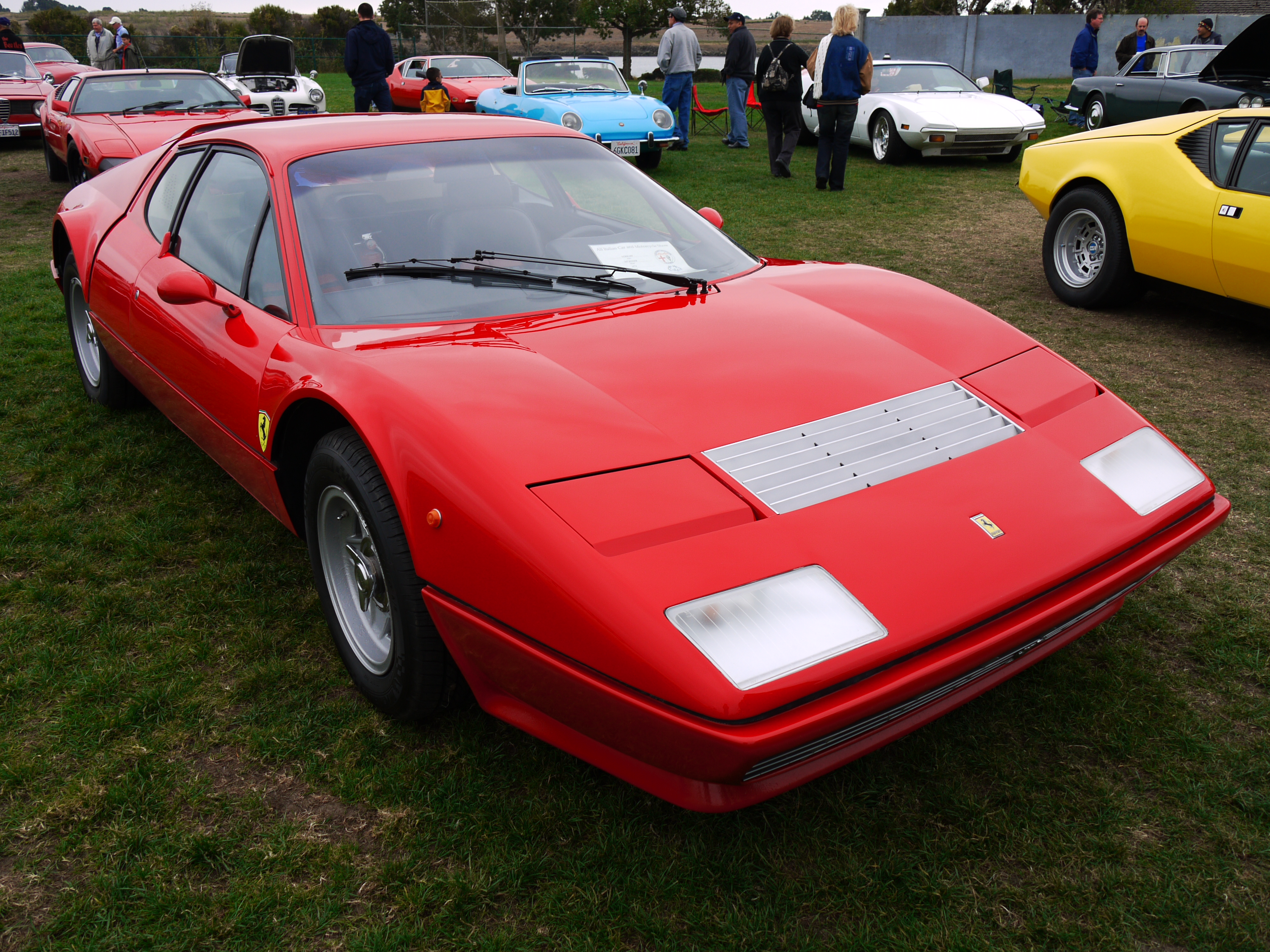
This Ferrari is a very special and rare car that looks like old racing cars but has new technology inside. It’s very fast and only a few people can own one.
The Corvette is a fast and stylish car made in America. People like it because it can go really fast but doesn't cost as much as some fancy European cars.
The cannibal record is a special speed record where drivers race from one side of the U.S. to the other as fast as possible. Dan Gurney and Brock Yates did this in a Ferrari Daytona.
The Ferrari 365 GTB is a famous sports car made by Ferrari. People called it the 'Daytona' because of its racing success, but Ferrari just called it the 365 GTB.
This Ferrari is an old, very nice-looking car from the 1960s that was made to be both fast and comfortable for long drives. Many people love it because it looks great and is special.
This Mercedes is an old, very fancy car from the 1950s that many people think is beautiful and special. It’s rare and worth a lot because not many were made.
A gated manual is a type of stick shift where you can see the metal pattern that the gear stick moves through. It helps you know exactly which gear you're in and feels very mechanical.
The Ferrari 400 is a big, comfortable car made by Ferrari that you could drive easily with an automatic transmission. It was designed more for long trips than racing.
Ford is a big car company from America that makes many different cars. One special car they make is the Shelby GT350, which is very fast and built for racing.
The 1965 Ford Mustang Shelby GT350 is a special fast car made from the regular Mustang. It has a strong engine and is built to be very fun and exciting to drive, especially on race tracks.
LIVE
Hey everybody from Chattanooga, Tennessee, I'm Jay Ward.
And I'm Wayne Carini, and this is Talking Classic Cars.
And today we're coming to you from a pretty special place, this is the Chattanooga Motor
Fire Festival in Chattanooga, Tennessee, obviously, and we're going to sit down with Bill Warner
and talk a little bit about why he's here, what he's brought, and what he thinks about
the show.
So let's get into it.
Okay, let's go.
Bill, what's going on today?
What they've done here is just dramatic.
I mean, the details, the support for the show with the telescreens everywhere, the track
where people can go and experience their old cars, it's just phenomenal.
I think Byron before and his team have come up with a wonderful combination of cars and
entertainment and people that has really put a spotlight on Chattanooga.
Yeah.
You know, Chattanooga is not one of those places that you, it's not a destination location.
In a lot of cases shows like this need a destination location, but he has created a demand here
to come to Chattanooga, see what's going on in the city, see the growth.
It's a great town, a lot of excitement, and he's taken it to a really high level.
Yeah, you know, I came here the first year and I've been here all four years now, and
every year it just gets better and better and better.
Last year was kind of a strange thing, so Byron and I were standing on the stage during
the awards ceremony, and there wasn't very many people in the audience, and he said,
I just can't understand.
I said, Alabama is playing Tennessee today.
I said, you're not going to get anybody to come to a car show on that day.
And that's a problem with shows at this time of year.
I mean, they've had that problem in Detroit when they have it.
They're in a Michigan State game or a Michigan game.
In many cases, one reason why we're doing Amelia Island was March was kind of a month
that was most of a racing month.
We had Sebring, we had Daytona, and so I was just adding another auto move in.
Indy car racing, so the car group was in Florida and we found a weekend of our own.
When you're in the fall, you're going to be up against a lot of things, you know,
hunting season, football, so that's a challenge.
And so for those people that realize who Bill Warner is,
Bill started the Amelia Island Concourse, and how many years?
Bill, 27.
I did 26 years.
26 years of the Amelia Island Concourse.
I attended every one.
Yes, you did.
And I was very proud to say that.
What a wonderful event.
And I always tell people that if Bill Warner asked me to stand in my head in the
middle of I-95 in Miami during rush hour, I'd do it and ask questions later.
So was that applied to Interstate 24 that's in here?
I-95.
It just speaks to the fact that, you know, when you were running the show,
you had a vision.
And the way you've got these cars together was when you envision these
classes, you would just pick up the phone and start calling people telling them
to bring those cars.
And that's why I think that show worked so well, was you curated it
through relationships and friendships.
Well, the relationships went back.
You know, I started with Sports Cart Graphic Magazine in 1967 shooting races.
And then in 1971, Sports Cart Graphic kind of folded and then kind of folded,
did fold.
Road and Track came on and they were looking for someone to cover the
races in the southeast.
So I was always around cars.
And so when it came time to do an Amelia Island Concorde, I called my
friends like Peter Brock, who put me in touch with Dave Holes and Don Summer
and Metterbrook who told me how to do a show on a Sunday afternoon.
They spent three hours with me on the phone called Ryan Redwin who
called Ralph Warren and we got some great cars.
And so I worked the network that I had built as a journalist who
made Road and Track.
They built it over to a Concorde Delegant.
I'm really not a Concorde.
I don't pick grass out of the tires.
Right.
Well, I think that's why the show was so, so successful and popular,
is that you had that race car theme to it.
And by the way, yeah, you can bring your packer and your
Cadillac too if you wanted to.
Yeah.
You know, but it was basically put around and, and, and
evolved around automobile racing, which was your world.
That, and I made a point of getting famous drivers in like Richard
Petty, Johnny Rutherford, John Sirtees, Dan Gurney, and the
thing was anybody who came to America can meet those folks, shake
their hands, get pictures made.
When you couldn't do it in a racetrack, when they were
working, they were, they were isolated.
So the combination was good.
And Byron is doing that here.
Yes.
He's brought in, you know, David Hobbs, Brian Redman, Kyle
Petty, you too.
Dorsey Schrader.
Dorsey Schrader.
Yeah.
And it's working.
So speaking of the show, I know that you didn't just fly in
to check it out.
You actually drove a car here from your home.
Uh, not really.
Uh, I use reliable to bring the car here in my, in my age
now, I'm not towing anything.
I am last year went to a show in North Carolina and
with a trailer and after two blowouts, one Ben Axel, I
said to myself, you know, I'm just not going to do that.
Well, tell us what you brought and why you brought it.
Um, they asked me to bring a 1971 Ferrari Daytona.
Uh, this was an interesting car.
I bought from Kirk White about 20 years ago and it belonged
to the vice president General Motors, who was Chuck Jordan.
Well, this, the funny story about the car was all the
engineers and designers at General Motors say, why is
the boss driving a Ferrari?
You know, he should drive a Corvette and it was,
it was kind of, uh, uh, a tough thing for the designers to
deal with the fact that the boss loved Ferraris.
So Jordan went off to Europe on a trip, Paris auto show or
something and something, I don't know.
And while he's gone, they did a super flag conversion of
this car with a foam core and tape and, uh, they didn't
damage the car at all, but they created a Rolls-Royce
grill, big spare tires, rocket ship mirrors, a padded rear
top, fender skirts, bin, her hubs.
I mean, the car was totally tasteless, big chrome pipes
coming outside and they didn't tell him, of course, he
came back from Europe with the head of Volvo designs.
He says, you must see my Ferrari open the door and
there it was.
Oh, that's glory.
So, uh, Chuck Jordan was a very stern guy and, uh, he
didn't see the humor in it right away.
But after everybody was laughing and having a good
timing for you, you better be a part of it.
And in the end, before he died, he sent me all the
photos from the cars, from the GM archives and from his
own, from when he had the car, but, you know, it's
kind of funny.
Designers, uh, for other manufacturers, particularly
General Motors, they really liked Ferraris.
You know, Kip Wasenko's here.
He's got a Dina, you know, Wayne Cherry as a 275
GTB, uh, Chuck Jordan had a number of Ferraris.
He had a Daytona, he had a Boxer, Hank Hager, had a
short wheelbase, Merlin, these were all guys who were in
design, but they truly appreciated putting
Farina and what Ferrari was doing.
Yeah.
When you think about Ferrari, I mean, Wayne, you've
had a number of, a number of Ferraris is there's a
lot of great cars that are fast and there's a lot
of great cars that are beautiful, but there's
not that many.
They're beautiful and fast.
Ferrari, especially in the 60s and 70s, really hit that
sweet spot.
They did and really the Daytona, uh, it had some flaws
in its construction.
It had some door fit, water leak problems.
They weren't perfect as a car went, but mechanically
they were superb.
Yeah, I mean, that was the fastest car, um, in the
world at that period of time out of the box, a
manufactured car, 174 was it?
Yes, and I don't know why they didn't get one
more mile.
I know, I know.
In 175, and of course the Daytona was a car, not
this Daytona, but the Kirk White Daytona was the
one that Dan Gurney and Brock Yates set the
cannibal record with.
Yeah.
Coast to coast.
Yeah, and if you're going to, the car's not
particularly comfortable, I mean, these seats are
like toilet seats for someone that's big.
I can't imagine what it was for Gurney to go
3,000 miles, running over 100 miles an hour,
most of the way, sitting on these little seats.
I don't want people to get the idea that the Daytona's
not a good car, it's a great car.
It's made to kind of a different parameter than
they would make a car.
Now the new Ferraris are comfortable and right.
Yeah, there's always a compromise.
It was a beast though.
I mean, you know, fast, um, and it was Daytona, I
mean, was the proofing ground, and maybe that's
where the name came from.
Well, it did, the press gave it the name
Ferrari never called it until then.
Right, it was just a 365 GTB.
And Ferrari, I thought, was pretty cool at the time.
And to an extent today, the model number told you
what about the car?
365, 365, said, uh, cylinder, times 12,
gave you the 4.4 liter displacement.
GT was grand touring, B was Berlinetta,
hard top coupe, yeah.
There was a four-door sedan, it'd be a
Berlinness, so they figured out which was
the male and female cars, and then slash four
for four, so if you saw the model number,
you knew the mechanical composition of the car.
Well, they dragged that all through the production,
even today, you know, 308 was a three liter eight cylinder,
328, 3.2 liter.
And that makes sense.
Now, why Mercedes in the last couple years
you pull up behind a 6.3 and it's not really
6.3 anymore, it's a 4.0 twin turbo,
and they're like, well, what do you want to get?
Yeah, right, right, right.
E63, well, it's not really.
You know, that funny, well, the story
of your magazine on car names.
Yeah.
And numbers, you know, for a while there,
the manufacturers went down the road
of numbers and letters, you know, Q45, S550.
Well, the Mercedes had made sense,
and it was an S class, it was a 550,
it was a 5.5 liter, but like you say, J,
that all changed.
So then now I'm glad to see Cadillacs
going back to names, the Lyric, the Celeste,
and it's kind of interesting.
Those two names end in IQ,
and according to the marketing people,
that's just a liminal message,
if you buy these cars, you have an IQ.
IQ.
Somewhat of an IQ, yes.
You have a body temperature anyway.
It's whatever it is.
Your hands, so you can sign the paperwork.
That's all you need.
That's all you really need.
But you know, I've got one of the last cars
that was numbers, CTSV.
Yeah.
I mean, you know, that's a phenomenal Cadillac.
I've got one of those station wagons.
I think it's fabulous.
It's got six feet, huh?
I do.
9,000 miles, black, black, and evil.
2014, the last year.
Those are uniforms now.
Yeah, they are.
And you know what, it's kind of funny.
They had trouble selling those.
Yeah.
And it goes back, even back in the 70s.
You remember the last Buick wagon
that had the LT1 four-bed engine?
Yes.
Couldn't give them away.
Today, those cars are, you know, 12 or 13-granded
is much or more than what they were selling for back in the 70s.
That's right.
I don't know why it takes so long for the gestation period
for some of these cars to belong.
Well, when they stopped making them,
then people understand, they go, wait a minute.
It was that with me.
I wanted to buy one there when they were brand new,
but I just couldn't push myself to it.
Yeah.
And then, of course, when they stopped making them,
I realized, gosh, I should buy one of these.
One showed up at my doorstep.
This guy dropped it off to sell on consignment,
and I came back from a trip, and I went, oh my god,
like, Cadillacs here.
Where did this come from?
And my salesman says, yeah, the guy called.
He's a doctor.
It's got, like, 7,000 miles on it.
Perfect.
And he wants, like, $55,000 for it.
I said, sold.
And I picked the phone up.
I said, we just sold your car, sir.
He says, to who?
I said, to me.
So, yeah.
And since then, I've driven a little bit,
but I don't want to go over 10,000 miles,
so it sits on the top rack on her lips.
I've seen it in your shop.
It just sits there, you know.
Now, the Ferrari Daytona was kind of interesting,
and it was one of the first of the high production numbers
for Ferrari.
In the past, if you did a Lusso, if you did 275 GTB,
you were talking, or variations of it,
you'd be talking about production runs
with 250 to 400 cars.
And the Daytona, they built from 60 to 71.
They made 1,100 of them.
About the same in numbers they make
made of the Mercedes-Benz 300 SL Goldwing.
But you know, there's a lot of them out there,
so I think the prices on them have kind of stabilized to a level.
It's a very strange market when a Dino is selling
for more money than a Daytona.
Yeah.
Oh, yeah.
We've seen that happen.
Yeah.
I don't know why I can't give you an answer to that.
I think a Dino's a fine car, but I don't think
it's as fine as a Daytona.
Well, they become the flavor of the months.
Yes, and they really have.
And they're pretty cars.
Oh, they're beautiful.
I love them.
I love them.
The last cheap Ferrari of that era
was a through the GT4.
A cheap Ferrari, right?
Was there such a thing?
Well, cheap to buy, not to own.
And the through the GT4s were the Bertone body cars.
They weren't very loved for a long time.
They were considered the not pretty Ferraris.
Yes, they are.
Those are, yeah.
They're not pretty Ferraris.
But those have really started to appreciate it.
But what a great driving car.
Great driving car.
You know what I'm saying?
That car, which was essentially, they called it a 2 plus 2.
It's like a 2 plus Hermae Village Chase.
They would tell people who have driven both say
that the GT4 handles better than that.
It's a longer wheelbase.
And of course, it's got an 8-cylinder engine rather than a 6.
Yeah.
But there's still, well, I think a fantastic car.
Yeah, it's a great car.
The one that seems to be forgotten is the Mondial.
Yeah.
Well, there's a reason the Mondial's been forgotten.
Oh, good.
Well, the early ones.
The later ones, the T's are really great cars.
Yeah, that's true.
But the gated manual is kind of cool on those.
But yeah, the other one is the 400.
I talked to some of you, the 400 with an automatic ester,
which is a reliable car.
But those never, ever really, never really caught fire.
Now, automatic transmission Ferraris,
I don't know when the first one was.
Well, probably the 400.
Yeah.
Yeah, and it had the finest automatic transmission
you get in the world.
A General Motors HydroMatic, you can't kill them.
But it just wasn't Ferrari, was it?
No, there's GT, and then there's kind of over GT.
Well, I think Ferrari was kind of a conundrum there.
They're building a big car, a road car, like the Superfast.
It's out here in the lobby.
That's not a sports car.
That's a touring car.
Well, it's a luxury touring car.
It's a Buick and Ferrari.
And so people who'd buy those probably wanted a HydroMatic.
What could be?
Well, this is a great event.
It's wonderful to be here with great friends like you, Bill.
I'm honored to be here.
And Byron and his team have done a fabulous job.
Every last detail.
I asked him last night, and we had a wonderful dinner
outside on the streets.
And it was forecast for rain Friday, Saturday, and Sunday.
And of course, the weather's been just absolutely perfect.
I said, who do you know?
Do you have a direct line to Bill France
wherever he is today, I don't know.
Well, Bill, what's next for you?
Where are we going to see you next?
I will be at Lakeland at the Lake Merrick Classic.
And then going from there to French-Lake
Indiana, I'm going to do a five-day GT350 tour
with my friend, Bill Brine, and his Shelby.
Then we go to Hilton Head.
And then we're finished for the year.
And I'm going to try to slow down some.
Don't try too hard.
I was talking with Don Garlets one day.
And I said, big.
I said, you know, you're 91 years old.
You go like a 50-year-old.
I said, you never stop.
He says, I'm afraid to stop.
I'm afraid something's going to catch up with me.
Well, you tell Bill, when you go to that GT350 event
that I want to be in on that next year.
You know, that's high on my list for a car
I'd like to have.
I have to sell something to get one.
But a 65 GT350 is such a visceral car.
It's so cool.
I've got one.
I've got number 150.
Yeah.
Would you like to borrow my car?
I know, but it is.
Is there something I want that you want?
No.
Other than that, they don't.
I'm happy to say that that car is in my grandson's trust
already.
So you'd have to talk to him.
Yeah.
Well, when you crank one of those up,
every bone rattles in your body.
I mean, it's a wonderful car.
The most fantastic car I think
that it's overlooked for so many years,
suddenly everybody's waking up
and understanding how cool they are.
Yeah.
And there was a big difference
between 65 and 67.
Absolutely.
Oh, yeah.
I like the 66 too, because that's the Hertz years
and they had some cool colors.
But you're right.
If you want the bad boy,
if you want to secure a reef.
The tire in the back seat.
That's right.
That's right.
That's the one.
All right.
Thanks, Phil.
Thanks, William.
Good talking with you.
As always.
Thank you.
That's it from Chad Nuga.
Take care.
About this episode
Bill Warner, founder of the Amelia Island Concours, joins Wayne Carini and Jay Ward at the Chattanooga Motor Fire Festival to discuss the evolution of car shows, the unique appeal of Amelia Island, and the challenges of event timing. Bill shares stories about his 1971 Ferrari Daytona, once owned by GM VP Chuck Jordan, highlighting the car's history and quirks. The conversation touches on the blend of racing heritage and elegance in classic cars, the significance of car naming conventions, and the nostalgia surrounding rare models like the Cadillac CTS-V wagon. The episode offers insider perspectives on car culture and event curation.
Live from the Chattanooga Motorcar festival, Wayne and Jay are joined by Bill Warner, living legend and founder of the Amelia Island Concours d'Elegance. They discuss the details of the festival, the growth of Chattanooga, Bill Warner's involvement in the Amelia Island Concours, and their thoughts on various car models including the Ferrari Daytona and Dino.
Hat Giveaway
We'd like to hear from you! Submit a question or topic to [email protected], and if we choose yours, we will send you an official Talking Classic Cars hat!