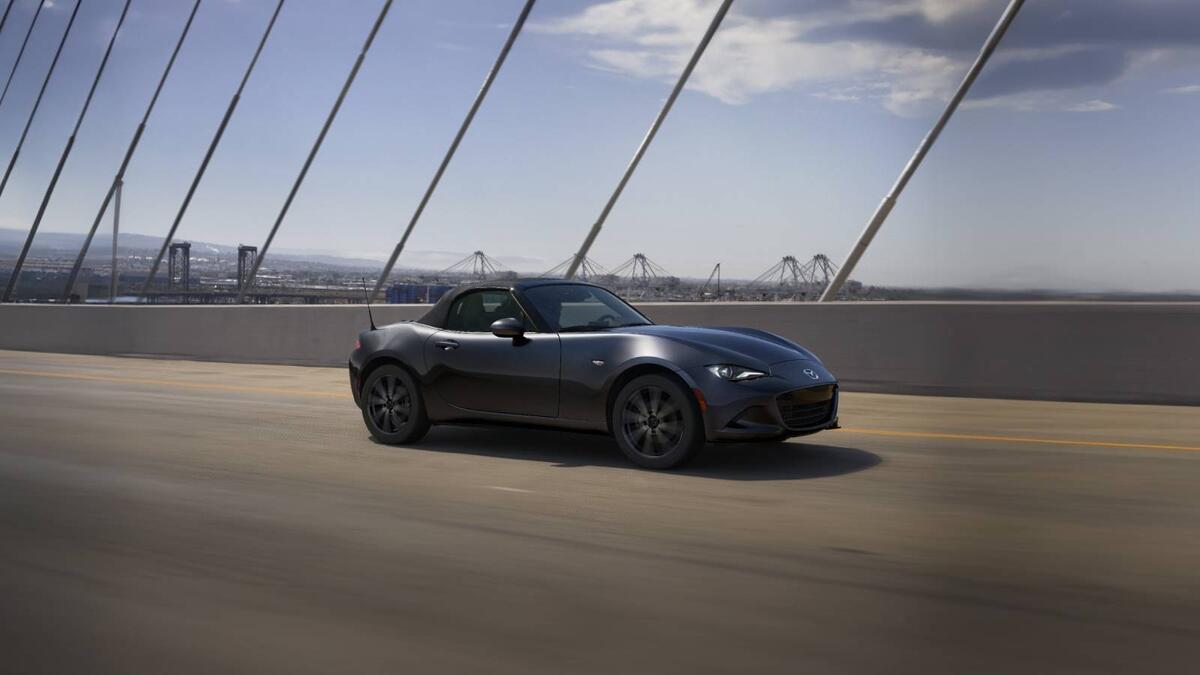
The Mazda MX-5 is a small, lightweight roadster that’s famous for being fun to drive. Here, the hosts say it’s been improved over the years with changes to the engine, how the throttle responds, and the way power is sent to the wheels.
A “diff” helps the wheels turn at different speeds when you’re cornering. A better diff can help the car grip better and feel more stable when you’re driving hard.
Topic
Thruxon skid plan
A skid plan is a controlled driving session where drivers practice handling on low-grip surfaces to understand traction limits and vehicle stability behavior. Mentioning it in the context of the MX-5 suggests they’re evaluating how the car’s updates affect real-world control.
A land-speed record is when a vehicle tries to go as fast as possible on a measured track on land. Here, they’re talking about attempts at Bonneville with a purpose-built vehicle and a specialist driver.
JCB is a company that makes construction machines. In this story, they’re using those digger engines to build a special hydrogen-powered vehicle for a speed attempt.
Hydrogen fuel cells generate electricity by combining hydrogen with oxygen, and that electricity then powers an electric drivetrain. The host contrasts this with hydrogen burning piston engines, arguing that fuel-cell systems can be harder to package into a digger-style land-speed record vehicle.
Brake horsepower is a way to measure how much power an engine makes. It’s measured on a test stand, before the power goes through the gearbox and wheels.
Stability control helps the car stay pointed the way you’re steering. If it starts to slide, it can brake certain wheels and reduce power to help you regain control.
Roll mitigation is the car’s way of preventing too much leaning in a turn. If the car thinks it’s getting close to tipping, it can intervene to help keep it stable.
The Aston Martin DBX is a luxury SUV made by Aston Martin. It’s meant to be comfortable like a normal SUV, but it’s also built to drive more like a sports car. The podcast references it while talking about taking driving/cornering photos.
Term
roof rack and roof box
A roof rack and roof box add weight up high and change how the car sits. That can make the car’s stability/handling settings behave differently, especially when you’re trying to drive it hard.
Four-wheel drive powers all four wheels for better grip. The host says this one usually drives from the rear, but it can send power to the front when the road gets tricky.
The Fiat 130 Coupe is an older Italian coupe with a very distinctive, elegant design. The hosts are talking about it because it’s rare enough that even car designers hadn’t seen one, and it’s still interesting to enthusiasts.
Pininfarina is a well-known Italian company that designs car bodies. The host is saying the Fiat 130 Coupe was designed for Pininfarina, which helps explain why it has that distinctive, elegant look.
Car
Fiat 132 Coupe
The Fiat 132 Coupe is mentioned as a related Fiat coupe that one of the show’s car designers hadn’t seen either. It’s basically there to show how these older Italian designs can surprise even people who work in car design.
This phrase describes the engine: it’s a V6 with 3.2 liters of displacement, and it uses four camshafts to control the valves. More camshafts can mean the engine can manage airflow and valve timing more precisely.
“Ferrari Dino” is a famous Ferrari engine line. The host is saying the Fiat’s V6 might be related to that kind of engine, which would make the Fiat more interesting to car people.
The Fiat Dino Coupe is an older sports car made for performance and driving enjoyment. It’s part of the Dino lineup, which is known for its engine and sports-car character. The podcast is comparing timing—whether it was released before or around the same time as another Dino model.
The Ford Granada is a mid-size car that was made for everyday driving and comfort. In the podcast, it’s used as a comparison to describe the style of another classic car. The point is about how the cars look rather than performance details.
“Brutalist architecture” usually means buildings that look very blocky and plain, with sharp shapes. The host is comparing that vibe to the Fiat 130’s styling—some people reject it immediately, but others later start to like it.
BMW Alpina is Alpina’s version of BMW-based cars—Alpina takes BMWs and makes them feel more special, often with its own tuning and upgrades. The host is saying they’ve revealed a concept car.
Villa d’Este is a big fancy car event in Italy where rare and important cars are shown off. The host is saying Alpina’s concept is being launched there.
“Bespoke” just means it’s made to be special and tailored, not mass-produced as a generic version. In this case, they’re saying the idea is unique to Alpina.
They’re giving Alpina’s backstory: it used to be run as its own independent brand by the Bovenseepen family. The key point is that Alpina built cars using BMWs as the base, which is why it feels different from a regular BMW.
They say BMW ended up buying the Alpina brand because the original family operation was getting too hard to manage. That helps explain why Alpina is connected to BMW, but still has its own character.
An electric car runs on electricity from a battery instead of burning fuel. The point in this segment is that they’re debating whether making one would make sense if demand is low.
A plug-in hybrid is a car that can run on electricity sometimes, but it also has a gas engine. You can charge it by plugging it in, and the discussion here is whether buyers would actually want that kind of setup.
Brand
Bovenseepen Zegato
This is a niche, custom-style car project using the Zegato name. The key point is that it’s planned as a very limited, more expensive build compared with earlier efforts.
Alpina B6 is a BMW that’s been upgraded by Alpina, a specialist company known for making BMWs feel more refined and quick. The point here is that BMW used the B6 as the example of what Alpina should be.
The BMW 7 Series is BMW’s top luxury sedan. Here, it’s mentioned to explain that Alpina’s early cars were expected to be aimed at the biggest, most premium BMW buyers.
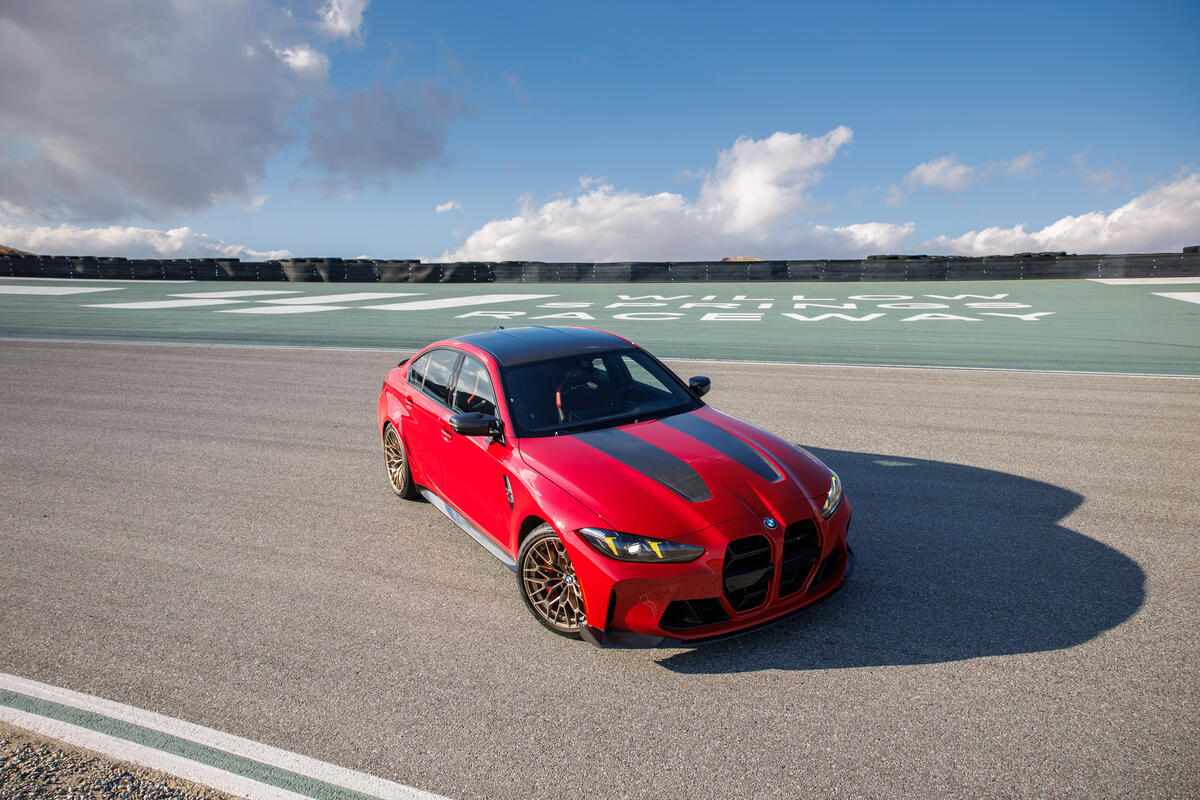
The BMW M5 is the fast, performance-focused version of the 5 Series. In this conversation they’re saying it might not feel as aggressive as it could be, especially compared with other BMW performance flavors.
The BMW M3 is BMW’s high-performance version of the 3 Series. The hosts are basically saying it already feels pretty aggressive, so there’s less room to make it even more track-focused.
The Toyota Prius is a hybrid car, which means it uses both an electric system and a gasoline engine. It’s designed to use less fuel than many regular cars. The podcast is talking about how common it is in real life compared with what someone expected.
Max torque is the highest twisting force an engine or motor can produce. In practice, high torque available at low engine/motor speeds helps a car accelerate strongly from slow corners—exactly the kind of situation hill climbs create.
Range is how far the car can go before it needs more fuel or a recharge. With electric cars, that can mean planning stops to charge.
Term
steering committee
A steering committee is a group of people who help decide what direction to take. Here, they’re the ones pushing for petrol because they don’t want to worry about electric range.
Term
three-wheeled
Three-wheeled vehicles have one less wheel than a normal car. That changes how they steer and how they feel to drive, and it’s part of why they’re so unusual.
A three-wheeler is a vehicle that has only three wheels instead of four. Because it has fewer wheels, it can feel different when you turn or when the road is wet. The podcast is talking about Morgan three-wheelers and how they behave as the weather changes.
Brooklands was an old, famous British race track where people went to test cars and try to set speed records. It’s brought up here to explain how interest in the vehicle grew.
Car
Morgan three wheeler
Morgan makes a unique kind of car with three wheels instead of four. It’s a roadster style, and the host is talking about how Morgan kept making that format for a long time before switching focus.
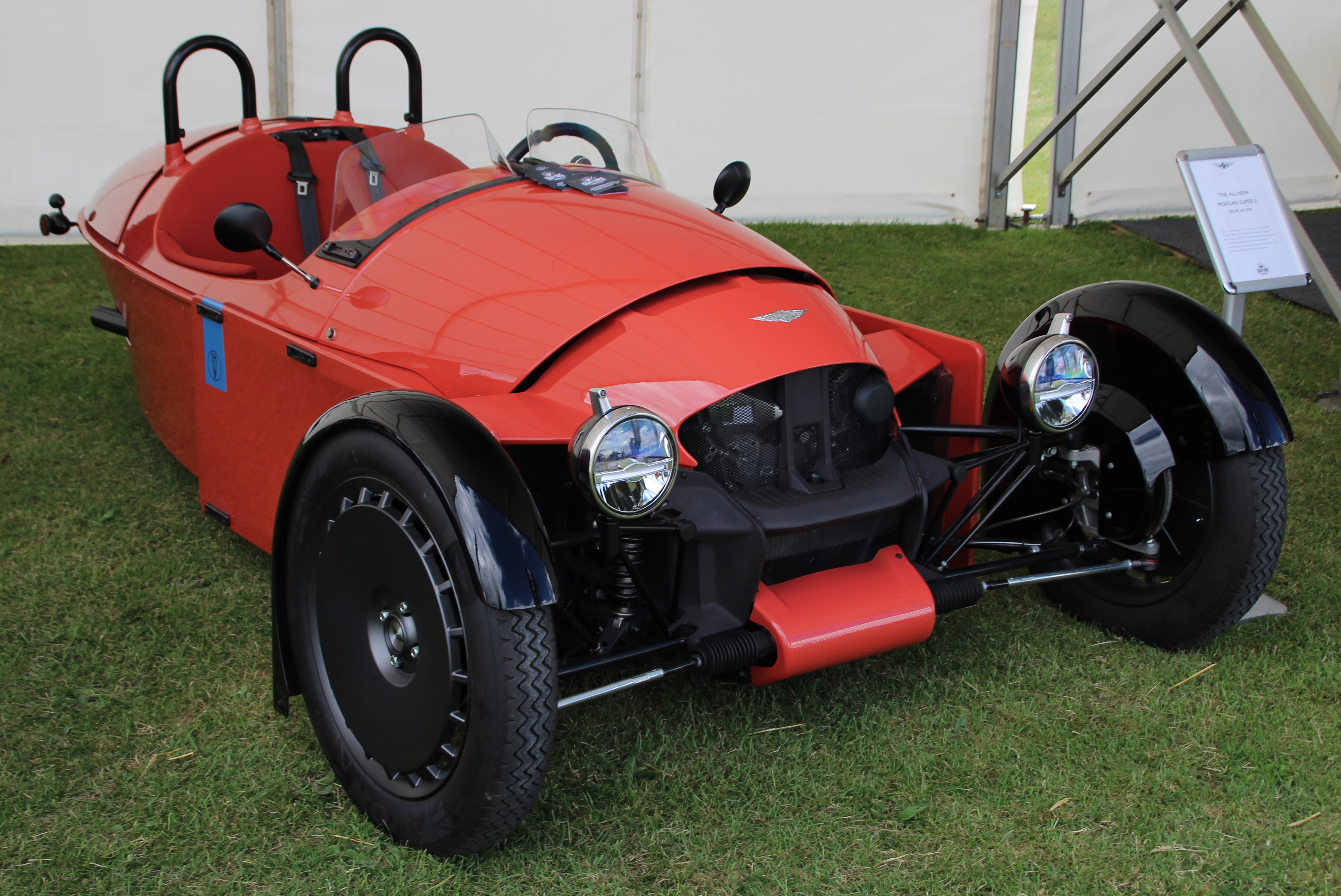
Morgan’s Super 3 is their newer version of the three-wheeled roadster. In this segment, the host is talking about a press car they bought and road-tested, emphasizing how it looks and feels familiar.
Term
Walker ramp
A Walker ramp is a factory ramp used to move or position the car for demonstration. The host is saying they used it when they arrived before driving the car later.
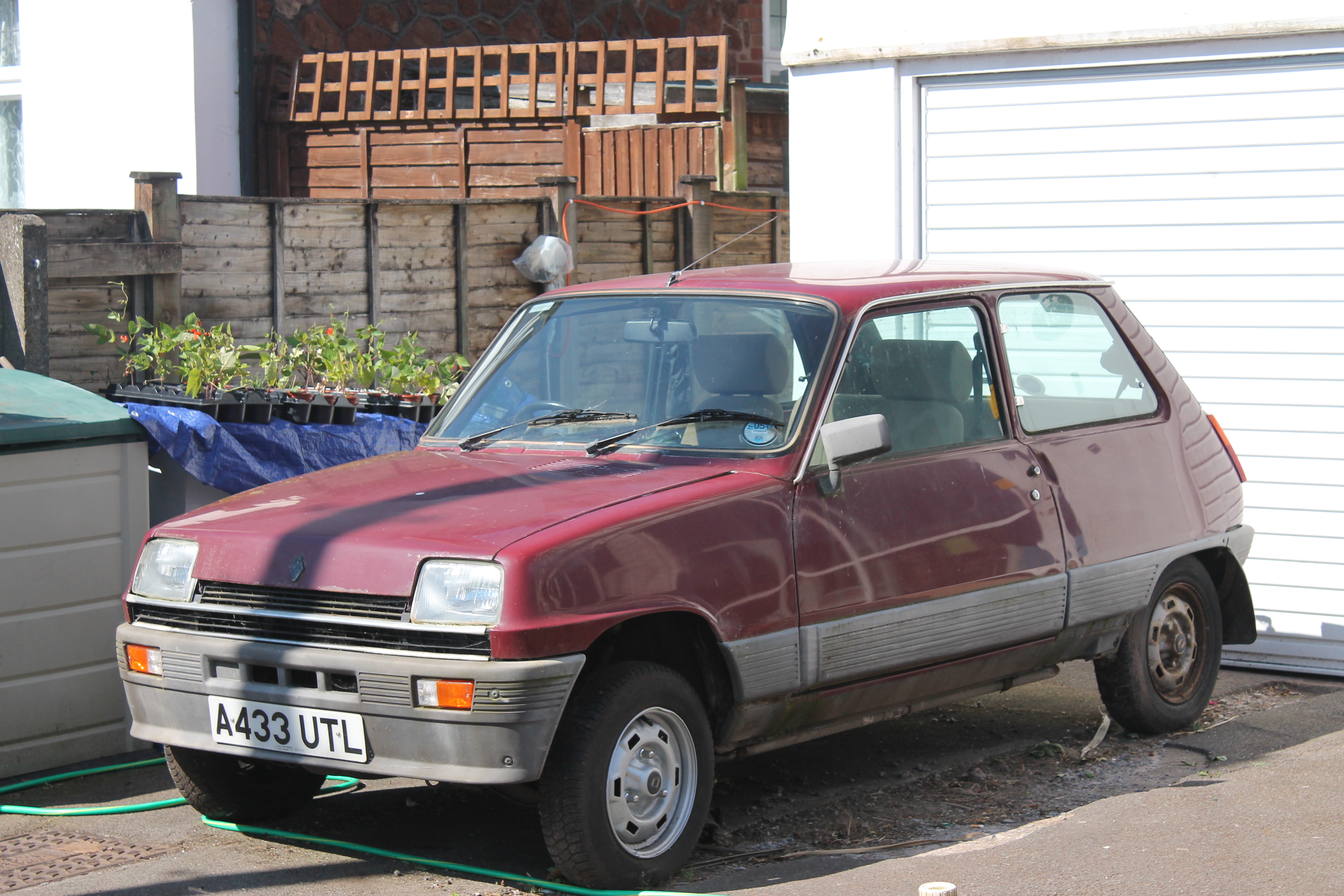
The Renault 5 is a small hatchback car. It’s known for being practical and for having a lot of fans over the years. The podcast mentions it because someone likes how it looks.
The Renault Twingo is a small car made for city driving. It’s designed to be easy to park and drive in crowded streets. The podcast mentions it because someone wrote in about the Twingo (and also brought up the Renault 5).
Hill climbing is a type of racing where cars go up a hill as fast as they can. Because the road is twisty and the conditions change, the car setup matters a lot.
A hot hatch is a small hatchback that’s been made sporty—faster and more fun to drive than a regular version. People often modify them because there are lots of parts available.
The Peugeot 205 GTI is a well-known “hot hatch” from Peugeot—small car, sporty setup. People like it because it’s fun to drive and there’s a lot of aftermarket support if you want to modify it.
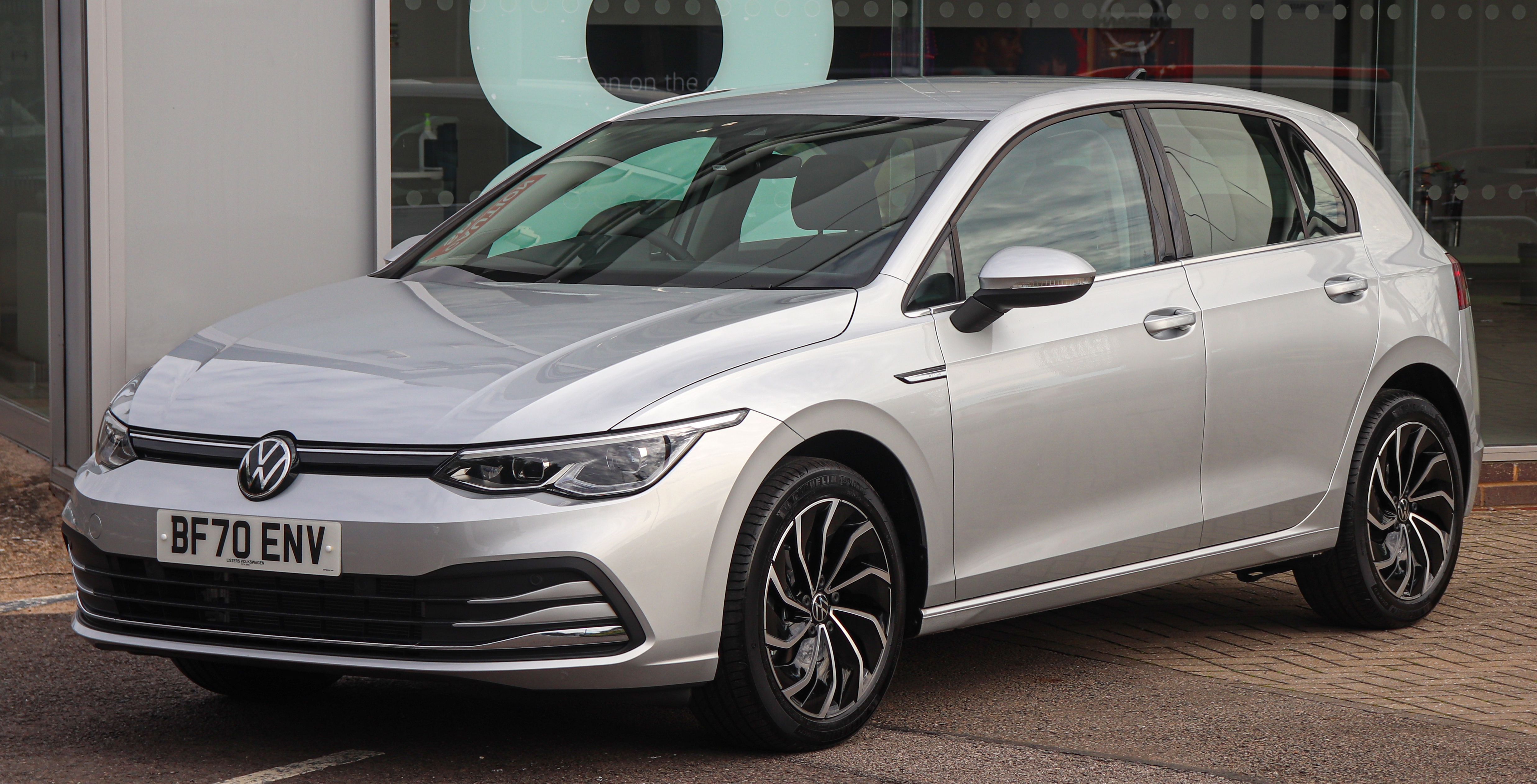
The Volkswagen Golf is a small car (a hatchback) made for everyday use. People talk about it a lot because it’s common and practical. The podcast mentions it as one of the kinds of cars that were around at the time.
The Peugeot 205 CTI is a sporty version of the Peugeot 205 small car. It was made to feel more exciting to drive than the standard versions. In the podcast, it’s mentioned as an earlier step in a story that ends with the 205 GTI being finished.
The Land Rover Defender is a tough, off-road SUV. Here it’s just being used as an example of a car that has small window add-ons to let air in without the windows being fully open.
Wind deflectors are little add-ons near the window edges. They let you get fresh air in while cutting down the loud shaking/wind noise you can get with the window cracked.
Buffeting is the annoying shaking and noise you can get when the window is cracked open. It happens because the wind flow becomes turbulent, and the deflectors help smooth it out.
Car
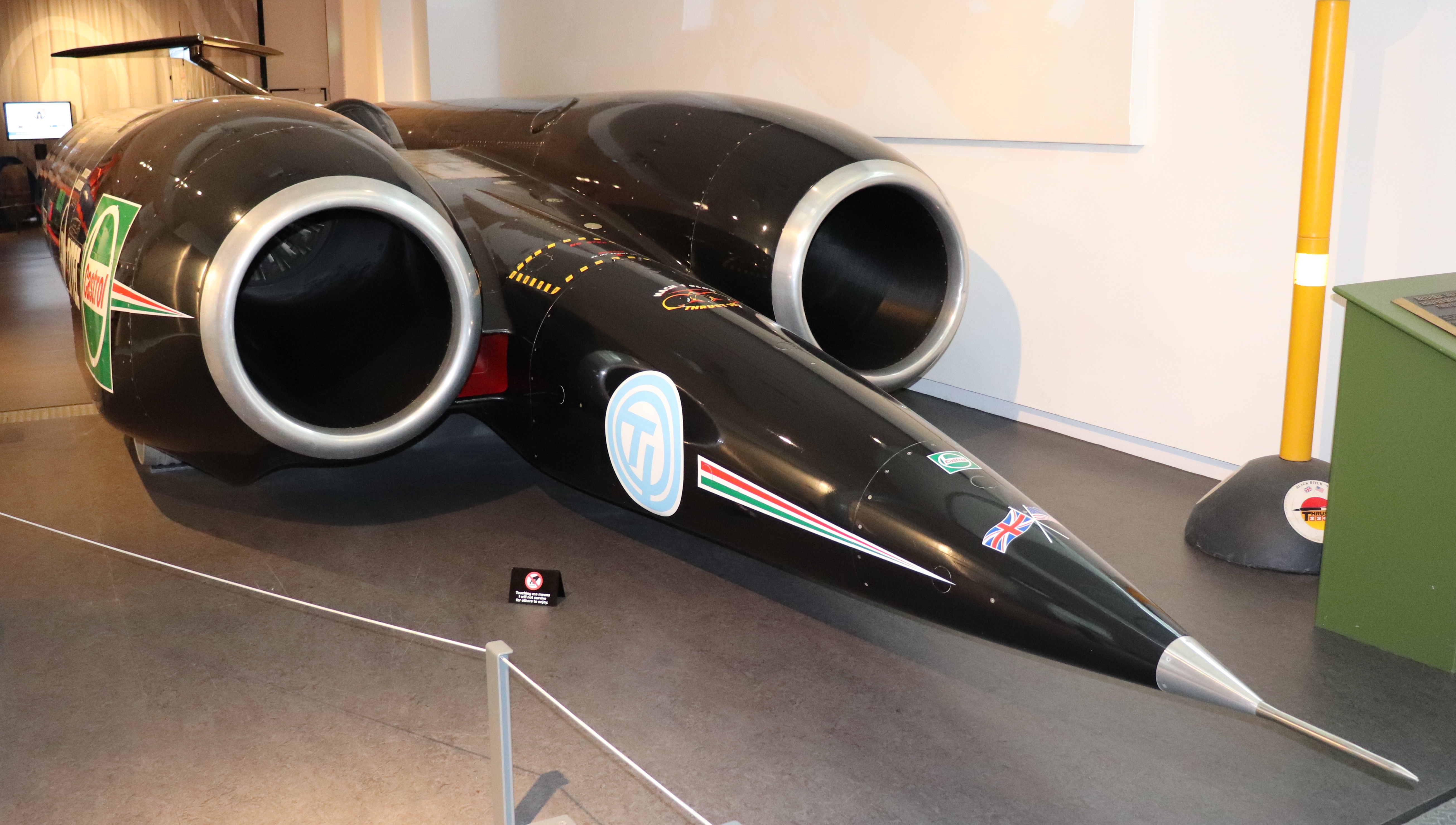
Thrust SSC
Thrust SSC is a famous record-breaking land-speed car driven by Andy Green. It was built to go so fast it could reach supersonic speeds on the ground.
Throttle control means how smoothly and precisely you press the gas. In racing, that matters because tiny changes can change how much grip the tires have and how the car behaves.
A turbo is a device that helps the engine make more power by pushing extra air into it. Because it can change how quickly power comes on, drivers have to manage the gas carefully.
Putting the rear brakes on can help the car turn more by shifting how the weight sits on the tires. Drivers sometimes use it to make the car rotate into a corner.
They’re talking about controlling the brakes separately for each back wheel. That can help the car turn more predictably because the driver can manage how each rear tire grips.
Concept
car rotates around that
They mean the car turns by pivoting more than just following a smooth curve. Certain techniques can make the car “spin into” the corner in a controlled way.
A trials car is made for slow, careful driving over obstacles. Instead of going fast, it’s about control—like climbing, balancing, and maneuvering precisely.
Term
WSH
WSH sounds like a shorthand name for a specific system or feature on the vehicle. The transcript doesn’t explain what it stands for, so it may be a project-specific acronym.
Term
jet hydrofill
A jet hydrofoil uses a jet propulsion system to drive the craft while hydrofoils lift it above the water surface. The “design for stability and control” line suggests the project focuses on keeping the vehicle controllable while generating lift at speed.
Powertrain is the parts that make the car move and send power to the wheels. In this story, they kept the Imp’s driving components but changed which wheels got the power.
Weight distribution is how the car’s weight is balanced, like how much is on the front versus the back. That balance can change how the car grips and turns.
A “three-speed box” is a gearbox with three forward gears. It was common on older cars, and it changes how the car feels when accelerating and when driving at steady speeds.
Drum brakes are an older braking system where pads press against the inside of a metal drum. They were common on older cars, but they generally don’t handle repeated hard braking as well as newer disc brakes.
Non-independent suspension means the two wheels are connected so if one side moves, the other side is affected too. It’s often simpler, but it can make the ride and handling less smooth than independent suspension.
Car
DRW Imp Sport Racer
This is a very rare, custom racing-style car. The host thinks it likely uses an Austin-Healey Imp engine and that it’s set up like a race car with the engine in the middle and power going to the rear wheels.
The stability button changes how much the car helps you stay in control. It can make the car step in more on slippery roads, or allow more freedom in how it handles.
That traction button controls how strongly the car fights wheelspin. Depending on the setting, it can be more cautious or let the tires spin a bit more.
A “drift” is when the car slides sideways while the driver keeps it under control. “Longest drift” means keeping that slide going for as long as possible before something (like the tires) gives out.
Here, “refueling” means adding fuel while the car is still running. The point is that it makes the stunt harder because the driver still has to keep the car under control.
A tracking rig is a way to mount cameras on a vehicle so the footage stays steady and follows the action. Here it’s used to film fast-moving cars on track for movies.
The Rolls-Royce Ghost is a very high-end luxury car. They mention it because the host once drove it on a long trip in Scotland.
LIVE
Hello and welcome to the AutoCard podcast. My week in cars with Pry here. Steve Cropter
there. Hello Stephen. How are you going mate? Very, very well mate. The sun is out, spring
has sprung and your chicken's looking good in their new pen, the chicken coop and you're
here. So what could be better? What It's a good day. Yeah, it's a good
day. This podcast listening is brought to you in association with our sponsor Anderson.
Visit Anderson-EV.com or just search Anderson online. They make premium focused, sorry,
design focused premium EV charges. And they have a concierge service who will look after
you from start to finish. Actually, a bit later on, you'll tell me about a design competition
that they're involved in. Yeah, they've got a bit of news, haven't they? Yeah, so we'll
come to that a bit later. Meantime, Steve and I are going to be talking our respective
AutoCard columns and a bit more besides, including some of your letters, Nick Lindley writes
to us to say further to your MX-5 Mazda MX-5 road test, which we had in the mag the other
week. Got five stars. Yeah, isn't that good? Isn't it amazing that after what, 12 years
on sale, that car is still a five star car? Yeah. Well, I think it's great. It's gone
up, hasn't it? Or am I wasn't advised when it was new? Yeah, maybe it wasn't five when
it first came out. Because I think according to Mr Matthew Saunders and our road test editor,
it's about, it's got a, it's a little bit more engine tweakery. The throttle control
is improved. It's got a better diff. And it just, I mean, it is awesome. I was with him
the other day at Thruxon on the Thruxon skid plan. I mean, it's, everything else is uncontrollable
and I'm sorry to MSG next time. Yeah, they get better and better, don't they? They do.
More special somehow. Yeah. Yeah, I will look up in a moment via the AutoCar archive, which
you can find at the magazine shop.com forward slash AutoCar. I will find the original road
test, which would have been 2012, I suppose, of this generation MX-5. Yeah. And see what
it got as a rating. I'll have a look at that in a moment. Meantime, Steve, let's, oh no,
sorry, I didn't even finish the letter, Nick. Sorry. I was complete tangent. For the Thruxon
MX-5 road test, I was fortunate enough to buy a Mazda MX-5 1.5 prime line six months ago, says
Nick, mainly because I wanted to enjoy driving again. Over the six months, the MX-5 has been a
total pleasure to own and drive on all roads, whether you drive slowly or quickly. And yes,
I'm certainly enjoying driving just for the sake of it again. I bought the 1.5 prime line because
for me, it's more suitable for everyday driving and considerably cheaper, about £8,000 cheaper
than the excellent 2.0-litre Omura. If I was planning to track days, I'd have probably gone for the
2.0-litre, but my days of track use is over and I don't need the additional performance to enjoy
the drive. Well done, Mazda, for giving the enthusiast a great affordable car, no matter
which version you go for. Yeah, it is a miracle that car. It is really, isn't it? To have produced
four generations in however long it is must be 30 years or something. Yeah, longer than that,
I think 88 something like that, 89. And not to mess them up. They haven't been limousine,
they're exactly in keeping in character. Yeah, that's great. Yeah. What should we talk first?
Let's go with, oh, the following on from a conversation that was on the pod a few days ago
at the weekend where you talked to Andy Green, fastest person on earth and Lord Bamford of
JCB. What's it? Bring me up to speed, mate, because there may be people who haven't heard
that pod and in fact, I have not heard that conversation. So what's going on?
Oh, it's really good news. Do you remember they had 20 years ago, they had a thing called diesel
max, which was two of their digger engines in a sort of needle shaped record breaker,
went to Bonneville, did 350 miles an hour with Andy Green, the world's fastest bloke in it,
driving it. Since then, JCB have become much more interested in hydrogen and they've developed
hydrogen burning piston engines for their diggers, which they consider to be a lot
more practical and easy to put into a machine than hydrogen fuel cells. So they've got hold
of two of these digger engines, hydrogen digger engines designed a whole new car, which is reminiscent
of diesel max, but improves on it in every way. And they're going to have that at Bonneville in
August, doing 350 plus with Andy Green driving it 64 year old Andy Green. And I went to have a
chat to Lord Bamford, who is absolutely as enthusiastic, keen and on it as ever. And with
Andy Green, who was there as well, and he is extraordinary bloke. I mean, he's just a, you
kind of switch him on and they're kind of mesmerized by all these facts that keep coming out of his
mouth. He's amazing guy. So it was a good day out. And but the thing that impressed me most was that
they have done this without a lot of razzmatazz. If you think about it, the amount of the thing is
freshly engineered, the engines which normally produce 78 brake horsepower produce 800 each.
What? Amazing, isn't it? So they're 10 times, and yet the innards are pretty much the same as
the standard engines, according to the engineers, because digger engines have to be pretty robust
anyway. But in service, they rev to sort of 22 and a half. In the record breaker,
they'll be doing five, which is, you know, and I believe that 350 miles an hour is according to
Andy Green as a conservative estimate. It's a good talk that he's done. Basically, the pod,
the weekend pod that's just passed is all them talking. And I found the whole thing fascinating,
could have gone for a lot longer, but didn't. It's a very narrow vehicle, isn't it? Longer
and narrow. Yes, just one, just the driver wide really. The engines are four cylinder, big fat
four cylinder engines that lay over in the vehicle. Right. But yeah, very good. But I love the way
JCB get value out of things. They had a model full size model there. They had a big Razumata's
dinner the night before. They had all their techies there, brilliantly briefed, ready to answer any
question. Lots of visuals so that you could see how it works. It's a mighty space frame
with a carbon cell in the middle to protect the driver. Okay. And, you know, all the details of
suspension and God knows what was brilliant. So is it well illustrated on the AutoCar website at
the minute? Yeah, I think so. Are they got these pictures? I believe so. Yeah, there was a news
story went up. The thing just broke at a day's notice. They're excellent at keeping secrets.
And I suppose the other thing is that you don't you don't go looking for car news at JCB. So,
but anyway, but to have everything in a row, including knowing that you can be at Bonneville
in what three months time. Fantastic. They're going to test it at Wittering, sort of low speed
tests so called. I think low speed means 180 miles an hour something on a runway at RAF Wittering.
You know, month or so, six weeks. Okay. And we'll be allowed to go up there and oh good. Watch it.
Excellent. 32 foot long. Yeah. Well, that's interesting. It's a completely secret. We
not five years, I don't think. Oh, is it not? It's been,
I think they say they started in earnest a year ago. Oh, okay. I think the five years might be
when he had the idea from the idea till till now because as usual, you know, Lord Bamford
sort of said, we should do this. And, and gathered all his blokes around and said, okay, off you go.
But, but, you know, they put the money in and they, they do things well. I love the way they do
things. It was a pleasure to go there. Yeah. Good. You've also been talking to, and it was a future
plans of things. I saw I've just looked at the Master of X five road test in 2015 was four and
a half stars. So it's got more stars now. It's a better car now. Yeah, it was. But also not,
not just a better car now, compared to the other cars around it. Yes. That's the other
thing. It is more of it is stronger in its respective class than it was 11 years ago.
That's the chat that we had when we were at, I was out on a, there's a bit of a photo session
coming along which features that car among others and I was driving for the, for the camera along
with Matt and some of the blokes and and people, should I say, and we were having that very
conversation about how the stuff around it isn't is arguably not as good, not as competitive as it
was. But honestly, on this skid pan, it's, you know, skid pan is so slippery, you can hardly
walk across it. So, you know, at 20 miles an hour, it's, but everything else alongside the
MX-5 was felt uncontrollable. I had to go in the leak motor. Your long term leak motor.
Yeah, electric rear wheel drive SUV. So it should take all the boxes, you know,
rear wheel drive, electric immediate, immediate power just when you want it.
Yeah, I turned off all that there's about 12 traction controls and I found it. I thought I
found them all turn them all off. But it still wouldn't slide for very long. And it kept on
correcting itself. And then I had a further search in another level of the screen and found another
one. So I have to go back for a proper go. They do. Even sometimes when they say they're off,
they're not off, are they? No, that's the thing. Because yeah, traction control, stability control
is all off. And then you think, hang on a minute, why did that? Some cars have an anti-roll control
that you can't switch off, don't they? Some SUVs particularly. That's it. Yeah. Because they don't
want them to go on their side. And roll mitigations. Yeah, yeah. Yes, I was trying to do some
cornering shots once in an Aston DBX for the, I don't know, I think for the cover of the mag or
something just, you know, halfway. They've got that stow circuit that still was done, that Aston
has custody of, doesn't it? The little infield circuit. I think I wanted to put it, somebody
said, well, put it sideways and we'll get a cover shot, you know, with the DBX going sideways.
And it would go, but it wouldn't go brilliantly. And I was struggling with it slightly embarrassingly
because of all the dynamics engineers from Aston were there looking as well. Oh, God,
this is embarrassing. I can't slide the blinking thing. And one went, what might have happened
actually is the, we were testing this car with a roof rack and roof box on it. And the
roll mitigation calibration may have set itself up for that. So it might need to be sort of like
hard reset so that it then will slide around easily again without thinking it's going to
fall over because it may have thought there was roof rack on it. Is that what happened? Well,
I don't know. And maybe they were just trying to make me feel better about it. But in the end,
it was fine. In the end, it would do what I wanted it to do. But I wonder if it just took me a long
time or whether that was true. Maybe they were just being kind. It is a bit of a handful though,
that car, just for the sheer size. And you do sit up in the air a bit. It's not like a range
you're over, but it's not like having your bum on the floor. And although it is rear biased,
I mean, it is four-wheel drive. And it will push power to the front when it thinks things
are getting hairy. Yes. Who else have you met this week? You've met the people from,
well, here's the question. Are they from BMW or just from the Alpina bit of BMW?
Oh, well, there was a dinner which Ricky Lane was our proper reporter at. But I got a gate
crashed it because I was keen to just spend a bit of time with a designer that I really
admired called Max Mussoni, who was responsible for the best of the poll, the poll stars that are
now on the market, you know, 34 and five, I think. And, you know, those beautiful,
clean, chiseled shapes. And I just wanted to talk to him about it. We truly had a really
convivial lunch. And we found ourselves talking about this car, which I, he'd never heard of,
in fact, which I said to him, look, you're going to like this car, I think. And it's a car designed
for Pininfarina by an Italian designer called Power Think Italian called Paolo Martin, the Fiat
130 Coupe, which has got surprising similarities in sort of techniques anyway, to the poll stars.
And, you know, Max hadn't seen one of these before and he really liked it. So we're sitting at this
table supposed to be talking about BMW business. And we're searching the world's auction houses for
a Fiat 130 Coupe for sale. And he eventually, he kind of became all aerated because he found one
for sale at an auction house in Austria, which is where he comes from. So when I parted, when I
finally buzzed off, he, he was going to inquire about this Fiat 130 Coupe in Austria.
It would be very cool if he bought one, wouldn't it?
Well, he'd love the car because it was his kind of, he understood the very same techniques. In
fact, I showed a Fiat 132 Coupe to Ben Someril, you, our own tame car designer and, and, you know,
artist, concept man. And he wasn't familiar with the car either. And he got all excited about the
Fiat 130 Coupe. Oh, really? It's quite a very clean car. For the time, it's very clean. Yeah,
when you look at the stuff around it, it's, it's amazing. And as it happened, Max was wondering
whether he shouldn't buy a classic car. And if he, what, if he did, what, what he should buy,
what he should buy. And I mean, I think the one in Austria was about 15 grand. He couldn't really,
yeah. That's good, because they're a big car as well, aren't they? Yeah, it's got a elegant 3.2
litre V6, which is related to, I believe, related to the Ferrari Dino engine. I could be wrong
about that, but it's certainly a 3.2 litre quad cam V6. Did this come after the Fiat Dino Coupe
and Spyder or was it around at a similar time? Same similar time, I'd say. But this is big,
this is bigger. Yeah, so it's a fairly long car. There was a Fiat 130 Saloon as well,
which is a much more disappointing looking thing. But the, this Coupe, not many made because they
were, I don't think they're particularly successful. And also it was classic Fiat rust bucket. And,
you know, if you see one now, it's been restored twice probably. Yeah. Like Dino's, you know,
if you ever see a Fiat Dino, it's because it's been done once and then done again.
I almost bought a Dino. Did you? Yeah, I bought a Ducati instead. But they were cheap at the time.
They were, I want to say £10,000, £8,000 to £10,000 for a one that was fine. And they're a lot,
a lot more than that now. And I spent £6,000 on a Ducati 748, which is a great looking machine,
brilliant looking machine. Yeah. Easier to own, I think. Easier to own. But then I bought it from
a dealer and I sold it back to a dealer, both of which are not very clever ideas, are they really?
So I did. You had it though, mate. But I had it for a while and I'd have another,
even just to look at it because I just think they're the best looking bikes.
Yeah, there's shades of, is it offensive I say there's shades of Ford Granada about the Fiat
130? No, no, I think you're right. I mean that square Ford Granada was a really clever and
stylish car and I think it lived a really good life. Yeah. I bet it had a phase, didn't it,
that 130 where people were just not interested. Yeah. It's that sort of look that people would,
almost like brutalist architecture, that people would just look at it and go,
no, that's not a thing. No, not enough curves. And now it's just come back in and people could go,
oh yeah, I like that. Yeah, I see the point. Yeah. Yeah. And it's very, the proportionals,
the proportions are lovely, really nice. Did you talk Alpina at the same time?
Yeah, a bit. Yeah, it was there. They've launched a car, a concept car, the first
all BMW Alpina car, which is a concept and it's being launched. There's a, you know,
there's this big do it in Italy. What's it called? The Villa d'Este. Oh yeah, okay.
Concourse thing. We're all the people who can afford it go. I've not been. No, me neither.
It's a, it's, I always find it annoying people that people always say to you,
are you going to Monterey for me? They do so that, yeah, you'll be at car week, won't you?
Yeah. No, no, you'll be at Villa d'Este, will you? Yeah. You'll be at this concourse,
and I doubt it very much. I'll probably be in Blastershire. Yeah, yeah, yeah, yeah.
Anything where cars are parked on grass, I'm probably not there. No, no, annoying.
But anyway, it's a lovely looking thing. You know, big coupe, interesting take on,
I think Alpina have got some, some interesting challenges because
they've got a, you know, they're influenced heavily influenced by BMW, obviously. You know,
what makes an Alpina that doesn't make a BMW? And this new car faces up to that a bit. There's
in the issue, which is just probably still on sale. So, well, no, isn't it just on sale today,
20th of May, is that right? Is it a 20th issue? Yeah, yeah, yeah. Is that it? So that's just gone
on sale. I haven't read it yet because it will be somewhere in the post office system. It will be in
the, it will be in our, I'll be able to, to read it at some point to this week,
when it's been stopped, but I haven't seen it yet. It'll be in the corner of your local post office
well. The, the short of it is that this concept is bespoke to Alpina. There won't be a BMW
alter variant of it. Is that right? Yeah. Will they make that? No, the plan is, they say that
there's lots of influence, but first BMW will be something else. The first Alpina will be,
first production Alpina will be something else. Okay. But they... Yeah, because didn't we,
did we see something on a seven series or an i7 or an x7 or something? Is that right? Oh my,
I'm not sure. Before we started, mate, I'm sorry. I think I wrote about it a few weeks ago because
they were like, yeah, well, this, the first Alpina being the first, for those, if you don't know,
Alpina was an independent brand owned by the Bovenseepen family, but they effectively made
well famously, they were a manufacturer in their own right, in inverted commas. They made cars
based on BMWs. That's it. BMW bought the Alpina brand off of them because it was just too complicated
for them to keep running. And the Bovenseepen's were getting older and... The Bovenseepen's were
getting, yeah, just like that. They were trying to decide, look, which cars do we work on? The,
the volumes could, you know, do we do an electric one? But what if nobody wants one? Do we do a
plug-in hybrid? What if nobody wants one? How do we do it? It was just, it was becoming too
complicated, too risky in a way. And BMW said, well, we'll buy it. BMW went to them and said,
we'll buy the name. They said, okay, apparently the first time that BMW would ever approach them
about it to say, would you buy the name? So now the Bovenseepen's are going to launch their own
coach-built car called the Bovenseepen Zegato. Zegato rings well, yes.
And that's going to be built in much smaller numbers than previously and much more expensive
than previous. Yeah, I think, yeah, that, and that takes them around a problem of the big investment
that you need. The thing that BMW guys said that was very interesting was that
the Alpina car that they particularly admired was a B6. Okay. Just they thought that embodied
the brand really well. And the car they showed has got a really lovely interior. I was a bit,
the visuals that we saw were, they're in keeping with some, I think BMW are a bit funny
in several ways with their photography. And it's difficult to tell what cars really like by looking
at a BMW handout picture. But I mean, it's a good, it's a good start, but it just looked a bit overdone
interesting. I didn't say this to Max Mussoni, by the way. No, fair enough, fair enough. No,
best to keep talking about Fiat. Yeah, but for I think a couple of months ago, I wrote that BMW
had said the first Alpinas would be seven series sized. Yep. So big, big cars. That's right. But
that makes sense because they've also got the M division. And I suppose they don't want to suddenly
go, Oh, here's an Alpina. Here's a fast Alpina three series. Yeah. And everybody suddenly goes,
well, that mean I don't need to buy an M three anymore. I suppose that was the very thing they
said separation. I was so obsessed with Fiat 130 coupes. I sort of wasn't listening to the proper
part of it. Yes, they said that the the regular new Alpina range would start at the top, which is
where they felt secure to sell anyway, because that part of the market is intact, despite the
Chinese as it were. Oh, interesting. And they would move down from there. And the other thing
they said was that although the Boven Seapons started with track cars and made their reputation,
they wouldn't be, they'd be fast, but they wouldn't be competition cars anymore. Yeah. The M cars
were competition cars. That was, that was the big demarcation. Alpina was sort of luxury and
performance M was, you know, track based. That might, that might allow at some point in the range
M cars to be slightly more aggressive than they are at the moment. Yeah. I mean, the M three is
quite aggressive already, but the M five probably isn't. And maybe it could, maybe it could be.
Yeah, because you'd go, well, here's an Alpina five series plus an M five series,
and they would, they would be allowed to do different things. Well, that would certainly fit
with what we were told that because the, the Alpina would be this, this sort of graceful,
luxurious, fast, but not competition oriented. And so that, yeah, really aggressive M five.
So very nice concept. Yeah. I like big grantee performance cars. Yeah, me too. And I think
a current five is just a bit too big for my liking. Yeah. But three series sized cars,
even now that three series sized cars are bigger than they used to be, that's my sort of
Swedish spot, I suppose. Yeah. For those kinds of cars. I seem to have been seeing a lot of these
little muscly M twos around the place. Me too. Yeah. They look good to me. Do they all,
are all of those of that body style M's, or is there like a 240 or something that also looks?
I think they're M's. Okay. Yeah, they do look good. They're three series based now, aren't they?
Because the standard two series is front drive. Yeah. And the M two is still rear drive. That's it.
Yeah. Yeah, they look good. Isn't there going to be a four wheel drive one? Don't know. I think
I read that the other day. They're going to. Well, as ever, their power is edging up rapidly. So
could do with the smaller, need a more traction, a new baby M that's even smaller than that.
Yeah, I think of that. The old one M coupe size. I tell you what, I had good time with this
260 horsepower electric mini JCW. I went to the Haggerty Hill climb in it and did just did a few
runs and up Shelsley Walsh. Oh, yes, I was going to go but couldn't. So was it? Yeah. I mean,
it was full. There were everybody there. And I thought it was going to be a lot of people in
Toyota Priusas, but in fact, some really high turn cars there and sort of old and new. So tell me
about, tell me about it. Haggerty, the classic car insurer. Yeah, they runs a, well, they seem to do
quite a lot of stuff that embodies the sort of, that delves into the society of classic cars.
You know, they have shows and they have the classic, the Haggerty clubhouse at Bista Heritage and
and this is just one of their events. And they have a magazine, they were quite well produced. And
so you just, in fact, we were, we were invited as hacks because they're nice to us. But they,
but you can just enter it. And the great thing about it is that all you need is a lid, a helmet.
You don't need all the race pyjamas and, you know, get into particular classes and get
exhaustively scrutineered or any of that stuff. You just show up. The car's got four wheels at
more or less point the same way. You're allowed to bang it up the hill climb. And it's not timed
where it's not officially timed. Yeah. But you can get a time if you insist.
And the mini was fab because it's a good, well, as you know, Shellsley was very steep.
Not many corners, but there's just this S halfway through. You say you bolt up the hill to this S,
you know, and try and stay on it until you see the whites of the eyes of the people that, you know,
there's a load of seats at the end of the, at the end of the straight bit where you have to go left.
And there are all these people in ranks looking at, looking down at you and
thinking, is he going to crash? But so you bung it in the second S
where you accelerate out, there's another big long straight steep. And the mini had so much
grunt that it spun the wheels out of the top S was, was fast car, electric, you know,
max torque, low, low down and went like a rocket, really. I think I tried to figure out what the
time over the line was, but I think it was about 90. It's pretty good. Yeah. Tempted.
Ah, mate, we were too, too much. If I was just buying a car for me, I think I'd enjoy it. Yeah.
But we are in the market for a mini, as you know, and, but I think it's got to be a petrol one
because the steering committee just doesn't want to be limited by range and he feels he would be.
Yeah. I don't think he would be, but there you are. Yeah. Let's take a very short commercial
break, which is me telling you this podcast is sponsored by Anderson makers of premium design
focused electric car chargers, British designed engineered manufacturer. They have a concierge
service will look after you all the way through from start to finish. If you search Anderson,
or visit Anderson dash EV dot com for more details.
Part two of the commercial break is the auto car archive. Have you been in much recently?
Not at all. Well, I was in 1912 early. I mean,
were you today? What were you looking for? I was looking up three wheeled Morgan's.
Of course. And for very, very good reason for the very good reason that my column this week is a bit
of a study in Morgan three wheelers. So just starting to rain or is it just there's a little
bit of thinking. Yeah. So if you hear some raindrops falling listener, sorry about that.
Yeah. I was looking up some of the history of Morgan's three wheelers because there's
a I think somebody's told me, ah, well, you see HFS Henry Frederick Stanley Morgan.
Yeah. He he was cycling over the more than hills from home to work and it just got too much for
and so he decided that he'd put a motor and a petrol engine, you know,
and build a build a body around it. I'm not sure that's entirely true because I think
he was, he went to Marlborough school, then he did an apprenticeship on the railways and then he
left the railways and with some of the help from his dad set up a garage and car hard company in
more than link. And it was only in like 1908 that he was so he had plenty of access to cars.
So he didn't get worn out cycling over the more than hills, but he so he had plenty of
access to cars. But then he did buy a Peugeot V twin engine and decide to make a vehicle around
it, which was a three wheeled single seat trike just for the run about just for his own use.
And then he thought I will make will make some. So he went to the 1910 Olympia cycle show
got reasonable amount of attention, but it's only had a single seat. So people weren't
didn't get many orders. So I thought I'm going to make a two seater. So he did that. And then it was,
I think the car, I'll quote it in a minute, I'll dig out the quote, but the auto car in 1912
said, you know, there is a bit of a story about this thing called the the this Morgan run about,
but it didn't gain a lot of interest until he started doing speed trials in it. So I think
he took it to Brooklands and ran it at 55 miles per hour or something like that. And eventually
it became quite popular. They started, well, for a time couldn't keep up with demand really,
and three wheelers were a bit cheaper than four wheeled vehicles to tax and buy and run.
And then so Morgan kept a three wheeler in the range until the 1950s, early 1950s,
even though it introduced its first four wheeled car in 1938 or six, I think, which was the 4-4,
36 maybe, right? Anyway, anyway, then they didn't then they concentrated solely on four wheelers
until 2011 when they introduced a new three wheeler, which was the SNS V twin engine one,
and it got to the end of the decade, and they thought they would modify it and update it a bit.
But in the same way that they actually, you wrote the story on it, the same way that they
got a bit carried away with the plus six and actually turned it into the super sport. What
they did with the three wheeler is started with blank sheet of paper, their first clean sheet
of paper design since they made the air away in 2000 and introduced the super three in 2022,
which I liked even more than the three wheeler. I think I thought it was terrific,
which is. So on Tuesday, I bought one.
And there it is outside. And there it is outside. Yeah, there is outside. So it's the road test
vehicle that we had, it was a press demonstrator. So it's one of the earliest super threes and
25,000 miles, one of the legiest two, but it looks sensational. When I arrived, I did the Walker
ramp, actually it's raining. Oh, it's got the tonneau over it. It's fine. No, they're pretty good.
The tonneau, that's fine. They're very good. Yeah, they're very good. So no, it's just kind of it
can stay there because I'll probably drive it again later. Hey, it looks great. It looks great.
And the thing is, it's familiar because I can remember seeing their car in all the early videos.
In fact, they're still on the website because it's perfectly current, isn't it? And it just looks
great. Yeah, I was signing over some paperwork in the in the sort of showroom at the factory the
other day, just getting it taxed and whatnot. And there was a video on the wall and a clip
on the video is my car running through some hills somewhere. Yeah, I do need to gather them together.
Yeah, I must say. So yeah, it's here. And it's great. And it's anyway, but anyway, that's it.
You can find those stories in the Auto Car Archive, which is at the magazine shop.com
full slash auto car where there is a subscriber offer or sorry, a podcast and listen offer.
And that is listed in the show notes for this podcast to get six issues of the magazine for
six pounds. And you can have full access to the auto cars. 131 year archive.
You know, our chum Jim Holder used to be the editor of Auto Car. Now I work at Renault. Yeah.
I have a note from him. It says, sorry, I think I sat on my phone unless you called me.
The phone was ringing while you were talking. Hi Jim.
He's a busy guy. There's lots going on in the Renault world these days.
Yeah, sure. I was going to talk something Renault or not.
Oh no, we had a letter the other day about Twingo, didn't we? About Twingo or Renault 5.
Yeah, the thing I like, I like to look at that.
If we talked about the fact that Renault have decided to support that, you know,
the bloke that built a rather excellent bespoke model of the Turbo 3e.
You know, the, oh, the lego. Renault decided to support him to go forward to
try and convince lego that this needs to be made into a kit we can all buy.
Oh, very good. And apparently you can vote for it. So,
Jim is in the process of saying, if you feel inclined, vote for it.
So they must be away somewhere. I think, oh, okay, okay.
But anyway, I thought we would support that, wouldn't we?
Yeah, 100%. Yeah, because it looked good.
I thought that model looked really good. Yeah, I thought that looked excellent.
We had a letter. So, you know, I did this pod with Saunders last week.
The bonus pod was with Matt Saunders. And there was a letter on there which
was addressed to you as well as me. And it was from a reader who said,
if you were going to restore, he's in the middle, I think, of restoring a pre-1973
something or other to take hill climbing. And for the life of me, I now can't remember
what it is. And this question was, if you were going to restore a car to take it hill climbing
or sprinting, what would it be? Didn't have to be pre-73. I don't think, and he said,
if you need a budget, it could be £15,000. So I sprung this on you with no warning.
Yeah, well, I think it's actually funnily enough, it is something I think about a lot.
I mean, it would be a hot hatch for me. You know, probably whatever was around at the time,
a Ford or a VW Golf. I've just done this, admittedly, by a slightly
odd route with the Peugeot 205 GTI, which is now complete and ready, and we'll run later this year.
But that car's 1990. So I suppose I'd be, but it would be some sort of hot hatch, because
a lot of them, particularly the Fords and VWs are easy to modify, and there's a lot of
gadgetry around them, probably a Golf GTI, early Golf GTI.
Yeah, that'd be quite nice for me, actually. I don't know how much the rain is showing up
on these mics. We don't usually record in my conservatory if it's raining because of this
reason. So, but the weather being as it is changeable, it may stop in a moment.
But apologies if there are some raindrops in the background.
Will we just talk loud, right?
Yeah, it is the way of things. Chris Hutchins writes to say,
Steve Cropley comments on his fears for legacy car makers in the wake of the
progress of Chinese manufacturers. His fears are well founded. My car, a Porsche Macan EV,
£110,000, responded as follows to my voice command, Porsche tuned to BC Radio 2.
The reply came, sorry, I am unable to help with that request.
Maybe it was why Jeremy Vine was on and it wouldn't fit.
My colleague's car, a BYD C-Lion 7, £41,000, responded to his voice command, BYD
opened the left rear window halfway. It responded, of course. But are you sure you
want me to, because it's raining outside?
Really?
In fact, you say. So, the Porsche is a better drive, as well as it should be at three times
the price, but wait a few years, says Chris Hutchins.
Yeah, I mean, he's right.
Well, mind you, if I told Mike, one, why do I have to tell it to open a window?
Surely it's much easier to open a window.
If I've told it to open a window, do I really want my car to...
Are you sure you want to do that?
It's only opening a window, mate. I'm not asking you to...
No, that's true.
I'm not asking you to drive into a nearest tree. I'm just asking you to open a window.
There must be a reason I'd like you to do it.
And I can see if it's raining, because, you know...
Yeah, that's a very sound point. I'm not sure whether you want your car to argue with you,
do you?
I don't really want it to argue with me.
No.
Really?
No, I've got... I've written enough times about not wanting cars to tell me what to do.
Also, I can't bear driving along with windows half down and all the buffering.
No, not with the bup, bup, bup, bup noise that you get from it.
There are ways you can sort of do it sometimes, can't you?
So, if I'm with somebody and they wind down their window and it starts going bup, bup, bup,
you can sort of ease down the window just behind them till it goes away.
Yeah, that's it.
But it's a bit...
You saw on the A2 and on my Defender, I've got those little wind deflectors that go around
the edge of the windows.
Oh, I do, that's right.
I'm never sure how much I love them, but they do work.
They are really good. They let fresh air in without any of that buffeting.
Yeah.
They are effective.
It's, yeah, I suppose you've got to decide whether you're happy with the way it looks,
but, yeah, they work for sure.
Yeah, absolutely.
Yeah. What else are we going to talk about?
Do you want to... me to...
There was just a letter from Julie, in fact.
Oh, yeah, yeah.
Having said which, I can't find it, but here it is.
Yeah, I was having a rattle about running into Richard Noble, who I admire greatly,
and is, you know, Richard Noble thrust to set the world land speed record for a while until
Andy Green and Co came along with...
Yeah.
And he made the thrust SSC which Andy Green drove.
He did, yeah, that's right.
And he's trying to do...
He's doing a water speed record.
Oh, that's right, yeah.
And I think they're trying to do 300 and something miles an hour with this,
discovering new forms of foils that the boat rises up on.
But he was at Bista Heritage, in effect,
raising awareness, but also trying to raise money, I think,
because it's not the easiest thing to do to break land speed records, as we know.
But...
No, I mean, not unless you arrive with JCB levels of funding to just get it done.
Yeah.
To just get it... Just get that done, please.
Yeah, so off you go, yeah.
But anyway, I got a letter from Julie, in fact.
You know, the Ayrton Centre of British Sporting Trials has won nine times or something for him.
Yeah, I do, yeah.
Top float.
Yeah, very much so.
And he was talking about how he'd run across Richard Noble and given him a drive in a trials car.
And Richard Noble's comment had been he couldn't believe how quickly things happened in a sporting
trials car, despite the fact that you're doing 15, 20, 30 miles an hour.
And so I wrote back to Julian and said, was he any use behind the wheel?
And he said, in common with almost all celebrities that I tried to teach, he was pretty useless.
He says, there was one unexpected exception, and that's Nigel Mansel.
Apparently, Nigel Mansel was so determined to win that he hung on my every word and put
it into practice.
He says, I put this down to his familiarity with overpowered cars.
Apparently his throttle control was fantastic.
Oh, really?
The turbo, we were in F1, we're up to 1300 BHP in qualifying.
He said he had the business of feathering the throttle down to a fine art in complete contrast
to many other racing and rally drivers.
Brackets, Derrick Bell, Tony Pond, Ari Lyandike, et cetera, et cetera,
who could not get their heads around it at all.
Isn't that interesting?
Nigel Mansel could do it.
That is interesting.
It is a, do you have it?
It is a particular skill, isn't it?
I've driven one of Julian's cars, and you turn and nothing happens.
He's like, you have to put that rear brake on because the front wheels are so nutly loaded.
One for each rear wheel.
One for each rear wheel, and it just really, the car rotates around that.
Amazing levels of lock if you do that.
I mean, you can see the appeal.
Julian and his brothers have been doing it for life, haven't they?
They've been doing it for 40 years.
He's, I admire Julian because he, whenever he gets a new idea, he builds a car around it.
You know, he's got, what was the, there was an imp.
There was one that had an imp engine, which was some play on the word imp.
They build a whole load of cars called facsimile.
Oh, interesting.
Which were good, still current, still winning.
I see, I wouldn't, I think that's, that's why I,
he invited me to have a go in his car because it was in Benjand,
and I just bought my imp.
And he's like, look, this, this car will go from 800 RPM at idle,
and it will pull all the way to 9,000 RPM.
In this little trials car.
You had to go around his private track, didn't you?
Well, around his garden, basically.
Because I pulled up thinking, I don't know where I'm going to drive this thing.
And he just took it out and went, well, we're going to drive it down this bank.
And I was like, you can't walk down that bank.
How are you going to drive it down this bank?
And it just drove it round, down around a tree, back up the other side.
I'm thinking, you'd fall over if you tried to walk up this.
And it's just not that big.
But yeah, there it was just doing this amazing stuff around.
It's just extraordinary cars, really.
It's a sort of job for a ballet dancer, isn't it?
Yeah, yeah.
Thrust, WSH, high speed, jet hydrofill, design for stability and control.
He's been trying to get it off the ground.
It's the wrong word, isn't it?
Sort of launched the project.
Launched the project for a while.
Yes.
I think he's money trouble.
Because there's been so many competing things these days, aren't they?
For instance, if you want to know about record boats,
they've been running the Campbell boat, haven't they?
They're on Lake something or other up there.
Yeah.
Oh, Colin, it's done, is that right?
Honest, yeah.
Is that the actual boat in which...?
Yeah.
Don't know how I feel about that.
It's a bit grim, isn't it?
There was a lay on the floor for a long time, along with the driver,
and they recovered both some years ago.
And then for reasons I don't really understand,
there was some standoff between the people who won at the store and the people who didn't.
It did get restored, but as you say, it just seems a bit funny to do then.
The outright water speed record is Ken Warby in the spirit of Australia set at the
blowering or blowering dam in Australia in 1978, just 317 miles an hour.
It's pretty quick on water, isn't it?
It is.
According to Richard Noble, the kind of hydroplane hull, the thing with a step halfway along,
how they rise up on this step, that Ken Warby's speed is about the limit,
in fact, it's over the limit for that sort of design, and to go any quicker,
you've got to do something different, which is what he's trying to do.
He said that what the event did for Donald Campbell was just enough ripples on the surface
for the planing angle of the boat to be wrong, and if it was two degrees wrong,
it was enough to total it, and that's what happened.
It just took off when I went over backwards.
I wonder how much contact you have to have with the water for it to count as a water speed record?
I don't know.
I suppose as long as you're propelled, as long as you've got a propeller doing it,
oh, and hang on, do they use people jets on tour?
Maybe they use good jets.
Maybe that's the key, is that it has to be propelled in the water by itself,
as in you couldn't effectively use aero engines.
It just threw the air, like an aircraft plan or something like that.
I don't think the bluebird they've been running, I don't think that's got a prop.
I think it's just got a jet engine.
A jet engine not into the, an engine not into the, it's not forcing it into the water,
is it? It's just using it from the air.
Just like, you know, the recent, just like thrust.
Yeah, okay.
Thrust and SSC.
So, well, I presume you, there must be a rig,
mustn't there, because otherwise you could just, something that flew a foot from the surface.
Yeah, or yeah, just like a flying boat, you know, with jet engines on it,
and you just touch it into the water and go, well, there you go.
But that's, you know, cruising speed rather than a,
rather than a sitting speed and go, well, yeah, there you go.
That's fine.
So there must be, there must be a rig, mustn't there?
It will be, yeah.
It will be.
I mean, I, I like the idea of it.
Yeah.
I like the idea of it.
Yes, I hope something else happens.
What else we can talk about?
Let's talk about Anderson's plans for the Royal College of Art.
Oh, yes, I, I need to.
Oh, well, shall I tell you what I would, so I think when I was talking to Matt,
if you want to look something up.
Yeah.
I think when I was talking to Stormy Saunders the other day about what we might restore
to run on a hill climb, I think I said something like an old Austin 7 special,
something like that.
But what I remembered afterwards, mate, is I have a spare hill and imp engine in my shed.
Now, I would quite fancy the idea of buying a
sort of passenger cell from some old single seater, putting the imp engine behind it
and making a one off imp engine special single seat hill climb car.
That'd be good fun.
Sounds great.
Sounds great, doesn't it?
I need the time and the space and the money.
I got very, I got very keen for a while.
It is his ancient memory, but there was a bloke that built some sort of a hill climber
with an imp and what he had was the imp powertrain but driving the front wheel.
So it was front wheel drive and in effect he sat behind all the stuff at the front.
Alongside the engine.
Behind the engine.
The engine was in front of him.
So there was no rear, just a dead axle behind him and all the drive happened at the front
and it just looked, it was tiny, but an imp, you know,
ripped to 11 or whatever they did and it was a great little car.
But I can't remember what the hell it was called.
The supercharged front wheel drive info needed.
Any info on this car says somebody on the Facebook looks to be front wheel drive
supercharged till when empowered.
Because the thing about it, because it's typically rear-engined in an imp,
not typically, it's rear-engined in an imp and the gearbox is in front of the engine.
So if you make it a front wheel drive, then the engine sits behind the front axle naturally.
And yeah, so the weight distribution is lovely, really.
I just remember seeing this little car, it was so simple.
But look, right, it was like, it was kind of Morgan-ish with, you know,
with lots of engine out the front and a little bit of passenger behind.
This is the sort.
But it was a four-wheeler, I don't seem to remember.
Yeah, there are some very cool things that you find on various old racing forums
and things like that when you search for this sort of stuff.
I love the era, the post-war era, both in Australia and here.
When nobody had, you know, nobody had first-class tackles.
So they'd get hold of some old post office band and a sort of an engine
out of a Hudson Terra plane or something in a gearbox from somewhere else.
It's a three-speed box, probably.
And they'd sort of bolt it all together and make a car out of it.
And it usually had non-independent suspension and, you know, drum brakes on rear brakes.
But just for a decade after the war, this 45 to 55, there were so many of these specials.
Just so much imagination in it as well.
I've just discovered a car which is not this car.
It's called a DRW Imp Sport Racer.
And I don't even know if it's got an Imp engine or whether it is entirely unrelated to it.
But my goodness, my goodness.
Is it a nice unit?
I think it has got an Imp engine by the looks of it.
And then a, yeah, it's mid-engine rear wheel drive.
But it is, it just looks like a tiny, tiny
Le Mans, 50's Le Mans.
Wow, that looks fantastic.
Looks crikey.
What a thing.
59,000 euros.
I think that's quite good value.
Yeah, I mean, not that I'm, but it just looks good.
Anyway, not that I'm going to, or in the market for it.
Sorry about you were looking something up.
Have you found it?
Well, it was about the, do you remember Anderson?
We were talking about Anderson, our pod sponsor.
Always interested in design.
Do you remember that earlier in their life, when they were in the establishment phase,
they got Ian Callamin for a while to consult them on colors and textures.
And there was a, there was some quite good stuff produced.
And from that came the, you know, the thread about how they can make anything to suit your house,
whatever age and, you know, but anyway, they, they, they like design.
So they're, they've just started a competition partnering the Royal College of Art,
encouraging and Silverstone, sorry, and encouraging students to design
what would become a third generation wall charger, you know, for home wall charger,
but using the sort of themes of motorsport.
So making it look, like, um, you know, suitably techno tech techie and,
you know, with the right shapes and apparently they're going to announce the,
be half a dozen or a dozen finalists and the winner will be announced
one or two days before the British Grand Prix this year.
Oh, that's very cool.
That's very good, isn't it?
And is that, is, is that open to
Well, they say Royal College of Arts, or is it?
I think it's RCA.
Okay.
Um, but it's, there's a lot on the, on the Anderson website.
Um, Anderson EV as we.
Yeah, Anderson-EV.com, if you go and find it.
Oh, that's cool.
Oh, well, I'll go and have a look at that.
Oh, I'll kind of look at that.
But it sounds they, um, well, as we know, David Martell, the boss is convinced that people
like to buy these days or more and more people like to buy a charger because they,
with the same values as you buy a TV for your house now, it just,
it's, it's got to function well and look nice and be a part, you know, be a piece of furniture
almost.
Yeah.
Yeah.
And it seems to be working for him.
I mean, things are going well.
So we have two orders on Christmas Day last year.
Hey.
For a memory, wasn't it?
Is that right?
Every, every single day of the year, somebody ordered on their chargers.
Is that amazing?
Yeah.
They are the sponsors of this pod, I should say, for strict clarity purposes,
but that's independent of the story that we've just told.
But, uh, what else are we going to talk?
Sir Thruxton Skidpan is the only thing I think I haven't talked to you about.
They're also opened, what, four or five years ago?
I think a new Skidpan down there.
Yeah, it's, it's actually quite difficult because we were down there for a,
for a bunch of group pictures and, and, you know, as you know, they take a while.
But it was a beautiful day, failed to rain.
We got all the work done.
You know, our man Jack was on the job and he's really super fast.
He's a great fast photographer, Jack Harrison.
Yes.
So we finished up with a, with an hour off and the extremely nice people at,
at Thruxton just said, well, nobody's on the Skidpan.
Have a go.
That's very nice.
So we had four or five cars there, including the MX-5 and,
and my Leapmotor long-termer.
Long, Leapmotor was not perfect for the job, but the, it was okay.
I wish I'd found that the last,
Oh, the last traction button, stability button.
I found, you know, seven and there were probably eight or something.
I don't know.
But anyway, but the MX-5 was fabulous.
And we were down there with Mauro Callo.
Oh, excellent.
The, you know, the, the ultimate driver.
Yeah, yeah, yeah.
Things like that.
Already, he held a record at MB World, do you remember for a while for,
for the man that could do a sort of two mile continuous.
The longest drift.
Yeah, yeah, yeah.
I think which was set basically until the tires exploded from memory.
I think the only people who've sort of beaten it have done it in sort of wet conditions or
on slippery skidpans, which I think is not.
Not trying.
Not, well, yeah, exactly.
I think BMW did it and even refueled it.
The car while it was going, the car alongside to a little sort of mid drift refueling.
But I mean, if the, you know, I don't know,
somehow in the dry till the tires explode feels right, feels better.
But it was worth watching.
Mauro was there and he of course had to go in the MX-5.
And it was like watching, you know, sort of surgically perfect driving.
He was just the thing that was, you know how drifting, especially those very low grip surfaces
that the car, I always find that there's a, but you can hold it for a while,
but there's a point where the start car starts to get away from you and you just
can't seem to do anything about it.
What he did, he just had this fantastic neck of putting it back in line just,
just with this precision.
I suppose it's anticipation of what's going to happen.
Anyway, he was really worth watching.
Yeah, he's also got Nissan GTR that he uses as a photography and filming vehicle.
GTR Godzilla tracking rig.
So basically, if you're watching a film which has got high speed chase footage in it,
especially on circuit.
So I think the Gran Turismo movie had a lot of that.
And they basically film companies go to him and say, look, we need to make race cars look
really fast on circuit.
And he goes, okay, and he can drive his GTR with cameras hanging all off of it at extremely
high speeds to make other cars look dramatic around them.
Because you can tell, can't you, if you film something slowly and speed it up,
it just doesn't look, doesn't look right.
So he will, it's a proper thing.
We should probably do a feature on it because it's a great thing.
It's appeared in some big, big movies too.
I mean, not appeared, but it's been behind the scenes of some very, very big movies.
I love that.
He's such a good company.
Because you say to him, gosh, mate, you're a bit of a wheel man.
He'll say, oh, no, rubbish.
He's just a completely modest fellow.
Yeah, very much so.
I once drove, I can't even remember why, but from London to somewhere in Scotland,
in a Rolls-Royce ghost, what's it, hang on, yeah, a ghost with him.
And he drove all the way.
It's just joy being driven by Mauro.
It's nice being driven by somebody who knows what they're doing.
What they're doing, you know, he didn't beat anyone up.
We just kept moving.
It was great.
Because I don't love being a passenger,
but when it's with somebody of that level, I'm just, I'm very happy.
Yeah.
Yeah.
So relaxing, isn't it?
Yeah.
That brings us to the end of this week's My Week in Cars.
Which is brought to you in association with our sponsor, Anderson.
Next Saturday, this Saturday coming, Felix Page has been talking to some people
who will be on a bonus pod in three days time.
Steve, say something.
I'll look it up.
Mate, well, I can't even comment on the, on Midge, the cat's snoring because he's not.
No, well, he's just fast asleep on the sofa over there.
So he has been talking to the Seat Cupra CEO, Marcus Haupt, and there's some video on that,
which will be on the AutoCar website and on our YouTube channel.
And it will be on this podcast channel in three days time.
Actually, there's a car that I could imagine doing a few, the Hagerty and something,
something from them.
My Cupra, they make cars that go and handle pretty well, don't they?
Yeah.
And they're funny that because it's a brand which didn't have much exposure very long,
you know, very long ago.
But since, since, since Seat seems to put all of its energy into Cupra,
rather than Seat, it seems to have taken off.
Yeah. Yeah. And the styling's got good.
And yeah, no, no, I like them.
Every time I had passed by some press on merchant in one of them, I think, God.
Yeah, yeah, yeah.
So Steve and I, I think we'll probably follow up on that this time next week.
Meantime, are you going away?
Are you traveling?
No, I've reached one of those phases where I've done lots of reporting
and I need to sit down and write it all up for a bit.
Yeah, same.
Yeah.
Otherwise, there'll be a lot of shouting from the office and we don't want that.
Yeah. No, nobody likes that.
So that will be, yes.
So Steve and I will be back this time next week, Felix in the meantime,
and then maybe we'll have a Q&A pod or something like that for the bonuses.
But we'll worry about that when we have a diary session in a bit.
Thank you very much for listening.
Thank you, Steve.
See you soon.
Cheers mate.
About this episode
MX-5 updates get a five-star nod, with the hosts pointing to “engine tweakery,” improved throttle control, and a better differential. The conversation then jumps to JCB’s hydrogen-burning piston land-speed plans at Bonneville with Andy Green, including huge power and a carbon driver cell. At RAF Wittering and Thruxton’s skidpan, they compare how cars behave on extreme grip loss and what happens when traction and stability controls are switched off. The show also covers BMW Alpina’s bespoke concept plans and Prior’s Morgan three-wheeler history.
On this week's My Week In Cars podcast, Steve Cropley spends some time in a Mazda MX-5, and finds out what BMW intends to do with Alpina. Prior gets his Morgan Super 3, while Cropley still hasn't decided on a replacement for his Mini.
There's more too, including your letters, and details of a special offer which gives you SIX issues of Autocar for just £6 if you click here.