The Alpine A110 GTS is a small, sporty car made to feel fun and agile. The hosts are saying it’s being phased out and replaced with an electric version, which changes what the car is “about.”
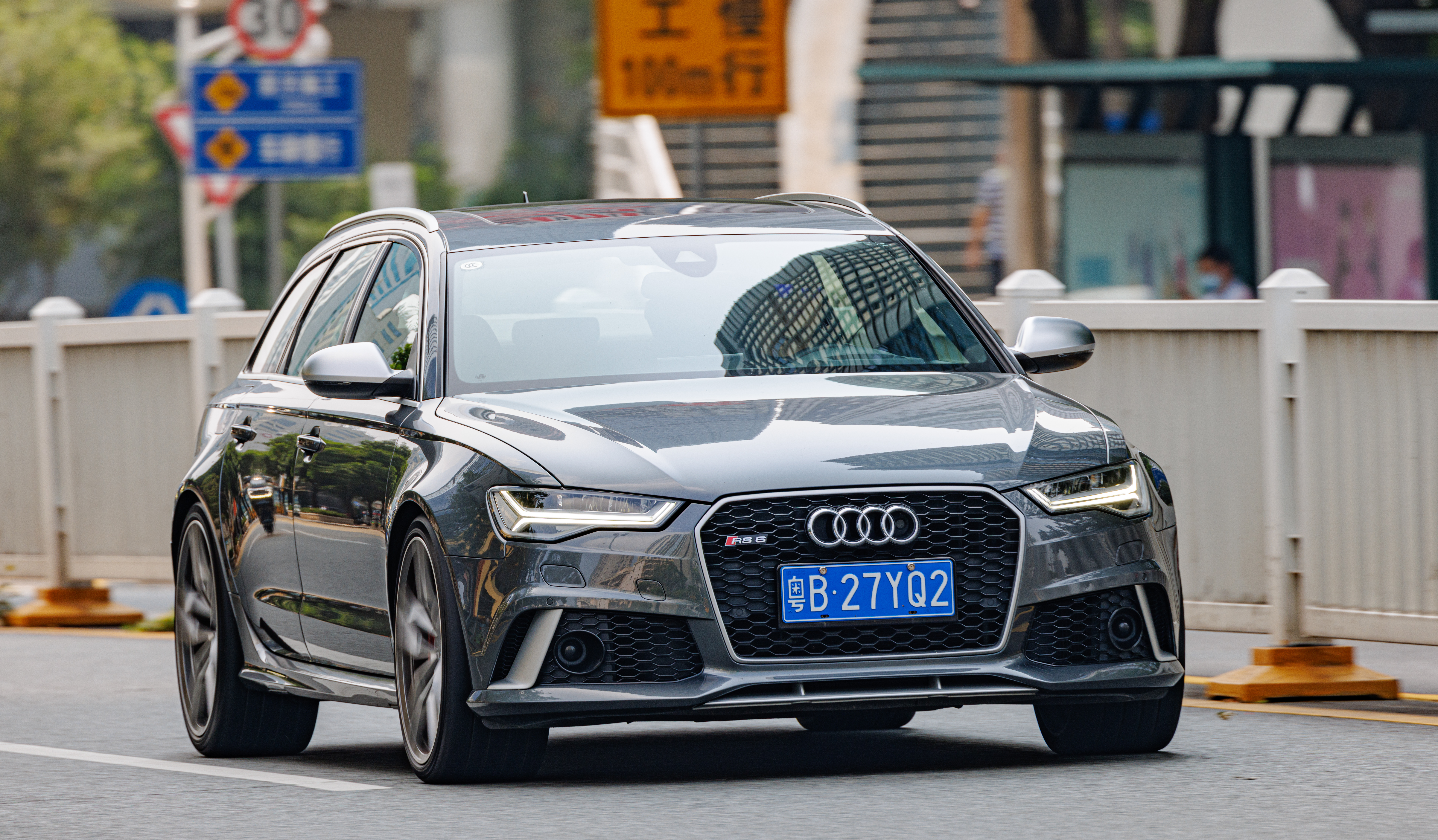
The Audi RS6 GT is a very fast, performance-focused version of the RS6 wagon. The episode notes it’s being replaced by a plug-in hybrid, meaning the next one won’t be the same type of car.
The Porsche Cayman GT4 is a track-focused sports car variant known for its sharp handling and enthusiast-oriented setup. The hosts mention it as an example of a “traditional” pick for a two-car driveway, but note it wouldn’t be practical—showing how their criteria balances fun with real-world usability.
A plug-in hybrid is a car that can run on electricity, but it also has a regular engine as backup. Charging it from a plug helps it use less fuel, but it can change how the car drives compared with a traditional setup.
The Audi RS6 Avant is a fast version of a wagon. It’s meant to carry people and stuff, but still drive very quickly. The podcast brings it up because there’s a newer direction coming for the model.
The Ferrari 488 GTB is a famous fast supercar. Saying the next Alpine will be benchmarked against it means they’re aiming for similar “how it feels to drive” performance, even if the technology is different.
Horsepower is how much power the engine makes. More horsepower usually means the car can accelerate harder, which is why they expected it to feel a certain way.
Concept
pendulomy
They’re describing a feeling where the car seems to swing around and you can’t easily keep it settled. They expected that, but the car didn’t behave that way.
Aquaplaning is when water builds up under the tires and they can’t grip the road well. When that happens, the car can feel like it’s sliding and steering becomes less reliable.
Negative camber is when the tires lean slightly inward at the top. It can make the tire contact patch work better when you’re turning, so the car feels more grippy and responsive.
Coilovers are suspension parts you can adjust. They help the car sit and react more precisely when you turn, so the tires stay planted instead of feeling floaty.
Concept
weight and steering feel (lost in the weight vs reactivity)
Heavier cars can sometimes feel slower to respond when you turn. This car apparently uses suspension tuning so it still reacts quickly, without feeling nervous.
The Audi RS 3 is a high-performance version of a small Audi car. It’s made to be quick and fun to drive, not just practical. The podcast mentions a limited “competition” version of the newer RS3.
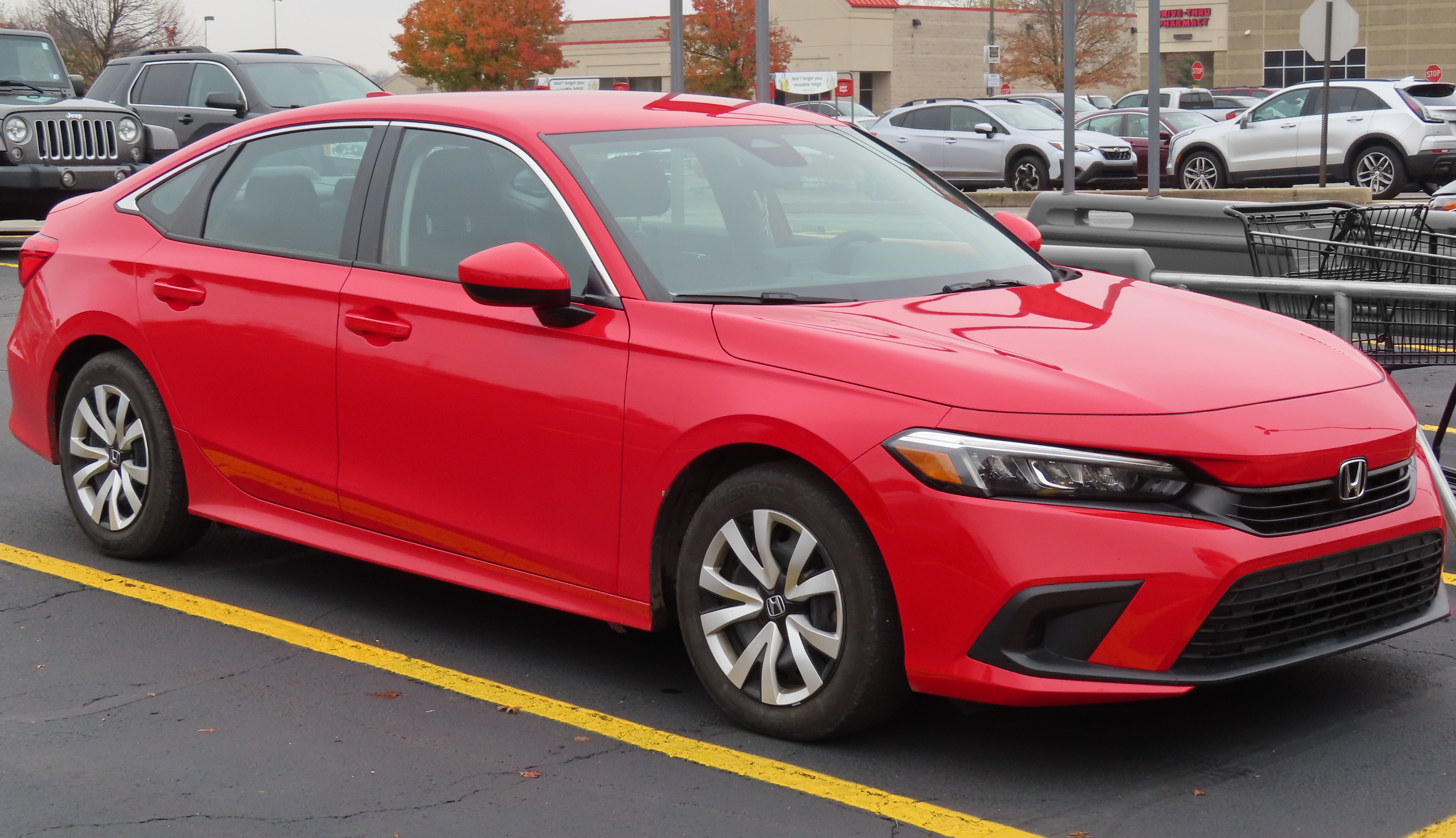
They’re talking about the new Honda Prelude and what it’s like to drive. Even though it’s a hybrid, they’re judging whether it still feels “sporty” in day-to-day driving.
This refers to a special type of gasoline engine (Atkinson Cycle) that’s tuned more for efficiency than raw power. In a hybrid, the car can use the electric motor too, so it doesn’t have to rely on the engine all the time.
They’re talking about the car’s hybrid system—how the gas engine and electric motor team up. Depending on how it’s programmed, it can feel sporty or it can feel a bit disconnected.
These are door handles that are tucked into the body so the car looks sleeker. The trade-off is that they can be a little less convenient than normal handles when you’re trying to get in quickly.
The Honda Civic is a small, everyday car made by Honda. Some versions are designed to use fuel more efficiently, including hybrid-style setups. People talk about it because it’s a common benchmark for how a normal car drives.
Faux gears are fake “gear changes” that make the car act a bit more like a normal gearbox. But instead of changing how power is transmitted, it mainly changes engine revs, so it can feel odd or less smooth.
They mention the Hyundai IONIQ 5N to compare how “fake gears” are used in different cars. The key point is that the Prelude’s system doesn’t translate to the same kind of driving feel.
They’re saying the car has an engine, but it isn’t actually turning the wheels. Instead, the wheels are driven by another source (like an electric motor).
In a hybrid, the car can use electricity, the engine, or both. At certain speeds or situations, the engine and electric motor team up to give stronger performance.
They’re talking about how much power the car can make overall. In a hybrid, that number usually includes both the engine and the electric motor working together.
They say the car uses some parts from the Honda Civic Type R. Those parts are designed for sharper handling and stronger braking, which can make the car feel more fun to drive.
Adaptive suspension adjusts how stiff the car feels while you drive. It can make the ride smoother on bad roads and more stable when you’re driving hard.
Concept
"layered" powertrain and chassis
They mean the car feels like it has multiple levels of response. As you drive faster or slower, the way power and handling come in feels smooth and well matched.
VTEC is Honda’s technology that helps the engine breathe better at different speeds. It’s why some Hondas feel especially exciting when you rev them higher.
Car
BMW iX5 hydrogen
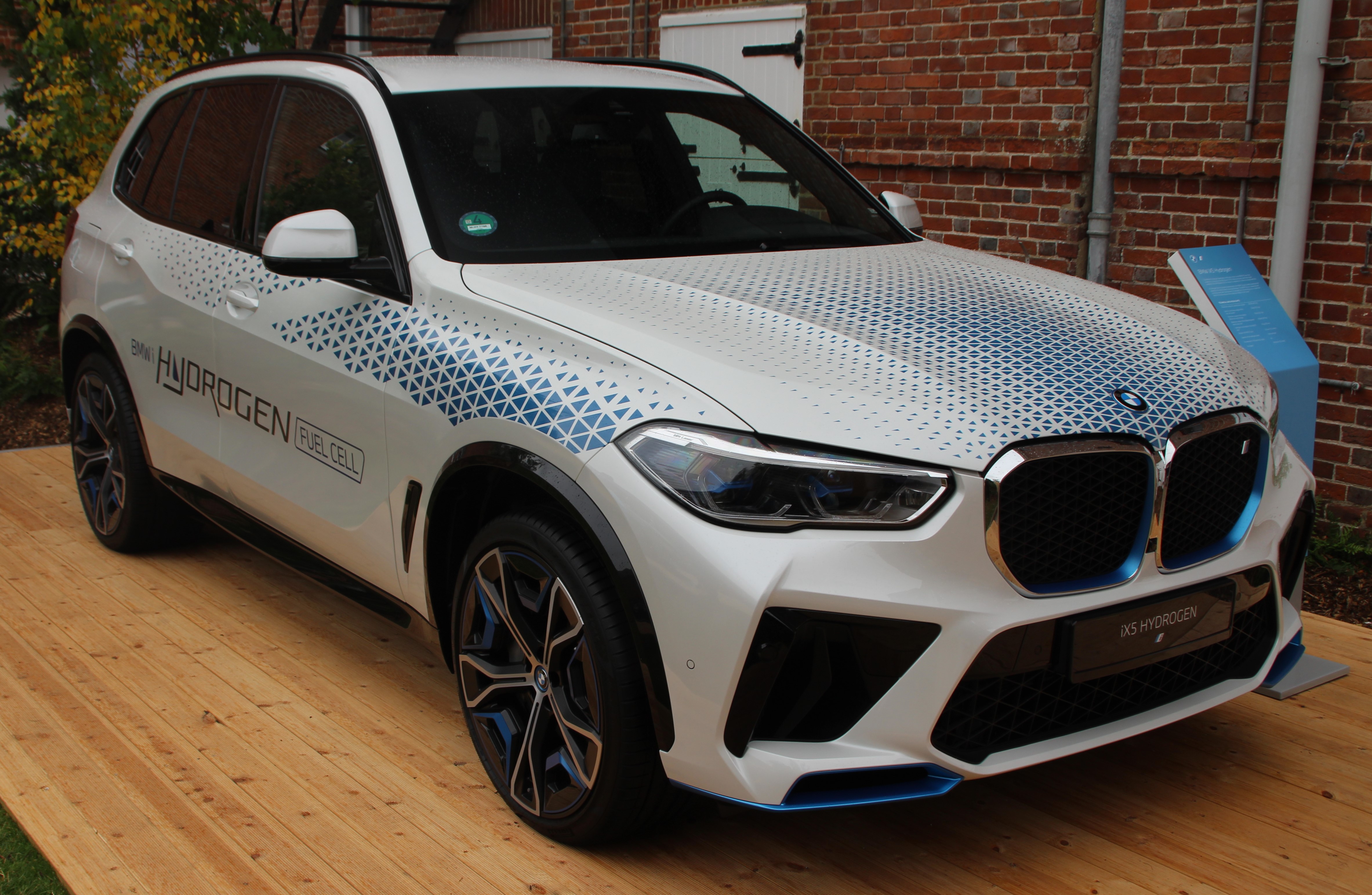
The BMW iX5 hydrogen is BMW’s hydrogen fuel-cell vehicle concept/program discussed in the segment. The hosts say BMW is working on improved hydrogen storage technology to boost range and aims to have hydrogen infrastructure ready by around 2028, with production cars expected to arrive then.
Hydrogen cars have to keep hydrogen somewhere safe, and it’s not easy to store. Because of that, the storage system can take up a lot of space and affect how practical the car feels.
Boot space is the trunk/cargo area, and for hydrogen cars it can be affected by where the hydrogen tanks or canisters are placed. The segment notes that earlier storage approaches could take up a huge amount of rear space, reducing practicality.
The Toyota Mirai (second generation) is referenced as an example of how to package hydrogen storage more efficiently. The hosts say Toyota split the hydrogen storage into multiple canisters (around the transmission tunnel area) to reduce the amount of space taken from the cabin and rear.
Hydrogen storage is one of the biggest challenges for hydrogen cars because hydrogen takes up a lot of volume. The transcript highlights how BMW’s compact cylinder layout aims to reduce the space penalty compared with earlier hydrogen packaging.
This is about how the car controls the flow of hydrogen from its tanks. Instead of managing each tank separately, BMW connects them and controls them with one valve to keep the delivery steadier.
Concept
range vs EV real-world driving
The episode compares claimed hydrogen range (up to about 385 miles) with how EVs can achieve much longer distances in practice. It also notes that real-world results can differ from claims, using an example where the speaker’s test showed a lower real-world figure.
The discussion argues that EVs have an advantage because charging infrastructure is more widely available than hydrogen fueling. That makes “filling” practical for more drivers, which can matter as much as vehicle range.
Fast charging refers to higher-power EV charging that reduces the time needed to add energy. The hosts argue that EV charging has improved dramatically in recent years, narrowing the refueling-time advantage that hydrogen claims. They also mention that even a ~20-minute stop is acceptable for many drivers compared with older EV charging experiences.
A hydrogen car makes electricity from hydrogen to move the car. Refueling can be quick, but you may have fewer places to fill up compared with electric charging. The discussion also brings up that safety and rescue procedures can be more complicated than with gasoline.
This means charging an EV using a super-powerful charger. In theory, it can add a lot of energy in just a few minutes. The hosts also point out it’s not widely available yet.
“Charging up” just means plugging in and charging the battery. The hosts compare how long that takes versus filling a hydrogen car. They suggest that even if it takes a bit, you can use the time while you wait.
Fuel station accessibility is how easy it is to find places to refuel or recharge, and it strongly affects real-world usability. The host argues that hydrogen’s limited station network could make it hard to compete even if refueling is fast. This is contrasted with EV charging becoming more common and faster.
The “safety aspect” is about what happens after a crash and how hard it is to deal with. The host points out that EVs can also catch fire, and the challenge is how to handle it safely. The same kind of concerns apply to hydrogen vehicles too.
Concept
EVs catching fire vs petrol/diesel (collision fire risk)
They’re talking about which type of car is more likely to catch fire after a crash. EVs don’t have gasoline onboard, so the fire risk can be lower, while gas/diesel cars have fuel that can ignite.
They’re bringing up the Ford Pinto as a cautionary tale from the 1970s. The concern was that in certain crashes, the fuel system could fail in a way that made fires much more likely.
Hydrogen cars carry fuel in a very high-pressure tank. The safety challenge is making sure that tank stays intact and doesn’t leak dangerously if there’s a crash.
They mention infrastructure because hydrogen cars only work well if there’s somewhere to refuel them. So progress isn’t just about the car—it’s also about the fueling network.
They’re saying racing—specifically Formula One—helps push new fuel ideas forward. Because teams test and develop them intensely, the technology can improve faster than it would otherwise.
The hosts compare early EV adoption challenges with today’s faster, more widespread charging. Charging infrastructure matters because it determines whether EVs are convenient for daily use, especially for drivers who can’t always charge at home.
Fast charging is when an EV can recharge much quicker than normal. They’re pointing out that charging used to be slower (around 50 kW) and is now much quicker.
They’re talking about Tesla because of how easy it is to charge. The point is that Tesla’s charging network made their day-to-day driving much less stressful.
Charging anxiety is the worry that you won’t find a charger in time. It’s especially stressful if you’re on the road a lot and can’t charge easily at home.
They’re saying hydrogen cars only work well if the hydrogen stations are reliable. If stations are broken or nobody is maintaining them, it becomes annoying and people won’t switch. The goal is to make refueling feel as easy as gas.
This is when hydrogen is used like gasoline—burned inside an engine to make power. It’s not the same as a fuel cell, which makes electricity instead. It can work, but it still has emissions and engineering hurdles.
They mention a hydrogen-powered Aston Martin Vantage doing laps at Nürburgring. The point is to test the car in demanding real-world conditions, not just on a test bench. It’s a way to see if hydrogen power can handle racing stress.
Concept
Super Taikyu
They bring up a Japanese racing series called Super Taikyu. The point is that racing can help new technologies get tested and become more mainstream. They’re wishing for a similar platform locally.
Toyota took a GR Corolla and tried running it on hydrogen. Instead of using hydrogen to make electricity, it burns the hydrogen like a fuel, then races it to see if it can be practical and fast for long events.
In endurance races, every minute spent refueling costs you. They’re saying Toyota improved hydrogen refueling so it takes closer to normal stop times instead of being a big disadvantage.
The GR LH2 is Toyota’s hydrogen race concept. It’s designed like a Le Mans prototype and uses hydrogen combustion to explore whether hydrogen can compete at the highest level.
They’re talking about Le Mans rules starting in 2028 that could allow hydrogen race cars to compete together. If the rules make it worthwhile, more teams might join and develop the tech.
A hydrogen fuel cell makes electricity from hydrogen while you drive. That electricity then powers the car’s electric motor, which is why it’s different from burning hydrogen in an engine.
The idea here is that racing helps new technology get better faster. Because cars have to run hard for a long time, engineers learn quickly what works and what doesn’t.
Concept
fuel of joy
“Fuel of joy” is basically a way of saying petrol feels fun and exciting to drive. The hosts are talking about how different fuels can change the vibe of cars.
Concept
EV is obviously everywhere now
The hosts are saying electric cars are very common right now. That makes them wonder what it would take for hydrogen to become a big deal again.
Alpenglow is presented as Alpine’s hydrogen concept, designed to demonstrate what hydrogen power can feel and sound like in a real vehicle. The hosts mention it being shown at Le Mans and tested at Spa, emphasizing it as a technology demonstration rather than a mass-market product.
The Renault Sport Spider is a small sports car with an open-top design. It’s connected to Renault’s performance-focused division. The podcast brings it up because it’s part of Renault Sport’s history and people hope that spirit comes back.
The Renault Twingo is a small car made for city driving. It’s easy to maneuver and park. The podcast mentions it because there’s talk about it coming back or continuing.
Charging networks are the places you can plug in and charge an electric car. The point here is that EV charging is getting easier to find, while hydrogen stations are still much harder to build.
“700 bar” refers to the pressure used to store hydrogen in a high-pressure tank. Because hydrogen is stored as a compressed gas, the tank must be engineered to safely handle extremely high pressures. The hosts compare it to turbocharger boost pressure to give listeners a sense of scale.
A turbocharged engine uses a device that squeezes more air into the engine. More air usually means more power. The hosts bring it up to compare pressure levels to the hydrogen storage pressure.
The BMW Z3 is a small two-seat roadster from BMW. People look at it as a fun used sports car option when they want something more “classic BMW” than the newer stuff.
They’re talking about trying to buy a fun sports car for about £3,000. The point is that you have to compromise on condition and sometimes choose the right model year to avoid expensive problems.
A mid-engine car puts the engine closer to the middle of the car. That usually makes the car feel more balanced and easier to handle when you drive it hard.
A six-speed manual means you shift gears yourself using a clutch. More gears can help the car feel smoother and more responsive.
Concept
facelift vs pre-facelift (model-year change)
They’re saying that later versions of the same car (a facelift) can be safer to buy than earlier ones. The facelift often fixes problems that showed up in the first years.
“Full service history” means the car was regularly maintained and there’s proof of it. If a car has that, it’s usually less likely to have neglected problems that show up later.
It means “fun in a surprising way,” usually from a car that isn’t the obvious pick. The idea here is that a well-maintained, slightly unusual BMW can still be genuinely enjoyable to drive.
This BMW is a smaller, sportier version of the 3 Series. The “Ti” version is meant to feel a bit more fun to drive than a standard trim, mainly through suspension and handling tweaks. It’s not an all-out M car, but it’s still designed to be more driver-focused.
Term
ice on a tyre launch
A “tyre launch” on ice is a controlled demonstration of tire grip and vehicle stability on low-friction surfaces. It’s relevant because it highlights how chassis balance and tire choice interact—especially for a car described as having “beautiful balance” and predictable rotation.
Horsepower is basically how strong the engine is. In this case, they’re saying the power level is enough to feel fun, but not so much that it’s hard to control.
Concept
rotates around you in the middle
They mean the car feels like it “turns and pivots” nicely through a corner. Instead of feeling like it’s fighting you, it feels balanced and controllable mid-corner.
The BMW 1 Series is a small BMW car. The podcast is talking about a specific performance version from the 235i/135i family and how it rides well. People mention it because it’s a compact car that can still feel comfortable.
They’re saying the “Ti” version adds small upgrades aimed at making the car feel better to drive. Most of those changes are about the suspension, which affects how the car handles and how smooth or controlled it feels.
BMW’s “M” cars are the high-performance versions. They usually have more serious upgrades than regular models. Here, they’re saying the Ti is sporty, but it’s not the full-on M-car experience.
Car
M135i
The BMW M135i is referenced as the benchmark for driving feel. In this discussion, the hosts contrast it with a front-wheel-drive BMW 1 Series era, implying the M135i’s layout and dynamics feel different even if both are performance-oriented.
They’re comparing the BMW’s driving feel to a Mini Cooper S. The idea is that front-wheel-drive hot hatches tend to feel nimble and fun, and that’s what they’re noticing here.
They’re saying the car has about 160 horsepower and it’s turbocharged. A turbo engine usually feels stronger in everyday driving because it can build boost quickly.
The Peugeot RCZ is a small Peugeot coupe that looks really distinctive, especially because of its curved “double-bubble” roof. The hosts are saying it was stylish and fun-looking, but it wasn’t as exciting to drive as some rivals because it was front-wheel drive.
A homologation special is a special road car made so a company can race a similar version in competition. Racing rules often require the race car to be based on a real street car.
The Volkswagen Scirocco is a sporty-looking Volkswagen that was popular with people who wanted a fun small car. The hosts are comparing the RCZ to it to talk about how well the RCZ sold and who it was trying to attract.
Electrical faults mean something in the car’s electronics isn’t working right—like sensors, wiring, or control units. It’s usually not a simple “replace one part” situation, because the problem can be intermittent.
LIVE
Welcome back to The Gassing Station, the podcast that goes tearing through the piston heads forums,
much like my co-host, Sam Sheehan, has been tearing through the Welsh countryside
in two cars that seem completely unrelated. Sam, you've been driving an A110 GTS.
Yes.
And an RS6 GT.
Yeah, very different.
And so there was a video that went live on the Piston Heads YouTube channel this week,
or last week, by the time you listened to this. It was fantastic, looked brilliant,
really enjoyed listening to you. And I don't know how on earth you managed to find a connection
between those two cars.
It is a bit like introducing a grand piano to like, I don't know, a flute or something,
isn't it? It's very, very different.
Yeah. Well, the connection was that two cars, if you could have a two car garage,
two car driveway, what would you go for? And we wanted to find something or a pair of
cars that were topical right now, because of course, you could say the traditional,
you know, me, I'd instinctively say four, five, eight, speciale and a Cayman GT4 or something,
which would not be practical, of course, but I'd worry about that, you know,
put the kids on the roof or something. But we wanted to find something that was the typical,
you've got space in one, and the other one's really entertaining and great for
B roads. And these two cars are topical because as the video covered, both of them
are bowing out. In fact, the RS6 Avant GT already bowed out to be replaced by a
plug-in hybrid successor. And the A110 famously we know is going to now come all electric
and be totally different and benchmarked against the 488 GTB. So the angle there was
two departing heroes kind of work for a two car driveway garage as well.
Yeah, absolutely. It's because they are both phenomenal to drive. I've not done the
GTS. I've done the regular A110. I did the RS6 GT a couple of years ago.
Great car, isn't it? A phenomenal car. But yeah, so how did you, because that was not only did you
drive, again, two seemingly unrelated cars, obviously they actually worked together really
quite well on some fantastic roads. But I was amazed that you were actually managed to pull
that shoot together because the weather was atrocious. I know, yeah, it was so horrible.
It was zero degrees, exactly zero degrees. I think we saw two or three as well at one point.
So two or three degrees, both on summer tires. Obviously the RS6 actually was okay because
it's quite weighty. It presses down to the tarmac and all-wheel drive, of course.
The Alpine was a little bit more skittish and I love those Alpenes. And like you said,
the GTS is different. It's my favorite one of the bunch. I've driven the R,
I've driven the, obviously the normal car. A lot of people say the normal car is the best
one for the UK because it's a bit more, a bit softer. But I actually think the GTS is fine.
I think it's a bit firmer, but it's nowhere near uncomfortable. So for me,
it's ideal. It's the perfect car from that range. But yeah, on that day,
I did have a few scary moments. Not power over steering moments, under steering moments.
It has a lot of sideways. I'm not going to pretend that my slides were anything
spectacular. It was more of a just boot it in the Audi and it allows you to have fun.
That's the thing I took away from that car the most was I thought it was going to be,
obviously very quick, 630 horsepower. I knew it was going to be rapid,
but I thought it was going to feel weighty. It was going to be a bit pendulomy. You know,
you get the tail around. It's going to be a bit like, I can't hang on to this.
It was the total opposite. I mean, when you drove it, I presume you had slightly warmer weather.
Do you know, it was funny enough, it was warmish and then absolute torrential downpour.
Oh, there you go. Perfect weather for the car. It was November 24, I think I drove it in
the south of France or somewhere in Spain. God, that's unlucky to get rain.
Yes, exactly. Yeah, it was really, really, really odd. But I mean, it was just
it's so heavy that it just, it doesn't feel like it could aquaplane in any way. It's just
I am always gripping, always gripping, but also it has that wonderful thing. And I think it's
because of the coilovers and the geometry has got a bit of negative camber. The engine in these
Audi's, even these modern ones are still right over the nose. So you think it'd feel really
sort of like lethargic on the nose and a bit heavy, but actually I guess it's all
geometry and those coilovers, the way they've made it, it just feels so on the nose in a
good way as in it's really pointy. So even if you're a bit sideways or you're turning into a corner,
you always feel like your inputs to the steering are having an impact to the
direction of travel or the correction you make. Some cars, especially bigger and heavier cars,
you can put some corrective lock in and there's a little bit of like it gets
lost a little bit in all the weight, I guess. But in this it's not, it's got that kind of
reactivity of a much lighter car, but then the bolted down security of a heavy
sensible safe Audi. So yeah, it was what a machine. I honestly came into that car thinking,
I'll be impressed technically, but I won't emotionally connect with it. And I'm really
emotionally connected with it. Which is saying something for an Audi because I had the same
thing. That was the first Audi I drove where I was like, this drives fantastically because
they're always a little bit disconnected, always a little bit safe. They're engineered,
like they've always been engineered like that. And so yeah, to come out of that going,
this drives fantastically. And then to see what they've also done with the new RS3,
competition limited, which is going to be, which is horrifically expensive, but it's going to,
I almost guarantee it's going to drive brilliantly. Exactly, it was 180 grand.
180 grand, yeah. And that was 90, wasn't it the special edition?
At least. I think it was at least 90. Yeah, so.
Something a little more affordable though. So yes, if you want to go and watch that,
go onto our YouTube channel, go watch it. It's nice that we're kind of doing these
videos again. Good to see Sam Sheehan on camera. I didn't film the car that I drove because I only
had about 50 minutes in it at the Goodwood Media Day, but it was enough to get very familiar with
the new Honda Prelude. We'd actually driven it in Europe somewhere. I think,
I think Matt Burr drove it in Spain. So we had quite the full in-depth review.
I just did a little catch up to see what it was like on the UK roads. And you know,
it's a really lovable little thing. It looks great. It shouldn't be, because you look at it and you go,
well, it's a Atkinson Cycle combustion engine hybrid. So it sounds very sensible. It does sound
very sensible. So it's a combustion engine, two-litre petrol engine that basically charges an
electric motor. And you can, they've developed, so it's, it's, it's hard to know where to
start with it because it's such a multifaceted car. Yeah. But yeah, essentially it's a, it's a
sporty-ish coupé with this hybrid setup. You don't really find many coupés on sale anymore
anymore because legislations killed off so many of them. And everyone wants rear doors, don't they?
So there's, there's this constant like the minuscule hidden door handles on the back door.
So Honda's gone about it in a very hondery way of giving you an affordable-ish,
sporty-ish coupé. It's about 40 grand. And it's a hybrid. And they've gone, well, because it's,
it's kind of set up like a civic hybrid, it's not brimming with engagement initially. So you've
got this sport, well, S plus button, where the, you get faux gears like you would on a,
say an, an IONIQ 5N, but instead of an electric powertrain that you're controlling, you're actually,
if the faux gears are the connected to the engine. Right. So you're driving and you're flipping up
and down through the gears, but the engine's not, it's basically what you're controlling is
the amount of revs coming from the engine. You're not really controlling anything else.
Oh, that's weird. Which is really quite strange. So you're revving it out,
but all that's happening is that the engine is making more noise. It's not
smooth. Exactly. Yeah. So it's not correlating. So it's kind of one of those things where
if you try to suspend your disbelief, you'll go, this is kind of fun. But after a while,
you go, I'm not actually controlling. I can feel that, you know, there's even a little,
you even get a little like talk shove between the two. So when you change gear, you get
the smallest of little kind of like knocks to kind of make you feel like there's a little
shove. So it's nothing like the Hyundai stuff in the end, ultimately, because the Hyundai stuff is
convincing. Yes, exactly. You can easily, if you've got a passenger in and didn't tell you
you didn't have an engine and they, all right, we could notice, but your average person absolutely
couldn't tell that it doesn't have an engine. Whereas this sounds like everyone could tell.
Both are fake. Yeah. It's just, it does have an engine, but it's not powering the wheels.
Exactly. So you are hearing engine noise. It's just not connected to the front
axle. It's not actually powering. Unless you're in, unless you're kind of at higher speeds,
and that's where the combustion engine then works in tandem with the electric motor to give you the
full 184 horsepower. I think. So that, that was probably the weakest aspect because it's not
especially quick either. It's, you know, the official figure is not to 62 in north of eight
seconds. I think realistically, if you're, you can get it below that. I think I've seen
some people, some reviewers get in the seven, you know, in the seven seconds, but still
not hugely quick. However, it's got some hardware from the Civic Type R. So brakes are from the
Civic Type R, suspensions from the Civic Type R. So the adaptive as well. Adaptive suspension.
So it drives fantastically. And on a UK road, it's brilliant. It's such a joy to drive
at six or seven tenths. Yeah. You go really quick and it's like, it just doesn't feel,
it's just not that fast. It's not that engaging, but it's one of those ones where if you
can switch your brain off a little bit and go, I'm on a nice twisty road, I'm going to have some fun,
then it is genuinely a real joy. And it's so much going on. The powertrain's so
layered and the chassis is so layered that it's, it's a fantastic little thing. I think the
problem that people have is that it's called a prelude. Yeah. Because they think of the,
the, the meteggies, the screaming 8000 RPM VTech engines. Whereas really when I was driving
it, I was like, this feels like a modern interpretation of the original insight.
Yeah. And maybe if they'd pulled at the insight 3 or whatever version of insight we're on at the
moment, maybe people would be a bit more excited by it. But you know, the prelude was there to,
was never an especially fast car. It was just the meteggies and the, the, the Type S that
really kind of, you know, was, was the hot version. So it does feel like every other,
you know, if you, if you really look at it, it is like a prelude or what a prelude would
have been. Honda knows they're not going to sell many of them in the UK. It's basically designed to
inject a little bit of excitement into their hybrid range. And I kind of feel like it's doing the
job. From one modern and obscure powertrain to another, we've got some news that hydrogen
isn't dead. Bizarrely. So I don't know if you've read this sound, but BMW has come out with an
update on its IX5 hydrogen. Yes. Something of where if you blink and you'll miss it, essentially.
But BMW is pressing ahead with a hydrogen program and come 2028, I believe when it's going to have
all of its hydrogen facilities online, we can expect the first production cars to arrive
that being at the moment, the IX5 hydrogen. So what they've recently announced is that
they've developed a new type of hydrogen technology or storage technology that has
drastically improved the range of the car. But when you look at it versus what high-tech stuff
that we see in the electric car world, it really looks quite basic. That's it. The story is essentially
that if you have a hydrogen car, this being a hydrogen fuel cell, obviously you need to store
the hydrogen somewhere. It has to be pressurized to an extremely high rate. Hydrogen is notoriously
difficult to store, especially as a liquid, and it has to be stored ultra cold to keep it in a liquid
state. So normally what you've had in the past is a massive tank to store it in. That can take
up a huge amount of boot space or rear space. What Toyota did with the second generation Mirai is
they split it into three canisters, kind of where the transmission tunnel would be. So if
you look at the interior space, especially in the rear, you have this massive center console that
takes up a huge amount of space and it's where they've had to store the tank. What BMW's been able
to do is create seven much more compact, long and thin cylinders out of carbon fiber reinforced
polymer. They look like the sausages you get in Germany. They do look a bit like
Frankfurters, yes indeed. And they're arranged kind of in a row, all connected, and they can be housed
below the cabin floor, much like you would have in a battery car. So it's not using up anywhere near,
so actually BMW says that it doesn't have any effect or any compromise on space as what they
would in a battery car. So that is one of the major problems that you'd get with a hydrogen
car is storing the damn thing. But the second thing is what the innovation, and I am despite
spending a lot of time last night trying to get my head around the actual chemistry of it,
basically is before you would have tanks that were individually valved. So if you were using,
hydrogen would trickle out of one tank to power the fuel cell and then out of another
one, out of another one. This one though, they're all interconnected and controlled by one valve,
which BMW said is better at providing consistent performance versus what you would have if it was
kind of individual tanks controlled individually. Can't wait for when this starts the craze of,
you know, like having 16 valve on the side of the car was cool. And that's going to be,
you can be like, oh, he's got one valve. Maybe it would be tanks that would be like,
oh, he's got a seven tank. Oh, you've only got freemate in your mirror. I've got seven in my IX
five. But by doing that, you'll get a range of 385 miles or up to 385 miles, which coming to think
of it is actually a little bit rubbish because you've got EVs these days that can do well north
of IX three, 500, 500 miles claimed my real world during my test was for 20 ish, but it's
still good. And that was real world. That was like actually driving it normally.
Isn't it crazy how far this technology or electric technology charges as well. Yeah.
And yeah, which we'll get on to in a little bit. But you'll look at it and you'll go, well,
you know, that's, that's all well and good. But yeah, and EV will do well more the infrastructure
is there. And, you know, what's what's the point? Well, charging essentially or filling. So if
you can find a filling station, and apparently there's 16 in the UK. So you might have to drive
385 miles just to get to the filling station, but you'll be able to fill up in around five
minutes, which is considerably faster than what you would do in an electric car.
It is right now, but we are on the brink. I'll touch on it a bit on that being very
possible with electric cars, especially in Germany. Five minutes. They've got a thousand
killer. I went on the AMG GT drive, AMG GTXX drive last year, and they were charging that
electric concept up with 1000 kilowatt charges, and it was taking like three minutes. But that's
firstly, it's prototype stuff. And secondly, they're only being rolled out in Germany.
But Mercedes is planning on rolling them out in the UK. This is all near future stuff.
So presently, yeah, five minutes is way quicker. But the interesting thing is
not to jump ahead on this, but electric technology, electric car technology has
moved at such a rate, especially in the last five years, that it almost means hydrogen
really has to, like to compete now is really going to be difficult because you're going to
look at the price. You're going to look at the accessibility to a fuel station.
And the charge times 10 years ago, you're like five minutes, amazing. Night and day,
I'll take a hydrogen car please. Even if I have to travel 20 minutes to fill up,
it's considerably faster than the hour I need to plug in my electric car.
But now EVs are charging rapidly, genuinely.
Yeah, well, obviously, the rapid charge and even, you know, I still don't really mind
the 20 minute break to get a coffee while it's charging up. But that I think the tricky thing
will be that, you know, before it was a case of, yes, obviously the time of charging up,
the hydrogen car benefits from filling up much faster. But there is also the safety aspect.
Or at least the complication aspect. So I know there are going to be some EV naysayers out there
that go, well, if you crush an EV, you know, it could catch fire. Anything could catch fire.
You know, I mean, like, yes, the putting it out is the issue. But, you know, they are so much
safer now EVs when it comes to collisions, there's so much work and fire. I think it was
there a fifth fight, you're five times more likely to catch fire. I'm saying this as a guy
who's got two petrol cars and a petrol motorbike, but they are the reality is the data is
quite clear now. Like, you're five times more likely to catch fire, not you, hopefully not you.
The car is more likely to catch fire with its petrol diesel, I think by a factor of five,
of course, EVs. Yeah, I mean, there was, I mean, remember the Ford Pinto, it was during the
70s, there was the crisis of where, you know, like that in the booth, anyone. Yes, let's
put the fuel tank in the boot, and then everybody who crashed into one just all of a
sudden burned explosions. So, you know, the thing is that's the thing with technology,
it moves forwards. So electric cars are a heck of a lot safer than what they were.
There is a concern with hydrogen is that obviously you've got an immensely high pressure
tank. Yeah. With an exceptionally highly combustion, highly combustion, high combustion.
Yeah, explosive, explosive, explosive element that, you know, if you did have, I was going to say
high explosives, but it's high voltage, isn't it? Nice electric six reference there. Love that.
But you know, I think you mentioned this off air is that, you know, let's say
everything went hydrogen, and it was the way it is now, and you'd had a lorry that collides with
another lorry, and the explosion could be catastrophic. However, BMW says that with its new
setup, not only does it have a metal frame to contain everything in, but the rigidity and
the safety of their cars now, the iX5 in particular, is so good that it is already
considerably safer than what any other hydrogen car would be before. So that's the thing you've
got to bear in mind with this sort of stuff. If the people that are persevering with it are making
advancements with it, and that's going to be the case with, you know, we talk about infrastructure
a lot. We've been mentioning sustainable fuels on the pod recently. You're still running it in
your, I'm sure you've probably gone through your tank now. I'm back into the old dinosaur
juice now. I have fond memories of my sustain. Yeah. You don't have the floral smell from
your exhaust pipe anymore. No more floral smell and no more magical extra talk. Yeah.
What a shame. Yeah, well. But, you know, the problem with that everybody says with sustainable
fuel is, oh, the infrastructure and blah, blah, blah, blah. It's because it's still
very much in its infancy. Yeah. And the more effort that goes into it, you know, the big
driver this year is Formula One. And if the Formula One teams are, more importantly, fuel
suppliers are developing it, then there are going to be advancements. Costs especially.
You've seen it in the EV world. Do you remember when EVs were starting to become a thing and
it's like, you've got to charge them up at home on a three-pin flight, which was just ridiculous.
Yeah. And then if you did go out and you find, you know, I remember when fast charges were
like 50 kilowatts. Yeah. And, you know, now they are so unbelievably quick and they're
everywhere. There are issues. I just want to, like, just to put balance in. I've had issues.
We've spoken about this before. I ran a Tesla as a company car a few years ago,
and that was great because the Tesla charging network, for all of the brand's faults, thanks to
a certain person at the top, the charging network is fantastic. And over four years of running a car,
I had zero issues with charging to the extent that in this job, I drink a lot of coffee and
I'm on the road a lot. So I almost always nearly pee myself when I get to a service station
because I'm like, oh, my God, I'm so desperate because I've been a lovely image for people
to hear on a Tuesday morning. Three times a week, you'll see me sprinting at a service
station to the thing because I've just timed it to that close. But sometimes, but I still
have it in my mind where I'm like, I still want to get, when I'm running electric cars,
I still want to plug them in. But while I'm, I don't want to have to go run in pee and run
back and plug it in. And then so you catch me with the Tesla at the very least just jumping
out, plug it in, run away. I wouldn't even lock the car because it also locks as you walk away.
Beautifully efficient. I just about keep my trousers dry and then everything would go well.
Whereas I've had it in electric cars since where I've had to abandon trying to get the
thing to charge because the screen's not working or the plugs are just annoying.
And I've had to run in, save myself and then get back the car and do the charging because
they're not in a filling or not always in a filling station. There's no one monitoring them.
No monitoring them. You know, we've got some charges near us and one of them has been out
of action for a year. Yeah, exactly. It's just, it's just ridiculous. So when they work,
so just to go back to what you're saying, they are brilliant when they work, but they
are still issues with a few of the brands supplying them. They often get fixed within
five minutes. But the whole point as hydrogen demonstrates is we don't want to wait five
minutes. You know, I want to fill up my car as efficiently as possible,
like you would with a petrol station. You know, normally you just rock up, fuel up and go away.
So that's where this could really move things, couldn't it? It's the consistency
and the making it like a petrol experience. 100%. That's a good way of putting it.
If you can make it like a petrol experience, then that would be great. Obviously, it's going
to require a huge amount of investment in the infrastructure of which I don't know how
many brands be it car manufacturers or fuel suppliers that really give a damn.
But the thing is BMW is pressing ahead with this with the assistance of Toyota. Toyota has
been a big proponent in a hydrogen for yonks. They've been working with BMW on this for
about 10 years. So this project has all come about with a joint collaboration between the
two. BMW is big on hydrogen fuel cell. Yeah. Although if you remember, they made a hydrogen
combustion engine with a V12. Yeah. Yeah. Which was dead cool. Imagine the V12 coming back as a
hydrogen combustion car. I asked them were doing that at one point, weren't they? They ran a hydrogen
powered V8 Vantage at the ring. They did. I think for one lap. Well, Toyota's been doing it.
Heck of a lot more successfully. So in Japan, they've got a series called super taiku,
which is, I wish we had something like that over here because it's pretty much
opening credits. Super taiku. Super taiku. How cool does that sound? It's not
touring cars here. It's super taiku. Yeah. And it's almost like a run what you brung
championship. It's very production heavy, but you know, some manufacturers can bring
prototypes. It's just a smattering of everything. In the endurance series,
Toyota has been running in the last few years a hydrogen combustion GR Corolla.
Oh, cool. The originally when it was filling up, I mean, it would take
massive amount of time. You know, I mean, it was it would finish way behind because
they'd have to pull into the pits and then drive behind the garages to their own hydrogen
filling station. Wait for it to fill up and then go back onto the go back onto the road.
They've then managed to get that filling time down from around five minutes to about a minute
a minute and a half, which is what close to a normal. It's pretty much. Yeah. I think I'm
probably spending longer filling a car up than a minute, a minute, a half. It's around about the
same. So that's drastically improved it. They're also they announced last year a
the GR LH2 racing concept, which was a Le Mans prototype built on hydrogen, built around
hydrogen combustion. And from 2028, the plan is at Le Mans that hydrogen combustion or hydrogen
fuel cell prototypes would be allowed to to compete potentially in their own class.
Other than Toyota, I've not seen anybody sign up to this. So whether it will go ahead or not,
I don't know. But as we've spoken about before, motorsport is such a great way of
developing and accelerating technologies. And so if this does genuinely happen,
you'll go, maybe there is a little bit of momentum behind this. Maybe there is some
movement. If it can be to their advantage, because think back to when Audi switched to diesel
and then at Le Mans, and it actually became advantageous because it went pitting as much.
And then the result was we had all these. Firstly, it was great marketing because
it made diesel suddenly sound like a performance fuel as well as a normal fuel.
But it also proved that it was the better option from a unless I'm very much
mistaken, I'm pretty sure they were going longer through the stints because they didn't
have to fuel up as much and they were actually faster because they were diesel. And
that's why you saw a lot of people switch to diesel. If the same can be true here,
I don't know if it is even possible if this could ever be in a performance sense.
But if they did manage to do that, then surely you see other brands follow.
Well, the Toyota likes to make a big announcement at Le Mans pretty much every year. I wonder
if this year we'll see some sort of demonstration or at least an update of where they're
going with that because it would be. I love this idea of Le Mans being almost like the
what was the motor race that essentially cemented petrol as the fuel of joy. Paris to
Oh, yeah. It wasn't peaking to Paris. It was of that era. Exactly. Big old long journey.
And it had all sorts of different, I feel like a terrible car enthusiast for not remembering
the name of the race. It was like acid batteries and stuff, wasn't it? It was everything.
Battery power, steam, petrol or petroleum. And I would love it if Le Mans came a bit like this
of where it's like EV is obviously are everywhere now. Petrol is still a thing. Imagine if you had,
I can't see anybody wanting to do diesel again. But imagine a diesel Le Mans car and then you
got hydrogen and it's kind of everyone's fighting out to see who's who's the best.
I think that would be really cool. Yeah. I mean, I always thought this to some extent
formula one. Like I think we've spoken about this just have like a budget and maybe some parameter
limits, but otherwise just let them innovate. Yeah, exactly. Yeah. Let them cook as they say.
Imagine if they went, right, no rules. What are you going to come out with? And they all come out
with three and a half liters and screaming to 20,000 RPM. Well, let's go and shove those into
some road cars. So it's not just Toyota and BMW that are focusing on hydrogen. Alpine has
also show Alpenglow. Sounds like a lovely breakfast drink. I follow up my serial with Alpenglow every
morning. Exactly. With a good bit of hydrogen. Yeah. And it actually works. So I think it was a
year or two ago, they took the Alpenglow concept to spa, drove it around, looked pretty cool,
sounded really throaty and mean. They then showed it at Le Mans. I saw it at the Festival
of Speed last year. I've spoken to Alpine about this on numerous occasions and admittedly,
their view on hydrogen seems to get watered down the more I talk to them. Yeah. So at first
started off as a, we just want to see what the best option is. Maybe, you know, maybe this
is a good option. You'll never know unless you invest in it and you invest in the infrastructure.
And then that got watered down to I had a chat with an engineer last year and he was like,
it could work for motorsport. Yeah. But for production cars, probably not because of the
the stuff aside from that side. Yeah, because when I spoke to CEO, Philip Creef, he said pretty
much he's a dude. Yeah, he's a really cool guy. He was the one who gave me the first snippets of
Renault sport. The Renault sport might be coming back and then Renault again said it at the
Twingo event. So I'm like, Oh my God, it's gonna happen. They're talking about it. It's a
TBC but they're talking about it. I think they see a gap because their cheapest performance
cars are Alpenes and there's a big gap beneath that. But anyway, we digress. Yeah, he was saying
very much what you've just suggested basically saying a 110 electric is their focus at the
moment. That's obviously a battery car. They're invading heavy into battery tech.
So as much as hydrogen is very desirable because obviously it keeps it keeps, you know,
engines and that side of the sports car world alive. It's the stuff around it, you know,
charging networks are growing at rapid rates but hydrogen networks, you know, it's going to
take massive investment. Absolutely. And coupled with that, a desire to actually go and buy a
hydrogen car. And despite being a big fan of choice, I love the idea of having, you know,
it's if I buy what I want with my money, I can't see a situation yet where I would
want to buy a hydrogen car. Yeah. I would go if I want to be as clean as possible
and I want something that's going to be cheap to fill up or cheap to use, cheap to run
and efficient, I'll get an EV. Yeah. Sorry. And then I want a combustion, I want a proper
petrol combustion car running on sustainable fuel as my, as the car I enjoy. Yeah. And
it's as simple as that. Hydrogen fuel cell I think interests me as a daily run about but
it still seems far too complicated to actually make. Yeah. You know, as a viable option. But
and the big markets are like, look at China, they're just fully investing in EV. You know,
you need a big market like that to drive this tech on a scale where the consumers
at a vast number are buying the car and there's nowhere doing that right now.
But as, as I've been told by various car makers before, Europe, China, the US, they're
all independent markets. So just because one thing doesn't work in one place,
this was around more the combustion performance car. They said, if Europe and the UK
basically say no more combustion cars from X state, they go, fine, we should take our business
somewhere else. Yeah. And I think that's the case. If China's not interested in hydrogen cars,
maybe America is. So I'm fascinated to see where this goes. Because it's something of where I
thought hydrogen's got to be dead now. No one's really making much, much movement on it.
And if BMW's got a production car in the works ready to ready to launch, I can't wait. And then
you'll have, I think Matt Burr put it, I think it's five different power trains or that you can get
from BMW, which will be electric, petrol, diesel, hybrid and hydrogen. Yeah. That's exciting.
Fascinating. Yeah, can't wait to see 700 bar was what the the hydrogen was pressurized to
in. So just the S 58 turbocharged engine once, I mean, it's, you know, we're not talking about
hydrogen here, but what's that in bar 1.3 bar is your base operation for a turbocharged BMW.
So 700 times the pressure, yeah, roughly of a turbocharger. Yeah, good to know.
All of those cars that we've mentioned are going to be horrifically expensive.
But today's buying challenge is the polar opposite. We've had a few buying challenges recently of
kind of higher end cars, which is obviously very much the PH way, but we also like cheap stuff.
And so Ian hyphen HD nine P four rolls off the tongue. Yeah.
Has said or asked thinking of getting something more fun again with maximum budget of 3000
pounds, that would be my car will be my only vehicle since no longer doing the mileage needed
to run their 1.9 liter TDI Ibiza seen a similar post on here from 2022, but things may have
changed. Previously had a 1500 Spitfire mark, MR2 mark one and an impressive mark one. So don't
mind minor easy tinkering. We'll probably look to buy later in the year when the summer prices
may drop. Hopefully at this age and budget, not sure what the best choice for everyday car will be
and one that will live outside on their list is a mark three, MR2, an NC MX five, an MGF
slash TF and a BMW Z three. Any advice greatly received. Thanks. So quite a fun little category.
Really fun little category. I thought this would be great. I then put it into pH thinking,
can you actually get cars, get decent cars for three grand anymore? And I was pleasantly surprised.
And I didn't Hoover up all the options as well. So Sam, having seen your list and going,
that's not actually the obvious cars. Yeah. What are you thinking? You've got one on here that
they suggested. They did suggest. Yeah. And they've already had an MR2. Now this is a mark
three because I think Ian had had a mark one. If I remember correctly, he was after a mark
three. So you are on the right track. There we go. It's slightly misty in the eye. It looks a little
bit like it's got cataracts. It just needs a little bit of a wet and dry. Otherwise, yeah,
otherwise it looks pretty mint actually. And it's got red fabric seats. Now they came with
leather as well. This one's got the fabrics, but their buckets. It's a mid-engine sports car
that is tiny. It's under a ton, 140 ish horsepower, Revi 1.8, lovely six speed manual. These
are great. I was really tempted by one actually before I got my NC MX-5. But in truth, because I was
intending, although I'm not actually doing as of yet any track days in it seriously, I've done a
coupler. I'll mention that in another part. But I thought, do you know what? I'll stick something
much cheaper and these aren't quite as cheap. This is as pretty much as cheap as it gets
actually from a reputable seller with a nice car, two and a half grand. The most important
thing is that being a 2002 model means it's one of the facelifts. Because the pre-facelifts
had a problem where I believe, I can't remember the exact details, but basically the engines used
to disintegrate and cause all sorts of problems. Terminal problems. Not so much on the facelift
though. So good reliable motoring, 102,000 miles. Yeah, loads of money spent over the
years been well maintained full service history. Full service history on a car that age is very,
very good. Really good. So that bodes exceptionally well for Out of the Box fun.
Talking about Out of the Box fun, a colleague of ours, Mr Matt Bird, would definitely approve of.
It's a 2001 BMW 325 Ti. Now, I love these. I know Matt loves these having had one.
Has he still got it actually? He does. He does still have it. He's got even more miles
than this one. Has he? Yes. This one's got 121,000. I think this is similar to my Fiesta
being in the 140s. Good. Good, well used, very strong. I think they're great. I mean,
look, this is the E46 facelift. So it's got the bug eyes, slightly controversial face.
It's not the best looking car with this face, but to drive, they're really, really good.
I mean, I actually drove one funnily enough on ice on a tyre launch about eight years ago.
And they were trying to demonstrate this new, I don't know why they had an old
325, but anyway, they had one just for us to bomb around on ice. And it was really good.
Such beautiful balance, easily manageable power, 190 horsepower, and also,
yeah, just sort of rotates around you in the middle. So as a sports car feeling,
you know, coupé, it's really good. Basically, the car rides nicely.
Yeah, basically the 235 slash 135i before they even existed. I just, I love how
there was such a short period of time of where the compact existed, because it was this and the
Mercedes CLK compact as well that they are kind of what they wanted.
Which won an award for the worst design rear end, I remember.
It was, it was quite shocking. Both of these cars, both of those cars were on my
shopping list for a first car, just not the 325. It would have been the 316 or 318 or whatever.
But they did a TI on that, didn't they? If I'm not mistaken. So you still got,
because the TI I forgot to mention actually gets a few driver focused additions,
doesn't it? Tweaks to the suspension and stuff. So it's not extreme.
It's not like an M model, of course, but it's got a few little things. And obviously,
they brought this back with the present Gen 1 series for the 1,280, I think it was,
which actually was a better to drive car than the M135i.
Ah, right.
Because it was front-wheel drive. It basically just drove like a Mini Cooper S.
Amazing.
Which was, you know, front-wheel drive hot hatch, good fun.
Still my favorite era of BMW as well.
That's so good.
This era. Yeah, definitely. I saw one in my next car, by the way.
I saw one of these on the road the other day and I was like, I forgot about these.
I got cut up by one of these the other day.
Oh dear. Well, I mean, I'm not surprised because the guy I saw driving this one did
look a little bit like he'd cut people up, but he was at the time parked and vaping and
looking at his phone, which kind of fits the bill.
Anyway, RCZ, Peugeot, but it's the THP GT. So I'm reading that off the list here.
I sound like I'm reading a robotic, like a TV thing,
but it's the one with the punchier engine. It's 160 horsepower turbocharged.
Same motor, I think they put in the DS3 performance as well.
Yes.
So I know that engine was from that car and the gearbox as well, the manual.
Is it a six-speed in that? I remember it being a six-speed.
It should be a six-speed.
Yeah, it should be a six-speed.
So that was actually a punchy motor.
You know, decent chassis, actually.
You know, they're not...
That's the thing about these.
I mean, there's a lot of car, 53,000 miles and 2,490.
That's a lot of car for the money.
They look, and remember when these came out, they were properly cool little things,
because they had double bubble roof that was glass, if I'm correct in saying that.
So it looked fantastic, almost Zagato-ish.
It's just that they were front-wheel drive Peugeots.
I would love it if they had done...
If you go on Gran Turismo, they made various racing and rally versions of the RCZ,
and it's like, what could have been so cool.
Imagine if they had run that in their WRC.
I know, that would have been cool.
Would have been amazing.
An all-wheel drive homologation special version.
Yeah, they would have been really cool.
Better than a buddy, was it a 308 CC or whatever they were?
What did they run?
306.
Up in the arch of T-Mol.
But I mean, like, you know, they wanted this to be the TT rival.
It never quite achieved that in terms of numbers.
I mean, it was a pretty big seller at the time.
It did sell quite well at some point.
It was like the Scirocco, wasn't it?
They sort of had their moments.
Absolutely.
And then they kind of faded away quite quick.
It's...
When I see one out and about, and I'm not getting cut up by them,
I do think that's a really pretty looking car.
Yeah.
Super stylish, two and a half grand.
That is a really good shout, to be honest.
Yeah.
We haven't had an RCZ yet.
No, we haven't.
And my memories of that motor.
I did, when I ran the DS with that motor,
it did have a few electrical faults,
but that was unrelated to the engine.
Yeah.
It was just being a DS, an older DS.
But once they were sorted, it was a really great motor.
It was really punchy.
It felt quick and it had enough torque
that it was usable,
but it still had that surge of turbo charge impact
that it made it quite exciting.
Yeah.
It was old school and new school at the same time,
in that regard.
I love that.
Speaking of old school.
Oh, yeah.
My first pick.
Yeah, this is...
I think there's a...
I'm going to staircase it in from worst to best.
This is actually the most expensive one.
And I think if you're after...
If engagement's not high,
which judging by the list,
it is of quite a big importance,
which probably kind of strikes this one off.
But it's a smart little sports car.
It's a 2005 Mercedes SLK 200 Compressor.
165 horsepower, 1.8 liter engine.
It's not going to...
It's a manual.
And I think I've slanked off Mercedes manuals on here before.
So they're not the best.
However, for three, two, four, nine,
so just slightly above budget,
you're getting 63,000 miles,
a relatively low mile Mercedes sports roadster
with a decent amount of punch
and much more luxury than what you would get on an MX-5.
And definitely a heck of a lot more
than what you're getting in an MR2.
So if you fancy something a little bit more...
I mean, they did say in whatever
that they'll be using it as a daily,
this is going to be far more palatable
as a daily driver versus a Mark III MR2.
And if you squint and you've got mild concussion,
it looks like a McLaren Mercedes SLR.
It does. That was the thing when it came out.
People were like, it's like a baby SLR
in the only way being that it had a bit of a nose.
It does. I can see that.
If I was drunk and walking home, I'd be like, oh, SLR.
And then obviously...
A lot of people are very unkind
about the 55 AMG version of this.
Really? Because I think they were really cool.
I think they were really cool.
They were an animal.
Maybe it's the generation that we grew up in.
But there's a friend of the pod has an SLK55 and she loves it.
It hits her absolute pride and joy.
Short wheelbase, super powerful VA.
Exactly.
It's a recipe for disaster, which is why it's so cool.
Which is...
And this will be far less disastrous
because it has considerably less power.
Yeah.
So the budget SLR of the option,
if you remove your glasses and squint
and maybe rub a vaseline on your eyes.
The second one on my list is a car that is, again,
a little bit over budget, but is, again,
one of the more modern, more refined cars.
2012 Mini John Cooper Works Coupe.
I have a soft spot for these.
Do you?
Ashamed to say it.
Ashamed.
Because I really like them.
The thing that sticks out to me about this car
is that the designer said that it looked a bit like a teenager
wearing their cat backwards.
Backwards, yeah, I remember that.
And you look at it and you go, I see that, but I don't want to.
Do you know what this is like?
It's like when EastEnders does youth culture.
It does.
When they bring in, like, you know,
they've got the youth who's like, yeah, man, yeah.
And you're like, well, people haven't spoken like that for 20 years.
Exactly.
That's youth culture of 1999.
And like this was kind of youth culture of a designer
who was, you know, a little bit more mature,
which is fine, but it was clearly misidentifying.
It's because I think that they had a, you know,
they had a teenage son who went around with their backwards cap.
Yeah, yeah, yeah.
And they thought, oh, that's kind of cool.
And so we ended up with the Mini Coupe.
However, 210 horsepower for 3495,
yes, it's got 101,000 miles on the clock,
but it does look like it's been really well looked after.
It comes with a three-month warranty.
It's shucked full of...
Good tires.
...JCW bits on the listing.
It's that kind of whitey cream with black stripes.
It's a really smart looking thing.
If you don't mind the look of a coupe
that's wearing its hat backwards.
The snapback appearance, yeah.
I'm so, I don't know why.
I don't dislike them.
I think these pictures actually don't,
they look worse in pictures
because they look a bit ungainly
and a bit weirdly shaped, don't they?
Yeah.
In the metal, better.
The car I'm choosing, however, Sam,
is one that is the least powerful
by some considerable margin.
It's not a coupe.
It's a roadster and image-wise,
I think can be a bit of a mixed bag,
but I think it's really cool.
It's a Ford Streetcar.
Now, if you said a Sportka,
I think that would have been an easy win,
but you wouldn't get one in budget.
No, but this has the...
Wait, the Sportcar...
Sportka...
That had...
It was the same power, wasn't it?
I think it had more, right?
No, no, it's just a chassis.
The Streetcar is the Sportcar,
just a roadster version.
So bearing in mind that,
yes, a Sportcar would have been cooler,
right?
But bearing in mind that they're after
something more like a Sportka,
the Streetcar offers you the same power,
a full 96 horsepower.
Oh, yeah.
94 brake horsepower.
But it weighs like a shoe.
Ways absolutely nothing.
This one's got 54,000 miles on the clock,
2999 in black with a black roof.
But they're meant...
I've not driven a car.
You've raced one.
And can I just clarify,
this has eight times the valves
of a iX5 hydrogen, by the way.
It...
Eight valves.
This has got eight valves versus the single valve.
So you can pull up next to your iX5
and go, how much do you spend on that,
mate?
I've got eight more valves than you.
It's going to be a heck of a lot cheaper
and much easier to fill up.
Yeah.
And yes, you're right.
I did race these at the Piston Eds team.
And I mean, it wasn't a street KA.
It wasn't a drop top.
It was a regular KA with even less power,
but obviously coilovers and racing brake pads roll cage.
Oh my God.
So much fun.
I think I've mentioned this on early episodes of this pod.
Best racing series I've ever done.
I'm so...
I love KA.
Got to own a stand on it.
Steering fill.
They're hydraulically assisted steering fill
because it's based on the Mark III Fiesta,
this platform, isn't it?
I think that's right.
That's what I was going to say.
So that's actually a really good chassis.
They're meant to drive brilliantly, as I've heard.
So I think really of the cars that I've chosen on here,
this might be the one that you would have the most fun in.
You definitely have more fun than the SLK.
I mean, it's a drop top KA.
It's going to get some heads turning.
I think it looks really cool.
So I'm going to put that forward.
I'm going to put it back and I'm going to say street car.
Do you know what?
This is one of those things where you could roll around.
If you pulled up to the shops,
it's kind of...
You're not trying to show off.
You know there are convertibles and the average person's like,
Oh God, what an ass.
You know, you roll up in one of these,
everyone's just going to...
Someone might giggle.
A lot of people are just going to go,
cool.
If someone turns up in that,
I'm going to think they're a cool person.
What are you putting forward?
This is tough because I actually kind of want...
Certainly I want the...
You want the street car.
I know.
I know with your wealth.
No, I'm really looking at the 325.
I'm going, yes.
But then the MR2,
I think would probably fit the bill more
of what this person wants.
So I'm going to...
Because he wants an MR2.
He loves MR2s.
No, do you know what?
I'm going to go 325.
I'm going to stick with the TI.
Okay.
Because...
No.
Oh no.
This is tough.
Let's go BMW.
Because you've done a convertible.
Okay.
So there you have it,
a 325 TI versus a Ford street car.
I think I might win this one, you know.
I don't want to put money on it.
If you...
So what would be nice?
If you could vote on it.
So if you're listening to this on Spotify,
I usually put a vote up
for these kind of things
so you can vote either for the street car
or the 325i.
Let us know which one you think
is the best option,
just because it'd be nice to know
one of us to lord it over the other.
If you think, however,
that we've done an absolutely terrible job,
go onto the Piston Heads homepage,
click on this story of this podcast
and you'll find a link to the original topic.
Click on that,
put your own suggestions in there
and go, by the way,
just rubbish selection from Cam and Sam,
especially the street car.
Even though I think it's actually been really very good.
Really very cool,
but I can't imagine people going,
going for that fast, fun Sunday drive.
I mean, you know,
I'm not driven to drop top.
So normally what we would do is
we'd also look through the Piston Heads auctions
for this kind of thing.
Three grand is really quite below
what we would usually find on Piston Heads auctions.
We're kind of aiming more towards the
20 grand plus.
So if you've got a budget of that line
and you're looking for a sports car,
my goodness,
do we have some good suggestions?
Some of the ones that have recently sold,
we've had an absolutely stunning
Mercedes-Benz 500 SL cell for,
I mean it was 28544,
quite above budget,
but nice,
you're getting it.
I saw one of these in
Petworth the other day
and it just,
the setting was absolutely perfect.
Also had a Zeb 4M coupe,
that 43,000 miles,
it's got the CSL wheels on it as well.
22244.
So if you've got a bit more budget,
head to Piston Heads auctions,
because we've always got
some really fantastic sports cars
for you to bid on.
Before we press on as well,
go and get your tickets
for Piston Heads on the beach.
We're going,
we're taking over Brighton Seafront
in May,
towards the end of May.
Go get your tickets.
We'd love to see you there.
It's going to be one of the coolest
Sunday services we've ever done.
And just, yeah,
so if you go to PistonHeads.com,
hit events
and you'll find a way
of getting your tickets just there.
I want to go to that.
You've got to come.
I want to go to that.
You've got to come.
On the beach?
Absolutely.
Yeah, Brighton Beach,
or take it over the front,
I'll be there,
probably not in the Fiesta
because its suspension is still naked.
Don't take it into any of the sea,
there's too much salt in the air.
Oh yeah,
and it's got rust problems as well.
I'll just get the BMW rusty instead.
To finish things off,
we're going with White Goodman's topic.
What's the most disappointing car to drive?
And they've listed
1st Gen Mercedes-A Class W168,
the 1.2 Fiat 500
that their wife actually owned at one point,
and the original Range Rover Vogue.
They've gone into quite a lot of detail on that,
but we will be here all day
if I were to read out each one individually.
But everyone's chipping in their cars.
I think the important thing to differentiate here
is rubbish cars versus disappointing cars.
So some people have come in and said,
oh, this is a rubbish car.
Yeah, of course it's rubbish.
They were famously rubbish.
It's getting in a car and going,
this should have been quite good,
but it's actually quite terrible.
So with that in mind,
HJG has said the first generation Porsche Boxster,
the 986.
It had done some miles,
but it didn't impress me in any way whatsoever.
I've not driven a OG 986,
but my brother had one over a very short period of time,
and the noise it made was absolutely sublime
for the amount of money that he spent on it.
I'm surprised, yeah.
I mean, they're pretty spectacular.
We've got some real controversial ones on here,
but that's the really great thing about it.
What some people find disappointing,
other things are fantastic.
And that's the whole point of a disappointing car.
Other people think it's great,
and then you get in it and go,
oh, it doesn't live up to the hype.
Alex Nine says, for them,
it'd be the DB11 that they drove
on one of those airfield days.
Great car and a great place to be,
but everything felt very easy
and much less of an event than I imagined it.
It had so much grip that it was almost boring
to drive at the relatively slow speeds
they were driving around the track.
Yeah, I mean, it's a DB11, isn't it?
It's not a DB11, it is.
But I think sometimes as well,
we're in the fortunate position
of where we drive so many different cars
all the time,
and we know what the character's going to be,
whereas some people think,
oh, I'm driving an Aston Martin.
It's a DB11, it's got so much power,
and you drive it and you go,
oh, it's just a Wafthee GT that's not that fun to drive.
Heave Ho says,
my first big letdown was a UK spec,
totally standard,
Impreza Turbo 2000.
Last of the classic shape,
it couldn't see which way my Corado VR6
went on a twisty country road.
Way too much understeer to be enjoyable.
I hear those impreces are quite understeering.
I had it four-wheel-line more than once
to try and improve things to no avail.
Then it was an M5 V10,
epic engine,
although the way all the torque was
at the top of the rev range was a bit pointless.
Weird steering, too big, clumsy,
a bit like we've said,
like the EP3 Civic Type R.
Yeah.
Massively disappointing.
Yeah, that car works,
like the race car I drove
was the best one of the best cars I'd ever driven
because it was stripped out
and I was thrashing the hell out of it,
but at lower speed in town,
the EP3 felt like just a normal Honda.
I guess you know.
It's the kind of point of it,
but it was like really gutless.
Yeah.
Really gutless unless you're right up in the rev range.
I don't want to be tearing away
from the traffic lights every time
to have a mild amount of enjoyment.
They also mentioned the R35 GTR.
Oh, that's because I'm not driven in early one though.
However, they've said at the bottom,
admittedly the last two had to stand comparison,
possibly unfairly on the roads I used
frequently back-to-back
with my EVO,
which I also owned at the same time,
and neither could have hung on to that
in the same environment with comparable drivers.
Interesting.
The GTR would have been miles quicker, you know.
It should have beaten.
Yeah.
But I think it probably requires
quite different driving styles,
GTR versus an EVO.
Yeah.
I'm not driven in early one.
You've driven the latest ones, haven't you, as well?
Like, they're brilliant.
The one I drove was a facelifted
Lichfield 2.1,
and it had ridiculous amounts of power,
but when you just left it in standard tune,
it was marvelous.
So, but that's the whole point.
Cars that are really drummed up,
you drive them and you go,
it's just not as good as I thought it would be.
What are those for you, Sam?
Well, I'll skim over this one
because it's a car from, you know, the 60s.
But I remember when I first had to go in an MGB,
everyone was like,
this was the best sports car.
You know, when you drive that,
you're going to experience the true British sports car.
I was really disappointed.
I thought it felt a bit,
it just felt like a really old car
because it is an old car,
but then I drove another old car,
Lotus Lan, and you're like,
ah, this is a proper sports car.
You can see why that's the one
that was the blueprint for a lot of cars.
Oh, yeah.
So that was great.
The one that, a more recent experience,
as in more recent production car,
actually not experience,
I think it was about the same time,
was a Mitsubishi 3000 GT.
I got into it,
having played Gran Turismo,
thinking this is going to be really powerful
and it's going to be really exciting.
And much like the chap who drove the DB11,
I kind of got in this and thought,
oh, actually, this is more of a car
I would probably just cruise around in.
Looks cool.
Love the interior.
But it didn't have that excitement factor
that I thought and that the design
and the fact that this one was in red
really lent me to believe.
But the biggest disappointment
of all the cars I've ever driven.
And bearing in mind,
there are some regularly disappointing cars
these days when I have to drive cars
that are some of the best-selling cars
in this country that are amazing
in terms of finance and purchase price offering.
But they are no less or no more interesting
than my fridge freezer.
But a car that I thought
was going to be the most exciting car ever,
because I loved the V6 manual version
for all, you know, not a perfect car,
but I thought, this is really fun.
And then the branding question said,
wait till you drive the four-cylinder
because it's lighter over the...
You know, it's got a...
It's lighter on the rear
because of the engine being lighter.
More torque, same on-paper performance,
but in reality, it's actually a faster overall car.
And that was the Emira,
the Lotus Emira four-cylinder.
Not heard any good things about those at all.
Yeah, because, I mean, it looks spectacular.
It's like a baby McLaren.
The one I had was in yellow.
I fell in love with the looks instantly
and would happen if I was very, very, very rich
and I just wanted a town car.
I'd actually have an Emira four-cylinder.
Because it's an automatic.
And I just, if I wanted to go far with low-rear seats,
I'd get an Emira four-cylinder by as advice there.
But as a sports car, chassis, brilliant,
steering feel, brilliant, engine and gearbox,
like our good and Mercedes cars,
felt really mismatched in this.
Like the tuning was different and wrong
and didn't feel finished.
And then the fact that it wasn't kind of in tune
with the chassis made it all the more frustrating.
It felt like too...
It felt like when you drive an aftermarket car from a brand
that hasn't finessed the final details yet.
They've gone, we've done an engine swap.
We've put this in this car and you go,
okay, it's quick, but it doesn't feel...
It's not cohesive.
It doesn't flow with the car.
And that's what this felt.
And this is a production car.
And it's like 10 or 12 grand or more than that.
Actually, then a certain Porsche that I won't mention
because I believe you might be mentioning it.
Yes, to potentially pitch forks and fire.
So I'm going to start off with a car that I think
all the ones that I've got,
people are going to absolutely hate me for.
But this is just my experience.
First one I've mentioned on this podcast before,
E30 M3.
I drove a Roberto Revanglia edition last year.
I'm not driven one.
I'm so disappointed to hear that.
Yeah, it's a fantastic car in the sense
that you get in it and you feel
like you're driving a slice of history.
There you go.
This is amazing.
This is a homologation special from the 80s.
And I appreciate it for that reason.
It's just not very fast.
Doesn't sound especially good.
The one I drove felt a little bit flabby,
not especially tight, understandably.
It's a 40 year old car, nearly 40 year old car.
So that was to be expected.
I still think they look unbelievable.
And it's one of those cars where I would love
to own an E30 and maybe build it to how I would want it.
Yeah.
I love a straight six.
I think I would want a straight six in there.
Maybe.
Yeah, exactly.
I think they did it in period as well, didn't they?
They did.
There was a straight six.
The 325s were straight sixes,
but I think it is a case of ruins the weight distribution.
Yeah.
And maybe it's quite a lot of space under the E.
I wonder if you could do a transverse straight six.
But anyway, so E30 M3.
I'm sure there are better versions out there.
Just the one I drove really didn't scratch the itch.
I've heard other people say, from a modern lens,
I think like the power thing I've heard other people say.
Yeah.
I thought it was going to be a bit quicker.
Yeah.
But it's a naturally aspirated 200 and a bit horsepower four pot
from the 80s.
You know, you have really got to rank the hell out of it
to really get it to go.
Additionally, another BMW,
the F90 M5 competition.
One of those cars where driving the G80 M3 and M2s and stuff,
you'd go, oh, these are really, very, very good.
And then you get in the M5 and you go, it just is a little bit.
That F90 in particular was a car where you go,
it just doesn't really feel like it knows what it wants to be.
It's a little bit firm, really quite uncomfortable on long journeys,
but at the same time, V8 really muted.
And so it was like, well, I feel like an M550
would be better in pretty much every single way versus this.
And then at the other opposite end of the spectrum was the M5 CS,
which of the same era of where they went,
they just fixed everything and it was unbelievable.
It handled better obviously,
but the important thing is it rode considerably better.
The ride of those, or at least when the one that I drove was really not very good.
And the CS absolutely nailed it.
So much better riding.
Better quality damping.
But the one I'm going to get so much hate for this.
I'm shocked.
Thank God I'm sitting down.
I didn't fall in love with the GTS 4.0-litre Boxster when I first drove it.
Sam's got his head in his hands.
I, now this is, there's a difference between
thinking something's not very good and just not jelling with it.
For me, it was a case of, I thought it was pretty much perfect.
The steering was great, engine fantastic, chassis unbelievable.
Everything was really good.
It just didn't have the spark.
I didn't get into it.
The critical thing is when I got out of it,
I didn't look back on it and think, that's on my driveway.
It was just a, it just drove brilliantly.
That was it.
There was nothing about it that really made me fall in love with it.
It was just, I enjoyed driving it when I drove it.
But it didn't win me over in the way that everybody else was saying,
it's the best thing ever.
And then I drove the GT4.
And I know it's a GT product versus a GTS.
But just the GT4 did everything.
It's proper track cars.
It just made me, yeah.
But it just gave me the fizz that the GTS didn't.
I think the long gear ratios in the manual do really let it down.
Because you can be on a twisty winding road,
wanting to use this excellent gearbox
and exercise that beautiful sounding flat six.
And actually just find yourself using third the whole way.
And you're like, that's frustrating,
because I want to be up and down the gears.
So that really, that was the one thing I noticed
when I drove it on the road.
Because I did the launch and I drove it on track first.
And so I came away obviously using the gears loads on track.
Because the speed range is massive.
And I was like, this is amazing.
And then I drove it on the road.
And I did find myself going, that's disappointing.
I wish the ratios were tighter.
Yeah.
But I loved it.
But I mean, that's sweet.
So did everybody else.
I'm sold on.
I mean, the sound is just, it sounds so exotic.
And it almost hammers down going back to my mirror like choice.
Like, you know, for the same price,
you have an engine that sounds a bit like a lawnmower.
And though all it doesn't sound like a lawnmower,
that's a bit cruel.
But it doesn't sound interesting, the four cylinder in the mirror.
But the flat six sounds, I mean, it sounds like you in a 911.
It's fantastic.
And I would like to preface that by saying,
I didn't drive the four-pot Boxster.
So I can totally understand if you've driven that
and then go to the flat six, you'll go,
this is night and day better, obviously.
It's just the, I just didn't connect with it
in the way that I think everybody else did.
And then I was like, maybe I am,
I definitely know that I'm the problem with it.
But then I drove the GT4 and I was like,
this is the best thing ever.
So I just wanted more feel, the ultimate,
that you get with the GT product.
So I am very much in a group of one in that.
I know I'm the minority, but hey, it's an unpopular opinion.
It's just one of those things that I was a bit disappointed by it.
Maybe if I drove it now, I mean, this was about five,
six years ago, I've driven pretty much every Porsche since.
It'd be nice to then go back to it and be like,
was I just being a bit funny that day?
And I've had it some days when you jump in a car
and you just don't gel with it.
They cut the roads, don't suit them up.
There's always little windows of time in your life
where you're not feeling something quite as much
as you might do on another day.
Didn't gel with the prelude at first,
but then 20 minutes into the journey, I was loving it.
And on that note, that wraps up another episode
of The Gassing Station.
Thank you ever so much for listening to Sam and I waffle on.
If you enjoyed this episode, please give us a five-star review
and maybe some nice words on your platform of choice.
It just helps us get the name of The Gassing Station out
and gives us a little bit of a boost
and know that we're not just talking to a blank wall,
essentially.
Sam, anything you'd like to end on?
I want to touch on on the next episode
on a racetrack that's being torn up.
Oh yeah, ROP.
Yeah, really sad news.
That's a real bummer to end things on.
So on that somber note, see you next Tuesday.
About this episode
Sam Sheehan and Cam bounce between big automotive themes: two departing performance icons (Alpine A110 GTS going electric and Audi RS6 Avant GT being replaced by a plug-in hybrid) and what it’s like to drive them in brutal weather. They then dig into Honda’s new Prelude hybrid’s “faux gear” gimmick and why it’s fun but not quick. BMW’s hydrogen iX5 update takes center stage—compact carbon-fiber storage, ~385-mile range, ~5-minute fills, and the uphill battle versus fast-charging EVs. The episode ends with a PH-style “most disappointing cars” debate and a £3k sports-car buying challenge.
Thought hydrogen cars were a thing of the past? Think again. BMW’s pressing on with its hydrogen fuel cell iX5, and has found a clever way to package the tanks while upping the range. But BMW isn’t the only manufacturer still putting its eggs into the hydrogen basket, with Toyota and Alpine also going big on H2. Who will join them next?
As ever, there’s a buying challenge to get stuck in to, with one PHer looking for a fun drop top sports car fro £3,000, before diving in to the most disappointing cars you’ve ever driven.
🏎️ Sell your car on PistonHeads auctions: https://www.pistonheads.com/sell/auctions🎟️ Get your Annual Service 2026 tickets: https://www.pistonheads.com/events/annual-service Chapters:
0:00 Intro
0:18 Alpine A110 GTS and Audi RS6 GT
5:44 Honda Prelude UK Review
10:42 BMW iX5 Hydrogen's clever tanks
23:17 Toyota GR Corolla Hydrogen and GR LH2 Racing Concept
26:49 Alpenglow Hy6
31:13 £3k sports cars
33:01 Toyota MR2, BMW 325ti, Peugeot RCZ
39:37 Mercedes SLK, Mini Coupe JCW, Ford StreetKa
48:40 The most disappointing cars
TOPICSBMW iX5 Hydrogen: https://www.pistonheads.com/news/ph-germancars/new-bmw-ix5-hydrogen-primed-for-385-mile-range/51072£3k sports cars: https://www.pistonheads.com/gassing/topic.asp?h=0&f=255&t=2140274The most disappointing cars: https://www.pistonheads.com/gassing/topic.asp?h=0&f=23&t=2139346CARSSam's BMW 325ti: https://www.pistonheads.com/buy/listing/19712442Cam's Ford StreetKa: https://www.pistonheads.com/buy/listing/13584645FOLLOW US: 🗣 Facebook: https://www.facebook.com/pistonheads 📸 Instagram: https://www.instagram.com/pistonheads 🐦 X: https://twitter.com/pistonheads