BMW's hydrogen breakthrough, £3k sports cars and the most disappointing cars
About this episode
Sam Sheehan and Cam bounce between big automotive themes: two departing performance icons (Alpine A110 GTS going electric and Audi RS6 Avant GT being replaced by a plug-in hybrid) and what it’s like to drive them in brutal weather. They then dig into Honda’s new Prelude hybrid’s “faux gear” gimmick and why it’s fun but not quick. BMW’s hydrogen iX5 update takes center stage—compact carbon-fiber storage, ~385-mile range, ~5-minute fills, and the uphill battle versus fast-charging EVs. The episode ends with a PH-style “most disappointing cars” debate and a £3k sports-car buying challenge.
Thought hydrogen cars were a thing of the past? Think again. BMW’s pressing on with its hydrogen fuel cell iX5, and has found a clever way to package the tanks while upping the range. But BMW isn’t the only manufacturer still putting its eggs into the hydrogen basket, with Toyota and Alpine also going big on H2. Who will join them next?
As ever, there’s a buying challenge to get stuck in to, with one PHer looking for a fun drop top sports car fro £3,000, before diving in to the most disappointing cars you’ve ever driven.
🏎️ Sell your car on PistonHeads auctions: https://www.pistonheads.com/sell/auctions🎟️ Get your Annual Service 2026 tickets: https://www.pistonheads.com/events/annual-service Chapters:
0:00 Intro
0:18 Alpine A110 GTS and Audi RS6 GT
5:44 Honda Prelude UK Review
10:42 BMW iX5 Hydrogen's clever tanks
23:17 Toyota GR Corolla Hydrogen and GR LH2 Racing Concept
26:49 Alpenglow Hy6
31:13 £3k sports cars
33:01 Toyota MR2, BMW 325ti, Peugeot RCZ
39:37 Mercedes SLK, Mini Coupe JCW, Ford StreetKa
48:40 The most disappointing cars
TOPICSBMW iX5 Hydrogen: https://www.pistonheads.com/news/ph-germancars/new-bmw-ix5-hydrogen-primed-for-385-mile-range/51072£3k sports cars: https://www.pistonheads.com/gassing/topic.asp?h=0&f=255&t=2140274The most disappointing cars: https://www.pistonheads.com/gassing/topic.asp?h=0&f=23&t=2139346CARSSam's BMW 325ti: https://www.pistonheads.com/buy/listing/19712442Cam's Ford StreetKa: https://www.pistonheads.com/buy/listing/13584645FOLLOW US: 🗣 Facebook: https://www.facebook.com/pistonheads 📸 Instagram: https://www.instagram.com/pistonheads 🐦 X: https://twitter.com/pistonheads

Alpine A110
"Sam, you've been driving an A110 GTS. [19.4s] Yes."
The Alpine A110 GTS is a small, sporty car made to feel fun and agile. The hosts are saying it’s being phased out and replaced with an electric version, which changes what the car is “about.”
The Alpine A110 GTS is a performance version of Alpine’s lightweight sports car, known for sharp handling and a driver-focused feel. In this episode it’s discussed as a model that’s “bowing out” and moving toward an all-electric future, which is a big deal for fans of the current formula.

RS6 GT
"And an RS6 GT. [22.5s] Yeah, very different."
The Audi RS6 GT is a very fast, performance-focused version of the RS6 wagon. The episode notes it’s being replaced by a plug-in hybrid, meaning the next one won’t be the same type of car.
The Audi RS6 GT is a high-performance variant of the RS6, typically aimed at buyers who want fast acceleration and everyday usability in one package. Here it’s described as being replaced by a plug-in hybrid successor, highlighting how regulations and electrification are reshaping even big, powerful wagons.

Porsche Cayman
"you know, me, I'd instinctively say four, five, eight, speciale and a Cayman GT4 or something,"
The Porsche Cayman GT4 is a track-focused sports car variant known for its sharp handling and enthusiast-oriented setup. The hosts mention it as an example of a “traditional” pick for a two-car driveway, but note it wouldn’t be practical—showing how their criteria balances fun with real-world usability.
B roads
"one's really entertaining and great for B roads."
B roads are the smaller country roads with lots of curves. They’re great for driving because the road itself tests how good the car feels in turns.
“B roads” are smaller, often twistier routes than major highways, typically with lots of bends and elevation changes. They’re a favorite for enthusiasts because they reward chassis balance, steering response, and power delivery—exactly the kind of driving the hosts are describing for their two-car garage idea.
plug-in hybrid successor
"In fact, the RS6 Avant GT already bowed out to be replaced by a plug-in hybrid successor."
A plug-in hybrid is a car that can run on electricity, but it also has a regular engine as backup. Charging it from a plug helps it use less fuel, but it can change how the car drives compared with a traditional setup.
A plug-in hybrid (PHEV) uses both an electric motor and an internal-combustion engine, and you can charge it from an external power source. When a performance model is replaced by a plug-in hybrid successor, it often means the driving character and packaging change—sometimes trading some “pure” feel for lower emissions and better efficiency.
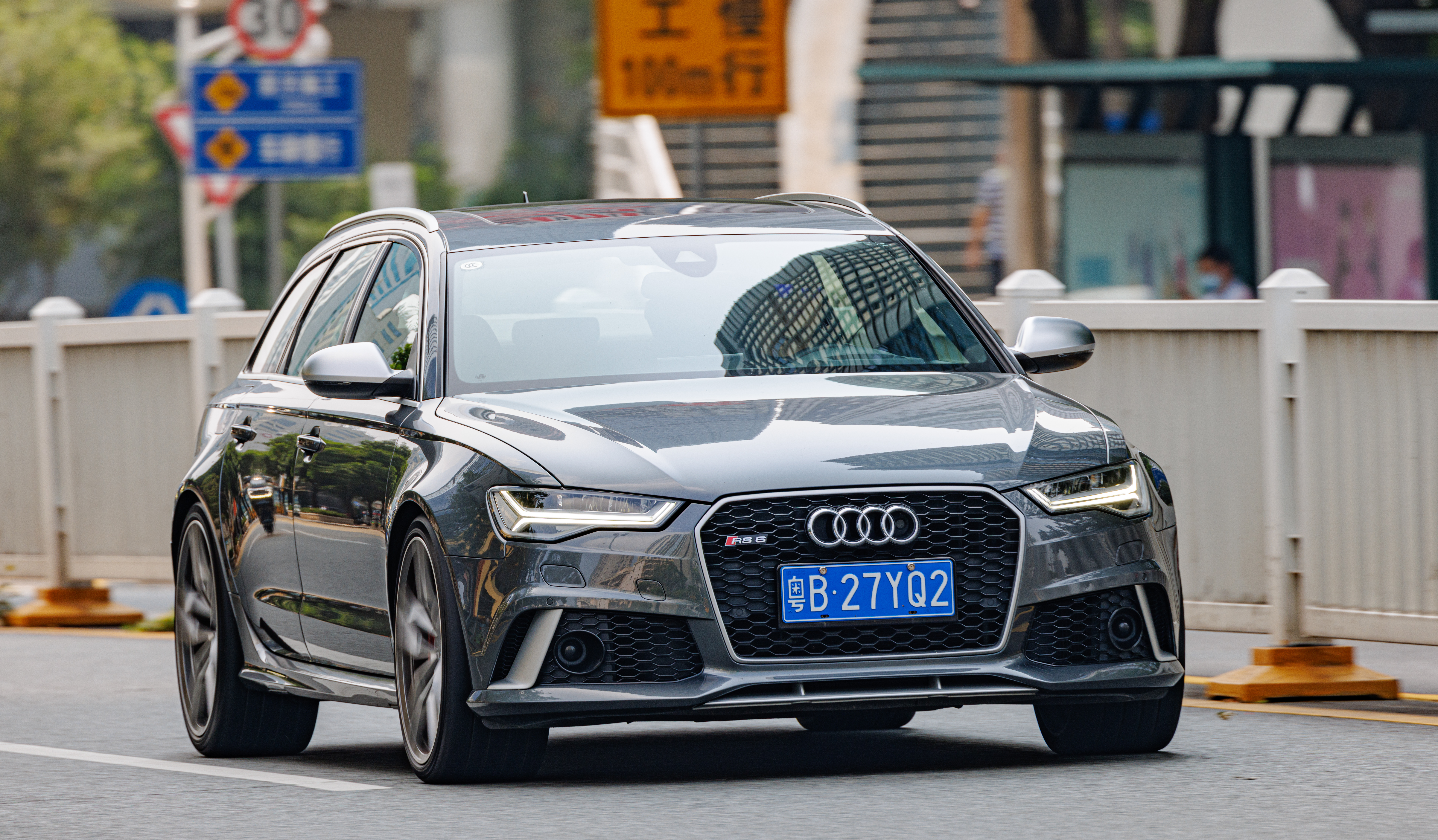
Audi RS6 Avant
"...overed, both of them are bowing out. In fact, the RS6 Avant GT already bowed out to be replaced by a plug-in ..."
The Audi RS6 Avant is a fast version of a wagon. It’s meant to carry people and stuff, but still drive very quickly. The podcast brings it up because there’s a newer direction coming for the model.
The Audi RS6 Avant is a high-performance wagon that combines everyday practicality with serious power. The podcast notes the RS6 Avant GT and also mentions a shift toward a plug-in replacement, indicating how the model line is evolving. It’s discussed because it’s a standout example of a “fast family” car and because its future direction is changing.

488 GTB
"and be totally different and benchmarked against the 488 GTB."
The Ferrari 488 GTB is a famous fast supercar. Saying the next Alpine will be benchmarked against it means they’re aiming for similar “how it feels to drive” performance, even if the technology is different.
The Ferrari 488 GTB is a mid-engine supercar that’s often used as a benchmark for performance and driving feel. The episode claims the upcoming electric Alpine A110 will be “benchmarked against the 488 GTB,” implying the new car aims to match that level of performance/engagement despite a different powertrain.
summer tires
"So two or three degrees, both on summer tires. Obviously the RS6 actually was okay because it's quite weighty."
Summer tires work best when it’s warm. In cold, wet weather they don’t grip as well, so the car can feel less predictable.
Summer tires are designed for warm temperatures and can lose grip in cold weather, especially on wet roads. The host highlights that both cars were on summer tires at around 0–2°C, which helps explain the “skittish” behavior and scary moments.
all-wheel drive
"Obviously the RS6 actually was okay because it's quite weighty. It presses down to the tarmac and all-wheel drive, of course."
All-wheel drive means the car can send power to more wheels for better grip. That helps when the road is wet or cold so the car feels more controlled.
All-wheel drive (AWD) sends power to more than just the front or rear wheels, improving traction when roads are slippery. In the segment, the host credits the RS6’s AWD and weight for keeping it stable on cold, wet roads.
under steering moments
"Not power over steering moments, under steering moments. It has a lot of sideways."
Understeer is when you turn the wheel but the car keeps going more straight than you want. It usually means the front tires aren’t gripping enough.
Understeer (often felt as “under steering”) happens when the front tires lose grip and the car turns less than the driver expects. The host contrasts this with power oversteer, saying their scary moments were more about the car not rotating as intended.
power over steering
"But yeah, on that day, I did have a few scary moments. Not power over steering moments, under steering moments. It has a lot of sideways."
This is when you press the gas and the back of the car starts to slide outward. It can be fun, but it’s also something you need to catch quickly.
Power oversteer is when adding throttle causes the rear of the car to step out, leading to oversteer. The host mentions “power over steering moments” as something they were watching for, implying the car could become lively under acceleration.
630 horsepower
"That's the thing I took away from that car the most was I thought it was going to be, obviously very quick, 630 horsepower. I knew it was going to be rapid, but I thought it was going to feel weighty."
Horsepower is how much power the engine makes. More horsepower usually means the car can accelerate harder, which is why they expected it to feel a certain way.
Horsepower is a measure of engine output, and higher numbers generally mean stronger acceleration potential. The host references “630 horsepower” to set expectations for how the RS6 GT would feel, then notes it surprised them by not feeling heavy and pendulum-like.
pendulomy
"I thought it was going to feel weighty. It was going to be a bit pendulomy. You know, you get the tail around. It's going to be a bit like, I can't hang on to this."
They’re describing a feeling where the car seems to swing around and you can’t easily keep it settled. They expected that, but the car didn’t behave that way.
“Pendulomy” is a descriptive way to say the car feels like it swings or pivots around its center—often associated with a heavy, rotating feel where the tail can feel hard to control. The host says they expected that kind of behavior but found the car felt the opposite.
aquaplane
"[222.5s] it's so heavy that it just, it doesn't feel like it could aquaplane in any way. [230.6s] I am always gripping, always gripping, but also it has that wonderful thing."
Aquaplaning is when water builds up under the tires and they can’t grip the road well. When that happens, the car can feel like it’s sliding and steering becomes less reliable.
Aquaplaning (hydroplaning) happens when tires lose contact with the road due to a layer of water, causing reduced steering and braking control. Tire grip and vehicle dynamics—like suspension setup and tire loading—affect how likely it is.
negative camber
"[234.7s] because of the coilovers and the geometry has got a bit of negative camber. [242.8s] sort of like lethargic on the nose and a bit heavy, but actually I guess it's all geometry and those coilovers,"
Negative camber is when the tires lean slightly inward at the top. It can make the tire contact patch work better when you’re turning, so the car feels more grippy and responsive.
Negative camber means the top of the tire tilts inward toward the car body. Under cornering load, it can help the tire stay more square to the road, improving grip and steering feel.
coilovers
"[234.7s] because of the coilovers and the geometry has got a bit of negative camber. [238.6s] The engine in these Audi's, even these modern ones are still right over the nose."
Coilovers are suspension parts you can adjust. They help the car sit and react more precisely when you turn, so the tires stay planted instead of feeling floaty.
Coilovers are adjustable suspension units that combine a spring and shock absorber. Changing their setup (ride height and damping) can sharpen steering response and help the car maintain tire contact during cornering.
weight and steering feel (lost in the weight vs reactivity)
"[259.4s] direction of travel or the correction you make. [264.0s] Some cars, especially bigger and heavier cars, [267.1s] you can put some corrective lock in and there's a little bit of like it gets lost a little bit in all the weight, I guess. [273.0s] But in this it's not, it's got that kind of reactivity of a much lighter car"
Heavier cars can sometimes feel slower to respond when you turn. This car apparently uses suspension tuning so it still reacts quickly, without feeling nervous.
He’s describing how heavier cars can feel less immediate because inertia can “dampen” the driver’s inputs. Here, suspension geometry and damping make the car feel reactive like a lighter car while still feeling stable and secure.

Audi Rs3
"...d then to see what they've also done with the new RS3, competition limited, which is going to be, which..."
The Audi RS 3 is a high-performance version of a small Audi car. It’s made to be quick and fun to drive, not just practical. The podcast mentions a limited “competition” version of the newer RS3.
The Audi RS 3 is a performance compact car built for quick acceleration and sharp handling, based on the A3 platform. The podcast mentions the “new RS3” and specifically notes “competition limited,” pointing to a special version or restricted production. It’s discussed because it represents Audi’s high-performance approach in a smaller, more usable package.

Honda Prelude
"...it was enough to get very familiar with the new Honda Prelude. We'd actually driven it in Europe somewhere... So I just did a little catch up to see what it was like on the UK roads."
They’re talking about the new Honda Prelude and what it’s like to drive. Even though it’s a hybrid, they’re judging whether it still feels “sporty” in day-to-day driving.
The hosts are discussing the new Honda Prelude and how it feels on UK roads after earlier drives in Europe. They focus on its hybrid layout and how that affects driving character, sound, and engagement.
Atkinson Cycle combustion engine hybrid
"...it's a Atkinson Cycle combustion engine hybrid. So it sounds very sensible... it's a combustion engine, two-litre petrol engine that basically charges an electric motor."
This refers to a special type of gasoline engine (Atkinson Cycle) that’s tuned more for efficiency than raw power. In a hybrid, the car can use the electric motor too, so it doesn’t have to rely on the engine all the time.
An Atkinson Cycle engine is designed to improve efficiency by using a longer expansion stroke than compression stroke. In a hybrid setup, that efficiency-focused engine works alongside an electric motor to provide propulsion while reducing fuel use.
hybrid setup
"...it's a sporty-ish coupé with this hybrid setup... because it's kind of set up like a civic hybrid..."
They’re talking about the car’s hybrid system—how the gas engine and electric motor team up. Depending on how it’s programmed, it can feel sporty or it can feel a bit disconnected.
The hosts describe the Prelude as a sporty-ish coupe built around a hybrid system, where a petrol engine and electric motor work together. How that system is calibrated can strongly influence throttle response, smoothness, and whether the car feels engaging.
hidden door handles on the back door
"...there's this constant like the minuscule hidden door handles on the back door. So Honda's gone about it... giving you an affordable-ish, sporty-ish coupé."
These are door handles that are tucked into the body so the car looks sleeker. The trade-off is that they can be a little less convenient than normal handles when you’re trying to get in quickly.
Hidden (or flush) rear door handles are a styling choice often used to preserve a clean, coupe-like silhouette. They can also affect usability and how quickly occupants can access the rear seats, especially compared with conventional handles.

Honda Civic
"...e, well, because it's, it's kind of set up like a civic hybrid, it's not brimming with engagement initial..."
The Honda Civic is a small, everyday car made by Honda. Some versions are designed to use fuel more efficiently, including hybrid-style setups. People talk about it because it’s a common benchmark for how a normal car drives.
The Honda Civic is a compact car known for being practical and efficient, with versions that can be set up for hybrid-style driving. In the podcast, it’s mentioned in the context of how it feels and how engaging it is (or isn’t) right away. That makes it a common reference point when discussing everyday performance versus “fun.”
faux gears
"...you've got this sport... S plus button... where the faux gears... but instead of an electric powertrain... you're actually... controlling... the amount of revs coming from the engine."
Faux gears are fake “gear changes” that make the car act a bit more like a normal gearbox. But instead of changing how power is transmitted, it mainly changes engine revs, so it can feel odd or less smooth.
Faux gears are simulated gear steps used in some hybrid/EVs to mimic a traditional manual or automatic shift feel. In this case, the “gear” changes are tied to engine rev behavior rather than actually changing drivetrain ratios, which can make the response feel disconnected.

Hyundai Ioniq 5N
"...you get faux gears like you would on a, say an IONIQ 5N, but instead of an electric powertrain that you're controlling..."
They mention the Hyundai IONIQ 5N to compare how “fake gears” are used in different cars. The key point is that the Prelude’s system doesn’t translate to the same kind of driving feel.
The hosts reference the Hyundai IONIQ 5N as an example of a car that uses a “faux gear” style driving mode. They’re using it as a comparison point to explain why the Prelude’s faux-gear behavior feels different—because the Prelude’s revs are being manipulated rather than an EV’s torque delivery.
engine noise
"You can easily, if you've got a passenger in and didn't tell you you didn't have an engine... Whereas this sounds like everyone could tell. Both are fake. Yeah. It's just, it does have an engine, but it's not powering the wheels."
Some cars play engine sounds through the speakers. That way it feels more normal, even if the engine isn’t actually doing the work to move the car.
The hosts are describing a car that produces simulated or “fake” engine sound. In some hybrids/EVs, the sound is played through speakers to mimic combustion-engine noise even when the engine isn’t driving the wheels.
EV/engine not connected to the wheels (power delivery decoupling)
"...it's just, it does have an engine, but it's not powering the wheels. It's not connected to the front axle. It's not actually powering."
They’re saying the car has an engine, but it isn’t actually turning the wheels. Instead, the wheels are driven by another source (like an electric motor).
They describe a setup where the car has an engine, but it isn’t directly powering the front axle. That’s a key difference between traditional cars and certain hybrid/EV architectures: the engine may run for charging or auxiliary purposes while the wheels are driven electrically.
hybrid powertrain (engine + electric motor working together)
"It's not actually powering. Unless you're in, unless you're kind of at higher speeds, and that's where the combustion engine then works in tandem with the electric motor to give you the full 184 horsepower."
In a hybrid, the car can use electricity, the engine, or both. At certain speeds or situations, the engine and electric motor team up to give stronger performance.
They explain that the combustion engine and electric motor can work together at higher speeds. That’s a typical hybrid strategy: the electric motor handles some driving conditions, while the engine joins in to provide additional power and efficiency.
184 horsepower
"...the combustion engine then works in tandem with the electric motor to give you the full 184 horsepower. I think."
They’re talking about how much power the car can make overall. In a hybrid, that number usually includes both the engine and the electric motor working together.
They reference the car’s combined output as “184 horsepower,” which is the total power available from the hybrid system (engine plus electric motor). Combined ratings matter because the car’s real-world feel depends on how and when that power is delivered.
0 to 62
"...it's not especially quick either. It's, you know, the official figure is not to 62 in north of eight seconds."
“0 to 62” is how fast the car accelerates from a stop to 62 mph. It’s a simple way to compare performance between cars.
“0 to 62” is shorthand for acceleration from 0 mph (or 0 km/h) to 62 mph (100 km/h). It’s a common performance metric used to compare how quickly cars feel in everyday driving and overtakes.
Civic Type R
"However, it's got some hardware from the Civic Type R. So brakes are from the Civic Type R, suspensions from the Civic Type R."
They say the car uses some parts from the Honda Civic Type R. Those parts are designed for sharper handling and stronger braking, which can make the car feel more fun to drive.
The hosts claim this car borrows performance hardware from the Honda Civic Type R—specifically brakes and suspension. That kind of parts sharing can improve steering feel, braking confidence, and overall chassis balance, even if the powertrain isn’t the quickest.
adaptive suspension
"So brakes are from the Civic Type R, suspensions from the Civic Type R. So the adaptive as well. Adaptive suspension."
Adaptive suspension adjusts how stiff the car feels while you drive. It can make the ride smoother on bad roads and more stable when you’re driving hard.
Adaptive suspension automatically changes damping/ride stiffness based on driving conditions. The goal is to balance comfort with control—softening for rough roads and firming up for sharper handling.
"layered" powertrain and chassis
"...it is genuinely a real joy. And it's so much going on. The powertrain's so layered and the chassis is so layered that it's, it's a fantastic little thing."
They mean the car feels like it has multiple levels of response. As you drive faster or slower, the way power and handling come in feels smooth and well matched.
“Layered” suggests the car’s behavior changes smoothly across modes and speeds—power delivery and chassis response feel coordinated rather than abrupt. Listeners may benefit from understanding that hybrid systems can feel “layered” because electric torque and engine power overlap differently depending on conditions.
VTEC engines
"...the meteggies, the screaming 8000 RPM VTech engines. Whereas really when I was driving it, I was like, this feels like a modern interpretation..."
VTEC is Honda’s technology that helps the engine breathe better at different speeds. It’s why some Hondas feel especially exciting when you rev them higher.
VTEC (Variable Valve Timing and Lift Electronic Control) is Honda’s system for changing valve timing and lift to improve performance and efficiency. The “screaming 8000 RPM” description highlights how VTEC can make an engine feel like it comes alive at higher revs.
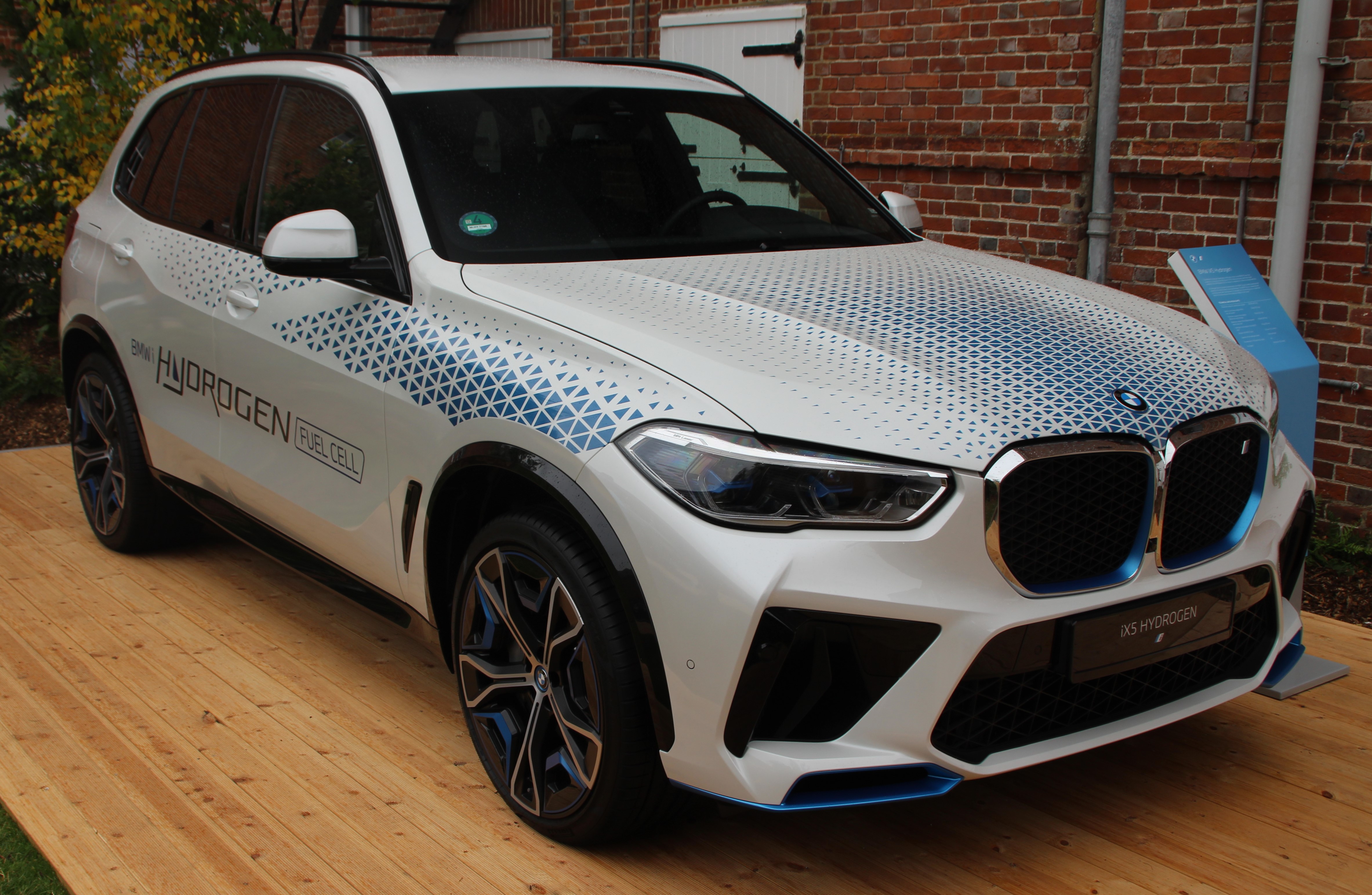
BMW iX5 hydrogen
"...BMW has come out with an update on its IX5 hydrogen... come 2028... we can expect the first production cars to arrive that being at the moment, the IX5 hydrogen."
The BMW iX5 hydrogen is BMW’s hydrogen fuel-cell vehicle concept/program discussed in the segment. The hosts say BMW is working on improved hydrogen storage technology to boost range and aims to have hydrogen infrastructure ready by around 2028, with production cars expected to arrive then.
hydrogen fuel cell storage
"...if you have a hydrogen car, this being a hydrogen fuel cell, obviously you need to store the hydrogen somewhere. It has to be pressurized to an extremely high rate... a massive tank to store it in... huge amount of boot space..."
Hydrogen cars have to keep hydrogen somewhere safe, and it’s not easy to store. Because of that, the storage system can take up a lot of space and affect how practical the car feels.
Hydrogen fuel-cell cars must store hydrogen at very high pressure, and the storage approach strongly affects packaging and range. The segment explains why hydrogen is difficult to store (including the need for extreme conditions if using liquid hydrogen), and why earlier designs used large tanks that take up boot space.
boot space
"...normally what you've had in the past is a massive tank to store it in. That can take up a huge amount of boot space or rear space."
Boot space is the trunk/cargo area, and for hydrogen cars it can be affected by where the hydrogen tanks or canisters are placed. The segment notes that earlier storage approaches could take up a huge amount of rear space, reducing practicality.

Toyota Mirai
"What Toyota did with the second generation Mirai is they split it into three canisters, kind of where the transmission tunnel would be."
The Toyota Mirai (second generation) is referenced as an example of how to package hydrogen storage more efficiently. The hosts say Toyota split the hydrogen storage into multiple canisters (around the transmission tunnel area) to reduce the amount of space taken from the cabin and rear.
carbon fiber reinforced polymer
"create seven much more compact, long and thin cylinders out of carbon fiber reinforced polymer. They look like the sausages you get in Germany."
Carbon fiber reinforced polymer is a strong but lightweight material. BMW uses it to build hydrogen storage cylinders that can fit better in the car.
Carbon fiber reinforced polymer (CFRP) is a lightweight, strong composite material. In this hydrogen setup, BMW uses CFRP to make the storage cylinders smaller and more space-efficient than traditional tank designs.
hydrogen storage
"So actually BMW says that it doesn't have any effect or any compromise on space as what they would in a battery car. So that is one of the major problems that you'd get with a hydrogen car is storing the damn thing."
Hydrogen storage is one of the biggest challenges for hydrogen cars because hydrogen takes up a lot of volume. The transcript highlights how BMW’s compact cylinder layout aims to reduce the space penalty compared with earlier hydrogen packaging.
valve-controlled hydrogen tanks
"before you would have tanks that were individually valved... This one though, they're all interconnected and controlled by one valve, which BMW said is better at providing consistent performance..."
This is about how the car controls the flow of hydrogen from its tanks. Instead of managing each tank separately, BMW connects them and controls them with one valve to keep the delivery steadier.
The transcript describes a design change in how hydrogen tanks are managed: earlier systems used individual valves per tank, while BMW uses interconnected cylinders controlled by a single valve. The claim is that this improves consistent performance by regulating flow more uniformly.
range vs EV real-world driving
"you'll get a range of 385 miles... which coming to think of it is actually a little bit rubbish because you've got EVs these days that can do well north of... claimed my real world during my test was for 20 ish, but it's still good."
The episode compares claimed hydrogen range (up to about 385 miles) with how EVs can achieve much longer distances in practice. It also notes that real-world results can differ from claims, using an example where the speaker’s test showed a lower real-world figure.
charging/infrastructure advantage for EVs
"EV will do well more the infrastructure is there. And, you know, what's what's the point? Well, charging essentially or filling. So if"
The discussion argues that EVs have an advantage because charging infrastructure is more widely available than hydrogen fueling. That makes “filling” practical for more drivers, which can matter as much as vehicle range.
fast charging
"...you'll be able to fill up in around five minutes... considerably faster than what you would do in an electric car... But now EVs are charging rapidly, genuinely."
Fast charging refers to higher-power EV charging that reduces the time needed to add energy. The hosts argue that EV charging has improved dramatically in recent years, narrowing the refueling-time advantage that hydrogen claims. They also mention that even a ~20-minute stop is acceptable for many drivers compared with older EV charging experiences.
hydrogen car
"So presently, yeah, five minutes is way quicker... But the interesting thing is... hydrogen really has to... look at the price... accessibility to a fuel station... But there is also the safety aspect."
A hydrogen car makes electricity from hydrogen to move the car. Refueling can be quick, but you may have fewer places to fill up compared with electric charging. The discussion also brings up that safety and rescue procedures can be more complicated than with gasoline.
A hydrogen car uses hydrogen stored onboard and converts it to electricity in a fuel cell to drive the wheels. The big selling point is fast refueling—often discussed as “around five minutes”—but the real-world challenge is hydrogen station availability and overall cost. The segment also contrasts hydrogen’s refueling speed with improving EV charging times and highlights safety/complexity considerations.
1000 kilowatt charges
"...AMG GTXX drive last year, and they were charging that electric concept up with 1000 kilowatt charges, and it was taking like three minutes."
This means charging an EV using a super-powerful charger. In theory, it can add a lot of energy in just a few minutes. The hosts also point out it’s not widely available yet.
“1000 kilowatt charges” refers to extremely high-power EV charging (1 MW class), which can dramatically shorten charging time under the right conditions. The hosts frame it as prototype/near-future tech and note it’s currently limited in rollout geography. This is used to argue that EVs are catching up quickly to hydrogen’s refueling-time advantage.
charging up
"...they were charging that electric concept up with 1000 kilowatt charges, and it was taking like three minutes... But now EVs are charging rapidly... the 20 minute break to get a coffee while it's charging up."
“Charging up” just means plugging in and charging the battery. The hosts compare how long that takes versus filling a hydrogen car. They suggest that even if it takes a bit, you can use the time while you wait.
“Charging up” is the everyday phrasing for topping up an EV’s battery at a charger. The segment uses it to compare typical EV charging durations (including a coffee break) with hydrogen refueling time. It’s also used to describe how quickly high-power charging can happen in near-future scenarios.
fuel station accessibility
"...you're going to look at the price. You're going to look at the accessibility to a fuel station... Even if I have to travel 20 minutes to fill up..."
Fuel station accessibility is how easy it is to find places to refuel or recharge, and it strongly affects real-world usability. The host argues that hydrogen’s limited station network could make it hard to compete even if refueling is fast. This is contrasted with EV charging becoming more common and faster.
safety aspect
"...before it was a case of... hydrogen car benefits from filling up much faster. But there is also the safety aspect... if you crush an EV, you know, it could catch fire."
The “safety aspect” is about what happens after a crash and how hard it is to deal with. The host points out that EVs can also catch fire, and the challenge is how to handle it safely. The same kind of concerns apply to hydrogen vehicles too.
The “safety aspect” refers to how hydrogen and EV systems can behave in crashes and how emergency responders handle them. The host notes that EVs can catch fire, but the real issue is putting it out and managing the situation safely. This frames hydrogen’s safety/complexity as part of the trade-off versus EVs as charging improves.
EVs catching fire vs petrol/diesel (collision fire risk)
"safer now EVs when it comes to collisions, there's so much work and fire... you're five times more likely to catch fire... The car is more likely to catch fire with its petrol diesel... of course, EVs."
They’re talking about which type of car is more likely to catch fire after a crash. EVs don’t have gasoline onboard, so the fire risk can be lower, while gas/diesel cars have fuel that can ignite.
The hosts are discussing how collision-related fire risk differs between EVs and internal-combustion cars. They cite data suggesting EVs are less likely to catch fire in crashes, while petrol/diesel cars have a higher likelihood due to the presence of fuel and fuel-system design.

Ford Pinto
"remember the Ford Pinto, it was during the 70s, there was the crisis of where, you know, like that in the booth, anyone. Yes, let's put the fuel tank in the boot... burned explosions."
They’re bringing up the Ford Pinto as a cautionary tale from the 1970s. The concern was that in certain crashes, the fuel system could fail in a way that made fires much more likely.
The Ford Pinto is referenced as an infamous 1970s example of fuel-tank placement and crash-fire risk. The story is often summarized as the fuel tank being located in a way that could lead to catastrophic fires when rear-ended.
Hydrogen high-pressure tank safety
"There is a concern with hydrogen is that obviously you've got an immensely high pressure tank..."
Hydrogen cars carry fuel in a very high-pressure tank. The safety challenge is making sure that tank stays intact and doesn’t leak dangerously if there’s a crash.
Hydrogen vehicles store fuel in an extremely high-pressure tank, which changes the safety conversation compared with gasoline. The key issues are containment, leak behavior, and how the fuel system responds under impact or failure.
Hydrogen infrastructure (and why it matters)
"If the people that are persevering with it are making advancements with it, and that's going to be the case with, you know, we talk about infrastructure a lot."
They mention infrastructure because hydrogen cars only work well if there’s somewhere to refuel them. So progress isn’t just about the car—it’s also about the fueling network.
The discussion ties hydrogen vehicle progress to infrastructure availability—meaning fueling networks, storage, and delivery systems. Even if the vehicle is well-engineered, adoption depends on whether hydrogen can be produced and delivered reliably where drivers live and travel.
Formula One
"the big driver this year is Formula One. And if the Formula One teams are, more importantly, fuel suppliers are developing it, then there are going to be advancements."
They’re saying racing—specifically Formula One—helps push new fuel ideas forward. Because teams test and develop them intensely, the technology can improve faster than it would otherwise.
Formula One is mentioned as a major driver of fuel and energy technology development. When F1 teams (and their fuel suppliers) work on new fuels, it can accelerate improvements that later trickle down to road cars.
EV charging infrastructure
"You've seen it in the EV world. Do you remember when EVs were starting to become a thing and it's like, you've got to charge them up at home on a three-pin flight... And then if you did go out and you find... fast charges were like 50 kilowatts."
The hosts compare early EV adoption challenges with today’s faster, more widespread charging. Charging infrastructure matters because it determines whether EVs are convenient for daily use, especially for drivers who can’t always charge at home.
fast charges
"I remember when fast charges were like 50 kilowatts. Yeah. And, you know, now they are so unbelievably quick and they're everywhere."
Fast charging is when an EV can recharge much quicker than normal. They’re pointing out that charging used to be slower (around 50 kW) and is now much quicker.
“Fast charges” refers to higher-power EV charging that significantly reduces charging time compared with basic home charging. The mention of 50 kilowatts highlights how charging speeds have increased, which directly affects real-world EV usability.
50 kilowatts
"I remember when fast charges were like 50 kilowatts. Yeah. And, you know, now they are so unbelievably quick and they're everywhere."
50 kilowatts is how strong the charger is. Higher kW usually means you can add energy to the battery faster.
50 kW is a charging power level that was common earlier in EV adoption, delivering meaningfully faster charging than basic outlets but still not as quick as today’s high-power DC fast chargers. Charging power (kW) is a key factor in how long you’ll spend at a station.

Tesla
"I ran a Tesla as a company car a few years ago, and that was great because the Tesla charging network... the charging network is fantastic. And over four years of running a car, I had zero issues with charging..."
They’re talking about Tesla because of how easy it is to charge. The point is that Tesla’s charging network made their day-to-day driving much less stressful.
Tesla is discussed in the context of EV charging convenience, specifically the Tesla charging network. The host credits the network’s reliability and coverage for having “zero issues” over four years, contrasting it with the general anxiety of finding charging while on the road.
charging anxiety
"I'm on the road a lot. So I almost always nearly pee myself when I get to a service station... because I'm like, oh, my God, I'm so desperate... Three times a week, you'll see me sprinting at a service station to the thing..."
Charging anxiety is the worry that you won’t find a charger in time. It’s especially stressful if you’re on the road a lot and can’t charge easily at home.
“Charging anxiety” describes the stress and planning burden of finding a charger when you’re driving frequently or don’t have reliable access to charging at home. The hosts’ “service station sprint” story illustrates how infrastructure reliability changes driver confidence.
hydrogen fueling infrastructure
"Obviously, it's going to require a huge amount of investment in the infrastructure of which I don't know how many brands be it car manufacturers or fuel suppliers that really give a damn."
They’re saying hydrogen cars only work well if the hydrogen stations are reliable. If stations are broken or nobody is maintaining them, it becomes annoying and people won’t switch. The goal is to make refueling feel as easy as gas.
The hosts emphasize that hydrogen’s success depends on fueling infrastructure—reliable stations, uptime, and consistent user experience. Even if the vehicles are good, broken or unmonitored stations undermine convenience and adoption.
hydrogen combustion engine
"BMW is big on hydrogen fuel cell. Yeah. Although if you remember, they made a hydrogen combustion engine with a V12."
This is when hydrogen is used like gasoline—burned inside an engine to make power. It’s not the same as a fuel cell, which makes electricity instead. It can work, but it still has emissions and engineering hurdles.
A hydrogen combustion engine burns hydrogen in a cylinder like a traditional internal-combustion engine, rather than using a fuel cell to generate electricity. It can be an engineering bridge, but it still depends on combustion-related challenges like NOx emissions control and fuel delivery.

Aston Martin V8 Vantage
"They ran a hydrogen powered V8 Vantage at the ring. They did. I think for one lap."
They mention a hydrogen-powered Aston Martin Vantage doing laps at Nürburgring. The point is to test the car in demanding real-world conditions, not just on a test bench. It’s a way to see if hydrogen power can handle racing stress.
The segment mentions a hydrogen-powered Aston Martin V8 Vantage running at “the ring,” referring to the Nürburgring. This is an example of hydrogen being tested in real motorsport conditions, which helps validate performance and drivability.
Super Taikyu
"So in Japan, they've got a series called super taiku, which is, I wish we had something like that over here because it's pretty much opening credits."
They bring up a Japanese racing series called Super Taikyu. The point is that racing can help new technologies get tested and become more mainstream. They’re wishing for a similar platform locally.
Super Taikyu is referenced as a Japanese racing series, and the hosts wish for something similar in their market. The mention is relevant because motorsport series can accelerate development and public visibility for new powertrains like hydrogen.

Toyota GR Corolla
"In the endurance series, Toyota has been running in the last few years a hydrogen combustion GR Corolla."
Toyota took a GR Corolla and tried running it on hydrogen. Instead of using hydrogen to make electricity, it burns the hydrogen like a fuel, then races it to see if it can be practical and fast for long events.
The Toyota hydrogen combustion GR Corolla is a hydrogen-fueled version of the GR Corolla, using hydrogen combustion rather than storing hydrogen to run an electric drivetrain. In endurance racing, it’s a way to test whether hydrogen can work as a competitive fuel under long, repeatable race conditions.
pit stop time / hydrogen filling time
"They've then managed to get that filling time down from around five minutes to about a minute and a half... which is what close to a normal."
In endurance races, every minute spent refueling costs you. They’re saying Toyota improved hydrogen refueling so it takes closer to normal stop times instead of being a big disadvantage.
The segment focuses on hydrogen refueling time as a key performance constraint in endurance racing. Reducing filling time from roughly five minutes to about one to one-and-a-half minutes helps hydrogen cars avoid losing too much track position during stops.

GR LH2 racing concept
"They also they announced last year a the GR LH2 racing concept, which was a Le Mans prototype built on hydrogen, built around hydrogen combustion."
The GR LH2 is Toyota’s hydrogen race concept. It’s designed like a Le Mans prototype and uses hydrogen combustion to explore whether hydrogen can compete at the highest level.
The GR LH2 is Toyota’s hydrogen-focused racing concept built for endurance-style performance. It’s described here as a Le Mans prototype using hydrogen combustion, showing Toyota’s push to make hydrogen viable in top-level racing.
Le Mans hydrogen class (from 2028)
"And from 2028, the plan is at Le Mans that hydrogen combustion or hydrogen fuel cell prototypes would be allowed to to compete potentially in their own class."
They’re talking about Le Mans rules starting in 2028 that could allow hydrogen race cars to compete together. If the rules make it worthwhile, more teams might join and develop the tech.
This is about a proposed rule change at Le Mans starting in 2028, where hydrogen combustion and hydrogen fuel-cell prototypes could compete, potentially in their own class. The topic matters because class structure affects whether teams will invest in hydrogen development.
hydrogen fuel cell prototypes
"From 2028, the plan is at Le Mans that hydrogen combustion or hydrogen fuel cell prototypes would be allowed to compete potentially in their own class."
A hydrogen fuel cell makes electricity from hydrogen while you drive. That electricity then powers the car’s electric motor, which is why it’s different from burning hydrogen in an engine.
Hydrogen fuel cell prototypes use a fuel cell to convert hydrogen into electricity, which then powers an electric drivetrain. In endurance racing, allowing both hydrogen combustion and fuel-cell cars can accelerate development of different hydrogen pathways.
motorsport as technology development
"But as we've spoken about before, motorsport is such a great way of developing and accelerating technologies."
The idea here is that racing helps new technology get better faster. Because cars have to run hard for a long time, engineers learn quickly what works and what doesn’t.
The hosts argue that motorsport accelerates technology development by forcing real-world testing under extreme conditions. Endurance racing is especially useful because it stresses reliability, thermal management, and repeatable performance over long stints.
fuel of joy
"I love this idea of Le Mans being almost like the what was the motor race that essentially cemented petrol as the fuel of joy."
“Fuel of joy” is basically a way of saying petrol feels fun and exciting to drive. The hosts are talking about how different fuels can change the vibe of cars.
“Fuel of joy” is a phrase used to describe petrol’s cultural and driving appeal, not just its technical properties. The hosts use it to contrast how different fuels (petrol, diesel, hydrogen) can shape what enthusiasts consider exciting.
EV is obviously everywhere now
"EV is obviously are everywhere now. Petrol is still a thing. Imagine if you had, I can't see anybody wanting to do diesel again."
The hosts are saying electric cars are very common right now. That makes them wonder what it would take for hydrogen to become a big deal again.
This is a discussion about the current dominance of EVs and how that affects the perceived relevance of other powertrains like petrol, diesel, and hydrogen. It sets up the idea of a “fuel arms race” where hydrogen could become a new competitive focus.
Alpenglow
"Alpine has also show Alpenglow. Sounds like a lovely breakfast drink... they took the Alpenglow concept to spa, drove it around... They then showed it at Le Mans."
Alpenglow is presented as Alpine’s hydrogen concept, designed to demonstrate what hydrogen power can feel and sound like in a real vehicle. The hosts mention it being shown at Le Mans and tested at Spa, emphasizing it as a technology demonstration rather than a mass-market product.

Renault Sport
"... He was the one who gave me the first snippets of Renault sport. The Renault sport might be coming back and then ..."
The Renault Sport Spider is a small sports car with an open-top design. It’s connected to Renault’s performance-focused division. The podcast brings it up because it’s part of Renault Sport’s history and people hope that spirit comes back.
The Renault Sport Spider is a lightweight, open-top sports car associated with Renault Sport’s performance heritage. In the podcast, it’s mentioned in the context of Renault Sport possibly returning, with the speaker recalling early “Renault sport” snippets. It comes up because it’s tied to the brand’s past performance identity.

Renault Twingo
"...coming back and then Renault again said it at the Twingo event. So I'm like, Oh my God, it's gonna happen...."
The Renault Twingo is a small car made for city driving. It’s easy to maneuver and park. The podcast mentions it because there’s talk about it coming back or continuing.
The Renault Twingo is a small city car designed for easy driving and parking in tight spaces. The podcast references a “Twingo event” and suggests excitement about the model’s return or continuation. It’s discussed because it’s a recognizable, compact Renault that often comes up when talking about what the brand is planning next.
charging networks
"...the stuff around it, you know, charging networks are growing at rapid rates but hydrogen networks... it's going to take massive investment."
Charging networks are the places you can plug in and charge an electric car. The point here is that EV charging is getting easier to find, while hydrogen stations are still much harder to build.
Charging networks are the network of public (and private) charging stations that determine how practical EV ownership is. The hosts argue that charging infrastructure is expanding quickly, while hydrogen fueling requires massive investment to reach similar coverage.
700 bar hydrogen
"700 bar was what the the hydrogen was pressurized to... So 700 times the pressure... roughly of a turbocharger. Yeah, good to know."
“700 bar” refers to the pressure used to store hydrogen in a high-pressure tank. Because hydrogen is stored as a compressed gas, the tank must be engineered to safely handle extremely high pressures. The hosts compare it to turbocharger boost pressure to give listeners a sense of scale.
turbocharged engine
"...but what's that in bar 1.3 bar is your base operation for a turbocharged BMW..."
A turbocharged engine uses a device that squeezes more air into the engine. More air usually means more power. The hosts bring it up to compare pressure levels to the hydrogen storage pressure.
A turbocharged engine uses a turbocharger to force more air into the engine, allowing more fuel to be burned for higher power. The hosts use turbo boost pressure as a reference point when talking about hydrogen tank pressure. This helps connect a familiar performance concept (boost) to the unfamiliar hydrogen storage numbers.

BMW Z3
"...an NC MX five, an MGF slash TF and a BMW Z three. Any advice greatly received."
The BMW Z3 is a small two-seat roadster from BMW. People look at it as a fun used sports car option when they want something more “classic BMW” than the newer stuff.
The BMW Z3 is a compact BMW roadster that’s often considered when shopping for affordable classic-style sports cars. Here it’s listed alongside the MR2 and MX-5 as an option within a tight budget.
£3k sports cars
"...can you actually get cars, get decent cars for three grand anymore? And I was pleasantly surprised... This is as pretty much as cheap as it gets actually from a reputable seller with a nice car, two and a half grand."
They’re talking about trying to buy a fun sports car for about £3,000. The point is that you have to compromise on condition and sometimes choose the right model year to avoid expensive problems.
This segment is about the “£3k sports car” challenge—finding a decent, usable sports car for roughly three thousand pounds. The hosts discuss how pricing, condition, and model-year choices affect what’s realistically available, and they compare different small sports cars in that budget bracket.
mid-engine sports car
"...their buckets. It's a mid-engine sports car that is tiny. It's under a ton, 140 ish horsepower, Revi 1.8, lovely six speed manual."
A mid-engine car puts the engine closer to the middle of the car. That usually makes the car feel more balanced and easier to handle when you drive it hard.
A mid-engine sports car places the engine near the center of the vehicle, improving weight distribution and helping the car feel balanced in corners. The hosts use this to describe why the MR2 is such a fun, compact package.
six-speed manual
"...140 ish horsepower, Revi 1.8, lovely six speed manual. These are great."
A six-speed manual means you shift gears yourself using a clutch. More gears can help the car feel smoother and more responsive.
A six-speed manual transmission gives the driver more gear ratios to keep the engine in its power band. In this segment it’s part of the MR2’s appeal as a low-cost, engaging sports car.
facelift vs pre-facelift (model-year change)
"The most important thing is that being a 2002 model means it's one of the facelifts. Because the pre-facelifts had a problem... Not so much on the facelift though."
They’re saying that later versions of the same car (a facelift) can be safer to buy than earlier ones. The facelift often fixes problems that showed up in the first years.
The hosts stress that a 2002 “facelift” matters because it changed the car’s engineering enough to avoid a serious pre-facelift engine problem. This is a common used-car strategy: identify running changes (like facelifts) that correlate with improved reliability.
full service history
"years been well maintained full service history. Full service history on a car that age is very, very good."
“Full service history” means the car was regularly maintained and there’s proof of it. If a car has that, it’s usually less likely to have neglected problems that show up later.
A “full service history” means the car has been serviced at the recommended intervals, typically documented by receipts or dealer records. For used-car buyers, it’s a strong indicator that maintenance hasn’t been deferred, which can reduce the risk of hidden wear and expensive surprises.
Out of the Box fun
"Really good. So that bodes exceptionally well for Out of the Box fun. Talking about Out of the Box fun, a colleague of ours, Mr Matt Bird, would definitely approve of."
It means “fun in a surprising way,” usually from a car that isn’t the obvious pick. The idea here is that a well-maintained, slightly unusual BMW can still be genuinely enjoyable to drive.
“Out of the Box fun” is a phrase for enjoying a car that isn’t the obvious, mainstream choice—often something older, less flashy, or overlooked. In this context, it’s tied to buying a well-kept example with service history so it can deliver real driving enjoyment without the usual “premium” expectations.

2001 BMW 325 Ti
"It's a 2001 BMW 325 Ti. Now, I love these. I know Matt loves these having had one... This is the E46 facelift."
This BMW is a smaller, sportier version of the 3 Series. The “Ti” version is meant to feel a bit more fun to drive than a standard trim, mainly through suspension and handling tweaks. It’s not an all-out M car, but it’s still designed to be more driver-focused.
This is a 2001 BMW 325 Ti, a compact “Ti” variant of the 3 Series that uses the E46-generation platform. The “Ti” trim typically adds a sportier setup than a base model, including driver-focused tweaks that make it feel more engaging without being a full M-car.
ice on a tyre launch
"I mean, I actually drove one funnily enough on ice on a tyre launch about eight years ago. And they were trying to demonstrate this new..."
A “tyre launch” on ice is a controlled demonstration of tire grip and vehicle stability on low-friction surfaces. It’s relevant because it highlights how chassis balance and tire choice interact—especially for a car described as having “beautiful balance” and predictable rotation.
190 horsepower
"Such beautiful balance, easily manageable power, 190 horsepower, and also, yeah, just sort of rotates around you in the middle."
Horsepower is basically how strong the engine is. In this case, they’re saying the power level is enough to feel fun, but not so much that it’s hard to control.
Horsepower is a measure of how much power the engine produces, and it strongly influences how quickly a car accelerates and how it feels under load. Here, the hosts use the figure to describe the 325 Ti’s “easily manageable” performance—enough to feel lively without being overwhelming.
rotates around you in the middle
"190 horsepower, and also, yeah, just sort of rotates around you in the middle. So as a sports car feeling, you know, coupé, it's really good."
They mean the car feels like it “turns and pivots” nicely through a corner. Instead of feeling like it’s fighting you, it feels balanced and controllable mid-corner.
This is a driving-feel description that points to predictable balance and rotation during cornering—often associated with how the chassis and tires share grip. Listeners may want context on how a car can feel like it “turns in” and rotates smoothly rather than pushing wide.

BMW 135I
"...e car rides nicely. Yeah, basically the 235 slash 135i before they even existed. I just, I love how ther..."
The BMW 1 Series is a small BMW car. The podcast is talking about a specific performance version from the 235i/135i family and how it rides well. People mention it because it’s a compact car that can still feel comfortable.
The BMW 1 Series is a compact car, and the podcast references the 235i/135i era as a key point in the lineup’s development. It’s mentioned in relation to ride quality and overall feel, suggesting it’s comfortable for its class. That makes it relevant when discussing which compact BMWs are most enjoyable to live with.
TI driver focused additions
"But they did a TI on that, didn't they? If I'm not mistaken. So you still got, because the TI I forgot to mention actually gets a few driver focused additions, Tweaks to the suspension and stuff."
They’re saying the “Ti” version adds small upgrades aimed at making the car feel better to drive. Most of those changes are about the suspension, which affects how the car handles and how smooth or controlled it feels.
The “Ti” trim is described as having driver-focused additions such as tweaks to the suspension. This matters because suspension tuning changes how the car responds to steering inputs, how it grips mid-corner, and how it feels over bumps—often the biggest difference between trims that share the same basic engine family.

M model
"So it's not extreme. It's not like an M model, of course, but it's got a few little things."
BMW’s “M” cars are the high-performance versions. They usually have more serious upgrades than regular models. Here, they’re saying the Ti is sporty, but it’s not the full-on M-car experience.
An “M model” refers to BMW’s performance sub-brand (BMW M), which typically brings more aggressive tuning, stronger brakes, and more track-oriented chassis setups than standard trims. The hosts clarify that the Ti is sportier, but not as extreme as an M car.

M135i
"which actually was a better to drive car than the M135i. ... Because it was front-wheel drive. It basically just drove like a Mini Cooper S."
The BMW M135i is referenced as the benchmark for driving feel. In this discussion, the hosts contrast it with a front-wheel-drive BMW 1 Series era, implying the M135i’s layout and dynamics feel different even if both are performance-oriented.

Mini Cooper S
"Because it was front-wheel drive. It basically just drove like a Mini Cooper S. ... Which was, you know, front-wheel drive hot hatch, good fun."
They’re comparing the BMW’s driving feel to a Mini Cooper S. The idea is that front-wheel-drive hot hatches tend to feel nimble and fun, and that’s what they’re noticing here.
Mini Cooper S is used as a reference point for how the BMW feels when it’s front-wheel drive. The hosts are essentially saying the BMW 1 Series in question has a similar “hot hatch” character—quick, playful, and easy to drive—because of its traction and packaging.
THP
"Anyway, RCZ, Peugeot, but it's the THP GT. ... it's the one with the punchier engine. It's 160 horsepower turbocharged."
THP is Peugeot’s label for a turbo petrol engine. In this context, it means the RCZ is the stronger, turbocharged version rather than the weaker trim.
THP is Peugeot’s naming for its turbocharged petrol engine family (often associated with the Prince engine line used across PSA brands). In the segment, THP is used to distinguish the RCZ THP GT as the more performance-focused variant.
160 horsepower turbocharged
"it's the one with the punchier engine. It's 160 horsepower turbocharged. Same motor, I think they put in the DS3 performance as well."
They’re saying the car has about 160 horsepower and it’s turbocharged. A turbo engine usually feels stronger in everyday driving because it can build boost quickly.
The hosts call out the RCZ THP GT’s output as “160 horsepower” and emphasize that it’s turbocharged. This matters because turbocharging typically improves low-to-midrange punch compared with a naturally aspirated engine of similar size.

Peugeot RCZ
"I mean, there's a lot of car, 53,000 miles and 2,490. That's a lot of car for the money. They look, and remember when these came out, they were properly cool little things, because they had double bubble roof that was glass, if I'm correct in saying that."
The Peugeot RCZ is a small Peugeot coupe that looks really distinctive, especially because of its curved “double-bubble” roof. The hosts are saying it was stylish and fun-looking, but it wasn’t as exciting to drive as some rivals because it was front-wheel drive.
The Peugeot RCZ is a compact, stylish coupe from Peugeot that became known for its distinctive “double-bubble” roof design. In this segment, the hosts discuss how cool it looked when new, but also point out its front-wheel-drive layout as a key limitation.
double bubble roof
"They look, and remember when these came out, they were properly cool little things, because they had double bubble roof that was glass, if I'm correct in saying that."
A “double bubble” roof is a roof shape with two rounded bumps. It’s mostly about looks—making the car’s roofline stand out and feel more sporty.
A “double bubble” roof is a styling feature where the roofline rises into two rounded bulges, creating a distinctive silhouette. On cars like the Peugeot RCZ, it’s often described as glass or a glass-like panel to emphasize the shape and give a more dramatic, sporty look.
homologation special version
"An all-wheel drive homologation special version. Yeah, they would have been really cool."
A homologation special is a special road car made so a company can race a similar version in competition. Racing rules often require the race car to be based on a real street car.
A homologation special is a road car built (or modified) to meet the rules required for racing—so the manufacturer can enter a competition class. The idea is that the race car needs a certain number of similar street cars to be eligible, which is why you sometimes see “all-wheel drive homologation” talk around rally or touring-car programs.

Volkswagen Scirocco
"I mean, it was a pretty big seller at the time. It did sell quite well at some point. It was like the Scirocco, wasn't it?"
The Volkswagen Scirocco is a sporty-looking Volkswagen that was popular with people who wanted a fun small car. The hosts are comparing the RCZ to it to talk about how well the RCZ sold and who it was trying to attract.
The Volkswagen Scirocco is a compact sporty hatchback/coupe that became a benchmark for the “small, stylish, fun” market. The hosts compare the RCZ’s sales and positioning to the Scirocco, implying the RCZ was aiming for similar buyer appeal.
electrical faults
"[2329.5s] I did, when I ran the DS with that motor, [2331.4s] it did have a few electrical faults, [2333.0s] but that was unrelated to the engine."
Electrical faults mean something in the car’s electronics isn’t working right—like sensors, wiring, or control units. It’s usually not a simple “replace one part” situation, because the problem can be intermittent.
Electrical faults are problems caused by wiring, sensors, modules, or other electronics rather than mechanical parts like the engine. In modern cars, these can be intermittent and frustrating, and they often require diagnostic tools to pinpoint the failing component.
Request an Explanation
Heard something you'd like explained? We'll add it to this episode.
Sign in to request explanations for terms you heard.
Want to learn more?
Browse our glossary for plain-English explanations of automotive terms, jargon, and concepts.
Help improve this episode
See something that's not quite right? Our annotations are AI-generated and can sometimes miss the mark. Click the flag icon on any annotation to suggest a correction.
7 community members have helped improve this episode.