Renault 5 Turbo 3E first ride, Gunther Werks F-26 review and £20k fast estate challenge! | TGS
About this episode
From Goodwood studio squeaks to rally-stage intensity, the hosts recap a packed motorsport run and then dive into Gunther Werks’ F-26: EV acceleration comparisons, a 996 GT3-based gearbox, and even why a slant-nose conversion can fail UK MOTs. The Renault 5 Turbo 3E ride sparks “turbo” branding debate, with details on its wheel-integrated motors, torque claims, and track behavior when aids are off. The episode also pivots to a £20k fast-estate challenge and other used-car picks.
It may not have an actual turbo, but Renault’s new ‘supercar’ slips and slides just like its predecessors. But is it just as fun without an engine?
From new cars that look old to old cars that look new, Sam takes the Gunther Werks F-26 for a spin around Goodwood, before wrapping up with a £20,000 fast estate buying challenge.
Chapters:
0:00 Intro
2:13 Co-driving in a Toyota Rally1 car with Jari-Matti Latvala
5:28 Gunther Werks F-26 track review
23:59 First passenger ride in the Renault 5 Turbo 3E
43:17 £20k fast estate challenge
TOPICS:
Gunther Werks F-26 review: https://www.pistonheads.com/news/ph-driven/2026-gunther-werks-f-26-ph-review/51421
Renault 5 Turbo 3E from the passenger seat: https://www.pistonheads.com/news/electric-vehicles/riding-shotgun-in-the-555hp-renault-5-turbo-3e/51429
£20k fast estates: https://www.pistonheads.com/gassing/topic.asp?h=0&f=255&t=2145832
CARS:
Cam’s Mercedes-AMG CLA 45 Shooting Brake: https://www.pistonheads.com/buy/listing/20480486
Sam’s Subaru Impreza Wagon: https://www.pistonheads.com/buy/listing/20726617
WRC
"[226.0s] Oh my gosh, this could be the peak. [227.3s] This is peak WRC, I would think. [230.5s] And so I sat in it and from last year, I remember thinking,"
WRC means World Rally Championship. It’s the highest level of rally racing, where cars race on special stages that can be rough, slippery, and change a lot from one section to the next.
WRC stands for World Rally Championship, the top level of rally racing run by the FIA. It features cars racing on closed public roads and special stages, where grip and surfaces can change constantly.
stage
"[241.1s] Because it's so violent and so fast. [243.8s] And you just have, you can't comprehend how these drivers can. [247.2s] And during the stage, I'm like, how is, [251.9s] your brain can't react fast enough to what's coming in front of you."
In rally racing, a stage is a timed part of the route. The car runs that section against the clock, and the times from all the stages determine the overall result.
In rallying, a stage is a timed section of road that the cars run one at a time. Drivers aim to post the fastest time on that specific stretch, and the results add up across all stages.
flappy paddles
"[255.8s] And they're not just like, because Formula One drivers impressive, [258.3s] but to me, everything's there. [259.7s] These guys are like that, they're all over the shop. [262.4s] There's no flappy paddles. [263.8s] It's all, you've got to take your hand off the wheel."
“Flappy paddles” refers to the paddle shifters used in many modern performance cars and Formula 1 cars, where you change gears by pulling paddles behind the steering wheel. The speaker contrasts that with a rally setup where the driver must manage gear changes differently while also steering through the stage.
Festival of Speed
"And I recommend, if you go to the Festival of Speed next year, [295.4s] I think most people don't go up to the rally stage, [297.5s] do the rally stage."
The Festival of Speed is a big car event where you can see lots of famous cars and watch them do runs. It’s known for the hill climb, where cars drive up a course and you can see them up close.
The Festival of Speed is a major motorsport and car culture event where manufacturers and teams bring cars to be displayed and demonstrated. It’s especially known for “hill climb” action and for letting spectators get close to the cars’ performance.
Group B cars
"but I did the year before, and they were, you know, [308.6s] the Group B cars, they were these clack, [310.6s] they were proper historic as Quattros, obviously."
Group B was a famous rally racing category from the 1980s. The cars were extremely fast and wild, and they’re now considered legendary—so seeing them at an event is special.
Group B was a high-profile 1980s rally racing class that allowed very powerful, lightweight homologation specials. It’s remembered for extreme performance and dramatic, sometimes dangerous, competition—so “Group B cars” are a big deal at historic rally stages.

Audi Quattro
"but I did the year before, and they were, you know, [308.6s] the Group B cars, they were these clack, [310.6s] they were proper historic as Quattros, obviously."
“Quattros” means Audi rally cars that use all-wheel drive. They’re famous from the 1980s rally era, and the speaker is saying those cars were part of the rally stage experience.
“Quattros” refers to Audi’s Quattro all-wheel-drive rally cars, best known for dominating Group B-era events. In this context, the speaker is describing the rally stage lineup featuring those historic Audi rally machines.
hill climb
"it's such a diverse mix of cars, [316.4s] as diverse as what you get on the proper hill climb. [318.5s] But like you said, you can get right up to the action."
A hill climb is a race where cars drive up a steep track as fast as they can. The host is using it as a comparison for how varied the cars are.
A hill climb is a motorsport format where cars race up a steep course against the clock. The speaker compares the diversity of cars at the event’s rally stage to what you’d see at a typical hill climb.
Goodwood Motor Circuit
"Anyway, back on topic. [396.1s] We've been to the Goodwood Motor Circuit to do some stuff. [399.8s] Water track."
Goodwood Motor Circuit is a famous race track in the UK. People use it to test and drive cars in a more realistic way than normal roads.
Goodwood Motor Circuit is a motorsport venue in the UK used for car testing, track days, and racing events. It’s especially known for hosting driving experiences and manufacturer/press runs on a real circuit rather than just on public roads.
Peter Naam
"It's run by this awesome guy called Peter Naam, [432.8s] It's run by this awesome guy called Peter Naam, [435.6s] "
Peter Naam is the person the hosts say runs Gunther Werks. He’s mentioned as the key guy behind the company.
Peter Naam is the person the hosts credit with running Gunther Werks. In this segment, he’s mentioned as the driving force behind the company’s projects.

0-60 claims
"But that had 1600 horsepower and insane 0-60 claims. It was like sub two second, 0-62 times."
“0-60” means how quickly a car can go from standing still to 60 mph. “Claims” means the numbers the company or testers say it can do.
“0-60” is shorthand for how fast a car accelerates from 0 mph to 60 mph. When someone says “0-60 claims,” they mean the manufacturer’s or tester’s advertised acceleration time, which may differ from real-world results.
0-62 time
"It was like sub two second, 0-62 times. So very quick, but because it's an EV,"
“0-62” is how fast a car goes from 0 to 62 mph. It’s just another acceleration benchmark, similar to 0-60.
“0-62” is the same idea as “0-60,” but measured to 62 mph instead. It’s common in the UK/Europe, where 62 mph is a standard benchmark for acceleration testing.
EV
"So very quick, but because it's an EV, and also because they made me leave all the TCSC on,"
“EV” means electric vehicle. Instead of a gas engine, it uses electric motors, which can make it accelerate very quickly.
“EV” stands for electric vehicle, meaning the car is powered by one or more electric motors instead of a traditional gasoline engine. EVs can deliver instant torque, which often makes them feel very quick in straight-line acceleration.
TCSC
"So very quick, but because it's an EV, and also because they made me leave all the TCSC on, I didn't find it very intimidating."
“TCSC” sounds like the car’s traction and stability electronics. If it’s left on, the car helps prevent wheel spin and keeps things under control when you accelerate hard.
“TCSC” appears to refer to a traction/control system the car uses to manage wheel slip and stability. Leaving it “on” typically means the car’s electronics intervene to keep acceleration and handling more predictable, especially in high-power situations.
Gunter Werks F-26
"Yes, which is 1,100 kilograms heavier than the Gunter Werks. Oh my goodness. F26, which by the way, F26 is a nod to American fighter jet."
Gunther Werks’ F-26 is a heavily modified, very high-performance electric Porsche project. In this segment, they’re talking about how its weight and driving aids make it feel less intimidating.
Gunther Werks’ F-26 is a bespoke, high-performance EV conversion project built around the Porsche 911 platform (with the company’s own engineering and powertrain work). It’s notable here because the host is comparing its weight and intimidation factor against a much more powerful EV with different traction-control settings.
F16
"Interesting, because yeah, there's the F16. Exactly, yeah. F15."
“F16” is brought up as another example in the same naming style. The host is basically saying the numbers follow the fighter-jet theme.
“F16” is mentioned as part of Gunther Werks’ naming scheme for its limited-build EV projects. The host is drawing a parallel between the “F” numbers and fighter-jet references.
F15
"Exactly, yeah. F15. And it turns out that's quite an appropriate name"
“F15” is another number in the same naming theme. The host is using it to explain how the lineup’s names fit the fighter-jet idea.
“F15” is referenced as another model number in the same Gunther Werks “F” naming pattern. The point is the thematic link to American fighter jets and the project lineup.
Metzger four-liter
"it runs with the Metzger four-liter, they're bought out four liters, built by a racing team effectively in America"
This is a reference to a high-performance engine design used in Porsche racing. “Four-liter” just means the engine is built to be about 4.0 liters in size, which helps it make lots of power.
“Metzger” refers to the Porsche-derived flat-six engine family associated with the Metzger-era 911 race engines. In this context, “four-liter” describes the engine’s displacement, which is a key factor in how much power it can make at high revs.
rev limit
"They'd cap the rev limit when I drove it ... in order to make sure it didn't obviously go bang, they capped the revs"
The rev limit is the engine’s “top speed” in RPM. It’s set to keep the engine from spinning too fast and potentially getting damaged.
A rev limit is an electronically or mechanically enforced maximum engine speed (RPM). Limiting RPM is used to protect the engine—especially during record attempts—because pushing past safe RPM can cause damage.
misshift
"He had a slight misshift at maximum revs. Or as some people call it, a money shift"
A misshift is when you accidentally shift into the wrong gear. In a race car, that can spike RPM and stress the engine.
A misshift is an incorrect gear selection during shifting, which can lead to abnormal engine speed and driveline stress. In high-rev race conditions, even a brief misshift can create dangerous over-rev events.
money shift
"Or as some people call it, a money shift, I think is what this called, isn't it?"
A “money shift” is when you shift into the wrong gear and the engine suddenly revs way too high. It can cause expensive damage, which is why people call it that.
A “money shift” is a serious manual-transmission mistake where the driver upshifts or downshifts incorrectly, causing the engine to over-rev. The result can be immediate mechanical damage (like bent valves or broken parts), hence the “money” cost.
1,200 kg
"I'm surprised it could even move. Exactly, 1,200 kg."
That’s the car’s weight. Lighter cars usually accelerate more easily, especially when they have a lot of power.
“1,200 kg” is the vehicle’s mass, which strongly affects acceleration and how hard the engine has to work. With very high horsepower, a lower mass can make the car feel dramatically quicker.
rest-o-mod super car track day
"they had, it was part of a rest-o-mod super car track day. [602.4s] So it's quite an exclusive event"
A restomod is an older car that keeps its classic style, but gets modern upgrades underneath. The host is saying the track day was focused on that kind of modified classic.
A restomod is a restyled and mechanically modernized classic car—typically keeping the original look but upgrading key systems for better drivability and reliability. In this segment, it frames the event as a track day centered on wealthy owners and modified classics.

Porsche 918 Spyder
"But there was also a Porsche 918 Spyder there, [612.5s] and I did some calculations. [613.9s] And this, even in 900 horsepower spec, even in low power mode, had over 180 horsepower per tonne more than a 918 Spyder."
The Porsche 918 Spyder is a very expensive, high-tech supercar that uses both gas and electric power. Here, the host compares it to another car to see which one feels stronger for its weight.
The Porsche 918 Spyder is a high-end hybrid supercar from Porsche, known for combining a gasoline engine with electric motors for very strong acceleration. In this segment, it’s used as a benchmark for power-to-weight and performance potential.
half-roll cage
"Before the half-roll cage went in, it's 150% stiffer than a standard 993 structure. [635.9s] Then they throw half-roll cages. [639.9s] So you can imagine how stiff this thing is."
A half-roll cage is a metal safety frame inside the car. It helps the car stay more rigid in hard driving and also improves protection in a crash.
A half-roll cage is a partial roll-over protection frame installed inside a car, usually for track use. Adding one increases chassis rigidity and safety, and the host ties it directly to stiffness gains before and after installation.
active damping
"But it has some amazing suspension tech, active damping, [646.3s] that's continuously active. [648.2s] So ultimately, this is 993 body shape."
Active damping means the shocks can change their firmness on the fly. That helps the car stay more controlled over bumps and during hard cornering.
Active damping is a suspension system that continuously adjusts shock absorber behavior to control body motion. The host says it’s continuously active, implying the car can react in real time to changing road and driving conditions.
continuously active
"active damping, [646.3s] that's continuously active. [648.2s] So ultimately, this is 993 body shape."
“Continuously active” means it’s always adjusting, not just occasionally. In this case, it’s about the suspension working all the time to keep the ride controlled.
“Continuously active” describes a control system that keeps working in real time rather than making only occasional adjustments. In suspension terms, it suggests the damping changes constantly as conditions change.

930
"Should have a slant nose, because it's an homage to the, [655.7s] an homage to the 930. [658.3s] No, it was the, the original slant nose was a 930, [661.5s] wasn't it?"
The 930 is a classic Porsche 911 turbo from earlier decades. The host is talking about it because it’s tied to the original front-end “slant nose” look.
The Porsche 930 refers to the turbocharged G-Series 911 (1974–1989) and is famous for its iconic “whale tail” era styling and turbo identity. Here, it’s referenced as the source of the original slant-nose design the host is debating.
slant nose
"This is less slant nose, more kind of gistly sanded. ... Because the slant nose doesn't pass our MOTs because of the positioning of the headlights."
A “slant nose” is a modified front end for a Porsche 911 that changes the shape of the nose. In this case, the way the headlights sit can make the car fail the UK MOT test.
“Slant nose” refers to a Porsche 911 front-end conversion with a distinctive, more angular/reshaped nose. It’s being discussed here because the headlights’ placement affects whether the car can meet UK MOT requirements.
Euclips
"It's not just a couple of, you know, Euclips, and then you pull the whole nose off and then you, no, I think it's probably quite a big job."
“Euclips” sounds like the little clips that hold parts in place when you take panels off. The host is saying this isn’t just a few clips and the whole front comes off—there’s more work involved.
“Euclips” is likely the host’s reference to clips/retainers used to secure trim or panels during disassembly. The point is that swapping the slant nose isn’t just a quick clip-off job; it’s probably a larger front-end removal and fitment task.
negative camber
"Anyway, to drive, unbelievable, as you'd expect. Slick tyres, loads of negative camber, minus three degrees on the front. I can see from these pictures."
Negative camber is when the tires lean so the top is closer to the car than the bottom. That helps the tire grip better when you’re turning hard, because the car body rolls and the tire flattens out more.
Negative camber means the top of the tire is tilted inward toward the car, so the tire’s contact patch is better aligned when the car leans in a corner. It’s commonly used on track-focused setups to improve grip and reduce tire wear on the outer edge during cornering.
minus three degrees
"Slick tyres, loads of negative camber, minus three degrees on the front. I can see from these pictures. It's running camber like a BTTC car."
That “minus three degrees” is how much the tires are tilted inward. It’s a precise alignment setting that affects how well the tires grip when you’re cornering.
“Minus three degrees” is a specific camber angle measurement. Camber is measured in degrees relative to vertical, and more negative camber generally increases cornering grip at the cost of more sensitivity to alignment and potentially uneven wear if driven gently.
slick tyres
"Anyway, to drive, unbelievable, as you'd expect. Slick tyres, loads of negative camber, minus three degrees on the front. I can see from these pictures."
Slick tyres are race-style tires with no tread. They grip really well on dry roads, but they’re not great in the rain.
Slick tyres are performance tires with no tread pattern, designed to maximize dry-road contact and grip. They typically offer excellent traction in dry conditions but can be unsafe or dramatically less effective in wet weather.
BTTC car
"I can see from these pictures. It's running camber like a BTTC car. There's some slant on those tyres."
“BTTC” here sounds like a shorthand for a particular racing category or car setup. The point is that the car’s alignment is set up like a race car, not like a normal road car.
“BTTC” is being used as shorthand for a specific type of race car setup, implying a track-style alignment with aggressive camber. In this context, it suggests the car’s geometry is tuned for cornering loads rather than everyday driving.
wheelbase
"And it is, oh, and by the way, 900 horsepower, wheelbase shorter than a Ford Fiesta, the last gen Ford Fiesta. So pretty small thing."
Wheelbase is the distance between the front and rear wheels. It helps determine how the car handles—shorter wheelbases often feel more agile when you steer.
Wheelbase is the distance between the front and rear axles. It affects stability, ride behavior, and how quickly the car responds to steering inputs—shorter wheelbases tend to feel more nimble, while longer ones often feel more settled.

Ford Fiesta
"And it is, oh, and by the way, 900 horsepower, wheelbase shorter than a Ford Fiesta, the last gen Ford Fiesta. So pretty small thing."
They’re comparing wheelbase to a Ford Fiesta to show the car is really short. A shorter wheelbase usually makes a car feel quicker to change direction, but it can also feel more sensitive.
The Ford Fiesta is being used as a size reference point for wheelbase, highlighting how short the car’s wheelbase is. Wheelbase strongly influences how a car feels in transitions—shorter wheelbases often feel more agile but can be twitchier.

Ford Ka
"And they just walked away from the car as if I was just going to park their Ford Ka in the car park and I was like, are you going to tell me how to use it?"
The Ford Ka is a small, everyday Ford city car. The host is using it as a joke comparison to say they were handed the keys and left alone, like it was a normal car.
The Ford Ka is a small city car from Ford, used here as a comparison point. The host is saying the car they were given felt treated with the same casual confidence as a basic parking-lot car.
manual transmission
"They're like, well, you've driven manual. And I was like, yeah."
A manual car is one where you change gears yourself using a clutch pedal and a stick. They assumed the host already knew how to do that.
A manual transmission means the driver selects gears using a clutch and gear lever rather than relying on an automatic gearbox. The host is highlighting that they already know how to drive a manual, so the team didn’t feel the need to explain the car’s basics.
slicks
"The day was hot, so the slicks were up to 10. So I didn't have to worry about getting up to temperature and went out in this rocket ship."
Slicks are special race tires for dry conditions. They have no tread, so they can grip the road really well once they’re warm.
Slicks are race tires with no tread pattern, designed for maximum grip on dry track surfaces. Because they heat up quickly and provide high traction, the host notes they were already up to temperature due to the hot day.
torque
"And oh my God, so fast, so much torque. It didn't matter whether I was pulling out the corners in fifth gear or second gear, I was exploding down the straight."
Torque is the engine’s pulling force. More torque usually means the car can accelerate strongly, even when you’re not revving it super high.
Torque is the twisting force the engine produces, and it strongly affects how quickly a car accelerates, especially out of corners. The host emphasizes that the car had so much torque that it felt fast in both higher and lower gears.
second gear
"It didn't matter whether I was pulling out the corners in fifth gear or second gear, I was exploding down the straight."
Second gear is a lower gear that usually gives you quicker acceleration. The host is saying the car felt strong whether they used second or fifth gear.
Second gear is a lower gear ratio that generally provides stronger acceleration and engine response. The host contrasts it with fifth gear to show the car’s power delivery was effective across a wide range of gearing.
fifth gear
"It didn't matter whether I was pulling out the corners in fifth gear or second gear, I was exploding down the straight."
Fifth gear is a higher gear, usually used when you’re going faster. The host is saying the car still had plenty of pull even in that higher gear when leaving the corners.
Fifth gear is a higher gear ratio in a multi-gear manual or sequential gearbox, typically used for cruising or steady acceleration. The host’s point is that the car still felt forceful and responsive even when exiting corners in a higher gear.
full throttle
"I was, you could full throttle power out corners with an almost, you know, with steering lock on."
Full throttle means you’re giving the engine its maximum power request. The host is saying they could press hard on the accelerator even while turning.
Full throttle means the driver is requesting maximum engine power by opening the throttle fully. The host is describing how confidently they could apply maximum power out of corners while still keeping steering input.

996 GT3
"They've done some changes to the gearbox. It's a 996 GT3 based gearbox, but obviously totally reworked for the extra power and torque."
This refers to a Porsche 911 GT3 from the 996 era. The host is saying the car’s gearbox is based on that Porsche’s transmission design, but it’s been rebuilt to handle more power than the original.
The Porsche 911 GT3 (996 generation) is known for its track-focused, naturally aspirated setup and strong reputation for driver feedback. Here, the speaker says the Gunther Werks F-26 uses a 996 GT3-based gearbox, meaning it borrows the core architecture from that 911’s transmission but then rebuilds it for higher output.
gearbox
"They've done some changes to the gearbox. It's a 996 GT3 based gearbox, but obviously totally reworked for the extra power and torque."
A gearbox is what changes the gears in the car so the engine can stay in the right power range. Here, the host is talking about how the gearbox has been modified to make shifting smoother and better at handling more power.
A gearbox is the transmission that selects different gear ratios so the engine can deliver the right balance of acceleration and speed. In this segment, the host focuses on how changes to the gearbox internals, linkages, and shift feel affect how smoothly and predictably the car drives under load.
linkage
"And also they've changed all the linkages. So it just, it was such a lovely gear."
Linkages are the parts that connect the gear shifter to the gearbox. If they’re changed or adjusted, the shifter can feel more accurate and smoother when you change gears.
Gear linkages are the mechanical connections between the gear lever and the gearbox’s internal shift mechanisms. Changing linkages can improve shift precision, reduce play, and make the lever feel more direct—something the host says contributes to the “lovely” shift quality.

Porsche Boxster
"I know what that era of gearbox is like, because my 986 Boxster gearbox has a very similar box to what they would run in the 996."
This is a Porsche Boxster from the 986 generation. The host is saying their own Boxster’s gearbox feels similar to the one used in the 996-era Porsche, so they recognize the shift characteristics.
The Porsche Boxster (986 generation) is a mid-engine roadster, and its gearbox design is part of what makes it feel precise and communicative. The speaker compares their 986 Boxster gearbox to the 996-era Porsche setup, implying similar shift feel and mechanical layout even though the applications differ.

Honda Civic
"In this, it was lovely. It was just flowing through the gate, like you do in a new Civic Type R."
The Honda Civic Type R is a performance version of the Civic known for being fun and easy to drive hard. The host is using it as a reference for how smooth and precise the shifting feels.
The Honda Civic Type R is a front-wheel-drive hot hatch famous for its sharp, predictable steering and quick, satisfying manual shift feel. The speaker uses it as a comparison point for how the gearbox “flows through the gate,” suggesting the shifts are smooth and easy to place.
mid-engine cars
"It rotates in the corners in a very predictable manner. It handles like a mid-engine car, not a rear-engine car."
A mid-engine car has the engine closer to the middle of the car. That usually makes the car feel more balanced and predictable in corners, which is why the host says it drives more like that than a rear-engine car.
A mid-engine car places the engine near the center of the vehicle, which typically improves balance and steering response. The speaker contrasts this with a rear-engine layout, saying the car “handles like a mid-engine car,” implying more predictable rotation and balance through corners.
runoff
"[901.4s] No run-off. [902.6s] Zero run-off, extremely fast."
Run-off is the safety area next to the racing line. If you go off track, more run-off gives you more space to slow down safely.
Run-off is the extra space beside the track designed to give a driver somewhere to go if they miss a corner. Less run-off means there’s less margin for error and impacts are more likely to be severe.
snap over, steer
"[912.6s] Hundreds of, it punishes you. [914.2s] Snap over, steer. [915.6s] If you overcook it into a corner, you will go off."
“Snap over, steer” describes a handling behavior where the car suddenly rotates or changes direction mid-corner, and the driver must actively steer to catch it. It’s often used to describe a car that can feel abrupt when you’re pushing near the limit.
Widow Maker
"[944.3s] and I know that it's been heavily engineered, [946.3s] it's got Widowmaker written all over it."
“Widowmaker” is a nickname for a car that’s scary to drive fast because it can get out of shape quickly. It’s basically a warning that the car is unforgiving if you push too hard.
“Widowmaker” is an enthusiast nickname for a car that’s especially dangerous or unforgiving when driven hard—often because it can be easy to upset and hard to recover. The term is commonly associated with the Porsche 911’s reputation for being challenging at the limit.
Metzger 4-liter
"But because the engine revs up so quickly with this Metzger 4-liter, even though my feet weren't perfectly comfortable, heel and toe was so easy,"
“Metzger 4-liter” is a nickname for a Porsche 4.0-liter engine design. The point here is that it revs up fast, so it’s easier to do smooth downshifts using small throttle blips.
“Metzger 4-liter” refers to a Porsche 4.0-liter flat-six engine associated with Hans Mezger’s engine designs (often called the Mezger/Metzger engine). In this context, the host highlights that it revs quickly, which makes throttle blips and heel-and-toe downshifts easier.
heel and toe
"because the engine revs up so quickly with this Metzger 4-liter, even though my feet weren't perfectly comfortable, heel and toe was so easy, because you just needed the gentlest of blips of throttle,"
Heel-and-toe is a downshifting trick. You brake and “tap” the gas at the same time so the engine speed matches the new gear, making the shift smoother.
Heel-and-toe is a driving technique where the driver uses the right foot to brake while also blipping the throttle with a coordinated motion. It helps match engine speed to the lower gear so downshifts feel smooth, especially in cars with quick-revving engines.
noise monitor
"It did trigger the noise monitor, [1031.5s] so sorry to chitchat a district council."
A noise monitor is a device that measures how loud cars are. The host is saying the car was loud enough that it set off the local system that tracks noise.
A “noise monitor” is an automated system (often used by local authorities near sensitive areas) that measures vehicle sound levels. The host says the car’s louder-than-standard exhaust triggered it, leading to complaints/attention from the council.
comfort mode
"The suspension, by the way, [1046.5s] because you can soften it into comfort mode, [1048.3s] I didn't drive it on the road,"
Comfort mode is a driving setting that makes the car feel smoother and less stiff. It usually softens the suspension and makes the car easier to live with on normal roads.
“Comfort mode” is a selectable driving setting that softens how the car behaves—most notably by changing suspension and throttle/steering responses to feel less harsh. Here, the host ties it directly to suspension feel and ride quality.
992 Turbo S
"they told me that it's more comfortable on a road [1057.1s] than a 992 Turbo S in comfort mode. [1061.3s] Yeah, because even a 992 Turbo S is still quite a firm thing."
The Porsche 911 Turbo S (992 generation) is a very high-end, turbocharged 911. The host is saying that even in its comfort setting, it still feels a bit stiff compared with the other car they’re discussing.
Porsche 911 (992) Turbo S is the 992-generation 911’s high-performance turbocharged flagship. The host compares ride comfort in “comfort mode” against another car, implying the 992 Turbo S is still relatively firm even when softened.
floor hinged pedal
"I did just notice that it's still floor-hinged pedals like you would get in a 993."
Floor-hinged pedals are pedals mounted on hinges at the floor rather than suspended from above. That mounting choice changes pedal leverage, travel feel, and how the pedal returns under load.
positive
"As I said, the gear shift is just, it was so positive. If you don't know what positive means, a lot of the PHS will know, but you sort of minimal input, and then it just pulls the gear shift through to where it needs to go."
“Positive” here means the gear lever feels crisp and precise. You move it a little and it clearly goes where it needs to, instead of feeling vague.
In driving talk, “positive” describes a gearshift that has a crisp, well-defined engagement with minimal wasted movement. The host is contrasting it with vague or notchy shifters where you need more input to get the lever into the right gate.
gear crunch
"You know, if you slightly misangle the gear shift in my 986, you'll, you'll crunch a gear or you just won't get it in."
A “gear crunch” is the unpleasant grinding feeling when you try to shift and the transmission doesn’t line up correctly. It usually means the shift wasn’t aligned or timed perfectly.
A “gear crunch” is the harsh grinding sound/feel that happens when a manual gearbox isn’t fully synchronized or the lever is mispositioned during engagement. It’s often a sign the shift timing or alignment wasn’t right for that transmission’s synchros.
Gunther Works
"What interests me about Gunther Works is that they were sort of secondary to Singer design... Barely anything of the original car remains. And they are very happy to admit this."
Gunther Works is a company that builds very customized Porsche restomods. The key idea here is that they replace so much of the original car that it feels like a brand-new build.
Gunther Works is a boutique Porsche restomod/coachbuilder brand that creates heavily reworked cars where “barely anything of the original car remains.” The host is highlighting that Gunther Works’ builds can look like they were developed from scratch, even though they start with a donor.
Singer
"What interests me about Gunther Works is that they were sort of secondary to Singer design... Whereas Singer goes off and, you know, turns the cars into a work of art."
Singer is a company that takes classic Porsche 911s and rebuilds them with modern upgrades. They’re known for making the cars feel and look special in a very deliberate way.
Singer is a specialist Porsche restomod builder known for taking classic 911s and extensively re-engineering them while preserving the original’s character. In this segment, the host contrasts Singer’s approach with Gunther Works’ more “pretty little things” direction.
fluid dynamics
"and then a lot of the aero pieces and shape are crafted through fluid dynamics on computers first."
Fluid dynamics is basically the science of how air moves. Car designers use it to shape the body so the airflow helps the car grip the road instead of fighting it.
Fluid dynamics is the study of how fluids (including air) move and interact with surfaces. In car design, engineers use it to predict how air will flow around the body so they can tune aero shapes for downforce, drag, and stability.
front lift
"That obviously improves front, reduces front lift, actually gives a bit of downforce, combined with the splitter and stuff."
Front lift is when the car’s front feels like it’s being pushed upward by airflow. If you reduce it, the front tires stay more planted for better control.
Front lift is the tendency for the front of a car to rise due to aerodynamic forces at speed. Reducing front lift helps keep the steering stable and improves traction because the tires stay more firmly loaded.
downforce
"actually gives a bit of downforce, combined with the splitter and stuff."
Downforce is the aerodynamic “squish” that presses the car down onto the road. That usually means better grip, especially when cornering at speed.
Downforce is the aerodynamic force that pushes a car’s tires toward the ground. More downforce generally improves grip and stability, especially in corners, but it can also increase drag depending on the aero design.
splitter
"combined with the splitter and stuff. But it was so effective on the car, they had to redesign the rear wing again"
A splitter is a flat aero piece at the front of the car that helps shape airflow. It can help keep the car more firmly stuck to the road at speed.
A splitter is a front aerodynamic extension that sticks out from the lower front bumper area. It helps manage airflow under the car and can increase downforce while also influencing drag and balance when used with other aero elements.
rear wing
"they had to redesign the rear wing again in order to balance it out, because they found the car was just too pointy."
A rear wing is the spoiler-like part on the back that helps push the rear tires down for grip. If the front is too strong, the rear wing may need changes to keep the car balanced.
A rear wing is an aerodynamic device mounted at the back of a car to generate downforce. If the front aero is too effective, the car can become unbalanced (e.g., too “pointy”), so engineers may adjust the rear wing to restore aerodynamic balance.
balance it out
"they had to redesign the rear wing again in order to balance it out, because they found the car was just too pointy."
“Balance it out” here means making sure the front and back of the car generate the right amount of grip from airflow. If one end is too strong, the car can feel weird, so they tweak the aero to fix it.
In aero terms, “balance it out” means adjusting front and rear aerodynamic forces so the car has predictable handling. If the front produces too much downforce (or the rear too little), the car can feel unstable or “too pointy,” prompting changes to parts like the rear wing.
S-duct
"So just to confirm, an S-duct is something that, I think it was made quite popular in Formula One several years ago, where the F-duct was something that stored a rear wing, whereas the S-duct, I believe, it takes air from kind of low down at the front of the car, and then passes it through the bonnet, and then up over."
An S-duct is a special air channel built into the car’s body. It helps the car “push down” onto the road at high speed by shaping how air flows around it.
An S-duct is an aerodynamic duct in the bodywork that channels air through a shaped path (often from the front area, through the car’s body, and back out). It’s used to generate downforce by managing airflow so the rear wing/underbody can work more effectively at speed.
F-duct
"where the F-duct was something that stored a rear wing, whereas the S-duct, I believe, it takes air from kind of low down at the front of the car, and then passes it through the bonnet, and then up over."
An F-duct is a race-car trick that uses air ducts to change how the rear wing works. The goal is usually to make the car faster by reducing drag at the right times.
An F-duct is a Formula One aerodynamic system that uses a ducted airflow path to alter the rear wing’s effectiveness. By “activating” the airflow behavior, it can reduce drag and change downforce characteristics depending on how it’s configured.
reduce lift
"That McLaren, the reason that had an S-duct added to it was to reduce lift, because it's just such a high-speed car,"
Lift is the opposite of downforce—it’s the air effect that can make the car feel less planted. Reducing lift helps the tires stay more firmly on the road when you’re going fast.
Reducing lift means counteracting aerodynamic forces that would otherwise try to “lighten” the car. If lift is reduced, the car tends to stay more firmly pressed to the road, improving grip and stability at high speed.
cut-lift
"whereas I think McLaren were just trying to cut-lift. So, you know, it does the same thing, really, Cut-lift, add downforce, it's, you know."
Cut-lift means the car is designed to stop the air from lifting it up. When the car isn’t “floating,” it tends to feel more planted and predictable at speed.
Cut-lift refers to aerodynamic design choices that reduce lift forces that would otherwise make the car feel lighter at speed. Less lift improves stability and keeps the tires planted, even if the car isn’t generating as much downforce.
McLaren
"But in this, it was specifically to add downforce, whereas I think McLaren were just trying to cut-lift."
McLaren is a famous British company that makes high-performance supercars. Here, they’re mentioned as an example of a different aerodynamic strategy.
McLaren is a British supercar and motorsport brand known for aerodynamic development and high-performance chassis engineering. In this context, it’s being compared to another car’s approach to aerodynamics (lift reduction vs downforce).
Gunther Werks
"I personally hadn't been that interested in what Gunther Werks were doing, because I find, I think, looks-wise, before I knew about the engineering, I thought they were a bit style-over-substance..."
Gunther Werks is a company that takes cars—especially Porsches—and builds them into more extreme, highly engineered versions. The point here is that the engineering details make the car more interesting than the styling alone.
Gunther Werks is a specialist Porsche tuner known for heavily engineered, bespoke builds—often with extensive aerodynamic and powertrain work. The host is discussing how the company’s engineering focus changes their opinion of the car’s look.
style-over-substance
"before I knew about the engineering, I thought they were a bit style-over-substance in the sense of massively over-engineered, over-designed, maybe a bit too futuristic..."
“Style-over-substance” means the car looks impressive, but the engineering doesn’t seem to back it up. The host is saying they thought that before hearing the engineering details.
“Style-over-substance” is a critique meaning the design prioritizes appearance over engineering or real-world performance. In car terms, it’s often used when someone feels the aero, chassis, or powertrain work doesn’t match the visual hype.
double wishbone
"so I was like, can I get a free piece for my box stuff? But I don't think they'll do that. I'd love to double wishbone Gunther Works front end of my box would be quite nice."
Double-wishbone suspension is a type of front or rear suspension with two arms that guide the wheel’s movement. It’s designed to keep the tire planted for better handling.
A double-wishbone suspension uses two control arms (upper and lower “wishbones”) per wheel to precisely control wheel motion. This helps keep the tire’s contact patch more consistent during cornering and braking, improving grip and steering feel.
Formula One mirrors
"They are, as you can see, they're slightly different, and they've got that kind of L-shape to them. So for the listeners, they're almost like Formula One mirrors where they've got that kind of flat bit at the bottom"
“Formula One mirrors” refers to the distinctive mirror shape used in F1, designed to meet aerodynamic and visibility requirements. In this case, the host compares the car’s mirrors to that style because they’re shaped to work as aero parts.
aero piece
"And the reason for that is because they're also an aero piece, so they generate downforce, and they are 3D printed into a piece of titanium,"
An aero piece is a part designed to affect how air flows around the car. In this case, the mirrors aren’t only for looking—they’re shaped to help the car’s aerodynamics.
An “aero piece” is a body component shaped primarily to influence airflow and aerodynamics, not just for function like visibility. Here, the door mirrors are treated as aerodynamic elements that help create downforce.
3D printed
"so they generate downforce, and they are 3D printed into a piece of titanium, but because they didn't want to compromise on usability,"
3D printing makes parts by building them up in layers. It lets engineers create unusual shapes—like these mirrors—more easily than some traditional manufacturing methods.
3D printing (additive manufacturing) builds parts layer-by-layer, allowing complex shapes that are hard or expensive to make with traditional methods. The host says the mirror is 3D printed from titanium to achieve the aero geometry.
titanium
"and they are 3D printed into a piece of titanium, but because they didn't want to compromise on usability,"
Titanium is a strong, lightweight metal. It’s used on performance parts when you want strength without adding too much weight.
Titanium is a high-strength, lightweight metal often used in performance and aerospace applications. Using titanium for the mirror housing helps keep weight down while maintaining strength for a complex, aero-shaped part.
original 993 mirror electronics
"so that they could put back in the original 993 mirror electronics. So you can still adjust the mirrors electronically,"
The host is saying the outside mirror shape is redesigned for aerodynamics, but the parts that control mirror adjustment come from the original Porsche 911 (993).
“993” refers to the Porsche 911 (993 generation), and “mirror electronics” are the power/adjustment components that control mirror movement. The host is saying the aero mirror housing is new, but the functional electronics are reused from the original 993 mirrors.
GTE car
"Because it's kind of like a hybrid of what you'll find on a GT3 and GTE car, right? The mounts are so thin,"
GTE is a type of endurance racing category. The host is comparing the mirror design to what you might see on those race cars because it’s shaped to work with airflow.
GTE refers to a sports-car racing category (FIA GTE) used in endurance events, typically featuring production-based cars with significant aerodynamic development. The host groups the mirror design with GT3/GTE-style aero integration.
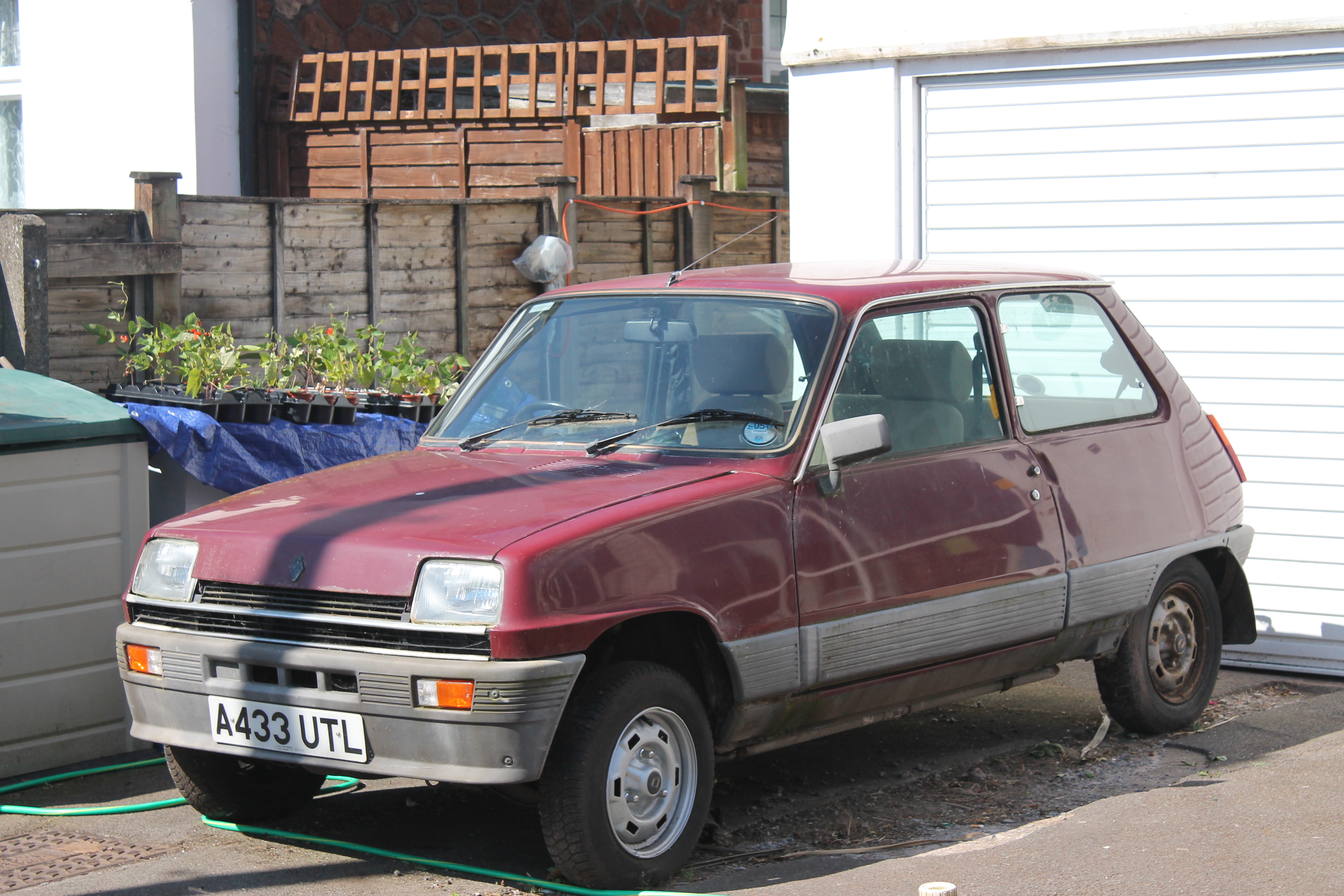
Renault 5 Turbo 3E
"And I've ridden shotgun in the new, soon to be, coming out, [1452.7s] Renault 5 Turbo 3E. [1455.2s] Please keep listening, because when I put the video up of this last year, it sparked mild outrage, [1465.2s] mostly because it's obviously an electric car."
The Renault 5 Turbo 3E is a new electric car that’s meant to feel like a throwback to the old Renault 5 Turbo. People are arguing about the “Turbo” name because it’s an EV, not a traditional turbocharged gas car.
The Renault 5 Turbo 3E is a modern electric take on the classic Renault 5 Turbo concept, combining retro styling cues with an EV powertrain. The host highlights the controversy around calling it a “Turbo” while it’s electric, and frames it as part of the broader debate about how EVs should be branded and presented.

Renault 5 Turbo 3E
"...idden shotgun in the new, soon to be, coming out, Renault 5 Turbo 3E. Please keep listening, because when I put the vi..."
The Renault 5 E-Tech Electric is a small car that runs on electricity instead of petrol. It keeps the Renault 5 name and look, but with modern electric technology. The podcast is connecting it to the wider Renault 5 lineup and what’s next.
The Renault 5 E-Tech Electric is an all-electric version of the Renault 5 nameplate, designed to bring a classic small-car style into the modern EV era. It’s significant because it’s part of a broader “Renault 5” lineage discussion, including future or related variants. In the podcast, it’s mentioned in the context of what’s coming next and how the electric model fits into that story.

Porsche Taycan Turbo
"When Porsche announced the Taycan Turbo, [1479.7s] oh boy, did not go down well brilliantly on pH,"
The Porsche Taycan Turbo is an electric Porsche. The host mentions it because Porsche used the “Turbo” name on an EV, and people didn’t like it.
The Porsche Taycan Turbo is an EV from Porsche’s Taycan lineup, using electric motors and a high-voltage battery rather than a turbocharged engine. The host brings it up as an example of how “Turbo” naming on an EV has previously drawn criticism.
combustion engine
"Because obviously an electric car can't have a turbo, because there's no combustion engine."
A combustion engine is the type of engine that burns fuel to make power. Electric cars make power differently, so they don’t have the same engine setup.
A combustion engine is an engine that burns fuel (like gasoline or diesel) to create power through controlled explosions in cylinders. The transcript contrasts this with an electric car, which makes power without burning fuel, so it changes what powertrain components (like turbos) can exist.
5 Renault 5
"...of this, but obviously it's a continuation of the Renault 5 Turbo lineage. And so that's why they've gone wit..."
The “5 E-Tech Electric” is an electric version of the Renault 5. It’s meant to be a modern small electric car while still linking back to the older Renault 5 story. The podcast is explaining that connection to earlier Renault 5 models.
“5 E-Tech Electric” refers to the Renault 5 E-Tech Electric, the modern electric small car built around the Renault 5 identity. It’s discussed as a continuation of the Renault 5 Turbo lineage, which is why the conversation focuses on how the name and heritage carry forward. The key point is the connection between the electric model and the earlier performance-focused Renault 5 variants.
2 to 1 length to width ratio
"The thing that Renault is extremely proud of is the fact that it has a 2 to 1 length to width ratio, something that I don't think I've ever seen as something in a press release..."
This is a simple measurement comparison: the car’s length compared to its width. Saying it’s “2 to 1” means it’s twice as long as it is wide, which affects how the car looks and feels in shape.
The “2 to 1 length to width ratio” is a dimensional proportion comparing how long a car is versus how wide it is. A higher ratio usually makes the car look more elongated and “stocky” in a specific way, and it can influence how the body shape reads visually from above and in profile.

Renault Clio
"...o 1 length to width ratio, Tihi, is not far off a Renault Clio V6. So it's kind of like, it's quite a stocky old..."
The Renault Clio with five doors is a small everyday hatchback. The extra doors make it easier to get in and out of the back seats. The podcast is talking about how its shape and proportions feel compared to other Clio versions.
The Renault Clio (five-door) is a compact hatchback built for everyday use, with a layout that prioritizes practicality and easy access to the rear seats. The episode references it in a comparison about proportions and “stocky” styling, even tying the size feel to a much more performance-focused Clio variant. That kind of discussion usually centers on how the car’s body shape affects perceived stance and driving feel.
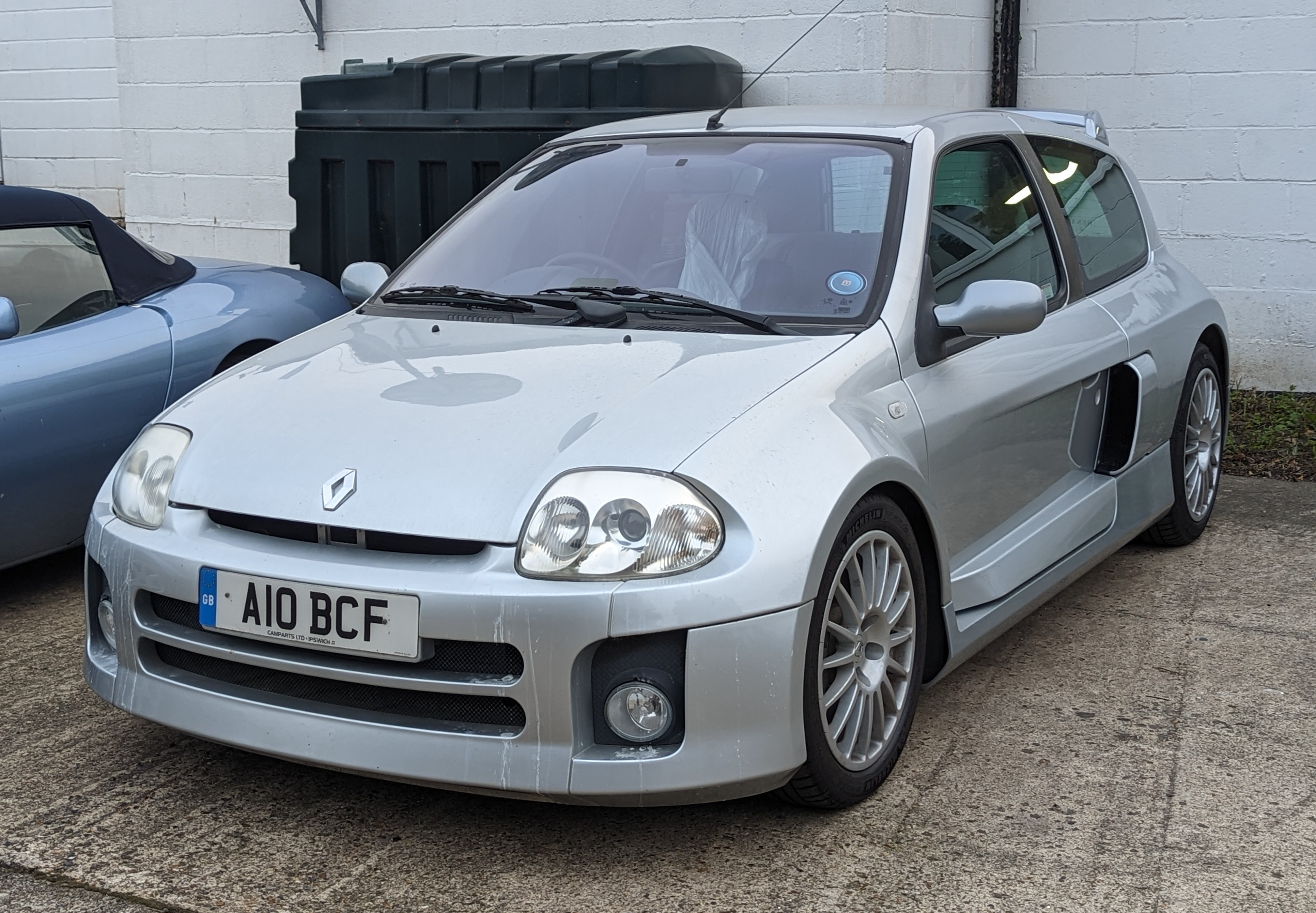
Renault Clio V6
"But so yeah, 2 to 1 length to width ratio, Tihi, is not far off a Renault Clio V6."
The Renault Clio V6 is an unusual Clio variant that’s famous for having a V6 engine. Here, they’re just using it as a comparison for how the new car’s shape looks.
The Renault Clio V6 is a rare, enthusiast-focused hot hatch that’s known for its unusual V6 engine swap compared with a typical Clio. In the segment, it’s used as a visual reference point for how “stocky” the Renault 5 Turbo 3E looks from above based on proportions.

Yangwang Yang Wang U9
"that's a bit frumpy. Same with the Yang Wang U9. Yeah, the Yang Wang, I think I've said on this p..."
The Yangwang U9 is a high-end electric car. The hosts are talking about its appearance and whether it looks good to them. It’s being mentioned in a comparison of design styles.
The Yangwang U9 is a high-performance electric vehicle from Yangwang, positioned as a flagship-style model. The podcast describes it as “frumpy,” which suggests they’re critiquing its styling or proportions. It’s mentioned as part of a comparison of how different cars look and present themselves.
all-aluminium chassis
"So, you know, it's a double wishbone, suspension all-round, all-aluminium chassis. It's a bespoke build with some Renault V elements to it."
An all-aluminium chassis means the car’s main frame is made mostly from aluminum. Aluminum can make the car lighter and feel more solid, which helps performance and control.
An all-aluminium chassis means the car’s main structural frame is built primarily from aluminum rather than steel. Aluminum can reduce weight and improve stiffness, which can benefit acceleration, braking, and handling—especially in a performance-focused build.
homologation special
"It's a bespoke build with some Renault V elements to it. But it's, as the original homologation special would have been,"
A homologation special is a special car a manufacturer makes so it can race in a certain series. The rules require a version to be available for the public, so the road car ends up with race-inspired engineering.
A homologation special is a road car built (or heavily modified) to meet racing eligibility rules, so the manufacturer can compete in a specific motorsport category. These cars often have unique performance parts or engineering choices that later influence road-going versions.
rear wheel drive only
"Rear-wheel drive only. [1651.5s] The electric motors are integrated into the actual wheels themselves."
“Rear-wheel drive only” means the car sends all of its drive power to the rear wheels, with no front-wheel drive. That affects traction and handling balance, especially during hard acceleration.
electric motors integrated into the actual wheels
"The electric motors are integrated into the actual wheels themselves. [1656.9s] Yes, inboard."
They’re using motors built into the wheels themselves, instead of a motor driving the wheels through a drivetrain. That can help with packaging and how power reaches the road.
This describes in-wheel electric motors, where the motor is built into the wheel rather than mounted in the drivetrain. It can simplify power delivery (no driveshaft to the wheels) and can improve packaging and weight distribution depending on the design.
inboard
"Yes, inboard. [1657.9s] Inboard. [1658.4s] Yeah. [1659.0s] It was not outboard because it's unlike an inboard motor, [1663.6s] is where the motor is in the middle of the axle."
“Inboard” means the motor is mounted closer to the middle of the car, not out near the wheel hub. The idea is that it can help the car’s weight balance.
“Inboard” here means the motor sits closer to the vehicle’s centerline rather than at the outer end of the axle. The speaker contrasts it with “outboard” placement and links it to better weight distribution.
no losses
"It's like, because there's no losses. [1685.6s] That's it. [1686.2s] Right. [1686.4s] It's, there's no, you know, usually it will be taken at the crank or at the axle, [1692.2s] but because there's none of that, it's literally straight to the wheel, [1695.0s] so you get a ridiculous, ridiculous reading."
They’re saying the system wastes less energy between the motor and the wheels. The goal is that more of the motor’s effort actually reaches the road.
“No losses” is the speaker’s shorthand for reduced drivetrain losses between the electric motor and the driven wheel. In practice, there are still efficiency losses, but the point is that the design can make the torque at the wheel closely match the motor’s output.
blowout
"but do we know, like, if you, let's say you had a blowout on the motorway [1702.4s] and you jacked it up and you had to take the wheel off,"
A blowout is when a tire suddenly pops or fails and loses air fast. It’s the kind of flat that can be dangerous because the car can start pulling or wobbling.
A blowout is when a tire suddenly fails, usually from a puncture or damage, causing rapid loss of air pressure. It can make the car pull violently and makes roadside wheel removal more urgent and more complicated than a normal flat.
take the wheel off
"[1702.4s] and you jacked it up and you had to take the wheel off, [1704.3s] does the motor I come off with that?"
“Taking the wheel off” means removing the tire and wheel from the car. It’s what you do when you need to change a tire or get to parts behind the wheel.
“Taking the wheel off” refers to removing the tire/wheel assembly from the vehicle so you can replace a tire or access components behind it. On many cars, the wheel is attached to the hub with lug nuts/bolts, so the process is closely tied to hub and wheel mounting hardware.
hub
"[1721.1s] It'll be on the hub, won't it? [1722.1s] They didn't have any tech people on site. [1724.5s] It was literally just, [1725.8s] I've just answered my own question in my head. [1727.3s] It'll be on the hub. [1728.1s] It will, yeah."
The hub is the part in the middle of the wheel area that the wheel bolts to. If a car has a motor mounted near the wheel, that motor may be connected to the hub too—so removing the wheel can be different than on a normal car.
The hub is the central mounting point where the wheel attaches and where the axle interfaces with the wheel assembly. In some electric setups (like hub-mounted motors), the motor can be integrated with or located at the hub area, which changes what comes off when you remove the wheel.
Request an Explanation
Heard something you'd like explained? We'll add it to this episode.
Sign in to request explanations for terms you heard.
Want to learn more?
Browse our glossary for plain-English explanations of automotive terms, jargon, and concepts.
Help improve this episode
See something that's not quite right? Our annotations are AI-generated and can sometimes miss the mark. Click the flag icon on any annotation to suggest a correction.