
Unlimited Budget Car Shopping at Girardo & Co!
About this episode
Peter McAlpine from Gerardo & Co joins the hosts, and the conversation swings from daily EV commuting to an “unlimited budget” showroom tour. They point out specifics like a manual Ferrari 360 in Rosso Corsa, debate how debut colors shape criticism, and talk about rally and endurance provenance—Alitalia Works Stratos, Group B homologation, and Ferrari 458 GTE/GT3-era differences. The episode also digs into modern ownership realities: hybrid battery costs, Ferrari Corsa clienti support, and how collector-car values and “hero cars” evolve.
What happens when you're let loose inside Girardo & Co with an unlimited budget to build the ultimate two-car garage?
As you may now, Girardo & Co is one of the most prestigious car sellers in existence, with a showroom packed full of unobtainium that only a handful of the world's wealthiest individuals can afford. Fortunately, they invited PistonHeads along for an evening of story telling, food munching and podcasting for our new and exclusive club: 98 Collective.
Here's how it all went down...
🏎️ Sell your car on PistonHeads auctions: https://www.pistonheads.com/sell/auctions
🎟️ Get your Annual Service 2026 tickets: https://www.pistonheads.com/events/annual-service
Chapters:
0:00 Intro
0:26 Welcome Girardo’s Peter Macalpine!
10:00 What’s in stock at Girardo?
21:09 What is Girardo & Co?
25:25 How’s the collector market looking for classics and modern classics?
39:25 Two car buying challenge
48:00 Cars that are as good to drive as everyone says they are, and ones that aren’t
FOLLOW US:
🗣 Facebook: https://www.facebook.com/pistonheads
📸 Instagram: https://www.instagram.com/pistonheads
🐦 X: https://twitter.com/pistonheads

DBR9
"...tually sitting in the showroom right now. Is this DBR9 right here? That one's less usable on the road. Y..."
The DBR9 is a sports car made by Aston Martin. The podcast says it’s not as easy to use day-to-day, meaning it’s more of a special-performance car than a practical one. People talk about it because it’s tied to racing and has a distinctive character.
The DBR9 is a grand touring sports car associated with Aston Martin’s racing heritage. In the podcast, it’s described as “less usable on the road,” which fits the idea of a car that’s more focused on performance and presence than everyday convenience. It’s discussed because it’s a notable, collectible-style GT with strong motorsport connections.

Ferrari 360
"the manual 360 over there is mine. So yeah. Bravo. And it's extremely lovely because it's, I'm guessing, Rosso Corsa, so the Ferrari Red. Classic. Kremmer interior. Yeah. And red carpets. Very lovely. Gearbox. It's manual."
The Ferrari 360 is a classic Ferrari supercar with its engine mounted in the middle. In this conversation, the big detail is that it’s a manual (stick shift), which makes it more engaging to drive.
The Ferrari 360 is a mid-engine V8 supercar from Ferrari, and it’s especially notable in this segment because the host emphasizes the manual gearbox. That combination—mid-engine layout plus a traditional manual—makes it feel more driver-focused than many modern supercars.
Rosso Corsa
"I'm guessing, Rosso Corsa, so the Ferrari Red. Classic. Kremmer interior. Yeah. And red carpets."
Rosso Corsa is Ferrari’s signature red paint color. It’s the kind of red people associate with Ferrari racing cars.
Rosso Corsa is Ferrari’s classic “racing red” paint color. The host is using it to describe the specific red finish on the Ferrari 360 they’re talking about.
Kremmer interior
"I'm guessing, Rosso Corsa, so the Ferrari Red. Classic. Kremmer interior. Yeah. And red carpets."
This is a description of the car’s interior materials and style. The host is pointing out that the Ferrari 360 has a particular interior setup, not just the exterior color.
“Kremmer interior” refers to a specific interior trim/leather option associated with Ferrari’s customization choices. In this segment it’s used as a detail to identify the car’s interior spec.
manual
"Gearbox. It's manual. Yeah. That was, as I was walking over to it, it's a manual. I know you're going to ask that. It's like, yes, okay, that's great."
Manual means you shift the gears yourself using a clutch pedal and a stick. The host is emphasizing that this car is more “hands-on” to drive.
A manual gearbox means the driver selects gears using a clutch and gear lever rather than relying on an automatic transmission. The host keeps stressing “it’s manual” because it’s a key part of what makes this Ferrari 360 feel special.
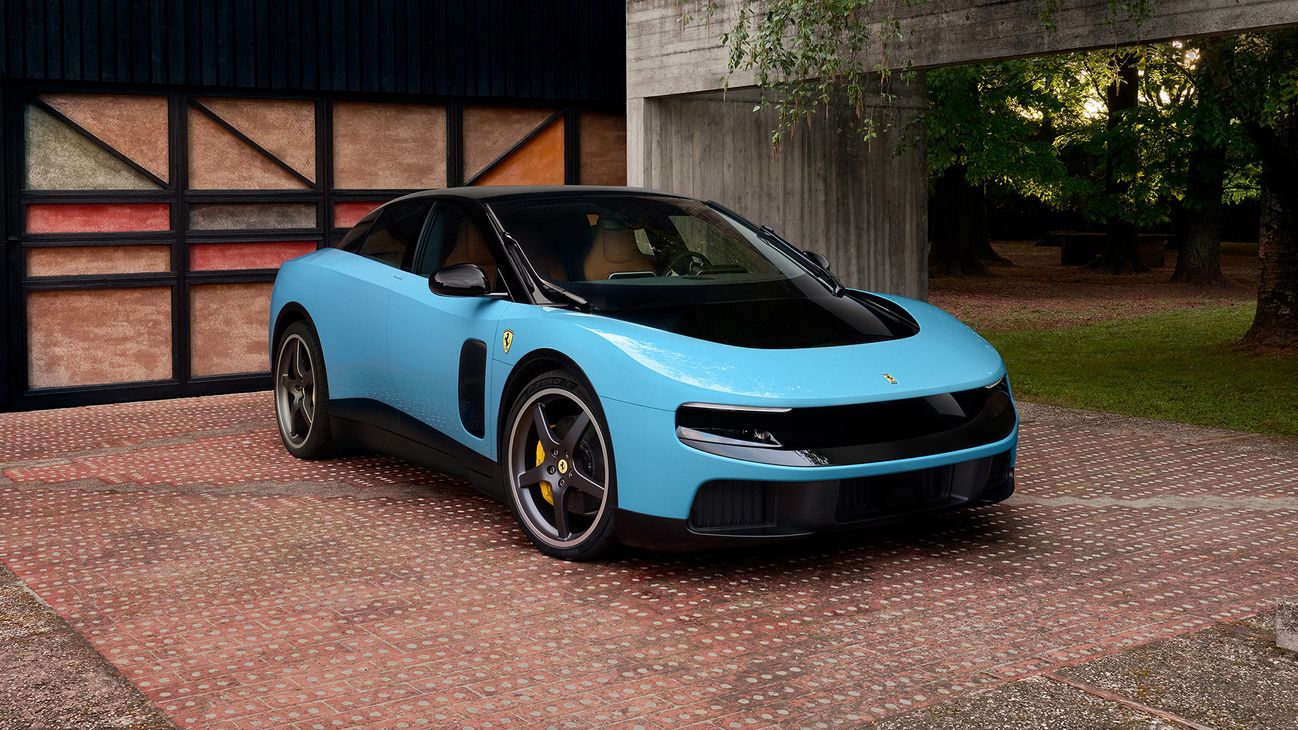
Ferrari Luce
"... few times there, it's like, what do you think of Luce? So you have an electric car and you have a Ferra..."
The Ferrari Luce is brought up as an electric Ferrari. The podcast is comparing it to other Ferraris that use traditional gas engines. It’s mentioned because it’s part of the shift toward electric performance cars.
The Ferrari Luce is mentioned in the podcast as an electric Ferrari concept or model discussion point, contrasting it with traditional Ferrari offerings. The episode frames it as “you have an electric car and you have a Ferra…,” indicating a comparison between electric and conventional Ferrari powertrains. It’s discussed because it represents Ferrari’s move toward electrification.
launch colour
"Ferrari has done the thing to me that McLaren has been doing for a lot of years, which is not really picking a good launch colour, I would say."
A “launch colour” is the paint color a car company uses when they first show the car. The host is saying the chosen debut color can affect how good the car looks in photos and first impressions.
“Launch colour” refers to the specific paint color a manufacturer chooses to debut a new car publicly. This matters because early photos, press shots, and first impressions are heavily influenced by color, and some colors can make a design look more (or less) dramatic.
McLaren
"Ferrari has done the thing to me that McLaren has been doing for a lot of years, which is not really picking a good launch colour..."
McLaren is another supercar brand. Here it’s mentioned only to compare how both brands choose debut colors that can influence how people judge the car’s looks.
McLaren is referenced as a brand that has used similar “launch colour” choices in the past. In this segment, the comparison is about how early presentation (especially color) can shape public criticism of a car’s design.

Ferrari F80
"But I mean, I was also not over the moon when I saw the F80. I saw the 849 Testarossa on my phone screen first and I thought it's not amazing."
The Ferrari F80 is a new, very high-end Ferrari supercar. The point here is that it can look worse or better depending on the color and whether you see it in real life instead of just pictures.
The Ferrari F80 is a modern Ferrari supercar concept that’s being discussed as a next big halo car. In this segment, the hosts focus on how its styling and first impressions (including color choices) can look different in photos versus seeing it in person.
special project car
"One is the person that is chasing the next special project car. So we've had F80, we've had SP3 recently."
A “special project car” is a rare, more exclusive version of a car—usually limited and aimed at collectors. The host is saying Ferrari uses these to keep certain buyers excited and loyal.
A “special project car” here means a limited, highly curated Ferrari model aimed at collectors rather than mass-market buyers. The host frames it as a product strategy: keeping top customers engaged by offering the next rare, desirable car.
Ferrari SP4
"So we've had F80, we've had SP3 recently. We all know that the SP4 is in the works and what better way to make sure you're still up that list than going in and making fluttery eyelashes at your Ferrari dealer and saying, can I buy one of those luches?"
The Ferrari SP4 is an upcoming limited Ferrari special car. The hosts are saying it’s the kind of rare, high-demand model that draws collectors and people who want the next “special” thing from Ferrari.
The Ferrari SP4 is mentioned as an upcoming limited-production Ferrari special project. The discussion frames it as a way for Ferrari to attract buyers who want the next rare, bespoke-style car, with an expected production run that supports a predictable number of orders.

Ferrari SP3
"So we've had F80, we've had SP3 recently. We all know that the SP4 is in the works and what better way to make sure you're still up that list..."
The Ferrari SP3 is a recent limited/special Ferrari model. It’s brought up to show that Ferrari is continuing a pattern of releasing rare “special” cars to keep certain buyers interested.
The Ferrari SP3 is referenced as a recent Ferrari special project car in the same buyer-and-allocation discussion as the F80 and SP4. It’s used to illustrate Ferrari’s strategy of keeping high-demand customers engaged with successive limited specials.
allocation
"what better way to make sure you're still up that list than going in and making fluttery eyelashes at your Ferrari dealer and saying, can I buy one of those luches?"
“Allocation” means who gets the limited cars when there aren’t enough to go around. The host is suggesting Ferrari’s process rewards certain customers with access.
“Allocation” in this context refers to how limited-production cars are distributed to customers. The host implies Ferrari uses dealer relationships and customer status to decide who gets access to cars like the SP4.

Ferrari 296
"And I can go, I can look 10, 20, 30 years into the future, [498.9s] and there's a 296 I could imagine being parked back there, and I could imagine even a Pure Sangway parked back there."
The Ferrari 296 is a newer Ferrari supercar. It’s special because it has a mid-engine design and uses a V6 with an electric motor to help it go fast.
The Ferrari 296 is a modern Ferrari that’s known for its mid-engine layout and hybridized V6 setup. It’s a big deal because Ferrari designed it around a compact V6 paired with an electric motor for strong performance and efficiency.
dinner plate wheels
"and it's only done a thousand miles, and it's like, yeah, and it's got the dinner plate wheels. [512.9s] Well, is it that good?"
“Dinner plate wheels” is a nickname for wheels that look huge and wide, like they take up a lot of the car’s visual space. It usually means the car has a very flashy, custom look.
“Dinner plate wheels” is a slang description for very large, wide wheels that visually dominate the car—often with a deep dish look. It’s used to emphasize a flashy, show-car style rather than subtle factory wheel sizing.
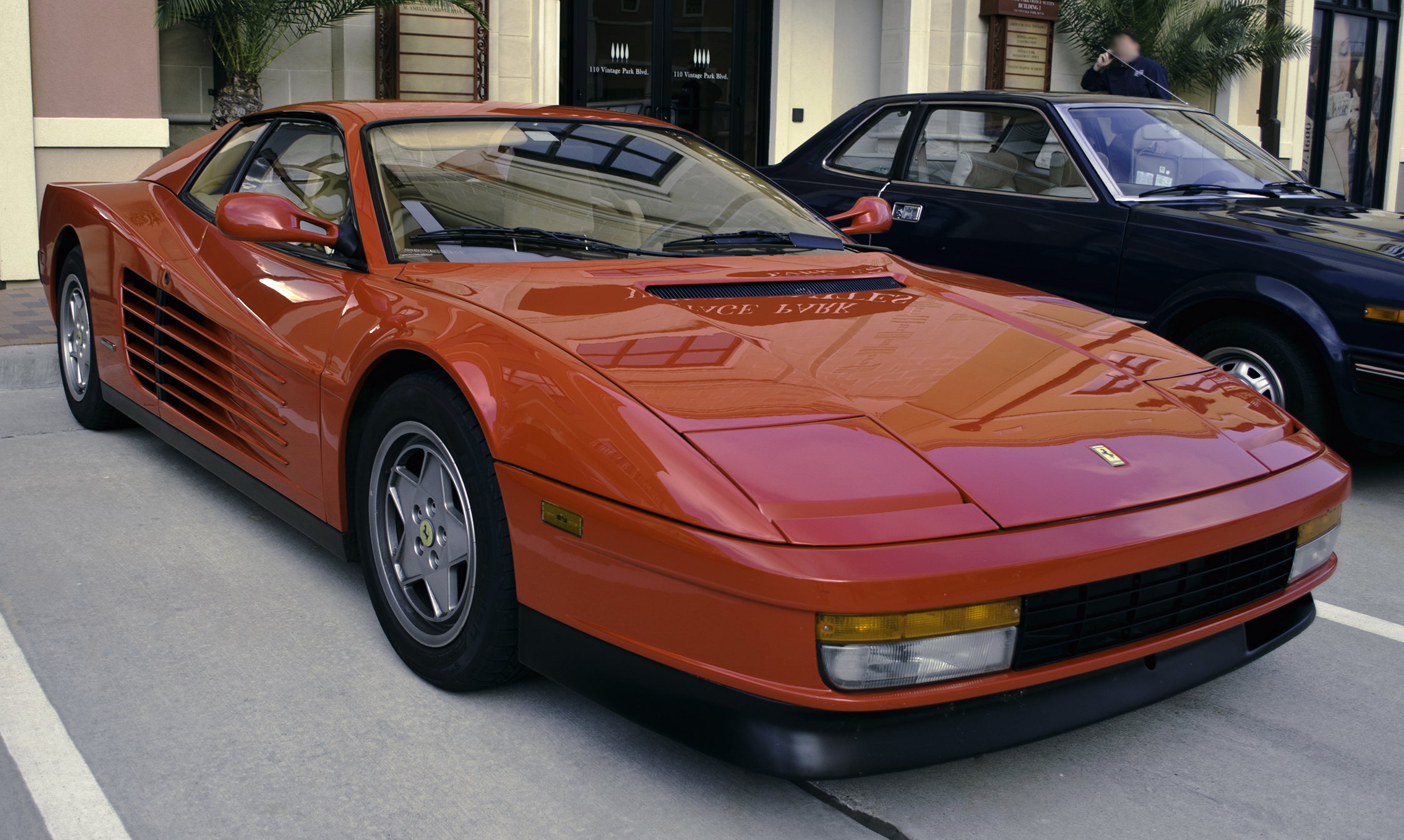
Ferrari Testarossa
"It's a Ferrari. It doesn't [521.3s] kind of feel like a Ferrari, but you've definitely changed my opinion, because I saw Testerossa [526.0s] in the metal at the first time, and I was like, that's really cool."
The Ferrari Testarossa is a classic Ferrari supercar from the 1980s. It’s remembered for its loud V12 sound and very recognizable, flashy look.
The Ferrari Testarossa is an iconic 1980s/early-1990s supercar famous for its wide, aggressive styling and flat-12 engine. It’s a cultural reference point for classic Ferrari V12 drama and soundtrack, so seeing one in person can strongly shape opinions.
98 Collective
"So just to give people a bit of context. So what we're actually doing here is [546.3s] the first event of the 98 Collective. So this is a new kind of exclusive club that we're running."
The “98 Collective” sounds like a special club or event group for car people. In this segment, it’s mainly about organizing exclusive meetups around buying and selling cars.
The “98 Collective” is described as a new exclusive club/event series tied to buying and selling cars. It’s not a technical automotive concept, but it’s a named category of how enthusiasts organize around auctions and private gatherings.
Piston Head's auctions
"And the best way to kind of get involved with it is if you're buying or selling a car on [552.4s] Piston Head's auctions."
They’re talking about auctions run by PistonHeads. That’s a car enthusiast website/brand, and here it’s being used to explain where the cars for the event come from.
“Piston Head’s auctions” refers to auctions run through the PistonHeads brand, which is a well-known UK enthusiast car marketplace. The mention matters because it frames how the event’s cars are sourced—through auction listings rather than dealer inventory.
Gerardo
"creating these really cool exclusive events. [565.9s] Gerardo's been so kind in opening up their doors, letting us walk through their incredible showroom and workshop."
“Gerardo” is the person helping set up access to the showroom and workshop. Here, it’s just part of the event logistics.
“Gerardo” is referenced as the person who’s opening the doors to the showroom and workshop. In this context, it’s about the host/venue contact rather than a technical automotive figure.

Alitalia Lancia Stratos
"So let's put it in simple terms like that. The white and green, the Alitalia Lancia Stratos. ... That is the Alitalia Works Lancia Stratos that Sandra Menari drove at the 1977 Lombard RAC."
The Lancia Stratos is a famous rally car from the 1970s. The “Alitalia” name is the sponsor livery, and this particular car is tied to a specific big rally event (the 1977 Lombard RAC).
The Lancia Stratos is a legendary rally car built around a purpose-made rally identity, and the Alitalia livery is its most iconic sponsor look. In this segment, the hosts specifically discuss an Alitalia Works Lancia Stratos associated with the 1977 Lombard RAC, which is a key part of its racing fame.
Works
"That is the Alitalia Works Lancia Stratos ... So the ones that you see kind of in other liveries, chances are they're either former works or just a road car that's been adapted into a rally car, right?"
“Works” means the car was tied to the manufacturer’s own team support, not just an independent team. That usually makes the car’s history and build more “official” and often rarer.
In rally context, “Works” means a factory-backed team effort—cars prepared and supported by the manufacturer rather than independent entrants. The hosts contrast Works cars with privateer conversions, implying this Stratos has a rarer factory-origin build path.
1977 Lombard RAC
"That is the Alitalia Works Lancia Stratos that Sandra Menari drove at the 1977 Lombard RAC. Jesus. That is it."
This is a specific rally event from 1977 that the hosts use to explain the car’s history. Rally cars are often judged and remembered by which events they competed in.
The 1977 Lombard RAC is a specific rally event the hosts reference to anchor the car’s racing history. For classic rally cars like the Lancia Stratos, event results and participation are a major part of their identity and value.
Sandra Menari
"That is the Alitalia Works Lancia Stratos that Sandra Menari drove at the 1977 Lombard RAC. Jesus. That is it."
Sandra Menari is the rally driver credited with driving this Stratos at the 1977 Lombard RAC. That helps confirm which car it is and why it’s historically important.
Sandra Menari is the driver named here as the person who drove the Alitalia Works Lancia Stratos at the 1977 Lombard RAC. Her mention matters because it ties this specific Stratos to a documented rally outing, reinforcing its provenance.
Group 4
"So the nice thing with a Group 4 Stratos, as this one is, if you are having an Alitalia car, that was a car that as a shell was taken off the line at Lancia."
Group 4 refers to a historic FIA rally homologation category that allowed certain modified cars to compete, with rules that shaped how rally-spec machines were built. The hosts use “Group 4 Stratos” to distinguish this car’s intended competition build from road cars later converted for rally use.
homologation
"So the nice thing with a Group 4 Stratos, as this one is, if you are having an Alitalia car, that was a car that as a shell was taken off the line at Lancia."
Homologation is the “approval” process that lets a car compete in a racing category. It usually requires the car to meet specific rules and sometimes a minimum production requirement.
Homologation is the process of certifying a car for racing by meeting rules about production numbers and specifications. The hosts reference the idea indirectly by explaining how Stratos shells were taken from the Lancia line and then prepared for Group 4 competition.
shell
"So the nice thing with a Group 4 Stratos, as this one is, if you are having an Alitalia car, that was a car that as a shell was taken off the line at Lancia."
A “shell” is basically the car’s body structure without all the working parts installed yet. The idea here is that the factory provided the body, and then the rally team finished it for competition.
In classic racing build talk, a “shell” means the bare body structure (without the full running gear) that can be finished and fitted to competition specifications. The hosts use it to describe how some Stratos were started from a Lancia-produced shell before being built into rally cars.
liveries
"So the ones that you see kind of in other liveries, chances are they're either former works or just a road car that's been adapted into a rally car, right?"
A “livery” is the racing paint job and sponsor decals on a car. The hosts are warning that just because a Stratos looks like a Works rally car, it doesn’t always mean it actually was.
A “livery” is the specific paint scheme and sponsor graphics a race car carries. The hosts mention “other liveries” to indicate that visual appearance alone doesn’t prove a car is factory/Works—some are former Works, while others are road cars adapted for rally use.
privateer conversion cars
"Generally, they're cars that started life as a road car. They may have only been road cars for a day, a week, a month, and they went to a rally team and then got built up to Group 4 specification. They're known as sort of the privateer conversion cars."
A “privateer conversion” is when an independent team takes a regular road car and modifies it for rally racing. The hosts are saying many Stratos with rally looks were converted this way instead of being built by the factory for competition.
“Privateer conversion cars” are rally cars that started life as road vehicles and were then modified by non-factory teams to meet rally regulations (here, Group 4). The hosts use the term to explain why many Stratos you see in rally liveries aren’t true factory-built competition cars.
FIA
"We'll pop them in a car park, the FIA and people come in and you show them around. It's very good."
The FIA is the main organization that makes the rules for big auto racing. Rally cars have to meet FIA requirements to be allowed to race.
The FIA (Fédération Internationale de l’Automobile) is the governing body that oversees major motorsport series and sets the rules for events like rallying. In Group B, FIA approval and homologation requirements were central to how cars were built and allowed to compete.
20 group B cars
"And then yeah, then they built 20, 20 group B cars of those. So yeah."
Group B was a rally racing class where manufacturers built special race cars. To race, they had to make a certain minimum number of those cars first.
Group B was a rally category with relatively loose rules that encouraged manufacturers to build very fast, very specialized cars. Homologation meant manufacturers had to produce a minimum number of cars for the category, which is why the hosts talk about “built 20 group B cars.”
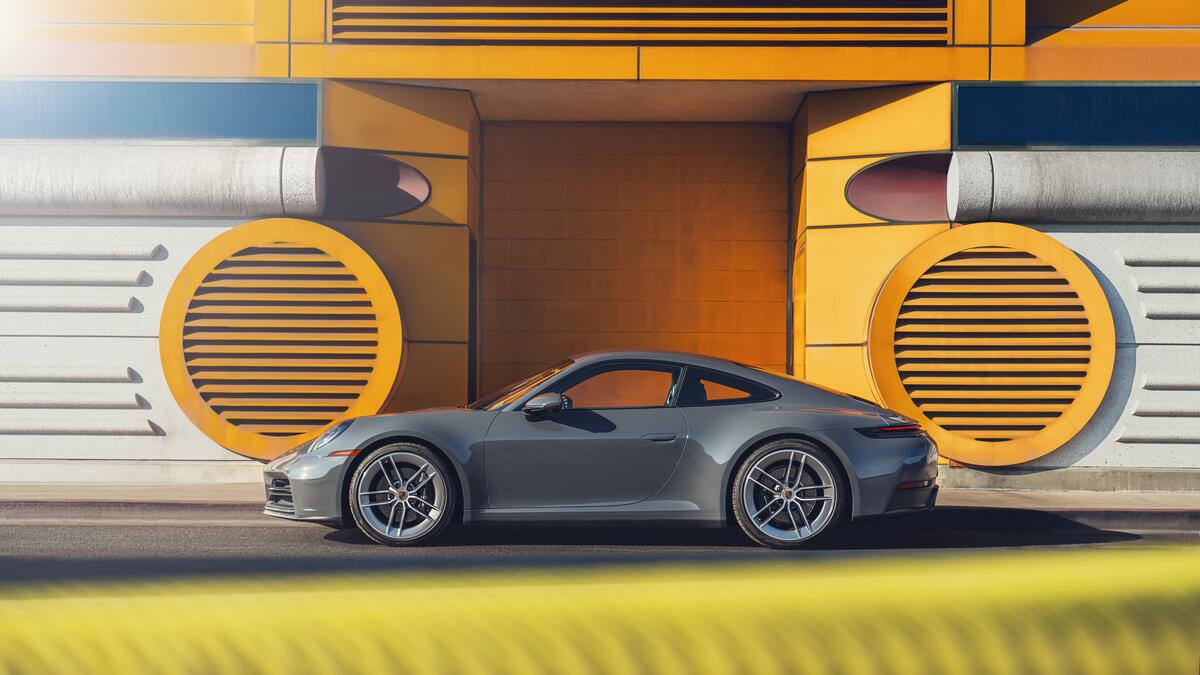
RSR Porsche 911
"So I see a DBR9. Kuntash and I see a RSR Porsche 911."
“RSR” is a Porsche 911 race version. The hosts are basically saying they have a Porsche 911 in that track/race-spec style in the collection.
“RSR” refers to Porsche’s race-prep 911 variants (commonly associated with the 911 RSR used in GT racing). In this segment, the host is pointing out a Porsche 911 in an RSR-style configuration as part of the lineup.

458 Italia GTE
"one of the very, very rare 458s Italia GTEs. That is a full, well, let's say full works as, as works as those cars get is an AF Corsa car"
This is a race version of the Ferrari 458 Italia built for endurance racing. The host is saying it was a factory-backed (works) Le Mans car that competed in different driver categories and still performed at the front.
The Ferrari 458 Italia GTE refers to a race-prepped version built for the GTE class in endurance racing. It’s notable here because the host describes a Ferrari-sanctioned works program, multiple Le Mans campaigns, and class results across pro and AM seasons.
AF Corsa
"That is a full, well, let's say full works as, as works as those cars get is an AF Corsa car, which was basically Ferrari sanctioned, Ferrari approved works program"
AF Corse is a racing team that specializes in Ferrari race cars. Here, the host is saying the car was prepared through an official Ferrari-approved program, not a random private build.
AF Corse is a well-known Ferrari-focused racing team and preparer. In this segment, it’s described as a Ferrari-sanctioned/approved works program partner, meaning the cars were built and supported in a very official, race-ready way.
24 hours of Le Mans
"That car has done two 24 hours of Le Mans. The first year as a pro car and the second year it was an AM car"
Le Mans is a famous long-distance race where cars have to keep running for 24 hours. The host is pointing out that this Ferrari race car did multiple Le Mans seasons and achieved strong results.
The 24 Hours of Le Mans is one of the world’s most important endurance races, where cars run for a full day and are judged by class and overall results. The host uses it to highlight that this Ferrari 458 Italia GTE competed successfully across two seasons.
pro car
"The first year as a pro car and the second year it was an AM car and it got GTE overall pole"
“Pro” means the car was driven by professional race drivers. The host is saying the car ran one Le Mans year with a pro driver lineup, then another year with an amateur category lineup.
In endurance racing, “pro” typically refers to driver lineups made up of professional racers, while other categories (like AM) are for amateur or less-experienced drivers. The host uses this to describe how the same car competed in different driver-category seasons at Le Mans.
overall pole
"it was an AM car and it got GTE overall pole with sandbird driving."
Pole is awarded to the car that qualifies fastest, so it starts at the front. “Overall pole” means it was the quickest at the top level for that event/field.
“Pole” means the fastest qualifier, earning the best starting position for the race. “Overall pole” indicates the top qualifying spot across the relevant class/field rather than just within a smaller subgroup.
AM car
"the second year it was an AM car and it got GTE overall pole with sandbird driving."
“AM” is short for amateur, meaning the car was entered with an amateur driver lineup. The host is saying the same race car did both pro and amateur-category seasons.
AM (often “Amateur”) is a driver category used in endurance racing to group cars based on the experience level of the driver lineup. The host notes that the car switched from a pro season to an AM season and still achieved strong qualifying/pole results in the GTE class.
GT3
"The crazy thing about those GTE cars... what they race at Le Mans now is GT3 and they're much more production car based."
GT3 is a racing class for cars that are based on production models. The host is saying that today’s Le Mans-style racing is more GT3 than the older GTE setup.
GT3 is another endurance racing class, but it’s more tightly standardized and typically more production-car-based in how the cars are built and packaged. The host notes that modern Le Mans GT racing is now GT3-focused, and that the engine sourcing/sound character differs from the older GTE era.
Brands Hatch
"So there was a, I remember there was a race at Brands Hatch ... It was a Blancpain GT race and they had like a, a, a historic or modern historic race"
Brands Hatch is a well-known race track in the UK. The host is describing a specific event there and how the cars sounded extremely loud on track.
Brands Hatch is a major motorsport circuit in the UK, known for hosting a wide variety of racing series. The host references it while describing how loud and distinctive these GTE-era cars sounded during a Blancpain GT event.
Blancpain GT race
"It was a Blancpain GT race and they had like a, a, a historic or modern historic race that was going on beforehand"
Blancpain GT refers to a GT racing event/series. The host is using it to explain when and where they heard the race car—especially how loud it was.
The Blancpain GT series (often referred to as Blancpain GT) is a European GT racing championship that has featured GT3 and GT4-era machinery depending on the year. Here it’s used to set the scene for a historic/modern GT event where the host heard a GTE car’s sound from across the circuit.
naturally aspirated engine
"the very last Ferrari endurance racer... it's the last Ferrari endurance car that came with a naturally aspirated engine."
A naturally aspirated engine doesn’t use a turbocharger. The host is saying the older Ferrari endurance cars used this setup, and later Ferraris switched to turbo engines.
A naturally aspirated engine makes power without a turbocharger or supercharger, relying on atmospheric pressure and engine design to draw air in. The host calls this out as a key difference in Ferrari’s endurance cars, noting that later models moved to turbocharging.

Ferrari 488
"the last Ferrari endurance car that came with a naturally aspirated engine. 488 after that was turbocharged"
The Ferrari 488 is mentioned as the point where Ferrari moved away from naturally aspirated endurance-car setups and toward turbocharging. Turbocharging changes how the engine makes power and how it sounds.
The Ferrari 488 is referenced as the next step after the naturally aspirated endurance era, and the host specifically notes it became turbocharged. That makes it a useful marker for how Ferrari’s performance and endurance sound/character changed over time.

Chevrolet Corvette
"...e crazy V8s that were in the Aston Martin and the Corvette, they were just so good. So yeah, I think that's ..."
The Chevrolet Corvette is a sports car from Chevrolet. It’s famous for having a strong V8 engine that’s built for fast acceleration. It’s often mentioned when people talk about cars that feel exciting to drive.
The Chevrolet Corvette is an American sports car known for its powerful V8 engines and performance-focused design. The podcast highlights “crazy V8s” and compares that kind of engine character to other cars mentioned in the episode. It’s discussed because the Corvette is a benchmark for raw power and driving excitement.
V12
"It has that amazing V12 kind of similar chassis and the DBR nine as a car went on to win two Le Mans 24 hours in class."
A V12 is an engine with 12 cylinders arranged in two rows. It’s known for making smooth, strong power—especially in performance and race cars.
A V12 is an engine with 12 cylinders arranged in a “V” shape (two banks of six). In endurance racing cars like the DBR9, a V12 is often chosen for smooth power delivery and high-rev capability.
Le Mans 24 hours
"It has that amazing V12 kind of similar chassis and the DBR nine as a car went on to win two Le Mans 24 hours in class."
Le Mans is a legendary 24-hour race in France. Cars race in different classes at the same time, so winning in your class is a big deal.
Le Mans 24 Hours is the famous 24-hour endurance race held at Circuit de la Sarthe in France. It’s one of the most prestigious events in motorsport, and winning “in class” is a major achievement because multiple categories race simultaneously.
livery
"That car is in a really cool livery. It was celebrating the 100th year of Pirelli in racing."
A livery is the car’s racing paint job—its colors and decals. Race teams use it to show sponsors and special themes.
A livery is the specific paint scheme, graphics, and branding pattern applied to a race car. It often reflects sponsorships, team identity, and special commemorations—like the “100” theme tied to Pirelli’s anniversary.
Pirelli
"It was celebrating the 100th year of Pirelli in racing. So that's why it's got the cool number 100 on there..."
Pirelli is a tire company that sponsors and supplies tires for racing. The host is saying the car’s design references Pirelli’s 100th year in racing.
Pirelli is a tire brand with a long history in motorsport, including major endurance and racing series. Here, the host ties the DBR9’s “100” numbering to Pirelli’s 100th year in racing, showing how tire sponsors influence race-car presentation.
supercharged
"It's an amazing big V8, supercharged, really, really cool thing."
“Supercharged” means the engine has a device that forces extra air into it. More air usually means more power.
A supercharger is a forced-induction device that uses a belt-driven compressor to push more air into the engine. That typically increases power and torque potential compared with the same engine without boost.

Ferrari V550 Maranello
"...scale for today, you have on one side, you have a V550 Maranello, which is, you know, we all kind of have a rough ..."
The Ferrari 550 Maranello is a Ferrari sports car with a V12 engine. The podcast is using it as an important example in their comparison. People talk about it because it’s a classic, powerful Ferrari.
The Ferrari 550 Maranello is a V12-powered grand touring Ferrari known for its classic front-engine layout and strong performance. The podcast mentions a “V550 Maranello,” which appears to refer to the 550 Maranello, positioning it as a key reference point in the discussion. It’s brought up because it’s a well-regarded Ferrari model that many enthusiasts consider a benchmark.

Ford Mustang
"we've got a GT350 Mustang. So kind of a bit more agricultural, let's say. And we're talking original GT350, right? Yeah, cool."
This is a special, high-performance Ford Mustang called the GT350. It’s known for a big V8 sound and a very “hands-on” feel when you drive it, especially compared to more modern or more refined versions.
The Ford Mustang GT350 is a high-performance version of the classic Mustang, originally built for road racing and known for its big V8 character. In this segment, they’re specifically talking about the original GT350 and how it feels different from other Mustangs—more raw and dramatic, with a heavy, involved driving experience.
V8
"and get to a corner, and a big grumbly V8. If you kind of go somewhere between those two, probably slightly closer to the 550, that's what that car's like."
A V8 is an engine with eight cylinders. It usually makes strong pulling power and has a distinctive, deep sound that many enthusiasts associate with classic muscle/performance cars.
A V8 is an engine with eight cylinders arranged in a “V” shape. It’s a common layout in performance cars because it can produce strong torque and a distinctive sound, which is part of what the hosts are describing with the GT350’s “grumbly” character.
heavy clutch
"Kind of heavy clutch, long pedals, you feel like you're really, really involved. But then you've got a bit more poise than in a standard muscle car."
A “heavy clutch” means the pedal is harder to press. It makes the car feel more physical and more demanding, so driving it feels more involved.
A “heavy clutch” means the clutch pedal requires more force to press and operate. That typically makes the car feel more physical and involving—something the hosts connect to the GT350’s hands-on, old-school driving feel.
standard muscle car
"But then you've got a bit more poise than in a standard muscle car. So it's kind of, where I was chatting to someone earlier, and I said it's like a thug in a really, really nice suit."
A “muscle car” is a classic type of American performance car focused on strong power. The hosts are saying the GT350 feels more balanced and controlled than the typical muscle-car stereotype.
“Muscle car” refers to American performance cars built around strong engines and straight-line speed, often with a more aggressive, less refined feel. Here, they contrast the GT350’s balance and composure against what they consider a more typical muscle-car driving experience.
thug in a really, really nice suit
"So it's kind of, where I was chatting to someone earlier, and I said it's like a thug in a really, really nice suit. And it's kind of, its personality is brilliant because of it."
They’re using a metaphor: the car looks classy, but it drives like it wants to cause trouble. It’s basically “polite on the outside, aggressive underneath.”
This is a metaphor for a car that looks refined or elegant but behaves aggressively and unpredictably in a fun way. In enthusiast terms, it’s describing the contrast between presentation (nice, composed) and behavior (raw, intimidating performance).

G-Class G Wagon
"...re paging through and oh, look at this. It's a G, G wagon doing DACA on that kind of thing. But yeah, so be..."
The G-Class is a boxy luxury SUV known for being tough and capable off-road. The podcast is pointing it out as a notable car while looking at vehicles. People talk about it because it has a very recognizable shape and strong capability.
The G-Class (often called the G-Wagen) is a rugged, boxy luxury SUV known for its off-road capability and distinctive design. The podcast mentions a “G wagon doing DACA,” using it as a standout visual while paging through cars. It’s discussed because the G-Class is a recognizable icon that blends luxury with serious capability.

Lancia LC2
"...unless you use them, unless you do things, unless, for instance, the LC2 over there, if that car hadn't been at Monza in 85, it wouldn't be quite as cool. [1463.8s] Yeah, for those, for those listening, there is a Lancia LC2 Group C car just parked off to one side."
The Lancia LC2 is a famous Lancia race car built for long-distance racing. The hosts are saying that its racing history—like being at Monza in 1985—is part of why people still care about it.
The Lancia LC2 is a Group C race car from Lancia, known for its lightweight, endurance-focused design and its place in 1980s prototype racing. In this segment, it’s used as an example of how racing history (like showing up at Monza in 1985) helps explain why the car is so “cool” today.
Monza
"...unless, for instance, the LC2 over there, if that car hadn't been at Monza in 85, it wouldn't be quite as cool."
Monza is a legendary race track in Italy. The hosts are pointing out that this car’s appearance there in 1985 is part of what makes it special.
Monza refers to the famous Italian circuit near Milan, one of the most storied venues in motorsport. Mentioning that the Lancia LC2 was at Monza in 1985 ties the car’s identity to a major endurance-racing stage.
Group C
"Yeah, for those, for those listening, there is a Lancia LC2 Group C car just parked off to one side."
Group C was a specific class of race cars used in endurance racing. It helps explain what kind of racing the Lancia LC2 was built for and what the rules emphasized.
Group C was a prototype racing category used in endurance racing, where teams were judged largely on fuel efficiency and overall race performance rather than simply engine size. Saying the Lancia LC2 is a “Group C” car places it in that specific ruleset and racing culture.
turnkey
"So, you know, there's, we've been, all the stuff that we've got back here, there's some kind of real modern classics. We've got real historic stuff, but most of it, correct me if I'm wrong, it's all turnkey, right?"
“Turnkey” means the car is basically ready to go. The seller is implying you can buy it and drive it without having to fix a bunch of stuff first.
“Turnkey” in car buying means the vehicle is ready to use with little to no immediate work required—think sorted, maintained, and prepared for driving. In the segment, it’s contrasted with the idea that some cars need more effort before they’re enjoyable or presentable.
GT one
"That is a, remember that it is a GT one car ... and GT one was, I think probably the pinnacle of kind of closed, closed GT racing."
GT1 is a category of race cars used in top-level GT racing. It’s basically the “highest tier” of that kind of racing, with cars built to compete at the very front.
GT1 is a top-level class of grand touring race cars where manufacturers build cars to compete under specific rules. The host is calling it the “pinnacle” of closed-cockpit GT racing, meaning it was the most elite and competitive form of GT racing before later rule changes.
preheat the engine
"So with those, it's sort of advisable to preheat the engine and yeah, it's a real, a bit of a process to start, but going back to"
Preheating is like warming the engine up before you start it. Some race cars need that extra step so they start reliably and run correctly when they’re cold.
“Preheat the engine” means warming key engine components before starting to ensure smooth ignition and stable operation. On certain race cars and high-performance engines, preheating can reduce hard starts and protect components when the car is cold.
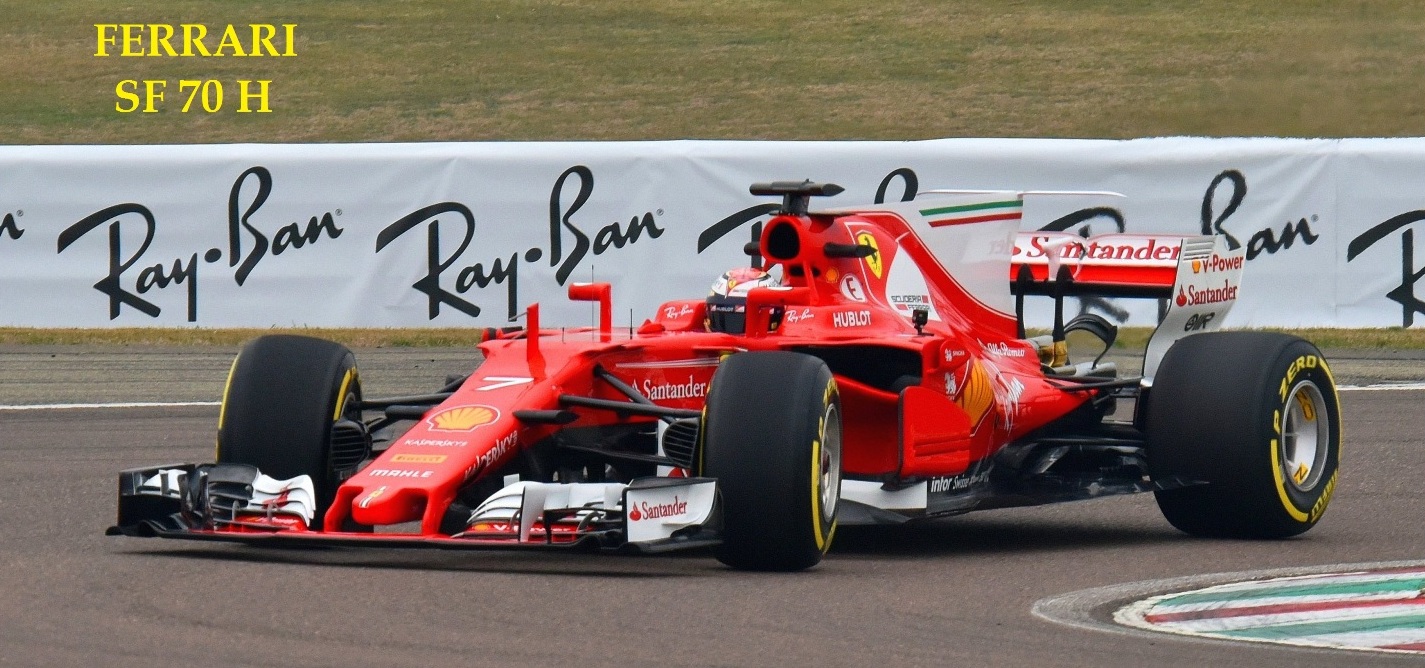
SF 70 H
"to be specific, an SF 71 H, the 2017 or 2000, sorry, SF 70 H. So the, um, 2017 Ferrari F1 car, V six hybrid."
“SF 70 H” is Ferrari’s 2017 Formula 1 car. It’s a hybrid race car, so it has an energy system in addition to the normal engine, which makes it harder to keep running than a typical street car.
“SF 70 H” refers to the Ferrari SF70H, Ferrari’s 2017 Formula 1 car. It’s a V6 hybrid, meaning it uses both a conventional V6 engine and an energy-recovery hybrid system, which introduces extra complexity for ownership and maintenance.
battery management
"they just, they require so much effort to work. There's the battery management while they're driving."
Battery management is the car’s system for keeping the hybrid battery working safely. It controls how the battery is charged and used, and if it’s not right, the car may not be able to run.
Battery management refers to the control systems that monitor and regulate a hybrid car’s battery—charging, discharging, temperature, and safety limits. In a Formula 1 hybrid car like the Ferrari SF70H, this is a major part of keeping the car operational, especially when the battery state of charge becomes critical.
battery ran out
"And as you may have seen, and I think it was the Canadian Grand Prix a couple of weeks back, I might be wrong, but I think George Russell broke down because his battery ran out. And if the battery runs out, you're, you're screwed."
With hybrid race cars, the battery isn’t just extra—it can be required for the car to function. If the battery runs too low, the car can be forced to stop or won’t operate correctly.
In hybrid race cars, the battery’s state of charge can limit or disable functions that the car depends on. The host’s point is that if the battery runs out, the car may not work at all—highlighting how modern hybrid systems can be “battery reliant” rather than purely engine-driven.
battery reliant
"At some point we're going to get to a point of where these cars are. So battery reliant. Um, can you see like there being this massive shift in, in, in how"
“Battery reliant” means the car depends on the battery to work properly. The host is saying that in the future, more collectible cars may be harder to own because the battery systems become a critical part of keeping them running.
“Battery reliant” describes vehicles where hybrid or electric systems are essential to operation, not just a performance add-on. The host is forecasting that as modern classics age, more of them will depend on battery health and control systems, making private ownership harder.

Ferrari SF 70 H
"I would say if it is a Ferrari, for instance, like the SF 70 H, um, that is still being looked after, still being run by the Ferrari factory."
This is a Ferrari Formula 1 race car. The point here is that Ferrari can keep supporting it even after it’s no longer actively raced, so an owner can have it maintained and ready to drive.
The Ferrari SF 70 H is a Formula 1 car from Ferrari’s modern era, built for top-level single-seater racing. In the segment, the host emphasizes that Ferrari keeps supporting certain F1 cars through its own factory-backed classic/racing support channels.
Corsa clienti
"You can't really buy a Ferrari formula one car and not have it with their F one classic department called Corsa clienti because they know exactly what to do."
Corsa clienti is Ferrari’s program that helps private customers get race cars and have Ferrari handle the important upkeep. The idea is that you don’t have to run the whole racing-car operation yourself.
Corsa clienti is Ferrari’s customer program for supplying and supporting certain race-derived cars for private owners. The segment describes it as a way to have the factory handle what needs doing so the owner can effectively “show up and drive.”

Ferrari 499 M
"Both the 499 P, which is the racing car and the 499 M, which is sort of the track toy, if you can call it that, which is ridiculous."
This is another Ferrari Le Mans–type prototype, but the host describes it as more track-focused than the main racing version. The key point is that Ferrari can still support it for private owners.
The Ferrari 499 M is Ferrari’s endurance-focused prototype variant positioned as a more track-oriented “toy” compared with the 499 P. The segment frames both as part of Ferrari’s long-term support strategy for owners.
balance of performance
"Like the ones that they race at Le Mans, they've all got like a balance of performance, haven't they? They all have to kind of match in, you know, to a certain extent the competition, but then they'll just sell you one that is like, oh, you're not a professional racing driver."
Balance of performance is how race organizers try to make different cars compete more fairly. They tweak things so no single design is automatically unbeatable.
Balance of performance (BoP) is a racing rule that adjusts cars’ performance so different designs can compete more evenly. The host says these Le Mans cars have BoP so they match the competition, which is why Ferrari can sell an owner a car with extra capability while still keeping it within the racing framework.
driver aids
"Have an extra 200 horsepower. You want fewer, fewer driver aids. That's fine. Just turn them off."
Driver aids are electronic safety/handling helpers that can step in to make the car easier to control. The host is saying you can choose a setup with fewer of these helpers if you want a more direct feel.
Driver aids are electronic systems that help the driver—things like traction and stability control, braking assistance, or other interventions. The host’s point is that some customer cars can be configured with fewer driver aids for a more “pure” driving experience.

Aston Martin Valkyries
"But then, yeah, if you have one of the Valkyries, you could have that as just something amazing, a bit of furniture in your garage if you, if you are that well healed."
The Aston Martin Valkyrie is a very rare, very high-end supercar. The host is basically saying some people buy cars like this just to own something special and amazing, not necessarily to use it every day.
The Aston Martin Valkyrie is a hypercar built around extreme performance and advanced engineering, often discussed as a track-focused “halo” car. The host uses it as an example of a car that could be kept as a special, display-worthy garage piece for wealthy owners.
hybrid
"But again, there is a hybrid element to that. And I've heard, you know, I was lucky to have a look around the Maranello last year and they're building a whole division dedicated to upgrading the batteries..."
A hybrid car uses two energy sources: a gas engine and an electric system. The electric part usually depends on a battery, so battery condition matters over time.
In this context, “hybrid” means the car uses both an internal-combustion engine and an electric system to move the vehicle. For hypercars, that can affect how battery health is managed and how the car is serviced when the battery ages.
battery health checks
"it was inspected before we said yes to it before it came in. It was inspected by McLaren, battery health checks, and you get a 10 page dossier basically of all of the breakdown and all of the battery health."
Battery health checks are tests that tell you how healthy the battery is. On hybrid hypercars, that matters because a weak or failing battery can mean big repair costs.
Battery health checks are evaluations of how well a hybrid battery is performing—often including capacity, degradation, and fault history. For expensive hybrid hypercars, these checks help determine whether the car is safe and usable or whether major battery work is likely.
dossier
"and you get a 10 page dossier basically of all of the breakdown and all of the battery health. So that kind of gives you a bit of reassurance."
A dossier is a detailed set of paperwork. In this case, it’s the inspection report that shows what was found—especially battery condition.
A “dossier” here means a detailed packet of documentation summarizing the car’s condition and findings from inspections. In this segment, it’s specifically tied to battery health and breakdown information for a McLaren P1.

Proton Gen2
"...r kind of heritage models. McLaren are developing Gen2 batteries for P1s now that are that are kind of s..."
The Proton Gen-2 is a compact car model made by Proton. In the podcast, the word “Gen-2” is also used in a battery context, but they’re not the same thing. The car is basically a regular small car, not a supercar.
The Proton Gen-2 is a compact car model from Proton, typically discussed in the context of everyday driving and regional automotive history. The podcast mention of “Gen2 batteries” appears to be a mix-up with the term “Gen-2,” because Proton’s Gen-2 is a car name while “Gen2 batteries” would refer to battery generations. It’s included here because the episode text uses “Gen-2” as a key phrase.
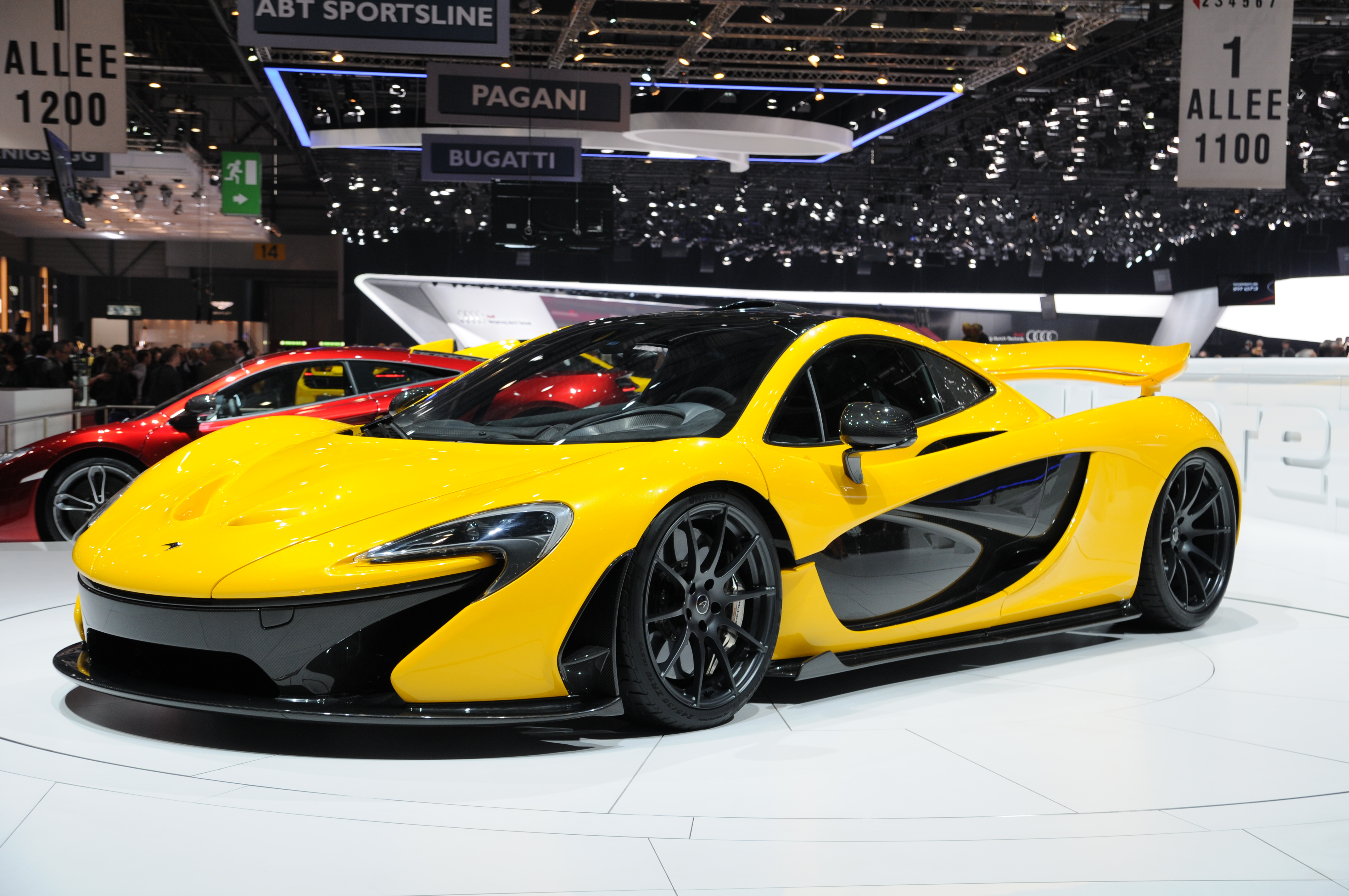
P1
"Because when the Laferrari came out, when the P1 came out, it's a very different battery technology to now, for instance."
The McLaren P1 is a hybrid supercar. Here they’re saying its battery technology is older/different from what newer hybrid cars use.
The McLaren P1 is a hybrid supercar, and the host is specifically talking about how its battery technology differs from today’s hybrid battery tech. The mention matters because battery design affects how future owners plan for replacement and long-term costs.

Laferrari
"Because when the Laferrari came out, when the P1 came out, it's a very different battery technology to now, for instance."
The LaFerrari is a Ferrari supercar that uses a hybrid system. The point here is that the battery tech used back then isn’t the same as what newer hybrid cars use.
The Ferrari LaFerrari is a hybrid supercar from Ferrari, known for using an advanced battery system compared with earlier hybrid-era cars. In this segment, the host contrasts its hybrid battery technology with newer hybrid tech, implying battery chemistry and control systems have evolved over time.
battery technology
"Because when the Laferrari came out, when the P1 came out, it's a very different battery technology to now, for instance."
They’re talking about how the hybrid battery is built and what kind of battery it uses. Different generations of cars can use different battery designs, which affects replacement cost and planning.
“Battery technology” here refers to how hybrid cars’ batteries are designed and built, including chemistry and system integration. The host uses it to explain why older hybrid supercars (like the LaFerrari and P1) can have different battery replacement expectations than newer hybrids.
pre-war
"At the other end of the spectrum, yeah, we've got the stuff that's vintage pre-war stuff or even kind of stuff in the 1960s..."
“Pre-war” means cars from before World War II. The host is saying that these older collector cars (and some 1960s ones) got much more expensive during the COVID period.
“Pre-war” is a collector-market category meaning vehicles from before World War II. The host notes that vintage pre-war and 1960s-era cars saw values rise sharply during and after COVID, framing it as a market-wide demand shift.
COVID
"Pre-COVID and during COVID values for those that kind of stuff just went through the roof because everything went through the roof."
They’re referring to the COVID period. The host is saying car prices for certain collector categories surged during that time.
“COVID” is used as a shorthand for the pandemic period when collector-car values reportedly “went through the roof.” The host’s point is about how macro events can rapidly change pricing and demand in the enthusiast market.

Ferrari 250 GTO
"That is a 250 GTO or a 288 or whatever. I want to go for that."
The Ferrari 250 GTO is a legendary 1960s Ferrari race-derived grand tourer, famous for its rarity and collector value. The host uses it as an example of the kind of childhood dream car that certain buyers chase once they have money.

Mclaren F1
"things like it's unfortunately, it's all the stuff from my childhood. McLaren F1, Ferrari F50s, all the people that have got to my age and are making a lot of money..."
The McLaren F1 is a supercar from the 1990s that became a legend. The host is saying people who grew up with cars like this are now old enough (and rich enough) to buy them.
The McLaren F1 is a famous 1990s supercar known for its extraordinary performance and collector status. Here it’s used as an example of “modern childhood” dream cars that are now being bought by a newer wave of wealthy enthusiasts.

Ferrari 288 GTO
"So you see, again, ENZOs, F50s, to a lesser extent, 288 GTOs, F40s, then even Murci Lagos have exploded and values Diablo's as well."
The Ferrari 288 GTO is a classic Ferrari supercar from the 1980s. It’s famous for its turbocharged engine and for being a highly collectible car that represents Ferrari’s racing heritage.
The Ferrari 288 GTO is a 1980s Ferrari supercar built around a turbocharged V8, and it’s one of the most important “homologation-era” Ferraris. It’s especially notable because it’s tied to Ferrari’s racing DNA and is a major collector benchmark for 1980s performance.

Ferrari F40
"So you see, again, ENZOs, F50s, to a lesser extent, 288 GTOs, F40s, then even Murci Lagos have exploded and values Diablo's as well."
The Ferrari F40 is a legendary Ferrari supercar from the 1980s. It’s known for being raw and exciting, with a turbocharged V8, and it’s one of the most famous Ferraris ever made.
The Ferrari F40 is an iconic 1980s supercar built to be fast, light, and brutally focused, with a turbocharged V8. It’s one of the most recognizable “modern classic” Ferraris and a frequent reference point for why certain Ferraris feel special to collectors.

Ferrari F50
"So you see, again, ENZOs, F50s, to a lesser extent, 288 GTOs, F40s, then even Murci Lagos have exploded and values Diablo's as well."
The Ferrari F50 is a rare, high-end Ferrari supercar from the late 1990s. It’s famous for its powerful V12 engine and for being a “dream car” that collectors chase.
The Ferrari F50 is a mid-engine supercar built by Ferrari as a late-1990s successor to the brand’s more hardcore, naturally aspirated era. It’s known for its high-revving V12 and for being a relatively rare, halo-level collector car.
Lamborghini Murciélago
"So you see, again, ENZOs, F50s, to a lesser extent, 288 GTOs, F40s, then even Murci Lagos have exploded and values Diablo's as well."
The Lamborghini Murciélago is a famous Lamborghini supercar with a big V12 engine. It’s one of the most recognizable modern Lamborghinis and a popular collector car.
The Lamborghini Murciélago is a flagship-era Lamborghini supercar known for its dramatic styling and V12 power. It’s a key “entry point” collectible for many Lamborghini fans and is often discussed alongside other 2000s-era halo cars.

Ferrari 458 Speciale
"You can see that with the price of some of the more... All of my favorite cars ruined. Even now to the point where 458 specialties are getting on for £600,000."
The Ferrari 458 Speciale is a special, more hardcore version of the 458. It’s known for a high-revving V8 and for being a collectible Ferrari that’s getting more expensive.
The Ferrari 458 Speciale is a performance-focused version of the 458, built around a naturally aspirated V8 and tuned for sharper throttle response and track-style driving. It’s also a modern-collectible that the host notes is rising quickly in price.
investment class
"I think that if you can say, okay, there's 272 288 GTOs, they're not really going anywhere. They're all kind of roughly quite similar. You pick your mileage and then you've got almost an investment class of its own there."
They’re talking about some cars like they’re an investment. The host means certain rare, popular models can hold their value and sometimes even rise, similar to how people invest in stocks or other assets.
“Investment class” here means treating certain cars—especially limited, desirable models—as an asset category alongside traditional investments. The idea is that scarcity and demand can keep prices supported, so buyers view them as a store of value rather than just transportation.
open top sports car
"I think if you want a nice open top car, open top sports car, I found, I was obviously on piston heads, got to look on there."
An open-top sports car is one where you can drive with the roof down, like a convertible or roadster. It’s a different kind of driving experience than a normal closed-roof car.
An “open top sports car” is a roadster-style car where the cabin is open to the air, typically with a soft top (convertible) or removable roof. The term matters because it changes how the car is used year-round and how it feels compared to a fixed-roof coupe.

Porsche Boxster 2.7
"And just for just under 10 grand, I found a really nice looking Boxster 2.7 Boxster. Yeah. Gen two really nice looking car."
The Porsche Boxster is a sporty open-top car with the engine placed closer to the middle for better balance. Here, they’re talking about a Boxster with a 2.7-liter engine as a budget-friendly option.
The Porsche Boxster is a mid-engine roadster known for its balanced handling and open-top driving feel. In this segment, the host is specifically talking about a 2.7-liter Boxster (a common engine size for the Boxster), and they’re positioning it as a “nice open top” choice around £10k.
historic motor racing
"And it says, I'm looking involved to get in historic motor racing and understand I'll need to buy my own car to do so."
Historic racing is races where older cars compete. The goal is usually to keep the cars in the spirit of their original time period, not to turn them into brand-new race machines.
Historic motor racing is competition for older cars, typically grouped by era and rules that aim to keep them closer to their original specifications. It’s different from modern racing because eligibility, preparation, and parts availability often matter as much as outright speed.
Le Mans Classic
"I'd rather it didn't expire on the way to Le Mans Classic, etc."
Le Mans Classic is a big event in France for older race cars. People drive their cars there and race them in a historic format, so getting there reliably matters.
Le Mans Classic is a major historic-racing event held at the Circuit de la Sarthe in France, featuring period-correct cars from different decades. When the host mentions not wanting the road car to “expire” on the way, they’re emphasizing real-world logistics for attending historic events.
POA
"where a lot of things are listed as POA. So I thought, let's screw the budget."
POA means “price on application.” The listing doesn’t show a number, so you have to ask the seller what it costs.
POA (“price on application”) means the seller doesn’t list a fixed price and instead requires you to contact them for a quote. In car shopping, it often shows up with rare or enthusiast-focused listings where pricing depends on condition, provenance, or negotiation.
downforce
"kind of car that slides around a lot and no downforce, not slicks. I'm not good enough to drive it."
Downforce is what makes a car feel like it’s being pressed onto the road by air. More downforce usually means better grip and easier control at high speed.
Downforce is the aerodynamic force that pushes a car’s tires harder into the road, improving traction and stability at speed. The hosts contrast a car that “has no downforce” with one that does, which changes how predictable and grippy it feels—especially when you’re sliding.
slicks
"kind of car that slides around a lot and no downforce, not slicks. I'm not good enough to drive it."
Slicks are race tires with no tread grooves. They’re made for maximum grip on a dry track, but they don’t work well in the rain.
Slicks are race tires with no tread pattern, designed to maximize contact patch and grip on dry tracks. They’re typically used in motorsport because they can provide far more traction than street tires, but they’re unsafe or ineffective in wet conditions.
horsepower
"it scares the living daylights out of me because, I mean, what, that's got to be a thousand dollar horsepower, right? Not quite, not quite. When it's really, really hot tune, it's probably 850 or so."
Horsepower is a way to describe how much power an engine makes. More horsepower generally means the car can accelerate harder, especially on a track.
Horsepower is a measure of engine power output, often used to compare how much work an engine can do. The hosts debate the LC2’s power when it’s “really, really hot tune,” using horsepower as a shorthand for how extreme the car is.
Venturi tunnels
"Before you leave, the one thing you have to do is you need to go and stand behind the LC2 and see how big the Venturi tunnels are beneath it because it is hilarious."
Venturi tunnels are special openings under a race car that use air pressure to push the car down onto the track. More downforce means better grip in corners, and the tunnel shape is a big reason why.
Venturi tunnels are shaped channels under a race car that use airflow speed-up to create low pressure, which helps generate downforce. On cars like the Lamborghini LC2, the tunnels are a key part of the aero system, so seeing their size helps you understand how the car produces grip.

Mitsubishi Lancer
"... of thinking that and I've talked a lot about the lancers. So my choice would be going for the Ferrari. I w..."
The Mitsubishi Lancer is a compact car. The podcast mentions it because the speaker has been thinking about it as an option. It’s a car model that can be found in more performance-focused versions too.
The Mitsubishi Lancer is a compact car that’s often discussed for its performance variants and enthusiast following. The podcast mentions “talked a lot about the lancers” and frames the speaker’s choice in relation to other cars, suggesting it’s part of a broader shortlist. It’s brought up because the Lancer has a strong identity among drivers who like practical cars with performance options.
Ferrari 458 GTE
"my choice would be going for the Ferrari. I would go for the Ferrari 458 GTE because I think it sounds incredible. And I would argue that it sounds better than the DBR9."
This is a Ferrari race car based on the 458. It’s designed for endurance racing, so it’s meant to be driven hard for long periods. The host is saying it sounds amazing and would be easier to run than a tougher, more demanding race car.
The Ferrari 458 GTE is a race-bred version of the 458 platform built for endurance racing, with a focus on speed and durability rather than daily comfort. In this segment, the host highlights its sound and argues it’s easier to live with than a more hardcore GT race car like the Aston Martin DBR9.
Aston Martin DBR9
"And I would argue that it sounds better than the DBR9. ... Seems like the DBR9 is actually quite challenging to run and I'd need a race team and I'm not made of money."
The Aston Martin DBR9 is a serious race car built for endurance events. The host is saying it’s not just a car you can casually own—it’s hard to run and would probably need a professional race team to keep it happy.
The Aston Martin DBR9 is a GT race car from Aston Martin’s endurance-racing era, known for being fast but also more demanding to operate than many people expect. Here, the host contrasts it with the Ferrari 458 GTE, saying the DBR9 is “challenging to run” and would likely require a proper race team.
Request an Explanation
Heard something you'd like explained? We'll add it to this episode.
Sign in to request explanations for terms you heard.
Want to learn more?
Browse our glossary for plain-English explanations of automotive terms, jargon, and concepts.
Help improve this episode
See something that's not quite right? Our annotations are AI-generated and can sometimes miss the mark. Click the flag icon on any annotation to suggest a correction.
3 community members have helped improve this episode.