Toyota GR Yaris Ogier driven, plus £25,000 usable performance and unpopular car opinions
About this episode
Toyota’s GR Yaris Ogier edition gets a deep dive, from its tiny production run and barely-used press car to the subtle but meaningful rally-inspired tweaks in its drivetrain modes and chassis setup. The hosts debate whether the special edition’s premium is justified when a standard GR Yaris or Aero Performance model delivers nearly the same experience. The conversation then pivots to Porsche’s Taycan eShift, a pricey optional system that adds simulated gear changes and paddles, raising questions about whether EV theatrics are worth the money.
It’s been two years in the making, but we’re the first in the UK to get our hands on one of only 200 examples built worldwide. Are pair of special diff settings and a carbon wing enough to justifying spending £80k for one on the used market?
Also in this episode of The Gassing Station, Sam drives the new Porsche Taycan e-shift, hot hatches, sports saloons and fast coupes go against each other in a £25k challenge, and the two dig through your unpopular car opinions.
🏎️ Sell your car on PistonHeads auctions: https://www.pistonheads.com/sell/auctions
🎟️ Get your Annual Service 2026 tickets: https://www.pistonheads.com/events/annual-service
Chapters:
0:00 Intro
0:37 GR Yaris Ogier Edition
10:58 Porsche Taycan E-Shift
32:57 £25k challenge
51:56 Unpopular car opinions
TOPICS:
Toyota GR Yaris Ogier Edition review: https://www.pistonheads.com/news/ph-driven/2024-toyota-gr-yaris-ogier-edition--ph-review/51349
Porsche Taycan E-Shift review: https://www.pistonheads.com/news/ph-driven/2026-porsche-taycan-e-shift--ph-review/51350
£25k Renault Clio RS 220 replacement: https://www.pistonheads.com/gassing/topic.asp?h=0&f=255&t=2144277
Unpopular car opinions: https://www.pistonheads.com/gassing/topic.asp?h=0&f=23&t=2143433
CARS:
Sam’s Renault Megane RS 300: https://www.pistonheads.com/buy/listing/20342025
Cam’s VW Golf GTI Clubsport: https://www.pistonheads.com/buy/listing/20006344
FOLLOW US:
🗣 Facebook: https://www.facebook.com/pistonheads
📸 Instagram: https://www.instagram.com/pistonheads
🐦 X: https://twitter.com/pistonheads
Sebastian OGA
"I've just driven the Toyota GR Yaris Sebastian OGA edition."
Sebastian Ogier is a very successful rally driver. This special Toyota edition uses his name to connect the car to his rally career.
Sebastian Ogier is a top-tier rally driver known for multiple World Rally Championship titles. The “Sebastian Ogier edition” branding ties the Toyota GR Yaris special car to his rally achievements and public persona.
eight championships
"There was the first one they did when he only had eight championships, but he's added another one on since then."
They’re talking about how many rally world titles Ogier had won. In rally, a “championship” is the overall season points win, not just one race.
“Eight championships” here refers to Ogier’s World Rally Championship title count at the time of the first limited edition. In rally terms, championships are season-long points battles across multiple events, not a single race win.
Le Mans weekend
"because this was over the Le Mans weekend. We've gone on a lot about Le Mans."
“Le Mans weekend” is the busy time around the famous Le Mans race in France. Here, it’s why Toyota brought the special car along for the trip and photo shoot.
“Le Mans weekend” refers to the event period around the 24 Hours of Le Mans, when teams, manufacturers, and media activities happen. In this segment, it’s the reason Toyota arranged for the Ogier edition GR Yaris to be used and photographed.
Gen two
"well, here's the thing. So [169.4s] the difference is versus a so they're based on the Gen two. [174.8s] Gi Aris with the better interior."
“Gen two” means the second generation of the GR Yaris platform. Generation changes typically bring structural updates (like stiffness improvements) and revised tuning, which is why the host says it feels more purposeful than the original.
chassis stiffness
"it was basically it was a lot firmer chassis stiffness was or body stiffness was improved [182.4s] massively."
“Chassis stiffness” means the car’s structure doesn’t flex as much when you drive hard. Less flex usually makes the steering feel more precise and predictable.
“Chassis stiffness” describes how resistant the car’s body/chassis is to twisting and flexing under load. Higher stiffness generally improves steering response and consistency, which the host says makes the GR Yaris feel more purposeful than the original.
diff modes
"For the OGA [194.5s] edition, they were like, this guy's really special. We've got to go all out on it. We'll put two new [199.7s] diff modes in."
“Diff modes” are different settings that change how power is sent to the wheels. Switching modes can make the car grip and turn differently depending on the road surface.
“Diff modes” are selectable driving settings that change how the differential(s) distribute torque to the wheels. In rally cars like the GR Yaris, different diff modes help tailor traction and handling for surfaces like tarmac, gravel, or loose conditions.
carbon fiber reinforced plastic rear wing
"There was a carbon fiber reinforced plastic rear wing. [222.2s] Oh, I mean, that's yeah. And so we're already up to [228.6s] 400 horsepower."
This is a rear spoiler made from a strong, lightweight composite material. It’s there to help the car’s aerodynamics, and the carbon fiber helps keep the part light.
A “carbon fiber reinforced plastic rear wing” is an aerodynamic spoiler made from CFRP, a lightweight composite material. Using CFRP helps reduce weight while maintaining stiffness, which can improve aero effectiveness and reduce drag/weight penalties versus heavier materials.
Seb mode
"on the inside, you've got a dial and where it would normally say track and [239.3s] gravel, you now have Seb and Maurizio mode. So Seb mode, Sebastian OGA, that is a set up [253.1s] kind of tailored to his needs"
“Seb mode” is a special driving mode on this GR Yaris edition. It’s set up to mimic the way Sebastian Ogier likes the car to behave, including how power is split front to rear.
“Seb mode” is a named drive setting tied to Sebastian OGA (Sebastian Ogier) in the GR Yaris edition. It’s described as a tailored torque-split setup (40/60 front/rear) to match his preferred rally driving characteristics.
4060 distribution
"So Seb mode, Sebastian OGA, that is a set up [253.1s] kind of tailored to his needs, which is a 4060 distribution. So 40 upfront, 60 to the rear."
This is the front-vs-rear split for how the car sends power. A 40/60 split means more of the drive goes to the rear, which can help the car feel more balanced and rally-like.
A “40/60 distribution” refers to how engine torque is split between the front and rear axles. A 40 upfront / 60 to the rear bias makes the car behave more like a rear-biased AWD rally setup, affecting turn-in feel and traction balance.
6040
"Whereas if you were to put it in normal mode, I believe it's 6040. [266.5s] So more front wheel drive."
“60/40” is another front-vs-rear power split. Compared to 40/60, it sends more power to the front, which usually makes the car feel more front-biased.
“60/40” is the opposite torque split compared with 40/60, meaning more torque goes to the front axle than the rear. The host links this to “normal mode,” implying a more front-biased feel and traction behavior.
Maurizio mode
"And then if you go to Maurizio mode, Maurizio is the pseudonym of Toyota president or chairman. [279.5s] Yeah, I think it's chairman."
“Maurizio mode” is a named setting on the special GR Yaris. The host says it’s named after Toyota’s top leader, using a pseudonym, rather than being a track/gravel label.
“Maurizio mode” is another named drive setting on the special GR Yaris edition, replacing the usual “track” and “gravel” labels. The host explains “Maurizio” is a pseudonym used by Toyota’s president/chairman, tying the mode name to the company figure rather than a driver.
pseudonym
"Maurizio is the pseudonym of Toyota president or chairman. [279.5s] Yeah, I think it's chairman."
A “pseudonym” is a made-up name someone uses instead of their real one. In this case, it explains why the mode is called “Maurizio.”
A “pseudonym” is a false or alternate name someone uses publicly. Here, the host uses it to explain why Toyota’s chairman/president is referred to as “Maurizio” on the car’s mode dial.
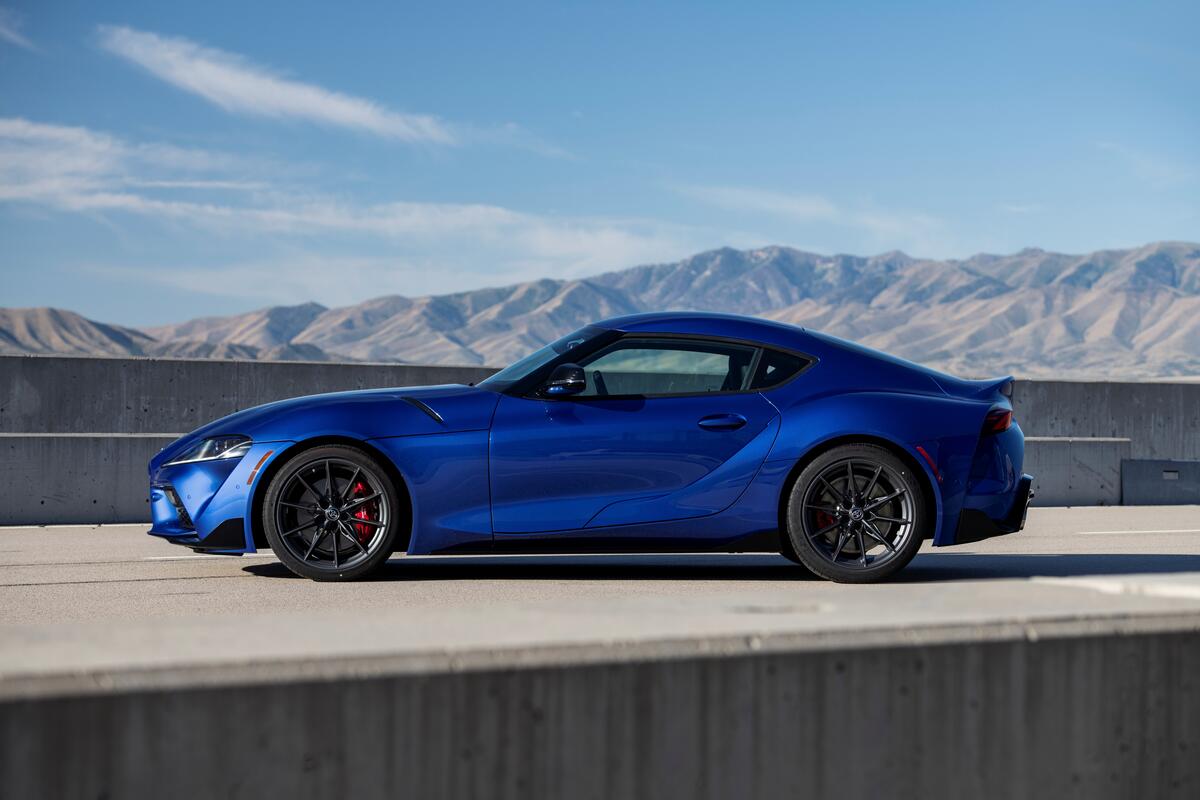
Toyota Supra
"that was the debut of the GR Supra GT4. And if you look at the side, it would say the driver's names"
This is a track-racing version of the Toyota GR Supra made for GT4 racing. GT4 cars are built to race hard but still feel more like a normal car than the most extreme race categories.
The Toyota GR Supra GT4 is a race-prepped version of the GR Supra built for GT4-spec competition. GT4 cars are designed to be competitive in amateur/pro-am racing while staying closer to production-car fundamentals than higher classes like GT3.
50 50 locked
"And the Maurizio mode is literally a 5050 locked in between the front axles. Very safe versus the very different 47 53 distribution of gravel mode."
“50/50 locked” means the car tries to send power equally to the front and rear wheels. That balance can make the car easier to control, especially when you’re pushing it.
A “50/50 locked” torque split means the system aims to deliver equal drive torque to the front and rear axles. Locking it this way reduces the car’s tendency to change balance abruptly, which is why the host calls it “very safe.”
torque split
"And the Maurizio mode is literally a 5050 locked... Very safe versus the very different 47 53 distribution of gravel mode... it might shift to 70% towards the rear to give you more rear traction push you out the corner."
Torque split is how the car decides how much power goes to the front wheels versus the rear wheels. That affects how the car feels in corners—whether it feels more stable or more willing to rotate.
Torque split is how the drivetrain divides driving force between the front and rear axles. Changing the split alters the car’s balance—more rear torque usually helps with rear traction and “push” out of corners, while a more even split can improve stability.
gravel mode
"Very safe versus the very different 47 53 distribution of gravel mode. And, and then in track mode, which is what Seb swaps, Seb's mode covers."
“Gravel mode” is a driving mode meant for slippery, loose surfaces like gravel. It changes how the car splits power front-to-rear so the car grips in a way that feels more natural on that surface.
“Gravel mode” is a traction/handling setting tuned for low-grip surfaces. The host describes it as using a different front/rear torque distribution (47/53) than the safer 50/50 setup, to better match how the car behaves on loose surfaces.
track mode
"And, and then in track mode, which is what Seb swaps, Seb's mode covers. And that is, it's a variable system. So it can go between 60 40 and seven 30 70."
“Track mode” is the car’s setting for driving on a circuit. It changes how power is split between the front and rear wheels so the car can stay stable but also get more rear grip when you accelerate out of corners.
“Track mode” is a selectable stability/traction calibration intended for circuit driving. The host describes it as a variable system that can shift torque split ranges (from 60/40 up to 70/30), balancing stability with more rear traction on corner exit.
handbrake turns
"Still pretty sensible, but it's only 50 50. Yeah. And it's not like a drift. I mean, you can do handbrake turns in those kind of you, but it's not like a pure drift mode."
A handbrake turn is when you pull the handbrake to make the rear wheels lose grip so the car can rotate. It’s a common rally-style trick, but the host is saying this setup isn’t meant to behave like an all-out drift car.
Handbrake turns are a technique where the driver uses the handbrake to quickly break rear traction and rotate the car. In rally-style driving, they can help initiate a slide, but the host emphasizes this car’s mode isn’t a “pure drift mode.”
corner exit
"And there's only on corner exit. Once it's all hooked up, that it might shift to 70% towards the rear to give you more rear traction push you out the corner."
Corner exit is the part of a turn where you’re coming out of the corner and starting to accelerate. It matters because that’s when the tires and drivetrain have to provide traction to keep the car pointed where you want.
Corner exit is the phase of cornering right after the apex, when you start accelerating and straightening the steering. It’s a key moment for traction because the drivetrain and tires must handle both grip and power delivery to control understeer/oversteer.
controlled forward drift
"And then you just literally flat it out and just kind of have that really nice controlled forward drift. So it's only really when the rear starts to break just a little bit, then it's like, okay, now I'll grip up."
A “controlled forward drift” is when the car’s rear slides a bit while you still keep it pointed the right way and stay in control. It’s not a full spin-out—more like a deliberate, managed slide.
A “controlled forward drift” describes a driving state where the car’s nose is guided into the turn while the rear slides in a managed way rather than spinning. The host links it to the car’s torque/traction behavior, noting it only transitions when the rear starts to lose grip slightly.
rally feel
"that really nice controlled forward drift. So it's only really when the rear starts to break just a little bit, then it's like, okay, now I'll grip up. So you just get this beautiful rotation. It feels very rally."
“Rally feel” means the car drives in a way that feels like rally cars—more willing to rotate and slide in a controlled manner. The host is describing that transition between grip and a little rear slip.
“Rally feel” is a subjective description of how a car responds like a rally car—often emphasizing rotation, traction management, and the ability to induce a controlled slide. The host connects it to the way the car transitions from grip to a rear slide and back to grip.
rotation
"then it's like, okay, now I'll grip up. So you just get this beautiful rotation. It feels very rally."
Rotation is how much the car “turns into” the corner as you steer and apply power. If it rotates well, the car feels like it’s turning where you want instead of pushing wide or getting unstable.
Rotation in cornering is how the car pivots around its center as you steer and apply throttle—often the difference between understeer (not turning enough) and oversteer (turning too much). The host uses it to describe how the rear traction behavior helps the car turn in and then accelerate out.

Toyota GR Yaris
"GR Yaris, but that Corolla drive we talked about a few episodes ago, I think that's where they've had a bit more fun with this kind of stuff... It's a lovely mode on track, but on a, on the road, it's noticeable in very, very tight corners, because you just feel that rotation a little bit better."
The Toyota GR Yaris is a small, rally-inspired performance car. It’s designed to feel agile and “rotate” well when you turn, which is why it can feel different in tight corners compared with faster driving.
The Toyota GR Yaris is a hot hatch built around rally-style engineering, with a compact, lightweight chassis and a focus on grip and rotation. In this segment, they’re comparing how it feels on track versus on the road, especially in tight corners where you can “feel the rotation.”

Toyota Corolla
"GR Yaris, but that Corolla drive we talked about a few episodes ago, I think that's where they've had a bit more fun with this kind of stuff."
The Toyota Corolla is a very common everyday car. Here, they’re just using it as a comparison to explain what feels more fun or more engaging than the other drive they discussed earlier.
The Toyota Corolla is a mainstream compact car, but in this episode they’re referencing a “Corolla drive” as a comparison point for how Toyota’s performance/handling can feel in different modes. The key takeaway here is that the hosts think the GR Yaris-style approach is where they “had a bit more fun.”
vertical handbrake
"Does it still have the, is it a vertical handbrake in that? No, no. So that's the party piece."
A vertical handbrake is a handbrake lever that points upward instead of sitting flat. Performance cars sometimes use this style because it can be easier to grab and use quickly.
A vertical handbrake is a rally-style parking-brake lever mounted upright, rather than a conventional horizontal lever. It’s often used in performance cars to make quick, precise brake/traction interventions easier for drivers.
aero performance
"So the wing on the aero performance is slightly different to the one on the previous OGA, because the aero performance is manually adjustable. The one on the OGA is fixed on the original OGA."
“Aero performance” is the car’s adjustable aero setup—mainly the rear wing. In this segment, they’re saying one version lets you adjust the wing, while another version keeps it fixed.
“Aero performance” here is a specific GR Yaris trim/option package that includes an adjustable aerodynamic rear wing. The hosts contrast it with the Ogier edition’s fixed wing, explaining that the adjustable wing is what creates differences between versions.
rear wings
"Both of our cars were gray, both had rear wings and you could barely tell the difference between the two."
A rear wing is the spoiler on the back of the car. Its job is to help the car stay planted at speed, and in this story it’s also part of what makes these special editions look similar.
A rear wing is an aerodynamic device mounted at the back of the car to generate downforce and improve stability. In this segment, the hosts use rear wings as a visual cue, noting that two limited editions look almost identical from a distance.
homologation special
"I mean, actually, I think you're fine. It's homologation special. So it's, it's, it's one of those cars where there's the OGA side of things."
A homologation special is a limited car made so a race car can be allowed to compete. The manufacturer has to sell/build enough road versions to “prove” the race car exists.
A homologation special is a limited-production road car built to meet rules that allow a related race car to compete. The idea is that the manufacturer must build a certain number of road-legal examples so the race version is eligible.
huge premiums
"But they command huge premiums. So I did find a used example. They sold for 60 grand brand new ones up for sale on"
A premium means people pay extra money beyond what you’d normally expect. They’re saying these special editions cost a lot more than you might think, even if the differences are small.
A premium is the extra amount buyers pay above a baseline price (like the typical market value). Here, the hosts say these limited GR Yaris editions command large premiums even when differences are mostly cosmetic or minor.

Porsche Taycan
"...nalog manual hot hatch to a flappy paddle Porsche Taycan, Sam Sheehan. You've been driving the new Porsche..."

Porsche Panamera
".... It sounds a little bit like a V8, 40 to V8 in a Panamera, which is no bad thing. Again, quite bassy. Pictu..."

Aston Martin Valhalla
"... year, actually, where when you are, I was in the Valhalla and going off the line with that hybrid shav, I c..."

2 Grand Tourer
"...ers that this car is used most likely more like a grand tourer. Yeah. Most people drive them around, do a bit mo..."

Porsche A918 Spyder
"I was terrified because I was like, Oh my God. I just looked at him and sort of was shaking a bit. And I think he was terrified. Anyway, he had a 918 Spyder, obviously, just the daily. And there were some other content creators there. But one of the cool cars they brought was the"

Porsche 911
"...in the green. It's the one that inspired that new 911 Earl's Court edition or whatever it is, which was..."

Renault Sport
"...ll me Mr. Nameless. And they say currently have a Renault Sport Clio 220 trophy, which is modded. Love the car, b..."

BMW E92
"favorite. Oh, I don't know. It isn't my favorite shape actually. Do I prefer the, you know, anyway, it's an E 92 BMW M3. Yes. 4 liter V8, which is what's going to go wrong with it. And it's an auto. So it is. And it's a good auto. So it's the DSG. It's a good auto and snappy one. He said mostly"
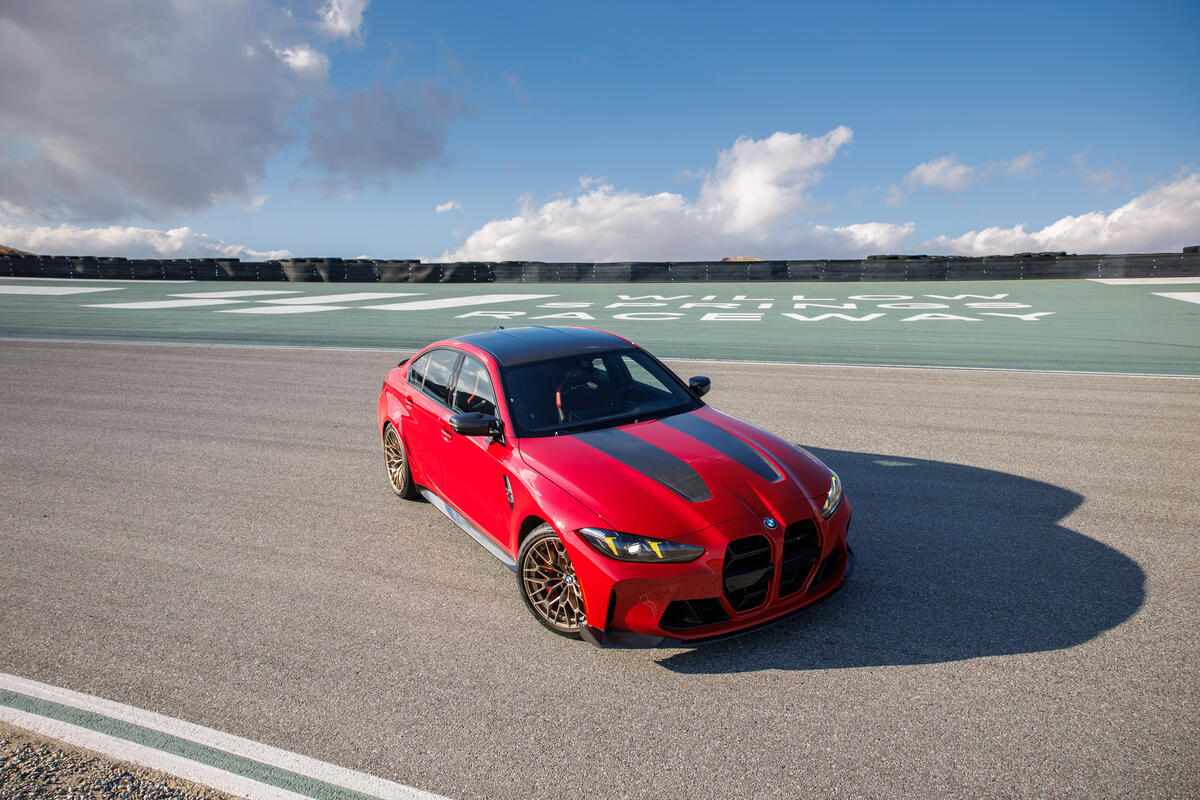

Porsche Boxster
"...g an issue and I know about IMS because of my 986 Boxster, which is a few, a little bit older, but this was..."


Chrysler 300C
"...h this has been listed as a Chrysler hyphen Jeep, 300C Hemi V8 SRT8. Oh God. Yeah. So which is they've m..."
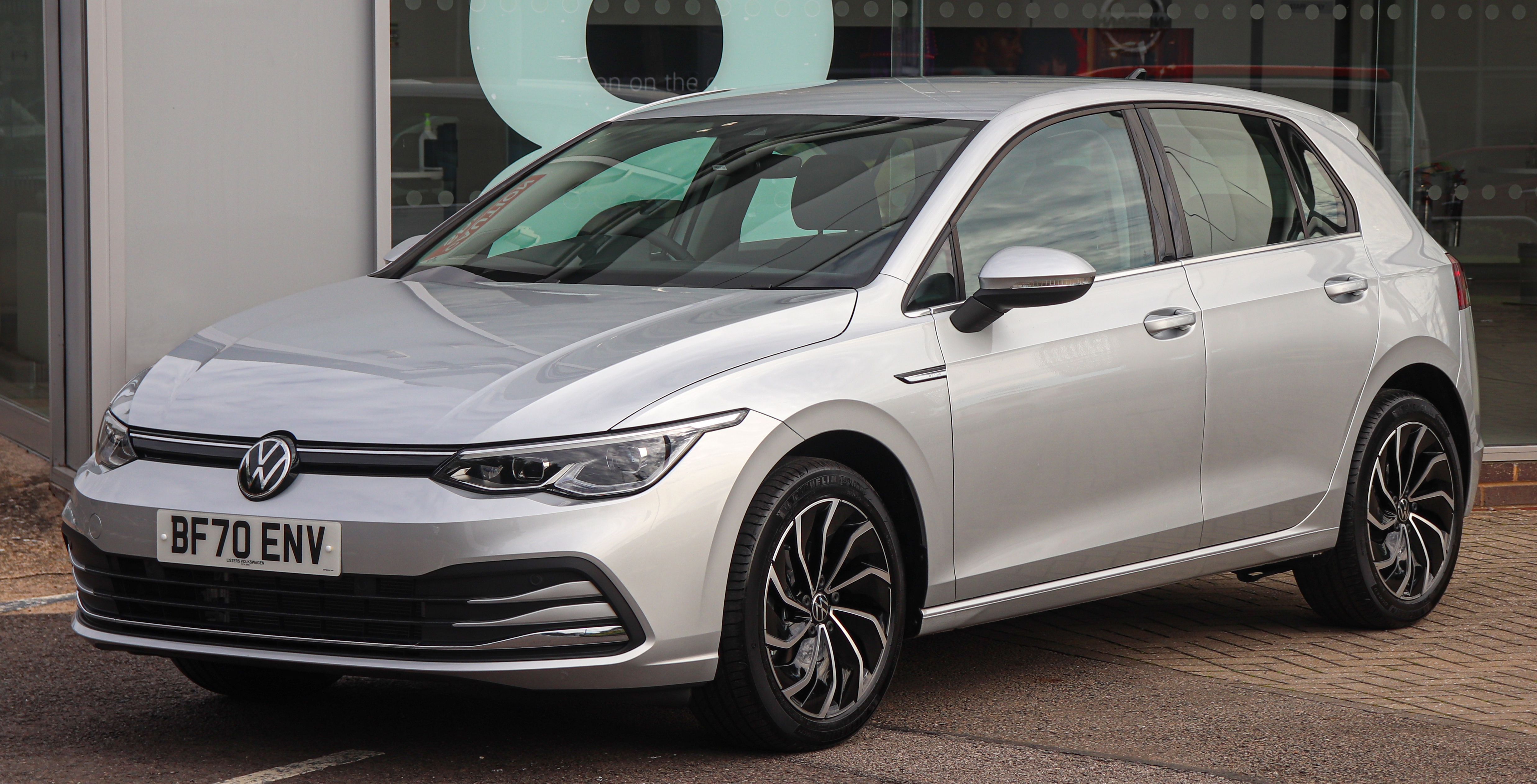
Volkswagen Golf Gti
"...It looks like a ClubSport S, but it is actually a Golf GTI Mark 7, a ClubSport 40. Yeah. That's like a Disho..."

Renault Megane E-Tech
"...a vote for my ClubSport 40 or Sam's Renault Sport Megane 300 RS. Slightly further oversteering, but you're..."


Bentley Bentayga
"...ings, it's just a Vauxhall Sofira. It's a Bentley Bentayga and you turn around and they've cut the leather o..."

Peugeot 205
"...d lane. It's totally fine. Fifth, that's FIF, the Peugeot 205 GTI 1.6 drives better than the 1.9. That's going ..."

Peugeot 205 GTI
"...It's totally fine. Fifth, that's FIF, the Peugeot 205 GTI 1.6 drives better than the 1.9. That's going to a..."

Request an Explanation
Heard something you'd like explained? We'll add it to this episode.
Sign in to request explanations for terms you heard.
Want to learn more?
Browse our glossary for plain-English explanations of automotive terms, jargon, and concepts.
Help improve this episode
See something that's not quite right? Our annotations are AI-generated and can sometimes miss the mark. Click the flag icon on any annotation to suggest a correction.