NEW Toyota GR GT, Alpine A110 combustion comeback and our favourite cars from the Festival of Speed
About this episode
Goodwood’s heat sets the scene as the hosts bounce between Toyota’s new GR GT—“basically a GT3 car that they've built”—and Alpine’s A110 shifting from petrol to an electric replacement. They dig into Alpine’s roadmap for a possible ICE return, then debate whether an EV A110 could work in the US. The conversation widens to track tech, charging infrastructure, and why the event’s lineup feels like it’s “shifting back” toward big-displacement noise, with standout cars like the M3 GTR and P60 V14.
Fresh from Goodwood Festival of Speed, we round up the biggest stories from one of the most important events on the automotive calendar.
From the future of the Alpine A110 and the exciting new Toyota GR GT, to ultra-fast EV charging, a forgotten McLaren F1 test car powered by a Lamborghini V12, the new McLaren 788 HS and our dream picks from the Cartier lawn, we unpack everything we discovered at this year's Festival of Speed.
🏎️ Sell your car on PistonHeads auctions: https://www.pistonheads.com/sell/auctions
🎟️ Get your Annual Service 2026 tickets: https://www.pistonheads.com/events/annual-service
0:00 Intro
1:42 Alpine A110 combustion comeback?
7:13 Toyota GR GT first look
21:19 Denza 1,500kW charging
28:10 Goodwood FoS roundup
40:54 Cartier Lawn challenge
TOPICS:
Alpine A110: https://www.pistonheads.com/news/ph-eurocars/us-market-driving-combustion-alpine-a110-decision/51407
Toyota GR GT: https://www.pistonheads.com/news/ph-japanesecars/toyota-not-ruling-out-rs-version-of-new-gt3-rival/51402
Mclaren 788 HS: https://www.pistonheads.com/news/ph-britishcars/new-mclaren-788hs-is-extraordinary-finale/51398
Denza fast-charging: https://www.pistonheads.com/news/electric-vehicles/new-denza-z-promises-1604hp-for-163-142k/51405
FOLLOW US:
🗣 Facebook: https://www.facebook.com/pistonheads
📸 Instagram: https://www.instagram.com/pistonheads
🐦 X: https://twitter.com/pistonheads

Alpine A110
"I think feeling a little bit like it's a shame that there's no petrol alternative because Alpine A110 petrol cars are so very good."
The Alpine A110 is a small, fun sports car known for feeling nimble and quick through corners. Here, they’re talking about whether Alpine can offer a gas (petrol) version again instead of only an electric one.
The Alpine A110 is a lightweight, mid-engine sports car from Alpine (Renault’s performance brand) that became famous for its agile handling and rally-inspired character. In this segment, the hosts are discussing whether Alpine will bring back a petrol (ICE) version after focusing on an electric A110.
Philippe Krief
"Basically, we've had another one. I had an interview with Philippe Krief, the CEO and friend of the pod, great guy, passionate."
Philippe Krief is a top executive at Alpine. In this segment, he’s explaining their roadmap for electric development and a possible petrol comeback.
Philippe Krief is the CEO of Alpine (and a key figure in the brand’s strategy). Here, he’s quoted describing a plan to finish electric A110 development and then evaluate an ICE/petrol alternative.
ICE equivalents
"He effectively said that from October... they will immediately start thinking about the potential for an ICE equivalent or a petrol-powered car, which they would squeeze into this APP platform..."
ICE means the normal kind of car engine that burns fuel (like petrol). An “ICE equivalent” is basically the gas version of a car that’s being designed around electric first.
ICE stands for “internal combustion engine,” meaning a traditional petrol or diesel engine. An “ICE equivalent” is the gas-powered version of a car that’s otherwise being developed as an electric model, aiming to deliver a similar role or experience.
APP platform
"they would squeeze into this APP platform, which is the platform they're using for their EV. However, the platform has always been capable... of taking different powertrains."
A platform is the car’s main “build” that many versions can share. They’re saying their EV platform could also be adapted to support a gas engine version, not just electric.
A “platform” is the shared engineering foundation—like the underlying structure, mounting points, and major systems—used across multiple vehicle variants. Here, the APP platform is described as being used for an EV, but capable of supporting different powertrains from the ground up.
powertrains
"However, the platform has always been capable... of taking different powertrains."
A powertrain is what actually makes the car move—like the engine or electric motors and the stuff that connects them to the wheels. They’re saying their platform can handle more than one kind of setup.
A powertrain is the set of components that generate and deliver motion—typically the engine (or electric motors), transmission, and related driveline hardware. The host is emphasizing that the platform can accommodate different powertrain types (electric vs petrol) without being redesigned from scratch.
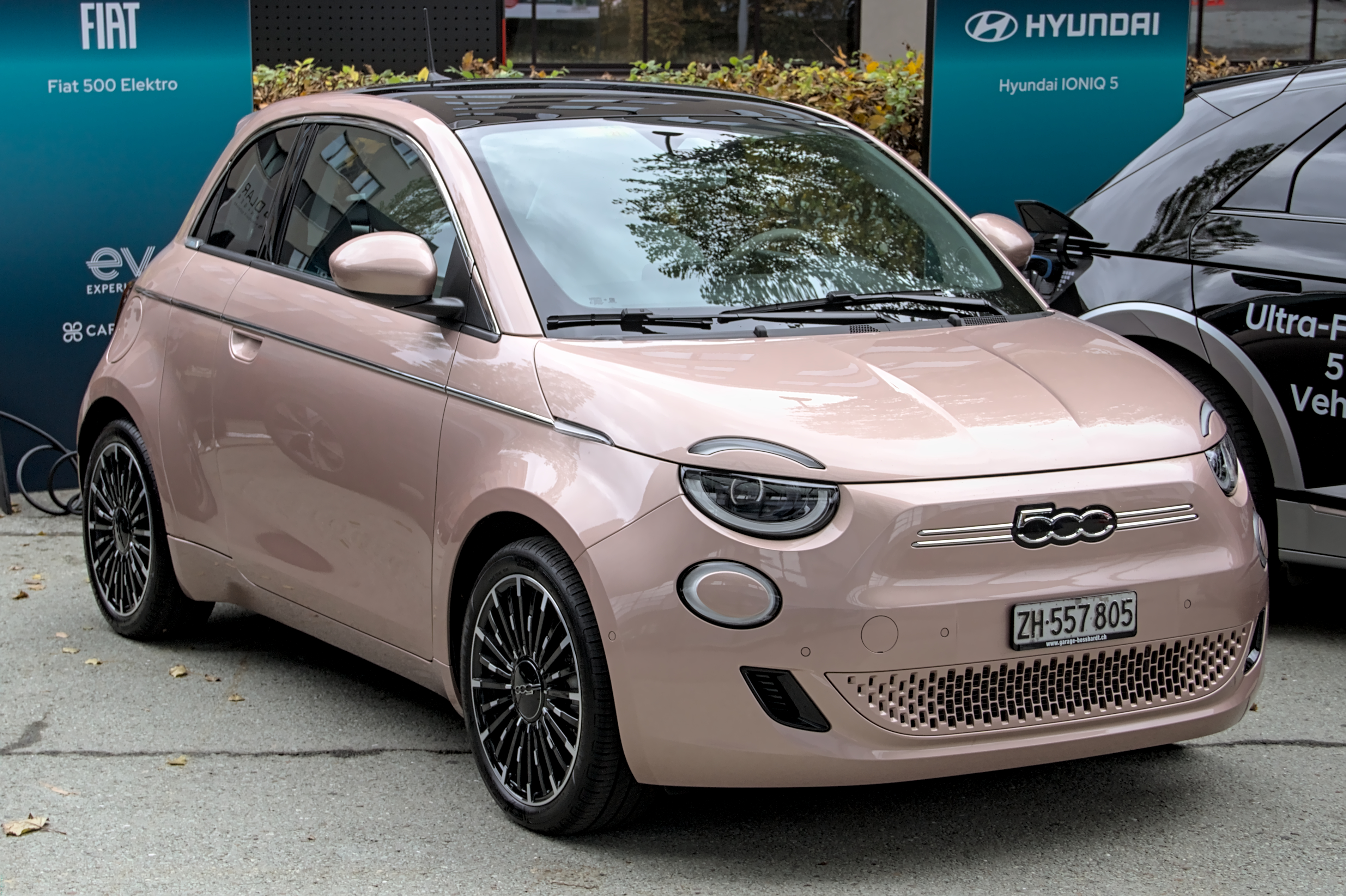
Fiat 500e
"...'t be as shoe-horned in as, say, for example, the 500E that they suddenly squeeze into. Oh, God, we've g..."
The Fiat 500e is a small electric car based on the Fiat 500. It’s made for easy city driving. People talk about it because fitting an electric system into a tiny car can be challenging.
The Fiat 500e is an electric version of the Fiat 500, designed for city driving with a compact footprint. It’s mentioned in the context of how an electric model can be “shoe-horned” into a small platform, meaning packaging and design constraints are part of the conversation. In a podcast, it often comes up when discussing how well small cars adapt to electrification.
Q4 26
"And then within two years, they could then have a petrol car back on sale. That does mean... they will know probably before the end of Q4 26..."
“Q4 26” is shorthand for the last three months of 2026. They’re using it to give a rough timeline for when a decision might be made.
“Q4 26” means the fourth quarter of the year 2026, a common business shorthand for timing. The host uses it to estimate when Alpine would likely decide whether to proceed with bringing a petrol A110 back.
Le Mans
"I had spoken to Kreef shortly after that announcement. I think it was around Le Mans time."
Le Mans is a major famous race in France. They’re just saying the conversation happened around that time.
Le Mans refers to the famous endurance racing event held in France, centered on the Circuit de la Sarthe. The host mentions it as the timeframe when they spoke with Philippe Krief about the electric A110 plan.

GR Yaris
"I think it's around 120, 140,000 pounds for a GR Yaris. So it puts it into perspective of why they've not been able to do a combustion engine for it."
The Toyota GR Yaris is a performance version of the Yaris made by Toyota’s GR team. Here, they’re using its cost to show how expensive it is to build and why certain engine choices aren’t always practical.
The Toyota GR Yaris is a hot hatch built by Toyota’s Gazoo Racing (GR) division, known for its rally-inspired performance. In this segment, the hosts use its price as a benchmark to explain why a combustion engine (and related development) for a similar concept can be difficult at scale.
ICE potential version
"like, could you accept that being an EV, before you do the ICE potential version, sales will probably even, even given that the A110 doesn't sell in massive numbers as is"
ICE means an engine that runs on burning fuel (like gasoline or diesel). They’re talking about making an electric version first, and then possibly making a traditional fuel version later if the EV doesn’t sell.
ICE stands for “internal combustion engine,” meaning a petrol/diesel engine that burns fuel. The hosts are discussing doing an EV first, then an ICE “potential version” if the electric approach doesn’t work commercially.

Alpine A290
"...oesn't sell in massive numbers as is, I mean, the A290 for Alpine is by far the biggest car sales, the b..."
The Alpine A290 is a smaller car from Alpine. It’s meant to be more widely sold than the brand’s rare sports cars. People talk about it because it’s described as Alpine’s biggest-selling model, even if it still isn’t a huge seller.
The Alpine A290 is a smaller Alpine model positioned as the brand’s higher-volume offering compared with its more exclusive sports cars. It’s discussed because it “doesn’t sell in massive numbers,” but it’s described as Alpine’s biggest-selling car. In a podcast, it often comes up when talking about how Alpine balances mainstream demand with its performance identity.

Porsche Taycan
"I mean, if you think about the alternatives, you've got more expensive cars like Taycans and stuff like that, might not be massively more expensive, but a little bit more."
The Porsche Taycan is Porsche’s electric performance car. They bring it up as an example of a pricier electric option, to argue that there may not be a big market for smaller electric sports cars.
The Porsche Taycan is Porsche’s all-electric sports-sedan, often used as a benchmark for what “serious” electric performance looks like. Here, it’s mentioned as a more expensive alternative to an electric A110, implying the price gap and positioning affect how much demand exists.

cyber trucks
"They buy EVs, but they're like cyber trucks."
The Tesla Cybertruck is an electric pickup with a very unusual, futuristic look. They mention it to say that some people in the US will buy EVs, but they’re not sure an electric sports car would be as appealing.
The Tesla Cybertruck is Tesla’s distinctive electric pickup, known for its angular design and polarizing appeal. The hosts use it as an example of how some US buyers will still choose EVs, but they question whether an electric sports car like an A110 would have the same kind of “appetite.”
EV sports car
"And it's just the EV sports car I still think is a bit of a hard sell."
An EV sports car is a fast, sporty car that’s powered by electricity. They’re saying that convincing buyers to choose this kind of electric performance car can be difficult.
An EV sports car is a performance-focused car where propulsion is electric rather than combustion. The hosts argue that this category can be a “hard sell,” especially when compared with established electric performance options and when considering how small the market segment may be.
emissions
"have to build X amount of EV sports cars anyway for emissions. Exactly."
“Emissions” are the pollution gases cars put into the air. The hosts are saying rules can push car companies to sell electric cars so the overall pollution goes down.
In automotive policy, “emissions” usually means the pollutants and greenhouse gases produced by vehicles. The hosts are discussing how regulations can force manufacturers to sell EVs to reduce overall fleet emissions.

Toyota GR GT
"...re Toyota stuff because I've just been to see the GR GT. Oh, yeah. You know, the new homologation special..."
The Toyota GR GT is a special Toyota made so it can be used in racing categories. It’s designed to follow the rules that require a certain number of road cars. That’s why it’s often talked about as a “racing” version of a Toyota.
The Toyota GR GT is a homologation-focused special intended to meet racing rules and create a road-going link to motorsport. It’s discussed because “homologation special” cars are built with competition in mind, often with specific performance and design goals. In a podcast, it typically comes up when people are excited about new track-oriented Toyota projects.
homologation special
"the new homologation special that's not a homologation special car. That was running up and down."
A “homologation special” is a car made so it can race under a specific rulebook. Racing series often require manufacturers to build a version that matches what’s allowed on track.
A “homologation special” is a car built to meet racing-series rules that require a manufacturer to produce (or at least certify) a road-legal or spec-compliant version. The hosts are teasing that the GR GT is “homologation special” in spirit, even if it’s not a straightforward production homologation exercise.
GT3 car
"It's basically a GT3 car that they've built. And it looks great as a GT3 car."
GT3 is a popular racing class where cars are race-prepped versions of real models. When they say it’s “basically a GT3 car,” they mean it’s built to match that racing formula.
A GT3 car refers to the FIA GT3 racing category, where cars are based on production models but heavily modified for racing. The hosts say the GR GT is “basically a GT3 car,” meaning its design and intent align with GT3-style competition.
Kazuki Nakajima
"Kazuki Nakajima was also present. Wow, that's fun. It is amazing how he is, first of all, unbelievably nice guy."
Kazuki Nakajima is a professional Japanese race driver. The hosts are saying he was at the event and that he comes across as very friendly and humble.
Kazuki Nakajima is a Japanese racing driver known for endurance racing and Toyota’s motorsport involvement. The hosts note he was present at Goodwood and comment on his personality, which is notable because he’s directly tied to Toyota’s racing world.
Goodwood
"They'd flown over from Japan to be here at Goodwood to go and see the cars go up the hill."
Goodwood is a famous UK motorsport location. It’s where events like the Festival of Speed happen, and cars often drive up a hill for the crowd.
Goodwood is the British motorsport venue associated with the Festival of Speed, where manufacturers bring cars to run up a hill and show them to the public. The hosts mention engineers flying in to watch the cars go up the hill there.
all aluminium monocoque
"underneath it's Toyota's first all aluminium monocoque. Yeah. Never done that before."
A monocoque is like the car’s body acting as the main structure. If it’s all aluminium, it can be lighter and stiffer than heavier steel structures, which helps the car feel more precise.
An all-aluminium monocoque is a body structure where the shell itself carries the loads, rather than relying on a separate frame. Using aluminium helps reduce weight and can improve stiffness, which matters for high-performance handling and crash structure.
space-frame chassis
"but it's also a space frame chassis. So, the front and rear is space frame. So, they bolt on to this sort of tub."
A space frame is a rigid skeleton made from many connected members. It’s common in race cars because it can be built strong and light, helping the suspension stay aligned under hard driving.
A space frame chassis uses a network of tubes or members to create a rigid structure. It’s often used in racing because it can be engineered for stiffness and safety while keeping weight down, and it can support complex mounting points for suspension and drivetrain.
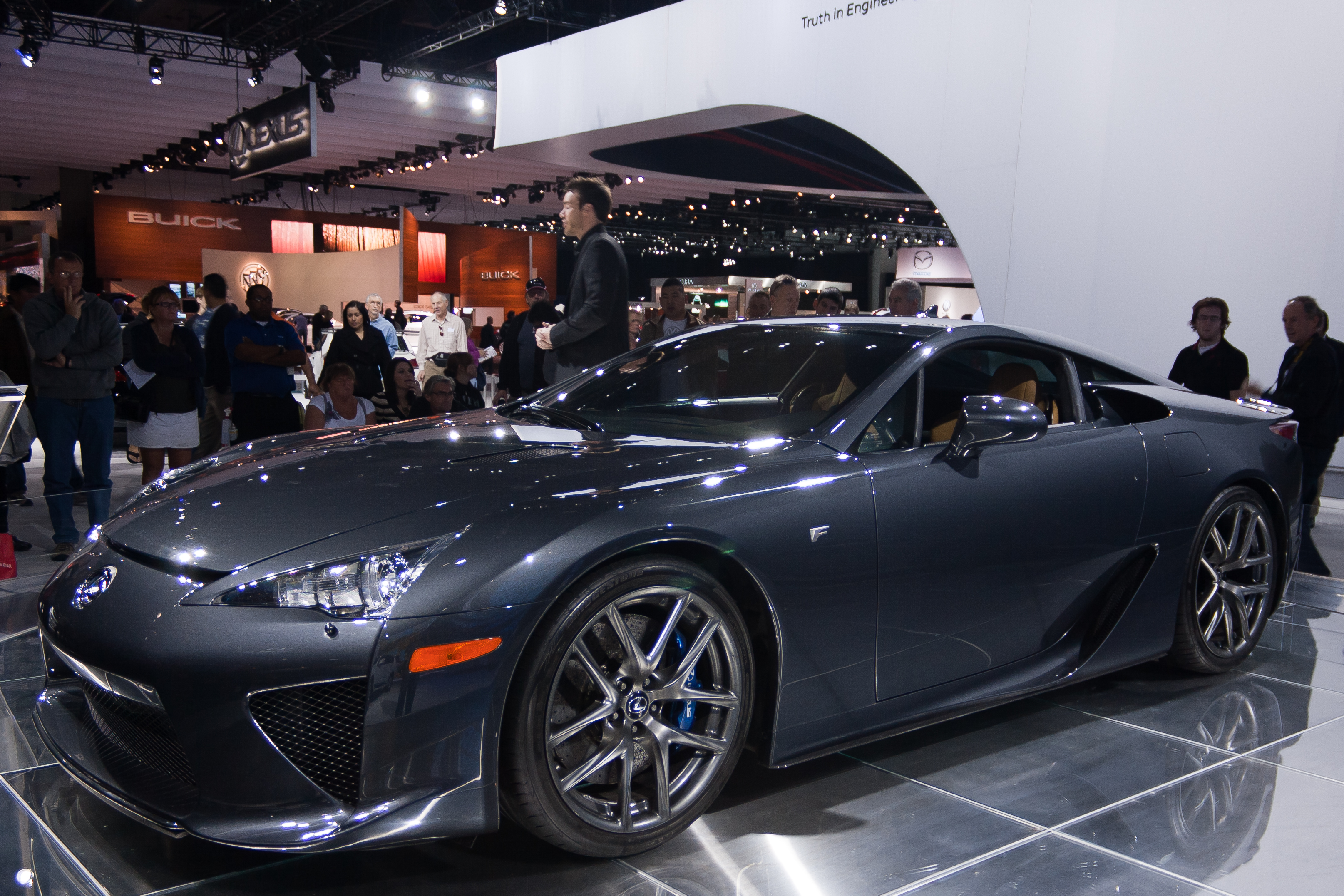
Lexus LFA
"The last time they did an aluminium space frame, space frame chassis was the Lexus LFA, which was over 15 years ago."
The Lexus LFA is a famous high-end supercar that used very advanced materials and construction. They mention it as the previous example of this kind of aluminium space-frame thinking.
The Lexus LFA is a halo supercar known for its advanced lightweight construction and high-performance engineering. It’s referenced here because it was the last time Lexus used an aluminium space-frame approach before this Toyota project.
four liter twin turbo V8
"there's some emissions benefits as well of having a four litre hot V twin turbo V8. But it's so far back from the front axle and right up against the bulkhead."
This is a V8 engine that’s 4.0 liters and uses two turbochargers. “Hot V” means the turbo hardware sits in the V-shaped space of the engine, which can help the engine respond faster when you press the gas.
A four-litre hot V twin-turbo V8 describes a V8 engine with two turbochargers mounted close to the exhaust (“hot side”), which can improve throttle response. The “hot V” layout places turbo hardware within the V of the engine, helping packaging and potentially reducing turbo lag.
front axle
"But it's so far back from the front axle and right up against the bulkhead. Just like front mid."
The front axle is the structural line where the front wheels are mounted and loads are transmitted. Mentioning how far the engine sits relative to the front axle is a way to describe the car’s weight distribution and layout, which strongly affects handling.
front mid
"right up against the bulkhead. Just like front mid."
“Front mid” means the engine sits nearer the center of the car than in a normal front-engine car. That shifts weight for better balance, which is why it can feel more agile on track.
“Front mid” is a layout description where the engine is positioned closer to the middle of the car than a typical front-engine setup, but still forward of the cabin. This helps move weight rearward for better balance and can improve traction and steering feel.
front engine car
"It's very much a front mid-engine car that you go, okay, right. And then the design came after the cooling and aerodynamic needs."
A “front mid-engine” car has the engine near the middle of the car, but still toward the front. Putting the engine closer to the center can help the car feel more balanced in corners.
A “front mid-engine car” places the engine ahead of the cabin but behind the front axle. That layout helps balance weight distribution and can improve handling compared with a traditional front-engine setup.
aerodynamics
"So, they were like, they got all the cooling sorted, they got the aerodynamics sorted and they went, right, designers, make something that joins all of this up."
Aerodynamics is how air flows around the car’s body, affecting drag and downforce. In race and high-performance road cars, designers shape bodywork to manage cooling airflow and stability at speed.
GT3 racing
"Yeah. And then I realised that with GT3 racing, you're not allowed to make a GT3 car first and a production car second. A GT3 car must be a racing version of a production car."
GT3 racing is a GT (grand touring) class where cars are built to standardized rules for customer teams. A key rule discussed here is that a GT3 car must be a racing version derived from a production car, not an original race-only design.
production car
"A GT3 car must be a racing version of a production car. So, when they talk about it being simultaneous, I've just got a hunch that that means we've,"
In this context, “production car” means a street-legal model sold to customers. GT3 rules tie the race car’s design to that production base so the racing car is recognizable and derived from something that exists commercially.
customer racing paint job
"they wanted to show what it could look like if a customer racing paint job was put on it, although it's, they've only covered a few little areas of carbon and not put any stickers on it other than that."
This means the car is being shown with a race-style look meant for people who buy it to compete. It’s like a “racing livery” theme, but not necessarily a full, track-only sticker kit everywhere.
A “customer racing paint job” refers to a livery style offered to privateer teams or buyers who race the car, rather than a one-off factory race scheme. The hosts are describing how the car’s graphics are meant to look like a race-prepped customer car, even though only limited areas are actually covered in carbon and stickers.
carbon
"they've only covered a few little areas of carbon and not put any stickers on it other than that."
In automotive context, “carbon” usually means carbon-fiber components or trim used to reduce weight and add stiffness. Here, the hosts say only a few areas are covered in carbon, which affects how “race-like” the livery presentation looks.
V8 Vantage
"they said, it's going to, you know, they benchmark the AMG GT, V8 Vantage, 911. Hot V's, those cars. GT3, absolutely."
The V8 Vantage is an Aston Martin sports car that uses a V8 engine. The hosts mention it alongside other expensive performance cars to explain who the new Toyota GR GT is aiming to compete with.
The Aston Martin V8 Vantage is a V8-powered version of Aston’s Vantage sports car, typically positioned below the most extreme track models. In this discussion it’s grouped with the AMG GT and 911 as a “benchmark” for the new Toyota GR GT’s target buyer and market segment.

AMG GT
"they said, it's going to, you know, they benchmark the AMG GT, V8 Vantage, 911. Hot V's, those cars. GT3, absolutely."
The AMG GT is a Mercedes performance car with a strong V8 and sporty handling. The hosts mention it because it’s one of the cars they’re using as a reference point for where the new Toyota GR GT will sit.
The Mercedes-AMG GT is a performance grand tourer from AMG, known for its V8 power and track-capable dynamics. Here it’s mentioned as one of the benchmark cars the new Toyota GR GT is being compared against for pricing and customer-racing credibility.

Porsche 911 GT3
"I think that's the crowd that they're going up. So, 911 GT3. Yes. So, yeah, that, because the new Porsche pricing, have you seen it, by the way, 110,000 pounds starting for a Carrera."
The Porsche 911 GT3 is a special 911 made for track driving, not just cruising. Here, the hosts mention it because they’re comparing what the new Toyota GR GT might cost versus other serious track cars.
The Porsche 911 GT3 is a track-focused 911 variant built around racing-derived aerodynamics and a high-revving performance setup. In this segment, it’s used as a pricing/benchmark reference for the new Toyota GR GT aimed at customer racing buyers.
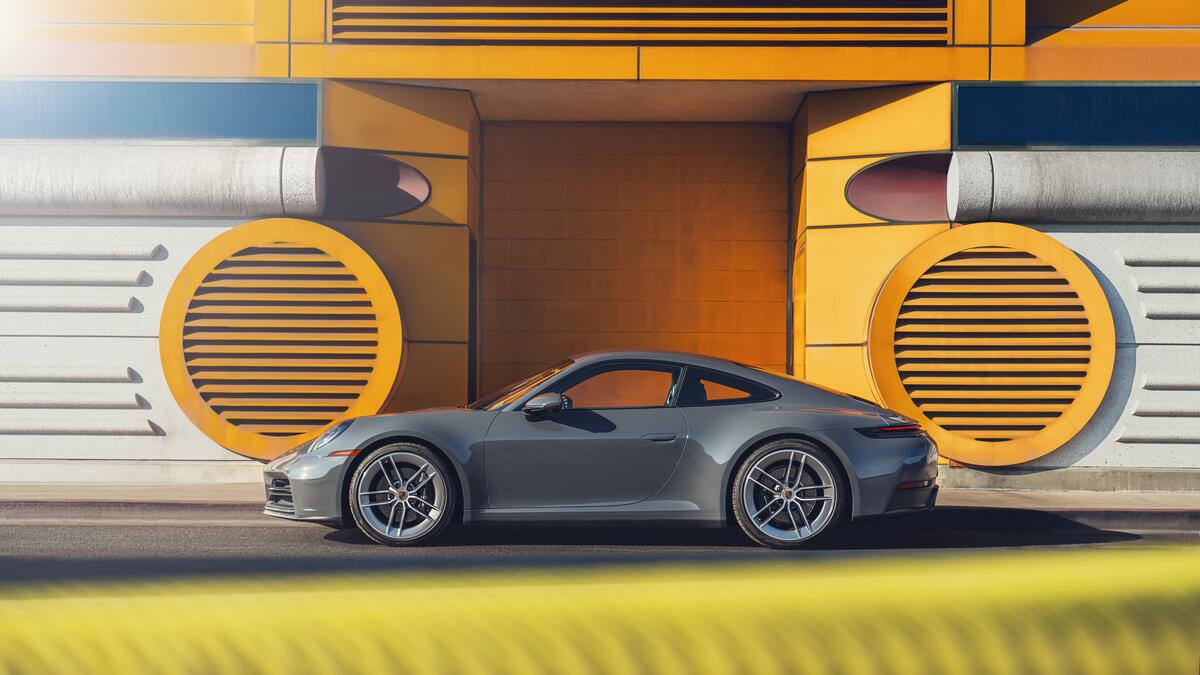
Porsche Carrera
"So, yeah, that, because the new Porsche pricing, have you seen it, by the way, 110,000 pounds starting for a Carrera. Are you kidding? So, and I get, I guess with that, you get like, steering wheel and engine, you know, fabulous car, almost all the car you never need, but come on, it's a basic Carrera."
A Porsche Carrera is the more everyday 911 version, not the most extreme track model. They bring it up to show how expensive even the “base” 911 has gotten compared with a GT3.
The Porsche Carrera is the mainstream 911 trim line, positioned below the GT3 and other hardcore variants. The hosts use the “Carrera” starting price to argue that the gap between entry-level 911s and GT3-level track cars is widening.
firmness of the suspension
"they've, it's got, you can adjust the, the firmness of the suspension through"
This is how stiff the car feels over bumps and during cornering. Adjusting it changes whether the ride feels more comfortable or more controlled and sporty.
“Firmness of the suspension” refers to how stiff or compliant the suspension feels, which is typically adjusted via damping settings. Changing it alters ride comfort and how the car responds to bumps and cornering loads.
active ride
"three different driving modes, but otherwise it's a passive setup. There's no active ride. [935.0s] It's super simple."
Active ride means the suspension can actively adjust itself using electronics. Here, the speaker says the car doesn’t use that kind of system, so it feels more straightforward and natural.
An active ride system uses sensors and actuators to actively control suspension movement to keep the car settled and reduce body motion. The speaker contrasts this with a “passive setup,” implying the car relies on conventional suspension behavior rather than computer-controlled ride control.
driving modes
"three different driving modes, but otherwise it's a passive setup. There's no active ride. [935.0s] It's super simple."
Driving modes are different settings you can choose in the car. They can make the car feel more relaxed or more aggressive depending on what you pick.
Driving modes are selectable settings that change how the car behaves—often altering throttle response, steering/traction behavior, and sometimes suspension or drivetrain mapping. Even when the speaker says the setup is “passive,” modes can still change the car’s character.
neutral platform
"One of the reasons is because they wanted it to be [947.9s] a neutral platform. So, the idea is that if you're, when you're driving it at speed,"
A neutral platform means the car is set up to feel balanced and predictable. The goal is that it doesn’t surprise you with sudden, confusing behavior when you’re driving fast.
A “neutral platform” is a chassis setup intended to feel balanced and predictable, with minimal unwanted pitch/roll/yaw sensations as conditions change. The speaker links it to driver confidence: at speed, the car should behave in a way you can understand and control.
Accio Morizo Toyota
"Because remember, it's being developed by master driver Accio Morizo Toyota. [963.3s] Yeah. Yeah. And that's his, and you know, it's, when you, when you hear him kind of talking about"
This person is presented as a top-level driver who helps shape how the car drives. The point is that the car is tuned to be fun and controllable for the driver, not just fast on paper.
The speaker credits Accio Morizo Toyota as a key driver/developer involved in the car’s development. In Toyota’s performance culture, this kind of involvement emphasizes tuning for real-world driver feel rather than just chasing numbers.
mid-engined car
"And in front, [991.0s] mid-engined cars lend to that. They can be quite a friendly balance because you've got, [995.2s] you know, because the Ferrari Roma or something like that, you know, really easy approachable cars."
Mid-engine cars put the engine closer to the middle of the car. That changes how the car rotates in a turn, and the speaker says it can feel a bit like a pendulum if you lose traction.
Mid-engined cars place the engine near the center of the vehicle, which strongly influences balance and rotation during cornering. The speaker describes how mid-engine layouts can create a “pendulum effect” when the car is pushed to the limit, especially if it gets fully sideways.

Ferrari Roma
"mid-engined cars lend to that. They can be quite a friendly balance because you've got, [995.2s] you know, because the Ferrari Roma or something like that, you know, really easy approachable [999.6s] cars."
The Ferrari Roma is a Ferrari grand tourer that’s often described as more approachable than many other Ferraris. Here it’s mentioned as an example of a car that’s friendly to drive even with a mid-engine layout.
The Ferrari Roma is a front-mid-engined grand tourer from Ferrari, known for being relatively easy to drive compared with more extreme supercars. In this discussion, it’s used as an example of a mid-engine balance that can still feel approachable.
pendulum effect
"Because a mid-engined car, you know, you still get that slight pendulum effect sometimes [1003.8s] if you get fully sideways or something."
The “pendulum effect” is when a car starts to swing around in a turn in a way that feels hard to stop. The speaker says mid-engine cars can do this more noticeably if you get them fully sideways.
The “pendulum effect” is a handling behavior where a car’s weight distribution and yaw/traction changes can make it swing more dramatically when it’s rotated too far—like a pendulum. The speaker ties it to mid-engine cars going fully sideways, implying a more dramatic rotation if you exceed grip.
front engine rear-wheel drive
"But that's the reason why they went for front end, front engine rear wheel drive, [1030.2s] is they said it's much more approachable for, again, it being developed at the same time as the,"
Front engine rear wheel drive means the engine is up front and the rear wheels do the driving. The speaker says this layout is usually easier to control, especially if you make a mistake on the road.
Front engine rear wheel drive (FR) describes a layout where the engine sits at the front and power goes to the rear wheels. The speaker argues FR is more approachable because it tends to be more forgiving and predictable for drivers when traction is limited.
Malcolm Corner
"Because it's just before, I think it's Malcolm Corner. That's the one everyone goes off on. [1054.3s]"
Malcolm Corner is a specific turn on the track. The host is saying it’s a famous tricky spot where lots of drivers end up going off the road.
Malcolm Corner is a named corner on a motorsport circuit, used as a reference point for where drivers commonly get it wrong. The speaker says it’s “the one everyone goes off on,” highlighting it as a tricky section.
chicane
"Where everyone goes off. And so I think for these road cars, they've put in a little chicane, so nobody has a whoopsy."
A chicane is a little “S” of turns on the track. It makes cars slow down and stay controlled in a spot that might otherwise be too fast or dangerous.
A chicane is a deliberate sequence of tight bends that forces cars to slow down and change direction. On racetracks and event courses, it’s often added to reduce speed in a risky area and make incidents less likely.
Porsche 911
"He's like, look at the 911 GT3 RS. That has active aero. Whereas the standard GT3 doesn't."
The Porsche 911 GT3 RS is a very serious, track-bred version of the 911. Here it’s mentioned because it uses “active aero,” meaning parts of the car’s aerodynamics can adjust to help grip.
The Porsche 911 GT3 RS is a track-focused 911 variant known for high downforce and motorsport-derived aerodynamics. In this segment, it’s used as an example of a GT3 that has active aero, which is a key difference versus the standard GT3.
active aero
"That has active aero. Whereas the standard GT3 doesn't."
Active aero means the car’s wings/spoilers can adjust. That helps the car generate more grip when you need it, while trying not to add too much drag when you don’t.
Active aero refers to aerodynamic elements that can change their shape or position based on speed, throttle, or driver inputs. The goal is to optimize downforce and drag for different driving conditions rather than using fixed aero settings.
hyper limited
"This is not the direct successor of the LFA. It's not a hyper limited multi, oh well, the LFA was 350 grand..."
“Hyper limited” is an enthusiast way of describing an extremely small production quantity, usually far below typical limited editions. It implies scarcity and often drives collector value, but it can also mean fewer cars are available to the public.
Euro seven compliant
"I think how many we get will depend on whether the engine becomes Euro seven compliant. They were like, I don't know about that yet."
“Euro 7” is a set of European emissions regulations that tighten limits on pollutants from new vehicles. If an engine must be “Euro 7 compliant,” it typically requires emissions-control hardware and calibration changes, which can affect whether and how many cars a manufacturer can build.
Amg Gts
"...to, it feels like it's something different to the AMG GTs, the V8 Vantageers, the Romers and the sort. And ..."
The AMG GT is a Mercedes sports car made by AMG for performance. It uses a strong V8 engine and is designed to feel sporty to drive. People bring it up because it’s meant to be a distinct kind of AMG car.
The Mercedes-AMG GT is a performance sports car built by AMG, known for its V8 power and driver-focused layout. It’s mentioned in the podcast in the context of how it feels “different” compared with other AMG performance models. That kind of comparison usually comes up because enthusiasts notice differences in character, balance, and how the cars are positioned.
Alcantara
"[1183.3s] interior with some Alcantara stuck on it. Yeah. With a few bits of red here and there,"
Alcantara is a soft, suede-like material used inside some cars. It’s used because it feels nice, looks sporty, and can be made in different colors.
Alcantara is a synthetic suede-like material often used on car interiors for its soft touch and sporty look. It’s popular for steering wheels, seats, and trim because it grips well and can be dyed in different colors.
EV
"[1242.0s] The floor is all yours. The floor is all mine. It's interesting because if you doubt that EVs [1247.8s] can be used as track cars, and to be fair, even I do secretly, I'm like, would I want to go in an EV"
EVs are cars that run on electricity from a battery. The big track question is whether they can keep going for lots of laps without running out of energy or overheating.
EVs are electric vehicles—cars powered primarily by electric motors and rechargeable batteries instead of a gasoline or diesel engine. In motorsport discussions, the key question is whether battery capacity and thermal management can support repeated laps.
BYD
"[1274.0s] Yeah. Oh, absolutely. But yeah, the batteries in that funny enough would benefit from this, [1278.4s] and that is BYD, you know, that company that's completely just exploded into our lives."
BYD is a major Chinese company that makes electric cars and batteries. The hosts are saying their battery know-how helps make EV track use more realistic.
BYD is a Chinese automaker known for large-scale EV production and battery technology. Here, the hosts connect BYD’s battery expertise to the idea that EVs can be competitive on track.
Denza
"[1284.2s] and that is BYD, you know, that company that's completely just exploded into our lives. Yeah, [1284.2s] Build Your Dreams. Thankfully, that doesn't appear on the back of the cars anymore. [1287.4s] They have a performance arm called Denza, and I have actually been driving the Denza's"
Denza is BYD’s brand for more premium, performance-oriented cars. The hosts mention it because it has a supercar and they’re impressed by what it can do.
Denza is BYD’s performance-focused sub-brand, positioned as a more premium/sporty arm. In this segment, it’s tied to a supercar model and a headline power figure.
Denza Edge
"[1287.4s] They have a performance arm called Denza, and I have actually been driving the Denza's [1291.7s] Edge, which is their super car. It's got 1600 horsepower."
The Denza Edge is a supercar from Denza, and the hosts are impressed by how powerful it is. It’s brought up as proof that modern electric cars can be seriously fast.
The Denza Edge is described here as Denza’s supercar, with extremely high power output for an EV. The hosts use it to illustrate how far EV performance has progressed—especially for enthusiasts who doubt EVs can be track-capable.
horsepower
"[1291.7s] Edge, which is their super car. It's got 1600 horsepower. I saw it walking in."
Horsepower is a number that describes how strong a car’s power output is. For electric cars, it’s still used as a simple way to compare how fast they might feel.
Horsepower is a measure of engine (or motor) output power. For EVs, it’s still used as a common headline number to compare performance potential, even though the underlying torque/power delivery is different from gasoline cars.
coil spring
"The track oriented version, which still road legal, uses coil springs, so it feels more natural. The normal ones are air sprung, and so they feel a little bit floaty."
Coil springs are the metal springs in the suspension. They help the car stay stable over bumps, and on a track-focused car they’re usually set up to feel more immediate and less “floaty.”
Coil springs are suspension springs made from metal coils that compress and rebound to support the car’s weight. In a track-oriented setup, they’re often paired with firmer damping so the car responds more directly to steering and bumps than a softer, more comfort-focused setup.
air sprung
"The normal ones are air sprung, and so they feel a little bit floaty. But the key point I want to make..."
“Air sprung” means the suspension uses air pressure instead of metal coil springs. It can make the ride feel smoother, but it may also feel a bit less sharp when you drive aggressively.
Air suspension uses an air spring (compressed air) instead of steel coils to control ride height and spring rate. Because the air spring can be tuned for comfort, it can feel softer or “floatier” than a coil-spring track setup, especially during quick transitions.
charging
"However, the thing that's important is, the biggest issue, what's aside from range, which is obviously an issue for people, and fair enough, the other big issue is charging, and especially in the UK charging."
Charging is how you refill an EV’s battery. The big issue is that how fast and how expensive it is to charge can change a lot depending on where you are.
Charging refers to replenishing an electric vehicle’s battery using external power. The discussion highlights how charging speed and cost vary by location, and why fast charging access matters as much as battery range for real-world EV use.
rapid charger
"If you go to France, you come across rapid chargers quite quickly. The UK, they exist, but they're either accept, like, eye-wateringly expensive on public charging..."
Rapid chargers are the fast EV charging stations. They use high power so you can add charge quickly, instead of waiting a long time.
Rapid chargers are high-power EV charging stations designed to add significant battery energy in a short time. They’re typically measured in kilowatts (kW), and higher kW generally means faster charging—though real-world speed can still depend on the car and battery temperature.
flash charger
"But BYD, Denza, same company, have developed a 1,500 kilowatt flash charger, and supercharger refers to obviously what we would consider on a 350, 400 kilowatts..."
A flash charger is a charger meant to add energy very quickly. In this context, it’s being described as far faster than the usual fast chargers you see in public.
A flash charger is an EV charging approach focused on extremely high power delivery for very rapid charging. The term is used here to emphasize a charging-speed leap beyond common public fast-charging rates.
supercharger
"But BYD, Denza, same company, have developed a 1,500 kilowatt flash charger, and supercharger refers to obviously what we would consider on a 350, 400 kilowatts..."
Here, “supercharger” doesn’t mean a gas-car turbo part—it means a very fast EV charging station. The host is saying most people think of roughly 350–400 kW as “superfast.”
In EV charging talk, “supercharger” is used as shorthand for very high-power fast charging (often hundreds of kilowatts). The host clarifies the comparison by referencing typical 350–400 kW charging levels as the benchmark for what people call “superfast.”
grid
"The key point, it doesn't need any kind of upgrade to the grid, because that's the first thing that people rightfully say. They go, hang on, it's all well and good having a charger that does this amazing stuff, but as soon as you've got 5,000 across a country or whatever, that's just going to kill the grid."
The grid is the power network that delivers electricity around an area. The concern is that extremely fast chargers might pull so much power that the local electrical system can’t handle it without upgrades.
The grid is the electrical power network that supplies electricity to homes and businesses. The host addresses a common concern: if too many ultra-fast chargers draw huge power simultaneously, it could strain local grid capacity and require upgrades.
turbocharger of electricity
"I was like, do you have this kind of thing that like it turns a motor and then it multiplies? Is there like a turbocharger of electricity? They're like, no, that's ridiculous."
You can’t really “turbocharge” electricity the way you turbocharge an engine. Charging is basically just sending electrical energy into the car’s battery so it can use that energy later.
The host is joking about whether there’s an “electric turbocharger” that multiplies electricity like a turbo multiplies engine air. In reality, EV charging is about delivering electrical energy from a source into a battery, not boosting it with a compressor-like device.
giant battery
"no, what we actually have is we just have a giant battery, and what they do is they store a ton of energy in the battery way more than they'd need to charge a few cars"
It’s basically a big power bank installed at a site. It stores energy ahead of time, and when you plug in your car, it quickly supplies the power your car needs.
This refers to a large stationary battery used as an energy buffer for charging. Instead of building high-power electrical infrastructure everywhere, the system stores energy in advance and then “flashes” it to EVs when cars arrive.
high voltage chargers
"Plan permission is the big issue we have in the UK as far as getting high voltage charging installed, because there's loads of safety concerns."
High voltage charging means EV charging systems that use elevated electrical voltage levels to deliver large amounts of power safely and efficiently. Because it involves significant electrical and safety requirements, it often triggers more permitting and site constraints than lower-power setups.
planning permission
"which is where they have to get planning permission, and there's a whole world of hell in the UK in particular."
Planning permission is the official approval you need before building certain things. In the UK, it can slow down installing EV charging because the authorities want to check safety and impact.
Planning permission is the formal approval process required to build or modify certain types of infrastructure, including EV charging installations. The discussion highlights how permitting can be a major bottleneck for deploying charging hardware.
thermal management
"It's all to do with thermal management, so I didn't know this either."
Thermal management is how the car keeps its battery and electronics from getting too hot (or too cold). If charging causes bad temperatures, it can shorten battery life.
Thermal management is the system’s ability to control heat in batteries and electronics. The host links it to charging behavior, noting that charging can affect battery health if the temperature isn’t managed properly.
runaway effect of damage
"[1515.9s] sort of a runaway effect of damage. Someone's probably going to go, he's not going to quite [1519.3s] right, but in effect, that's what happens."
A runaway damage effect means one issue makes things worse fast, like a chain reaction. In EVs, it’s the kind of scenario engineers try hard to prevent with cooling and safety systems.
A runaway effect of damage describes a failure mode where one problem accelerates others—often related to overheating or escalating battery stress. In EVs, this is why thermal control and safety systems are so important.
kilowatts
"end of 2027, there will [1570.7s] be 300 charges in the UK. Now, none of the cars that they sell will be capable of getting the [1576.1s] 1500 kilowatts yet."
Kilowatts are a measure of power. For EV charging, more kilowatts usually means the car can take in energy faster (assuming the battery and charger can handle it).
Kilowatts (kW) measure power, and for EVs they’re commonly used to describe how fast a car can charge. Higher kW generally means faster charging—though the battery and charger must be able to support it.

Volkswagen Egolf
"and I was like, oh, maybe it's an e-golf. No, it's just a regular golf, cheeky. [1622.3s] And so I'm like, well, better get a straight six then."
The Volkswagen e-Golf is an electric Golf. The speaker mentions it because they thought the car charging nearby was electric, but it was actually just a regular (non-electric) Golf.
The Volkswagen e-Golf is an all-electric version of the Golf, used here as an example of an EV that could be charging at a public station. The point is that the speaker initially thought the car was an EV, but it turned out to be a regular Golf.
straight six
"[1622.3s] And so I'm like, well, better get a straight six then. But yeah, so that would make a lot of"
A straight-six is an engine with six cylinders in a single row. People like it because it tends to run smoothly and sounds great.
A straight-six is an inline engine with six cylinders arranged in one line. It’s often associated with smoothness and a distinctive sound, which is why the speaker contrasts it with EV ownership for a daily driver.
high-voltage stuff
"But if they can just have a battery effectively installed there, then that just gets rid of all that problem. So if you do do attract a new 5N, and later on, you and they make a car that’s capable of accepting such kilowatts, then maybe there is a bit of a market for a rapid charge EV."
They’re talking about the big electrical power used for EV charging. It’s not like plugging into a normal wall outlet—charging gear uses much higher voltage, so it can be harder to install at remote tracks.
“High-voltage stuff” refers to the electrical systems used in EV charging and power distribution. EVs and charging equipment use much higher voltages than household wiring, which is why installation and safety planning can be difficult at remote racetracks.
rapid charge EVs
"So if you do do attract a new 5N, and later on, you and they make a car that's capable of accepting such kilowatts, then maybe there is a bit of a market for a rapid charge EV."
A “rapid charge EV” is an EV that can charge fast. It’s about how much power (measured in kilowatts) the car can take when you plug it into a fast charger.
A “rapid charge EV” is an electric vehicle designed to accept very high charging power quickly. The key idea is charging speed measured in kilowatts—higher kW means less time spent plugged in, assuming the car and charger both support it.
V10
"So it was the car that was going to race at Le Mans with the V10 that they then scrapped, and they did the RA instead, and it then went into the Carrera GT."
A V10 is an engine with 10 cylinders arranged in a V shape. It’s known for sounding great and revving high, which is why it shows up in racing and special performance cars.
A V10 is an engine with ten cylinders arranged in a “V” shape. In performance and racing, V10s are often chosen for their ability to rev high and produce strong power, which is why the host highlights a V10 plan for Le Mans and then ties it to later Porsche road-car development.

Porsche Carrera GT
"...hey did the RA instead, and it then went into the Carrera GT. So that's a really rare thing. What I saw today ..."
The Porsche Carrera GT is a very rare, high-performance Porsche. It’s built to deliver supercar-level speed and driving feel. People mention it because only a small number were made.
The Porsche Carrera GT is a rare, track-focused supercar derived from Porsche’s racing experience and engineering. It’s brought up because it’s an unusual and limited model that people associate with motorsport heritage. In the context of the podcast, it sounds like it’s being compared to other rare Porsche projects and discussed as a “really rare thing.”
McLaren MP48
"What I saw today here though, has blown my mind, because in 1992 or three, I can't remember, it was the McLaren MP48. They were, so it must have been 1993, they were testing a Lamborghini V12."
The McLaren MP48 is a very unusual, development-focused racing car from the early ’90s. In this story, it’s tied to testing a Lamborghini V12—basically proving out an engine idea before committing to a final project.
The McLaren MP48 is a rare prototype/experimental racing car associated with early-1990s development. The host frames it as a “thing of legend” because it was used during testing while McLaren explored a Lamborghini V12 direction.
V12
"They were, so it must have been 1993, they were testing a Lamborghini V12. Oh, I did know that, yes."
A V12 is an engine with 12 cylinders in a V shape. It’s a classic “big performance” engine layout, and here it’s the engine McLaren was experimenting with in a prototype.
A V12 is an engine with twelve cylinders arranged in a V configuration. The host uses it to describe the specific powerplant McLaren was testing—an engine choice that signals a high-performance, high-rev development direction.
Ion Senna
"It was an all-white development car driven by Ion Senna, screaming Lamborghini, and it was apparently incredible."
Ion Senna is a Brazilian race driver. The host says he drove the all-white Lamborghini V12 test car, which is part of why this prototype story is so interesting to enthusiasts.
Ion Senna is a Brazilian racing driver and the brother of Ayrton Senna. In this segment, he’s specifically named as the driver of the all-white Lamborghini V12 development test car, which adds credibility and historical context to the “legend” the host is describing.

Peugeot iOn
"...nd. It was an all-white development car driven by Ion Senna, screaming Lamborghini, and it was apparent..."
The Peugeot iOn is a small electric car. It’s designed mainly for city driving. The podcast mentions it because it was used as a development car during testing.
The Peugeot iOn is a compact electric car that was developed as an all-electric city-focused vehicle. It’s mentioned in the podcast alongside a development story involving Ion Senna, which highlights how prototypes and test cars can be used to validate real-world behavior. In this context, it’s being referenced as part of an electric development narrative.
MP48B
"“Because there is some other McLaren news as well, actually on that note. So MP48B, I think, is this test car.”"
MP48B is a McLaren test car—basically a development prototype they’re using to explore performance. The name is McLaren’s internal code for that specific test version.
MP48B is a McLaren test car mentioned as an “incredible thing” the hosts hope to see later. In McLaren’s naming, “MP” typically refers to their internal racing prototype program, and “B” indicates a specific variant or development step.
production spec
"“But what they've also done is they've built the first, I believe it's the first production spec.”"
“Production spec” means the car is built to the final, real-world configuration—not just a prototype. It’s the version that would be made as an actual car, not a one-time test piece.
“Production spec” means the configuration intended for actual customer/production cars, not a one-off prototype. It typically includes the final bodywork, packaging, and specification choices that will be built repeatedly.
Can-Am road car
"“So Bruce McLaren, in the really early days, built a prototype, the Can-Am road car.”"
A “Can-Am road car” is a street car inspired by Can-Am racing. It’s basically the racing idea turned into something you could drive on the road.
A “Can-Am road car” refers to a street-legal version inspired by Can-Am racing. Can-Am (the Canadian-American Challenge Cup) was a major North American sports-car series, and some manufacturers built road cars that borrowed the racing concept.

Mclaren F1
"“And so yes, it's not the McLaren F1 that was the first McLaren road car, it's this.”"
The McLaren F1 is one of McLaren’s most iconic supercars. The hosts bring it up to say the new/retro road car they’re talking about isn’t the F1—it’s a different McLaren road-car story.
The McLaren F1 is McLaren’s famous early supercar known for its distinctive three-seat layout and high-performance V12. The hosts mention it to clarify that the car they’re discussing is not the F1, but another McLaren road-car concept tied to Can-Am history.
American V8
"“What engine is that? It would be a big old American V8.”"
An “American V8” means a V8 engine—eight cylinders in a V shape—typically associated with big, powerful engines. The host is saying it would likely be a large, noisy engine.
An “American V8” describes a V8 engine configuration associated with large-displacement American engine traditions. In this context, the host is speculating that the car uses a big, loud V8 rather than a smaller or more exotic powerplant.

Ford Fiesta
"...it, so here it is. Ford, can you do that with the Fiesta RS, please? Oh, yeah. That would be great. Yeah. ..."
The Ford Fiesta is a small car meant for everyday driving. It’s also offered in sportier versions, depending on the trim. In the podcast, they’re talking about wanting a more extreme “RS” style Fiesta.
The Ford Fiesta is a compact car that’s widely known for being practical, fun to drive, and available in performance trims. In the podcast, it’s specifically referenced with a request for Ford to do something similar with the Fiesta RS, implying interest in an even more performance-oriented version. That’s why it comes up: the Fiesta name is often associated with enthusiast-friendly driving.

Renault Sports
"which I did after our people. I showed a picture of my Clio 182 and I was like, can you do a homage, like an homage to the Mark II RS, please? I know Renault Sport's gone, but please. And the design boss, Vice President, was like, he was like, yeah, you know, I'd love"
The Renault Sport Spider is a sporty, open-top Renault concept-style car. It’s meant to look and feel like a performance-focused roadster. The podcast mentions it because it’s connected to design ideas inspired by older Renault Sport models.
The Renault Sport Spider is a lightweight, open-top sports car concept associated with Renault Sport’s performance-focused design language. It’s discussed in the context of paying homage to earlier Renault Sport models, especially the Mark II RS styling theme mentioned by the host. In a podcast, it comes up when people talk about design inspiration and modern tributes.
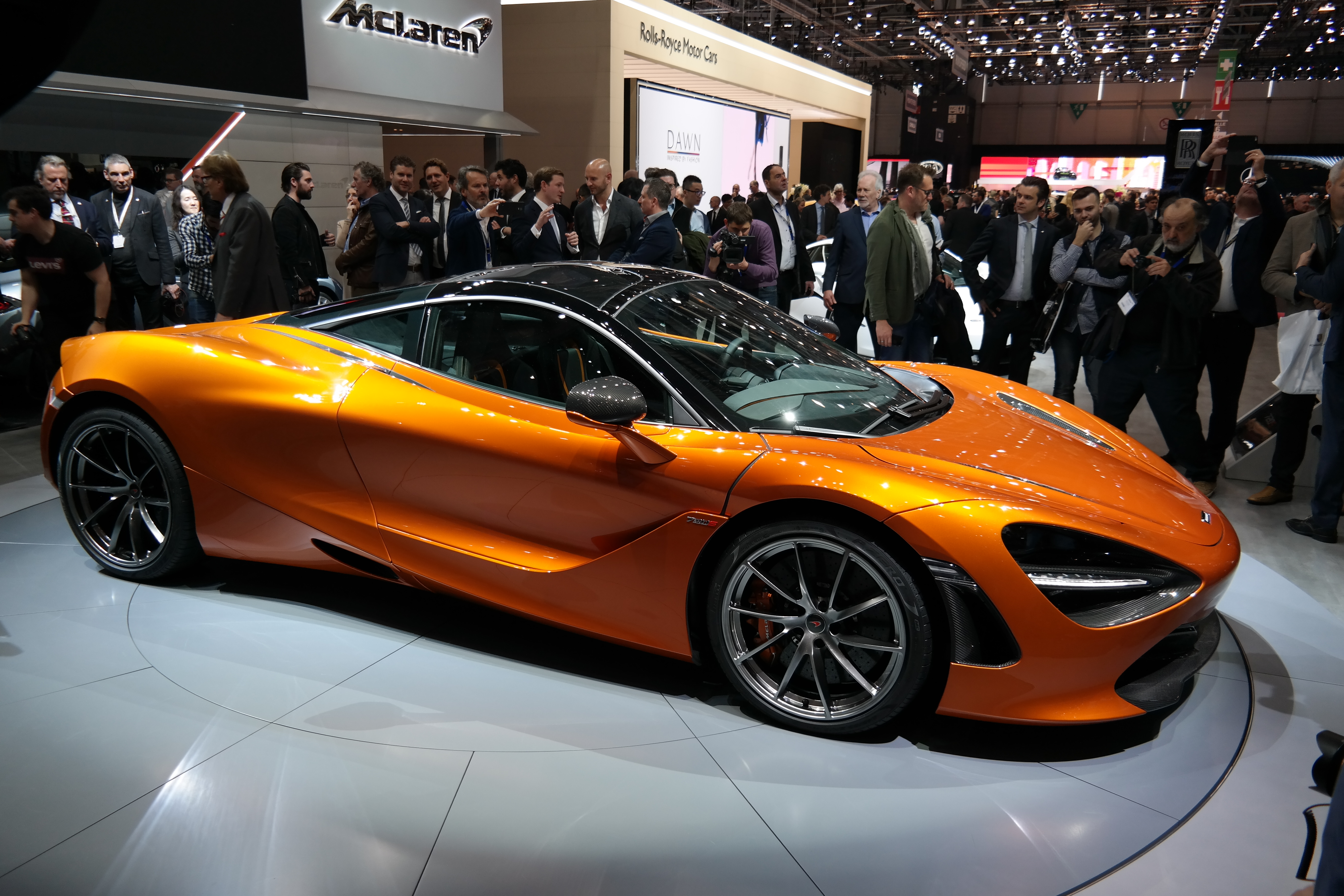
McLaren 720S
"...ries, oh, sorry, sports series platform where the 720S was the first car to come out and I got, what was..."
The McLaren 720S is a high-performance supercar. It’s designed to be fast and agile, not just powerful. People mention it because it helped introduce a newer generation of McLaren sports cars.
The McLaren 720S is a modern supercar built on McLaren’s sports-series platform, designed for strong performance and lightweight efficiency. It’s discussed because it was one of the first cars to define that platform’s approach. In the podcast, it comes up as part of a lineup of cars and engineering choices.
limited to production-wise
"Do you know what it's limited to production-wise? Yeah, 100 per, 100 per coupe, 100 per spider."
This means the car is only being built in a set, limited number. That’s part of why it can be so expensive.
“Limited to production-wise” describes a model that’s capped by a fixed total number of cars. This is a common strategy for high-end supercars to create scarcity and justify very high pricing.
tub
"So you're paying for exclusivity, but it's still the same tub, fundamentally the same engine, albeit with about, I don't know, 30 horsepower more."
“Tub” means the main body structure of the car—the part that the rest of the car is built onto. If it’s the same tub, the new car shares a lot of the underlying structure.
In supercar talk, “tub” is shorthand for the car’s main body structure—the central chassis/monocoque that everything else mounts to. Saying it’s the “same tub” implies the new limited model shares the core structural platform with the base car.
exclusivity
"So you're paying for exclusivity, but it's still the same tub, fundamentally the same engine"
Exclusivity means not many people can get the car because it’s rare. That rarity is often why the price is much higher.
Exclusivity in car terms means the model is intentionally scarce—either by limited production numbers or restricted availability. Buyers often pay a premium for that rarity, even when the underlying mechanicals are closely related to a more common model.

Intensa Apollo Ie
"..., you kind of expect them to do maybe 20, like an Apollo IE, Emotion Intender, Intender Emotion, which is wha..."
Intensa Emozione is a name used for a special version of a Ferrari. It usually refers to a particular theme for how the car looks and feels inside and out. The podcast is talking about the name and how it fits with other Ferrari naming.
Intensa Emozione is a special-edition name used by Ferrari for a particular model’s styling and interior theme. It’s mentioned in the podcast as part of a naming pattern discussion, reflecting how Ferrari uses evocative names for different variants. In this context, it’s less about mechanical specs and more about the identity and branding of the car.
Formula One
"This is the Formula One run. So we might get drowned out, but it's going to be worth it."
Formula One is the highest level of racing with open-wheel cars. It’s the series where teams compete for championships every year.
Formula One (F1) is the top tier of open-wheel circuit racing, with teams running purpose-built cars and competing for world championships. The segment references F1 cars and liveries being displayed and discussed at Goodwood.
livery
"They've got the white and red liveryed one that won the Japanese Grand Prix last year. An incredible livery."
A livery is basically the car’s “look”—the colors and decals you see on the body. In racing, it’s how you recognize which team and car it is.
A livery is the car’s paint scheme and graphic design—colors, logos, sponsor placement, and patterns. In racing, livery often signals team identity and era, and it can also be tied to specific cars or seasons.

Mercedes-Benz Clk Gtr
"... CLK LM here. So that was the car between the V12 CLK GTR and the flying CLK CLR. Yes, Mark Bloody Weber. Y..."
The Mercedes-Benz CLK GTR is a very rare Mercedes supercar connected to racing. It’s built to be extremely fast and performance-focused. People mention it because it’s part of a special set of CLK race-related cars.
The Mercedes-Benz CLK GTR is a rare, track-bred supercar tied closely to Mercedes’ racing efforts. It’s discussed because it sits in a family of extreme CLK models, including other V12 and endurance-focused variants. In the podcast, it’s referenced as the car between the V12 CLK GTR and the flying CLK CLR, emphasizing its place in that racing lineage.
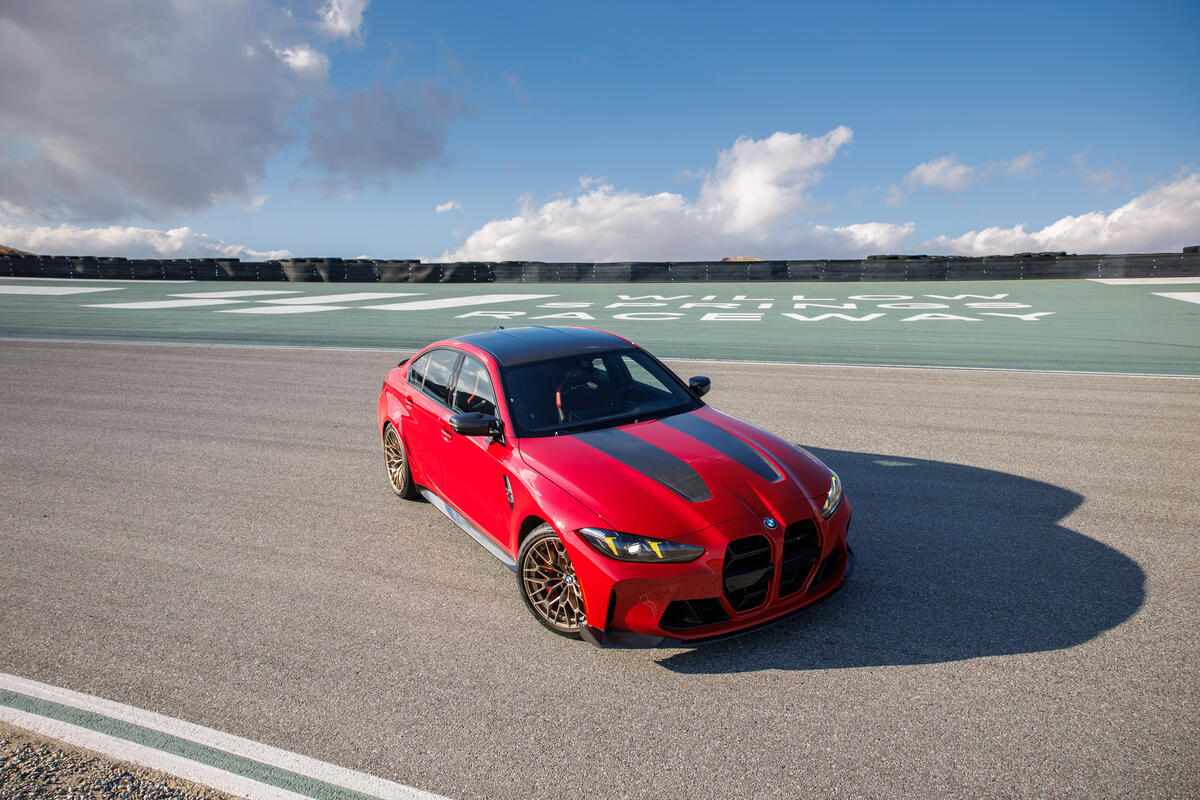
BMW M3
"The one that did excite me, though, is they've got the M3 GTR with the V8 going up the hill, the P60 V14."
This is a track-focused BMW M3 race car. The hosts are talking about how loud and exciting it sounds when it drives up the hill.
The BMW M3 GTR is a purpose-built race version of the M3, best known for its V8-era endurance racing presence. In this segment, it’s specifically called out for having a V8 going up the hill, which is why the sound stands out so much at the Festival of Speed.

Nissan Gtr
"...that did excite me, though, is they've got the M3 GTR with the V8 going up the hill, the P60 V14. The n..."
The Nissan GT-R is a fast sports car made by Nissan. It’s designed to be powerful and capable, not just for straight-line speed. People mention it because it’s known for strong performance in many driving situations.
The Nissan GT-R is a high-performance sports car known for combining everyday usability with serious track capability. In the podcast, it’s referenced alongside other race cars and hill-climb talk, showing how the GT-R name comes up in performance comparisons. It’s often discussed because it’s become a benchmark for fast, capable cars.
V8
"The one that did excite me, though, is they've got the M3 GTR with the V8 going up the hill, the P60 V14."
A V8 is an engine with eight cylinders. It’s known for a big, distinctive sound and strong acceleration, especially in performance and race cars.
A V8 is an engine with eight cylinders arranged in a “V” shape. Because it has more cylinders than a typical four- or six-cylinder, it often produces a distinctive sound and strong power delivery, especially in race cars.
Request an Explanation
Heard something you'd like explained? We'll add it to this episode.
Sign in to request explanations for terms you heard.
Want to learn more?
Browse our glossary for plain-English explanations of automotive terms, jargon, and concepts.
Help improve this episode
See something that's not quite right? Our annotations are AI-generated and can sometimes miss the mark. Click the flag icon on any annotation to suggest a correction.