
Bolt From the Blue: The Electrifying 2027 Chevrolet Bolt EV Is Back For Another Try
About this episode
Kia, Volkswagen, Chrysler, and Honda all get New York Auto Show airtime, but the centerpiece is a road test of the revived 2027 Chevrolet Bolt EV. The hosts dig into why the Bolt is back with a cheaper lithium-iron-phosphate battery, Tesla-compatible NACS charging, improved interior, and pricing around $29k—while noting production ends after about 18 months. Matt DiLorenzo also discusses his new book on AMG’s racing roots, plus a debate on whether solid-state batteries will ever be affordable for buyers.
This week on America on the Road, host Jack Nerad welcomes guest co-host Matt DeLorenzo for road tests of two very different vehicles: the value-packed returning 2027 Chevrolet Bolt EV and the rugged-yet-comfortable 2026 Hyundai Santa Cruz XRT compact pickup. They also offer personal reminiscences on Acura’s 40th anniversary, break down Kia’s aggressive new Seltos and EV3, check out fresh family haulers from Volkswagen and Chrysler, and discuss Hyundai’s big expansion plans plus Honda’s surprising urban delivery vehicle.
🚗Matt DeLorenzo’s Road Test: 2027 Chevrolet BoltMatt DeLorenzo tests the all-new 2027 Chevrolet Bolt, a budget-friendly electric hatchback starting near $29,990 with an EPA-estimated 262 miles of range. It features GM’s efficient X76 drive unit, fast 150+ kW DC charging, an 11.3-inch infotainment screen with Google built-in, available Super Cruise hands-free driving, bidirectional vehicle-to-home charging, and over 20 standard safety features—making it one of the most accessible long-range EVs on the market.
🚙Jack Nerad’s Road Test: 2026 Hyundai Santa Cruz XRTJack reviews the 2026 Hyundai Santa Cruz XRT, a crossover-based compact pickup that delivers SUV comfort with added off-road attitude. Powered by a 281-hp turbo 2.5-liter four-cylinder and HTRAC all-wheel drive, it offers strong performance, a fun unibody chassis, practical bed features including a tonneau cover and under-bed storage, 3,500-pound towing capacity, and a well-equipped interior with a 12.3-inch touchscreen and advanced safety systems at a tested price of $43,350.
🎙️Special Guest InterviewMatt DeLorenzo, veteran auto journalist and author of the new book Mercedes-AMG: Race-Bred Performance, joins Jack as guest co-host and shares insights from his latest work on AMG’s high-performance heritage.
📰This Week’s Headlines Acura Celebrates 40 Years in AmericaThe first Japanese luxury brand in the U.S. marks four decades with the debut of a special Integra 40 Racer tribute car at the Grand Prix of Long Beach.
Kia Launches 2027 Seltos & All-Electric EV3The larger, upscale 2027 Seltos brings best-in-class rear legroom and three powertrains including hybrid, while the compact EV3 promises up to 320 miles of range on the E-GMP platform with fast charging.
Volkswagen Unveils All-New 2027 Atlas Three-Row SUVThe family hauler gets a premium cabin refresh with Nappa leather, massaging seats, a massive 15-inch touchscreen, and an updated 282-hp turbo engine while retaining 5,000-pound towing capacity.
2027 Chrysler Pacifica Returns with Family UpgradesThe versatile minivan adds premium tech like Amazon Fire TV rear entertainment and Harman Kardon audio while keeping its signature Stow ’n Go seating and huge cargo space.
Hyundai Plans 36 New or Updated Models by 2030Hyundai will roll out a mix of gas, hybrid, and electric vehicles while increasing North American production to over 80% backed by a $26 billion investment.
Honda Enters Last-Mile Delivery with Fastport eQuadHonda’s new electric micromobility vehicle is a pedal-assist delivery quad designed for bike lanes, complete with swappable batteries and a Fleet-as-a-Service model for urban logistics.
❓Listener QuestionOsgood from Salem, Oregon, asks: “How long before solid-state batteries actually mean something for buyers?” Jack and Matt weigh in with their expert take.
📚 Jack Nerad’s New BookJack’s crime novel, Only One Thing Stays the Same, is available now in paperback and eBook on Amazon — currently at a sale price.
🎧 Where to ListenCatch America on the Road on this station each week, or subscribe to the podcast on Apple Podcasts, Spotify, YouTube, and more. Follow for newcar reviews, guest interviews, auto news, and road tests.
Sponsored by Mercury Insurance and DrivingToday.com
📺 Watch & SubscribeFind America on the Road on YouTube and Rumble. Subscribe for road test videos, shorts, and extended reviews.
📨 Email: [email protected]
Check Out Matt DeLorenzo’s BookPick up a copy of co-host Matt DeLorenzo’s terrific new book Mercedes-AMG: Race-Bred Performance
Special Price for Jack’s Newest Crime NovelJack is now offering his newest crime novel, Only One Thing Stays the Same, at a 67%-off price of just $4.99. Click here to buy from Amazon at this special limited-time price.
gas and electric SUV segments
"Keah is shaking up both gas and electric SUV segments, with a bigger, more capable Celtos and a new affordable battery electric EV3 that promises up to 320 miles of range."
This phrase points to how automakers are competing in both traditional gasoline SUVs and battery-electric SUVs. It highlights the market shift toward electrification while still serving buyers who want gas-powered options.

Kia EV3
"...ble Celtos and a new affordable battery electric EV3 that promises up to 320 miles of range. We'll ha..."
The Kia EV3 is an electric car that runs on a battery. The podcast says it’s meant to be more affordable and mentions a claimed range of up to about 320 miles. It’s discussed as a new option in Kia’s electric lineup.
The Kia EV3 is an upcoming affordable battery-electric vehicle positioned below larger Kia EV models. In the podcast context, it’s described as promising up to 320 miles of range, which is a key selling point for buyers comparing EVs. It’s mentioned as part of Kia’s expanding EV lineup and pricing strategy.
Volkswagen
"And hey, family guys, Chrysler has just unmasked its 2027 Pacifica minivan, while Volkswagen has officially unveiled the all-new 2027 Atlas III row SUV, more on both of those family haulers a little later."
Volkswagen is the automaker behind the Atlas SUV mentioned in the segment. The host highlights the brand’s official unveiling, which signals a significant product update for the family-SUV market.

Chrysler Pacifica
"... family guys, Chrysler has just unmasked its 2027 Pacifica minivan, while Volkswagen has officially unveile..."
The Chrysler Pacifica is a minivan made for families. It’s designed to carry people comfortably and handle everyday errands. The podcast mentions it because Chrysler is showing an updated version for the 2027 model year.
The Chrysler Pacifica is a minivan aimed at families, typically offering space, comfort, and practical features for daily driving. The podcast context says Chrysler has “unmasked its 2027 Pacifica,” which makes it a newsworthy model update. Minivans like the Pacifica are often discussed because they compete directly on family usability and technology.
three-row SUV
"Chrysler has just unmasked its 2027 Pacifica minivan, while Volkswagen has officially unveiled the all-new 2027 Atlas III row SUV, more on both of those family haulers a little later."
A three-row SUV has extra seating for bigger families. It’s the kind of vehicle you’d pick when you need room for kids and friends.
A three-row SUV is designed to seat more passengers—typically up to seven or eight—making it popular for families. The transcript uses this to emphasize the Atlas’s family-hauler role.
Honda
"And in one of the weirdest New York Auto Show introductions I've ever seen, Honda is stepping into last-mile delivery with a new electric micromobility vehicle designed for crowded city streets."
Honda is the car company mentioned here. They’re talking about making a small electric vehicle for city deliveries, not just regular cars. It’s focused on tight, busy streets.
Honda is a major Japanese automaker that’s expanding beyond traditional cars into mobility solutions. In this segment, Honda is described as entering last-mile delivery with an electric micromobility vehicle aimed at crowded city streets. That signals a broader strategy toward electrification and urban logistics.
last-mile delivery
"Oh my gosh. [85.9s] They're busy. [87.1s] And in one of the weirdest New York Auto Show introductions I've ever seen, Honda is stepping into last-mile delivery with a new electric micromobility vehicle designed for crowded city streets."
Last-mile delivery is the final part of shipping—getting packages from a nearby depot to homes and businesses. It usually happens in busy city streets with lots of short trips, which is why small electric vehicles can make sense.
Last-mile delivery refers to the final leg of getting goods from a distribution point to the customer—often involving short trips through dense urban areas. It’s a key use case for small electric vehicles because they can be efficient for frequent stops and lower-speed routes. The episode ties this concept to Honda’s electric micromobility vehicle.

Hyundai Santa
"...bout that. My test vehicle this week is the 2026 Hyundai Santa Cruz XRT, and our special guest is Matt DiLorenz..."
The Hyundai Santa Fe is a midsize SUV. It’s meant for families and everyday driving, with room for passengers and cargo. The podcast brings it up as part of the SUV models being discussed.
The Hyundai Santa Fe is a midsize SUV that’s positioned as a practical family vehicle with modern tech and comfort. The podcast specifically mentions the 2026 Hyundai Santa Cruz XRT as the test vehicle, but the Santa Fe name appears in the list of cars discussed, indicating it’s part of the broader SUV coverage. It’s commonly discussed because it competes in the mainstream SUV market where features and value matter.
Motor Trend Magazine
"Yeah, it was a momentous occasion, absolutely. I was running Motor Trend Magazine at that time."
Motor Trend is a well-known car magazine. Bringing it up is basically saying the guest was working in major car media when these cars were new.
Motor Trend is a long-running US automotive publication that influences how cars are reviewed and perceived by enthusiasts and mainstream buyers. Mentioning it situates the guest’s credibility and connects the discussion to automotive media coverage.
Motor Trend Import Car of the Year
"They also had the Integra, which is kind of still around. [247.7s] Maybe they shouldn't have the legend still around. [249.8s] Maybe that would help them out a little bit. [252.1s] It's been kind of spotty since then, right? [255.4s] Yeah, they came out strong. [240.5s] Car of the Year, Motor Trend Import Car of the Year for that year, 1986."
Motor Trend is a well-known car magazine. “Car of the Year” awards like this are a way of saying a car was one of the best from that year, especially among imported brands.
Motor Trend is a major U.S. automotive magazine, and its “Import Car of the Year” award recognizes standout vehicles from non-domestic brands. In the transcript, it’s used to highlight the significance of a specific model’s impact in 1986.
Lexus
"[258.2s] I think that they were eclipsed by Lexus, really, because Lexus really upped the luxury [267.2s] game and took away the domestic, traditional domestic luxury car market from the big three."
Lexus is Toyota’s luxury brand. The speaker is saying Lexus became a major player in luxury and took a lot of business from older American luxury options.
Lexus is Toyota’s luxury brand, and the transcript frames it as the company that “upped the luxury game” and pulled customers away from traditional domestic luxury offerings. This is part of a broader shift in the U.S. market toward Japanese luxury brands.
New York auto show
"[332.3s] Well, let's talk about some of the stuff that was introduced at the New York auto show, [335.6s] which is ongoing. Kia is expanding its lineup with the 2027 Celtos."
The New York International Auto Show is a major North American event where automakers unveil new vehicles and technologies. The transcript uses it as the context for discussing upcoming or newly introduced models.

Volkswagen Atlas
"Well, you know, between the Tiguan and the Atlas, it's been saving their bacon. True. You know, and the Atlas is a wonderful three-row SUV."
The Volkswagen Atlas is a family SUV with three rows of seats. It’s designed for people who need room for kids, passengers, and cargo.
The Volkswagen Atlas is a midsize, three-row SUV aimed at families who need more space. The hosts call it a “wonderful three-row SUV” and emphasize that it’s well-positioned in the mainstream market.
eight-speed automatic transmission
"...282 horsepower, 258 pound-feet of torque... Eight-speed automatic transmission is standard."
This is the car’s automatic gearbox. Having more gears can help the engine run more efficiently and shift smoothly.
An eight-speed automatic transmission uses eight gear ratios to keep the engine operating in its most efficient range. More gears can improve both acceleration feel and fuel economy compared with older 6-speed setups.
front drive or all-wheel drive
"You can get front drive or all-wheel drive. I like the towing capacity and the safety systems..."
FWD means power goes to the front wheels. AWD can send power to all wheels, which can help in rain or snow.
Front-wheel drive (FWD) sends power to the front wheels, while all-wheel drive (AWD) can send power to all wheels for better traction. Offering both is common on family SUVs because it lets buyers match the vehicle to their climate and driving needs.
3.6-liter V6
"It's got a 3.6-liter V6 under the hood."
This is the engine size and layout. A 3.6-liter V6 is a fairly common engine choice for minivans because it provides smooth power for family driving.
A 3.6-liter V6 is a gasoline engine with six cylinders arranged in a V configuration, displacing 3.6 liters total. In this segment, it’s presented as the engine under the hood for the updated Pacifica.
NACS North American Charging Standard
"And with this battery pack, they have the new NACS North American Charging Standard Tesla compatible charger."
NACS is a type of charging plug/standard used at many EV fast-chargers. The host is saying the Bolt can use Tesla-style NACS chargers.
NACS (North American Charging Standard) is the charging connector standard associated with Tesla’s plug, which is being adopted more broadly across North America. The segment highlights that the Bolt will be compatible with NACS chargers, improving charging convenience.
only going to build them for 18 months
"The problem is they're only going to build them for 18 months. At the end of the 2027 calendar year, they're done..."
They’re only making this version for a limited time—about 18 months. That can affect how easy it is to find one with the features you want.
This is a production-timing constraint: the Bolt is described as a limited run for about 18 months. For buyers, limited production can affect availability, pricing, and how easy it is to find specific configurations later.
more range translates into more charging time
"Yeah. I mean, more range translates into more charging time, right? Yeah. So I think they've done a good job."
If you have more battery range, you usually have more battery to fill back up. That means charging can take longer, especially when you start from low charge.
This is the practical trade-off between battery capacity and charging duration. Even if charging power is the same, a larger battery requires more energy to refill, so the time to go from low to higher state of charge increases.
crossover based truck
"It is a crossover based truck, which is a pretty rare thing in the first place."
A “crossover-based truck” is a pickup-like vehicle built on a unibody crossover platform rather than a traditional body-on-frame truck. This usually improves ride comfort and handling, but can limit maximum towing/off-road durability compared with classic trucks.

Ford Maverick
"pretty rare thing in the first place. I think Honda Ridgeline and Ford Maverick. I think there was a Volkswagen pickup truck in the deep dark past that was also a crossover."
The Ford Maverick is a small pickup that’s built like an SUV. It’s meant for normal daily use, not extreme towing like big trucks.
The Ford Maverick is another crossover-based pickup that’s designed for everyday practicality rather than heavy-duty truck work. In this context, it’s mentioned as part of the small group of vehicles that blend SUV comfort with a pickup bed.

Honda Ridgeline
"It is a crossover based truck, which is a pretty rare thing in the first place. I think Honda Ridgeline and Ford Maverick."
The Honda Ridgeline is a pickup that drives more like an SUV. It’s built on a car-style platform instead of the traditional truck frame.
The Honda Ridgeline is a well-known example of a crossover-based pickup. It uses a unibody construction and is designed to feel more like an SUV in daily driving while still offering a truck bed.
rear seats can't recline because of the bulkhead for the cargo bed
"Back seats tight. And one of the reasons that because those rear seats can't recline because of the bulkhead for the cargo bed."
The rear seats don’t recline because a wall (bulkhead) is built between the back seats and the cargo area. It’s a design trade-off to make room for the bed.
A bulkhead is a structural wall separating the rear passenger area from the cargo area. If the rear seats can’t recline due to that bulkhead, it’s usually a packaging compromise to fit the bed/cargo design behind the cabin.
two and a half liter turbocharged inline four cylinder
"The vehicle I had, the XRT, of course, is the off-road version has a two and a half liter turbocharged inline four cylinder"
It’s a 2.5-liter engine with four cylinders, and it uses a turbo to make more power. The turbo helps the engine feel stronger without needing a bigger engine.
This describes an engine with 2.5 liters of displacement, a turbocharger, and four cylinders arranged in a straight line (inline-four). Turbocharging helps produce more power from a smaller engine by forcing extra air into the cylinders.
12.3 inch digital instrument cluster
"And then it has all the good stuff of the Tucson, the 12.3 inch digital instrument cluster. It's got an equally big infotainment screen, all that kind of stuff."
Instead of regular gauges, this uses a screen to show things like speed and warnings. A bigger screen can make it easier to read at a glance.
A 12.3-inch digital instrument cluster replaces traditional analog gauges with a screen for speed, navigation, and vehicle status. Larger displays can improve readability and allow more customizable layouts.
Le Mans
"But at Le Mans, Vic Alfred's Porsche 917 raged down the mulsins straight at 248 miles per hour."
Le Mans is one of the biggest endurance races in the world. Cars have to keep going for a long time, so it’s not just about speed—it’s about lasting.
Le Mans is the world-famous 24-hour endurance race held in France, known for testing cars and drivers over long distances and changing conditions. The transcript uses it to highlight how extreme speeds and durability demands were in top-level racing.
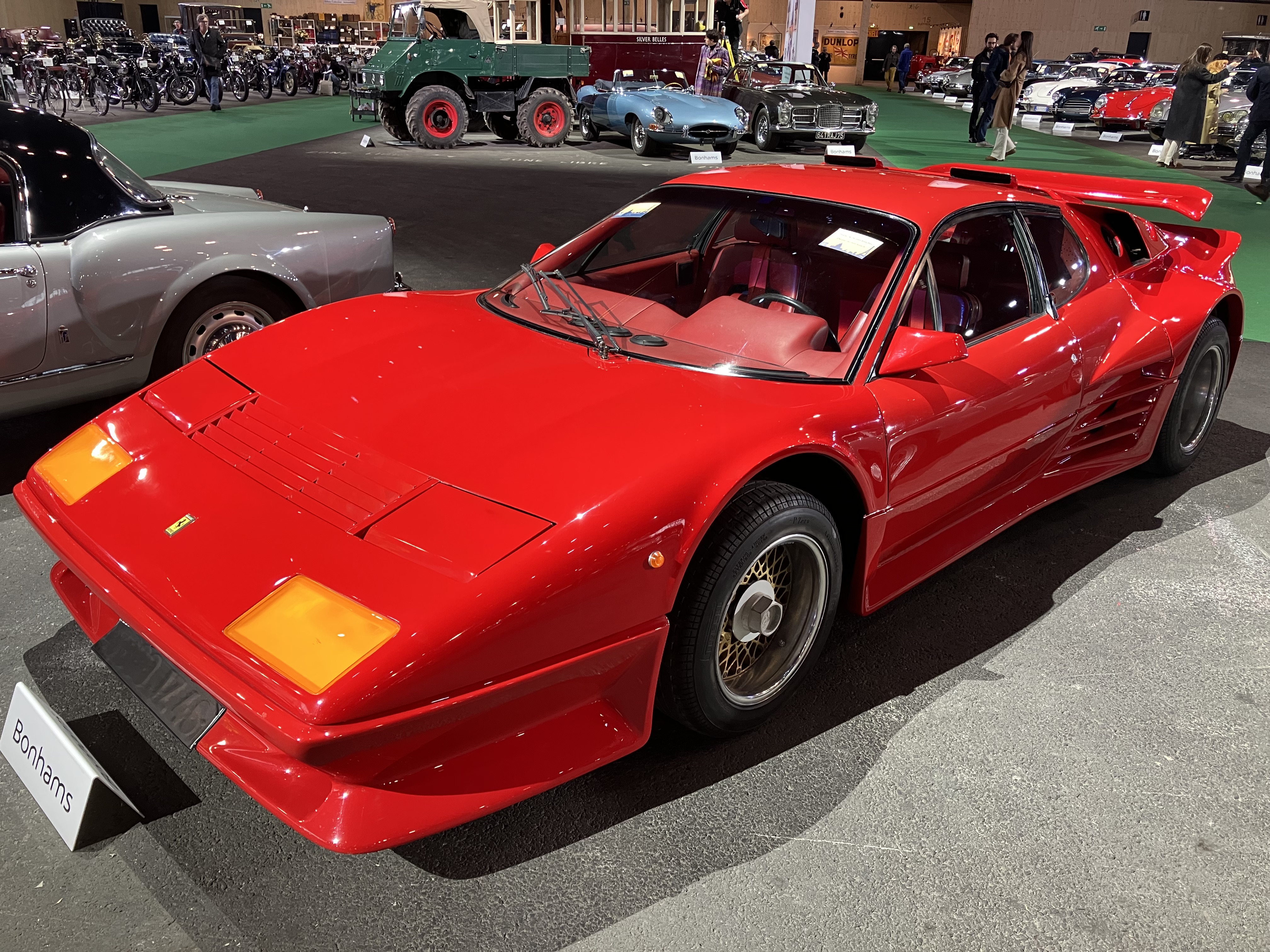
Ferrari 512
"The racing pit of the Porsche 917 versus the Ferrari 512, the fastest road racing ever, and Rodentrack sent a promising new rider, 27-year-old Ted West, to cover it."
The Ferrari 512 is a famous Ferrari race car from the endurance-racing era. The speaker is comparing it to other legendary cars to show how fast and competitive the racing was.
The Ferrari 512 is a mid-1970s endurance racing car associated with Ferrari’s Le Mans efforts. In the context of the transcript, it’s used as a benchmark for top-tier road-racing performance versus the Porsche 917.
Mercedes-Benz
"...traces the beginning of this high performance division of Mercedes-Benz back to a couple of young engineers in the 60s..."
Mercedes-Benz is the car company being talked about. The story is about how Mercedes went from being cautious about racing and modifying cars to building its own performance division.
Mercedes-Benz is the luxury automaker at the center of this discussion. The segment explains how Mercedes’ attitude toward motorsports and tuning evolved, eventually leading to the creation and integration of its performance arm.
AMG
"...AMG built a car called the Hammer... So Mercedes was paying close attention... So they decided to let AMG sell their cars through the Mercedes dealer network..."
AMG is Mercedes’ performance brand. In this episode, they explain how AMG started with racing and tuning, then Mercedes eventually bought the company and made it an official performance division.
AMG is Mercedes-Benz’s performance brand, and the segment explains how it grew out of racing and tuning. It also covers Mercedes’ corporate involvement—eventually buying a majority stake and then the rest—leading to today’s Mercedes-AMG performance division.

Panamera
"...Porsche, which has expanded their range to go beyond the 911 to have SUVs and sedan in the Panamera."
The Panamera is Porsche’s sedan. The hosts bring it up to show Porsche has expanded beyond just making the 911.
The Porsche Panamera is Porsche’s four-door sedan, representing the brand’s expansion beyond the 911. The segment uses it to illustrate how Porsche broadened its lineup into other body styles.
internal combustion engine
"And now they've backed away from that idea. And they're scrambling to do internal combustion engine for both those models."
An internal combustion engine is the traditional gas engine. The speaker is saying companies are still relying on gas engines because pure EVs aren’t selling as strongly as expected.
An internal combustion engine (ICE) burns fuel (like gasoline or diesel) inside the engine to create motion. The speaker contrasts ICE with battery-electric powertrains, arguing that manufacturers are “scrambling” to keep ICE options for markets like North America.
solid state battery
"cause fires or has a lot of thermal management issues. Solid state doesn't have those issues and can be faster recharging and longer range and all that. The other big question is at what cost?"
Solid-state batteries are a newer type of EV battery that uses a solid material inside instead of a liquid. The goal is safer operation and faster charging, but it’s not widely available yet.
A solid-state battery replaces the liquid electrolyte found in today’s lithium-ion packs with a solid electrolyte. The promise is improved safety and potentially faster charging and better energy density, but it’s still a developing technology.
Request an Explanation
Heard something you'd like explained? We'll add it to this episode.
Sign in to request explanations for terms you heard.
Want to learn more?
Browse our glossary for plain-English explanations of automotive terms, jargon, and concepts.
Help improve this episode
See something that's not quite right? Our annotations are AI-generated and can sometimes miss the mark. Click the flag icon on any annotation to suggest a correction.