Datsier Design is the team that designs how Dacia cars look, making them more stylish and attractive.
Car
Pinskauer 6x6 military truck
The Pinskauer 6x6 is a tough military truck that can drive on six wheels and carry many people. It has smart design tricks to help it work well in hard places.
Approach angle means how steep a hill or obstacle a vehicle can go up without its front part scraping the ground. It's important for cars that drive off-road.
Flat pack means things like furniture that come in a flat box and you put them together yourself. Here, it means car parts you can build or change yourself.
The Land Rover Defender is a tough and simple 4x4 vehicle that many people love because it can go off-road and is easy to fix. It has a special group of fans who really like how it looks and works.
Tail lamps are the red lights at the back of a car that help other drivers see you and know when you stop or turn. Some cars have extra lights on the back door, which can cost more.
These are long lights made of LEDs that go all the way across the front or back of a car. They help the car look unique and easy to recognize, especially at night.
The hipster concept car is a new idea where the back lights are put inside the car window instead of outside. It uses simple LED lights and shows the electronic parts instead of hiding them, making the design simpler and cheaper.
Head lamps are the bright lights at the front of a car that help you see when it's dark or foggy. They are made carefully to keep water out and sometimes have heaters to stop fogging.
LEDs are tiny lights that use less power and last longer than regular bulbs. Cars use them to make bright and cool-looking lights that can be shaped in many ways.
The battery in an electric car is like its fuel tank. Bigger batteries let you drive farther but cost more. If the car is lighter, it needs a smaller battery, which saves money.
L7 quadricycle rules are special laws in Europe for very light small cars. These rules make it easier and cheaper to build tiny cars that don’t have to meet all the usual safety rules.
The Citroen AMI is a very small electric car made to drive short distances in cities. It is easy to park and uses electricity instead of petrol or diesel.
The Dacia Duster is a small SUV that many people like because it is affordable and useful. It is made by a company called Dacia and is now in its third version.
The Renault 4 is a small, simple car that many people liked because it was easy to use and affordable. It was made a long time ago but is still remembered.
C segment cars are medium-sized cars that are bigger than small cars but not too big. Many people buy these cars because they are good for everyday use.
Less is better means making car designs simple and clean instead of too busy or complicated, so they look nice and work well.
LIVE
A-Cast powers the world's best podcasts.
Here's a show that we recommend.
A-Cast helps creators launch, grow, and monetize their podcasts everywhere.
This bonus episode of the AutoCar podcast is sponsored by Anderson,
design-led premium EV charging company.
Search Anderson or visit anderson-ev.com,
where they're currently offering six months free charging,
saving about £230 on home charging costs,
on orders placed after March 1st.
In today's episode, Deputy Editor Felix Page meets David Durand,
director for Datsier Design. Please enjoy the show.
Hello and welcome to a special episode of the AutoCar Meets podcast.
Very special episode. I've never been anywhere quite like this to do a podcast.
I am 1,830 metres up a French Alp.
I'm at a very cool place called La Autrefuge, near to Annecy,
and I'm here today with Datsier designer David Durand.
David, thank you so much for coming along.
Thank you. Yes, I'm super happy too to welcome you here in this refuge
in the middle of the great outdoor,
70 centimetres of fresh snow outside, everywhere on the pines.
We feel a bit outside the world.
We thought it was a good place to talk about essential,
to talk about outdoor, to talk about inspiration.
That leads to Datsier Design.
I'm super happy too.
No, we're really pleased.
I'll try and paint a little bit of a picture.
It is quite a place to do it because this was a ski resort for a time,
but we've just checked out our accommodation for the night,
which is 1950s polar expedition shelters.
It's basically these metal boxes.
Yeah, exactly.
Quite small, but I think you said they're emblematic of the Datsier Design ethos.
I'm trying to describe these things.
They are unadorned, there's nothing unnecessary.
The bed folds out from the wall, all this sort of thing,
but they really seem to resonate with you.
Yeah, in fact, it's funny.
Those shelters are originally military shelters,
and the military design, let's say, is very interesting
because it can look very dry or very, perhaps, aggressive.
But when you look more into details,
you see how all the details are very, very well resolved.
Very functional.
It has to work all the time.
It has to be super reliable.
It's a security matter, and it's ergonomic.
But at the same time, it's also essential because it has to be robust.
It has to, you know, no matter of perhaps comfort,
but it's very easy to use.
Everything can be repaired very quickly.
You can transform or modulate some elements quite easily.
And this design is absolutely inspiring for us
because there are so many cool ideas that you can do
with, you know, a nice piece of rope with an aluminum part
that is maintaining a strap to close a little lid.
And everything is, you know, there is a lot to get from those materials.
And another, it's also touching another thing is the architecture
because when you are a car designer, of course,
you are looking for what other car manufacturers are doing
with your culture.
But you find the best inspiration from outside car design.
And for example, architecture can be very inspiring furniture design.
I don't know, outdoors activities, sailing, you know,
all these systems to fix that are made for performance sometimes,
but also to be reliable, to be secure, to be easy to work with,
affordable too because all those activities, okay, you have a price
and if you manage to reduce it, it's always better.
They are super functional because you have to be warm when you do it.
It has to be easy to fit and unfit.
So, yeah, it's plenty of universe that are bringing to designers great ideas
and especially Dacia where we are looking for this essential,
looking for simplicity, looking for robustness,
looking for, yeah, choosing also a purpose and not trying to cover everything
and be decorative, comfortable, blah, blah, blah, blah.
But if we want to focus on something really precise,
it's a lesson sometimes when you see a beautiful chair done
for an outside that you can carry in your bag that is very small
and you unfold it and you sit super comfortably.
It's super lightweight, you don't feel it in your backpack.
All those universe are for me really great and lessons
and we are trying to get inspiration with our designers.
For example, we have a game together when we are in front of the presentation,
the drawings that they are all presenting for choices or discussions.
We have these funny games of trying to get off elements from a design
saying don't you think your design could be even better without this big deco part in the center?
Did you try? Can you try?
Perhaps you can replace it by just shaping the volume and it's enough.
This is about essential and this is also why I am very often referring to Dieter Rams,
this German designer from the 60s who designed all those brands,
German brand products, very, very simple.
First, his design is inspiring but he also developed a kind of philosophy.
He wrote some books and less is better, it's coming from Dieter Rams
and he developed this idea of saying that the best design is the design
where you have the less design as possible, thinking like design as styling
and can be decorative and can be, you know, you want to do more, more, more, more
and at the end you lose the purity of the idea or the function
or the pleasure of the usage by trying to do too many things.
It's really this that we try to always remember when we are designing,
when we are discussing together and trying to develop this as a culture,
as an internal culture in Dacia design.
The word I kept coming back to today as we were talking a lot about the Dacia philosophy
and we were looking at some of the things that inspire you.
We had a Pinskauer 6x6 military truck with 12 seats in the back,
these things from, you know, designed in the 50s but made a bit later than that,
really utilitarian but the word I kept coming back to was clever, right,
because this thing was designed for a purpose, very, very specific purpose
but we were walking around it and you kept showing me all these clever little tricks it had
where you fold forward the front seat and the chocks for the wheels are under there,
you go in the back and the seats collapse into a bed that stretches right down the whole,
right down the whole middle and it's not a massive footprint this thing
but you can get 14 people in it comfortably and you can make it all sleep in it as well
and that word clever kept coming back to me and, you know, the chamfered edges that we talked about
where you got the great approach angle.
Yeah, even another beautiful detail I love is this piece of wood
which is screwed on the side of the car knowing that you are going to slide a bit on trees or rocks
and it avoids the vehicle to be damaged.
It's easy to change. It's a piece of wood.
Like a boat.
Yeah, exactly.
And it's not usual to see this on the car and especially a utility military car
with this piece of wood there but it's so evident when you see it
you say you immediately understand where it's, why is it there
and for me, yeah, this is the beauty of those objects.
Yeah, well, you heard it here first, listeners.
That tree is going to start putting wood on the side of its cars in case you were...
Why not?
In case you hit a tree.
Why not?
That's, for example, we were, you know, on the utility vehicles
sometimes manufacturers are providing some wood to protect the inside from objects that you are carrying
and, for example, we were thinking in Dacia to provide the exact size
even the blueprint of the inside of your boots for customers to be able to realize some little furniture
that adapts exactly like flat pack, you know.
Yeah, exactly.
And this kind of trust relationship saying, okay, if you want to, if you have good ideas,
you can do it.
We give you the exact size and the, I don't know, even the 3D file to be able to make by your own
and adapt also your vehicle as your usage and your creativity
because sometimes we see, you know, there is big forums about Dacia with people exchanging good ideas
and things like that, upgrading or changing or adapting accessories.
And there is a huge creativity from our customers and we learn from them.
Sometimes they have the good ideas because they have a very specific usage
and you see that it's coming from the reality, the real life
and they are doing this every day and it's really changing their life
by having a piece of, I don't know what, at the back of their seat
because the object they are carrying is stopped and they can fix on it.
And it was an inspiration for our Euclid, for example.
Thinking, give opportunity to the customers to adapt the car to their own personal usage
Well, just explain Euclid, just quickly.
Yeah, the Euclid is a kind of fixation points that you have in different areas of the car.
It's not as easy as it seems because you have to avoid, you have to match the security regulation
and not have accessory in dangerous areas where the airbag can throw it on your face.
But we managed to have those Euclid fixation points in different parts of the car
and now we are extending it.
We are proposing accessories that can fit on those different points, exchangeable
and we are extending this range.
But we were so happy to see on internet arriving some customers exchanging 3D data
of accessories matching with the Euclid that they were doing themselves with their personal 3D printer.
And it's great.
When you see that your product is adopted by the customers and they transform it into their own needs
for me it's victory.
It's like, okay, you did the base and then the product is having a second life with each customer
and this is very exciting for a designer.
We talked a little bit about this earlier.
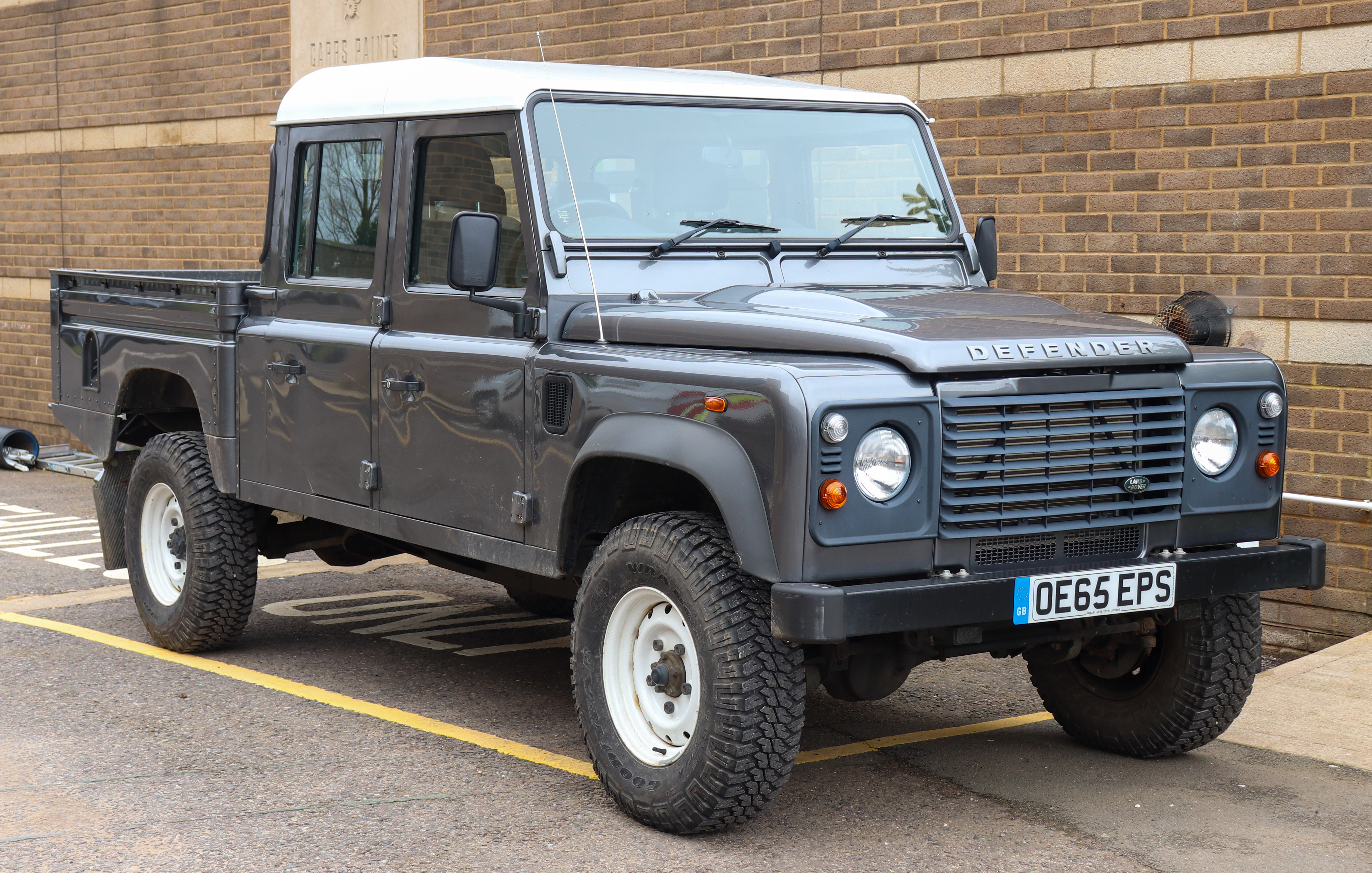
We were very fortunate to be up close and personal with an original Land Rover Defender,
one of the last original Land Rover Defenders.
And you were talking about how that inspired some of your design choices, that simplicity, that sort of cult ethos.
You've got a series 2 yourself, 68 I think you said, broken down of course.
Normally not.
But that sort of creating accessories, that sort of idea of a community around the car
which Dacia has encouraged and has let flourish.
That's very Land Rover, right?
That's quite sort of going back to that community car ethos.
Yeah, it's about, it's also about perhaps the way we were building cars in the past
that I'm not, absolutely not, it was better before.
But sometimes we find some great inspiration in those cars, in those popular cars.
Very simple, affordable, that everybody had going everywhere, super reliable,
all that you can fix by yourself and you fit all the family in there and you go in holidays
and you have, I don't know, visible frame on the seats.
You have a very simple way of putting air inside.
You have all those very simple solutions.
So of course we have modernity and we are improving on a lot of things
and now we have electronic things and it's a good thing.
But we must not forget about those very simple ideas that we are doing the job better than ever
and sometimes we are thinking a bit too complex or it's a risk that we could have
and especially in Dacia where we are talking about the essential affordable price,
lightweight car, clever and simple way of constructing or building the car
that we are especially asked to take care of those aspects
and don't miss those beautiful simple solutions that have all the quality I was talking about.
Well we've just seen it now haven't we?
People are coming up with extremely clever, ingenious even engineering solutions right back in the 50s
which seem modern and fresh today.
You talk about the Euclip and you talk about making cars very easy, practical, fun to live with.
That's sort of fostering that lifestyle ethos.
How do you protect that at a time when there is so much technology in cars?
There's so much regulation on cars that you've got to comply with.
How do you keep them simple?
How do you keep them charming, engaging, fun to be around?
Well I think we have a chance as brands Dacia to be not in the mainstream trends.
We are making our own path a bit.
Our business model is quite unique.
We are talking to retail markets mainly and we are pushing these reliable, essential, robust and super affordable points
that people understand that we can be a bit different.
This allows us to make things a bit different because in a Dacia it's acceptable.
When you are in the mainstream and you don't have the triple electric adjustment for your seat like all the others
you are downgraded.
On a Dacia when you pay an interesting price for a car which is working very well,
having full feeling all your needs, but not more.
It's more easy to understand for customers and they even find it natural.
You choose this solution, it makes sense, I understand.
One example I'm talking about very often is that for example on the rear of our cars,
so many cars have some rear lights, tail lights on the body side and also on the tailgate to make a long horizontal lamp.
It doubles the price of the tail lamps.
Why would we spend more money there and a tail lamp is expensive where you don't need it?
The challenge I give to my designer is that no tail lights on the tailgate.
They are like, yes, but I did a very nice design with the horizontal.
But honestly there are millions of possibilities of design, find the right one and make the car look tough and wide and strong.
And sometimes by doing this and taking off things that are not needed,
we can even make stronger design, more tough, more robust feeling.
And it's true that it's robust because when you have a crash instead of changing four lamps, you have only two.
Or when you open your tailgate and there is, I don't know, in the parking instead of damaging everything.
So everything you can simplify is going in the right direction.
If your car still looks good, robust, well proportioned and expresses what the purpose is done for,
there is no reason why we have to add accessories, deco parts, fake chrome, blah blah blah,
make up on the car.
We should be able to make a nice design with less features.
And again, it's Dieter Rams philosophy and for me it's really true for us.
It's funny, isn't it? Where people started introducing full-width LED light bars to their cars to stand out.
Now you don't have them, you stand out more because everyone else has them.
Yeah, it could be true.
Differentiating factor.
But the concept that was really interesting, we're talking about rear lights, the hipster concept,
which represents a lot of your views on design, views on simplicity.
That has a really different tail light setup.
The tail lights are in the boot, right?
Yeah, in fact, the idea here, because tail lights are expensive parts in tail and front lamps,
and the head lamps are expensive parts in a car, a complex shape to develop.
It's a block, it has to have a transparent part, it has to be waterproof, it's heating inside.
So it's complex, it's a security thing, it costs a lot at the end.
And everything we can save on that is welcome.
And on hipster, the idea was to say, OK, why don't we put the lamp inside the car, behind the window?
And we make it simpler with visible LED instead of putting some screens in front to cover.
And the worst for me is those lamps where you have some masks inside that are imitating
technological or mechanical parts which are just plastic injected.
Where behind you have electronic cards where all of this technology is visible, why hiding it?
And so this was the idea of hipster saying, OK, we put the electronic card with the visible LED
and the electronic elements and we fix it inside the car behind the windows to be sure that it's safe and protected.
I should maybe explain the hipster a little bit for anyone that doesn't know.
So this is your most recent concept car, 3.4 metres long?
No, it's 3 metres long.
3 metres long.
Four seater.
And it's a vision of what a city car could look like in the future.
How would you describe it?
Well, the pitch of hipster is very simple.
The price of car is increasing dramatically, especially in the last 10 years.
Saris remain the same and so there is a gap which is bigger and bigger.
So our goal was to say how we can make a car that can fulfill the needs of most of us on a daily basis, the cheapest as possible.
But still, so we ended up with four seater in 3 metres long.
We don't have the same performance as a normal car.
We can think about 90 kilometres per hour is more than needed in the traffic today.
And you are able to go to the supermarket, to go to school, get your two kids, to get back to work, to get out at night and come back.
And you're not going to use this car to go to holiday, but it's the one that you are using all the time during the week.
And so to reduce the price, the equation was very simple.
It's like we have to be as lightweight as possible because weight is raw material, of course, which costs.
But it's also the size of your battery.
And when you know that the size of battery is one third of the price of an electric car, the lighter the car will be, the smaller the battery will be.
And the most affordable the car will be.
And so at the end, we ended up with this three metre long car by 1.55 width.
And to maximise the volume inside, we constructed a kind of little tube, which is the maximum you can get with the same surface on the floor.
And the other good point is having this cubic shape, it looks also very strong, like a bit safe on four wheels.
And something which was very important for us was to keep a high driving position and not being in a small car too low on the road in the middle of the traffic where you can't control anything.
So this was our equation and that's how we ended up with this little cube, which is clearly telling its difference in the traffic and not trying to copy the automotive codes on the small car,
but saying no, we are building something different and it will do everything that cars are doing, but in a different way and I'm showing I'm different.
And I'm assuming I'm different and it's not a problem, it's a pride.
So that's why we could also apply a different formal language, much more with flat surfaces, expressing the robustness, sharp angle, but also very modern.
Don't be influenced by the car industry, let's say, make our own way.
It's a fascinating thing, it's so small, but you could look around it for hours because there's all these clever little features.
I think we're about 10 miles from the nearest town, but I know you can't run away anywhere because we're up a mountain in the dark, so I can ask you a tricky question.
Are you going to sell that car? Can I buy the hips to one day?
Well, we are working seriously on the concept. The concept was first to see the reaction of public, but in Dacia we are not used to make concepts that doesn't hit the road one day or we want to keep our promises, let's say.
So we are seriously working on different hypotheses.
Again, the tricky question that we have to solve is how we match the regulation.
Because we have the L7 quad-recycle regulation that imposes 450 kilos maximum before the battery.
So this is Citroen Ami territory.
Yeah, exactly. Then if you go in M1, it will be possible, but you have to embed all the electronic system that is on GSR2, all those security electronic things.
That will cost a lot because you need an electronic, a more complex electronic architecture.
You need more, you know, more everything everywhere.
So the price will, you will see the same product, but the price will raise up a lot.
We have seen also that European community is thinking very seriously on this gray zone to set up new regulation.
This is the e-car regulation.
Yeah, exactly. Like a bit the K-car regulation existing in Japan.
That was also a very good source of inspiration for us because it's only in Japan that they have this special regulation and that they are developing their own codes for K-cars, you know, with their own trends.
And it doesn't look like other cars.
And for us, it was like, yes, it's possible.
It's done in Japan.
It has no reason why it couldn't work in Europe.
And all our designers, they are fans of K-cars.
So yes, and yes, I hope we will manage.
I'm quite confident.
I don't know how much time we will need, but this car makes sense for customers today.
And this is the best reason to keep on pushing because there are people who are waiting for, you know, an affordable, I don't know, 30,000 euro car
that costs a bit more than an electric scooter, but you are covered.
You can bring your kids, you can go to the supermarket with big bags, you can, you know, go to work.
And it's not fulfilling everything.
Perhaps the heating system is not as performant as a C-segment car.
But who cares, you will spend 15 minutes in your car to reach the supermarket.
Okay, normally in 15 minutes, your car is not even completely warm.
You keep your coat on and you accept this compromise because you are not under the rain on the scooter.
You say it's much better than what I could afford before.
So, you know, it's all a matter of choices.
And if you take the place of the customer, I think he's able to consider many different options,
even some that are, you know, a bit less comfortable, but easier for him or cheaper for him.
And at the end, he understands and he choose what he's ready for.
I'm going to keep asking you every time I see you about building that car because it would suit me down to the ground.
And what you say about K-cars is really interesting because Honda is bringing a K-car to the UK and I've driven it.
It's brilliant, fantastic.
Do you think if you sort of look at the Dacia line up and you look at concepts like the Hipster and Manifesto,
which you showed a couple of years ago, it seems like you're embracing a lot of the same thinking as people
like Alec Asagones, who designed the Mini.
And then you can sort of draw parallels between Sandero and Beetle.
And, you know, the Bigster is a bit like a cheaper Land Rover Defender and all this sort of thing.
Do you think thatcher is making people's cars for the modern age?
Do you think thatcher is the people's car brand now?
I think this is very important for us to remain popular.
For me, making a beautiful design is not enough.
If it's, you know, a unique thing and few people can buy it.
It missed a bit the target I have of trying to make objects that the most of us will appreciate and use.
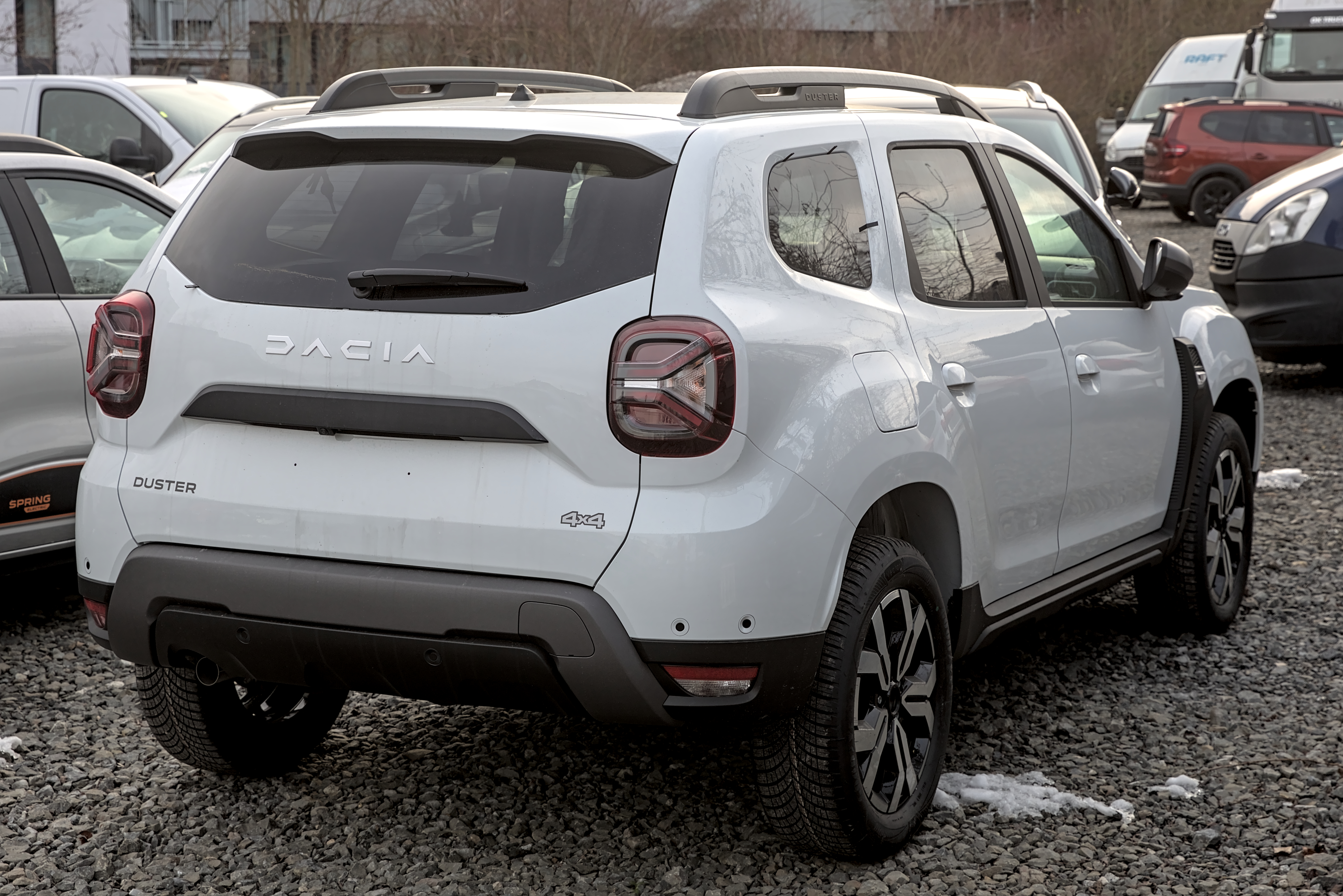
And I'm so happy when I meet people saying, I love the last Duster.
You did well.
Be careful on this because, you know, sometimes I love it for the rest.
I love it.
And I'm so happy with my Duster and I bought the first generation and now I have the third one.
And for me, this is the best compliment you can get.
It justifies the time and the work and the ideas and the technical problem solving and discussion to convince blah, blah, blah.
So this is important for Dacia.
It's part also of its value of talking to the most and be popular.
And when we are thinking of iconic cars in the past, a lot of them were very popular.
When you think about Renault 4, when you think about the, you were talking about the original Mini, when you think about the Fiat Panda, when you, you know, all the Land Rover, the old Land Rovers, they were popular.
A lot of everybody had one in their life and or you have a grandfather or an uncle who had one and you still have it in mind.
So, yeah, for me, it's important to be able to talk to anybody.
I think most.
We'll bring it to an end soon because I think the fondue that we're having for dinner is a bit of a treat for a Wednesday evening.
But you mentioned earlier, you know, there's two new C segment cars coming from Dacia, which will be, you know, related to the big stuff, which has been very successful in entering that C segment.
We might get a hipster, we might not.
But we're coming to the end of that sort of second phase of Dacia's modern era, you know, the Sandero, the Jogger will be replaced in the coming years, the Duster as well in maybe four years time, I suppose.
What's next? How do you go about taking Dacia into the future while retaining what everyone likes about it?
Because, you know, let's put it really simply, you make Europe's best selling car, you know, so how do you reinvent that?
Yeah, no, it's not an easy position.
I'm super happy that Sandero is making so good in Europe.
But to maintain this position in this changing world, we have to reinvent ourselves all the time.
And I really love the sentence of Catherine Apt, arriving CEO of Dacia, explaining that to remain Dacia, we have to change.
And she's totally true. If we sit on our knowledge, you know, we have now more competition coming from everywhere in the world.
We have regulation changing. We have habits. We have, I don't know, emissions that are more and more electrification of the automotive world that we also have to play.
And for this, it's good to keep some pillars that are making Dacia what it is.
But we also have to take things differently and take some risks and reinvent ourselves.
And it was a bit the case between the, I would say, the first era of Dacia and the one we opened with the new brand identity and where we brought to the brands more emotional value.
Even if we keep the rational one who were essential, robust and eco, economic, ecologic, that are going together.
But we had it some more emotional value like the coolness, the outdoor and the smart thinking and usage.
And we stayed Dacia, we stayed affordable, but we brought more to the brands.
And this is the job that we have to do for the next phase, for the future of Dacia to be able to go for electrification.
What will be, how will we deal with electrification with the same rules as the others?
And how do we deal with a new benchmark coming with a super affordable price?
How do we deal with new rules, with stronger regulation?
And yeah, this is the challenge of the coming years.
And it's not only on the brand, but it's also concerning the design.
I was talking about making things essential, simple and less is better.
How do we apply it with these new rules?
And probably we will not hand up with the same product as we have today.
And you have to see it visually in our design.
It has to make sense and it has to reflect the thoughts and the choices, the new choices that we are obliged to do.
To be coherent, to be understandable by our customers, because this is something very important for me.
It's also to be able to explain my design and not saying, well, it's a nice design.
No, it has a nice line and it's a beauty.
Everybody has a different definition of what's good or bad.
But when you can explain why this part is designed like that, because it's more practical,
because it protects another fragile part, because it's easy to open and close,
because it lets some space for storage,
because the same part can go this way or that way and it has different usage,
because it allows to have a bit more storage or opening in your boot,
because you can fit easily some skis in your car.
I don't know, every time you have a clear explanation of your design choices,
everybody admits that the design is great and they say it makes sense.
It's a good car, it's totally fine for me.
Yes, now I understand.
First, I thought it was a bit strange, but now you give me the explanation.
It makes sense. It brings something to the usage.
I'm not saying that we are always functional design, like some of the bar house objects
were a bit dry, because only function matters.
But most of the time, we are always trying to understand why we are designing this like that,
and not making things just because it looks good,
because it looks good today, perhaps not, and tomorrow I don't know.
At least when you have a clear target from the beginning and you always question your design,
I think it's the best way to make some products that last.
When we were talking about iconic cars from the past, popular cars,
most of them were designed like that and they still remain in the heads of people because of this,
because they were making sense, because it was practical,
and you have plenty of anecdotes of cool usage that those cars were bringing,
despite they were affordable, simple, and it's something that as designers it's our responsibility.
It sounds like we've got a lot to look forward to.
I can't wait to see what the future of the future is, what form it takes.
I'm hoping I can get some sketches out of you at some point,
maybe when you let your guard down a little bit,
but we better leave it there before you do reveal the 10-year plan for that.
Thank you so much for being on with us.
Thank you for having us in your homeland, basically, in the Alps where you're from.
It's been a fantastic evening. Thank you for sharing so much.
Thank you very much.
Look forward to speaking to you again soon.
Thanks for joining us and thanks to this podcast sponsor, Anderson.
Visit Anderson-EV.com or search Anderson and let their concierge service look after you.
Steve Cropley and Matt Pryor, that's me.
We'll be back on Wednesday with our regular My Weekendcast podcast. See you then.
Here's a show that we recommend.
Michael Garzullo stalked and slaughtered his female neighbors in LA in the 2000s until one survived.
She painted a picture that you could never imagine.
In a first on Mind of a Monster, we dive into a case that's still active.
Did Michael's murderous rampage start in the 1990s when he was just 17?
His impulsivity and his rage was starting to peak around that age.
Listen to Mind of a Monster, the Hollywood Ripper, wherever you get your podcasts.
About this episode
David Durand, director at Dacia Design, shares insights on how Dacia transformed from a budget brand to one known for clever, essential, and robust design. Drawing inspiration from military shelters, architecture, and outdoor gear, Durand emphasizes simplicity and functionality over decoration. He discusses the innovative Euclid fixation system that encourages customer customization and the Hipster concept car, a compact, affordable electric city vehicle designed with lightweight and practical features. Durand also reflects on balancing modern regulations with Dacia’s philosophy of making accessible, popular cars that resonate emotionally and practically with everyday users.
A few years ago, Dacia was best known as the cheap and cheerful value alternative to the mainstays, selling cars that were light on equipment (and kerb appeal) and styled to a price.
But the brand's current line-up contains some of the most fashionable and attractive cars on sale, majoring on rugged, utilitarian charm and designed to draw the eye from much more expensive alternatives.
To find out what drove the change, deputy editor Felix Page spent a couple of days in the mountains with chief designer David Durand, to explore how he has taken Dacia from its humble, value-focused roots to a maker of outdoorsy, activity-focused multi-tools on wheels.